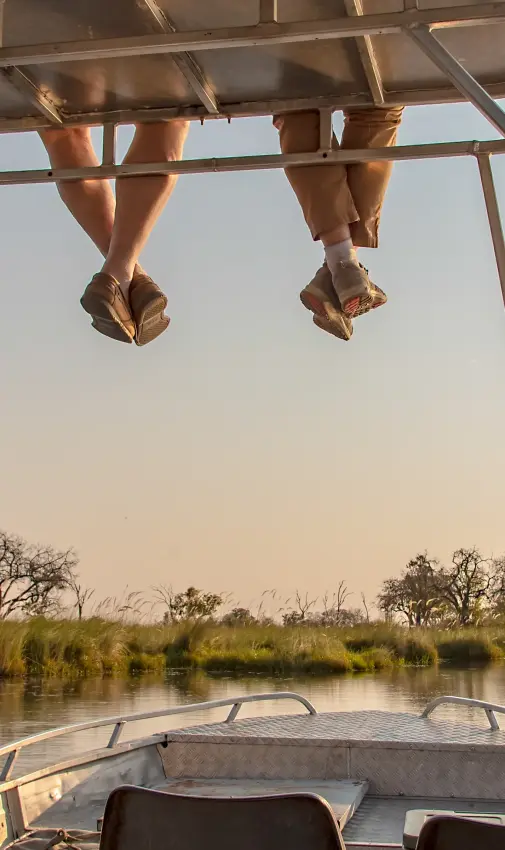
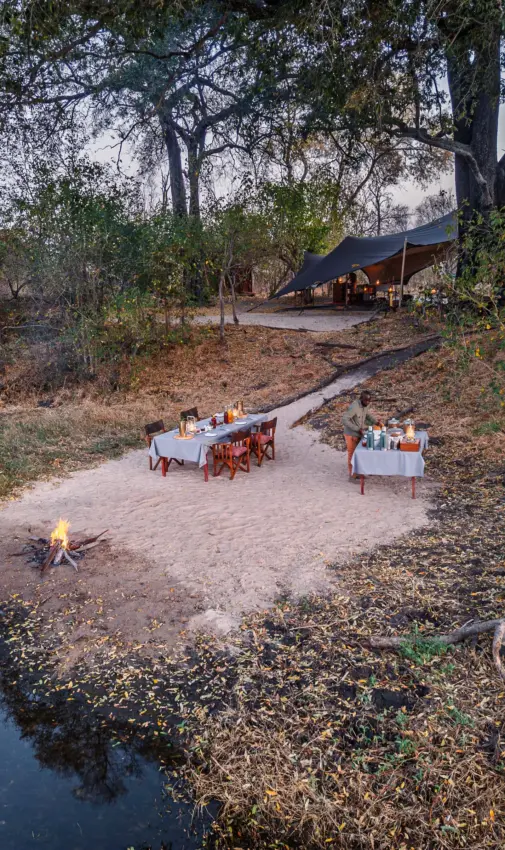
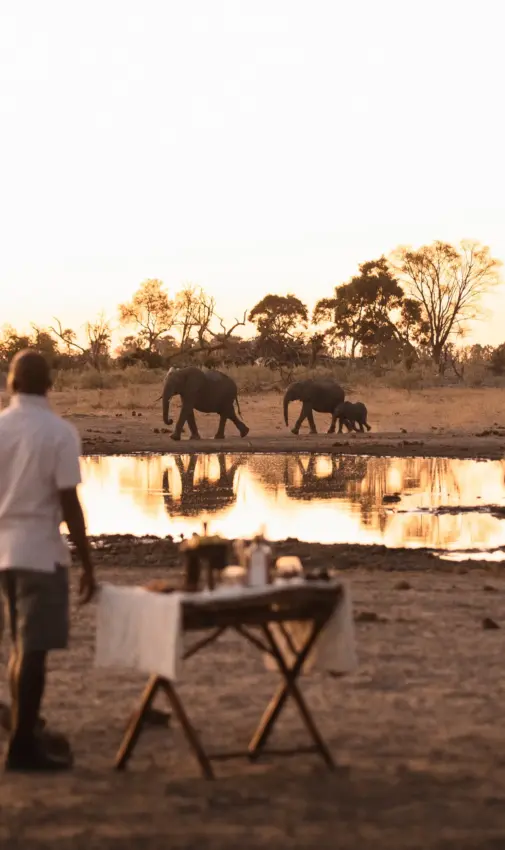
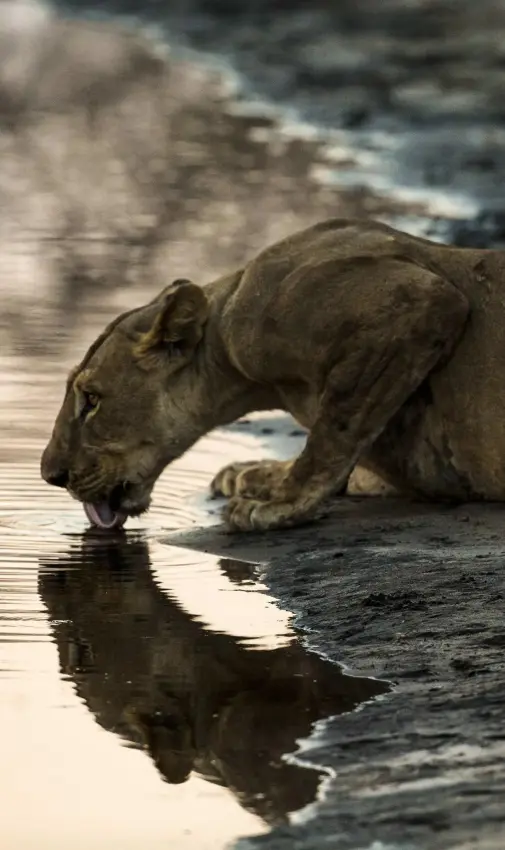
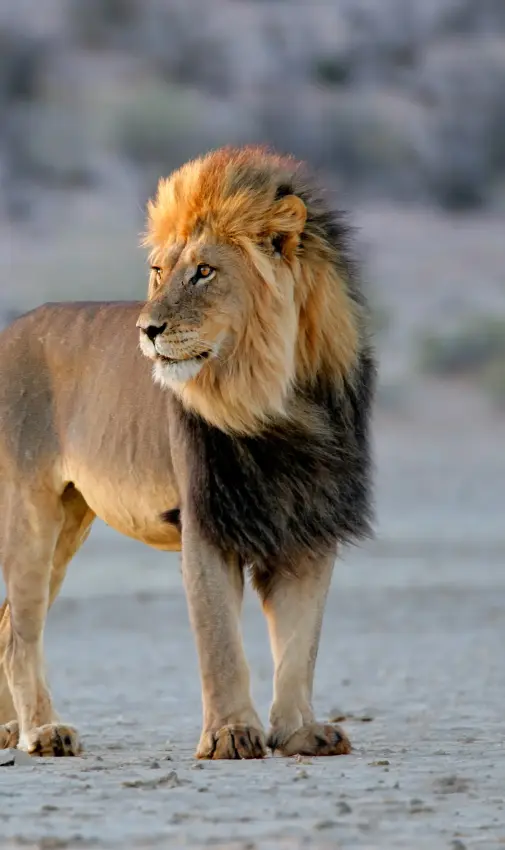
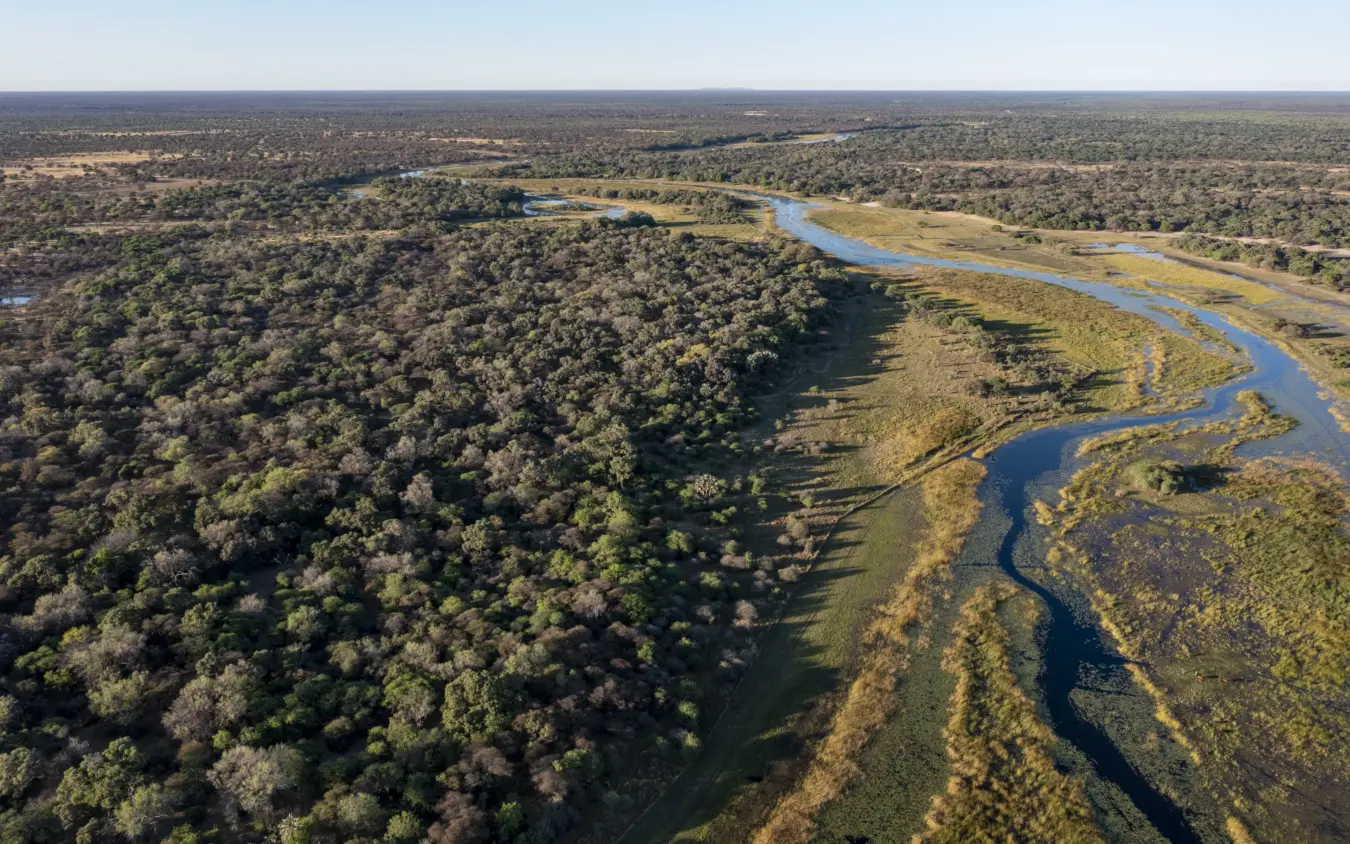
The flight from Maun to the Khwai airstrip takes twenty to thirty minutes, and the transfer is a short game drive along the river, so the safari begins before the camp comes into view. After that the hours are set by the heat. Drives leave at dawn and come back for brunch, then head out again as the afternoon cools, ending with sundowners on the floodplain. Guides work the lagoons and mature woodland of the concession or cross to the Moremi side, where vehicles keep to set roads. Drives after dark, when the camp offers them, stay on the community land.
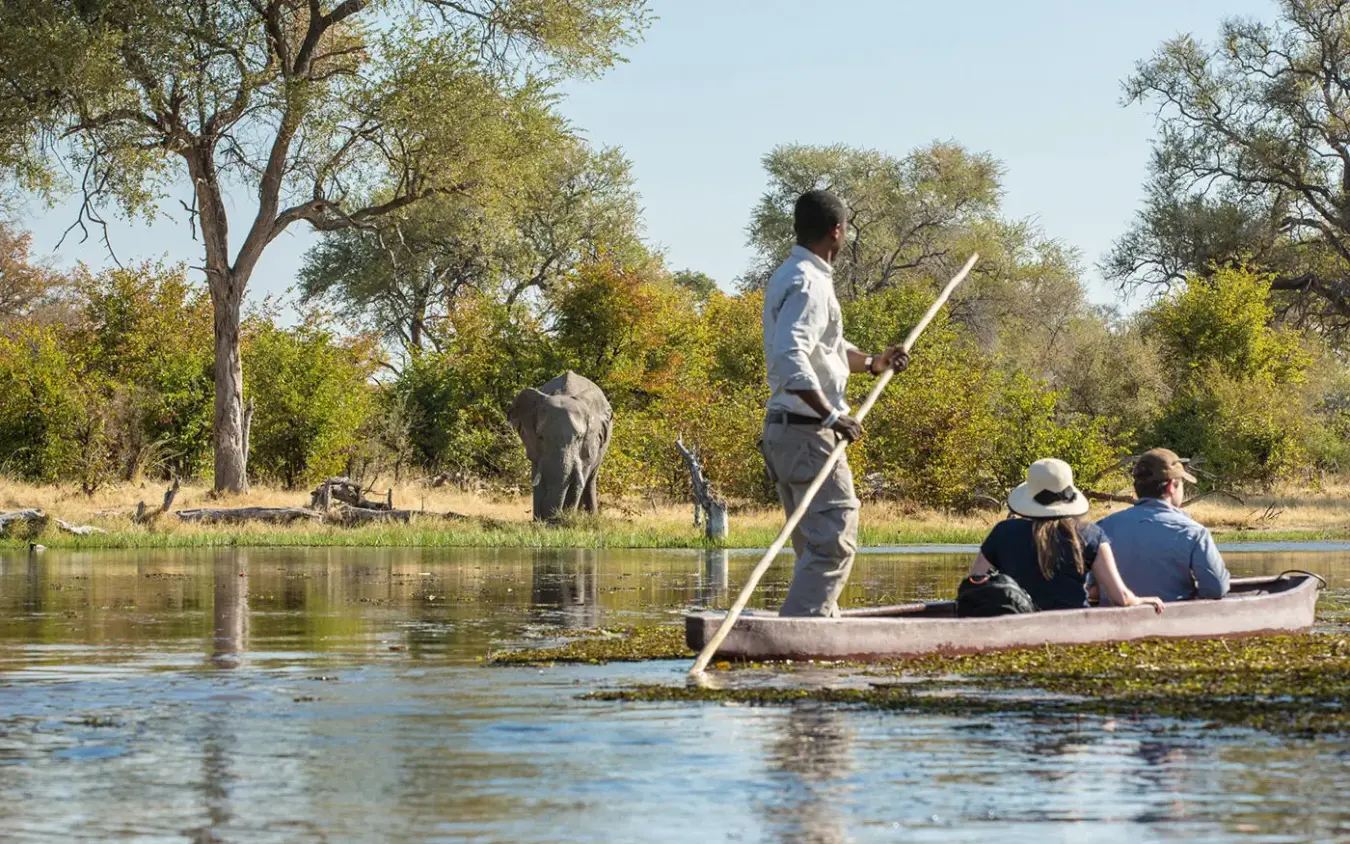
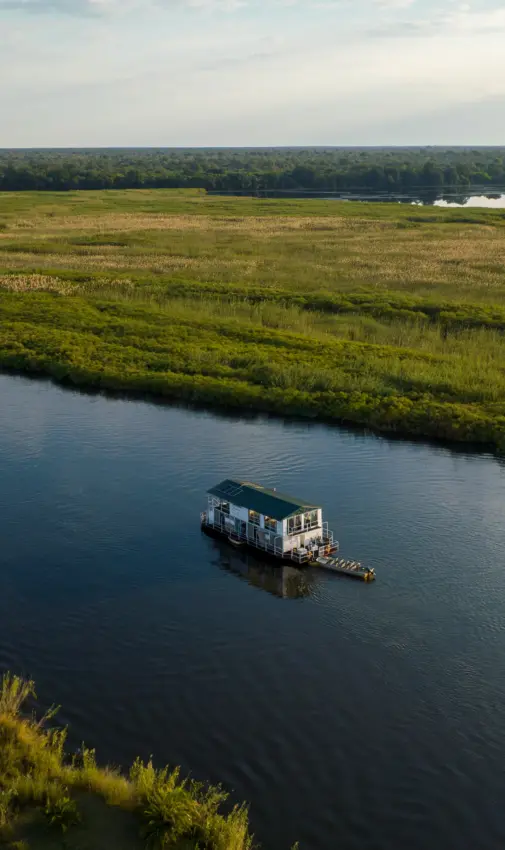
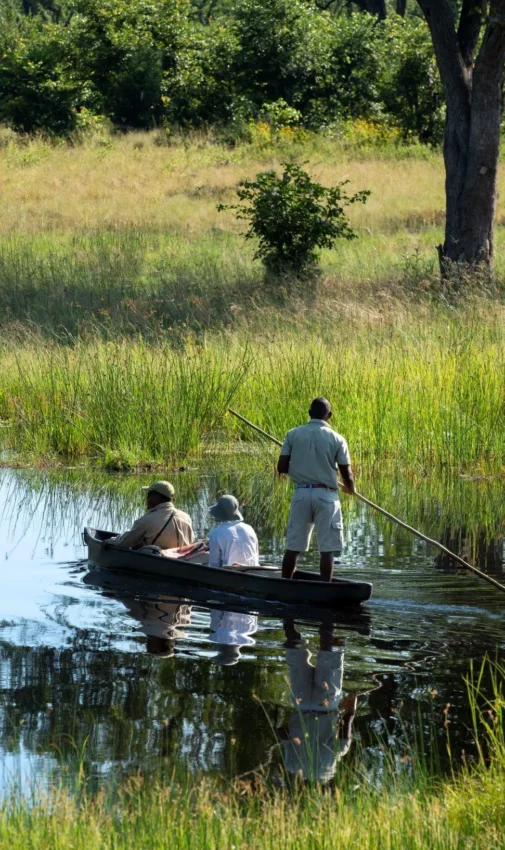
Walks run in season with an armed guide, on community land only. On foot, the bush slows to spoor in the sand and the small life a vehicle rolls past. Mokoro trips wait on the water: when the Khwai runs high enough, a poler takes guests through its quieter channels, and in dry spells the dugouts stay on the bank. Birders have hundreds of species to work through along the riverbank and up in the fig canopy. Back in camp, a spa therapist gives massages and facials in the tent, with the river in view from the veranda.
On foot, the bush slows to spoor in the sand and the small life a vehicle rolls past.
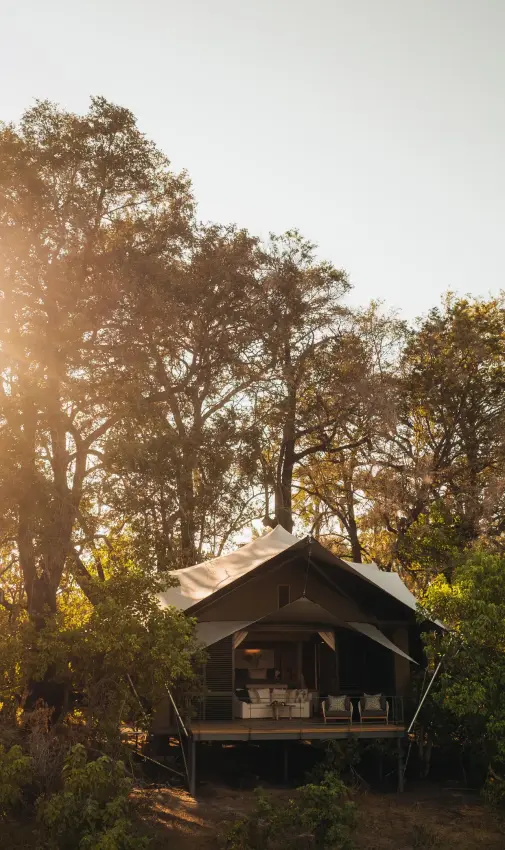
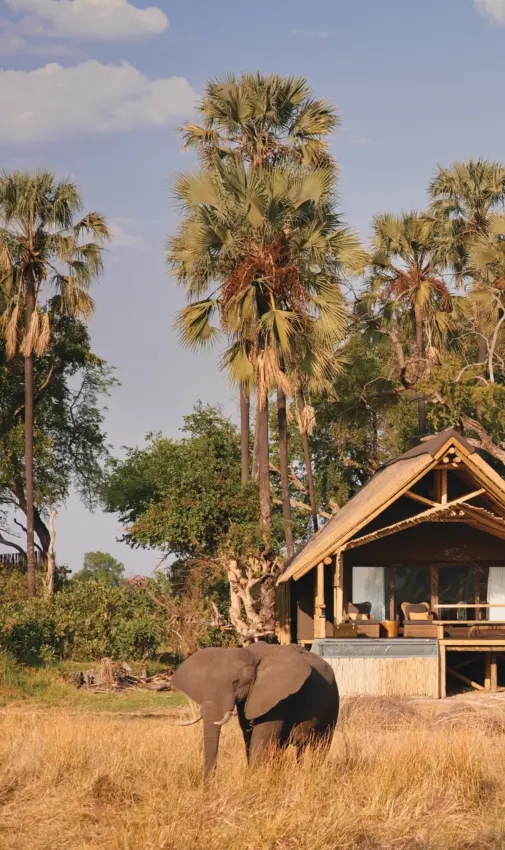
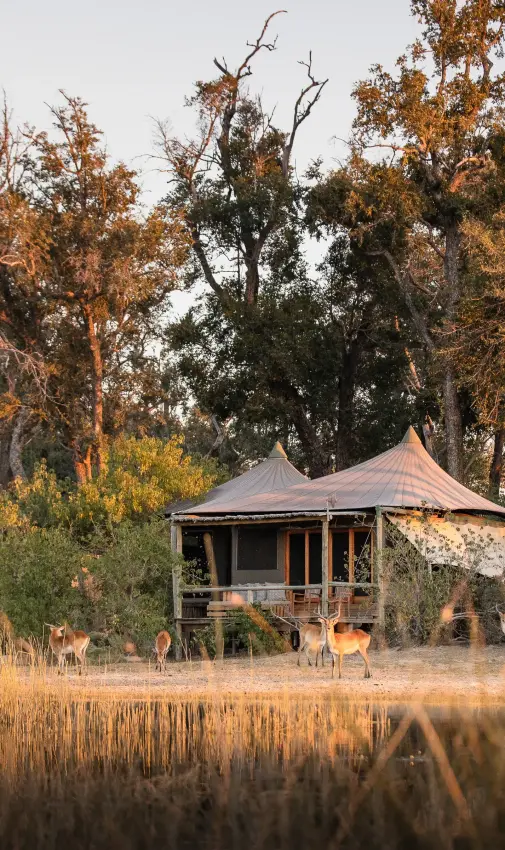
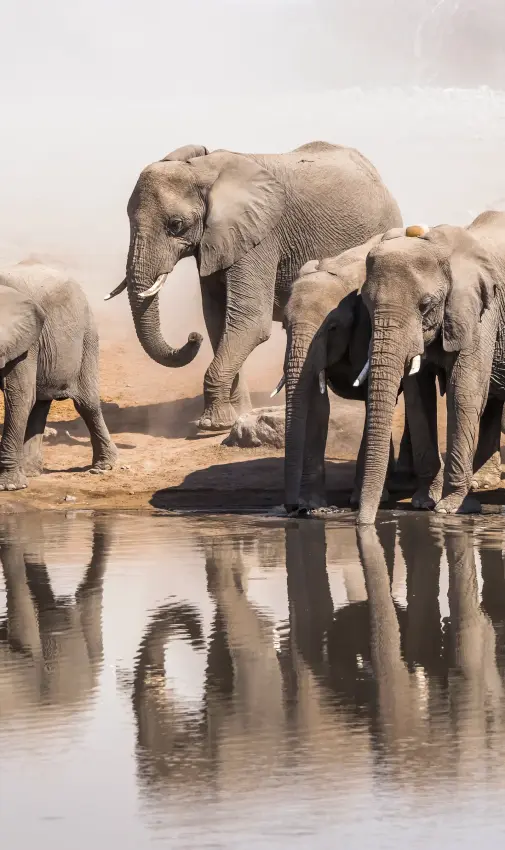
Children of any age are welcome. The two family tents each have two bedrooms under one canvas roof, sleeping four, and a round plunge pool fills the hot hours between drives. Families with children under six travel in a private vehicle, so a drive can start, stop or turn back on the family’s timetable rather than a full vehicle’s. Elephants and big cats move through camp freely, so younger guests stay with an adult at all times, by the pool as much as on the paths.
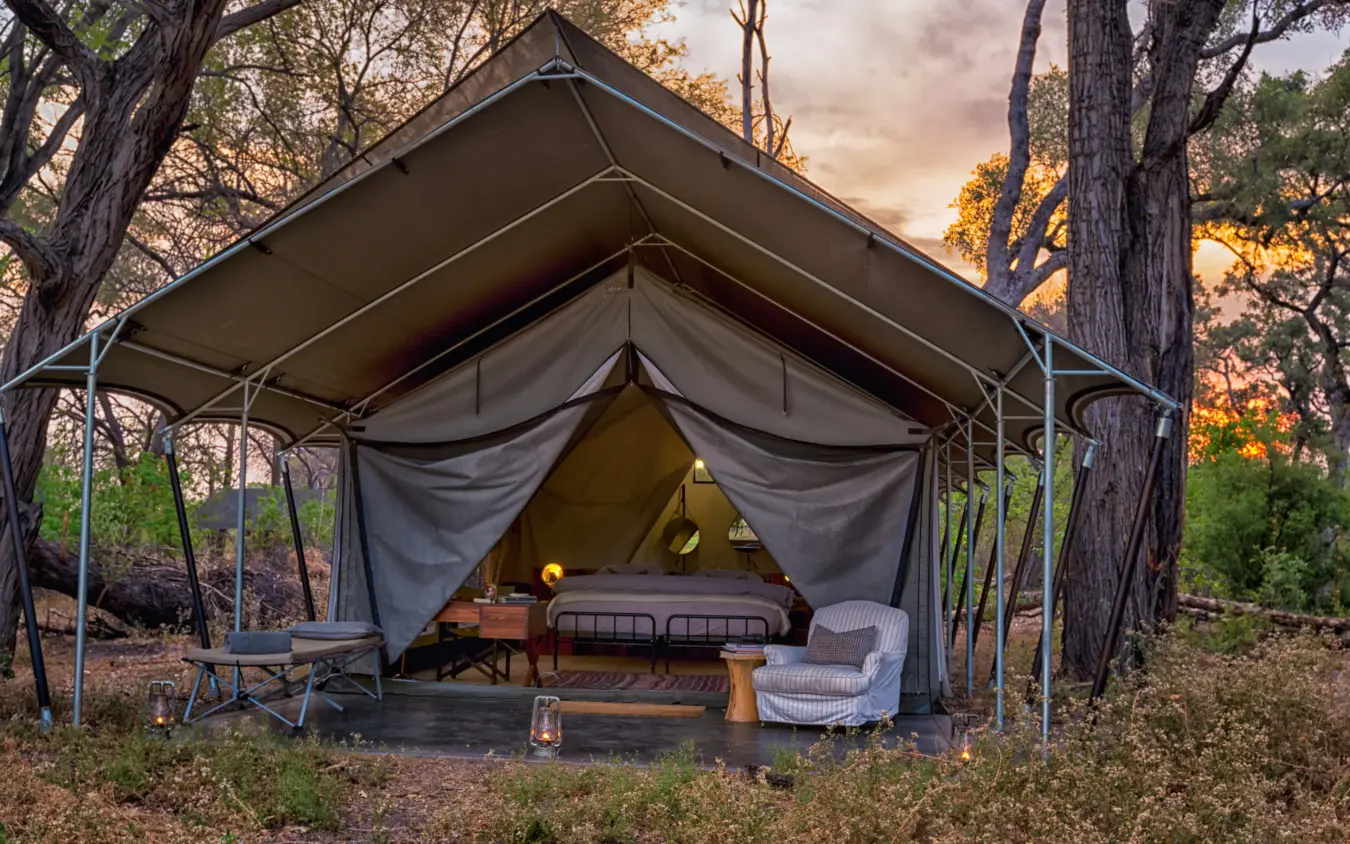
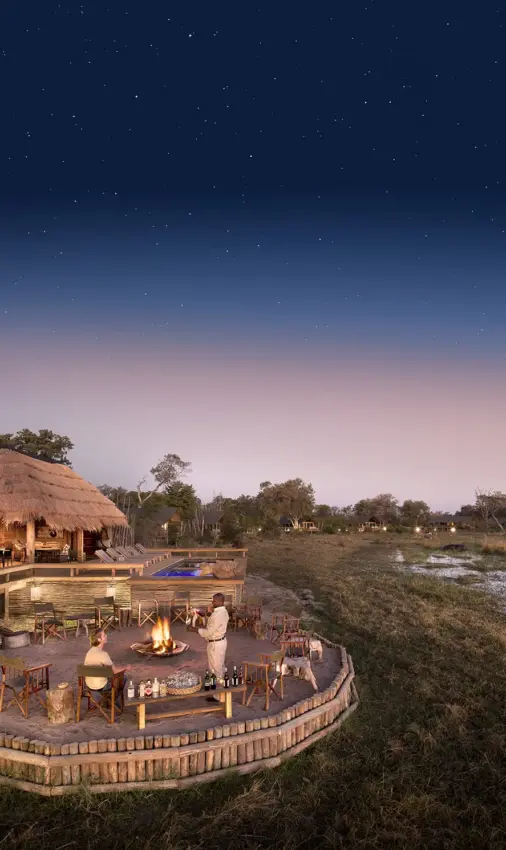
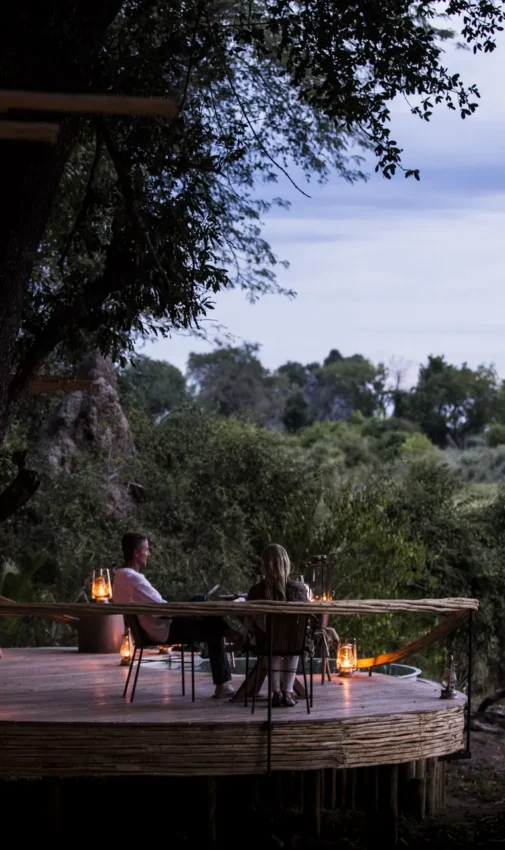
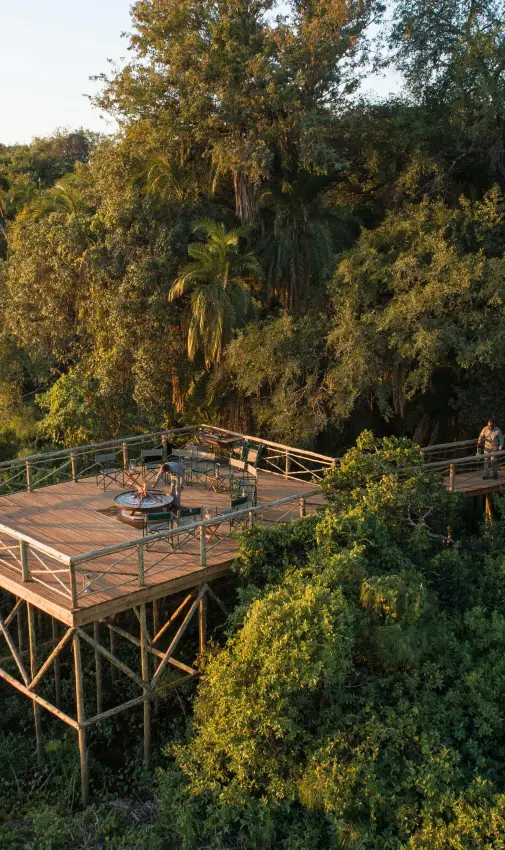
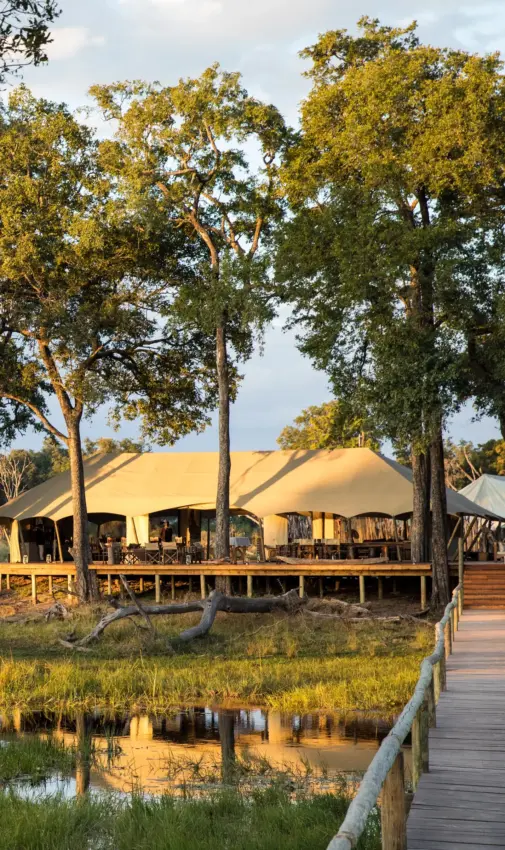
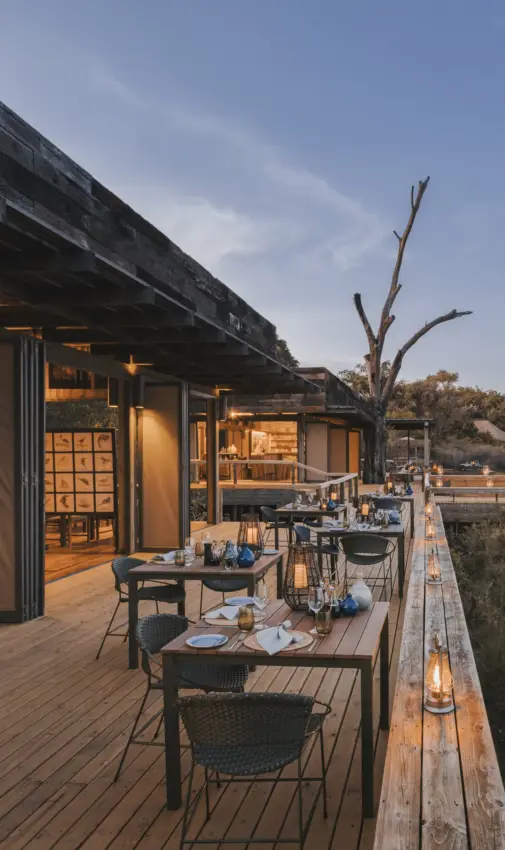
Between drives, camp life gathers on a large tented deck that holds the lounge and bar, the dining tables and a small library, with a curio shop alongside. Its sides stand open to the river. Solar panels and a battery bank supply the power, with a generator in reserve, and the sun heats the water. The camp is canvas and wood on sandy soil, designed so that, once lifted, its site could return to bush within about eighteen months, leaving this stretch of the Okavango Delta to the figs.