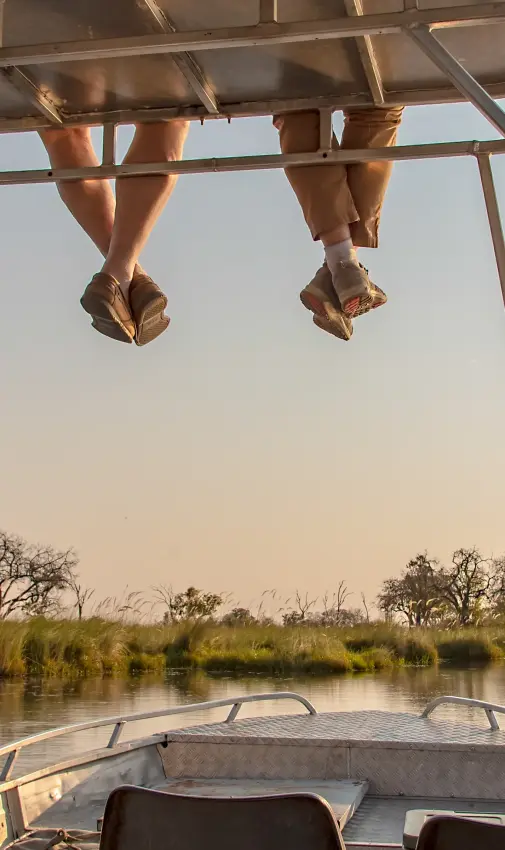
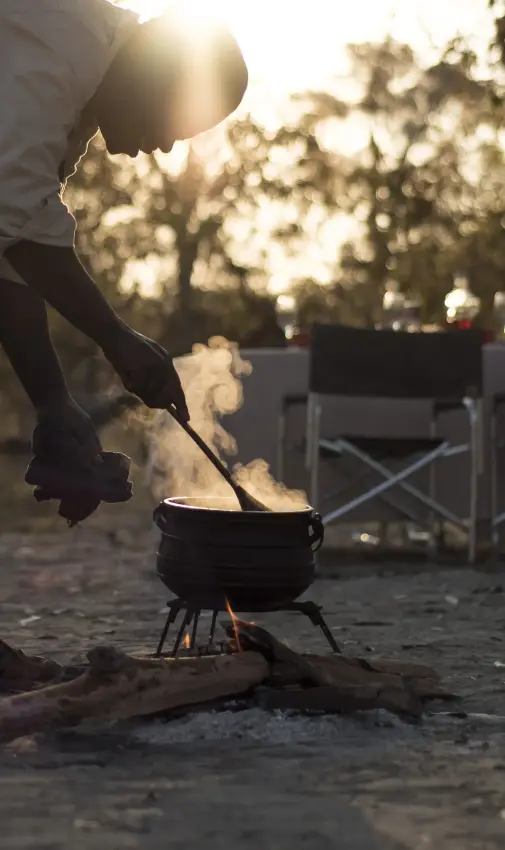
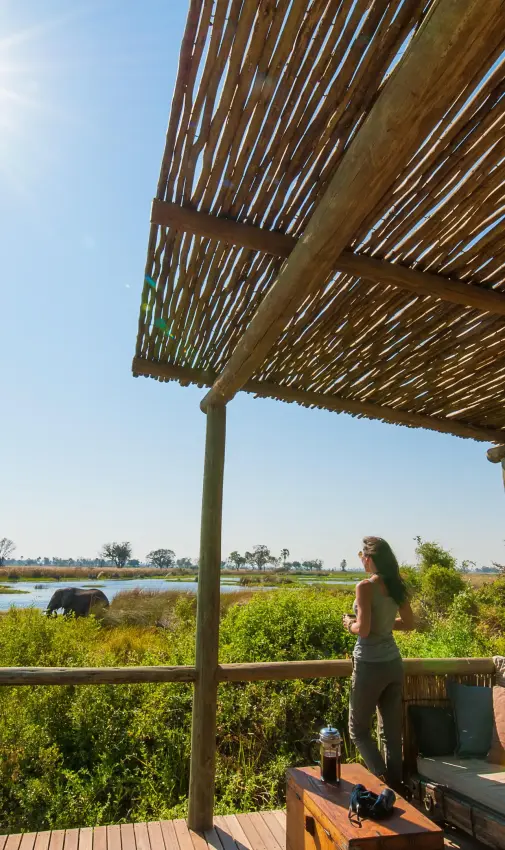
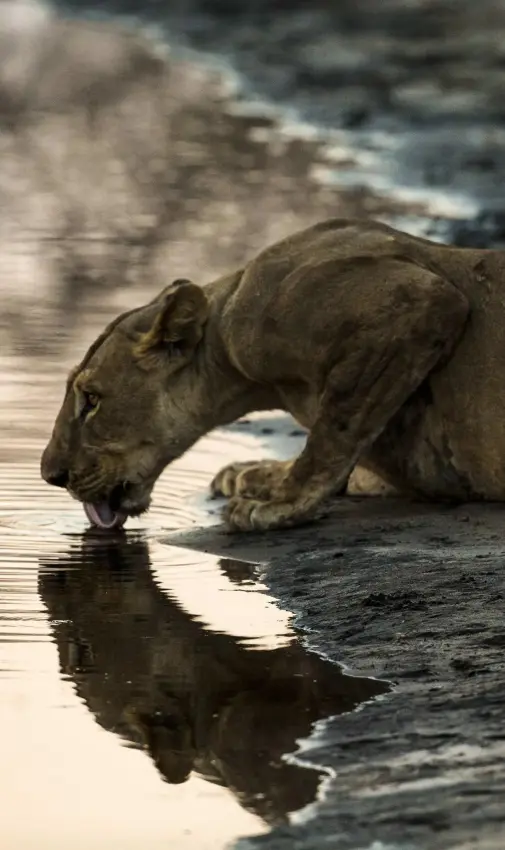
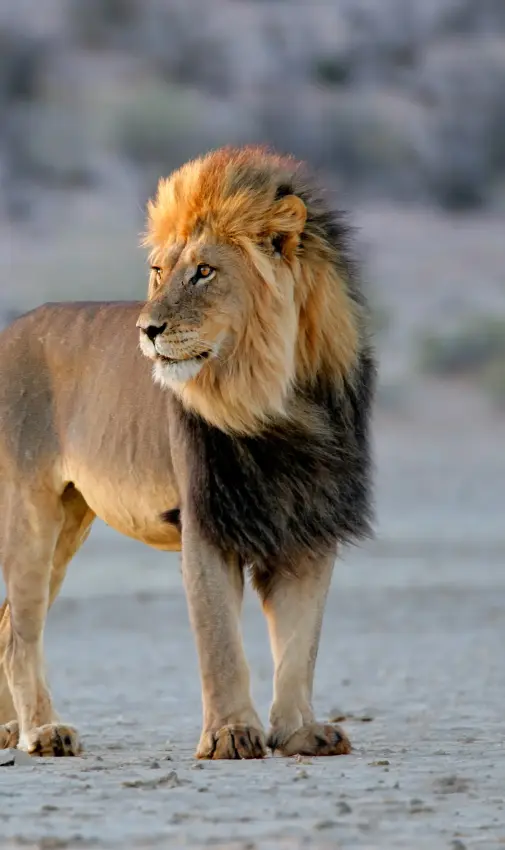
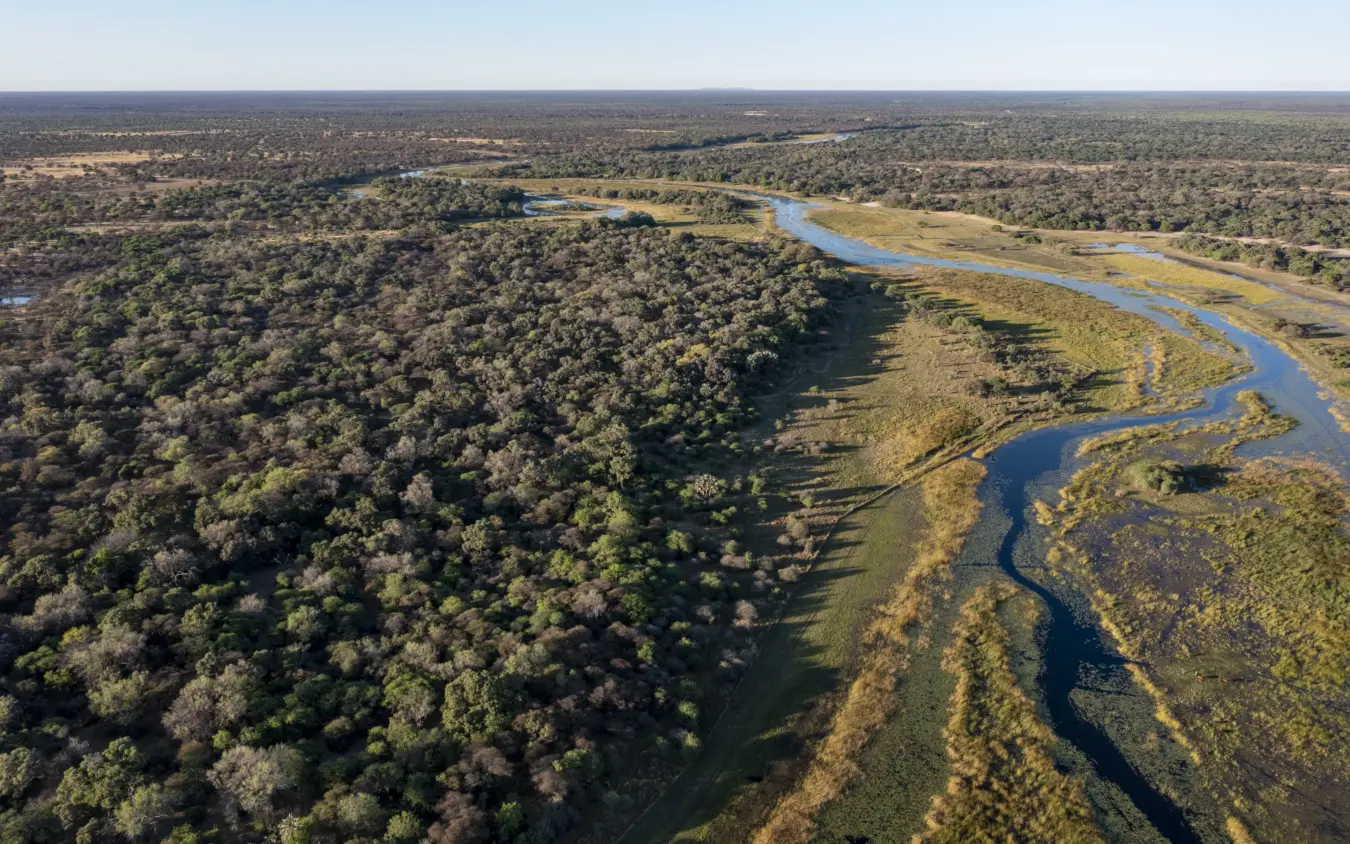
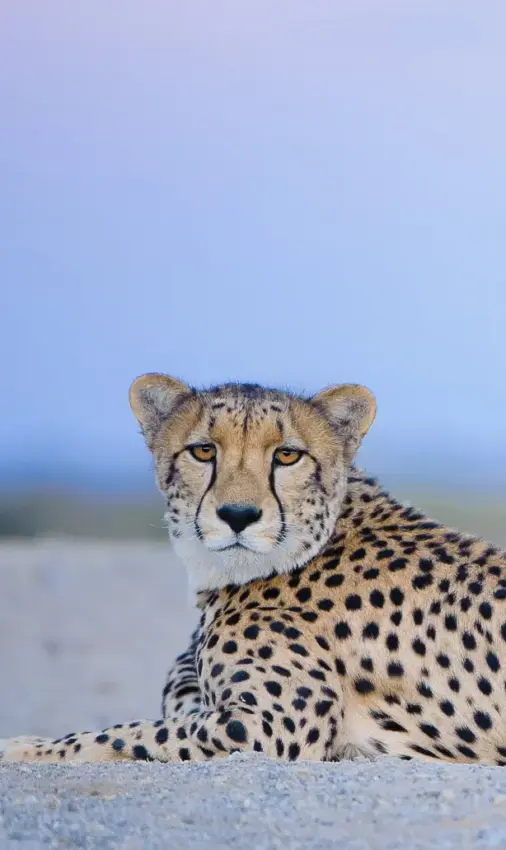
In this part of the Okavango Delta the water rises through the dry winter months, spreading across the plains around camp. As the flood comes up, boats carry guests to Hunda Island, the reserve’s largest dry landmass, for longer drives, sometimes with a picnic lunch in the bush. Closer to camp, herds of red lechwe wade the shallows. On the open ground lion, leopard, wild dog and spotted hyena hunt, while buffalo and cheetah range through the reserve as well.
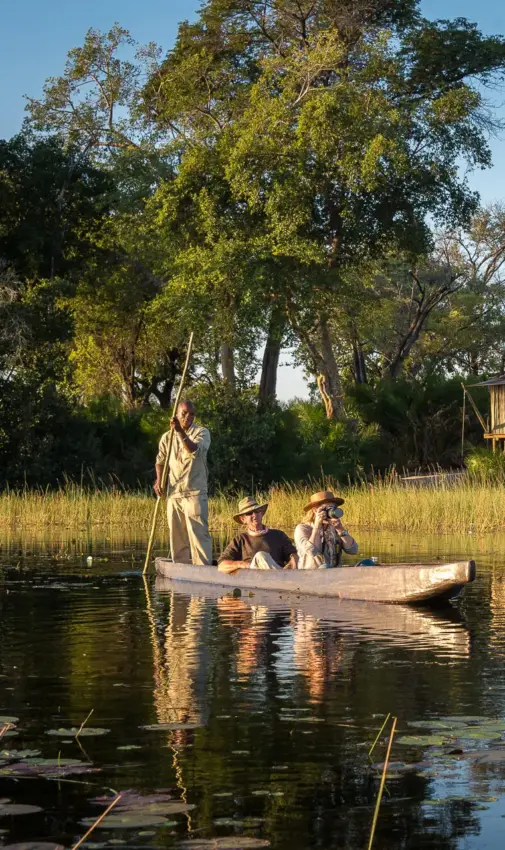
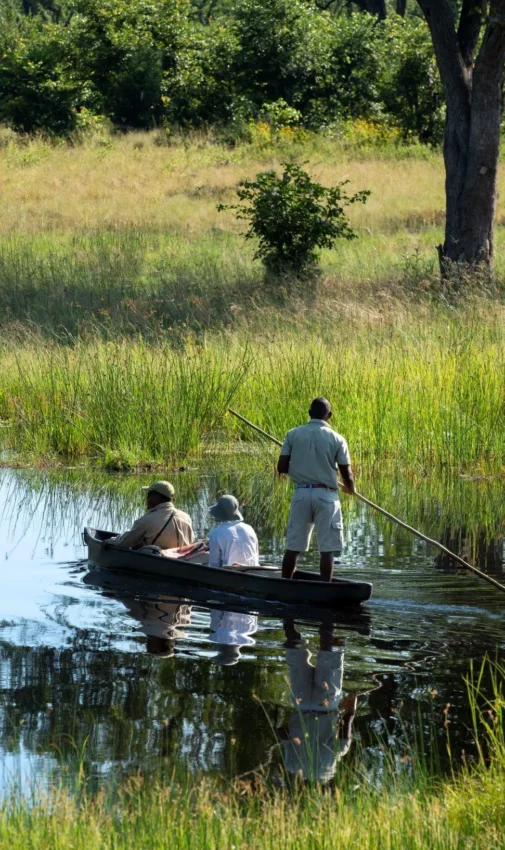
Polers work the mokoro through the shallows, and because the canoes carry no engine, sitatunga in the papyrus can be approached quietly. Motorboats reach further, out along the deeper channels to lagoons where hippos surface and Nile crocodiles lie on the sandbanks. Birders come for Pel’s fishing owl, though the list runs on through slaty egret and wattled crane, black crake and malachite kingfisher. The fishing is catch-and-release, for tigerfish and bream, and runs only when the water allows.
After dark the reed frogs ping like tapped wine glasses, and the bull hippos bellow
Because the reserve is a private concession rather than a national park, drives can carry on after dark with spotlights, and private drives can be arranged. Guides also lead walks, reading spoor and pointing out the island plants and smaller creatures a vehicle rolls past. A short light-aircraft flight out of Maun reaches the Jao airstrip, followed by a brief drive to camp or, when the flood is high, a boat ride along the channels.
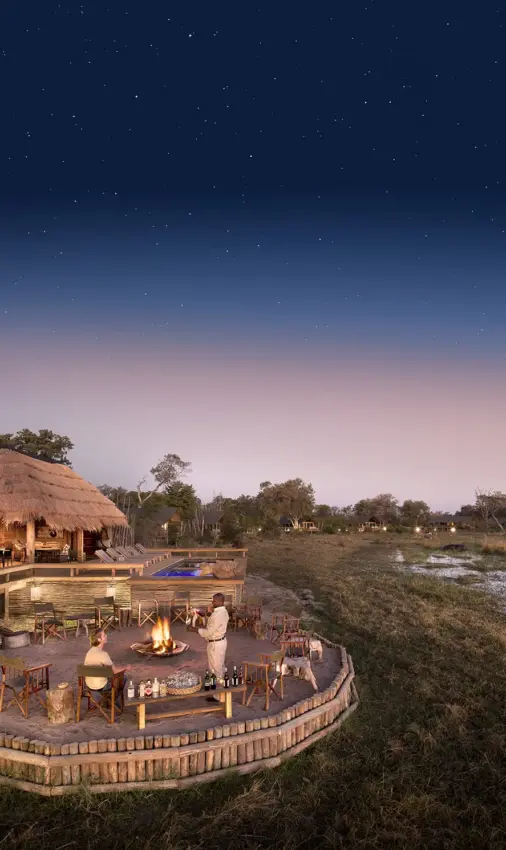
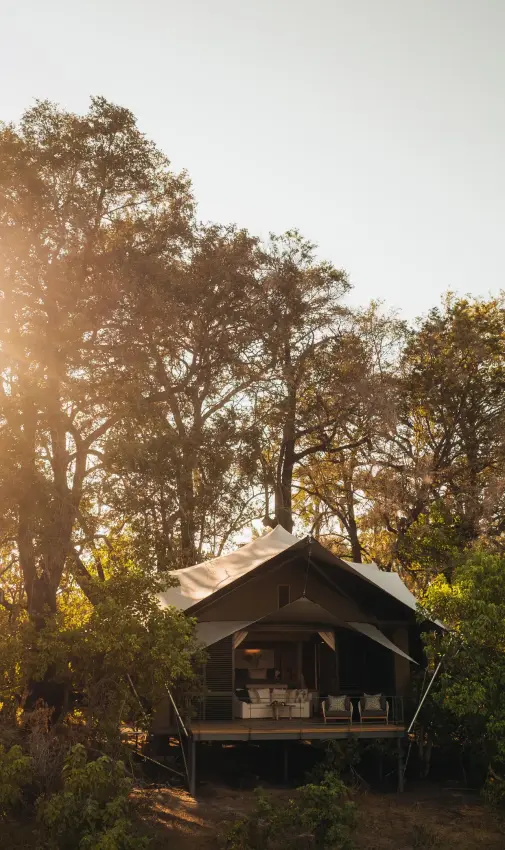
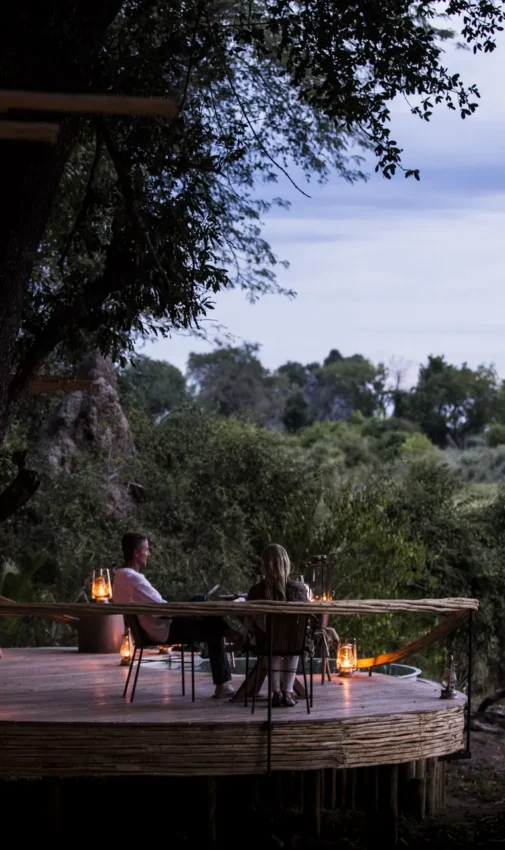
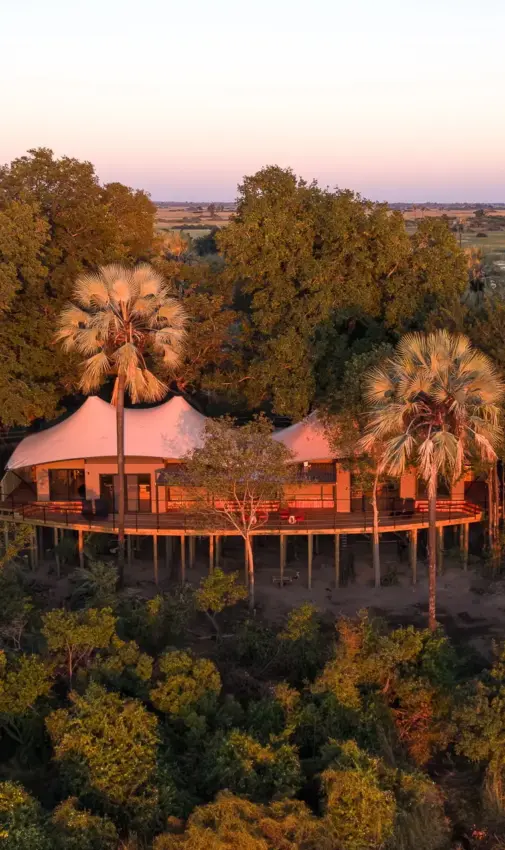
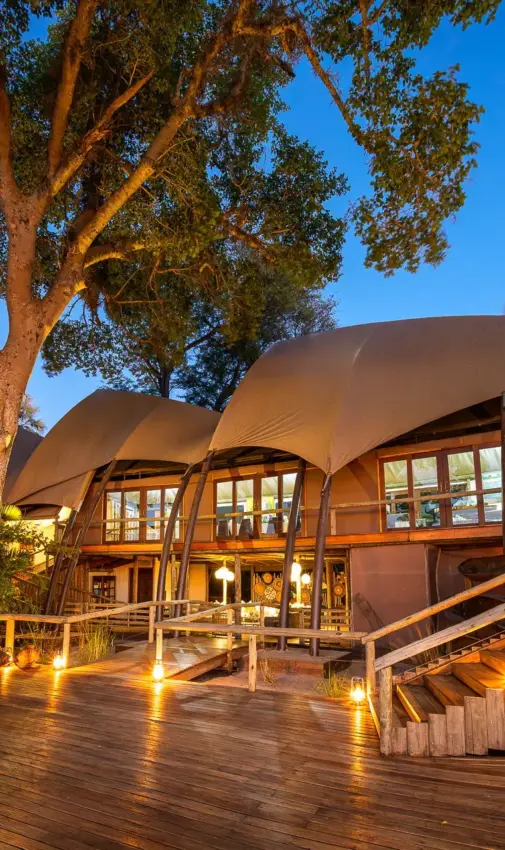
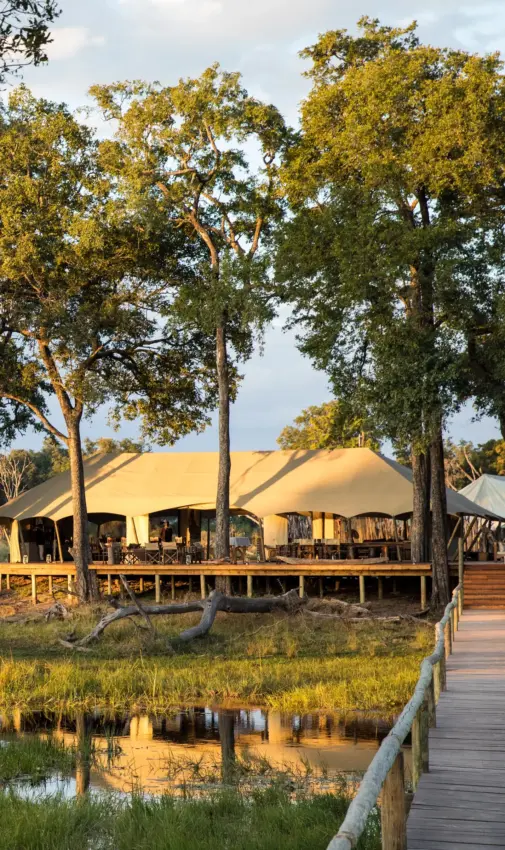
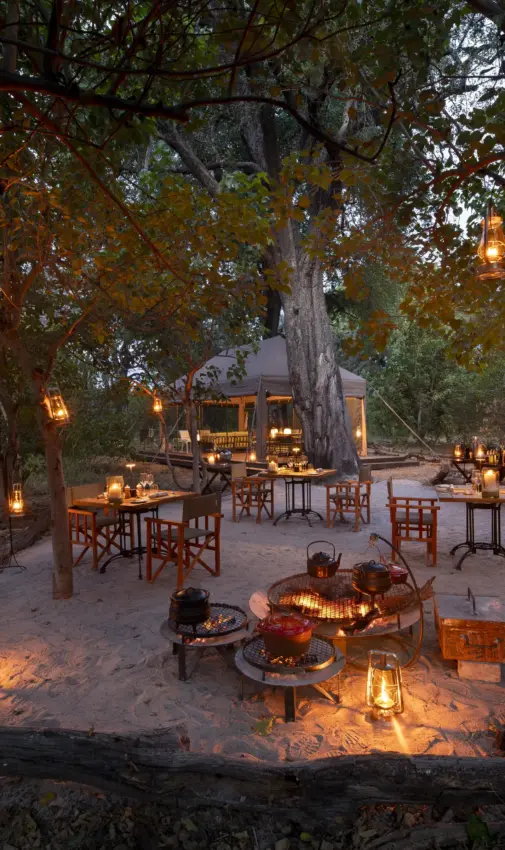
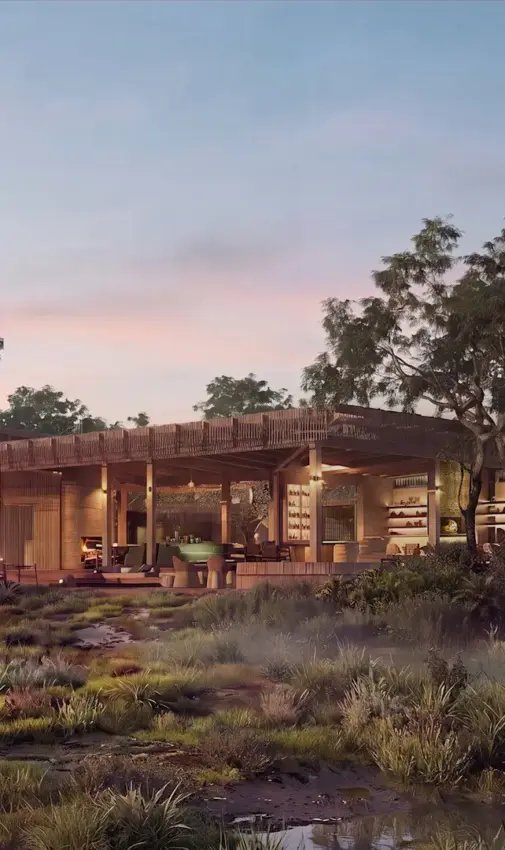
Between outings, life moves up into the main area, high in the trees, where fires are lit indoors and out. Beside a wine cellar of South African wines, the gallery holds a library, regional maps and articulated skeletons, a full giraffe among them. After dark the reed frogs ping like tapped wine glasses, and the bull hippos bellow. The bellowing carries up from the channels below the walkways, and dinner goes on beneath it, moved some nights to the open-air boma or served privately on a suite or villa deck.