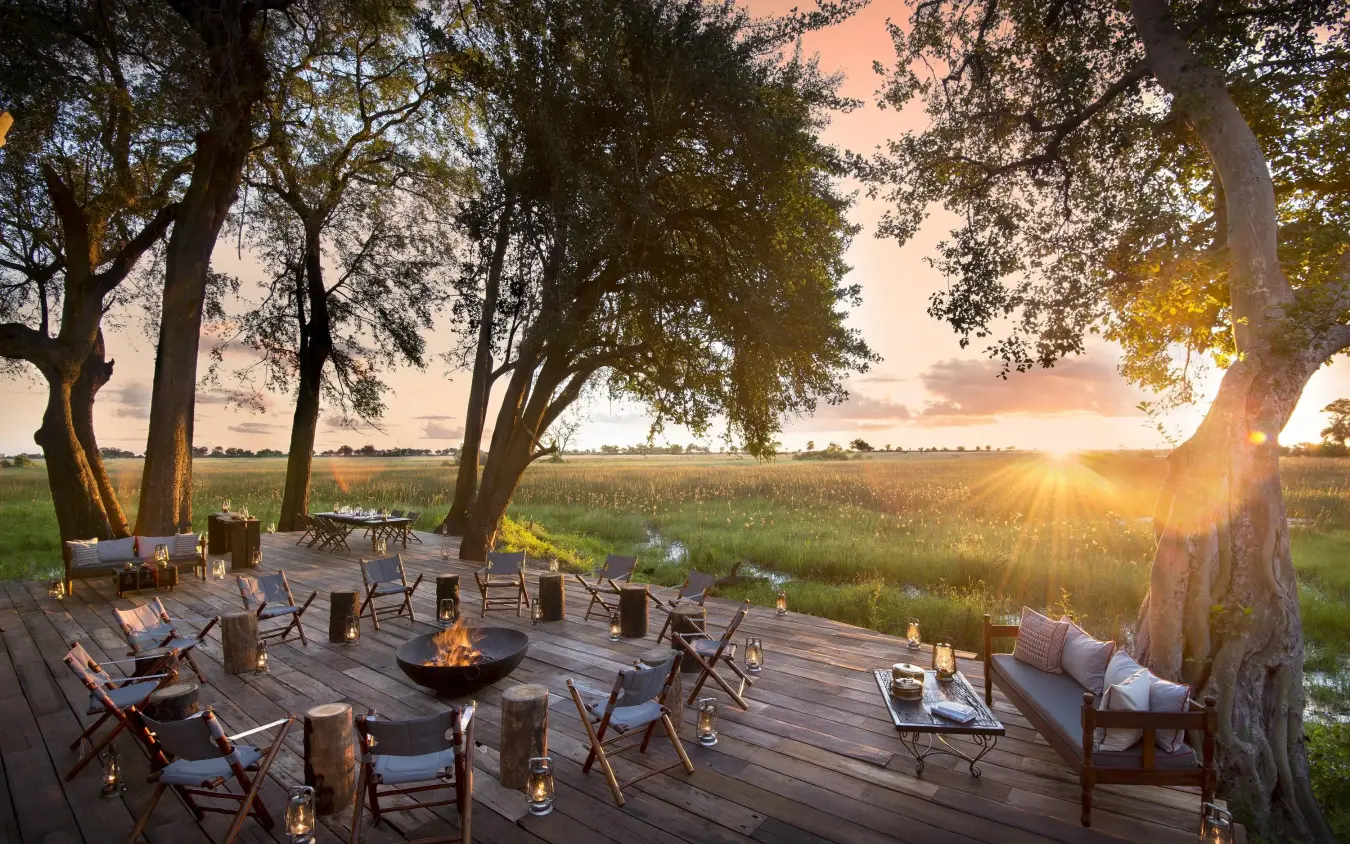
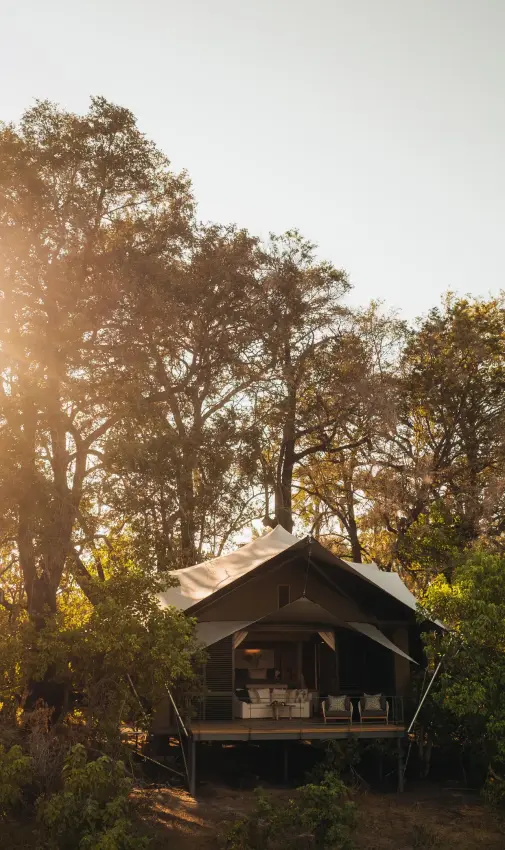
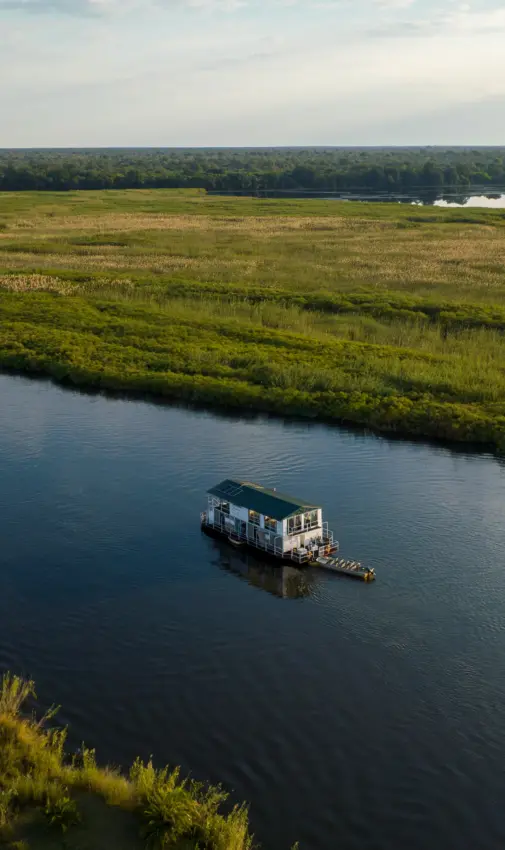
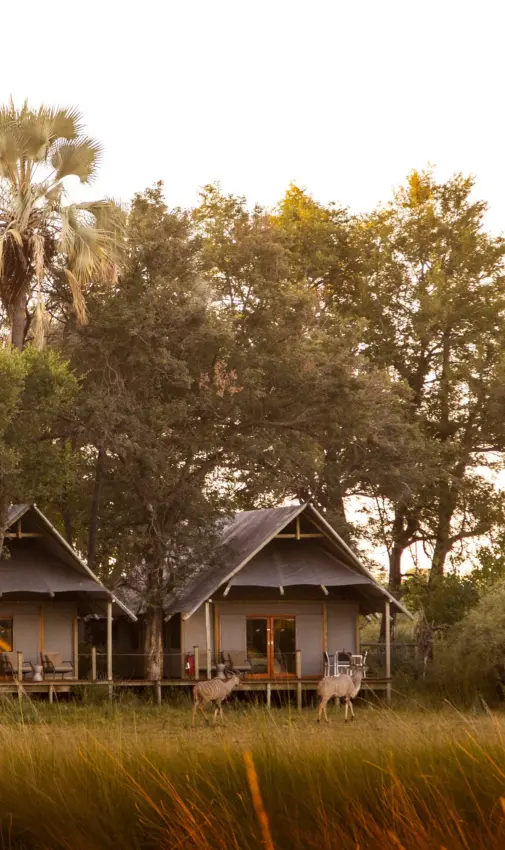
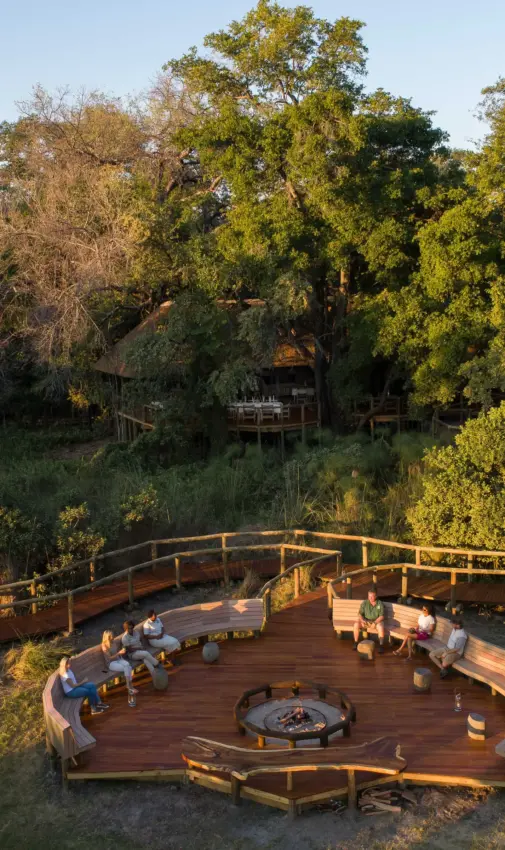
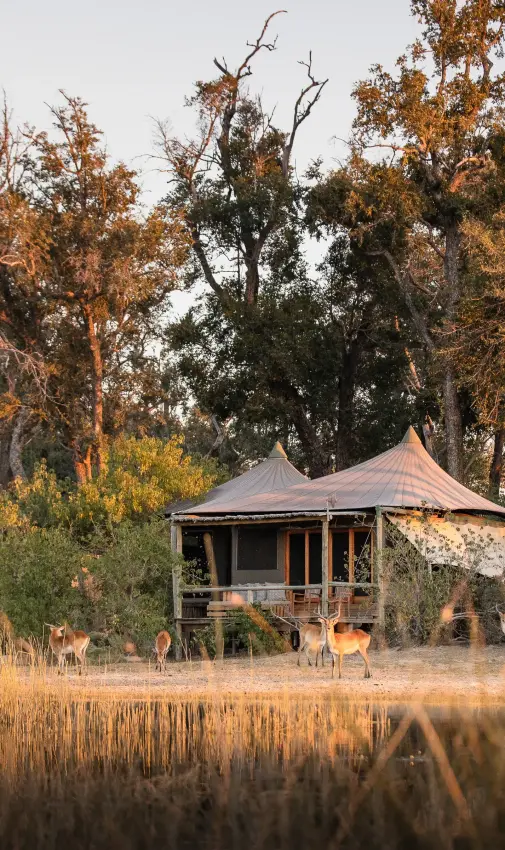
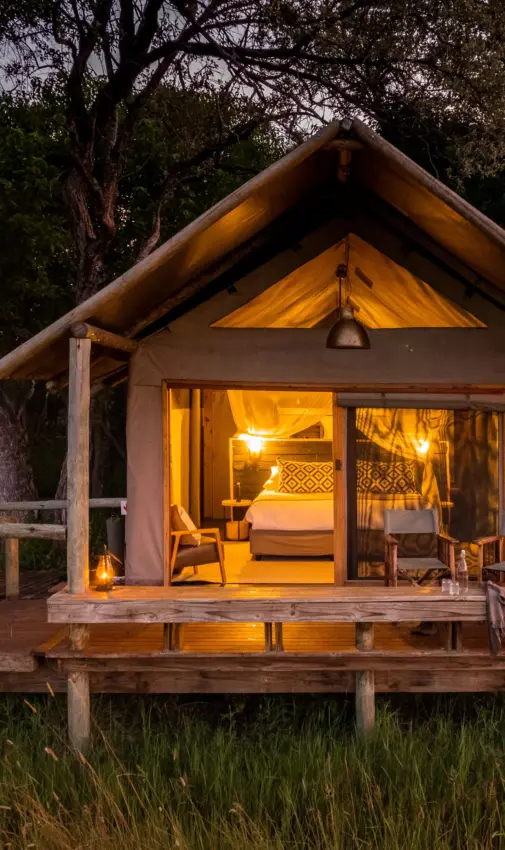
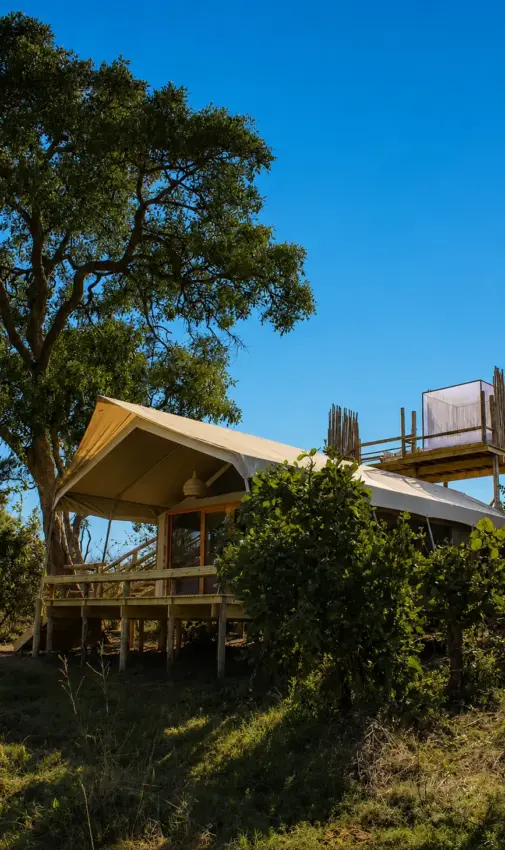
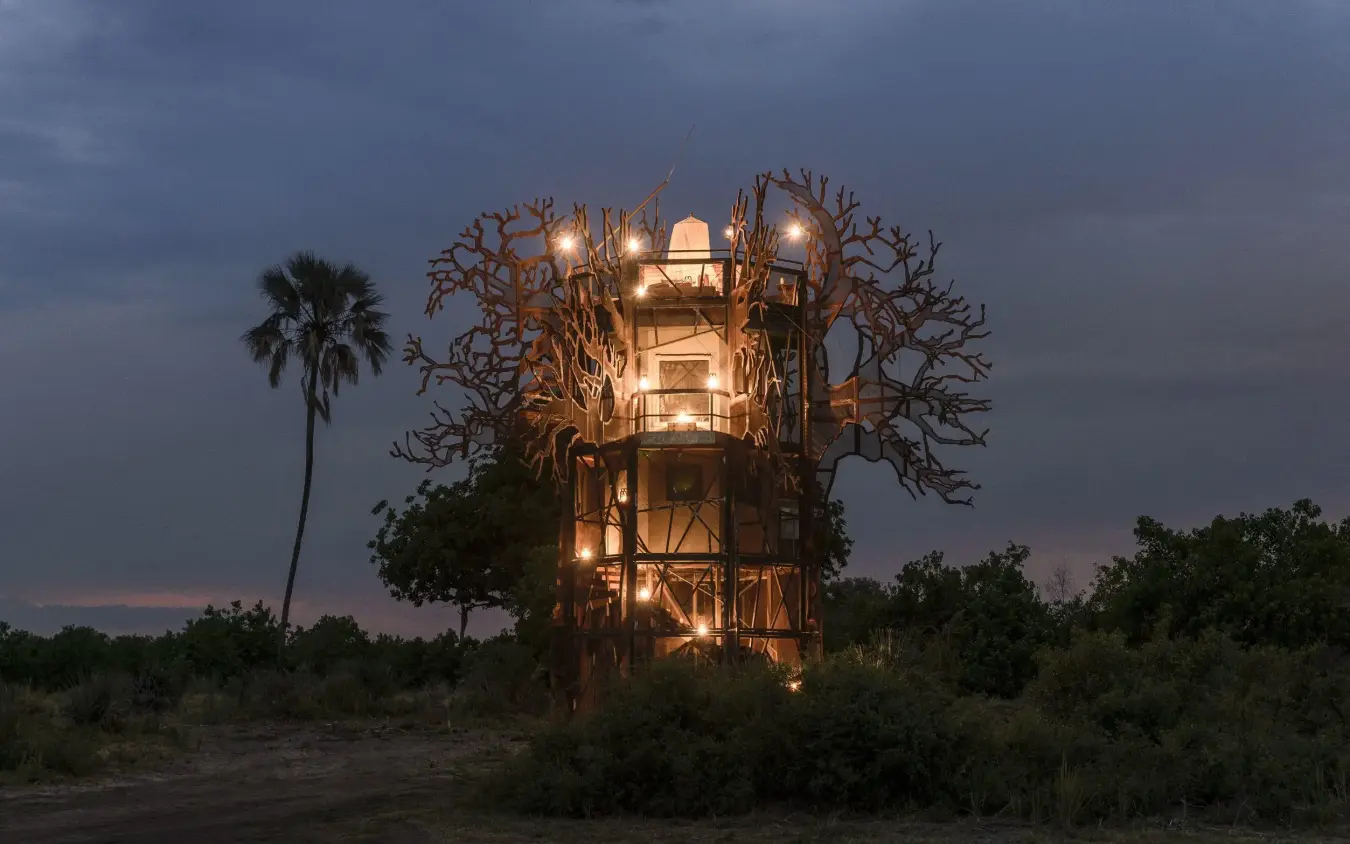
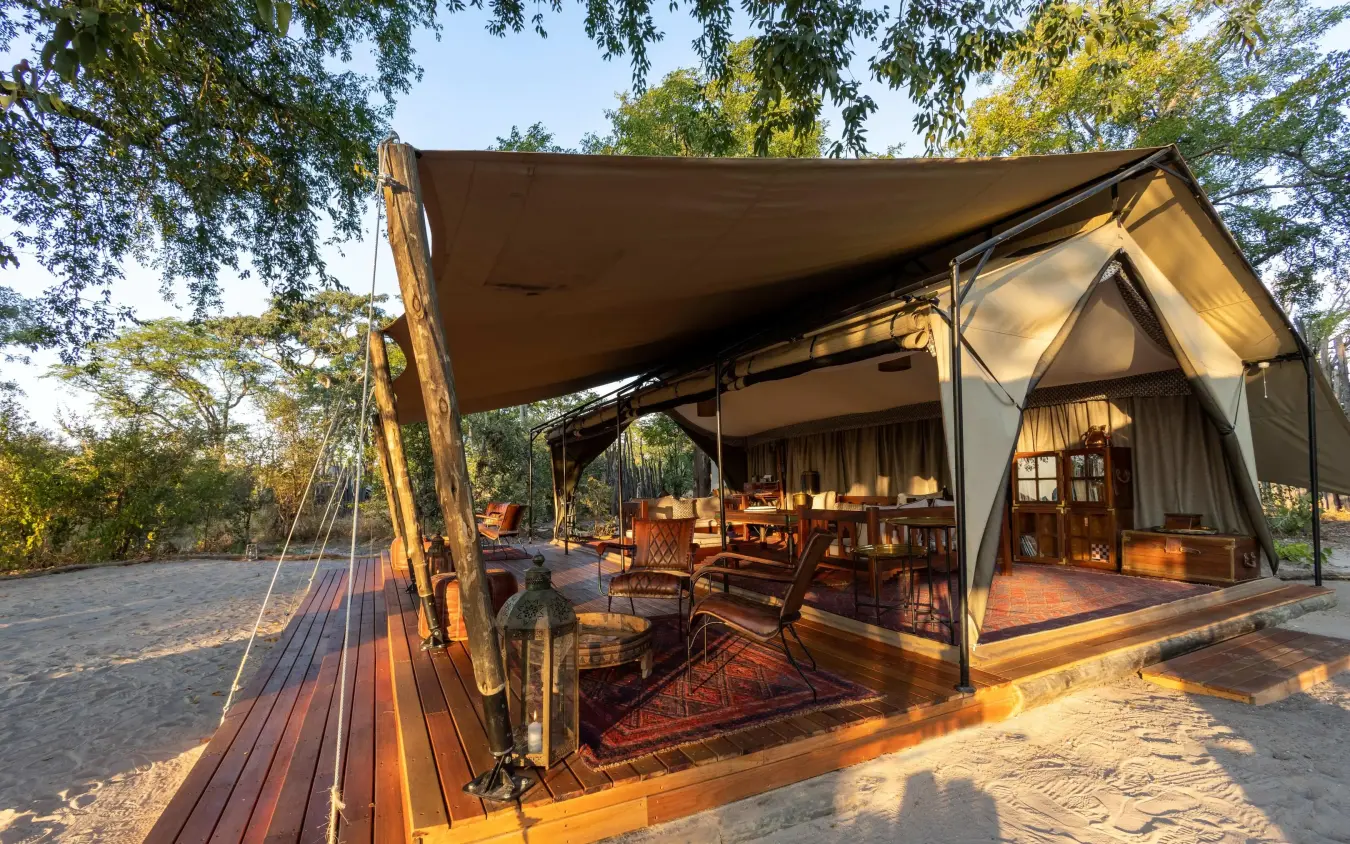
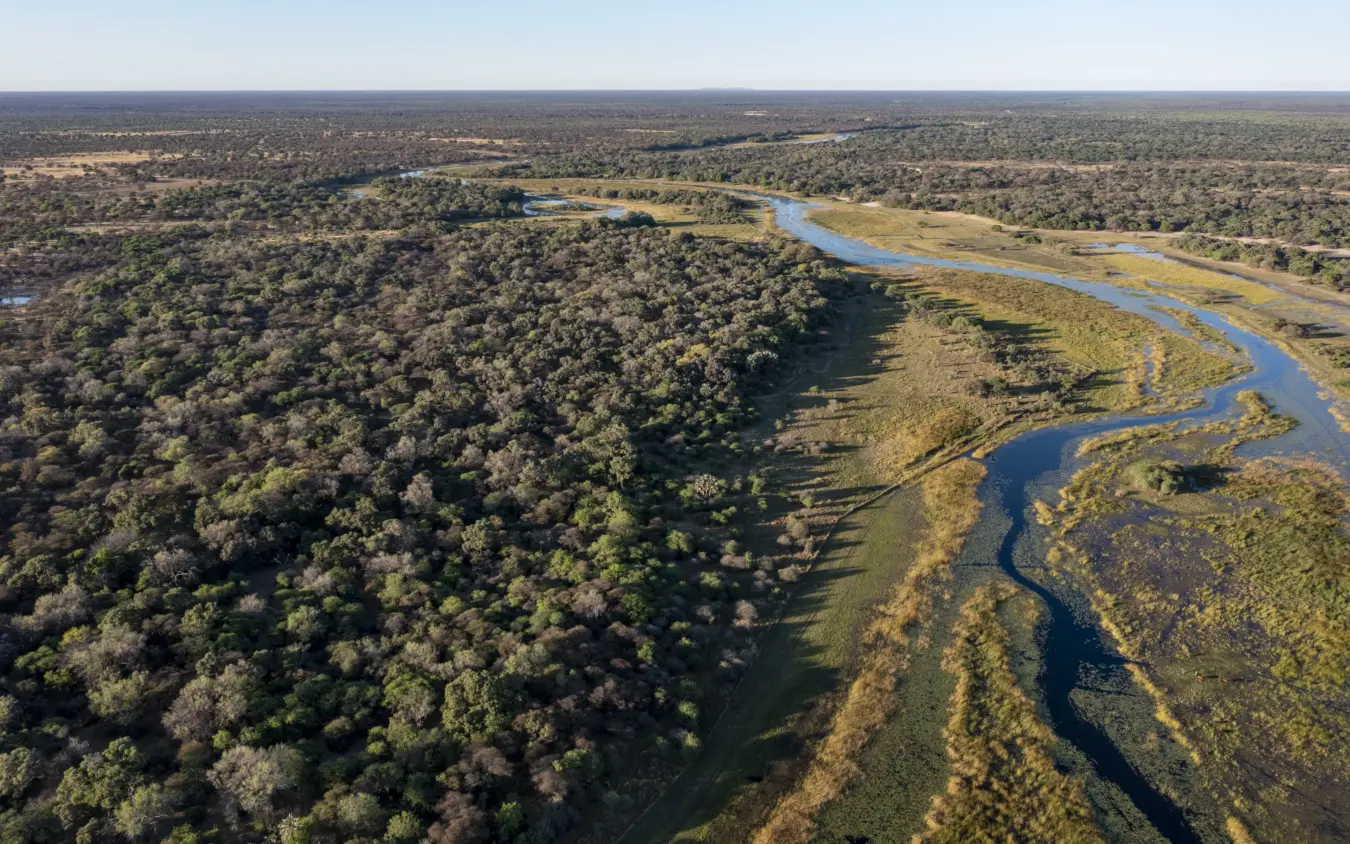
Ebony, fig and garcinia shade the island, and beyond their canopy the ground gives way to open floodplain that fills the view from every deck and pathway. Guests are, in effect, marooned on high ground within a wetland. The camp is raised above the flood, and for months at a time the view from each veranda changes with the water. There is no road in. A light aircraft comes from Maun, or in an hour and twenty minutes from Kasane, and lands at the concession’s own airstrip a short drive from camp.
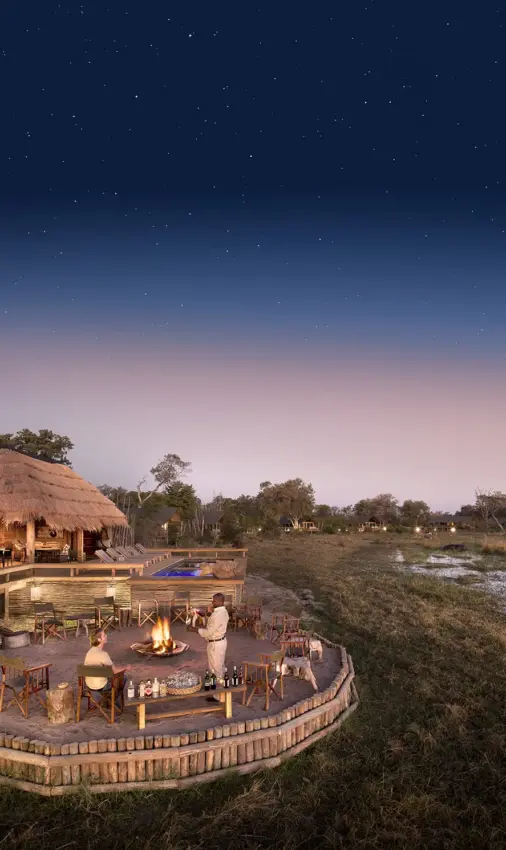
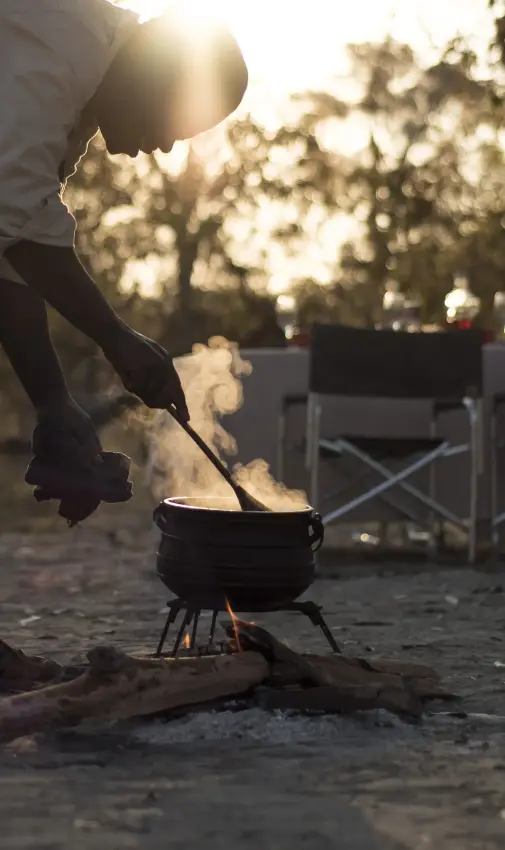
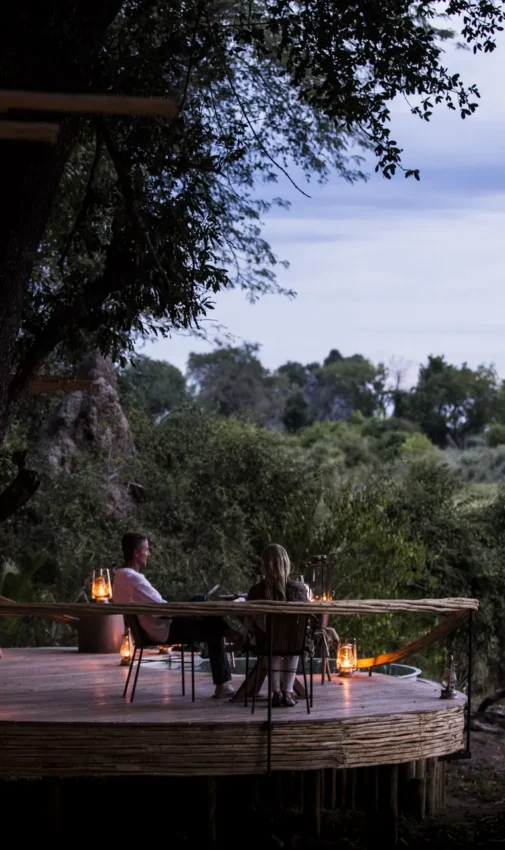
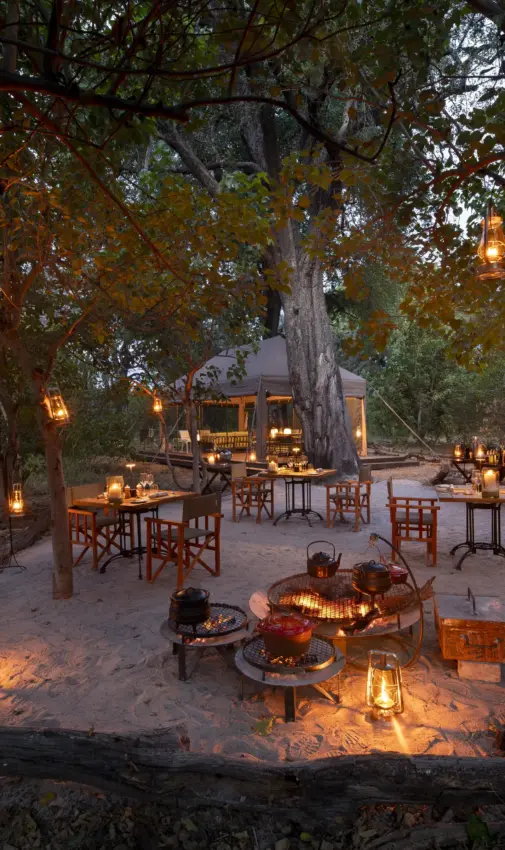
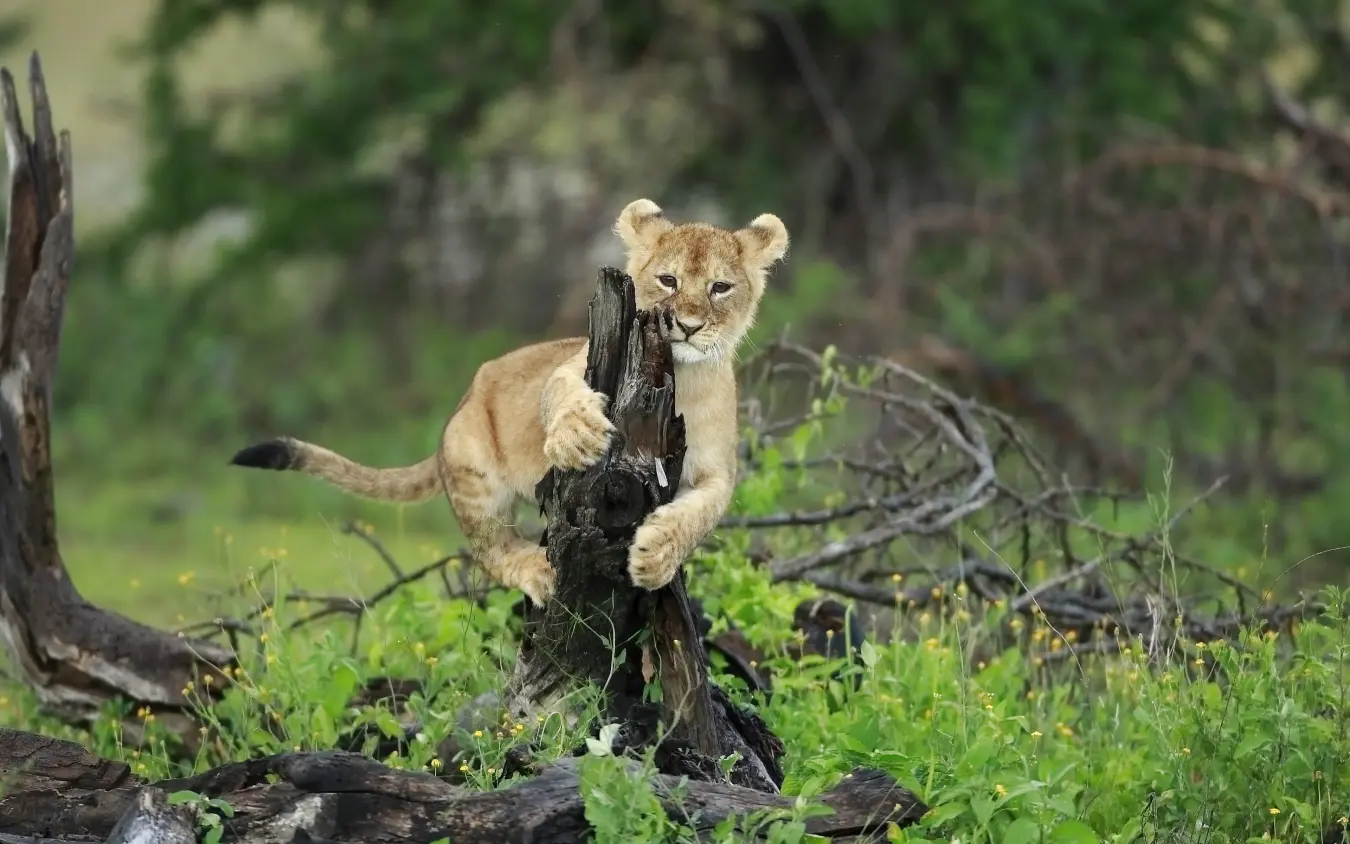
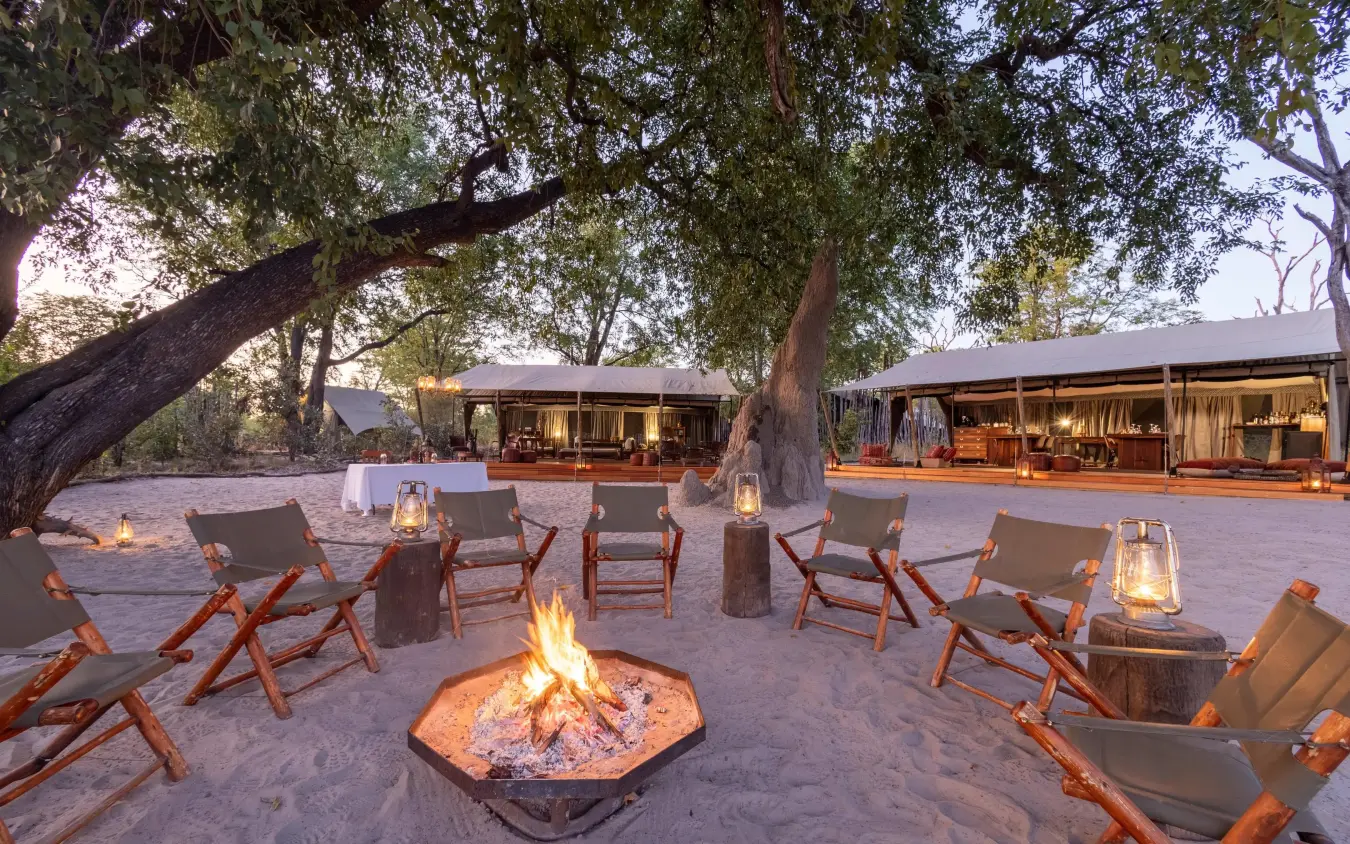
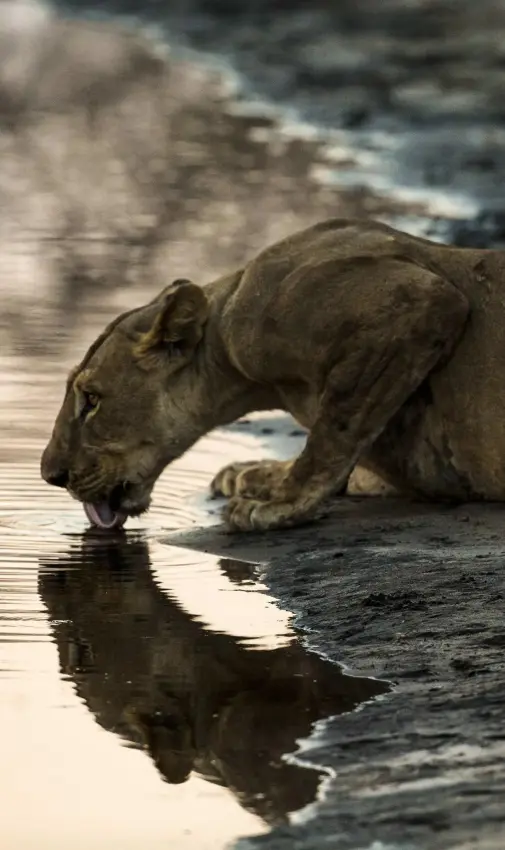
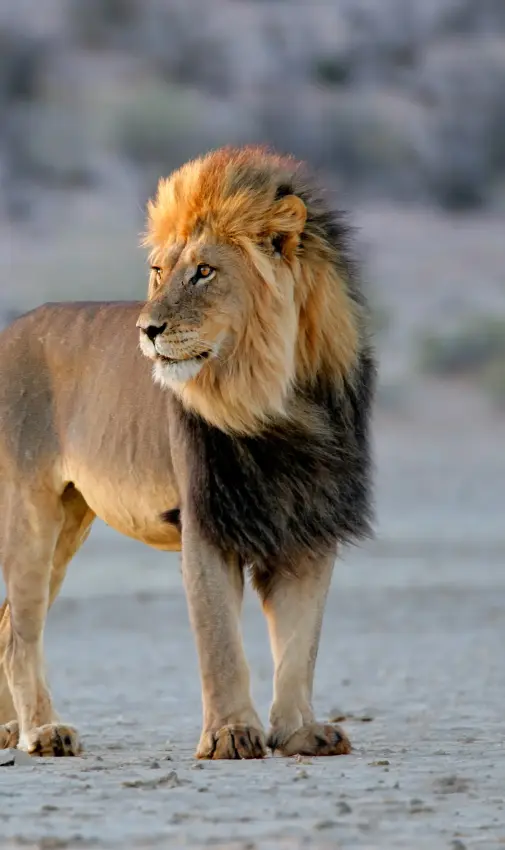
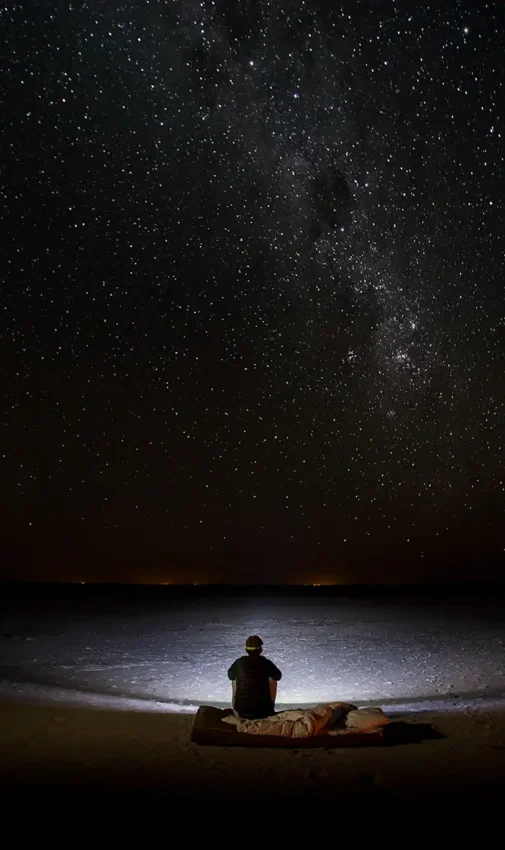
The camp is a member of Relais & Châteaux, and the kitchen holds to that standard wherever the day happens to end. Lunch is laid al fresco under the ebony trees. Dinner is a tasting menu with wine pairings, cooked in an interactive kitchen where guests can watch the team at work, though it can as easily be set privately by the pool or out under the stars. After dark, lion calls and hippo grunts carry across the water to the fire deck. On longer drives a picnic goes out with the vehicle, so nobody has to leave lions closing on a herd to be back in time for lunch.
After dark, lion calls and hippo grunts carry across the water to the fire deck.
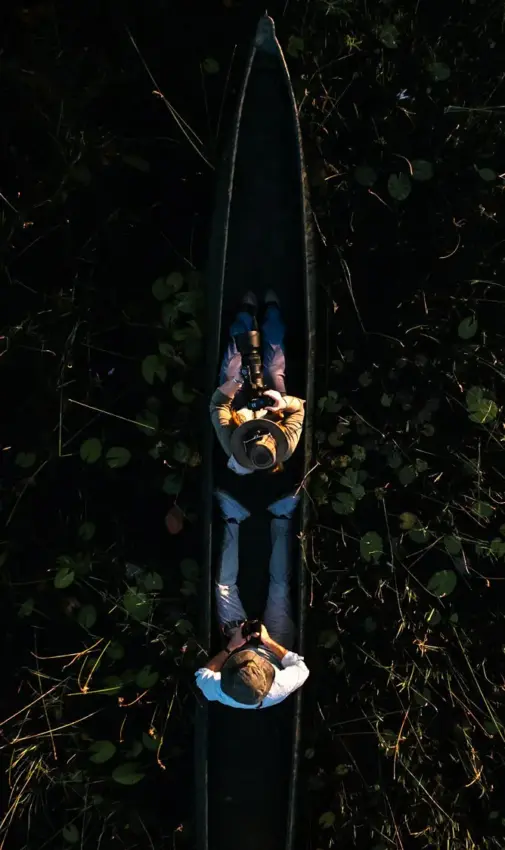
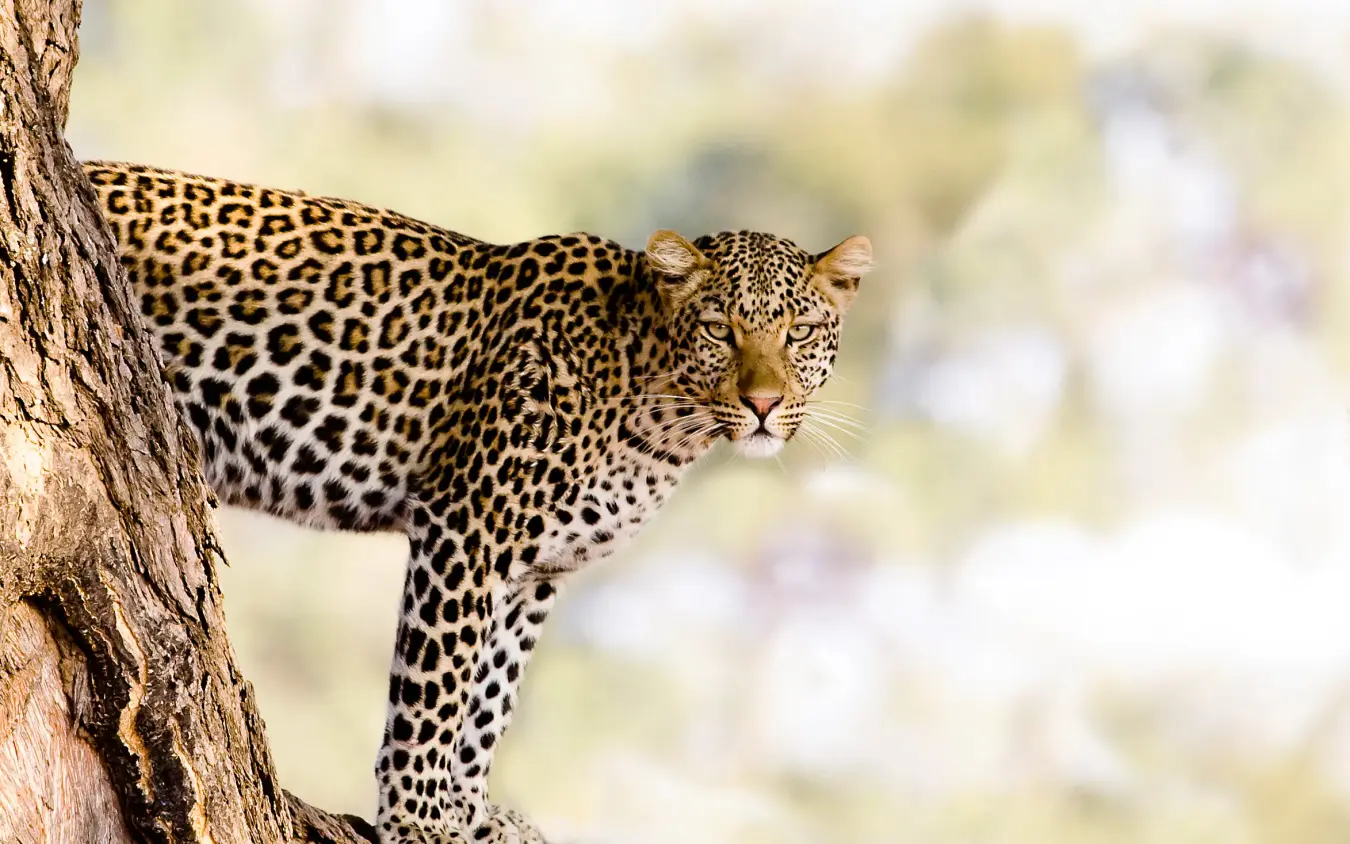
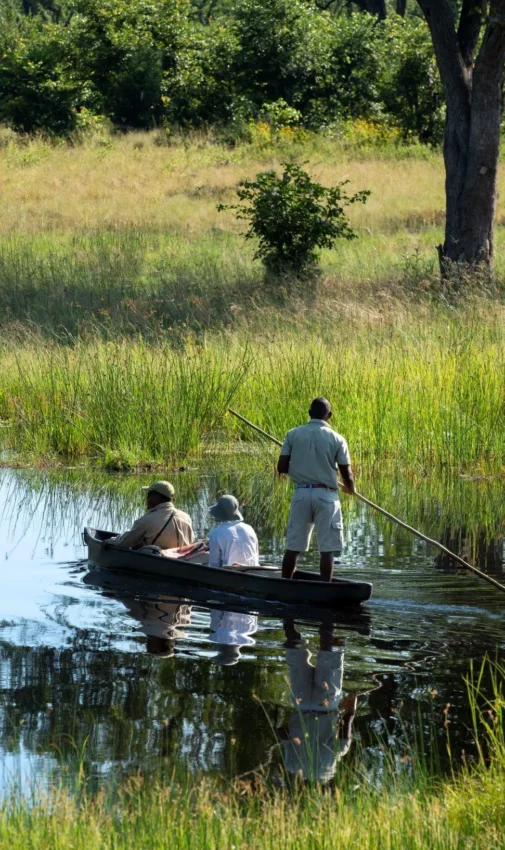
Leopard hold the forested islands within the concession, and the hyena dens are often active. Tsessebe and warthog cross the open grassland beyond camp, blue wildebeest among them. Over 200 bird species have been recorded on the reserve, among them wattled crane, slaty egret, Pel’s fishing owl and rosy-throated longclaw, seen along the same channels the mokoro cross. The birding runs deep enough that the camp keeps a 111 Club, for guests who identify 111 or more species during a single stay. The guides go looking for some of this, and the rest wanders past the deck.
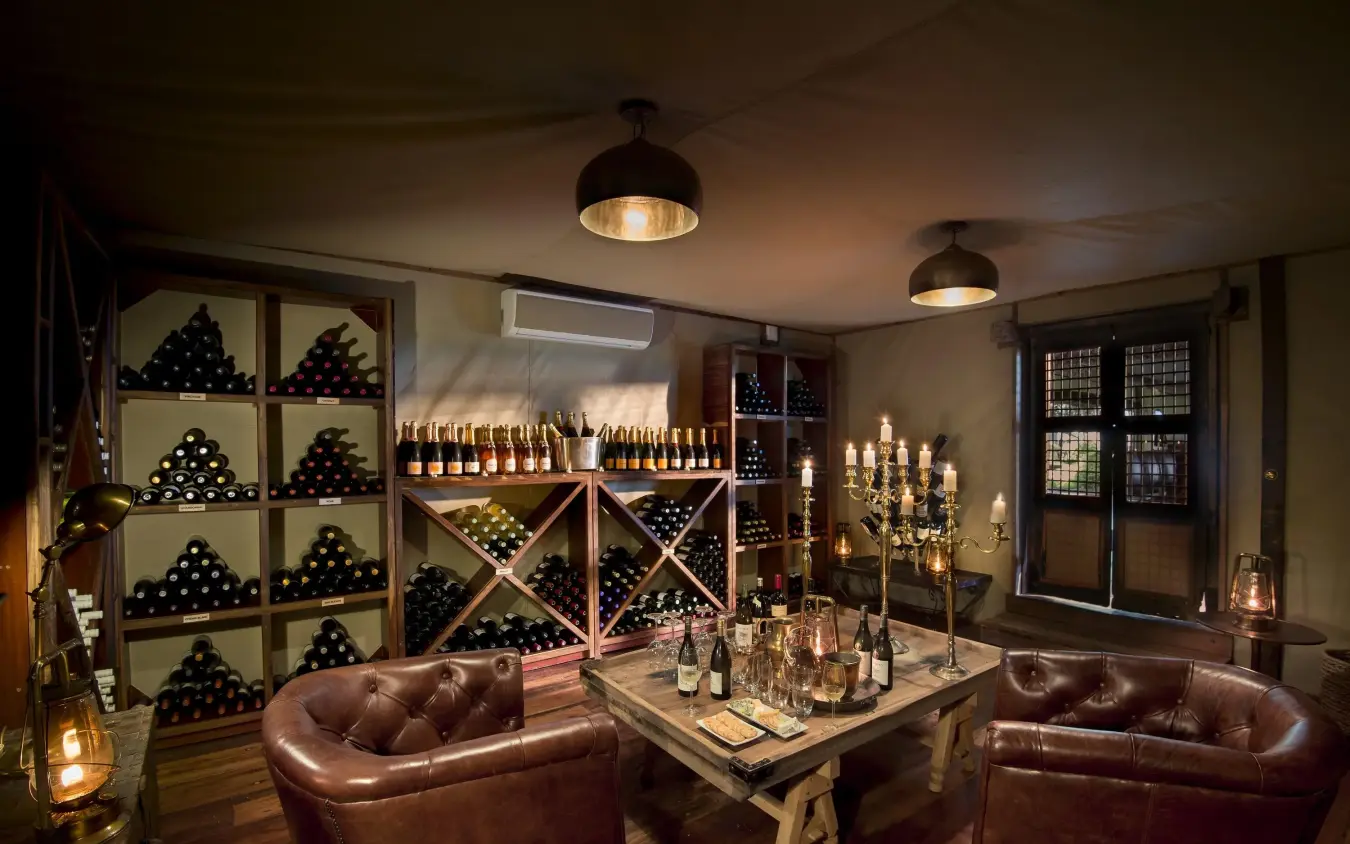
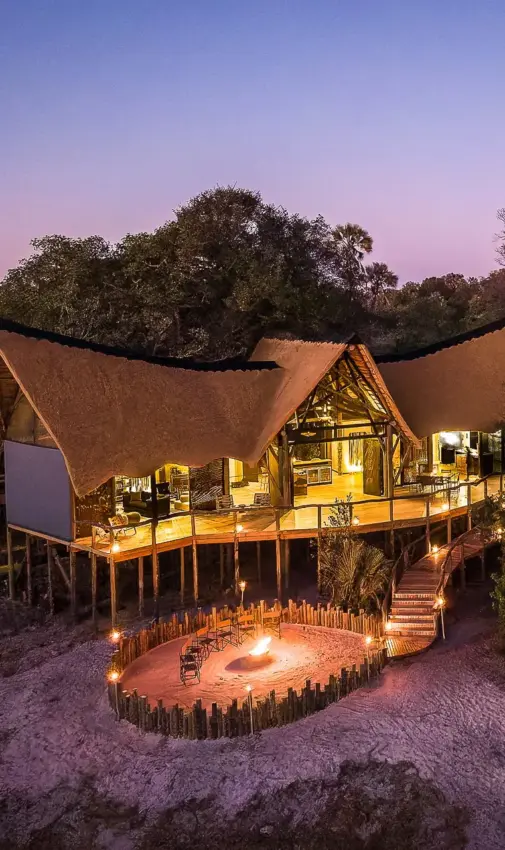
The earlier camp first established the area’s reputation for lion and buffalo interaction. The present one was rebuilt from it, with thatched main areas that gather a library and a wine cellar. Beyond the island, Dereck and Beverly Joubert founded the Great Plains Foundation. Through it, Rhinos Without Borders moved 87 rhinos from South Africa to Botswana between 2015 and 2018. Its Solar Mamas programme has put solar power into a thousand homes, and more than two thousand schoolchildren have been hosted for conservation education.


 01