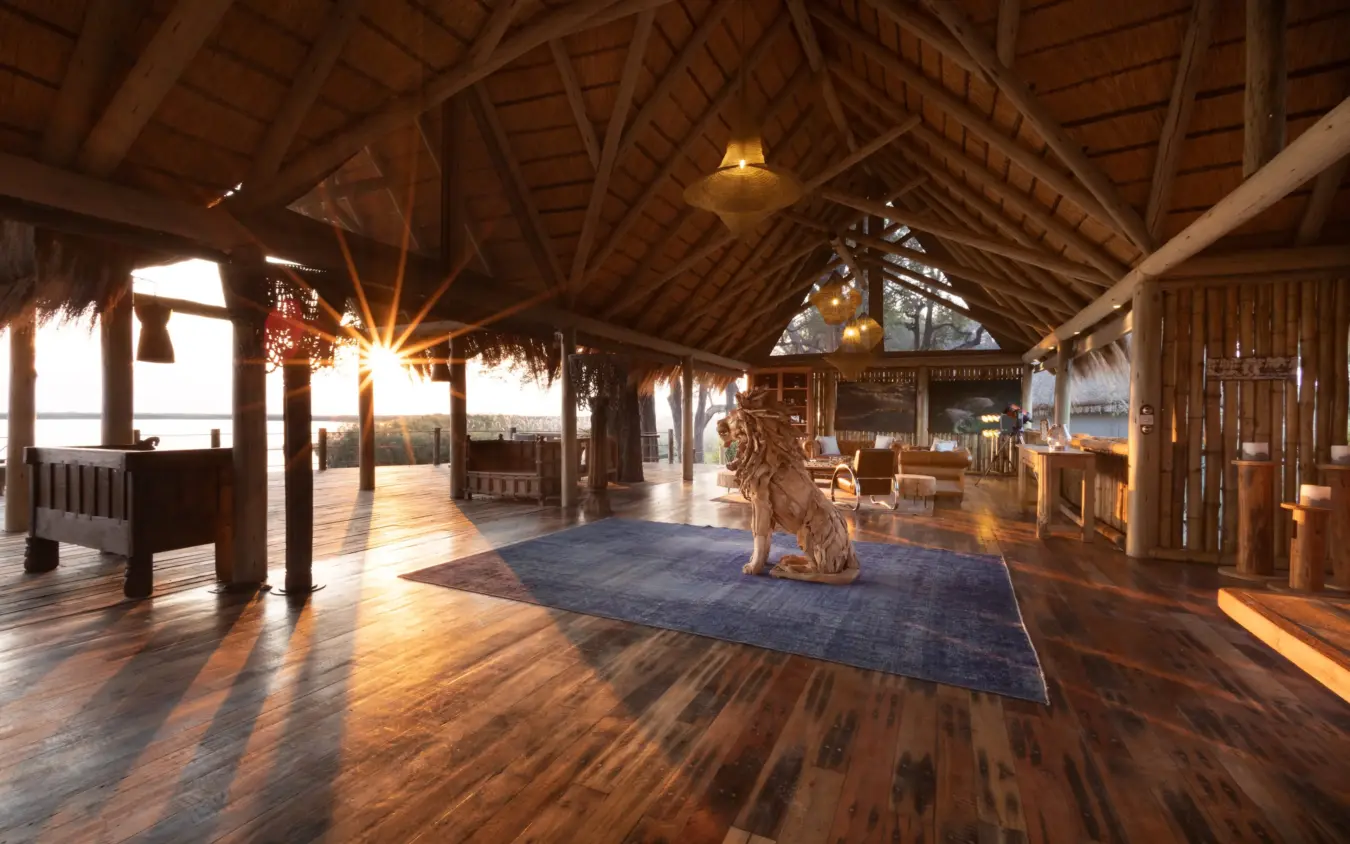
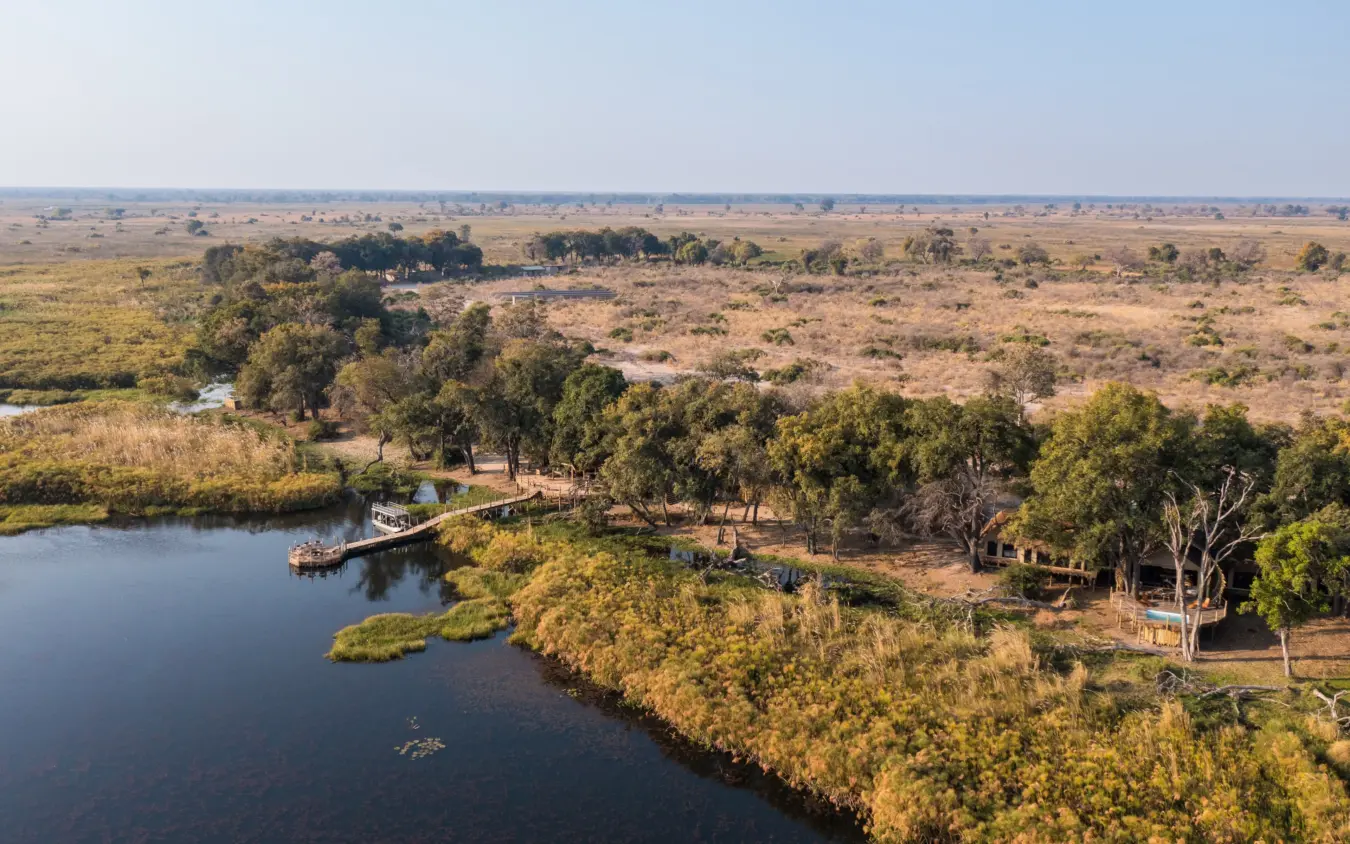
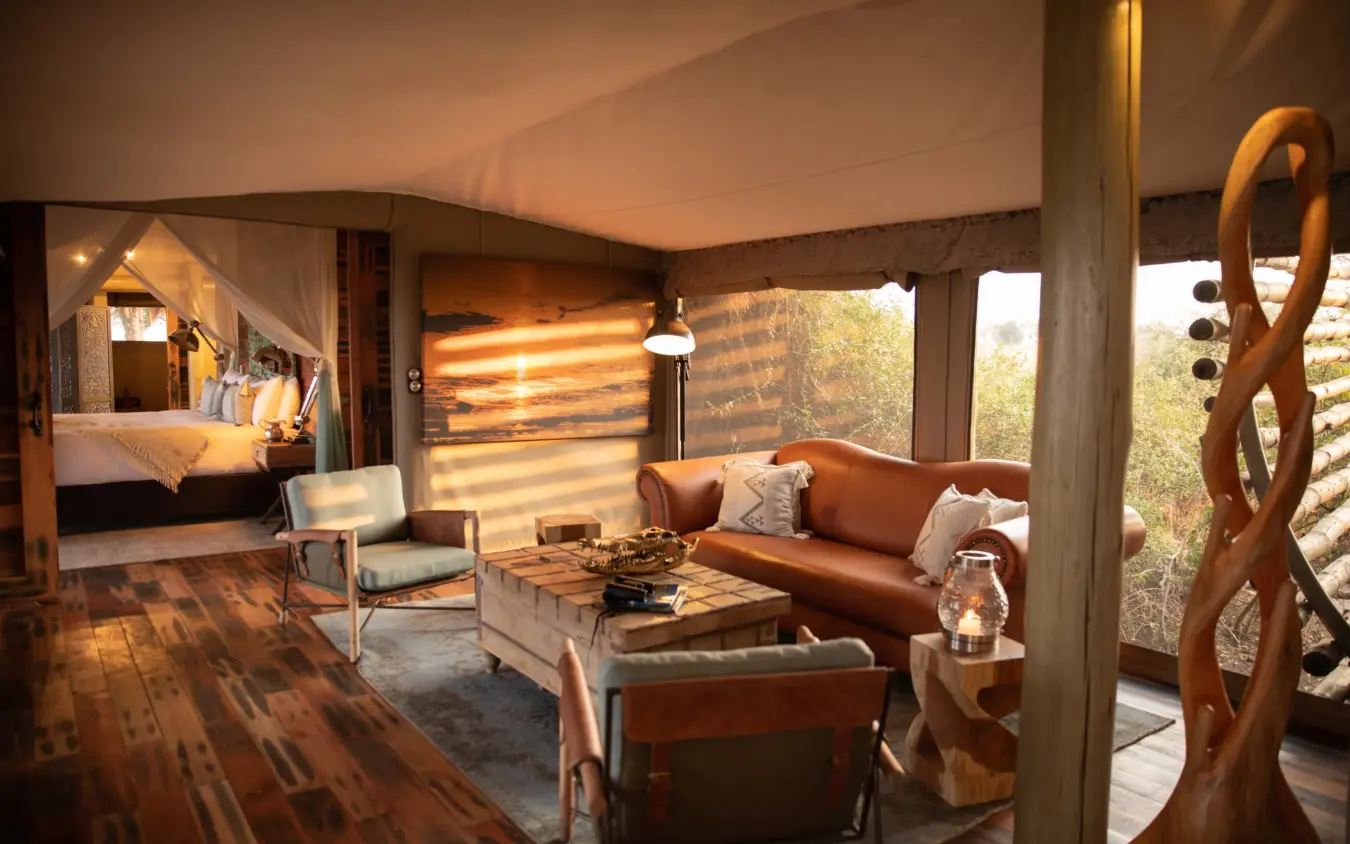
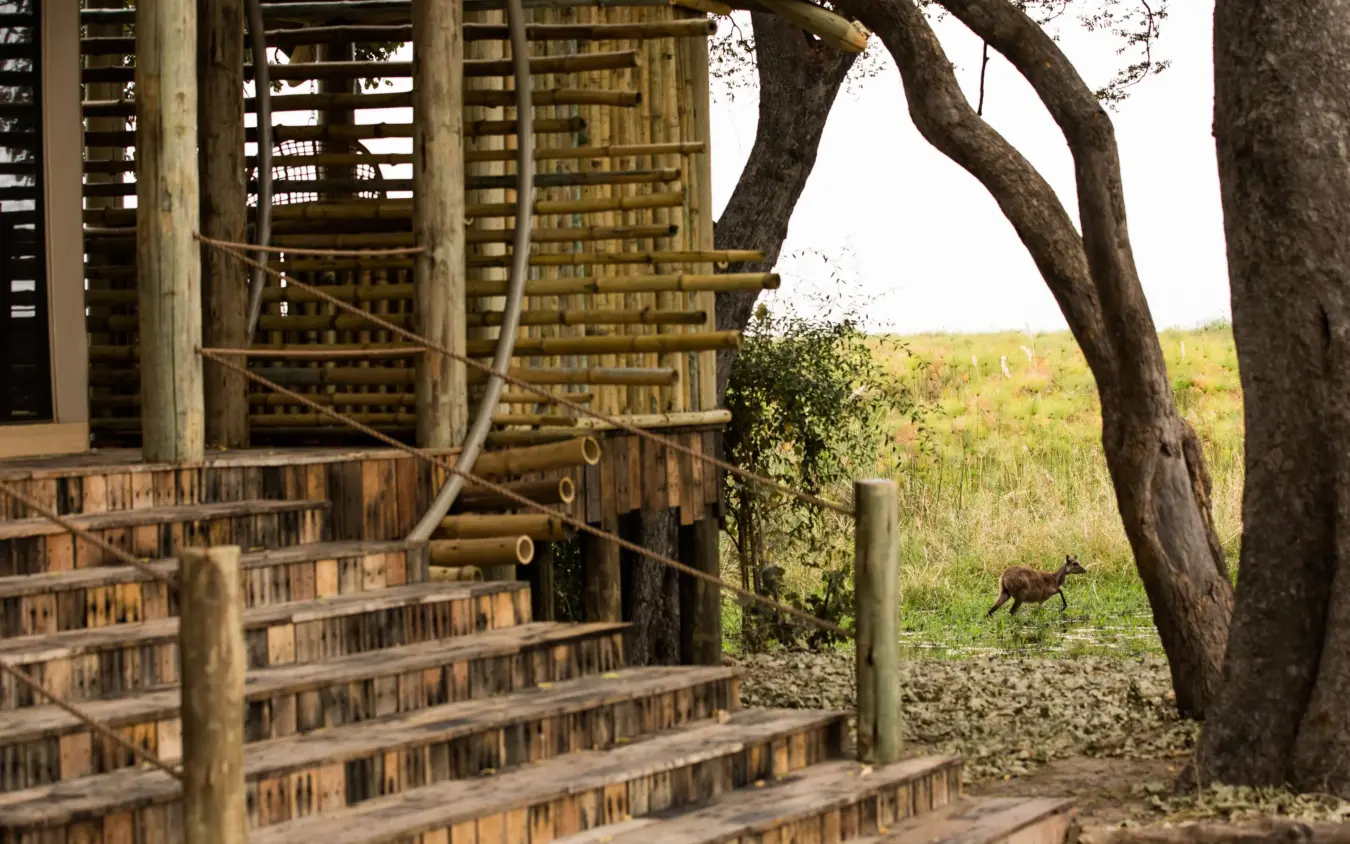
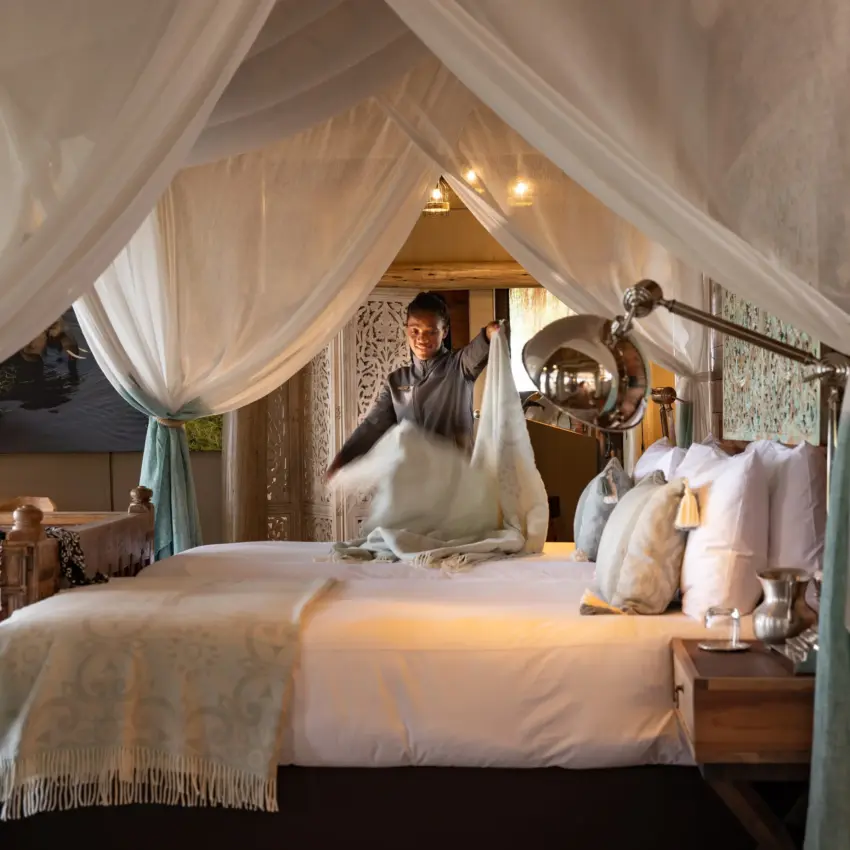
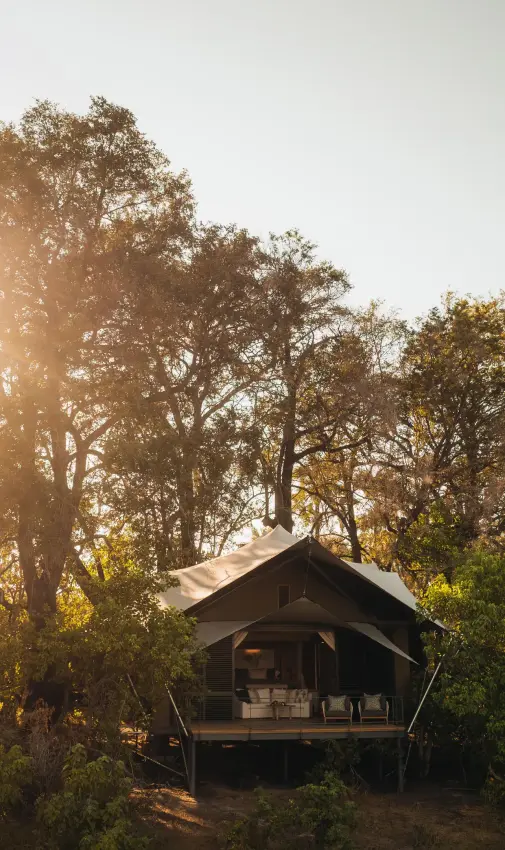
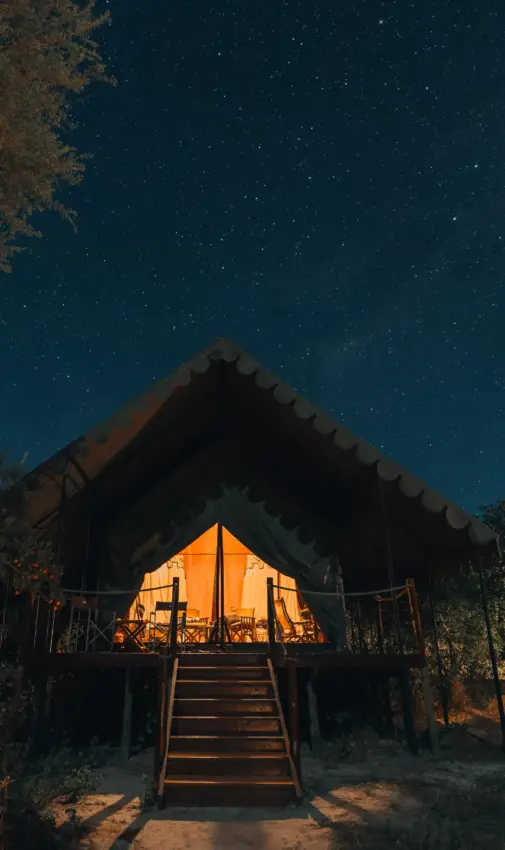
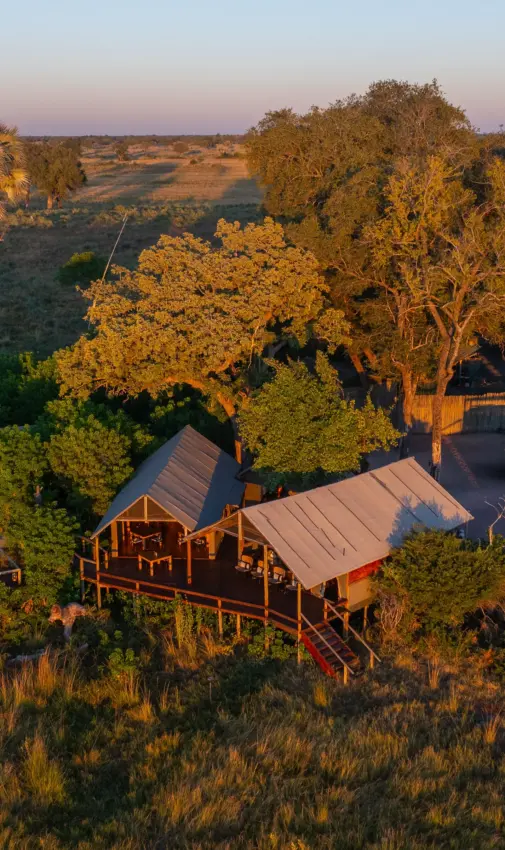
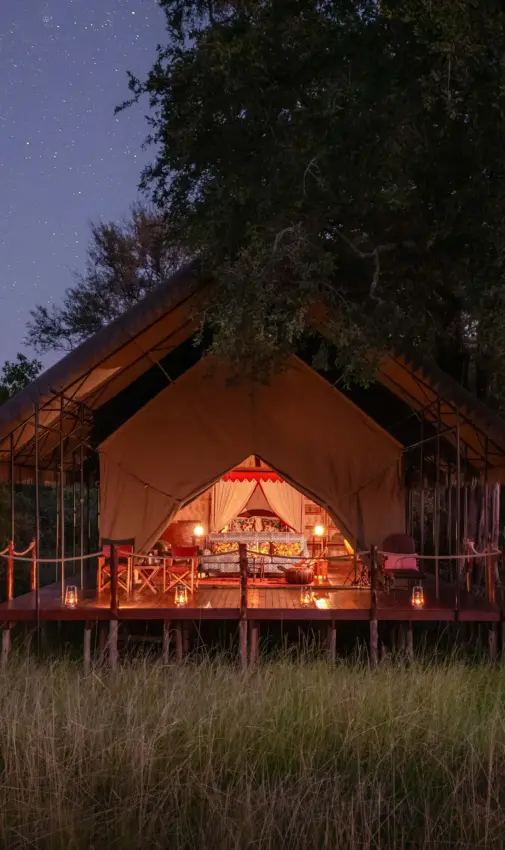
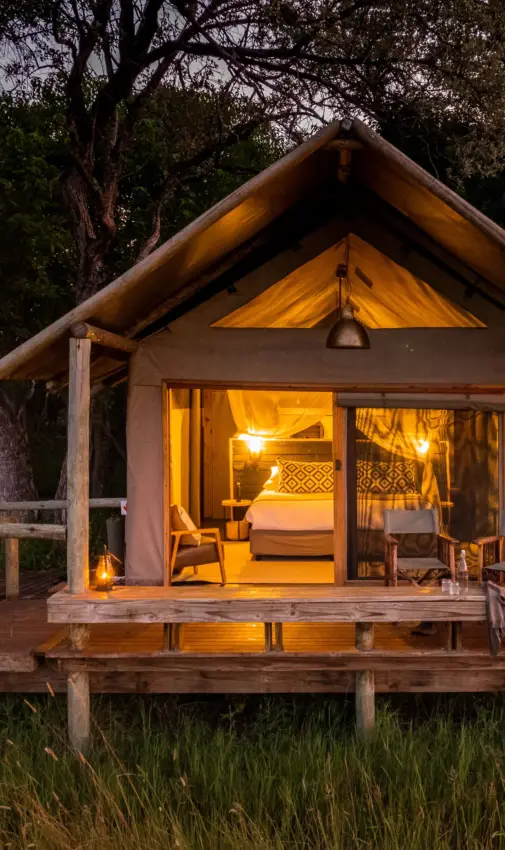
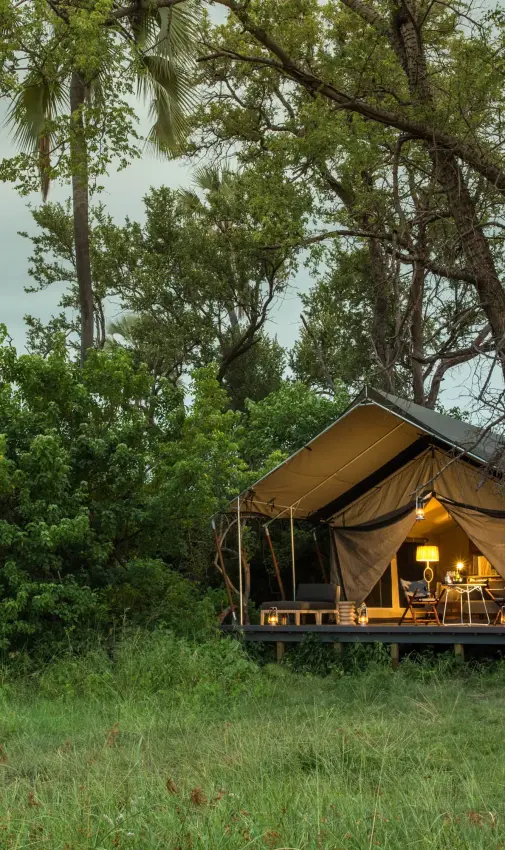
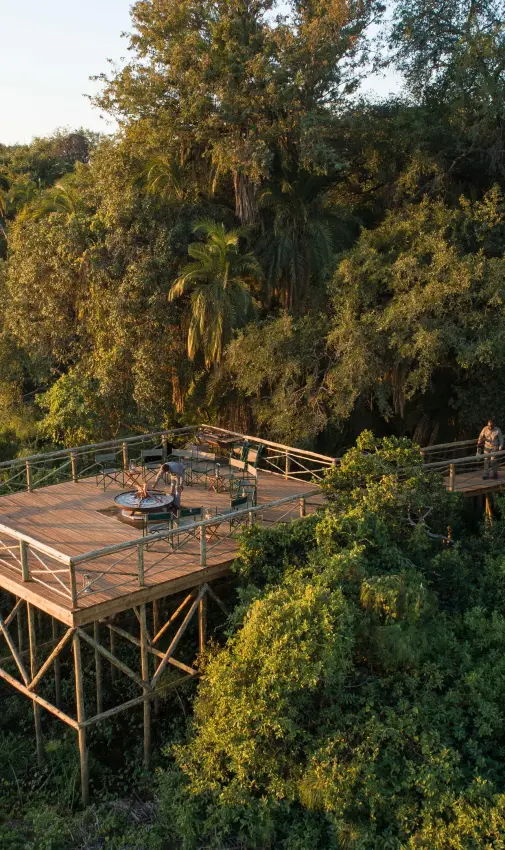
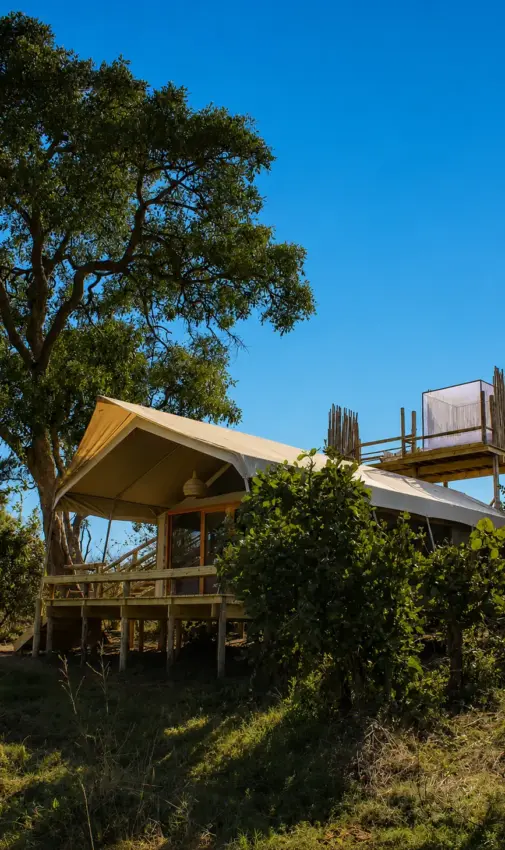
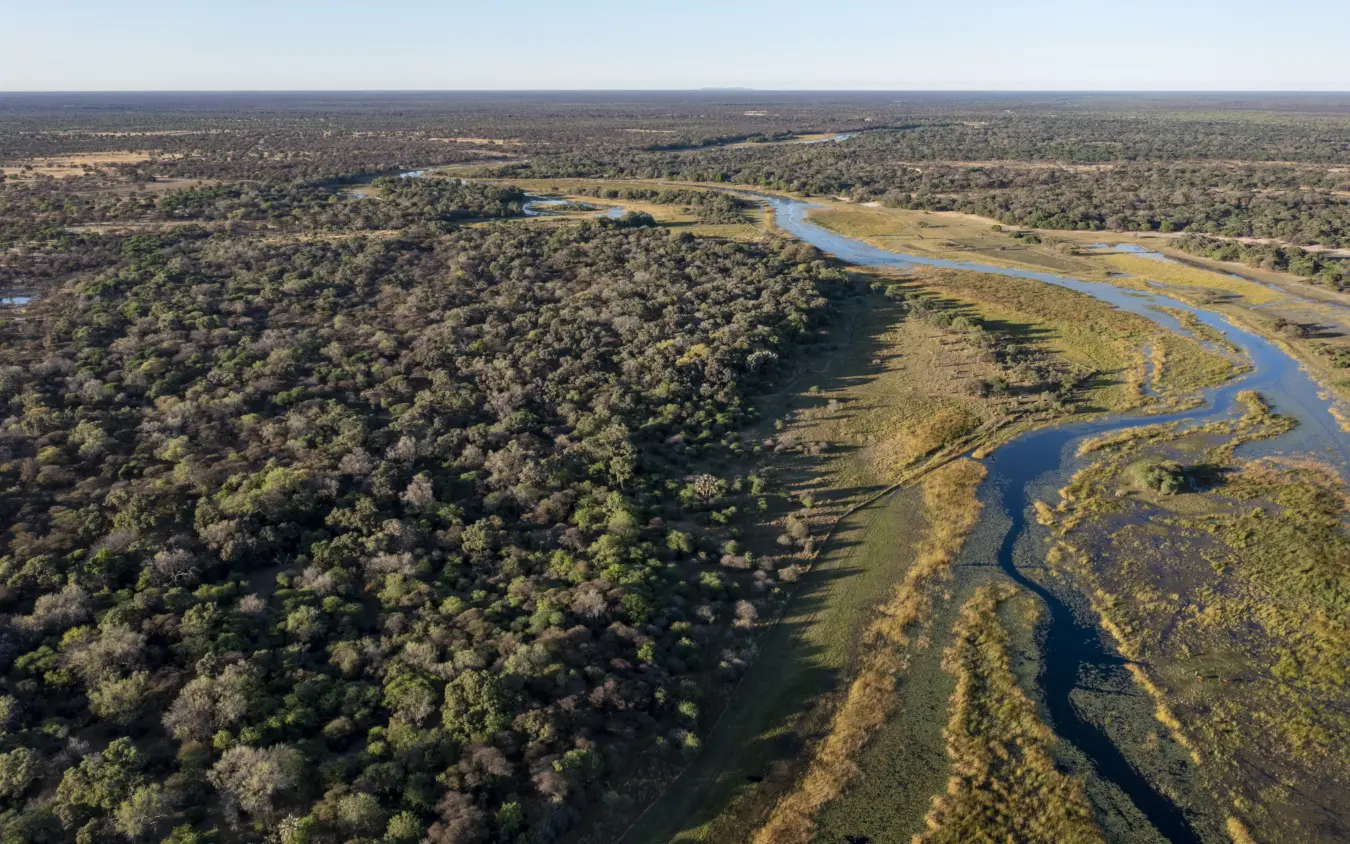
Two one-bedroom suites stand apart in the ebony canopy, each on its own railway-sleeper decking. The two-bedroom Sitatunga Private Island Suite has its own entrance, deck and firepit, and sleeps four adults, or two adults with up to three children. Take that suite exclusively and a private guide and boat come with it, along with dedicated staff, so the day begins when the party decides it begins and not at a set hour. Booking a single suite inside a larger camp shared with other parties is a different proposition entirely.
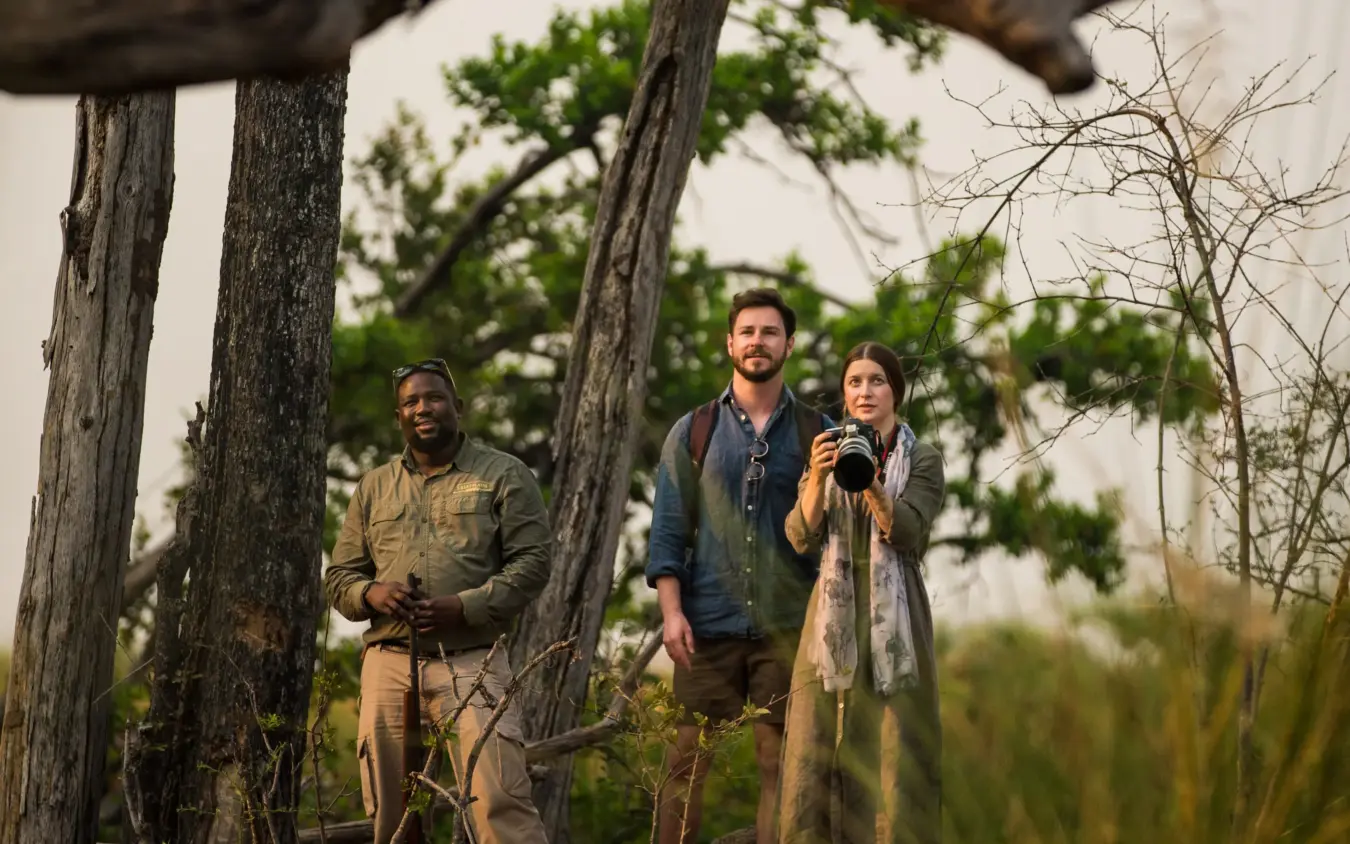
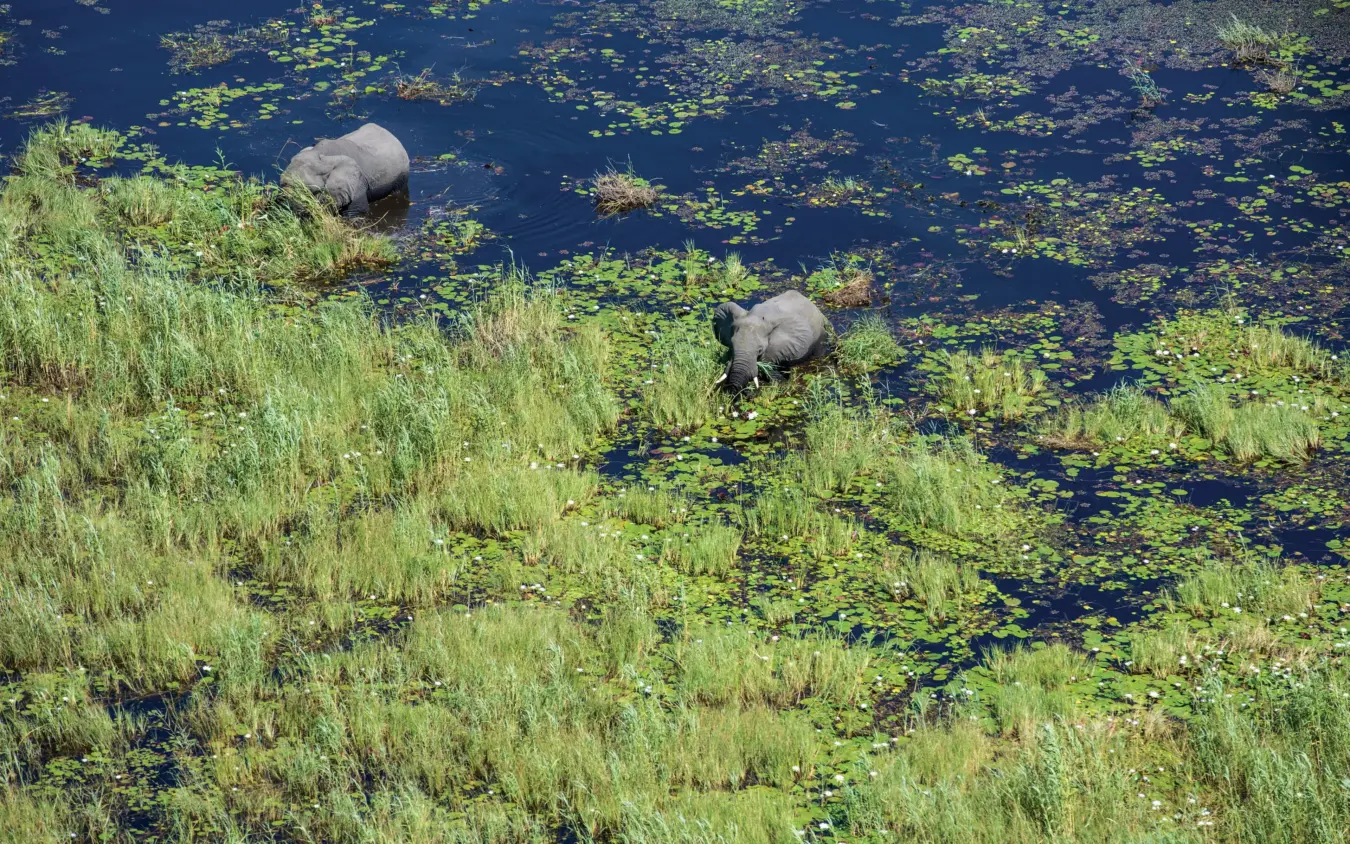
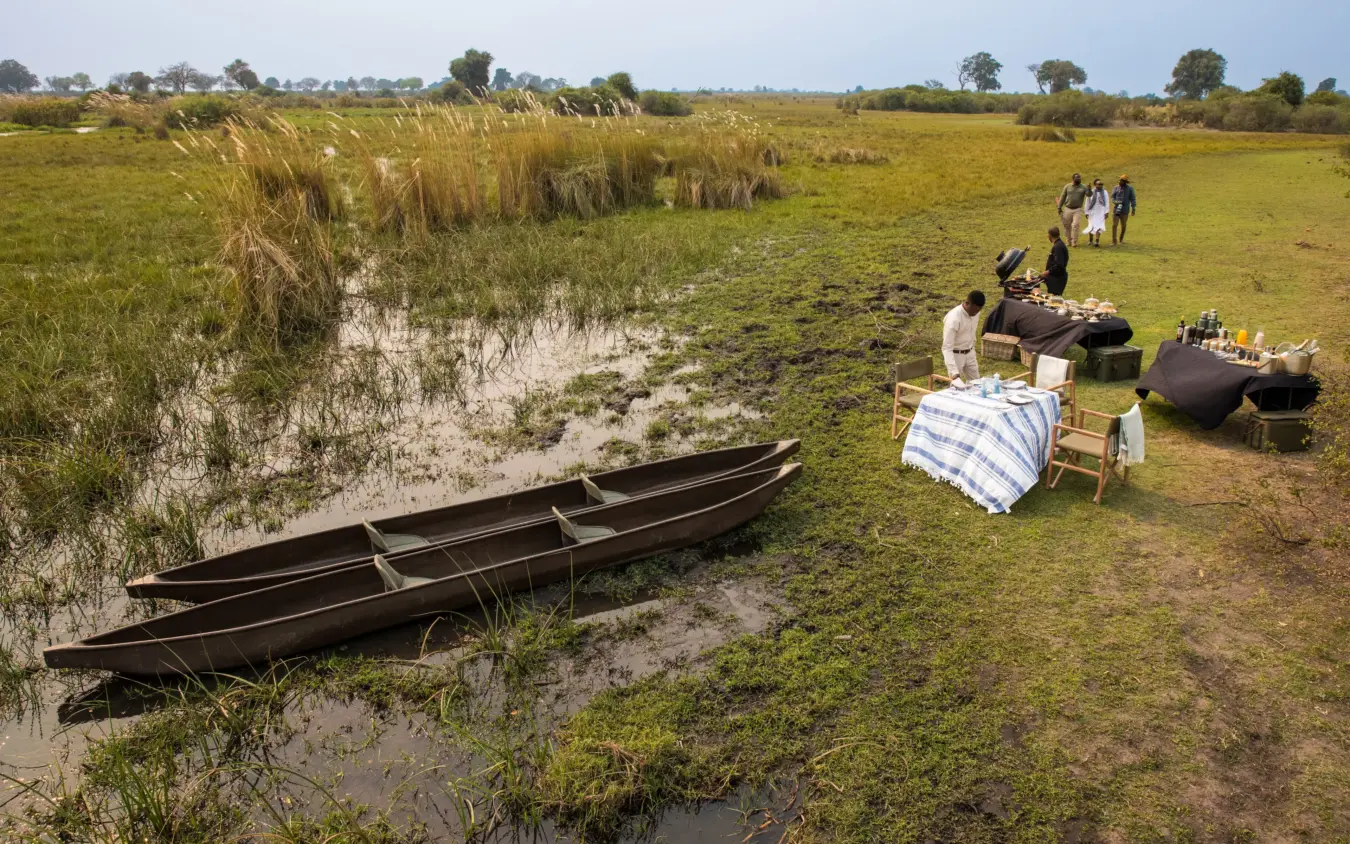
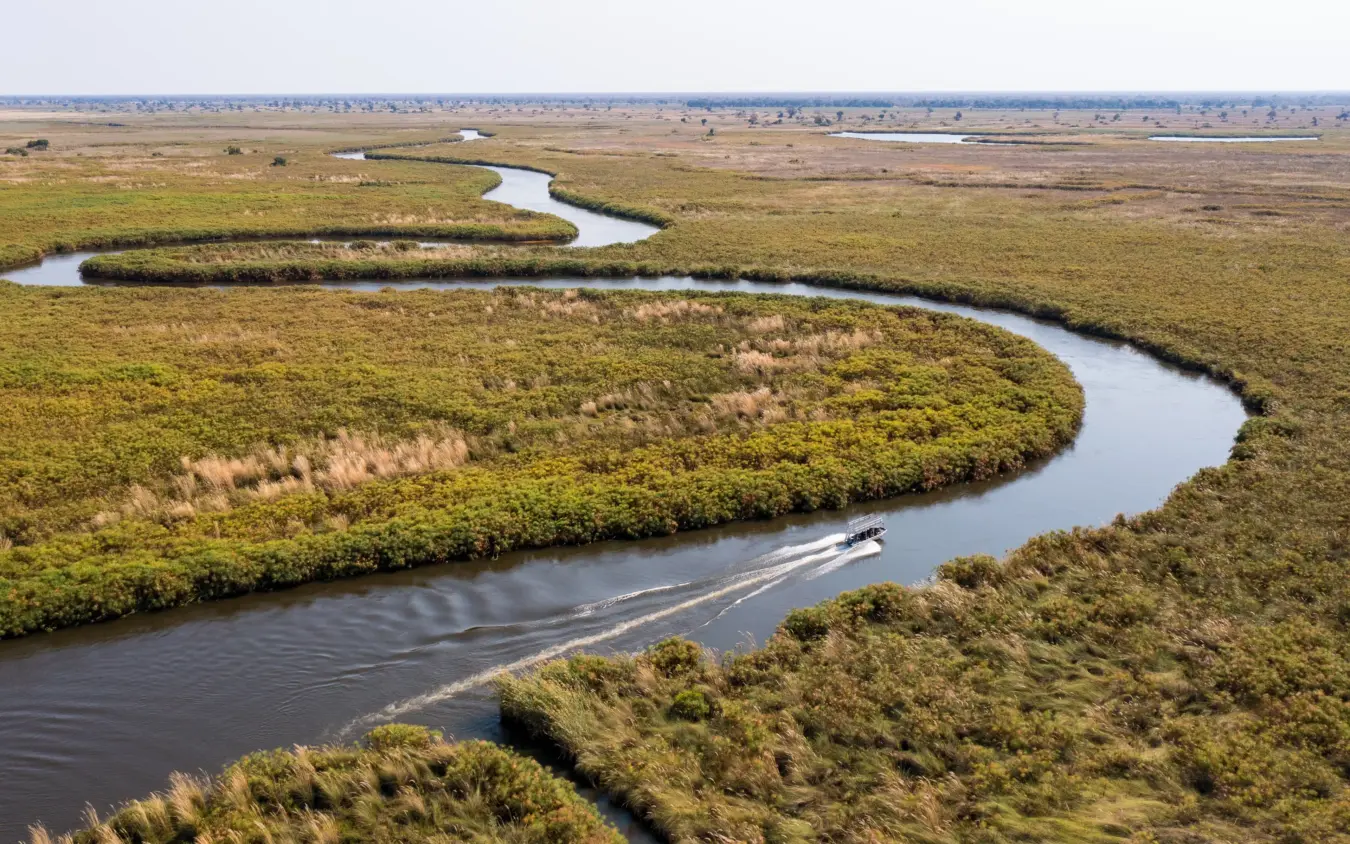
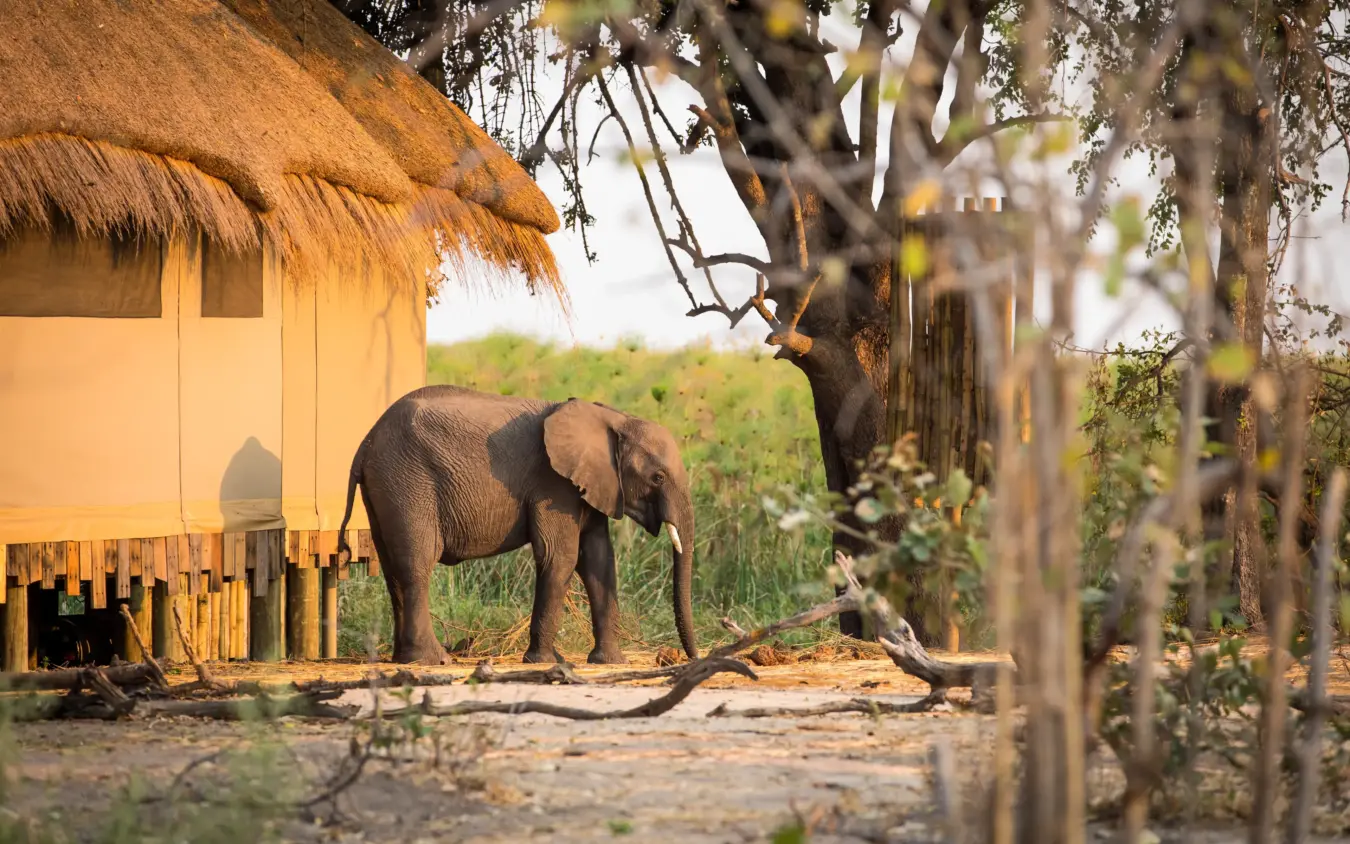
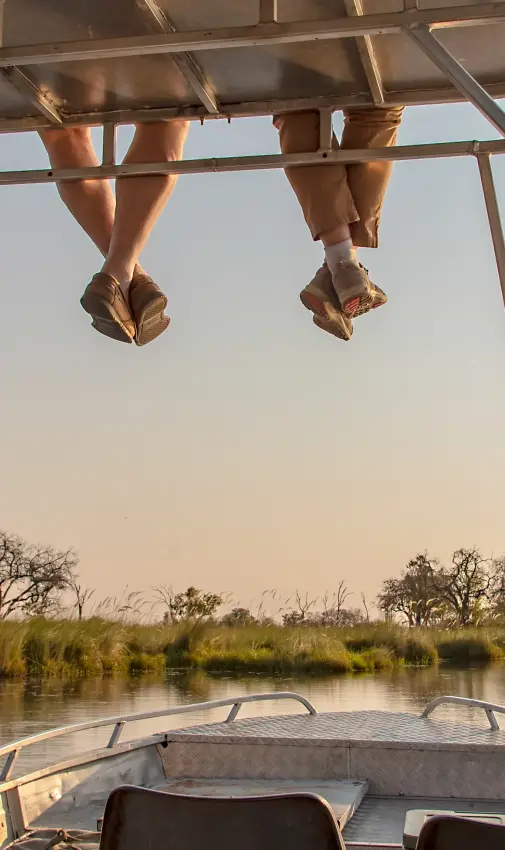
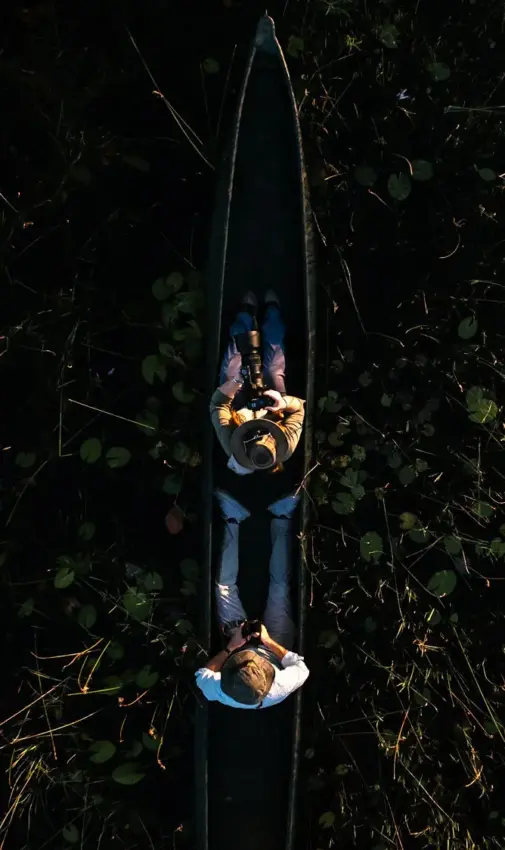
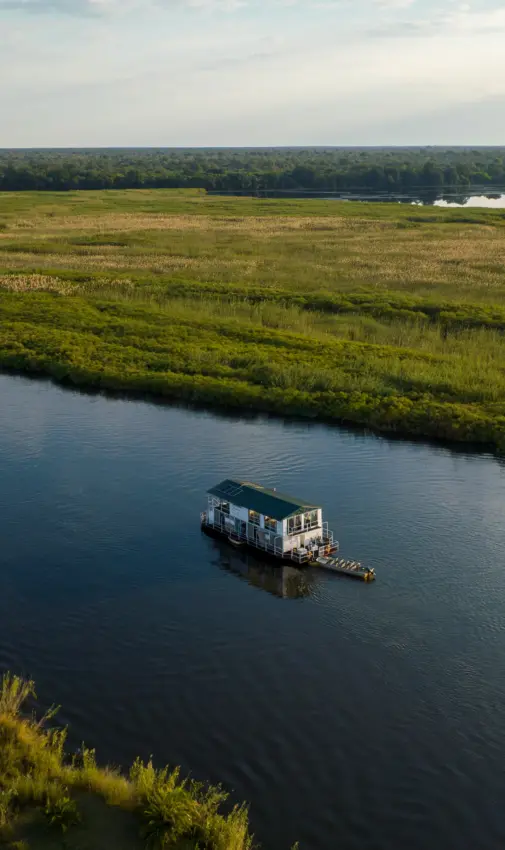
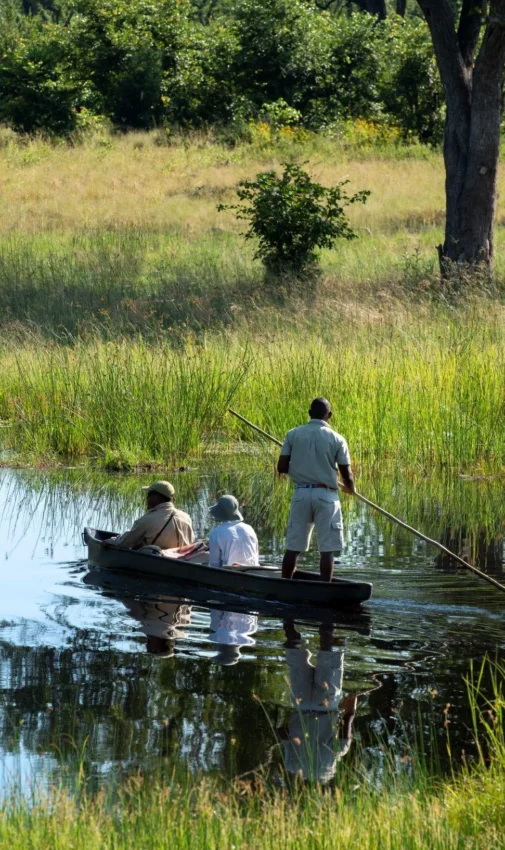
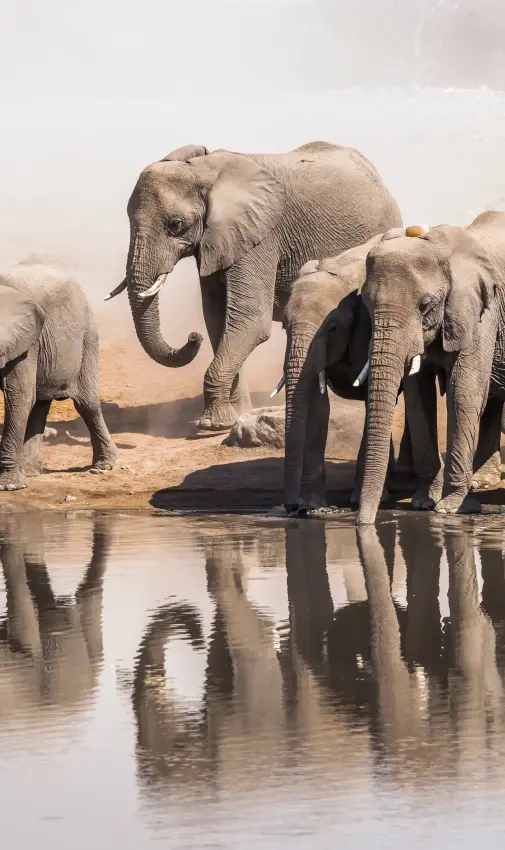
There are no engines idling before dawn, no radio traffic between vehicles, no dust. Sound carries differently over a lagoon. Reed frogs start at dusk, and a hippo clears its throat somewhere out in the dark. Then there is the drip off a poler’s blade, and nothing else. Suites sit high in established ebony trees, partly so the elephants and hippos moving through camp are left to their own routes. Mornings run long on the water in flat-bottomed boats fitted with swivel seats for photography, and afternoons go on foot on neighbouring islands.
Reed frogs start at dusk, and a hippo clears its throat somewhere out in the dark.
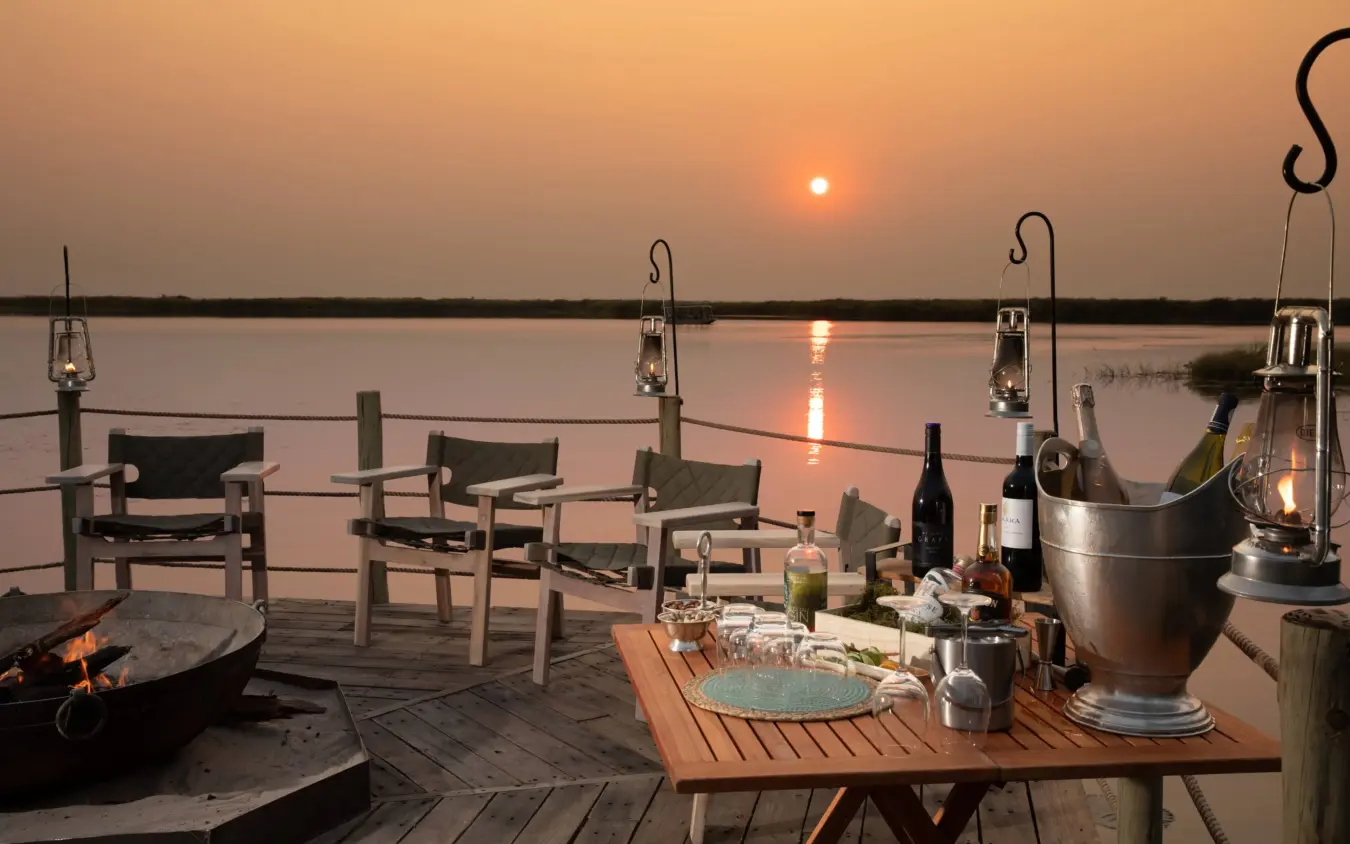
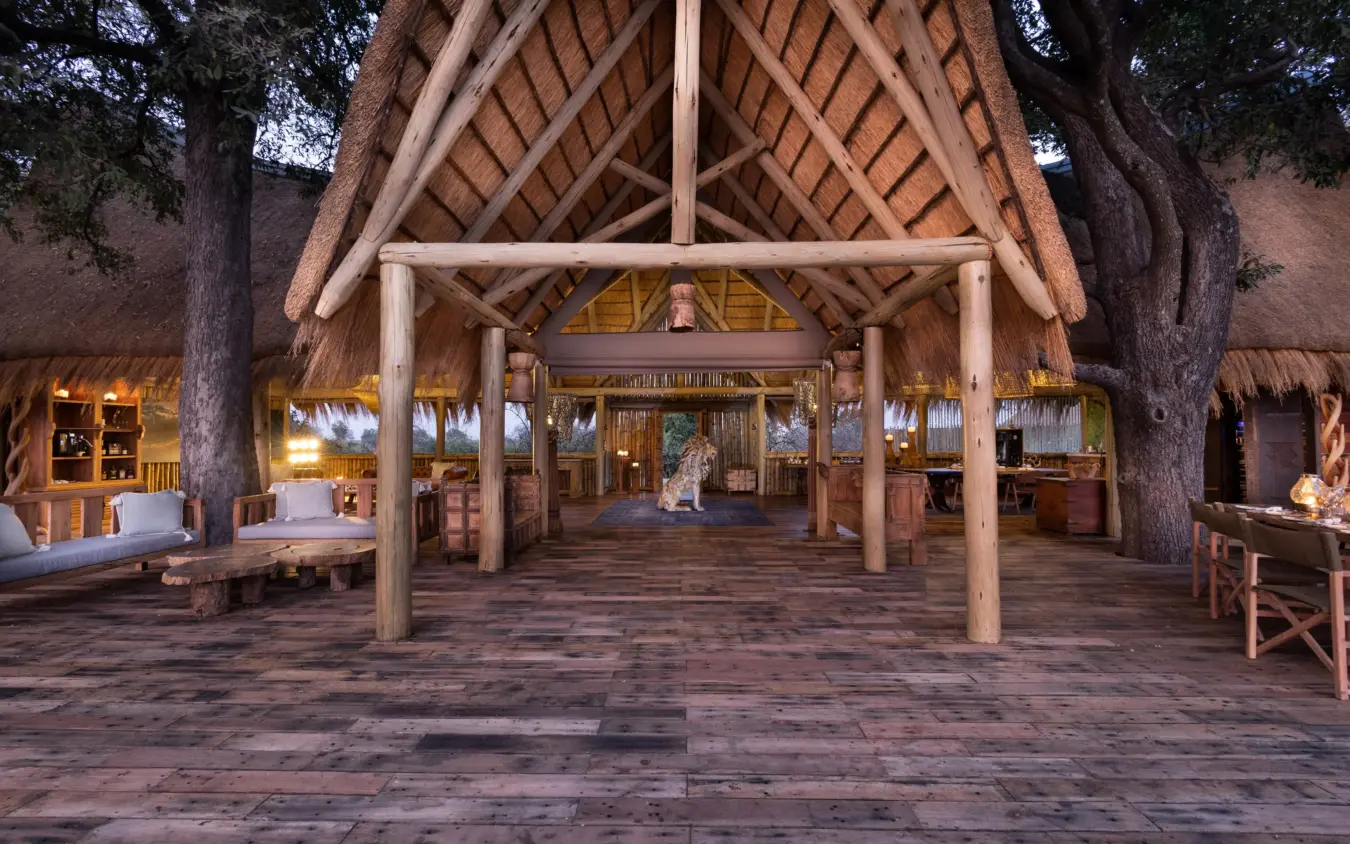
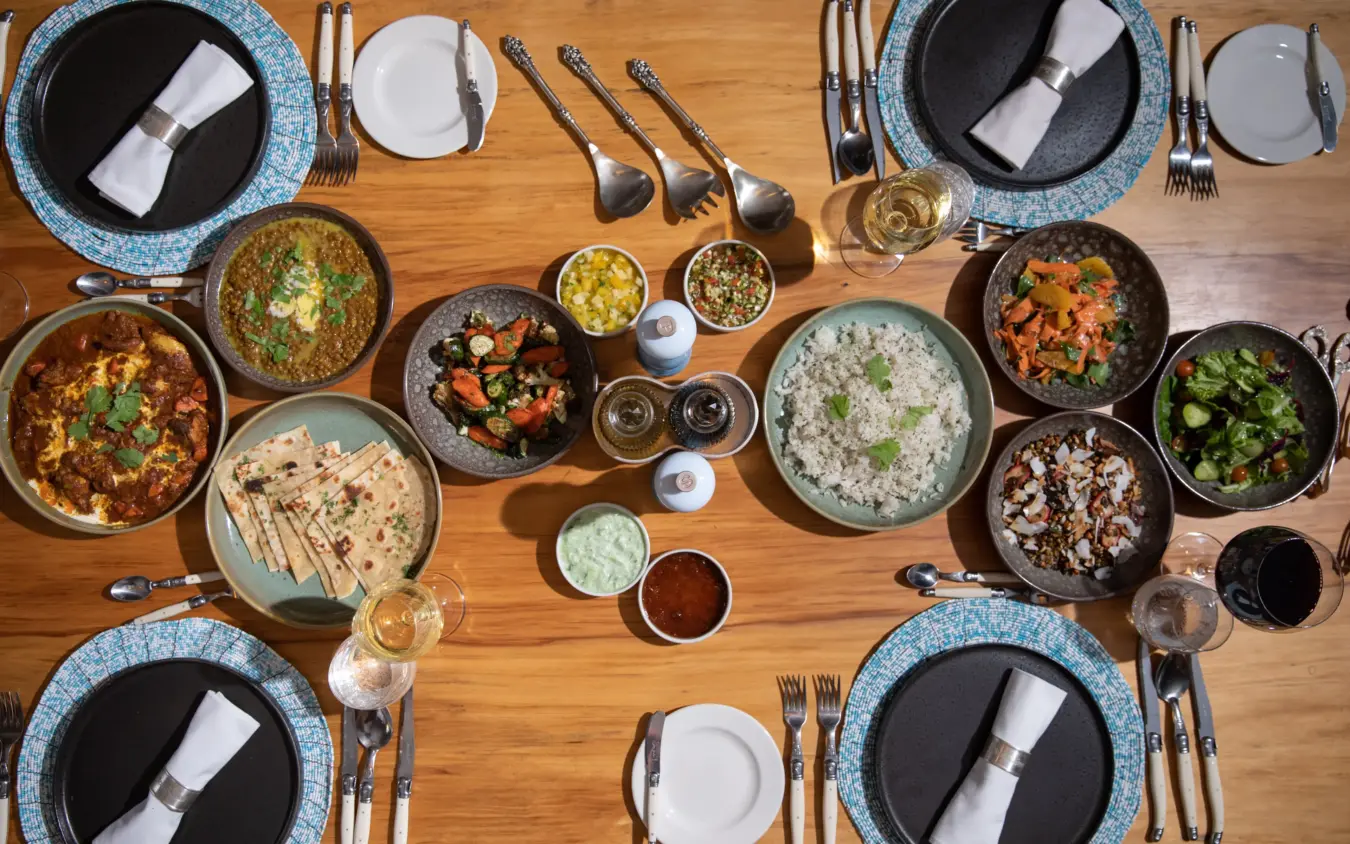
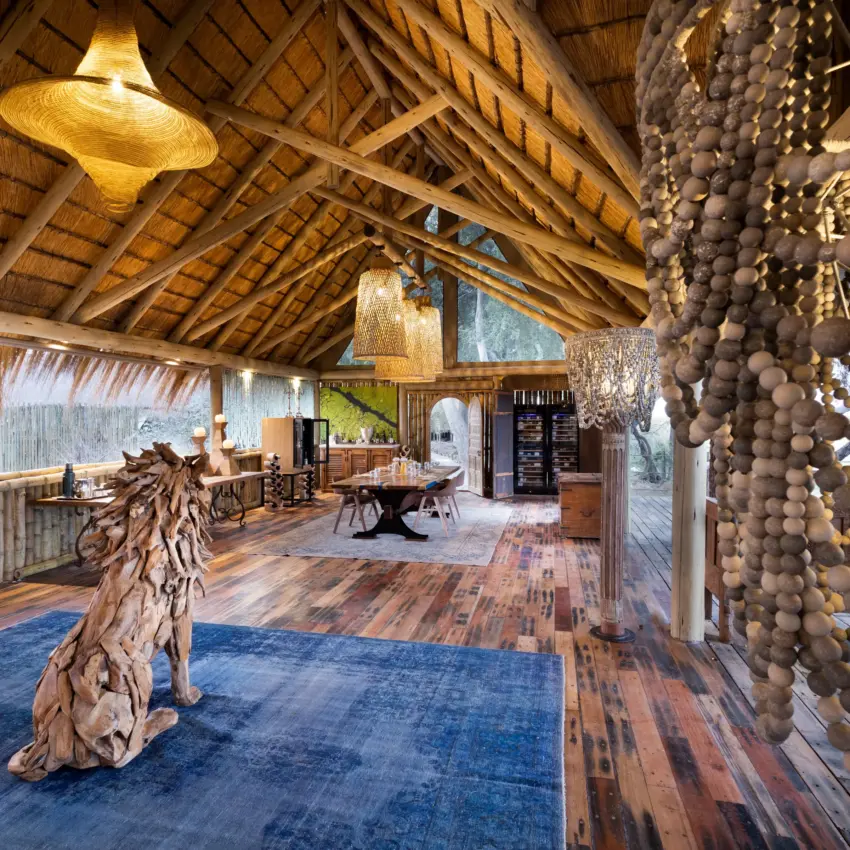
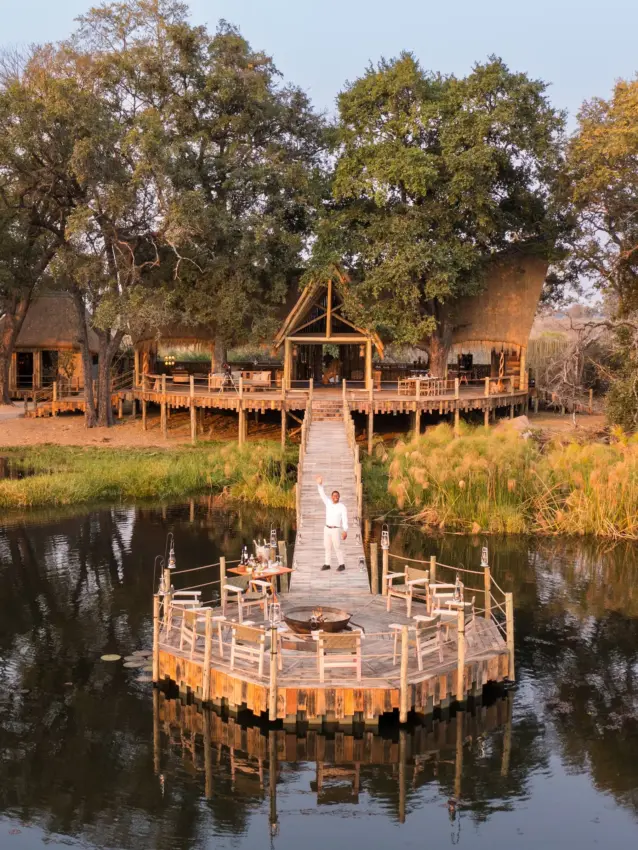
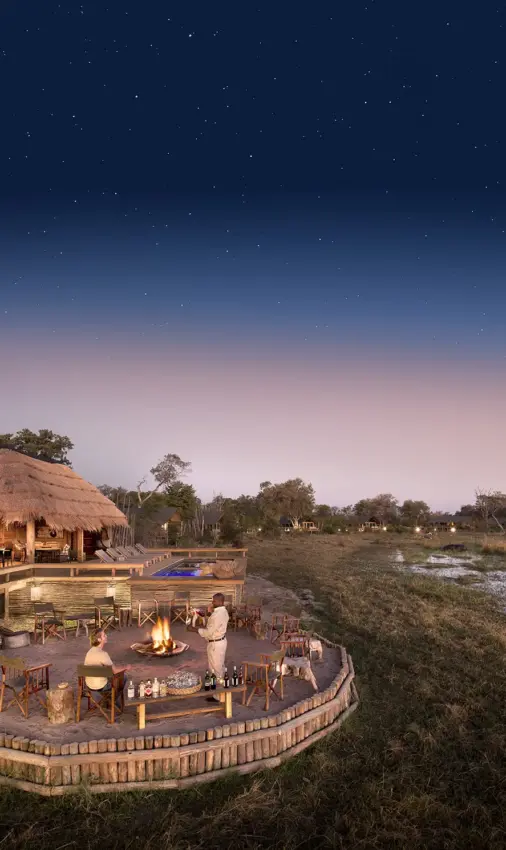
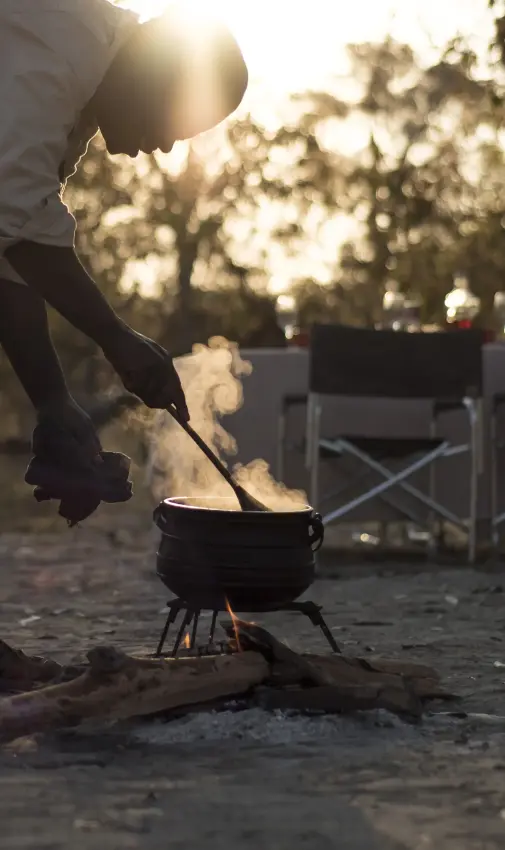
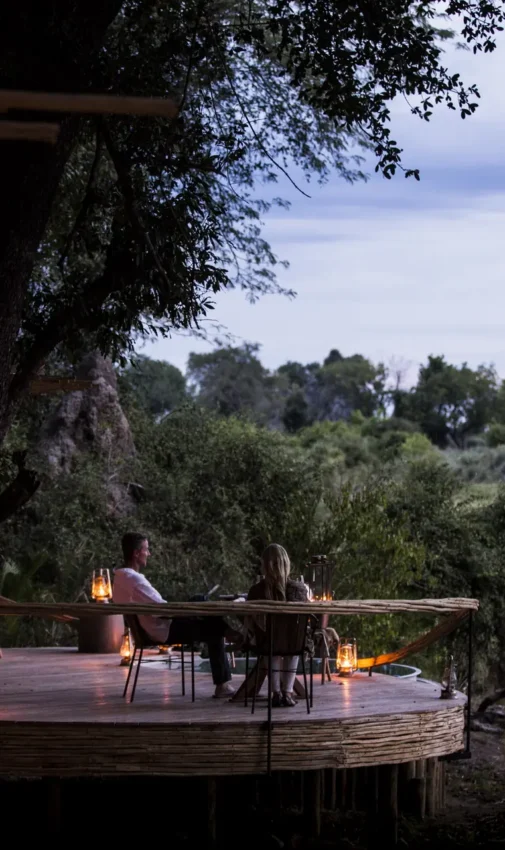
Meals move around the island. One night it is the raised thatched deck over the lagoon, another a private veranda, another the floating firepit set for the sunset, or a stir-fry cooked over open flame while guests watch. Full board covers drinks, and the cellar is properly stocked. Guests come in to song and cold herbal towels on the wraparound deck, and breakfast runs to homemade pastries and granola. Later there is avocado tartare, beef carpaccio with parmesan, fillet steak with horseradish dressing, and homemade Amarula ice cream.
The configuration suits parties travelling together: a family filling the two-bedroom suite, or two couples each taking a one-bedroom, in place of strangers sharing a dining table. Children are accepted from age six, though the calm pace here suits older children better. Two to three nights is the recommended stay, taken as the slow chapter at the end of a longer Botswana itinerary built around drier, predator-focused concessions. Catch-and-release fishing for tigerfish and bream runs from March to December.