Camp

Elephant Pan

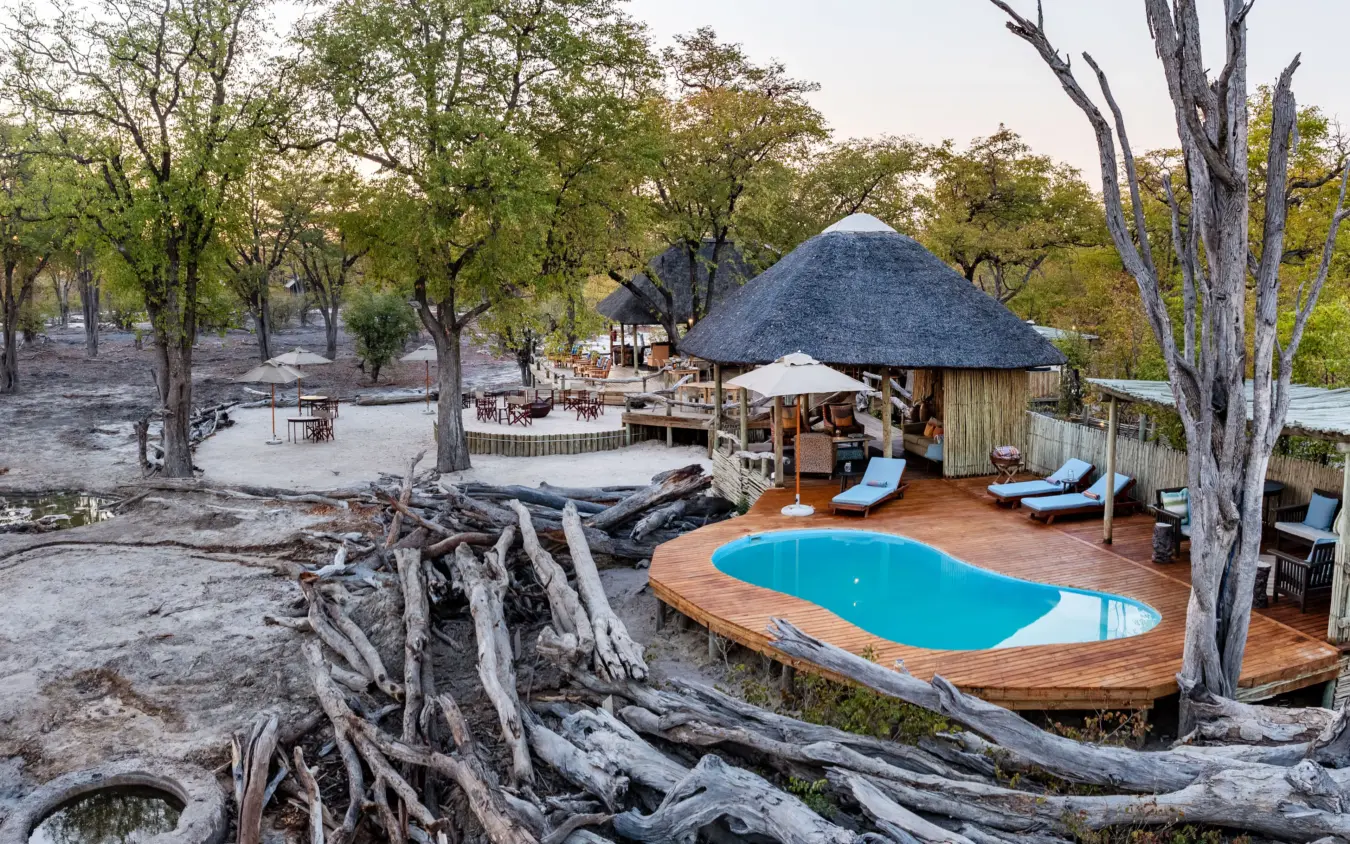
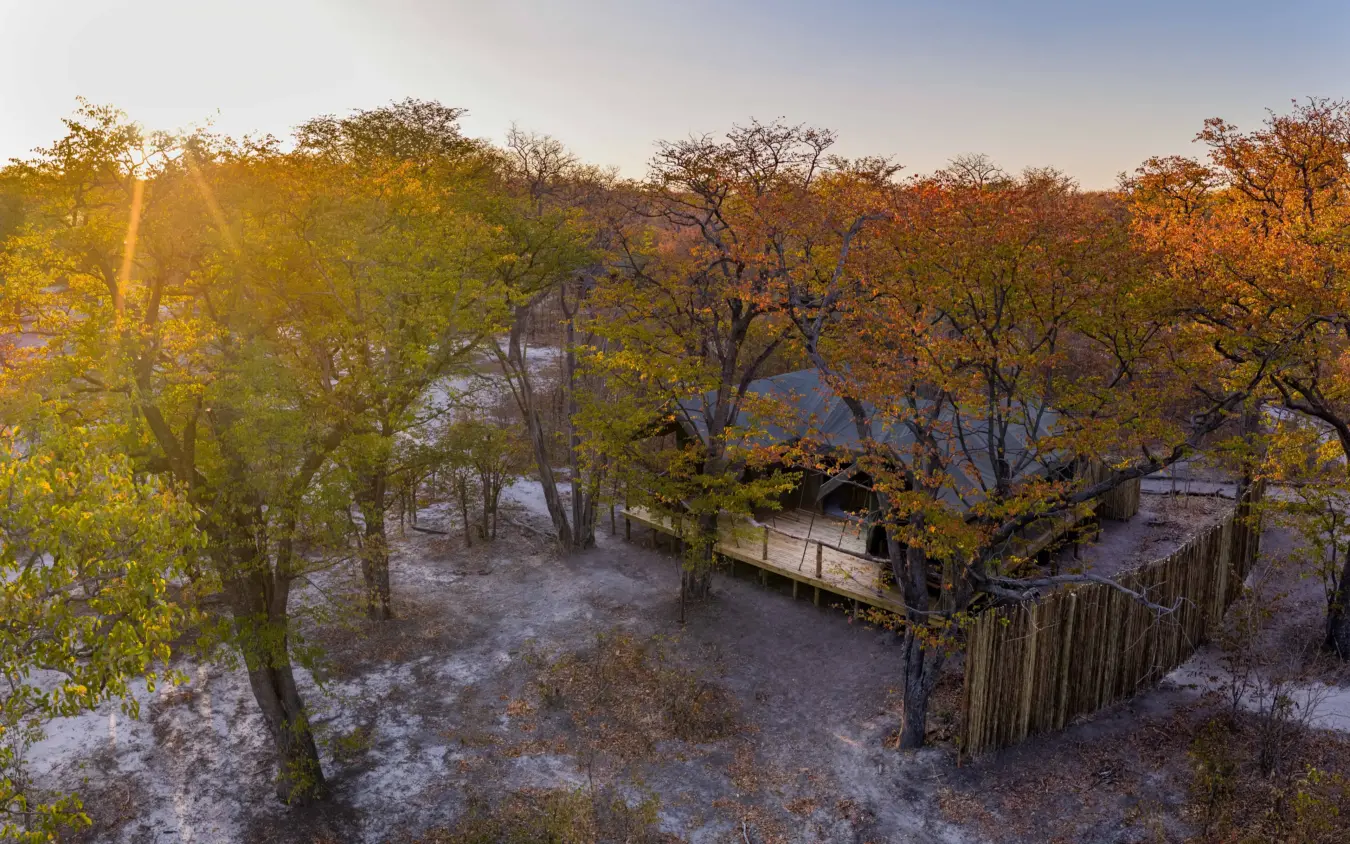
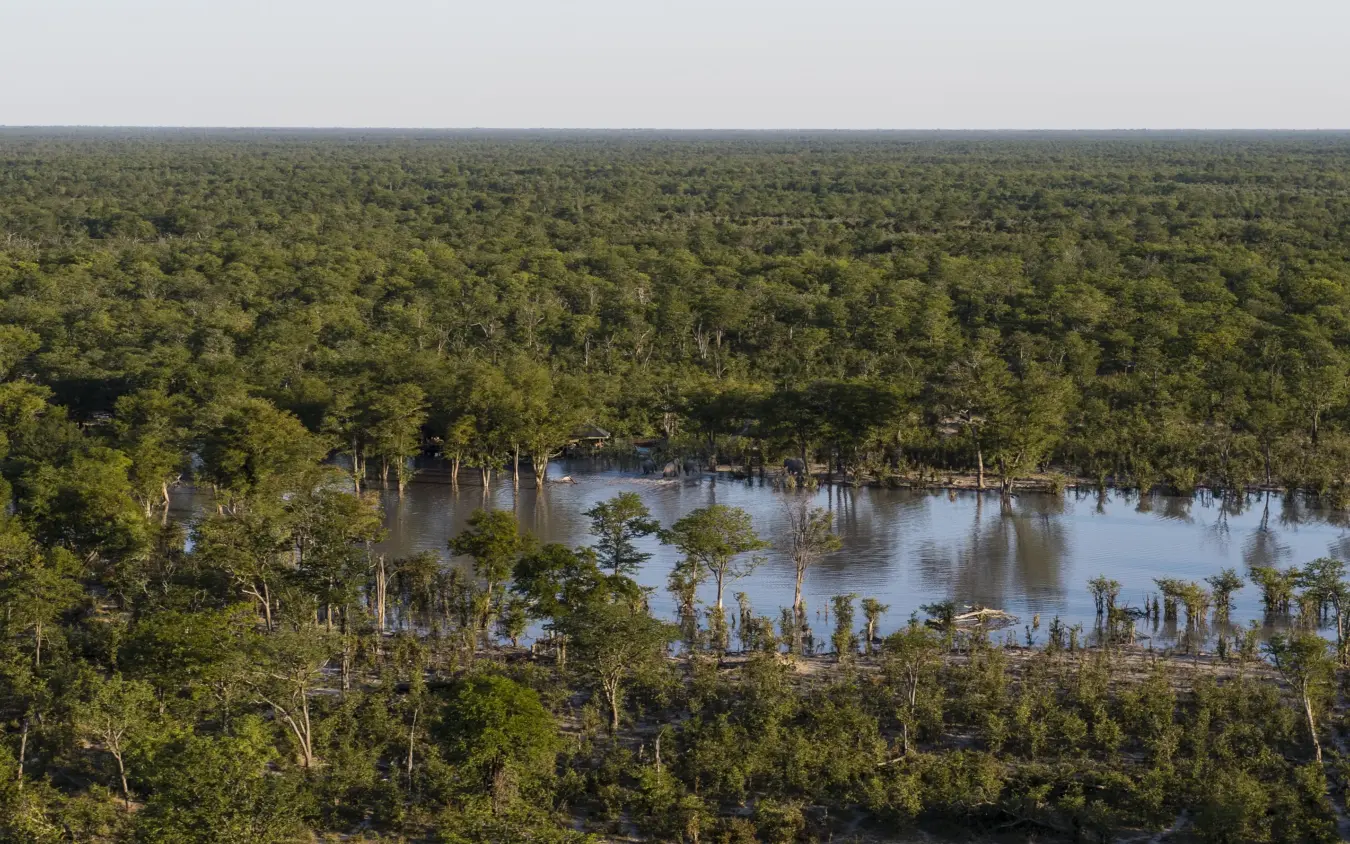
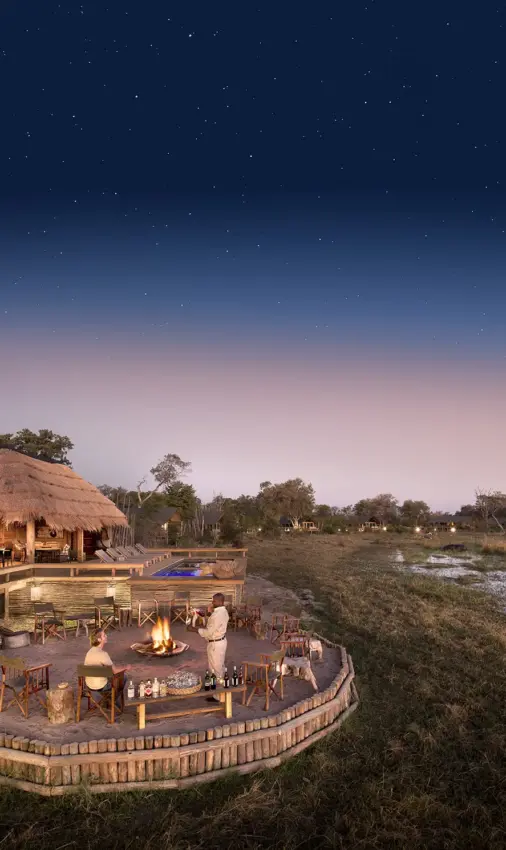
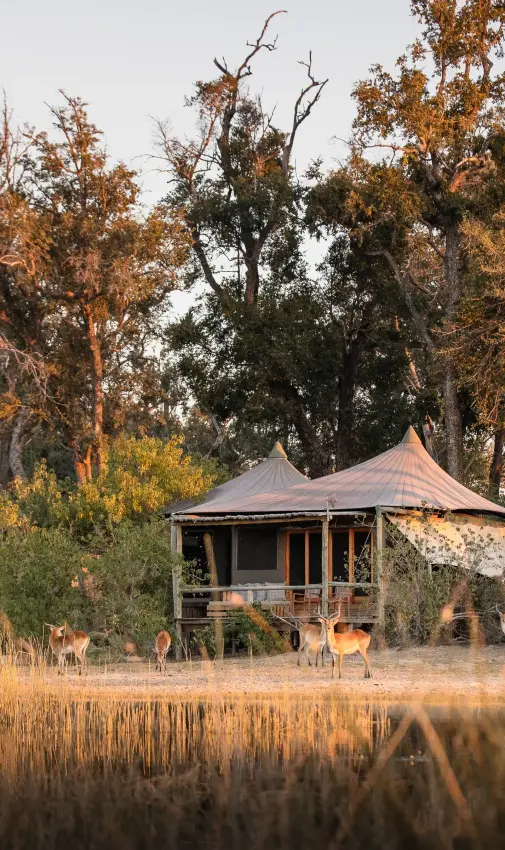
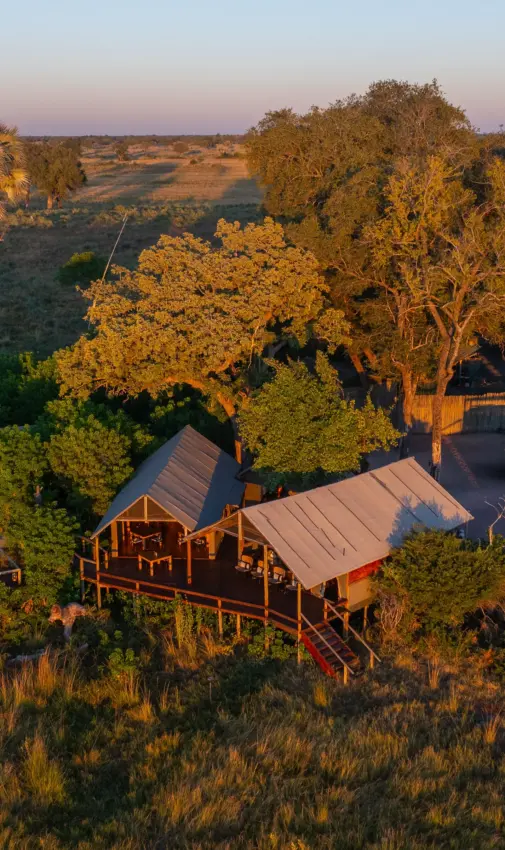
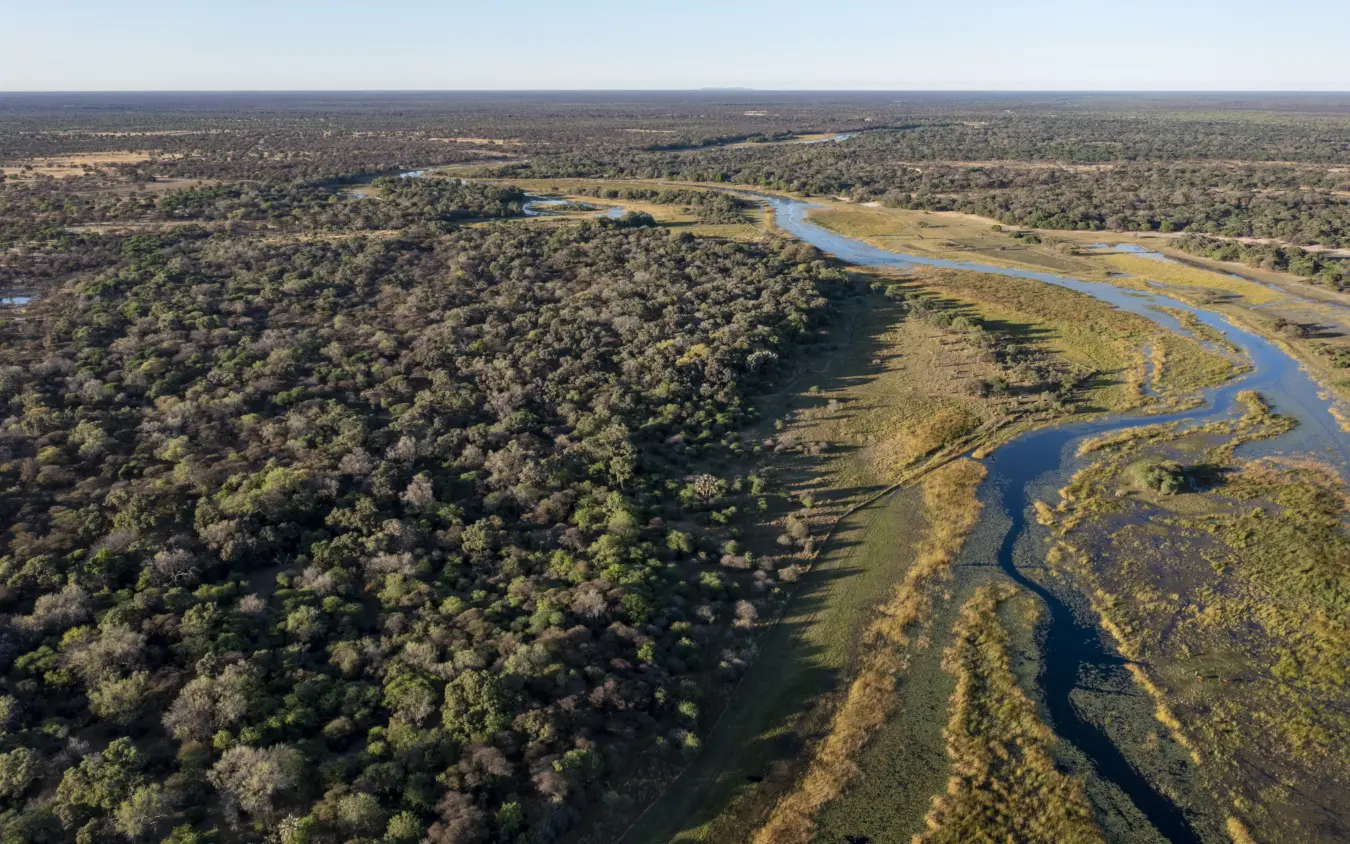
Eight tents around a pumped pan in the dry mopane interior of Khwai Private Reserve, on the north-eastern Okavango Delta.

Country: Botswana
Location: Khwai Private Reserve, Okavango Delta
Number of rooms: 8

Sunken hide, eye-level elephants

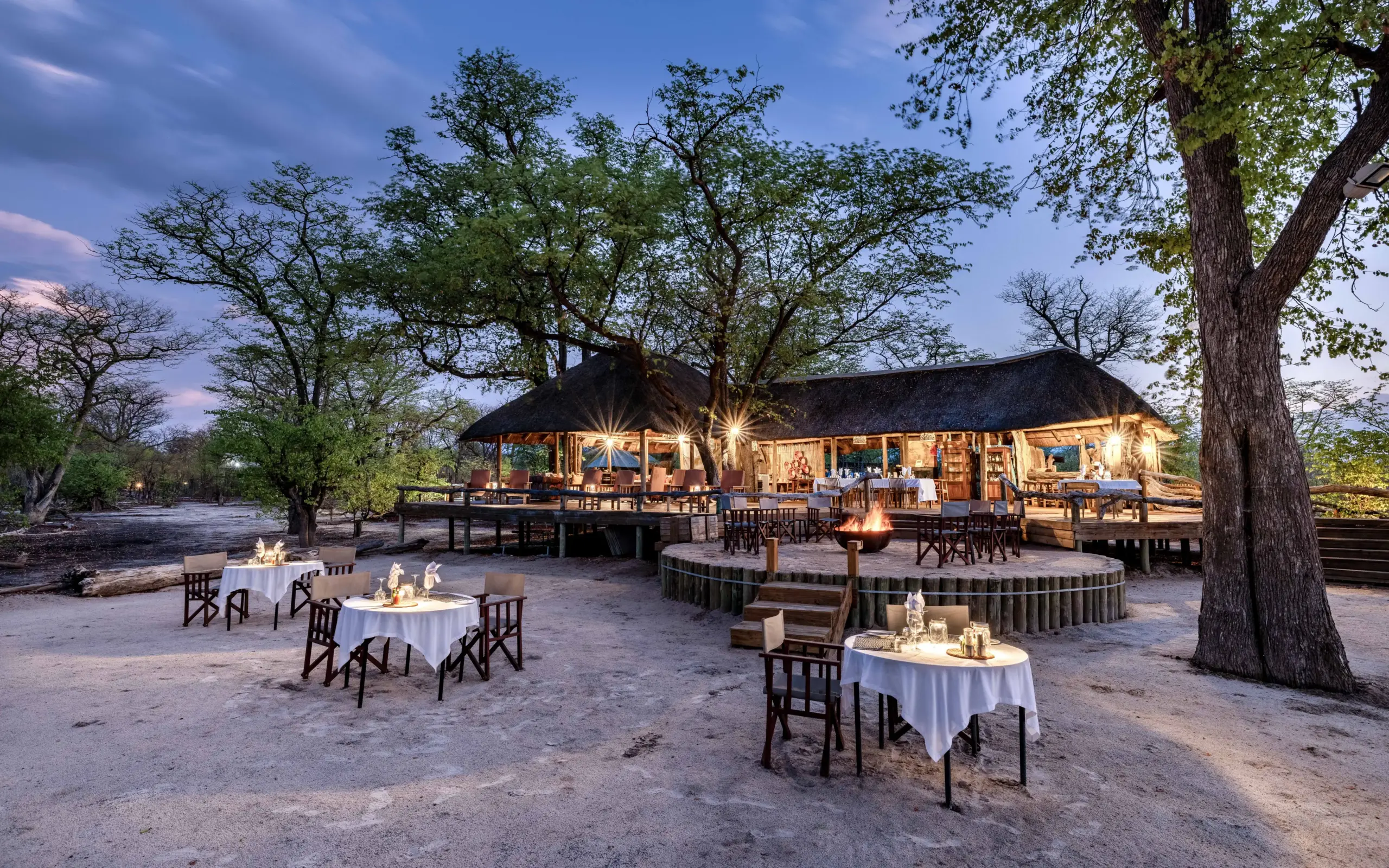
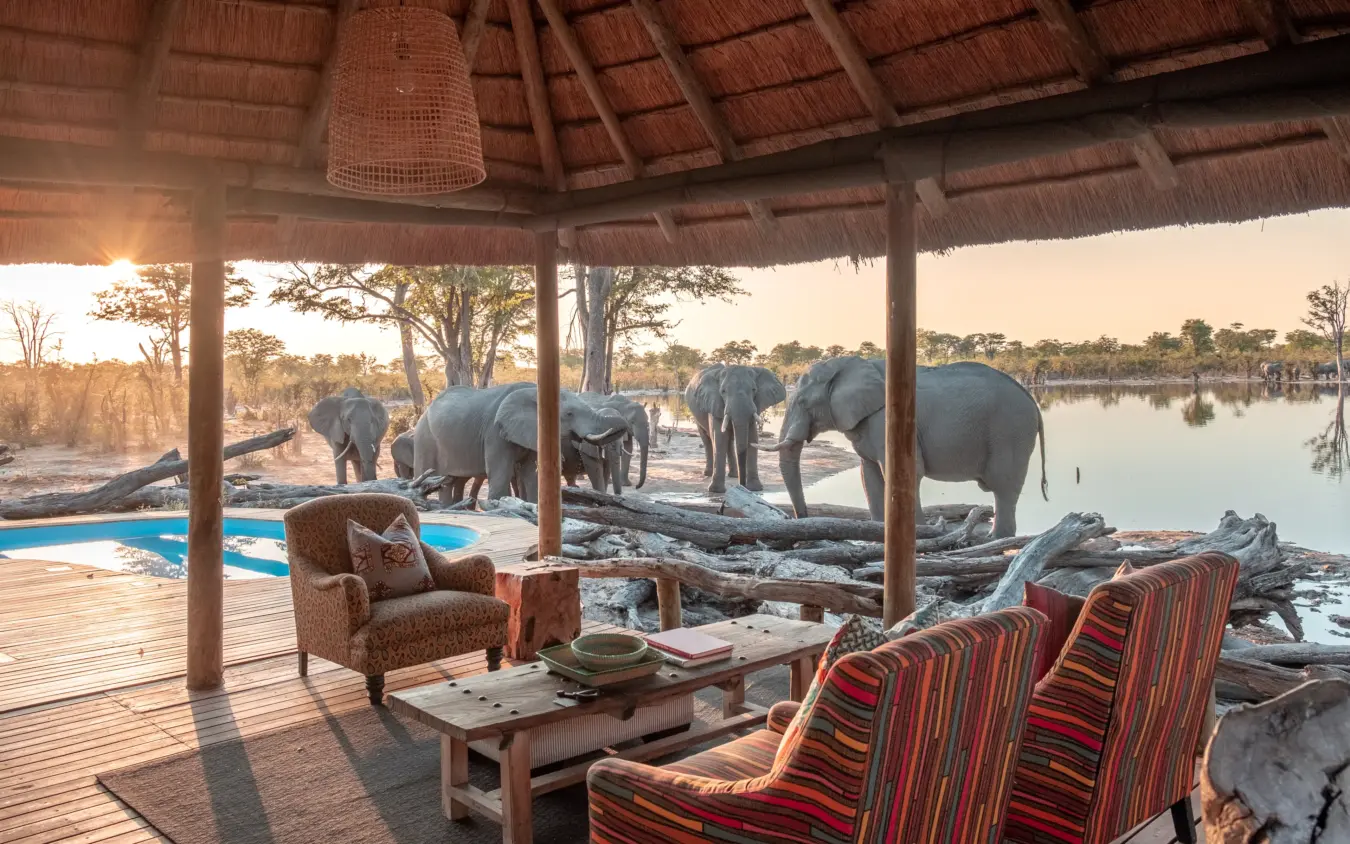
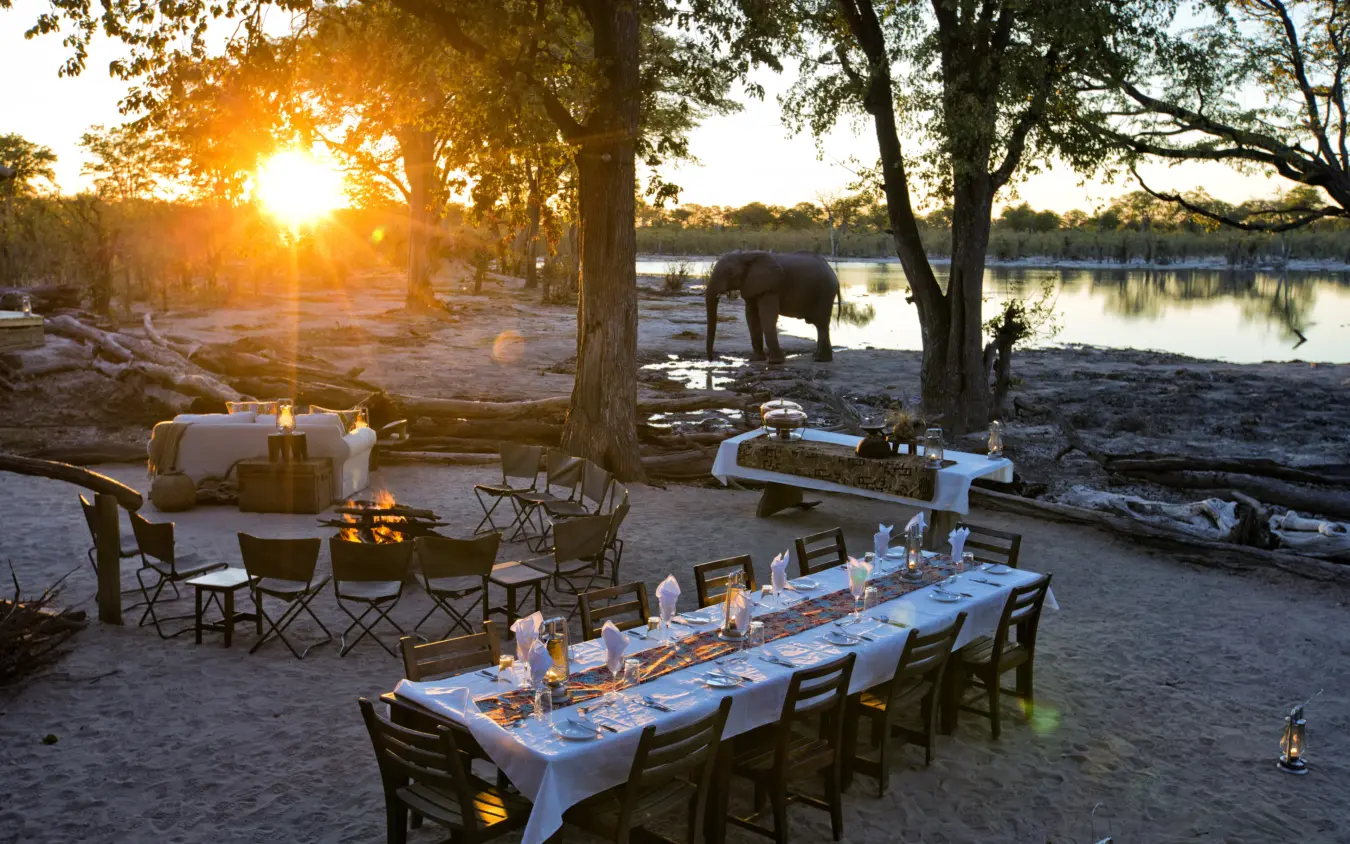
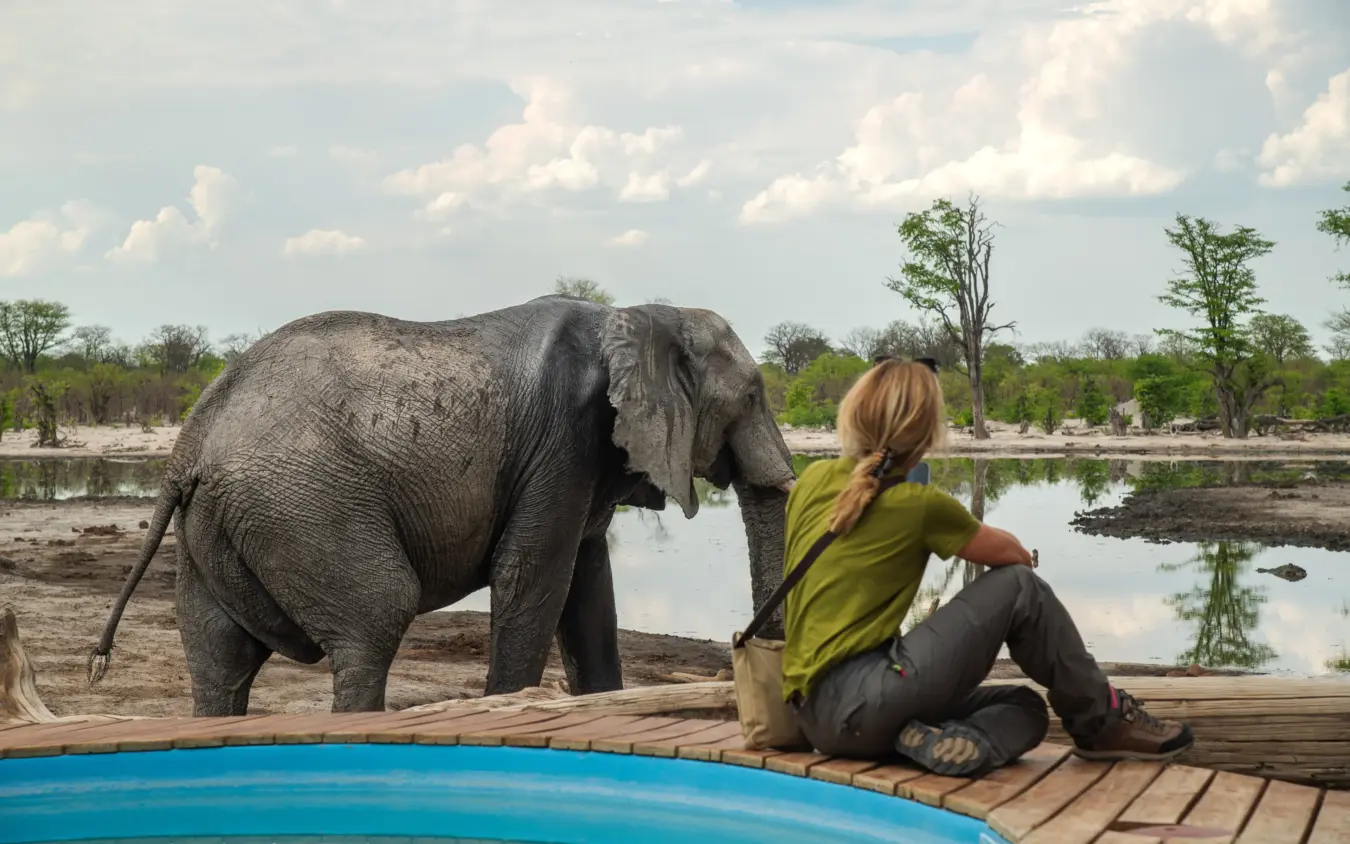
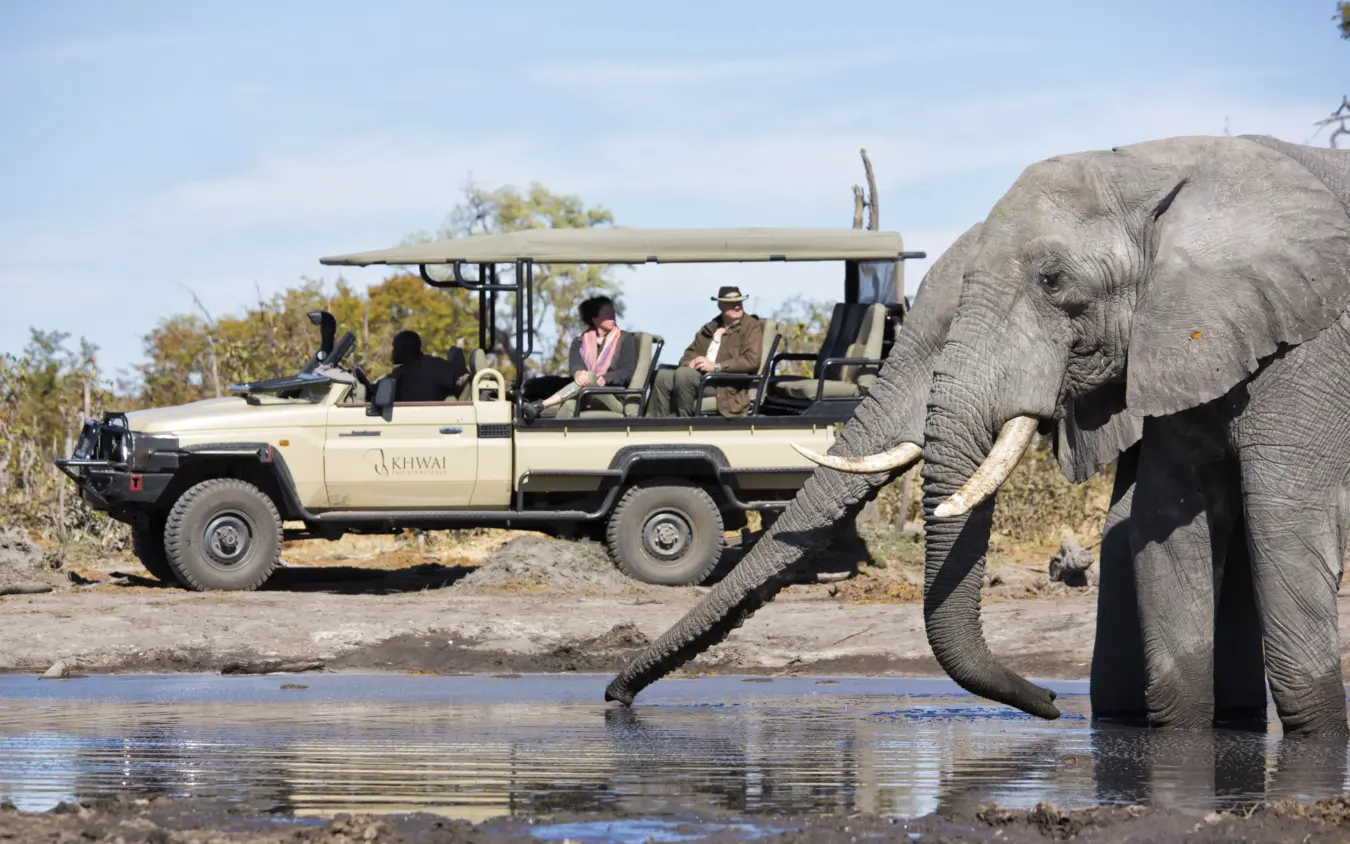
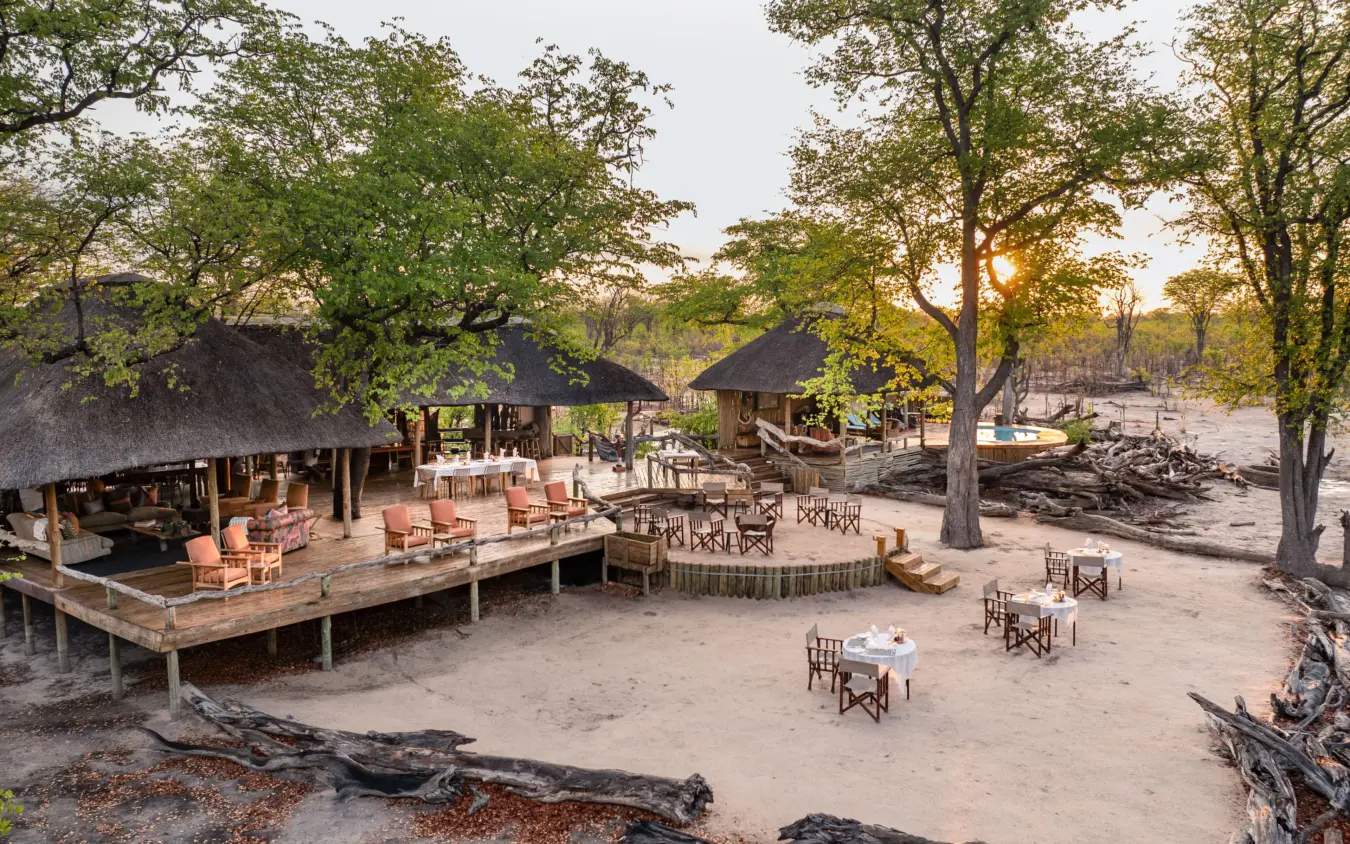
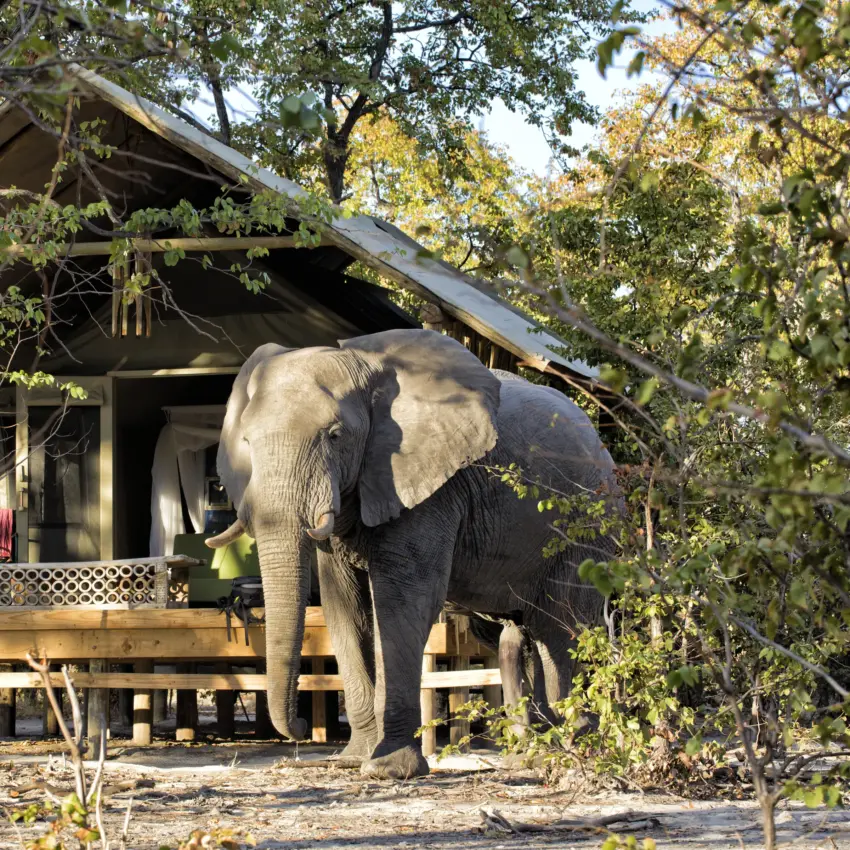
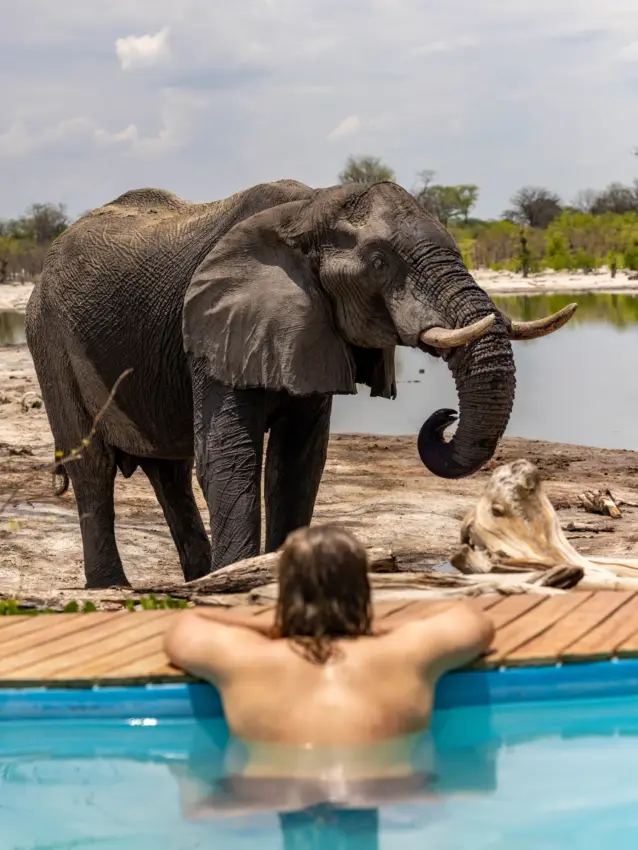
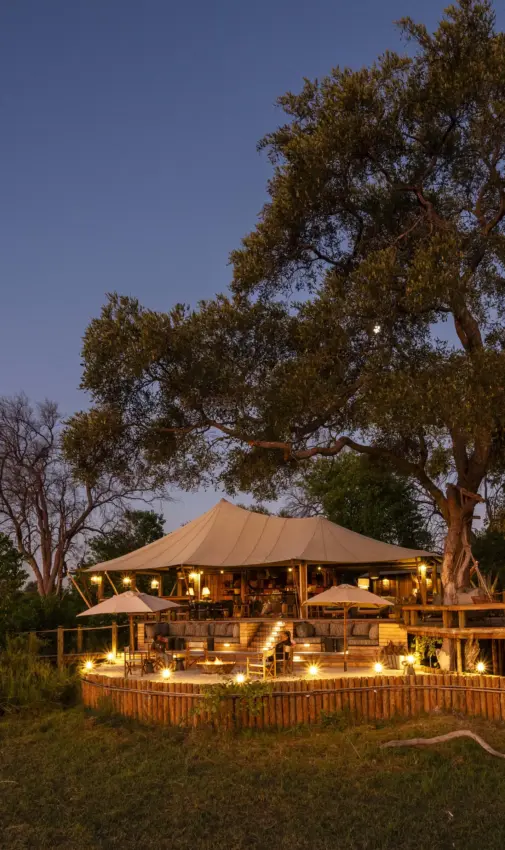
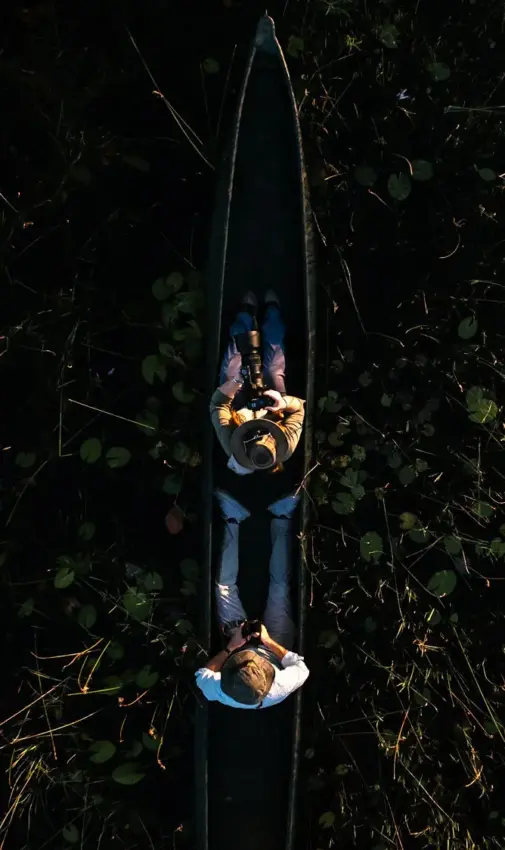
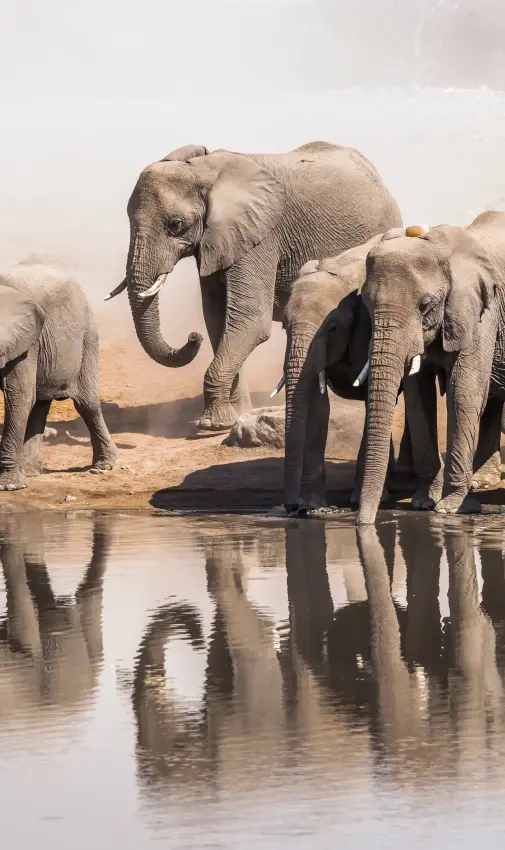
A single pan of water lies at the centre of everything here, 12km north of the Khwai River in the sandy mopane interior of Khwai Private Reserve, on the north-eastern edge of the Okavango Delta. Eight tents curve around it, and a borehole keeps it filled through the dry months. Elephants arrive in shifts, close enough to hear the water move. The camp is plain, and the pan does most of the work.

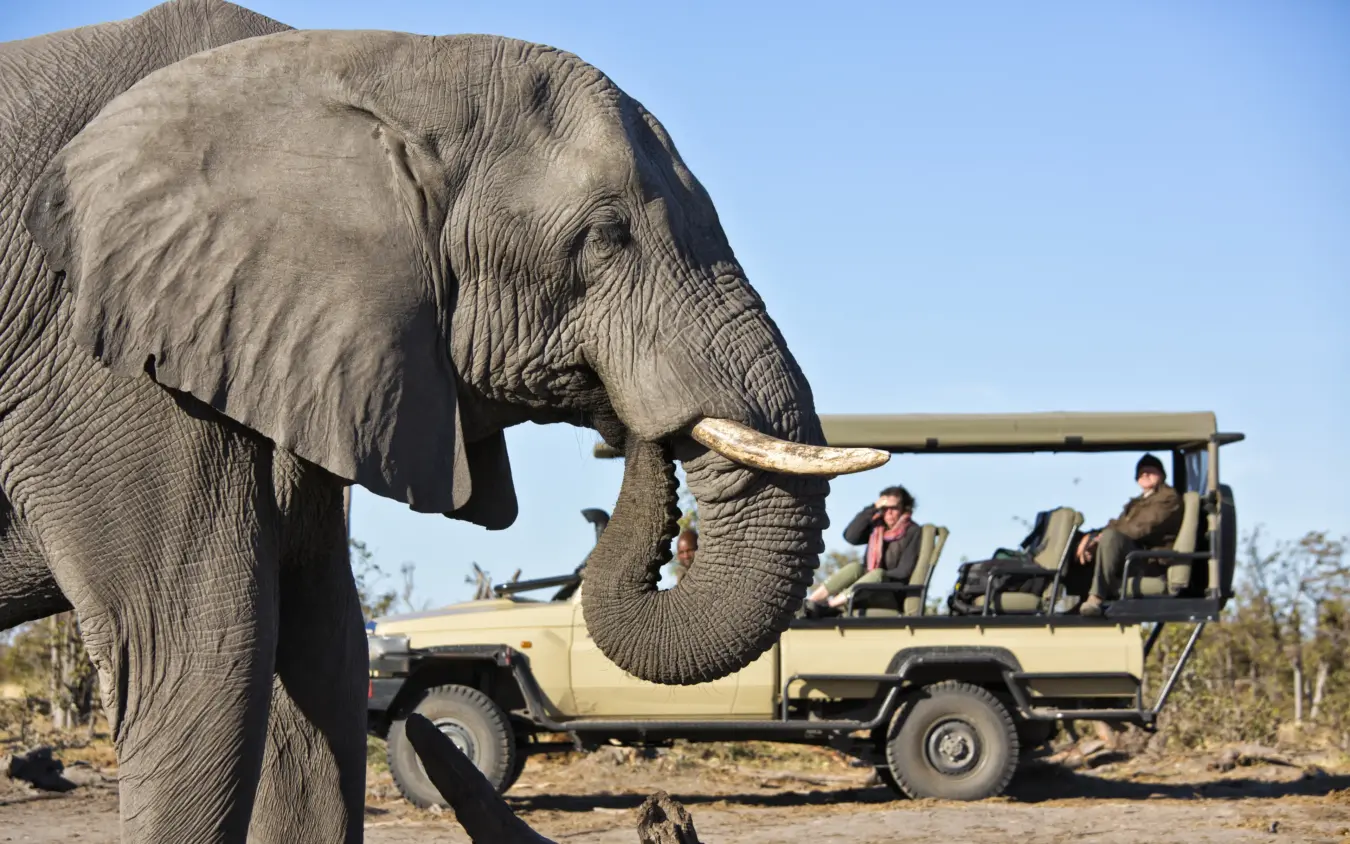
Elephants arrive in shifts, close enough to hear the water move.

The country here is dry. Cathedral mopane runs over deep sand, the pans lie open, and there are no channels to pole through. Kudu, sable and roan work the woodland edges. A few days at Elephant Pan after a water camp in the southern Delta gives you the other half of northern Botswana, where wildlife gathers at the few places holding water rather than moving through it.

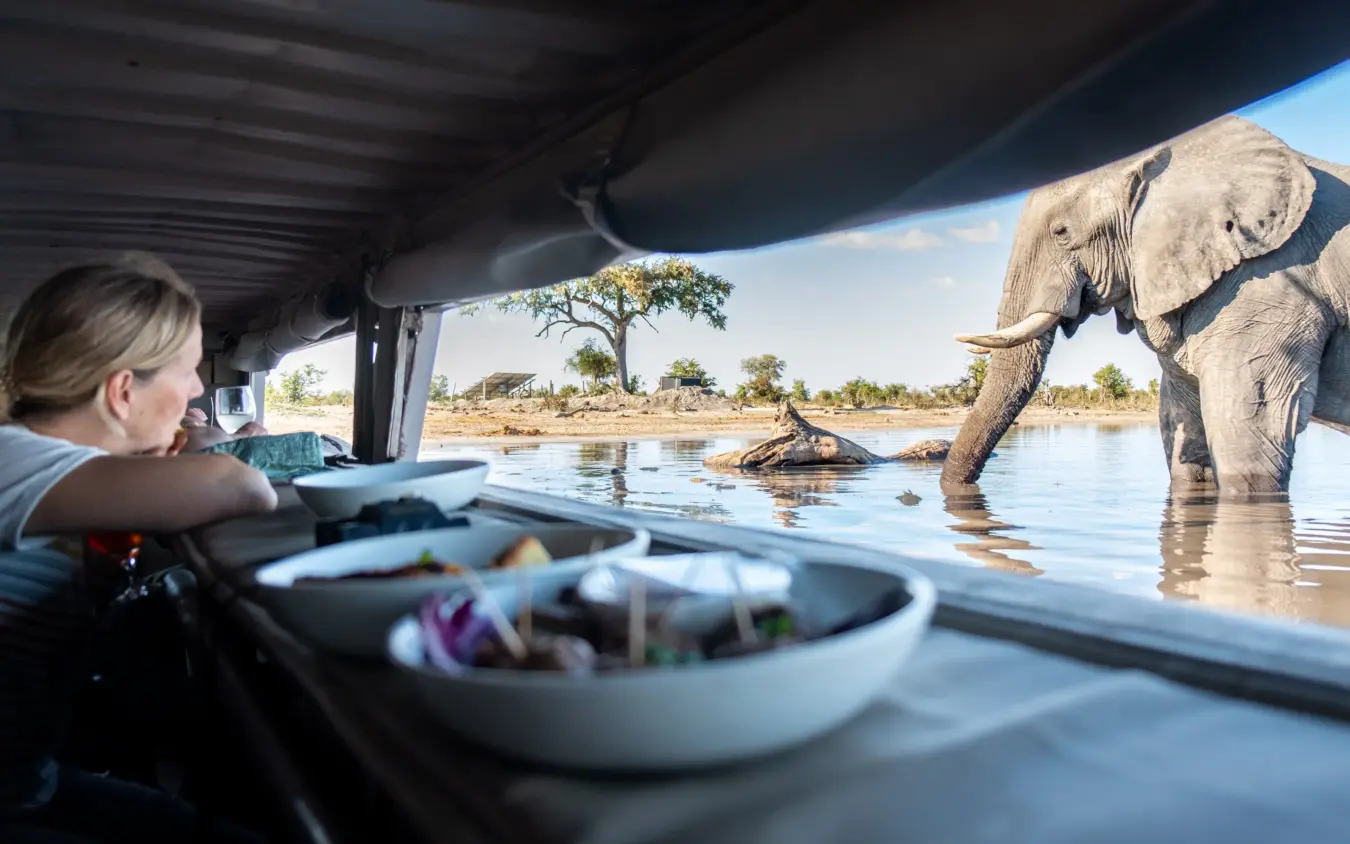
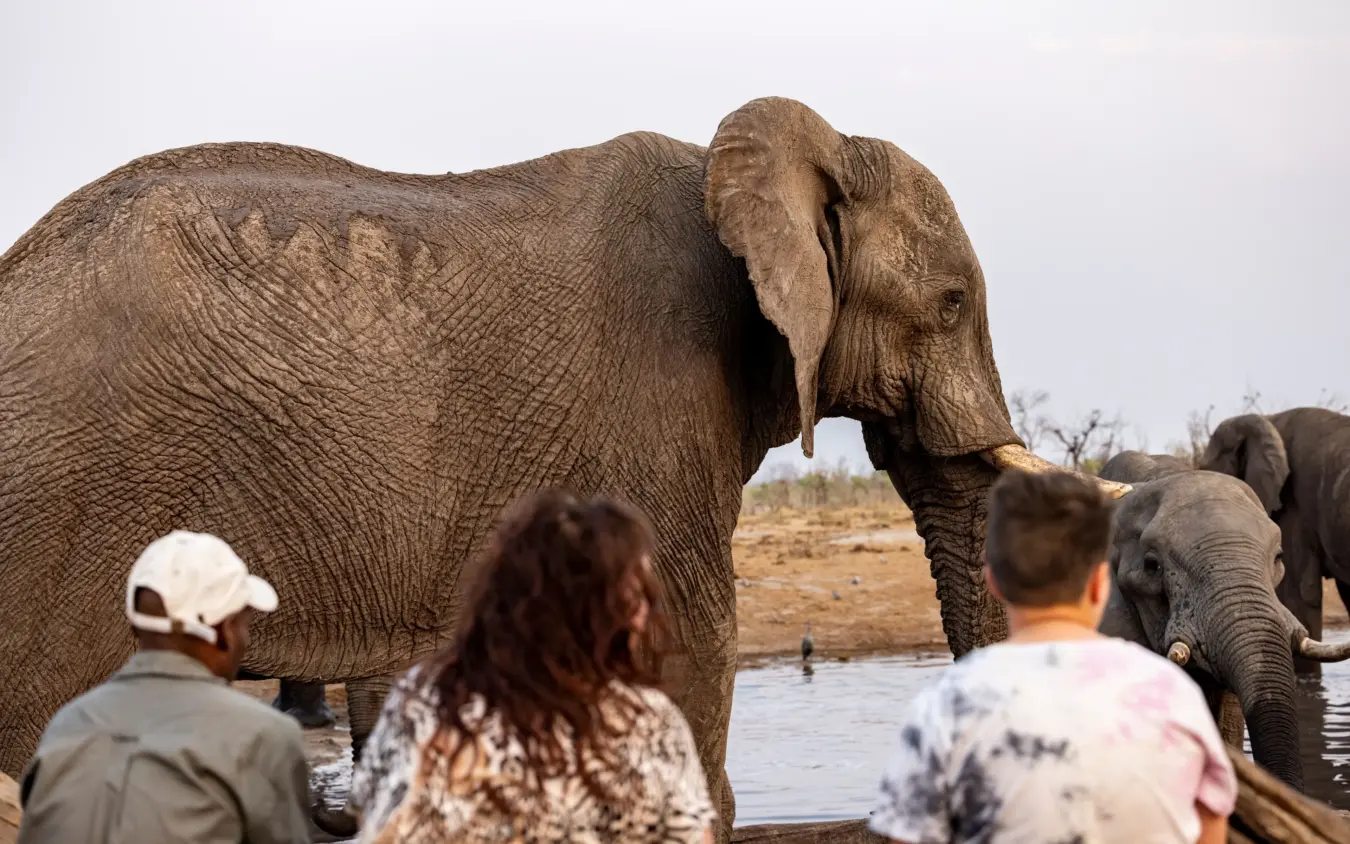
The hide waits about twenty minutes’ drive from camp at a second pumped waterhole, a shipping container half-buried in the sand with windows at the level of an elephant’s feet. A morning inside it is a different kind of safari from a drive. There is no engine noise, no vehicle outline, no moving on after ten minutes, just chairs, a long view of the water, and whatever walks in.

From ground level the camera looks up at the elephants.

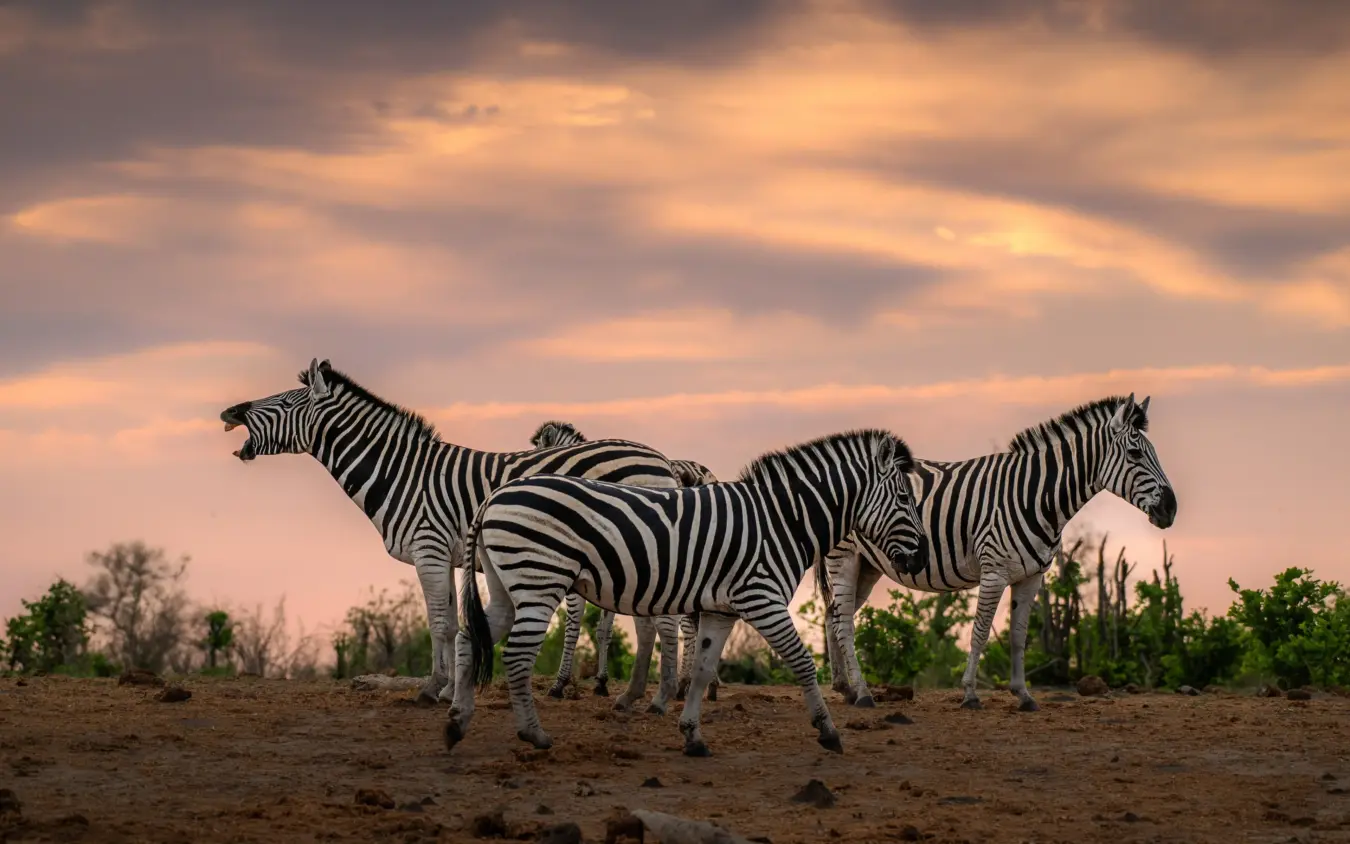
Bulls come and go through the day, greeting one another at the water and bathing before they drift back into the mopane, and giraffe, zebra and buffalo come in behind them. From ground level the camera looks up at the elephants. That changes the scale, the texture of skin, the way a herd arranges itself around water. Lions use the same pan, and a pride of seven has been watched from the hide.

01

accommodation

Eight Tents on Raised Wooden Decks

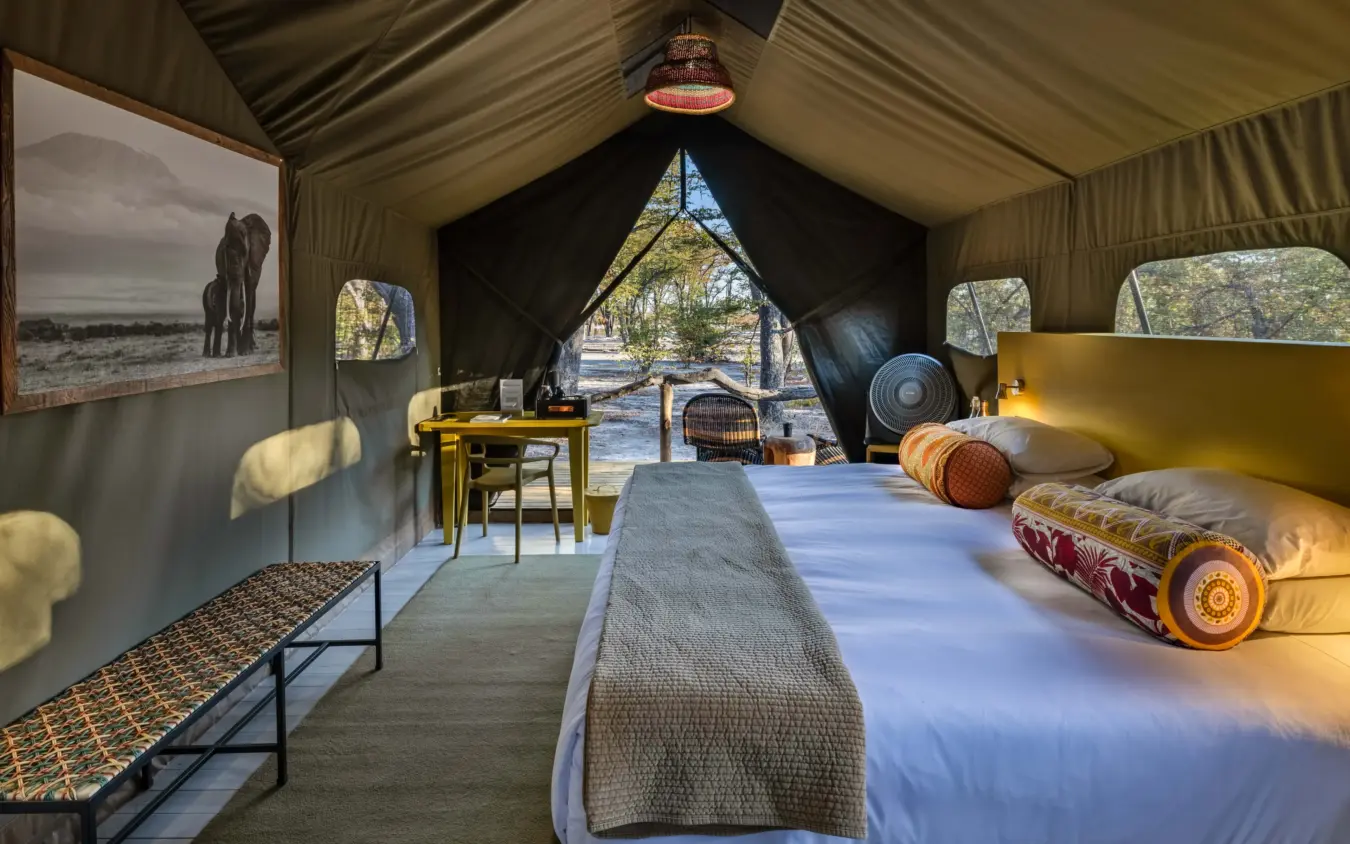
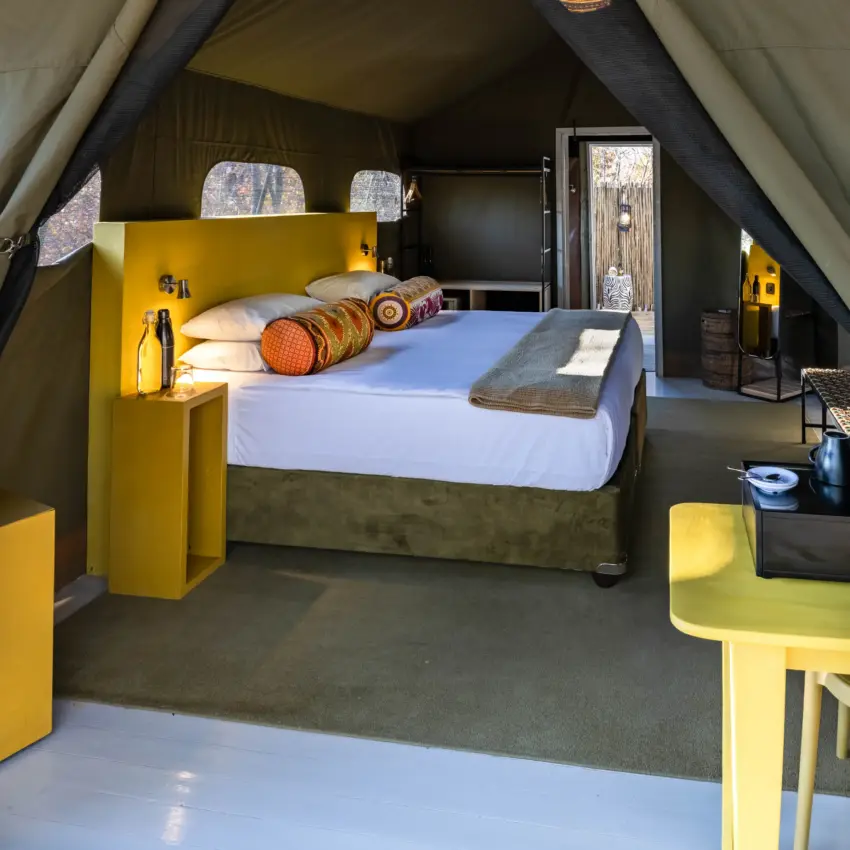
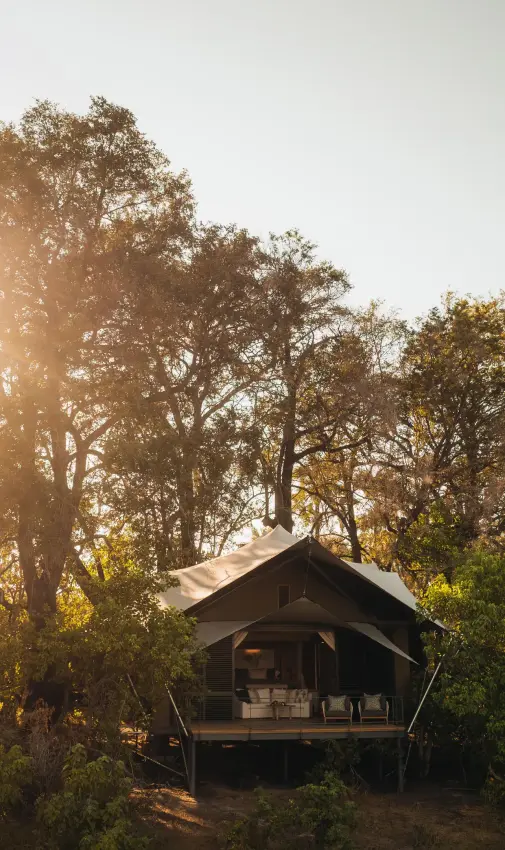
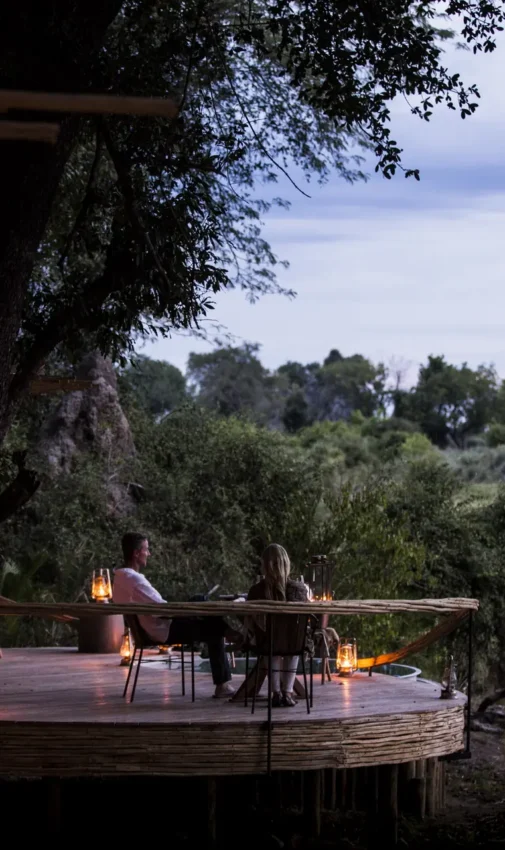
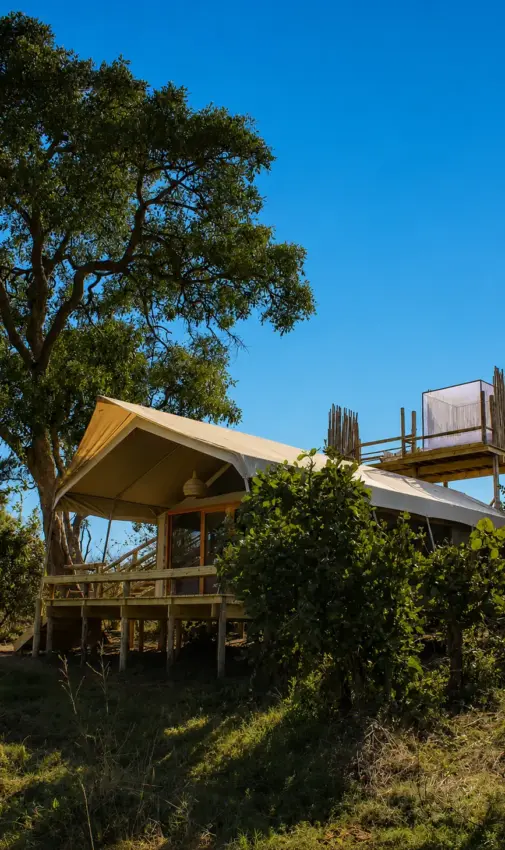
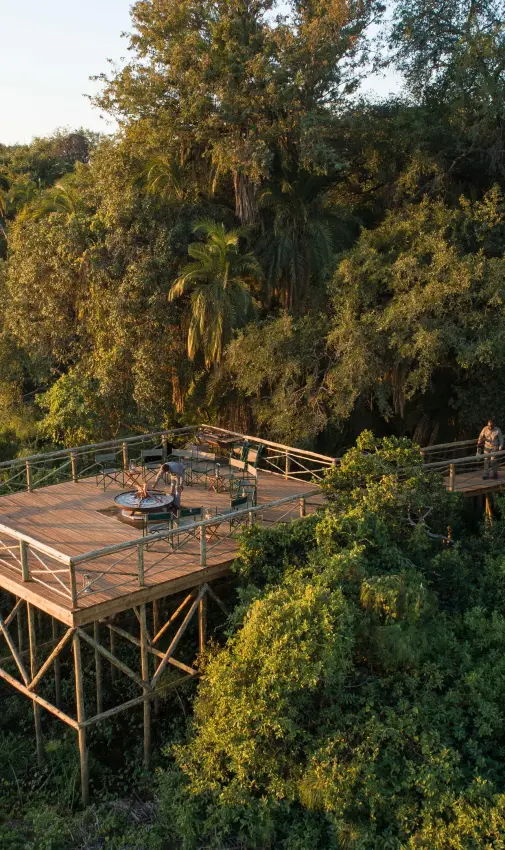
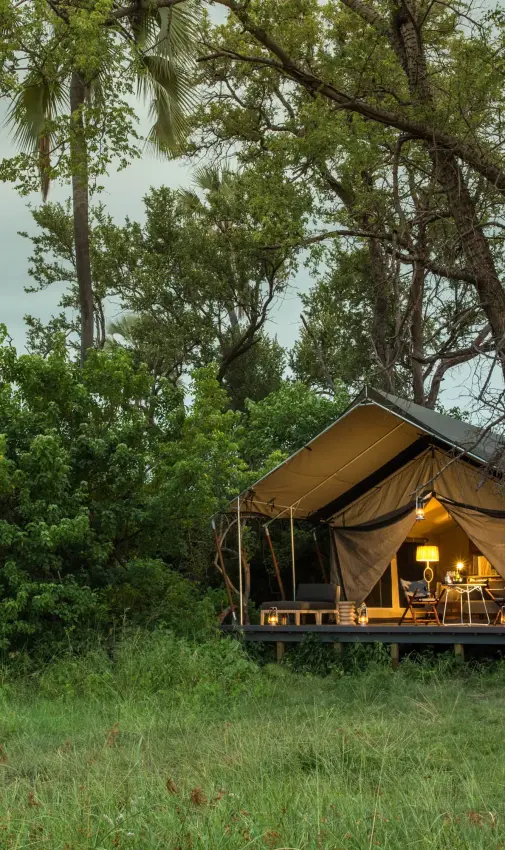
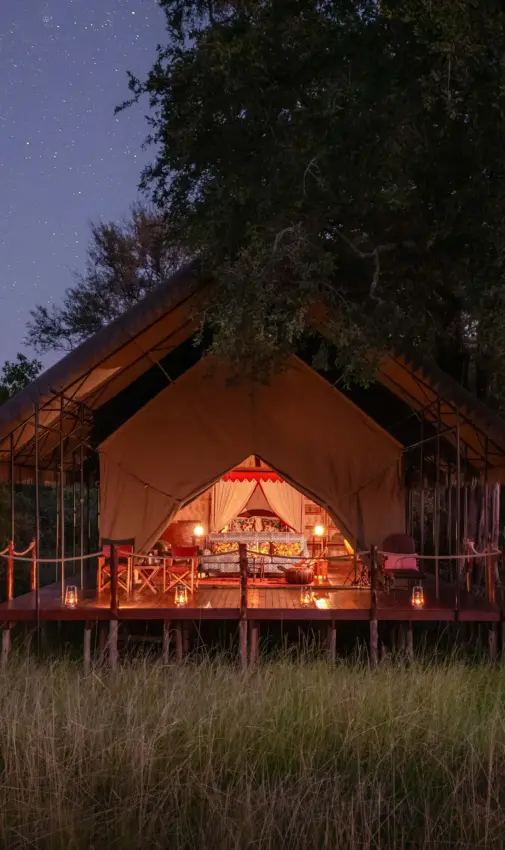
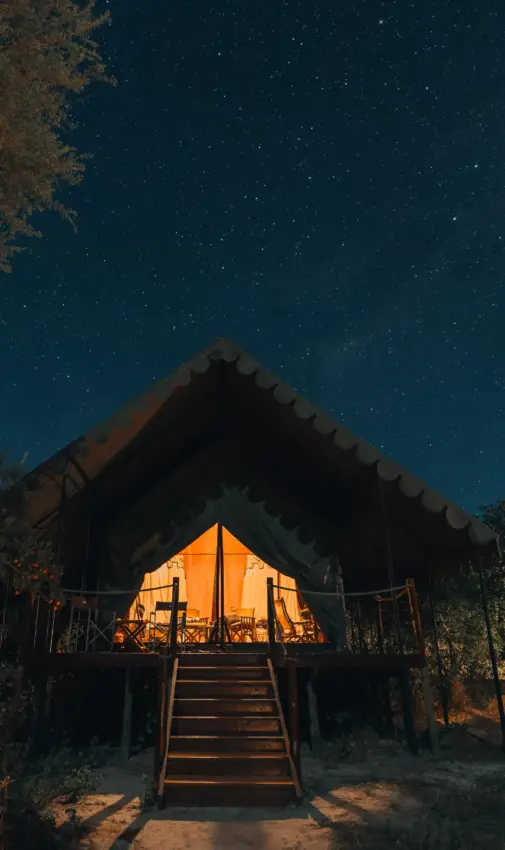
Eight tents on raised wooden decks curve in a semicircle facing the pan, seven doubles or twins and one family tent. Each has mesh windows, solar lighting, a pedestal fan, writing table, wardrobe and safe. The en-suite bathroom is behind stick-wall screens, with hot water from a gas geyser, and sandy paths lead back to the main deck.

02

activities

Spotlit Night Drives and Sunken Hide Sits

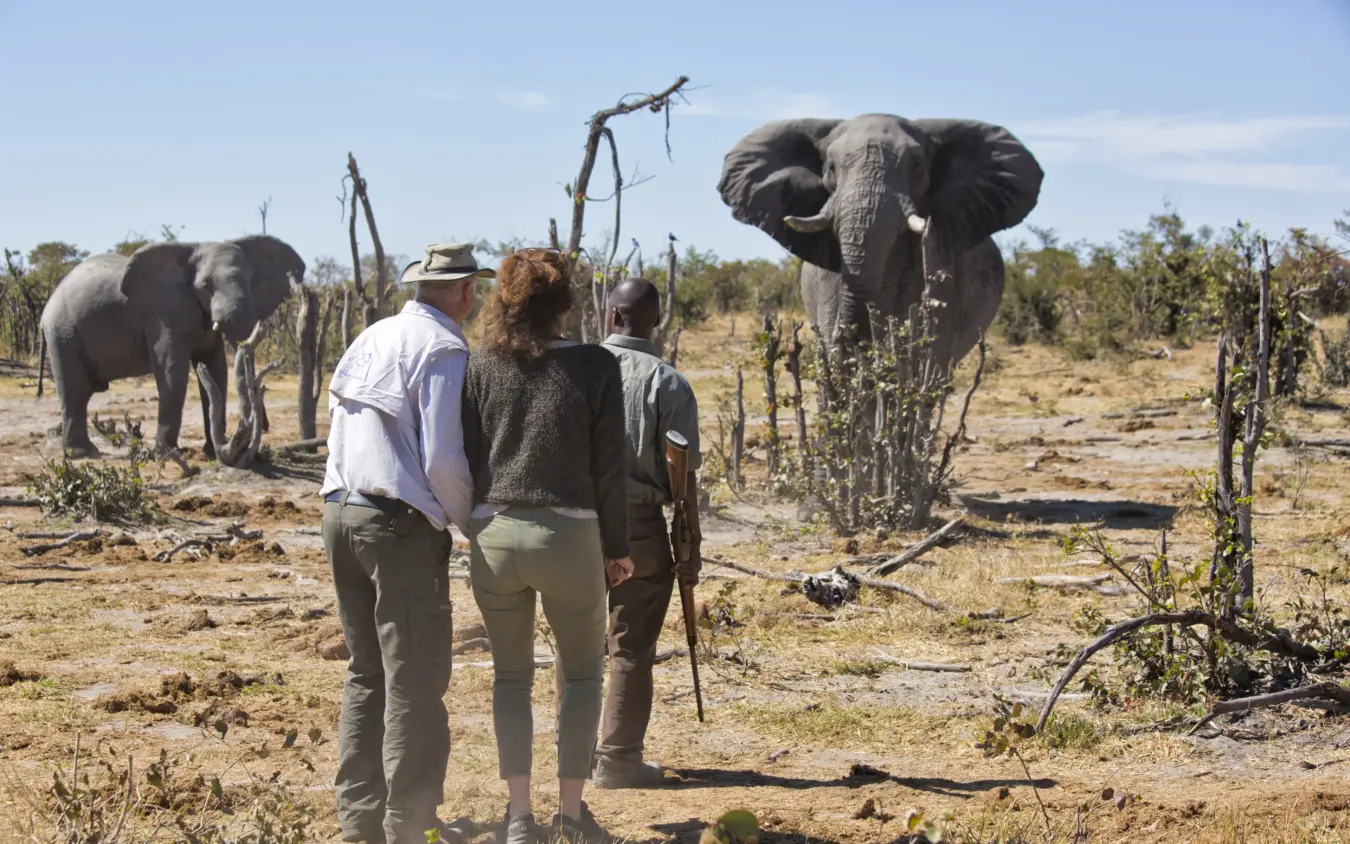
Morning and afternoon game drives, off-road tracking and spotlit night drives run under private reserve rules that neighbouring national parks do not allow. Guided walks with an armed guide, long sits in the sunken hide, birding, ranger patrols, sleepouts on raised platforms and helicopter flights are arranged day by day.

03

conservation

Wild Dogs Protected Through Maun Animal Welfare

Wild dogs here are protected partly through a domestic dog vaccination programme run with the Maun Animal Welfare Society and Botswana Predator Conservation. Community rangers monitor predators and clear invasive plants across the reserve, and the Maria Ramsden Learning Centre teaches children in Khwai Village.

ready to get started?

Get in touch and let’s start the conversation. An initial consultation helps us understand what you’re looking for, whether that’s specific experiences, luxury touches, or marking a special occasion, and from there we’ll guide you through what’s possible so you can decide if we’re the right fit.

Alternative accommodation in the okavango delta

Illuminated safari lodge dining area under ancient trees at dusk, Duba Plains, The Okavango Delta, Botswana 01

Duba Plains

The Okavango Delta

02

Sable Alley

The Okavango Delta

Illuminated safari lodge deck with fire pit at dusk, Khwai Leadwood, The Okavango Delta, Botswana 03

Khwai Leadwood

The Okavango Delta

Person tending campfire at sunset during outdoor gathering, Kweene Trails, The Okavango Delta, Botswana 04

Kweene Trails

The Okavango Delta

Safari tent accommodation nestled among tall trees at golden hour, Chitabe Camp, The Okavango Delta, Botswana 05

Chitabe Camp

The Okavango Delta

Wooden deck dining area beneath ancient tree overlooking savanna landscape at dusk, Mombo Camp, The Okavango Delta, Botswana 06

Mombo Camp

The Okavango Delta

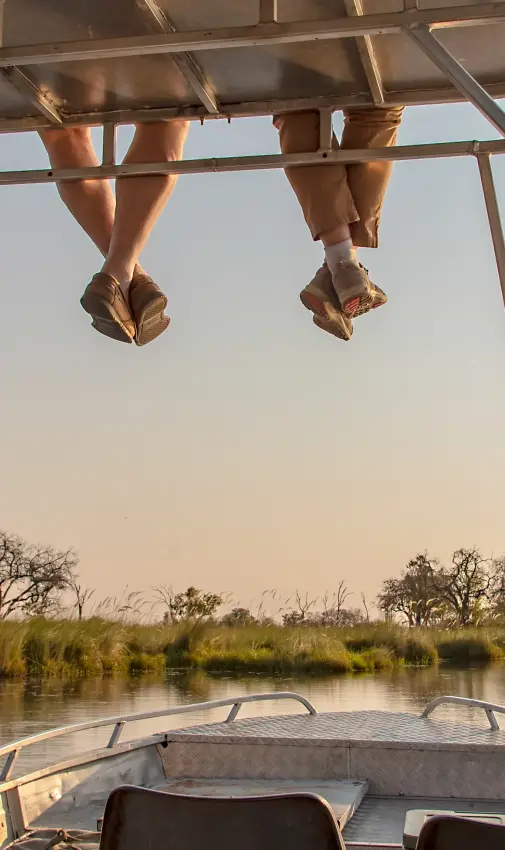
Boat with dangling feet on waterway at sunset, Kwando Splash Camp, The Okavango Delta, Botswana 07

Kwando Splash Camp

The Okavango Delta

08

Mbamba

The Okavango Delta

09

Mokolwane

The Okavango Delta

Riverside lodge buildings nestled among green vegetation and trees 10

Xigera Lodge

The Okavango Delta

11

Karangoma

The Okavango Delta

12

North Island Okavango

The Okavango Delta

13

MmaTsebe Tented Camp

The Okavango Delta

14

Duke’s East

The Okavango Delta

Luxury safari tent bedroom with four-poster bed and canvas interior, Kanana, The Okavango Delta, Botswana 15

Kanana

The Okavango Delta

16

Sitatunga Private Island

The Okavango Delta

Elevated safari lodge with thatched roof overlooking waterhole at dusk, Little Vumbura, The Okavango Delta, Botswana 17

Little Vumbura

The Okavango Delta

18

Tawana

The Okavango Delta

19

Tumani Tented Camp

The Okavango Delta

Guests on wooden deck overlooking savanna at sunset, Shinde, The Okavango Delta, Botswana 20

Shinde

The Okavango Delta

frequently asked questions

By light aircraft from Maun into the Khwai Private airstrip, roughly thirty five minutes in the air, then about an hour by road over deep sand to camp. The road transfer between the airstrip and camp is part of the nightly rate. The flights are not, and we price them separately in your quote so you can see what each leg costs rather than find it later.

The usual arrangement is a shared seat in plane bush service, which can make a stop or two on the way and has its departure time confirmed close to the day. If you would rather fix your own timings, or you are travelling as a family or a group, we can arrange a private charter for that leg instead, typically a Cessna Caravan or a Pilatus PC-12. Tell us which you would prefer when you enquire and we build it into the quote from the start.

Yes. The camp sits in Khwai Private Reserve on the north eastern edge of the Okavango Delta, and TravelHealthPro, the UK's official travel health service, classes the northern half of Botswana, the Okavango Delta included, as high risk for malaria from October to May, recommending antimalarial tablets for those months, and as low risk for the rest of the year, when it advises awareness of the risk and avoiding bites. The CDC names the Okavango and Ngamiland districts among the parts of Botswana for which it recommends prescription medicine to prevent malaria.

We plan safaris rather than give medical advice, so the decision belongs with you and your doctor or a travel clinic, and it is worth a check close to departure because both sources revise their guidance. One practical point about this camp in particular: the pan is kept filled by a borehole through the dry months, so mosquitoes are around outside the rains as well as in them. Long sleeves and trousers once the sun drops, and repellent on the deck and the night drives, make sense whatever the season.

Yes, from six years old, which is the minimum age here and at every camp in the Delta under the same ownership. One of the eight tents is a family unit, and children of six to eighteen sharing with an adult are charged at a child rate, which we price for your dates.

Two things are worth knowing before you book. A family travelling with a child of nine or younger has to take a private vehicle, booked for the whole stay and charged per vehicle per night, and we put that in the quote from the start rather than let it surprise you. The raised sleepout platforms are a separate booking and take guests of sixteen and over, with twelve to fifteen year olds allowed only when a family takes the platforms exclusively and each child shares with an adult. The camp is unfenced and elephants walk in to the water through the day, so children need an adult with them at all times.

Yes, and it is one of the things the nightly rate covers rather than a charge on top, so messages and email are straightforward from camp.

Mobile coverage in this part of the reserve is a different question, and we would rather check the current position with the camp than tell you something that has since changed. If someone in your party has to be reachable at set times, say so before you book and we will confirm what is possible for your dates. For everyone else, the practical advice is to download maps, books and anything you want to listen to before you leave Maun.

June to August is the most comfortable stretch and the easiest for general game viewing, dry and almost rainless, with afternoons around twenty six degrees and early mornings near eleven. September and October are when the pan does its best work, because the bush thins, the seasonal water goes and animals come to the few places still holding water, though October afternoons average around thirty four degrees and that heat is real on an open vehicle. November to March brings the rain and afternoons in the low thirties, green country, newborn animals and migrant birds, with the wildlife spread out rather than gathered at water.

Pack a warm windproof jacket, a hat and gloves for winter mornings, because dawn drives in June and July are genuinely cold before the sun gets up. Then neutral colours and closed shoes for the walking, a light rain jacket from November to March, strong sun cream and a wide brimmed hat for the middle of the day, and binoculars, which earn their place on a morning in the hide. Soft bags rather than hard cases, because the aircraft into the reserve are small.
Three at least. The camp's own guidance is to plan three nights and two full days, and that is about right, because one morning goes to the hide and the pan repays sitting still rather than passing through. Four nights gives you a full day out and a night drive without dropping anything. Six or seven nights, or eight and more, taken across this camp and its sister camps in Botswana and Namibia, earn a long stay discount off the nightly rate, which is one reason we usually build the whole trip as a single booking.

The rate is fully inclusive: the tent, all meals, drinks other than premium brands, the daily activities and guiding, the transfer between the airstrip and camp, wifi, guest laundry, park entry fees and tax. Outside it sit the flights, premium spirits and wines, gratuities, comprehensive travel insurance, the scenic helicopter flights over the Delta, a private vehicle where one is needed or wanted, and a community, conservation and reserve fee charged per person per night, which funds community and wildlife work in the reserve and applies to everyone aged six and over. We set each of those out in the quote so the figure you see is the figure you pay.

rated five stars by our clients

other areas in botswana

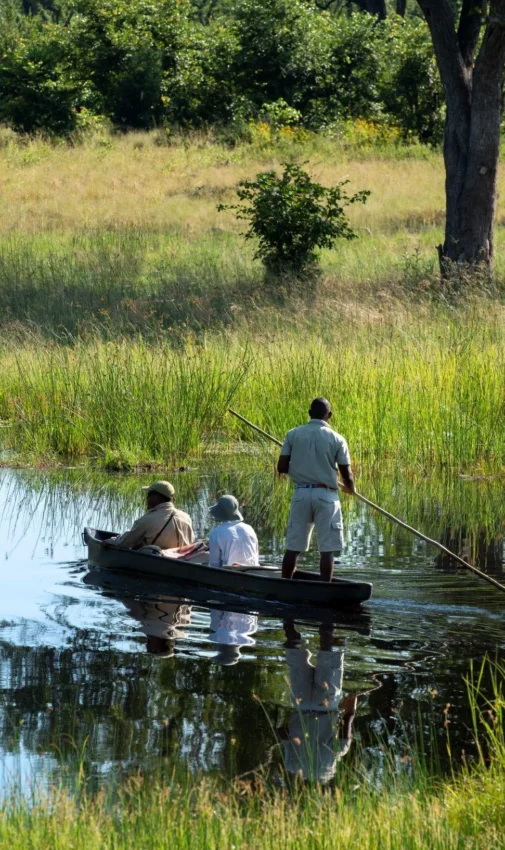
Guests poling traditional boat through wetland waterway, Linyanti Wildlife Reserve, Botswana 01

Linyanti Wildlife Reserve

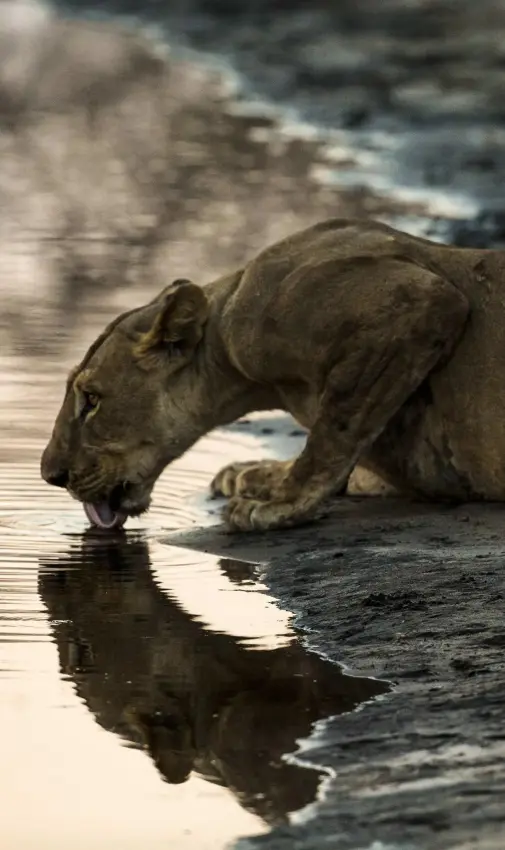
Lion drinking from water's edge at sunset, Selinda Reserve, Botswana 02

Selinda Reserve

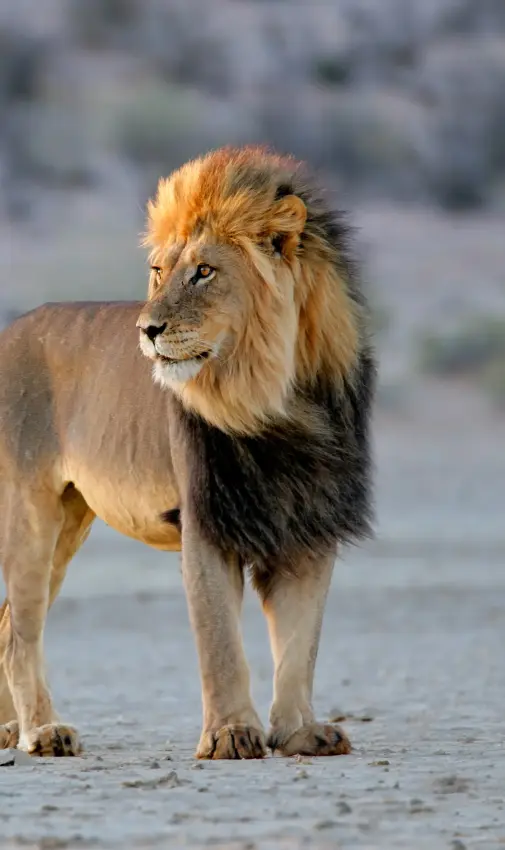
Male lion standing on sandy ground in natural habitat 03

Central Kalahari

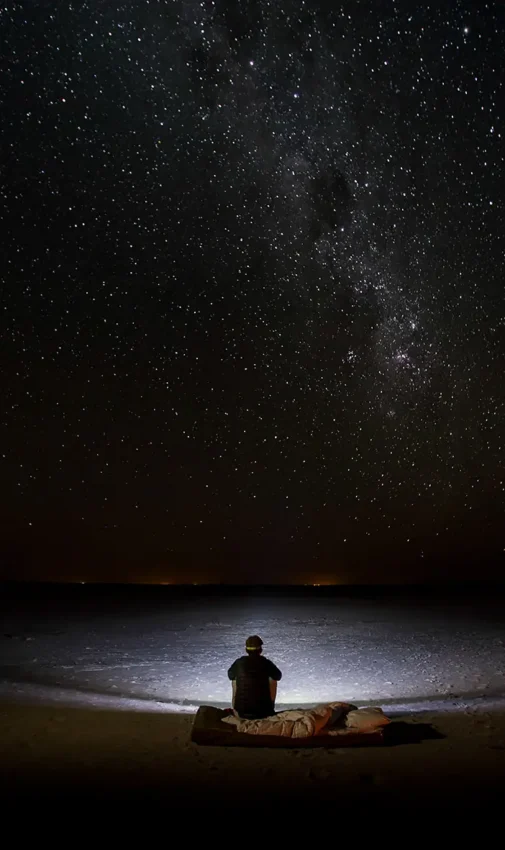
Person sitting alone under starry night sky, Makgadikgadi Pans, Botswana 04

Makgadikgadi Pans

Herd of elephants drinking at waterhole with reflections 05

Chobe

06

Maun

Planning a journey together

our approach

remote, exclusive
& personal

Every journey starts with a conversation. We take the time to understand your vision before we start planning.

Whether by phone or in person, we work with you directly to shape something that is considered, personal, and expertly delivered.

get in touch
destinations ideas & inspiration our process about us contact us