

accommodation
Five Meru-style Canvas Tents on Timber Decks
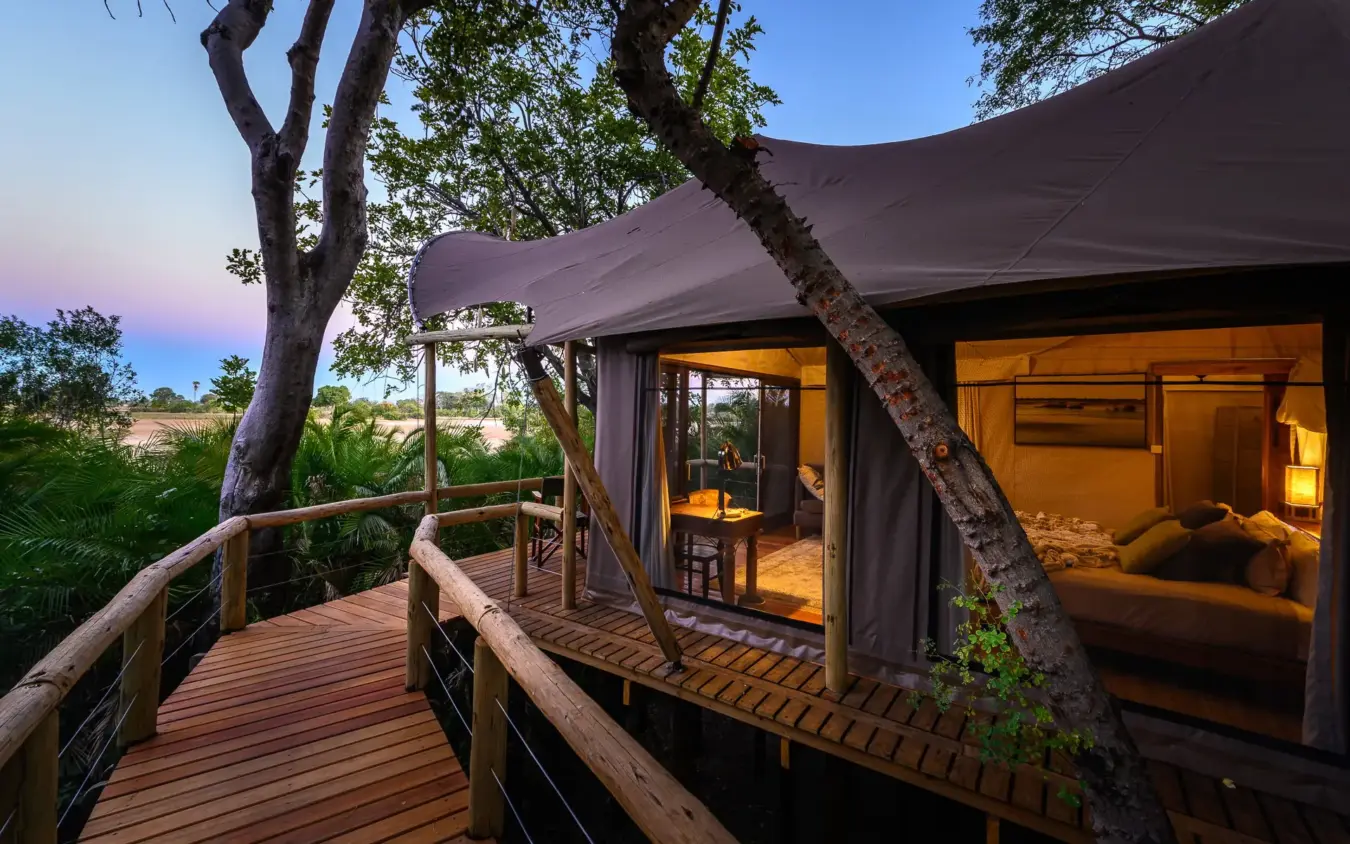
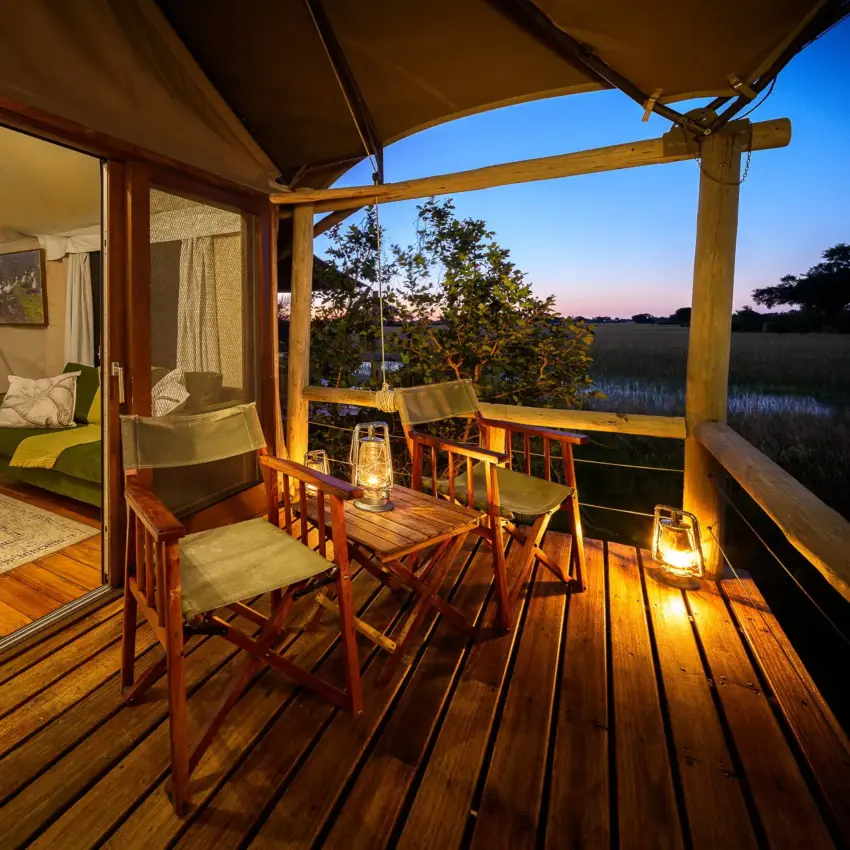
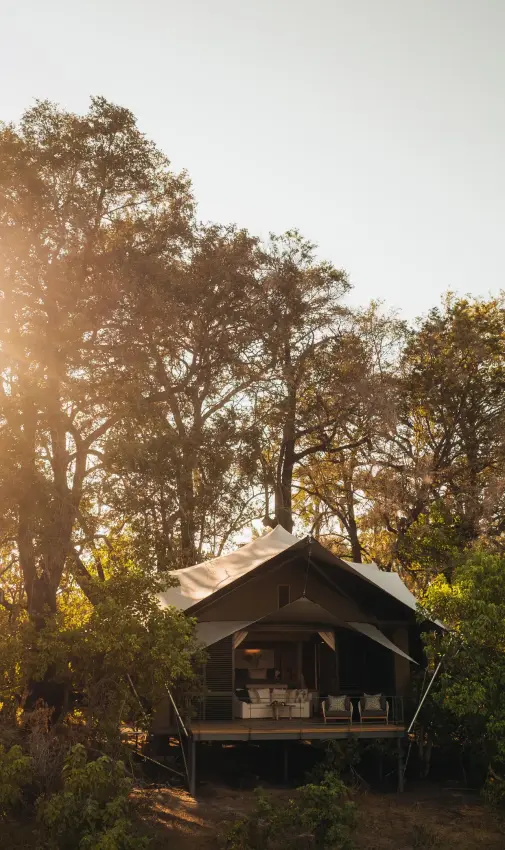
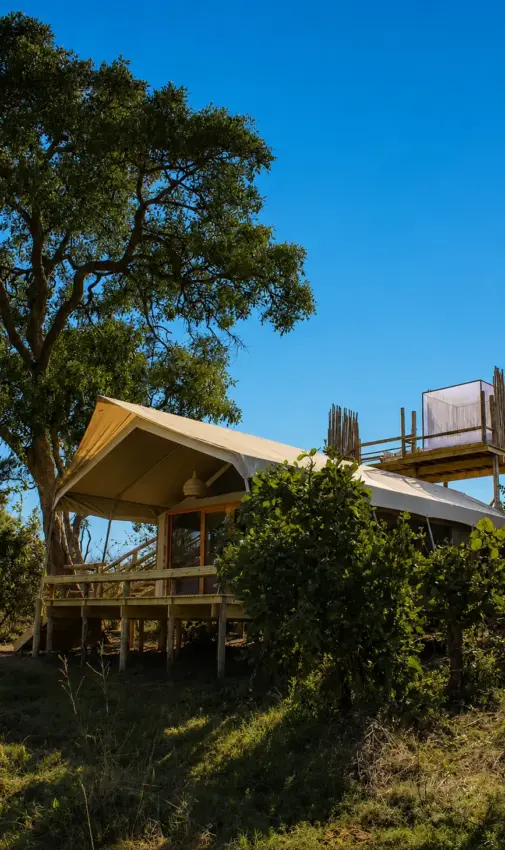
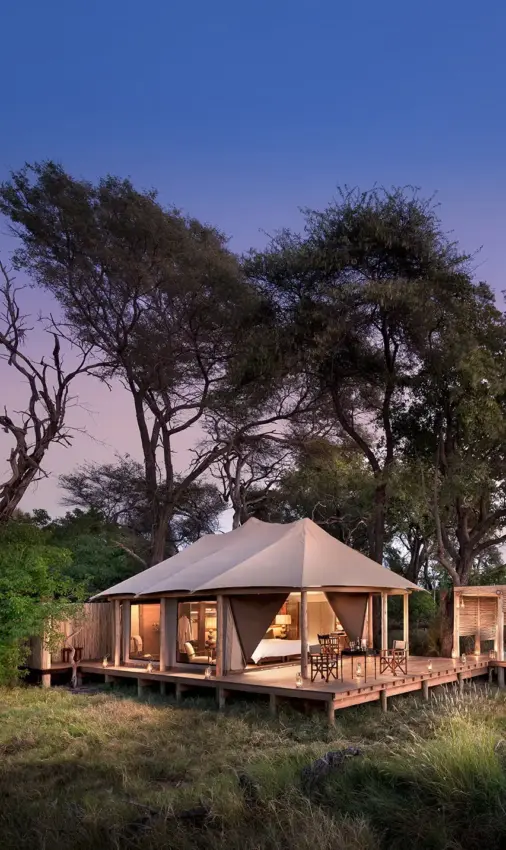
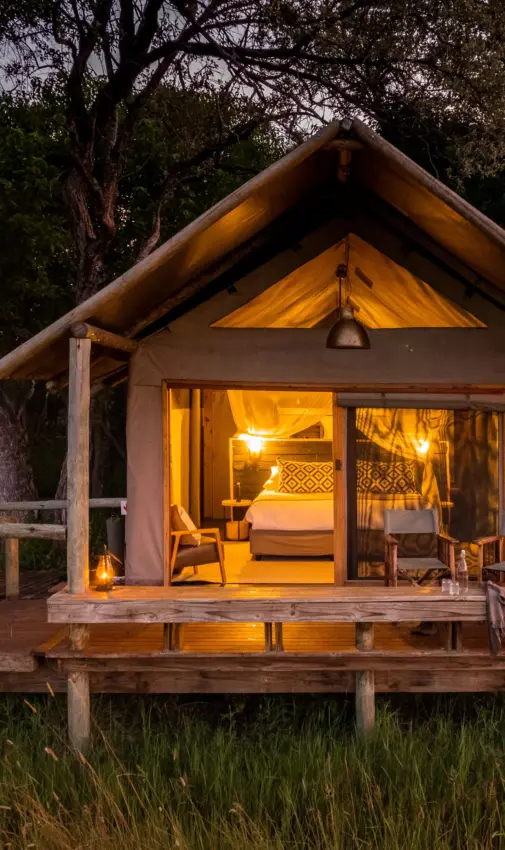
Five Meru-style canvas tents stand on raised timber decks, each looking out over the floodplain. The en suite bathrooms have both an indoor and an outdoor shower.
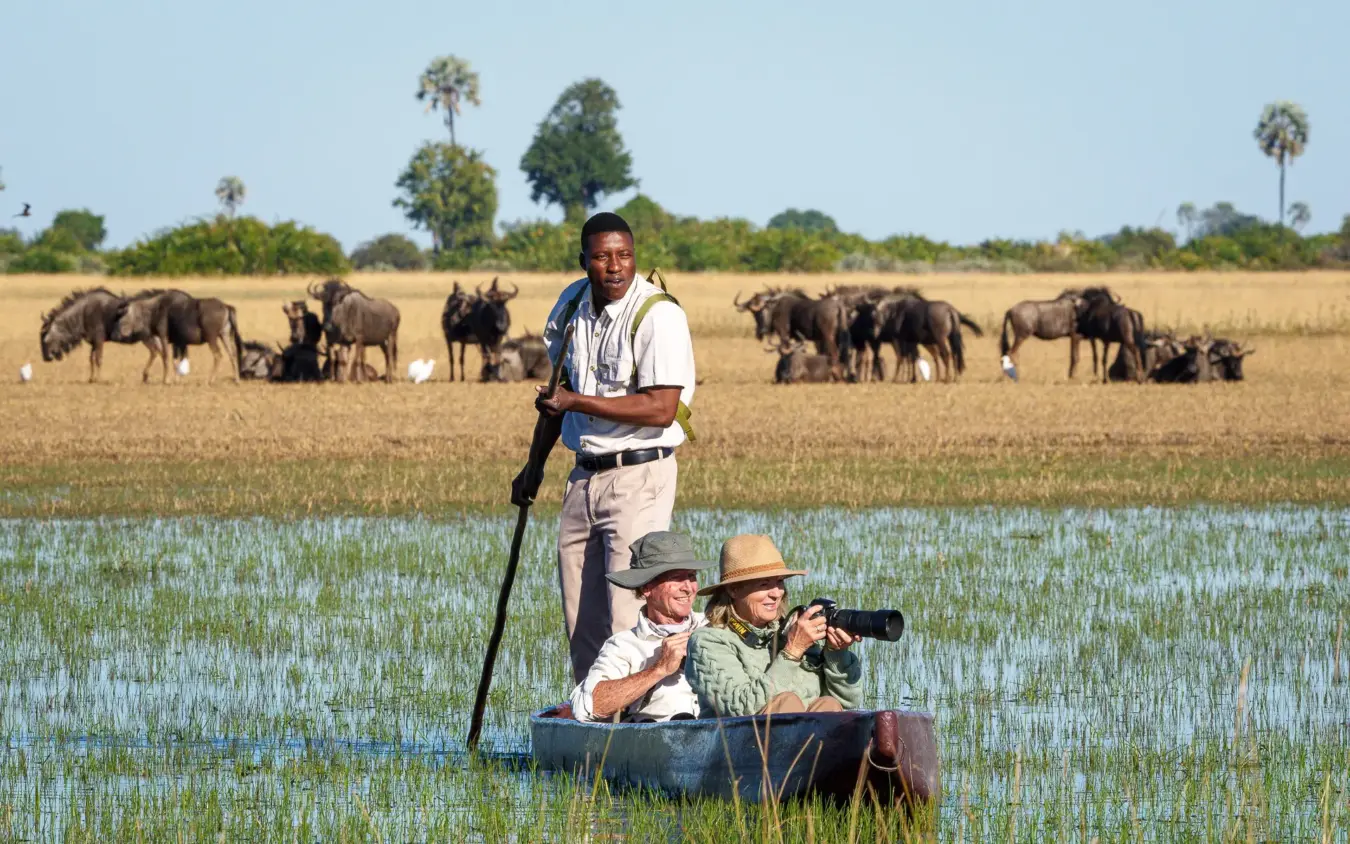
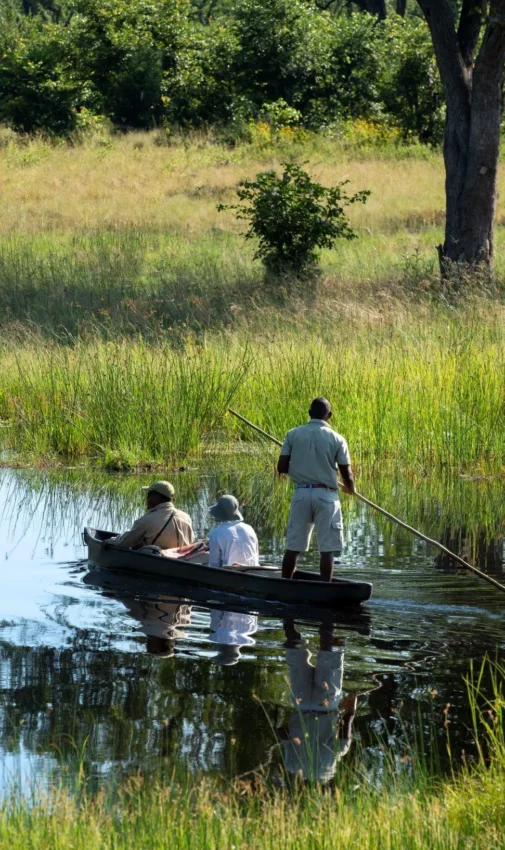
Jacana Camp occupies a small palm island in the Jao Flats, on the western side of Botswana’s Okavango Delta, its five tents raised on decks above reed beds and seasonal floodplain. Days here are spent on the water, in a mokoro poled through papyrus channels so narrow that lily pads brush the hull. At dusk, painted reed frogs call from the stems.
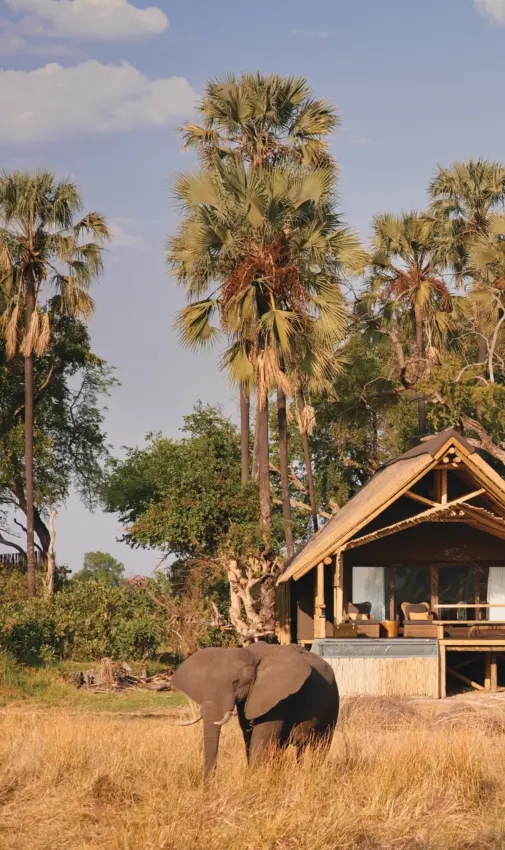
On one guest’s first night, an elephant rested against the tent.
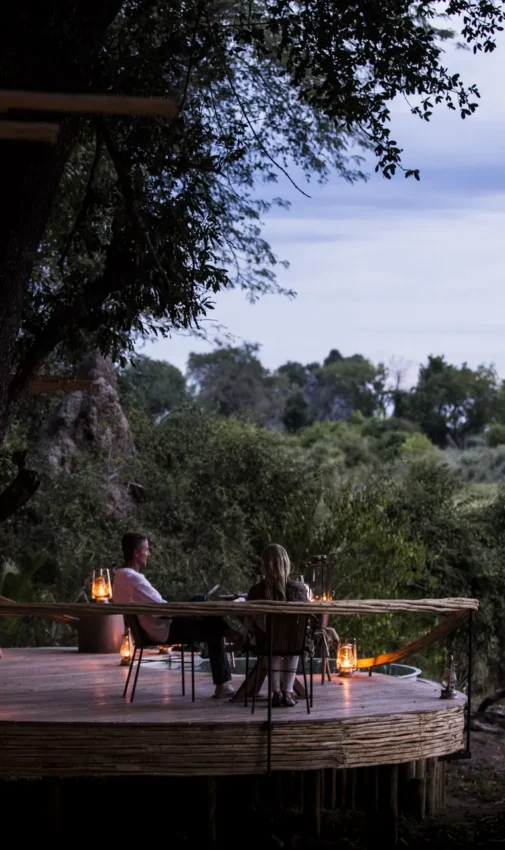
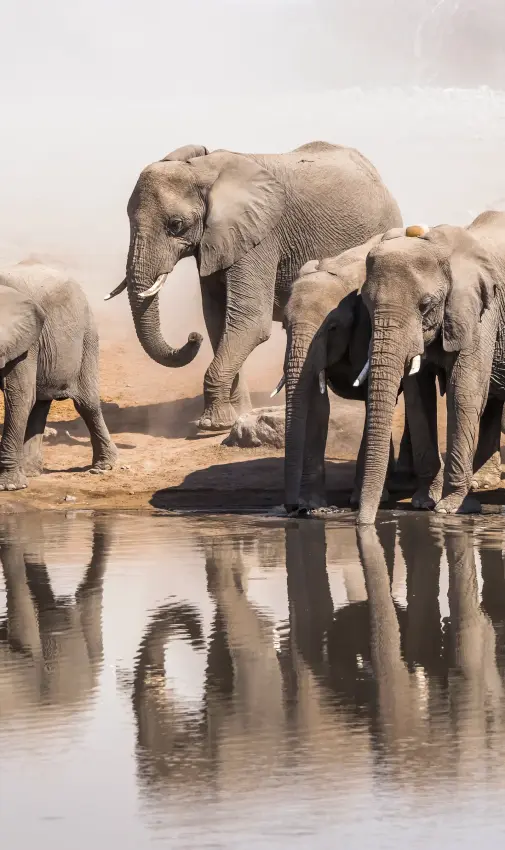
The island is small enough that the Delta’s larger residents walk straight through it, and elephants come into camp itself. On one guest’s first night, an elephant rested against the tent. A hippo has been seen leaving from beneath a raised deck. Life in camp is lived close to the water, with meals served on a platform built between two sycamore figs and a main deck that leads down to the jetty.

Martin Thomas Kays Sr. came up from South Africa in 1887 with five wagons of trade goods, and his family has been part of Ngamiland ever since. His descendants traded at Tsau, then moved to Maun when the Batawana founded the village around 1915.
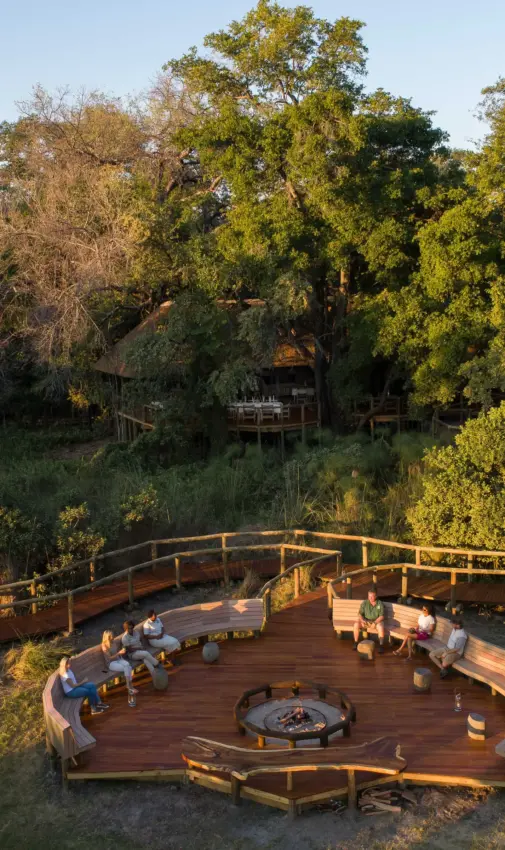
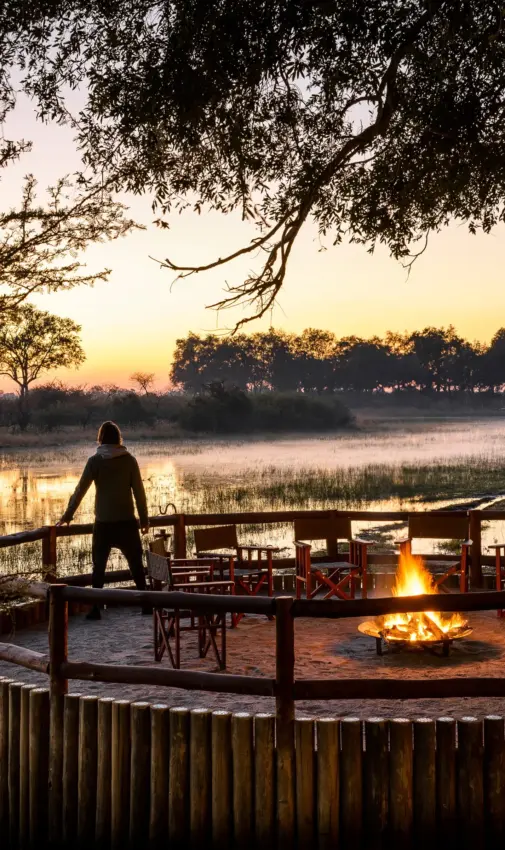
After dark, hippos grunt in the water around the fire.
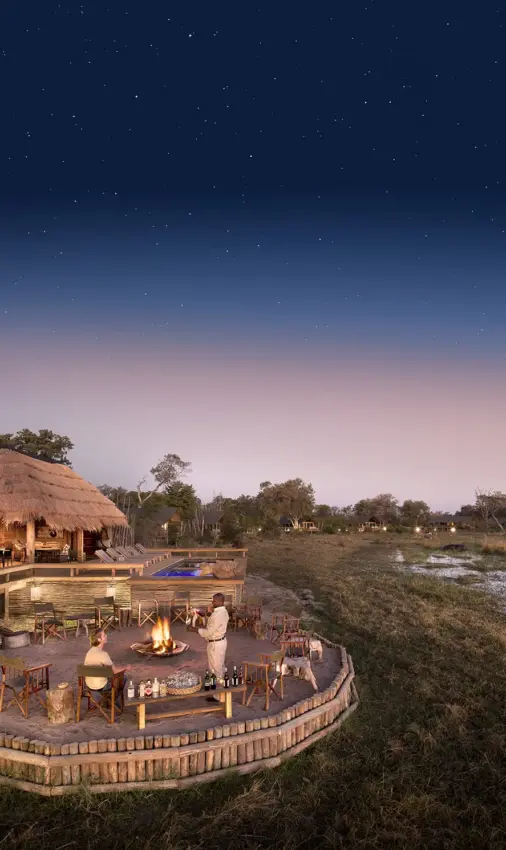
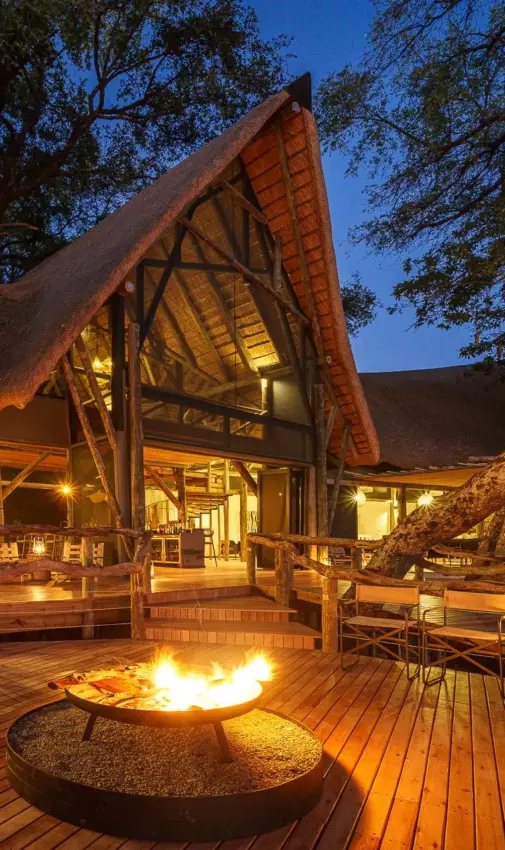
In 1998 the family and their partner Katimpa Mogalakwe won the tender for this concession, and the first guests arrived in July 1999. Today the reserve is run by David and Cathy Kays and their son Martin, whose family holds the concession lease. In 2019 the camp was rebuilt from the ground up, with a new pool deck and jetty. Its new fire deck floats out on the lagoon. After dark, hippos grunt in the water around the fire. It all runs on solar power.
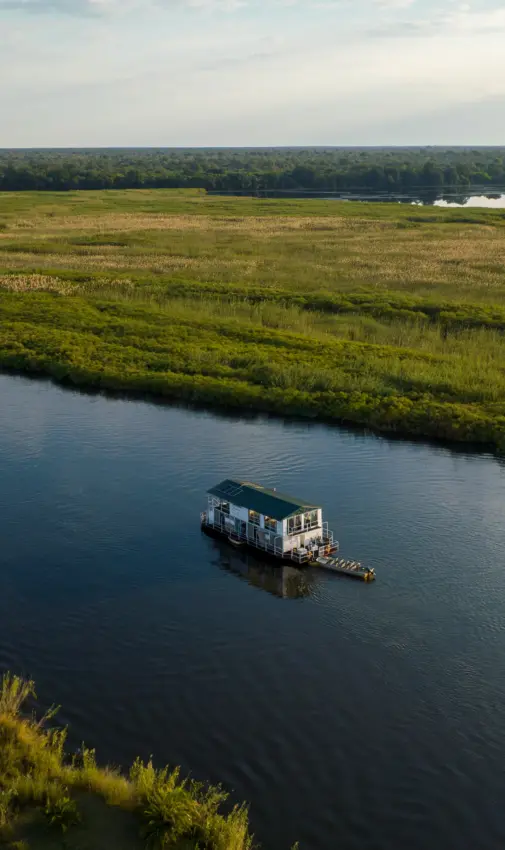
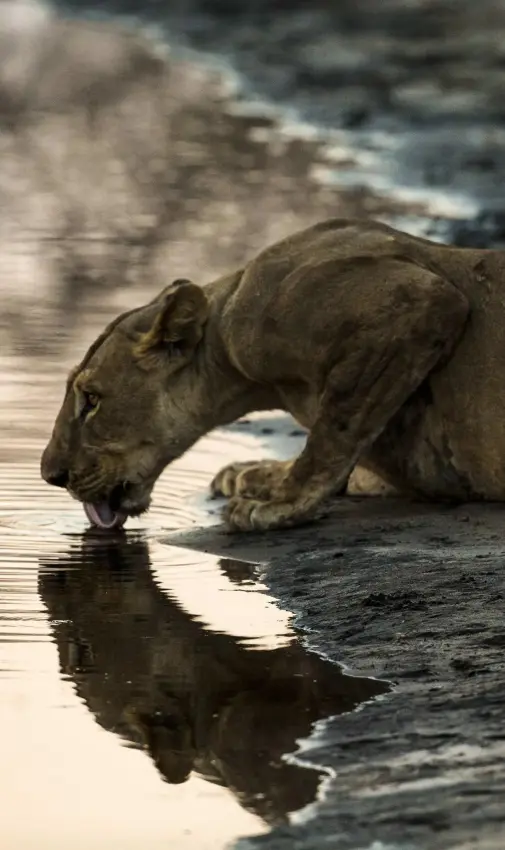
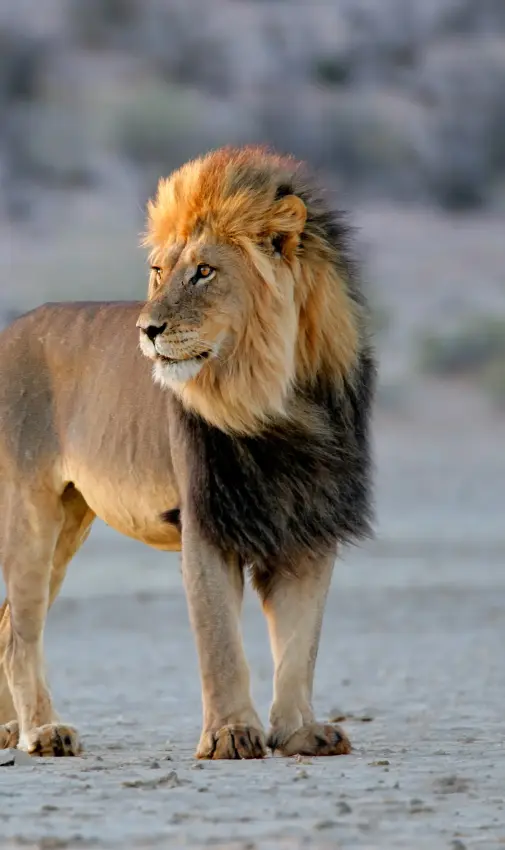
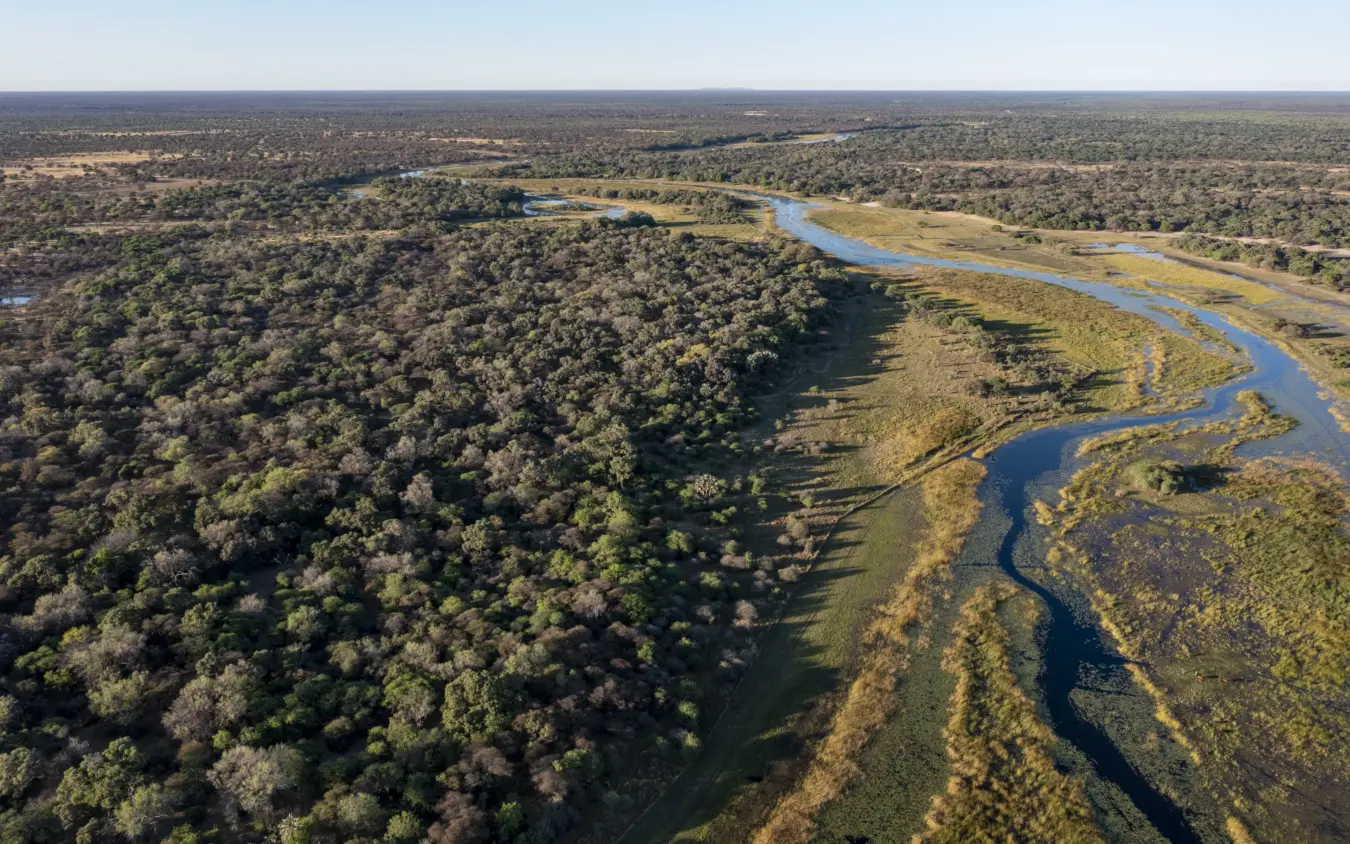
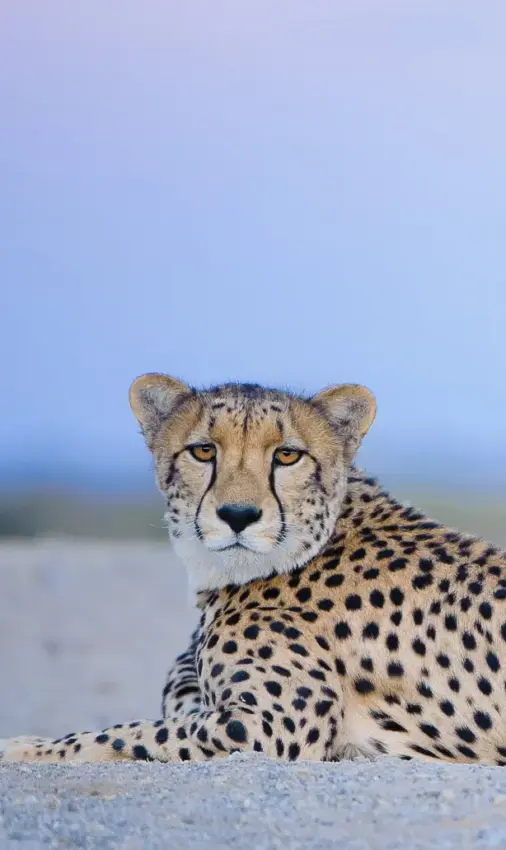
In the biggest flood years, most of the 60,000-hectare private reserve around the camp lies under water, and the island becomes a raft of palms in open floodplain. Red lechwe splash through the flooded grass in herds, and sitatunga keep to the papyrus beds. Elephants and hippos use the channels too. Lion, leopard and cheetah range across the reserve, but big-game viewing takes effort. Drives cover real distance and are cut back when the water is high, while a mokoro goes wherever the flood has gone.
African and lesser jacanas pick their way across the lily pads, while slaty egrets and African pygmy geese work the shallows. Wattled cranes feed out on the floodplains. Local guides pole the mokoro, and the boat slips between papyrus and lilies at water level. Scenic helicopter flights over the Okavango Delta show the whole pattern from above: palm islands strung along the channels, and game paths worn through the flooded grass. After dark, Pel’s fishing owl calls from the trees.
Red lechwe splash through the flooded grass in herds, and sitatunga keep to the papyrus beds.
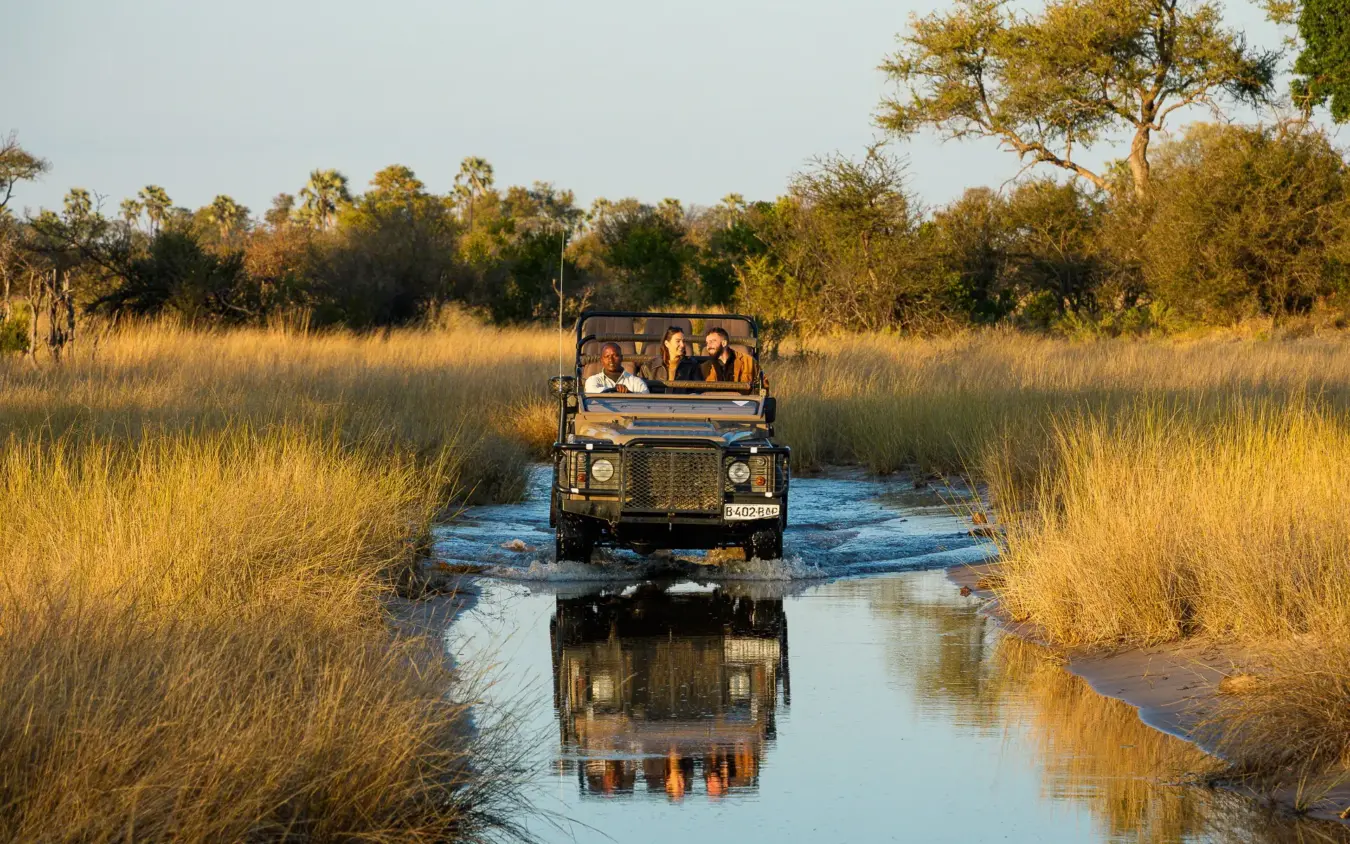
The camp is about 30 minutes from the Jao airstrip, and how the transfer runs depends on the flood. Motorboats cross the lagoons when levels allow, reaching water further afield than a mokoro can, and catch-and-release fishing runs in season. On dry land, game drives explore the larger islands nearby. At high water, boat trips can reach Hunda Island, the largest stretch of dry land nearby. Once the flood is down, drives become a regular part of the day, and guided walks on dry ground follow the season.
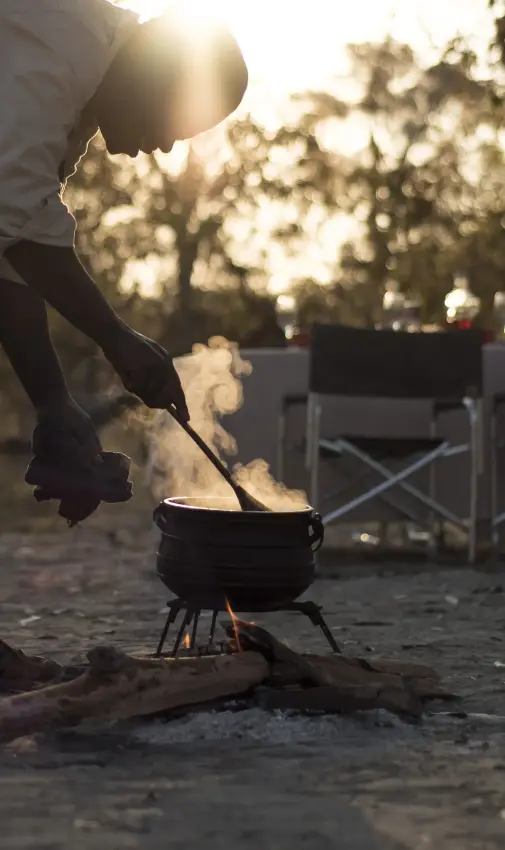
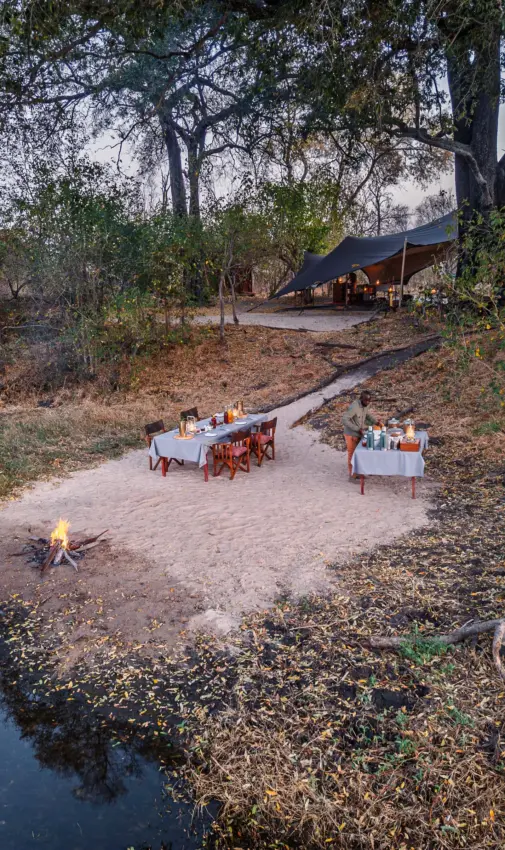
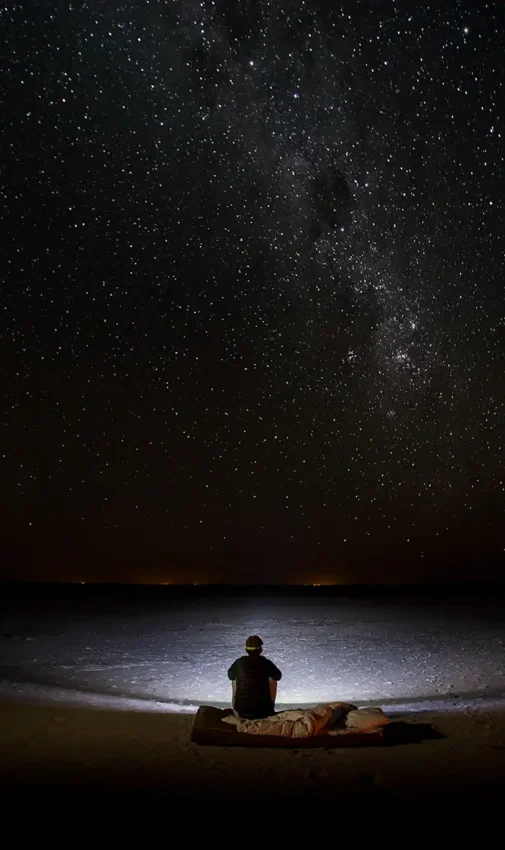
The pool at the front of camp is kept for the heat of the afternoon, with the floodplain spread out beyond it. The meals travel too. Some days lunch can be carried across to an island, and some evenings dinner set out on a sandbank. On other nights the staff sing at a traditional fireside dinner, and the evening closes on the sounds of the Delta after dark, with hippos grunting out in the lagoon.

accommodation
Five Meru-style canvas tents stand on raised timber decks, each looking out over the floodplain. The en suite bathrooms have both an indoor and an outdoor shower.

activities
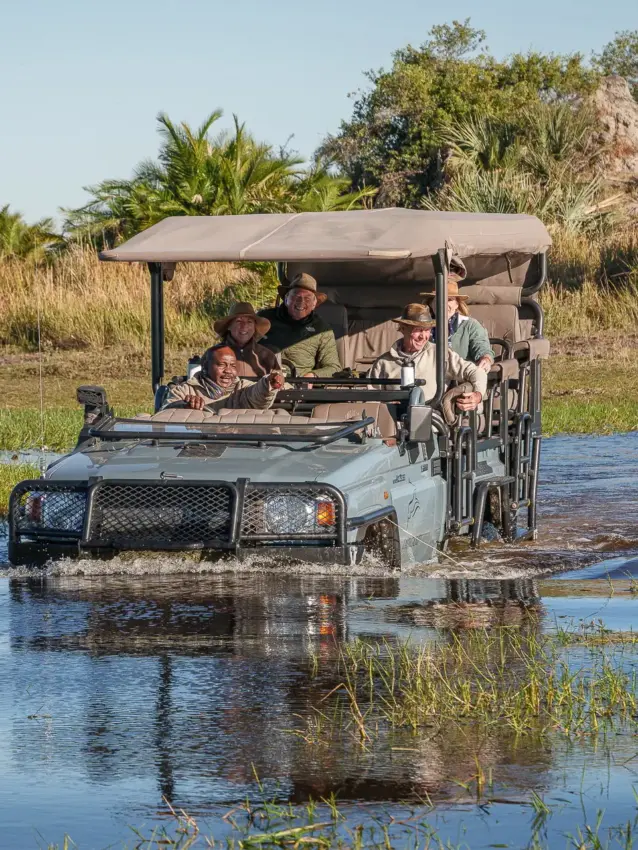
Mokoro trips wind through papyrus and lily channels, with motorboats crossing the lagoons when water allows and catch-and-release fishing in season. Game drives run on the larger islands, including Hunda, and are best when the floods are down. Guided walks are seasonal, and scenic helicopter flights can be arranged over the private reserve.

conservation
Jacana has run entirely on solar power since its 2019 rebuild. The reserve shares its eastern boundary with Moremi Game Reserve, and wildlife moves freely between the two.
Get in touch and let’s start the conversation. An initial consultation helps us understand what you’re looking for, whether that’s specific experiences, luxury touches, or marking a special occasion, and from there we’ll guide you through what’s possible so you can decide if we’re the right fit.
 01
The Okavango Delta
 02
The Okavango Delta
 03
The Okavango Delta
 04
The Okavango Delta
 05
The Okavango Delta
 06
The Okavango Delta
 07
The Okavango Delta
 08
The Okavango Delta
 09
The Okavango Delta
 10
The Okavango Delta
 11
The Okavango Delta
 12
The Okavango Delta
 13
The Okavango Delta
 14
The Okavango Delta
 15
The Okavango Delta
 16
The Okavango Delta
 17
The Okavango Delta
 18
The Okavango Delta
 19
The Okavango Delta
 20
The Okavango Delta
By light aircraft into the Jao airstrip in the western Okavango Delta, then about thirty minutes on to the camp's island. Most guests fly in from Maun, but the same small aircraft also serve Kasane, so Jacana can follow a stay in the Chobe area as easily as a night in Maun.
For your own timings, we can book a private charter into the Jao airstrip: a Cessna Grand Caravan EX seats up to eleven, and the five-seat GA-8 Airvan is right for a couple or a family of four. Luggage is limited to twenty kilograms a person, hand luggage included, and soft bags pack into the hold far better than hard cases.
Both, though the water comes first. Jacana sits on a small island in the open floodplain of the Jao Flats, so most outings are by mokoro, the poled dugout canoe, or by motorboat through the papyrus and lily channels, with catch-and-release fishing in season.
Game drives run on the larger islands nearby, reached from drive stations close to camp, and they cover the most ground from October to April, once the flood has dropped. Guided walks go out in season, and you never walk alone. For more big game on land, we pair Jacana with a drier camp such as Tubu Tree, on Hunda Island in the west of the same reserve.
Yes, because almost every outing is on the water, where the birds are. The camp takes its name from the African jacana, which walks the lily pads on its long toes, and the smaller lesser jacana is found here too.
Other birds the guides look for from the mokoro include Pel's fishing owl, the slaty egret and the African pygmy goose, and the wider reserve holds more than 400 species. Sightings are never certain, but quiet water and a poled canoe let you get close without disturbing them. Painted reed frogs on the papyrus and red lechwe on the floodplain add to the small-scale pleasures of the place.
The Kays family of Maun, who hold the Jao Reserve, a private concession of about 60,000 hectares with Moremi Game Reserve along its eastern side. Jacana was one of their first three camps, welcoming its first guests in July 1999 alongside Jao and Kwetsani.
In 2019 the camp was taken down and rebuilt: larger tents with indoor and outdoor showers, a main area under arched canvas between two tall sycamore figs, a pool deck, a fire deck over the floodplain and a jetty, all of it running on solar power. David, Cathy and Martin Kays still run the reserve, and its six camps share it with nobody else.
Yes. TravelHealthPro, the UK's official travel health service, rates the northern half of Botswana, the Okavango Delta included, as high risk for malaria from October to May and low risk for the rest of the year. Low risk is not no risk. The American CDC lists the Okavango and Ngamiland districts among the areas where it recommends medicine to prevent malaria.
We are travel planners, not medical professionals, so whether to take tablets, and which, is for you to decide with your own doctor or a travel clinic. On an island camp ringed by water, cover arms and legs from dusk and keep insect repellent to hand.
In the dry winter, roughly June to September. The Delta's flood comes from rain that fell months earlier in the Angolan highlands, so the channels around Jacana fill just as the local rains stop, and the mokoro and boat trips are at their fullest. That same window, June to October, is our recommended time for the Okavango Delta, with July to September the standout.
April, May and November sit either side. December to March is the green season: wetter, hotter and quieter, with summer migrant birds in, newborn antelope, dramatic storm light for photographers and far fewer vehicles about. The water is lower then, which is when game drives from Jacana range furthest.
rated five stars by our clients

 01
 02
 03
 04
 05
 06
 07
our approach
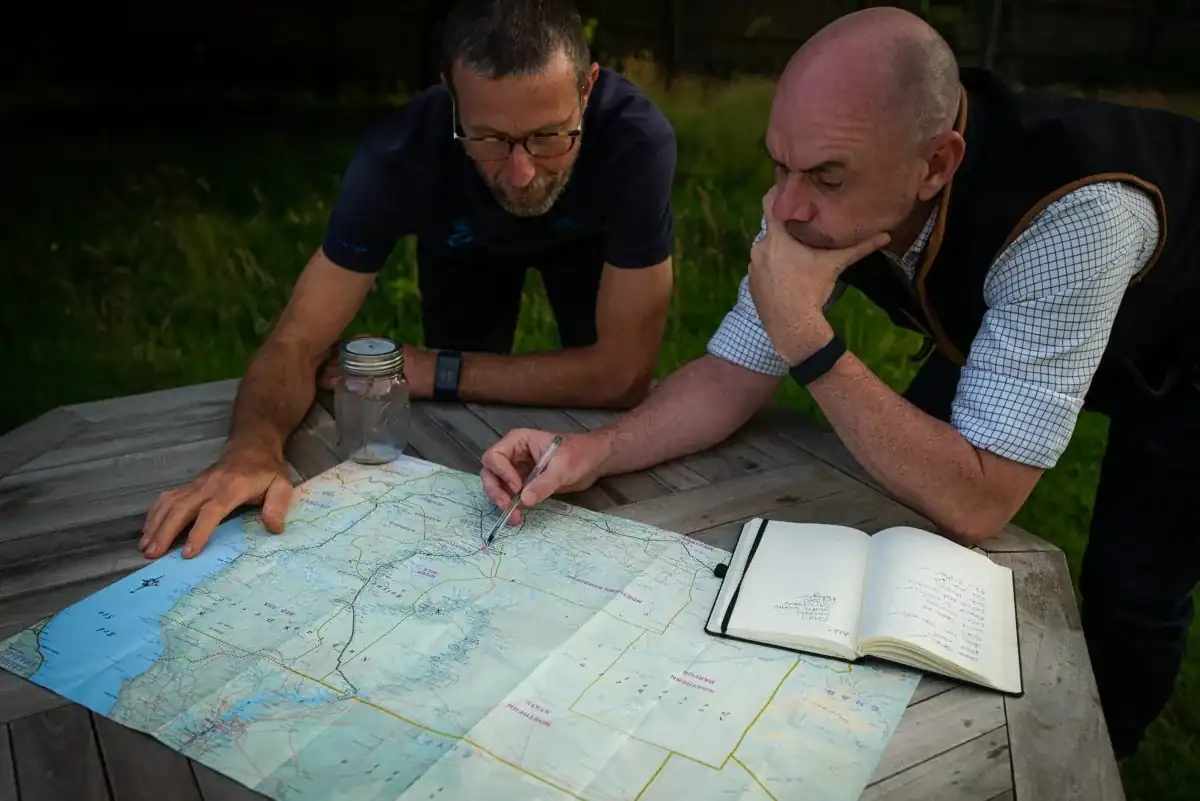
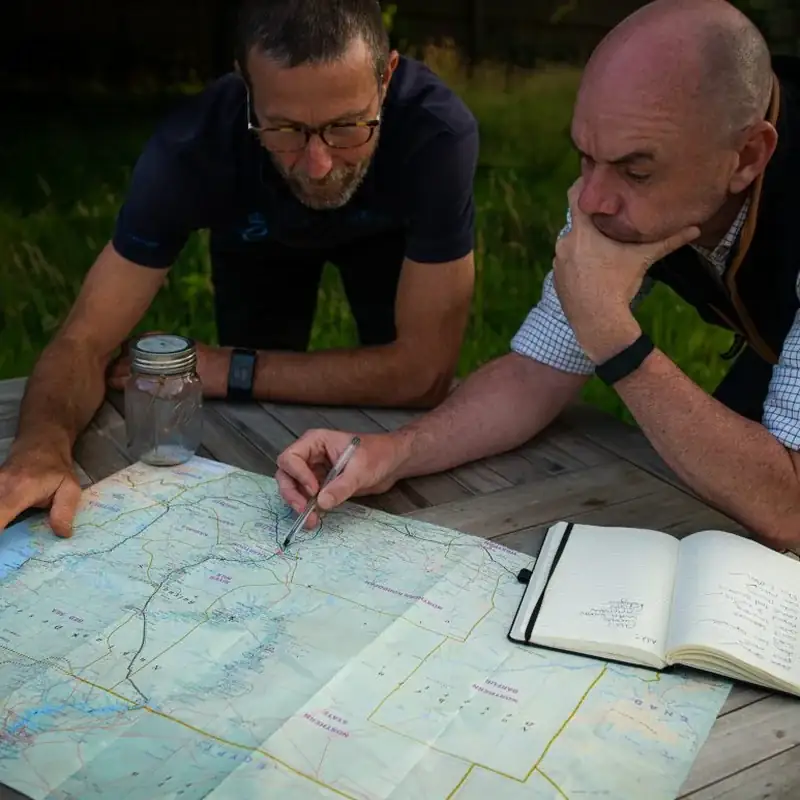
Every journey starts with a conversation. We take the time to understand your vision before we start planning.
Whether by phone or in person, we work with you directly to shape something that is considered, personal, and expertly delivered.