Boat

Okavango Spirit

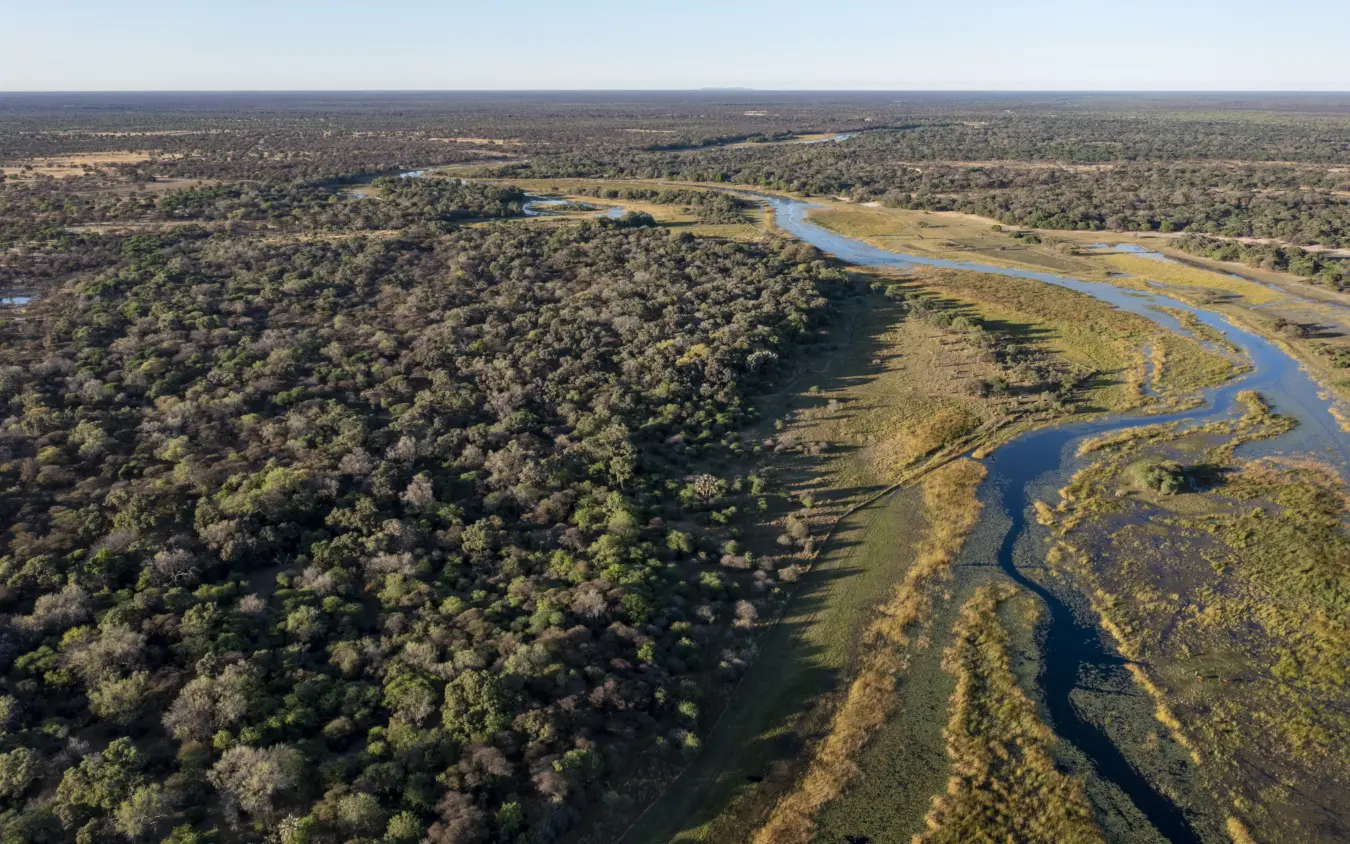
A seven-cabin houseboat cruising Botswana’s Okavango Panhandle, where the Delta’s floodwater arrives from the Angolan highlands

Country: Botswana
Location: Cruising the Okavango Panhandle
Number of rooms: 7

Seven cabins, and hippos at the hull

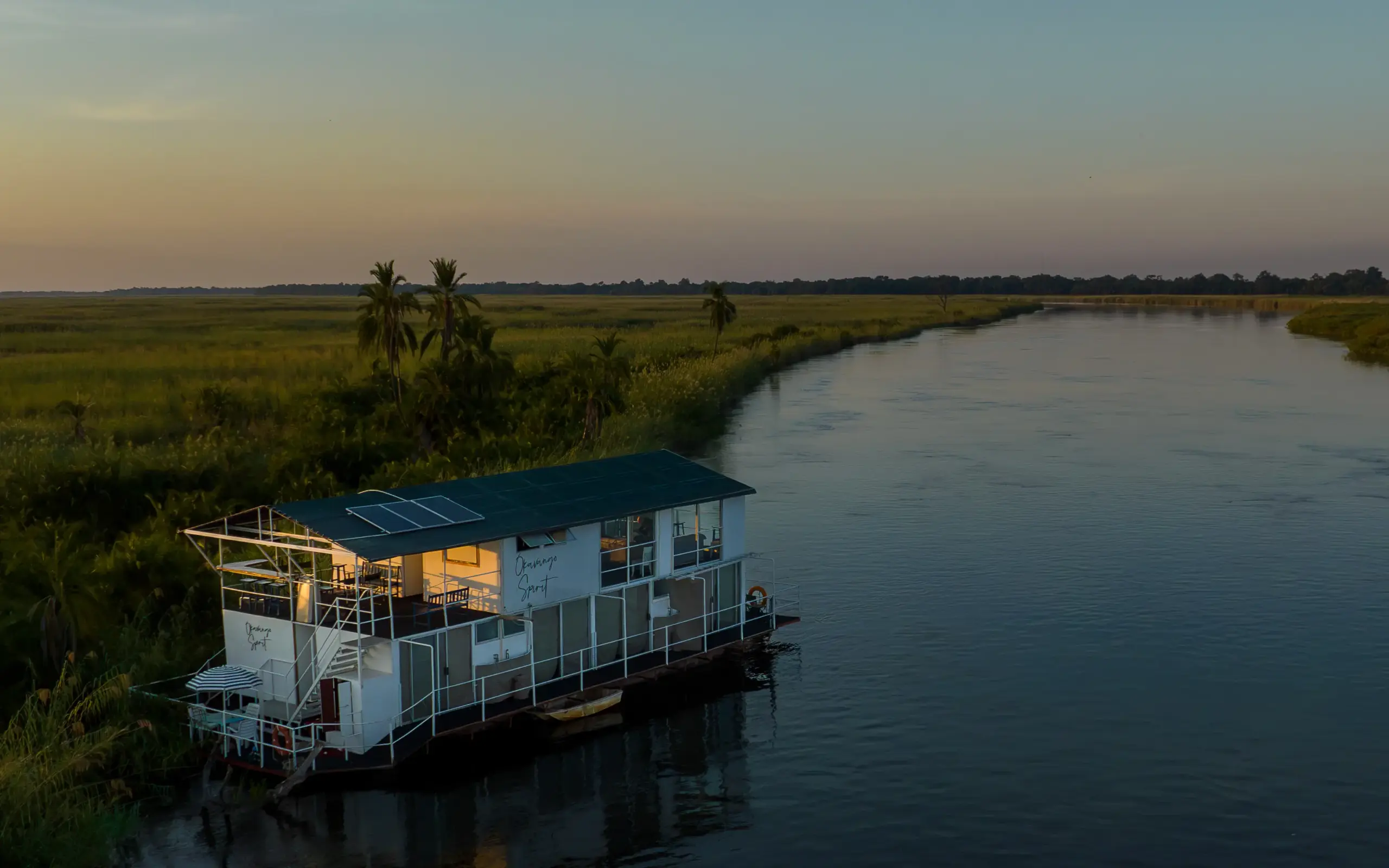
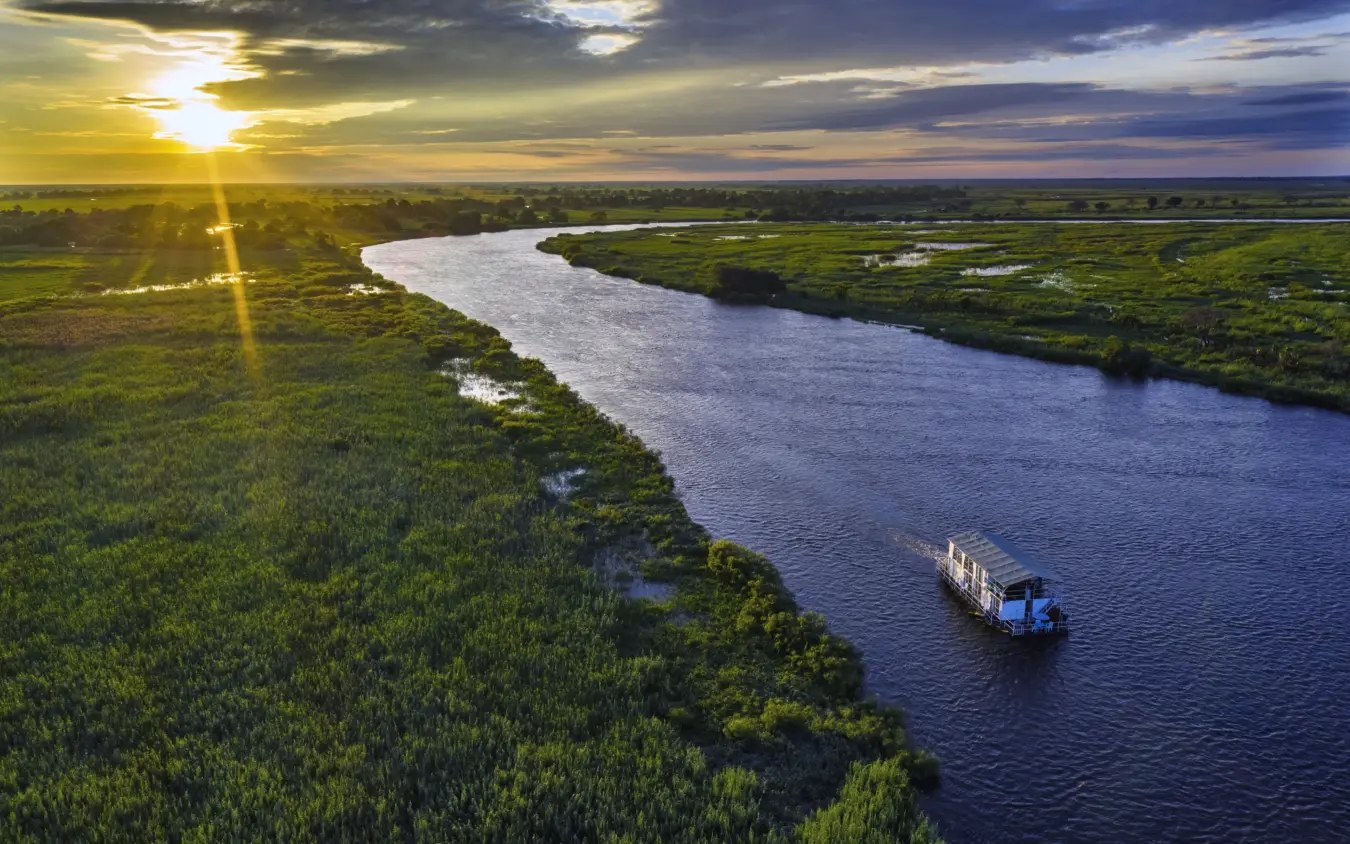
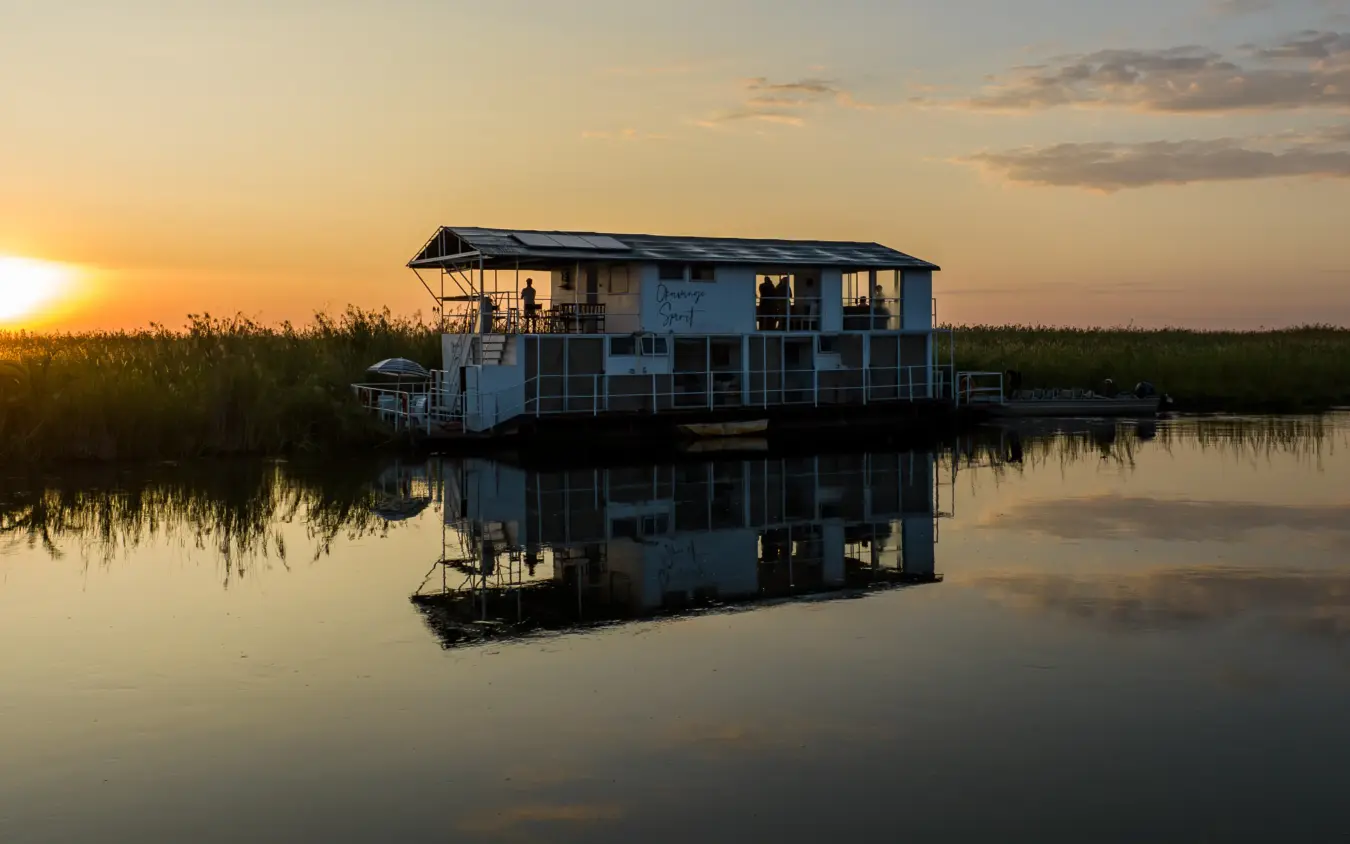
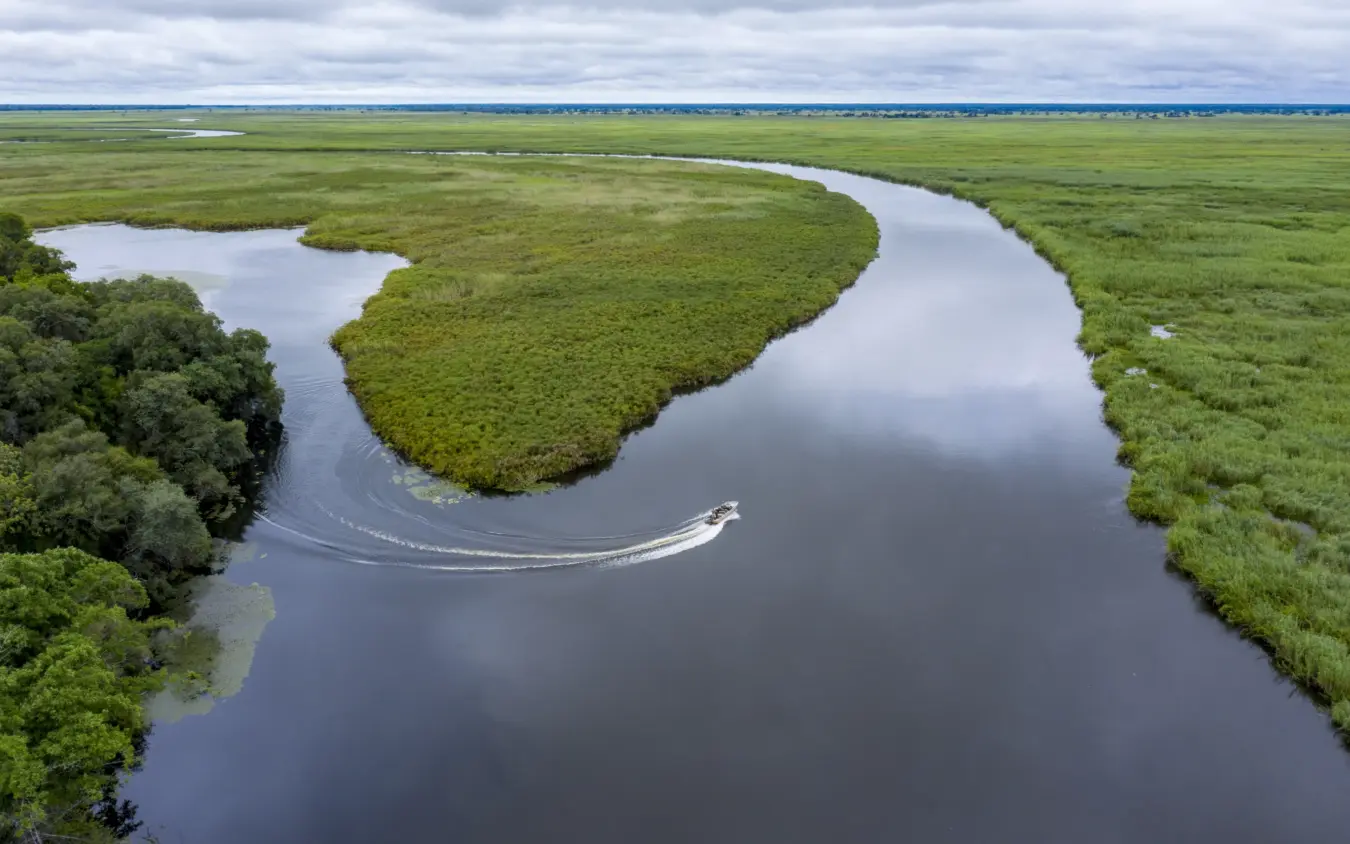
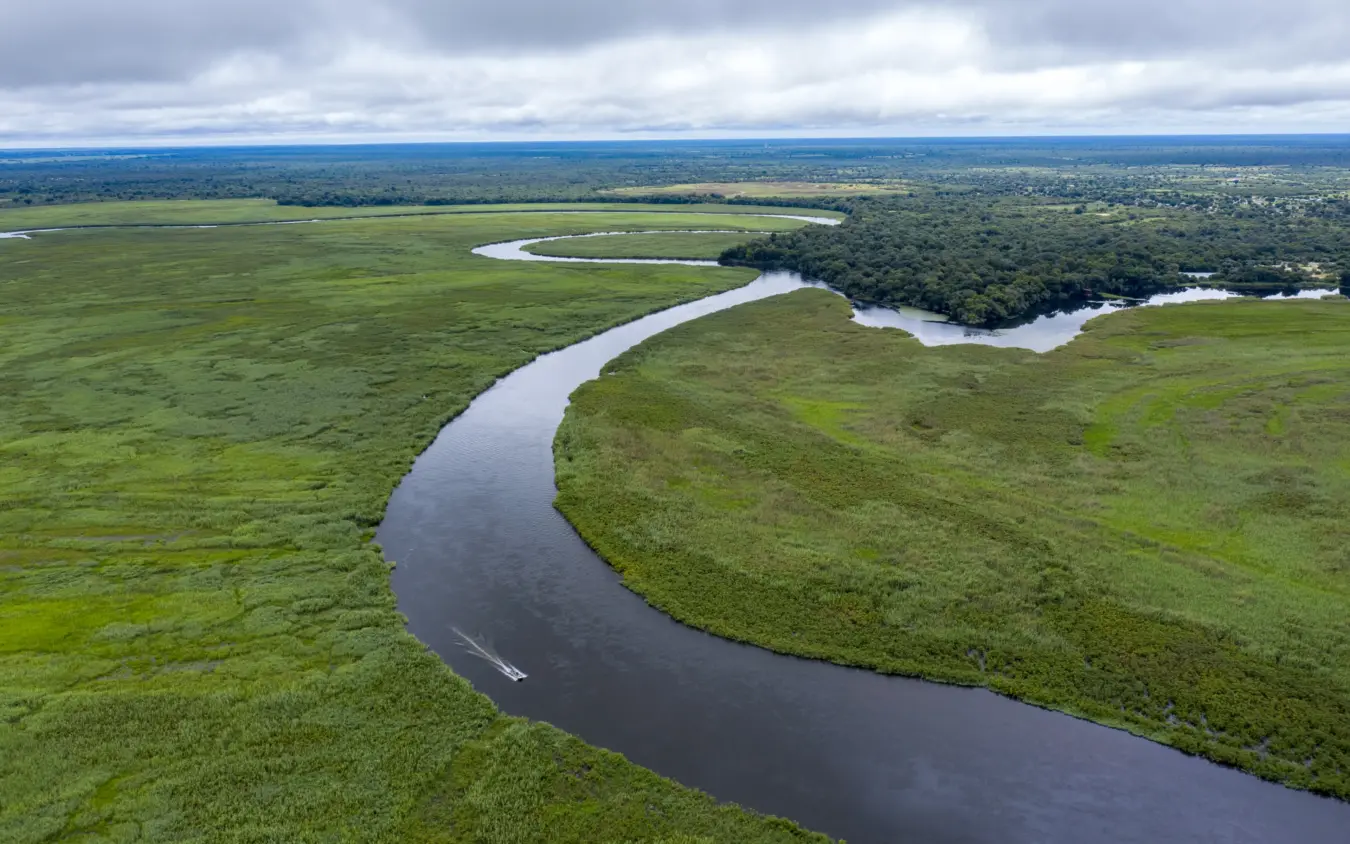
The Panhandle is the corridor in Botswana’s far north-west where Okavango floodwater arrives from the Angolan highlands before fanning out into the Delta proper. Okavango Spirit works it as a two-deck houseboat, not a camp. Seven en-suite cabins line the lower deck, fourteen guests at most, and the mooring shifts along the riverbank from one night to the next.

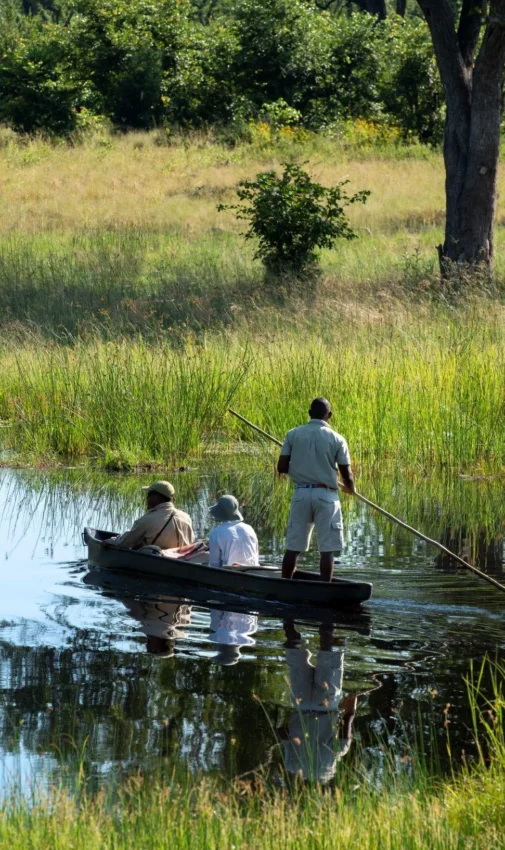
A mokoro poled through the reeds gets closer still.

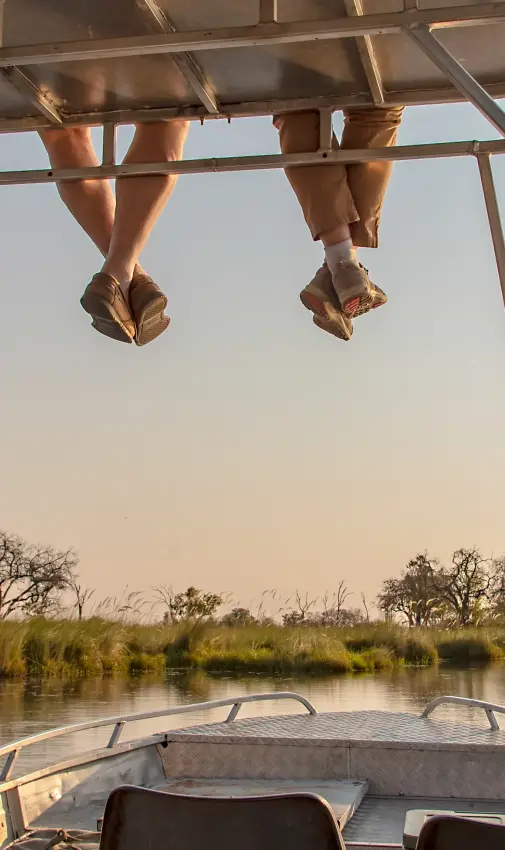
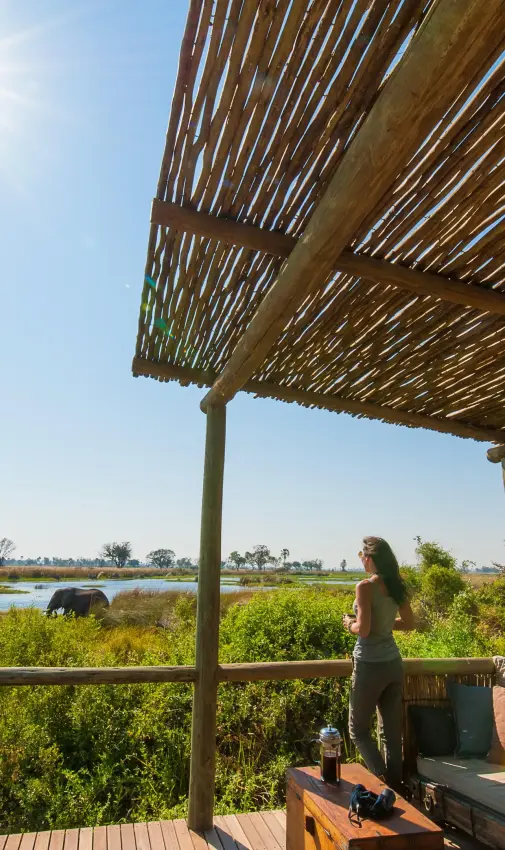
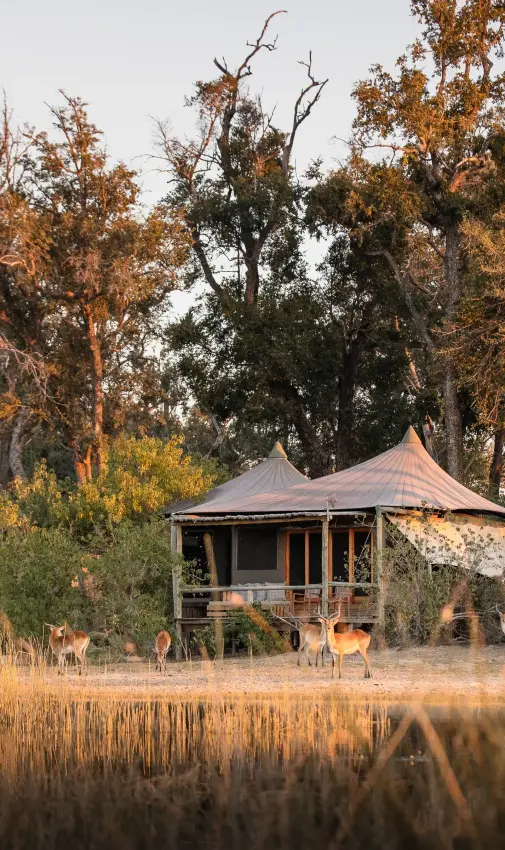
Days move by boat: side channels, lagoons, papyrus walls. Motorised tenders carry small groups into backwaters the deeper camps cannot reach. A mokoro poled through the reeds gets closer still. Hippos surface within earshot of the cabins, Nile crocodiles hold the sandbanks, and the fish eagles call from first light, more often heard than seen. Photography sits low, level with the surface, not down from a vehicle.
The riverine trees along these banks hold Pel’s fishing owl, one of the Panhandle’s defining papyrus specials. Malachite kingfishers and bee-eaters flick along the reed channels, white-backed night heron and Narina trogon keep to the shade, and slaty egret and lesser jacana work the shallows. Up to 200 species have been logged here in a single day. The birding is done from the tenders, from a mokoro and from the cabin decks alike.

Malachite kingfishers and bee-eaters flick along the reed channels

Anglers work the reed edges from the tenders for tigerfish and bream, all of it catch and release. Landings on the bank open onto riverside villages, where the people who make a living from this water explain the basket weaving and the fishing. Longer stays reach Tsodilo Hills, where more than 4,000 San rock paintings shelter in the rock roughly 50km south-west of Shakawe.

01

accommodation

Seven En-suite Cabins Above the Water

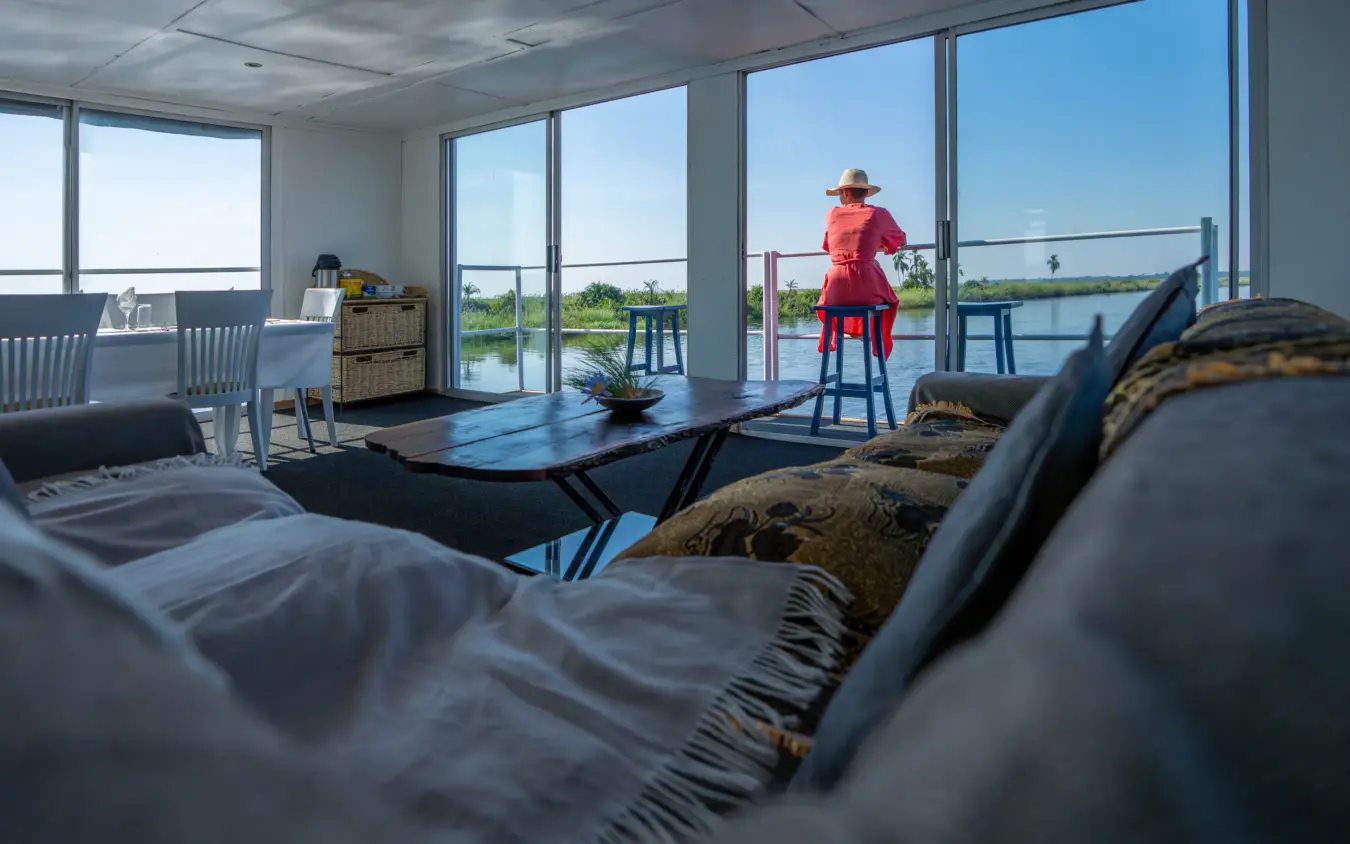
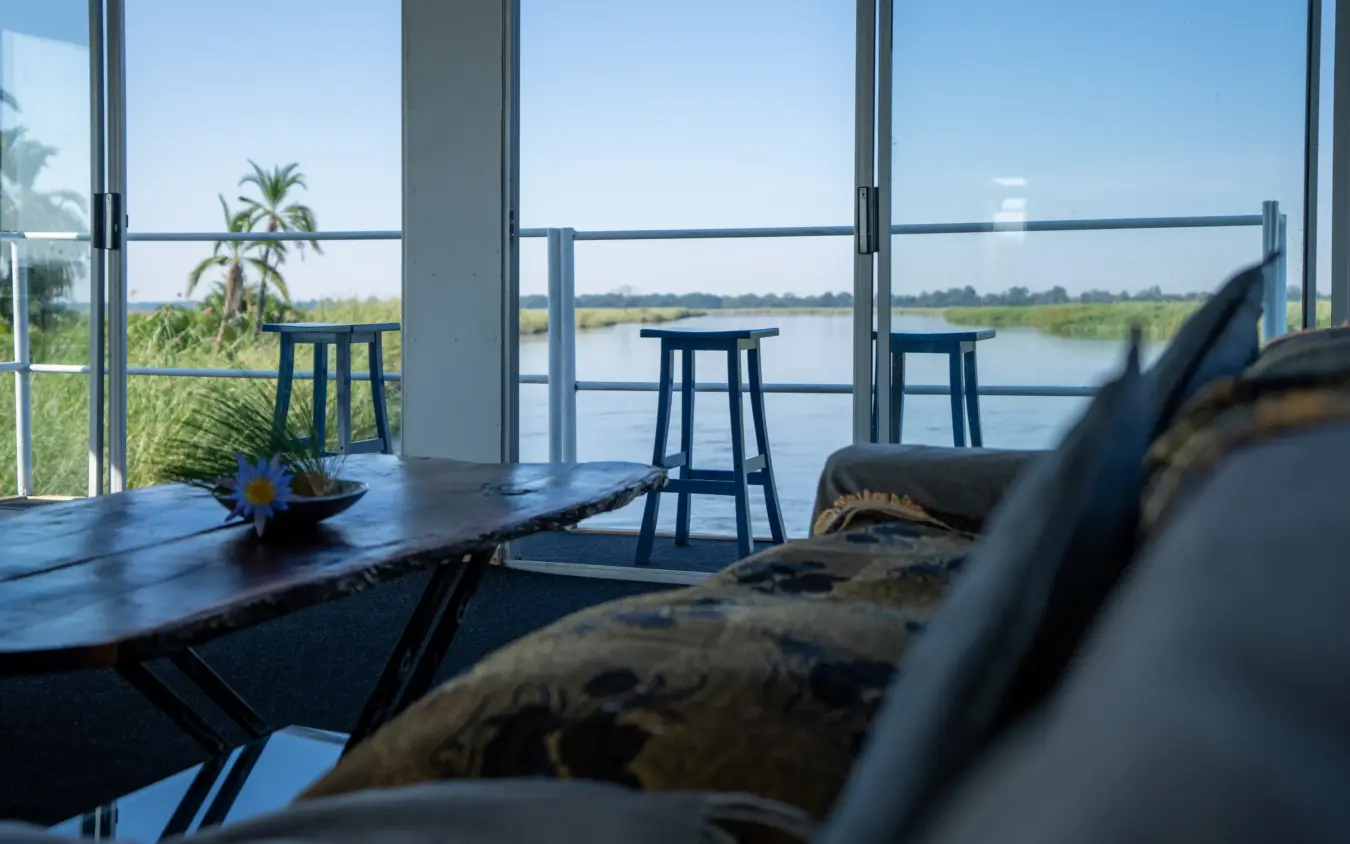
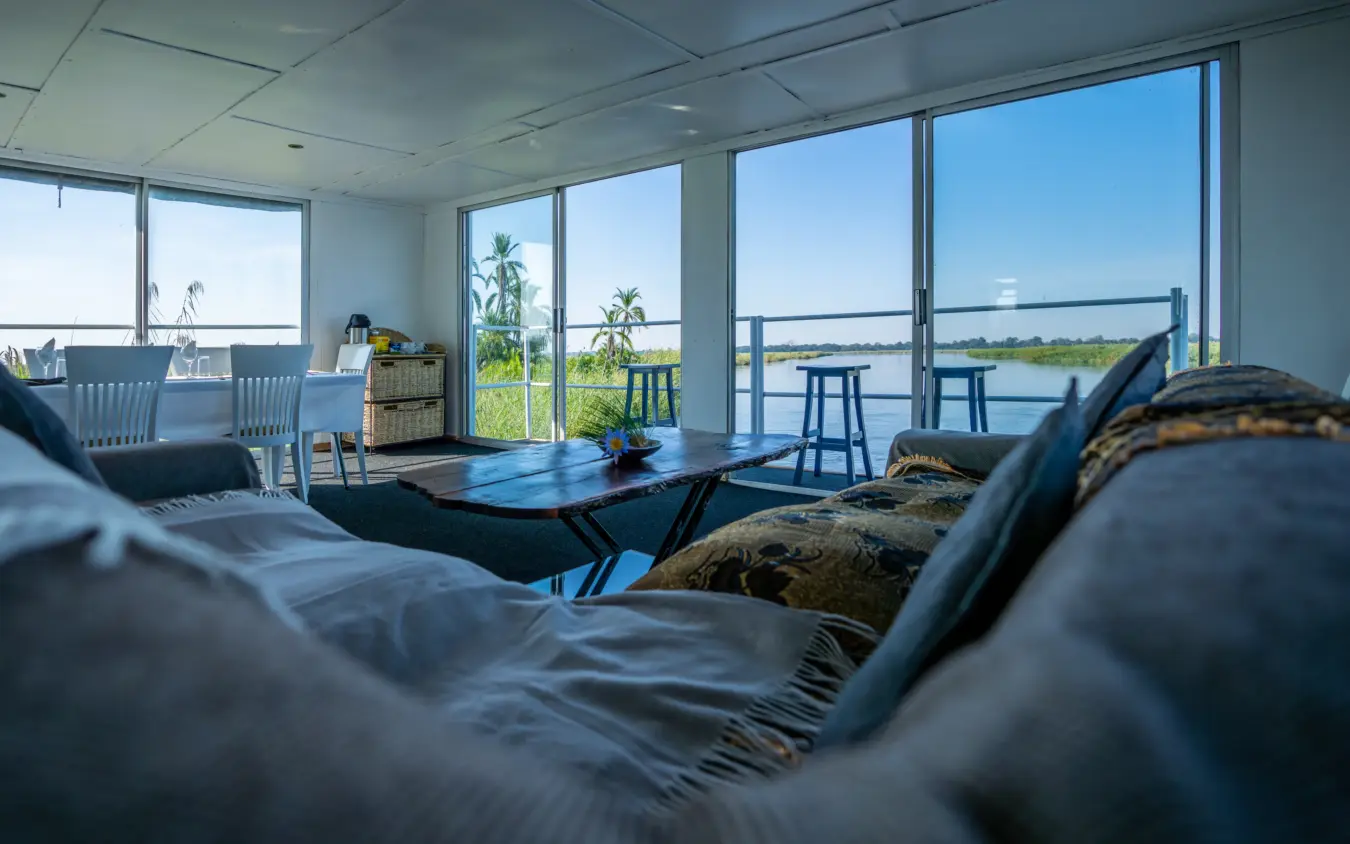
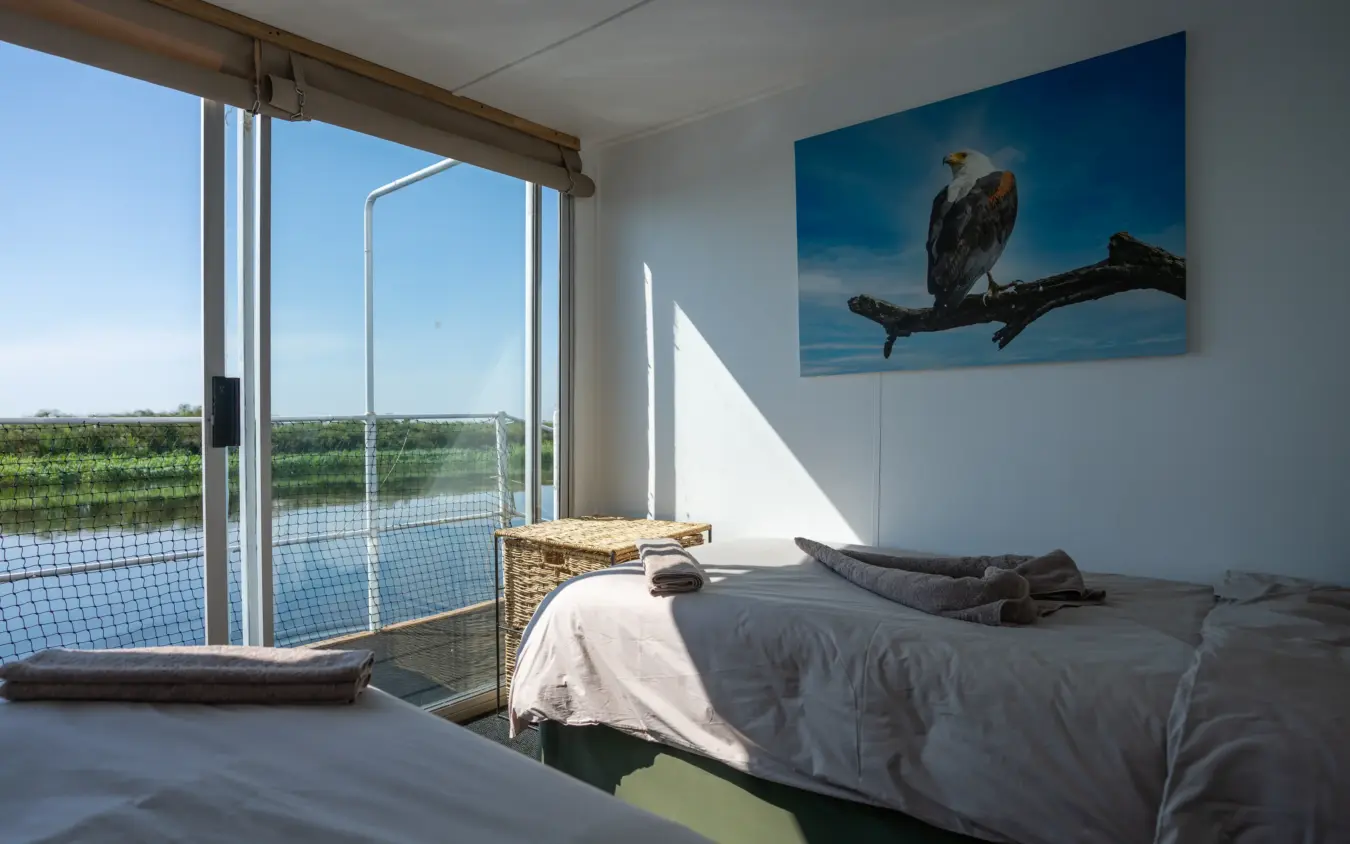
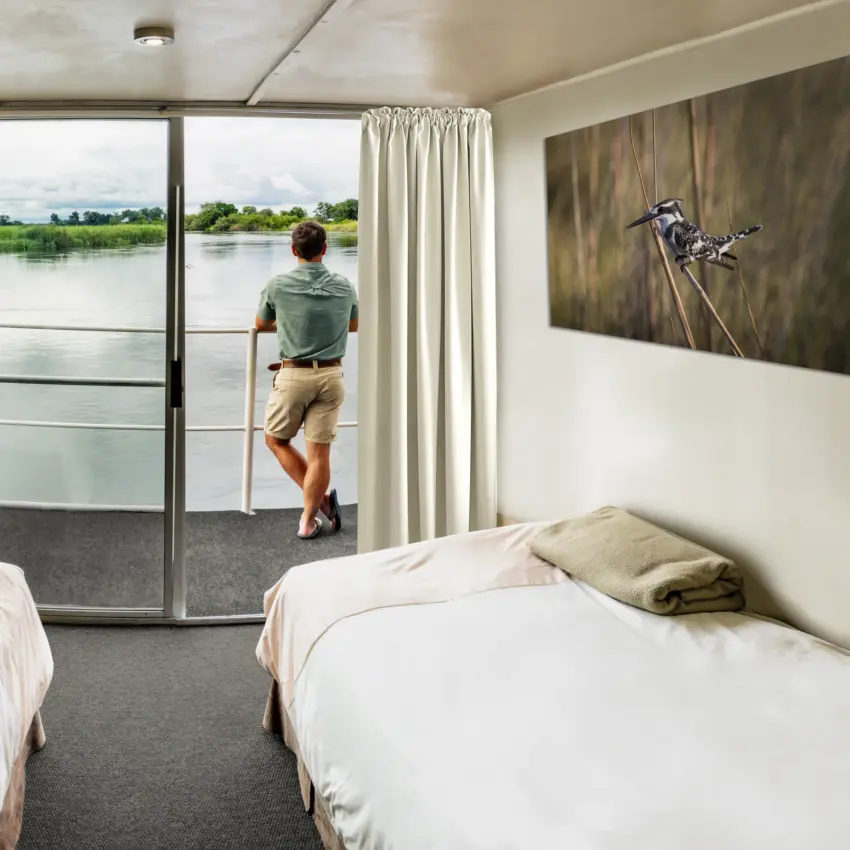
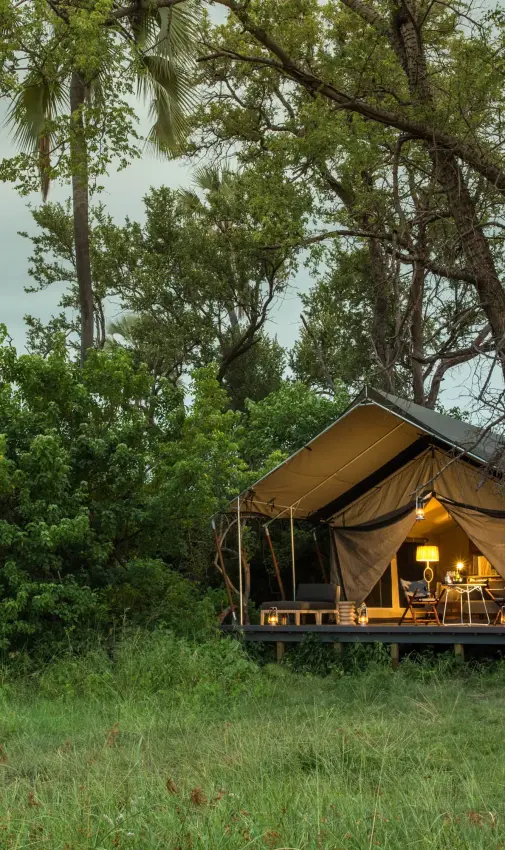
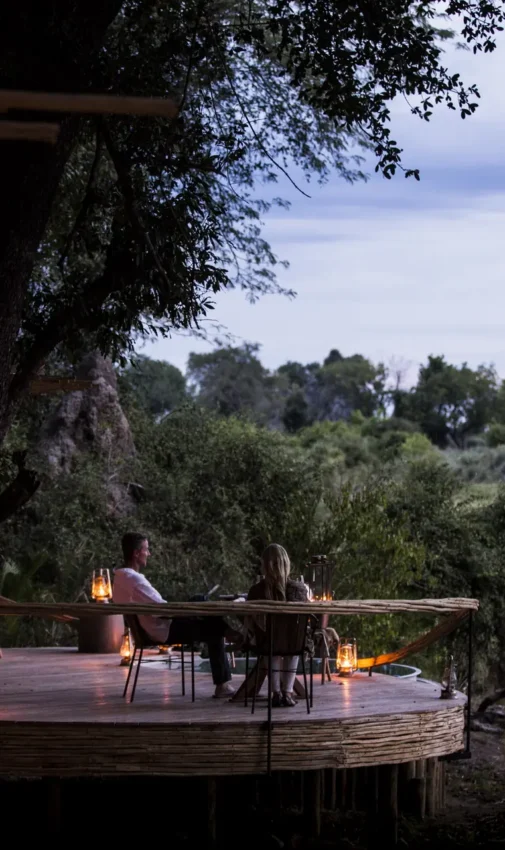
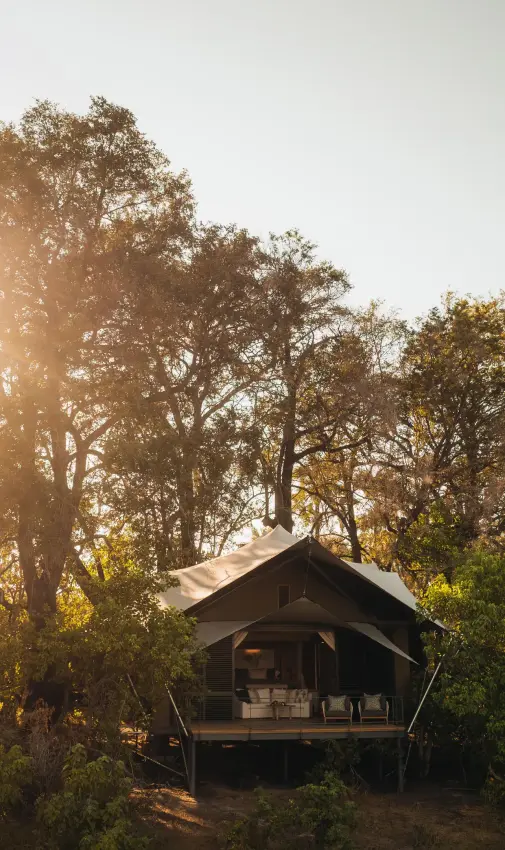
Seven en-suite cabins on the lower deck, a mix of doubles and twins, sleeping up to fourteen guests. Each has floor-to-ceiling sliding doors onto a private viewing deck just above the water, panoramic windows, a desk and seating, fans in place of air conditioning, and a hot shower. Charging points are in the communal areas.

02

activities

Mokoro Trips Through Papyrus Channels

Game viewing from motorised tenders through side channels and lagoons, mokoro trips poled through papyrus, boat-based birding, guided catch-and-release fishing for tigerfish and bream, short walks on remote islands, sundowner cruises, riverside village visits, an excursion to Tsodilo Hills, and a cross-border game drive into Namibia's Bwabwata National Park.

03

conservation

Mmogo Coexistence Programme for Human-wildlife Conflict

Guests support the Mmogo Coexistence Programme, addressing human-wildlife conflict on farming and livestock ground bordering the Panhandle. The houseboat's floating footprint leaves no permanent structures on the riverbank it moves along.

ready to get started?

Get in touch and let’s start the conversation. An initial consultation helps us understand what you’re looking for, whether that’s specific experiences, luxury touches, or marking a special occasion, and from there we’ll guide you through what’s possible so you can decide if we’re the right fit.

Alternative accommodation in the okavango delta

Illuminated safari lodge dining area under ancient trees at dusk, Duba Plains, The Okavango Delta, Botswana 01

Duba Plains

The Okavango Delta

Wooden deck dining area beneath ancient tree overlooking savanna landscape at dusk, Mombo Camp, The Okavango Delta, Botswana 02

Mombo Camp

The Okavango Delta

Illuminated safari lodge deck with fire pit at dusk, Khwai Leadwood, The Okavango Delta, Botswana 03

Khwai Leadwood

The Okavango Delta

Person tending campfire at sunset during outdoor gathering, Kweene Trails, The Okavango Delta, Botswana 04

Kweene Trails

The Okavango Delta

05

Sable Alley

The Okavango Delta

Safari tent accommodation nestled among tall trees at golden hour, Chitabe Camp, The Okavango Delta, Botswana 06

Chitabe Camp

The Okavango Delta

Boat with dangling feet on waterway at sunset, Kwando Splash Camp, The Okavango Delta, Botswana 07

Kwando Splash Camp

The Okavango Delta

08

Elephant Pan

The Okavango Delta

Guests on wooden deck overlooking savanna at sunset, Shinde, The Okavango Delta, Botswana 09

Shinde

The Okavango Delta

Safari tent accommodation with warm interior lighting at dusk, Gomoti Plains, The Okavango Delta, Botswana 10

Gomoti Plains

The Okavango Delta

Safari lodge with canvas tents beside water and trees, Duba Explorers Camp, The Okavango Delta, Botswana 11

Duba Explorers Camp

The Okavango Delta

12

Kanana Nyana

The Okavango Delta

13

Expeditions Camp

The Okavango Delta

14

Okuti

The Okavango Delta

15

Mokolwane

The Okavango Delta

Luxury safari tent bedroom with four-poster bed and canvas interior, Kanana, The Okavango Delta, Botswana 16

Kanana

The Okavango Delta

17

Mbamba

The Okavango Delta

Riverside lodge buildings nestled among green vegetation and trees 18

Xigera Lodge

The Okavango Delta

19

Shinde Footsteps

The Okavango Delta

Woman standing on wooden deck overlooking wetland landscape, Delta Camp, The Okavango Delta, Botswana 20

Delta Camp

The Okavango Delta

frequently asked questions

By light aircraft into Shakawe, at the top of Botswana's far north west. The boat's own guidance is about an hour in the air from Maun, where a guide meets you at the airstrip, then fifteen to twenty minutes by road to whichever bank the boat is tied to that day. Those airstrip transfers sit inside the rate; the flights themselves do not, and we book them alongside everything else. Driving instead is possible, around the top of the Delta from Maun and through the riverside villages, but it takes closer to five hours. Arrivals from Kasane or Livingstone, along the Caprivi Strip, can also be built in.

We can put you on a private charter rather than a scheduled seat, typically a Cessna Caravan or a Pilatus PC-12, and it earns its keep on this route because Shakawe sits at the far end of the country from Maun and a fixed departure time can cost you half a day at either end. Tell us who is travelling and we will price both ways of doing it so you can see the difference before you choose.

It does not move at night. The boat repositions during the day, working slowly upstream, and then ties up against the bank for the night, at a different spot each night, so you wake somewhere new without having travelled while you slept. Most of that repositioning happens while guests are out on the small tender boats or sitting on the sundeck, which is why the days feel unhurried rather than scheduled around a departure.

Seasickness is rarely the problem people expect. This is an inland river with no swell and no tide, the tenders run on flat water between papyrus banks, and at night there is no movement at all. If someone in your party is genuinely prone to motion sickness, say so when you enquire and we will raise it with the boat before we hold the cabins rather than leaving it to be discovered on day one.

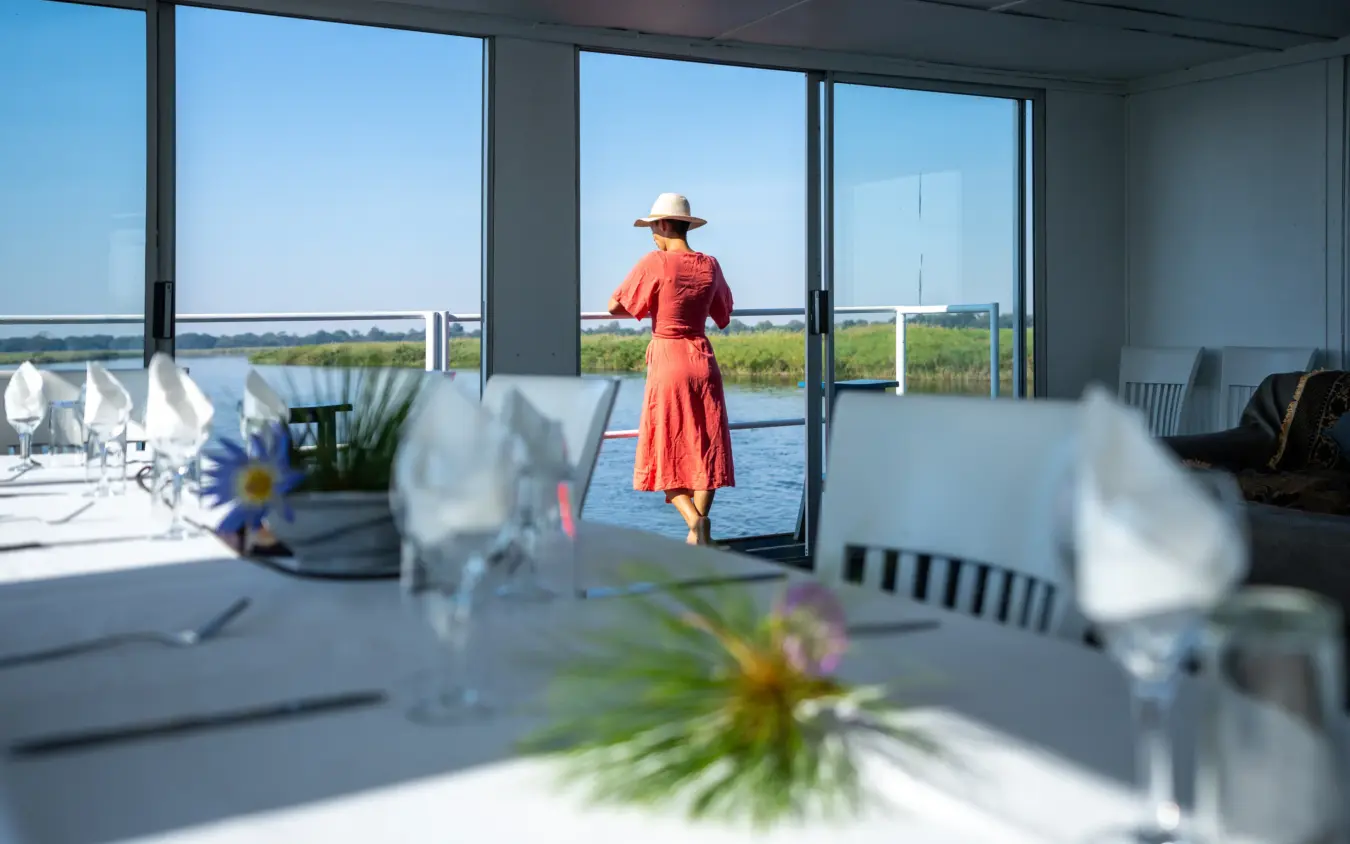
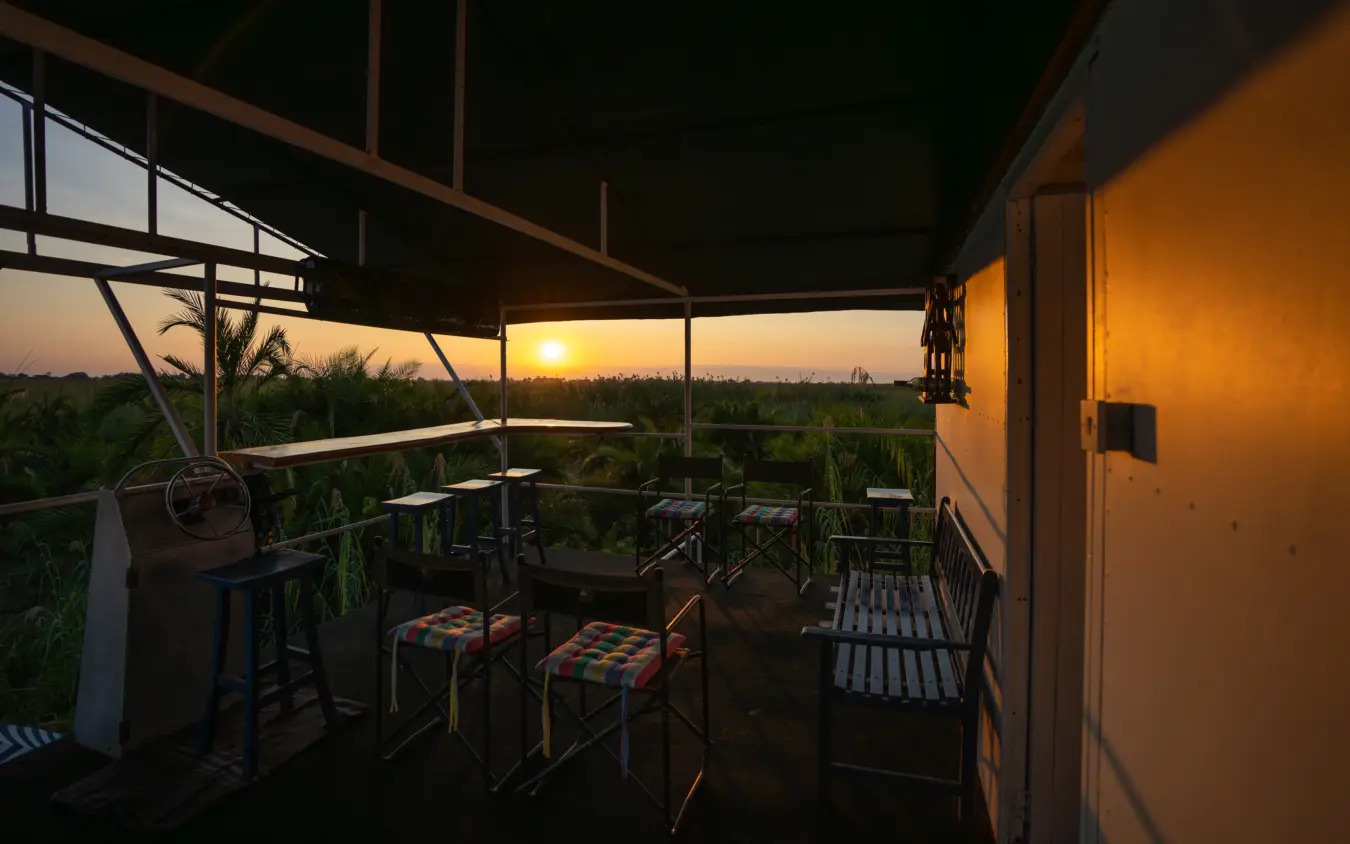
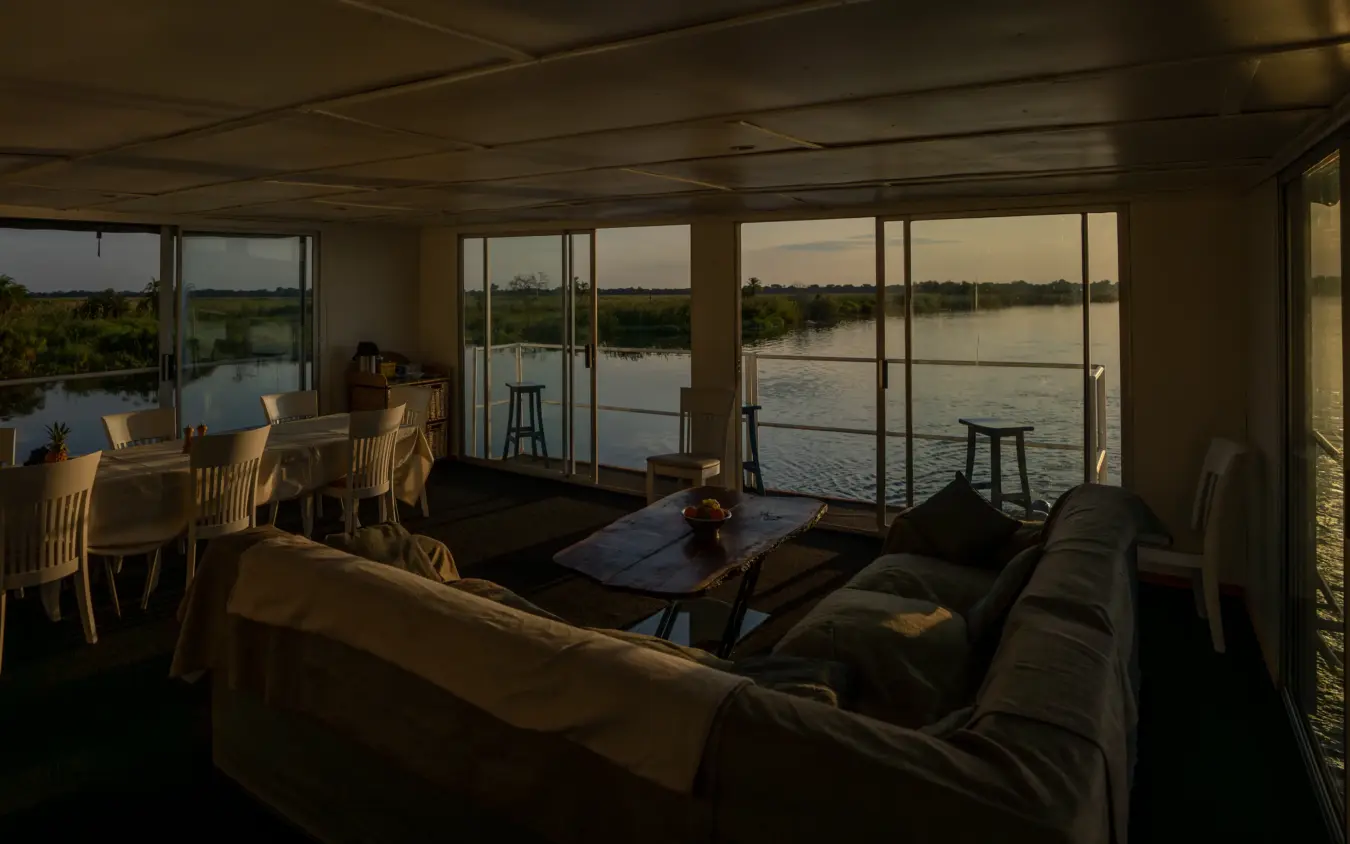
The whole boat is how it is sold. The published rate is an exclusive use package covering the vessel for up to seven guests, with a per person per night addition for guests eight to fourteen, so whoever books it has it to themselves rather than sharing with strangers. Below decks are seven en suite cabins, four doubles and three twins, and fourteen guests is the ceiling. Three metres above them sit the dining area, the lounge, the bar and the sundeck. Children are taken from six.

Two nights and three nights are the two packages, with a nightly rate beyond that. Two nights is the shortest stay and it still covers the cruise upstream, the tender boats and the excursion to Tsodilo Hills, where more than four thousand San paintings sit in the rock about fifty kilometres south west of Shakawe. The third night is the one that adds the morning game drive over the border into Bwabwata National Park in Namibia. We confirm the exact terms and the count in your party with the boat when we hold it for your dates.

The Panhandle is the part of the Okavango that does not dry out. It is the deep trench the river runs down after arriving from the Angolan highlands, held between fault lines and generally somewhere between two and eight metres deep, and it carries water every month of the year. That is precisely why a boat can be based in the Panhandle rather than on the seasonal floodplains further south. The annual flood raises and drops the level by roughly a metre and a half to two metres, at its highest around March and April, but the channel itself keeps flowing, and the published seasons run across all twelve months.

What the level changes is reach rather than whether you go. High water lets the tenders push further into side channels and flooded backwaters; at low water the main river and the lagoons still work but some of the narrower channels close up. Tell us your dates and we will ask the boat what is open at that point in the year instead of guessing, and if getting deep into the papyrus is the reason you are going we will steer you to the months that deliver it.

Yes. TravelHealthPro, the UK's official travel health service, classes the northern half of Botswana including the Okavango as high risk for malaria from October to May and lists antimalarial tablets among its recommendations for those months; for the rest of the year it drops the area to low risk and recommends awareness and bite avoidance instead. The CDC names the Okavango and Ngamiland districts, which is where Shakawe and the Panhandle sit, among the parts of Botswana for which it recommends prescription medicine to prevent malaria. Low risk is not the same as no risk.

We do not make medical recommendations, and we would not want to. We arrange travel; we are not doctors. Which tablets suit you, how they sit with anything else you take, and what is right for a child are questions for your own doctor or a travel clinic. On the practical part, dusk is the hour that matters, so long sleeves, long trousers and repellent are worth the packing space.

The package covers the cabin, all meals, all drinks, guest laundry, the daily activities, the road transfers to and from Shakawe airstrip, the guiding and the park entry fees, with tax included. In practice almost nothing on board is chargeable.

Outside it sit premium brand spirits, gratuities and comprehensive travel insurance, along with the flights in and out, and a conservation, community and reserve charge levied per person per night that funds anti-poaching, wildlife monitoring and community work in the areas the boat runs through. That charge does not apply to children under six. We build every one of those into a single quote before you commit, so there is no arithmetic left to do at the end of the trip.

rated five stars by our clients

other areas in botswana

Guests poling traditional boat through wetland waterway, Linyanti Wildlife Reserve, Botswana 01

Linyanti Wildlife Reserve

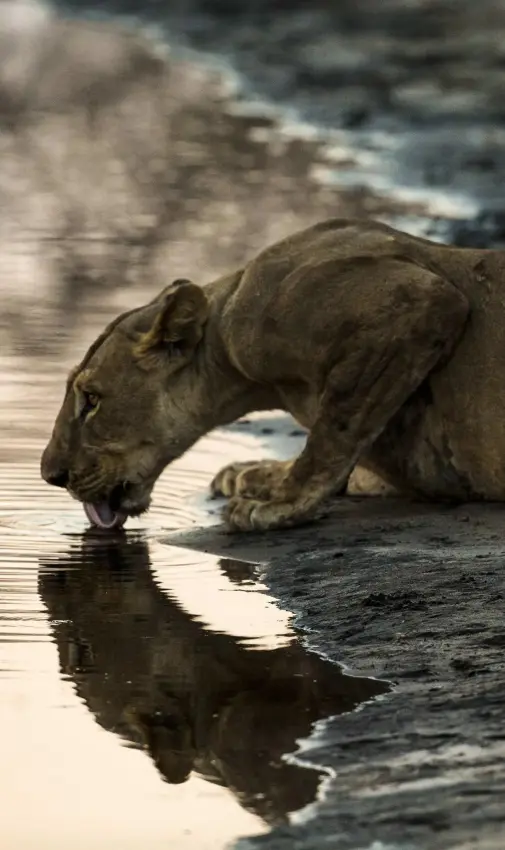
Lion drinking from water's edge at sunset, Selinda Reserve, Botswana 02

Selinda Reserve

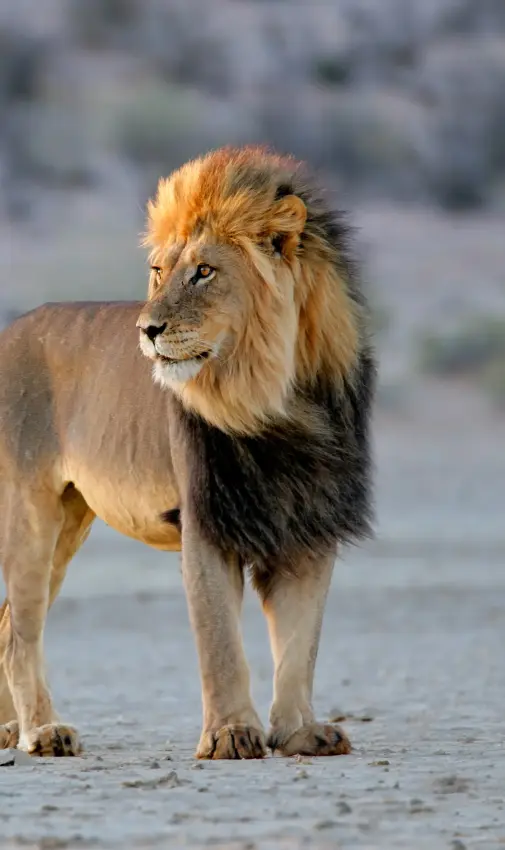
Male lion standing on sandy ground in natural habitat 03

Central Kalahari

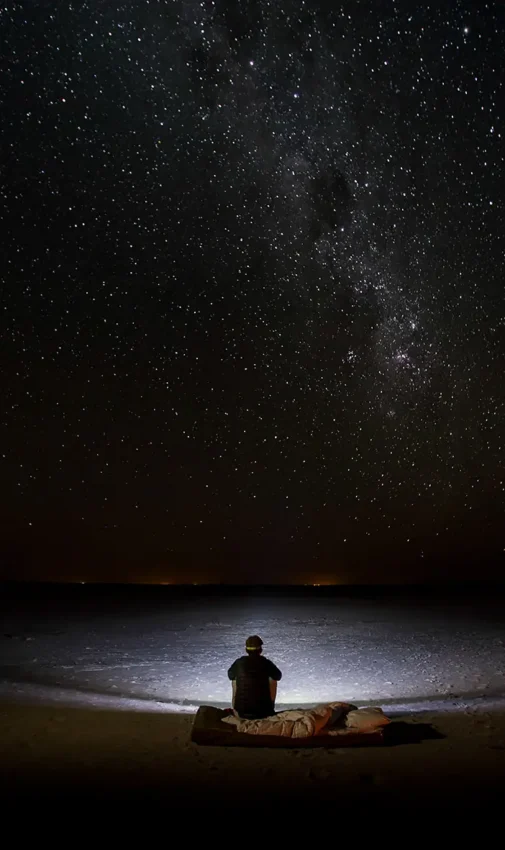
Person sitting alone under starry night sky, Makgadikgadi Pans, Botswana 04

Makgadikgadi Pans

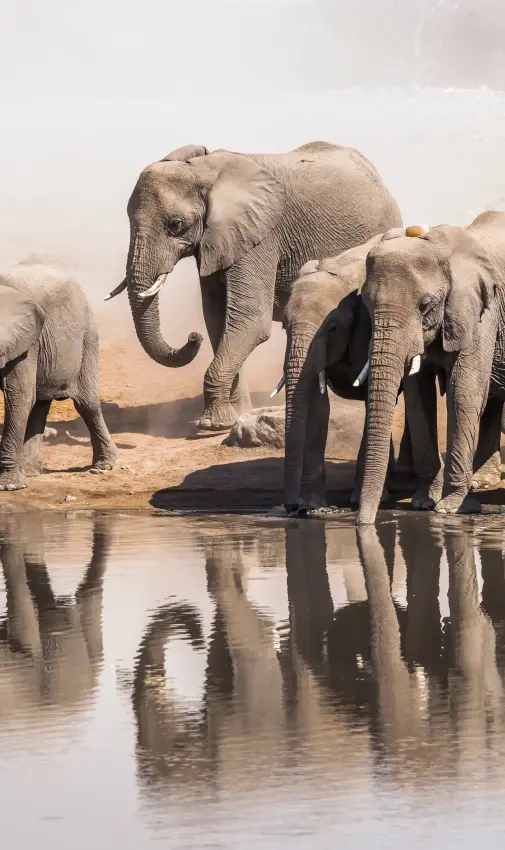
Herd of elephants drinking at waterhole with reflections 05

Chobe

06

Maun

Planning a journey together

our approach

remote, exclusive
& personal

Every journey starts with a conversation. We take the time to understand your vision before we start planning.

Whether by phone or in person, we work with you directly to shape something that is considered, personal, and expertly delivered.

get in touch
destinations ideas & inspiration our process about us contact us