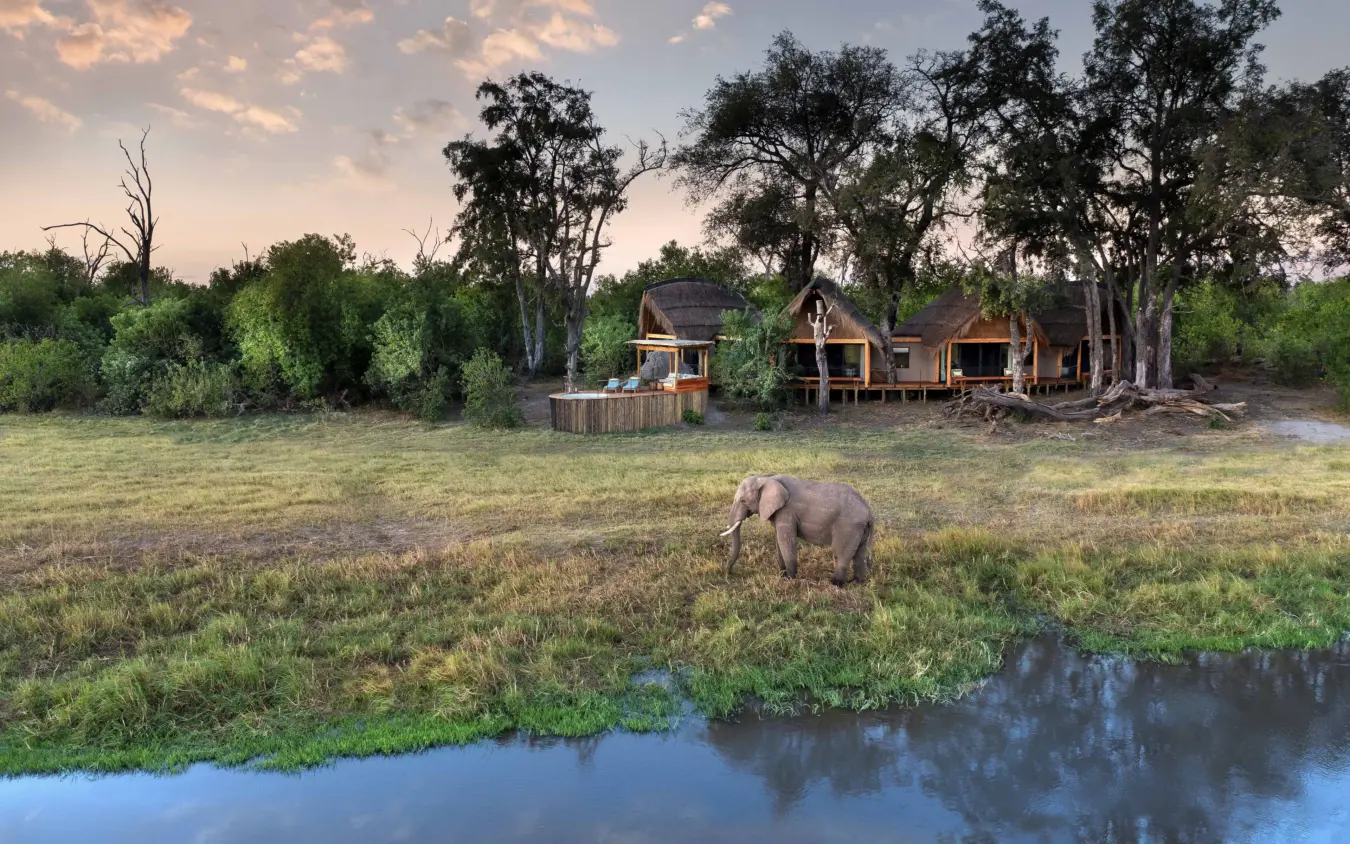
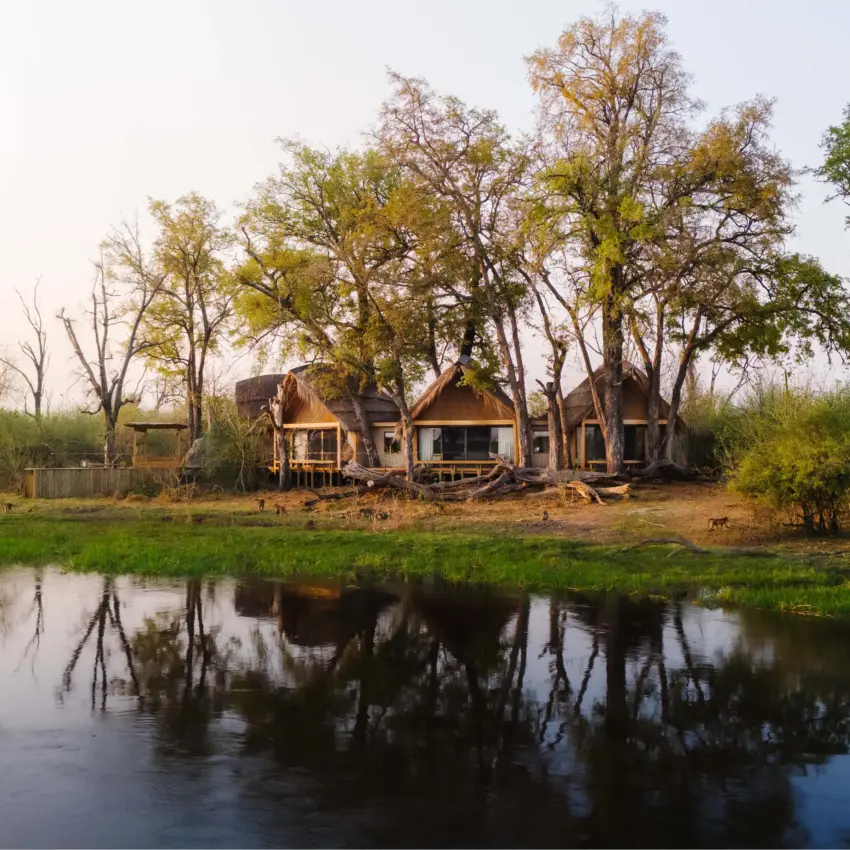
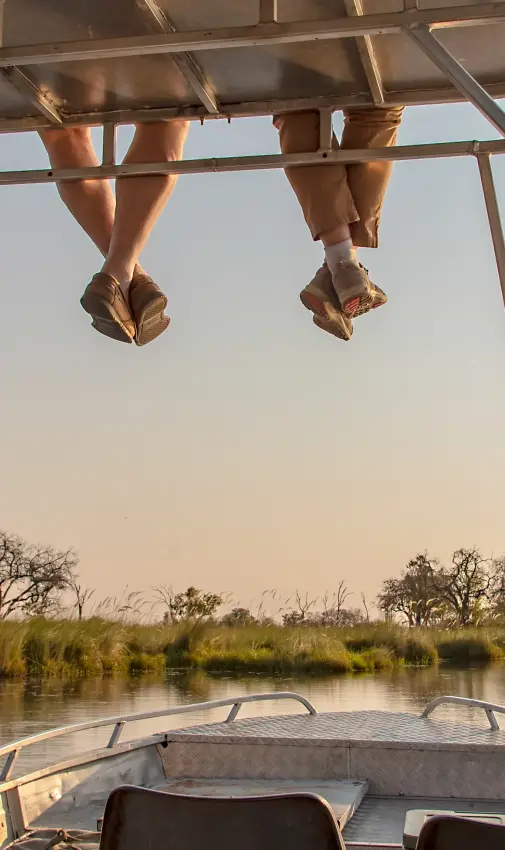
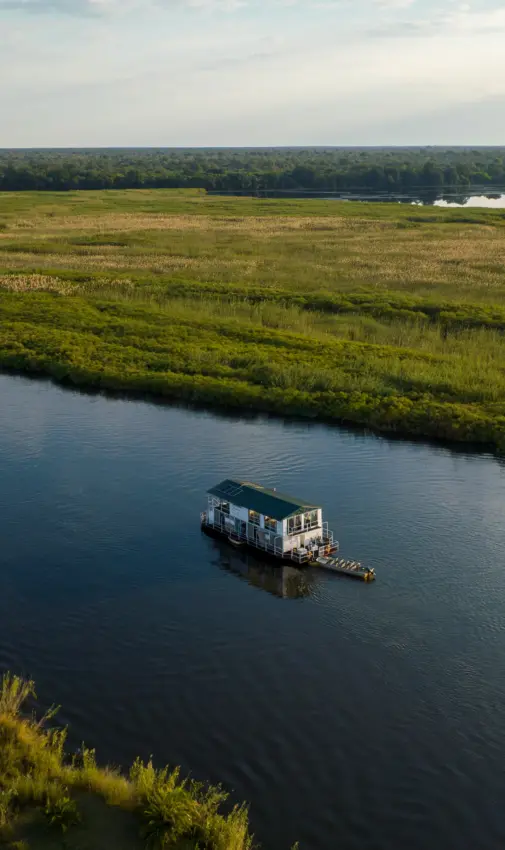
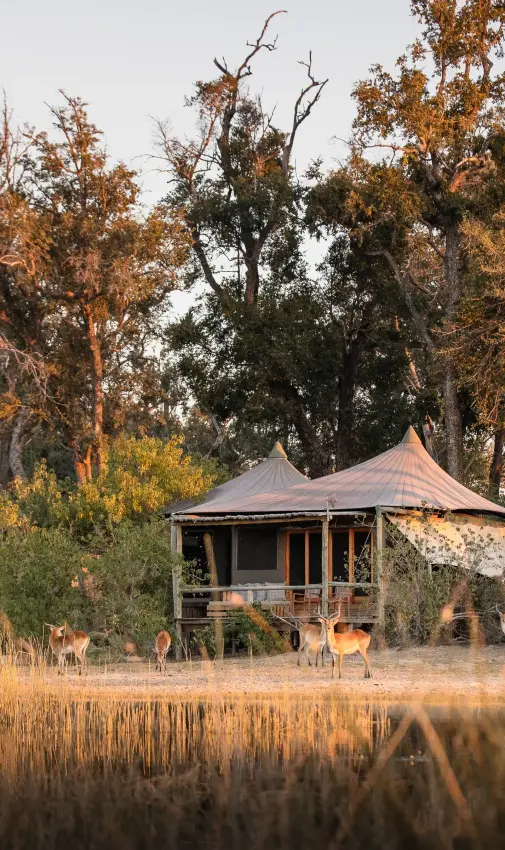
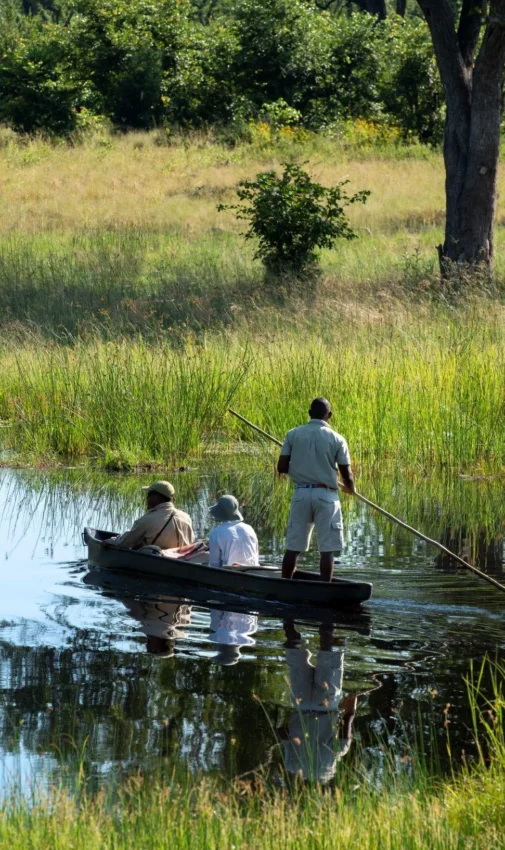
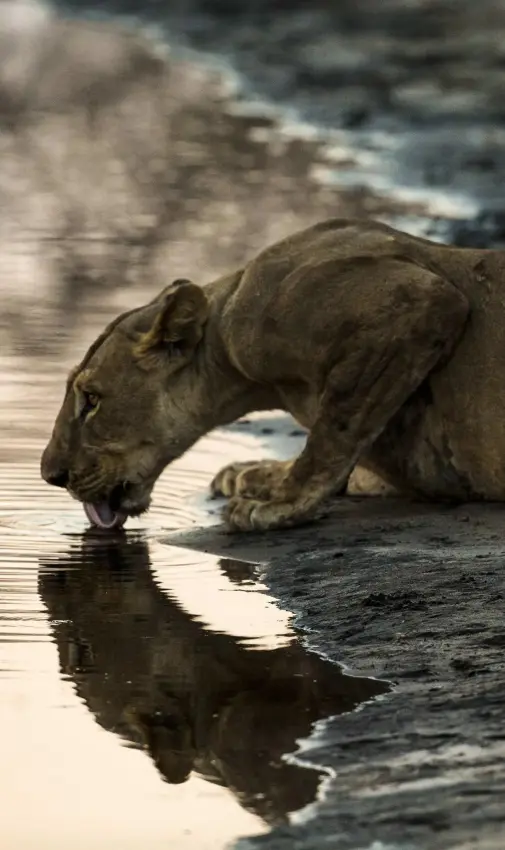
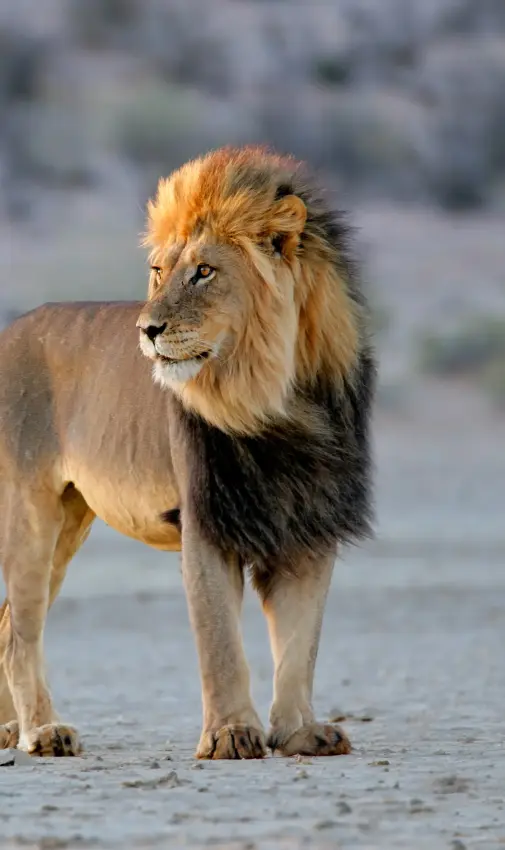
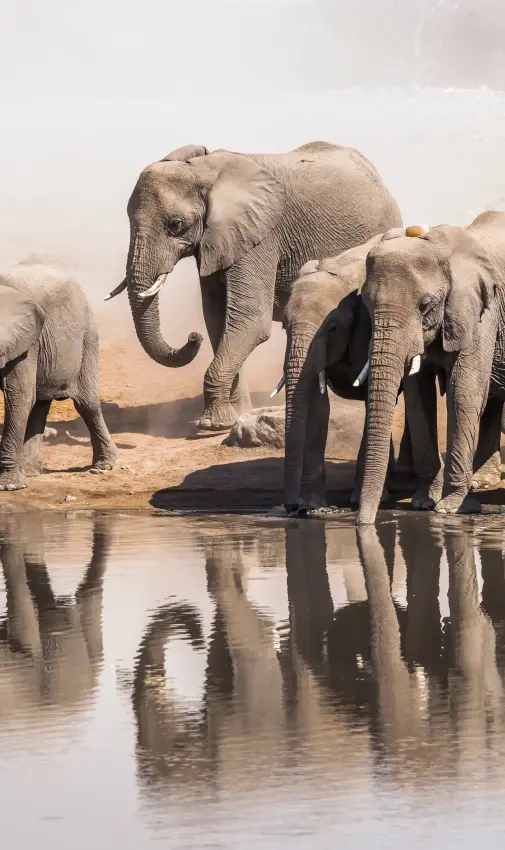
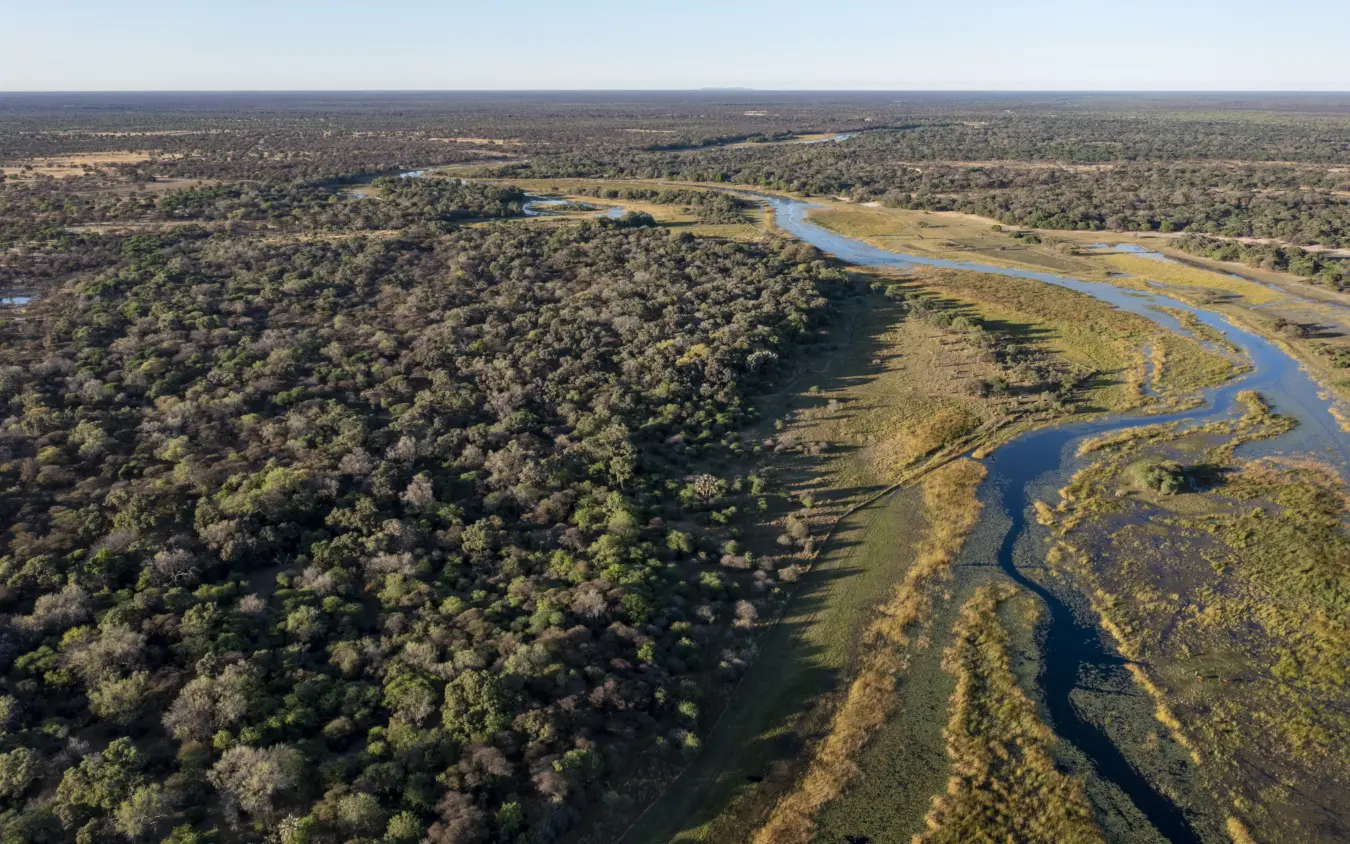
The Gomoti flows year-round, so as the Delta’s seasonal floodplains dry between August and October the herds come to it: elephants and buffalo working along the river in front of the suites, red lechwe grazing the wet margins, hippo pods holding the deeper bends. Sitatunga, semi-aquatic and rarely obliging, move through the reeds. Lions, leopards and wild dogs hunt this corridor, and packs have denned on the floodplains. Cheetahs and spotted hyenas are here too, and more than 400 bird species have been recorded, among them Pel’s fishing owl, slaty egret and wattled crane.
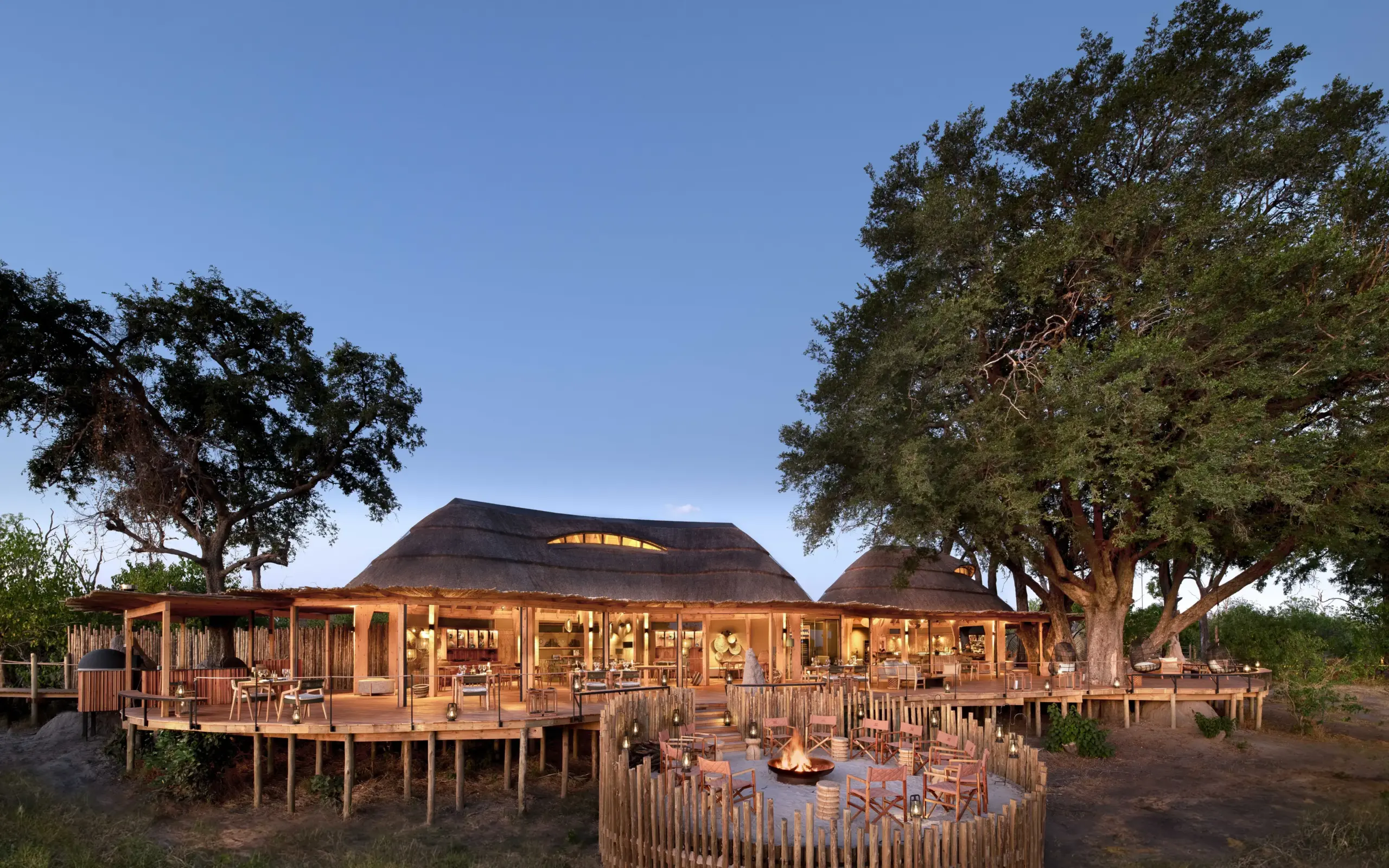
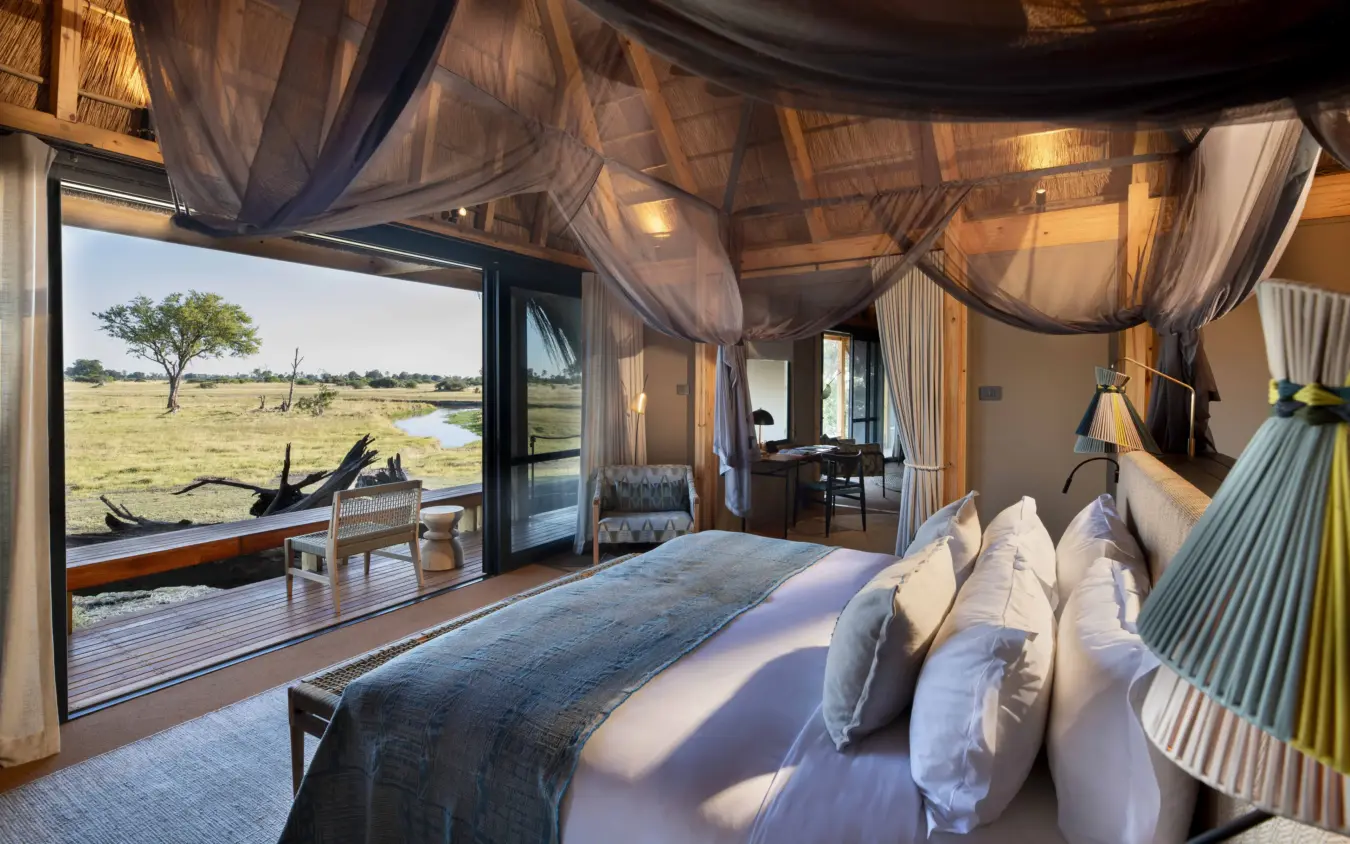
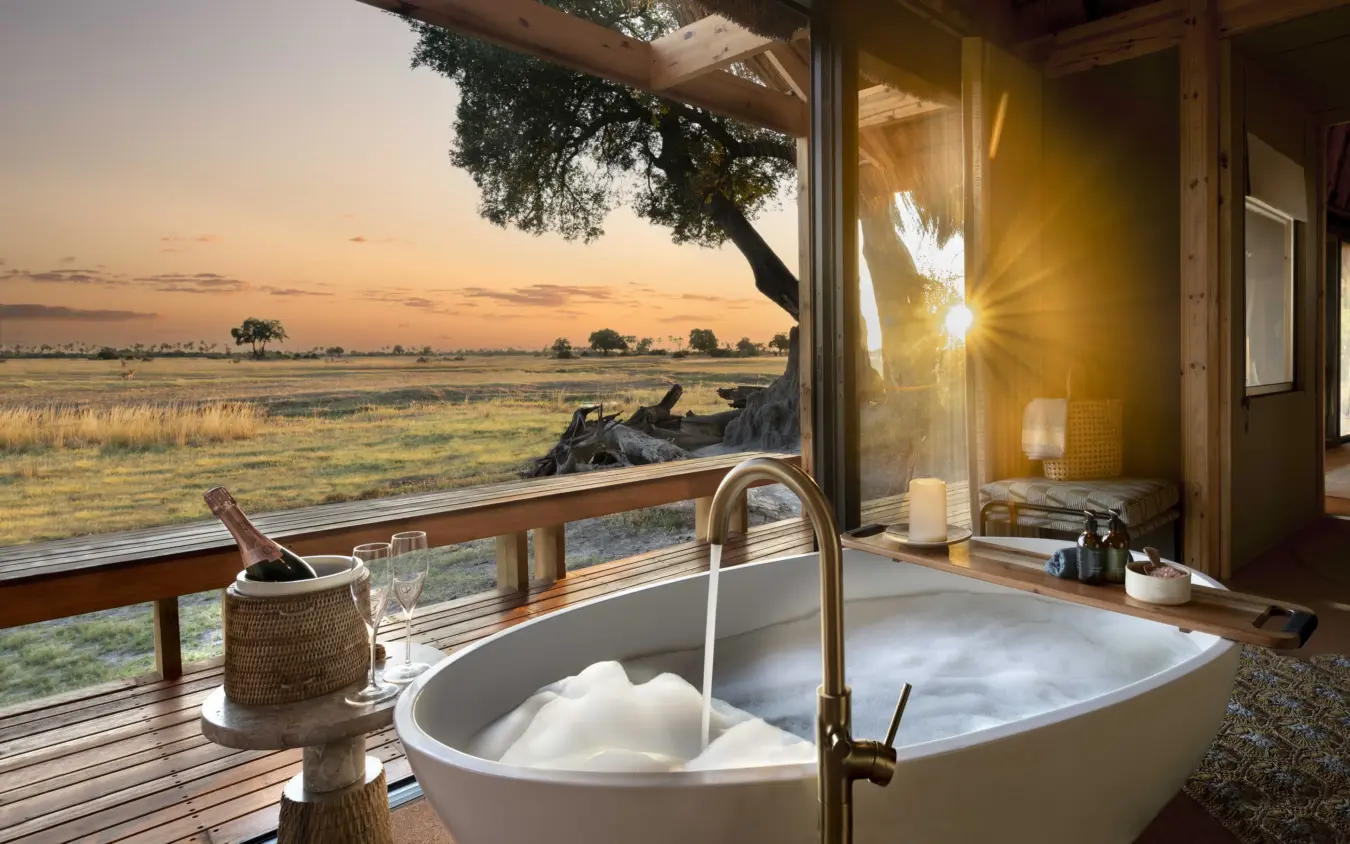
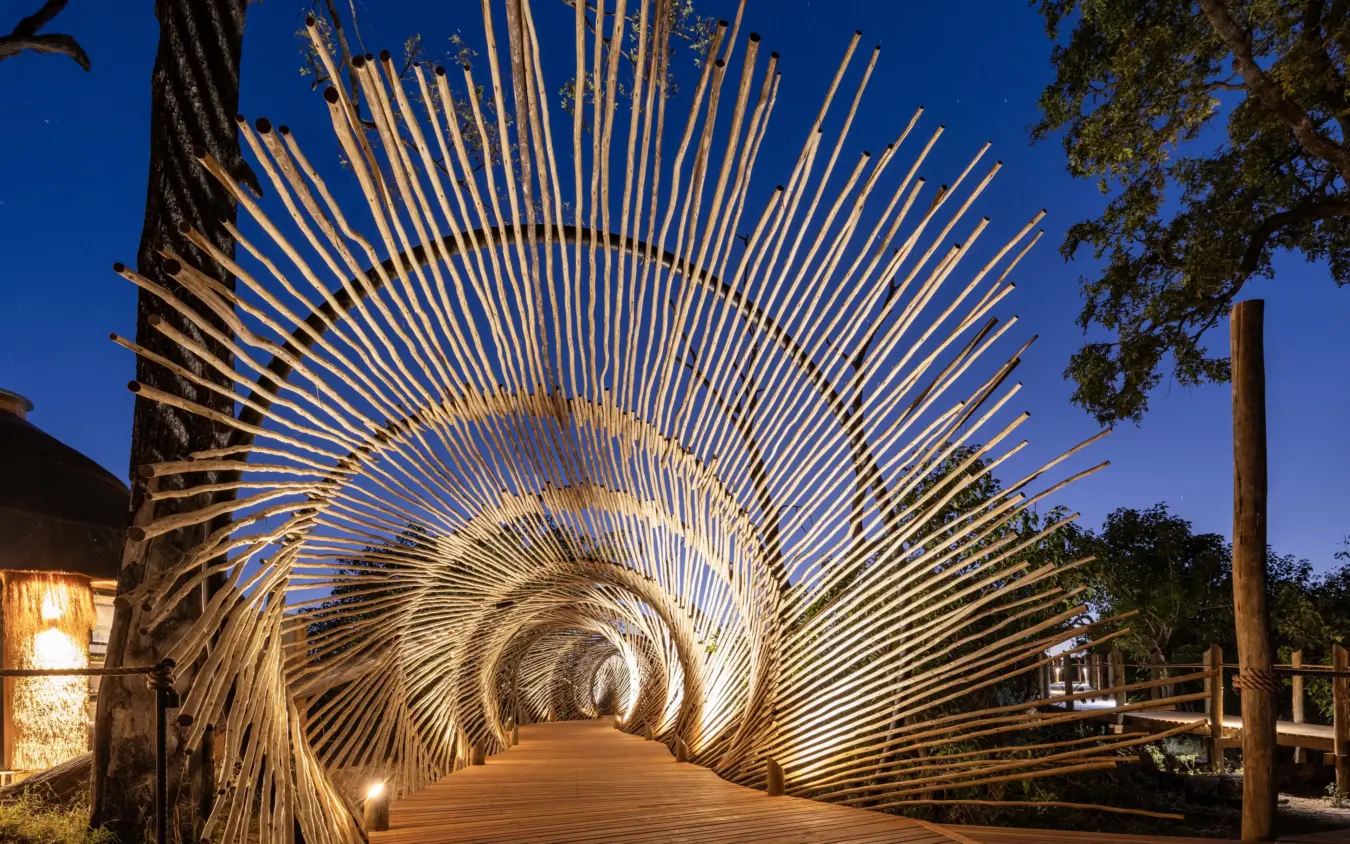
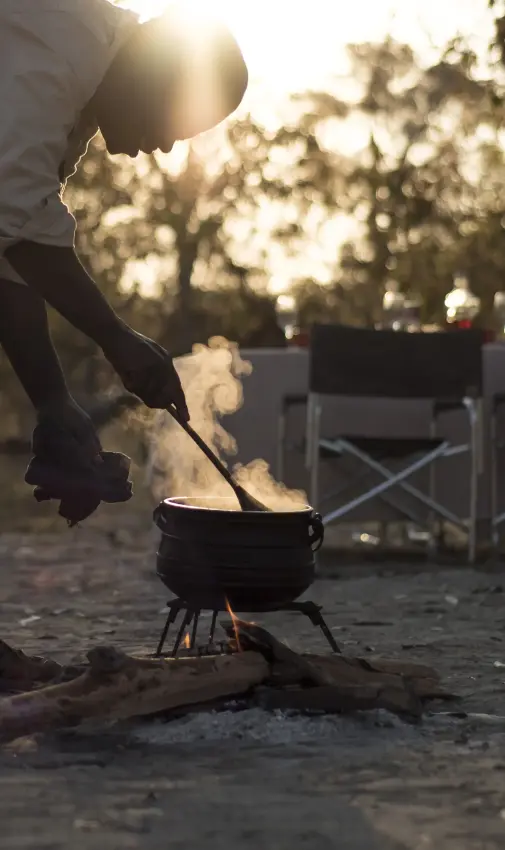
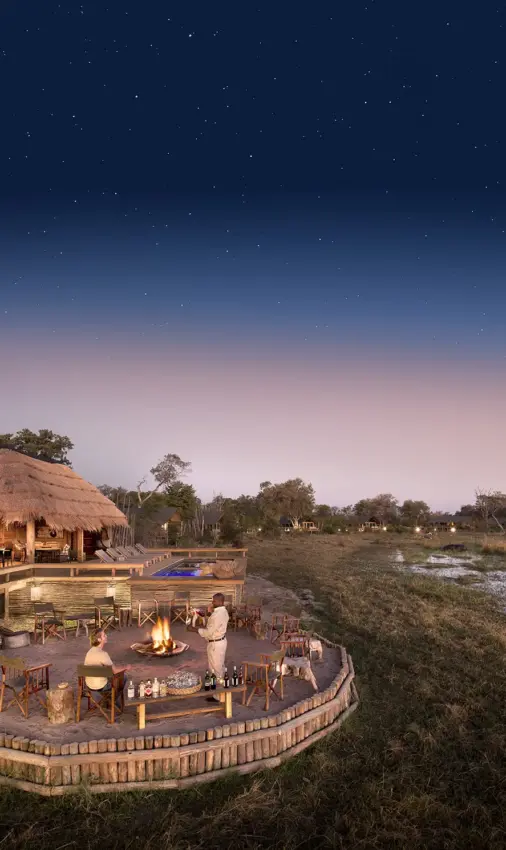
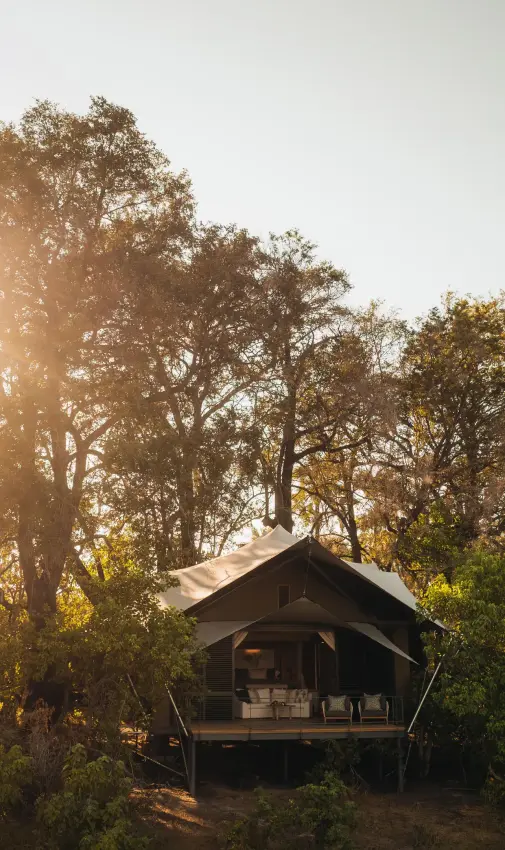
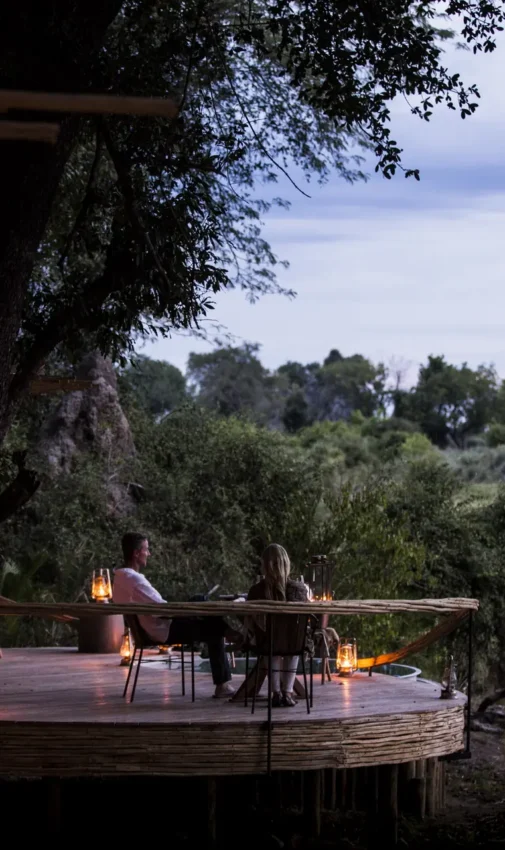
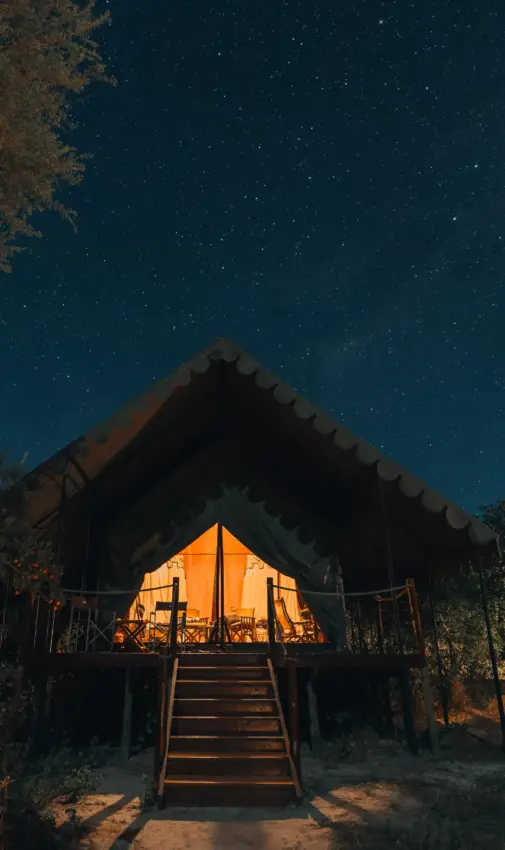
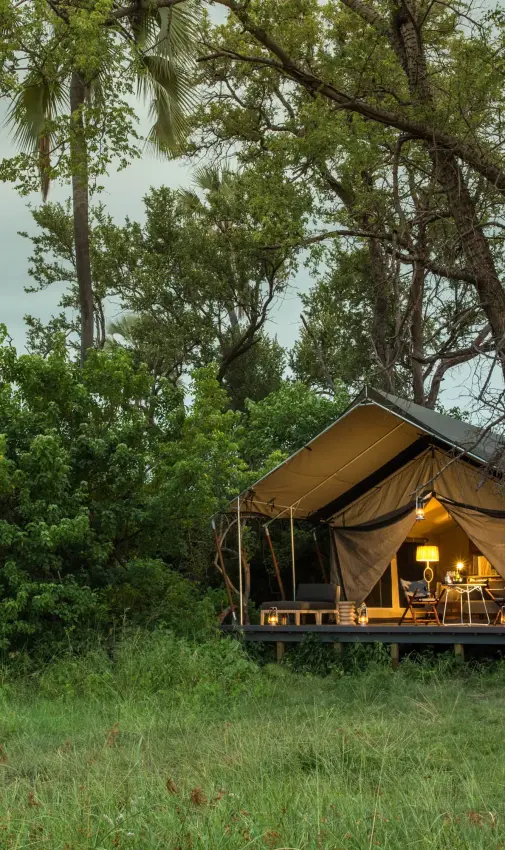
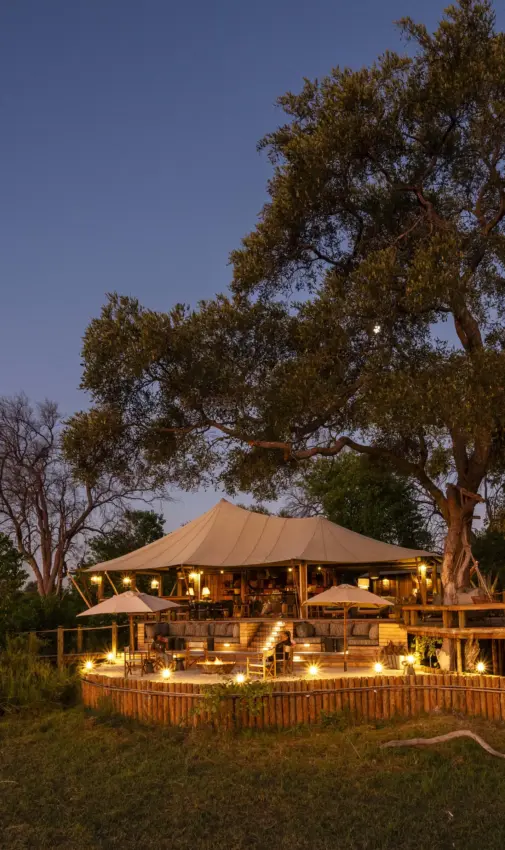
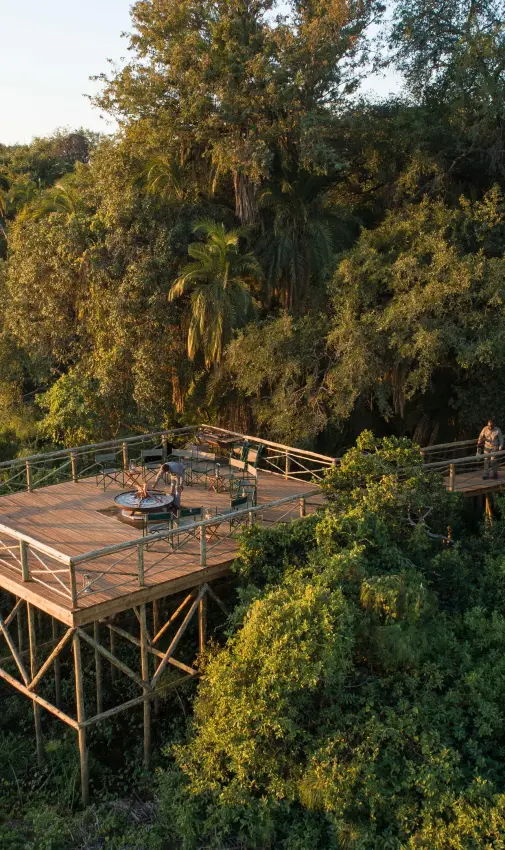
Mornings begin with coffee on a private deck while hippos grunt in the channel below and lechwe move across the floodplain. The suites are spaced far enough apart that neighbours are neither seen nor heard, and the raised walkways drop to ground level in places so elephants can cross the camp at their own height. Meals move around the day: a cooked breakfast before the early drive, pizza from the wood-fired oven at lunch, dinner in the open-air kgotla under lamplight. The wine cellar is walk-in, and there is a steward to talk it through.
Lions, leopards and wild dogs hunt this corridor, and packs have denned on the floodplains.
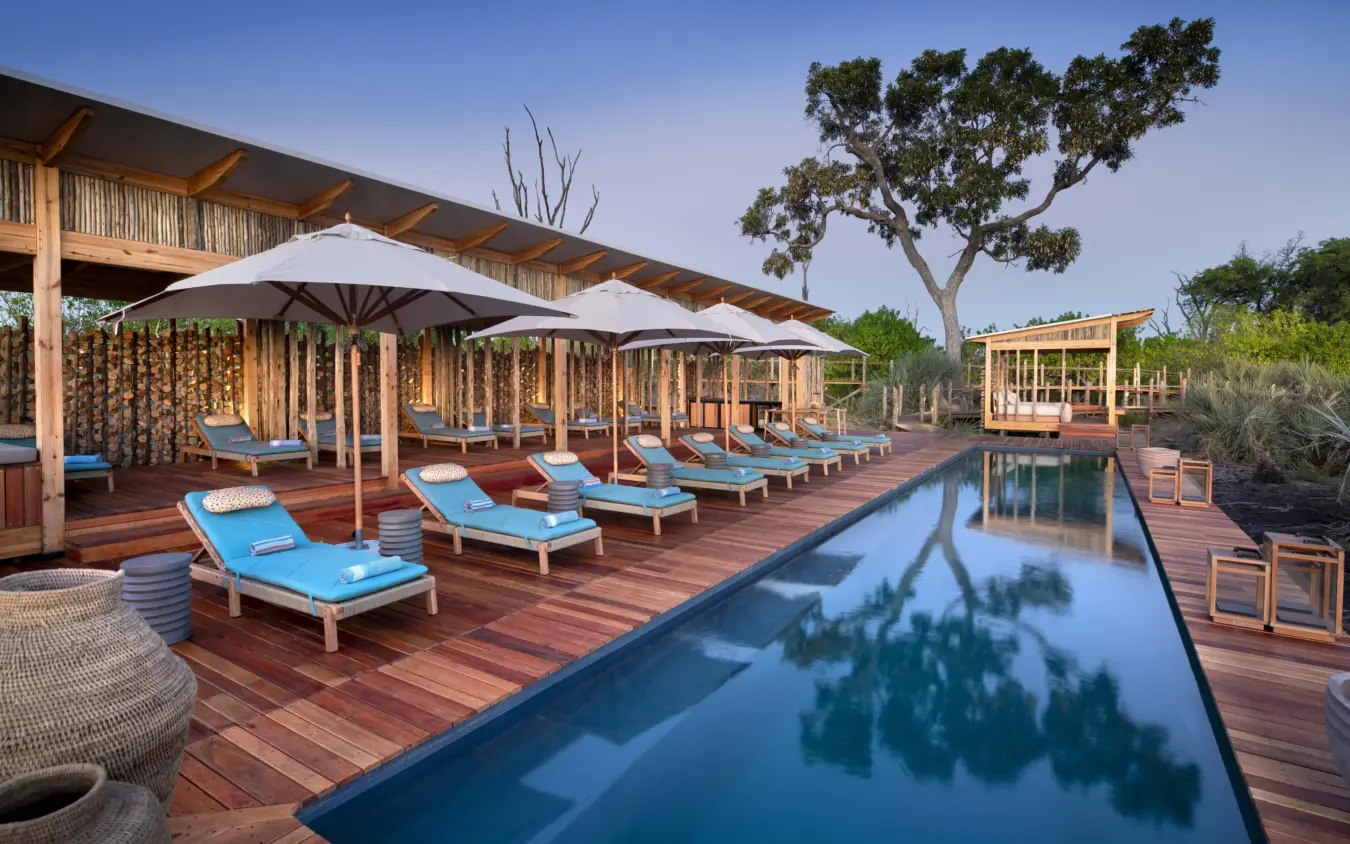
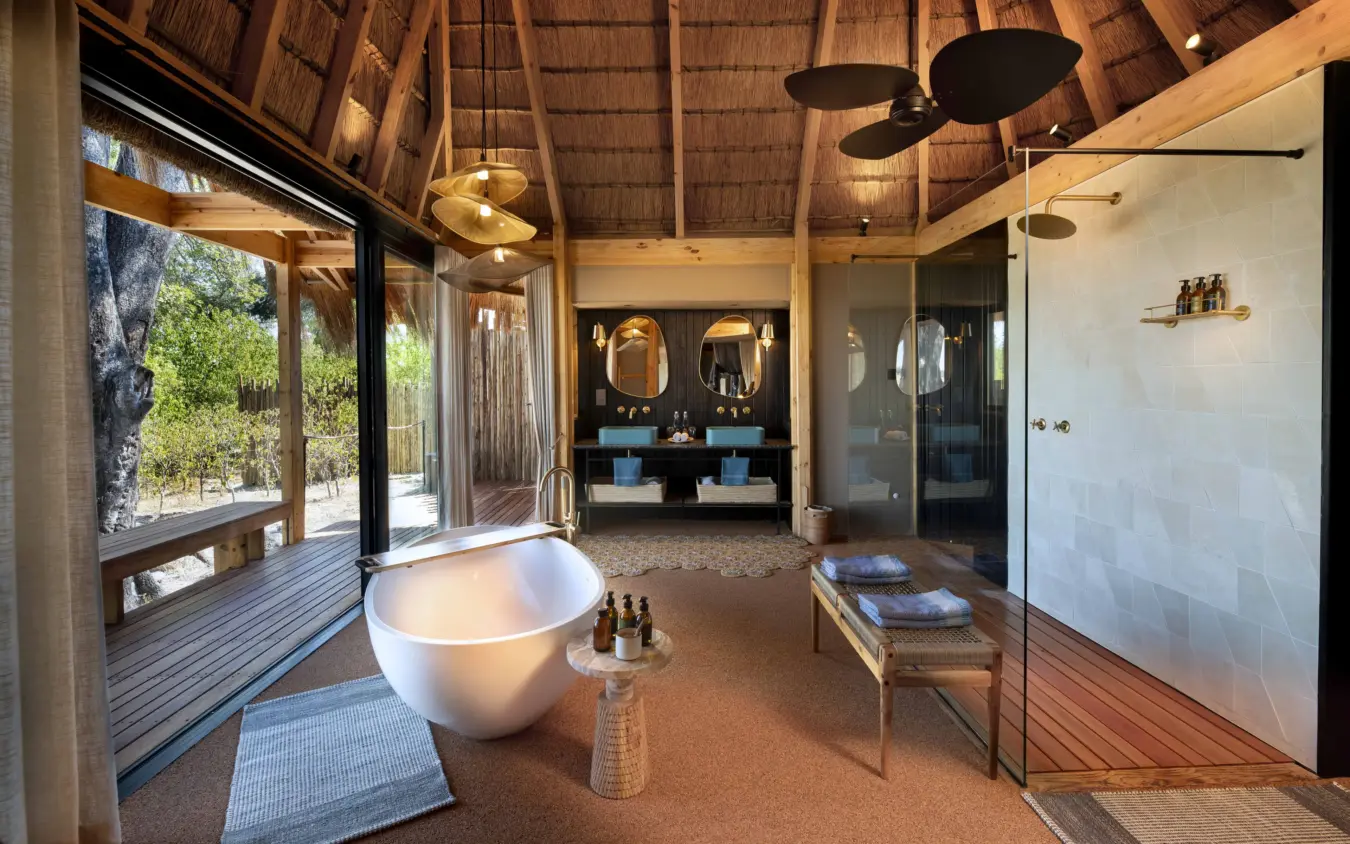
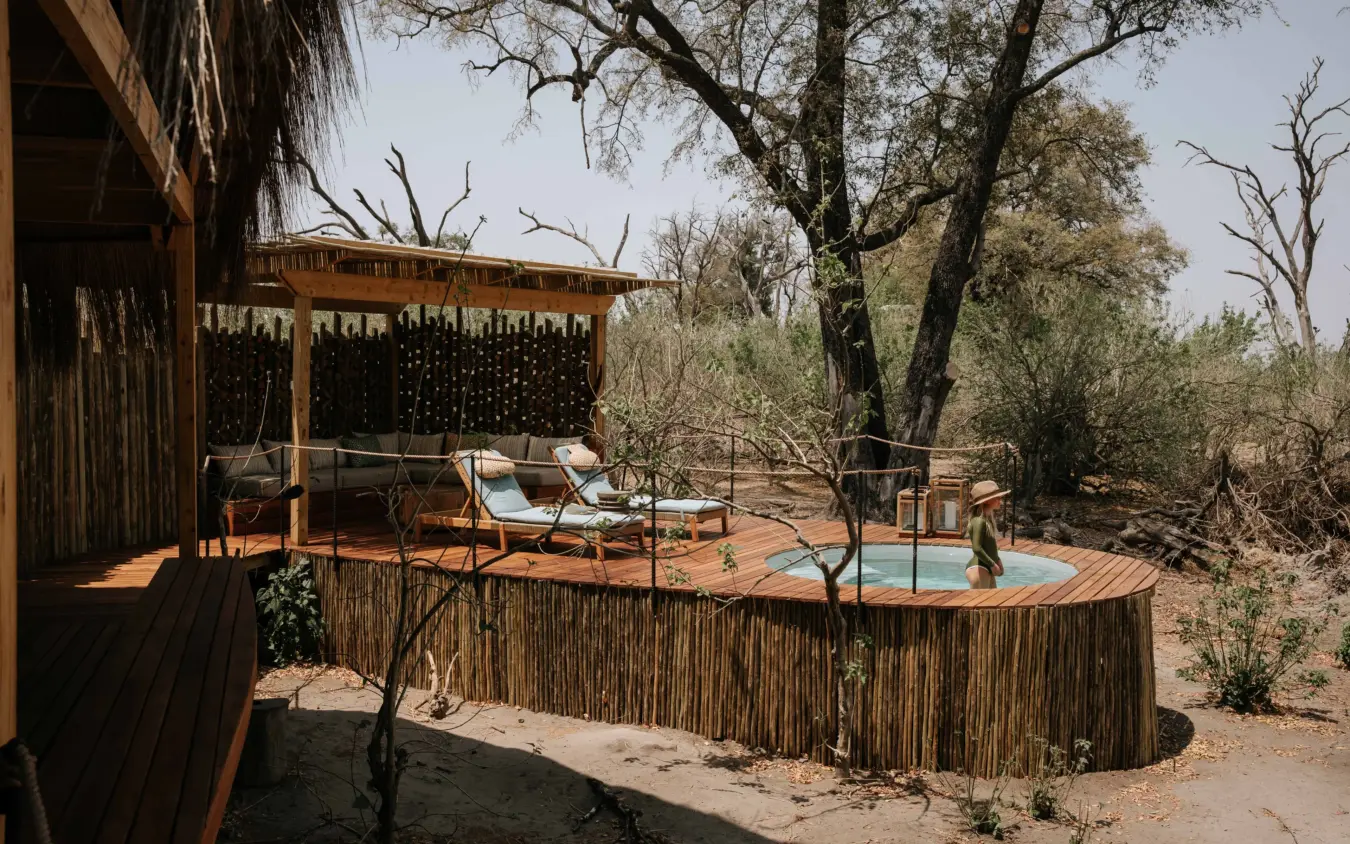
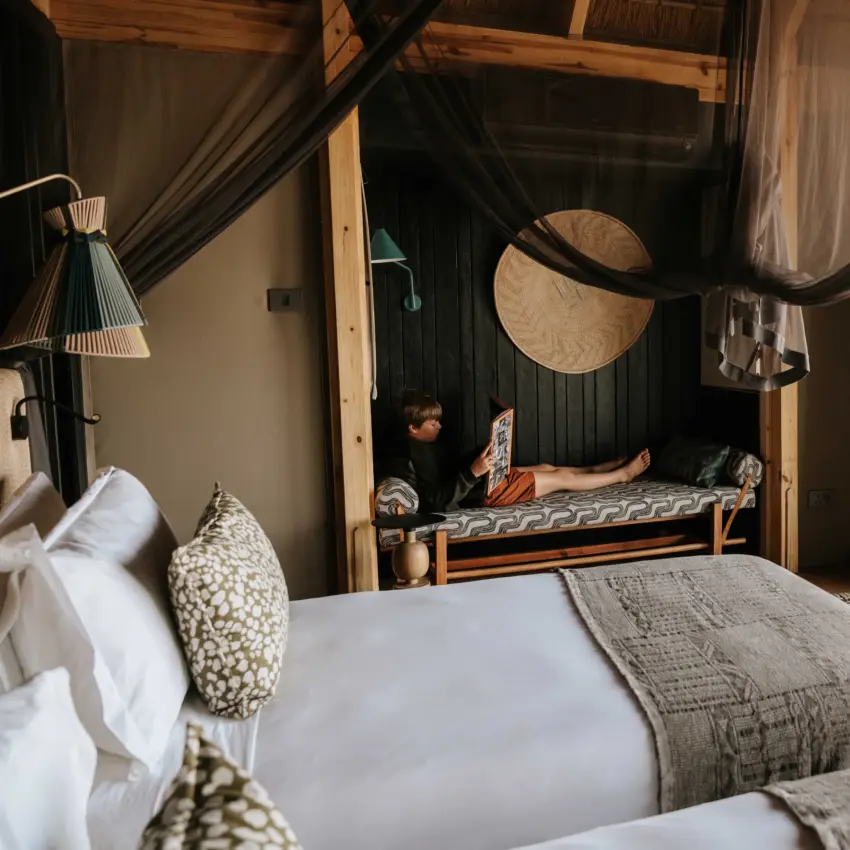
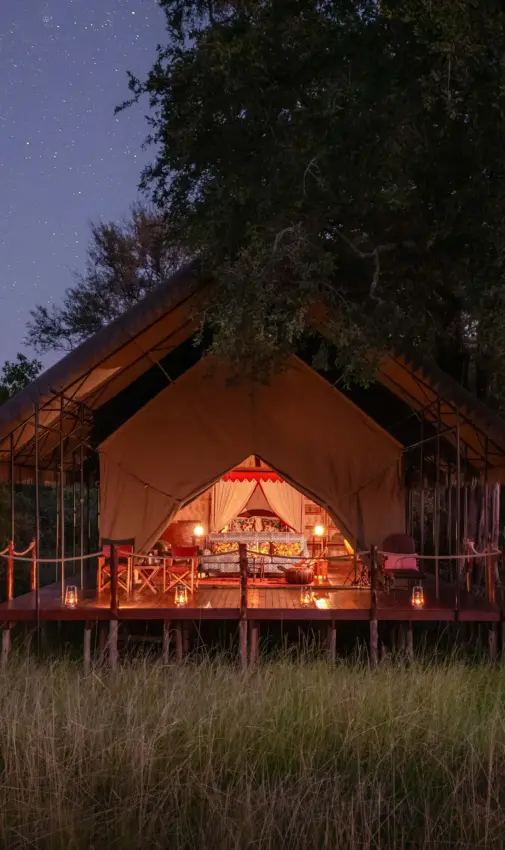
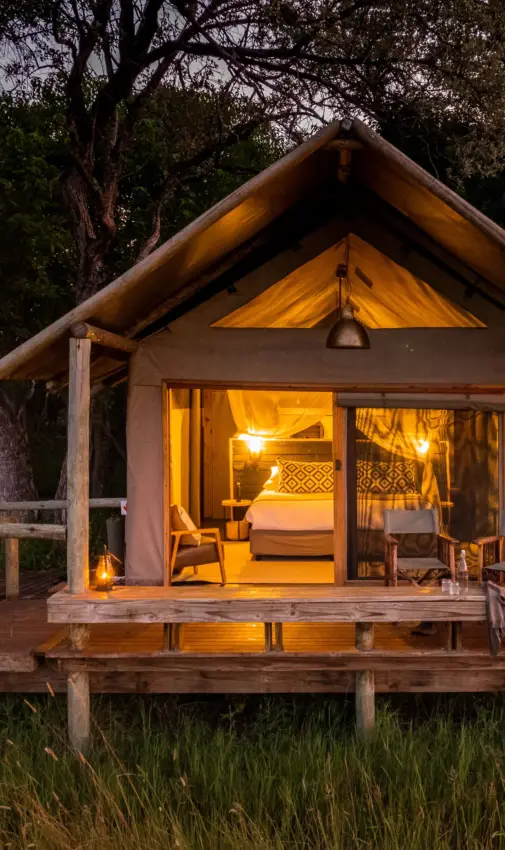
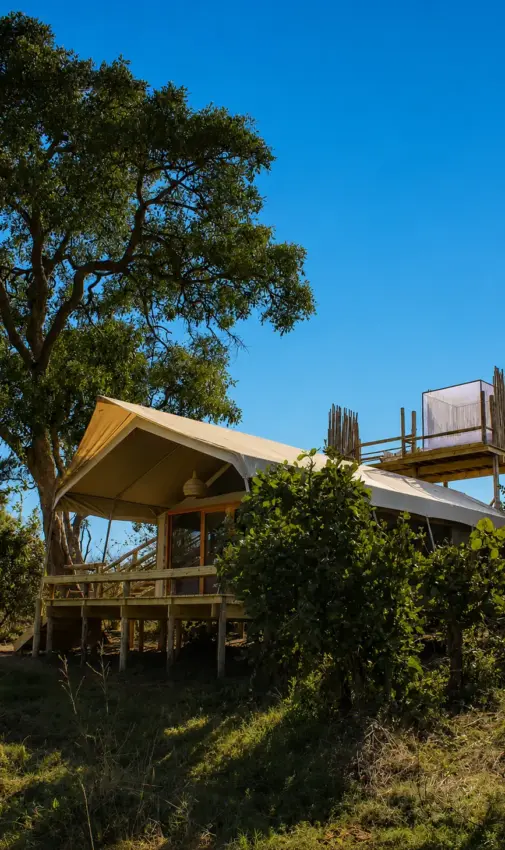
Three of the eight suites are built for families, at roughly 130 square metres, with a separate sleeping area for children and a private pool terrace. They suit multigenerational groups and families with older children: the minimum age is six, and there is no children’s club. Elevated walkways, big animals moving through camp and an open pool deck mean children stay with a parent or guardian throughout. One of the family suites is fitted for wheelchair users, with grab rails and a portable shower seat.
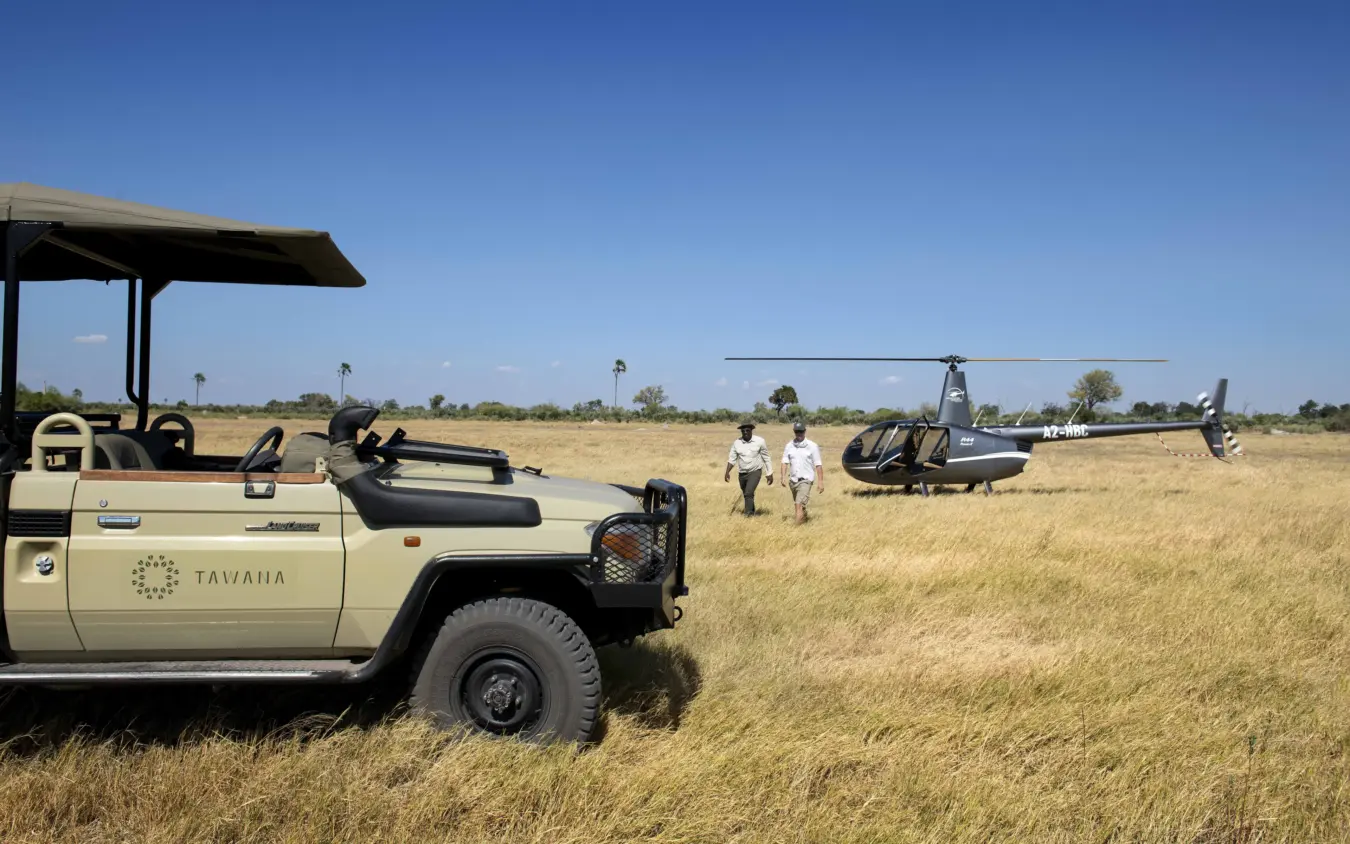
Access is by light aircraft from Maun to Santawani airstrip, roughly twenty minutes in the air, then a forty-five minute transfer by game-drive vehicle. A helicopter can be arranged instead, and scenic flights over the Okavango Delta lift off from camp. The partnership behind the lodge returns a share of what it earns to Kgosi Tawana Moremi and the Batawana, on the land his grandmother protected.