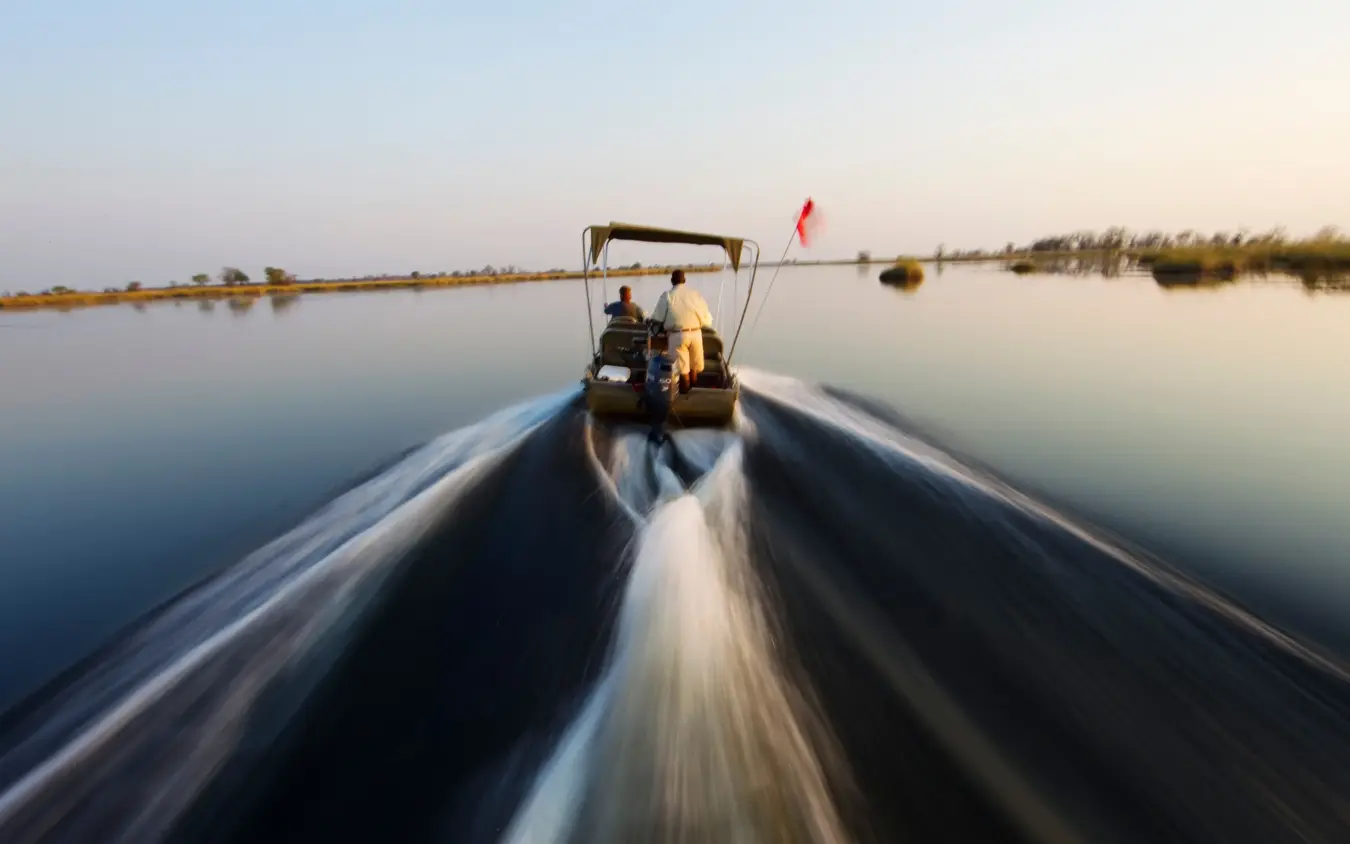
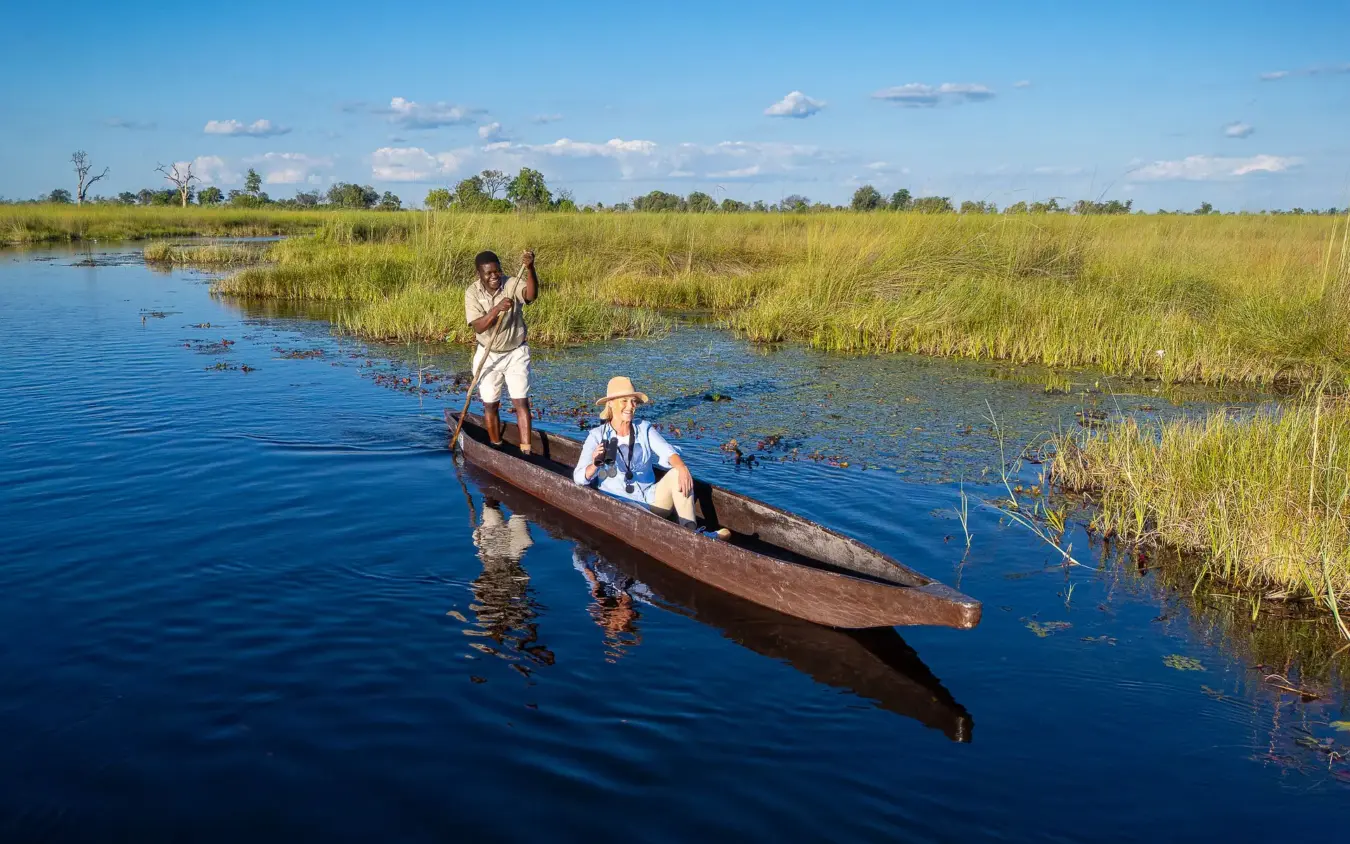
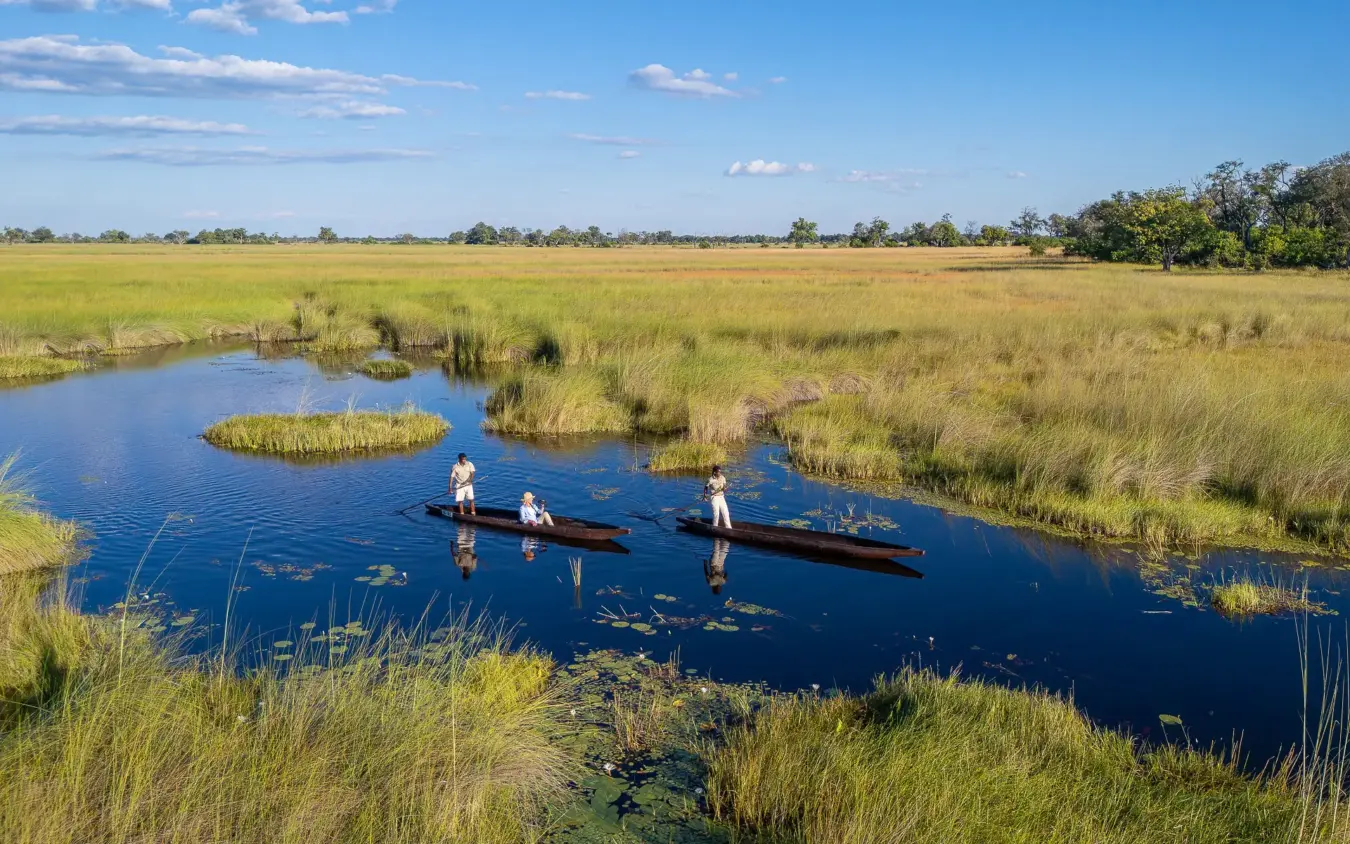
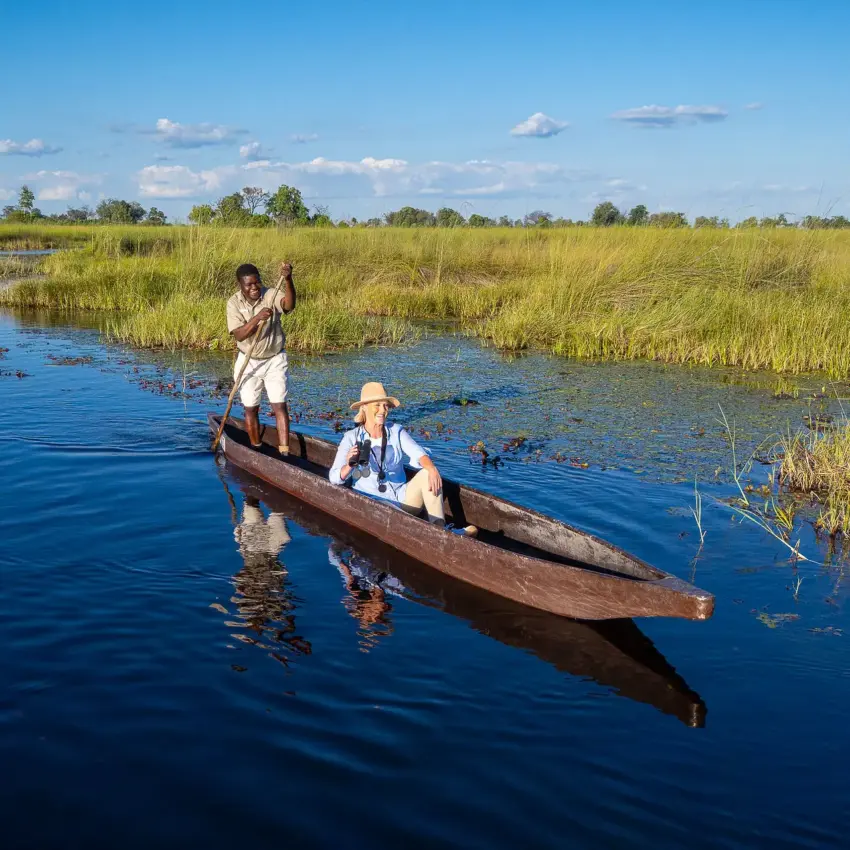
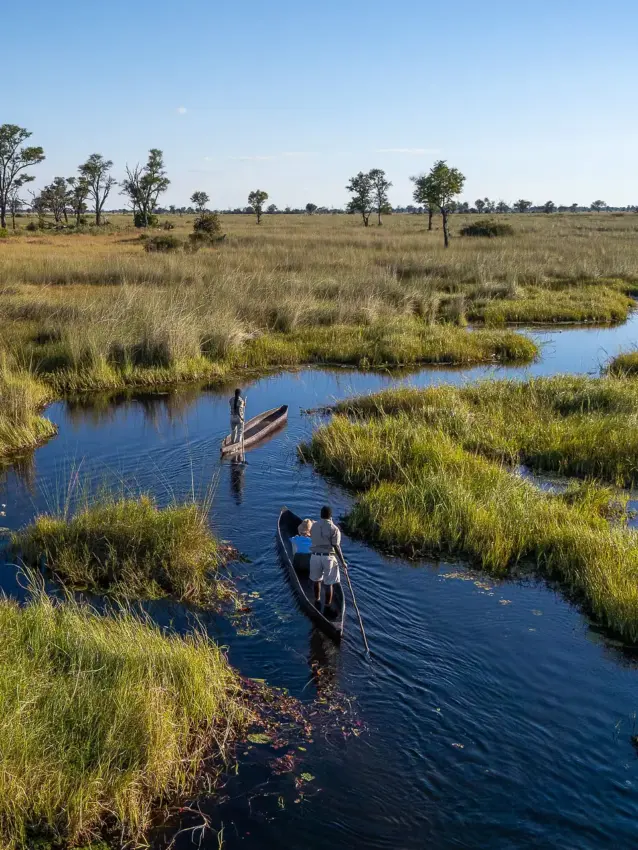
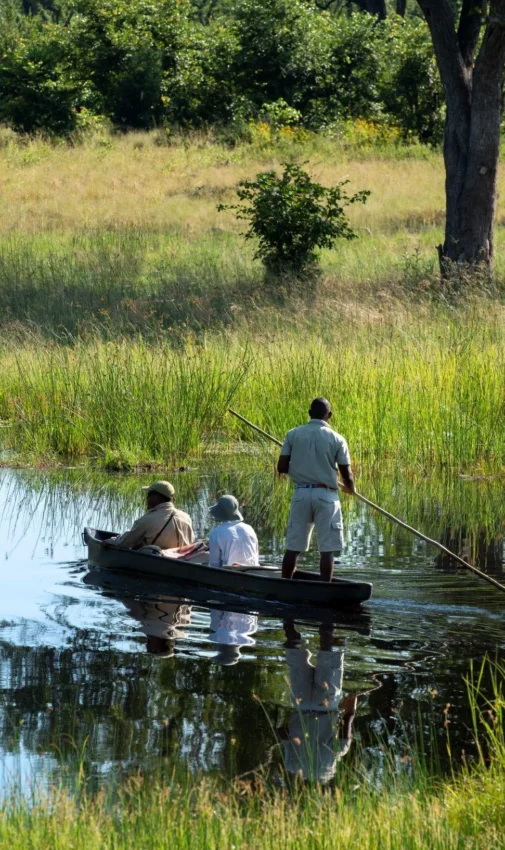
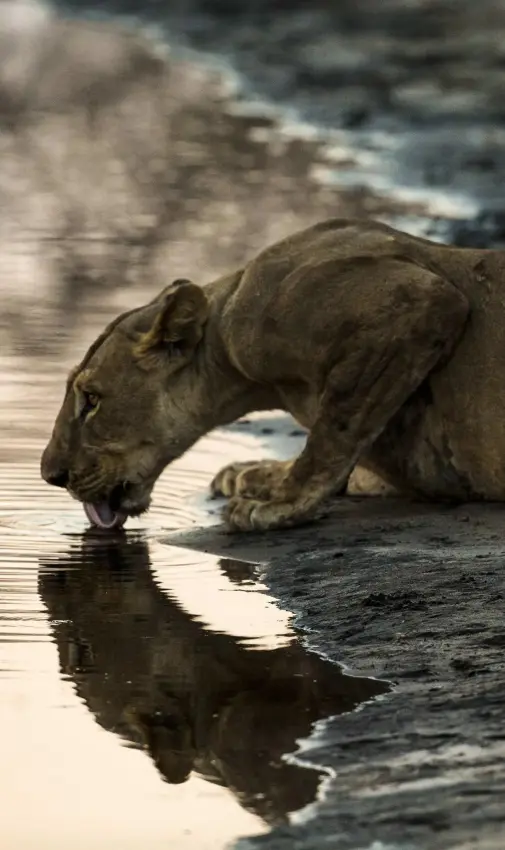
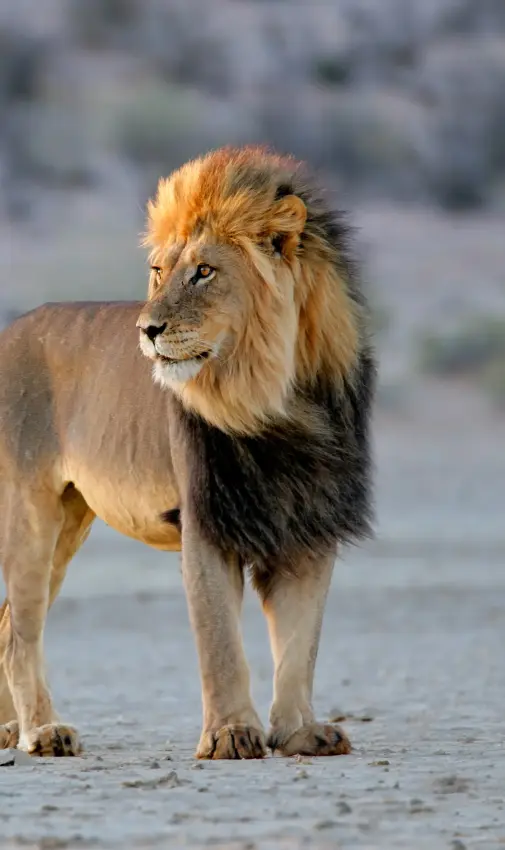
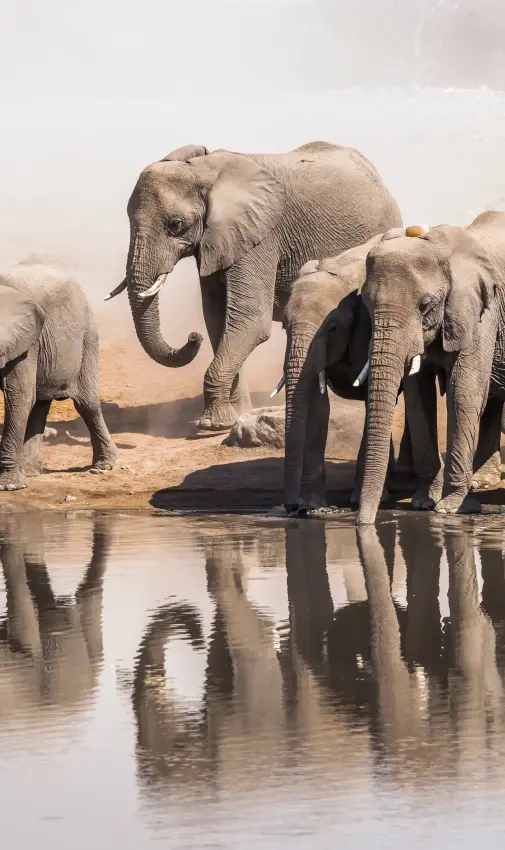
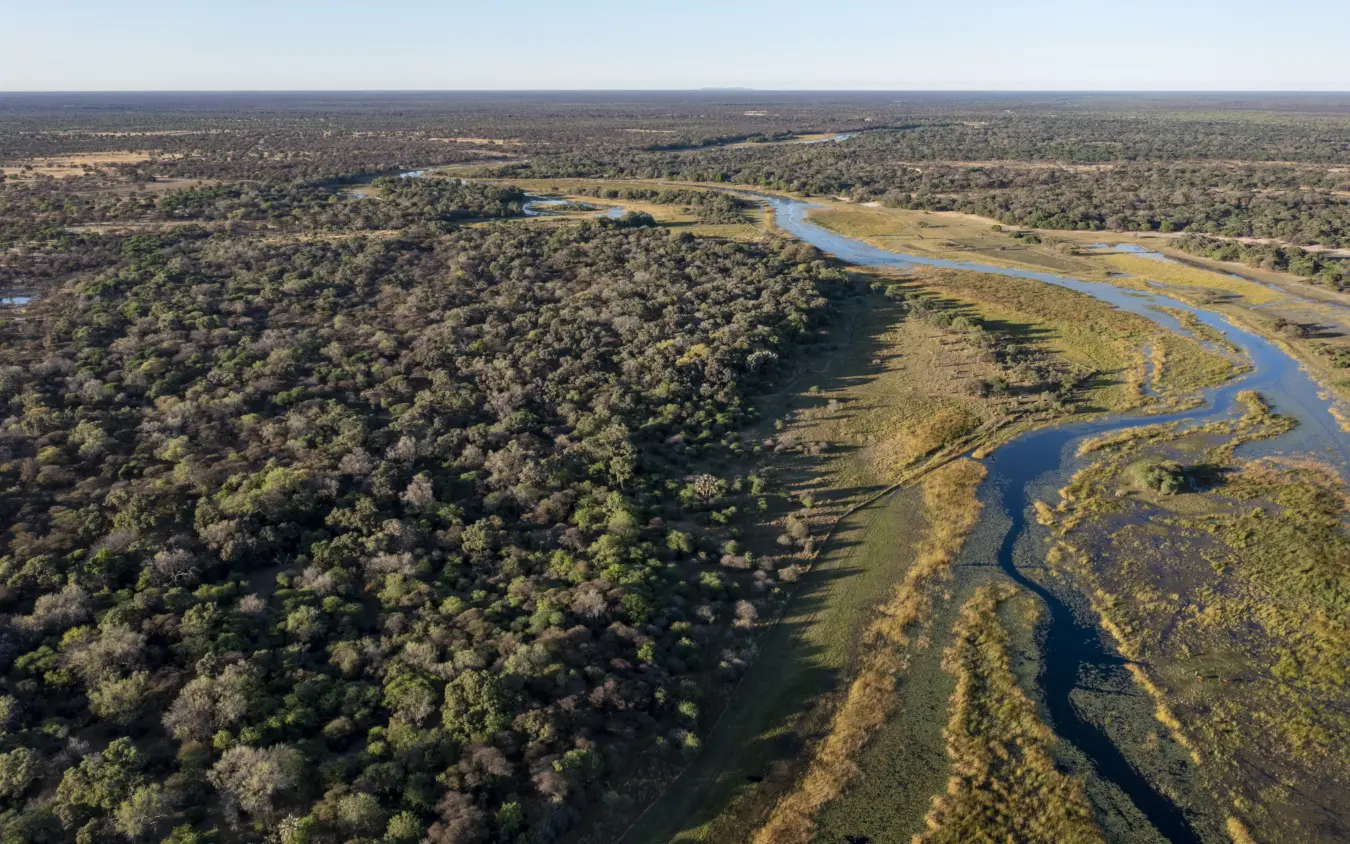
Xakanaxa lies on the Mopane Tongue, and the dry months pull game towards its permanent water. Elephants and buffalo herds move through in numbers from June onwards. Lions and leopards hold territories here year-round, wild dogs pass through, and cheetahs work the open floodplains. Sitatunga, the swamp antelope that spends its life in papyrus, is seen from the boats. Vehicles from neighbouring camps share the same road network, and guides coordinate sightings by radio.
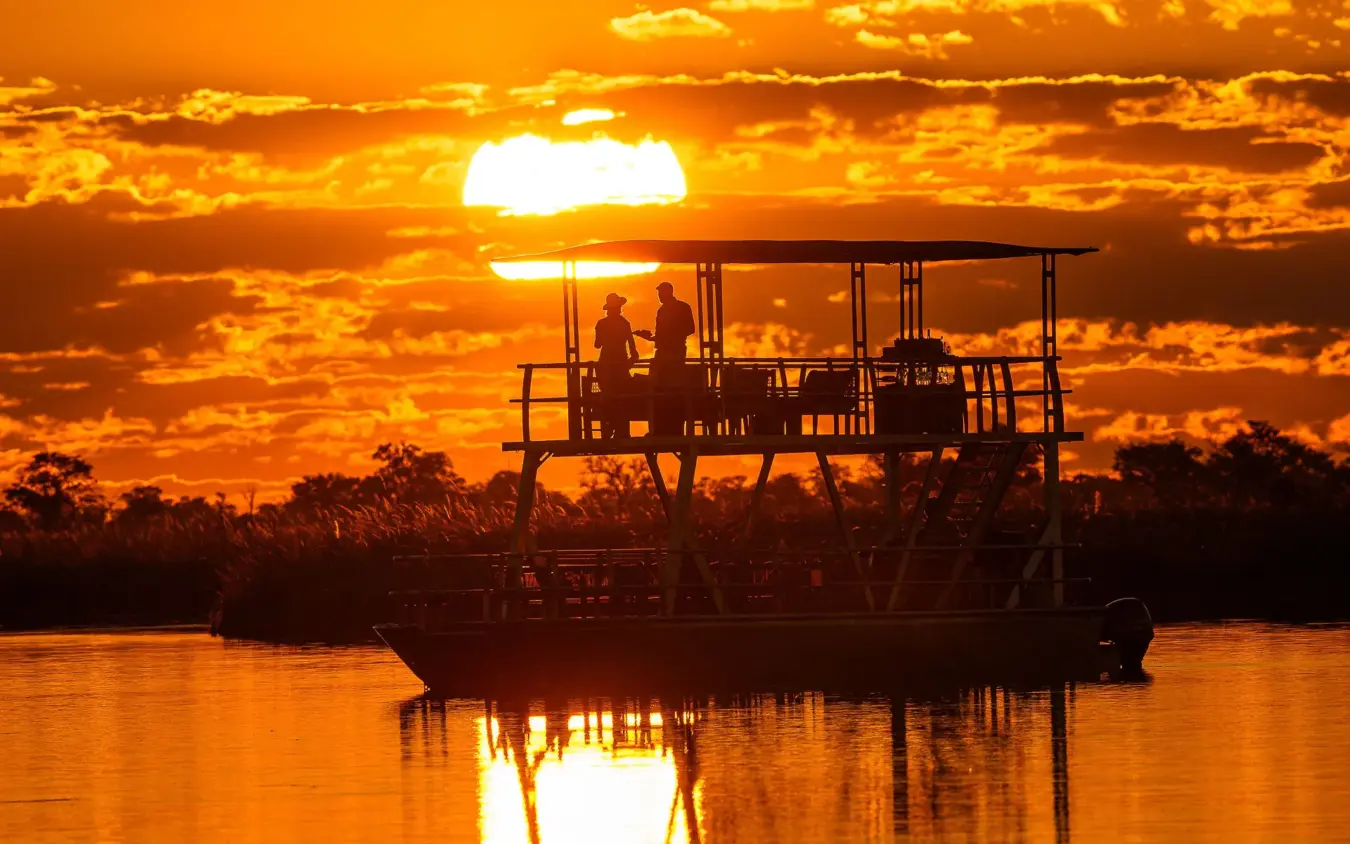
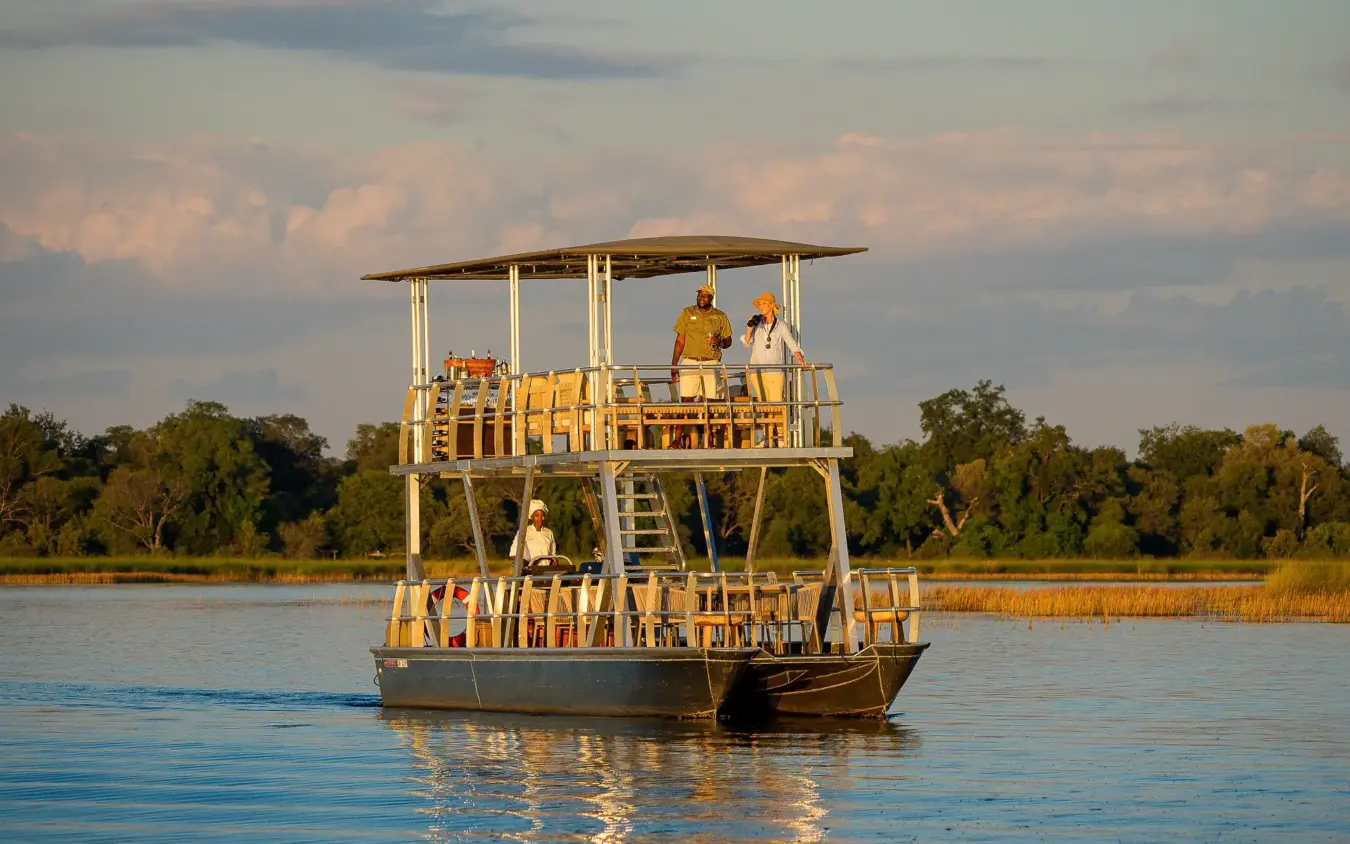
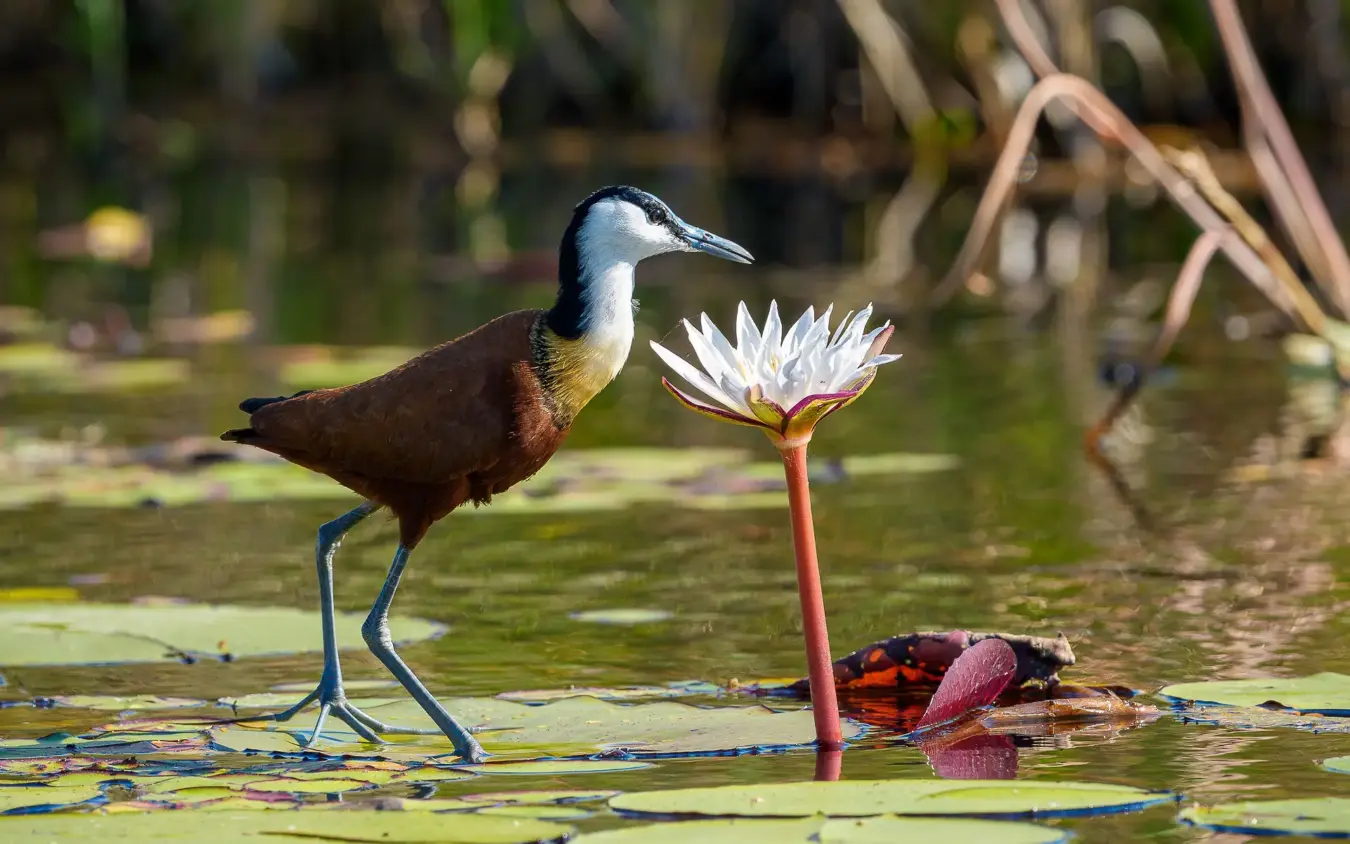
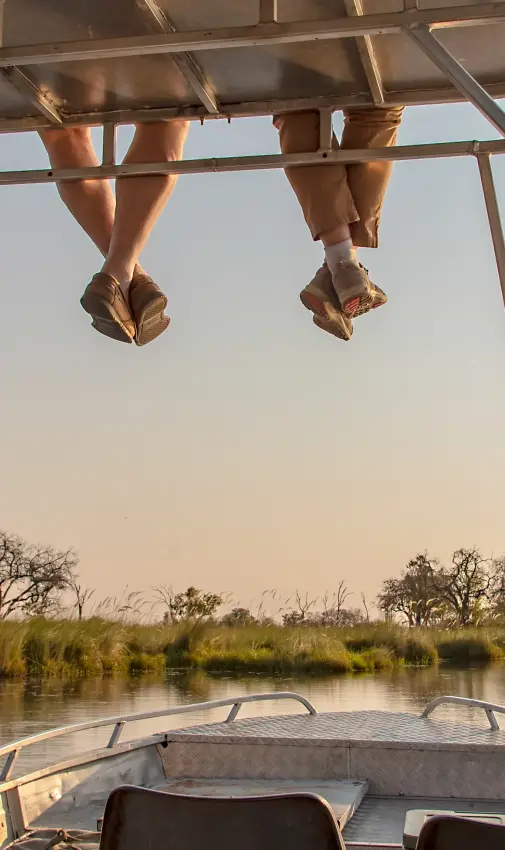
Birding peaks between September and December. Upstream by boat lie the Godikwe and Xobega heronries. Moremi’s bird list runs past 400 species, among them Pel’s fishing owl, slaty egret, pygmy goose and the malachite, woodland and striped kingfishers. A double-decker barge runs brunch and sundowner cruises, its upper deck useful for seeing over the reeds.
Sitatunga, the swamp antelope that spends its life in papyrus, is seen from the boats.
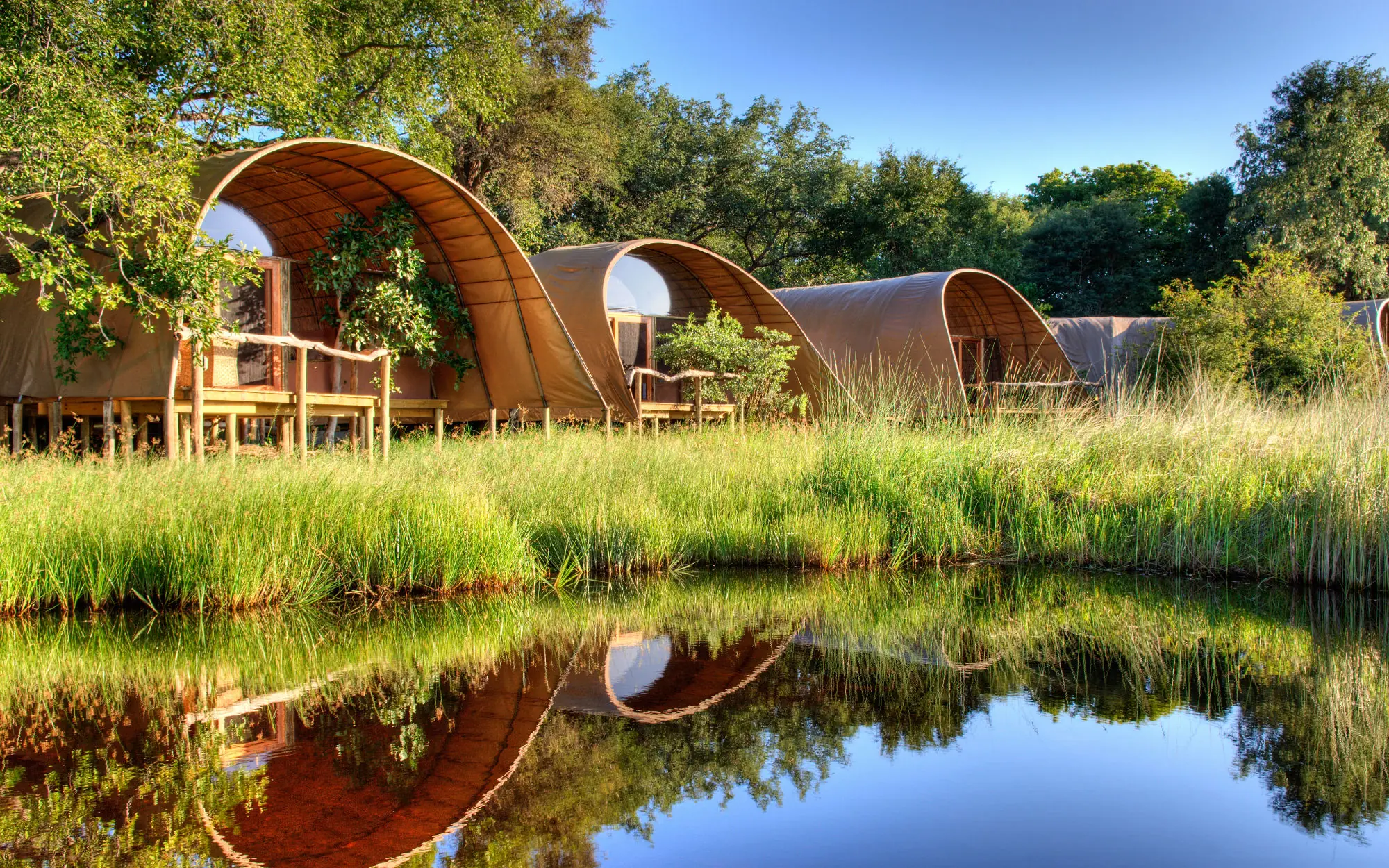
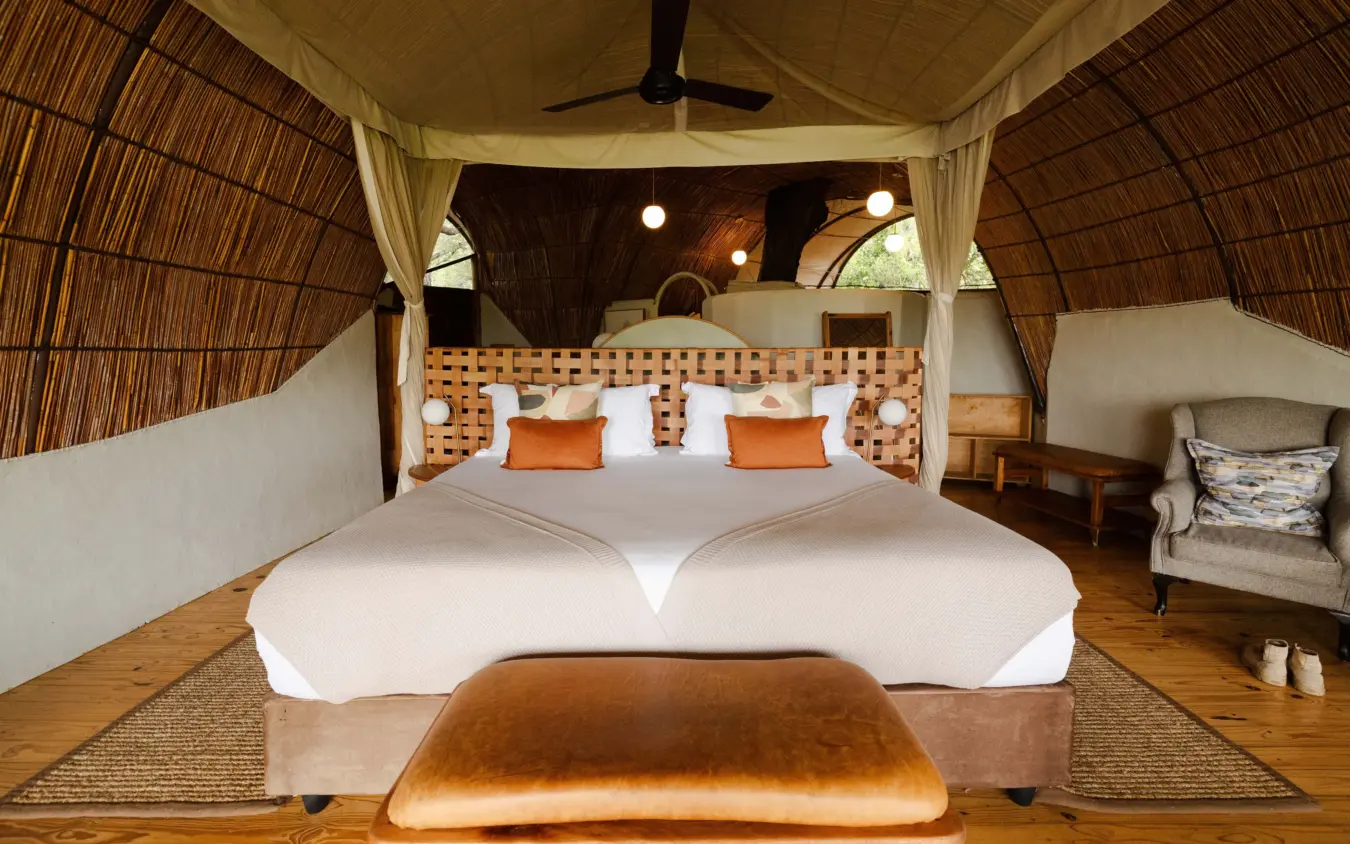
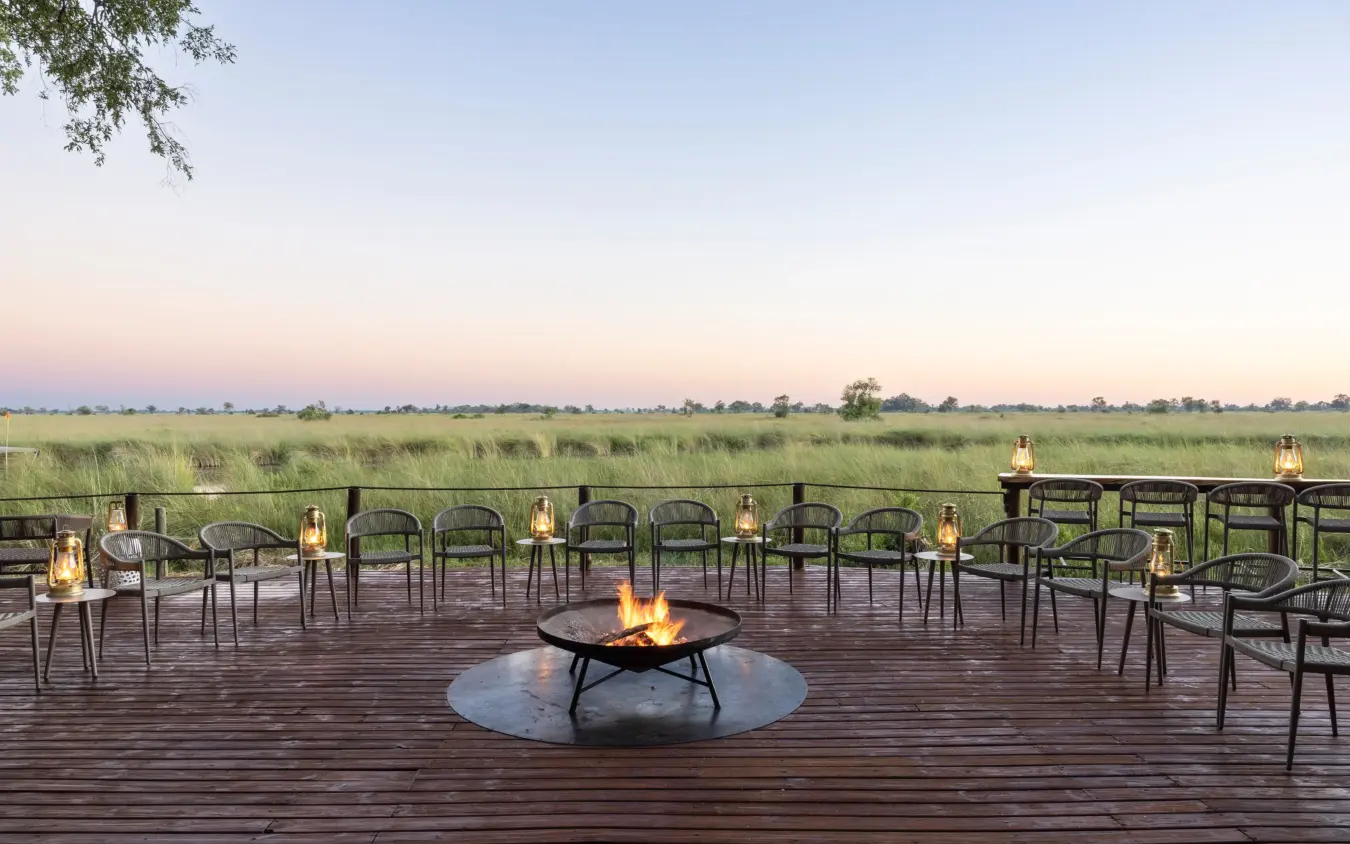
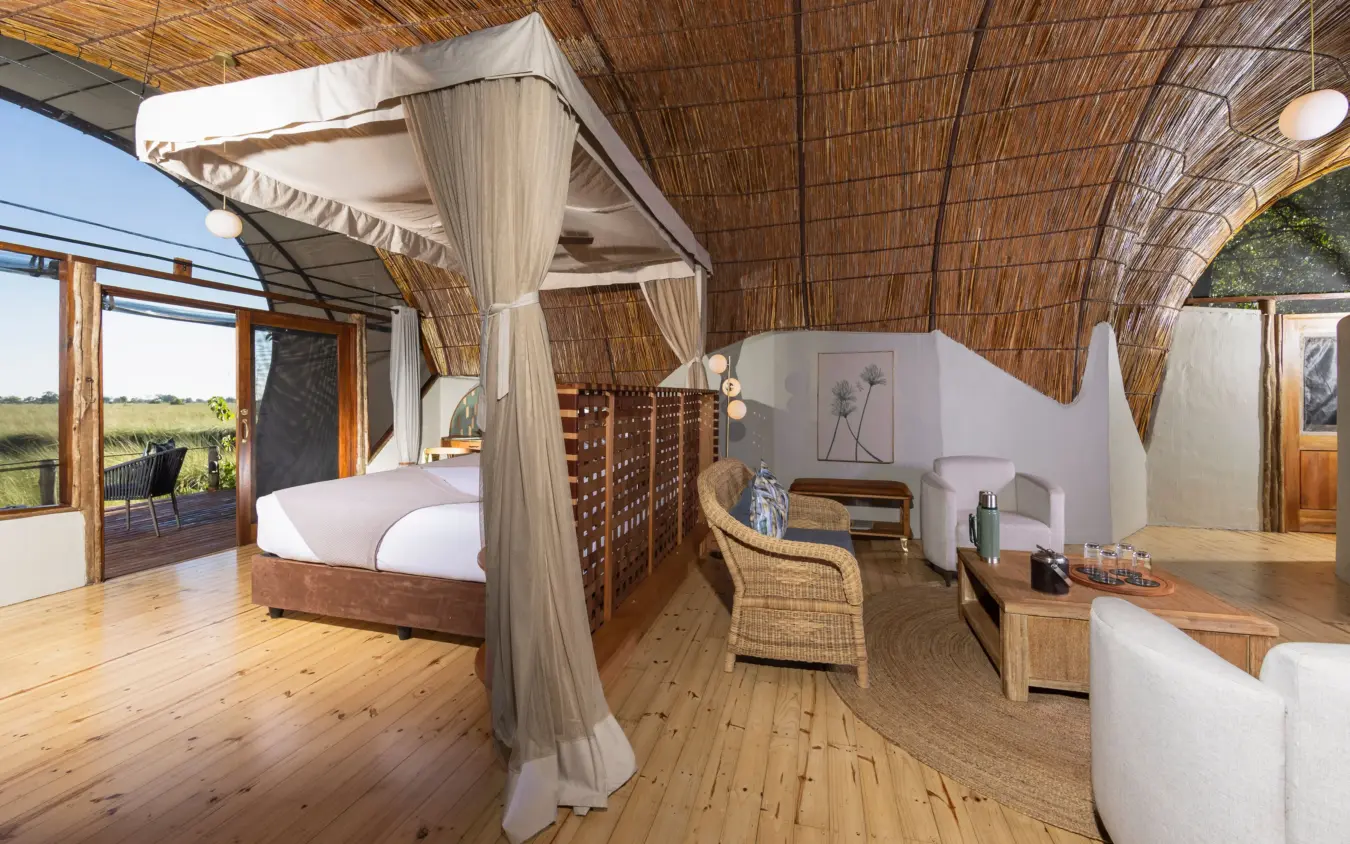
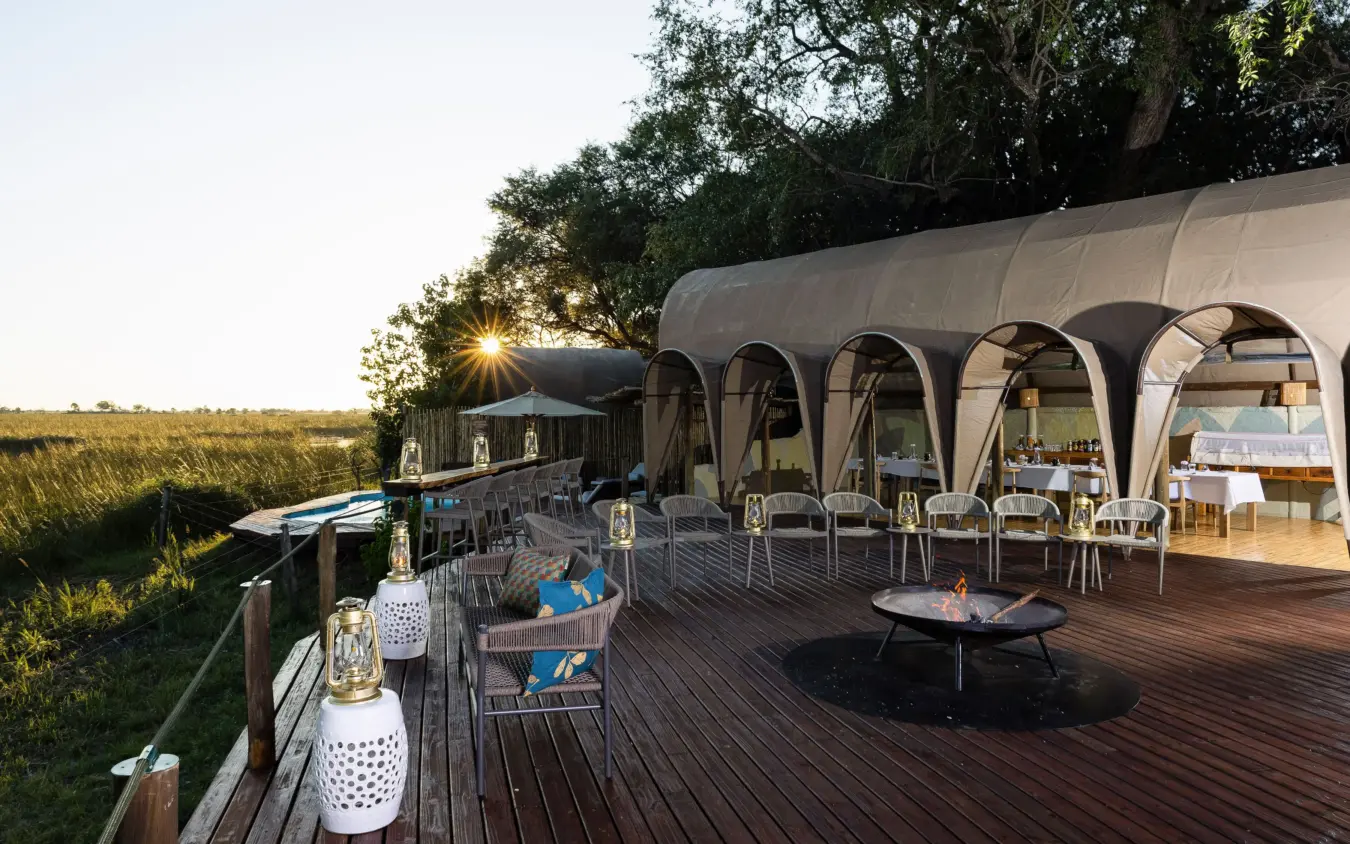
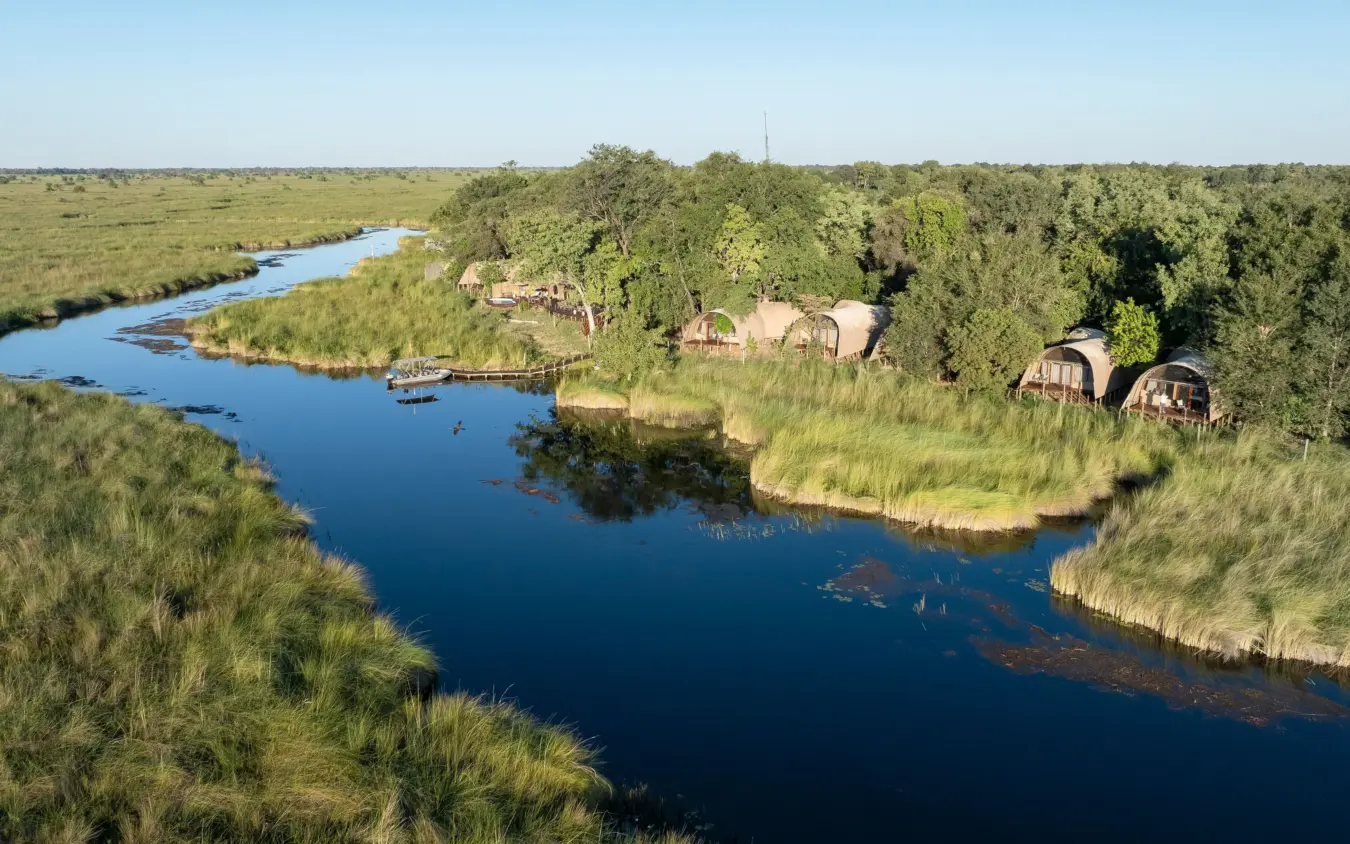
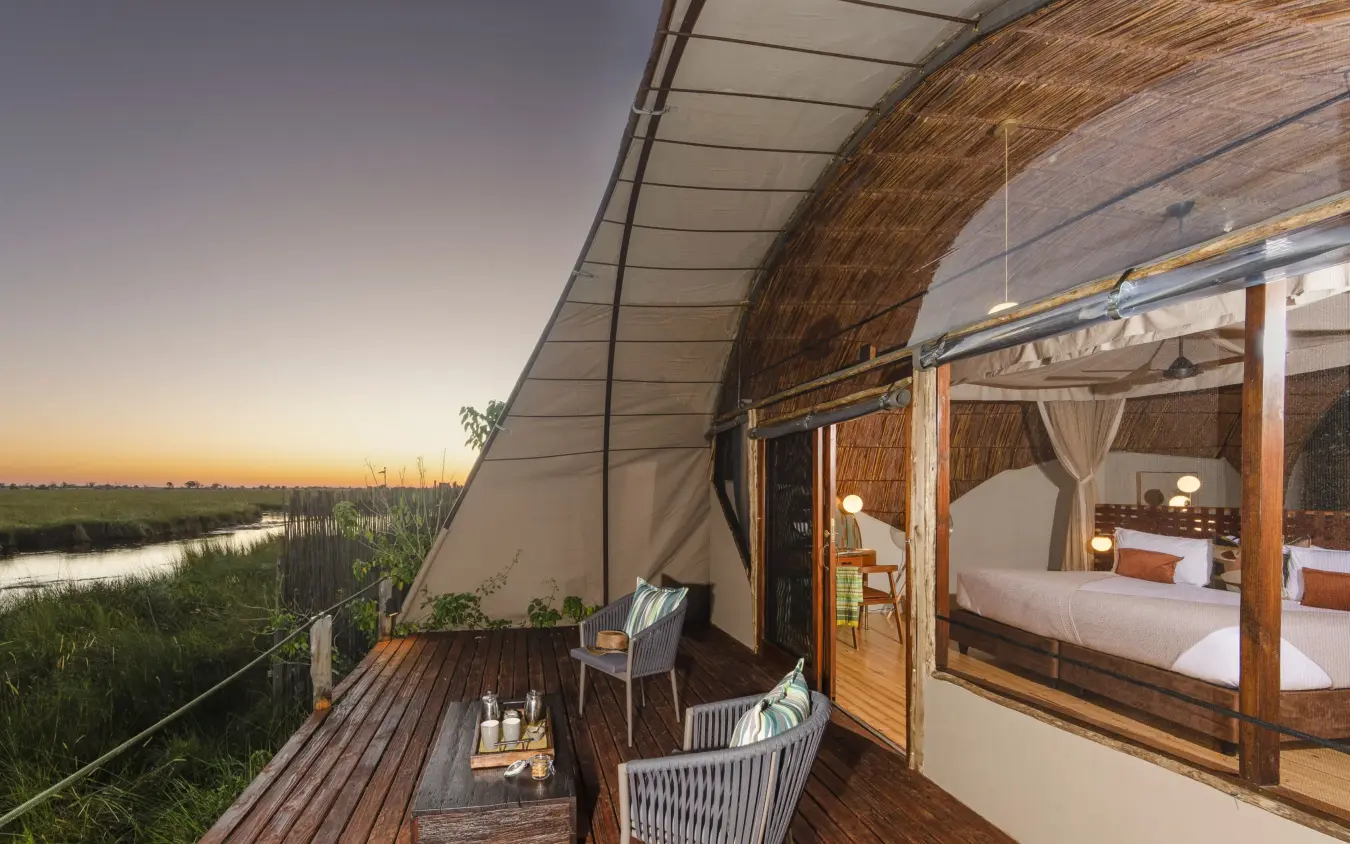
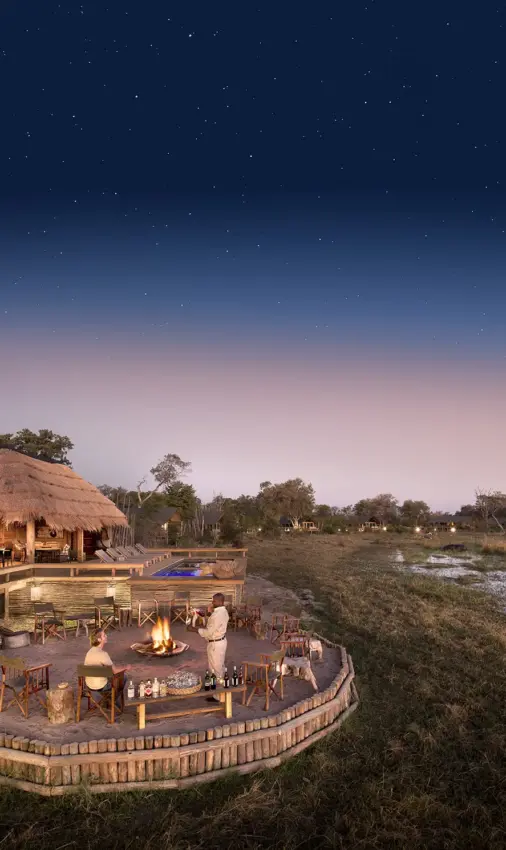
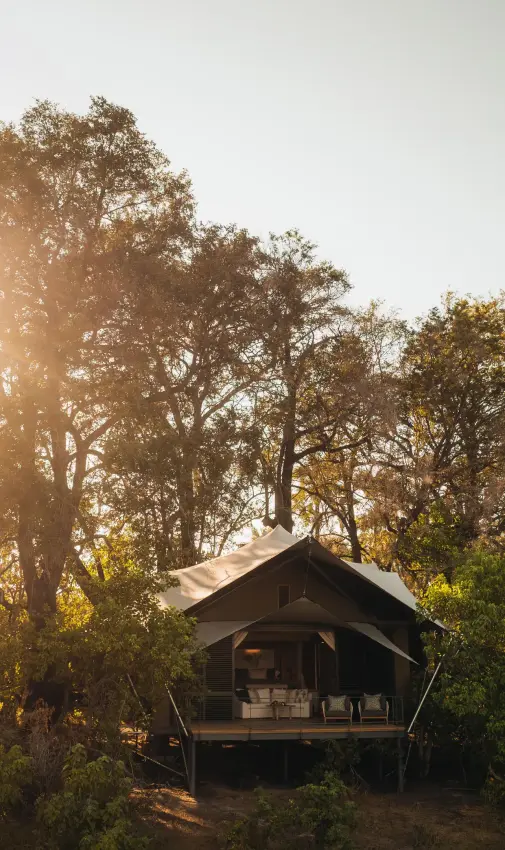
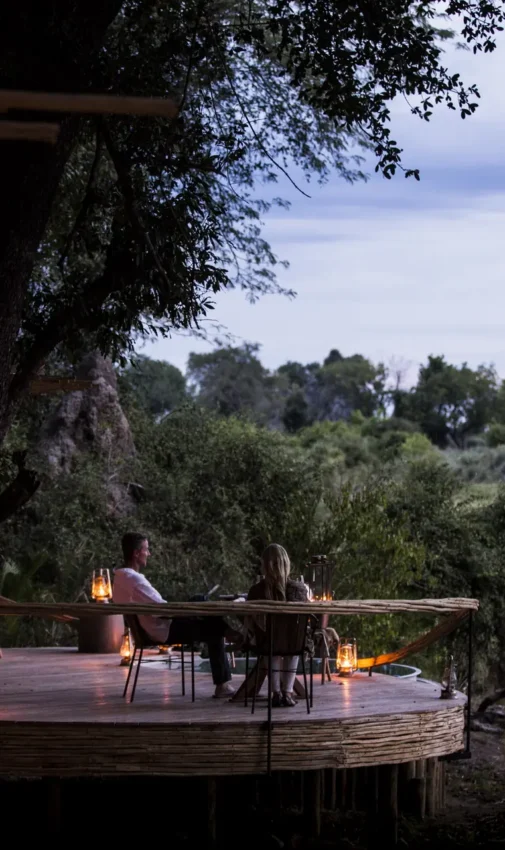
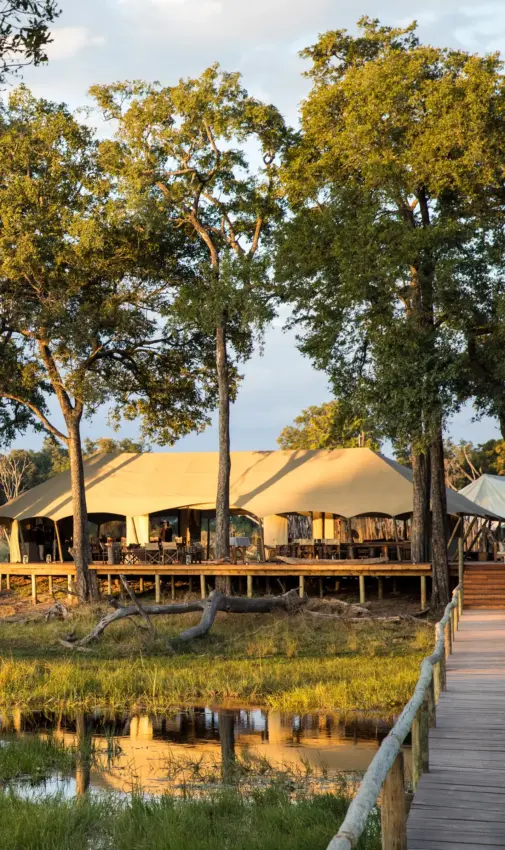
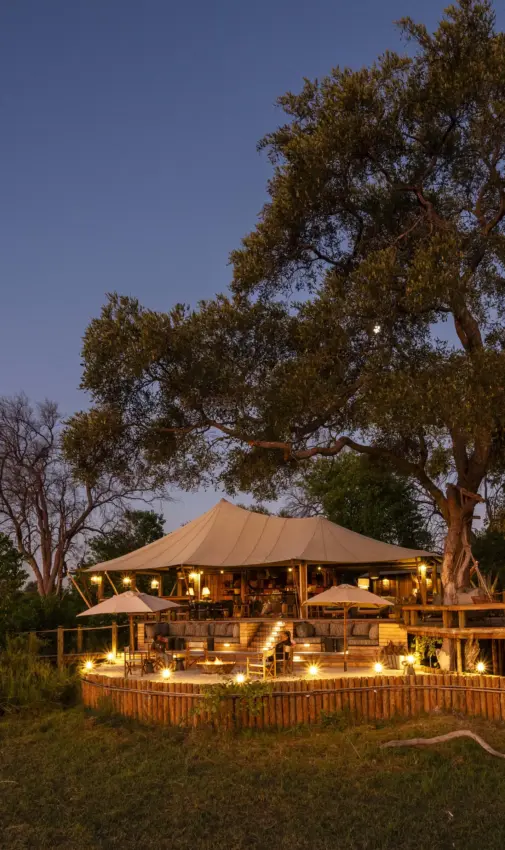
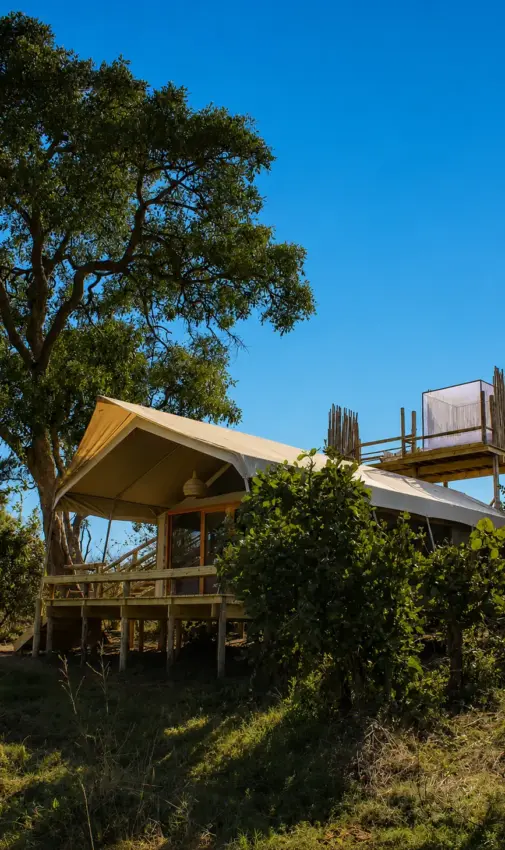
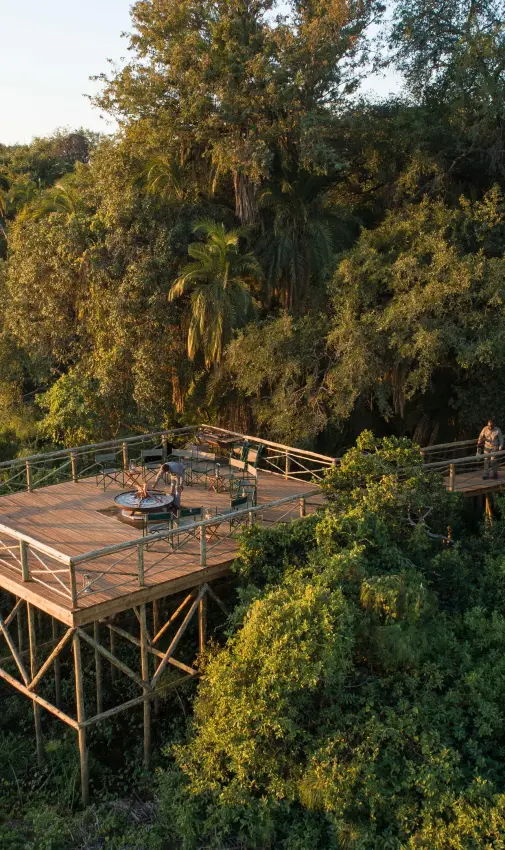
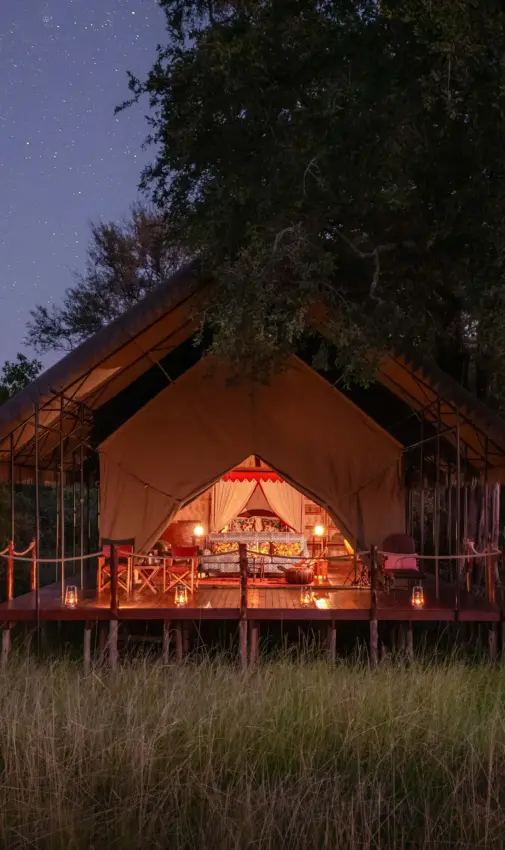
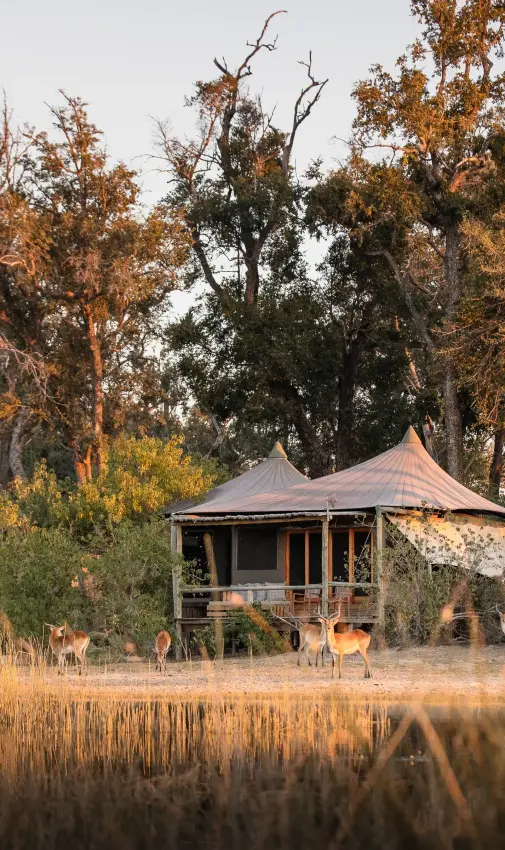
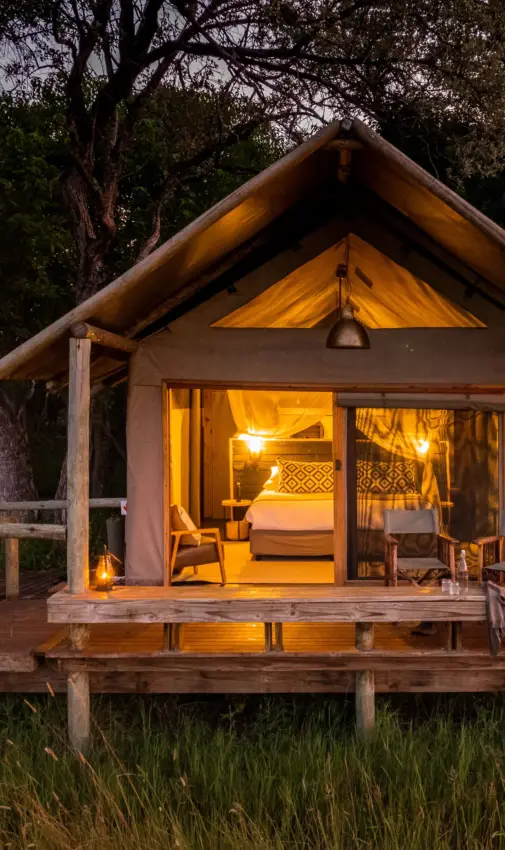
Okuti holds ecotourism certification from the Botswana Tourism Board, earned partly through the way it is built. The chalets, walkways and decks stand on stilts, so floodwater and animal paths pass underneath, and the ground below has been rehabilitated. Power comes from solar, with a generator on standby. The 2024 refurbishment sourced furniture, leatherwork and woven baskets from craftspeople in Maun. Within Moremi it is considered one of the reserve’s best-value camps, with strong guiding and a permanent-water setting inside a national park rather than a private concession.
Two of the seven rooms are two-bedroom family Masasas, the bedrooms sharing one bathroom, and children from the age of seven are welcome year-round. A specialist family guide runs the Young Explorers programme: tracking, reading spoor, bows and arrows, games pitched to the age of the child. Guests arrive by light aircraft at Xakanaxa airstrip, then transfer by open vehicle for roughly twenty minutes, so the game viewing starts before the luggage is off the roof rack. Helicopter flights over the Okavango Delta can be arranged as an excursion.