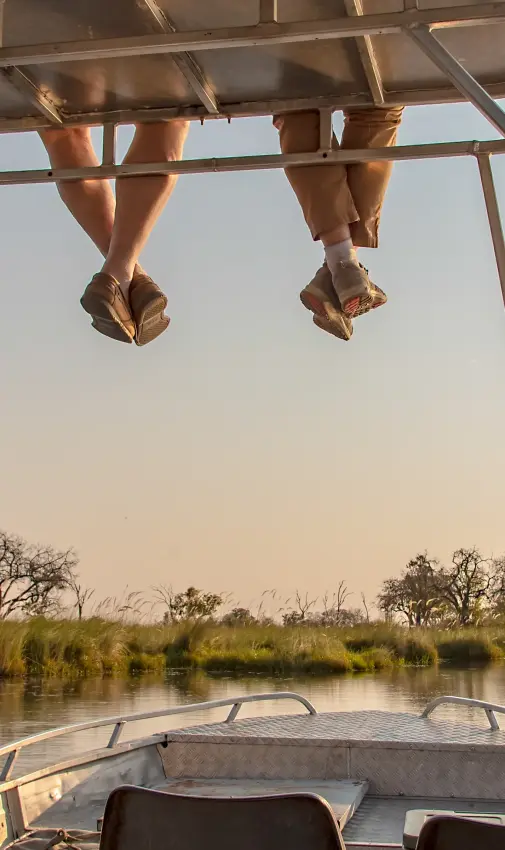
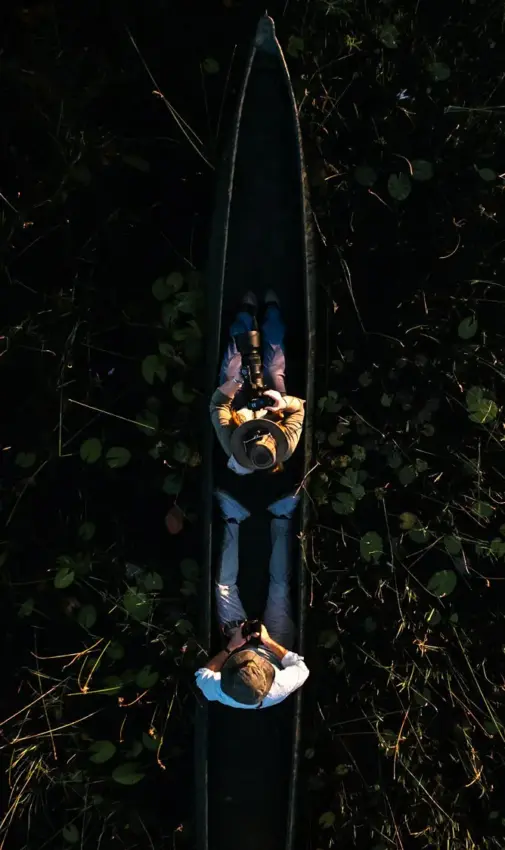
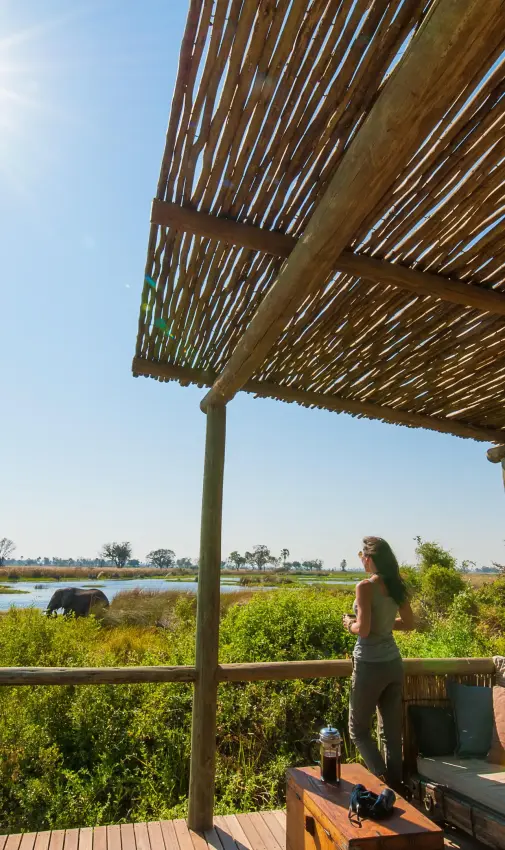
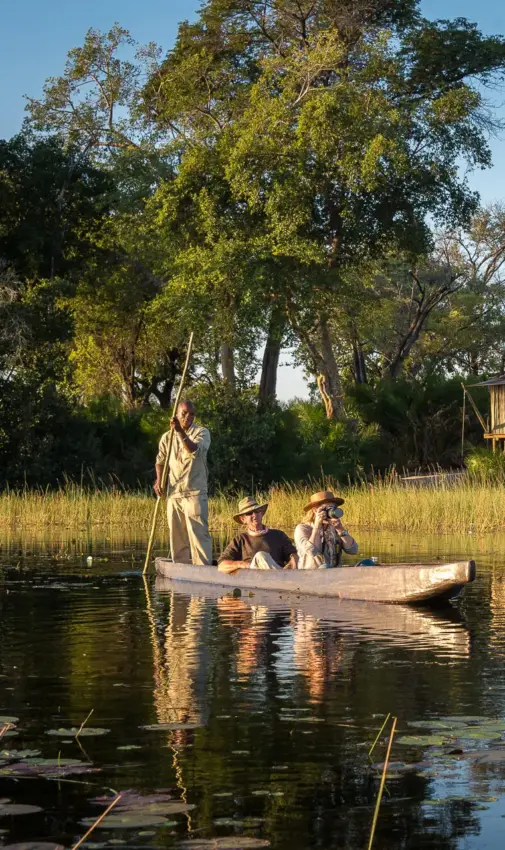
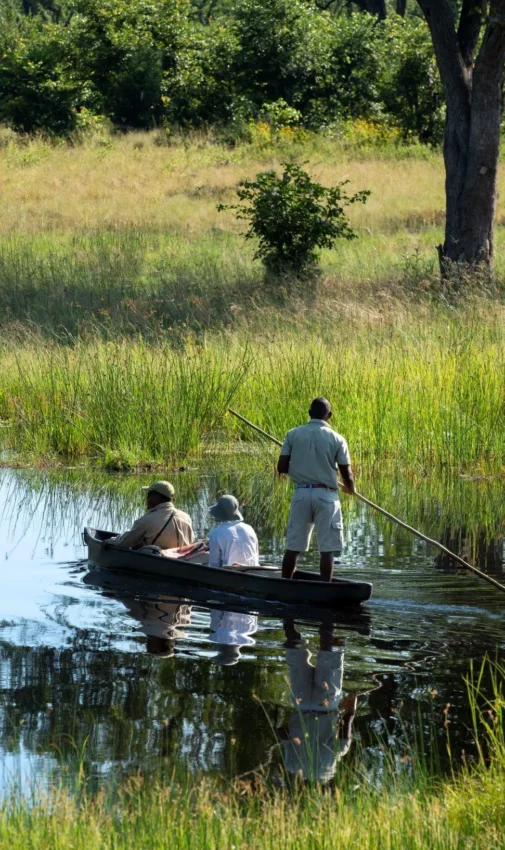
A guide on foot reads the night’s tracks, stopping at termite mounds where dwarf and banded mongooses live. The mokoro takes guests lower still. A poler works from the stern, and the dugout slides along the papyrus banks close enough to pick out bright frogs, dragonflies and kingfishers. Motorboats push out to the deeper water where hippos gather, and catch-and-release anglers work the channels for tigerfish and bream, and for catfish too. Every one of these water trips depends on the flood, so the balance between vehicle and boat shifts through the year.
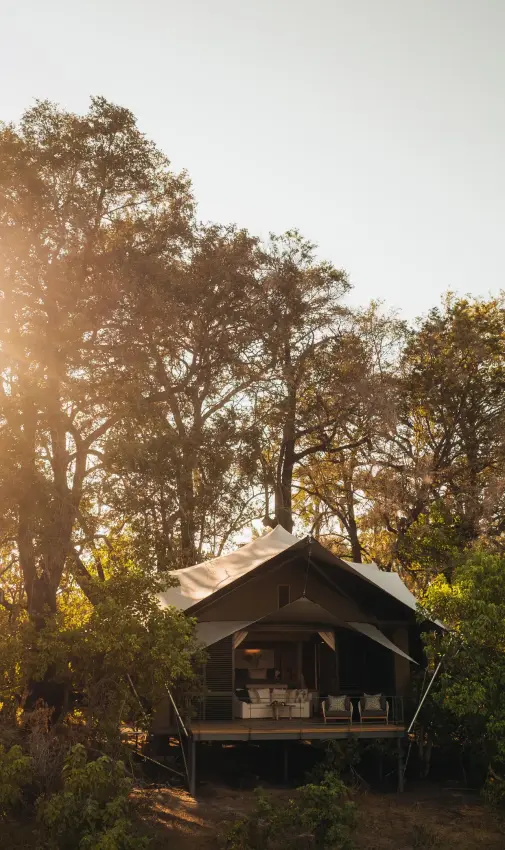
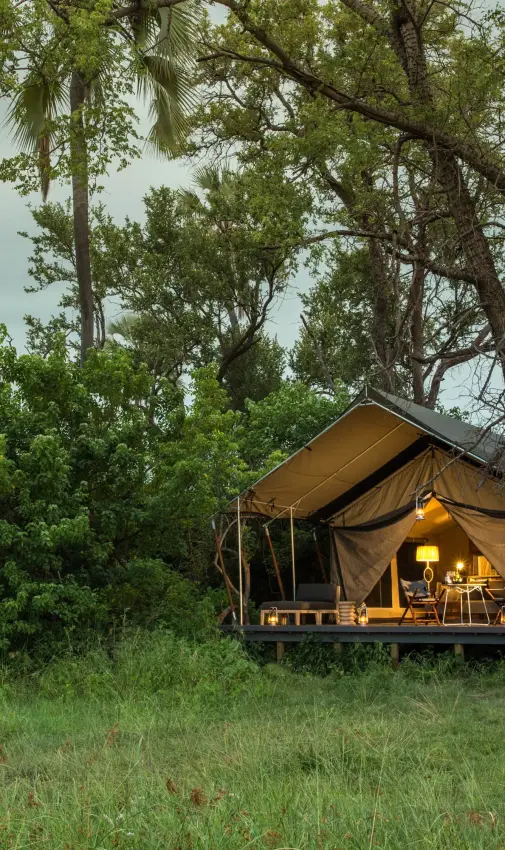
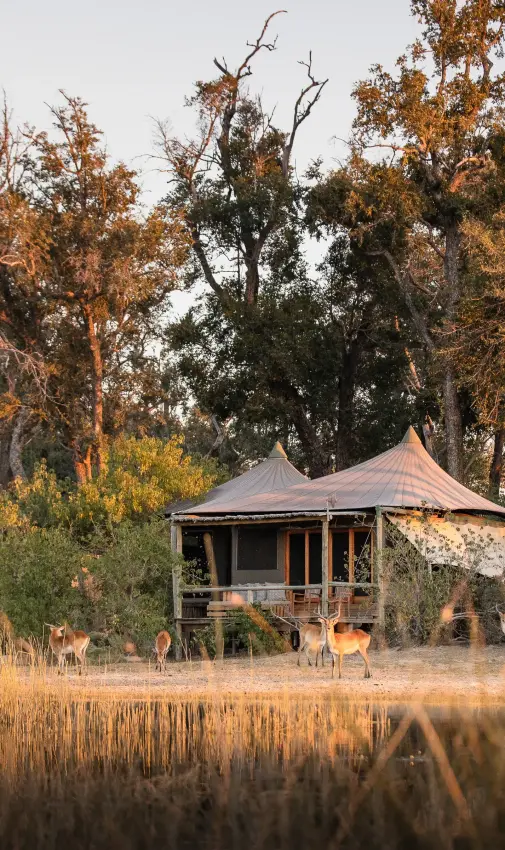
Families of every age stay at Nxabega, and the family tent is really two tents joined by an enclosed canvas walkway. Parents and children each have their own room, and nobody has to step outside to reach the other. A triple tent suits two adults and a child. Children get a programme of their own, with bug-finding missions and waterlily jewellery making, and childminders can be arranged. The pool’s shaded salas take care of the hottest hours. On drives, a private vehicle on request lets a family set its own pace, heading home when small attention spans run out.
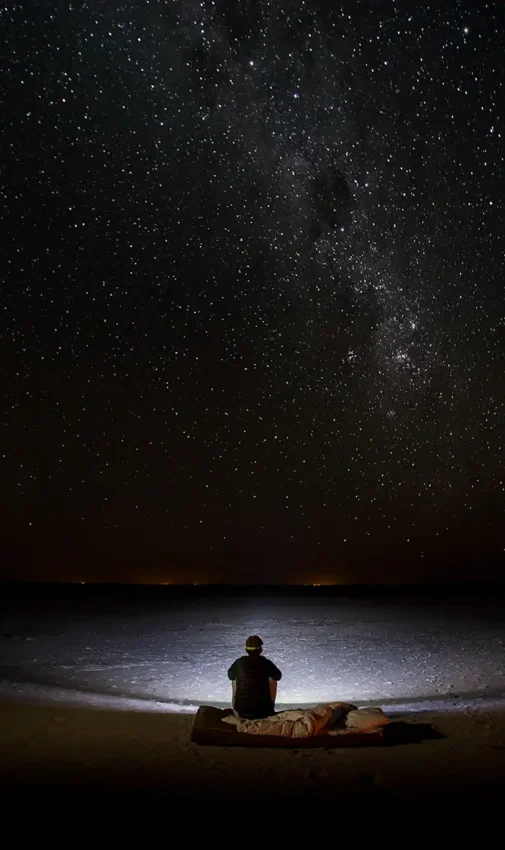
The rolled-down canvas does little to keep out whatever is calling from the floodplain.
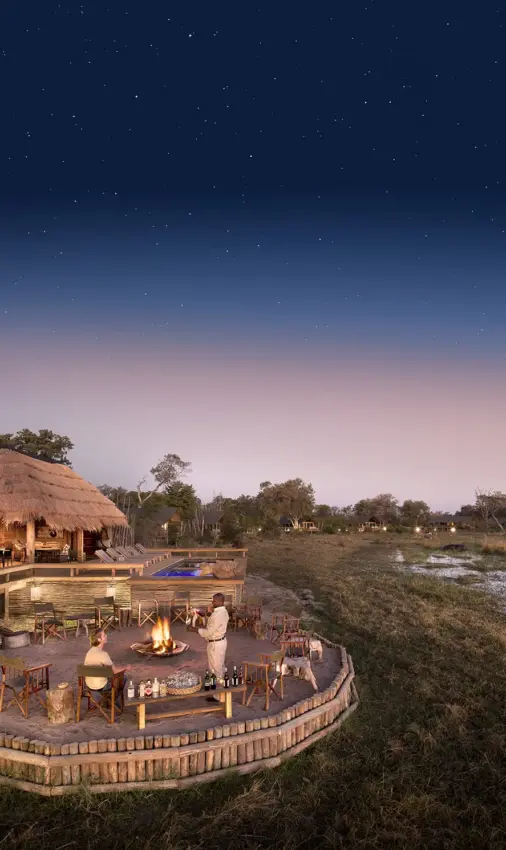
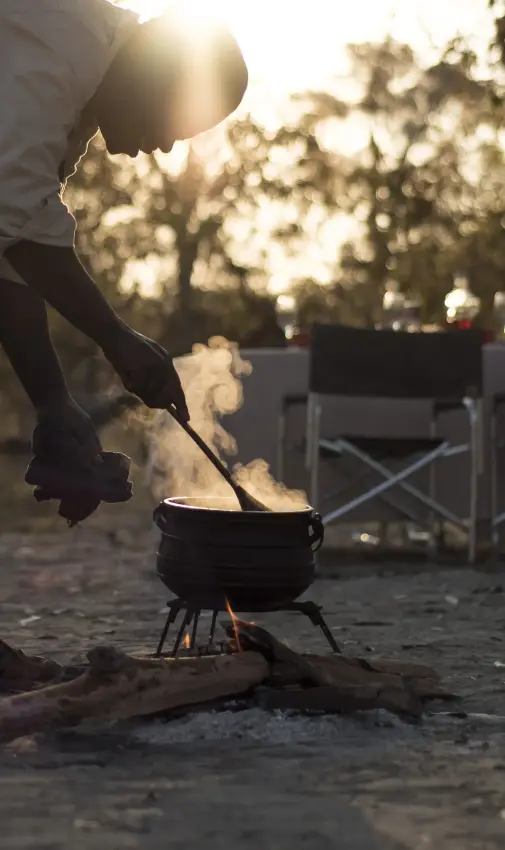
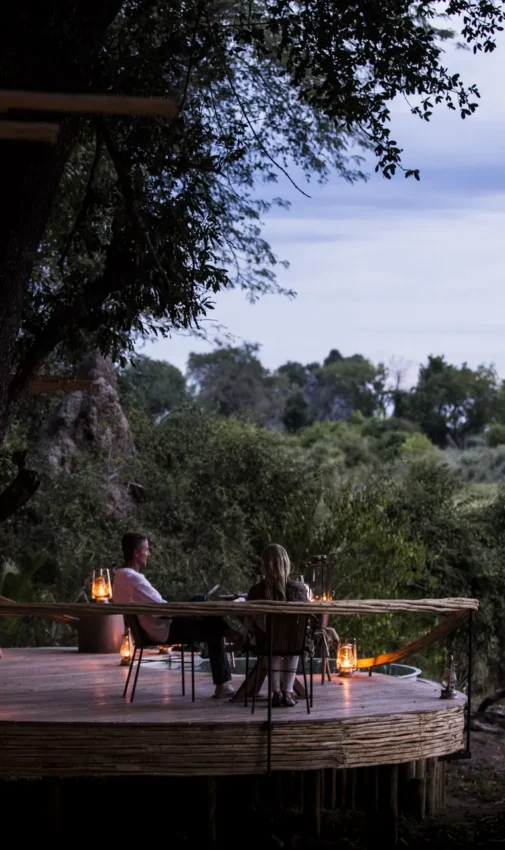
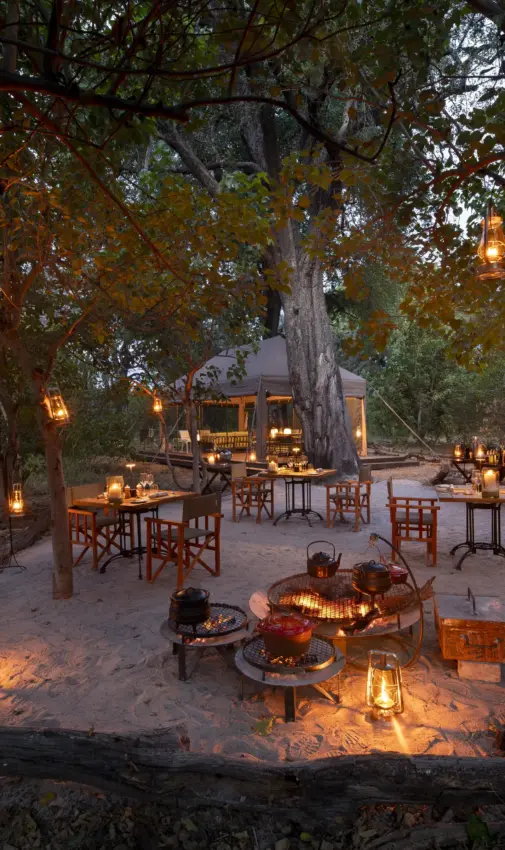
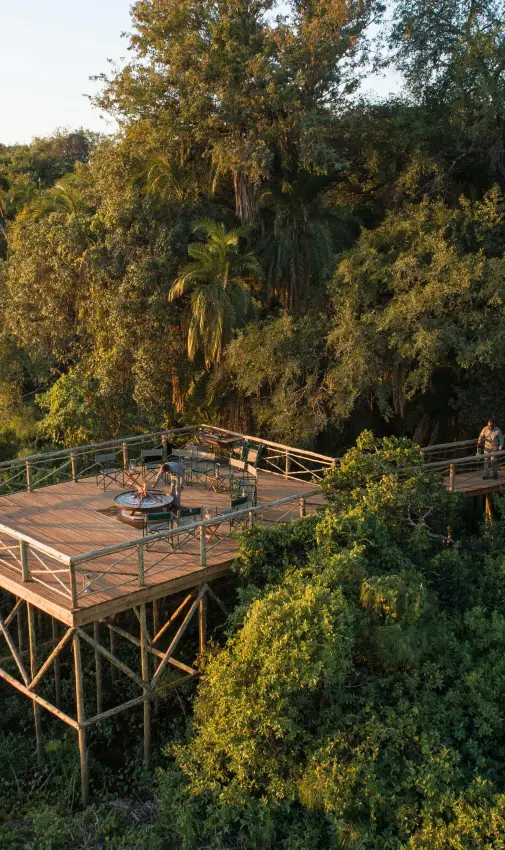
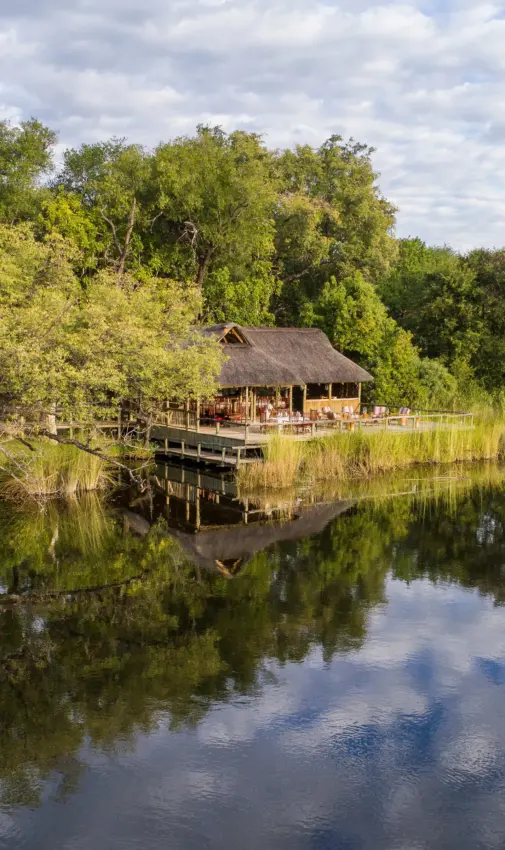
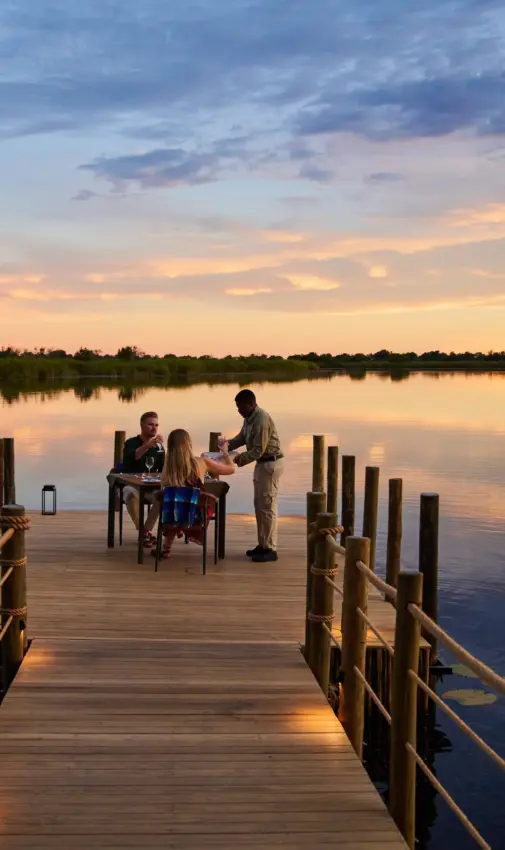
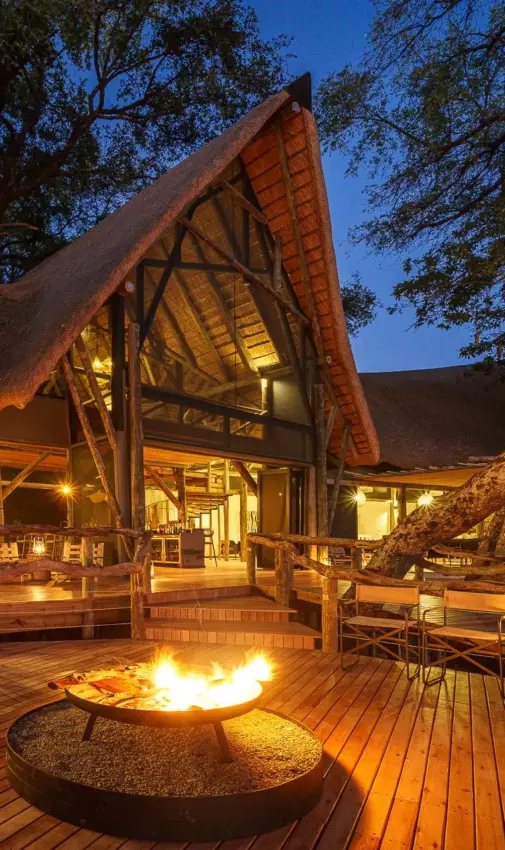
Dinner moves around the camp. Some nights a long candlelit table is shared by every guest; on others there are individual tables on the deck or beside the pool. In the open-air boma, traditional African dishes are served with meat from the grill. After dark, a member of staff walks each guest back to their suite. The rolled-down canvas does little to keep out whatever is calling from the floodplain. On other days, picnics and bush dinners take the kitchen out onto the concession, and private meals can be arranged.
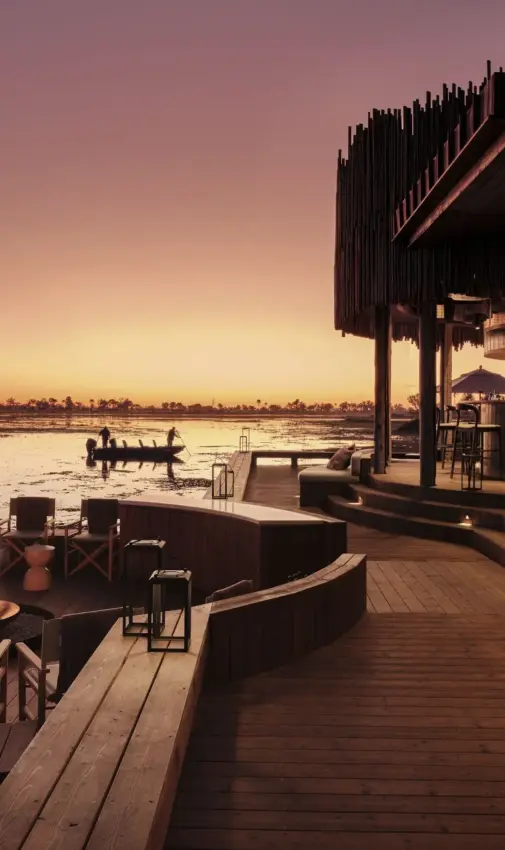
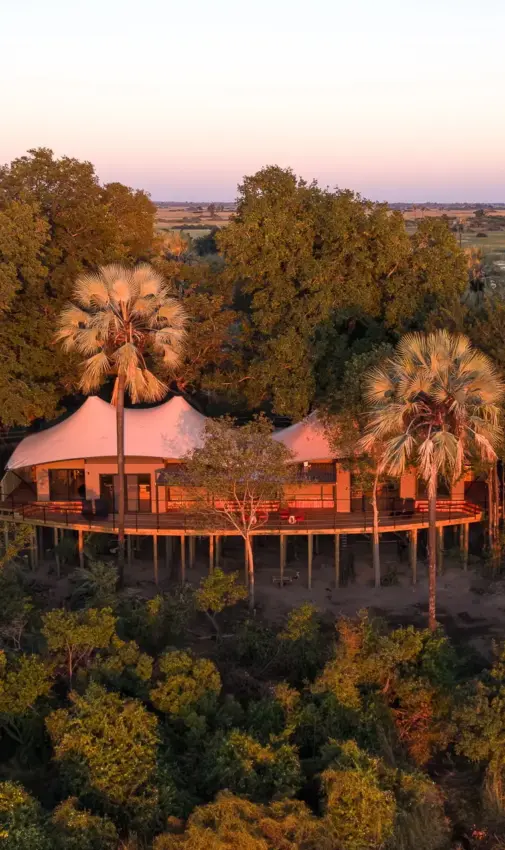
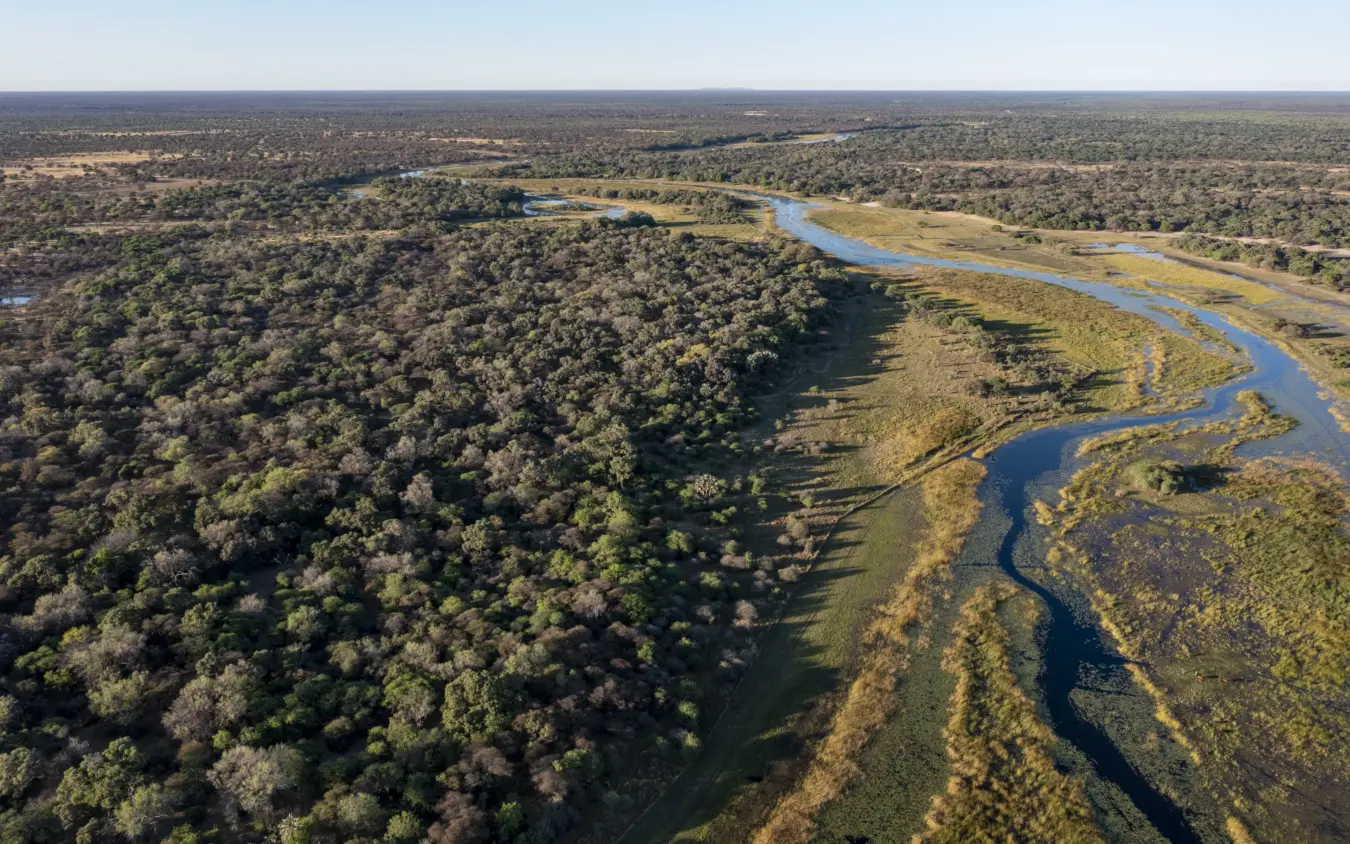
Light aircraft bring guests from Maun to the camp’s own airstrip, and a drive covers the remaining ground. In high water, the last stretch is made by boat. The camp stays open all year, so a visit can be timed to the flood. When the water is up, mokoro and motorboat take to the channels; when it drops, more hours go to the vehicle, out across woodland and floodplain. Scenic helicopter flights can be added, flown with the doors off so that photographers have an unobstructed line down onto the Okavango Delta’s channels and islands.