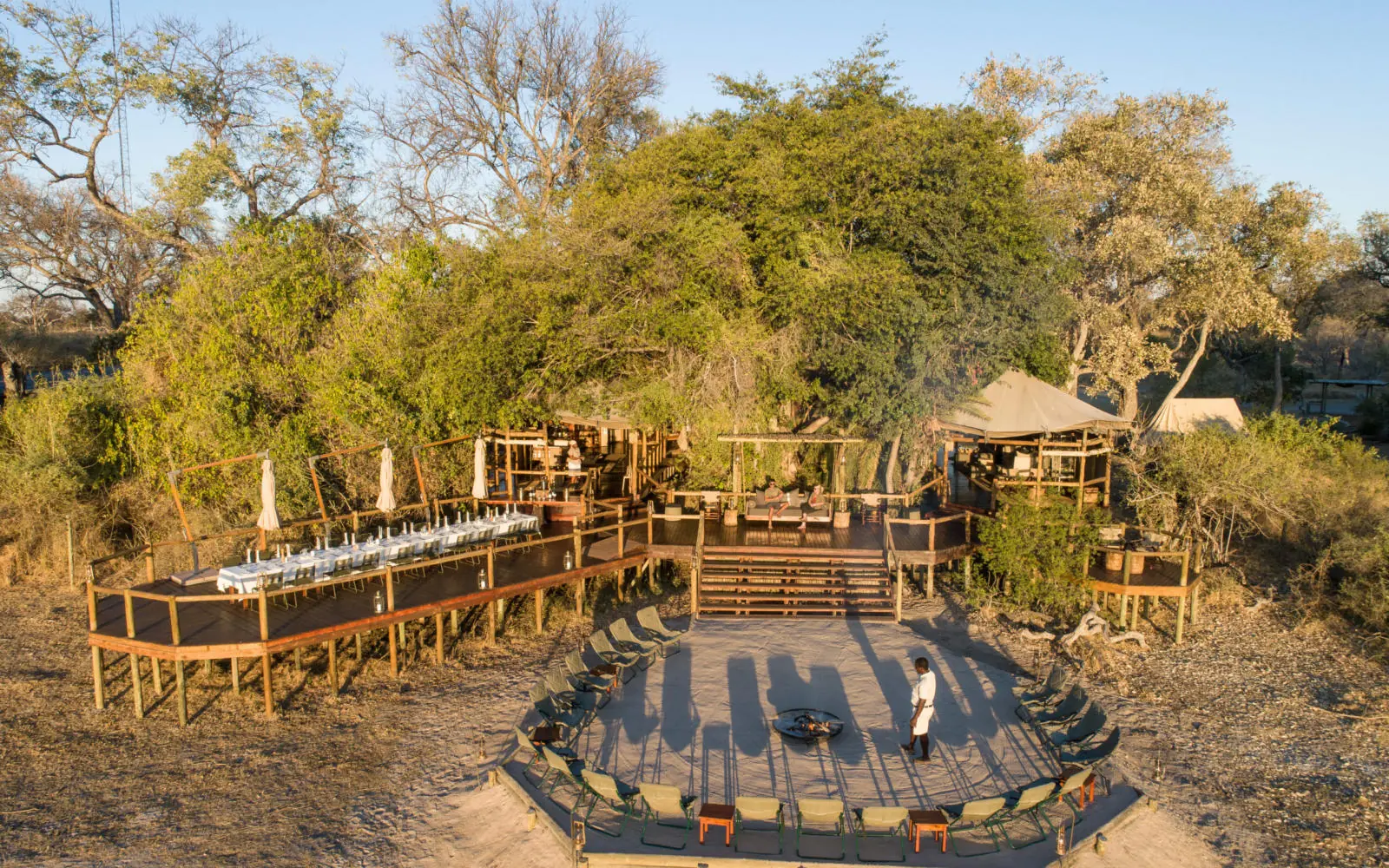
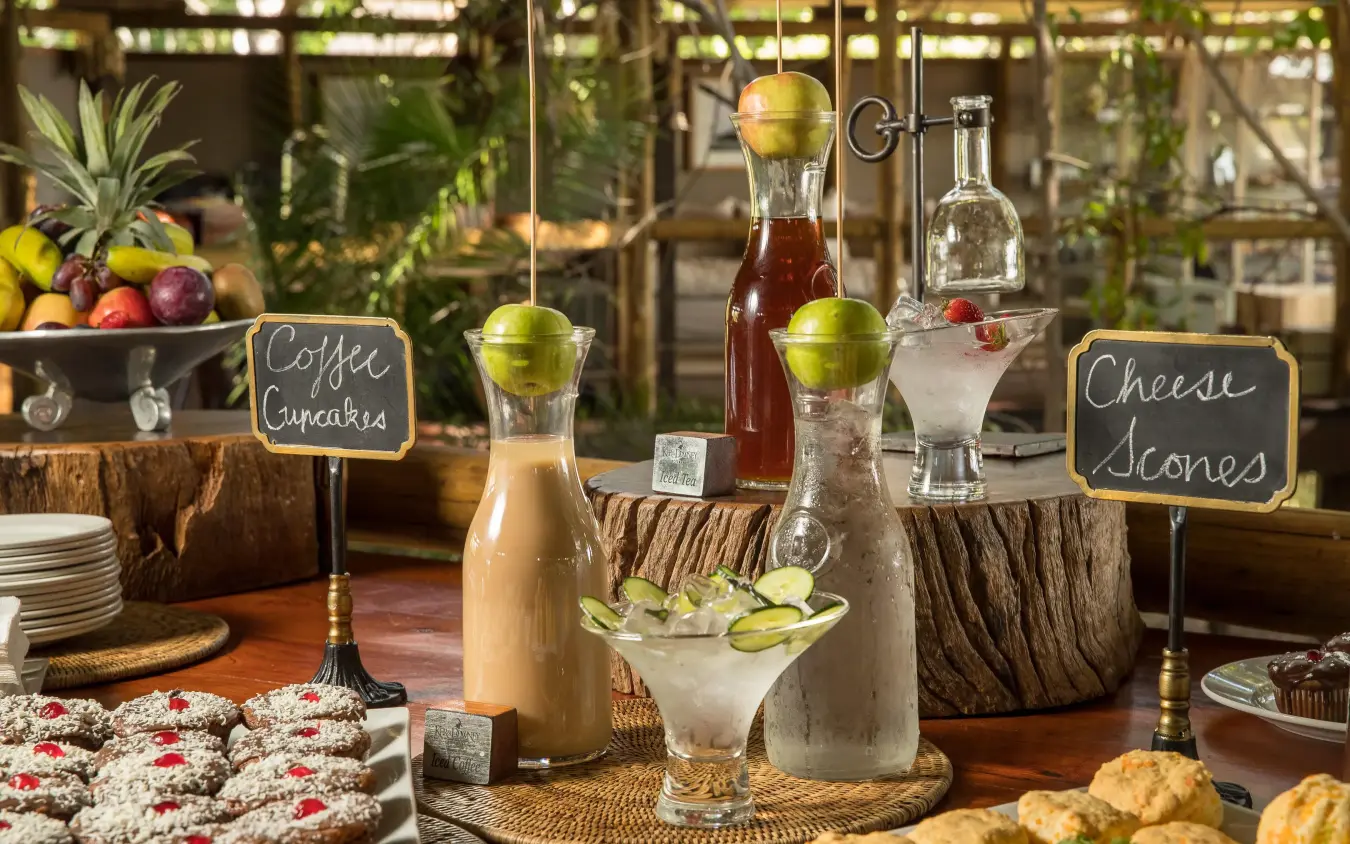
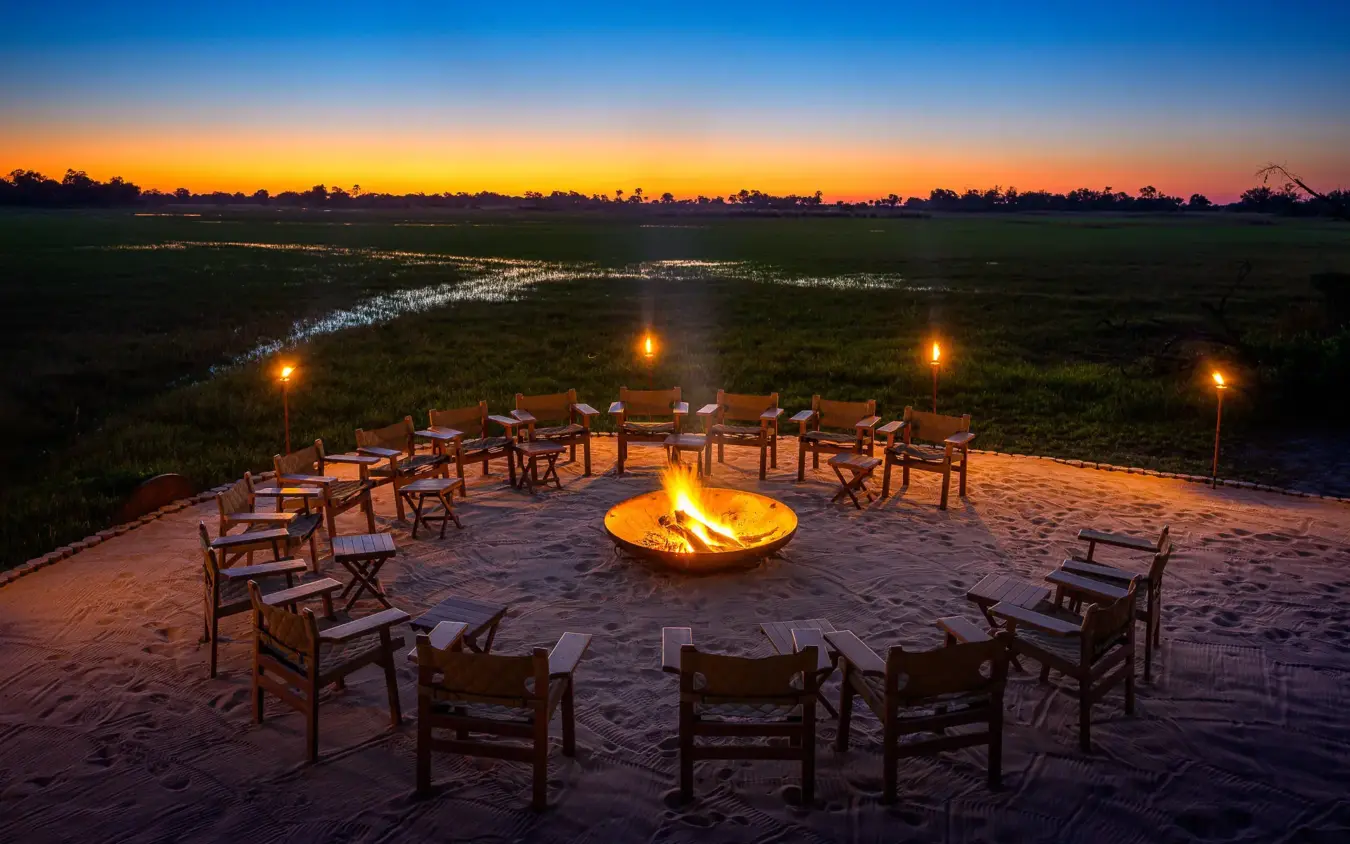
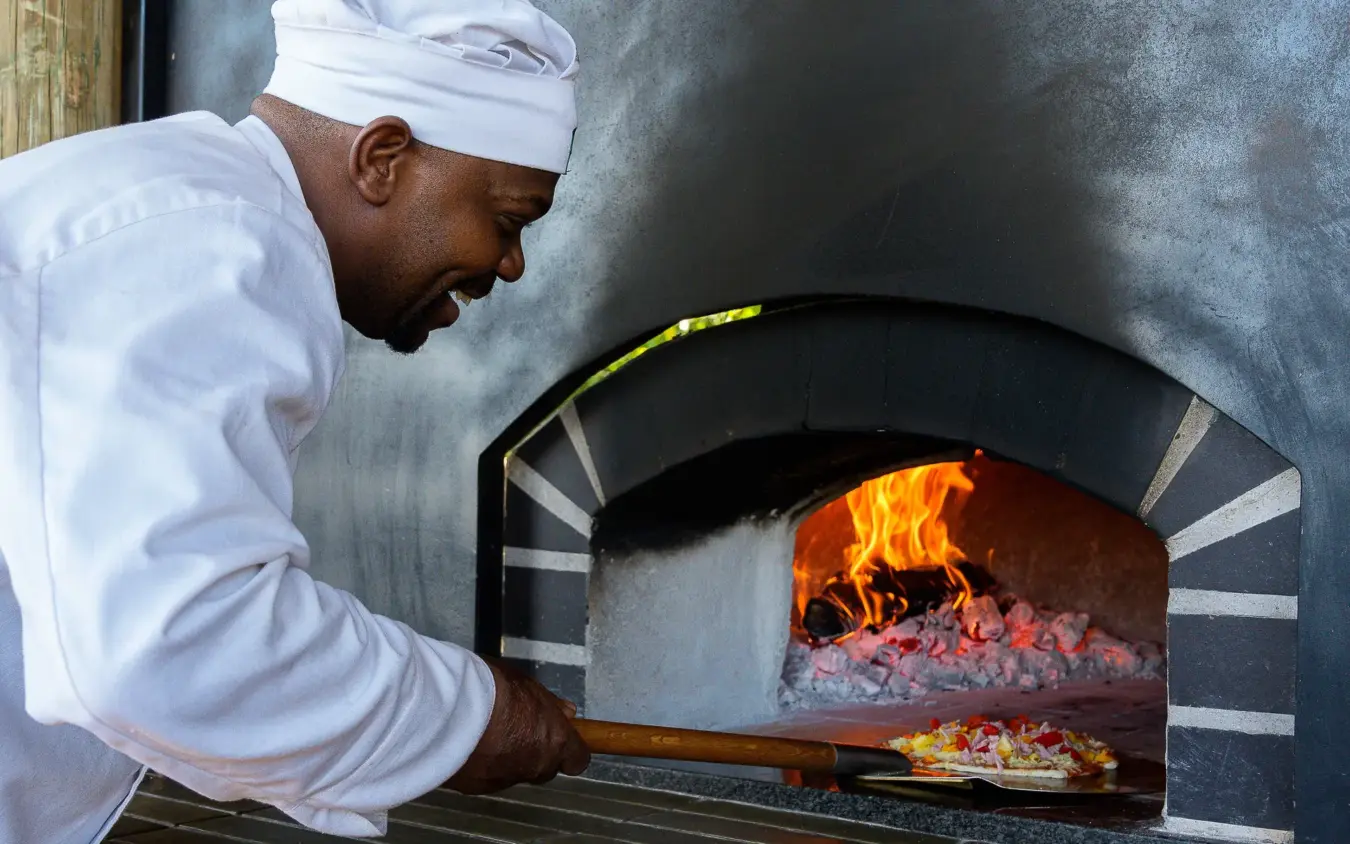
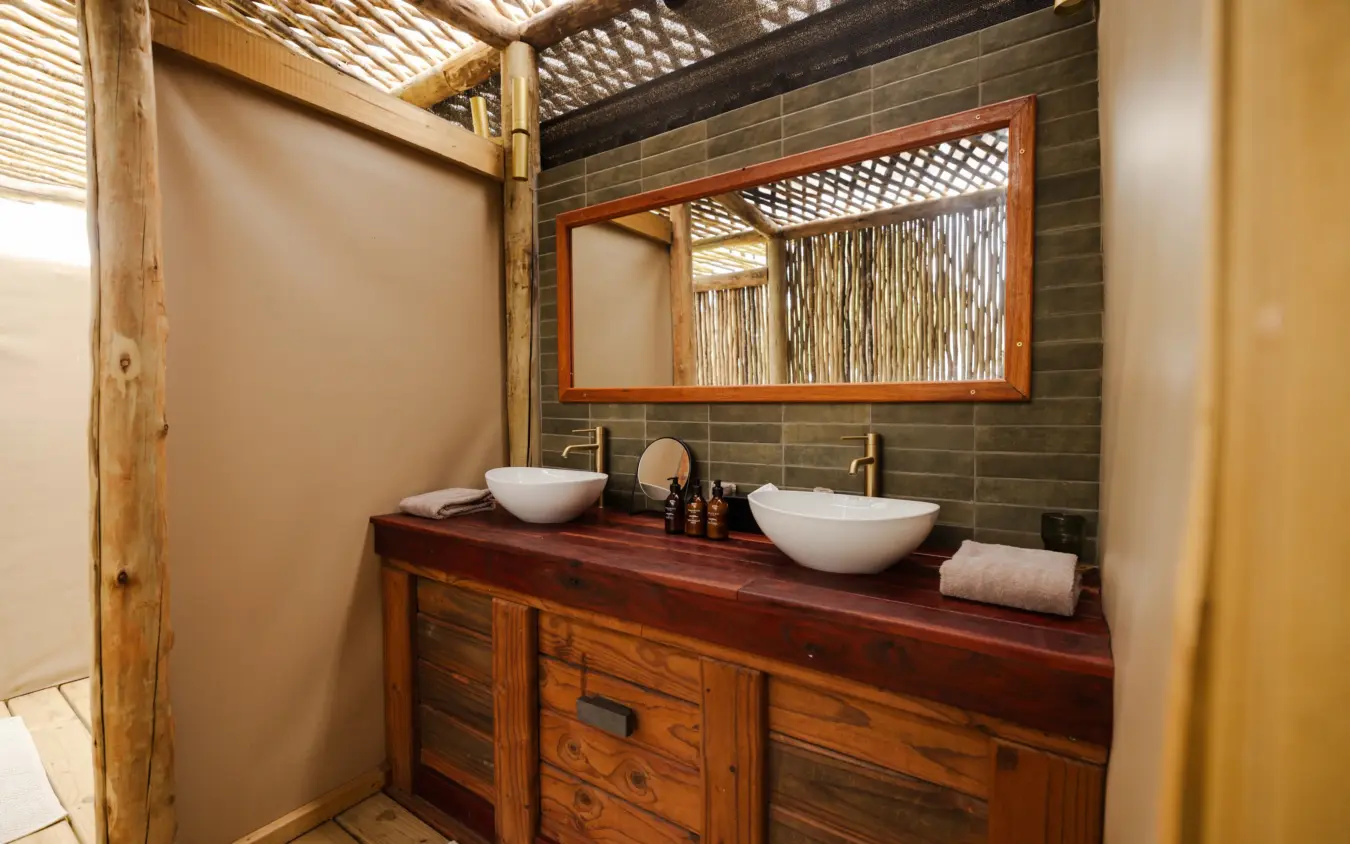
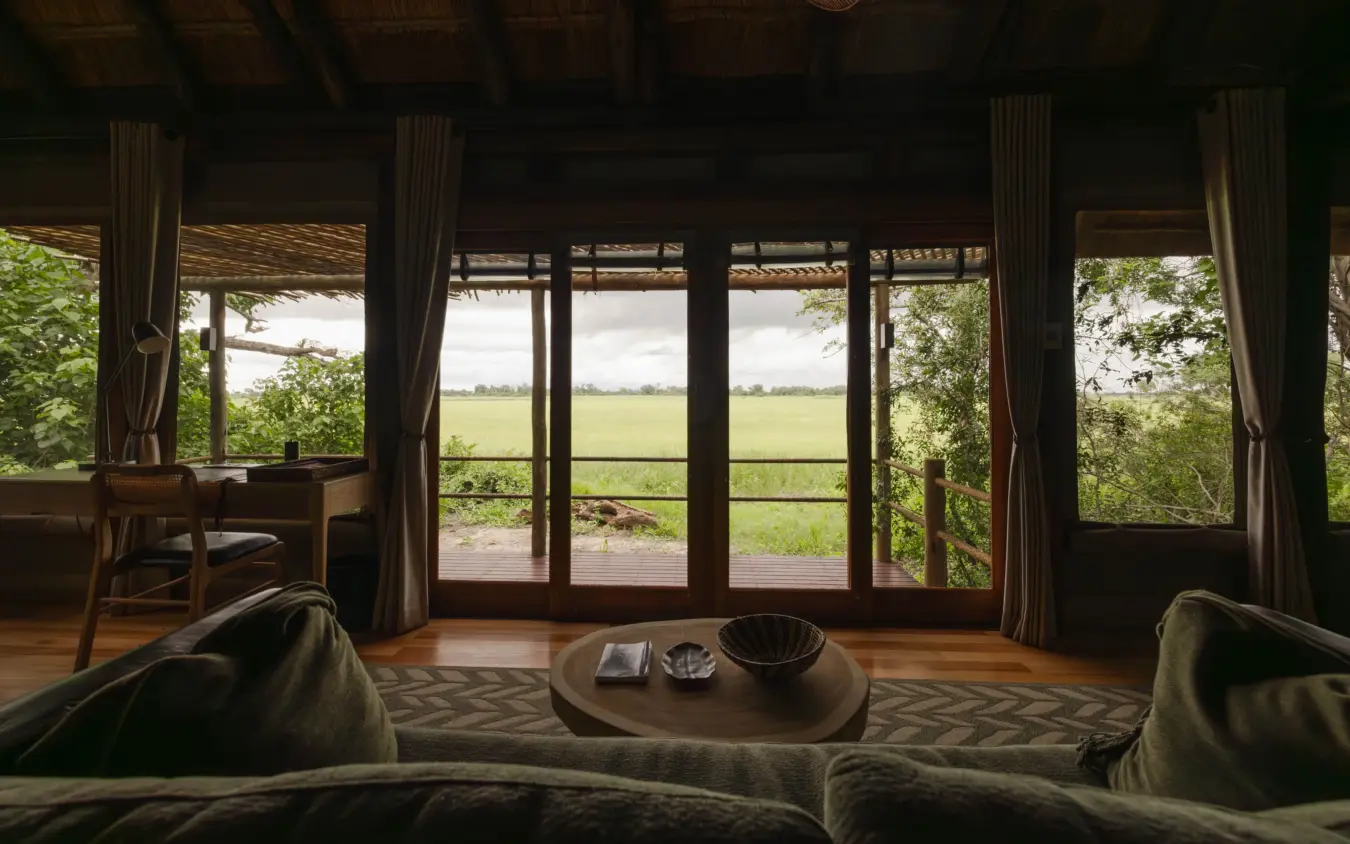
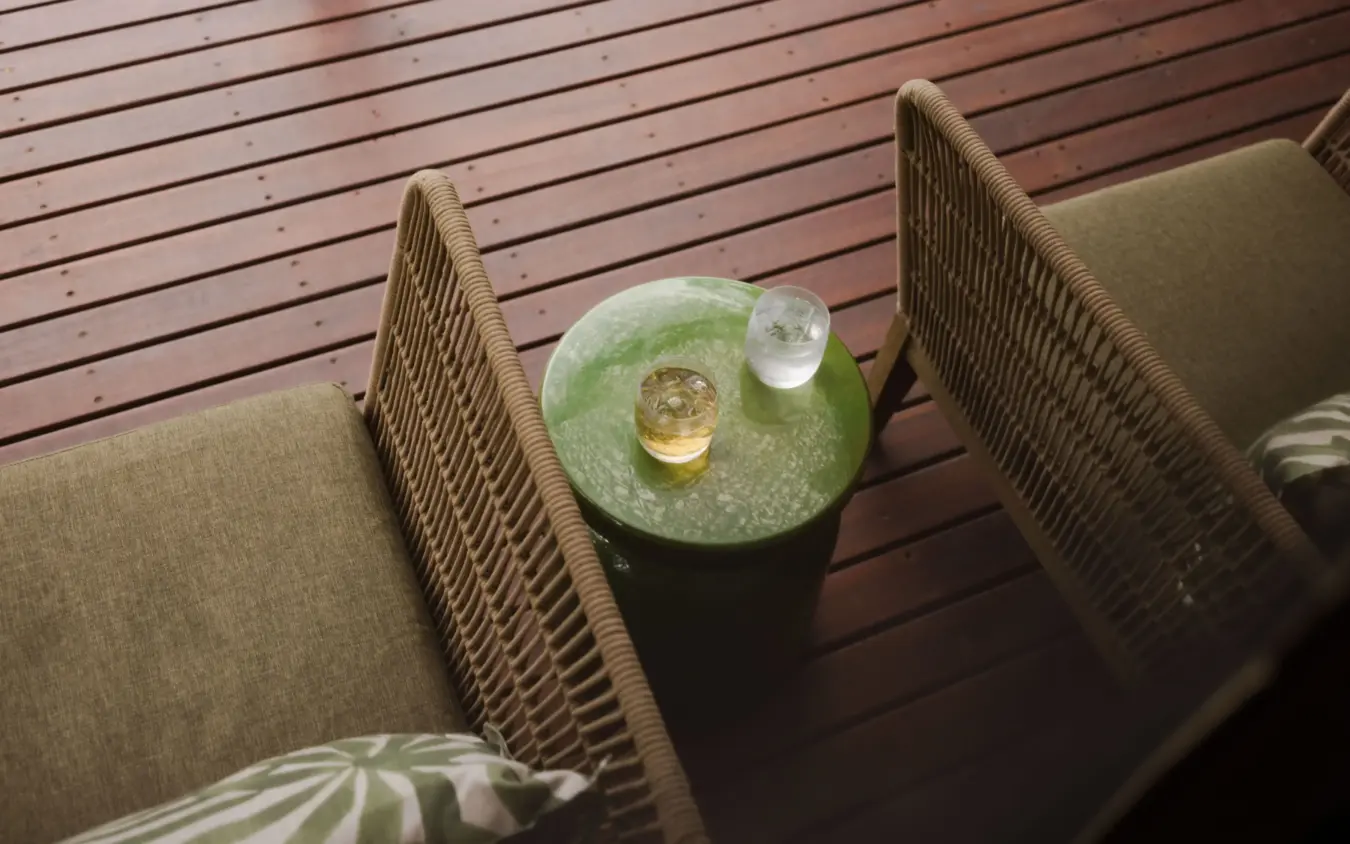
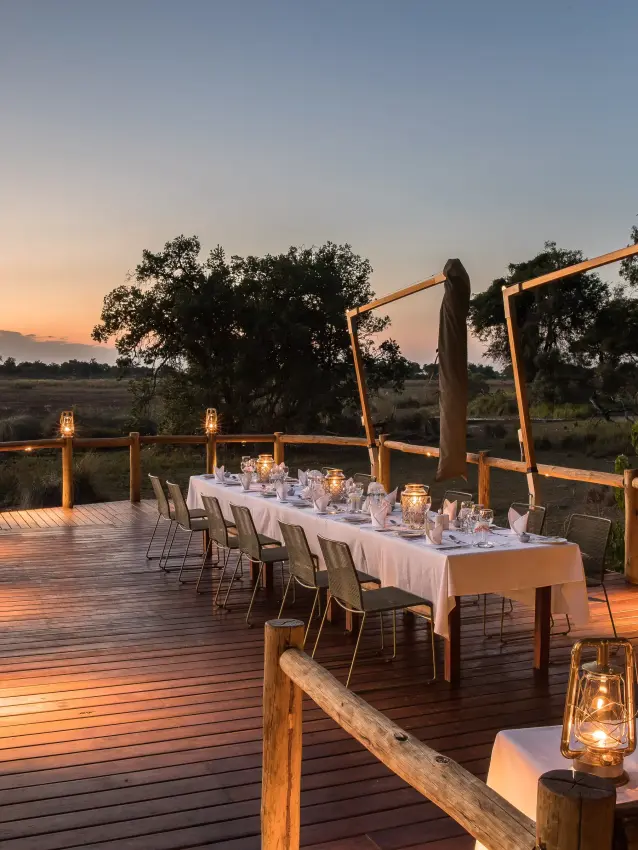
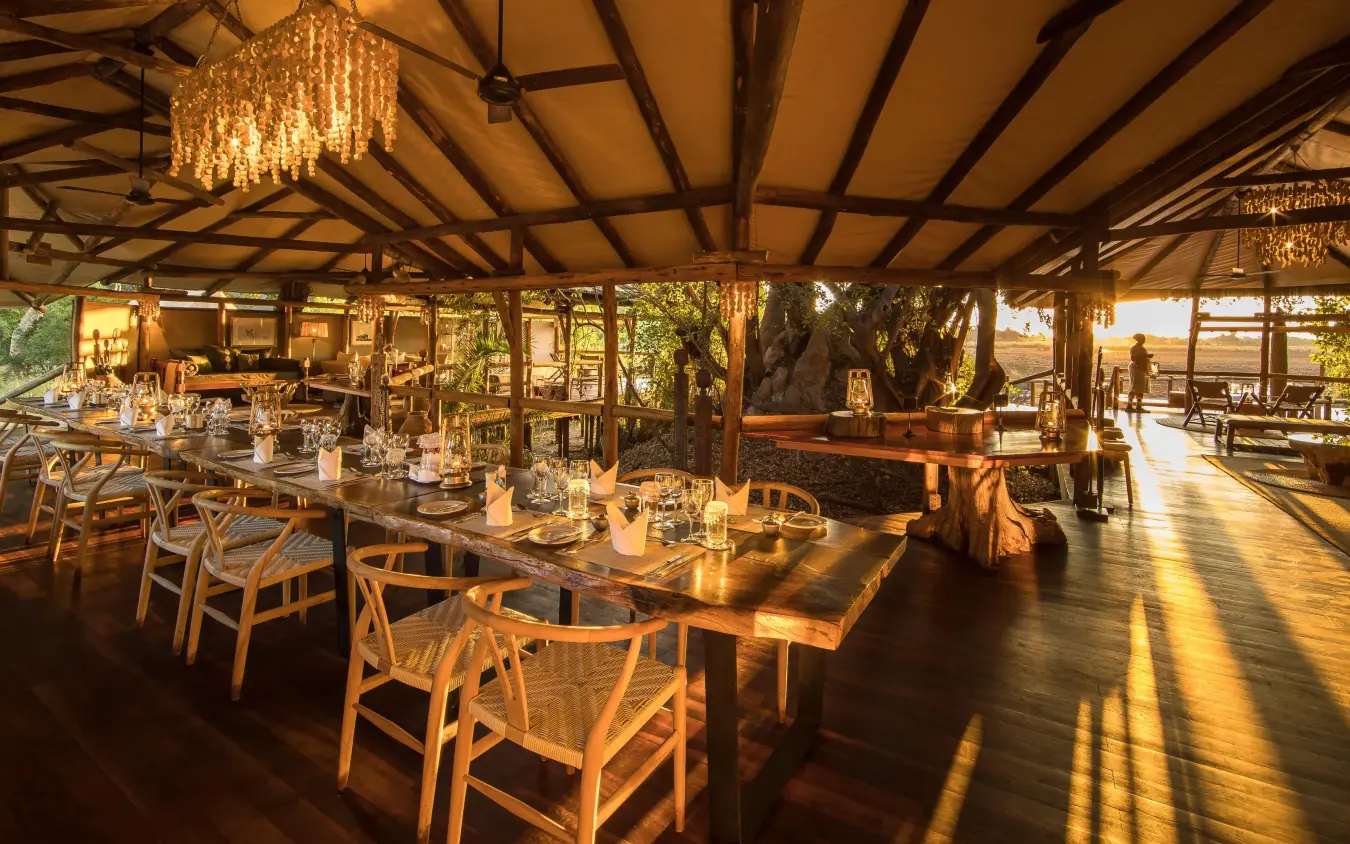
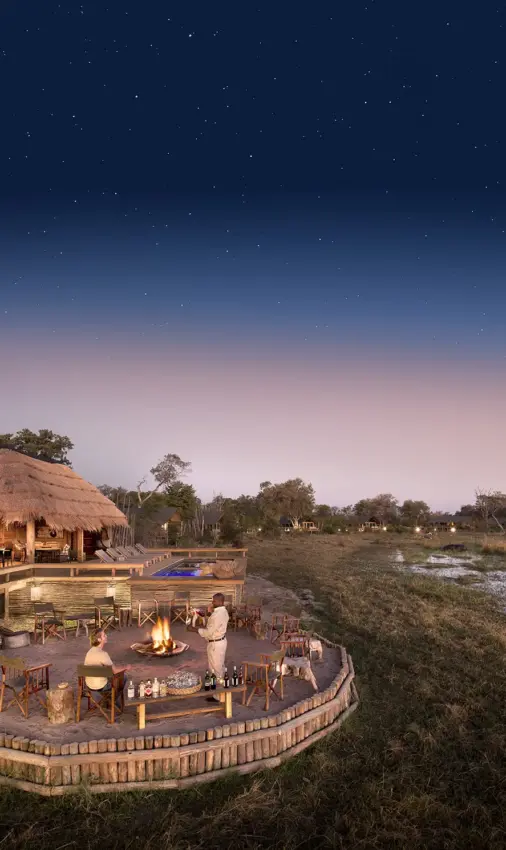
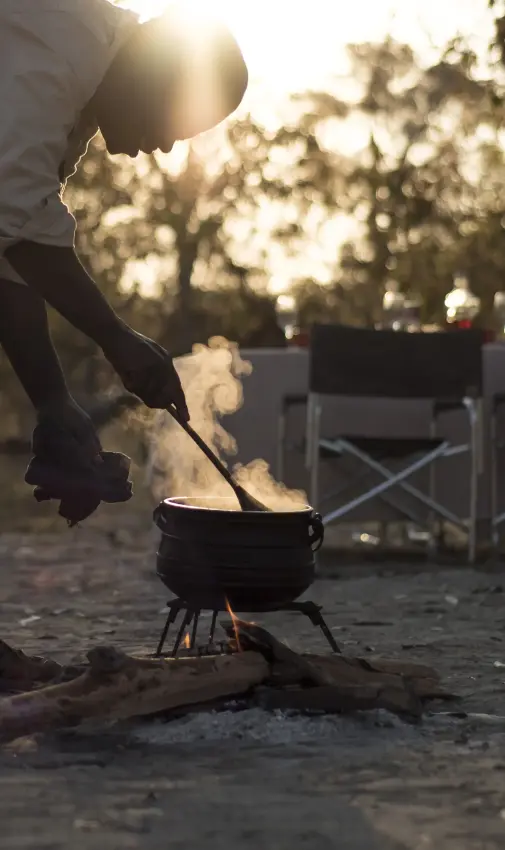
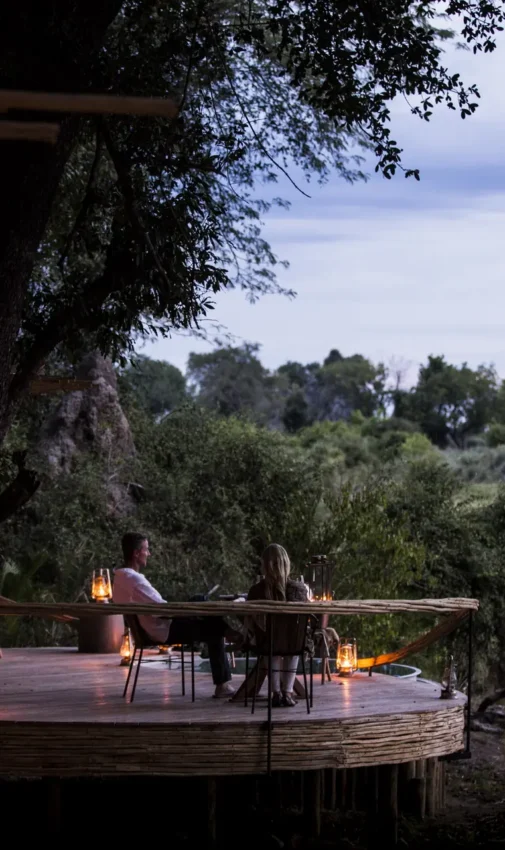
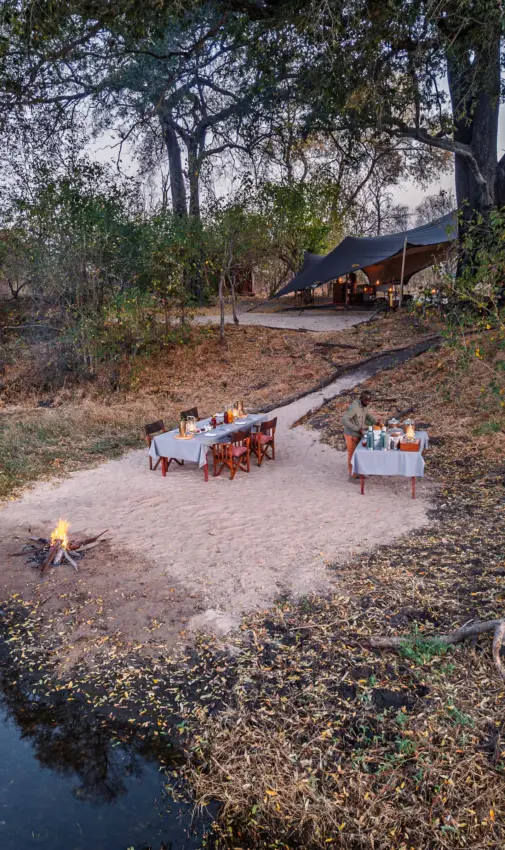
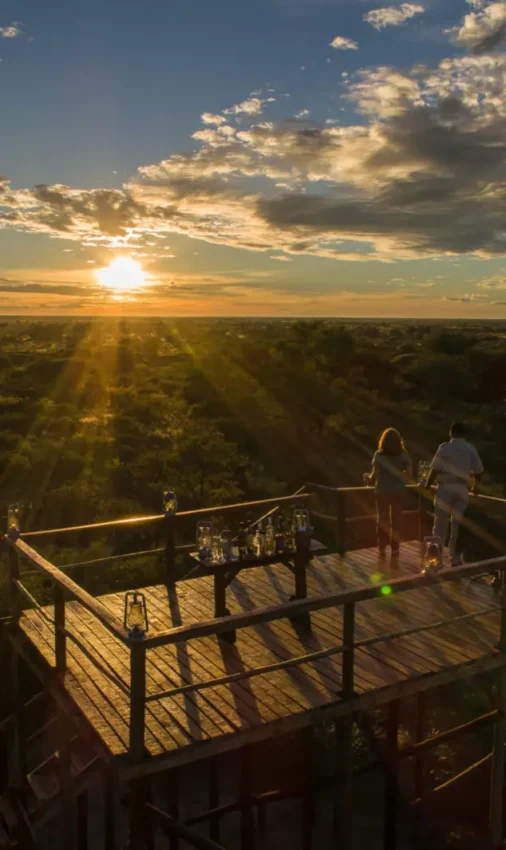
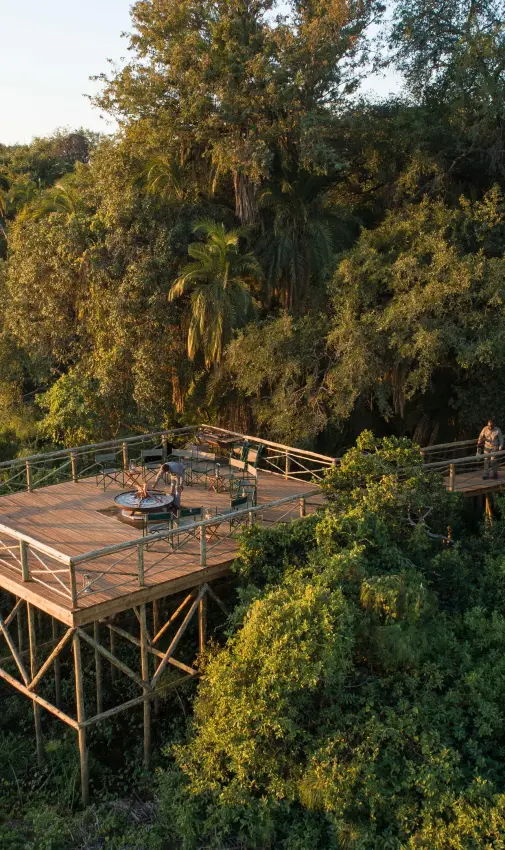
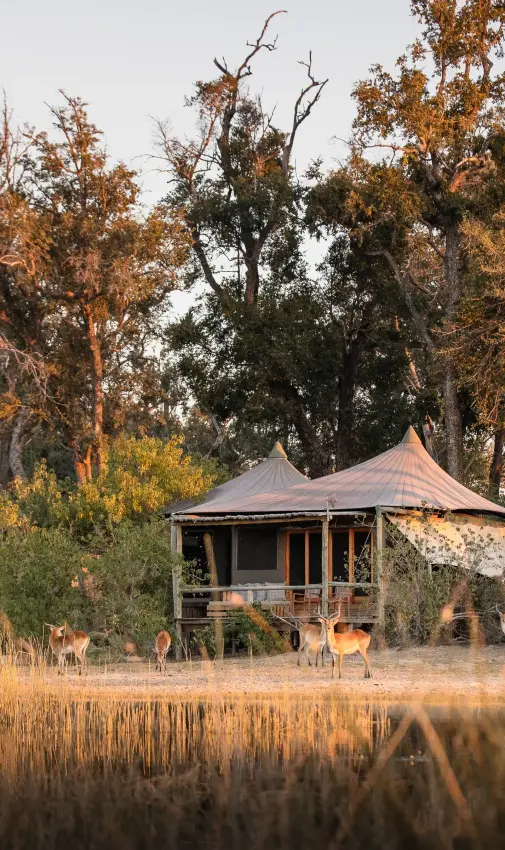
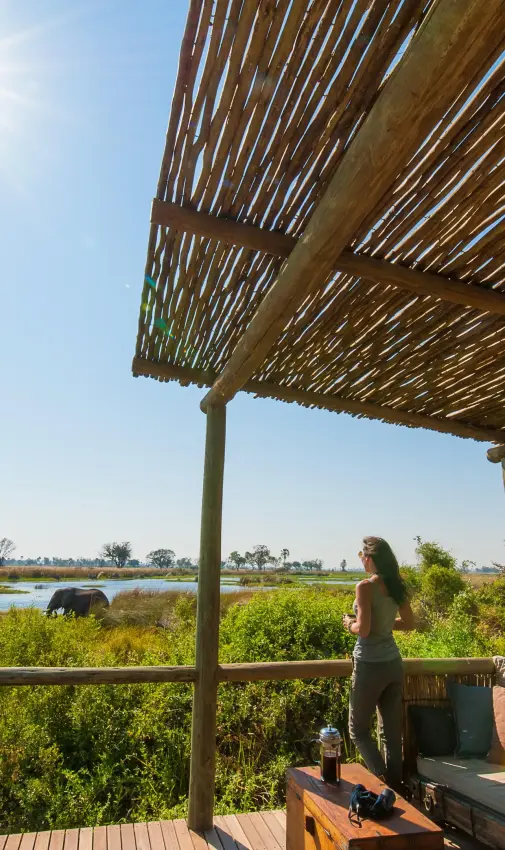
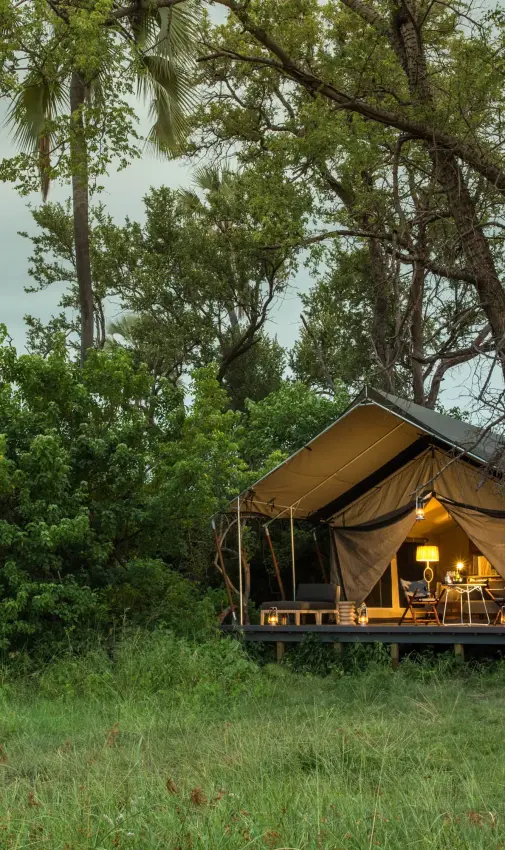
Rebuilt and refurnished in early 2025, Kanana holds five-star status from the Botswana Tourism Board and wears its country lightly, all natural materials, thatch and canvas and teak decking, in a palette of soft sage, pale yellow and dusty pink drawn from the land around it. The main lounge and dining area sit open-sided on raised decking that wraps around an ancient fig tree, lifting the communal space to canopy height above the floodplain. Meals move between a communal table, the firepit and the jetty, with freshly baked bread and vegetables coming from a live cooking station and a wood-fired oven, both added in the rebuild.
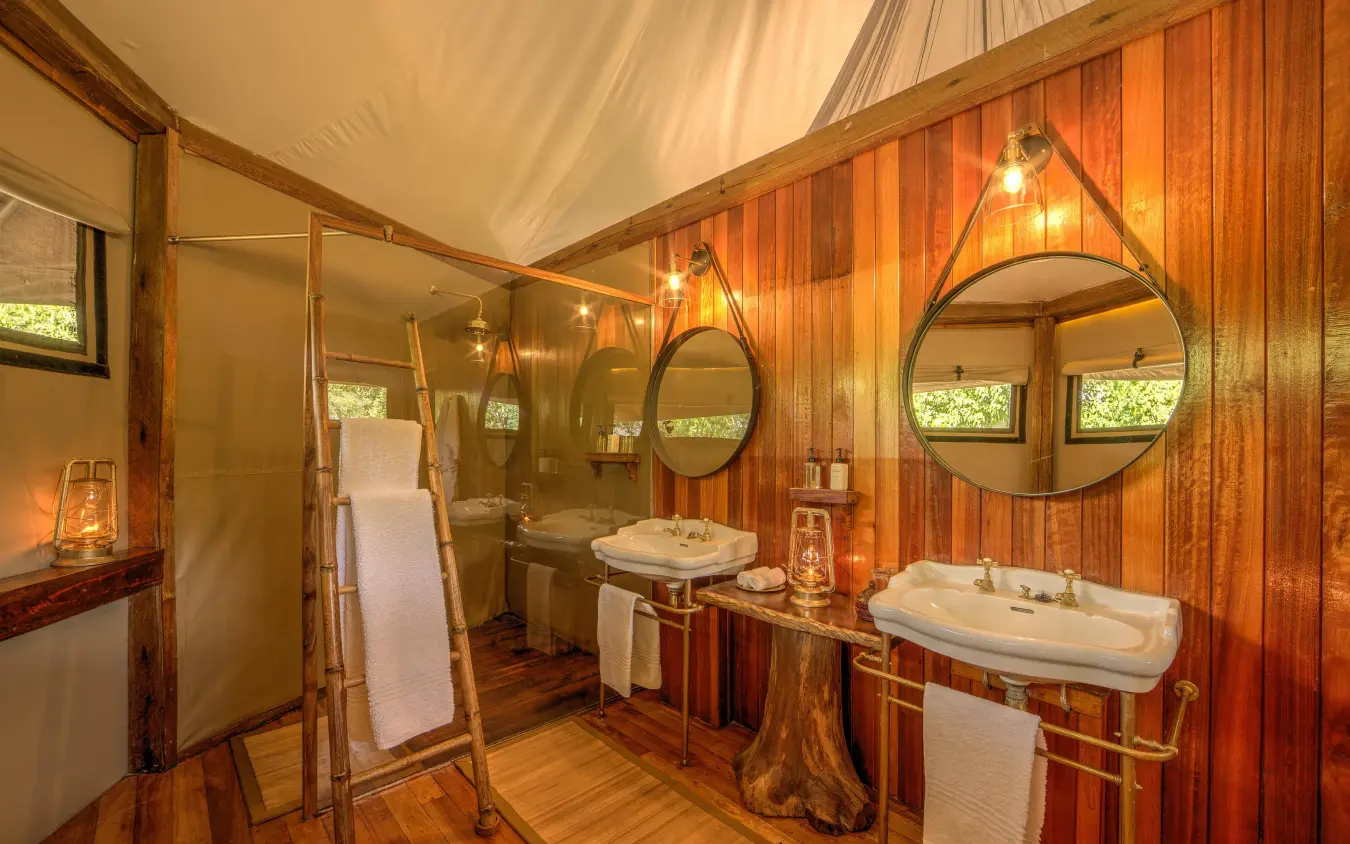
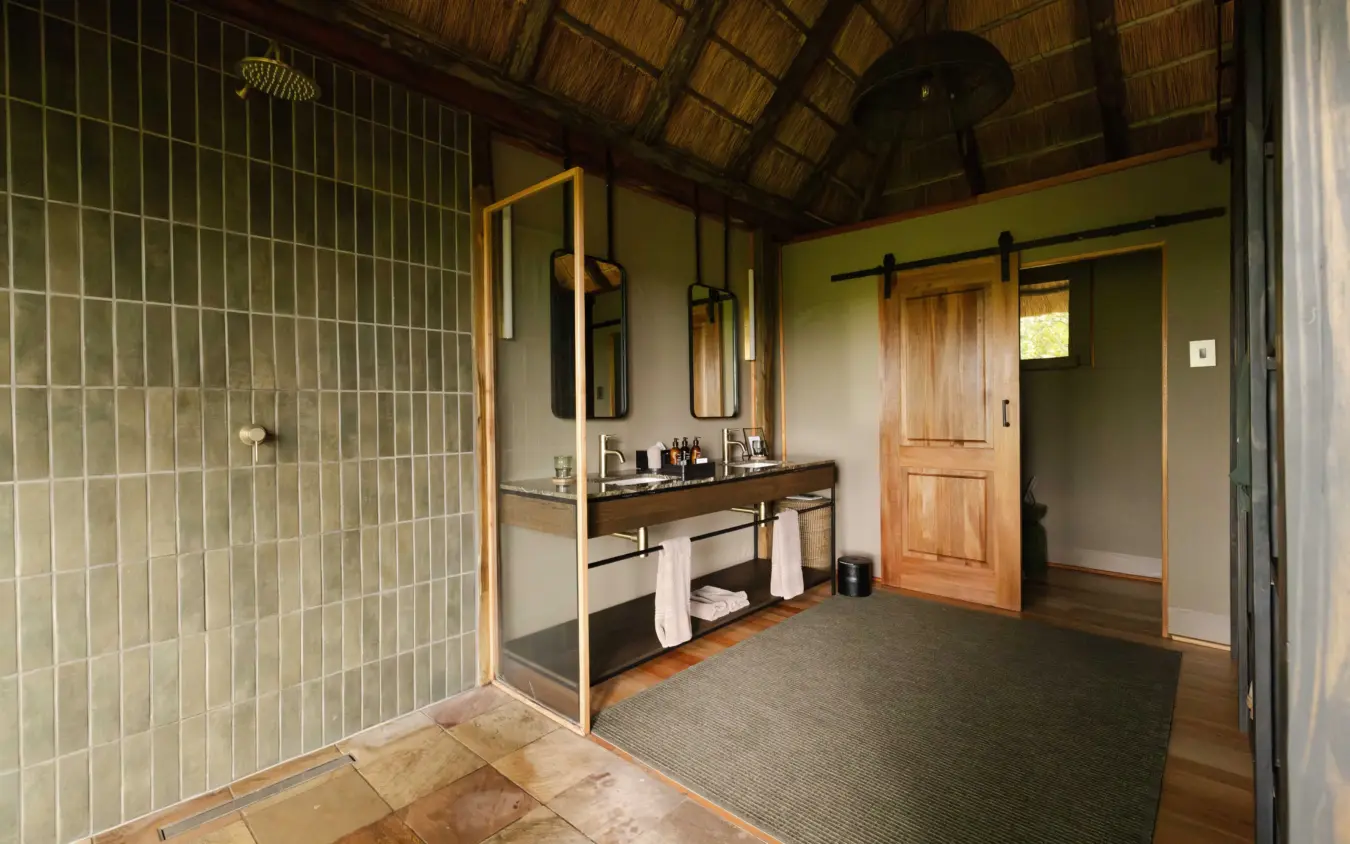
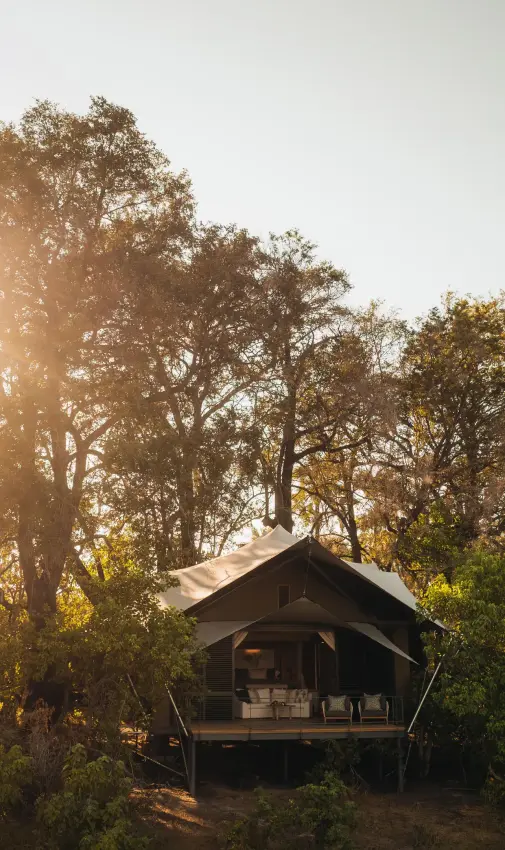
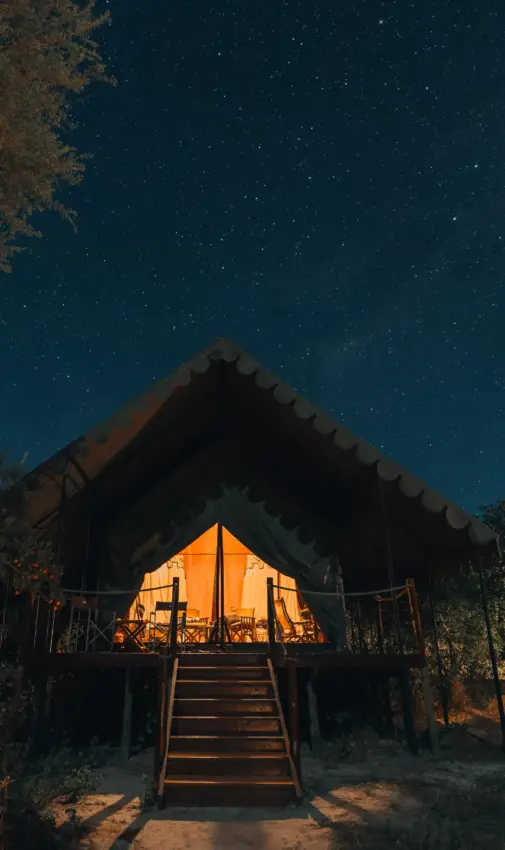
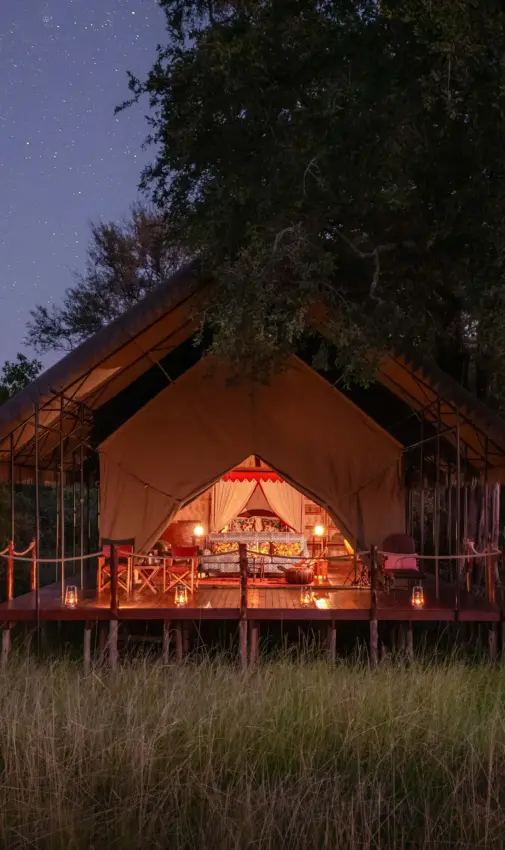
Seven Meru-style tents stand on raised teak platforms, their canvas walls opening onto the water and the channels beyond. The interiors run to rich neutrals, crisp whites and turquoise accents, closer to 1920s explorer style than to contemporary minimalism, and each tent has a one-way glass shower that gives unobstructed Delta views without being seen from outside. A two-bedroom family tent with its own outdoor shower extends the camp to families, and children from seven years old are welcome.
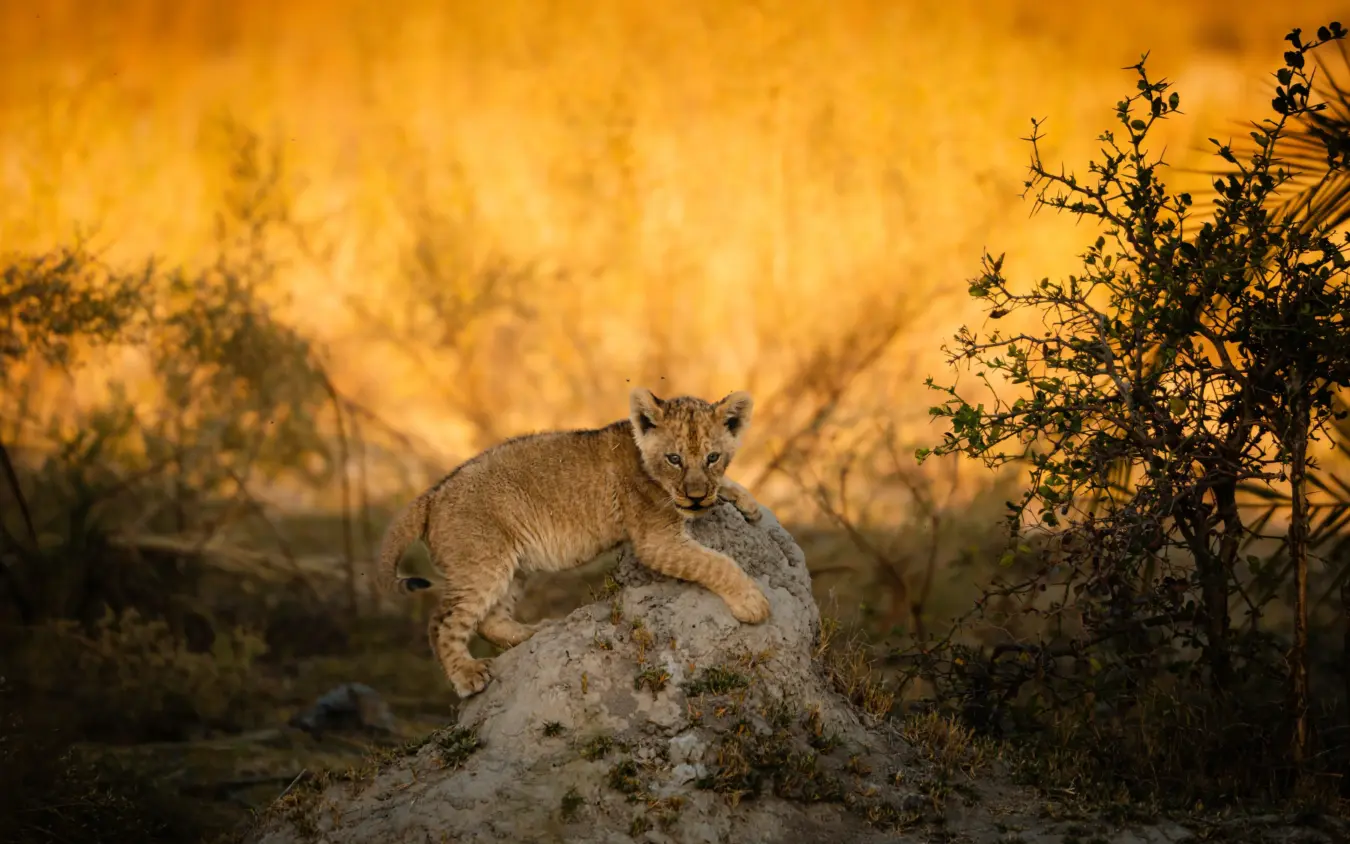
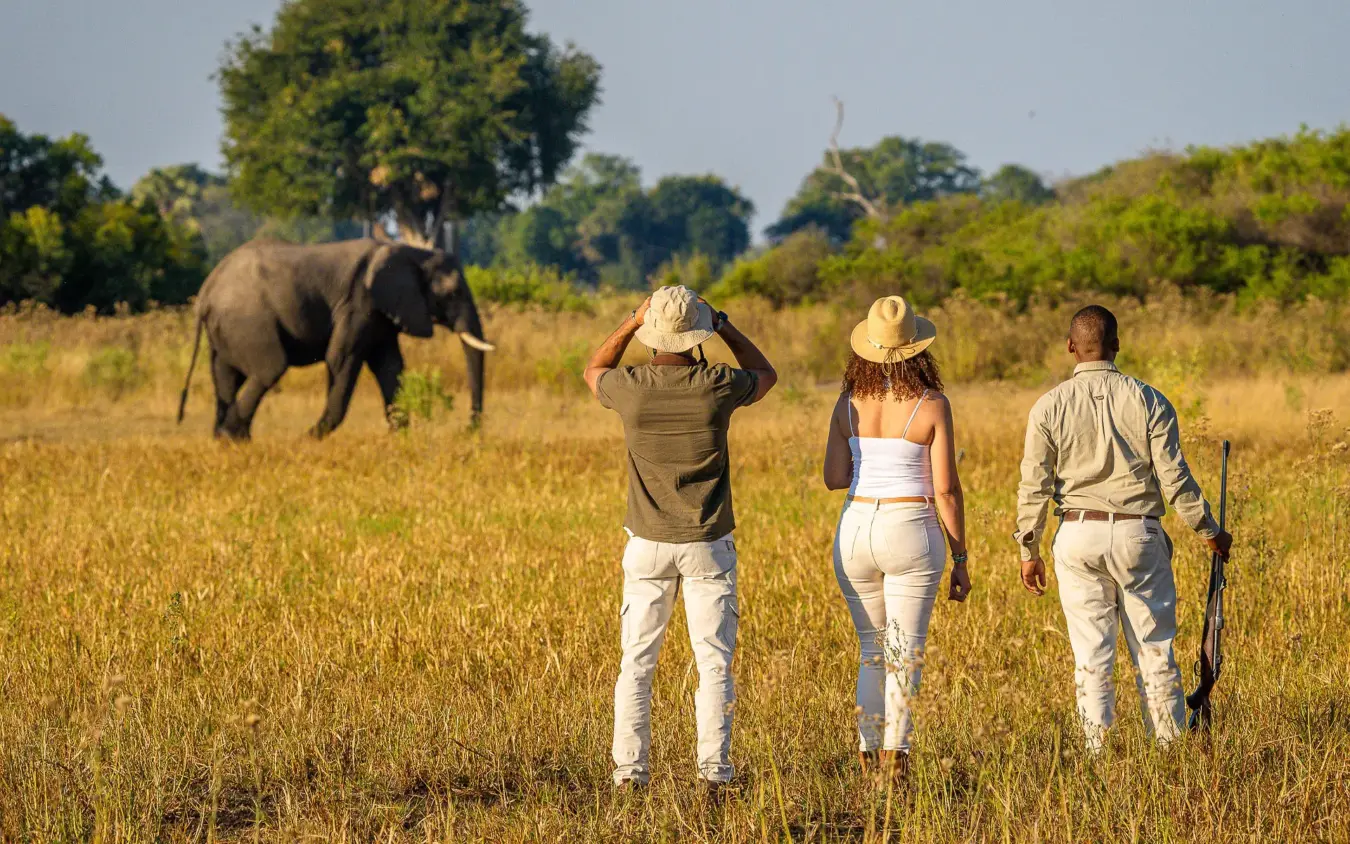
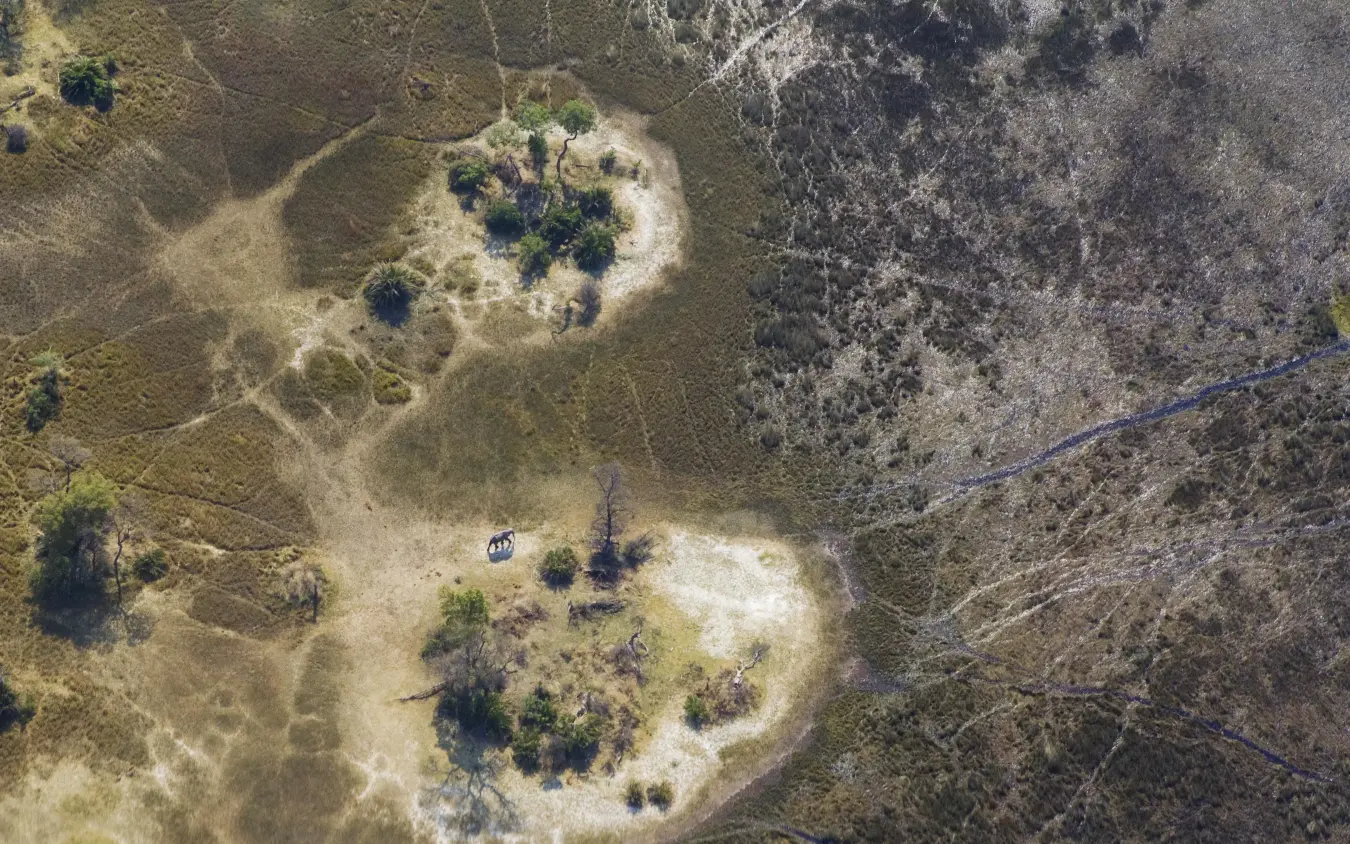
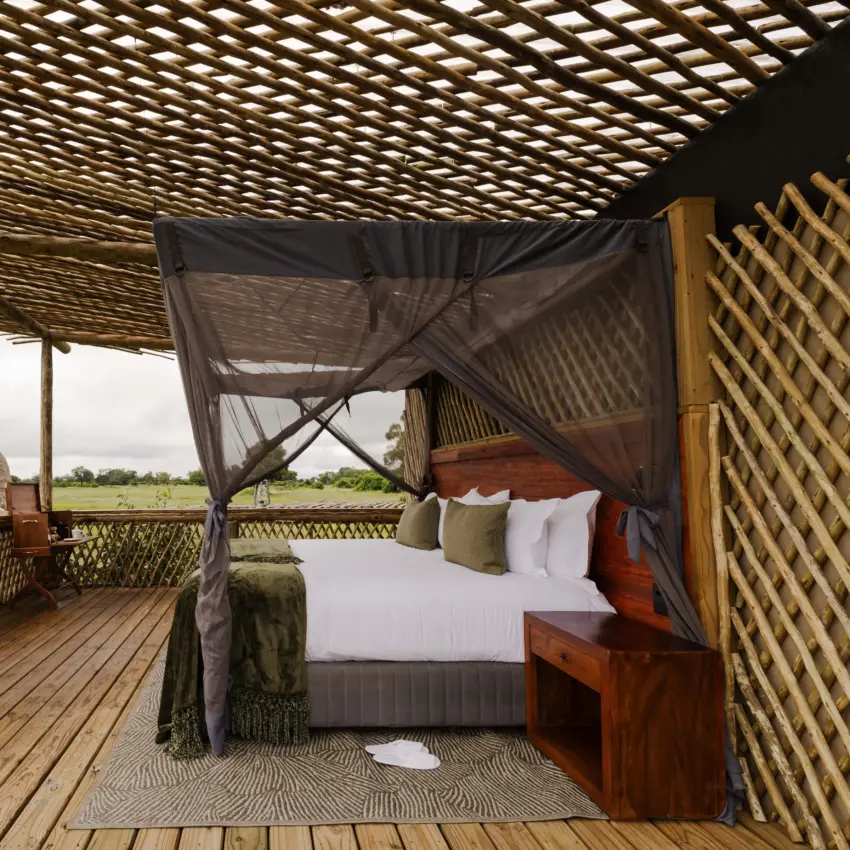
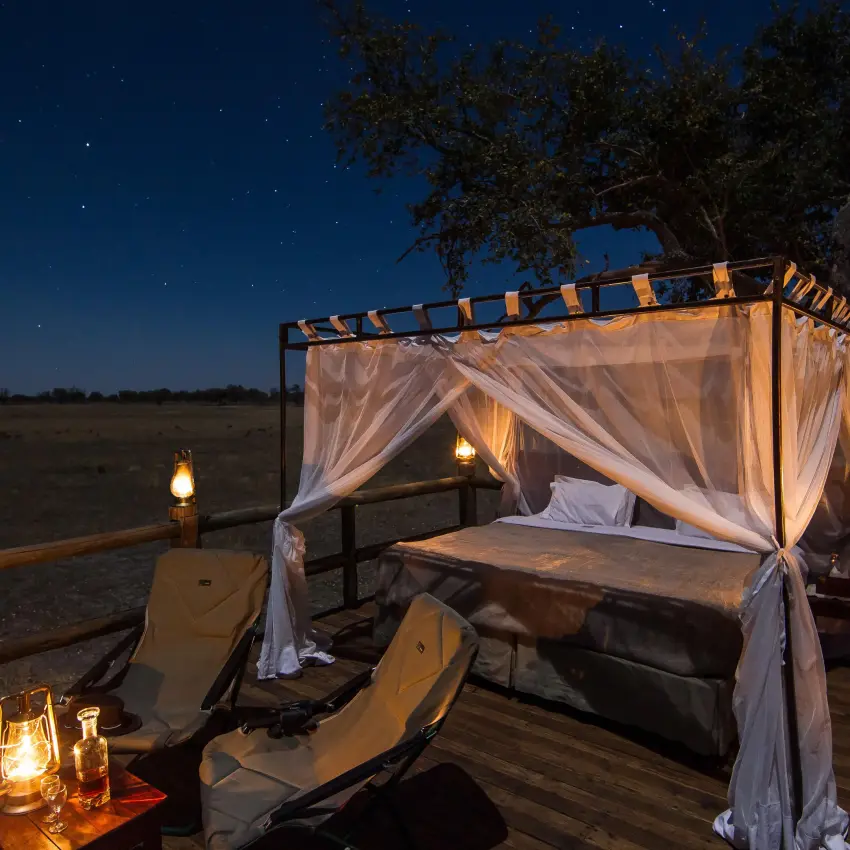
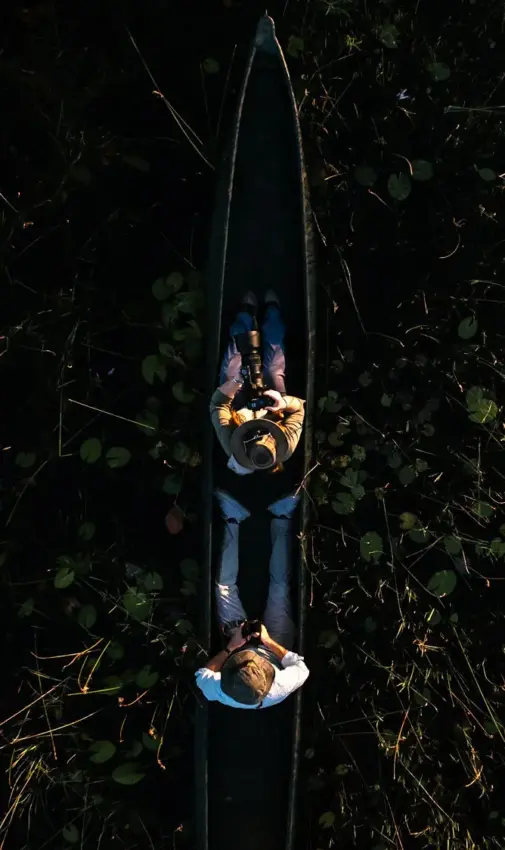
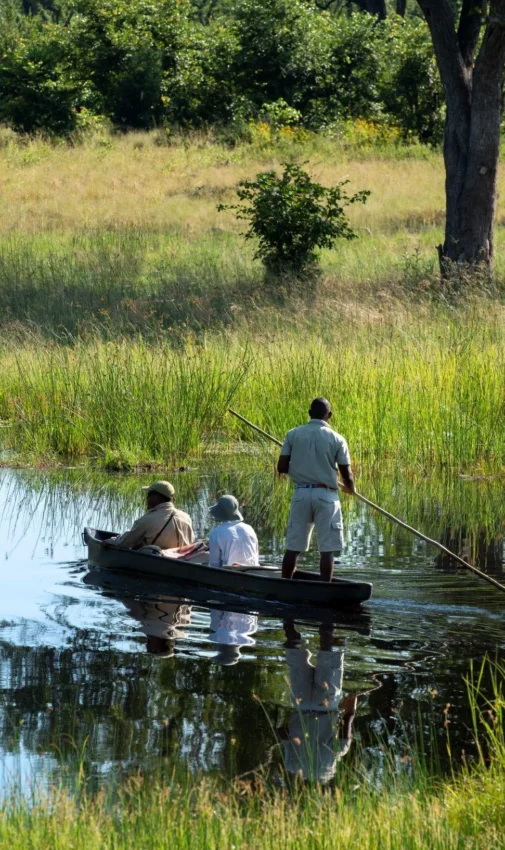
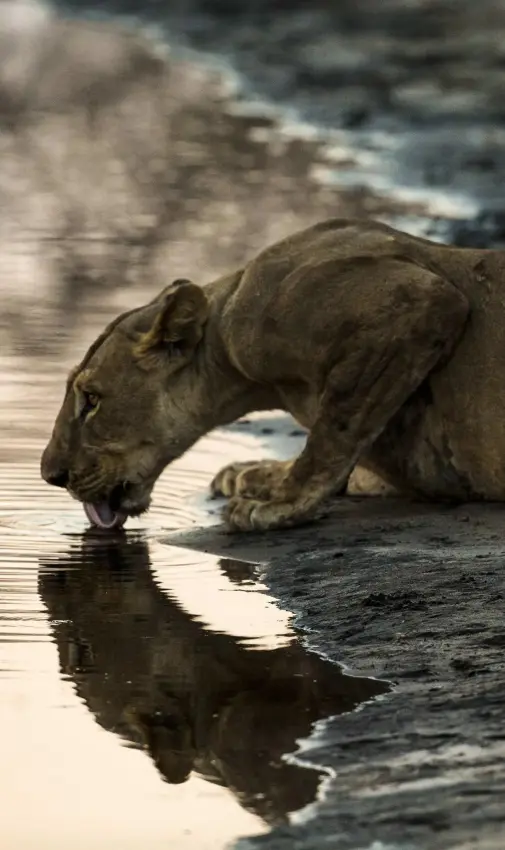
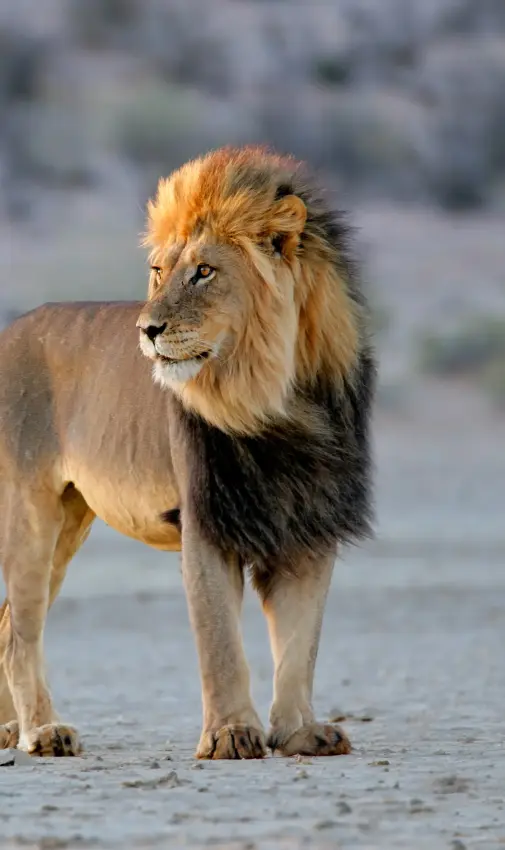
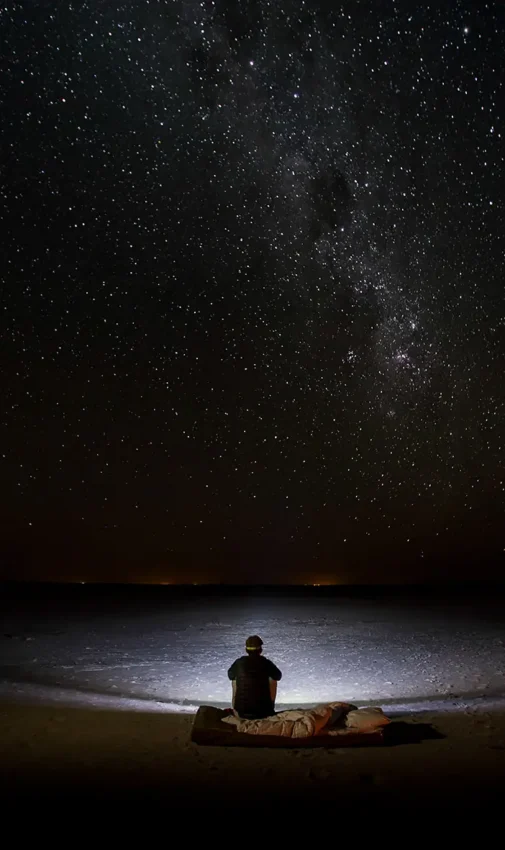
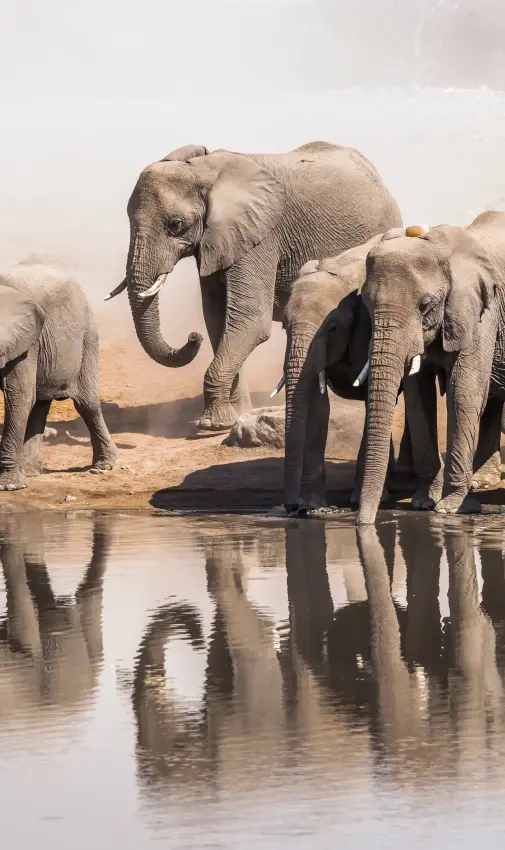
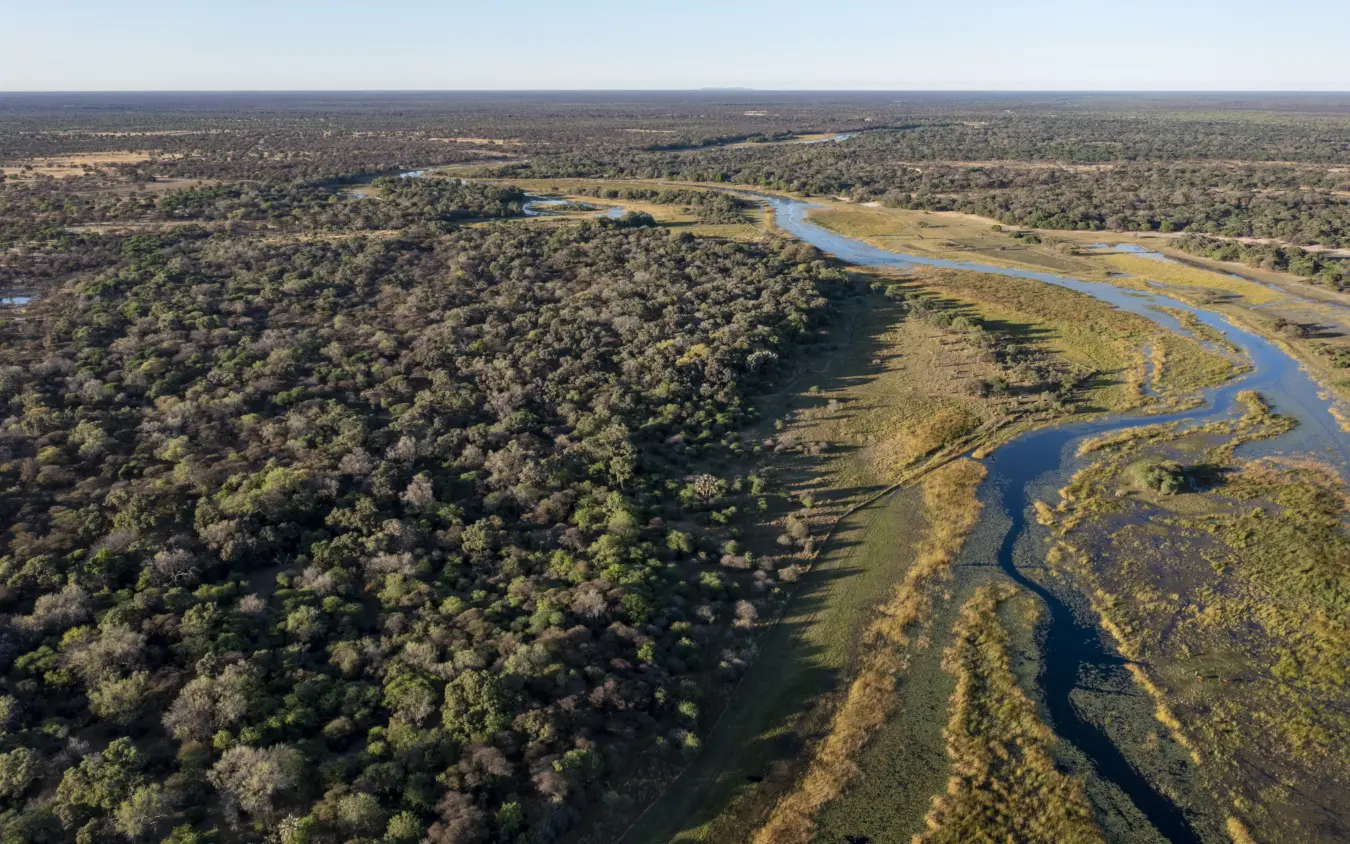
At night, hippos grunt from the river, elephants graze near the tents in the dark, and in season the heronry supplies a constant chorus from across the water. Guests staying three nights or longer can book the sleep-out deck, a raised platform over a waterhole where a bed is made up under open sky. The camp runs entirely on solar power and holds Botswana’s top ecotourism certification. What holds the whole experience together, though, is the guiding: reading the river’s rise and fall, knowing when a mokoro will show more than a vehicle can, and tracking predators across ground that looks different every few months as the flood advances and retreats.