






zimbabwe
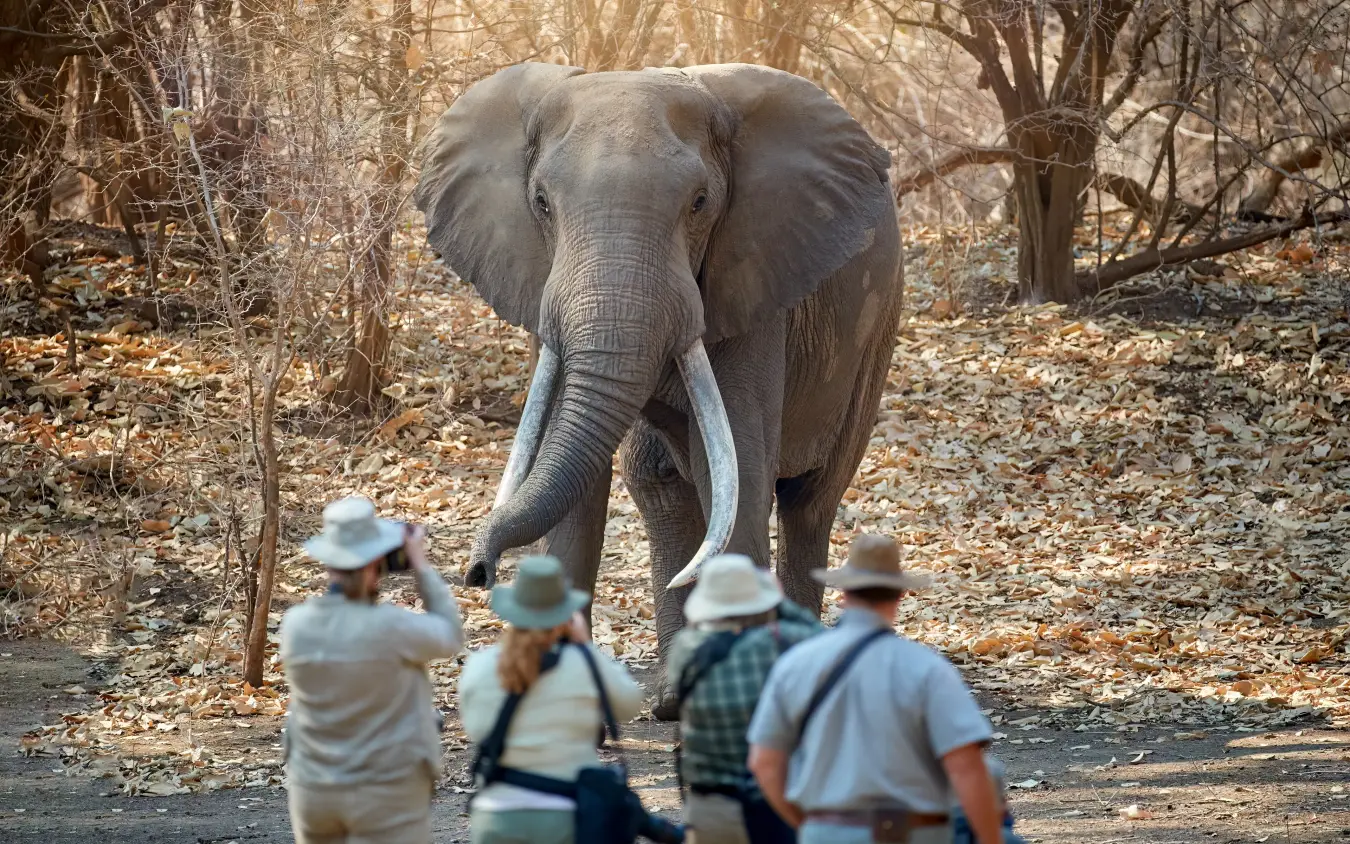
walking with elephants
Twelve nights across Zimbabwe, from Victoria Falls and Mana Pools to Lake Kariba, Hwange and the granite of Matobo.
- Private Safari
- From $9,986 pp
- 2 guests
- 12 nights
The route opens at Victoria Falls in northwest Zimbabwe, where the Zambezi drops into the Batoka Gorge along a curtain of water nearly 1.7 kilometres across. It then crosses into Botswana for three contrasting parts of the Okavango and the Kalahari: a private walking concession in the western Delta, a permanent lagoon in the north, and the salt flats of the Makgadikgadi.
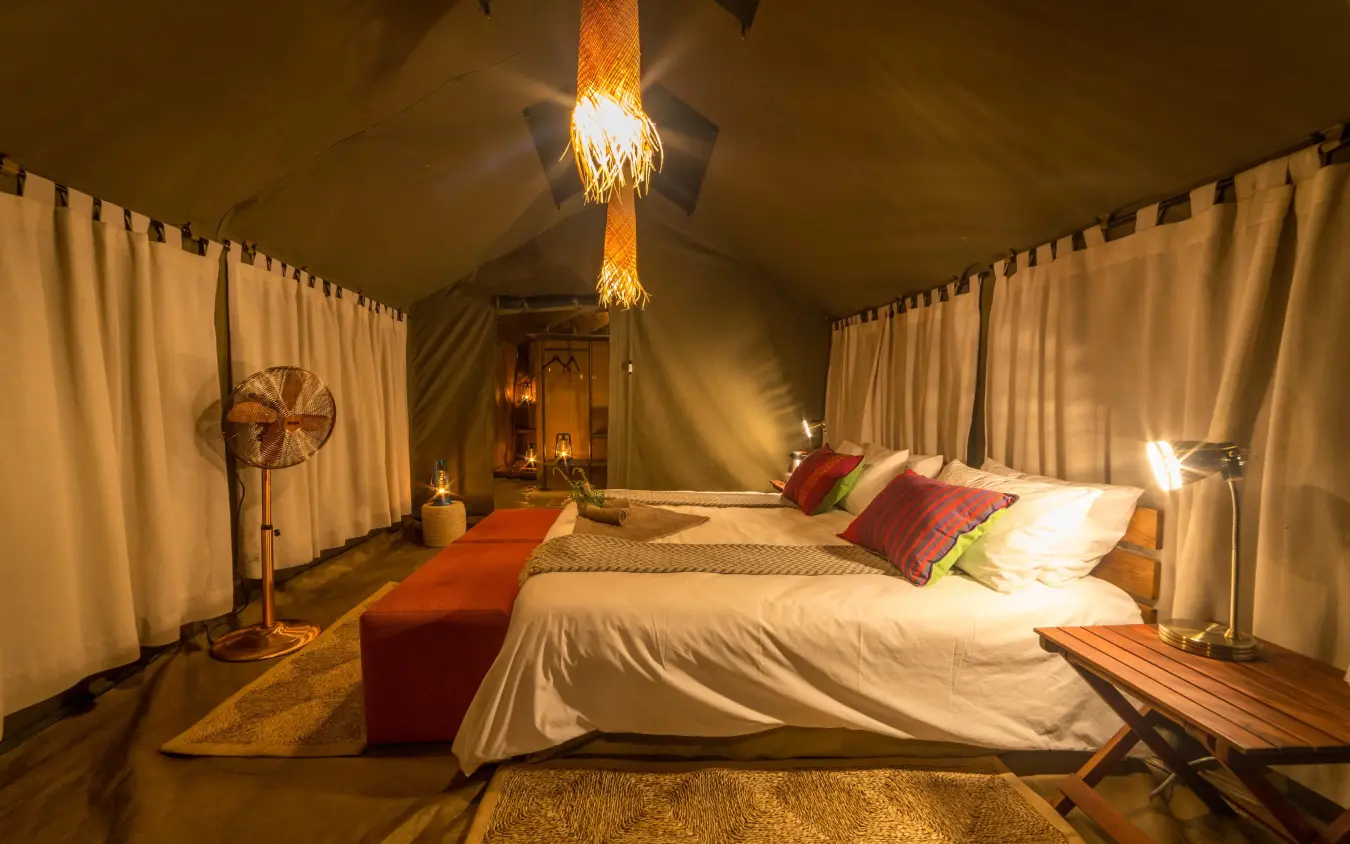
You travel by boat, light aircraft and helicopter, on foot and by mokoro. The days hold game drives, river cruises, walking and time on the pans. Accommodation runs from timber treehouse suites to classic tented camps and a lightweight mobile walking camp, each chosen for its ground rather than its built hardware.
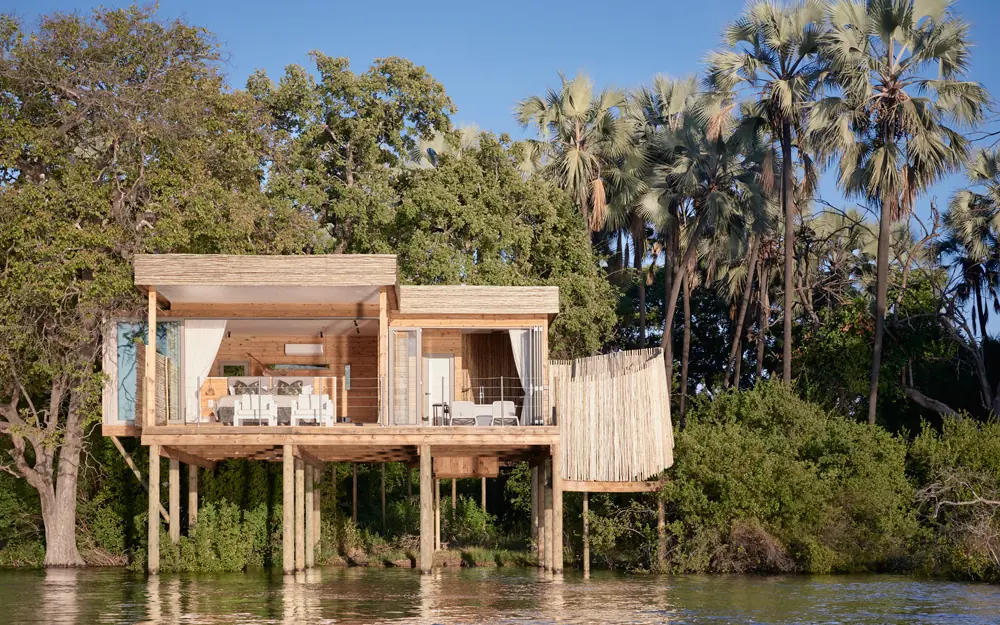
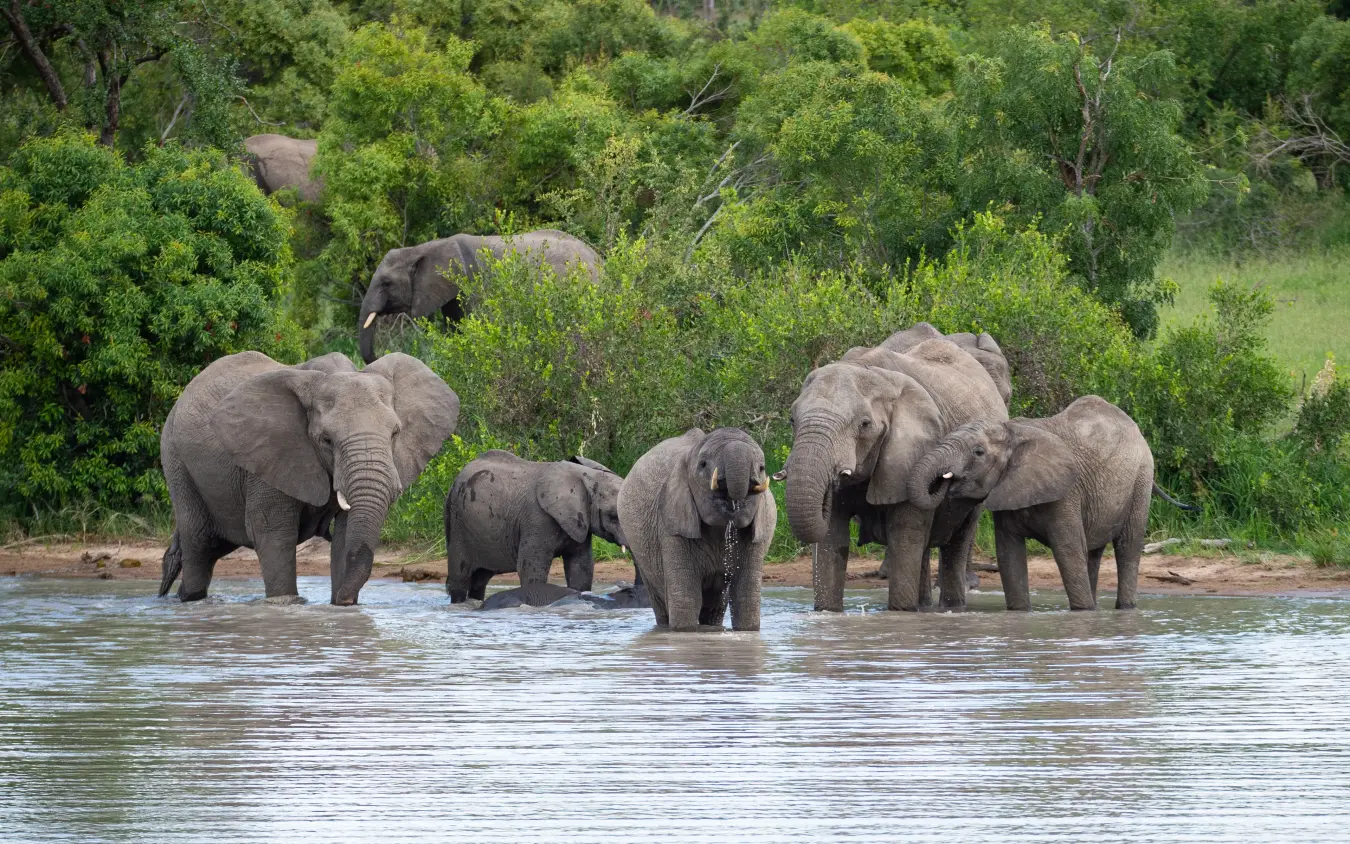
Two nights on the Zambezi above the falls, on a private island reached only by boat. The days run from the mainland lodge a short transfer away: game drives in Zambezi National Park morning and afternoon, guided walks, canoe trails on the upper river, and a cruise at sunrise or sunset when the elephants come down to the bank. Victoria Falls itself and the Batoka Gorge are close enough to take at your own pace. You sleep at Island Treehouse Suites, timber and glass on stilts above the water, adults only, each with a plunge pool facing the river.
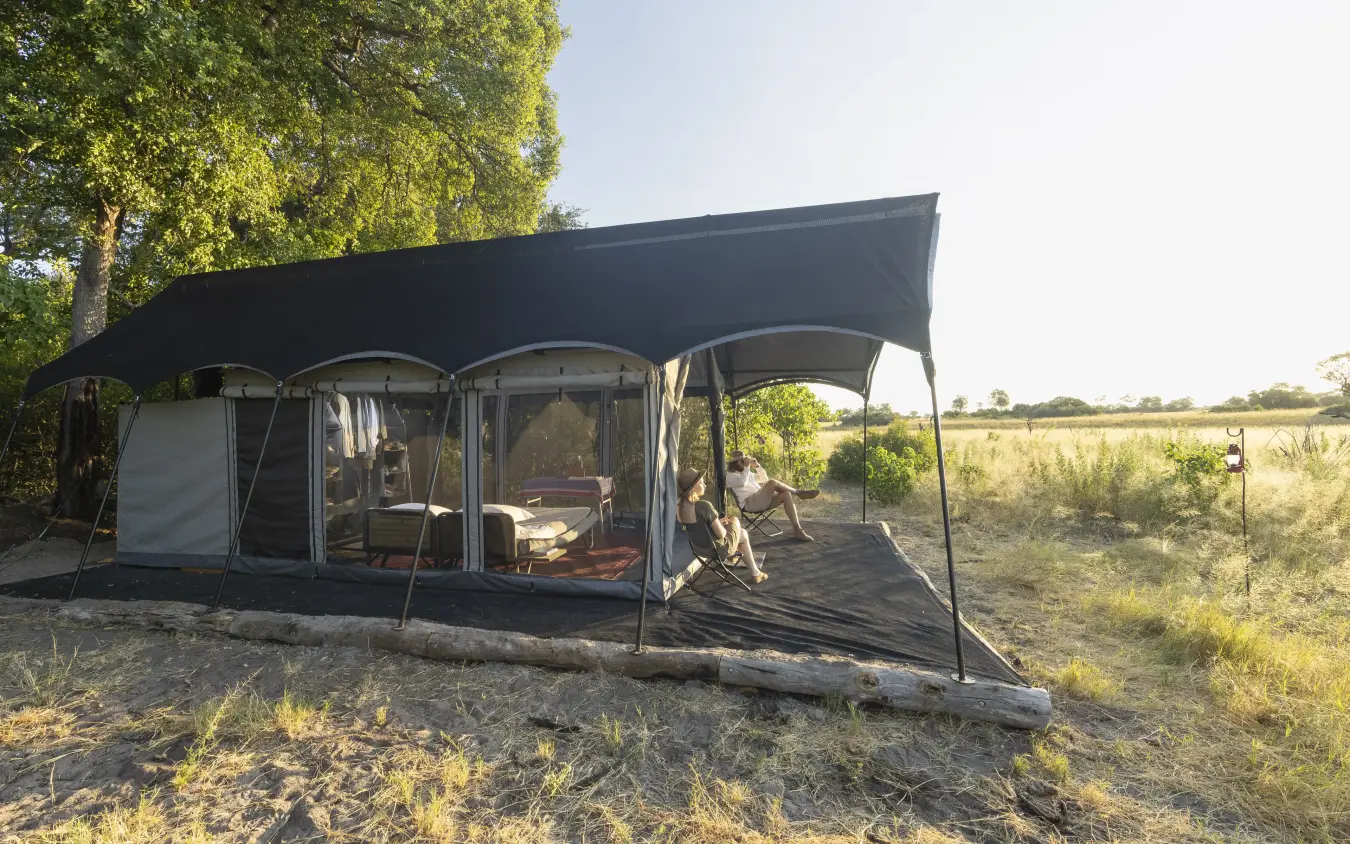
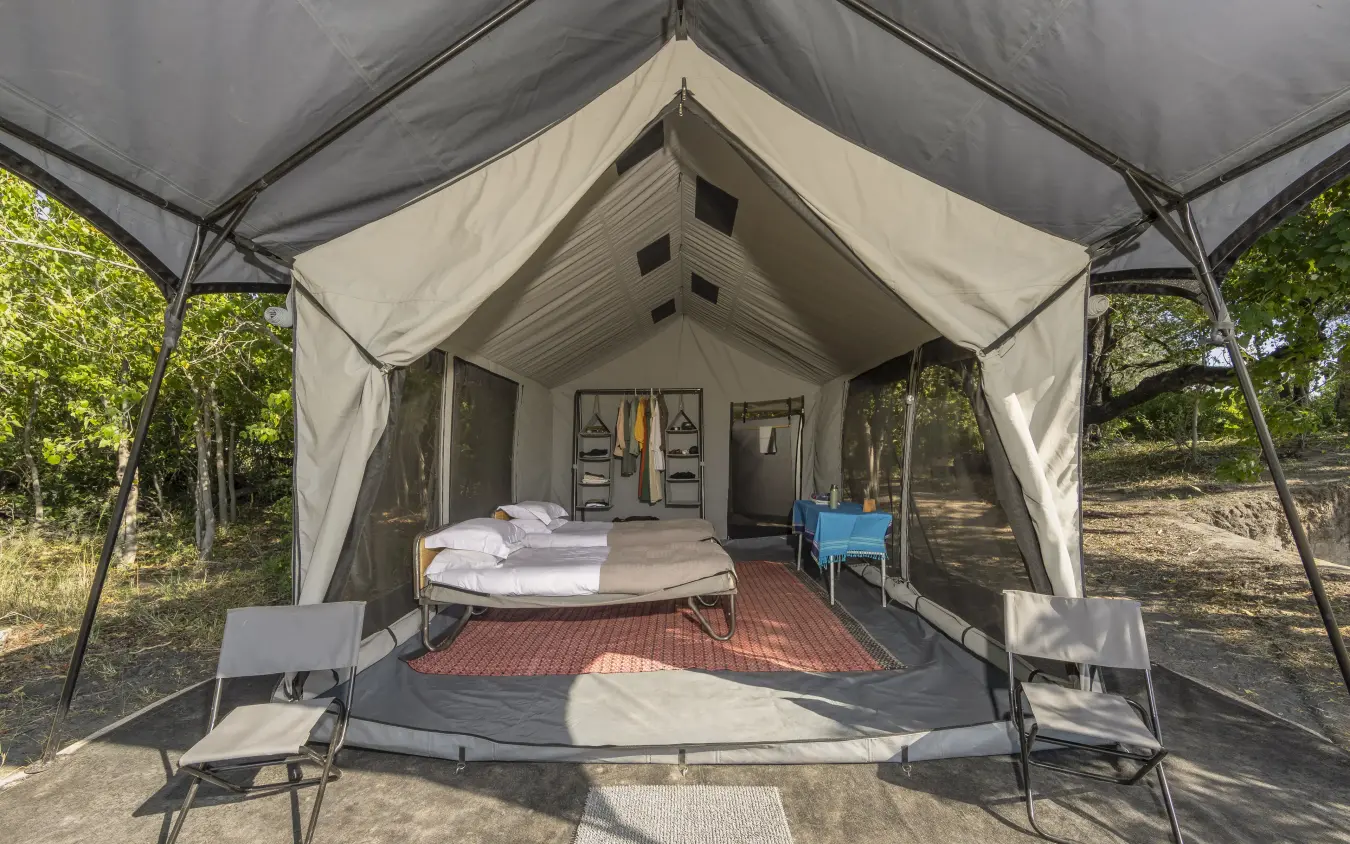
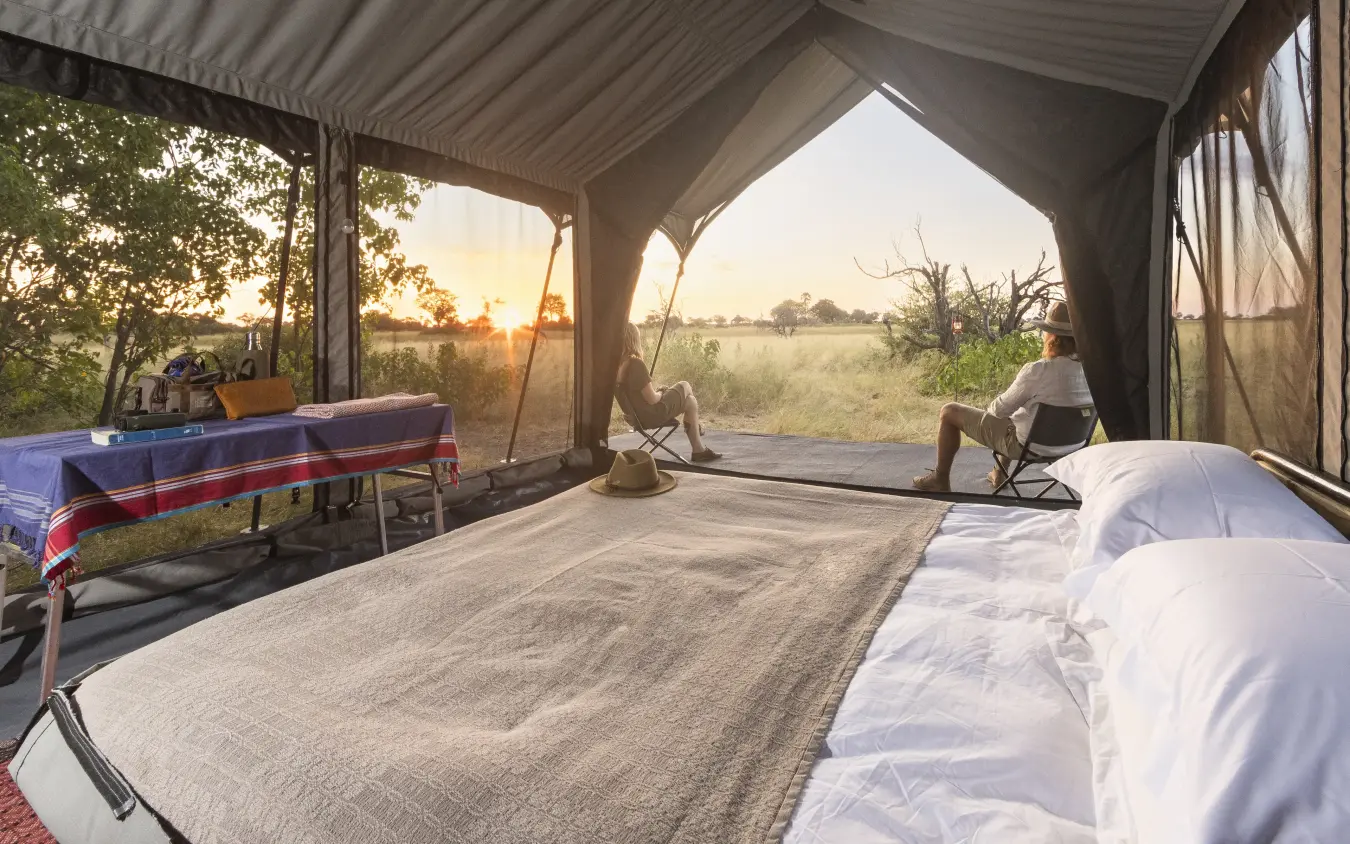
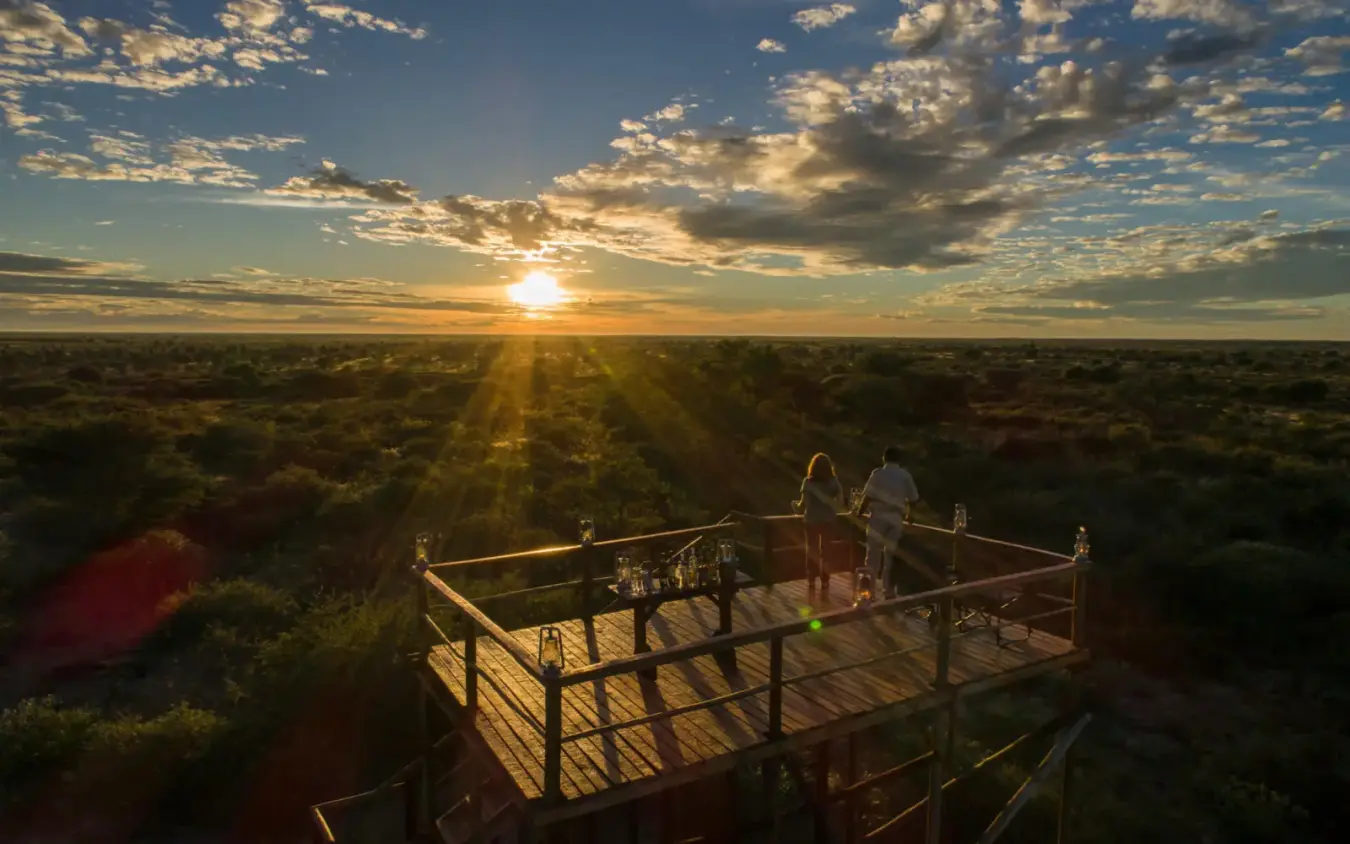
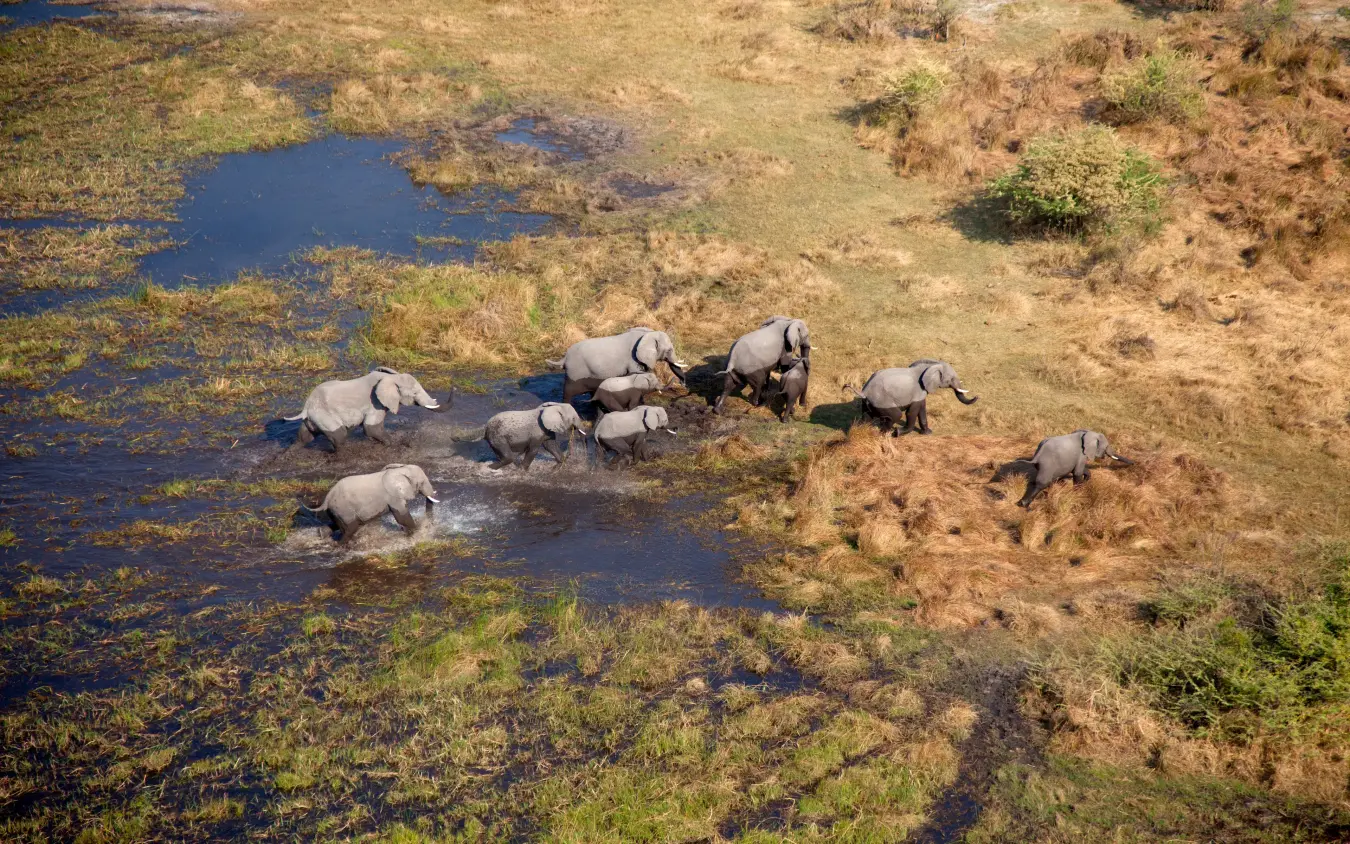
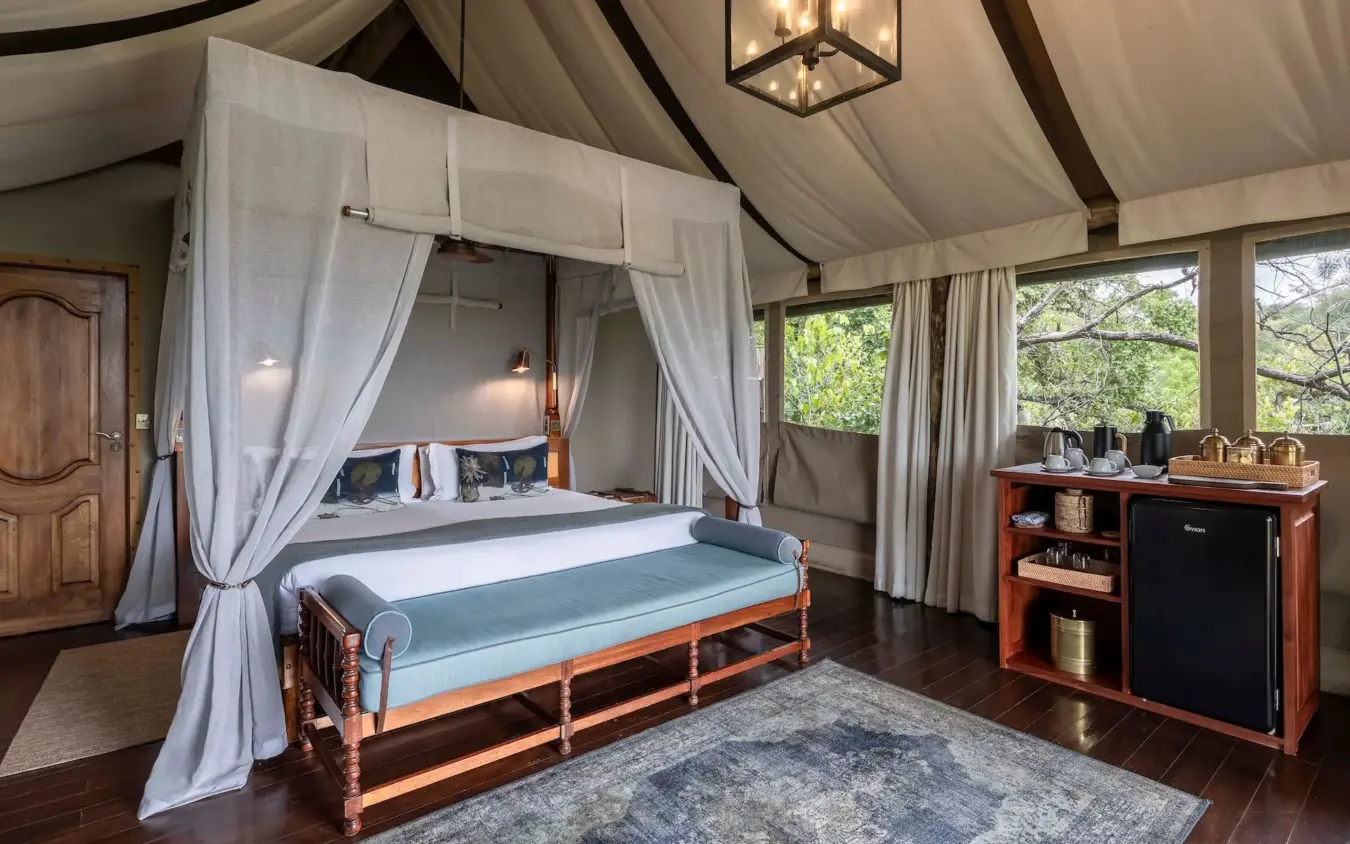
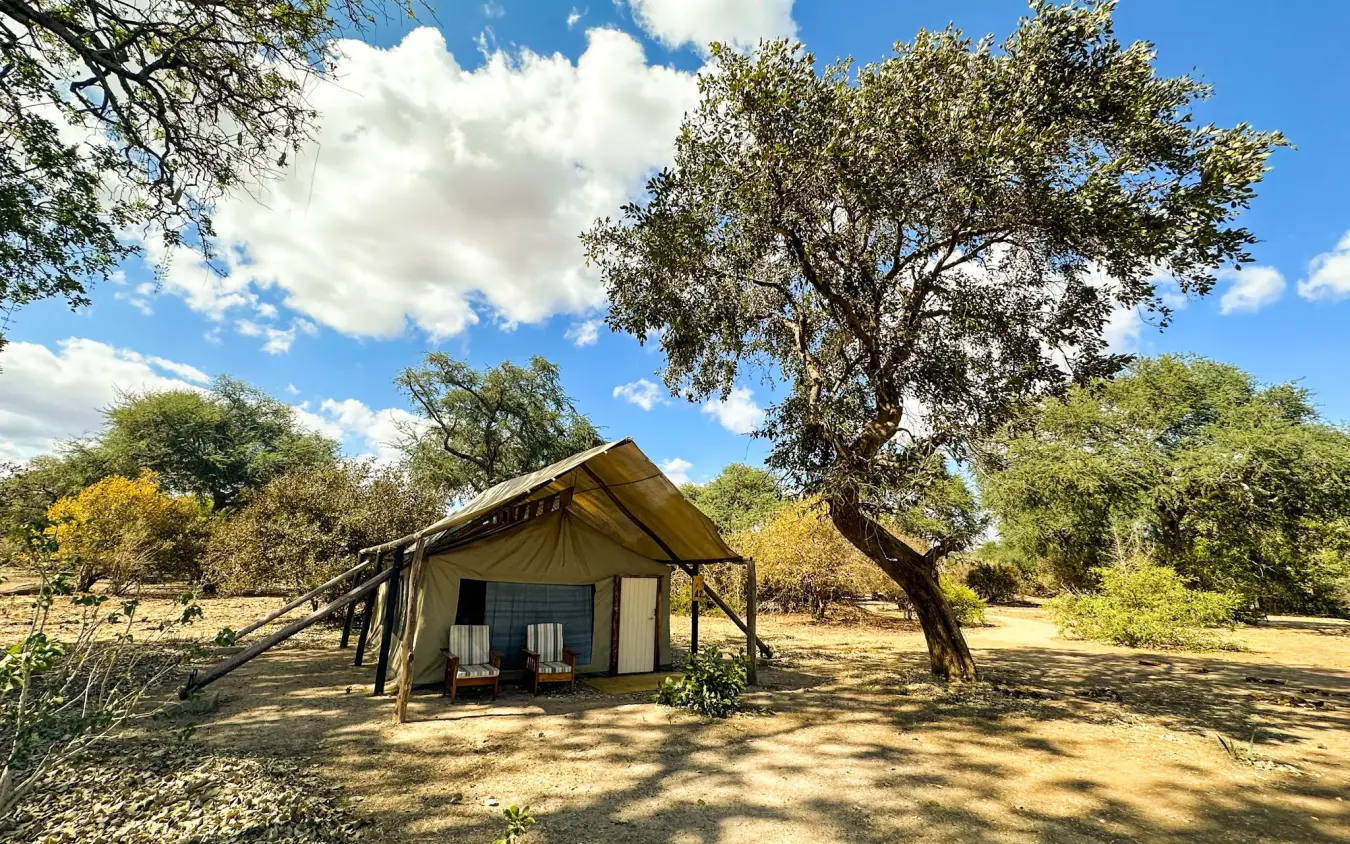
Four nights walking the Abu Private Reserve, a 30,000-hectare concession in the western Delta reached only by helicopter. You walk between two camps fifteen kilometres apart, Kweene River Camp among arid grass floodplains and Magwegwe Camp north of it in seasonal swamp that holds water all year, so the ground changes underfoot as you go. There is no timetable. Some days are a gentle stroll to a lagoon, others run beyond twenty kilometres. On foot you share the ground with lion, leopard, wild dog and spotted hyaena, and with elephant, buffalo, giraffe, zebra and red lechwe across the floodplain. Both camps are lightweight canvas, pitched and struck with the season, and Kweene Trails is hosted by Simon and Marleen Byron, who walk with you.
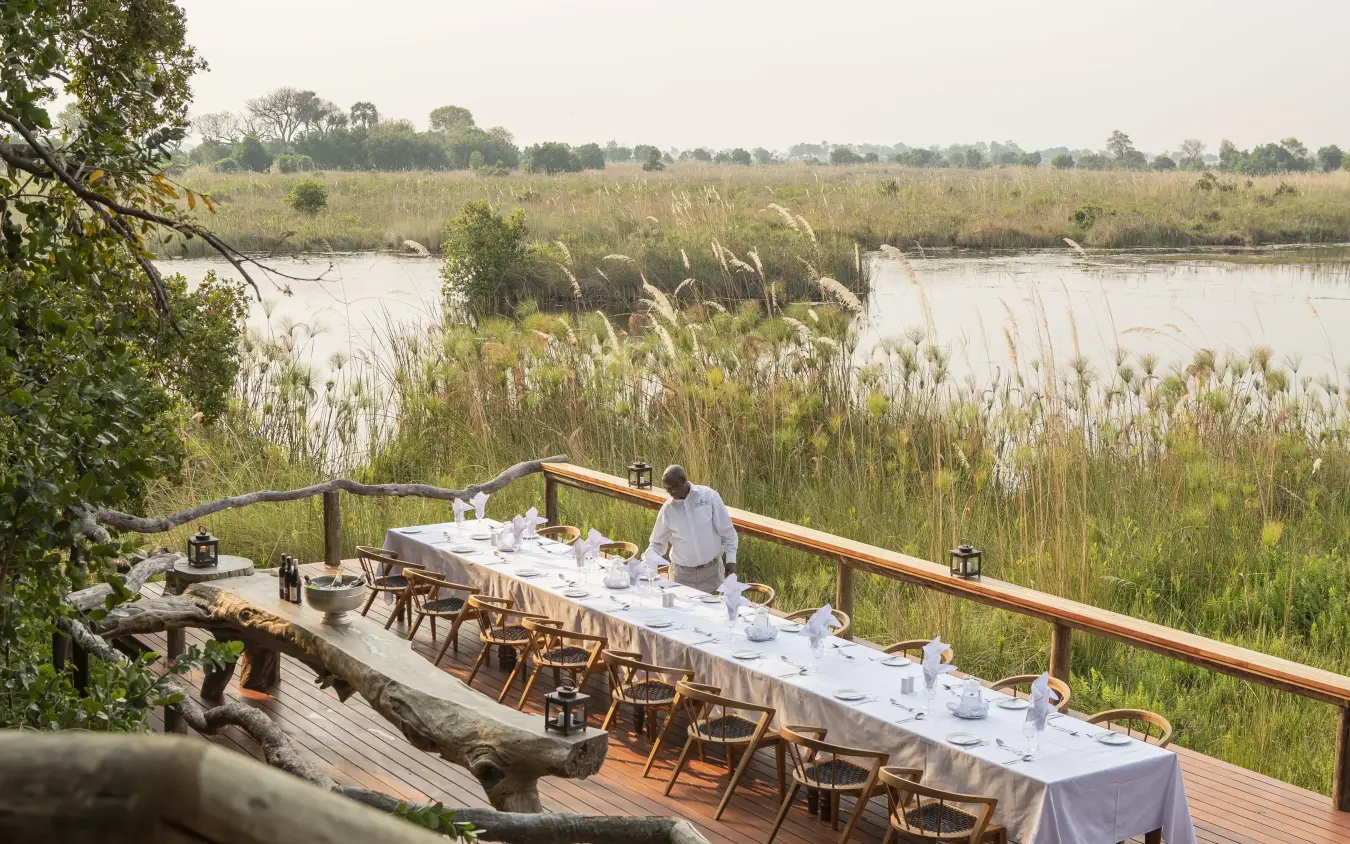
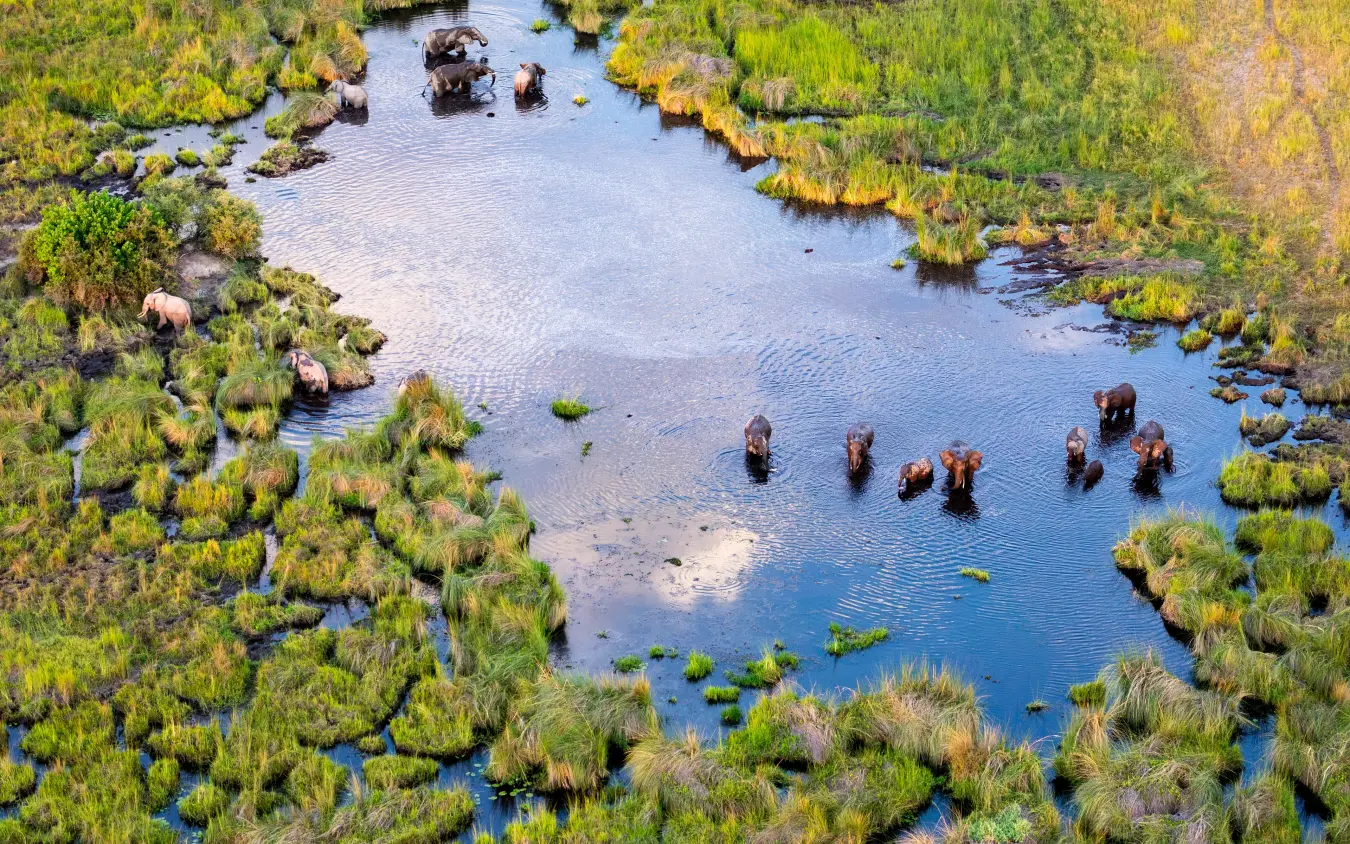
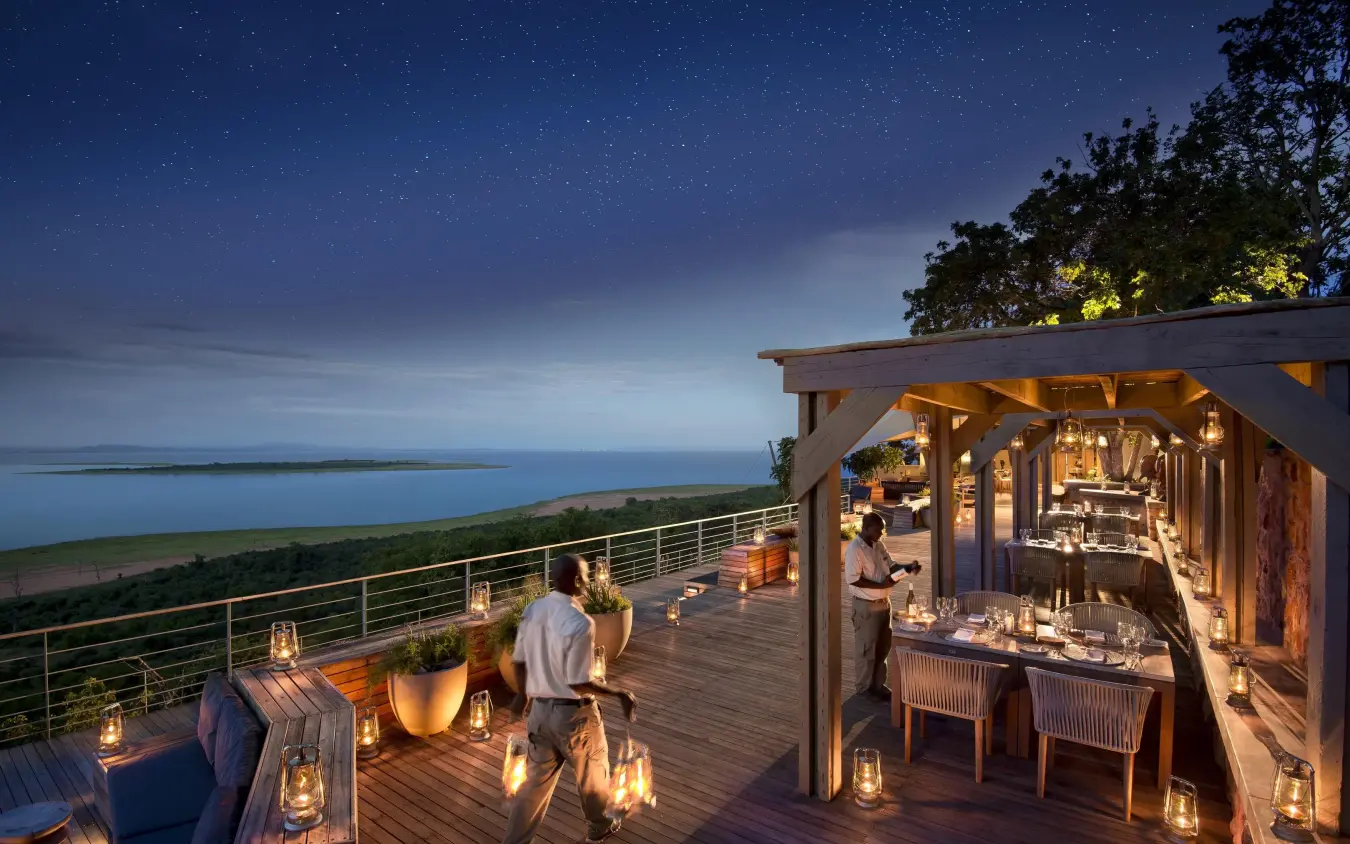
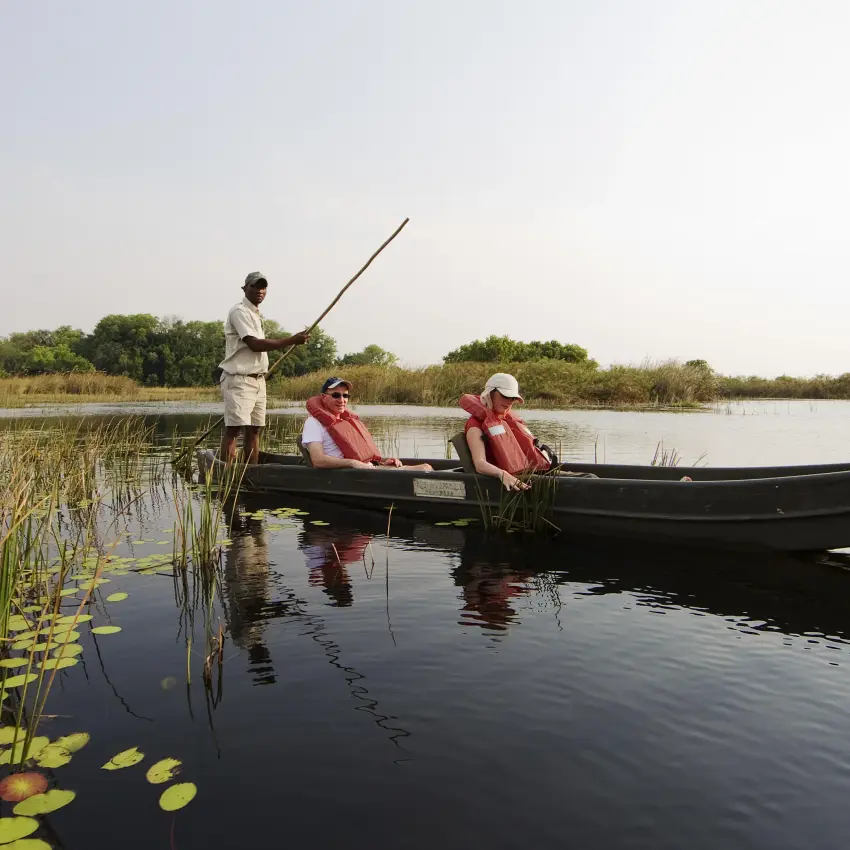
Out of the Abu concession by helicopter and on to a private concession in the northern Delta for three nights. The lagoon here holds water all year, so you can take a mokoro out at dawn, a motorboat after lunch and a game drive at dusk on the same day, in any season. The land is private, which lets the guides do what Moremi does not permit: walking safaris, and night drives for genet, civet and porcupine. The reserve boundary is shared with Moremi, the vehicles are not. Shinde is a small camp on a palm island in the middle of it, with the lagoon at its edge and every boat, mokoro and vehicle leaving from the same landing.
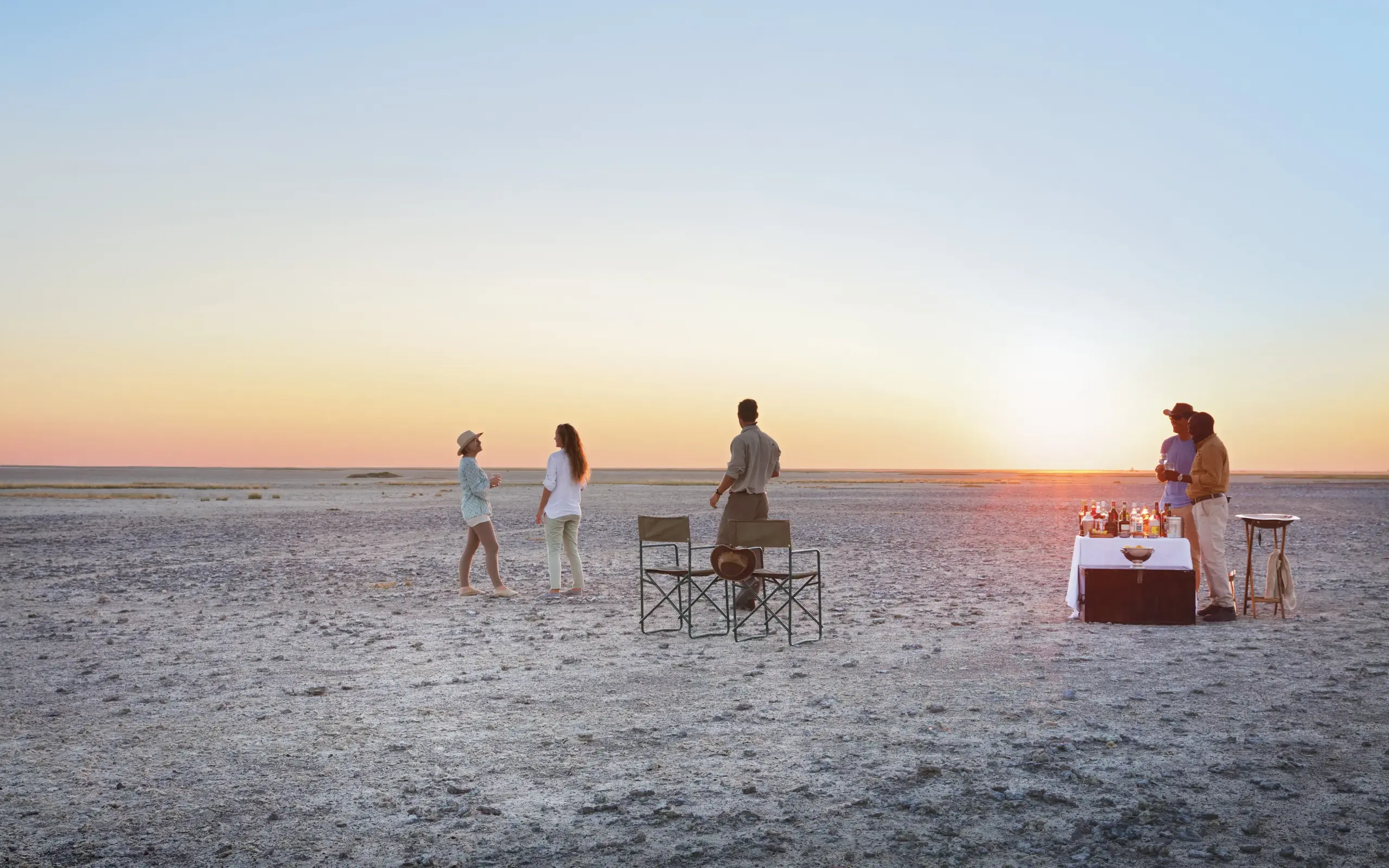
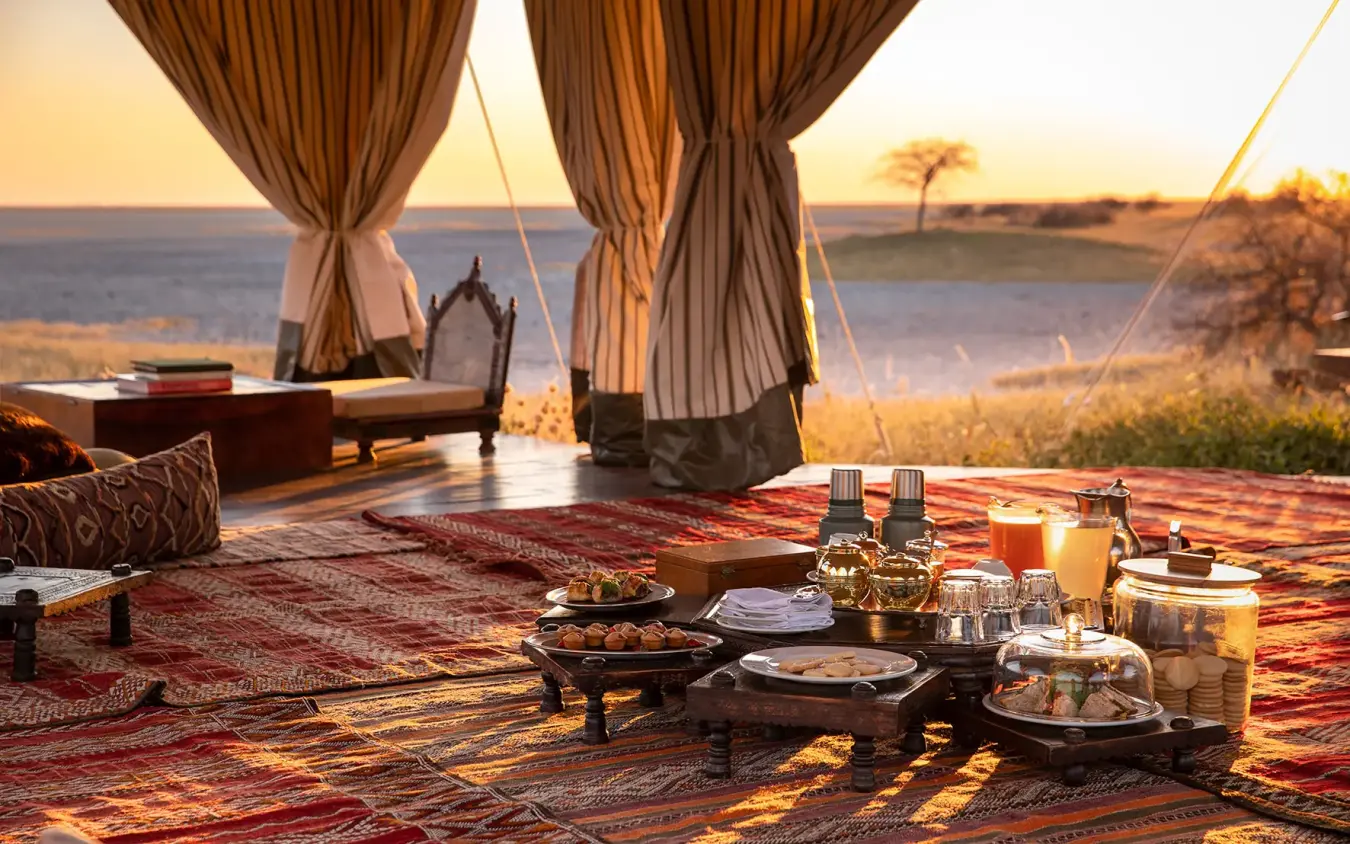
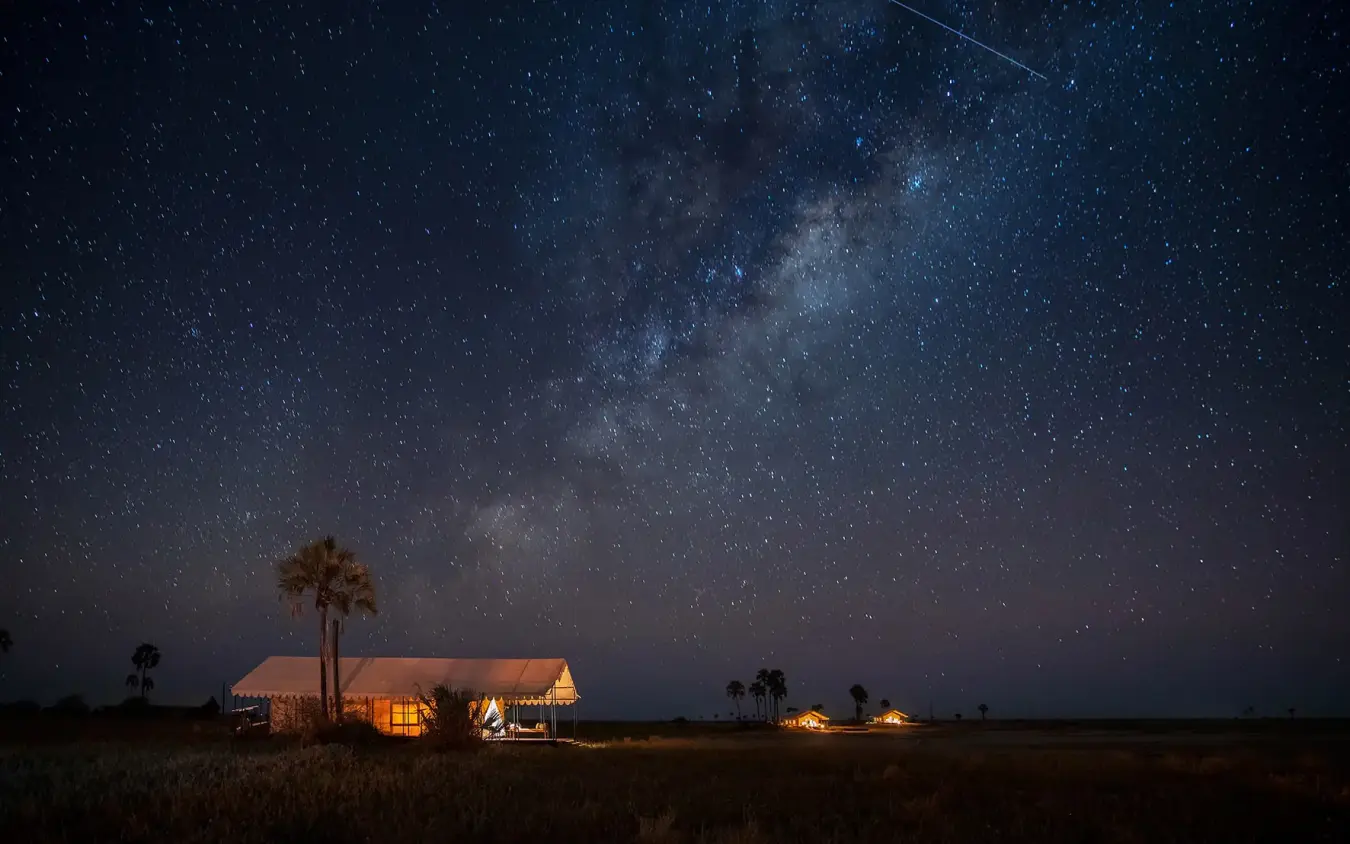
Three closing nights on the edge of Ntwetwe Pan, a flat white expanse of salt in the Makgadikgadi. This is not game-drive country and the days do not pretend to be: you quad bike out onto the crust, ride across it, and sleep out on the salt with nothing on the horizon. Mornings go to the habituated meerkats, and to walking with the Zu/'hoasi, who read the ground for what it will give. The camp runs only in the dry months, roughly April to October, when the pan will carry a vehicle. San Camp is seven white tents under desert palms, with a mess tent of fossils, maps and curios.
Only as hard as your party wants it to be.
The camp fixes no daily distance and no timetable: each day is shaped by the wildlife, the water levels and the mood and capabilities of the group, and most days mix walking with a game drive or, when the flood is in, a mokoro.
A twenty-kilometre day happens because a party asks for it, not because the schedule demands it.
The one set piece comes when the camp moves. Guests normally set out on foot for the second site, roughly 15 kilometres up the Kweene River, stopping for a picnic lunch and a siesta, and anyone who prefers can do it by vehicle; bags and bedding travel separately with the back-up crew.
The country is flat, so the test is hours on your feet and the heat of the day, never gradient. Every walk goes out behind an armed guide, in a party of eight at most, and nobody under twelve may join.
Because there is no other way in.
Access is by helicopter only, with no road transfer and no airstrip for aeroplanes, so the helicopter sets you down at the camp itself and, four nights later, lifts you out and across the Delta to Shinde.
The flights are operated by Helicopter Horizons of Maun, which flies Bell helicopters seating four or five guests as well as a smaller three-seat machine; for two travellers it is typically one of those, and which one is the company's call on the day.
Coming from Victoria Falls, the usual routing is a light aircraft from Kasane to a bush airstrip, where you change to the helicopter. The company flies its transfers privately and low enough to look for animals on the way.
It suits the Okavango for a reason of its own: the land rises and falls by less than two metres across the whole Delta, so the pattern of channels and islands only shows from the air. Luggage is 20 kilograms each, in soft bags.
San Camp is about the salt pans, not big game, and nearly everything runs for the whole of its short year.
It takes guests for six months, mid-April to mid-October, the dry months when the pan will carry a vehicle.
In that time you can:
Children can quad bike from six and ride from eight. Sleeping out on the pan is arranged by the camp when conditions allow, so ask us to request it ahead.
What you cannot see from San Camp is the zebra migration, which reaches the pans with the rains between November and March, when the camp is shut.
June to September, the months we rate as recommended at the falls, in the Delta, on the pans and for Botswana as a whole.
Cold mornings and warm, clear days are what you want for walking at Kweene, the flood is in for the mokoro there, which the camp runs from May to September when the water allows, and the pans are hard and dry for the quad bikes.
Two of the camps are seasonal, which narrows the calendar: Kweene Trails takes no guests between 6 January and 31 March, and San Camp none between mid-October and mid-April, so as written the trip runs from mid-April to mid-October.
April and May are quieter, with the falls at their fullest. Early October is very hot, often near 40 degrees out on foot, with the falls low.
For a green season trip, with storms, migrant birds and zebra on the pans, the pans stay would move to a camp that operates all year, and our Delta rating from December to March is challenging.
Not as it stands, but it is easily changed for older children.
Two stops set the limits. The island suites at Victoria Falls are for adults only, so a family would stay at a different hotel by the falls.
At Kweene Trails the minimum age is twelve when you share the camp with other guests, and twelve in any case for the walking and the mokoro outings. A family that takes the whole camp for itself may bring younger children, but they could not join the walking that is the reason for going.
The other two stops are easy: Shinde takes children from six, and San Camp welcomes all ages, with quad biking from six and riding from eight. So for a family whose children are twelve or older this route works well with one change of hotel.
Give us their ages when you enquire, and remember that Botswana asks to see a full birth certificate for every traveller under eighteen.
For part of the trip, no.
Kweene Trails is off the grid: there is no mobile signal and no wifi, which means four nights out of reach, so let family and the office know before you fly in. Neither of its camps has mains electricity.
Lighting and charging points run off solar batteries, enough for a phone or camera, the tents have a fan, the shower is a bucket filled with warm water when you ask, the toilet is a composting one and water for the basin comes in jugs. Credit cards are not accepted there.
San Camp is simple in a different way: the tents are lit by lamps, and batteries are charged in the mess tent, which is also where the wifi is.
If being reachable matters for work or family, tell us, and we can plan the dates so that the four nights out of contact fall when it suits you.
Ed Charles, BBC Producer
Fitzroy are true specialists in accessing the wilderness. They know where to go and importantly, when to go there. Highly recommended.
zimbabwe
Twelve nights across Zimbabwe, from Victoria Falls and Mana Pools to Lake Kariba, Hwange and the granite of Matobo.
botswana & zimbabwe
Twelve nights across Botswana and Zimbabwe, linking the Okavango Delta, Victoria Falls, a Hwange concession and Lake Kariba.

zimbabwe
Twelve nights across Zimbabwe, from Victoria Falls and Mana Pools to Lake Kariba, Hwange and the granite of Matobo.
rated five stars by our clients

our approach
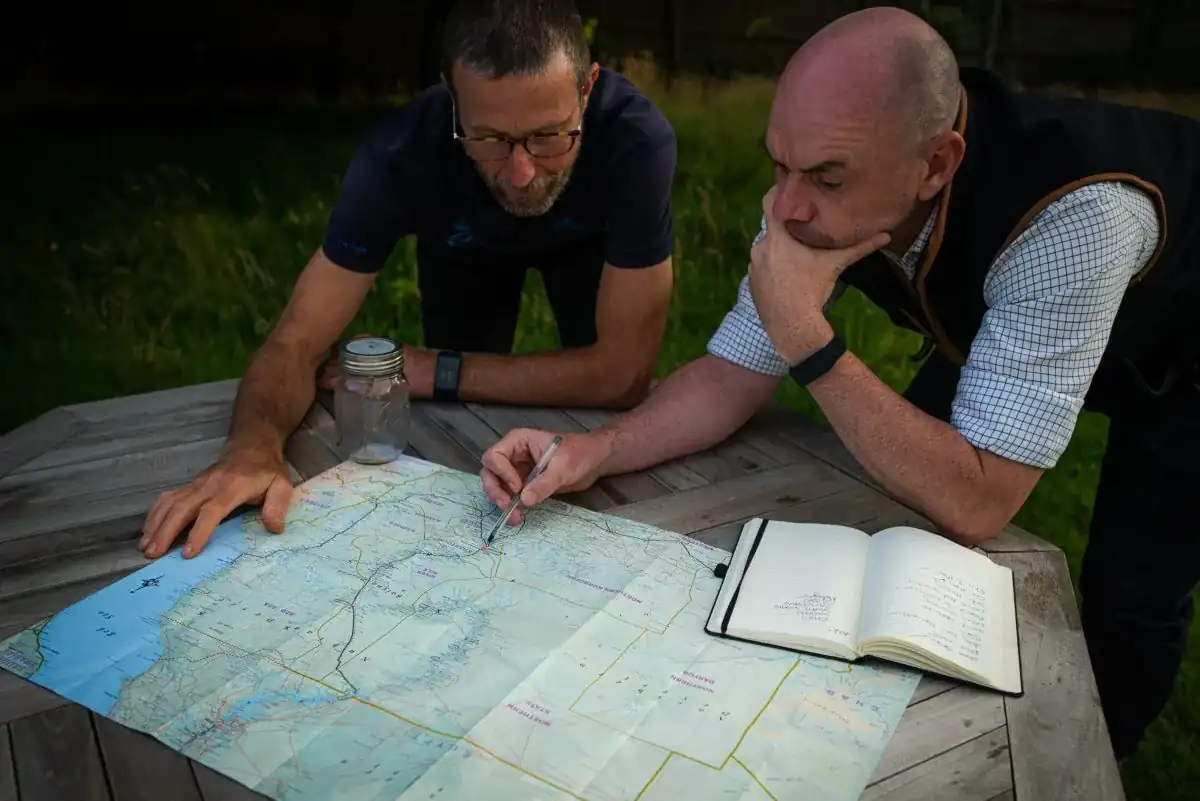
Every journey starts with a conversation. We take the time to understand your vision before we start planning.
Whether by phone or in person, we work with you directly to shape something that is considered, personal, and expertly delivered.
Every journey starts with a conversation. We favour a direct, personal approach: understanding your vision before anything else.
Whether by phone or in person, we work with you directly to shape a journey that is both thoughtfully considered and expertly delivered.
Get in touch to start planning yours.