








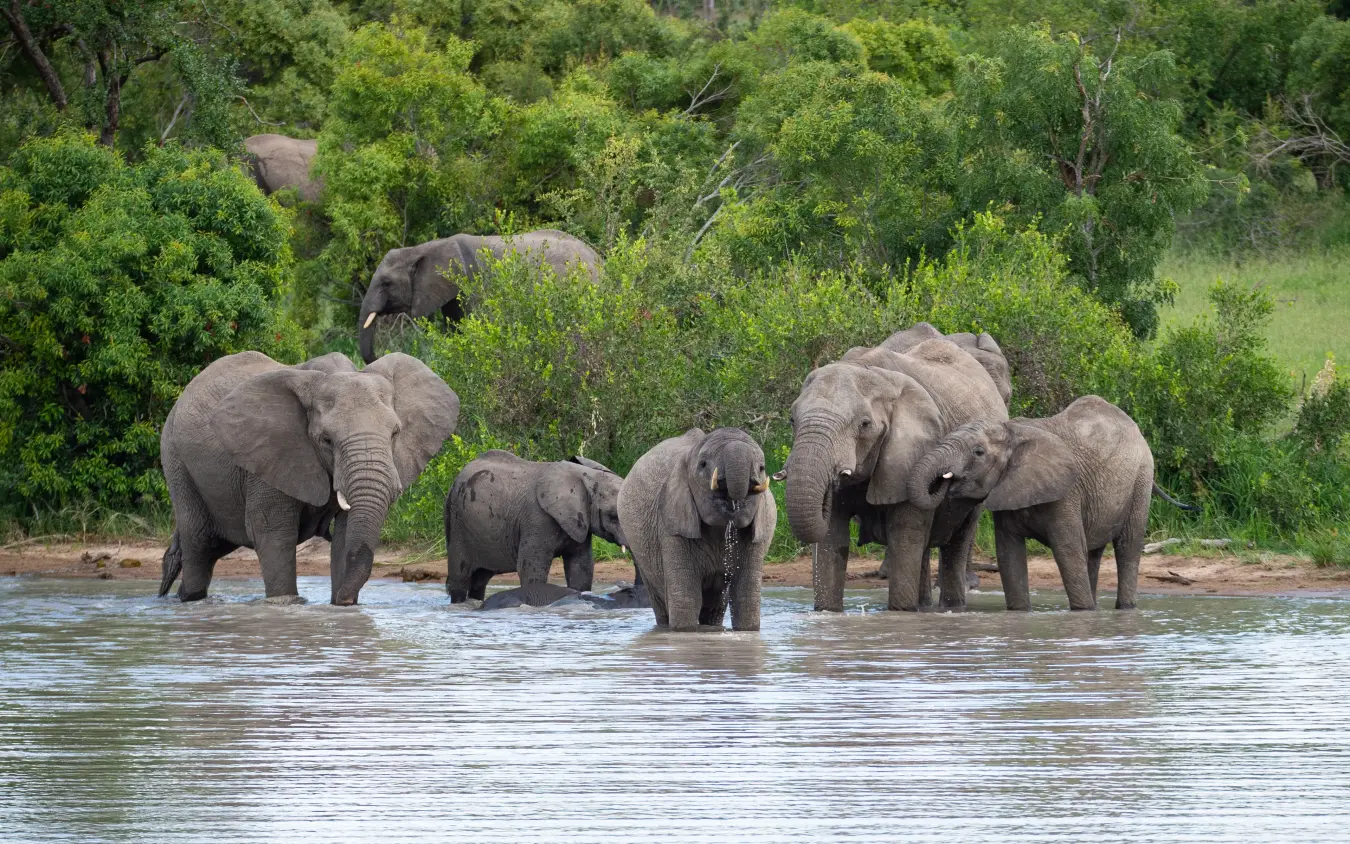
zimbabwe
walking with elephants
Twelve nights across Zimbabwe, from Victoria Falls and Mana Pools to Lake Kariba, Hwange and the granite of Matobo.
- Private Safari
- From $9,986 pp
- 2 guests
- 12 nights
This twelve-night route links five parts of Zimbabwe in turn. It opens at Victoria Falls and the Zambezi, moves to the walked and paddled floodplain of Mana Pools, then to Lake Kariba’s shore at Matusadona, on to the pumped pans of northern Hwange, and finishes among the granite hills of Matobo.
You travel by 4×4, boat and canoe and, above all, on foot, with walking safaris central at Mana Pools, Hwange and Matobo. Light aircraft link the five areas, so the days are spent in the country rather than on the road between it. Light aircraft link the five areas, so the days are spent in the country rather than on the road between it. The camps are small and, in places, seasonal: canvas tents on the Zambezi, a lakeside lodge, a six-tent bush camp and rooms worked into granite. Guiding leads throughout, from tracking elephants on foot to tracking rhino across the stone.
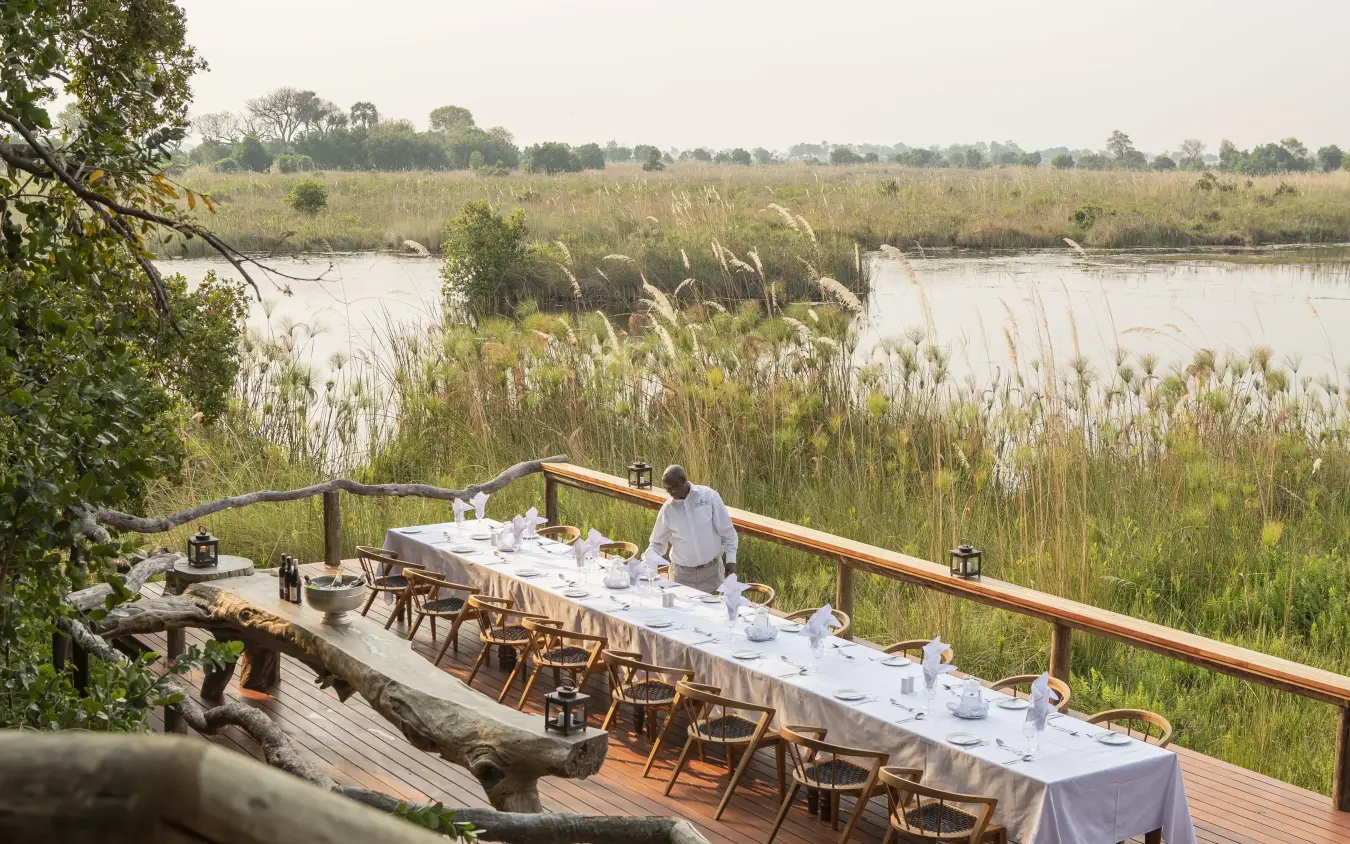
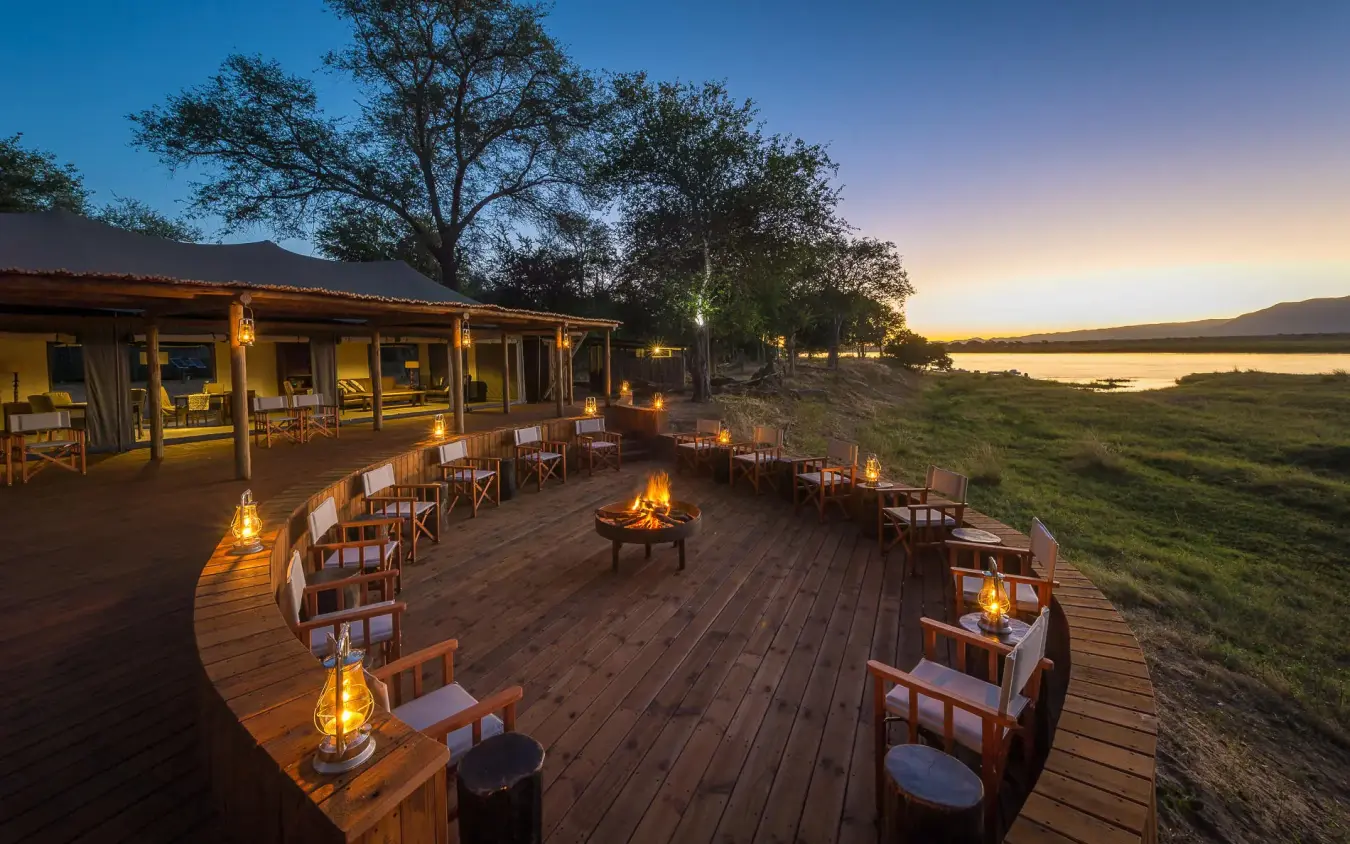
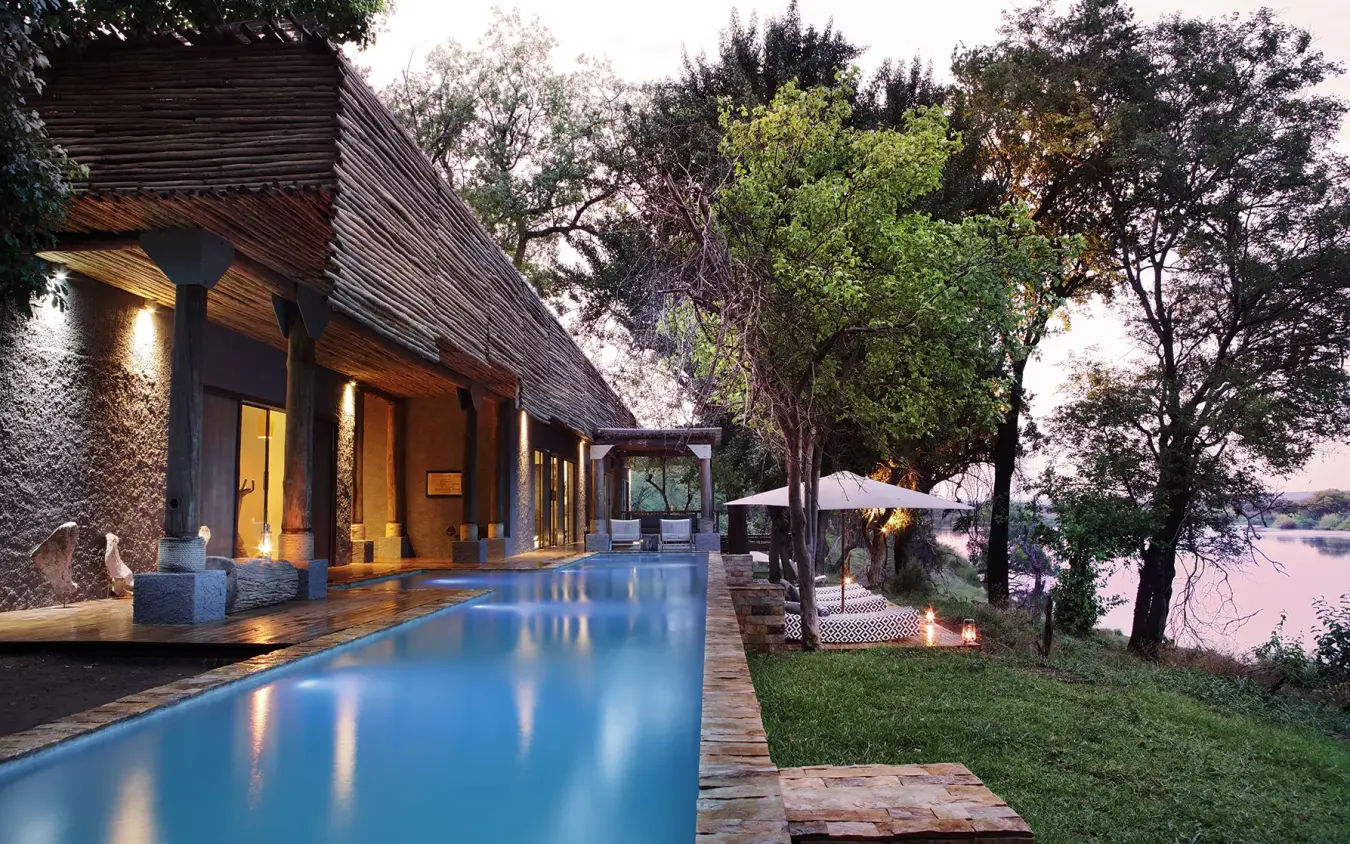
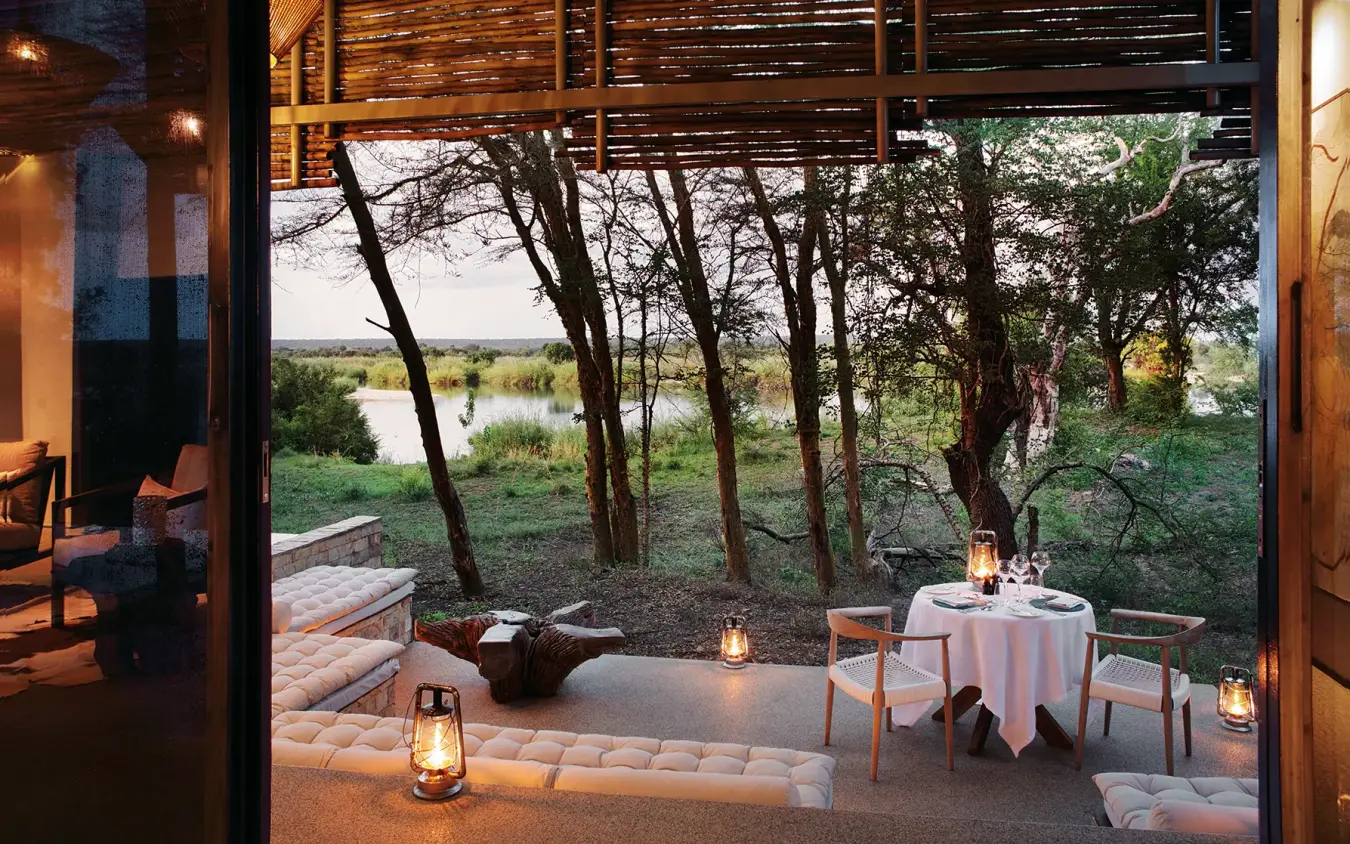
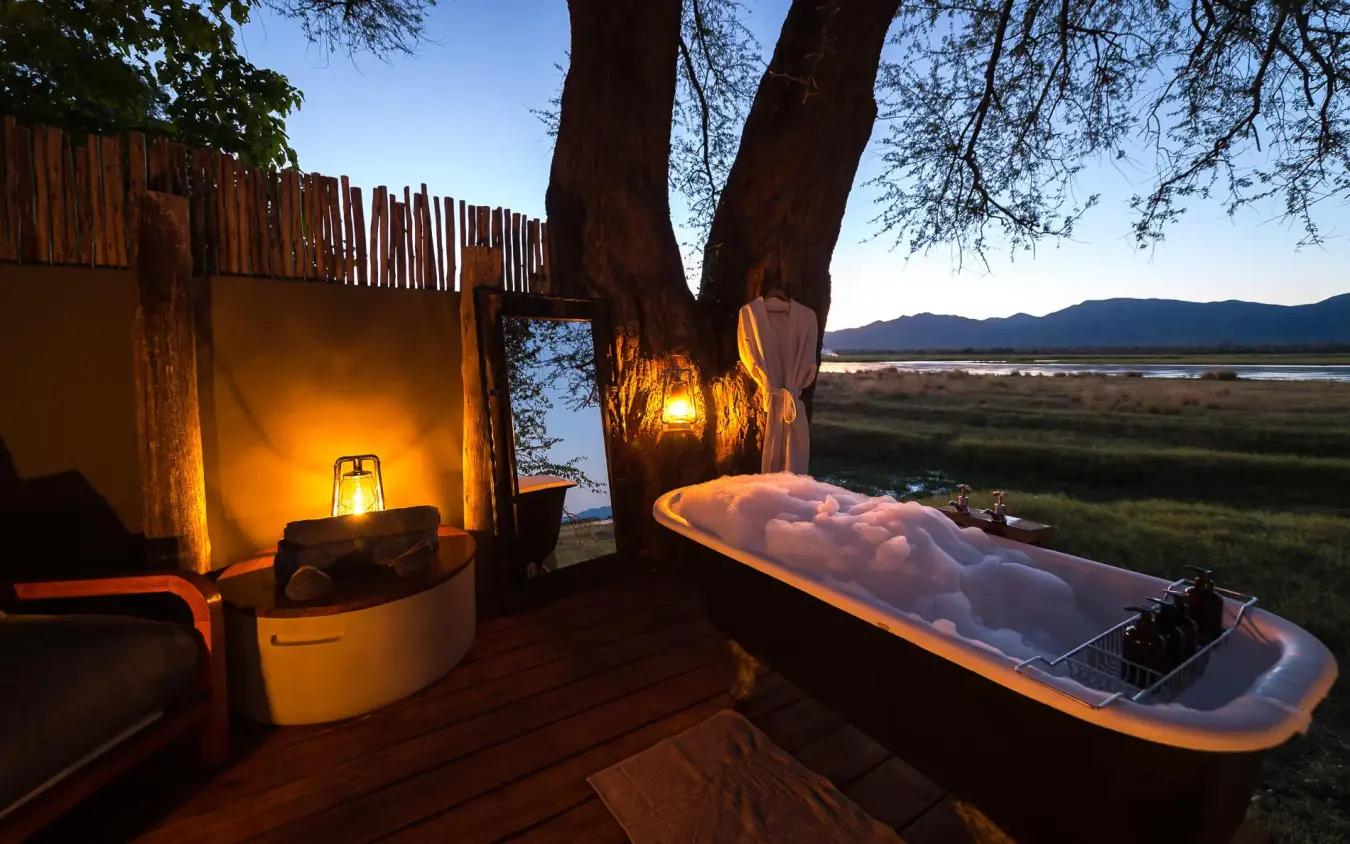
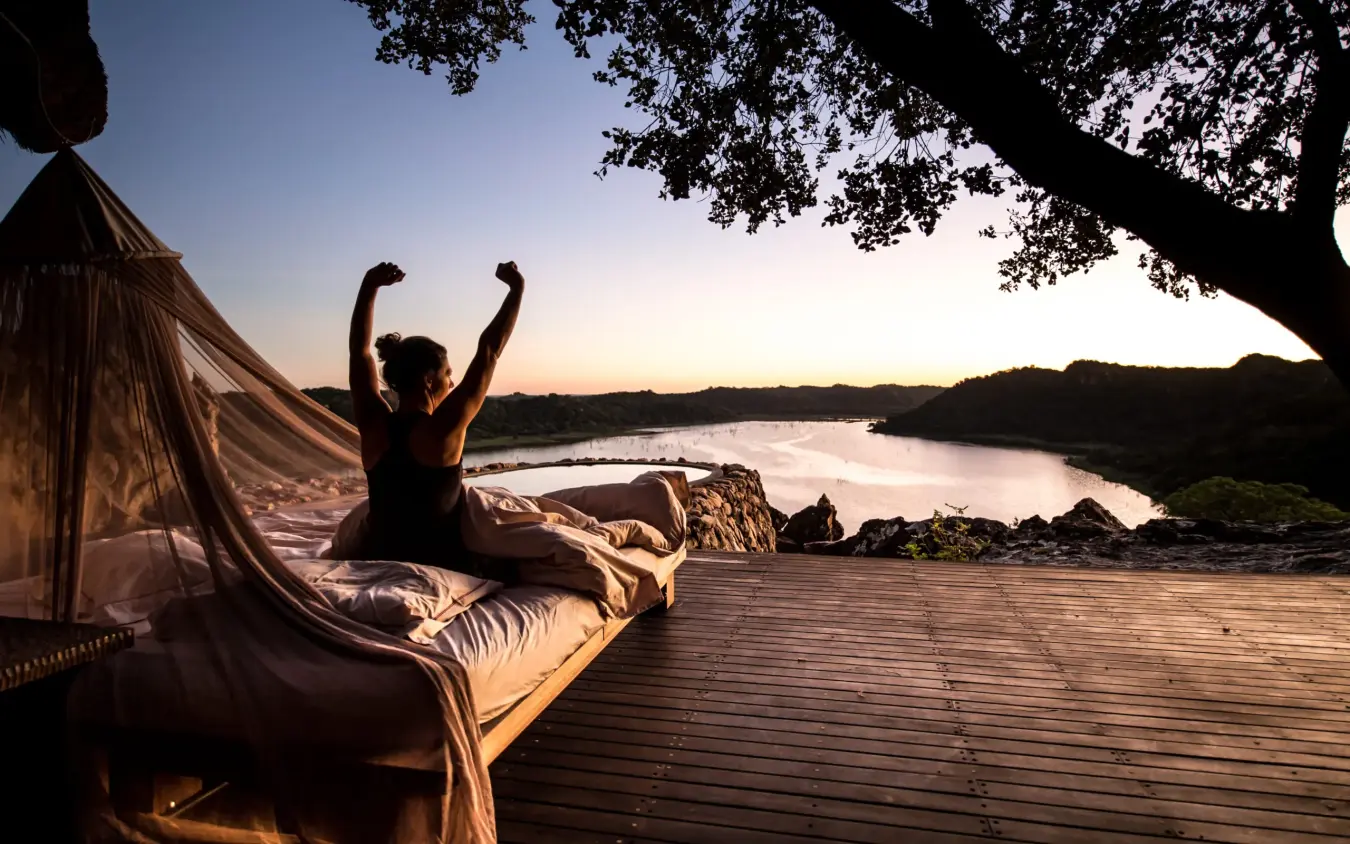
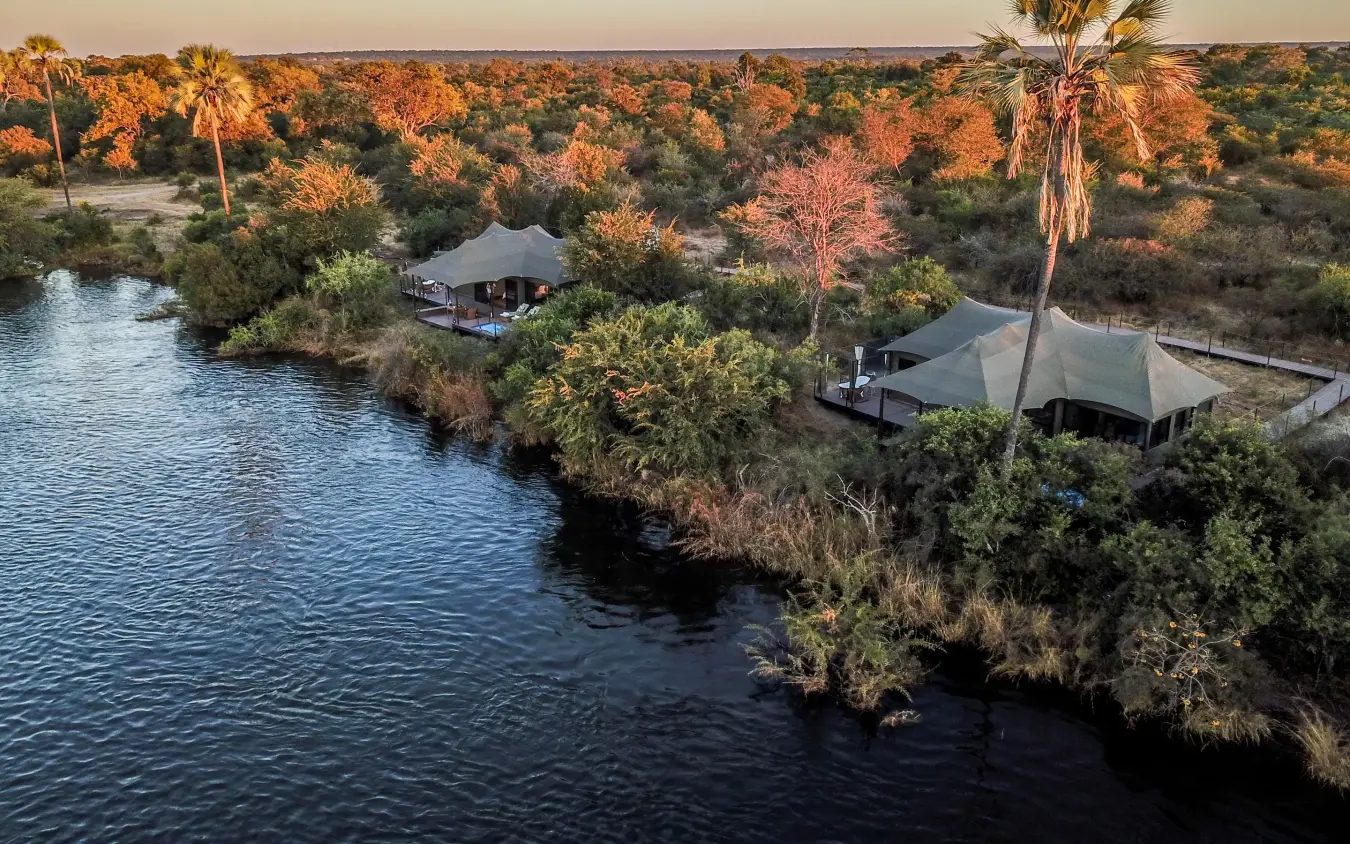
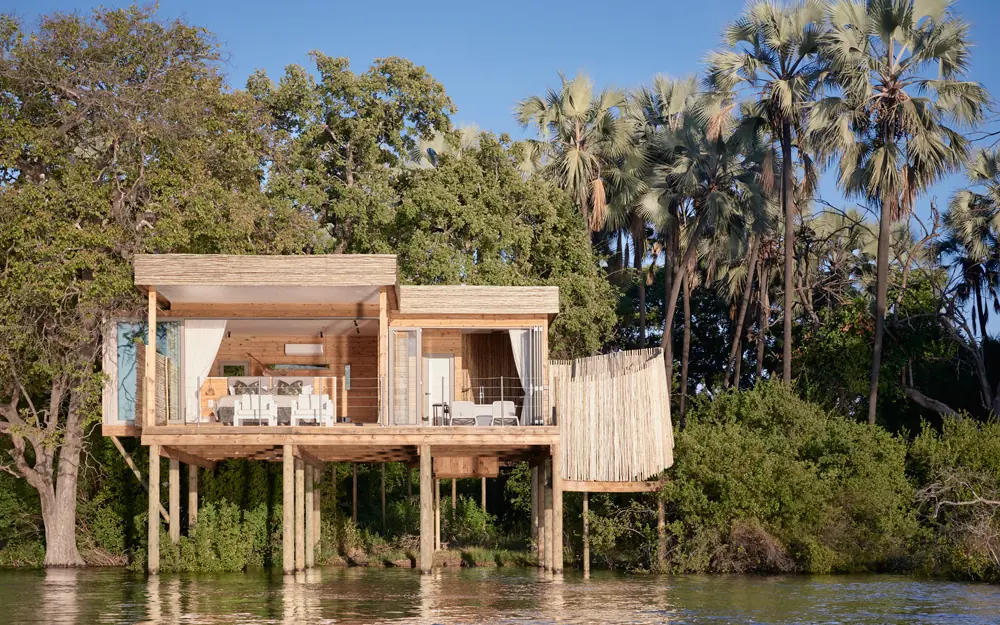
The Zambezi reaches Victoria Falls as a wide, slow river before dropping into the Batoka Gorge along a curtain of water nearly 1.7 kilometres across. These first two days take in the falls and the calm river above them, with footpaths through the rim rainforest, sunset cruises past hippos, crocodiles and elephants, and the option of rafting the gorge below or a helicopter flight over the curtain. You reach Old Drift Lodge by a cruise of roughly fifteen minutes along the Zambezi, inside Zambezi National Park on the site of the old river crossing. Its fourteen canvas tented suites face the water, each with a plunge pool and a claw-foot bath on the deck.
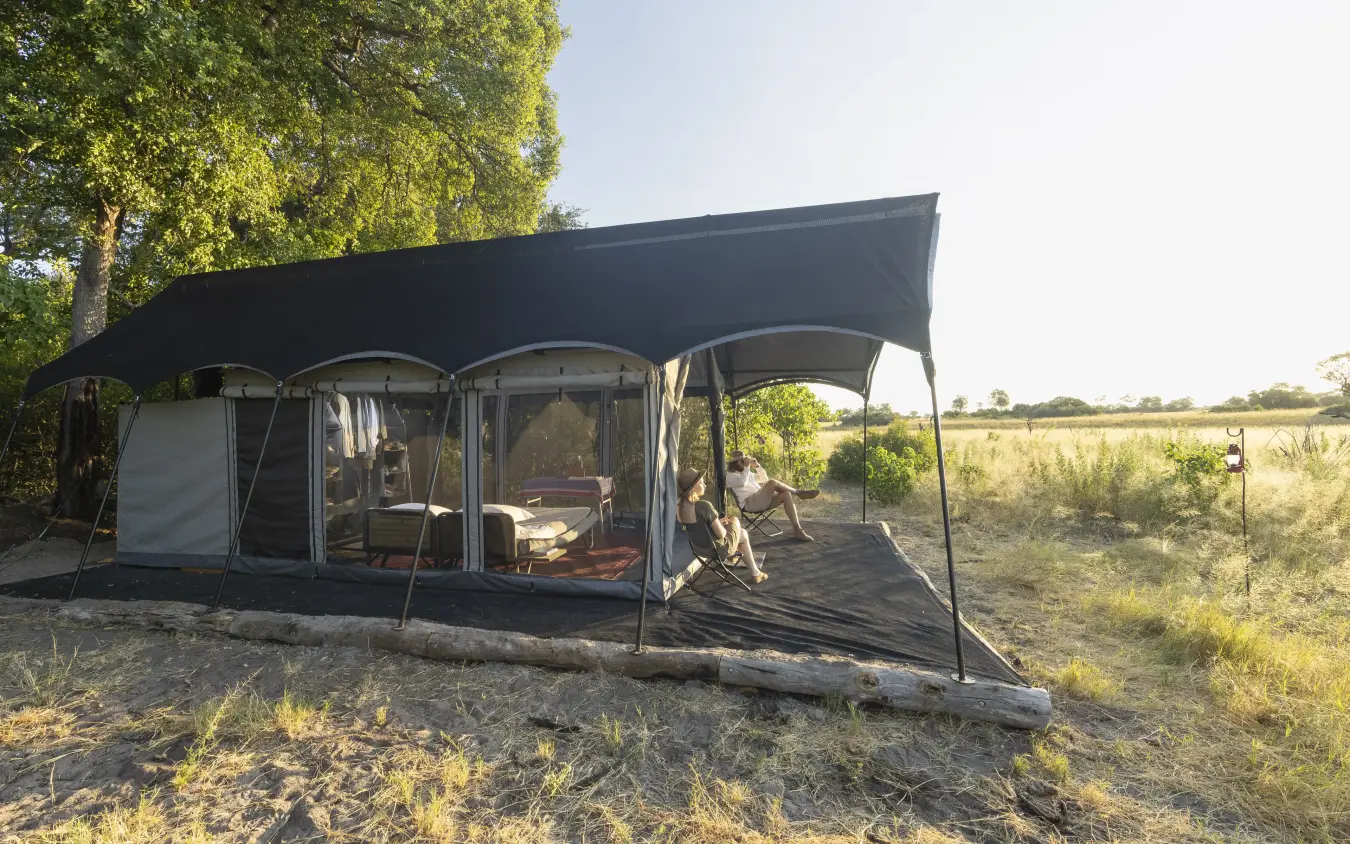
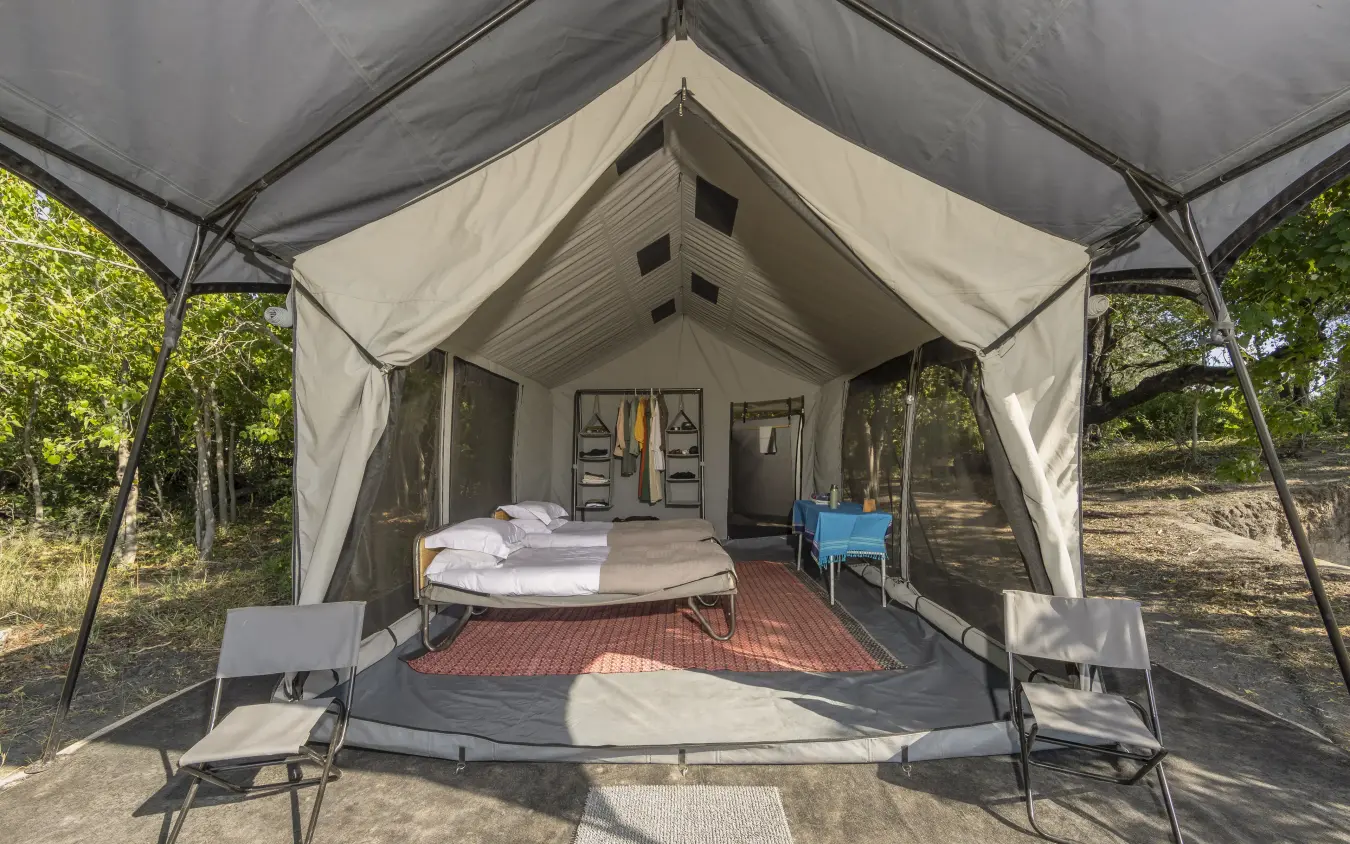
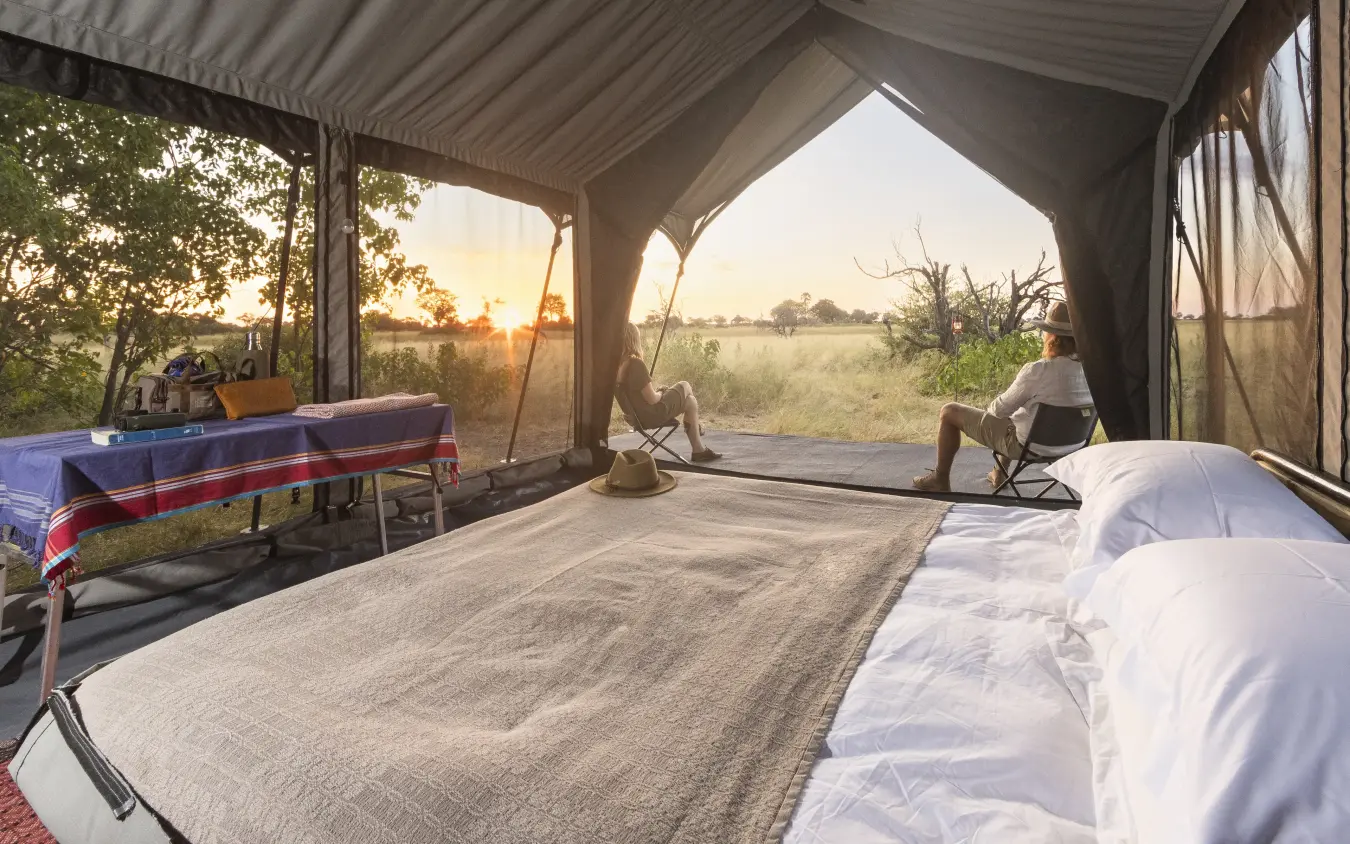
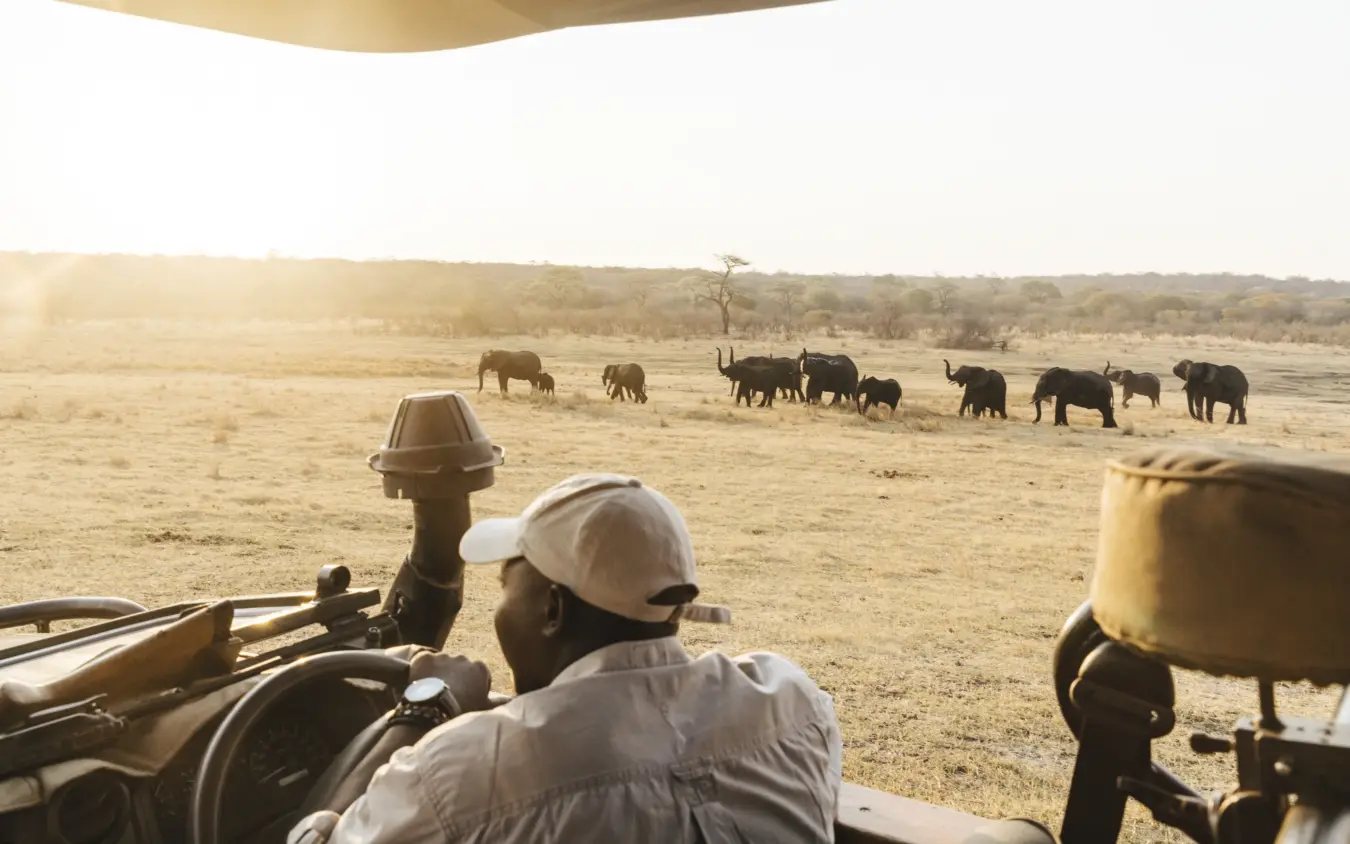
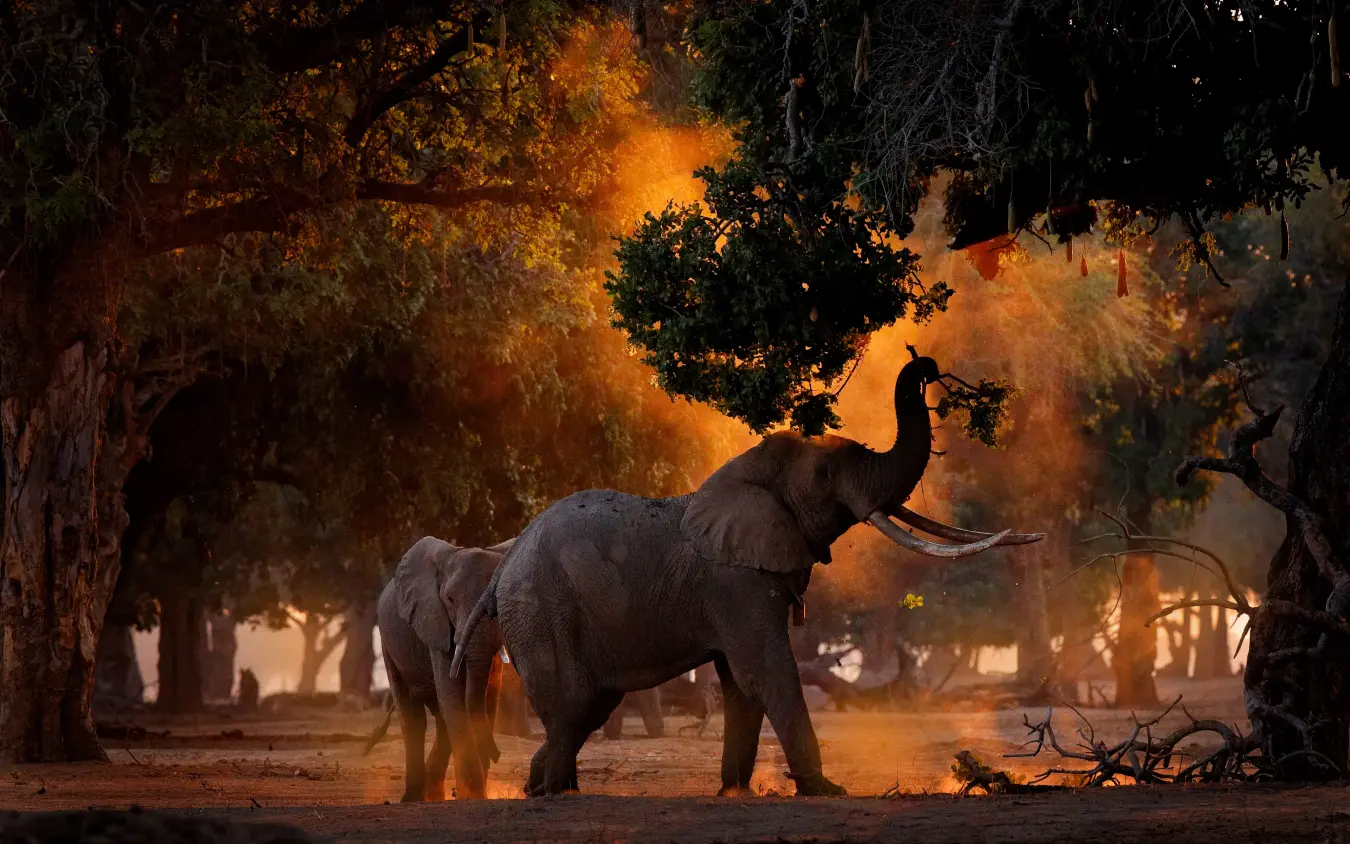
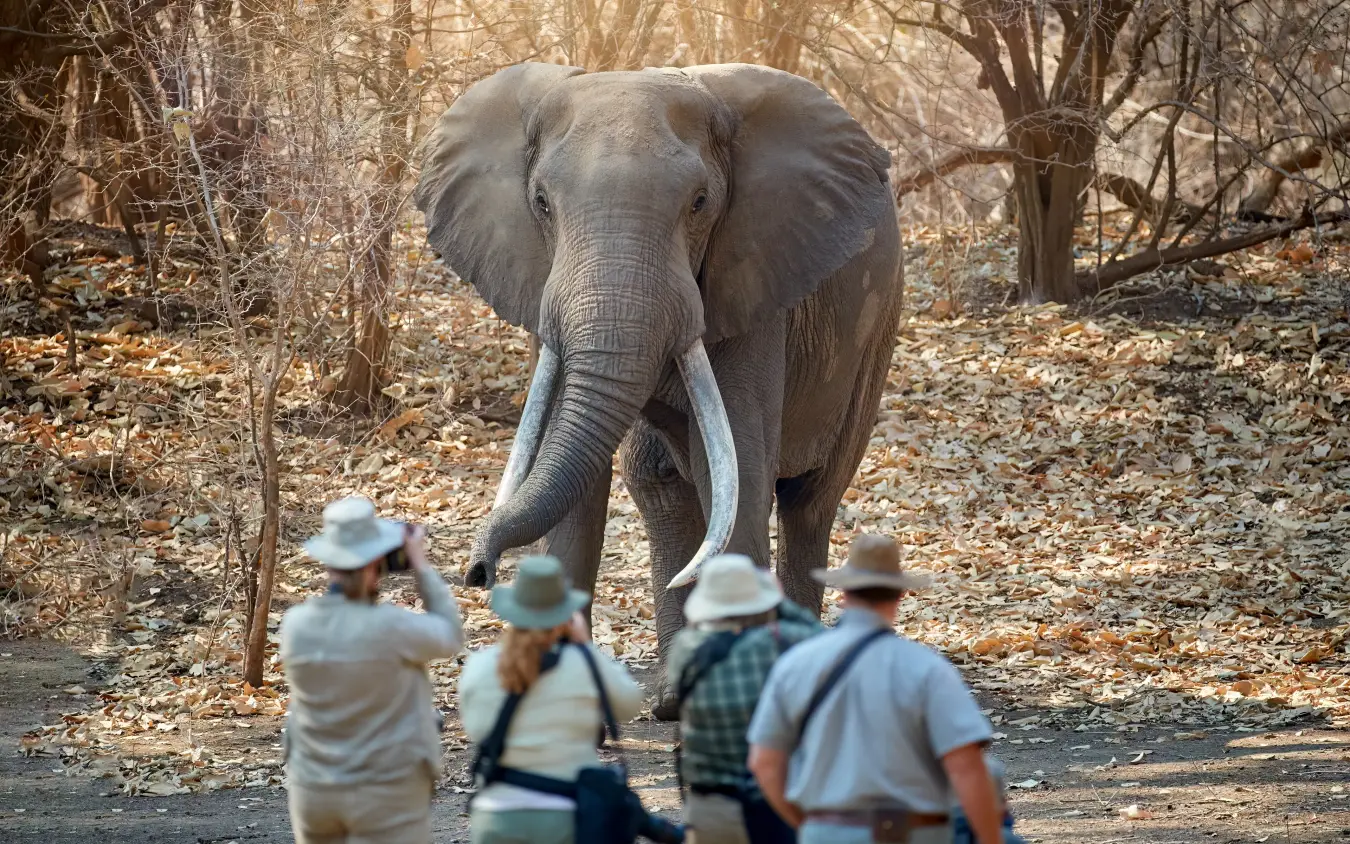
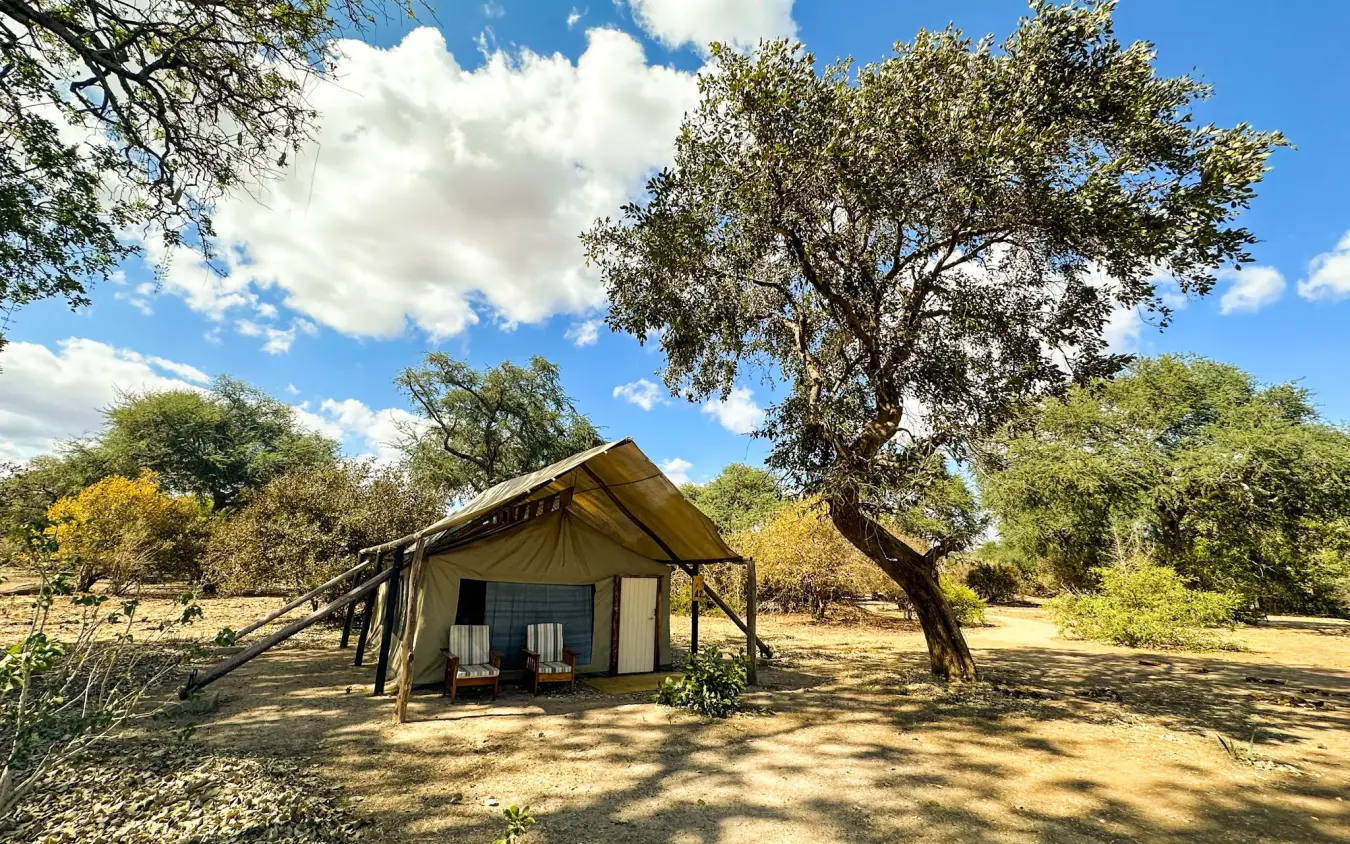
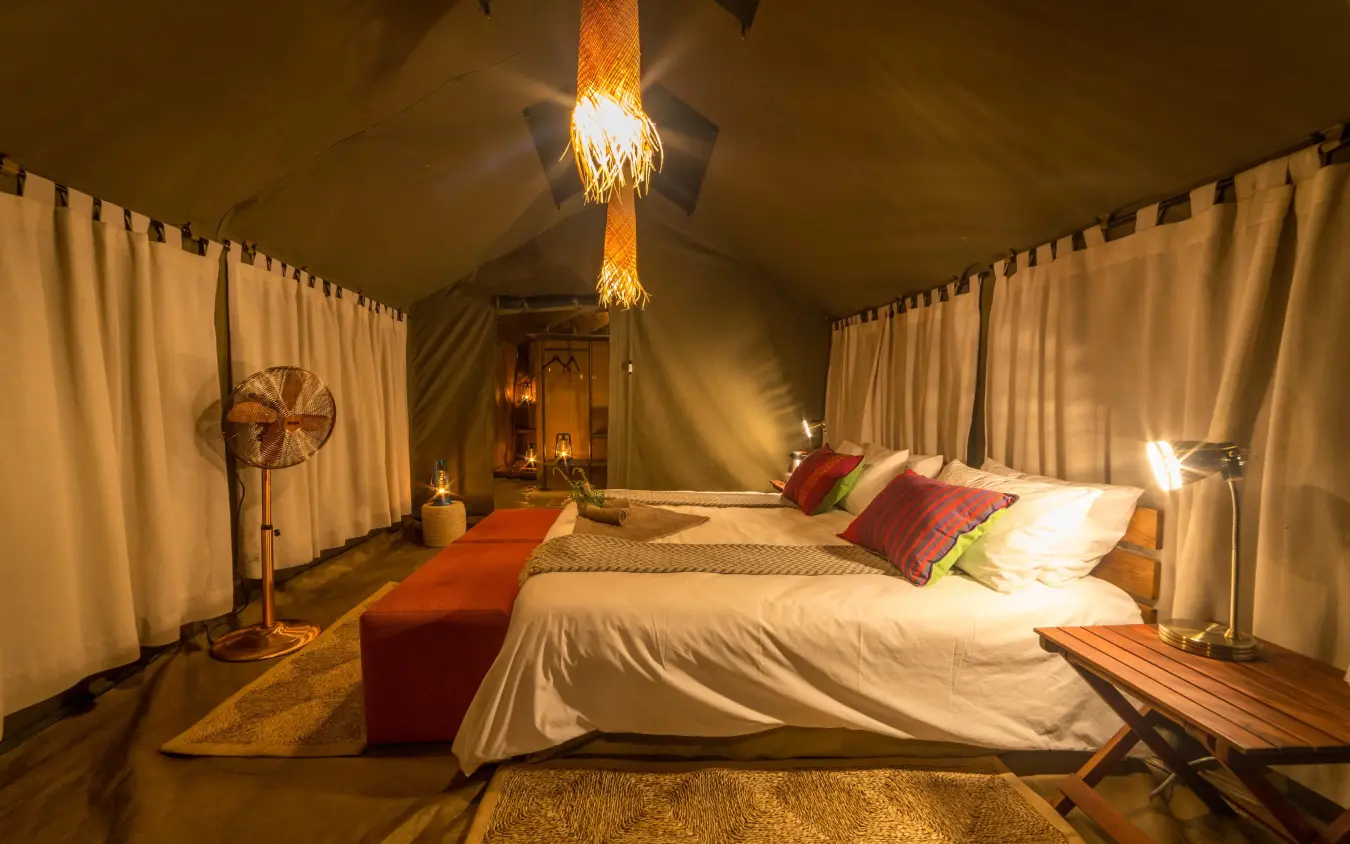
Three days on the Zambezi floodplain at Mana Pools, walked and paddled rather than driven. Walks approach habituated elephant bulls on foot as they rear onto their hind legs for winterthorn pods, while canoe trips drift past hippos and crocodiles at eye level and drives follow fresh lion or painted-dog tracks. Little Vundu holds a private concession fronting the river, five canvas tents under sausage trees, run by guide Nick Murray. Rebuilt each May and dismantled in November, it is a simple bush camp with open-air bathrooms and meals cooked over the fire.
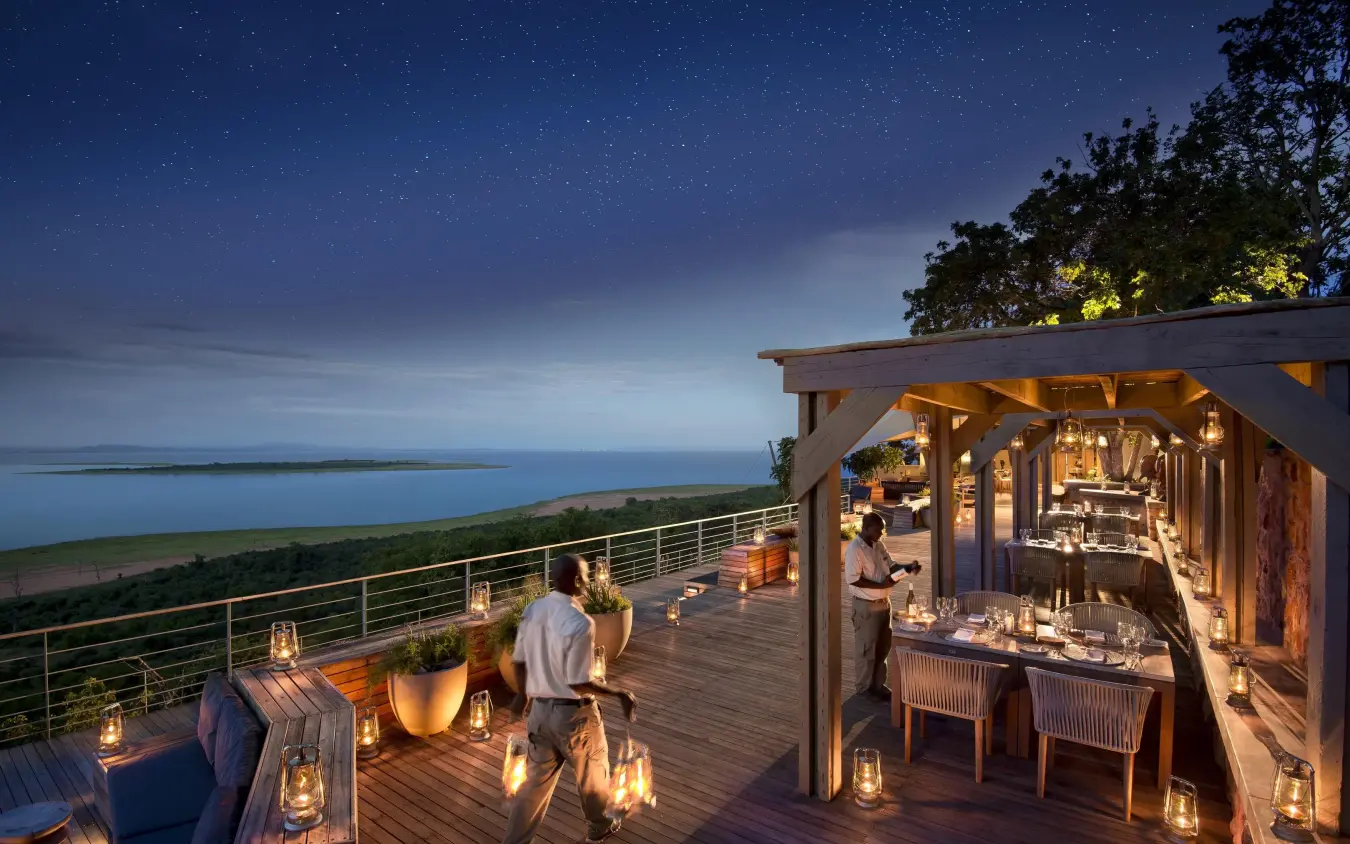
On the southern shore of Lake Kariba, Matusadona runs its safari from the water as readily as from a vehicle. These two days mean boating and sundowner cruises along a shoreline of drowned trees, elephants cooling in the shallows and buffalo grazing the exposed lakebed, with catch-and-release fishing for tigerfish and guided walks on the private concession. Bumi Hills Safari Lodge crowns a hill above the lake, looking across to the Zambezi Escarpment, its infinity pool edged toward the water horizon. It reopened in January 2018 after a full renovation.
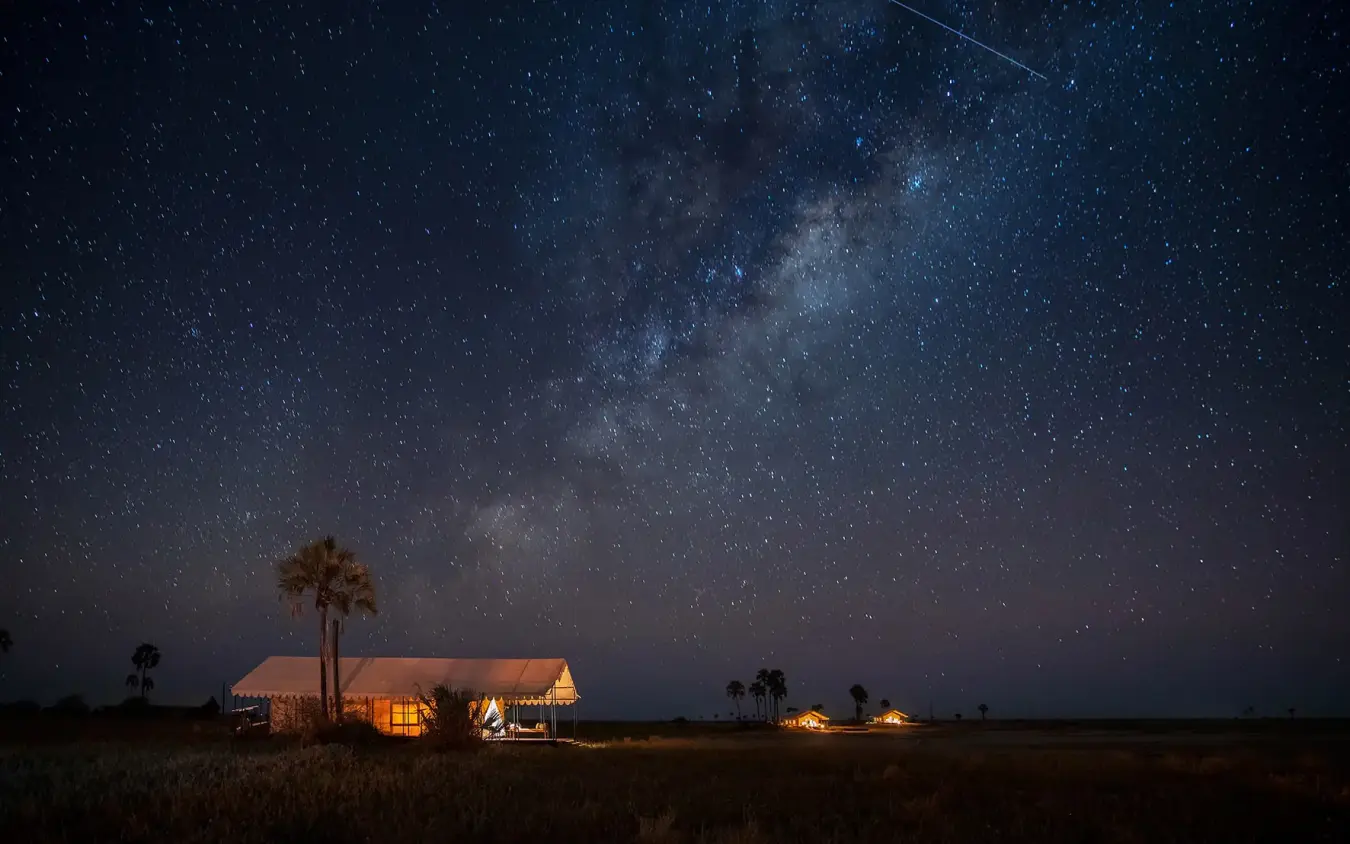
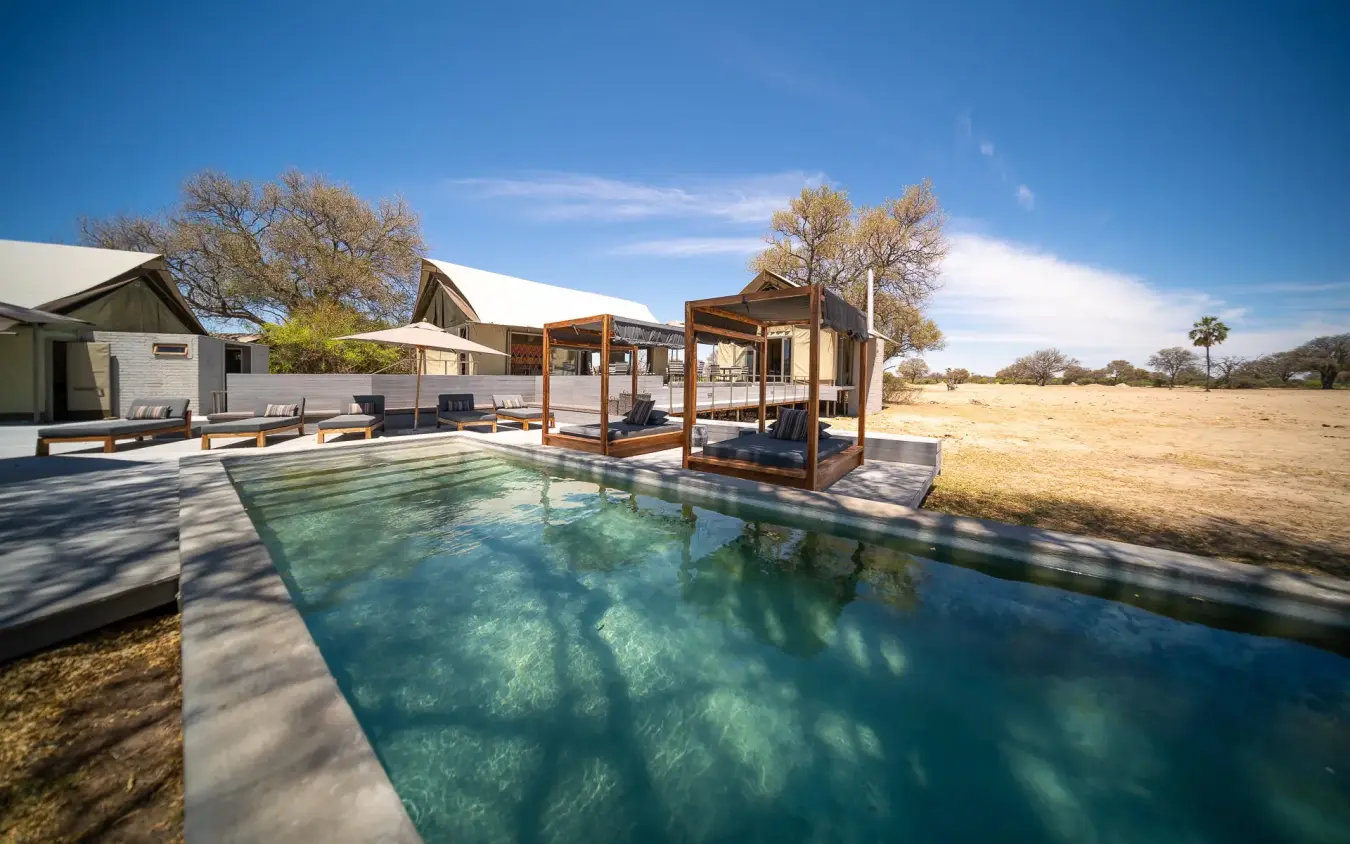
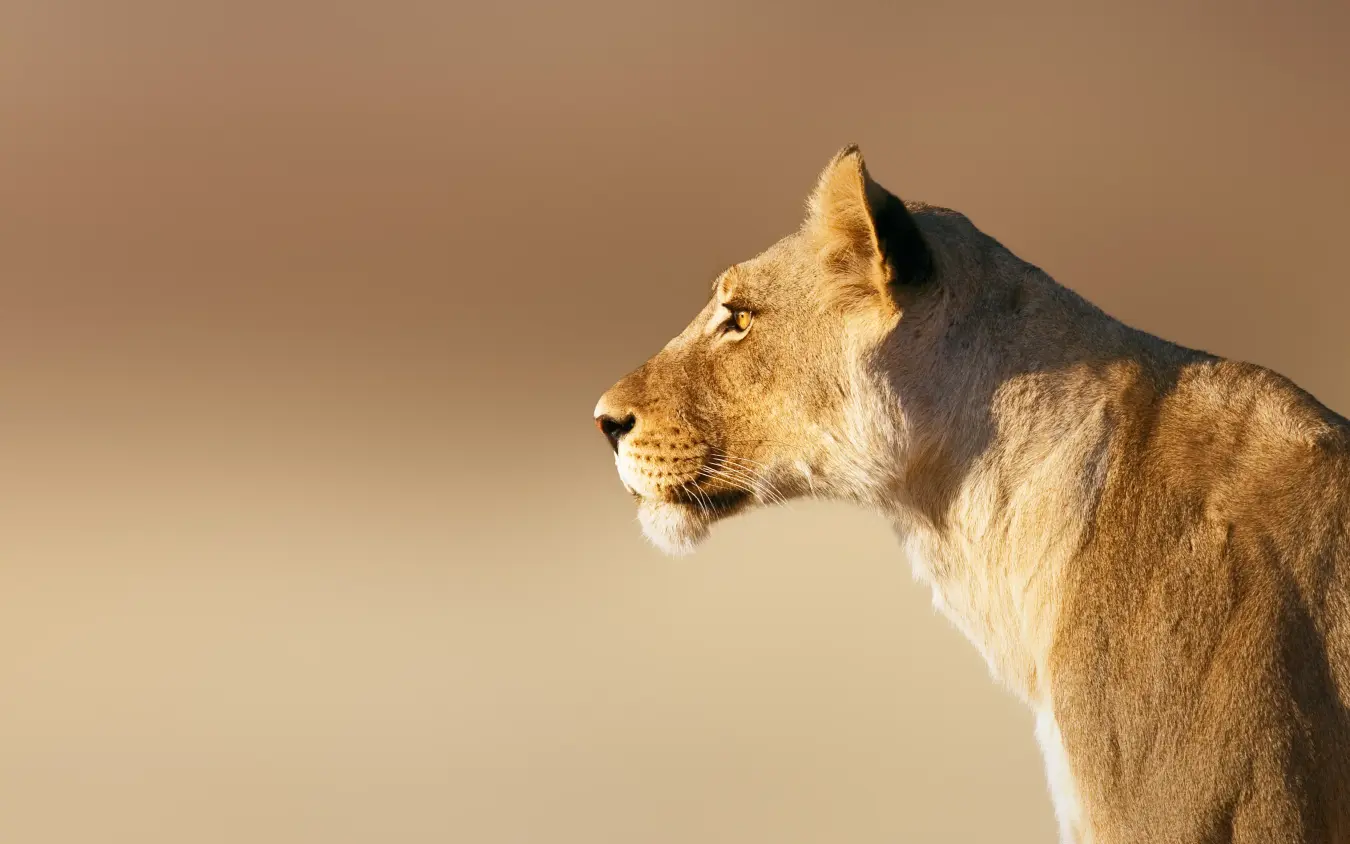
The Robins area of northern Hwange is undulating, rocky country of mopane woodland and open grassland, worked on foot and by vehicle over these three days. The pumped pans and springs near Deteema hold Hwange's elephant herds through the dry months, and the way to see them is to settle at a waterhole and let the sightings come; buffalo herds and lion prides work the same ground, and painted dogs den across the park between June and August. Hwange Bush Camp is a small six-tent camp run by Dave Carson and his wife Antonette, struck each November and rebuilt in May, with guides who host the meals and share the fire.
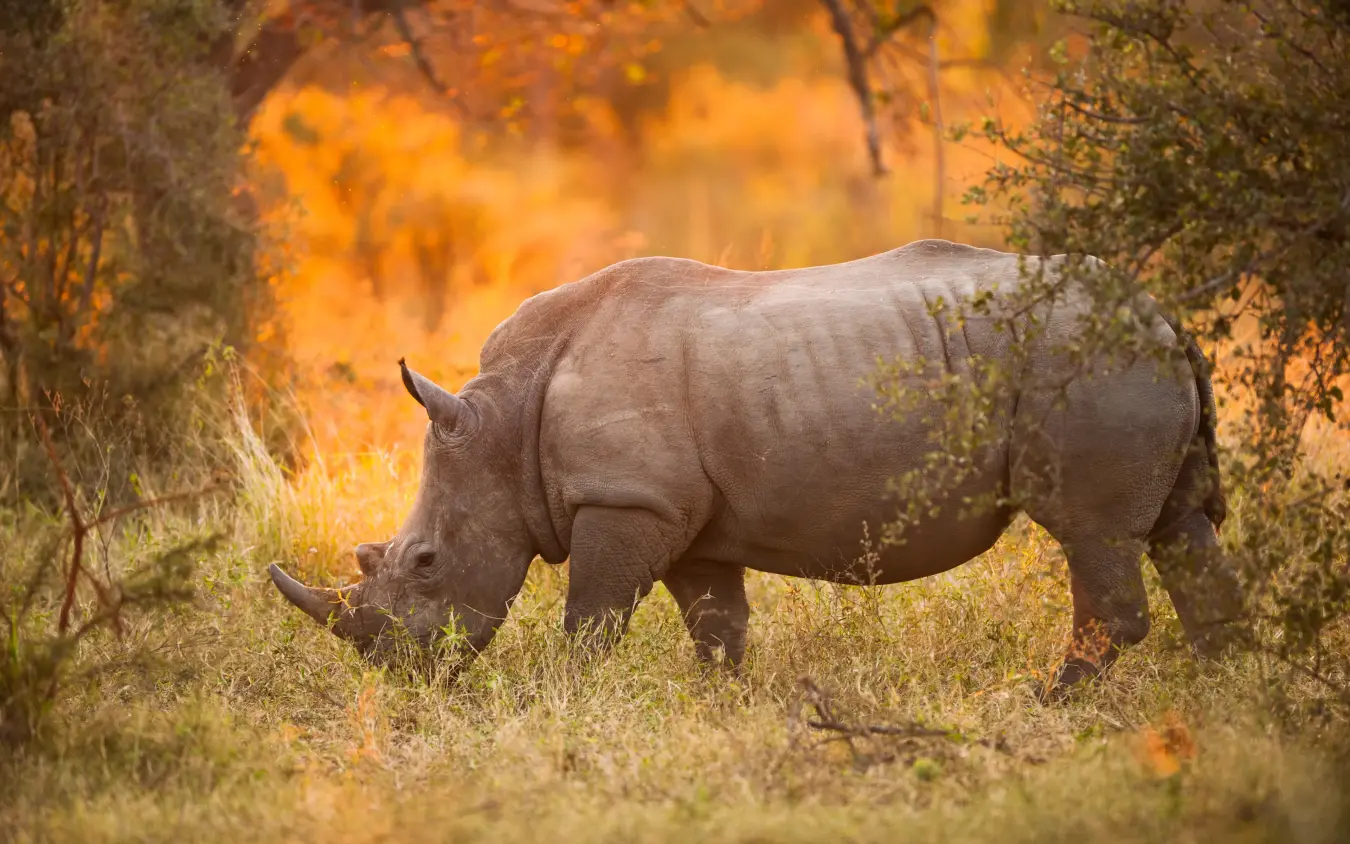
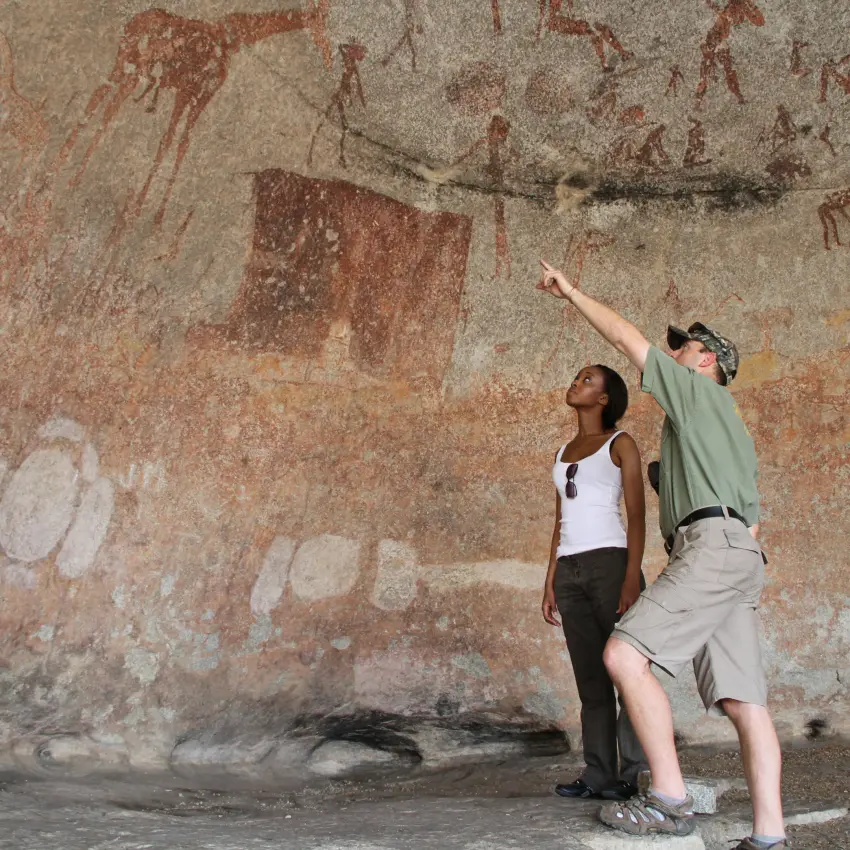
The Matobo Hills are a landscape of granite domes, balancing rocks and whale-back dwalas, part of a UNESCO World Heritage Site scattered with San rock art. These final two days centre on tracking white rhino on foot through the national park, with klipspringer and rock hyrax on the stone, breeding Verreaux's eagle overhead and painted caves interpreted by guides who include professional archaeologists. Amalinda Lodge is built into the granite boulders on a private concession some 45 kilometres from Bulawayo, its nine thatched rooms shaped around the rock, with a wine cellar in a natural cave.
It is safe enough that the parks authority allows walking here, and serious enough that it is done with a licensed professional guide. On this trip you never walk alone. Every walk is led by a licensed Zimbabwean professional guide who carries a rifle and decides how near is sensible.
The place helps too: the woodland is open, so you and the elephants can see each other from a long way off, and the bulls here are used to people on foot.
None of that removes the risk. It is managed by the guide, whose word on a walk is final.
Reasonably active, not athletic.
A walking safari is slow: a few kilometres at most, with frequent stops to read tracks and never an endurance test. The floodplain at Mana Pools is level going. The Robins country in Hwange is hillier and stonier, so bring boots you have already worn in.
Canoeing at Mana is drifting with the current more than paddling against it, needs no previous experience, and is leisurely.
The longest single outing is likely to be the morning with the rhino trackers in the Matobo Hills, three to five hours at an unhurried pace that all levels of fitness can manage.
The real test on this trip is heat, not distance. By October the Zambezi Valley can easily pass 40 degrees, so if you feel the heat, choose June to August, when mornings on foot are cool.
White rhino, very likely, though you are tracking wild animals and nothing is promised.
Matobo is one of the few places in Zimbabwe where following rhino on foot is offered, and they can reliably be tracked, sometimes within twenty minutes. Other mornings take hours.
You go out with the lodge's guide and a tracker, often joined by a ranger from the park's anti-poaching unit, and they work from fresh tracks until the animals are in view, then hold you at a respectful distance. Most guests succeed.
Black rhino share the park but are seldom met, so we would not plan around one. The dry months from May to October are the easiest, when the grass is low and tracks are simpler to follow.
They suit different people and different river levels.
Rafting the Batoka Gorge is class five white water, with a minimum age of 15 and a climb out of the gorge at the end, one we liken to a 70 storey building. From about August the river is low enough for the full run from the first rapid.
Earlier, in high water, a shorter run starts further down, and around the peak of the flood the river can shut to rafts altogether; operators differ on the dates, so we check.
The helicopter asks nothing of you and flies at any water level, for 12 to 15 minutes on the usual circuit or between 22 and 30 on the extended one. It adds most in May, at the start of this trip's run, when the river is still high and spray hides part of the view from the paths.
We do not say in advance what you will fly in, because that is the company's choice and not ours.
Only from May to November, because two of the five camps exist only in the dry months.
Little Vundu and Hwange Bush Camp are both put up in May and taken down in November, ahead of the rains that turn Mana Pools' black soil impassable.
Within that window our ratings are at their highest everywhere in July, August and September, and June to August are the coolest for long mornings on foot. From August the elephant bulls at Mana start rising onto their hind legs for the winterthorn pods, and Hwange's herds crowd the pans most heavily in September and October.
October has the most concentrated game of all and the fiercest heat.
At the two ends of the season the trade is a simple one. In May the country is still green, the Falls close to full flood and Matobo already at its best; in November the first storms build, migrant birds return and antelope drop their young. Both are quieter and usually cheaper, with the game spread more widely.
Yes to both.
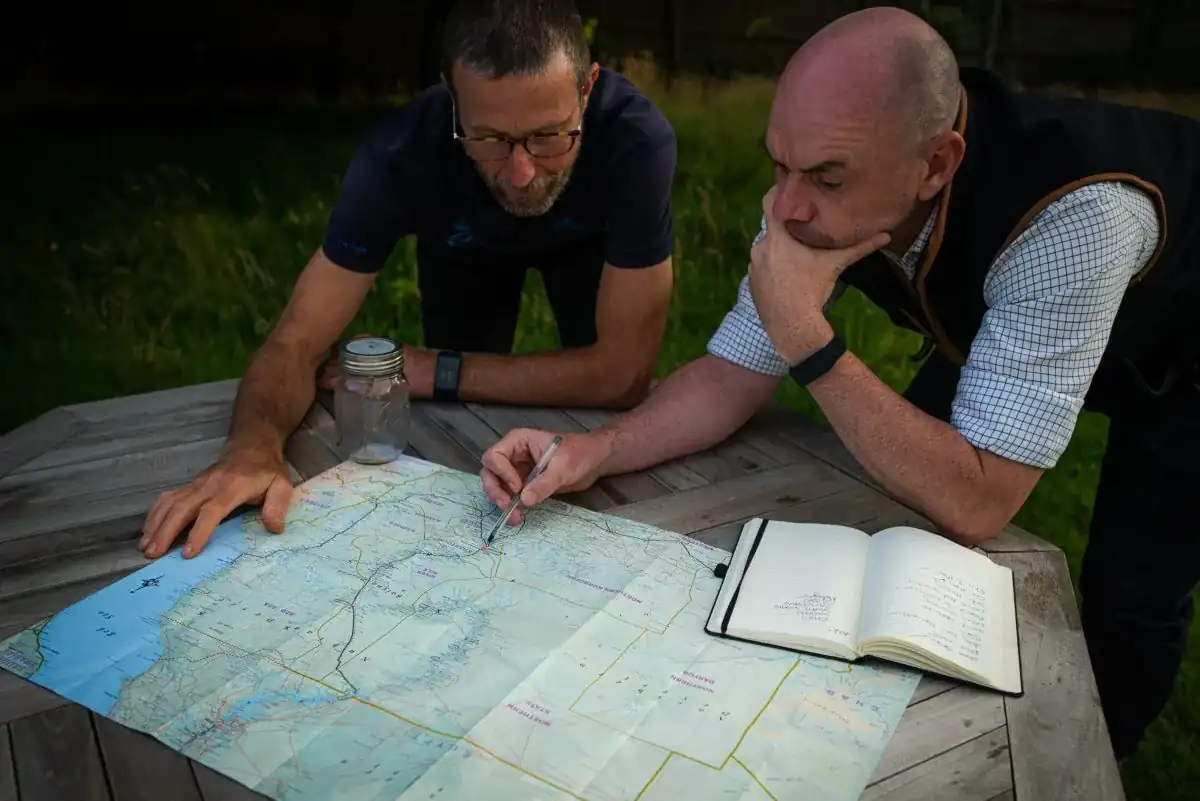
The sample route leaves the travel between areas open, and the distances are large, so we plan it with you.
Mana Pools is the far corner: it is about two hours ten minutes by light aircraft from Victoria Falls, against six to seven hours by road from Harare, so we would suggest flying in and out of Mana.
Hwange Bush Camp is about four hours by road from Victoria Falls, the second half of it a game drive through the park, and Matobo at the end is 45 kilometres from Bulawayo.
As for changes, the fixed points are the two camps that stand only from May to November, and their size, five tents and seven, which is why July to October needs booking early. The easiest things to alter are:
Ed Charles, BBC Producer
Fitzroy are true specialists in accessing the wilderness. They know where to go and importantly, when to go there. Highly recommended.
zimbabwe
Twelve nights across Zimbabwe, from Victoria Falls and Mana Pools to Lake Kariba, Hwange and the granite of Matobo.
zimbabwe & botswana
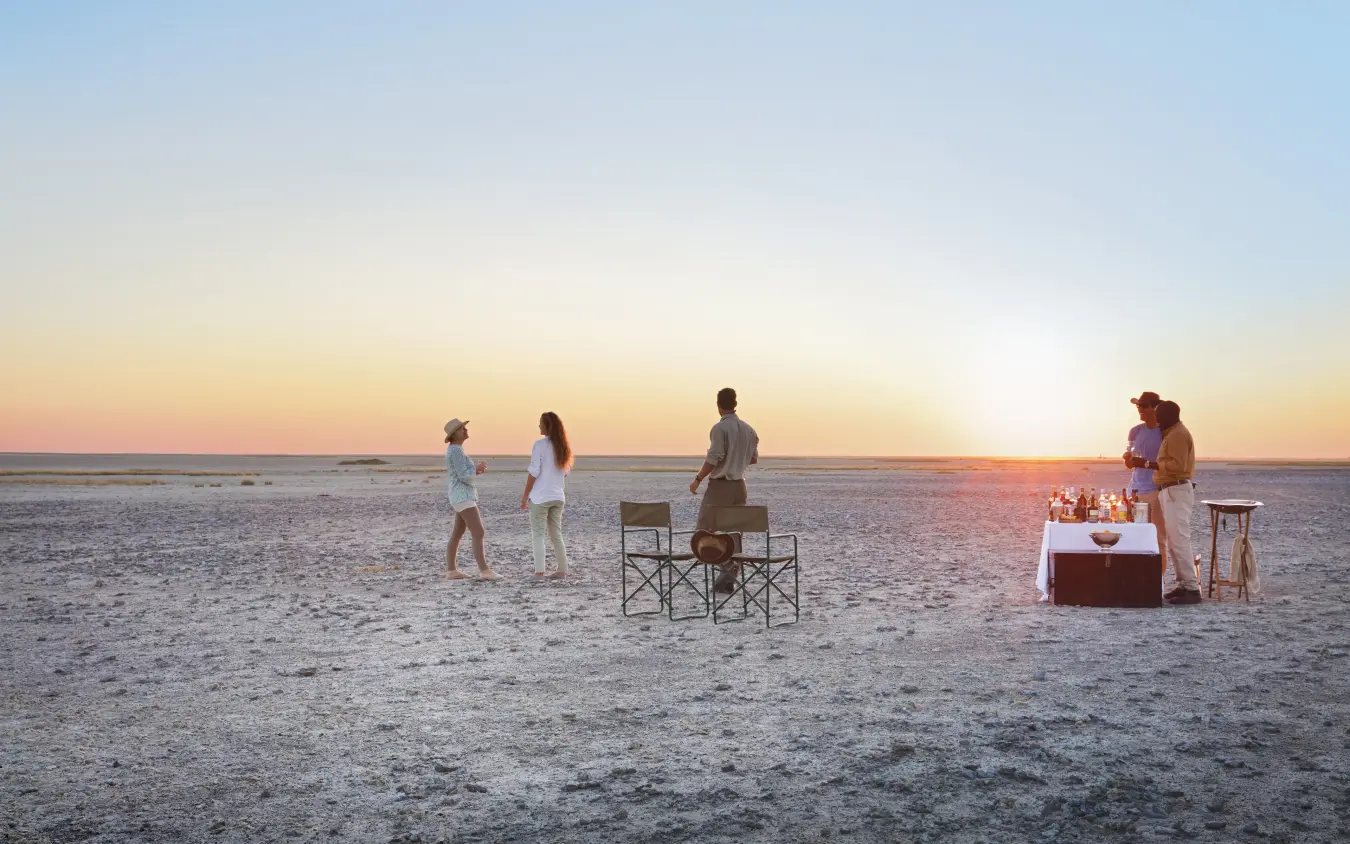
Twelve nights from Victoria Falls into Botswana, linking a walking concession, a permanent Delta lagoon and the salt pans.

zimbabwe
Thirteen nights across Zimbabwe, from the Zambezi at Victoria Falls to Mana Pools, Lake Kariba, Hwange and Malilangwe.
rated five stars by our clients

our approach
Every journey starts with a conversation. We take the time to understand your vision before we start planning.
Whether by phone or in person, we work with you directly to shape something that is considered, personal, and expertly delivered.
Every journey starts with a conversation. We favour a direct, personal approach: understanding your vision before anything else.
Whether by phone or in person, we work with you directly to shape a journey that is both thoughtfully considered and expertly delivered.
Get in touch to start planning yours.