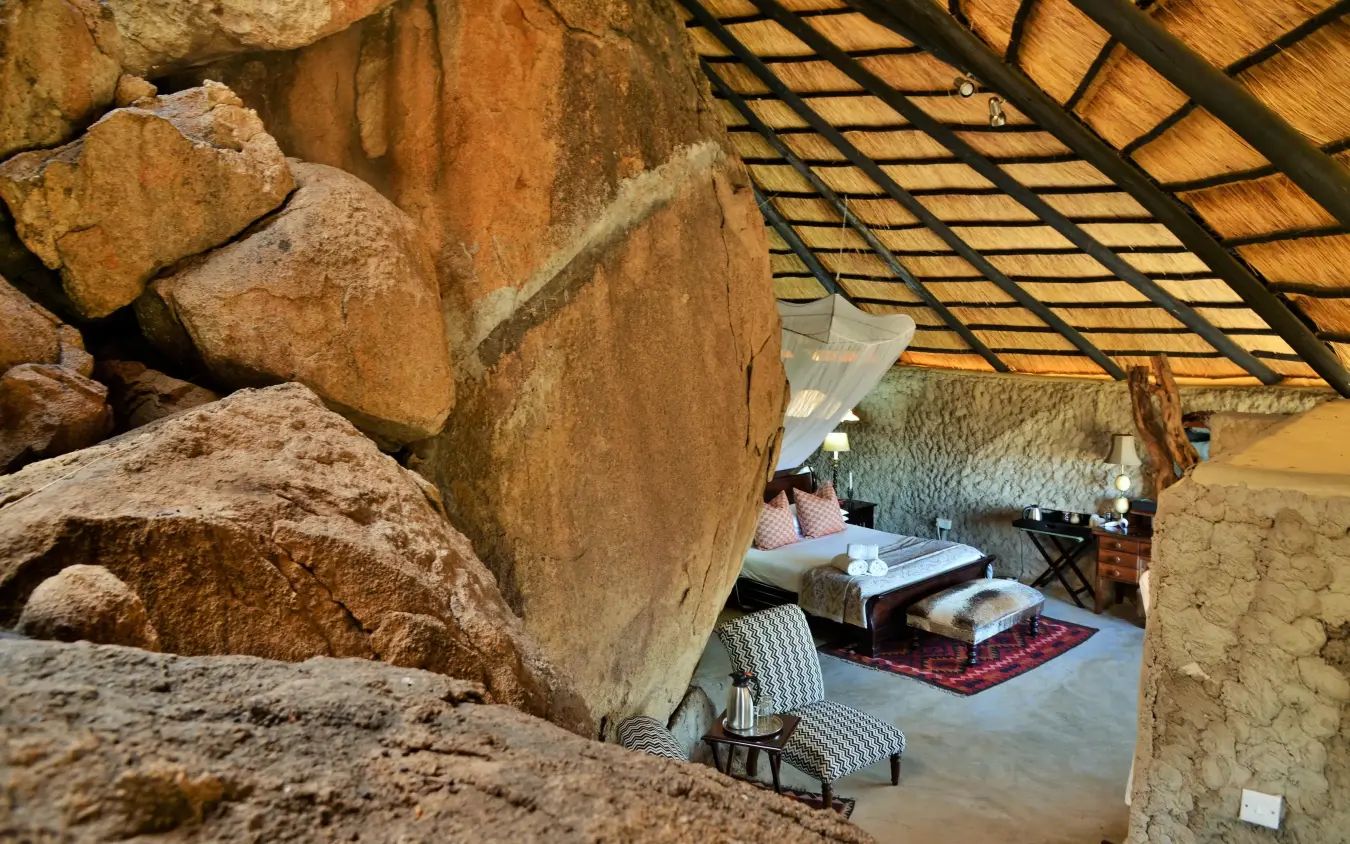
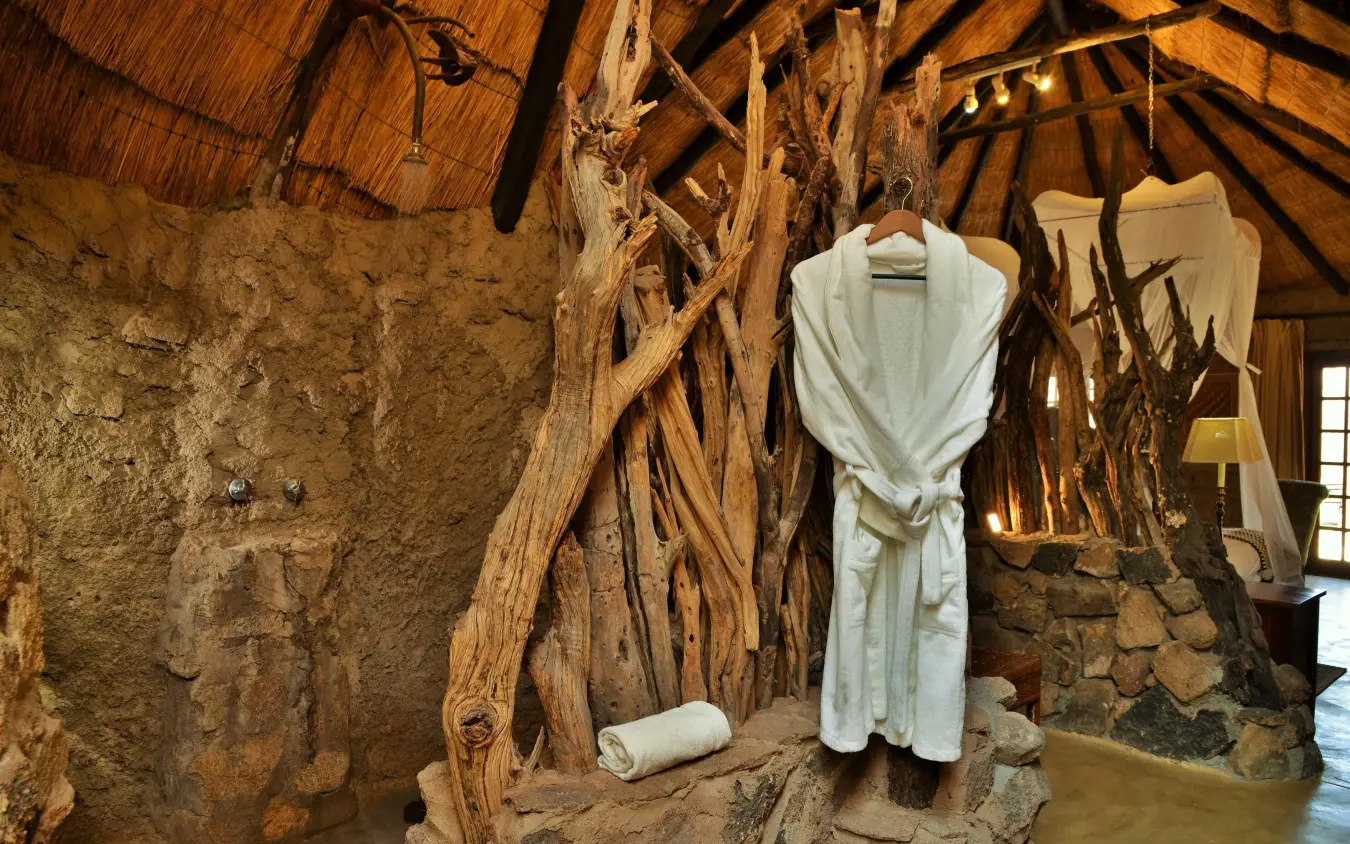
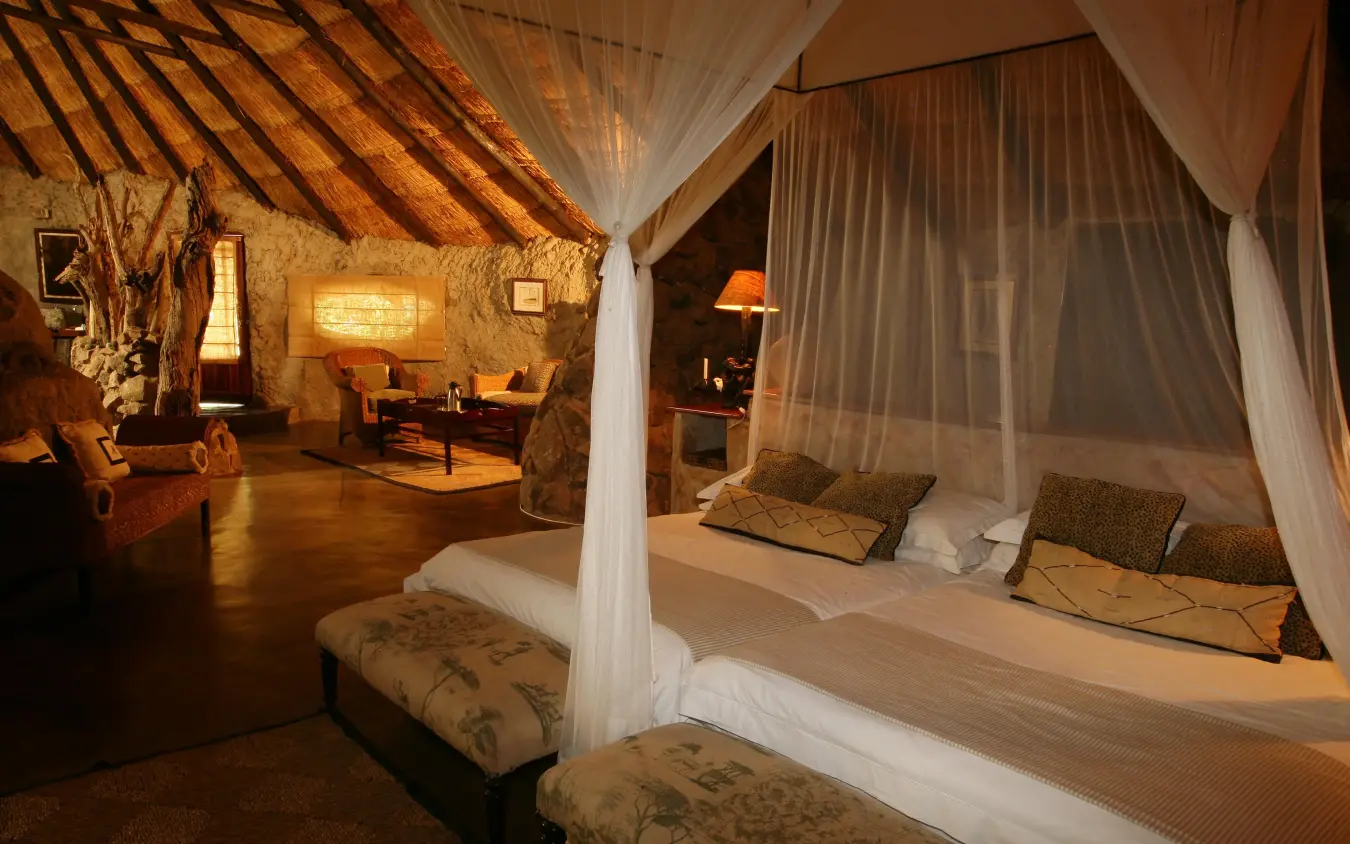
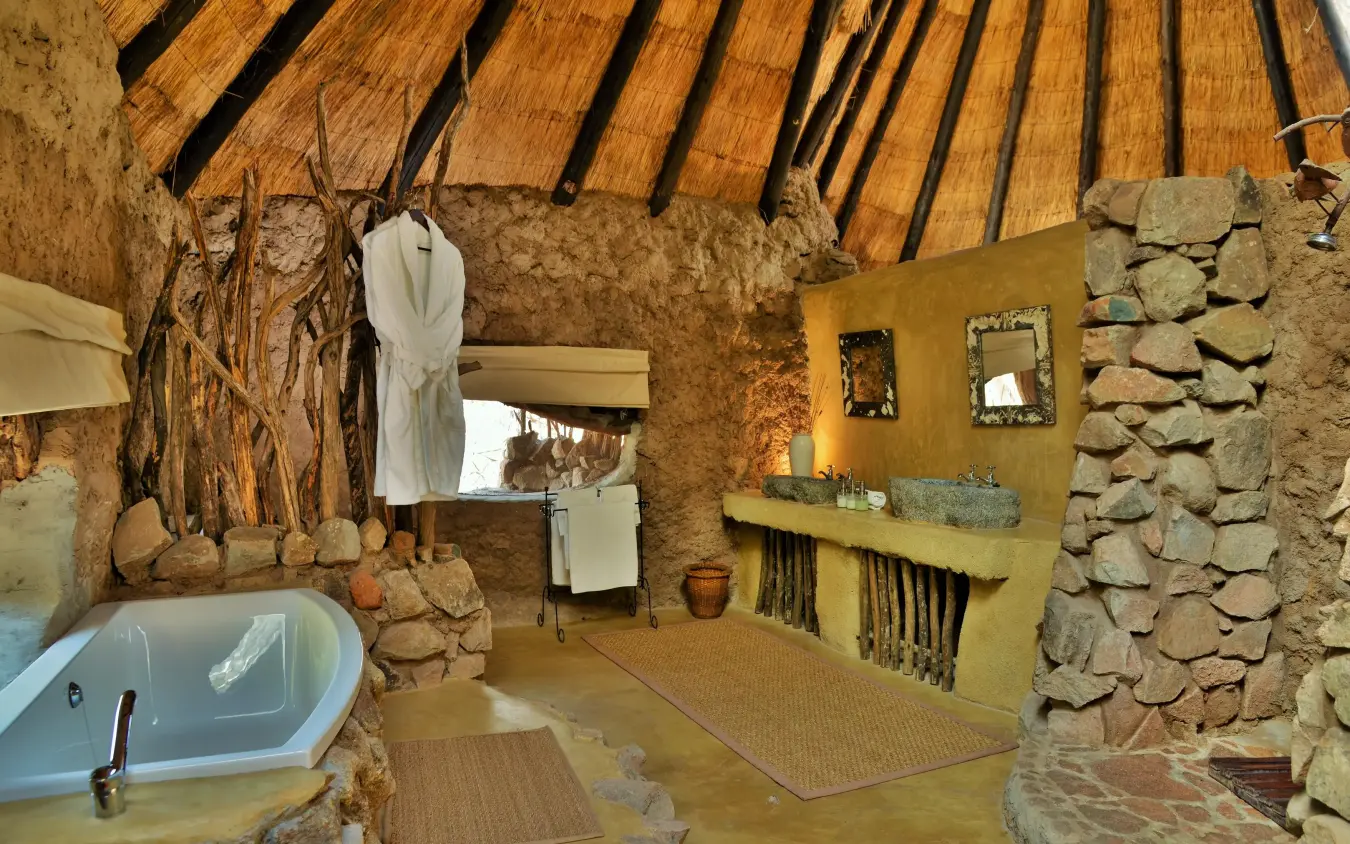
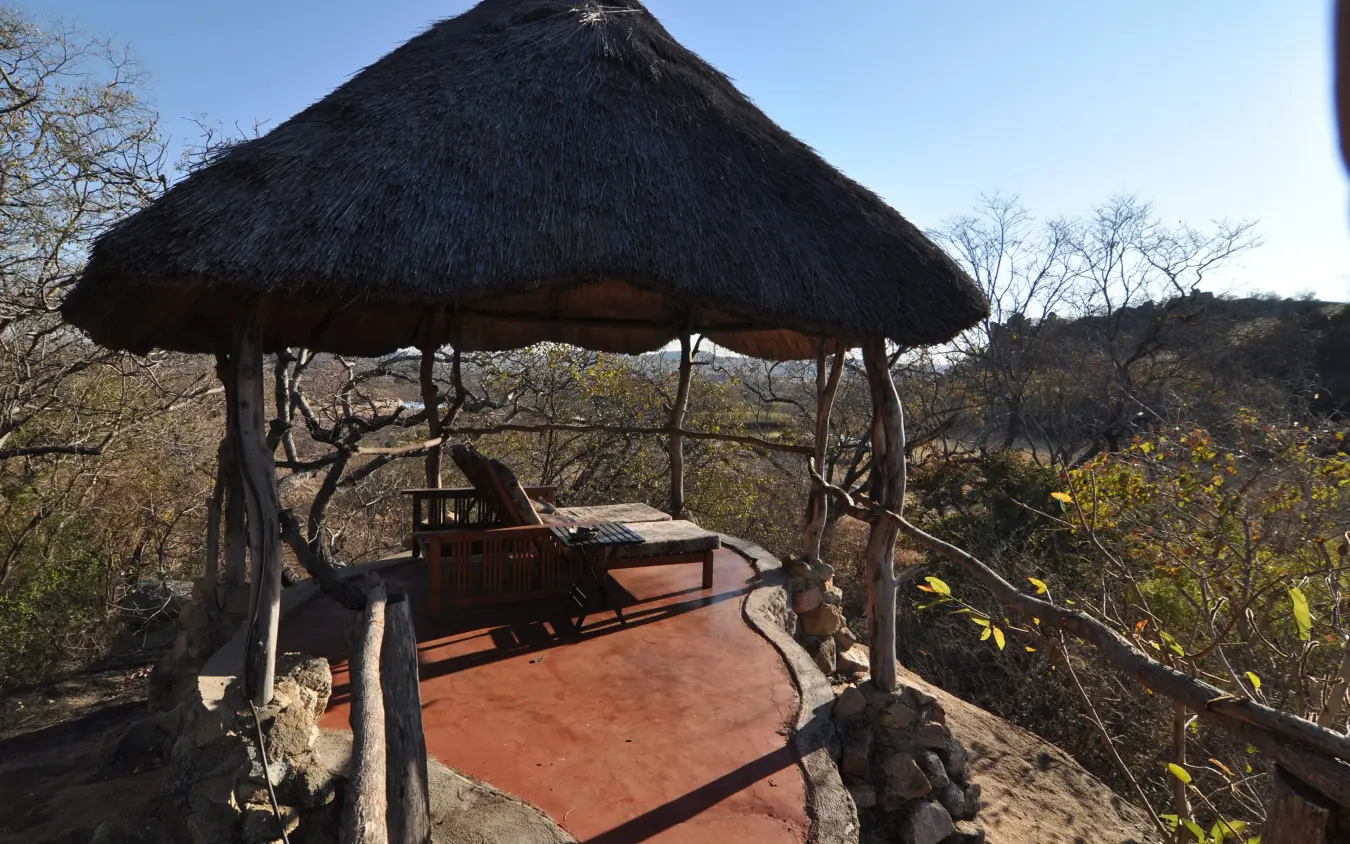
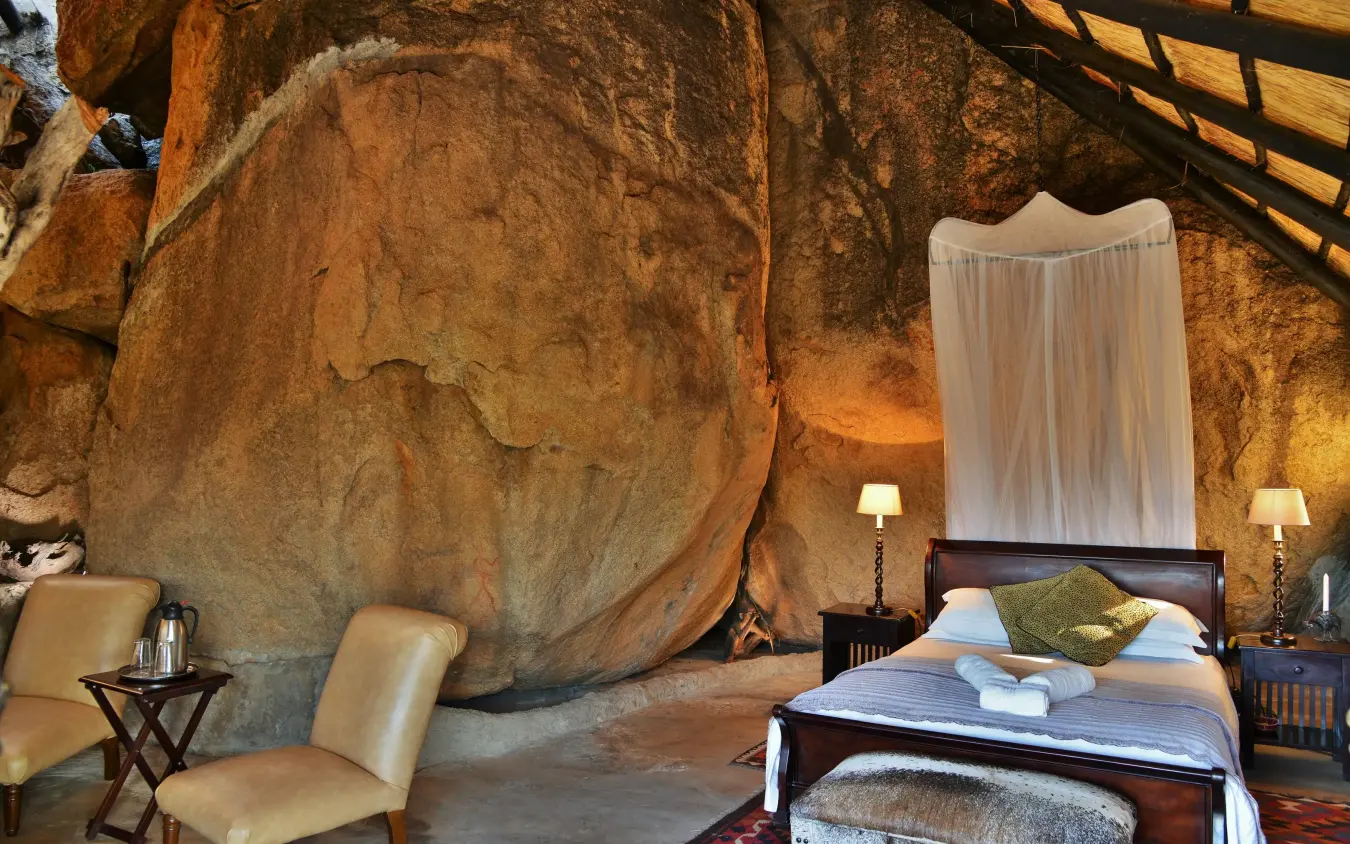
Thick rock walls keep the interiors cool through the heat of the day, and mornings begin with birdsong echoing off the stone. Meals are served communally at the Captain’s Table, a long teak surface made from railway sleepers that date to the late 1800s, set in an open-air thatched dining area with views across the rocks and bush. A wine cellar sits inside a natural cave, and one of the two bars is built into a rock face. Evenings gather around the fire under clear skies, the granite still warm from the day.
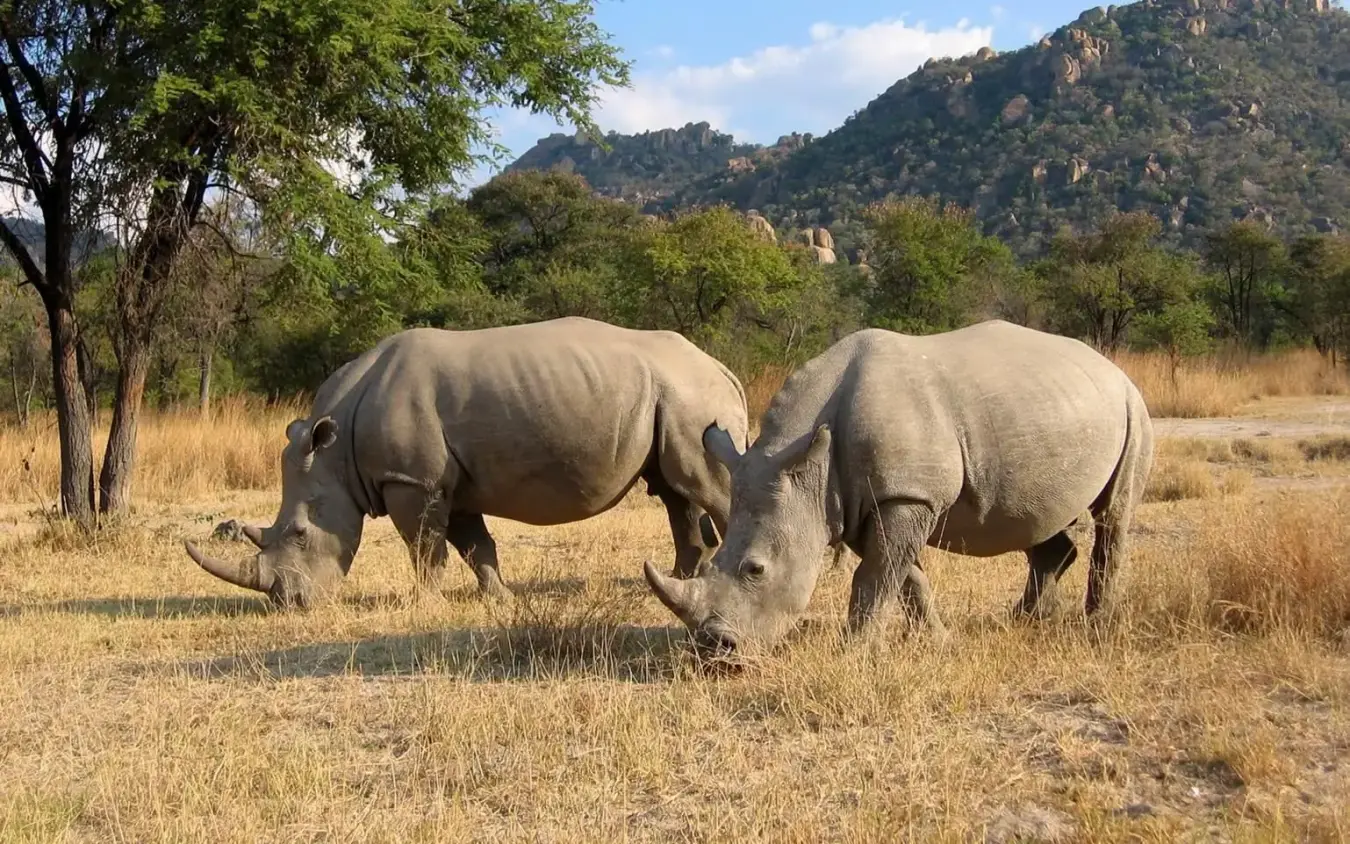
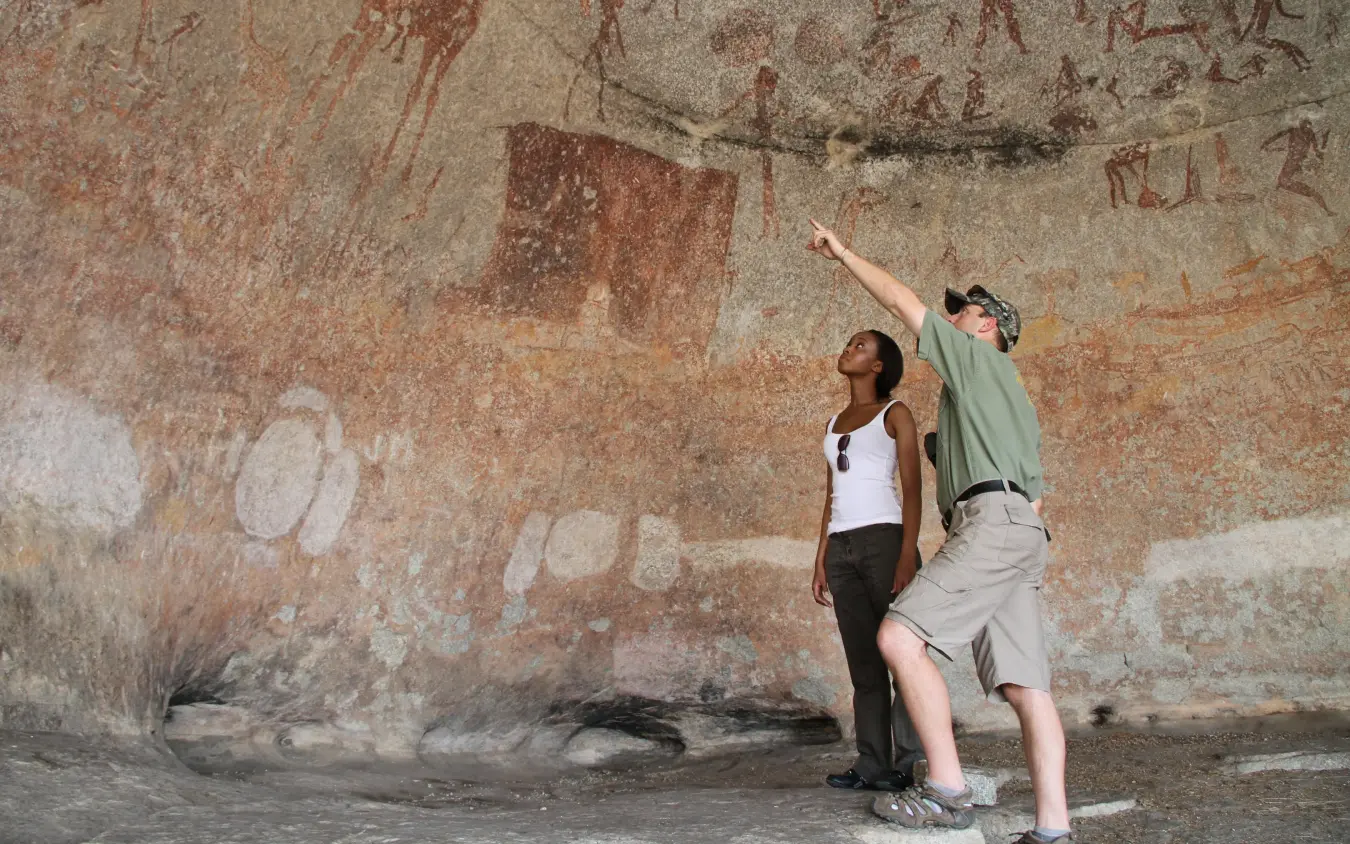
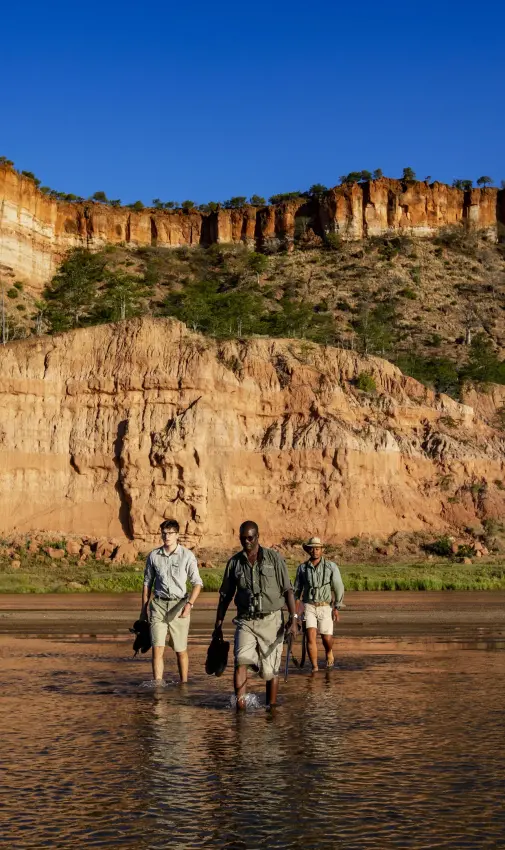
Rhino tracking is the reason most people come, whether on foot or by vehicle in Matobo National Park, and the terrain and the animals make close approaches reliable. Beyond that, guests visit San rock art sites, some dated to more than 13,000 years old, and World’s View, the granite summit where Cecil John Rhodes is buried. Bicycle rides through nearby villages take in the painted homes of the “My Beautiful Home” project, while horse riding and walks on the private concession round out the slower days.
A wine cellar sits inside a natural cave, and one of the two bars is built into a rock face
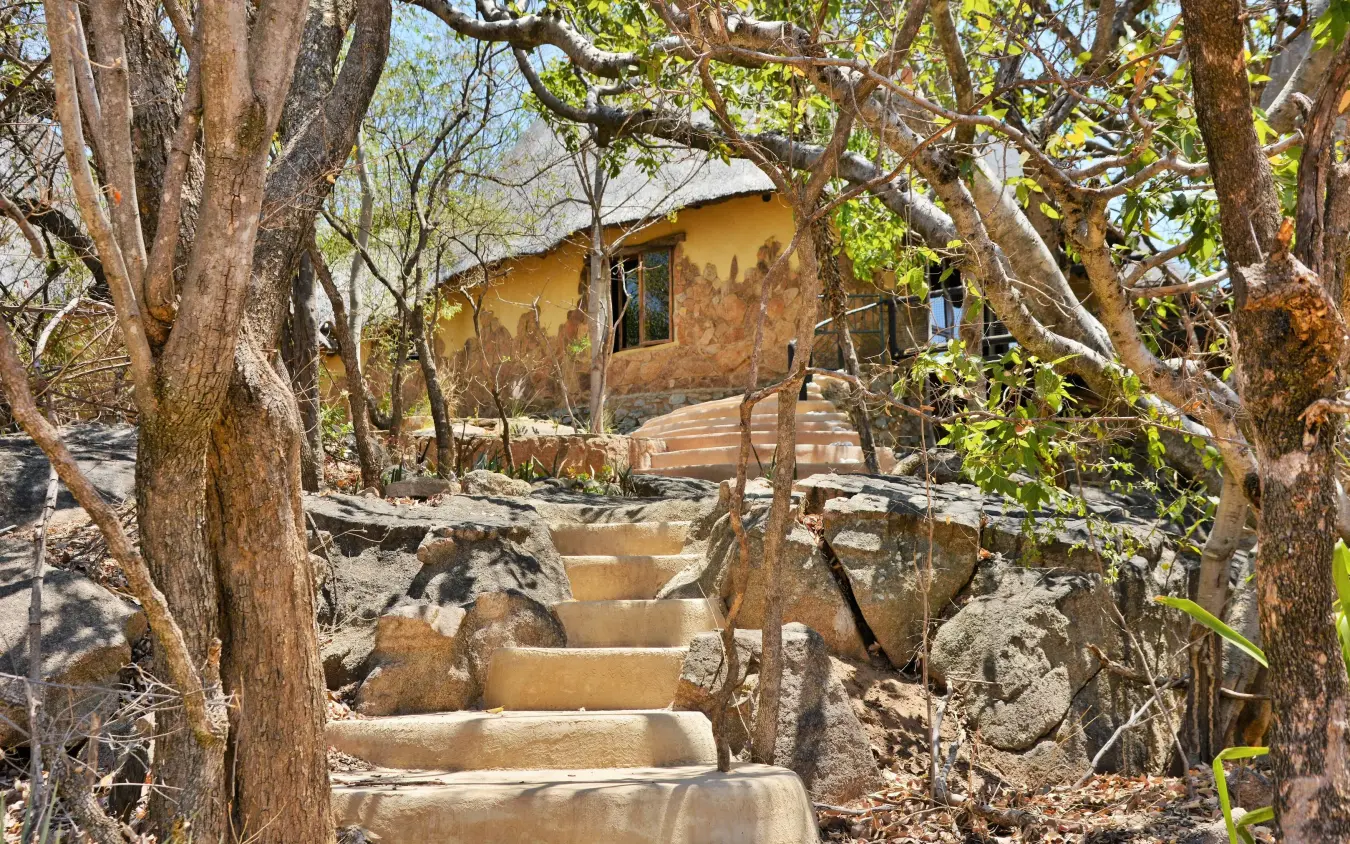
The Steads’ former home stands a short walk from the main lodge, now The Homestead, a three-bedroom villa with its own guide, vehicle and chef. It carries the same character as the rest of Amalinda, the same instinct for living among the rocks rather than against them, and it gives a family or a group the run of the place while the concession lies open around them. Two generations of the family remain involved, and that continuity is felt in the way the lodge is run.
A community and conservation levy is added to every stay and funds the Mother Africa Trust, founded by Sharon Stead of the Amalinda family. The Trust supports the Ethandweni Children’s Home in the Matobo District, caring for orphaned children close to the lodge. Further north, it builds predator-proof enclosures to ease the conflict between farmers and wildlife, so that a single stay reaches well beyond the boulders it is built into.