
 01
01
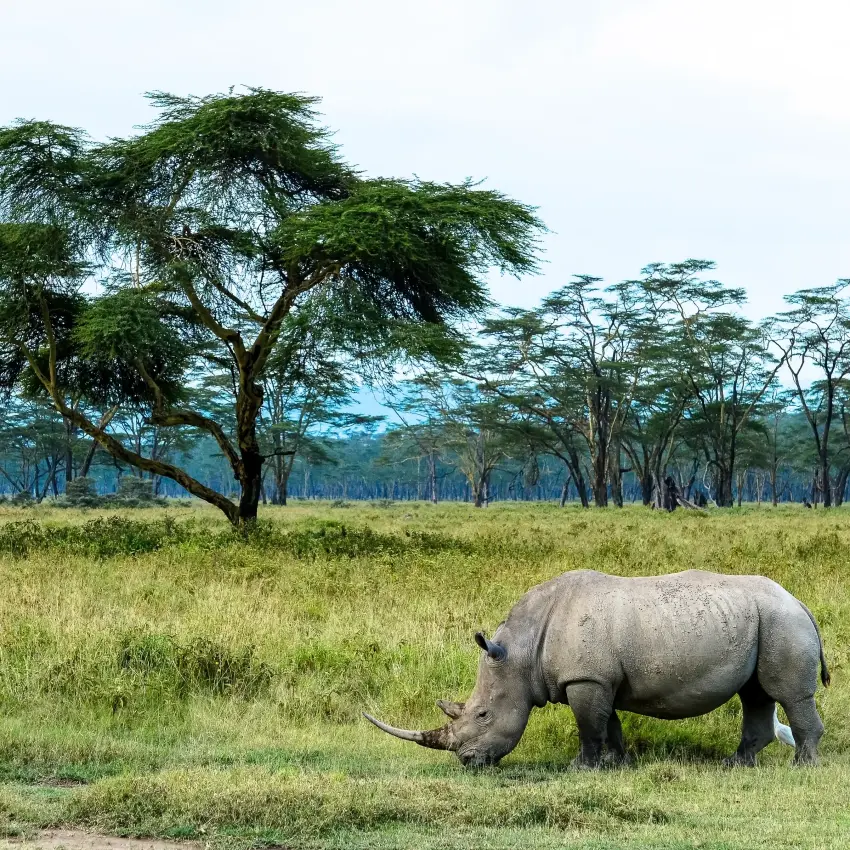
Rhino back below the Chilojo Cliffs
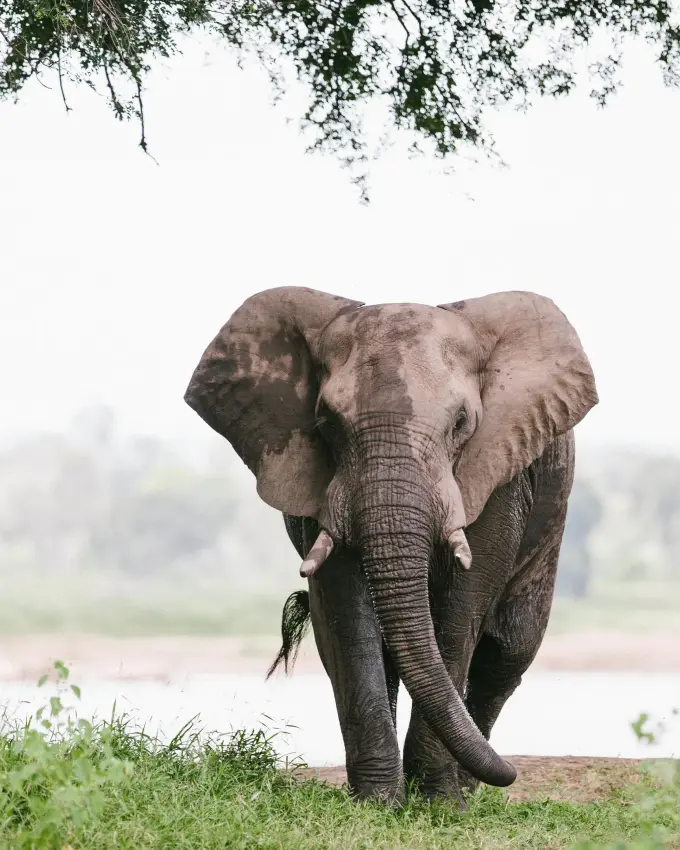
Gonarezhou National Park and Malilangwe Wildlife Reserve share Zimbabwe’s southeastern lowveld, hot country of sand rivers, mopane and baobabs against the Mozambique border. At the Chilojo Cliffs, red sandstone rises some 180 metres above the Runde River. Large-tusked bulls move through the riverine thicket below. They belong to a large elephant population.
Large-tusked bulls move through the riverine thicket below.
Malilangwe borders the park, private, non-profit and intensively managed. Sandstone kopjes stand over more than 500 ancient baobabs, and more than 100 San rock art sites are hidden in the hills. A rhino breeding programme has run here since 1998. Guides drive off-road and after dark, neither of which is permitted inside the national park.
Gonarezhou forms the Zimbabwean corner of the Great Limpopo Transfrontier Conservation Area, joined to Kruger National Park in South Africa and Limpopo National Park in Mozambique. African wild dogs hunt and breed across both park and reserve. Along the Sengwe-Tshipise corridor, elephants and other wildlife still move on historic routes that cross all three countries.
African wild dogs hunt and breed across both park and reserve.
The Gonarezhou Conservation Trust, a twenty-year partnership between Zimbabwe’s parks authority and the Frankfurt Zoological Society, has managed the park since 2017. Poaching had removed the last of the rhinos by 1994. In 2021 black rhinos returned, on founder animals supplied by Malilangwe and by Save Valley Conservancy, a separate private reserve further north.
Mopane and false mopane give way to ironwood thicket, to riverine forest along the Runde and Save, to basalt plains in the far south and to pans such as Tembwehata that hold water into the dry months. Malilangwe fits a reported 38 distinct habitats into its smaller area, from mountain acacia on rocky ridges to nutrient-rich clay flats where buffalo gather in herds of several hundred. Elevation runs from around 165 metres at the Save-Runde confluence to 578 metres at Makamandima Hill.
From May the surface water shrinks and the animals concentrate accordingly. Hippo pods hold in the Runde’s remaining pools, nyala work the riverine thicket, and lion and leopard watch the crossings. An elephant population this size brings its own pressures, and rangers wrap the trunks of vulnerable baobabs in wire mesh and pack rock around their bases to limit the damage. Bull sharks and sawfish have historically been recorded at the Save-Runde confluence, evidence of past upstream movement from the Indian Ocean. Cheetah, spotted hyena and sable range widely, and Lichtenstein’s hartebeest occur on Malilangwe.
Rain from November greens the lowveld and disperses the animals, though the birding improves
The lowveld is Shangaan country, settled during the migrations of the early nineteenth century. Evictions during the creation of the park in the late 1970s left bitterness behind, and retaliatory poaching with it. The answer was worked out at Mahenye village in 1982 with the guide and conservationist Clive Stockil, and became CAMPFIRE, communities earning directly from wildlife on their own land. Tourism income at Mahenye has since funded a school, a clinic and a mill, and the Malilangwe Trust feeds thousands of schoolchildren a cup of mahewu on school days.
Activities differ between park and reserve by design rather than by chance. In Gonarezhou, walking is central: multi-day routes along the sand rivers with a licensed professional guide, full days out to the cliffs and the Save-Runde confluence, nights in fly camps. Vehicle numbers stay low because camp numbers are low. On Malilangwe, access belongs to lodge guests alone, who track black and white rhino on foot, hike to rock art panels, and fish the Malilangwe Dam, built in 1963, for tiger fish.
The best time to visit Gonarezhou & Malilangwe
Jan
Feb
Mar
Apr
May
Jun
Jul
Aug
Sep
Oct
Nov
Dec
Recommended
Transitional
Challenging conditions
Come May to October, the dry season, when sparse vegetation and water-bound wildlife make for the best viewing in both areas. September and October bring intense concentrations at rivers, dams and pans, but climbing heat. The hot-wet months are green and superb for birds, though Gonarezhou closes entirely from 10 January to 1 March.
accommodation in gonarezhou & malilangwe
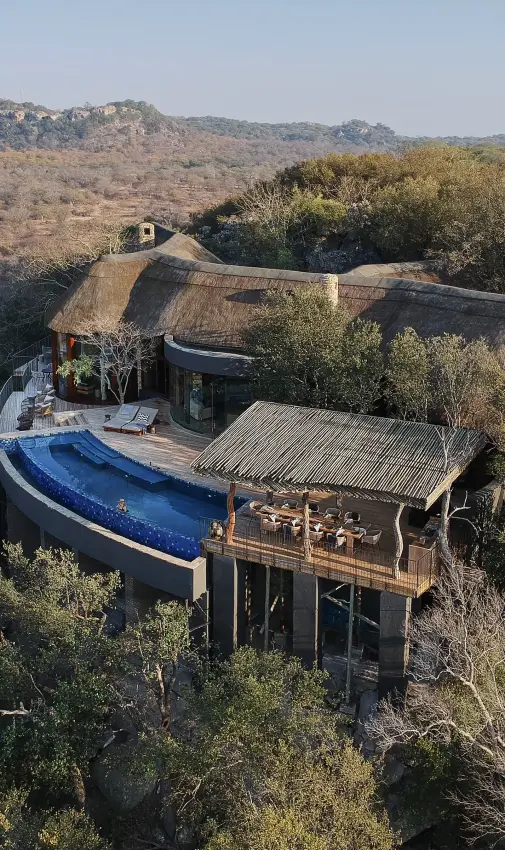
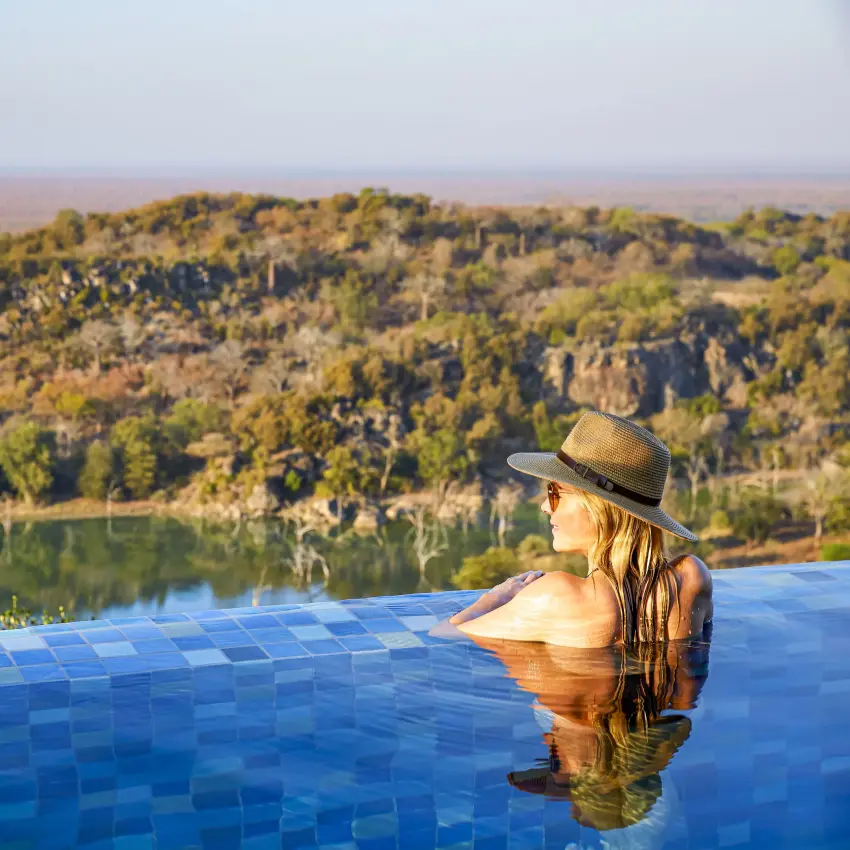
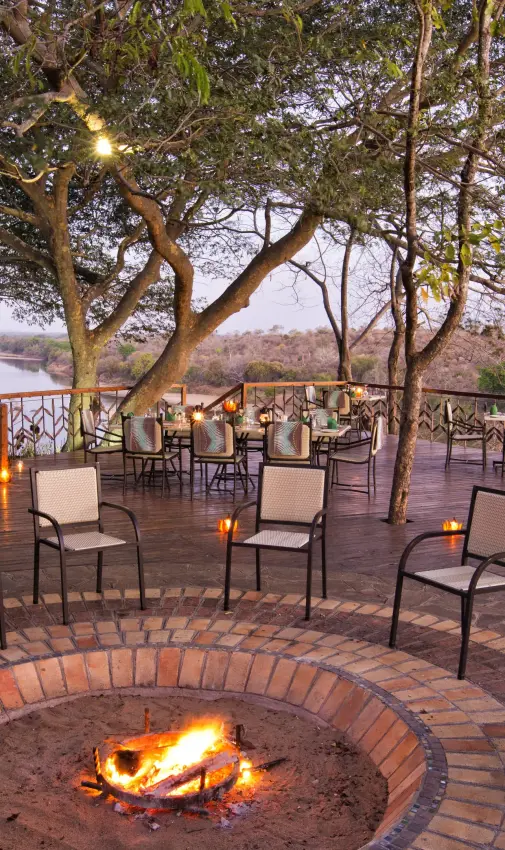
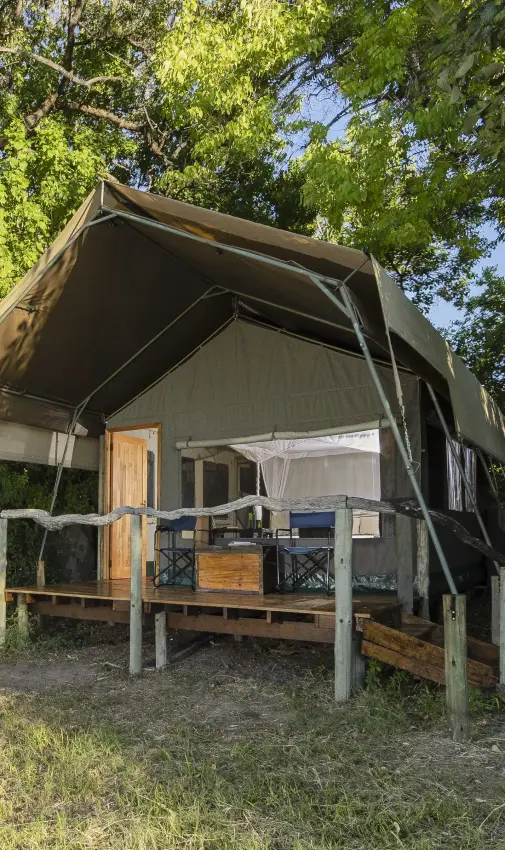
On Malilangwe, a lodge stands on a sandstone ridge above the dam, its suites with private plunge pools, and beside it an exclusive-use house with its own staff, chef and vehicle. Around and inside Gonarezhou, the choice runs from small thatched lodges above the Save River to seasonal Meru-style tented camps taken on an exclusive-use basis and run by professional guiding partners. Numbers stay small throughout.



activities
Walking sand rivers, tracking rhino
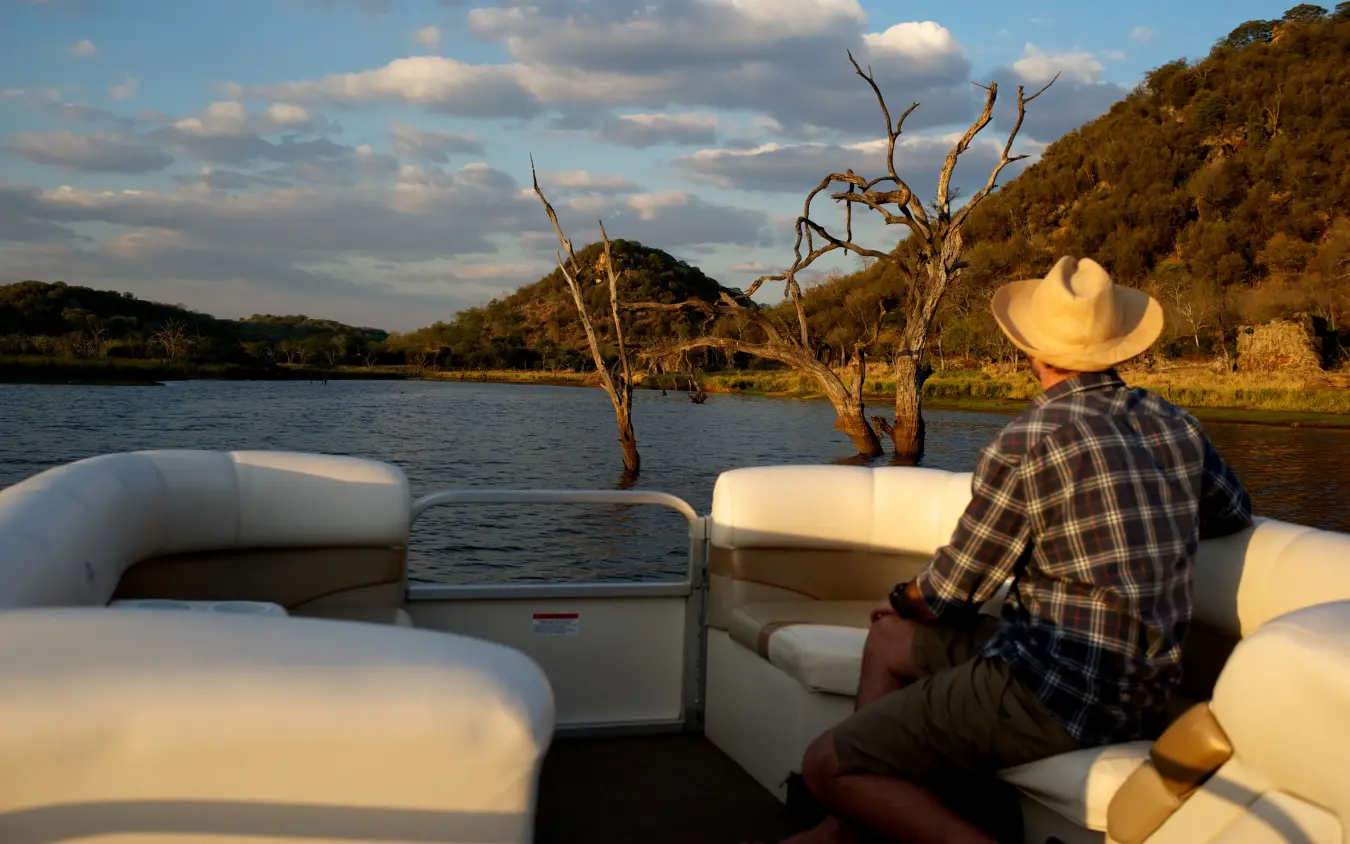
Walking safaris with licensed professional guides define Gonarezhou, alongside full-day drives to the Chilojo Cliffs and fly camping on the riverbanks. Off-road driving, night drives, rhino tracking on foot, canoeing and tiger fishing belong to Malilangwe, the private reserve. Sundowner cruises run on the Malilangwe Dam.

conservation
Rhino returns, baobab protection
The Gonarezhou Conservation Trust, formed by Zimbabwe's parks authority and the Frankfurt Zoological Society, runs anti-poaching patrols, aerial counts and human-wildlife conflict work. Black rhinos returned to the park in 2021 on founder stock from Malilangwe and neighbouring conservancies. Malilangwe Trust breeds rhino and supplies other Zimbabwean reserves.

getting around
Charters to private lowveld strips
Access is by air. Scheduled charters run twice weekly from Johannesburg to Buffalo Range, which clears international arrivals, while private light aircraft fly in from Harare and Victoria Falls to gravel airstrips at Lonestar on Malilangwe, at Mahenye and at Chipinda Pools. Short road transfers follow. Helicopter transfers can be arranged for scenic flights over the cliffs and river valleys.
other areas in zimbabwe
Hwange National Park sits at the far end of the country, with pumped waterholes, open woodland and large elephant herds. Mana Pools, on the Zambezi, combines walking and canoeing beneath riverine forest. Matobo brings granite hills, black eagles and rhino tracked on foot. Matusadona and Lake Kariba add boat safaris and drowned forests, while Victoria Falls handles arrivals and departures for most Zimbabwe itineraries. Trips typically combine two or three of these with Gonarezhou and Malilangwe.


frequently asked questions
By light aircraft to the airstrips in the south east, near Chiredzi, in about an hour from Harare or Victoria Falls.
The camps meet the aircraft, and a private charter goes when the schedules do not suit. Driving from Harare is a long day on tarred and then gravel roads.
It is the least visited corner of Zimbabwe, which is most of its appeal.
We book the leg with the rest of the route and say plainly what the flying costs in time.
Elephant, sandstone cliffs and almost no other vehicles.
The Chilojo Cliffs above the Runde River are the image everyone knows, and the park below them is wild, thick and enormous. The elephant here were heavily poached decades ago and are still wary, which makes them feel different from the habituated herds elsewhere.
Gonarezhou forms part of a cross-border conservation area running into Mozambique and South Africa.
It is a park for someone who has done the classics and wants something harder-edged.
One is a national park, the other a private wildlife reserve next door, and they are usually done together.
Gonarezhou is the wild half: big country, big elephant, park rules. Malilangwe is private, so it allows walking, night drives and off-road driving, and it holds black and white rhino.
Malilangwe also has one of the largest collections of rock art in Zimbabwe.
A stay on the reserve with days into the park is the pattern we book most often.
Yes. The south-eastern lowveld is low, hot and seasonal, and both TravelHealthPro, the UK's official travel health service, and the CDC treat Zimbabwe's low-lying areas as malaria areas where cover is recommended.
The risk peaks in the warm, wet months and falls in the dry winter.
We do not make medical recommendations. That is a conversation between you and your own doctor or a travel clinic.
On the practical side, cover up at dusk and carry repellent.
A good deal, mostly on the private reserve.
- Walking safaris with an armed guide
- Rhino tracking on foot, where conditions allow
- The rock art sites, with a guide who can read them
- Night drives, and fishing on the dams
In the park itself the days are drives, and the drive out to the Chilojo Cliffs is the one to make.
Walking carries minimum ages that vary, so tell us who is coming.
Three, and four if you want both the reserve and a full day in the park.
The distances are long and the country is big, so two nights gives you one day and a lot of driving. Three lets you see the cliffs, walk, and take the rock art properly.
It pairs with Hwange and Victoria Falls on a Zimbabwean route, though the flying is longer than most.
Tell us the whole route and we will say whether the south east fits.
rated five stars by our clients

our approach
remote, exclusive
& personal
Every journey starts with a conversation. We take the time to understand your vision before we start planning.
Whether by phone or in person, we work with you directly to shape something that is considered, personal, and expertly delivered.
Every journey starts with a conversation. We favour a direct, personal approach: understanding your vision before anything else.
Whether by phone or in person, we work with you directly to shape a journey that is both thoughtfully considered and expertly delivered.
Get in touch to start planning yours.