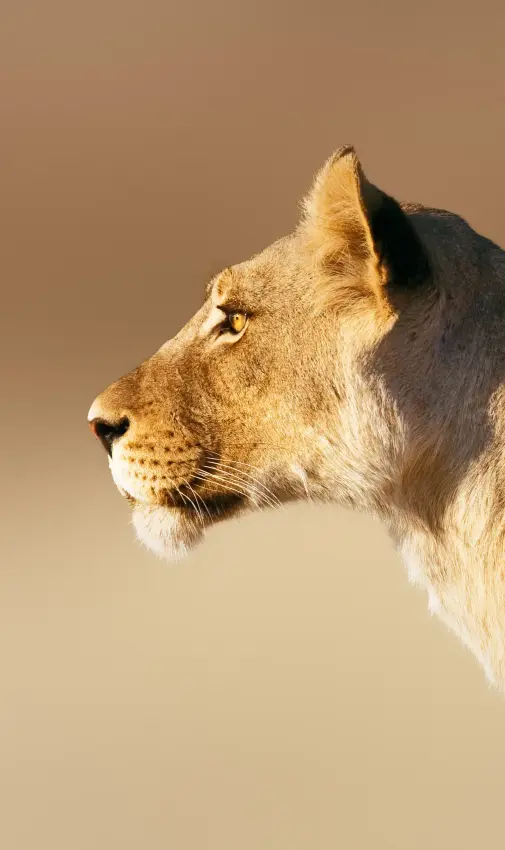
Sango Expedition Camp stands inside the Dadiso Conservation Area, 200 square kilometres set aside in 2021 as a no-hunting zone given over to photographic safaris. Across the wider conservancy, wildlife management is confined to June, July and August, which leaves the rest of the year to guests with cameras. The ground is quiet, and the guides know the animals on it as individuals: the Chapungu lion pride, the leopards and cheetah, the buffalo and elephant, and the wild dogs that use the reserve as a refuge.
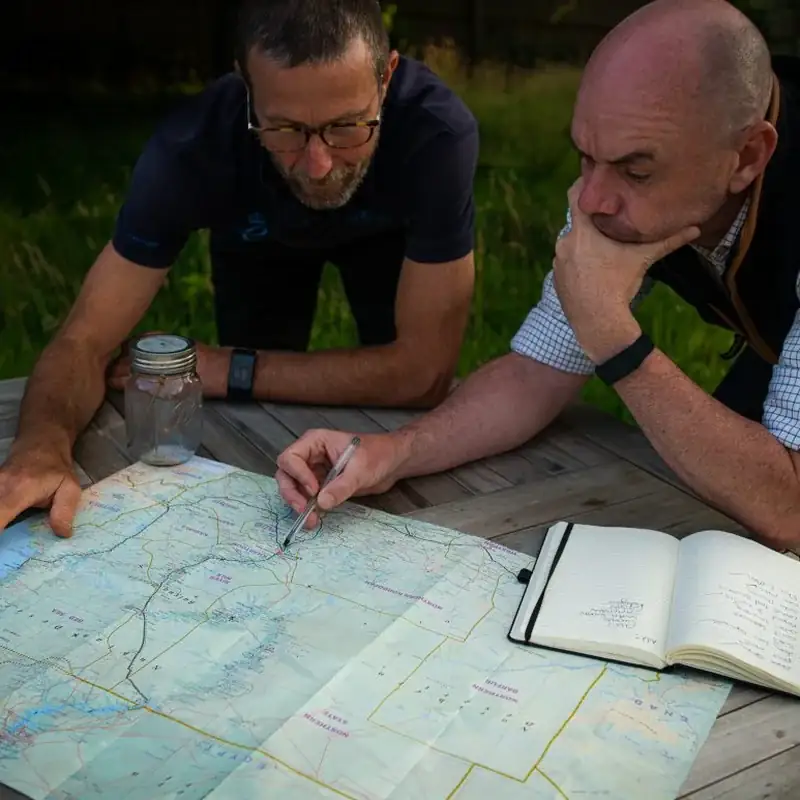
Kim Wolhuter, the wildlife filmmaker, has spent years with the resident spotted hyena clans here, never feeding them and never carrying a weapon. Other mornings go to tracking rhino or elephant with the reserve’s trackers, or out on patrol with the anti-poaching unit and its dogs. Wild dogs are followed by GPS collar and leopards identified by pattern-recognition software, and both decide where the vehicle goes. Afternoons run on into night drives, birding, rock art and sundowners on the riverbed.
Wild dogs are followed by GPS collar and leopards identified by pattern-recognition software
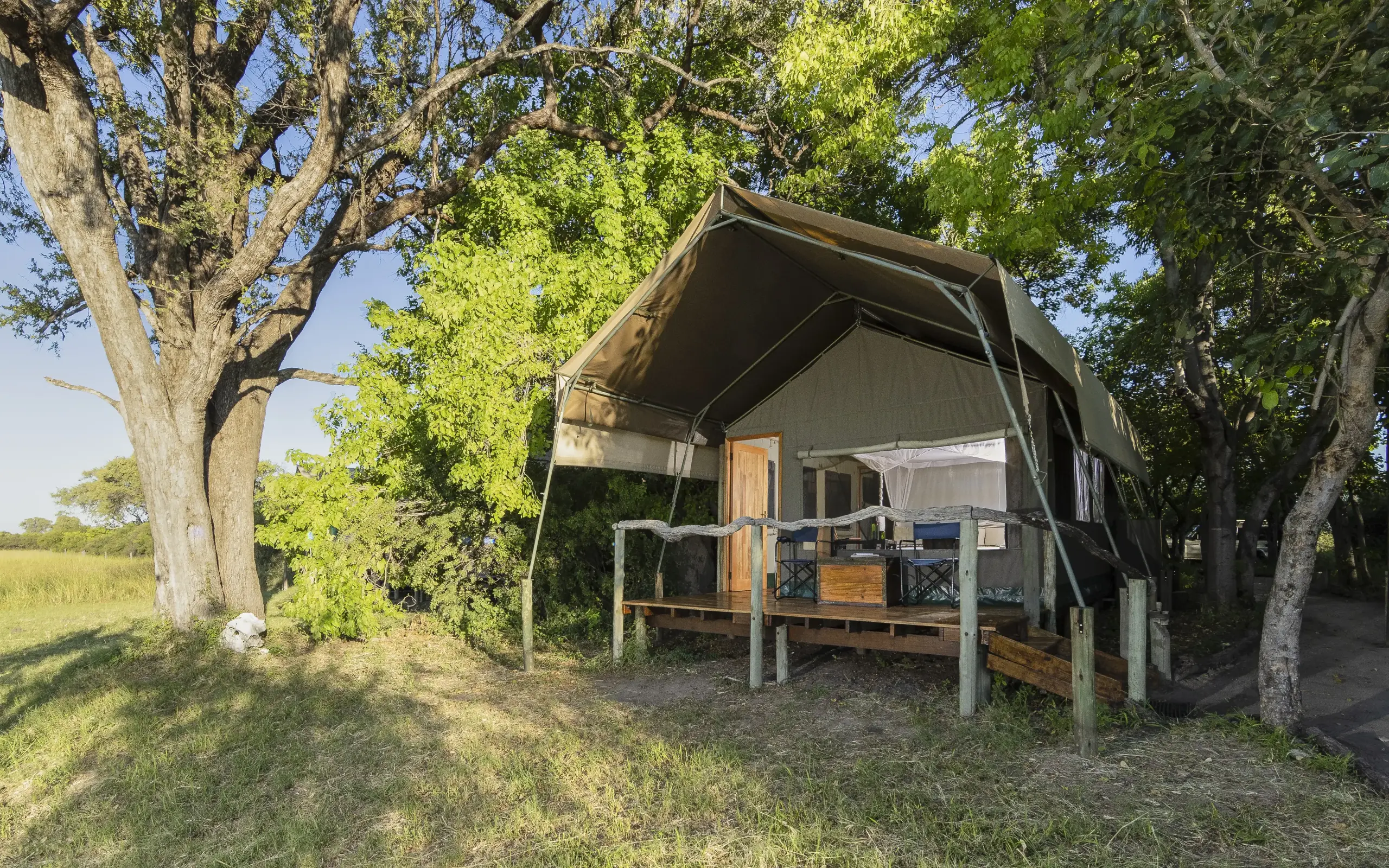
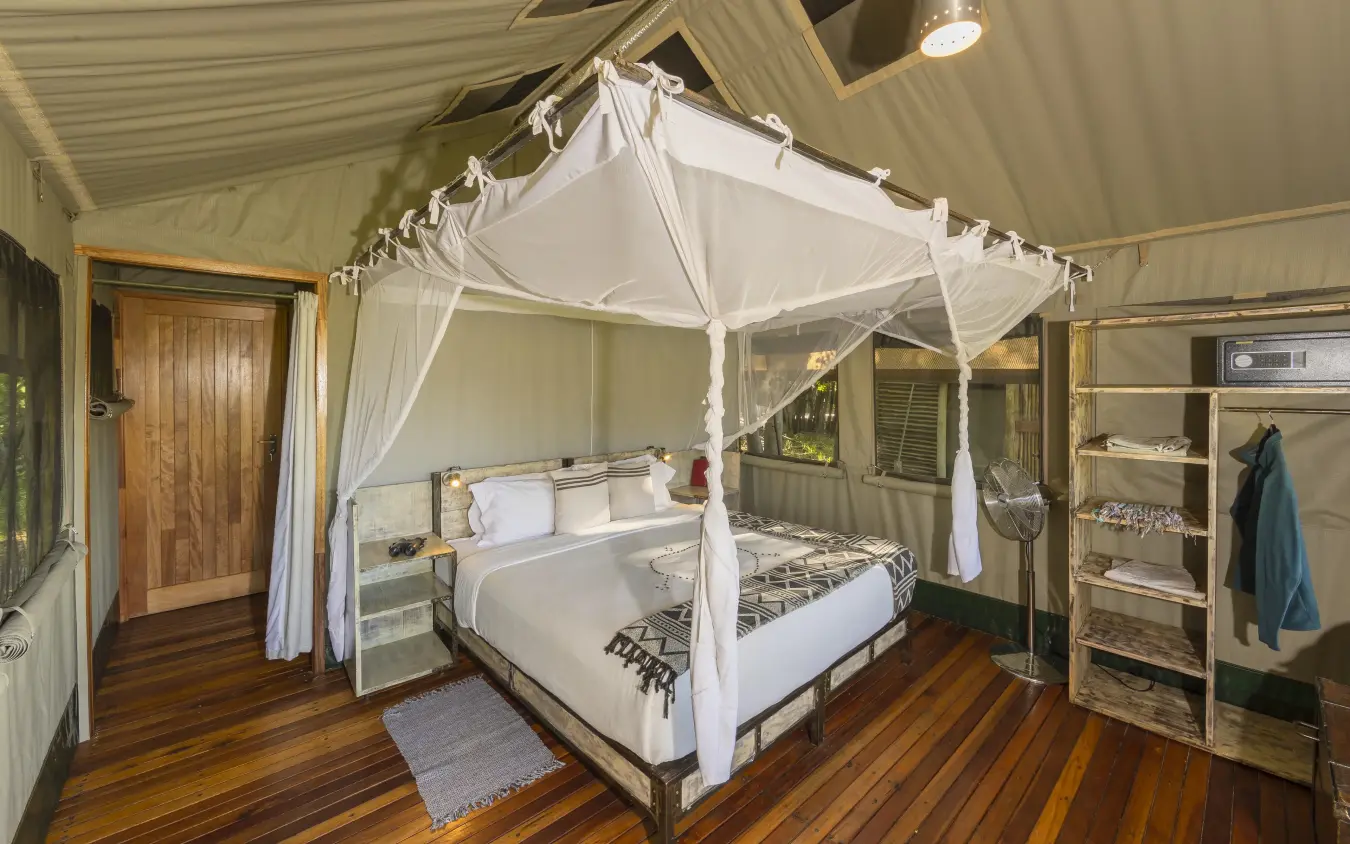
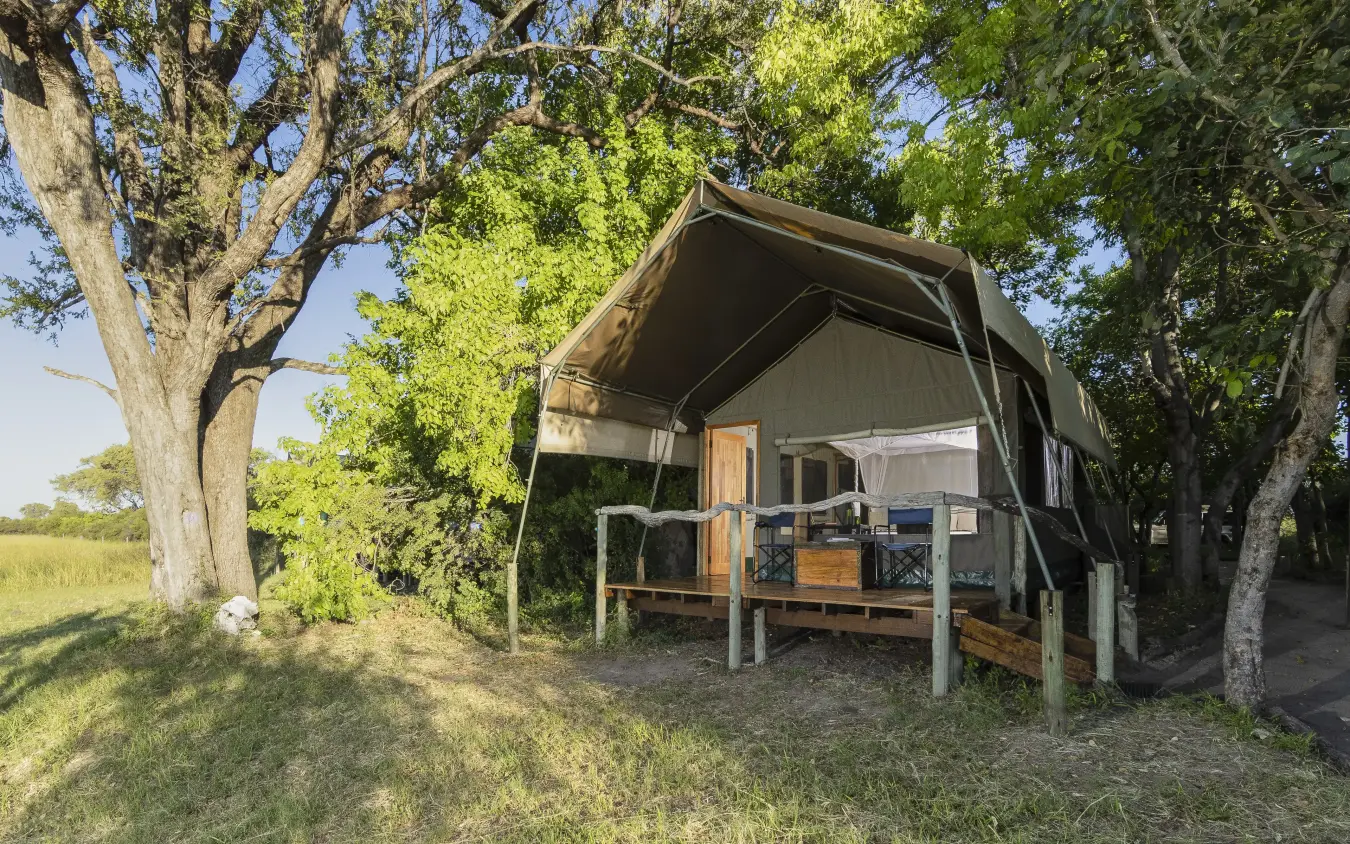
The tents have hardwood back walls to the open-air bathrooms for privacy, larger custom beds, and pieces made by artisans in the region. The bucket showers stayed, deliberately. Canvas, timber and local hardwood, twin beds, and a shaded veranda facing the sand. Hot water arrives by bucket from a wood-fired boiler when it is asked for, and solar power handles everything else, which is not much. Nothing about it pretends to be a lodge.
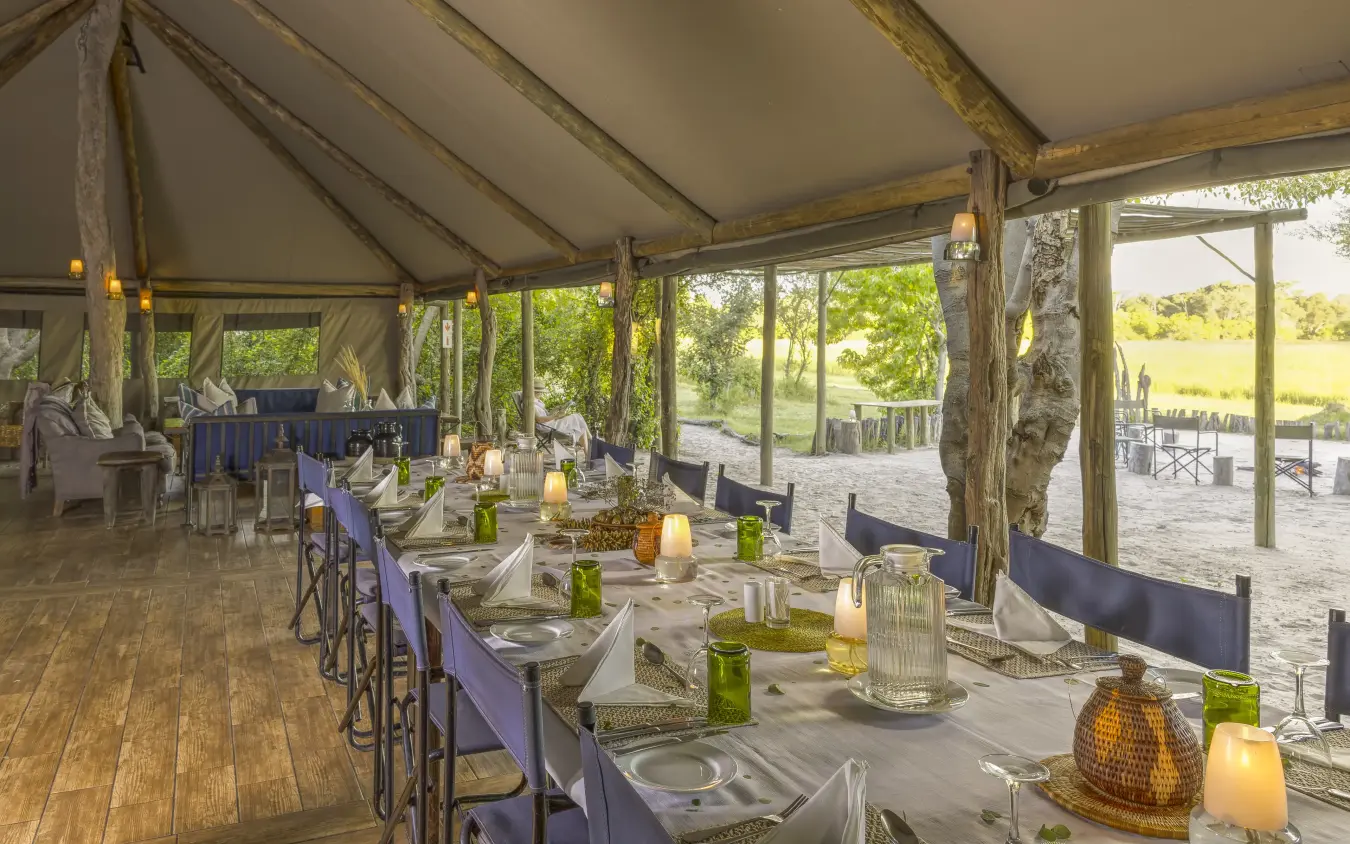
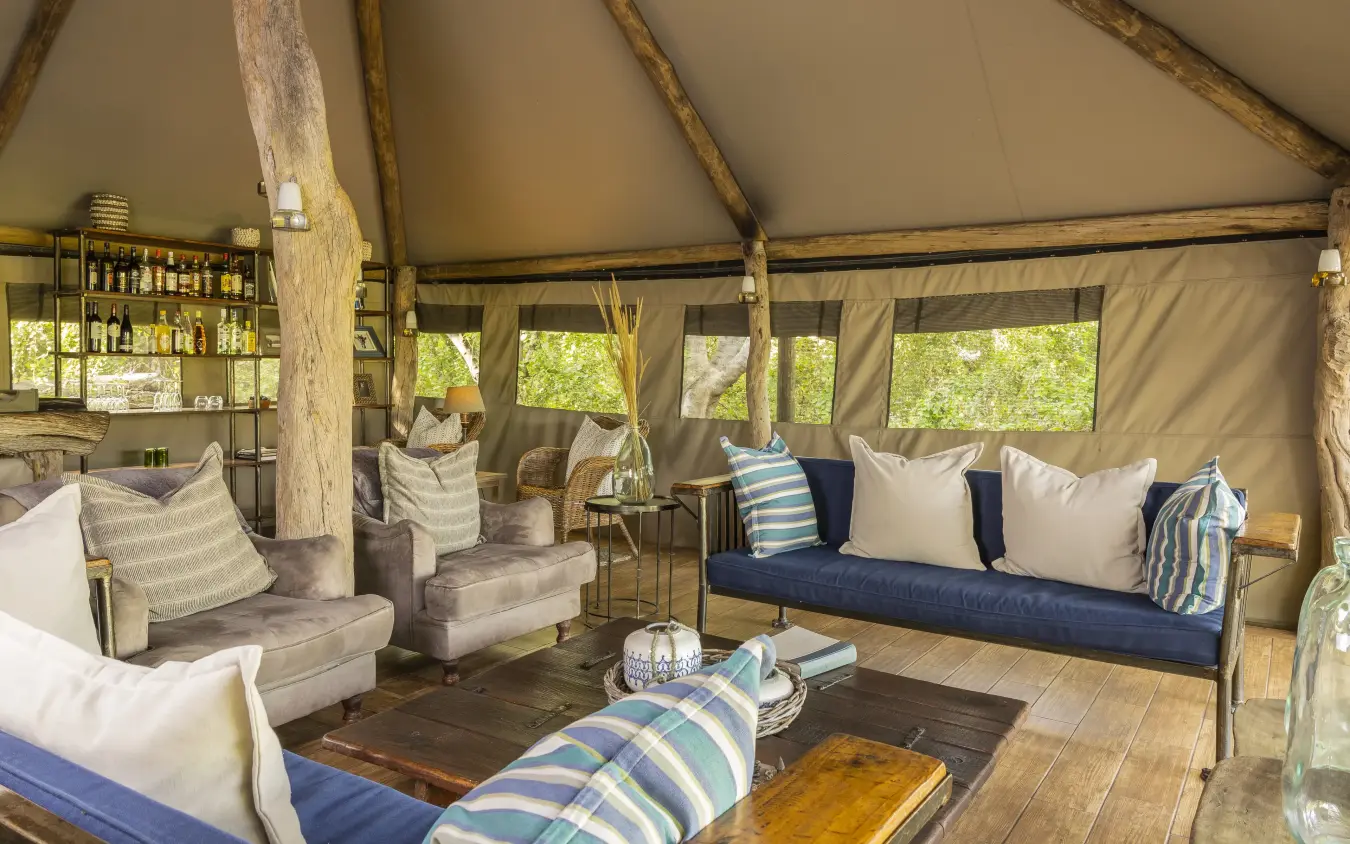
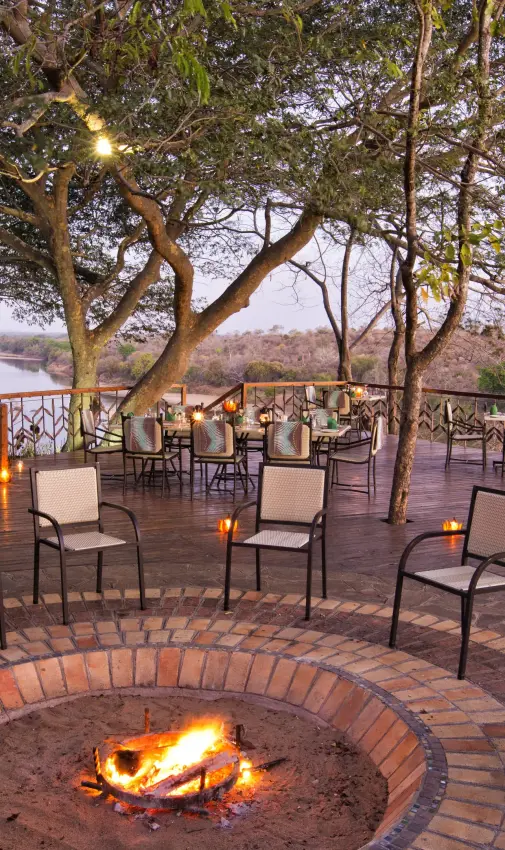
Meals come out of the open-sided canvas dining and lounge tent, or off a table set in the riverbed under lanterns, with bush picnics by day and dinners around the boma fire at night. Children of any age are welcome, and with only three tents families and small parties often take the camp whole, which is how it is best used. The private Sango airstrip runs to 1,000 metres and handles light aircraft, roughly an hour by charter from Harare.