 01
01
The four pools the river left behind
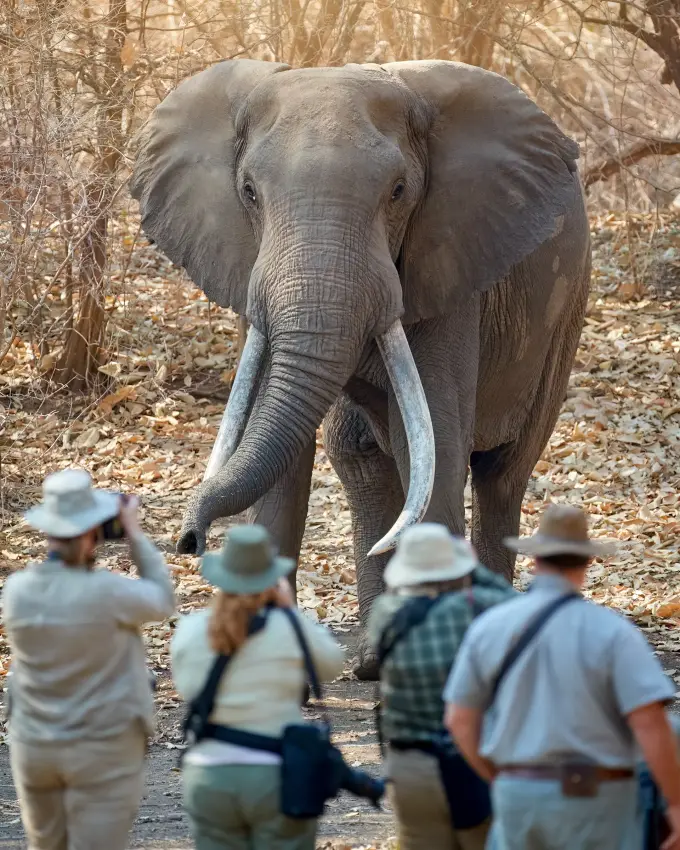
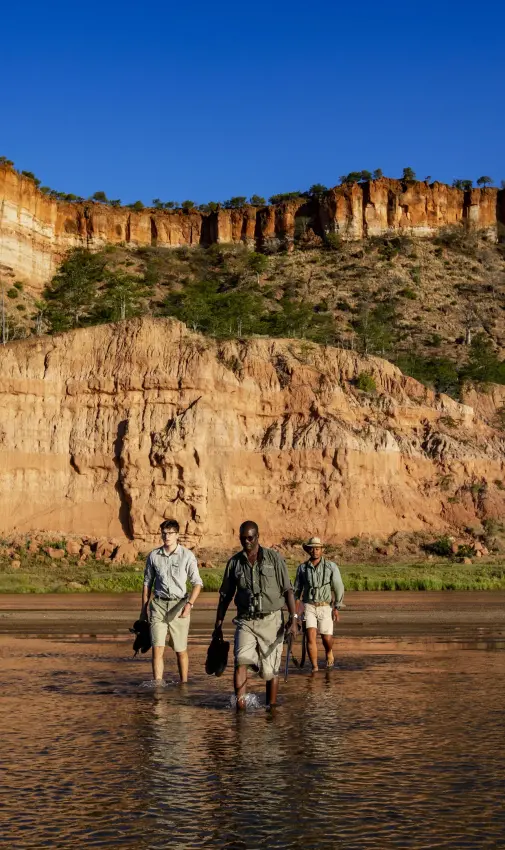
On the south bank of the Zambezi in northern Zimbabwe, below the Kariba Dam wall, Mana Pools is a floodplain wilderness defined by how it is explored. Guided walking safaris among big game and multi-day canoe trails down the river are the signature here, not an occasional extra. This is a park walked and paddled, not driven.
This is a park walked and paddled, not driven.
The name comes from the Shona word for four, after the large permanent pools left along the alluvial plain by old river channels. As the dry season deepens, these oxbows and the riverine forest become the whole point of the place. The road network covers only a small part of the park. Beyond it, the floodplain belongs to those on foot and on the water.

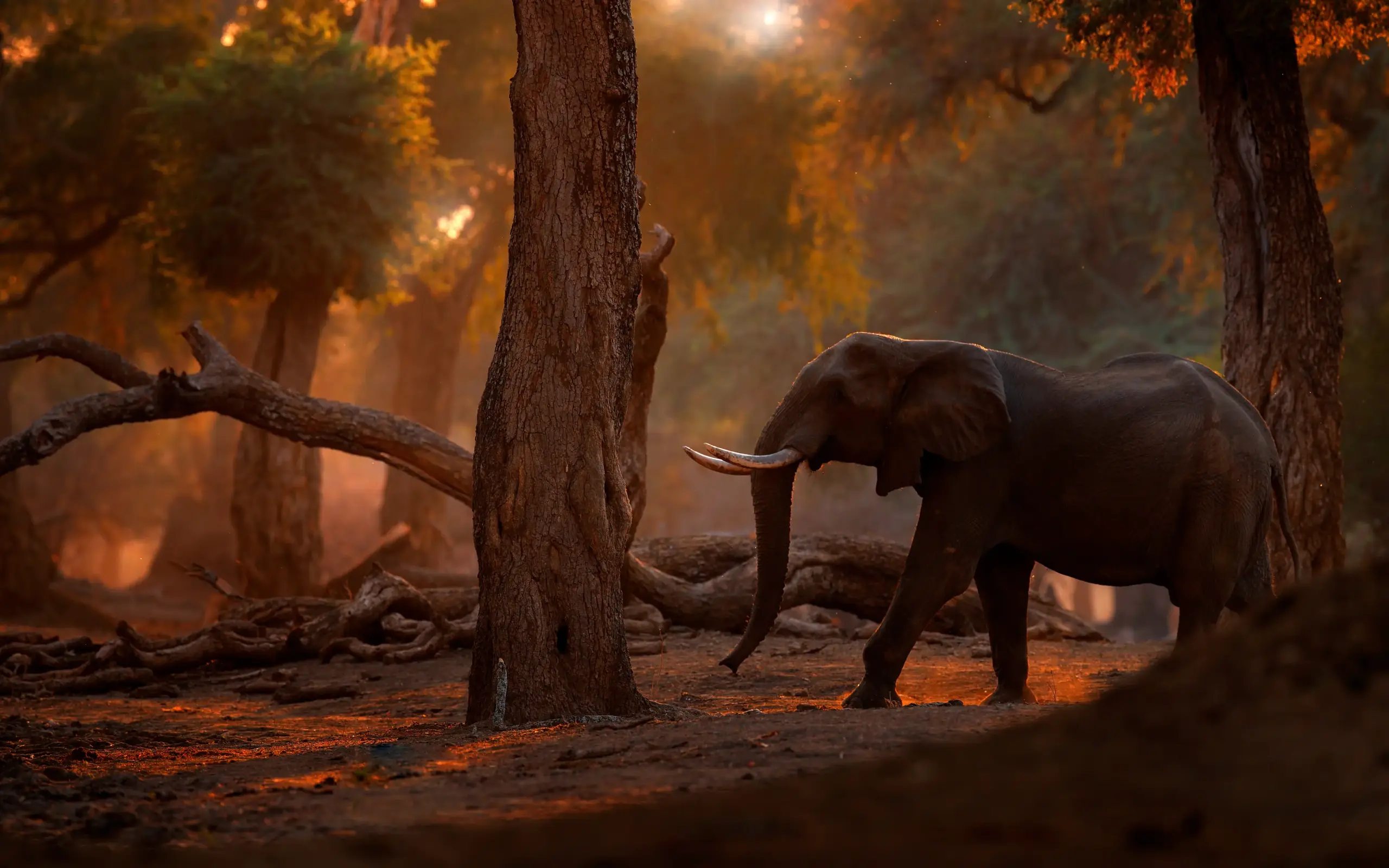
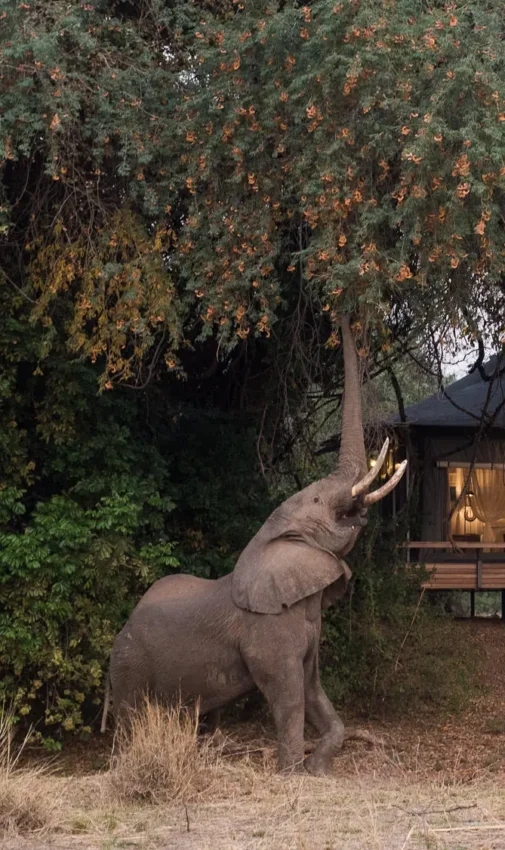
The dry season, from May to October, draws huge concentrations of elephant and buffalo down to the Zambezi and its remaining pools. The winterthorn forest sets the stage for the bulls that rear onto their hind legs to reach the high acacia pods, a behaviour long associated with this stretch of river. Hippos and crocodiles gather in numbers that make the water feel crowded.
The bulls that rear onto their hind legs to reach the high acacia pods
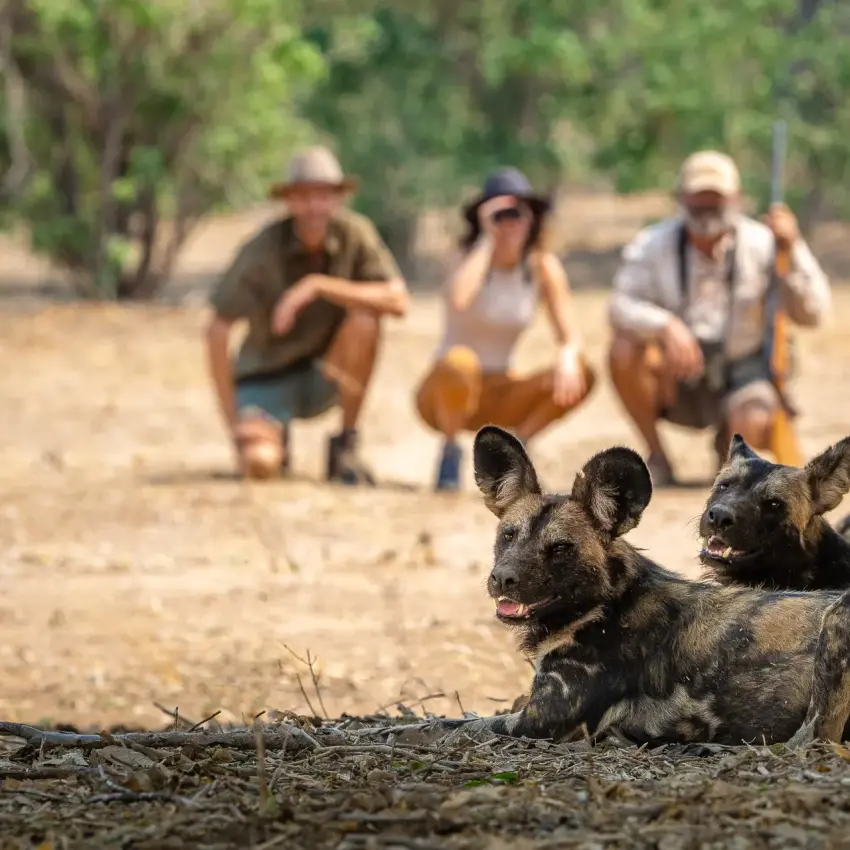
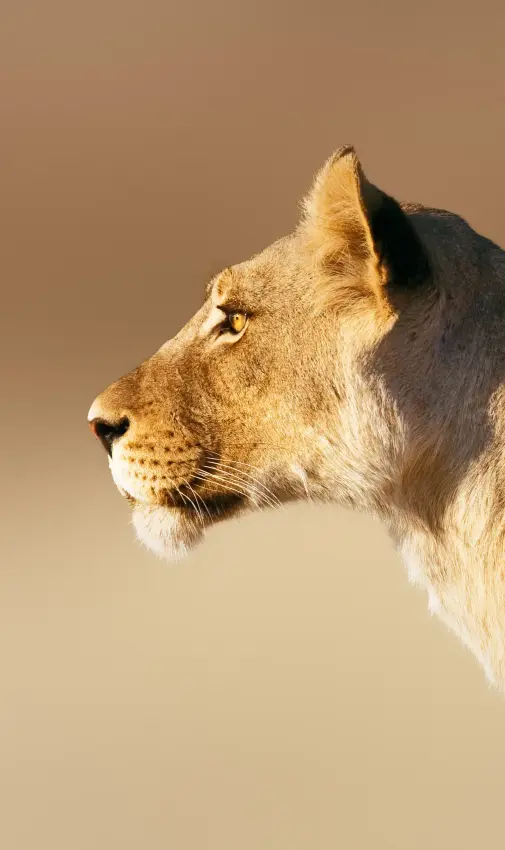
Mana Pools is one of Africa’s great strongholds of the painted dog. Several packs of painted dogs range the valley, and few places allow visitors to follow them on foot across open floodplain. Lion, leopard, cheetah and spotted hyena share the same ground, while around 450 birds occupy the broader Zambezi corridor.
The Zambezi slows and spreads across a broad floodplain, backed by an escarpment that rises more than 1,000 metres to the south and presses the alluvial plain hard against the river. Three habitats sit close together. Open floodplain and riverine woodland run along the water, dense jesse bush of combretum thickets stands behind, and mopane holds the slightly higher, heavier soils. The riverine trees include mahogany, wild fig, baobab and the winterthorn whose pods pull the elephants in. After the rains fill the plain, the water recedes and the animals funnel towards the river and the surviving pools.
Across the Zambezi lies Zambia’s Lower Zambezi National Park, the two together forming a single transboundary ecosystem along a river that carries on towards Cahora Bassa in Mozambique. Visitor numbers stay low, which is precisely what keeps the wilderness intact and the walking close to what it has always been.
On foot you meet elephant, buffalo and painted dog on their terms, an intimacy no vehicle can replicate.
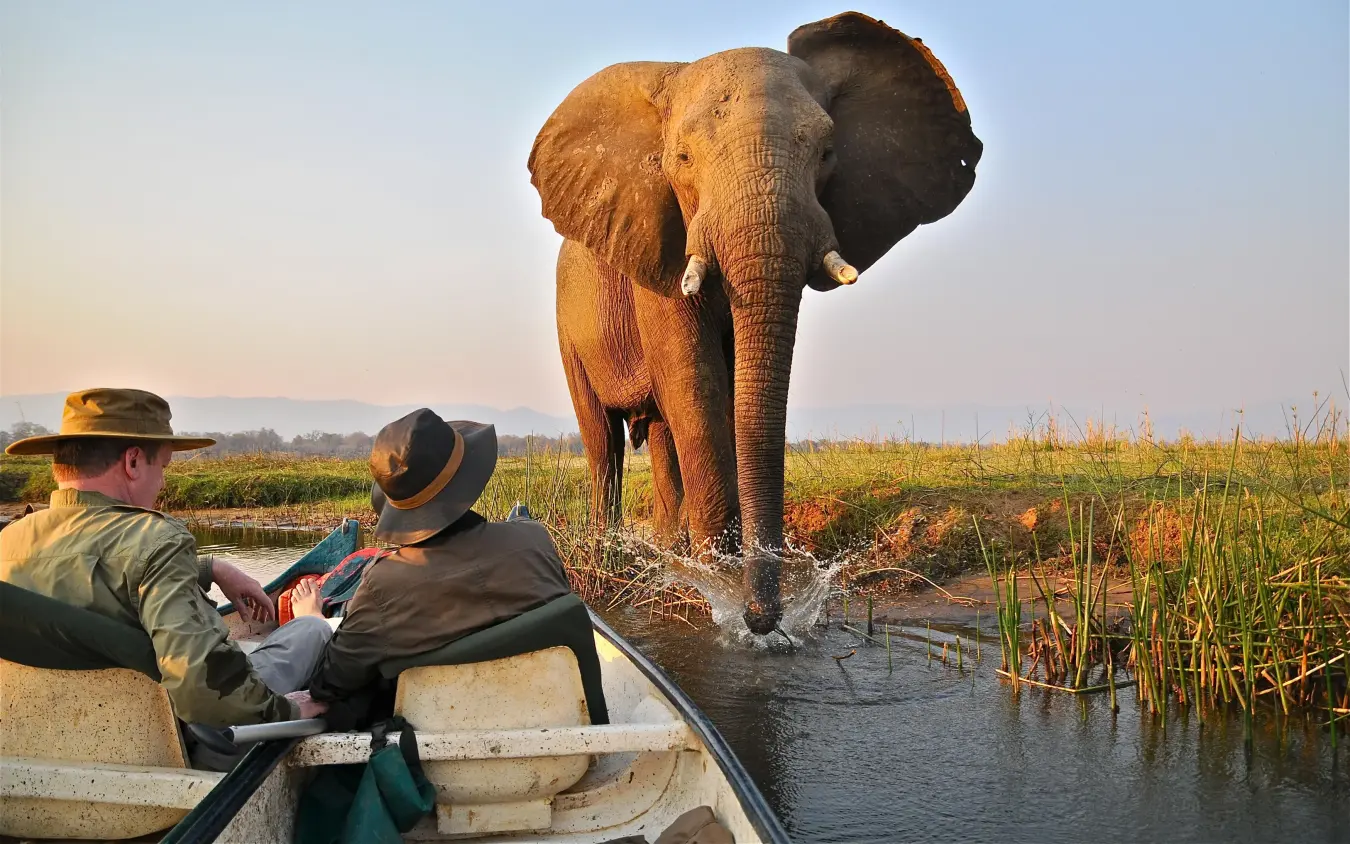
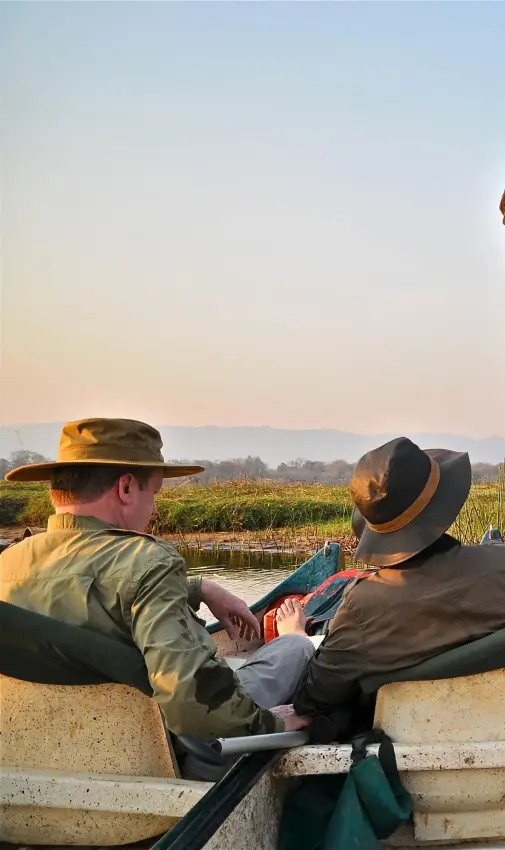
This is country for the walking guides Zimbabwe is known for. On foot, the open ground beneath the winterthorns gives guides room to read animals and approach on their terms, an intimacy with elephant, buffalo and painted dog that no vehicle can replicate. Canoeing adds a second register entirely: day paddles and multi-day trails down the Zambezi, drifting past hippo pods and basking crocodiles, sleeping at simple fly camps pitched on islands and sandbanks. Game drives are permitted within the tourist zone, but the limited road system makes them a way of reaching walking country rather than the main event.
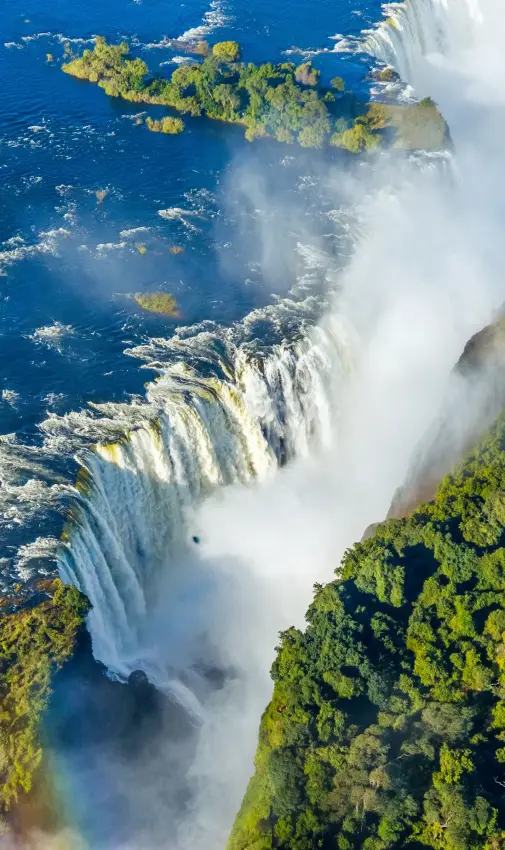
Mana Pools sits naturally alongside Hwange’s vast elephant country and the Zambezi spectacle of Victoria Falls, the three connected by light-aircraft flights that suit the way most guests arrive. A typical trip combines vehicle-based game viewing in Hwange with the on-foot and on-water wilderness here, bookended by the falls. Upstream, Lake Kariba offers houseboats and a calmer aquatic counterpoint, and serves as an aviation link into the valley. It is the contrast between these places, not the repetition, that makes the longer journey worthwhile.
The best time to visit Mana Pools
Jan
Feb
Mar
Apr
May
Jun
Jul
Aug
Sep
Oct
Nov
Dec
Recommended
Transitional
Challenging conditions
Come between June and October, when the drying bush pulls wildlife back to the Zambezi and the four pools for walking and canoeing among concentrated elephant, buffalo and predators. From August the bulls rise on their hind legs for the albida pods. October is the most concentrated but often tops 40 degrees. The green season is lush and best for migrant birding, though the rains close most camps.
accommodation in mana pools
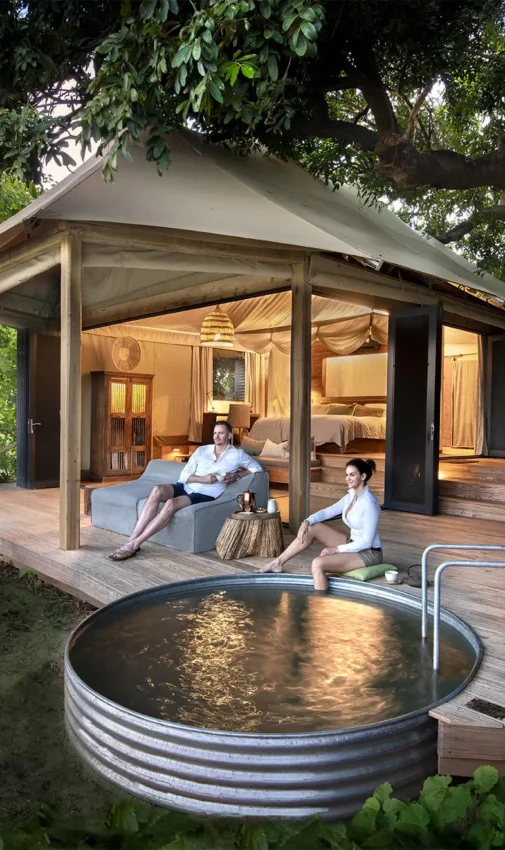
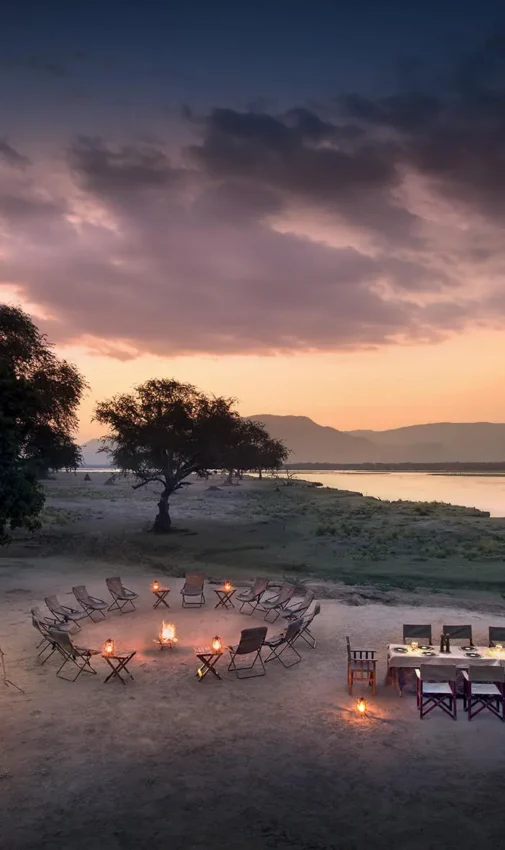
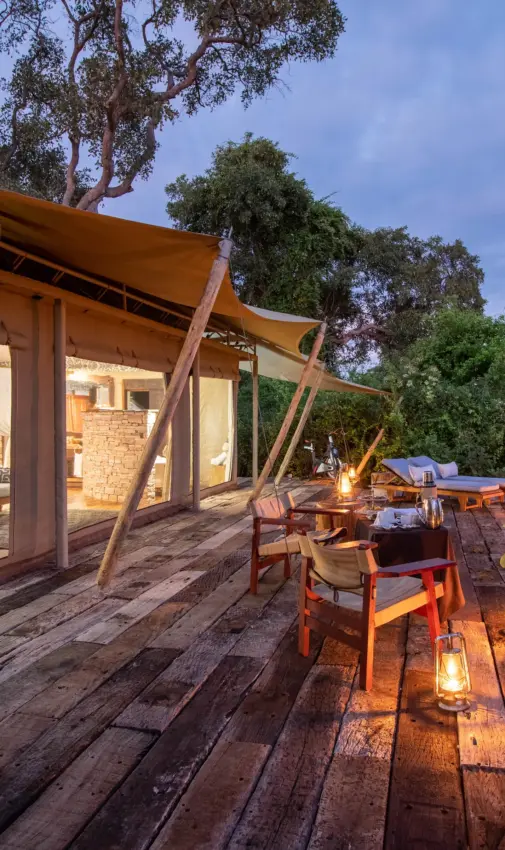
Camps range from intimate tented and canvas-and-thatch operations along the river and floodplain to a smaller number of more permanent lodges, all keeping a low footprint in line with the park's wilderness character. Several operators offer exclusive-use camps for private parties, with dedicated guides and canoes. Seasonal mobile camps support multi-day canoe and walking expeditions. The emphasis falls on guiding quality; top-end camps provide full comforts alongside it. Most close during the wet season.


activities
Walking and canoeing the floodplain
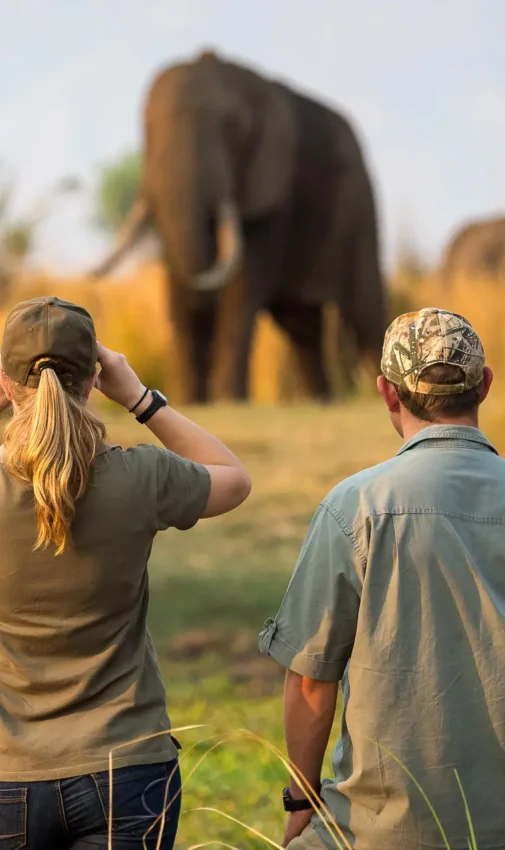
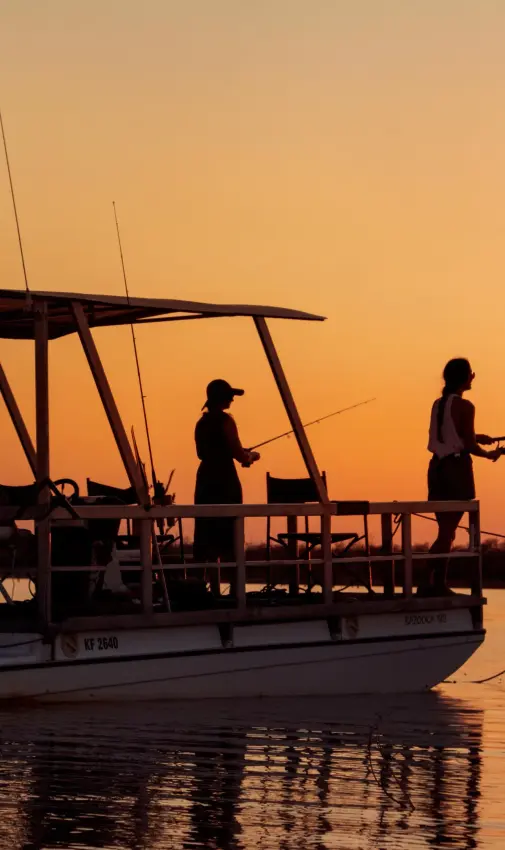
Guided walking safaris on the floodplain among elephant, buffalo and painted dog are the defining activity, led by specialist guides from the camps. Multi-day canoe trails run the Zambezi with remote island fly camps. Game drives operate within the tourist zone's limited road network. Tigerfish fishing is available with some operators.

conservation
Protecting a World Heritage floodplain
Mana Pools National Park is managed by the Zimbabwe Parks and Wildlife Management Authority. Global Conservation runs a World Heritage Site project here, supporting anti-poaching patrols, improved ranger equipment and management planning. The principal pressures are upstream dam regulation altering the floodplain's flood regime, and poaching, countered through enforcement and low-density tourism.

getting around
Light aircraft into the valley
Access is overwhelmingly by light aircraft, with scheduled and charter flights from Harare, Victoria Falls and the Hwange region landing at airstrips serving the tourist zone. Charters make the Victoria Falls, Hwange and Mana Pools pairing straightforward. Road access via Karoi and Makuti is long, rough, and best undertaken in a 4x4; air transfer is the norm for camp guests.
other areas in zimbabwe
Hwange, Zimbabwe's largest park, pairs naturally with Mana Pools, offering vehicle-based big-game viewing across Kalahari sandveld, teak and mopane woodland, with large elephant herds at dry-season waterholes. Victoria Falls is the gateway and adventure hub on the Zambezi. Lake Kariba adds houseboats, fishing and a relaxed aquatic counterpoint upstream. Further south, the Matobo Hills bring granite landscapes, rock art and white rhino, while the Eastern Highlands offer cool forests and waterfalls in contrast to the hot lowland river.

frequently asked questions
By light aircraft to the airstrips in the valley, and that is how we send nearly everyone.
The strips at Mana Main and Chikwenya take scheduled and charter flights from Harare, Victoria Falls and Kariba, and the camps meet the aircraft. A private charter, typically a Cessna Caravan or a Pilatus PC-12, can be timed to your international arrival.
The road in from Harare is a long day on rough tracks, and it is closed for much of the rainy season.
Soft bags only, and the weight limit on these aircraft is strict.
You can walk, and the forest lets you see a long way while you do it.
Mana Pools is a World Heritage site on the Zambezi floodplain, where huge albida trees stand in open ground. That combination makes it the best walking country in southern Africa, and Zimbabwe's guides are the most rigorously trained on the continent.
Canoeing is the other draw: a day or several on the river, past hippo and drinking elephant.
Wild dog are seen here more reliably than almost anywhere, and the elephant that stand on their hind legs to reach the pods are a Mana speciality.
Yes, and the Zambezi valley is one of the higher-risk parts of the region.
Both TravelHealthPro, the UK's official travel health service, and the CDC treat the valley as a malaria area where antimalarial tablets are recommended. The risk peaks in the warm, wet months and falls in the dry winter, but it is present all season.
We do not make medical recommendations. That is a conversation between you and your own doctor or a travel clinic.
On the practical side, cover up at dusk and carry repellent.
Sixteen is the usual minimum for both, and the camps hold to it.
Walking among elephant and lion, and canoeing a river with hippo in it, are not activities that bend for a keen twelve-year-old. A few camps take younger children on gentler backwater paddles by private arrangement.
Younger families are better served elsewhere in Zimbabwe, and we will say so rather than sell you a stay where half the party cannot join in.
Tell us everyone's ages and we will place you honestly.
No, and that is worth knowing before you set your dates.
The seasonal camps close from around November or December until March or April, when the rains flood the plains and the dirt airstrips and tracks become unusable. A small number of permanent camps stay open longer.
The season runs roughly April or May through to October.
We will tell you exactly which camps are open for your dates rather than leaving you to find out when a booking is refused.
Three at least, and four if you want to canoe as well as walk.
Mana rewards being on foot, and that means unhurried mornings and time to follow something rather than tick it off. Two nights gives you one full day, which does not justify the flying.
It pairs naturally with Hwange and Victoria Falls on a Zimbabwean route, or with Zambia across the river.
Tell us the whole route and we will say where Mana sits in it.
rated five stars by our clients

our approach
remote, exclusive
& personal
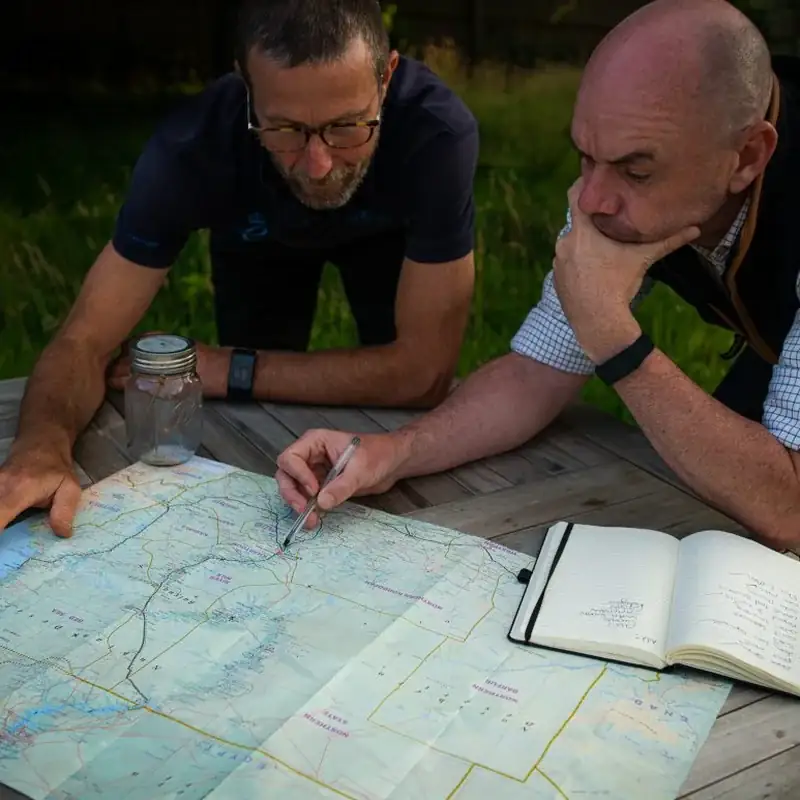
Every journey starts with a conversation. We take the time to understand your vision before we start planning.
Whether by phone or in person, we work with you directly to shape something that is considered, personal, and expertly delivered.
Every journey starts with a conversation. We favour a direct, personal approach: understanding your vision before anything else.
Whether by phone or in person, we work with you directly to shape a journey that is both thoughtfully considered and expertly delivered.
Get in touch to start planning yours.