
Rhino on foot, San in stone
South of Bulawayo, two billion years of erosion have worn a granite batholith into whale-back domes, balancing boulders and wooded valleys unlike the rest of Zimbabwe. The Matobo Hills were inscribed as a UNESCO World Heritage Site in 2003, and they span roughly 3,100 square kilometres of this sculpted granite country.
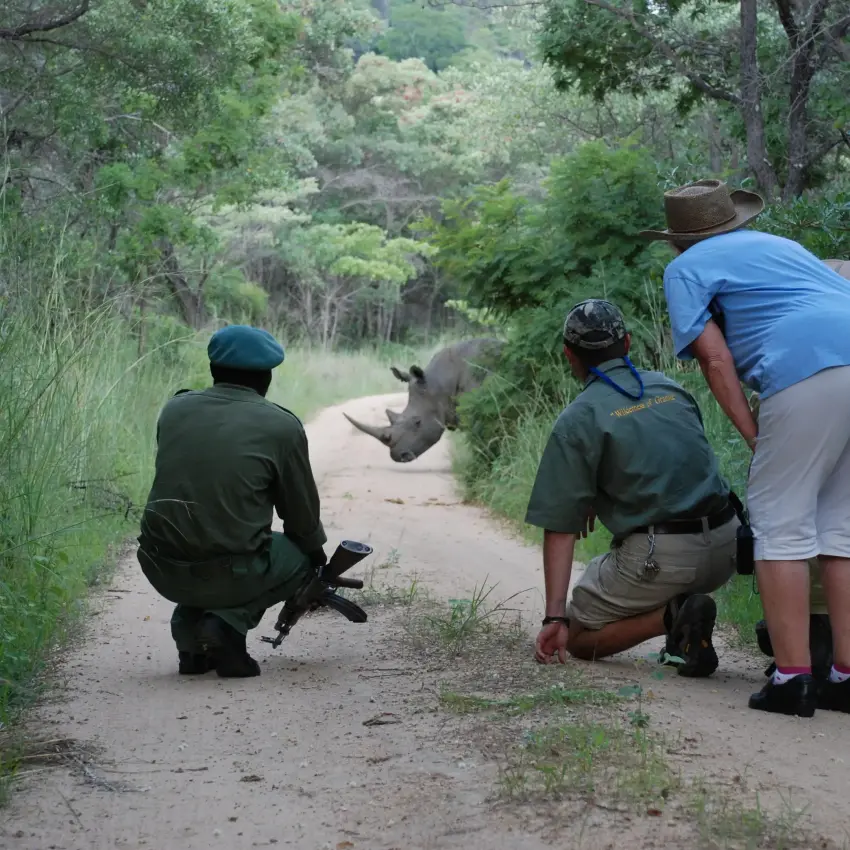
Its signature experience is tracking rhino on foot
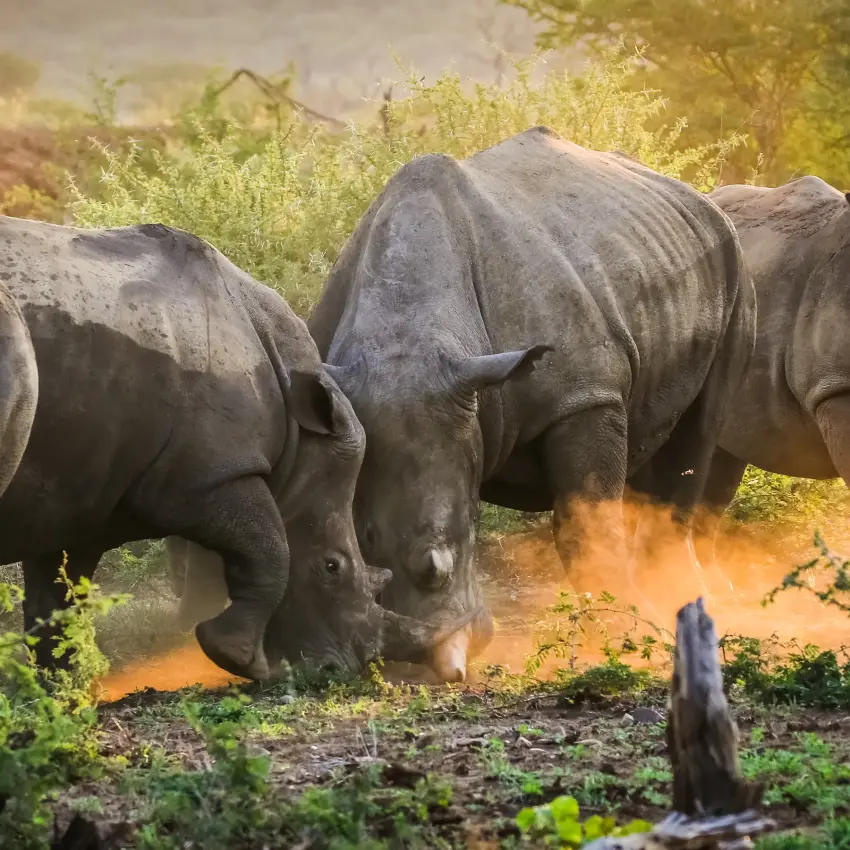
At the core sits the national park, established in 1926 across 424 square kilometres. Its signature experience is tracking rhino on foot. Both black and white rhino live within a dedicated game area of around 100 square kilometres, and here you close the distance quietly, on foot alongside armed rangers rather than from the seat of a vehicle.
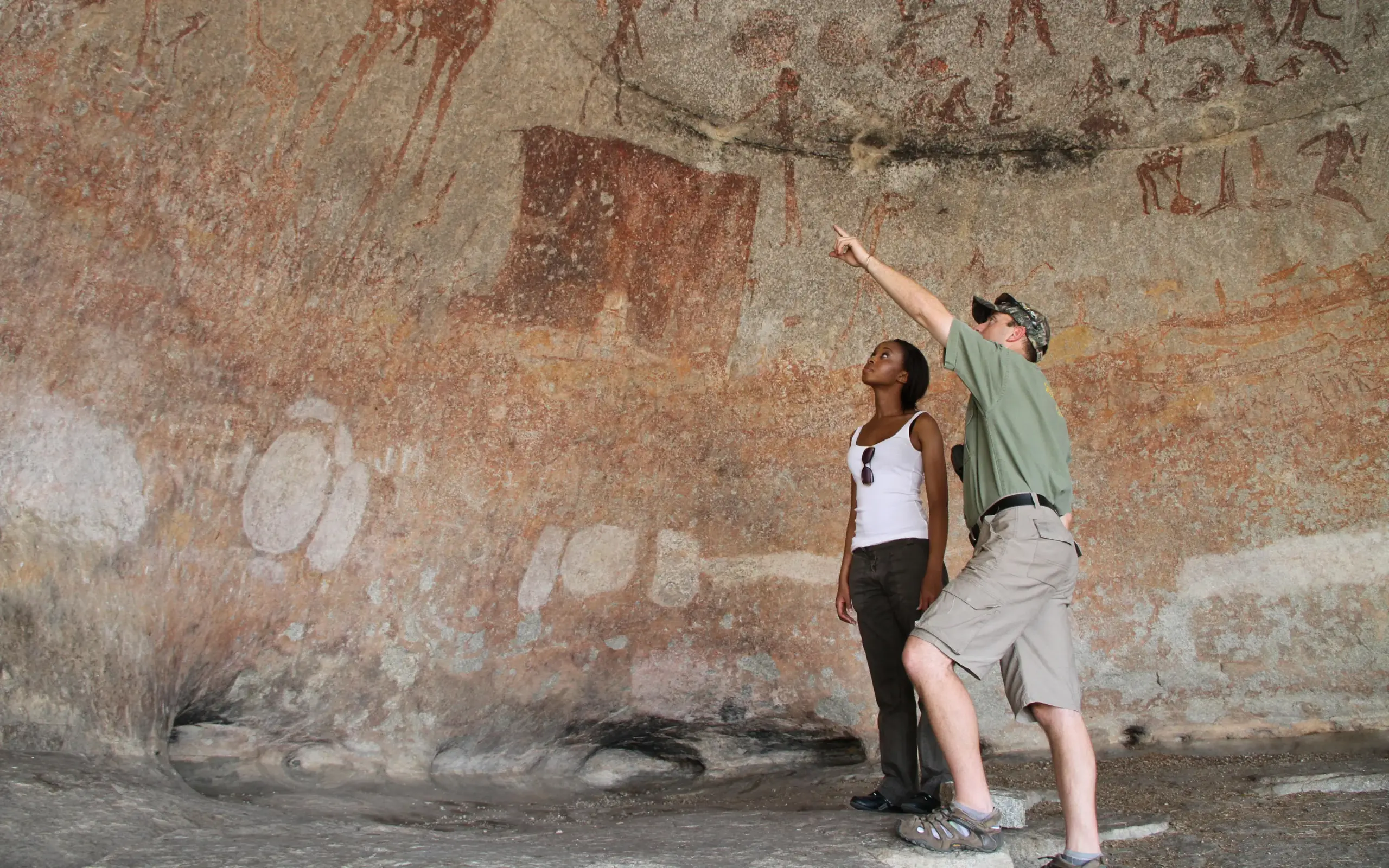
Caves such as Nswatugi, Bambata and Silozwane hold San paintings of people, animals and ritual. They belong to one of southern Africa’s densest collections of rock art, with over 3,000 registered sites scattered across the hills. The same caves preserve Stone and Iron Age remains, the record of a human presence that reaches deep into prehistory.
The same caves preserve Stone and Iron Age remains
The hills are the spiritual heart of the region, home to shrines still used for rainmaking and pilgrimage. On the summit of Malindidzimu, the hill Cecil Rhodes named World’s View, lies his grave alongside those of other colonial figures. It remains a charged place, and a guided visit allows an honest conversation about that history.
Wildlife at Matobo works differently to the big-game parks. There are no elephants and no lions, and the reserve turns instead on rhino, scenery and walking rather than herds and predators. The granite kopjes shelter a notably dense leopard population, sustained by the rock hyrax that thrive among the boulders, though the cats themselves are secretive and rarely seen. Giraffe, zebra, wildebeest, sable, kudu and eland move through the game area, alongside baboons and smaller carnivores.
For birders, the cliffs and domes are the draw. Verreaux’s eagles nest on the granite faces in strong numbers, and the wider hills record dozens of raptor species hunting over open rock and the vleis, the seasonal wetlands between the outcrops. The rugged terrain catches better rainfall than the surrounding country, so botanical diversity runs high, with over 200 tree species logged. Figs root down sheer granite faces, and the vleis hold their moisture late into the dry months, drawing grazers to the greener valley floors.
There are no elephants and no lions, and the reserve turns instead on rhino, scenery and walking rather than herds and predators.
The cool dry months from May to October suit walking and rhino tracking best
Matobo is compact and easily reached, which makes it a natural two-night addition rather than a standalone trip. Most itineraries fold it in between Hwange and Victoria Falls, or open with it as the first leg out of Bulawayo. Two nights is enough to track rhino, climb to World’s View at sunset and spend an afternoon among the painted caves. It is a welcome change of gear from the vehicle-heavy game viewing of the classic parks.
Matobo is one of Zimbabwe’s Intensive Protection Zones for rhino, which means round-the-clock ranger patrols and tightly controlled access to the animals. Both black and white rhino populations have held and grown here against the poaching pressure felt across the continent. The guiding leans on interpretation, of the geology, the paintings and the layered human story, so the granite reads as far more than scenery. The lodges are small and set into the boulders themselves, and the focus stays on foot and on understanding what the hills contain.


The best time to visit Matobo
Jan
Feb
Mar
Apr
May
Jun
Jul
Aug
Sep
Oct
Nov
Dec
Recommended
Transitional
Challenging conditions
Come May to October for the cool, dry conditions that make rhino tracking, long walks and rock art visits at their best. September and October concentrate game at water, though midday heat builds on exposed granite. The green season from November to April brings strong birding and lush scenery, but dispersed animals and muddier tracks.
accommodation in matobo
Matobo's lodges are small and owner-run, several built directly into the granite, with stone-and-thatch rooms tucked among the boulders and pools set into the rock. Expect intimate lodges and tented camps focused on walking, rhino tracking and rock art rather than fleets of game-viewing vehicles. A handful of exclusive-use villas and private houses suit families or small groups wanting their own guide, chef and host. Guiding quality and interpretation are the common thread across the better properties.


activities
Rhino tracking and painted caves
Tracking black and white rhino on foot with armed rangers is the signature outing, within the game area of the national park. Guided walks reach San rock art at Nswatugi and Silozwane, and the climb to World's View takes in Rhodes' grave and granite horizons. Game drives, kopje hikes and cultural visits round out the days.

conservation
An Intensive Protection Zone for rhino
Matobo is one of Zimbabwe's Intensive Protection Zones for rhino, run by the Zimbabwe Parks and Wildlife Management Authority with round-the-clock anti-poaching patrols. The Dambari Wildlife Trust supports research and community work in the hills. Rhino numbers have held and grown here, a genuine conservation success amid continental poaching pressure.

getting around
Fly into Bulawayo, transfer south
Bulawayo's Joshua Mqabuko Nkomo International Airport is the gateway, with scheduled flights from Harare and Victoria Falls plus private charters. From there, Matobo is a road transfer of around 45 to 75 minutes on tarred roads. Charters into Bulawayo followed by a short guided transfer are standard for fly-in itineraries.
other areas in zimbabwe
Matobo sits naturally within a wider Zimbabwe itinerary. Hwange delivers the big-game counterpoint with large elephant herds and predators across classic savanna. Victoria Falls pairs the contemplative hills with the spectacle and adventure of the Zambezi. Mana Pools offers walking and canoeing among elephants on the river's floodplains, a different style of walking. For history, Great Zimbabwe adds a major pre-colonial stone city to the cultural thread that Matobo begins.

frequently asked questions
Fly to Bulawayo and drive, which takes about an hour to an hour and a half.
Bulawayo's airport takes domestic flights from Harare and Victoria Falls, and the lodges meet the aircraft. A private charter, typically a Cessna Caravan or a Pilatus PC-12, goes when the schedules do not suit.
The road to the hills is tarred most of the way.
It makes an easy addition to a Zimbabwean route, and most clients come here from Hwange or the Falls.
Granite, rhino and some of the oldest painting in the world.
- Tracking white rhino on foot, with the rangers who protect them
- Rock art in the caves, thousands of years old and still vivid
- World's View, the granite dome where Cecil Rhodes is buried
- Verreaux's eagles, which breed here in unusual numbers
The hills themselves are the reason people remember it: balancing boulders and domes running to the horizon.
Leopard are dense here and rarely seen, which is honest rather than discouraging.
Yes, and it is the best reason to come.
The tracking goes out with guides and rangers who know the individual animals, on foot, through granite country that makes the approach slow and deliberate. Getting close to a white rhino on the ground is a different experience from watching one from a vehicle.
Age limits apply and vary by lodge, usually from about twelve.
We book the tracking as part of the stay rather than as an add-on, because the good guides go early.
Lower risk than the Zambezi valley rather than free of it, and the altitude is why.
The hills sit high on the Matabeleland plateau, where both TravelHealthPro, the UK's official travel health service, and the CDC place the risk below that of the low-lying north. Low risk is not the same as no risk, and a trip that continues to Hwange or the Falls enters a higher-risk area.
We do not make medical recommendations. That is a conversation between you and your own doctor or a travel clinic.
On the practical side, cover up at dusk and carry repellent.
Older children, yes, and it is a good change of pace.
The rock art, the caves and the climbing over granite suit a curious child far better than another long game drive, and the rhino tracking is genuinely exciting for anyone old enough to walk quietly.
Age limits for the walking vary by lodge, usually from around twelve.
Tell us their ages and we will build days that hold their attention rather than test their patience.
Two, and three if the rock art interests you.
Two nights gives you a rhino tracking morning and an afternoon among the caves and the hills. A third lets you take the art seriously, with a guide who can read it, and see more of the granite country.
It pairs naturally with Hwange and Victoria Falls, and the flights are short.
Tell us the route and we will say where the hills sit in it.
rated five stars by our clients

our approach
remote, exclusive
& personal
Every journey starts with a conversation. We take the time to understand your vision before we start planning.
Whether by phone or in person, we work with you directly to shape something that is considered, personal, and expertly delivered.
Every journey starts with a conversation. We favour a direct, personal approach: understanding your vision before anything else.
Whether by phone or in person, we work with you directly to shape a journey that is both thoughtfully considered and expertly delivered.
Get in touch to start planning yours.