 01
01
Pumped pans on Kalahari sand
Hwange National Park has almost no permanent surface water. Across roughly 14,650 square kilometres of Kalahari sand in north-western Zimbabwe, on the Botswana border, wildlife depends on borehole-fed waterholes, pumped through the dry season. From July onwards they draw the animals into reliable concentrations.
Hwange National Park has almost no permanent surface water.
Elephant herds, sometimes a hundred strong, move between pans in the heat of the day, while buffalo, zebra and predators work the same water. Camps and hides sit at the most productive waterholes, so the wildlife comes to a fixed point rather than being pursued across the bush. It makes for some of the most rewarding sit-and-wait game watching in southern Africa.


Tens of thousands of elephants gather here in the dry months. When the rains come and seasonal pans fill, they disperse west into Botswana, following the food as it spreads out again. The park sits within the five-nation Kavango-Zambezi conservation area, and its open boundary lets elephant, buffalo and predators move freely across a far larger landscape than the map suggests.
Tens of thousands of elephants gather here in the dry months.
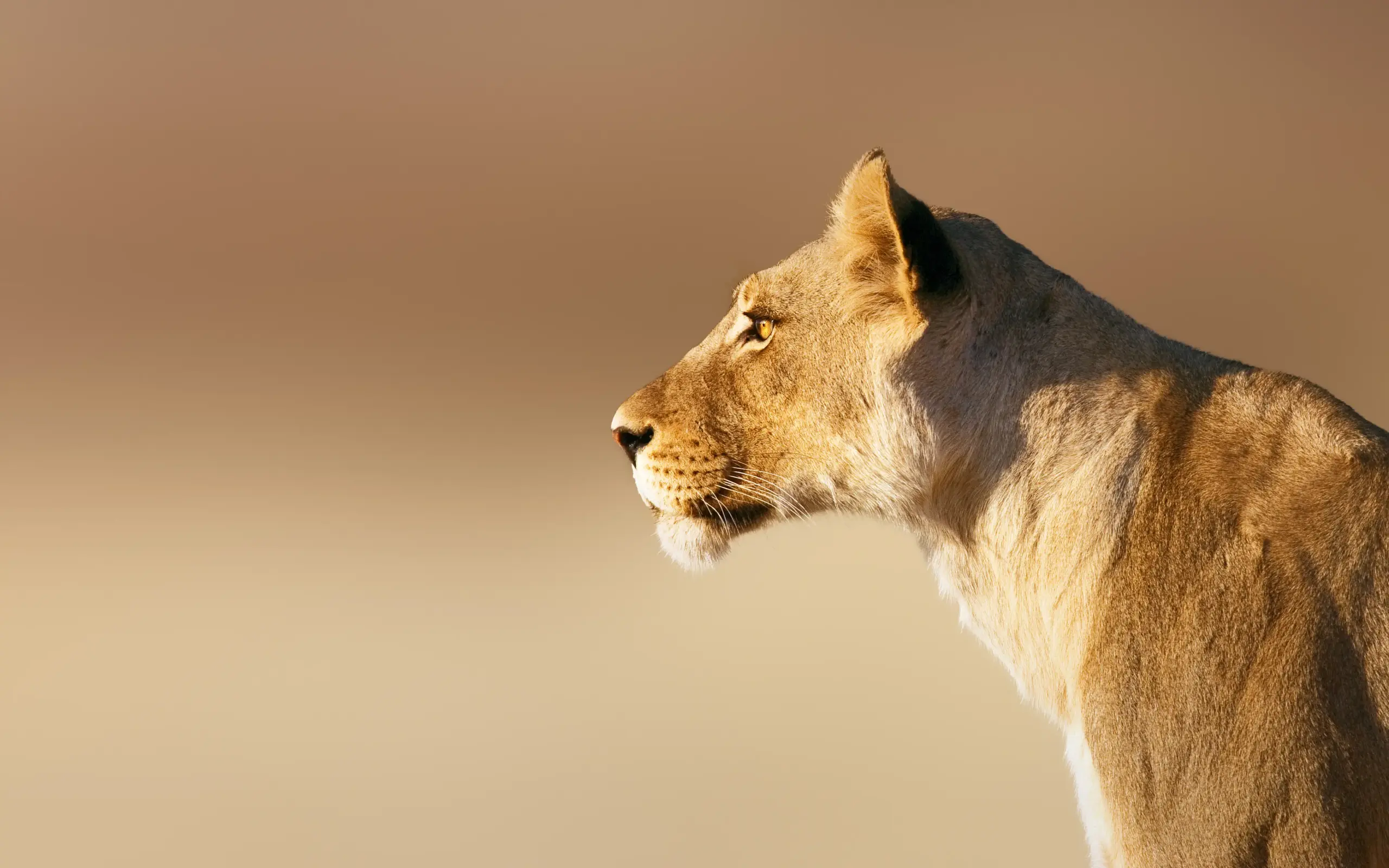
Kalahari sandveld and mopane woodland support sable and roan antelope, alongside giraffe, kudu, wildebeest and waterbuck. Lion prides, leopard and cheetah work the open country between them. Hwange is also a stronghold for the endangered painted dog, whose packs den across the park between June and August, when the chance of finding them is at its best.
Long before it was established as a game reserve in 1928, this land held a different kind of value. The Ndebele king Mzilikazi used it as royal hunting ground in the early nineteenth century, and the San and the BaNambya had worked these landscapes for generations before that. The BaNambya remain an indigenous community in the area today, and the name Hwange comes from a chief. Shallow soils and scarce water made the land poor for farming but rich in game, which is why it survived as wilderness while the country around it was settled and cultivated.
Conservation here carries real scientific weight. The Hwange Lion Research Project, affiliated with Oxford University’s WildCRU, has run since 1999. For more than two decades it has tracked lion ecology and the conflict between people and wildlife, using GPS collars and an early-warning system to cut livestock losses along the boundaries. Its findings helped bring a temporary suspension of lion hunting in the early 2000s, which in turn allowed the number of adult male lions in the population to rise. Painted Dog Conservation, based near the park, monitors several packs within Hwange, and runs anti-poaching patrols, a rehabilitation facility and education programmes alongside that work.
Huge wildlife, and remarkably few vehicles.
White rhino returned to a protected sanctuary in the Ngamo Forest buffer zone in 2022, a collaboration between conservation partners and ZimParks. Several camps build visits to these projects into their itineraries, giving guests direct access to the people doing the work. Around 1.5 million hectares hold only a small number of intimate, high-end camps, so even at the peak of the dry season the game viewing stays private and uncrowded. Several operators hold concessions within and adjoining the park, most notably around Linkwasha and Makalolo in the south-east, where guiding privileges run well beyond what the public park allows. Night drives, off-road tracking and guided walks are all possible in the private concessions.


The best time to visit Hwange National Park
Jan
Feb
Mar
Apr
May
Jun
Jul
Aug
Sep
Oct
Nov
Dec
Recommended
Transitional
Challenging conditions
For Hwange's elephant super-herds at the pumped waterholes, come between July and October, when the dry bush and vanishing water pull wildlife into the open in remarkable numbers. August and September are the comfortable core; October is densest but the hottest month. The green season from December to April brings birding and newborns, though the rains disperse the game.
accommodation in hwange national park
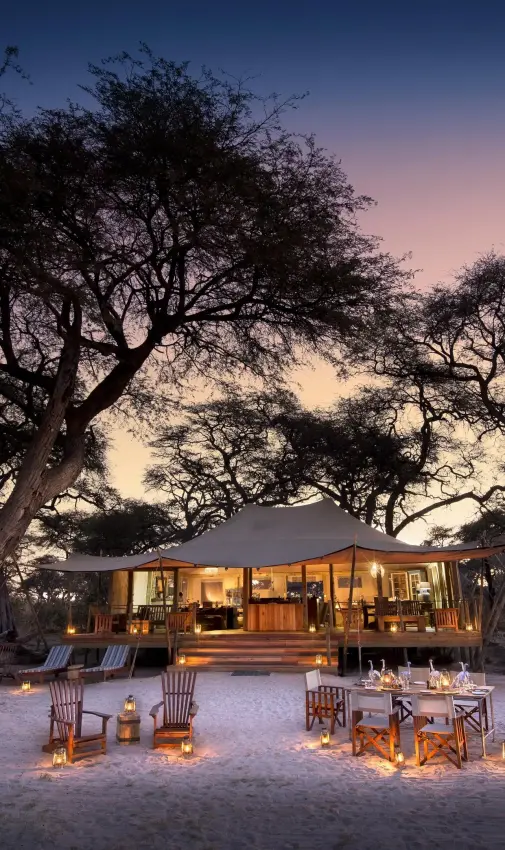
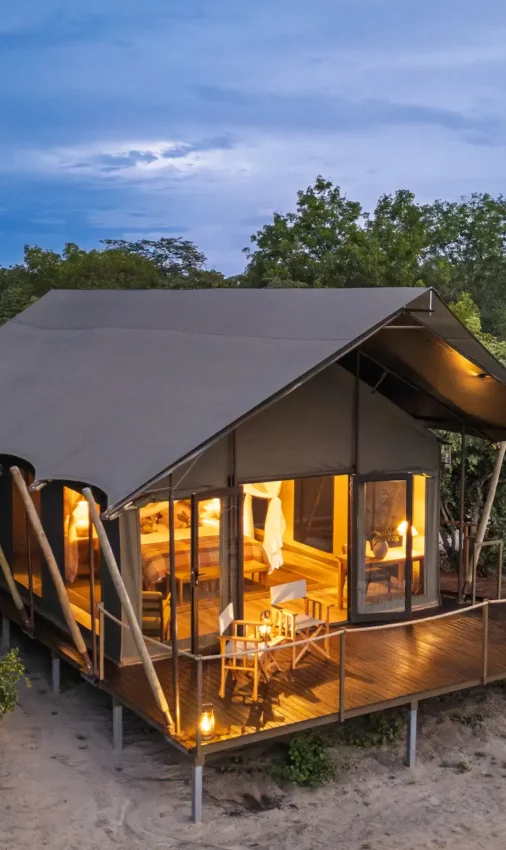
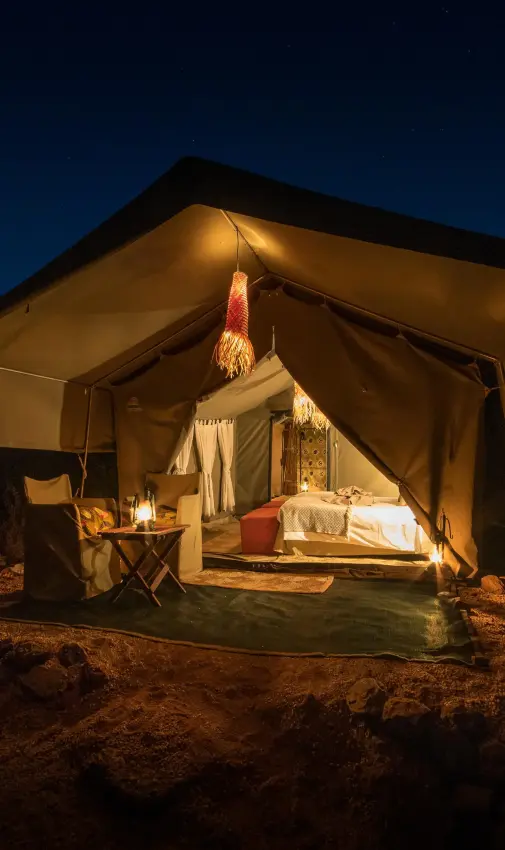
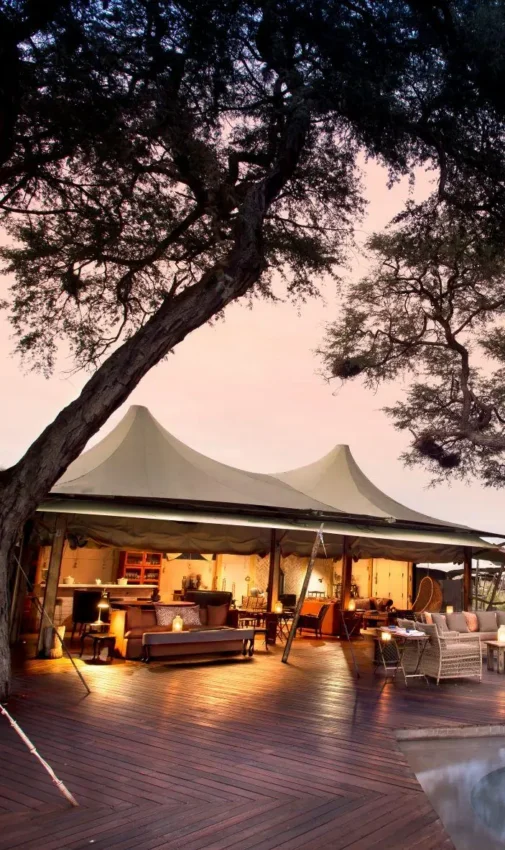
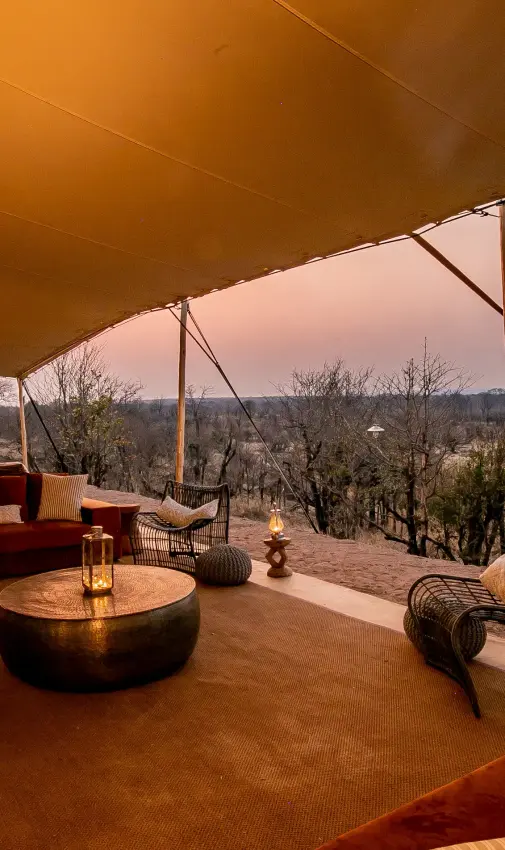
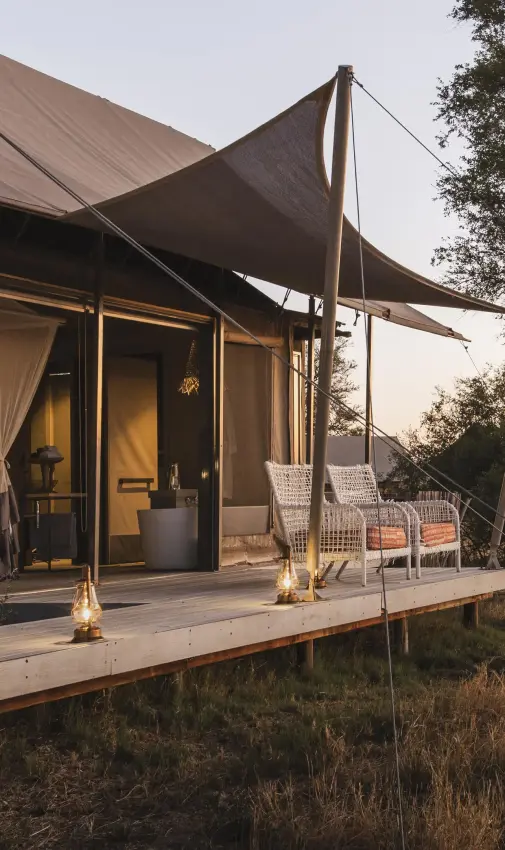
The private concessions hold luxury tented camps and exclusive bush camps. Many high-end camps sit over a productive waterhole, with canvas suites on raised decks, plunge pools and ground-level photographic hides. Private houses with a dedicated guide, vehicle and staff suit families and small groups. Most camps run on solar power.
01

 02
02
 03
03
 04
04
 05
05
 06
06
 07
07
 08
08
 09
09
 10
10
 11
11
 12
12
 13
13
 14
14
 15
15
 16
16
 17
17
 18
18

activities
Waterhole hides and walking safaris
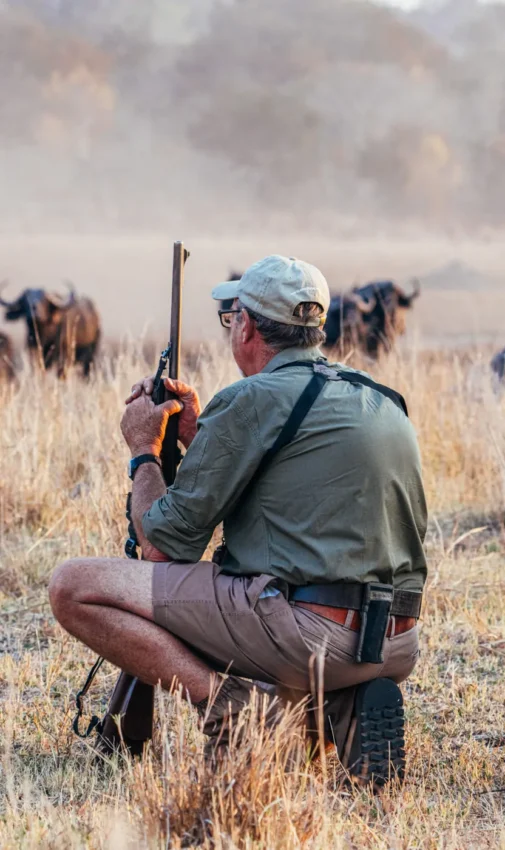
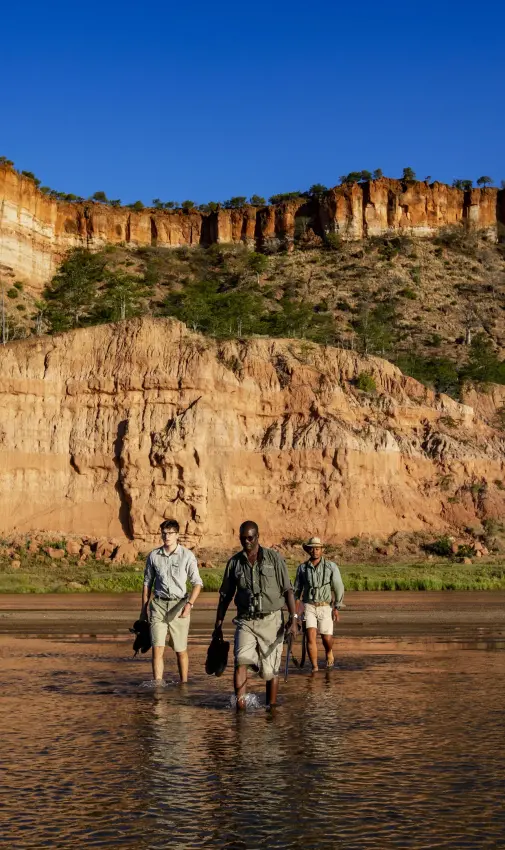
Day game drives run throughout the park and concessions. Night drives, off-road tracking and guided walking safaris are available only in the private concessions. Many camps have ground-level or sunken hides for close photography. Some arrange visits to conservation projects nearby.

conservation
Painted dogs and lion research
Hwange is home to Painted Dog Conservation, which runs anti-poaching, rehabilitation and education work across several monitored packs. The Hwange Lion Research Project, linked to Oxford's WildCRU since 1999, studies lion ecology and human-wildlife conflict. White rhinos returned to a Ngamo Forest sanctuary in 2022.

getting around
Light aircraft from Victoria Falls
Most guests fly into Victoria Falls International Airport, then transfer by light aircraft charter to camp airstrips serving Main Camp, Robins and the private concessions. Bulawayo is a secondary gateway. Road transfers from Victoria Falls take roughly two to three hours, on tar to Main Camp and dirt tracks within the park.
other areas in zimbabwe
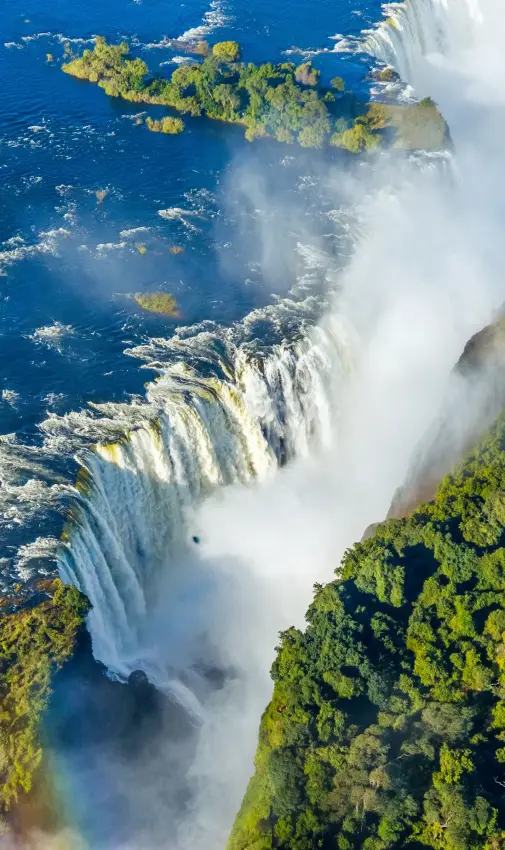
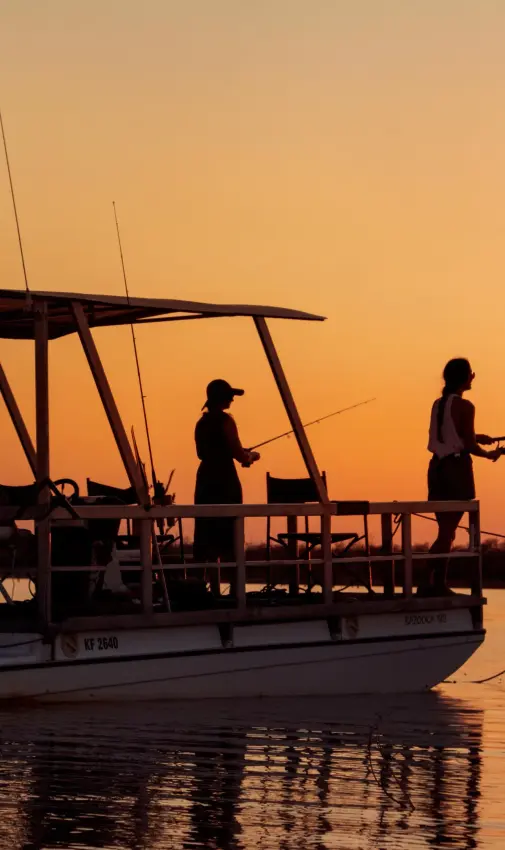
Hwange combines naturally with Victoria Falls, an hour or two to the north and the main air gateway, for waterfall flights and Zambezi cruises. Mana Pools on the Lower Zambezi adds canoeing and walking safaris among riverine forest. Lake Kariba and Matusadona bring houseboats and shoreline game viewing, while the granite hills of Matobo near Bulawayo offer rhino tracking on foot and San rock art.


frequently asked questions
By light aircraft from Victoria Falls, in twenty to thirty minutes.
Robins Airstrip serves the north of the park and Shumba the centre, and the camp's vehicle covers the last stretch as a game drive, anywhere from ten minutes to about forty. Shumba operates all year.
That short hop is why Hwange pairs so easily with Victoria Falls, and why we usually put the two together rather than driving.
Soft bags only on the light aircraft. We book the flight, the strip and the transfer as one arrangement.
For a family or a group, a private charter out of Victoria Falls is often the better answer, usually a Cessna Caravan, and we can arrange either.
Elephant, in numbers that are hard to believe until you see them.
Hwange is Zimbabwe's largest park and has no major river, so the game depends on springs and pumped pans. In the dry season that concentrates elephant at the waterholes in herds of hundreds, with buffalo, lion and painted dog around them.
The pans are also why a hide here is not a gimmick: sitting still at water is the best game viewing in the park.
It is quieter than the famous parks further north, which is much of its appeal.
Yes. TravelHealthPro, the UK's official travel health service, rates Zimbabwe's malaria risk as high from November to June below 1,200 metres, and the CDC recommends tablets for travel anywhere in Zimbabwe at any time of year.
The risk eases through the dry months from July to October, which is when most people visit, but low risk is not the same as no risk.
We do not make medical recommendations. Which tablets suit you, and what is right for a child, are questions for your own doctor or a travel clinic.
On the practical part, cover up at dusk and carry repellent.
Yes, which sets it apart from many national parks.
Guided walking safaris run with professional guides, and the camps on the private concessions along the park's edges also run night drives. Zimbabwe's guide qualification is among the most demanding in Africa, and it shows on foot.
Inside the park proper the rules are tighter, and night driving is generally limited to the private land.
If walking is the reason you are coming, tell us: it decides which camp, not just which park.
Older children, yes, and the hides help.
Sitting at a waterhole with hundreds of elephant coming to drink holds a child's attention in a way a long drive does not, and several camps have family units or adjoining rooms.
Walking safaris usually carry a minimum age of twelve or sixteen depending on the camp, and some of the smaller camps set a minimum age overall.
Tell us their ages and we will find the camps that take them and the activities they can actually join.
Three, and it is one of the places where a fourth pays off.
The park is huge and the game is at water rather than on the roads, so the rhythm is slower than a Serengeti day: a morning drive, a hide in the afternoon, a walk if you want one. Two nights gives you one full day, which is thin.
The usual route we build is Victoria Falls first, then Hwange, then Mana Pools or the Matobo Hills.
Tell us your nights and we will say honestly where they are best spent.
rated five stars by our clients

our approach
remote, exclusive
& personal
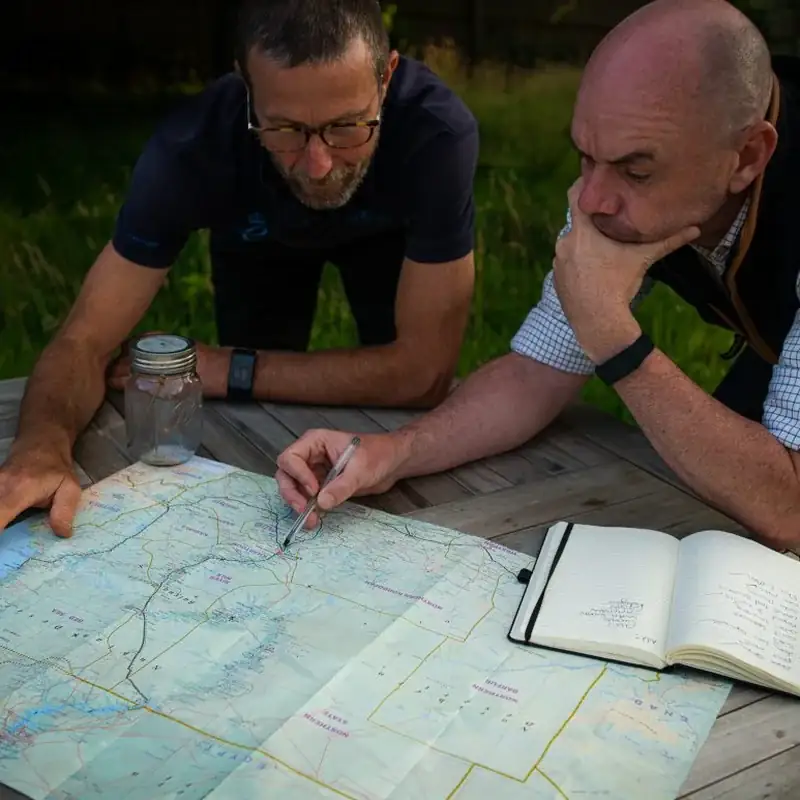
Every journey starts with a conversation. We take the time to understand your vision before we start planning.
Whether by phone or in person, we work with you directly to shape something that is considered, personal, and expertly delivered.
Every journey starts with a conversation. We favour a direct, personal approach: understanding your vision before anything else.
Whether by phone or in person, we work with you directly to shape a journey that is both thoughtfully considered and expertly delivered.
Get in touch to start planning yours.