Camp

Hwange Bush Camp

A small tented camp in the remote Robins area of northern Hwange National Park, Zimbabwe, built around walking safaris.

Country: Zimbabwe
Location: Robins area, Hwange National Park
Number of rooms: 7

Seven tents, struck each November

South of Deteema Dam and near Dolilo Pan, Hwange Bush Camp holds a quiet stretch of northern Hwange, country nothing like the Kalahari sandveld of the south. The ground rises and falls in undulating ridges, through mopane woodland and open grassland. It breaks into rock outcrops that give the guides both their vantage points and their tracks to read.

Professional Zimbabwean guides take you out by foot and by vehicle

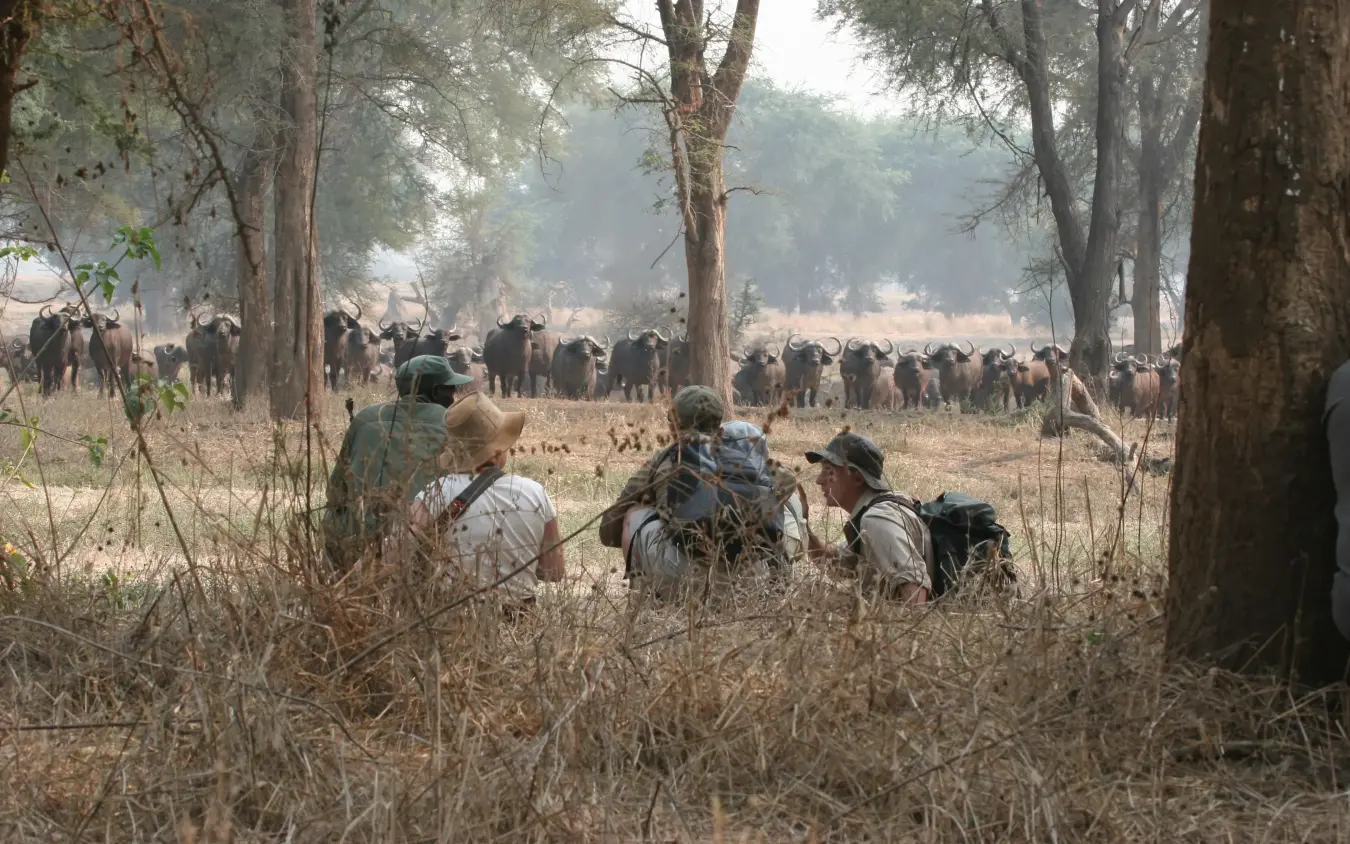
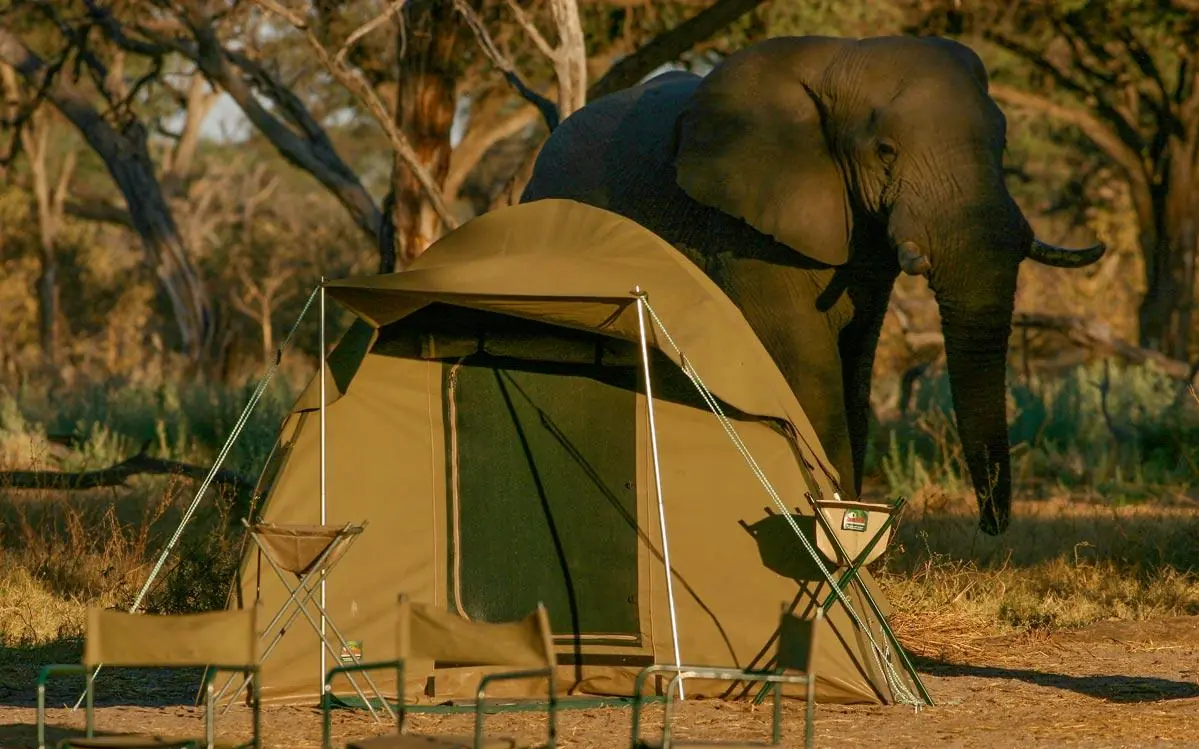
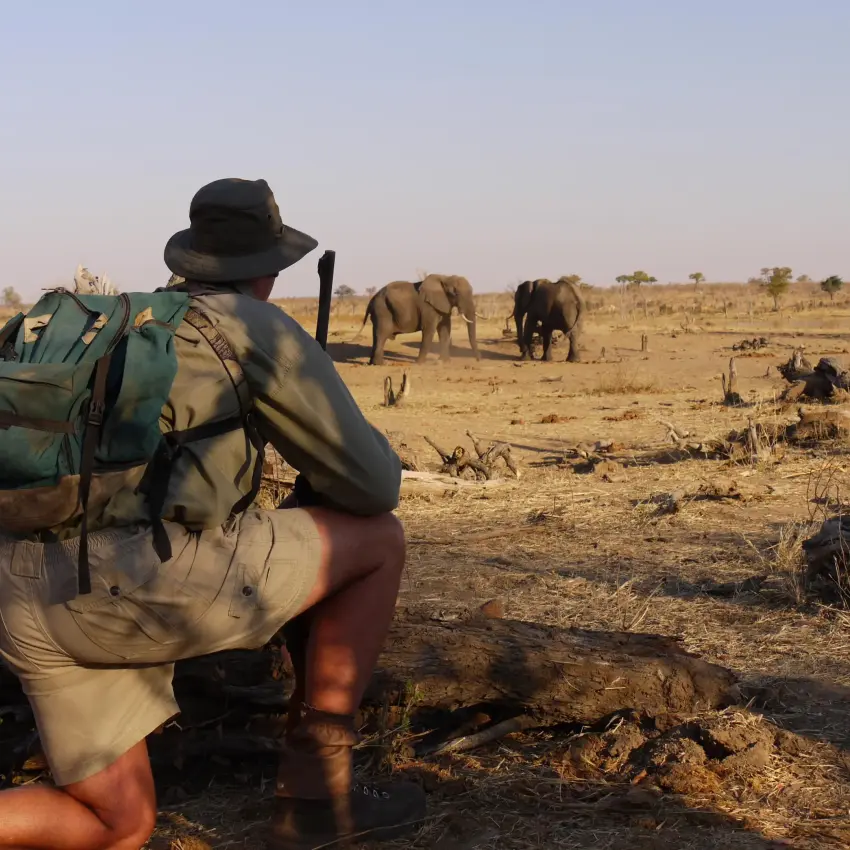
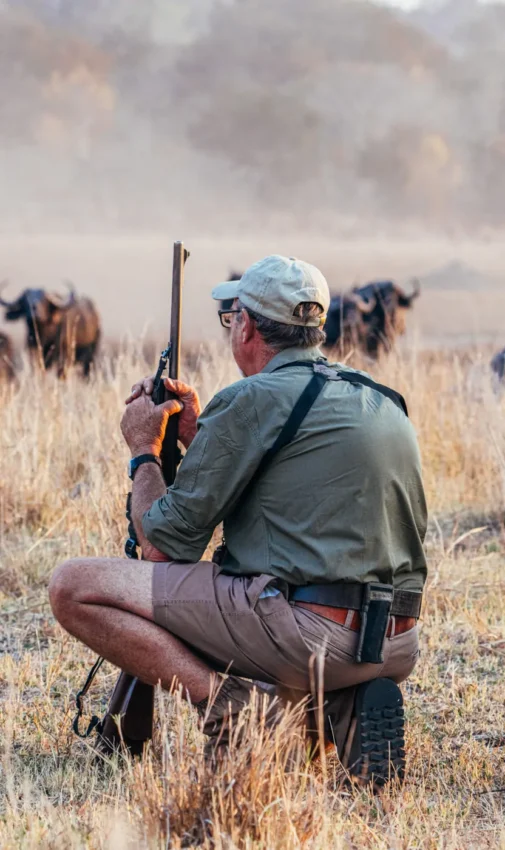
Days are led on foot across that hilly, rocky terrain, where the walking matters more than any species list to tick off. Professional Zimbabwean guides take you out by foot and by vehicle, working the springs and pumped pans that hold the wildlife through the long dry months. They do it in near solitude, for a game drive here rarely crosses paths with another vehicle. The camp is small and seasonal by design, seven Meru tents struck each November and rebuilt in May.

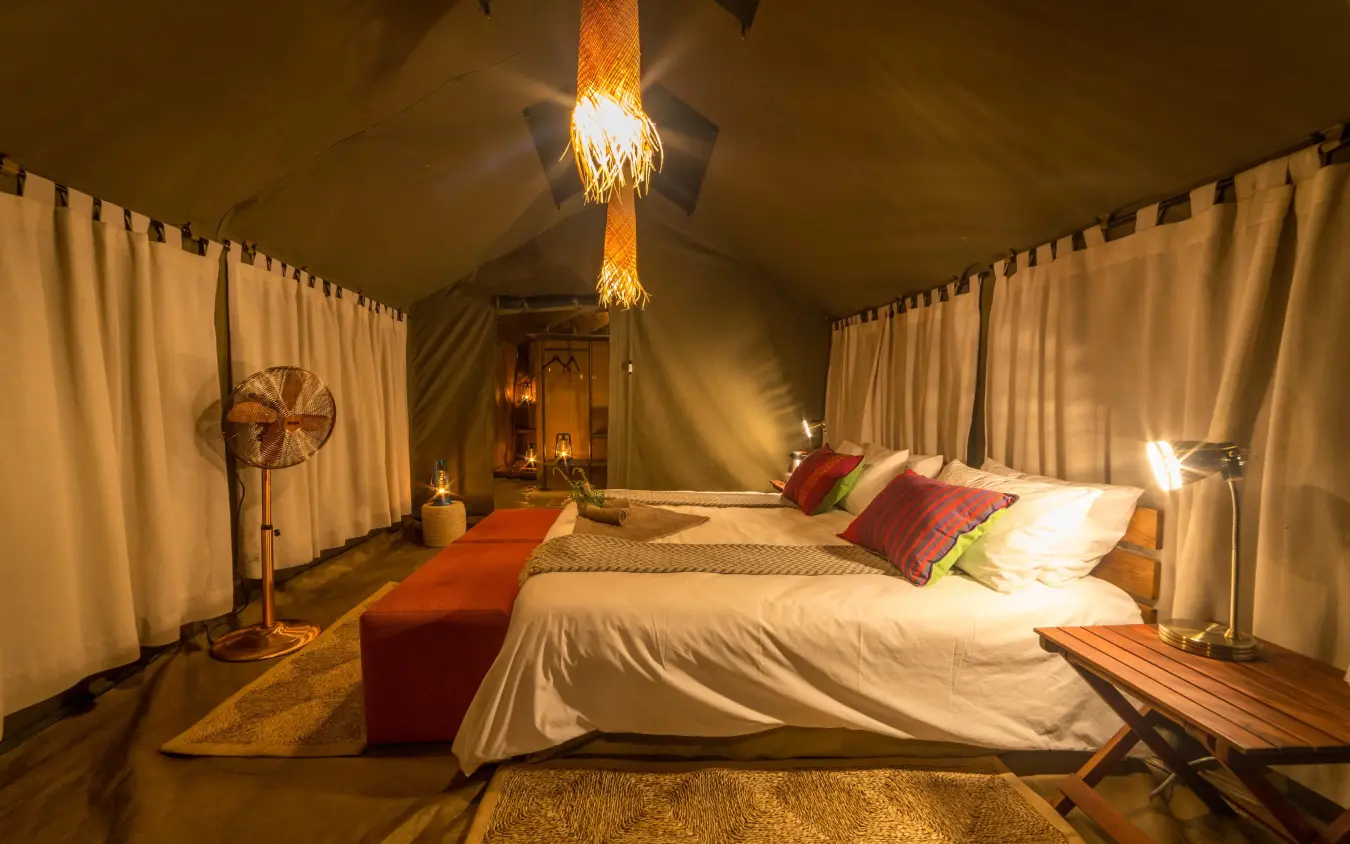
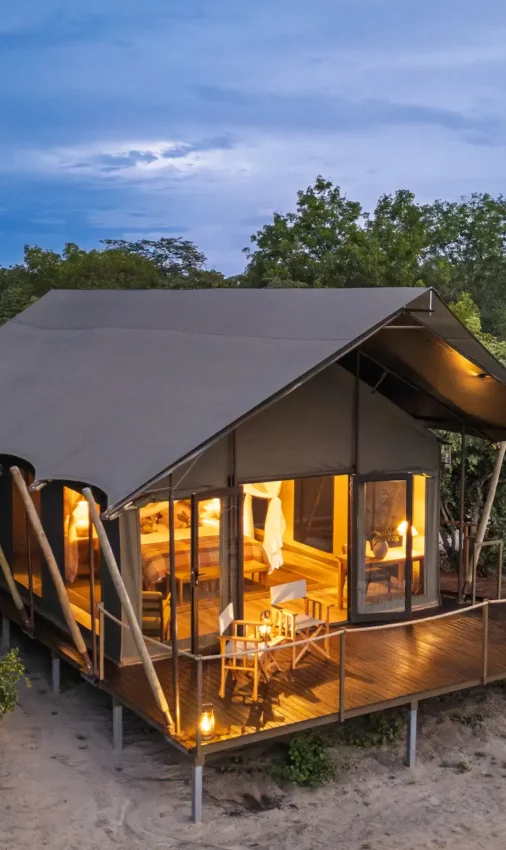
Spacious tent bedroom with warm lighting and colorful bedding, Hwange Bush Camp, Hwange National Park, Zimbabwe
Guest on walking safari observing elephants in savanna, Hwange Bush Camp, Hwange National Park, Zimbabwe

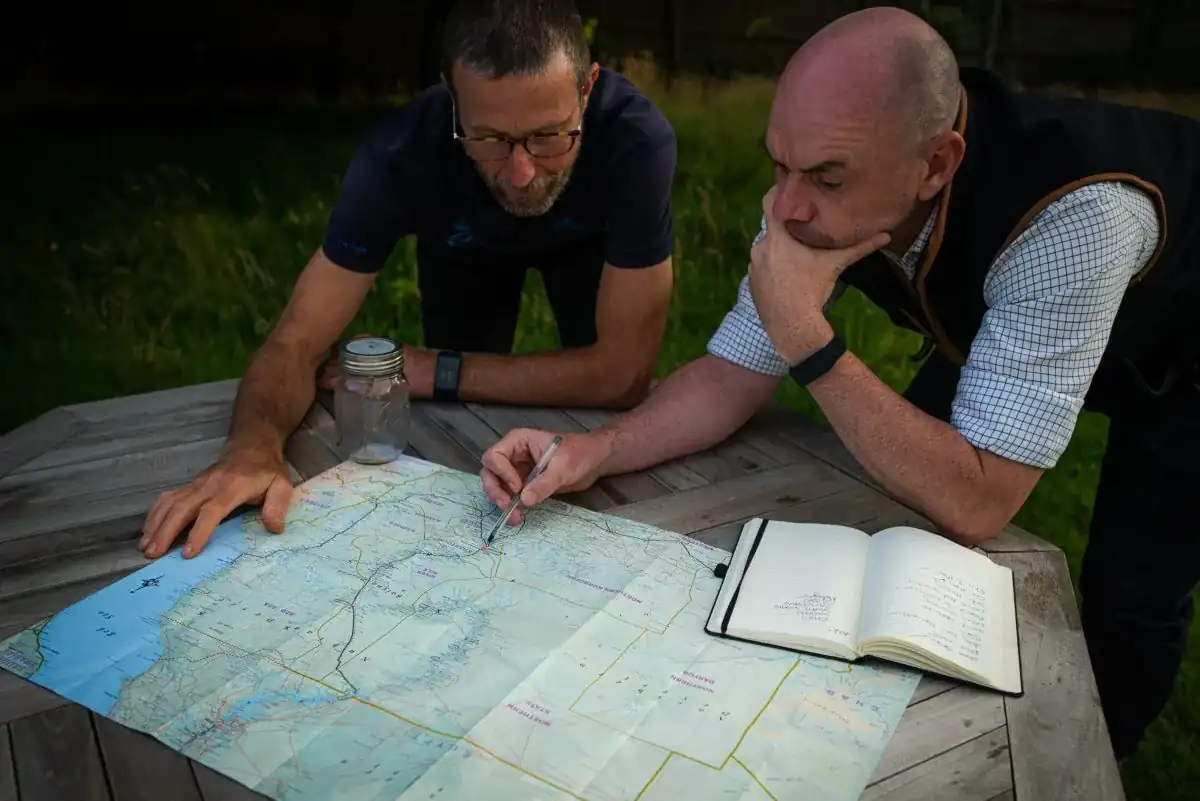
Dave Carson runs Hwange Bush Camp with his wife Antonette, as part of their Kazuma Trails operation. He qualified as a professional guide in 1995, after a four-year apprenticeship. In more than thirty years of guiding across Africa he has come to set the standards other guides are measured against, and by every account he is one of the nicest people you could hope to walk with.

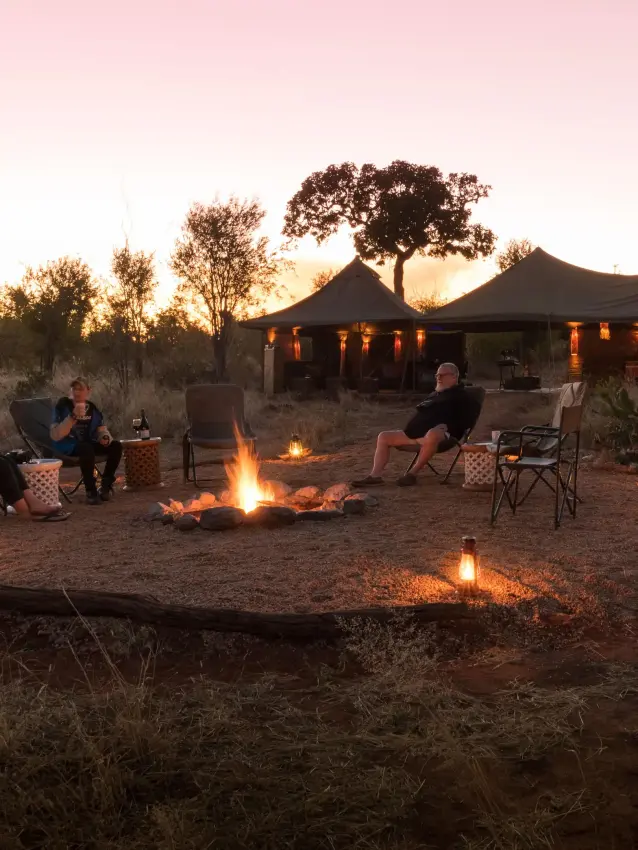
The guides host the meals and share the fire at night

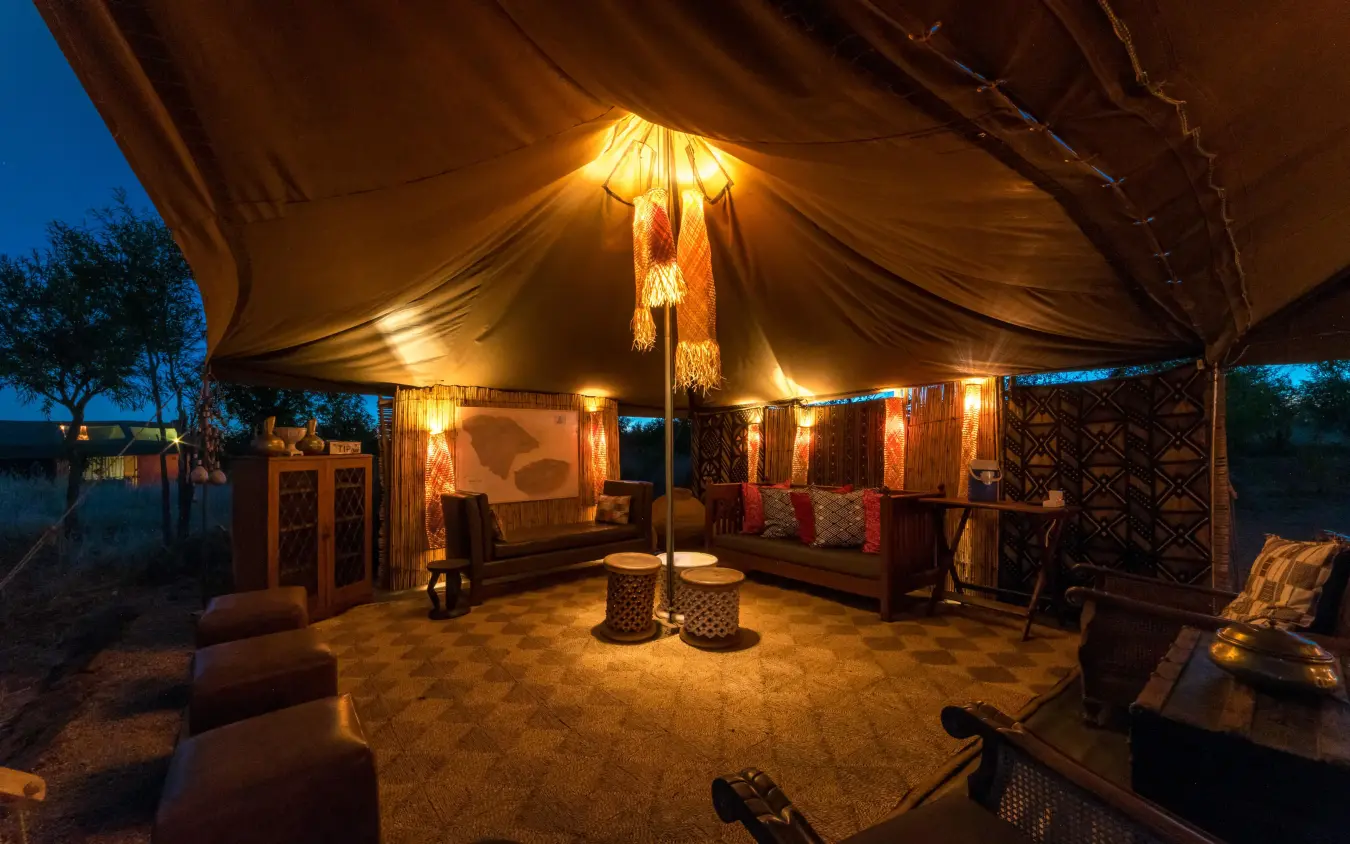
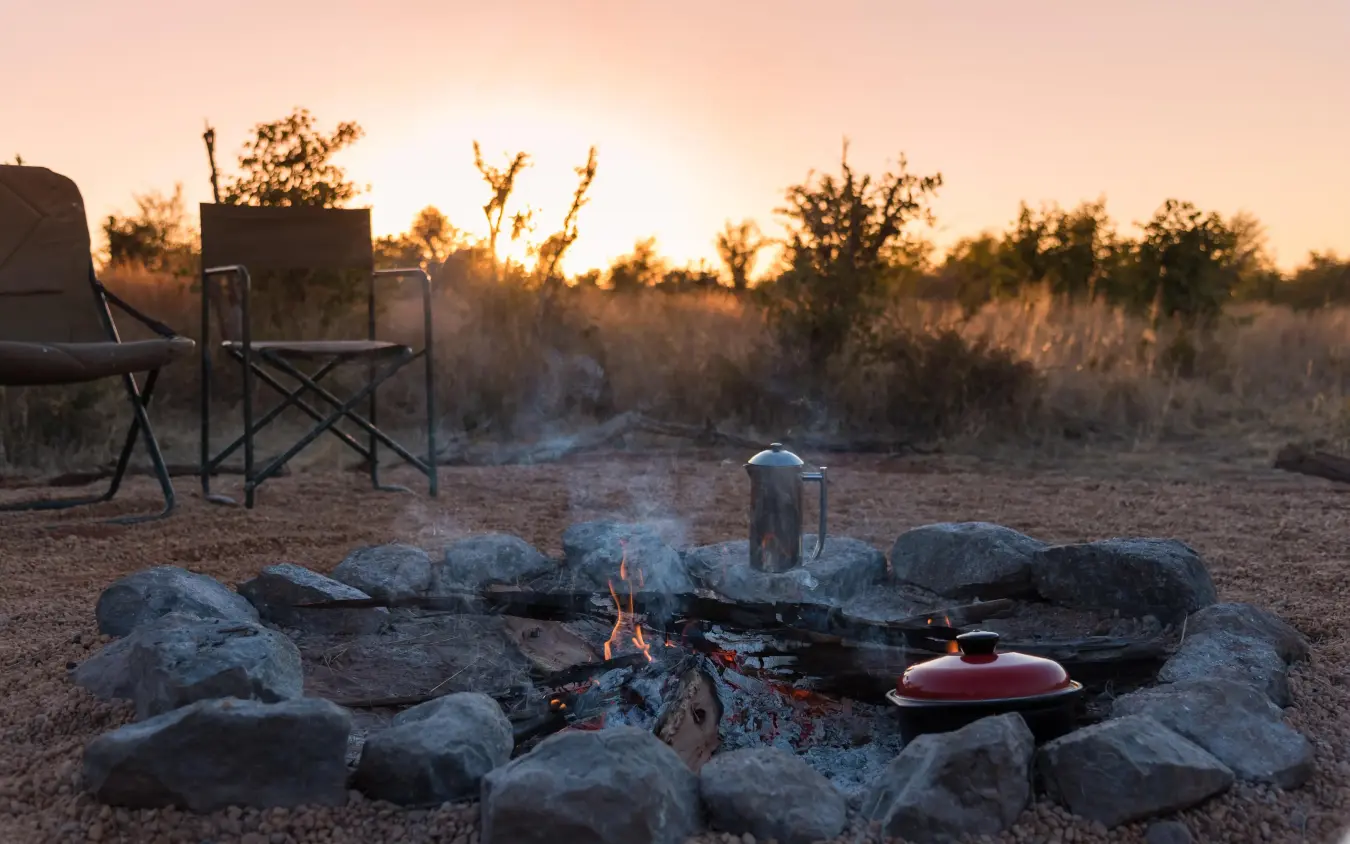
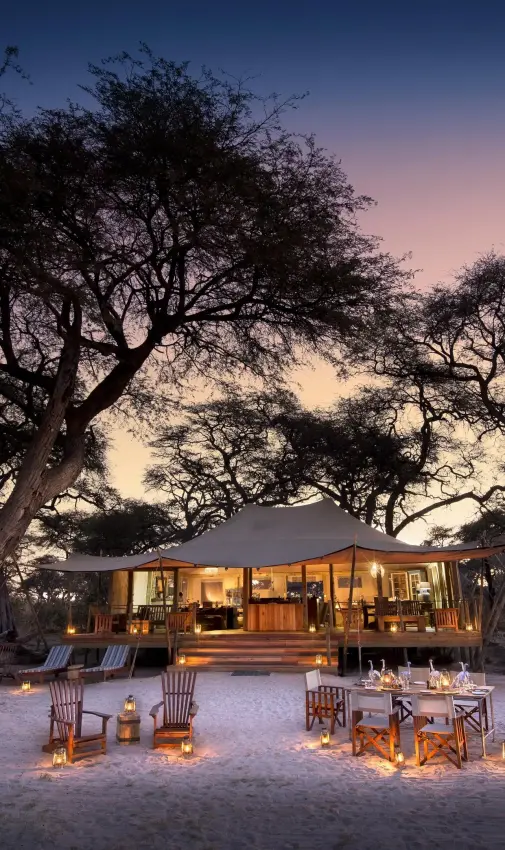
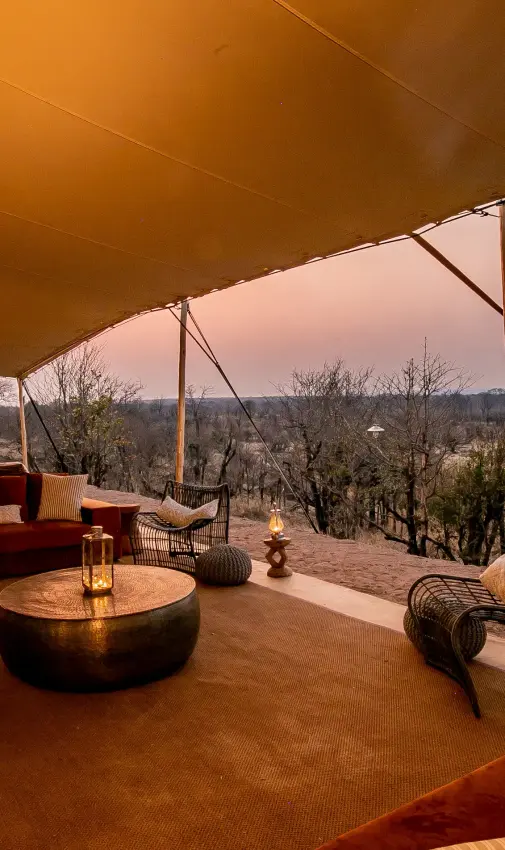
That mix of authority and warmth carries through the whole of camp life. The guides host the meals and share the fire at night, and the day’s plan bends with the group, so a drive can turn into a walk the moment fresh tracks appear underfoot. The tents sit under tree shade, spaced for privacy, while the lounge and dining tents and a central fire-pit form the heart of it all.

Spacious tent bedroom with warm lighting and colorful bedding, Hwange Bush Camp, Hwange National Park, Zimbabwe 01

accommodation

Seven Meru Tents Under Tree Shade

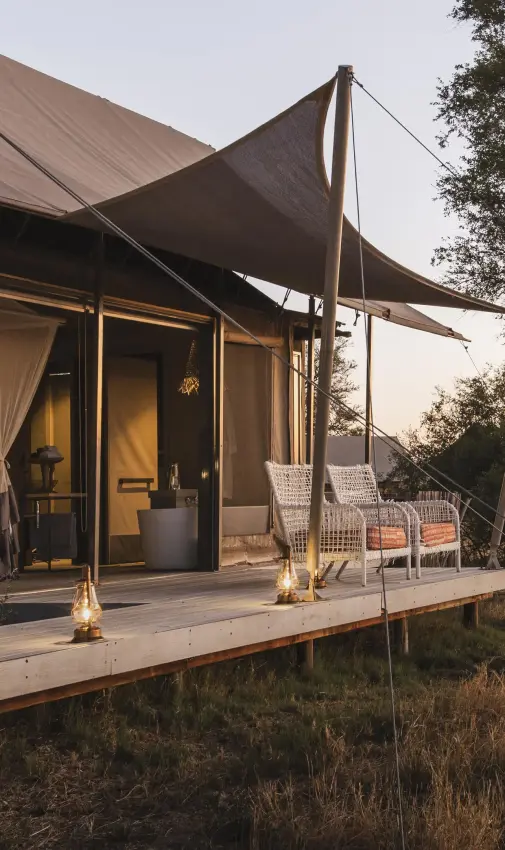
Seven Meru-style canvas tents accommodate a maximum of fourteen guests, set in the shade of trees. Each has twin or double beds, bedside lighting, a standing fan and a private veranda, while the en-suite bathroom sits behind a canvas partition, with a flush toilet, washbasin and traditional bush shower, hot water supplied on request. Solar power runs the camp.

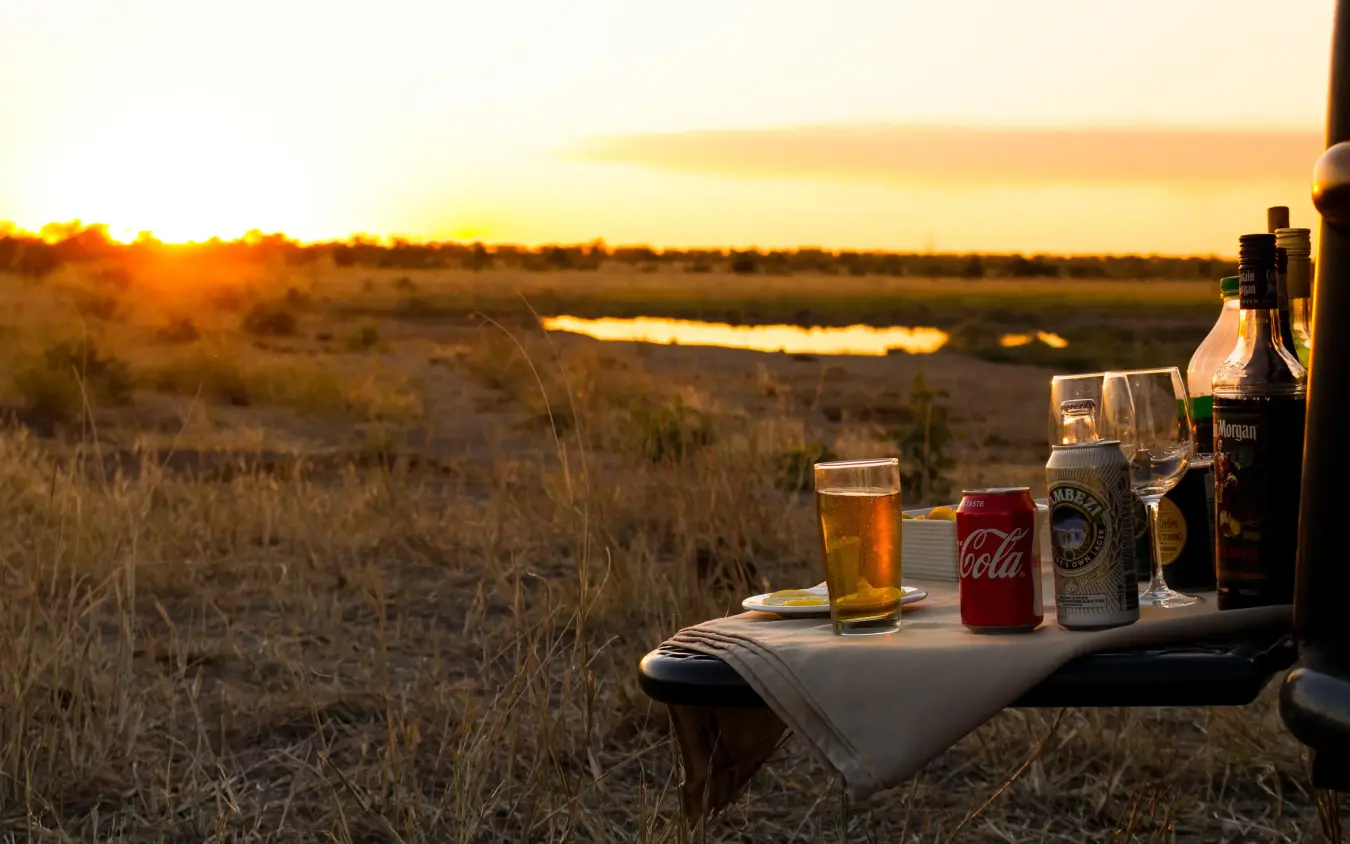
Guide standing by safari vehicle at sunset overlooking waterhole, Hwange Bush Camp, Hwange National Park, Zimbabwe 02

activities

Walking Safaris and Deteema Game Drives

Walking safaris lead the day, tracking game on foot through hilly, rocky terrain with professional guides. Open 4x4 game drives run morning and afternoon, often paired with time at Deteema and other pans, along with night drives for nocturnal species. As the camp sits within Hwange National Park, activities follow park rules, though its isolation means little overlap with other operators. Fly-camping and birdwatching are also offered.

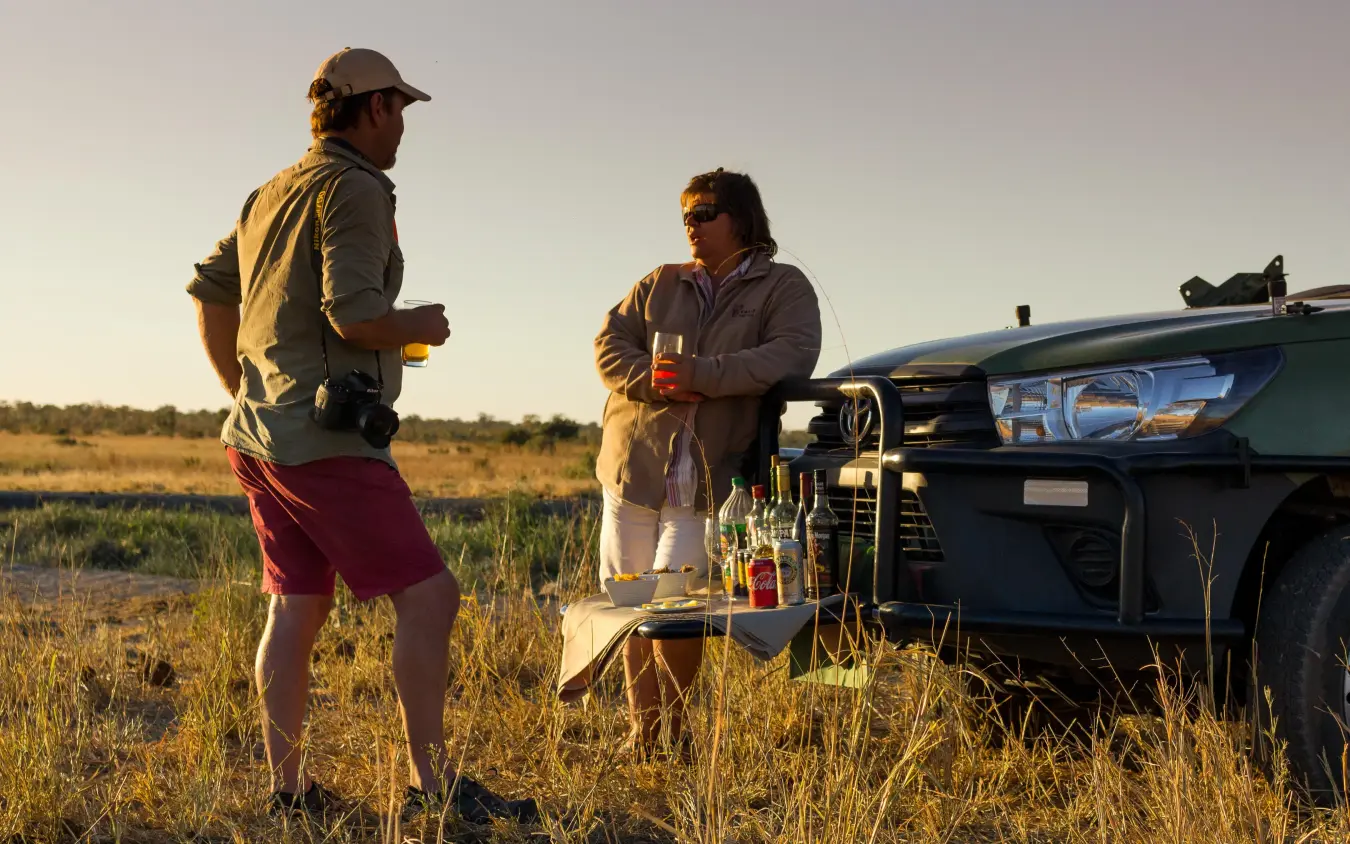
Safari vehicle on game drive at sunset in savanna landscape, Hwange Bush Camp, Hwange National Park, Zimbabwe 03

conservation

Bhejane Trust Black Rhino Monitoring

Dave Carson is a trustee of the Bhejane Trust, and the camp supports its black rhino monitoring, anti-poaching and volunteer work across the Sinamatella and Robins areas. The team assists Zimbabwe Parks with road grading, water-pump maintenance and supplies for ranger teams, and contributes sightings to lion, cheetah and wild dog research. Training the next generation of Zimbabwean guides is a further focus.

ready to get started?

Get in touch and let’s start the conversation. An initial consultation helps us understand what you’re looking for, whether that’s specific experiences, luxury touches, or marking a special occasion, and from there we’ll guide you through what’s possible so you can decide if we’re the right fit.

Alternative accommodation in hwange national park

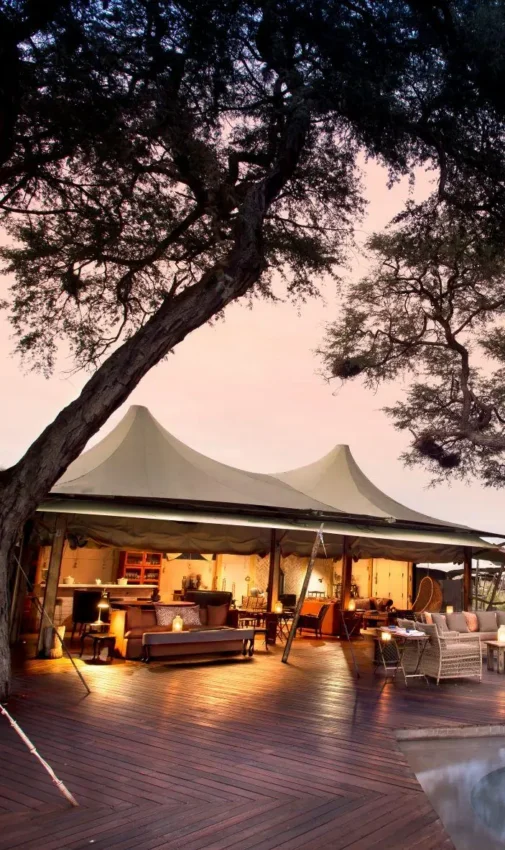
Canvas tent lodge at dusk with acacia trees and candlelit seating, Somalisa Expeditions, Hwange National Park, Zimbabwe 01

Somalisa Expeditions

Hwange National Park

Elephant herd drinking at waterhole with lodge buildings at dusk, The Hide, Hwange National Park, Zimbabwe 02

The Hide

Hwange National Park

Woman observing elephant from lodge viewing platform with savanna backdrop, Khulu Bush Camp, Hwange National Park, Zimbabwe 03

Khulu Bush Camp

Hwange National Park

Illuminated safari tent with wooden deck in bushland at dusk, Muddy Teak, Hwange National Park, Zimbabwe 04

Muddy Teak

Hwange National Park

Thatched lodge with illuminated interior and fire pit at dusk, Daka Plains Camp, Hwange National Park, Zimbabwe 05

Daka Plains Camp

Hwange National Park

Illuminated safari lodge with canvas tent under acacia trees at dusk, Deteema Springs Camp, Hwange National Park, Zimbabwe 06

Deteema Springs Camp

Hwange National Park

Safari lodge deck with tent and acacia trees at dusk, Somalisa Acacia, Hwange National Park, Zimbabwe 07

Somalisa Acacia

Hwange National Park

Modern lodge accommodation with stone pillars and wooden pergola at dusk, Camelthorn Lodge, Hwange National Park, Zimbabwe 08

Camelthorn Lodge

Hwange National Park

Spacious bedroom with four-poster bed and sheer curtains, Camp Hwange, Hwange National Park, Zimbabwe 09

Camp Hwange

Hwange National Park

Luxury safari lodge bedroom with wooden finishes surrounded by trees at dusk, Little Makalolo, Hwange National Park, Zimbabwe 10

Little Makalolo

Hwange National Park

Safari lodge tent exterior at sunset with wooden deck, Linkwasha Camp, Hwange National Park, Zimbabwe 11

Linkwasha Camp

Hwange National Park

Hunter with rifle tracking wildebeest herd in dry grassland, Sable Valley Lodge, Hwange National Park, Zimbabwe 12

Sable Valley Lodge

Hwange National Park

Luxury tent lodge deck overlooking African wetland at dusk, Somalisa Camp, Hwange National Park, Zimbabwe 13

Somalisa Camp

Hwange National Park

Elephant herd drinking at waterhole near safari camp at golden hour, Verney’s Camp, Hwange National Park, Zimbabwe 14

Verney’s Camp

Hwange National Park

Luxury safari lounge with panoramic savanna views at dusk, Camp Chitubu, Hwange National Park, Zimbabwe 15

Camp Chitubu

Hwange National Park

Elephants drinking at waterhole with lodge in background, The Wallow Lodge, Hwange National Park, Zimbabwe 16

The Wallow Lodge

Hwange National Park

Elephant herd bathing at waterhole near thatched lodge, Nehimba Lodge, Hwange National Park, Zimbabwe 17

Nehimba Lodge

Hwange National Park

Luxury safari tent with wooden deck and chairs in woodland setting, Davison’s Camp, Hwange National Park, Zimbabwe 18

Davison’s Camp

Hwange National Park

frequently asked questions

You fly into Victoria Falls, the usual gateway for Hwange, then reach the camp in the remote northern Robins area either by a light aircraft charter to a Hwange airstrip of around forty minutes, or by road, which takes roughly three to four hours including the drive through the park. There are no scheduled airline flights into Hwange, so the small charter is arranged as part of your safari.

If you fly, the charter is shared and luggage is soft bags of around 20kg per person including hand luggage, which we confirm before you pack. We can also arrange it as a private charter, typically a Cessna Caravan or Pilatus PC-12, flown direct to the strip on your own timings. The camp is seasonal, its tents taken down each November and put back up in May, so it operates through the dry months from roughly May to early November and we plan your trip around that window.

Yes, Hwange carries a seasonal malaria risk, so it is not malaria-free. The risk is at its lowest in the dry winter months from June to October, which is also the prime time for game viewing, and higher through the wet green season from November to April.

Guidance changes from year to year, so please confirm the current advice with a travel clinic or your doctor before you travel, take antimalarials if they recommend them, and cover up against bites after dark.

Hwange sits higher than the Zambezi valley, and its dry-season mornings from June to August are genuinely cold, sometimes near freezing on an early game drive, before the days warm up. You want proper warm layers, a hat and gloves for dawn starts, and light clothing for the middle of the day.
From September the heat builds, with October the hottest month, so switch to light, breathable, neutral-coloured clothing and strong sun protection for a late-season visit. If you fly in, pack into a soft bag rather than a hard case.

The dry season is what brings them in. As the bush dries out from about July to October, wildlife concentrates around the springs and pumped pans, and northern Hwange can hold remarkable numbers of elephant. The guides here work those water sources on foot and by vehicle, so the dry months are the time to come for the classic Hwange gathering.

In the green season from December to April the rains fill the bush with water and the animals spread out, so the big concentrations ease and the focus shifts to birds and newborns. Because the camp is only open in the dry months, a stay here always falls in the stronger game-viewing window.

Yes, the days here lead on foot. The camp sits in remote, hilly, rocky country in northern Hwange, and the guides take you out walking to read tracks and terrain, with open game drives and night drives alongside. Because the camp is so isolated, you rarely cross paths with another vehicle.

Walking safaris in big-game country carry a minimum age for safety, so if you are travelling with children or teenagers, tell us their ages and we will confirm with the camp what they can join.

This is a small, remote bush camp in northern Hwange, and you should plan to be offline here. Camps in this part of the park typically have no guest wifi and little or no mobile signal, with any connection kept for camp operations and emergencies rather than guest use.

For most guests that disconnection is part of the appeal of somewhere this isolated. If you need to stay reachable while you are away, tell us before you travel and we will advise on what is realistic on your dates.

rated five stars by our clients

other areas in zimbabwe

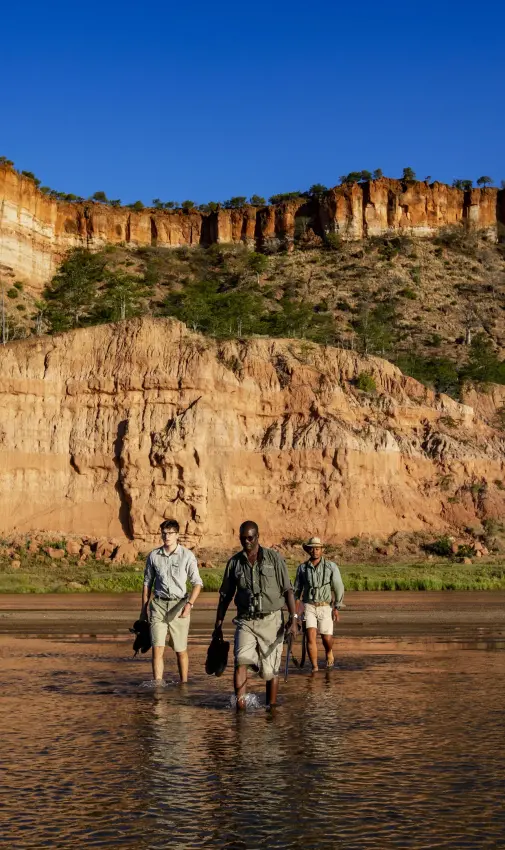
Guests wading in river beside towering sandstone cliffs, Gonarezhou & Malilangwe, Zimbabwe 01

Gonarezhou & Malilangwe

Young elephant with raised trunk in golden forest light 02

Mana Pools

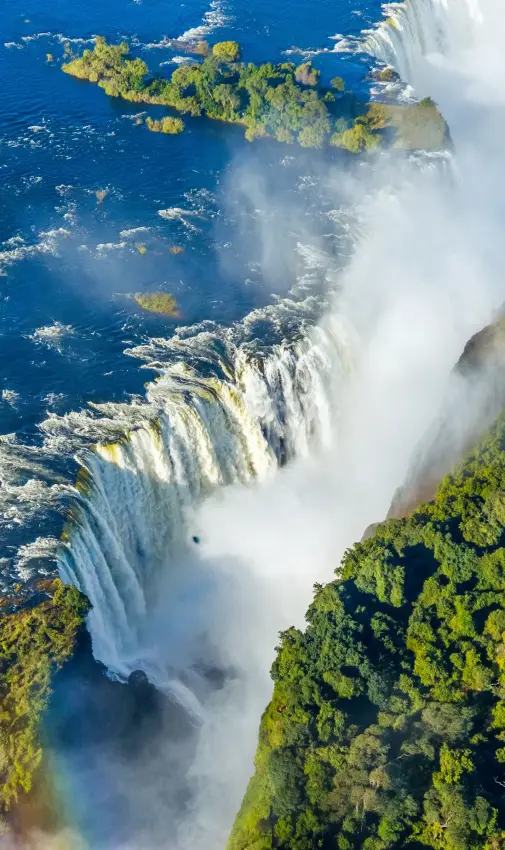
Aerial view of massive waterfall cascading into river below 03

Victoria Falls

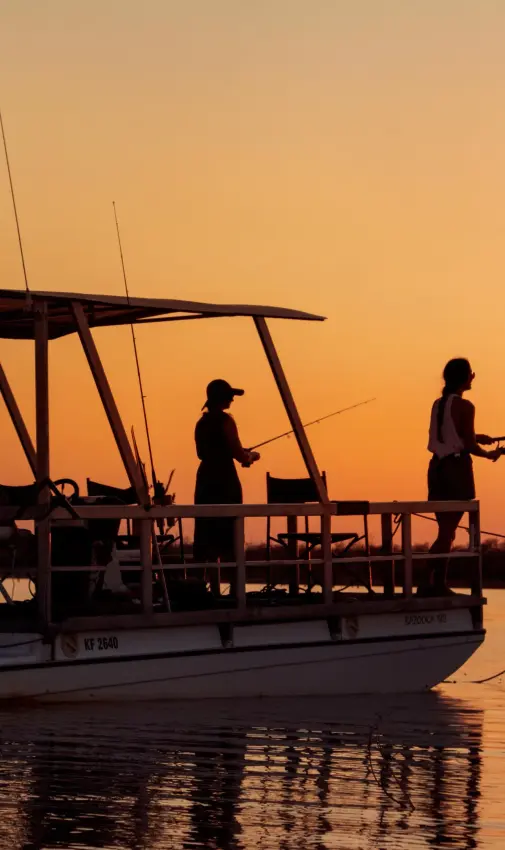
Fishermen silhouetted against sunset on shallow water boat, Changa Safari Camp, Matusadona National Park, Zimbabwe 04

Matusadona

Guests examining ancient rock art on stone wall, Amalinda Lodge, Matobo, Zimbabwe 05

Matobo

Planning a journey together

our approach

remote, exclusive
& personal

Every journey starts with a conversation. We take the time to understand your vision before we start planning.

Whether by phone or in person, we work with you directly to shape something that is considered, personal, and expertly delivered.

get in touch
destinations ideas & inspiration our process about us contact us