







botswana
victoria falls and okavango
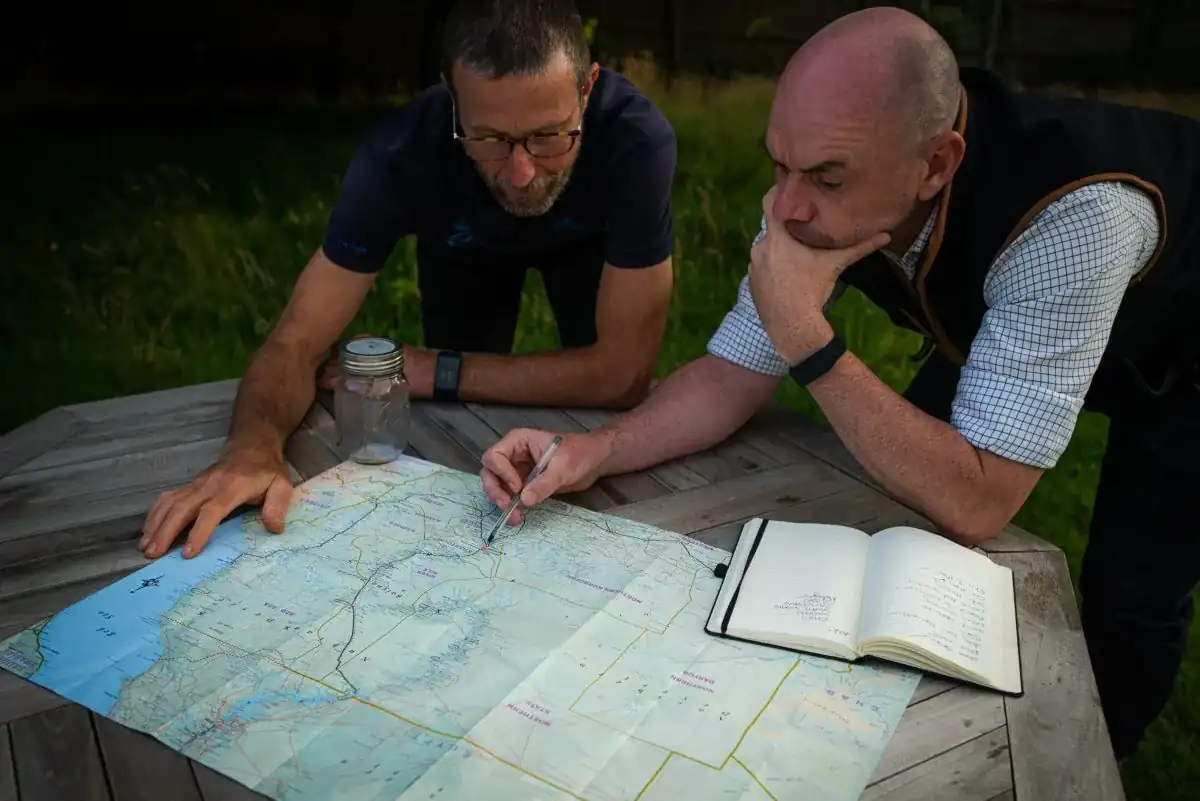
Cross Botswana's wild north from Victoria Falls to the Okavango, tracking wild dog and leopard with a private mobile camp.
- Group Departure
- From $4,928 pp
- 7 guests
- 11 nights
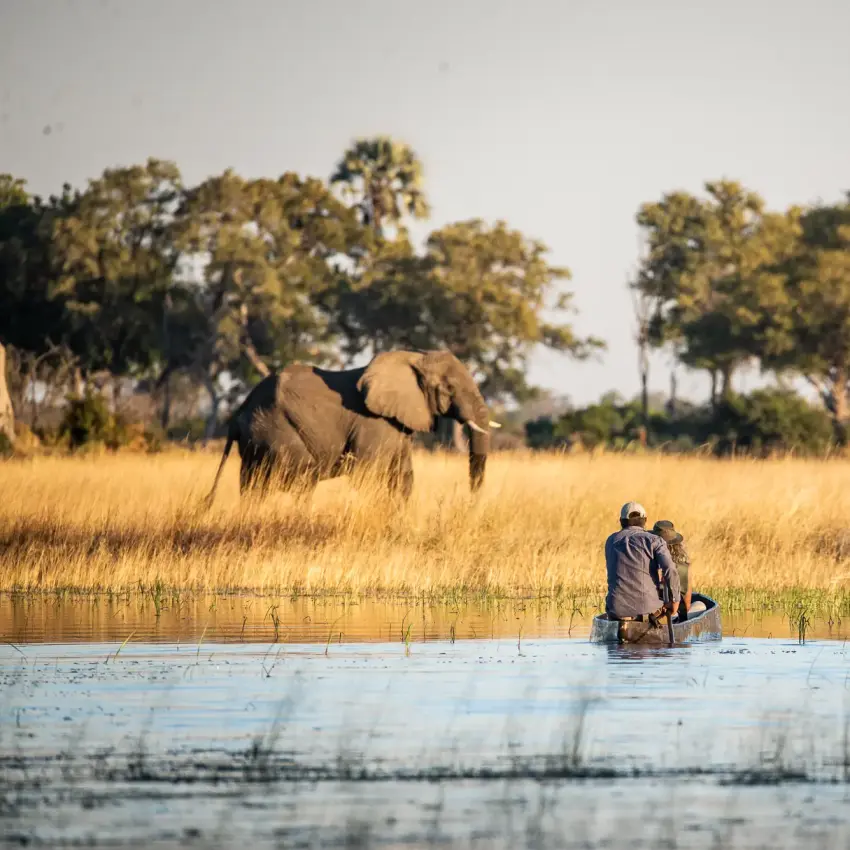
Eleven nights across Botswana, linked in three moves. It opens in the private Chitabe Concession, in the drier south-eastern Okavango Delta, where the country is worked on drives and African wild dogs move through often. It then crosses to the western Delta for a mobile walking safari between two river camps, before finishing on the edge of the Makgadikgadi salt pans in the Kalahari.
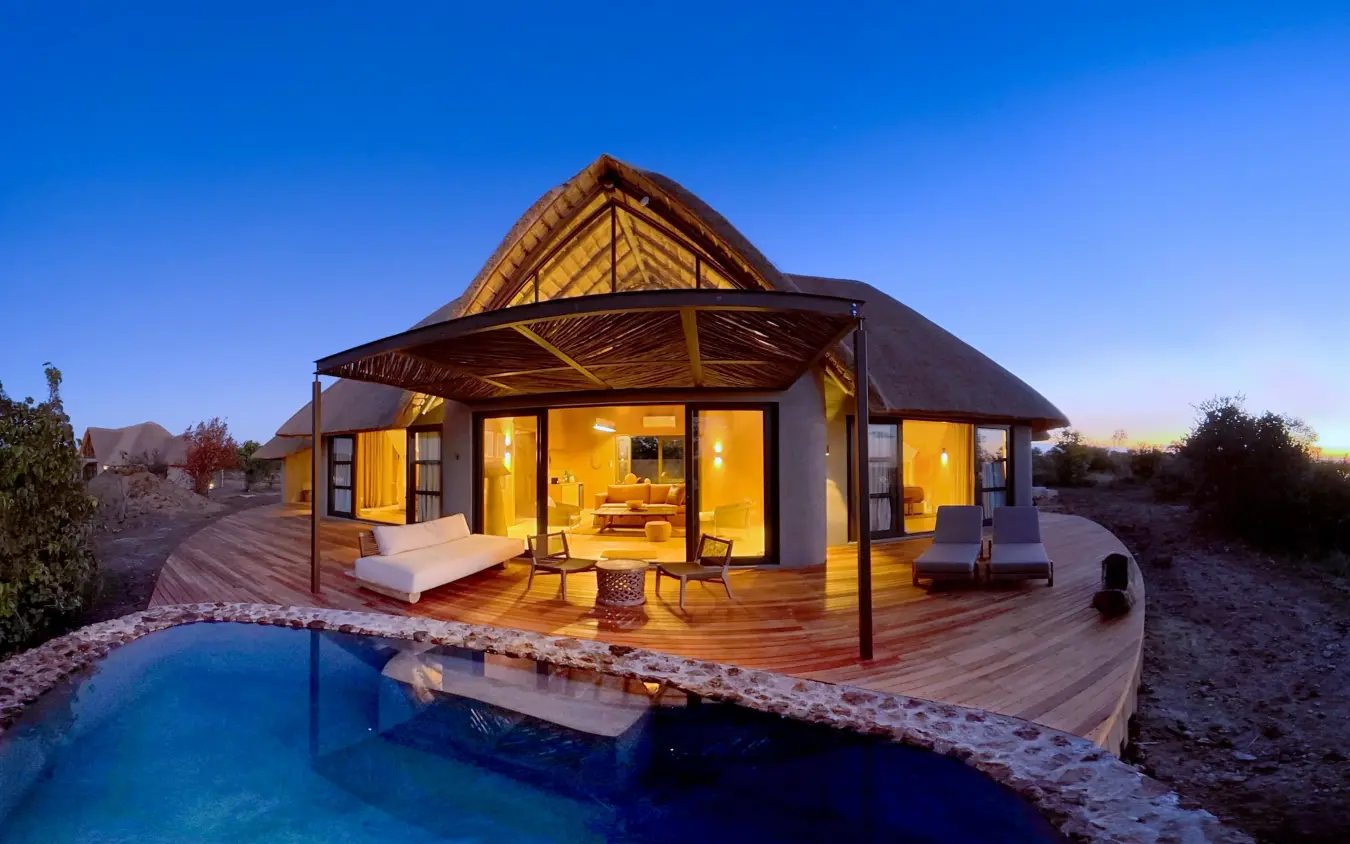
You reach the walking concession by helicopter, as there is no airstrip, and set the rhythm of those days yourself. The camps range from rebuilt tented suites on Delta tree islands to lightweight canvas and a 1940s-style expedition camp on the pans. Each is grounded in guiding, and comfortable rather than heavily built.
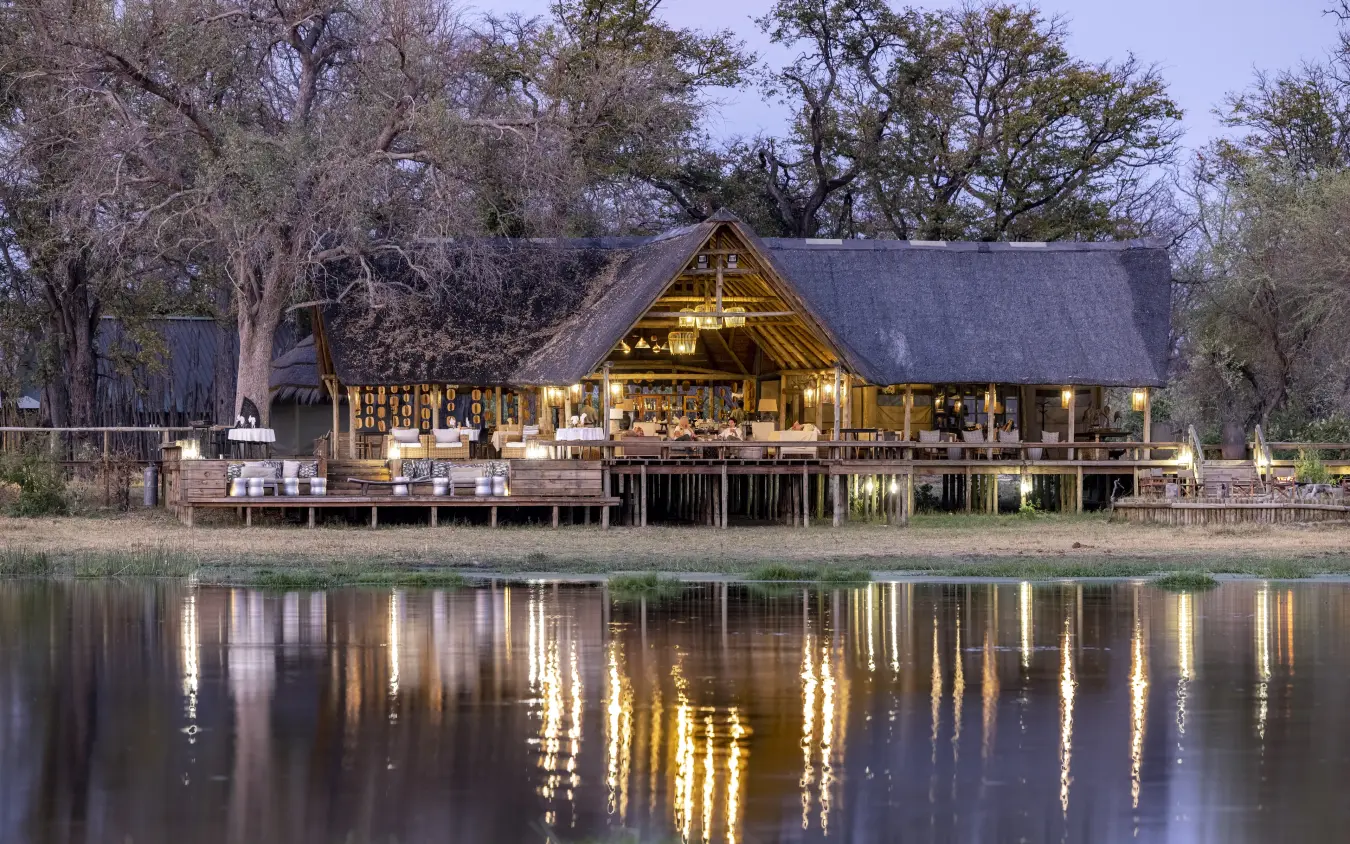
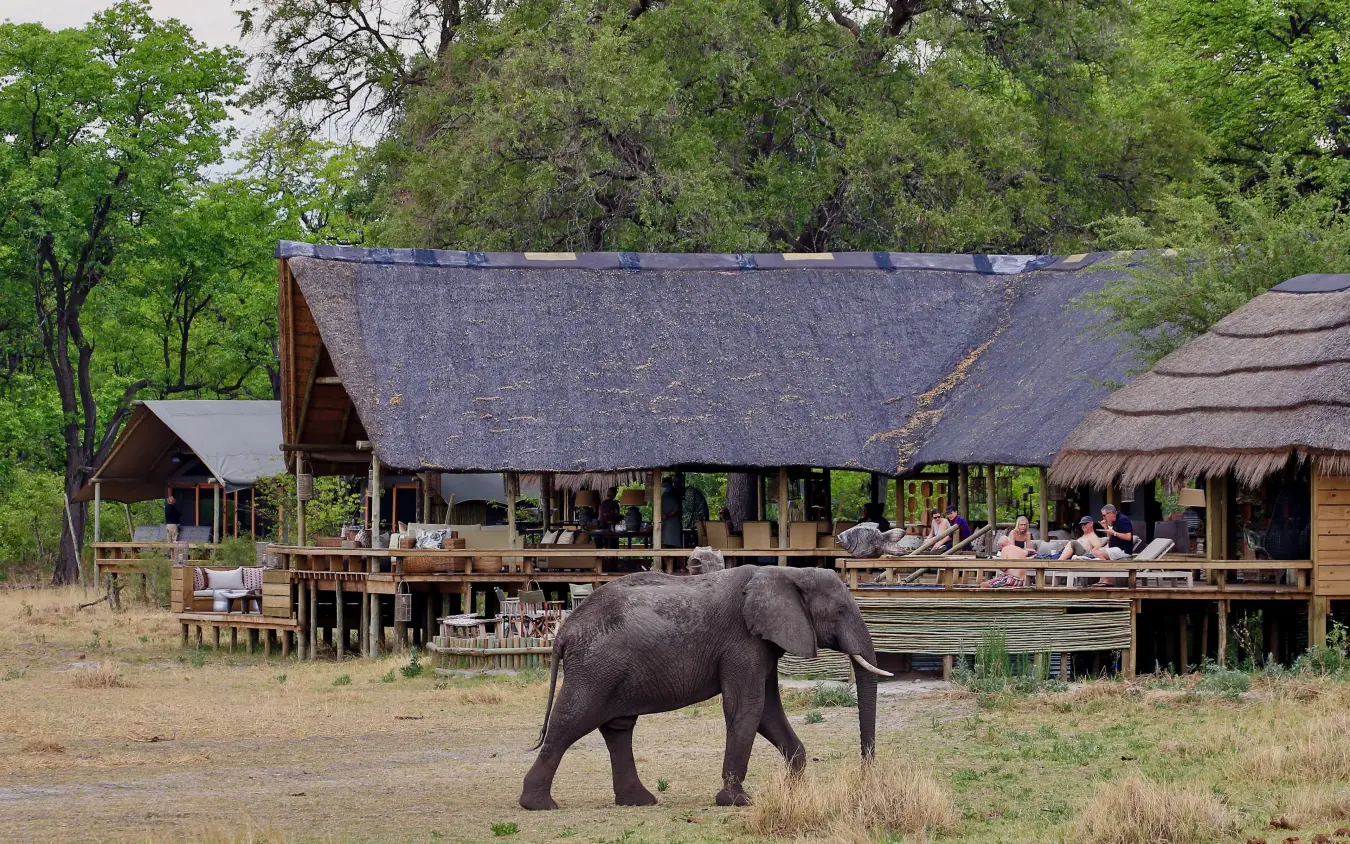
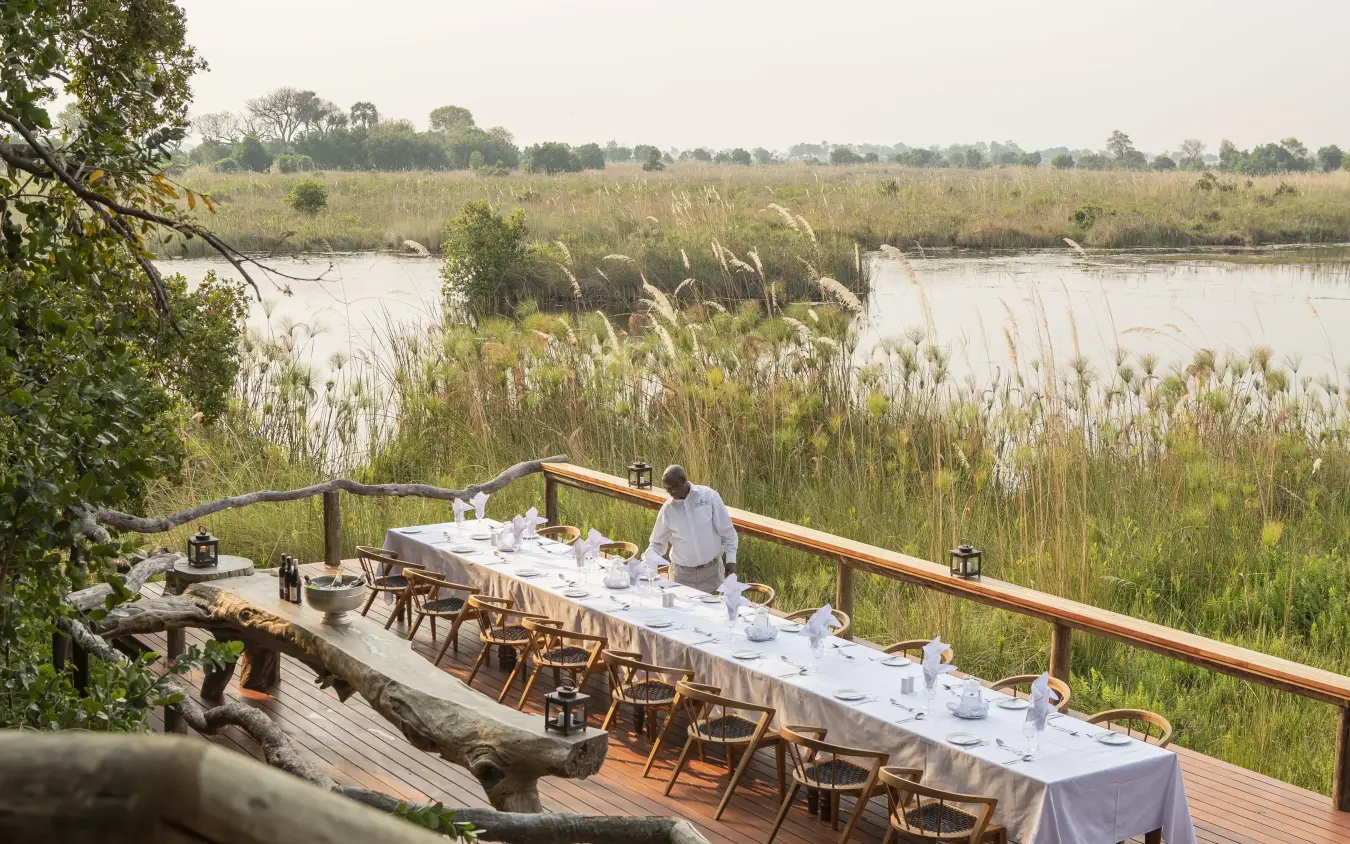
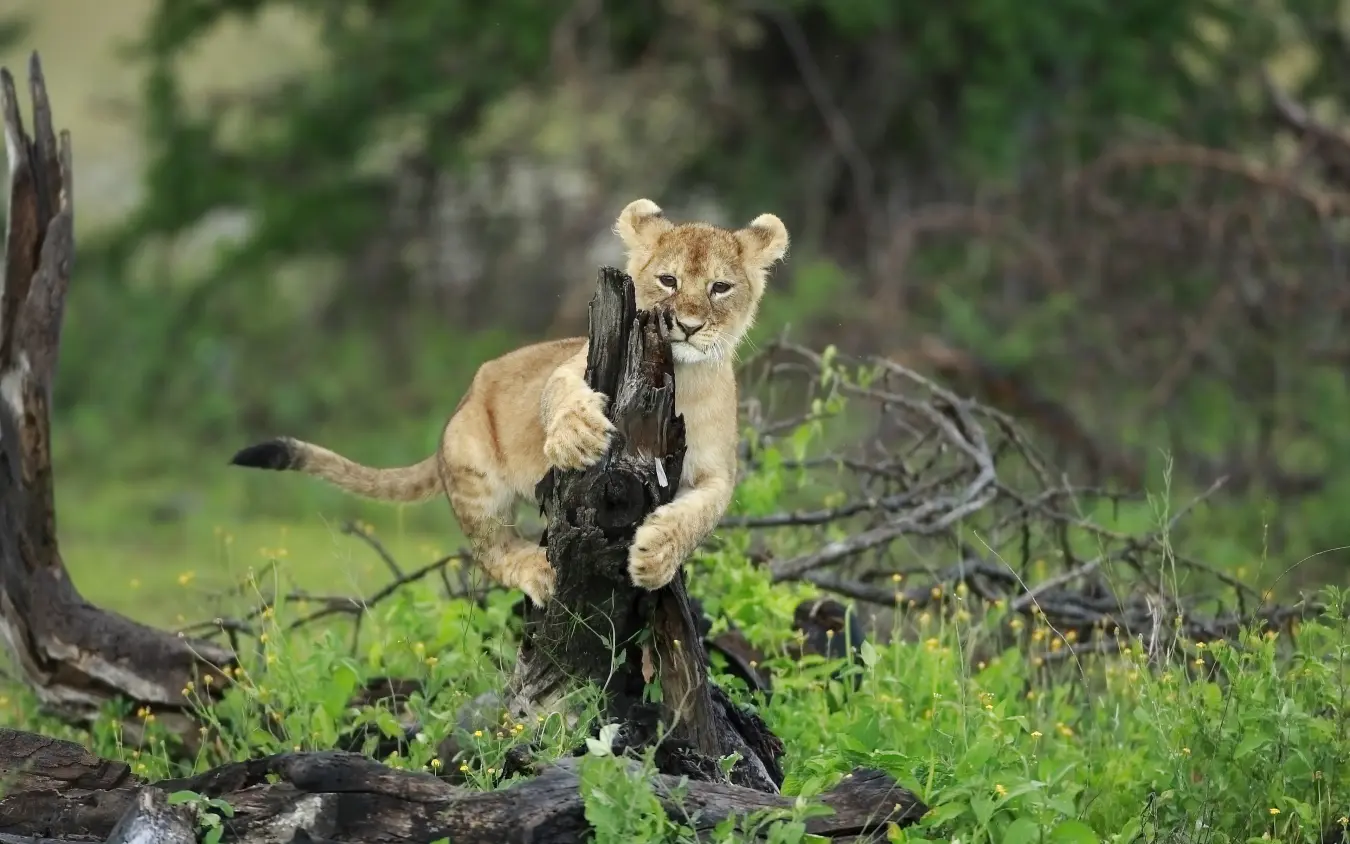
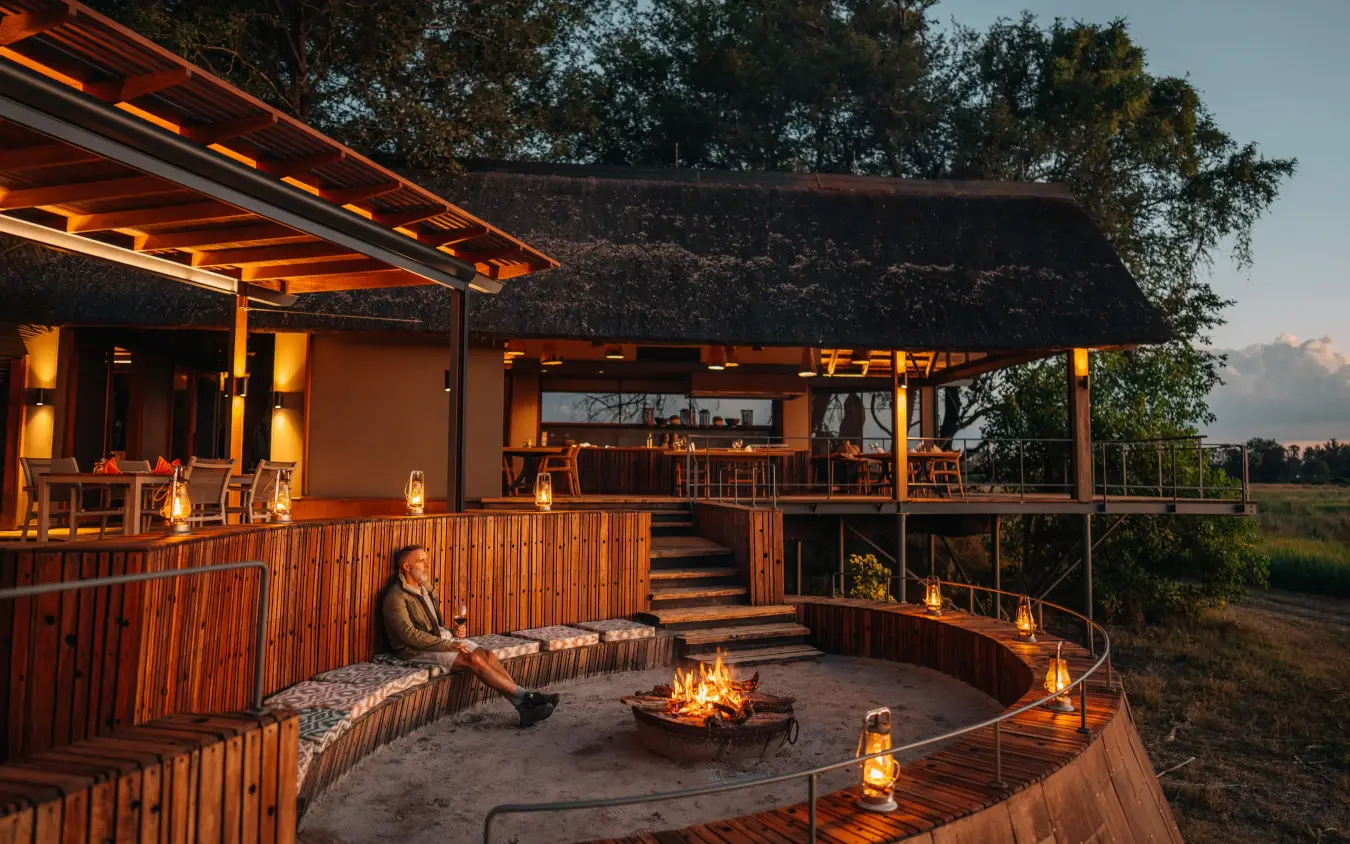
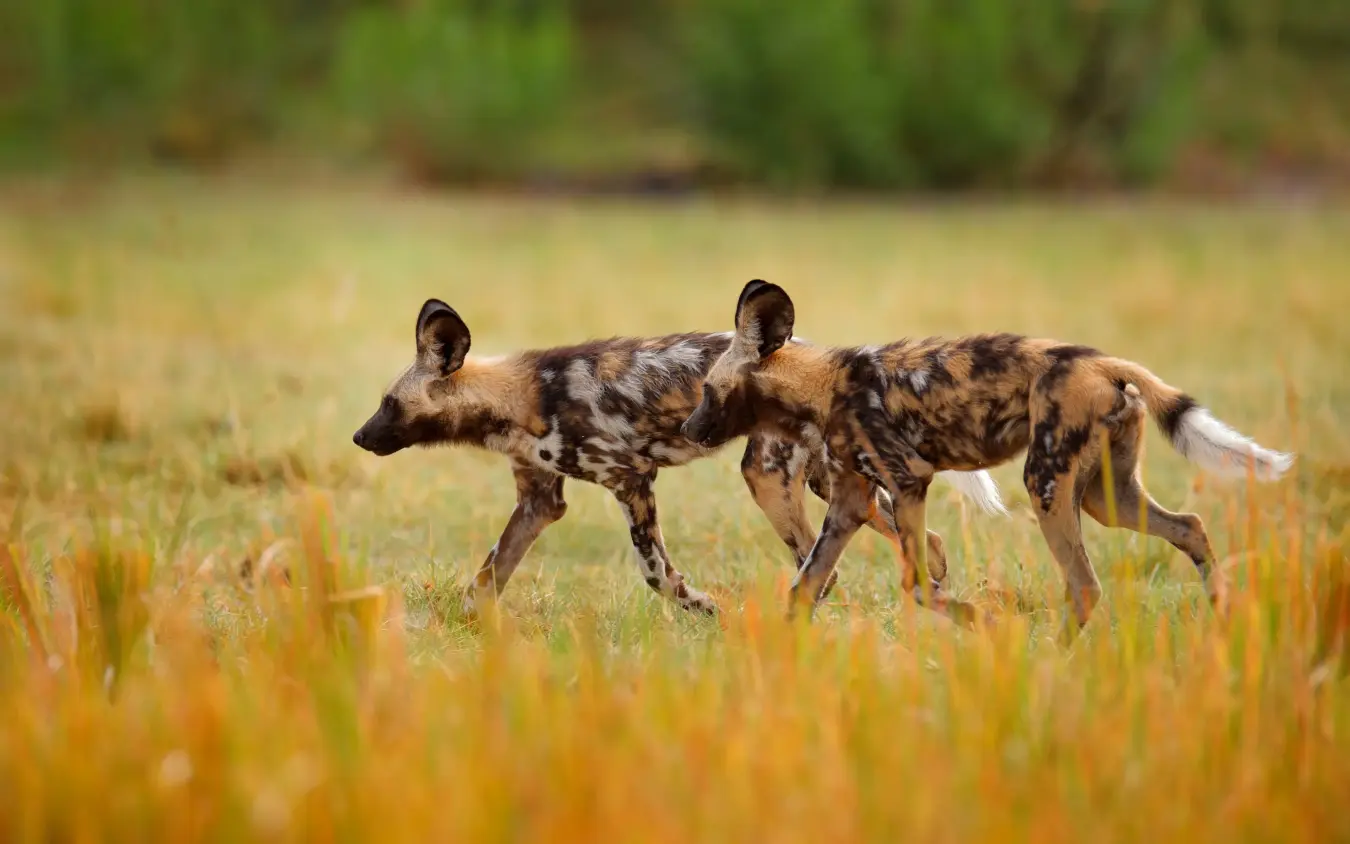
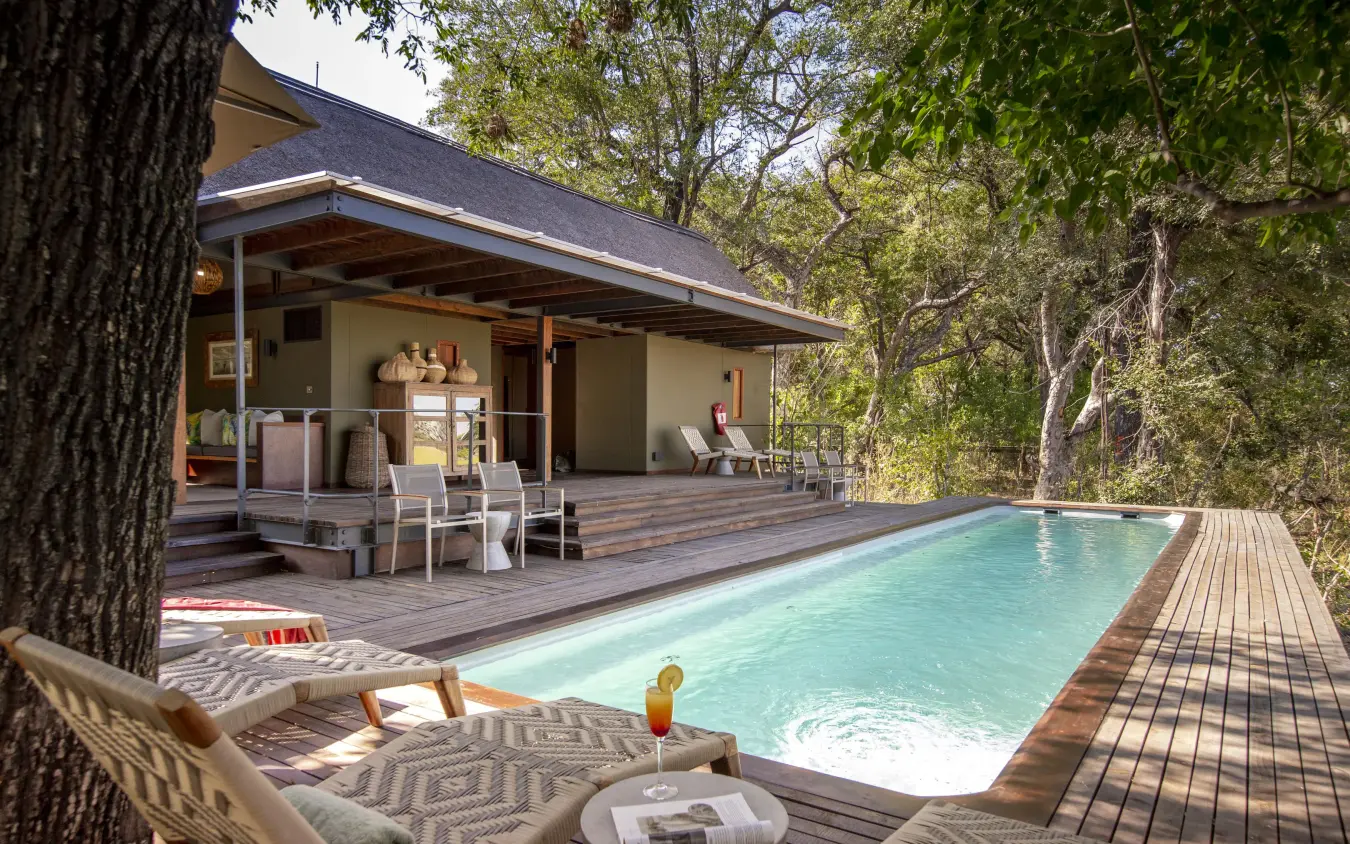
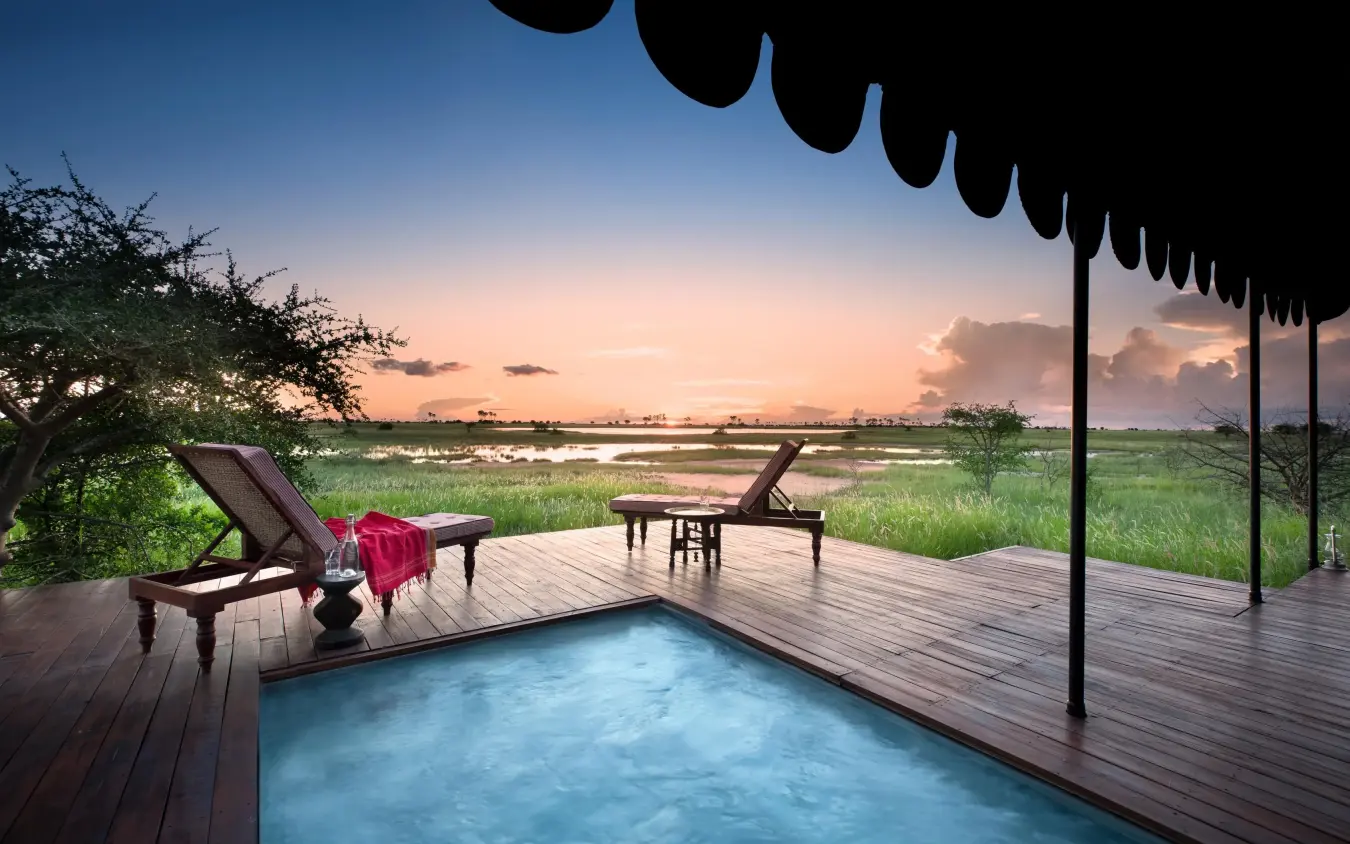
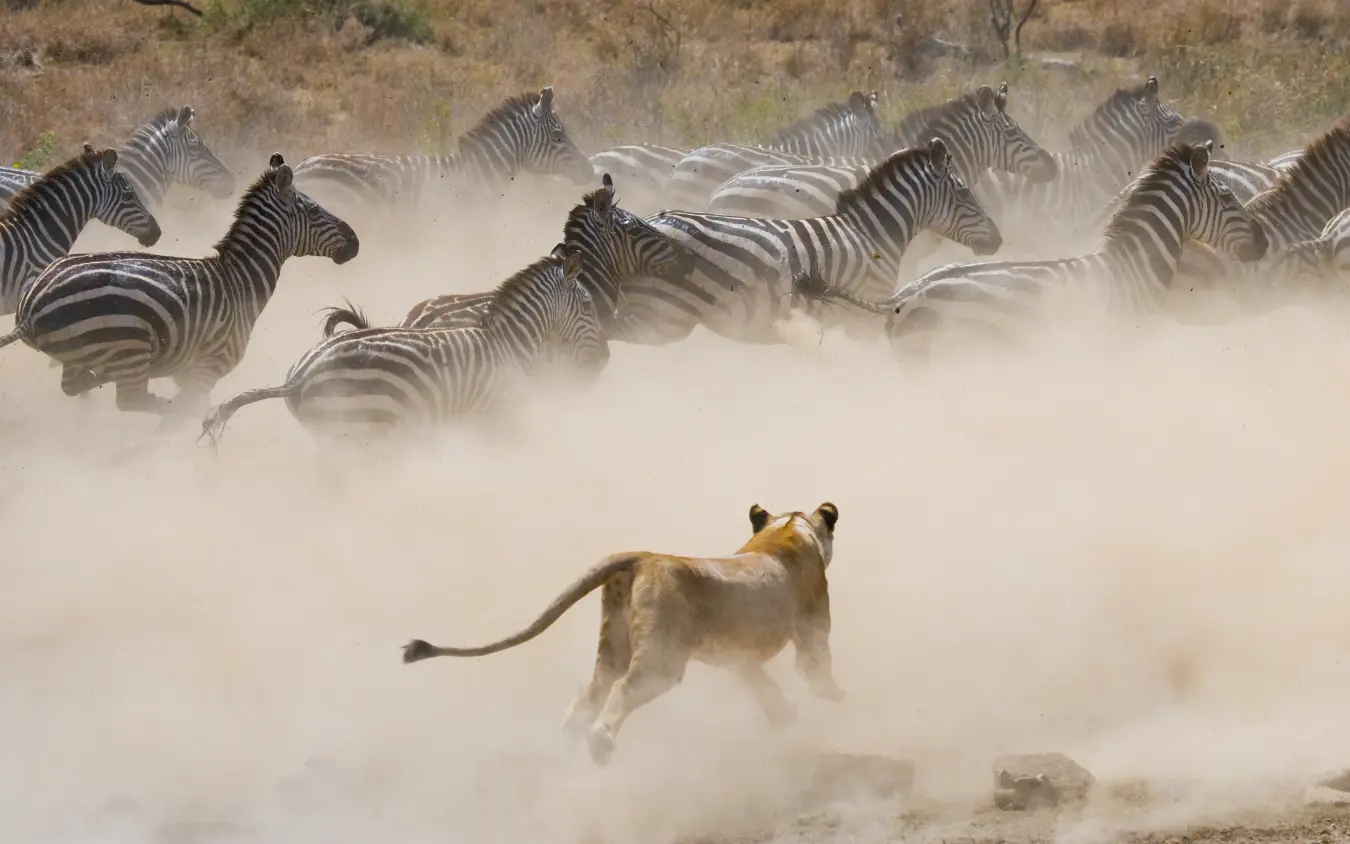
Three days of drives through the private Chitabe Concession, in the drier south-eastern Okavango Delta, where Moremi's game spills across the Gomoti Channel that divides the two. African wild dogs are the reason most guests come, and the concession falls within the research area of the Botswana Predator Conservation Trust; lion, leopard, cheetah and spotted hyena hunt the same floodplains. Being private land, both night drives and guided walks are permitted here. Chitabe Camp sits on a Delta tree island, its eight tented suites rebuilt in 2025 and raised on decks among the trees, with the wildlife photography of Dave Hamman throughout.
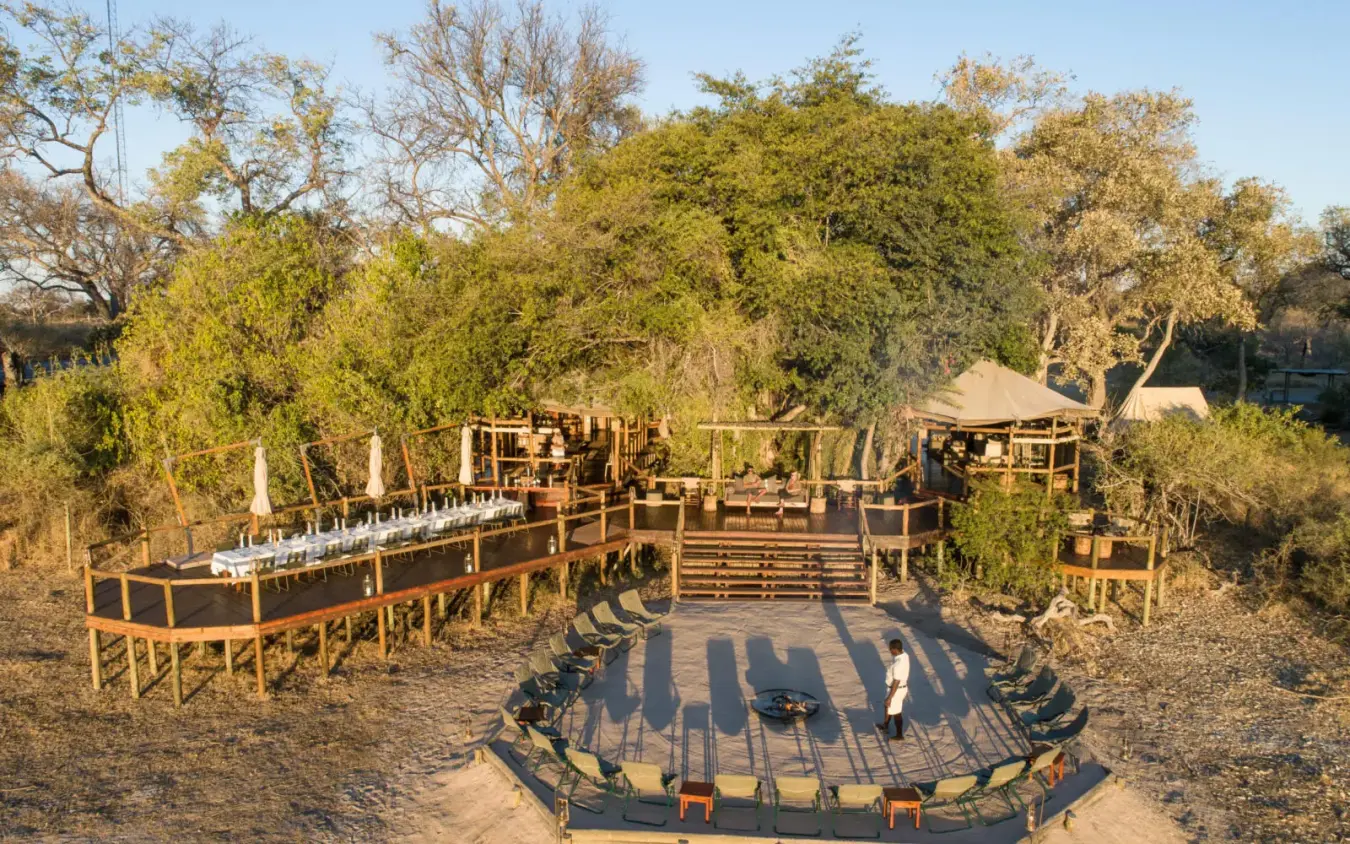
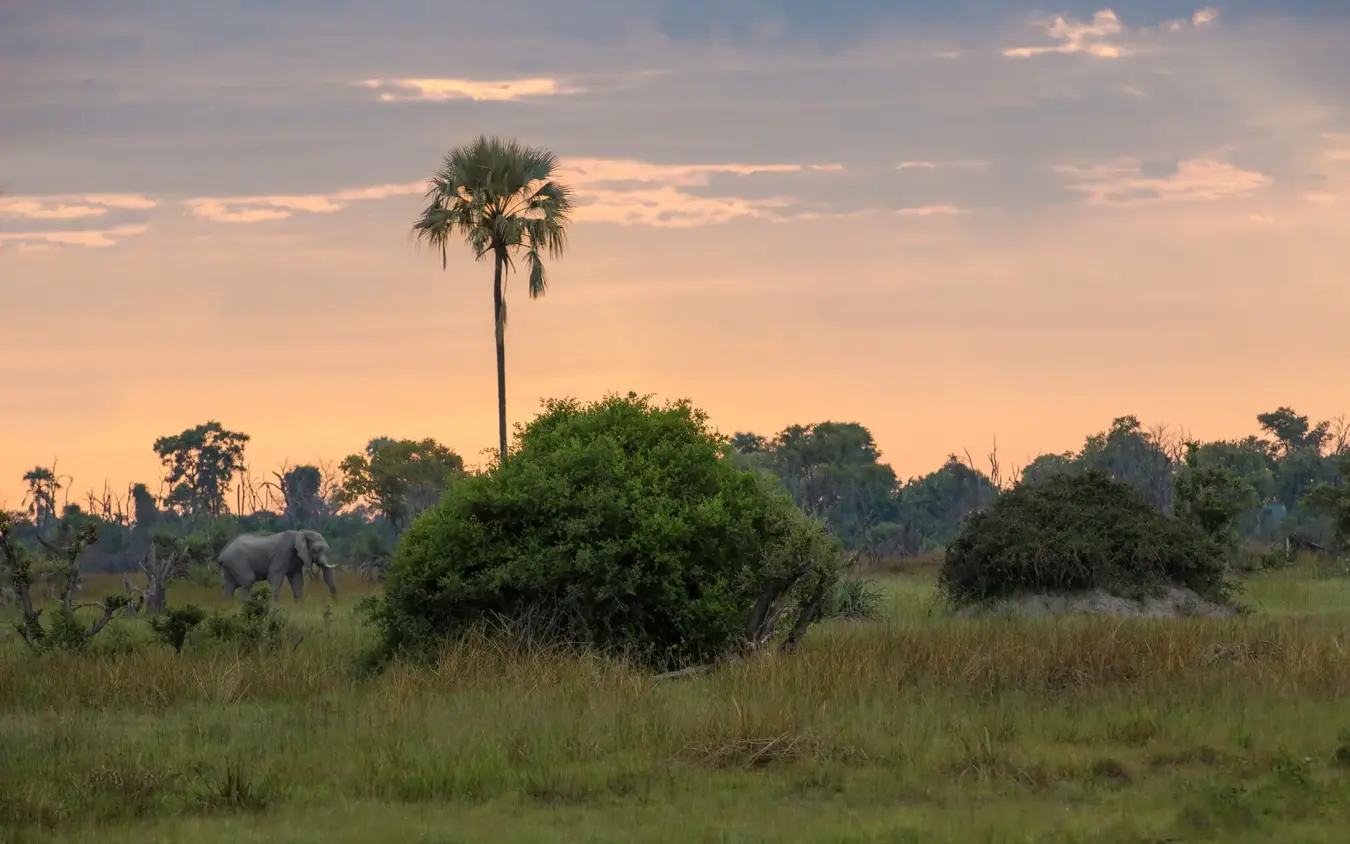
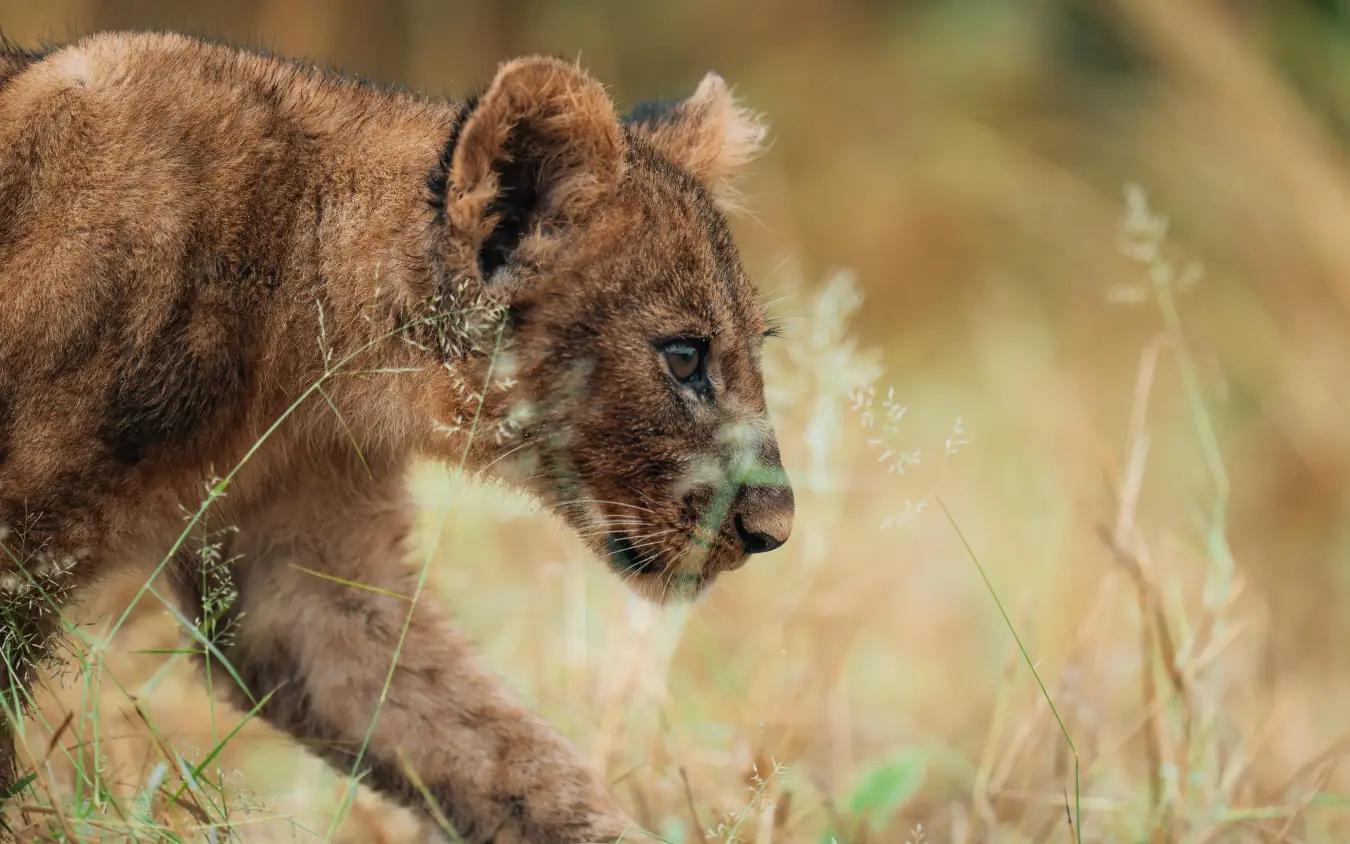
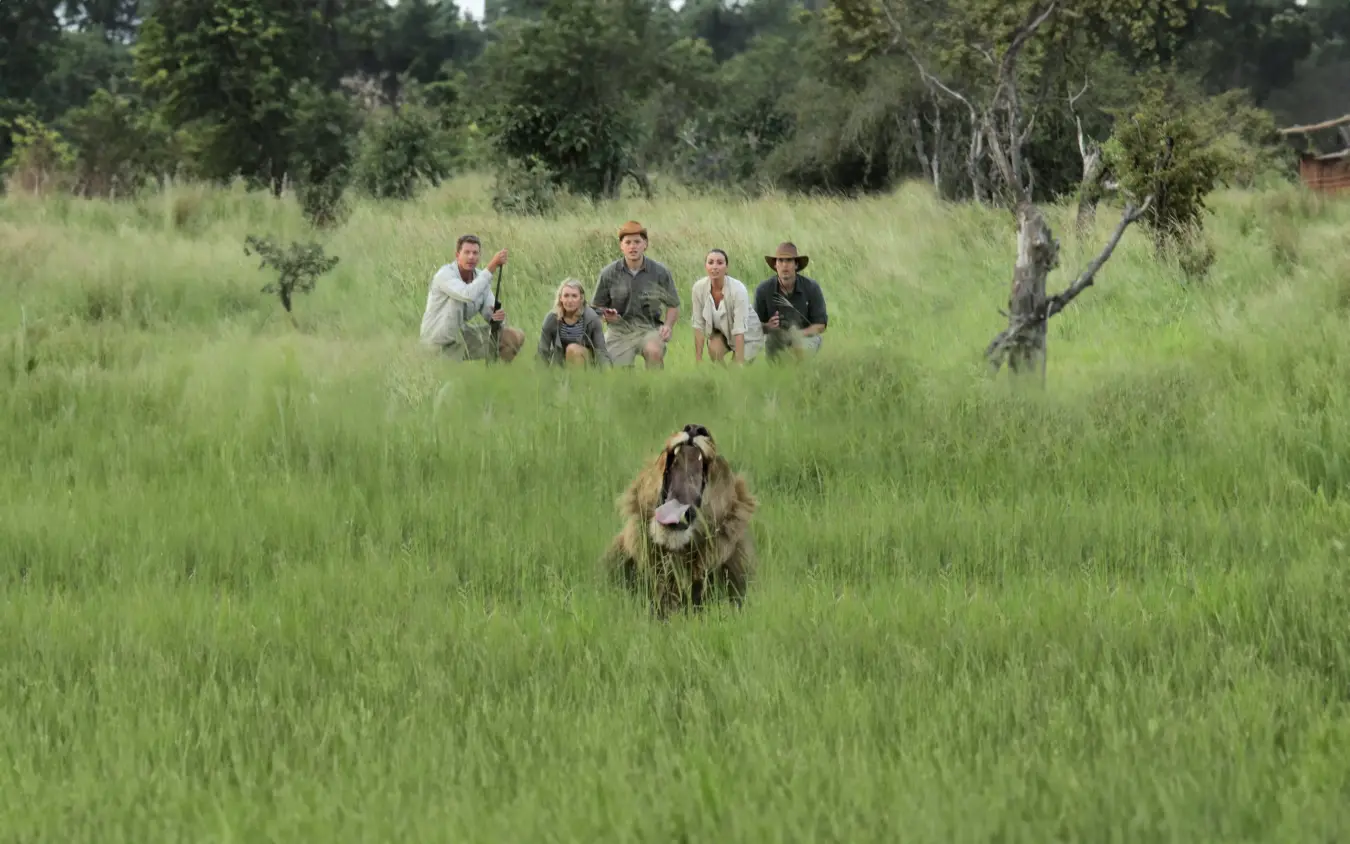
You arrive by helicopter, the only access to this private 30,000-hectare concession in the western Okavango Delta, and begin a mobile walking safari that sets its own pace. Only one booking holds the concession at any time, so the days follow no fixed timetable, with walks ranging from a gentle stroll to treks beyond twenty kilometres. This is the Abu Private Reserve, home to lion, leopard, spotted hyaena and wild dog, its floodplains supporting large grazing herds that the predators follow. Kweene Trails runs between two lightweight canvas camps, hosted by Simon and Marleen Byron; Simon is a great friend of ours and one of the best guides in Botswana.
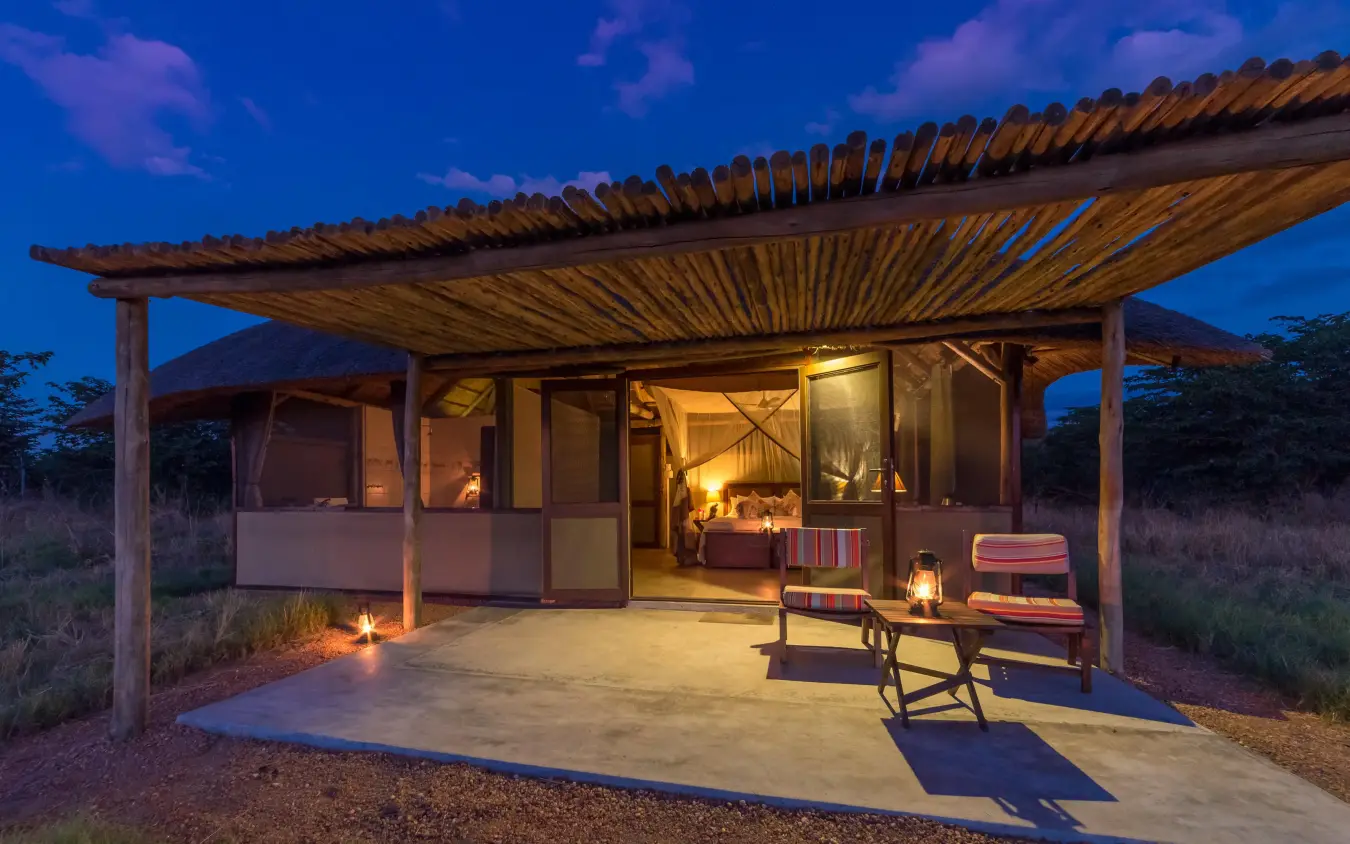
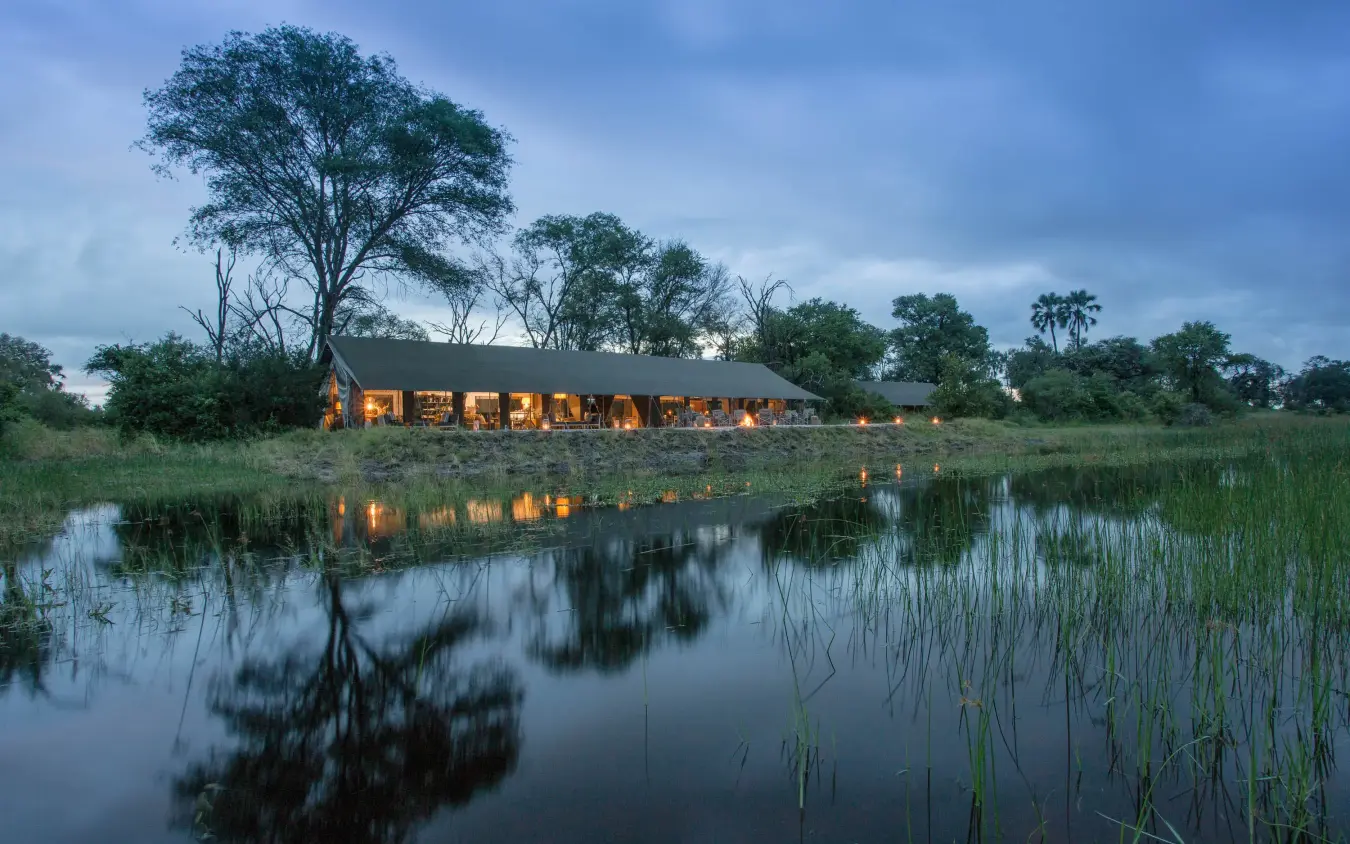
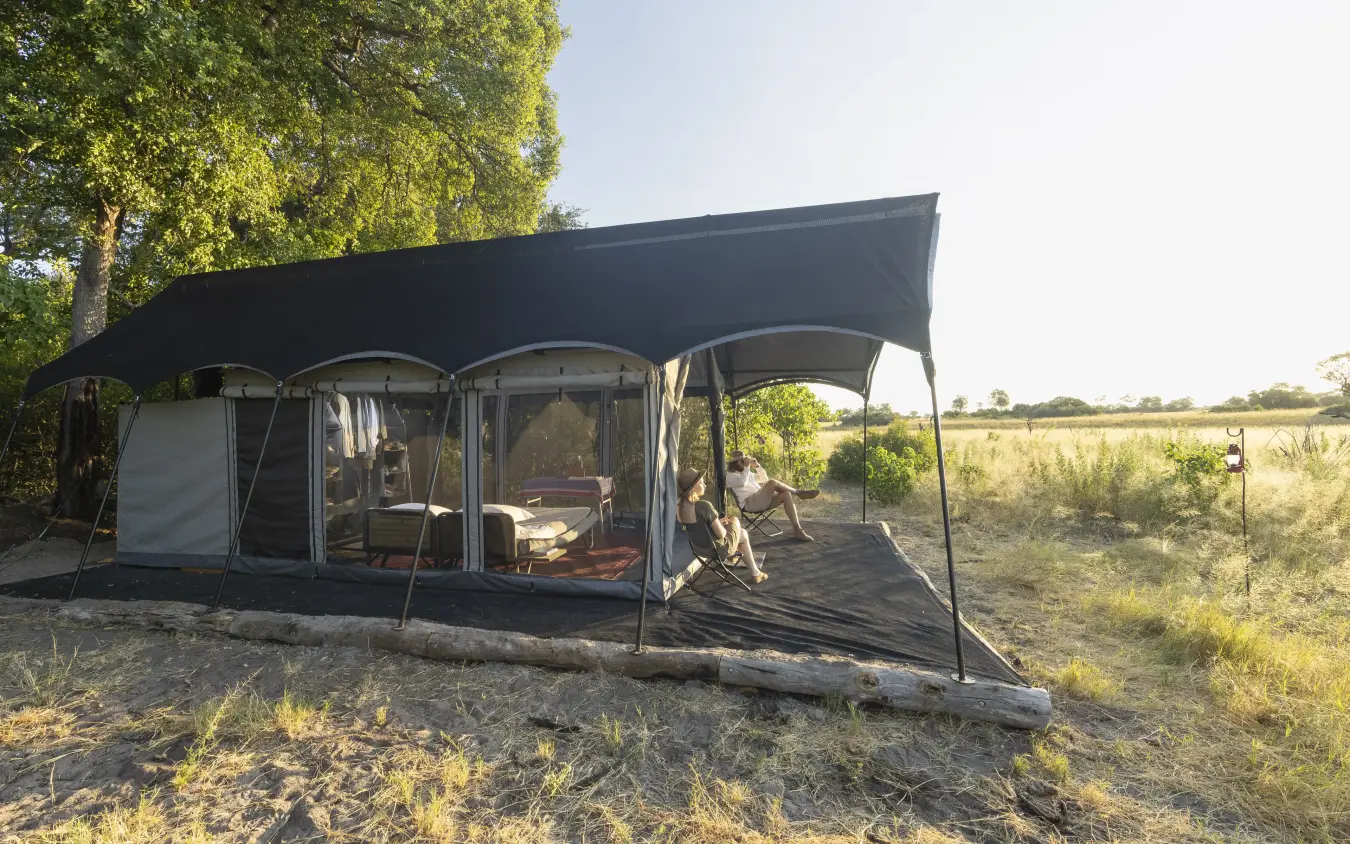
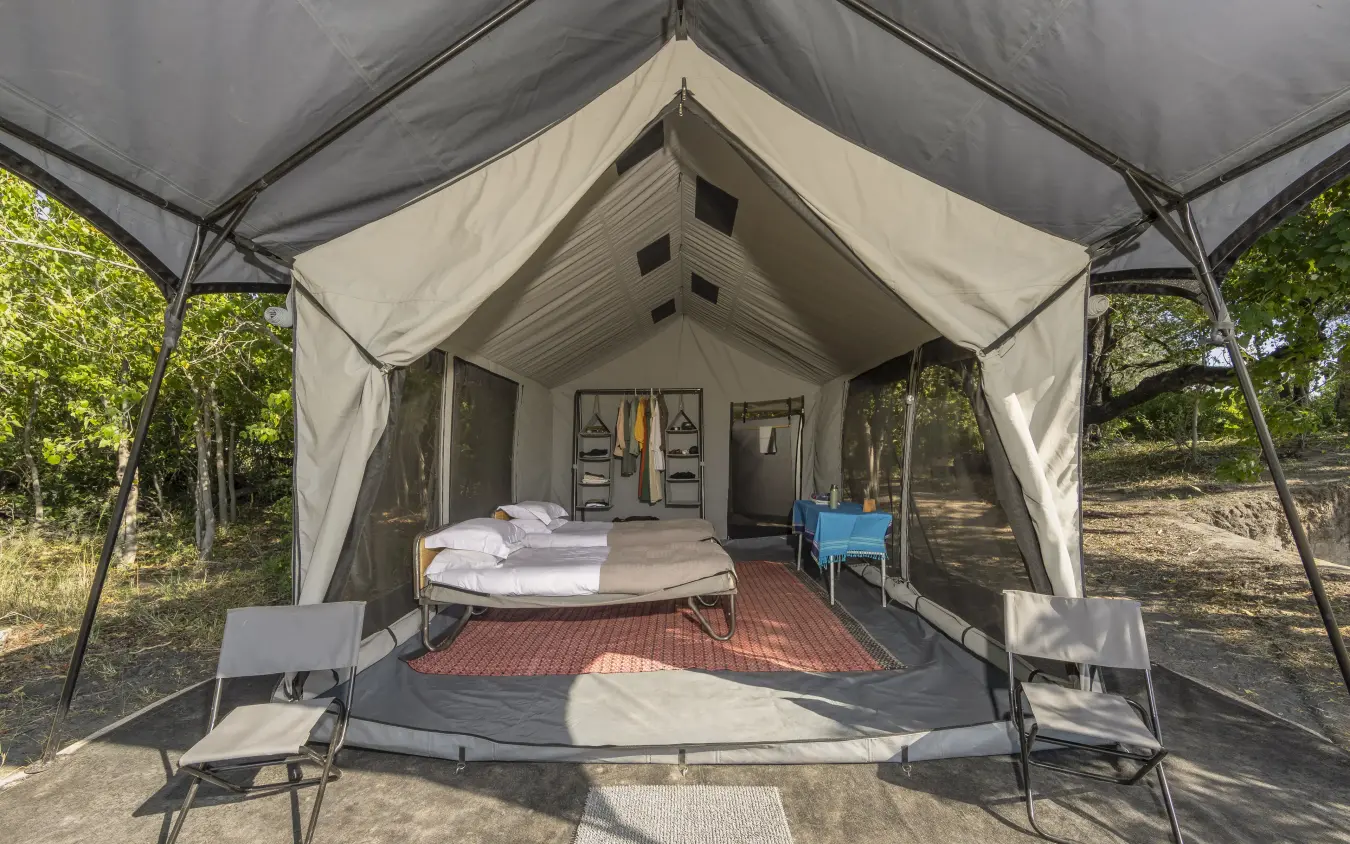
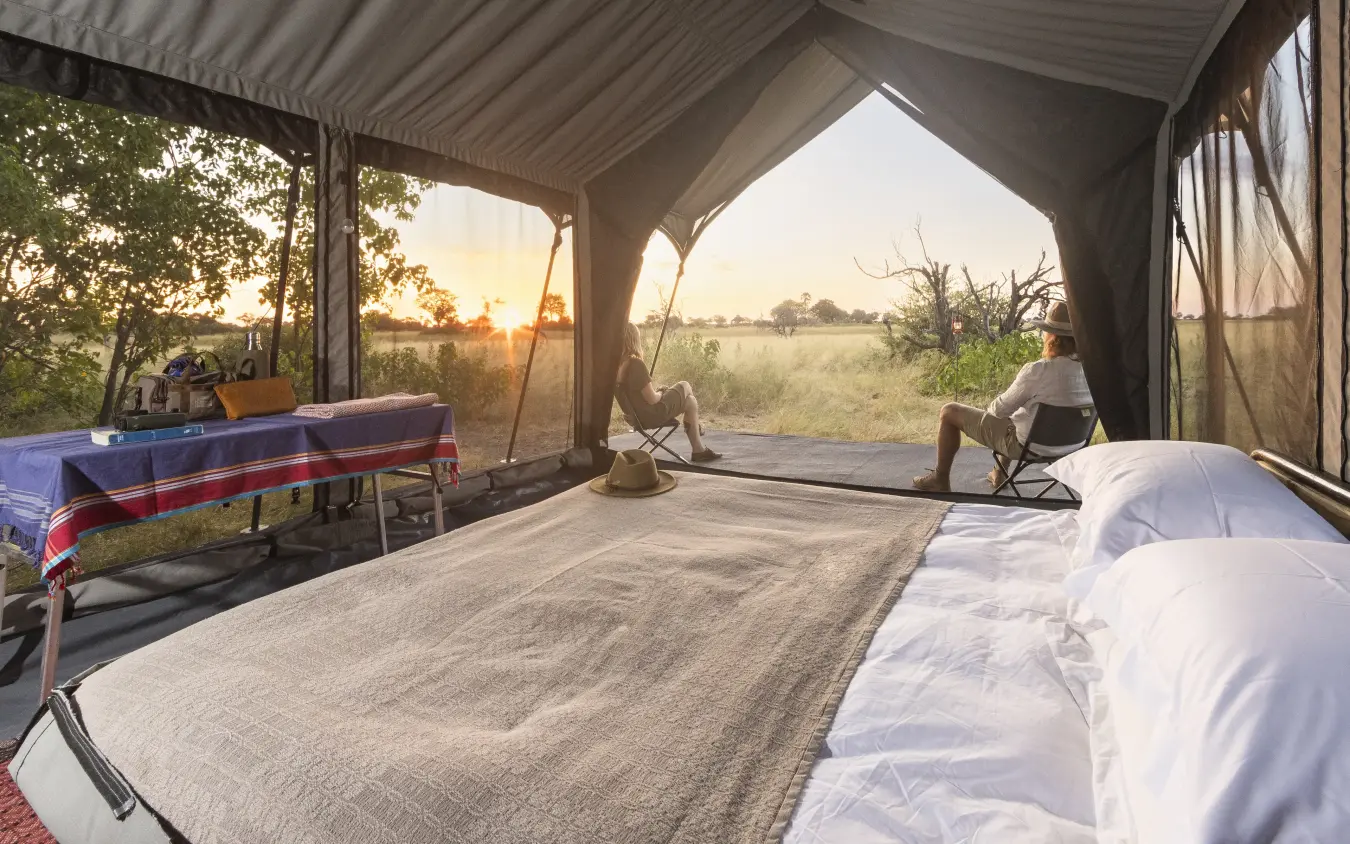
Two more days walking the concession, now around Kweene River Camp, the southern of the two, set among arid grass floodplains that flood on occasion and looking out over a channel whose deep pool holds water well into the dry season. Walking the distance between the camps turns the journey into a slow read of changing habitat rather than simple scenery, and the nights carry the full bush soundtrack of jackals, owls and porcupines near the tents. Guest tents are spacious canvas with firm beds, Egyptian cotton linen and an en-suite hot bucket shower; the luxury sits in the space, the silence, the guiding and the food and wine rather than in construction.
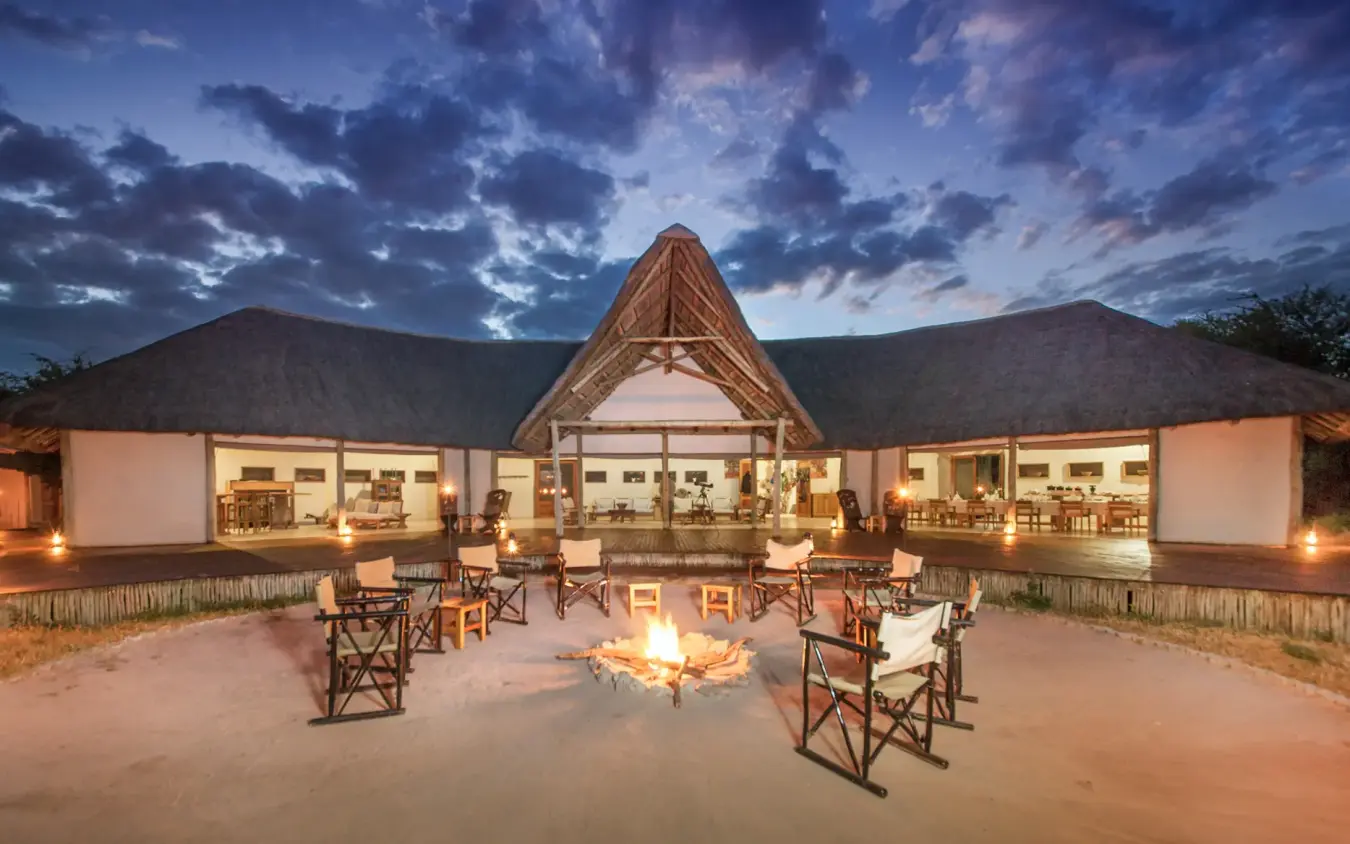
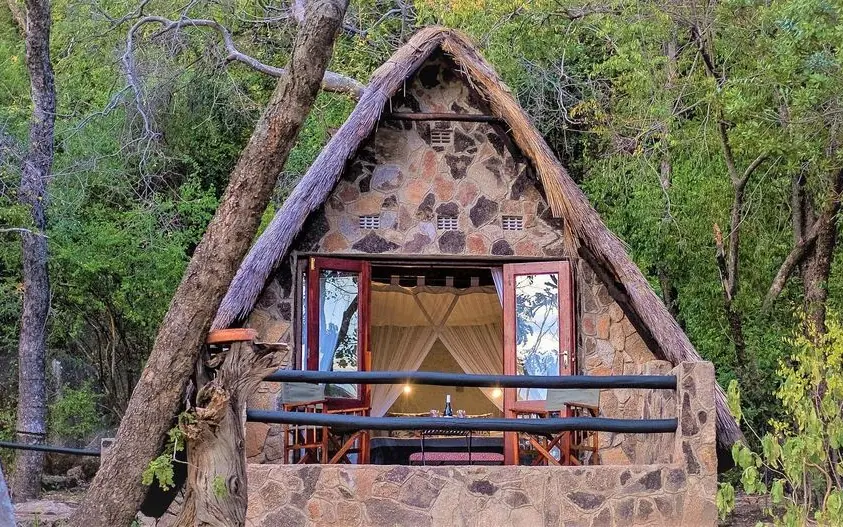
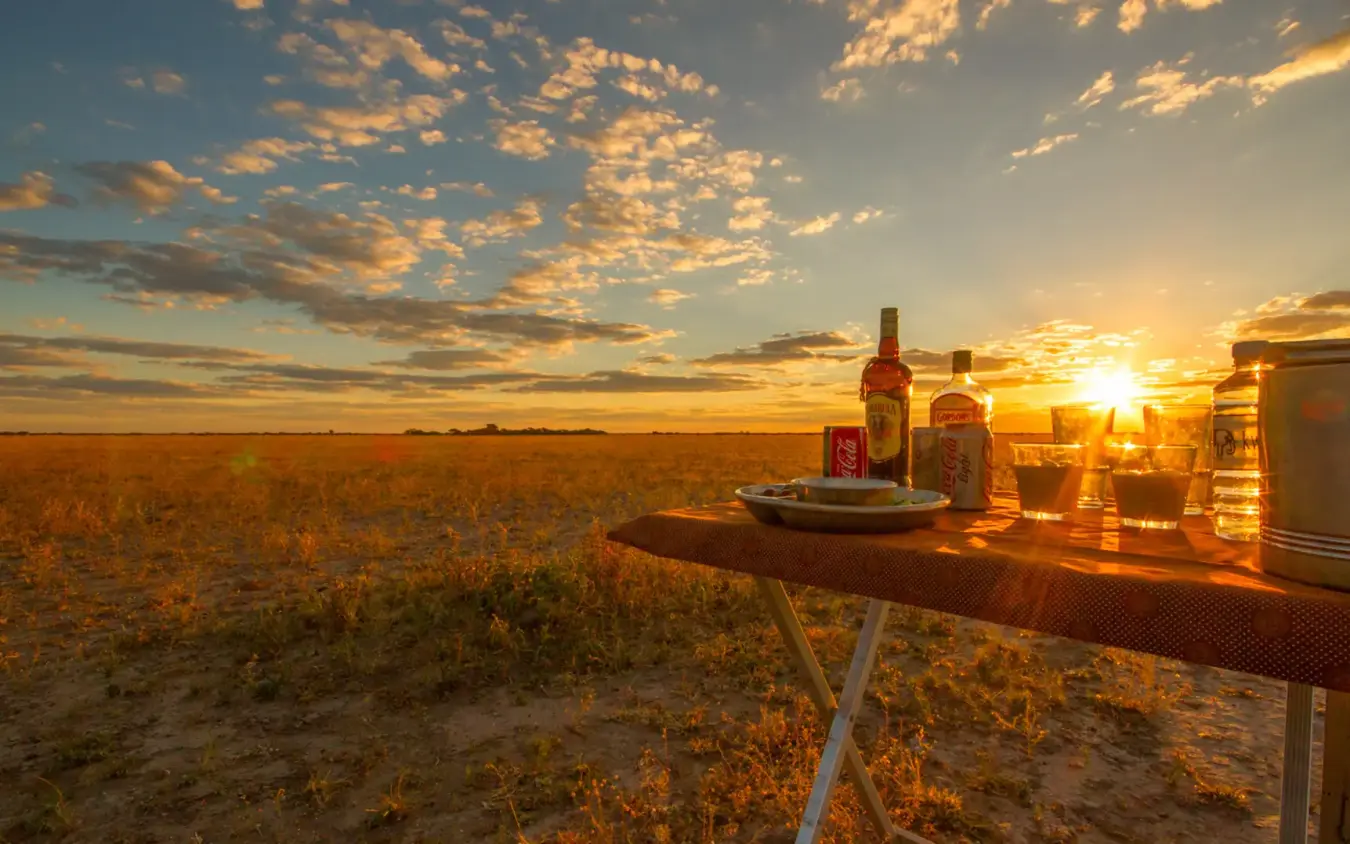
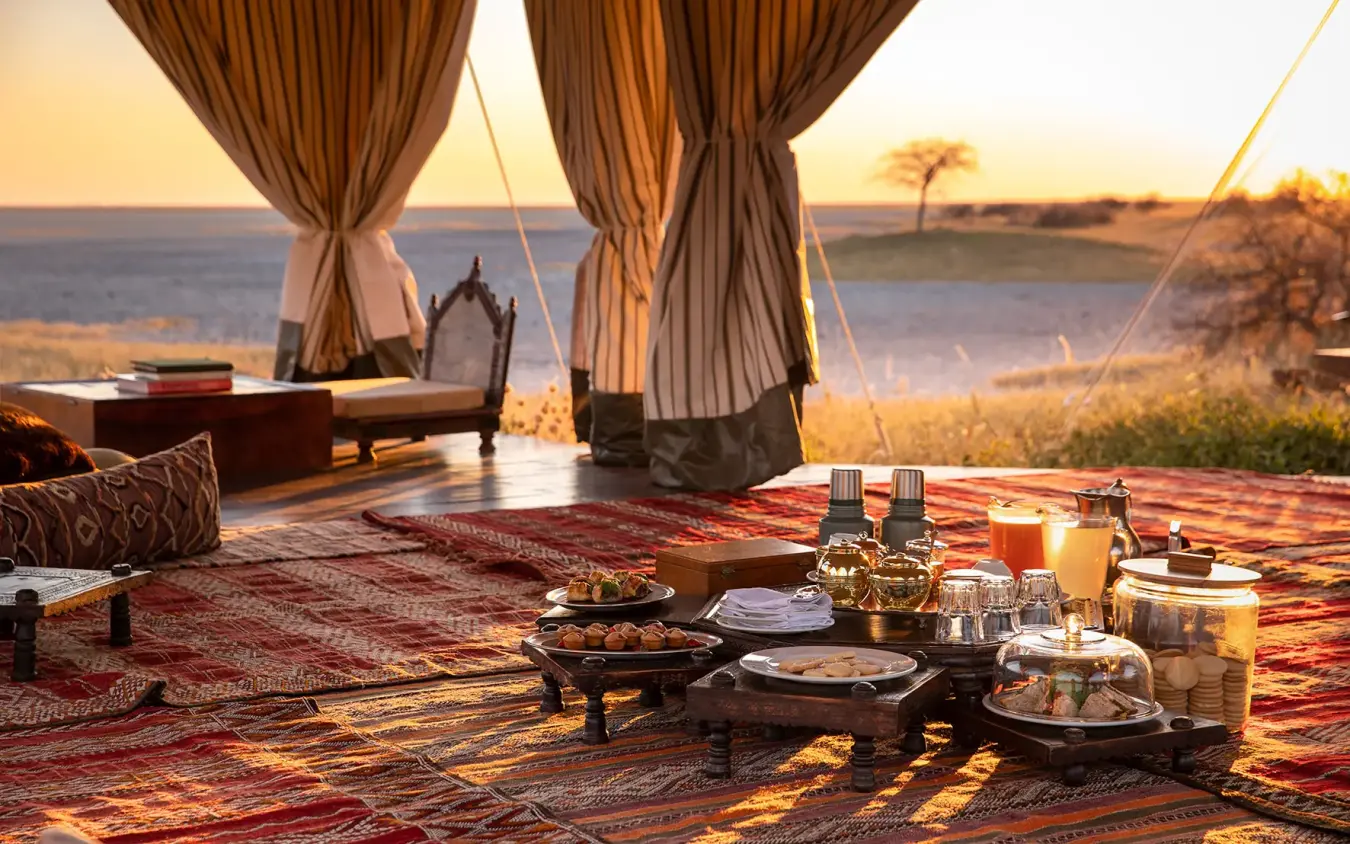
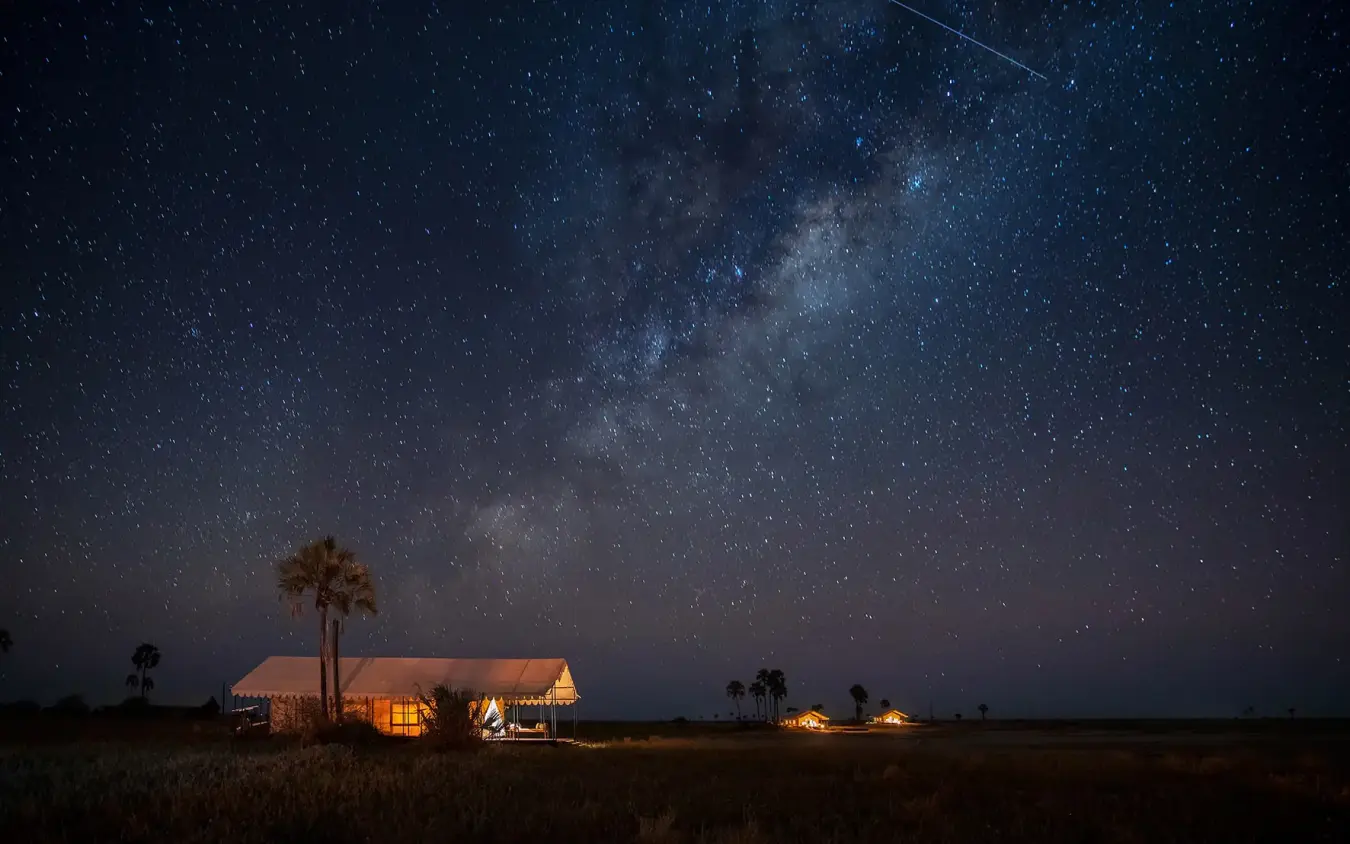
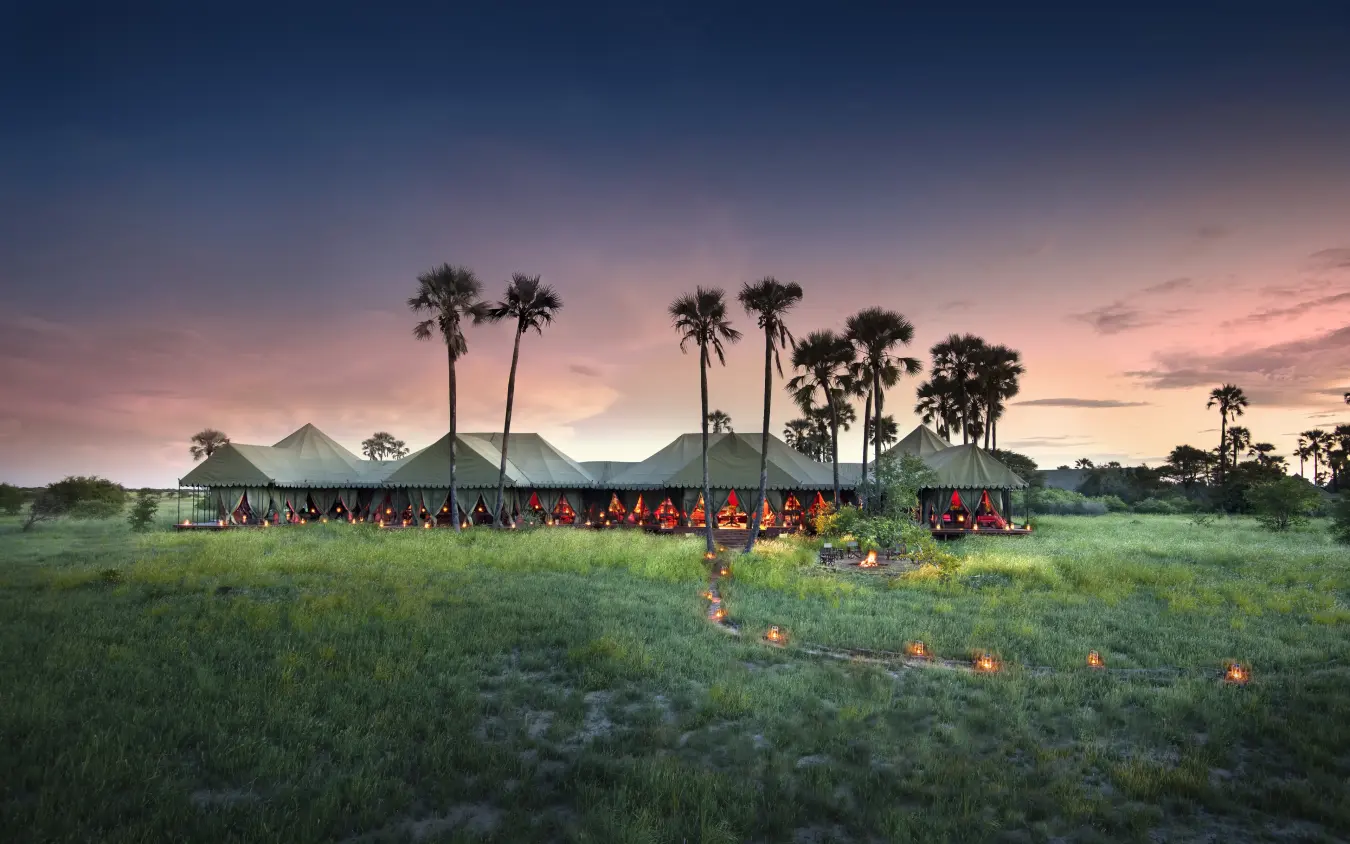
The last three days move to the edge of the Makgadikgadi salt pans, the dried bed of a prehistoric super-lake, in the Kalahari. Here the days are built around habituated meerkats, the elusive brown hyena and a landscape that rewards close attention, with quad biking across the open pan and walks with Zu/'hoasi San guides. The camp stands on a private concession bordering Makgadikgadi Pans National Park, so night drives and quad biking run here where standard park rules would not allow them. Jack's Camp was rebuilt by Ralph Bousfield in the 1940s style, its green canvas tents lined with muslin, laid with Persian rugs and furnished with family antiques and natural history specimens.
For a party of four, typically a Bell.
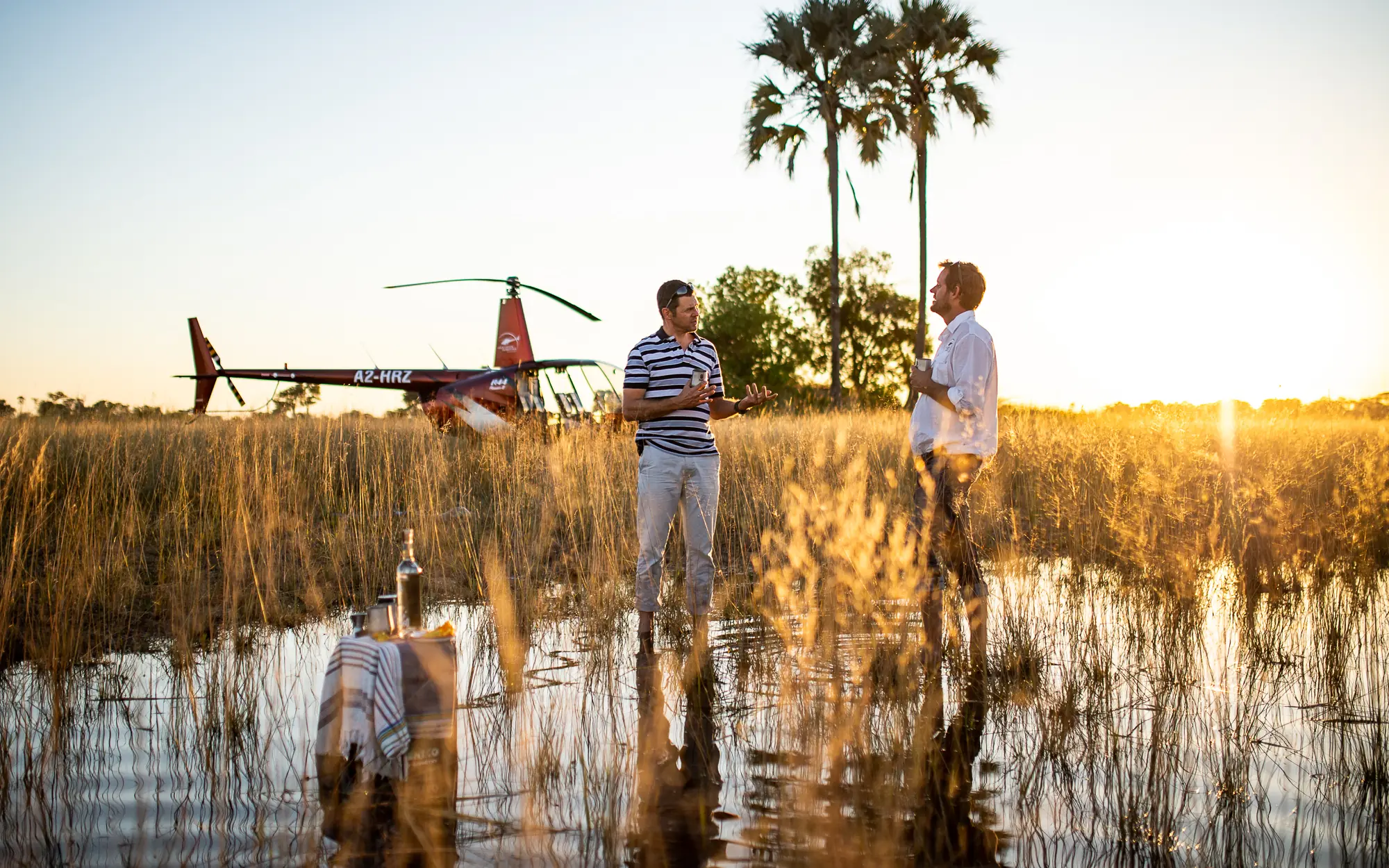
Helicopter Horizons, based in Maun, flies the legs in and out of the walking concession. Its smallest helicopter seats only three, so four guests travel in one of its Bells: the Bell 407 and the Bell LongRanger each seat five guests, and the Bell 505 seats four. Which one is the company's decision on the day.
A helicopter is used because nothing else can reach Kweene Trails: there is no airstrip and no road in, so it lands at the camp itself.
It suits the Delta too. The whole Delta varies in height by less than two metres, so you cannot read it from the ground, while from the air the channels, islands and hippo paths make sense. Every guest has a window seat, and transfers are flown privately, at wildlife viewing height.
On its scenic flights the company takes the doors off for photographers, and the camp can arrange one, booked in advance, as a paid extra.
The chances are good, and better at some times of year than others, but it is never certain and nobody publishes a rate.
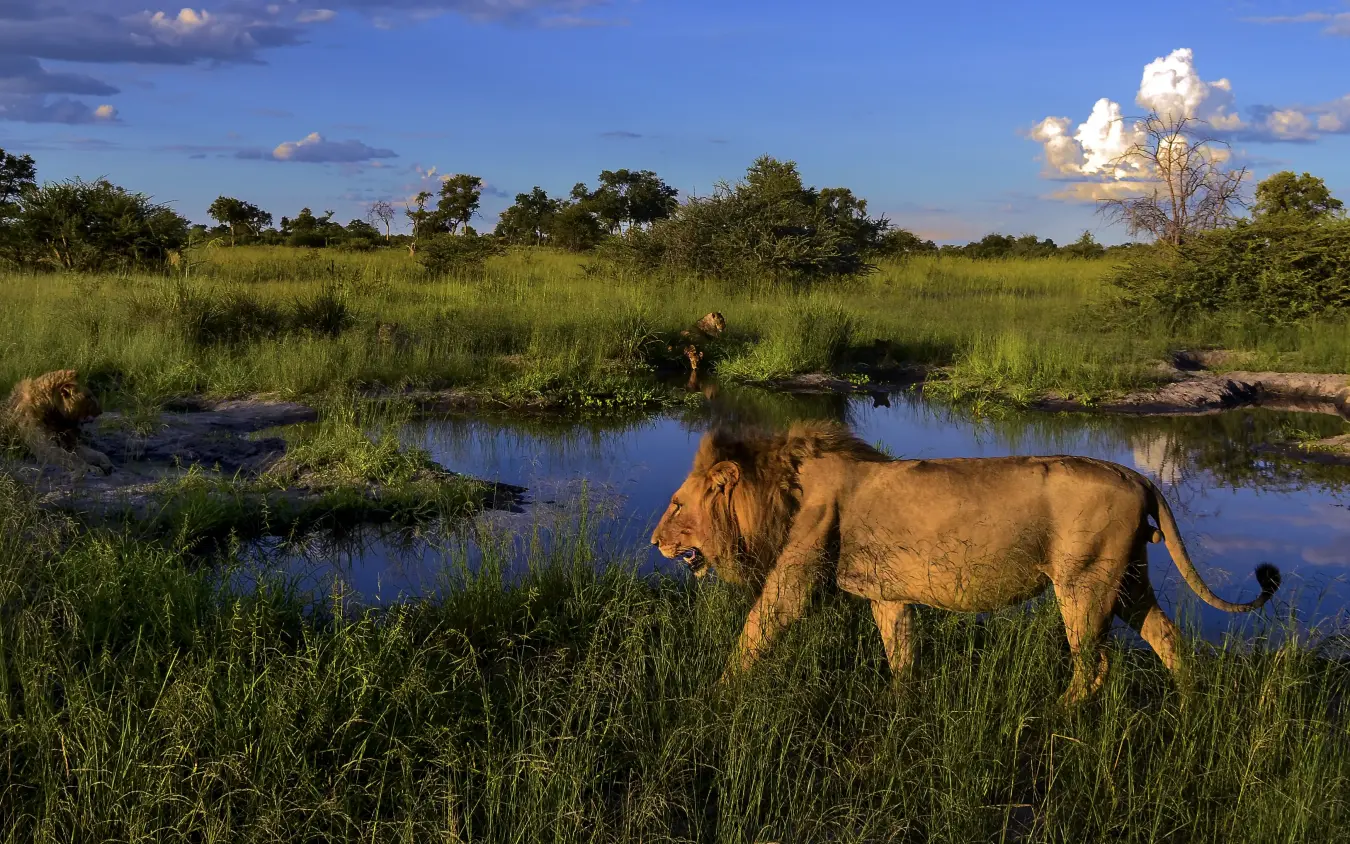
Northern Botswana holds one of the largest wild dog populations in Africa, Chitabe has a standing reputation for them, and the walking camp reports a resident pack on its own concession, so the trip gives you two separate chances over eight nights.
The difficulty is that a pack covers a huge area and rarely stays put. The exception is the denning season, from about June to August, when the adults return to the same den every day for ten to fourteen weeks to feed the pups.
That is the one time of year when guides, and the researchers who study these dogs, can predict where a pack will be. Outside those months a sighting comes down to tracking and luck.
If wild dogs are your main reason for coming, travel between June and August.
As hard as you choose to make it.
There is no set distance: a walk can cover a few hundred metres in a few hours or go on for miles, and the pace is slow, with frequent stops for tracks and birds. The ground is flat floodplain and island, so this is about time on your feet, not hills.
The one long day is the move between the two camps, about 15 kilometres apart. You can walk it, with a packed lunch and a siesta on the way, or go by vehicle, and the camp team moves your luggage and bedding either way.
An armed professional guide leads every walk, no more than eight guests walk together, and the minimum age on foot is twelve. July to September brings cold mornings and warm days, which the camp rates as great conditions for morning walks. By October afternoons can reach the high thirties.
June to September. They are the only months we rate as recommended for the Delta, the salt pans and Botswana as a whole.
The Delta's flood is up while the country around it is dry, mornings are cold and the days clear, which makes for comfortable walking. Wild dogs den from about June to August, and the salt pans are hard enough for quad bikes.
October is still strong for game in the Delta but very hot, and it is an in-between month at the pans. This trip cannot run from 6 January to the end of March, when the walking camps shut.
April, May and November are in-between months with their own rewards: lower rates, quieter camps and, in April and November, the green season's migrant birds, young animals and storm skies for photographers.
December is a good month at the pans, when the zebra migration arrives, but a challenging one in the Delta, hot and wet. Quad biking generally runs from April to October only.
By light aircraft and helicopter, with no long drives.
From Maun, the gateway to the Delta, a light aircraft, typically a Cessna Grand Caravan or a smaller GA8 Airvan, makes the short hop to the Chitabe airstrip, about 20 minutes away. A game drive of 30 to 40 minutes brings you to camp.
Kweene Trails has no airstrip and no road in, so a helicopter carries you across the Delta from Chitabe and lands at the camp. When you leave it lifts you out again, usually to Maun, about half an hour away, to connect with the light aircraft flight to the Makgadikgadi.
One luggage rule covers all of it: 20 kilograms per person, hand luggage included, in soft bags. The light aircraft companies and the helicopter company set the same limit. We can also arrange private charters, so that the aircraft, typically a Grand Caravan, is yours alone.
There is no wifi and no mobile signal at either camp, so for five nights you are out of contact, and it is worth telling family and colleagues before you go.
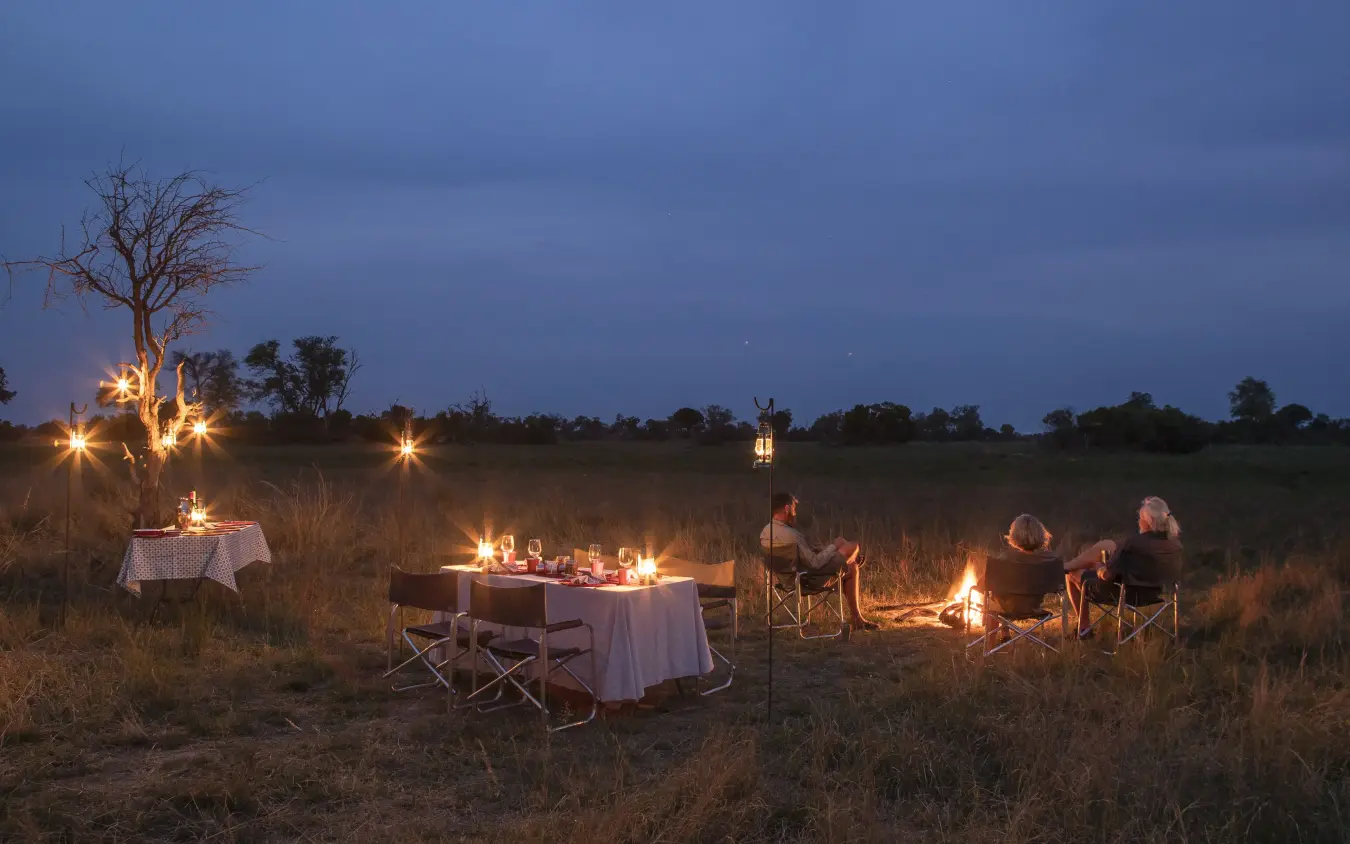
There is no mains electricity either: a solar battery system runs the lights and charges cameras and phones. The tents are spacious canvas Meru tents with proper beds, a fan, and gauze windows that keep insects out.
Each has its own bathroom, with no plumbing. Water for the basin arrives in jugs, a warm bucket shower is filled for you when you ask, and the toilet is a composting one. Laundry is limited, and cards are not accepted in camp.
That simplicity is what lets a seasonal camp stand where there is no road in and no airstrip, and be taken down again when the season ends. The same guide and camp team stay with you at both camps.
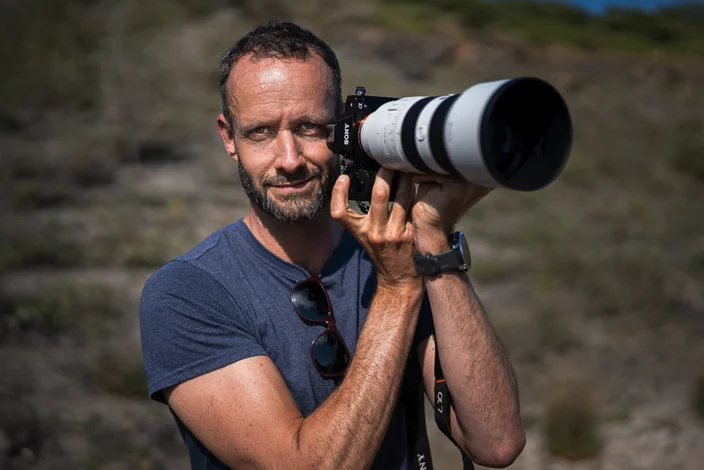
Ed Charles, BBC Producer
Fitzroy are true specialists in accessing the wilderness. They know where to go and importantly, when to go there. Highly recommended.
botswana
Cross Botswana's wild north from Victoria Falls to the Okavango, tracking wild dog and leopard with a private mobile camp.
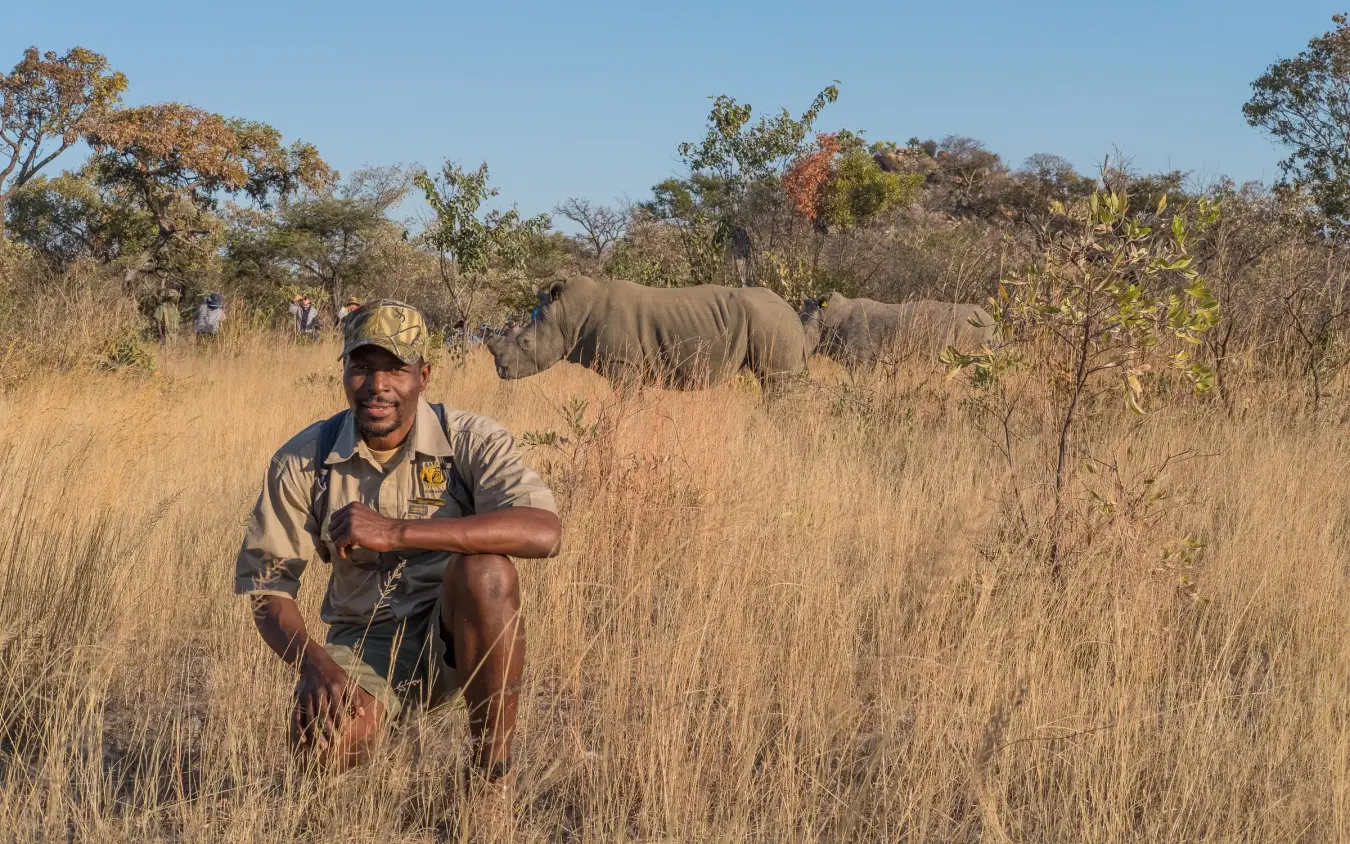
zimbabwe & botswana
Fifteen nights across Zimbabwe and Botswana, from Victoria Falls and Hwange to Matobo, the Makgadikgadi, the Okavango and Chobe.
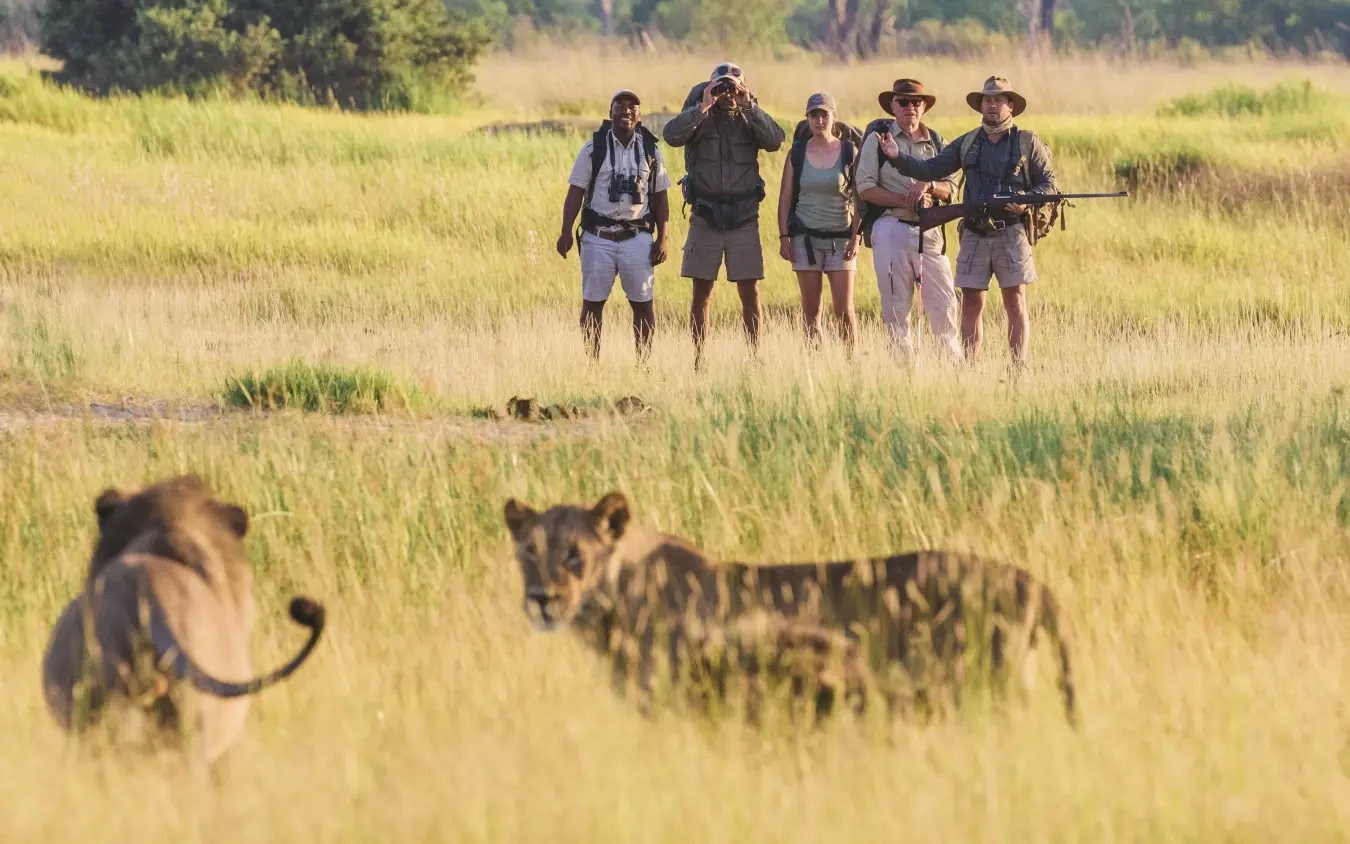
botswana
Thirteen nights linking two sides of the Okavango Delta to the salt flats of the Makgadikgadi, by drive, mokoro, boat and on foot.
rated five stars by our clients

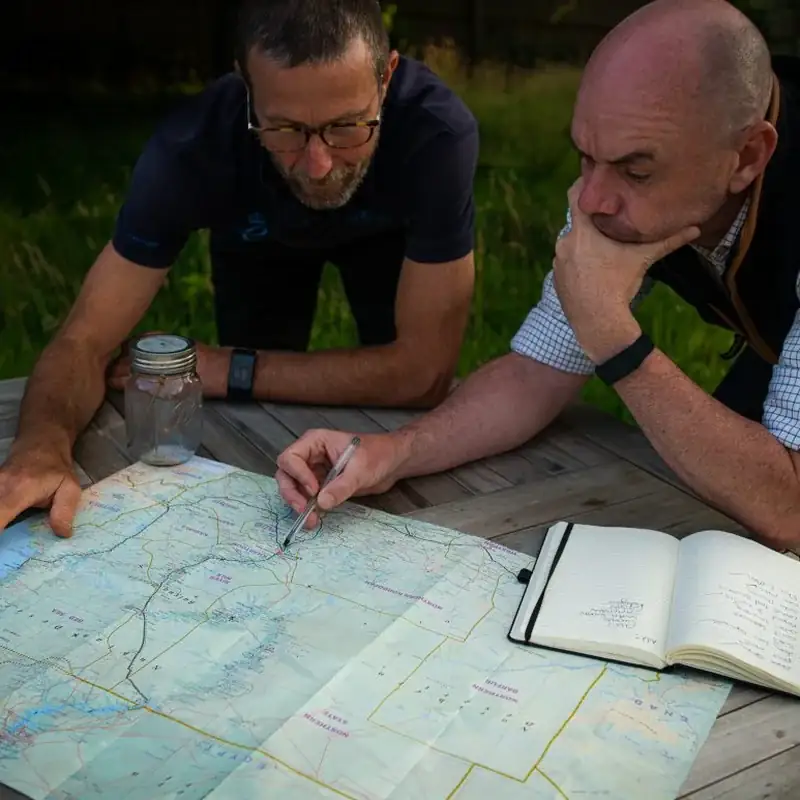
our approach
Every journey starts with a conversation. We take the time to understand your vision before we start planning.
Whether by phone or in person, we work with you directly to shape something that is considered, personal, and expertly delivered.
Every journey starts with a conversation. We favour a direct, personal approach: understanding your vision before anything else.
Whether by phone or in person, we work with you directly to shape a journey that is both thoughtfully considered and expertly delivered.
Get in touch to start planning yours.