







botswana
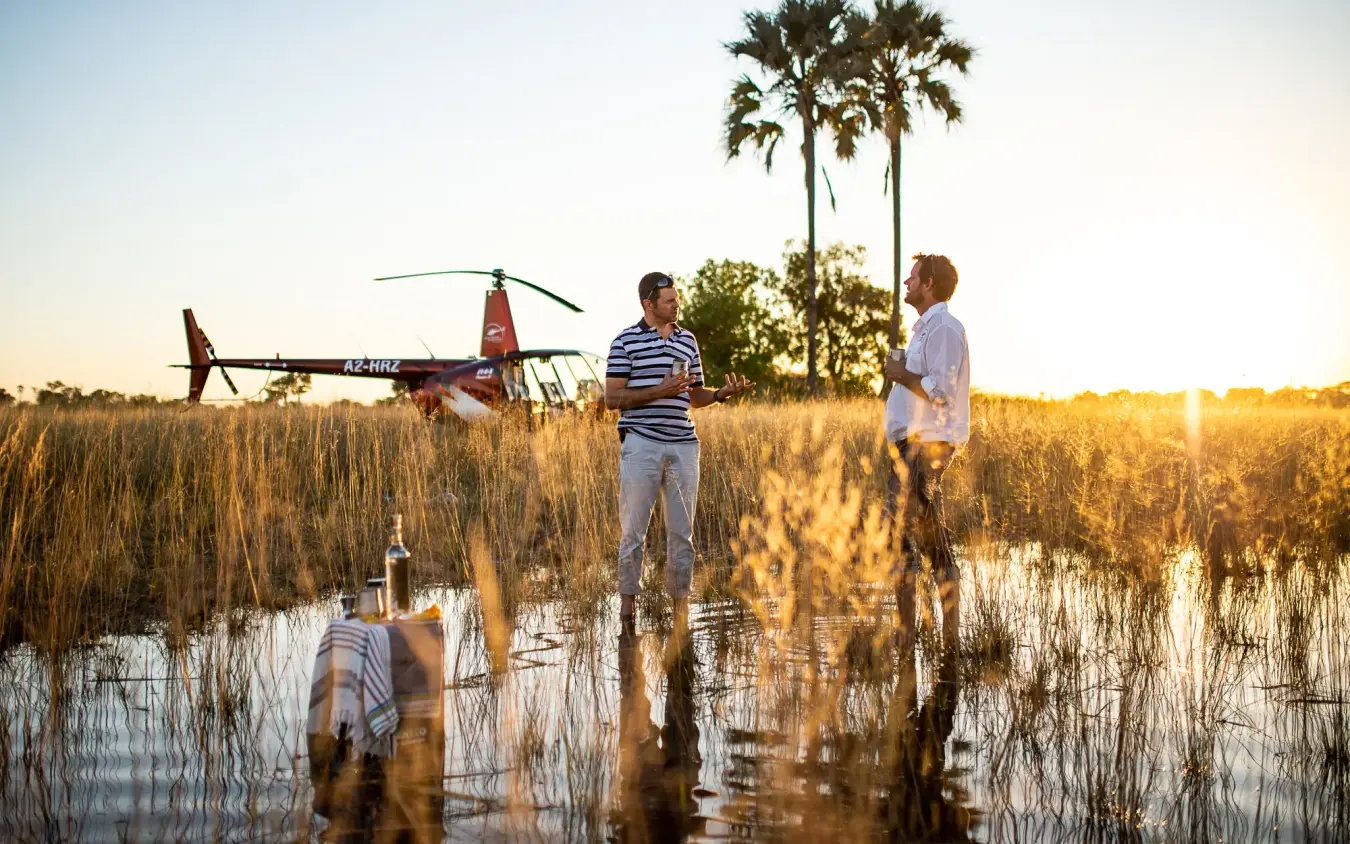
helicopters through the delta
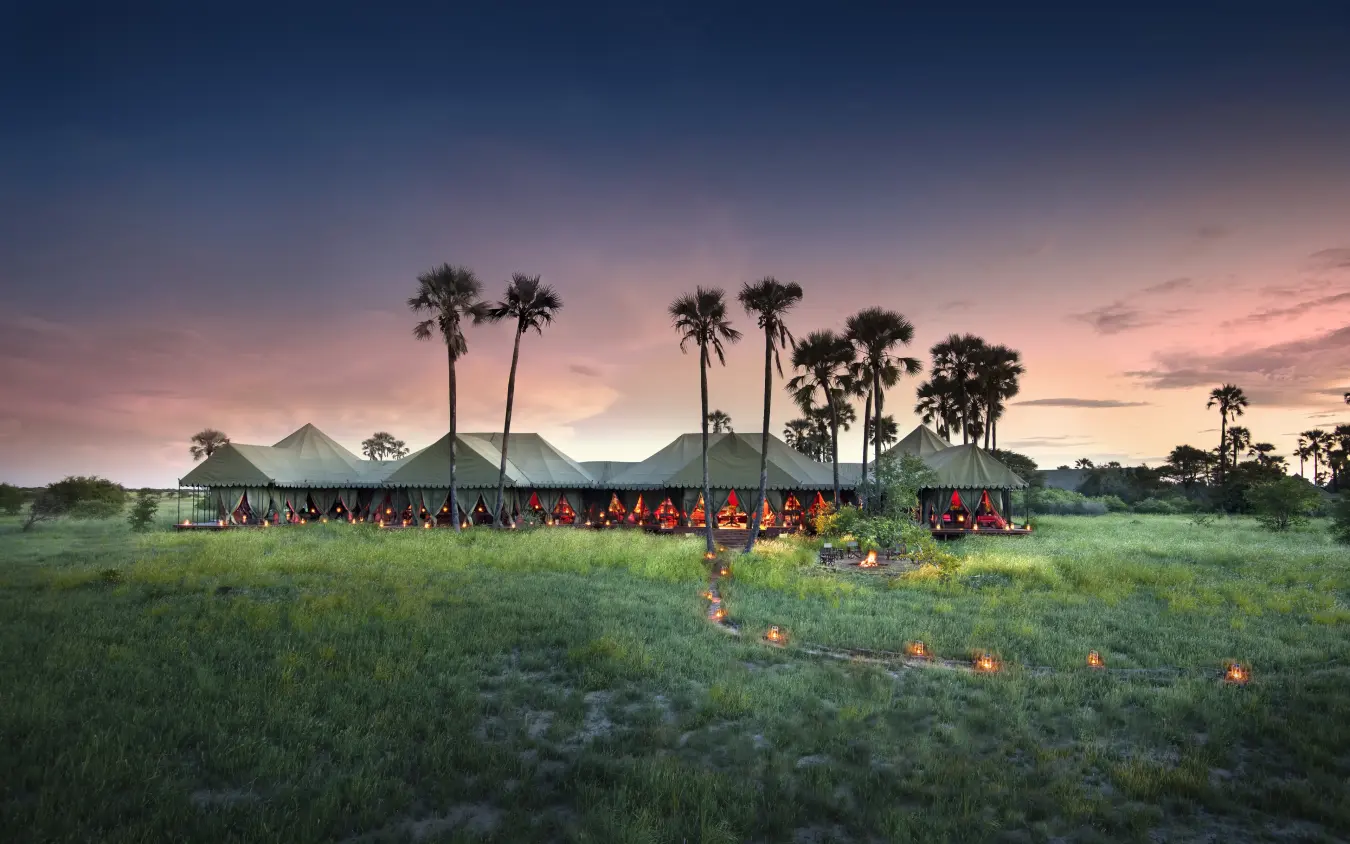
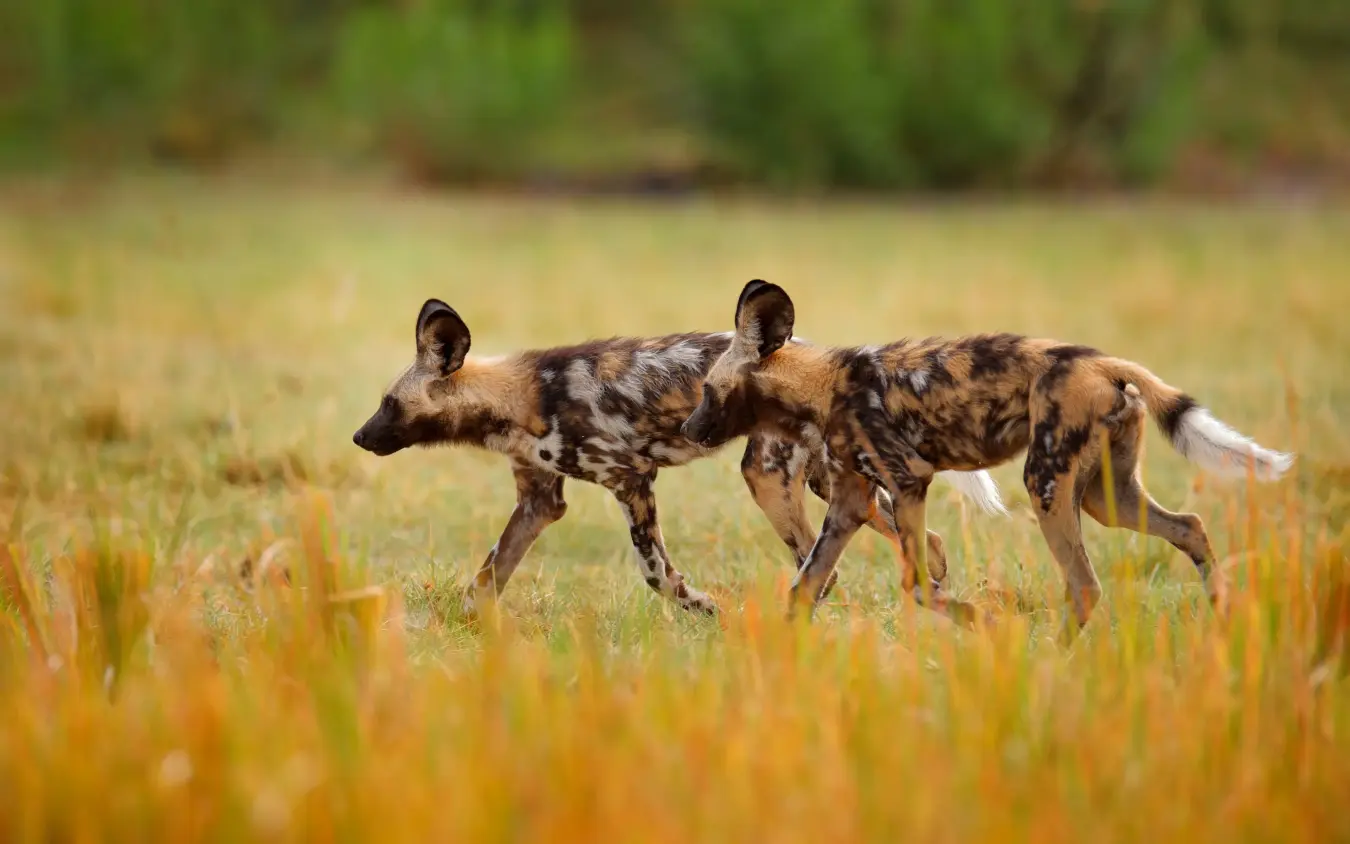
Wild dog country at Chitabe, a walking safari in the western Delta and the Makgadikgadi salt pans over 11 nights.
- Private Safari
- From $19,824 pp
- 4 guests
- 11 nights
Fourteen nights across northern Botswana and into Zimbabwe, five stays in order. Three nights each in Moremi Game Reserve, the Khwai Community Reserve and Savute in Chobe National Park follow one another, all under canvas in lightweight mobile camps. Then Jedibe, a water camp near the base of the Okavango Panhandle where the Delta proper begins, before the trip ends on the upper Zambezi at Victoria Falls.
The mobile camps pack down and move rather than sit on one site, canvas set light on the ground, days spent out in each reserve. At Setari, raised on stilts above a palm island, there are no game drives; you travel by boat and mokoro. At Victoria Falls you stay at Palm River Hotel, four kilometres above the falls, with walks, cruises and flights over the gorge.
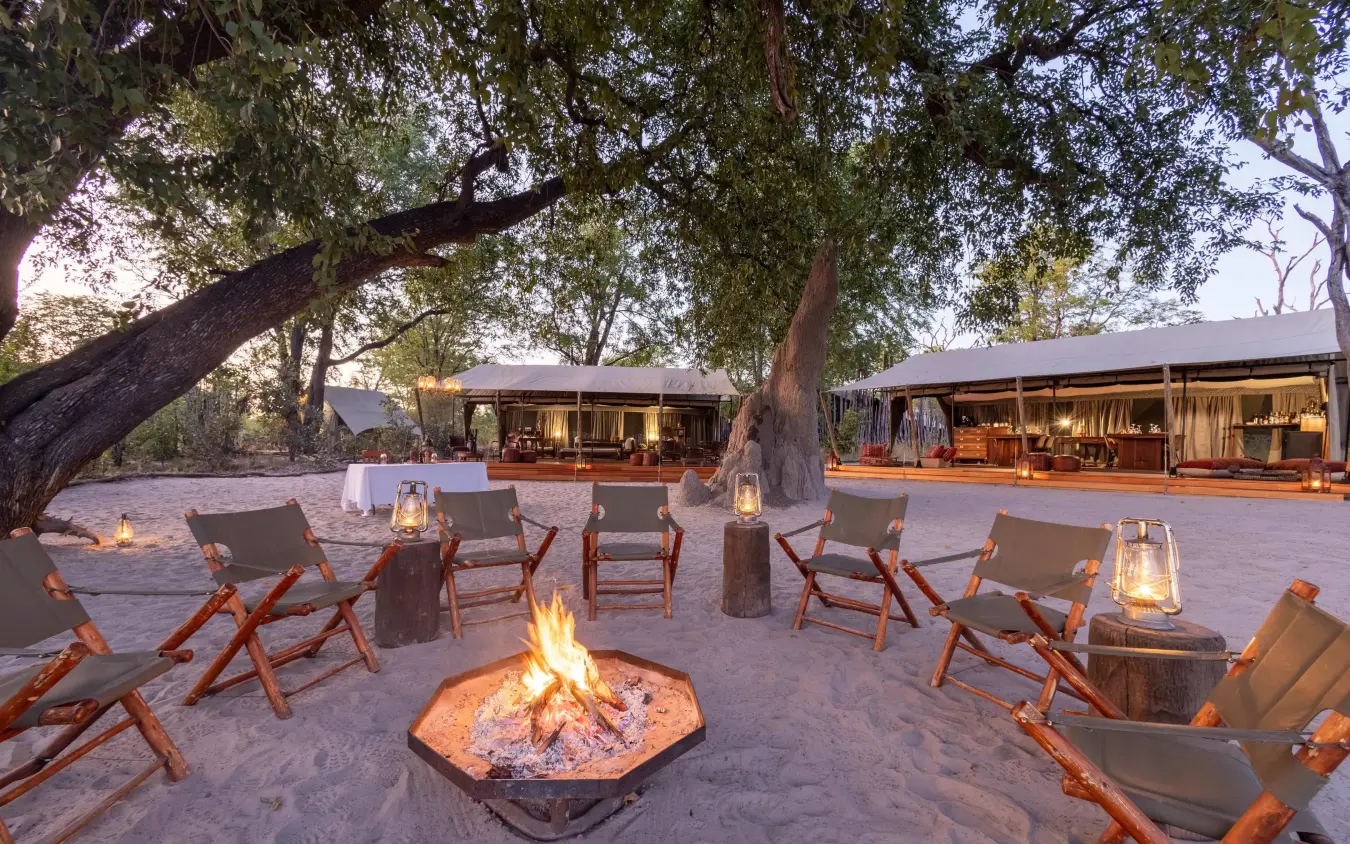
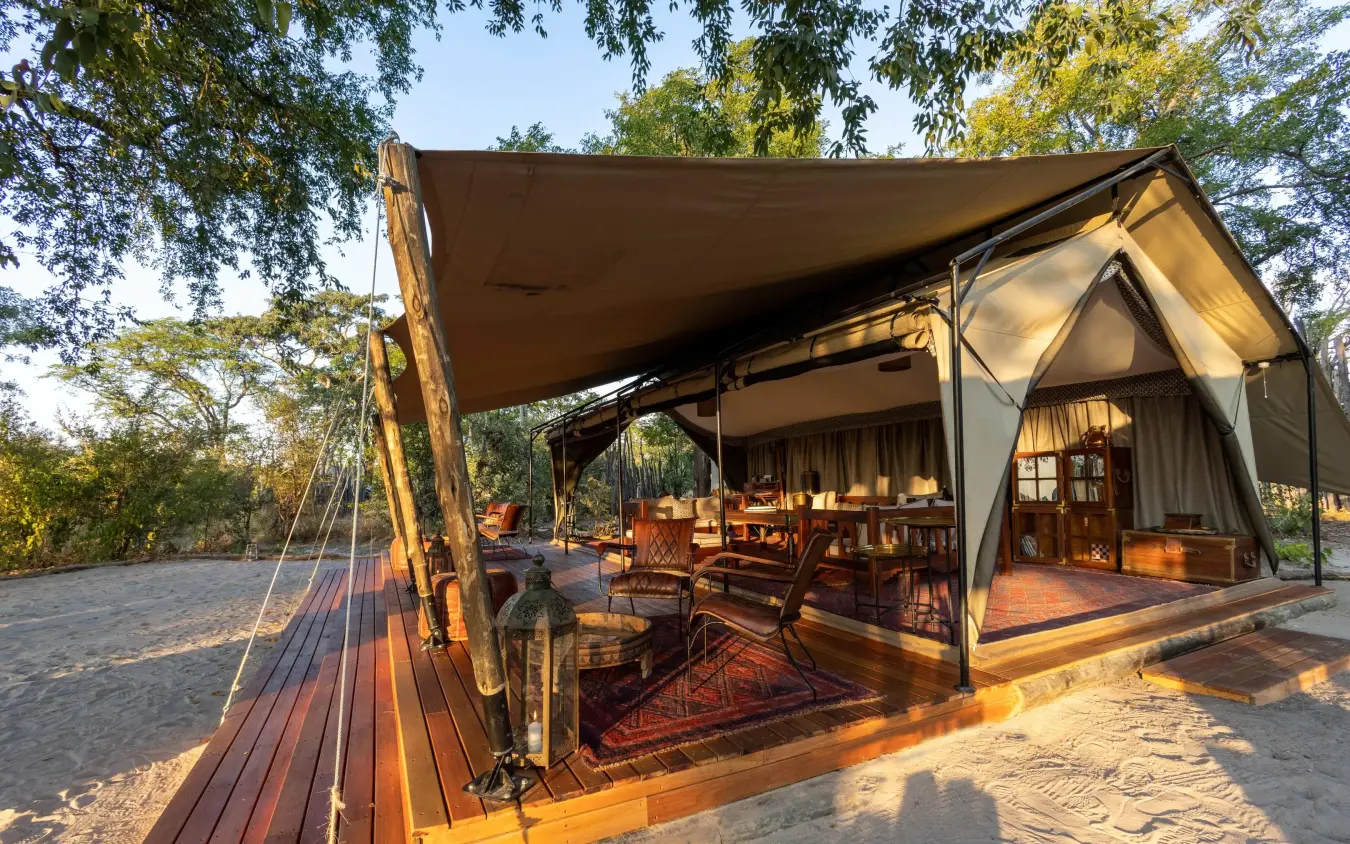
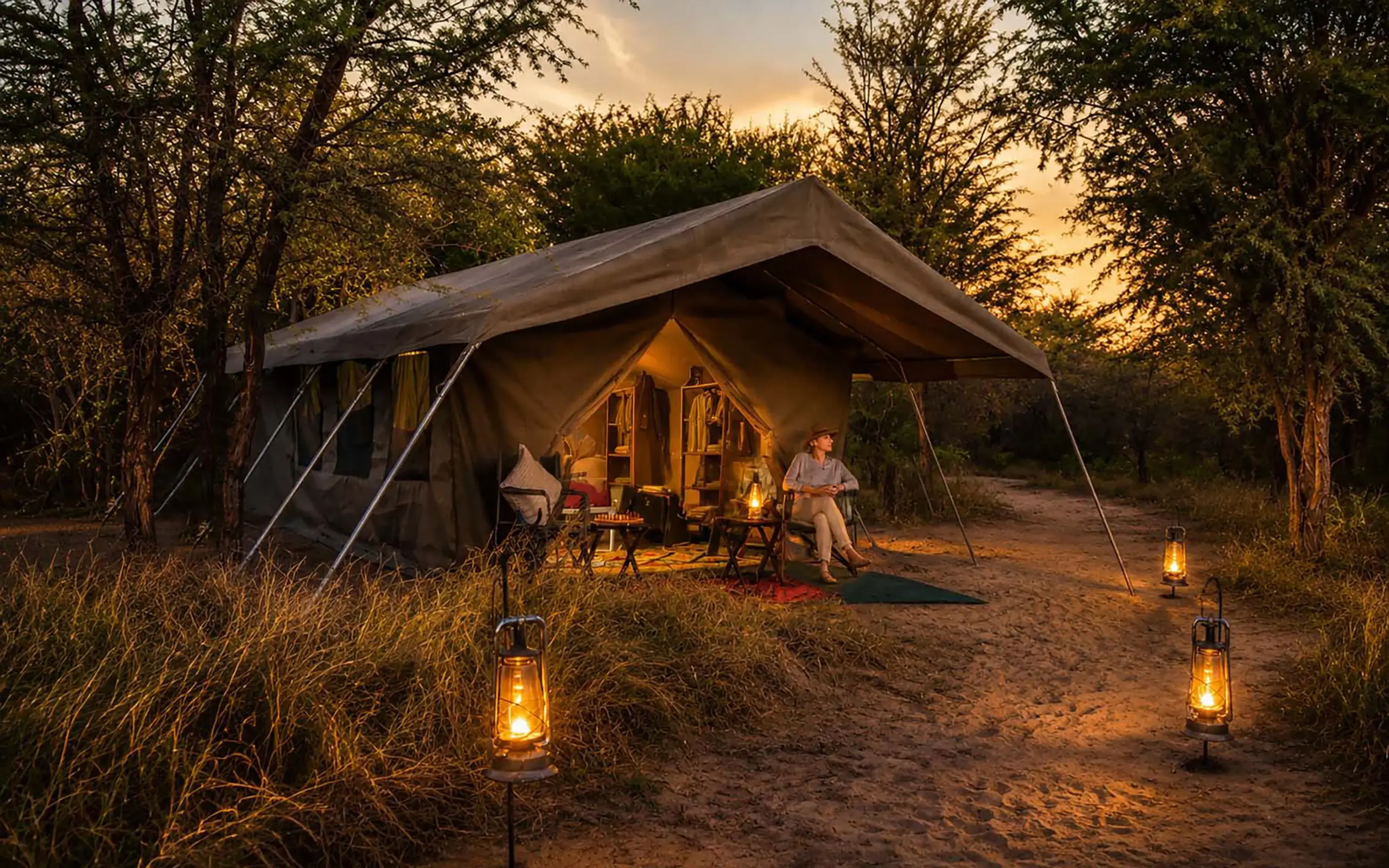
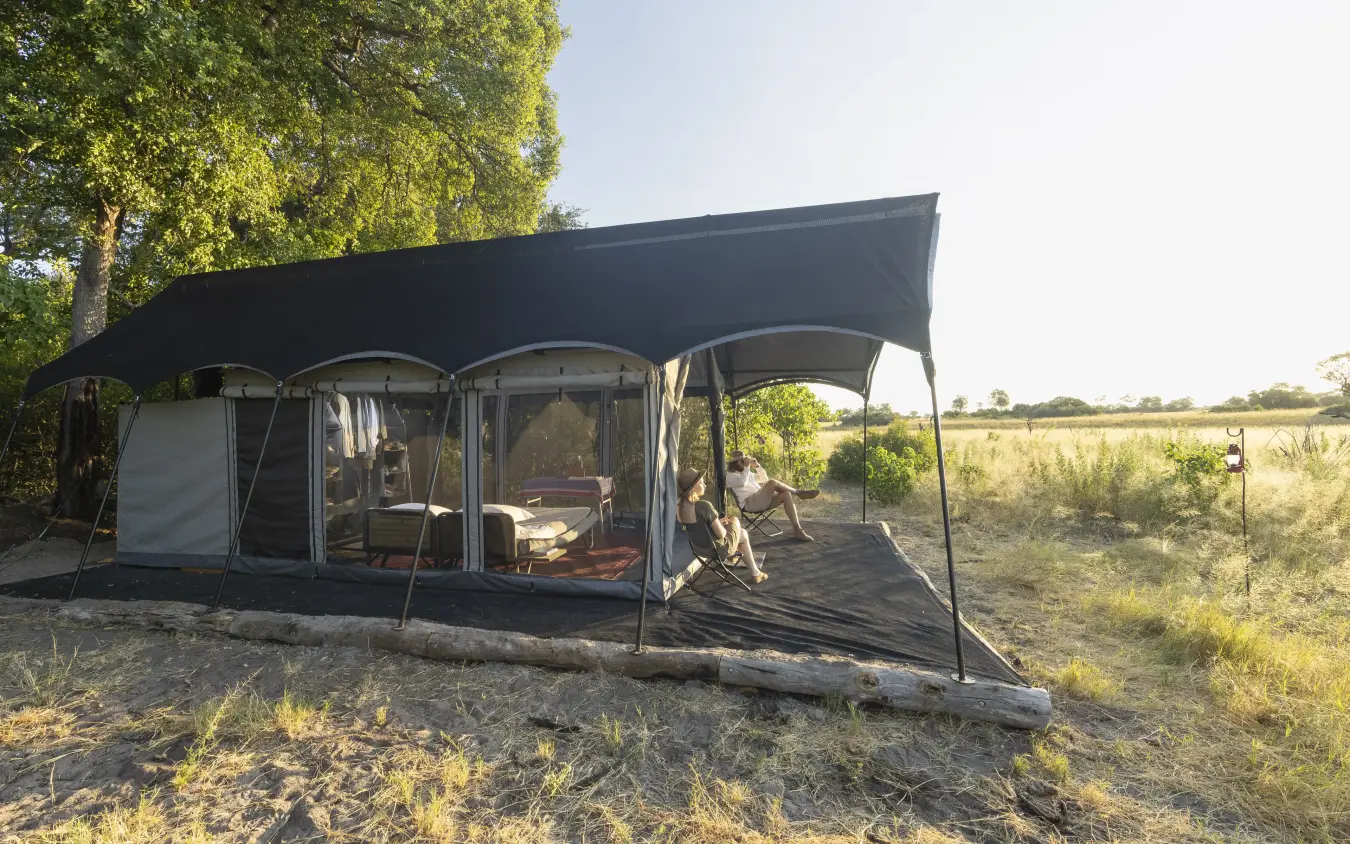
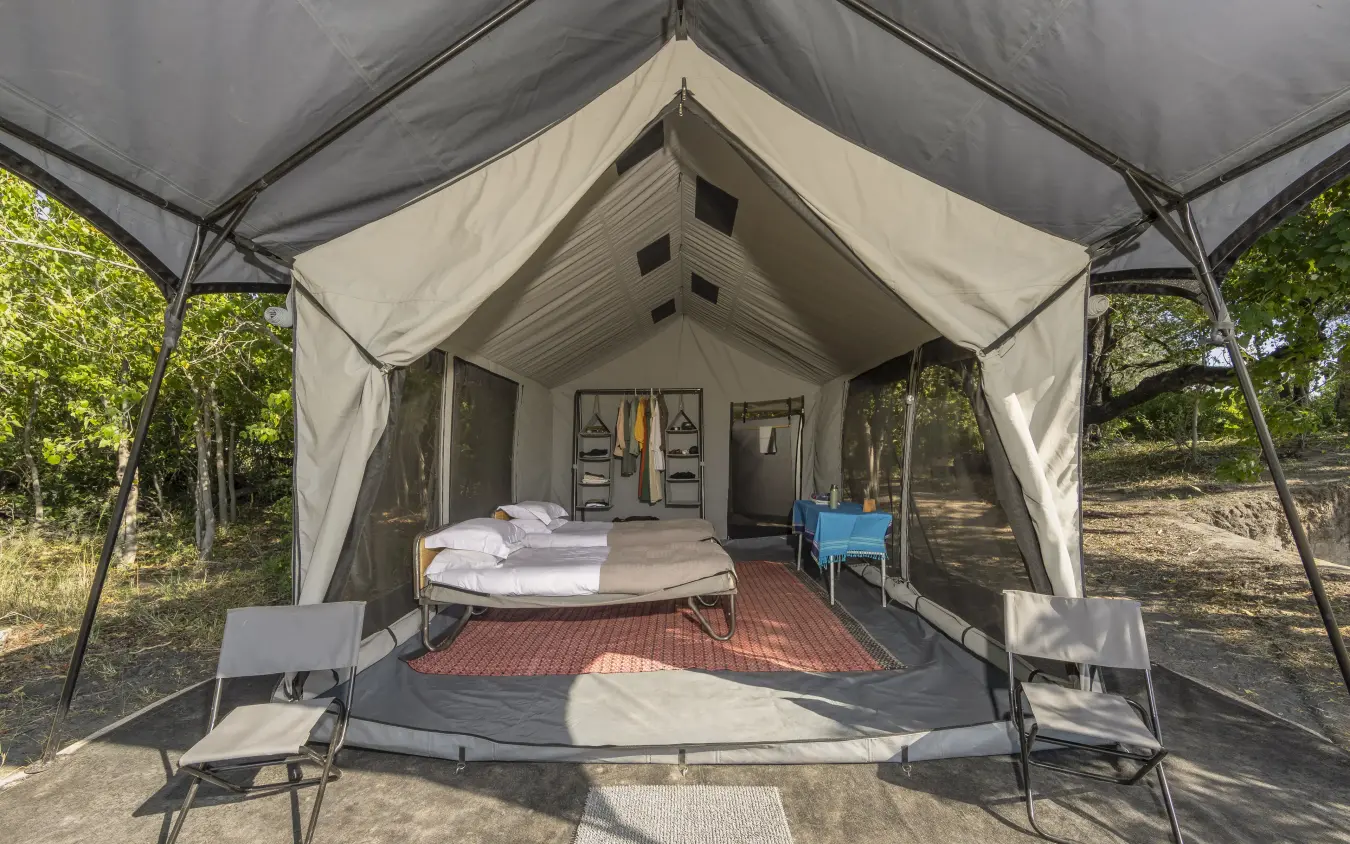
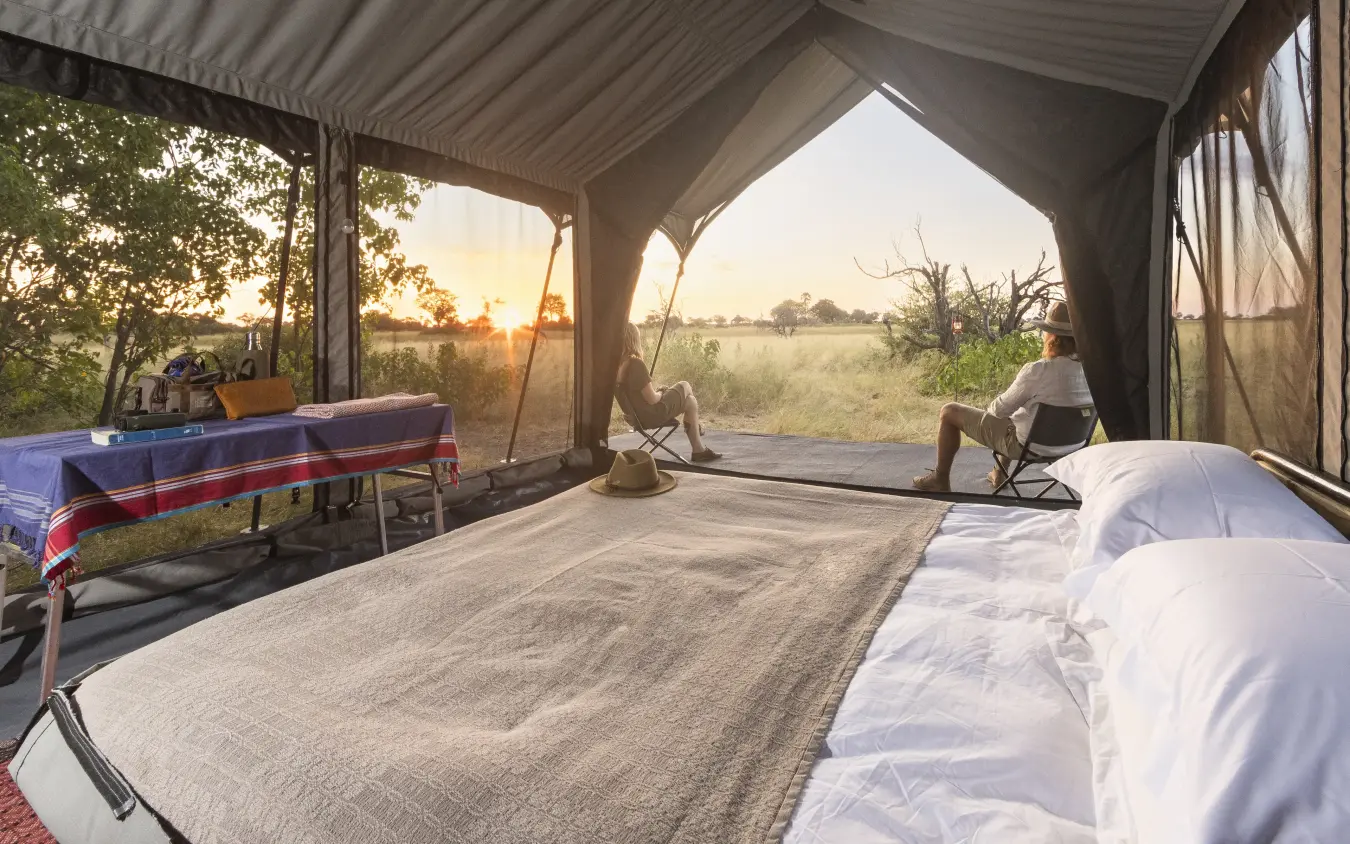
The trip opens in Moremi Game Reserve, three nights on safari from a camp pitched under canvas rather than built to last. Days are spent out in the reserve, and the camp keeps a light footprint, packing down and moving on rather than holding one permanent site. This is lightweight mobile camping, canvas and timber set close to the ground, with the reserve itself the reason to be here.
Next comes the Khwai Community Reserve, three more nights under canvas on land managed by the local community. As in Moremi, the days belong to the reserve, worked from the camp rather than from a fixed base. The mobile camp is set up for your stay and packed down again when you leave, canvas and timber light on the ground, with none of the fixed structure of a permanent lodge.
The third mobile camp is set in Savute, part of Chobe National Park, for three nights. Days are spent out across this stretch of the park, working it from the camp rather than from a fixed base. As in Moremi and Khwai, this is lightweight mobile camping, canvas and timber pitched for the stay and packed down when you leave, with the country itself the point of being here.
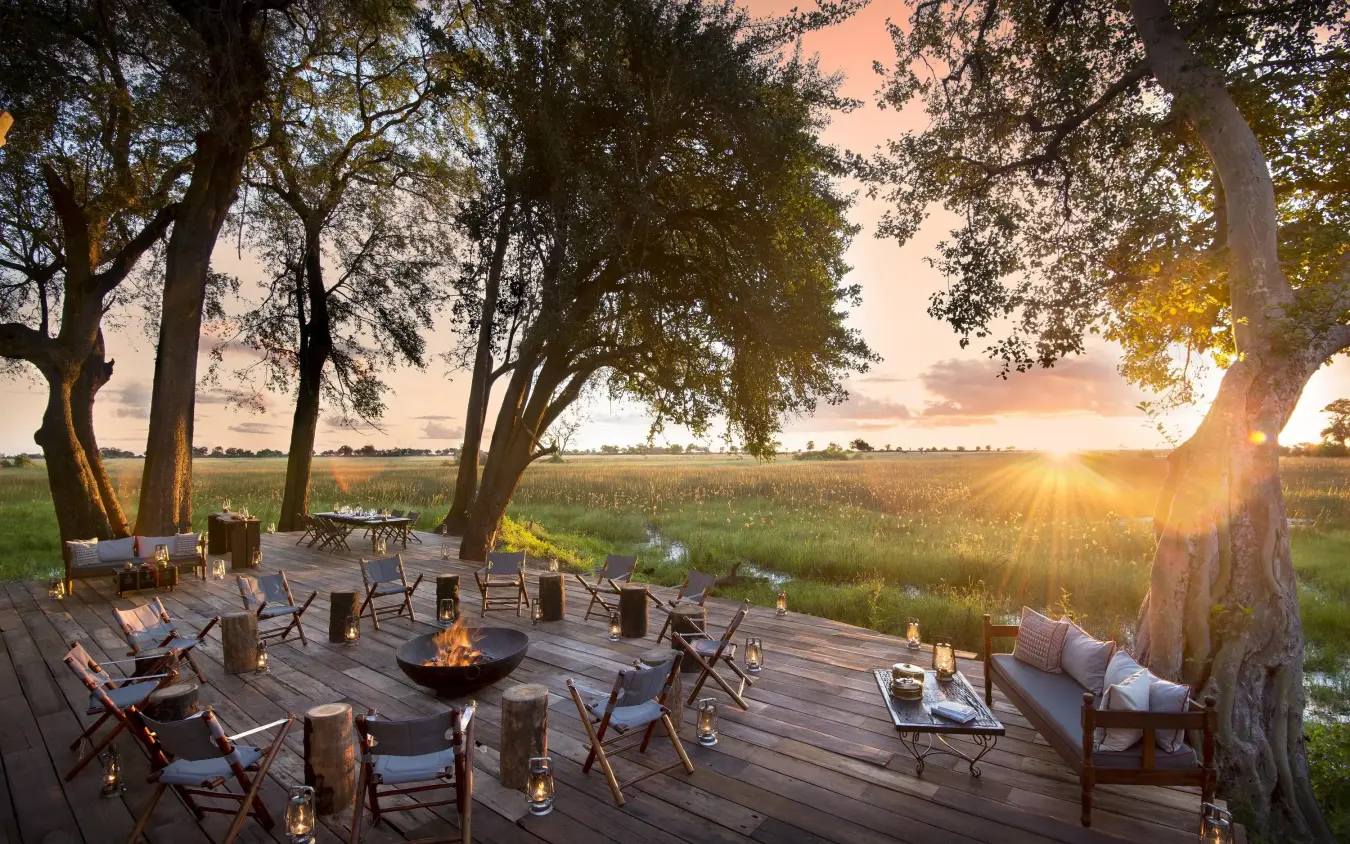
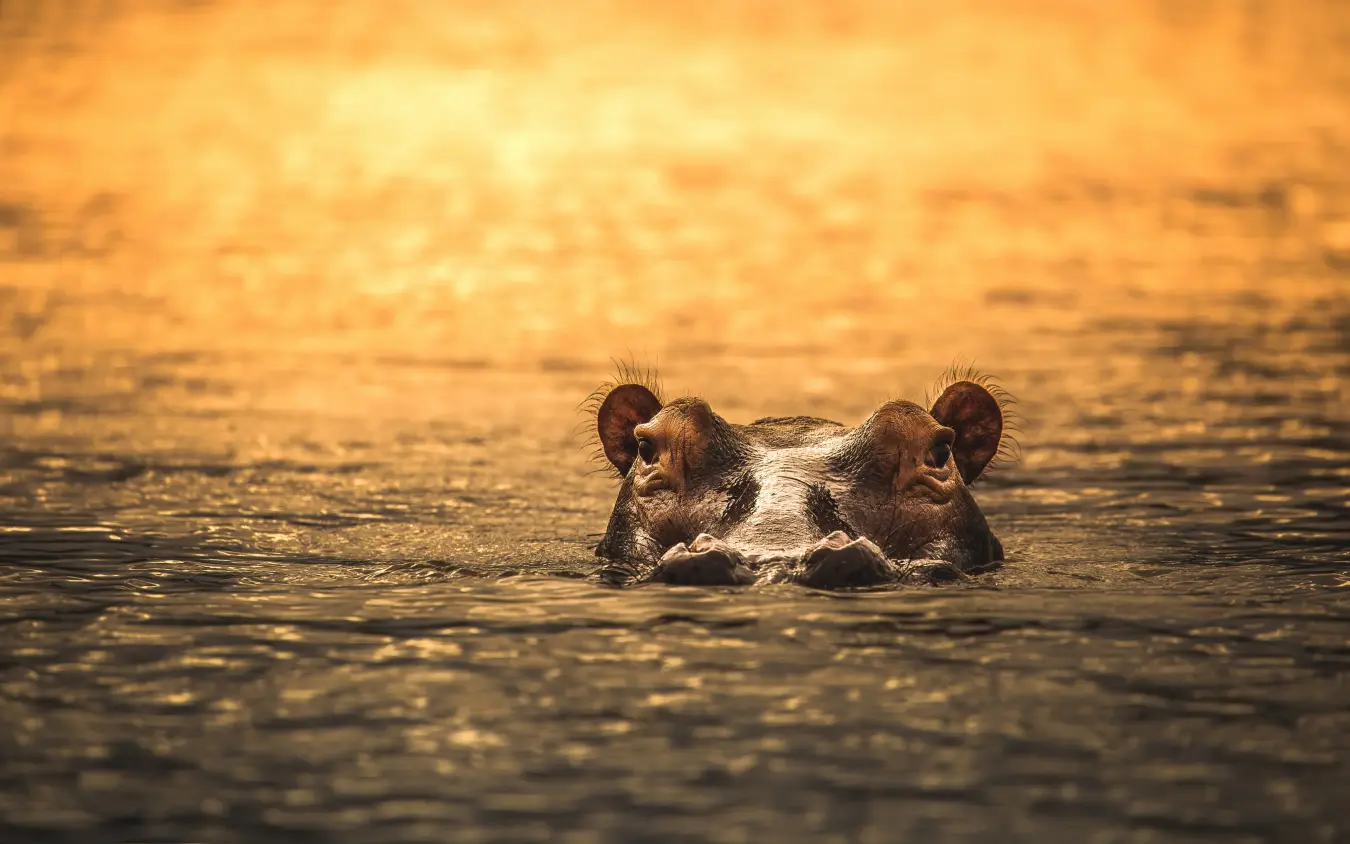
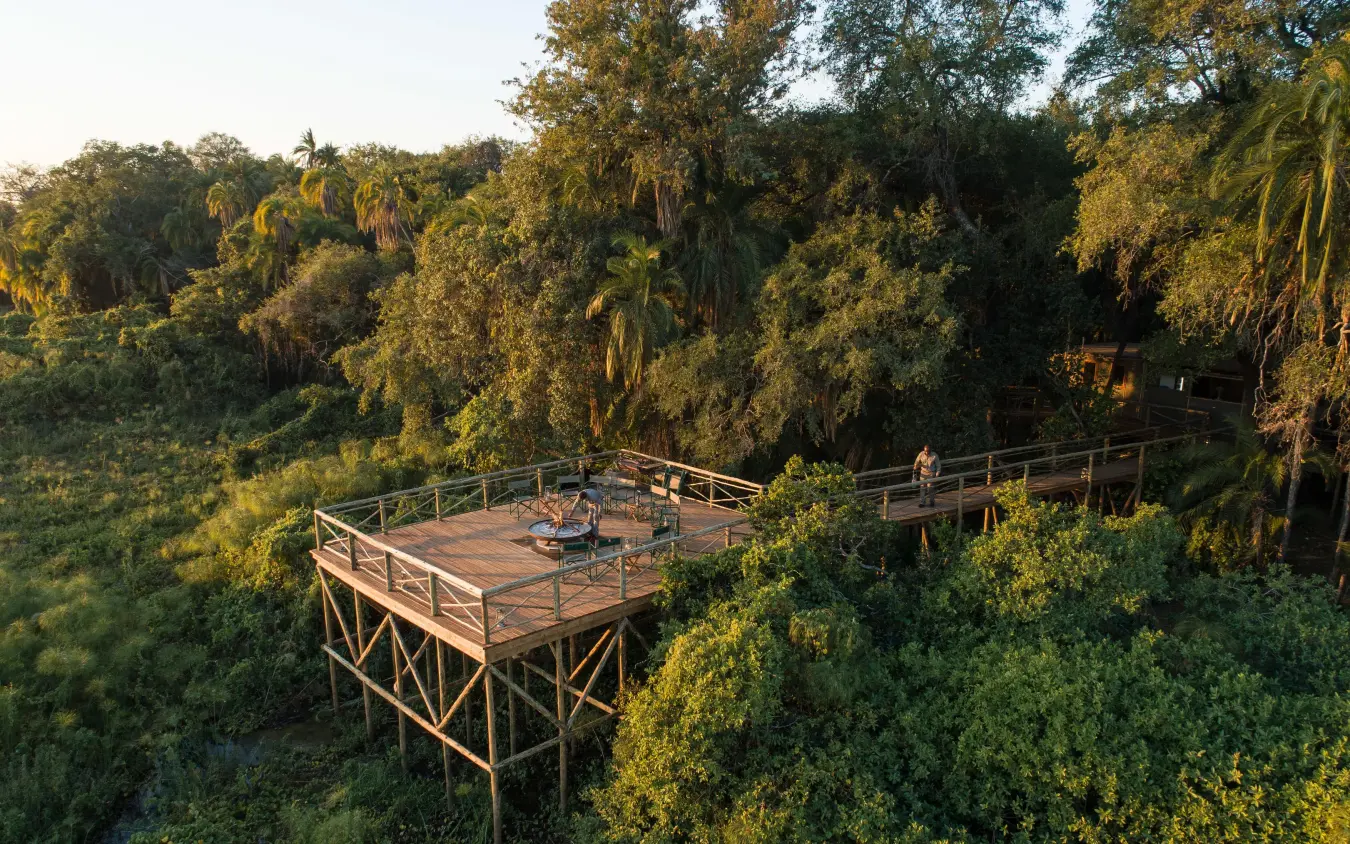
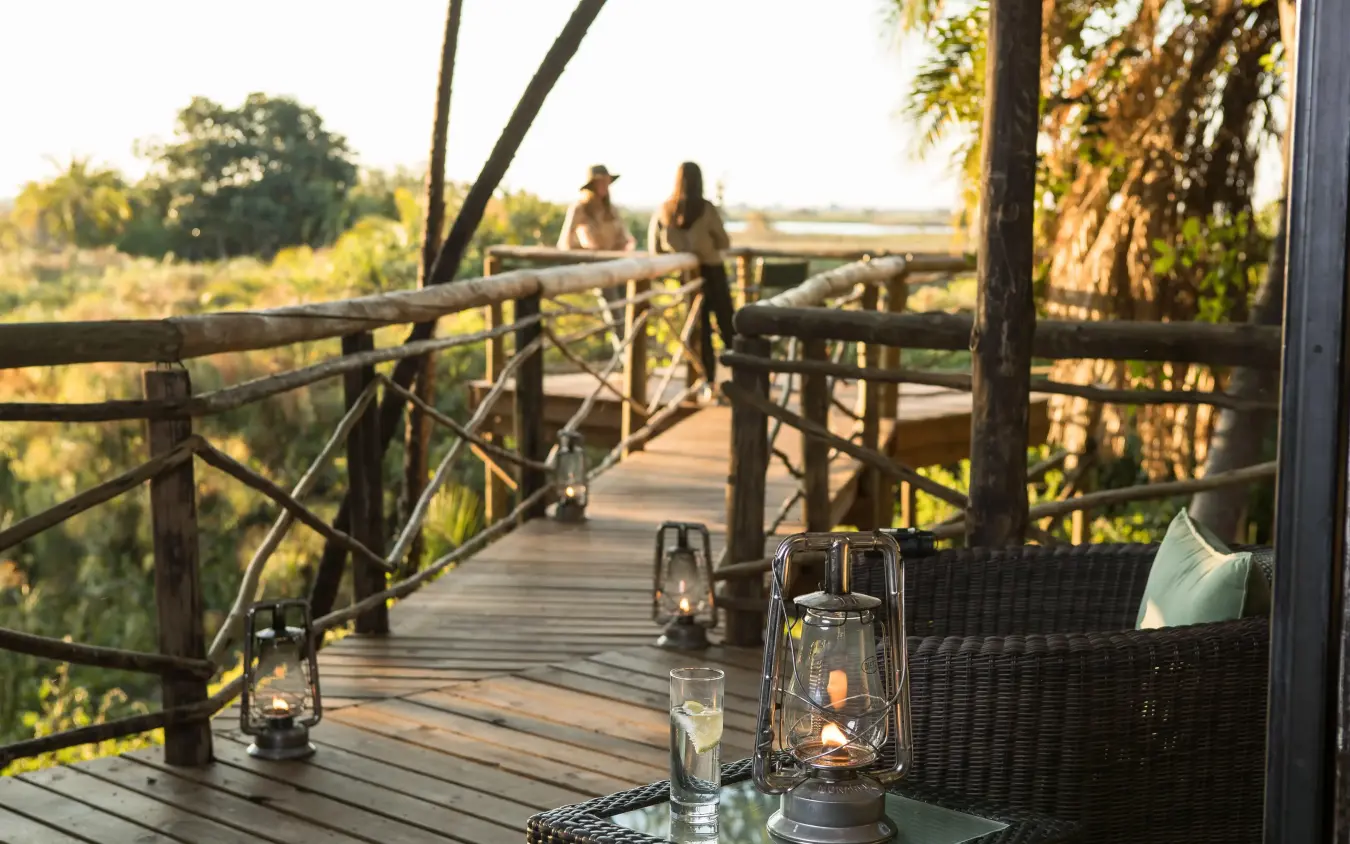
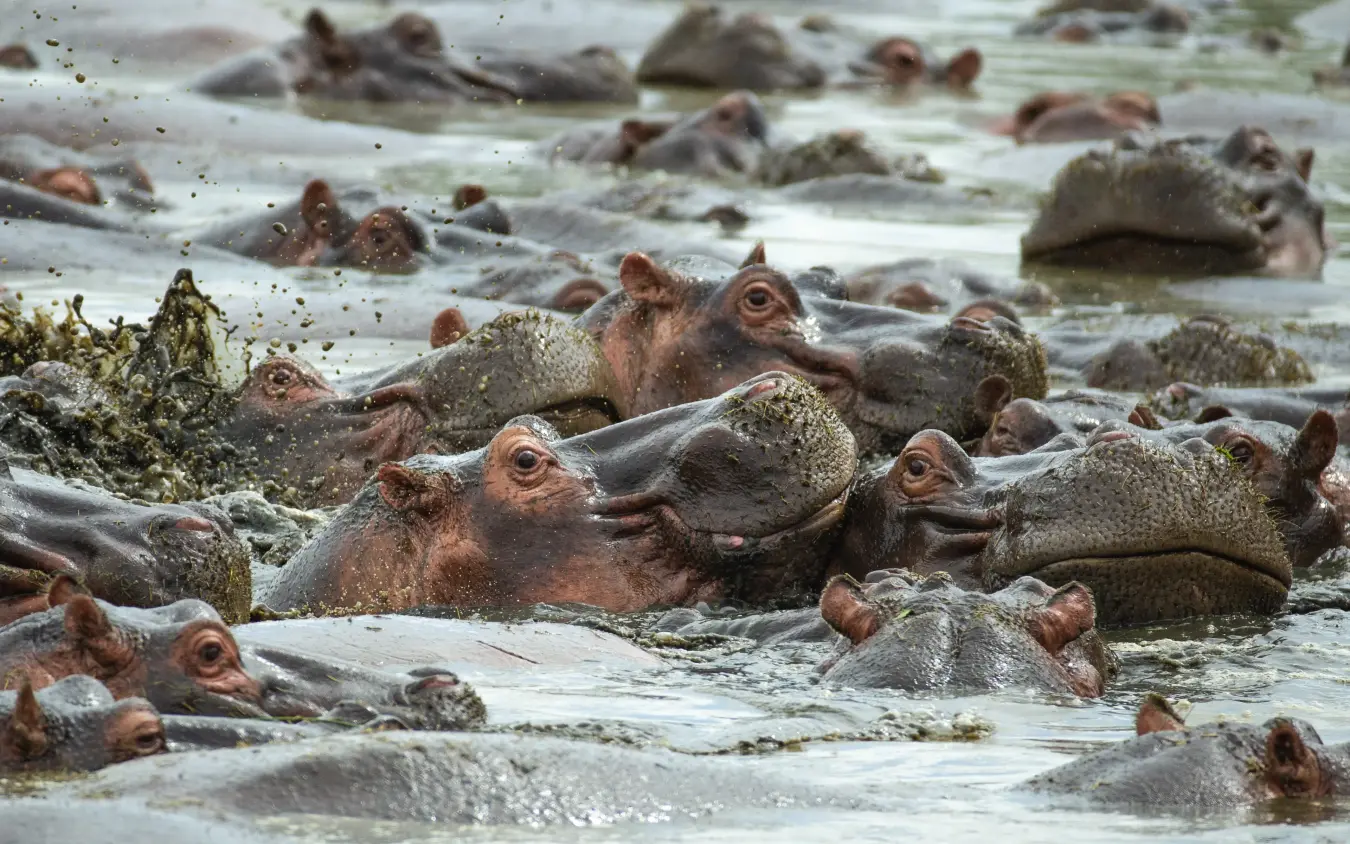
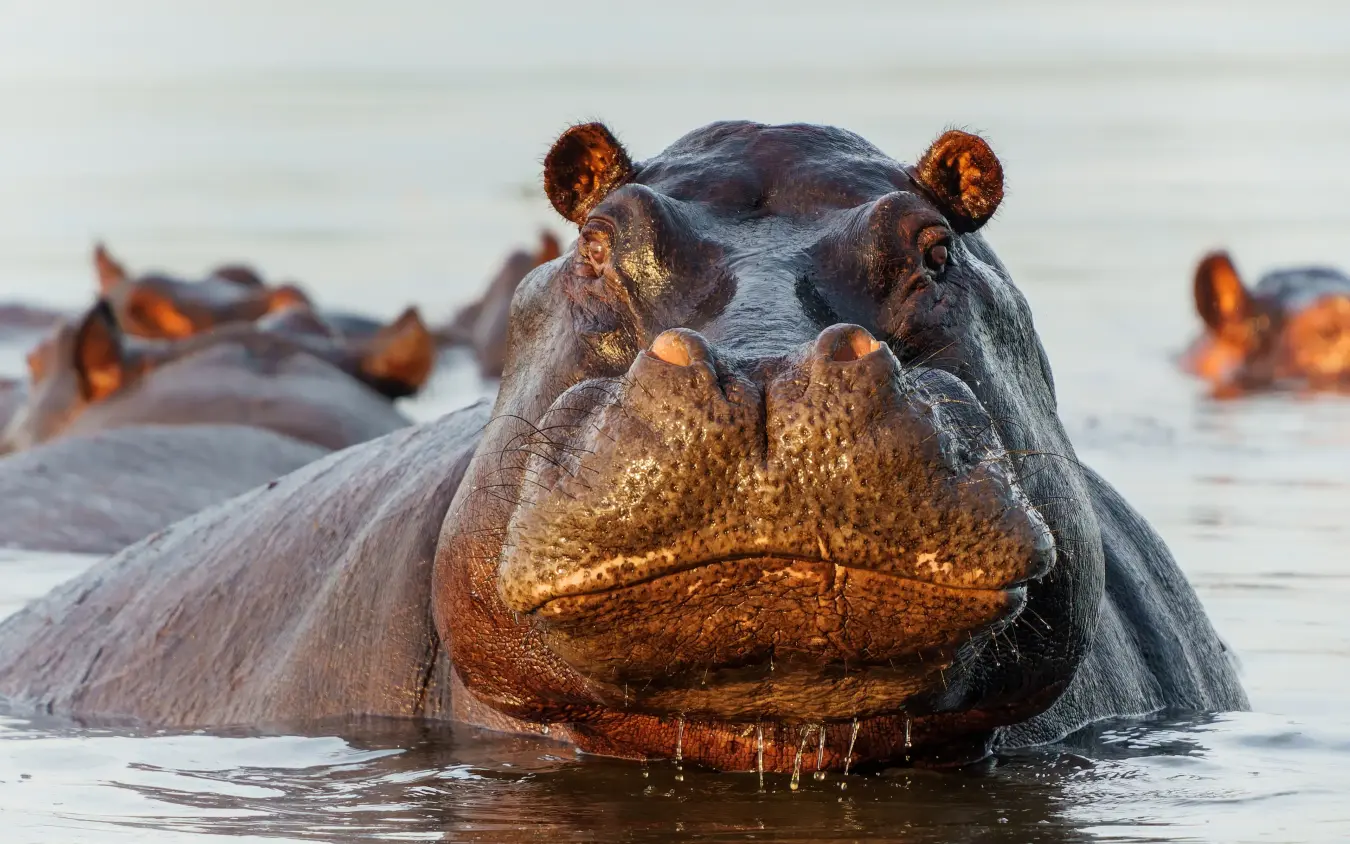
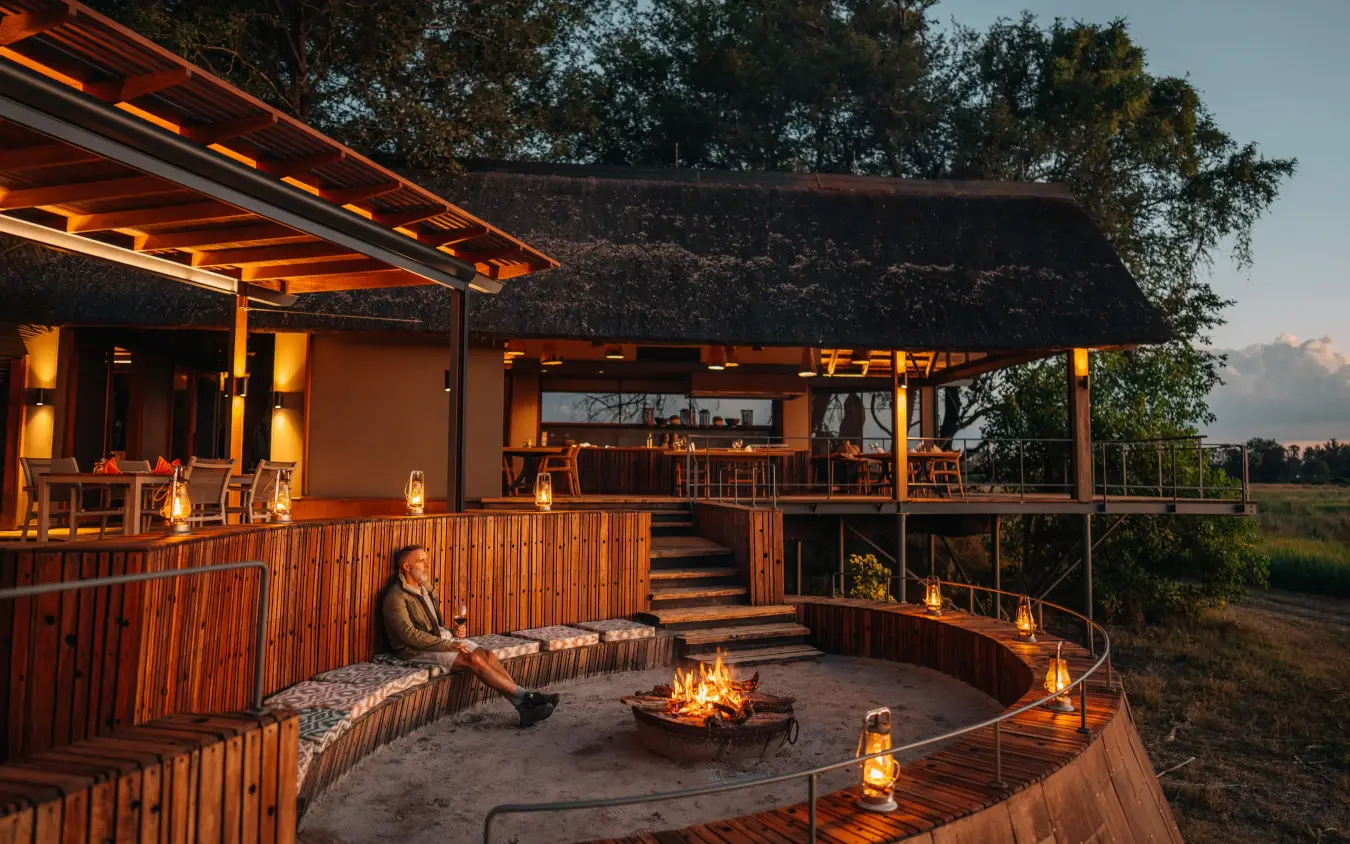
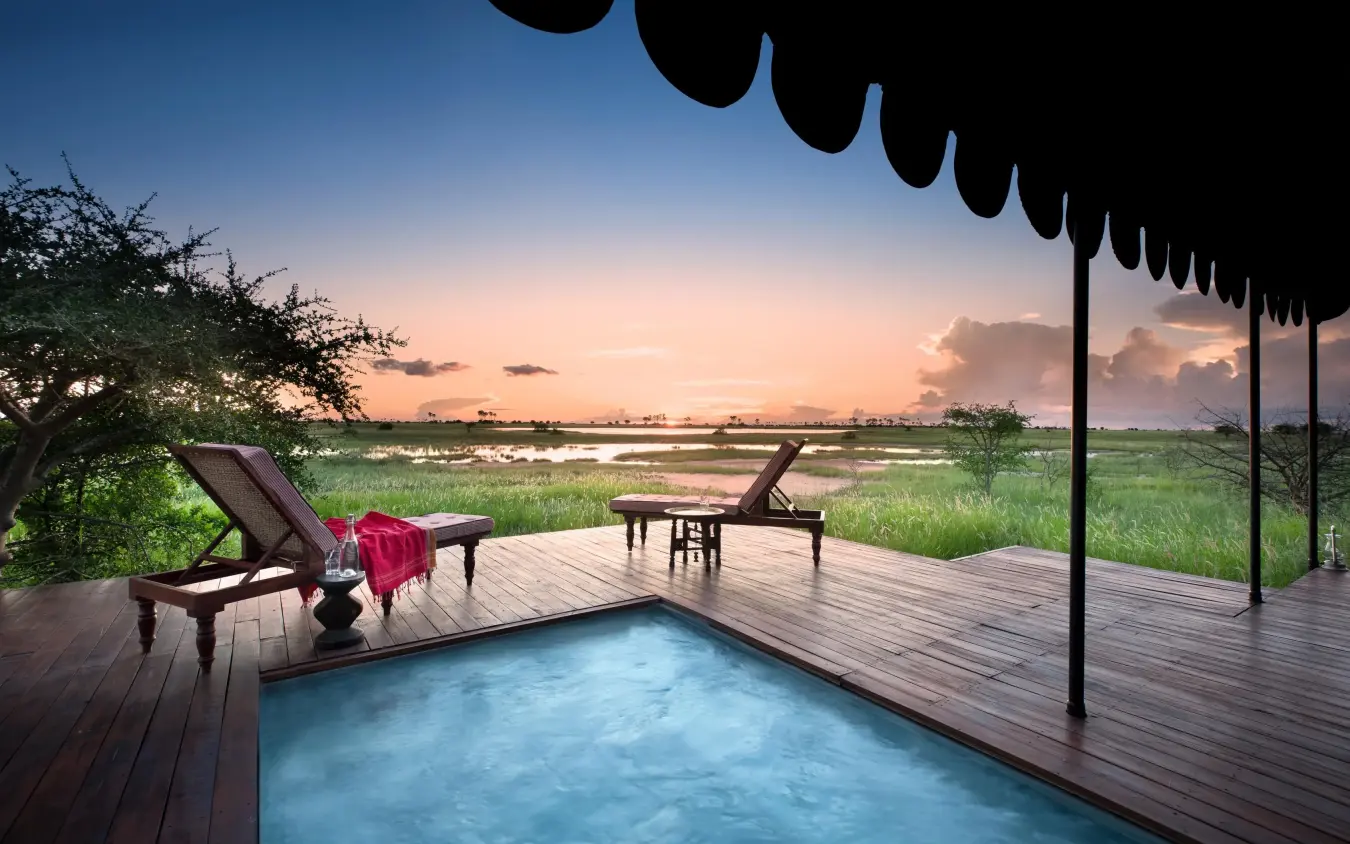
At Jedibe in the Okavango Panhandle the water takes over. Every outing leaves by boat, mokoro or on foot; there are no game drives here. Hippos surface in the lagoons within sight of the decks, and the channels hold their depth all year, staying open when camps further south have turned to vehicles. Fishing runs from March to December, catch and release. Setari is a water camp raised on stilts above a palm island, its nine suites and thatched living areas linked by boardwalks between the palms, reached by motorboat through papyrus channels.
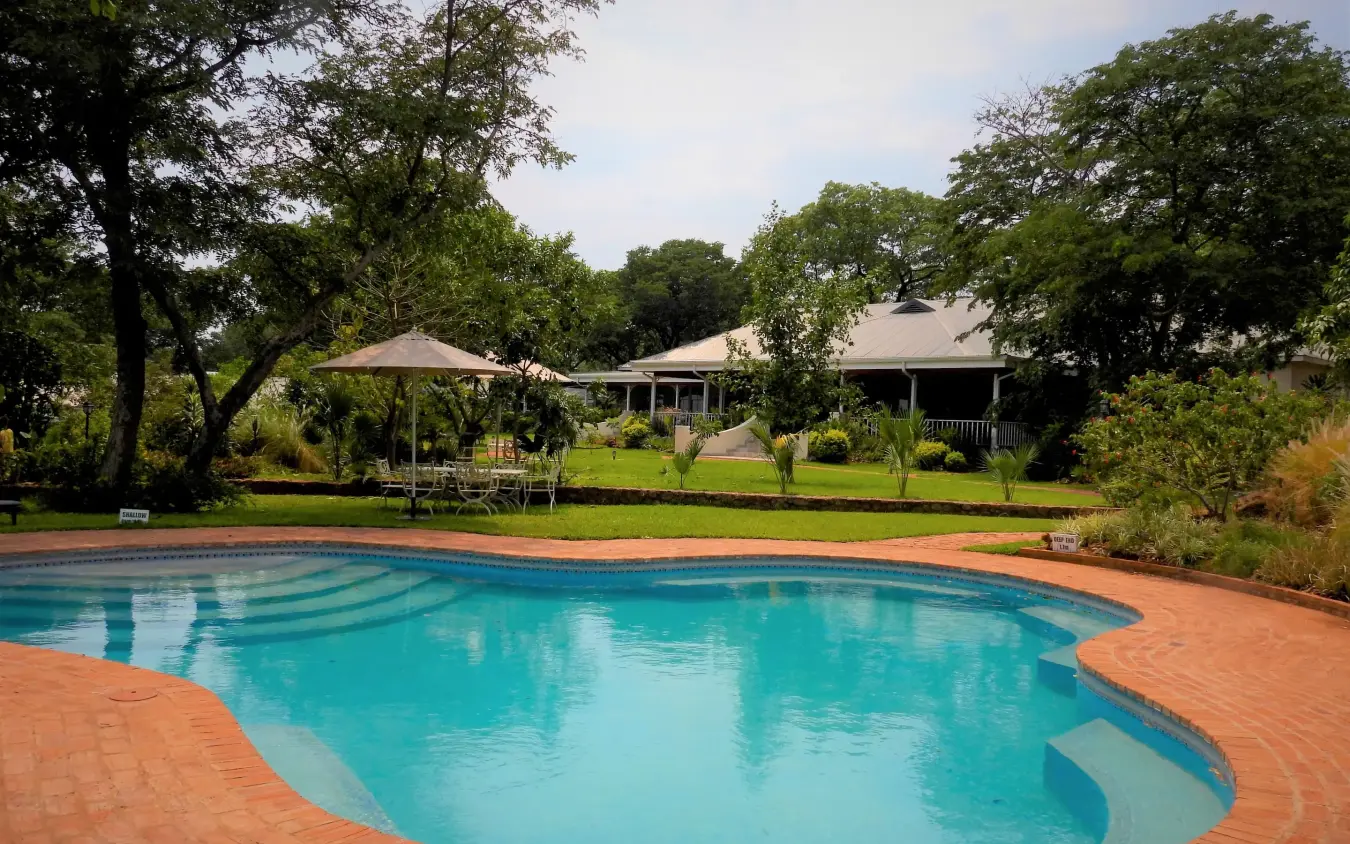
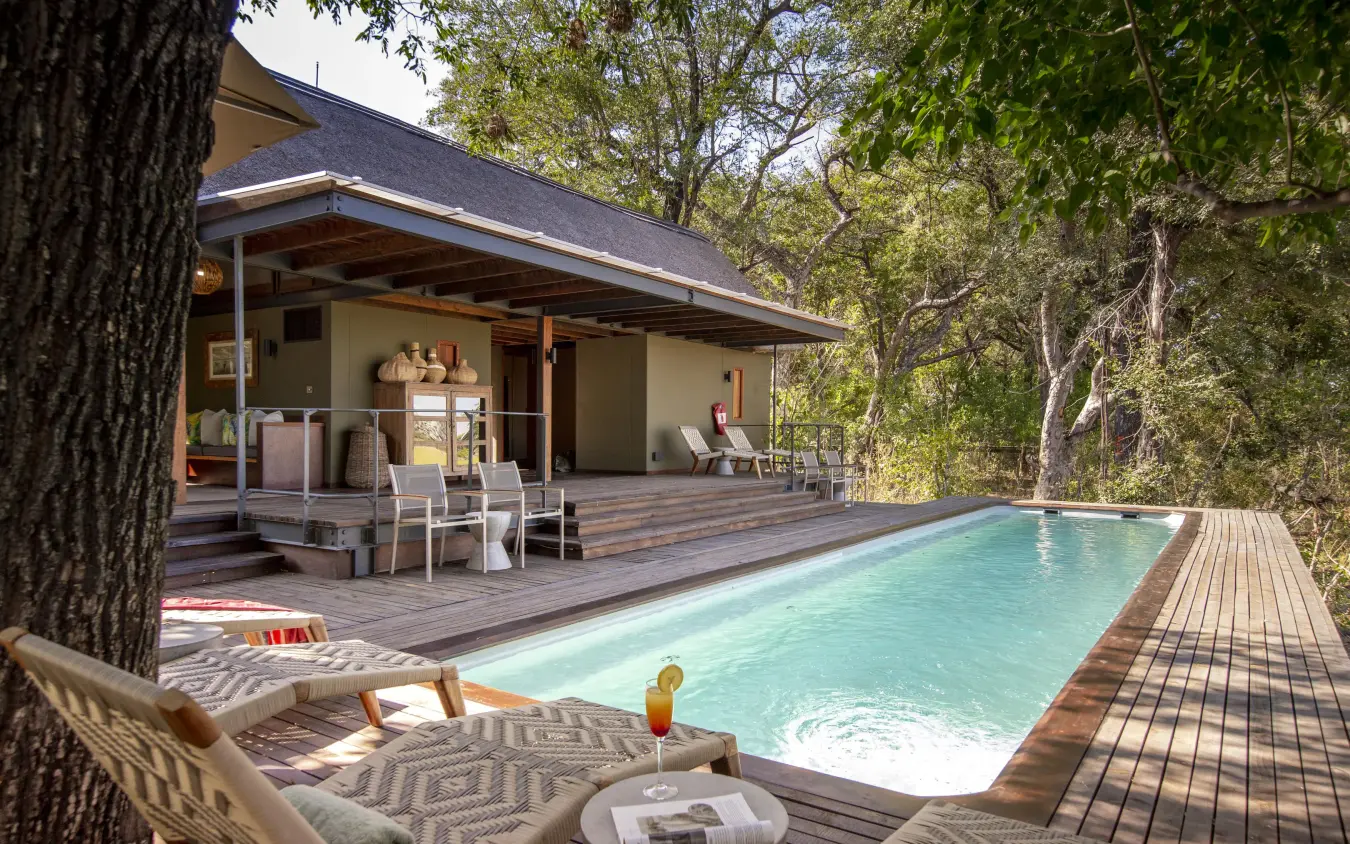
The trip ends at Victoria Falls, where the Zambezi drops into the Batoka Gorge along a curtain nearly 1.7 kilometres across. Two nights leave time for guided walks along the Zimbabwean rim, cruises on the calm water above the falls and helicopter flights over the gorge, while rafting runs the rapids below. Palm River Hotel sits on the upper Zambezi four kilometres above the falls, its foundations routed around the roots of the trees already standing, with a 34-metre infinity pool along the river and hippos in the channels below the balconies at dusk.
It means proper camping, done for you, and the detail is worth knowing before you commit to nine nights of it.
Each camp is put up for your party, and the crew goes ahead on moving days so the tents are standing when you drive in.
In a Botswana mobile camp of this kind you can normally expect:
Light comes from solar lanterns, so bring a head torch.
Nothing is air conditioned, and canvas keeps out neither cold nor heat: winter nights from May to August can be bitterly cold, while in October the shade temperature climbs to 38 degrees and beyond. We would call the style functional rather than fancy. Simpler and smarter versions both exist, so tell us which one you would prefer.
That depends which side of a boundary you are camped on.
Moremi is a game reserve and Savute lies inside Chobe National Park, and Botswana's park rules keep visitors in the vehicle, on the tracks and back in camp around dark, so those six nights are about game drives by day.
The Khwai Community Reserve, which comes between them, is community land outside the reserve, and there a guide is free to drive off the track, run a night drive by spotlight and take you out on foot, and a mokoro outing is possible when the river is high enough. So Khwai is where the variety comes in, which is one good reason the route stops there.
At Setari there are no vehicles at all: you go out by motorboat and mokoro and walk on the islands, and the camp sets a minimum age of twelve for the walks and the mokoro. At Victoria Falls the walking is along the paths on the rim.
The three mobile camps are normally linked by road in the safari vehicle, with the animals seen along the way counting as part of the day.
The long one is Khwai to Savute, much of it on deep sand where the track crosses the Magwikwe sand ridge, so it takes the better part of a day rather than an hour or two.
From Savute the usual way on is a light aircraft to the Jedibe airstrip, after which Setari is about an hour away by motorboat through the papyrus.
To finish, you fly to Kasane and cross into Zimbabwe by road, and we allow 90 to 120 minutes for that run to Victoria Falls, queue at the border included. Zimbabwe visas are issued on arrival to most visitors, British travellers among them.
Botswana's light aircraft hold you to 20 kilograms a head in soft bags, hand luggage weighed as part of it. We can also put a whole aircraft at your disposal, usually a Pilatus PC-12 or a Cessna Grand Caravan.
Between June and September.
Our own pages recommend those months for the Delta, for Chobe, for Victoria Falls and for Botswana. The days are dry and clear, the animals are drawn to the rivers and the last waterholes, and nobody has to pack a wet tent.
What those months cost you is warmth: from June to August a night under canvas can drop close to freezing, so bring a warm hat, gloves and layers for the early drives.
May is a fair alternative, a little warmer at night and with fewer vehicles about.
October has superb game but is hard going in a tent, with afternoons that can pass 38 degrees and little relief until dark.
From December to March our rating falls to challenging, and camping sharpens that: heavy showers, mud and scattered game. The rewards then are migrant birds, young antelope, zebra gathering on the Savute grasslands, lower rates and, by March and April, the falls near their fullest.
There are two lengths of flight. The standard one lasts about 12 to 15 minutes and the longer one between 22 and 30, depending on which company flies it.
Several companies operate, from both banks of the river and in different helicopters, which is why we do not name an aircraft.
What you see changes with the river. When the Zambezi is at its fullest, around March and April, the spray is so thick that walkers on the rim cannot take in the full width, and only from the air can the whole curtain be seen.
In the dry months, when most people make this trip, the water is lower, and from above you look down on the bare rock face and into the gorge below it.
The companies set a weight limit for each passenger, between 120 and 130 kilograms depending on the operator, so tell us in confidence if that may apply and we will check before we book anything.
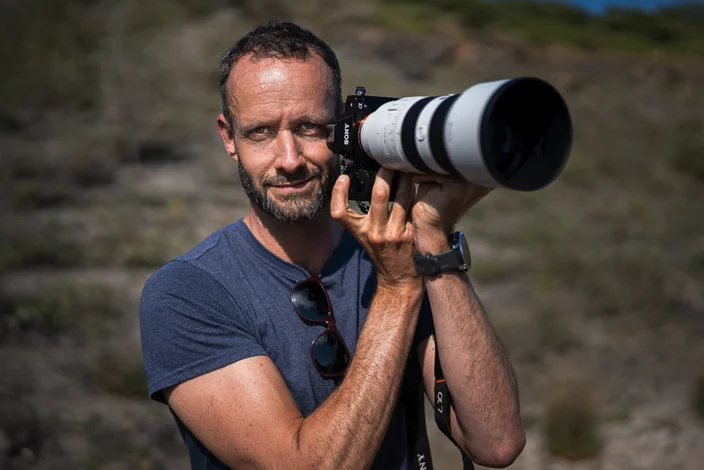
Ed Charles, BBC Producer
Fitzroy are true specialists in accessing the wilderness. They know where to go and importantly, when to go there. Highly recommended.
botswana
Wild dog country at Chitabe, a walking safari in the western Delta and the Makgadikgadi salt pans over 11 nights.
botswana
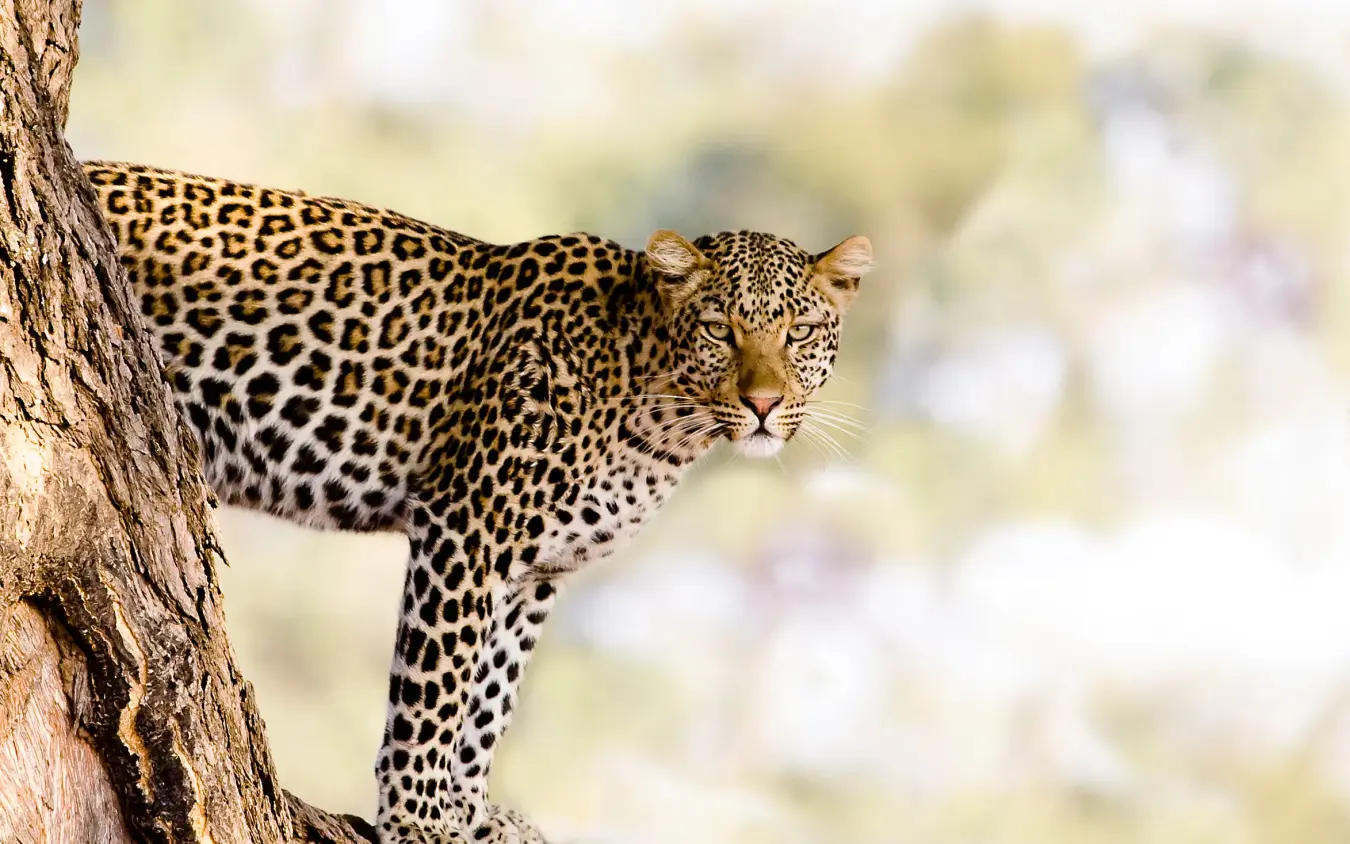
Nine nights across three private northern Botswana concessions, from the Okavango floodplains to the Selinda Spillway.
botswana
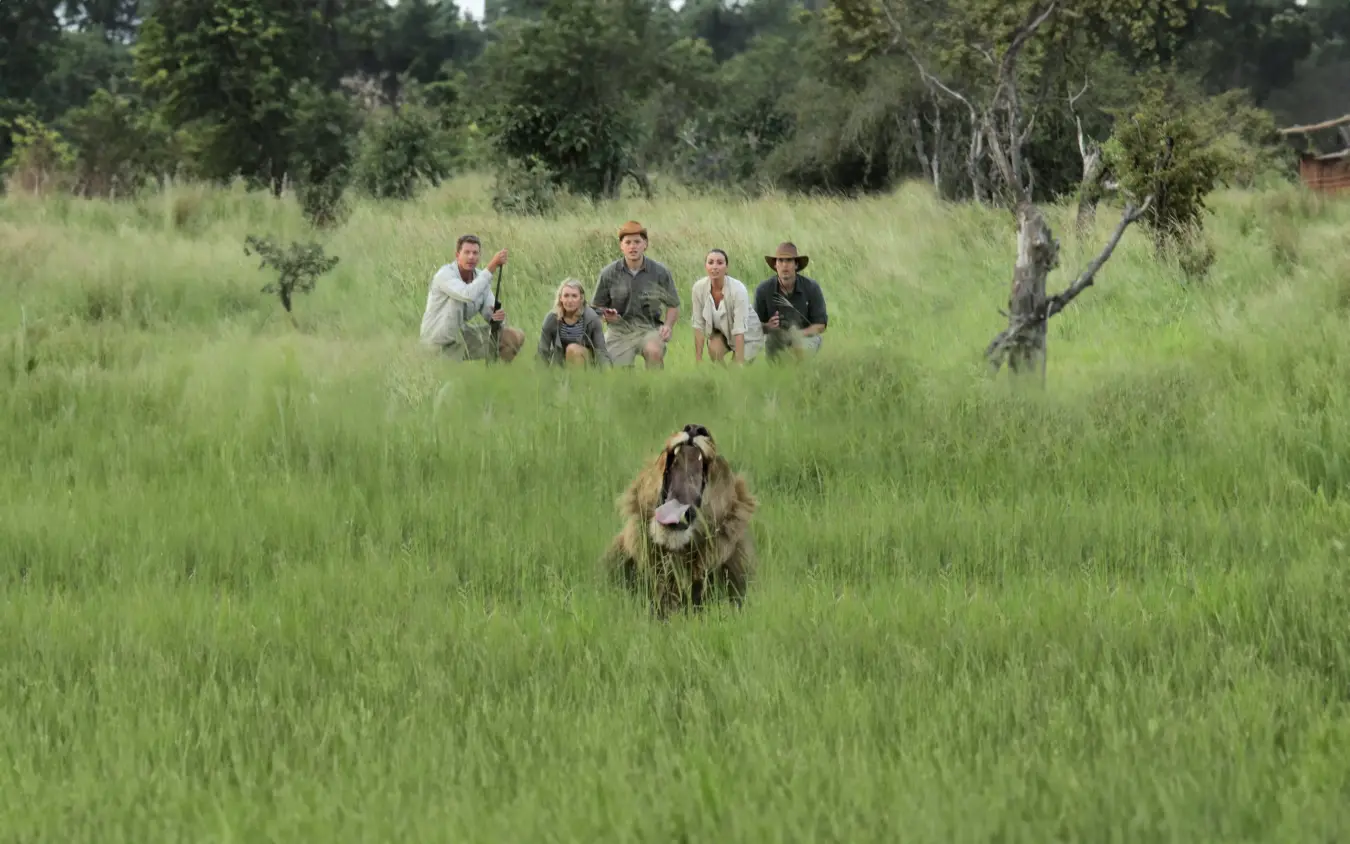
Cross Botswana's wild north from Victoria Falls to the Okavango, tracking wild dog and leopard with a private mobile camp.
rated five stars by our clients

our approach
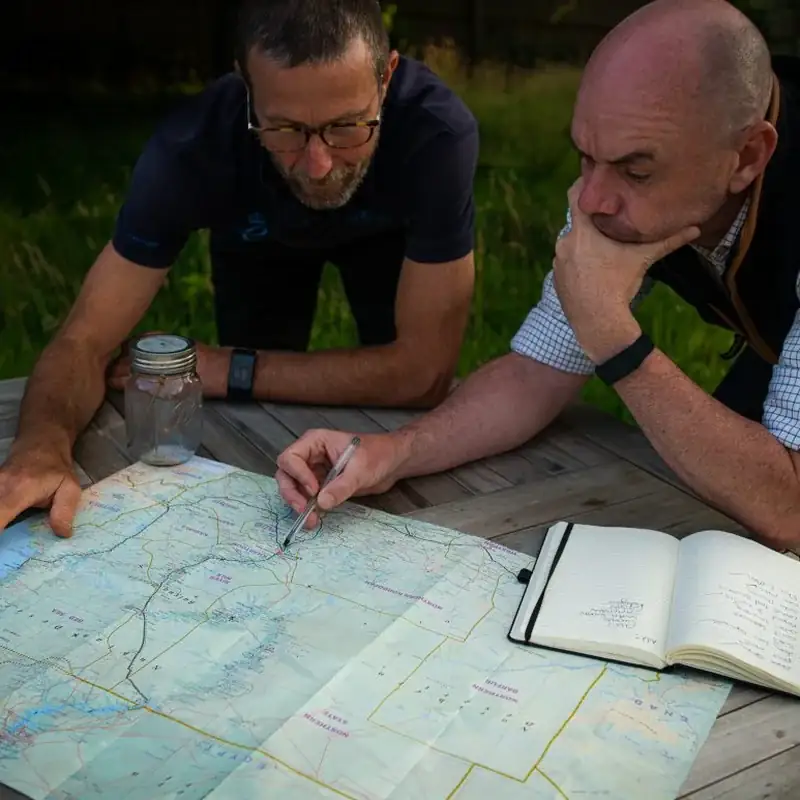
Every journey starts with a conversation. We take the time to understand your vision before we start planning.
Whether by phone or in person, we work with you directly to shape something that is considered, personal, and expertly delivered.
Every journey starts with a conversation. We favour a direct, personal approach: understanding your vision before anything else.
Whether by phone or in person, we work with you directly to shape a journey that is both thoughtfully considered and expertly delivered.
Get in touch to start planning yours.