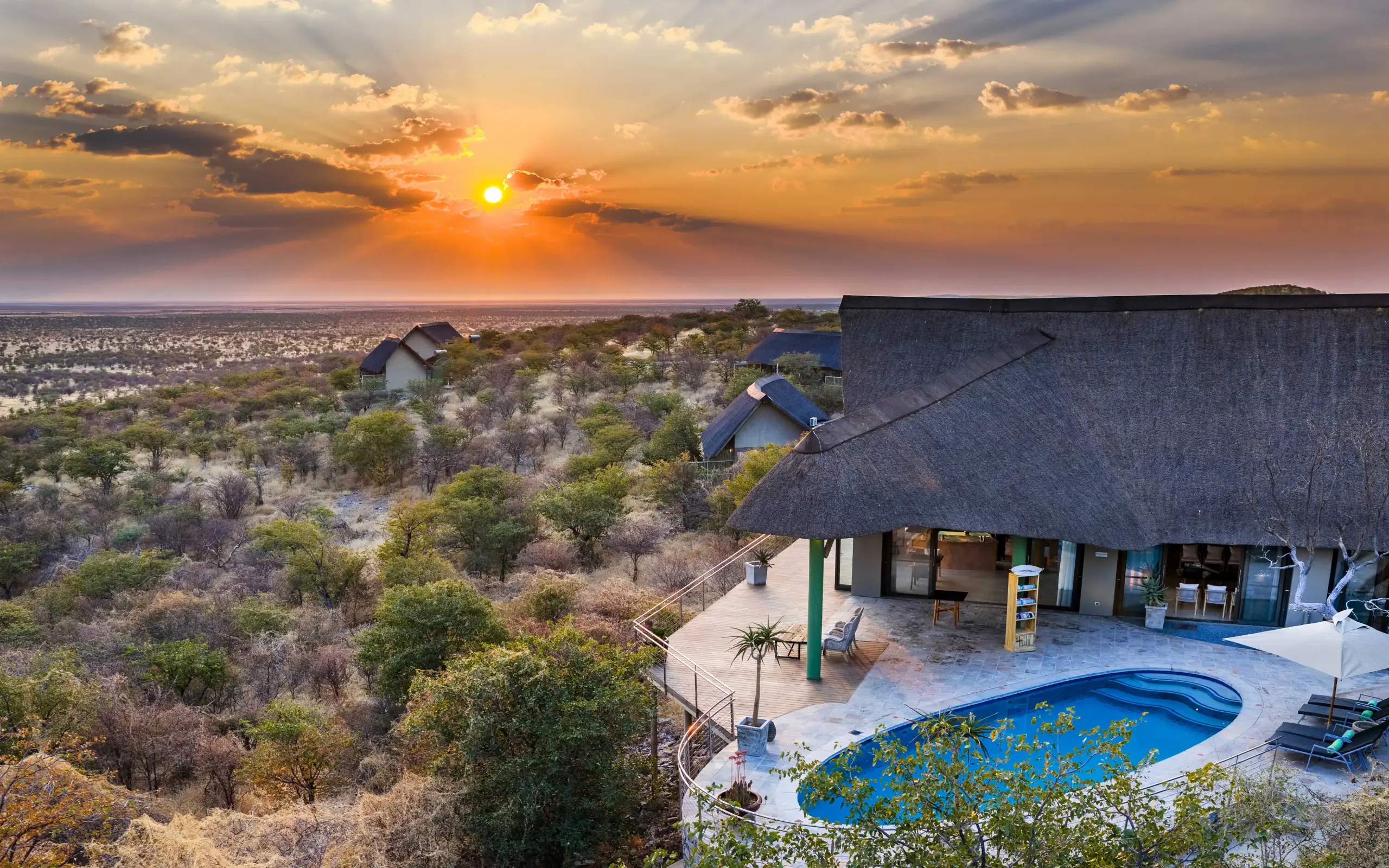
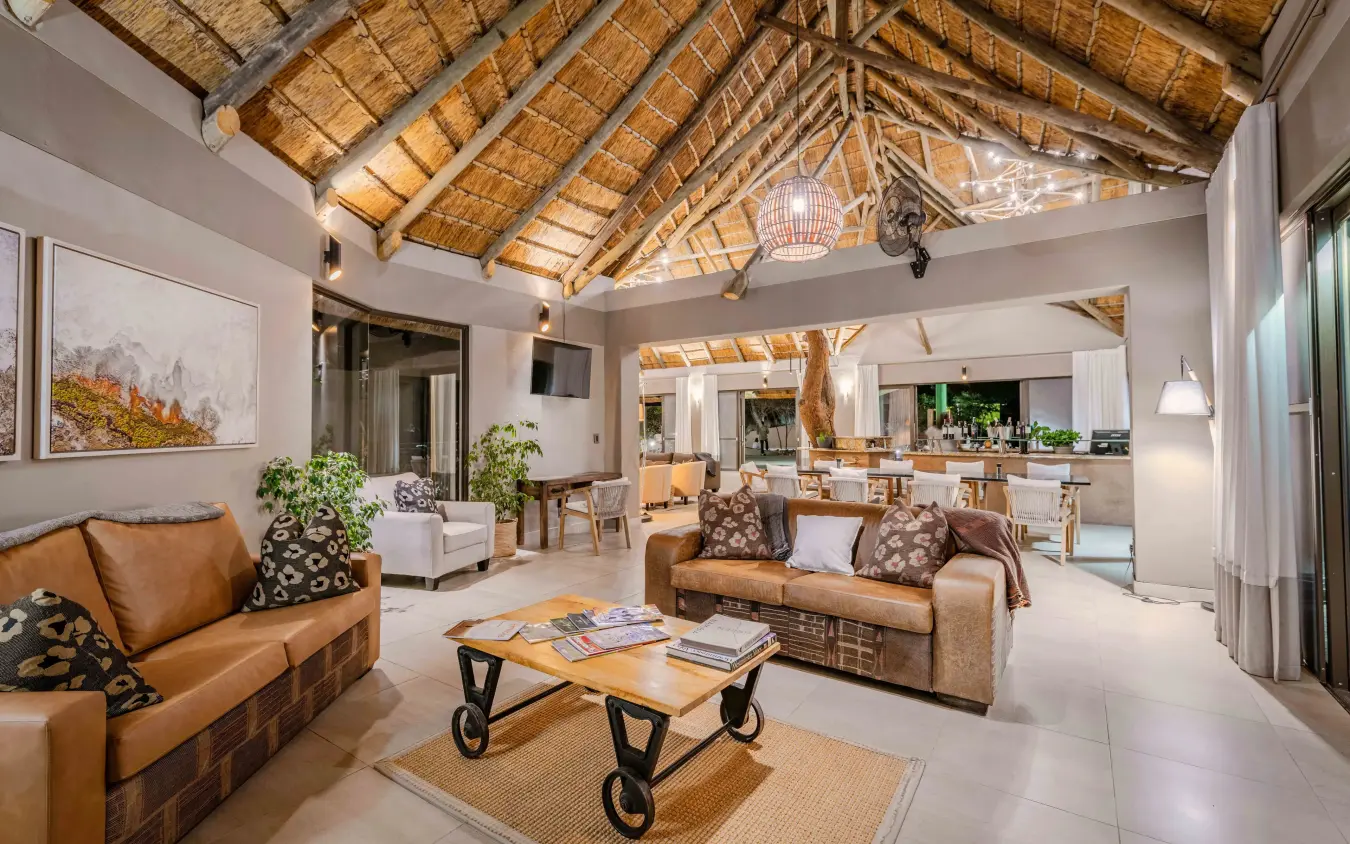
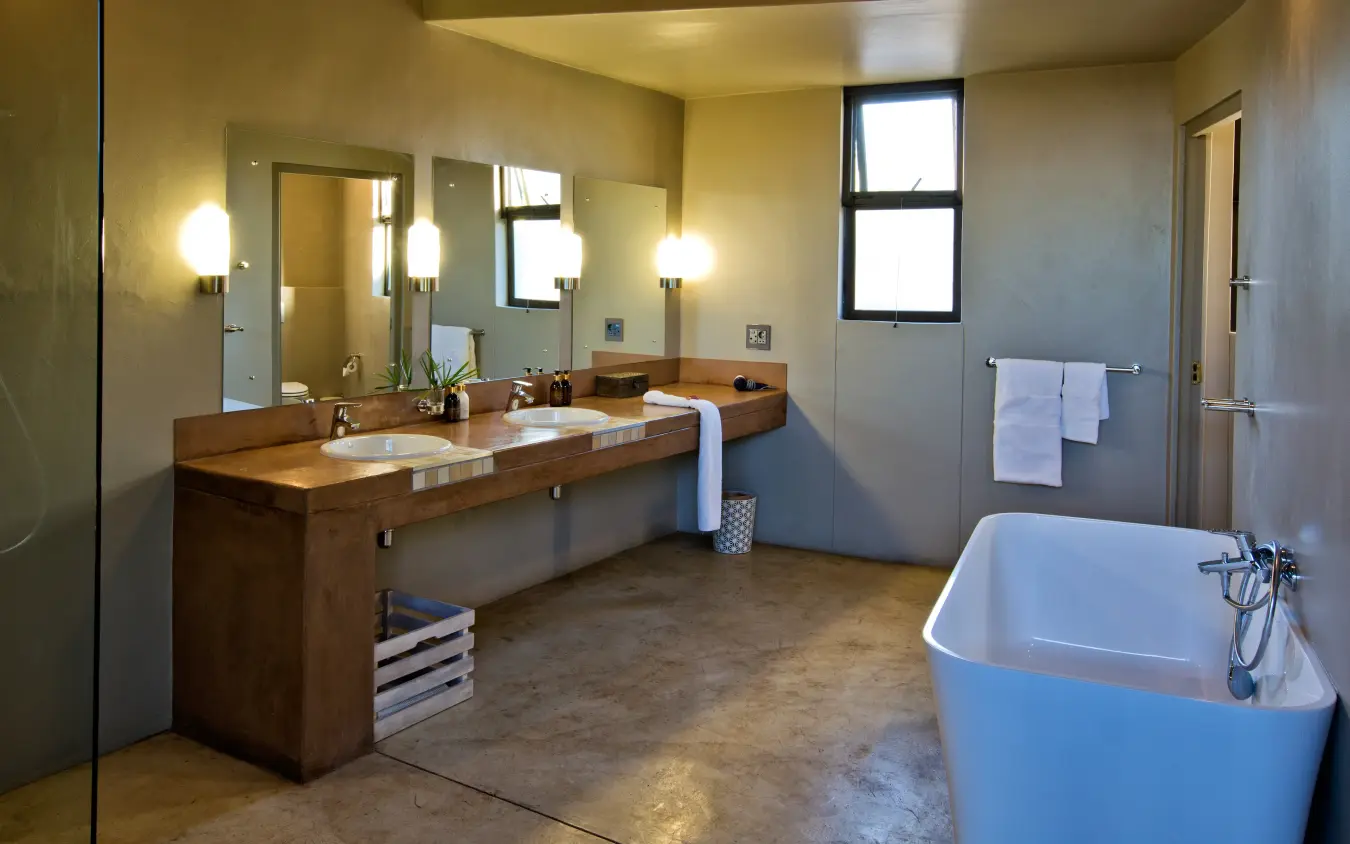
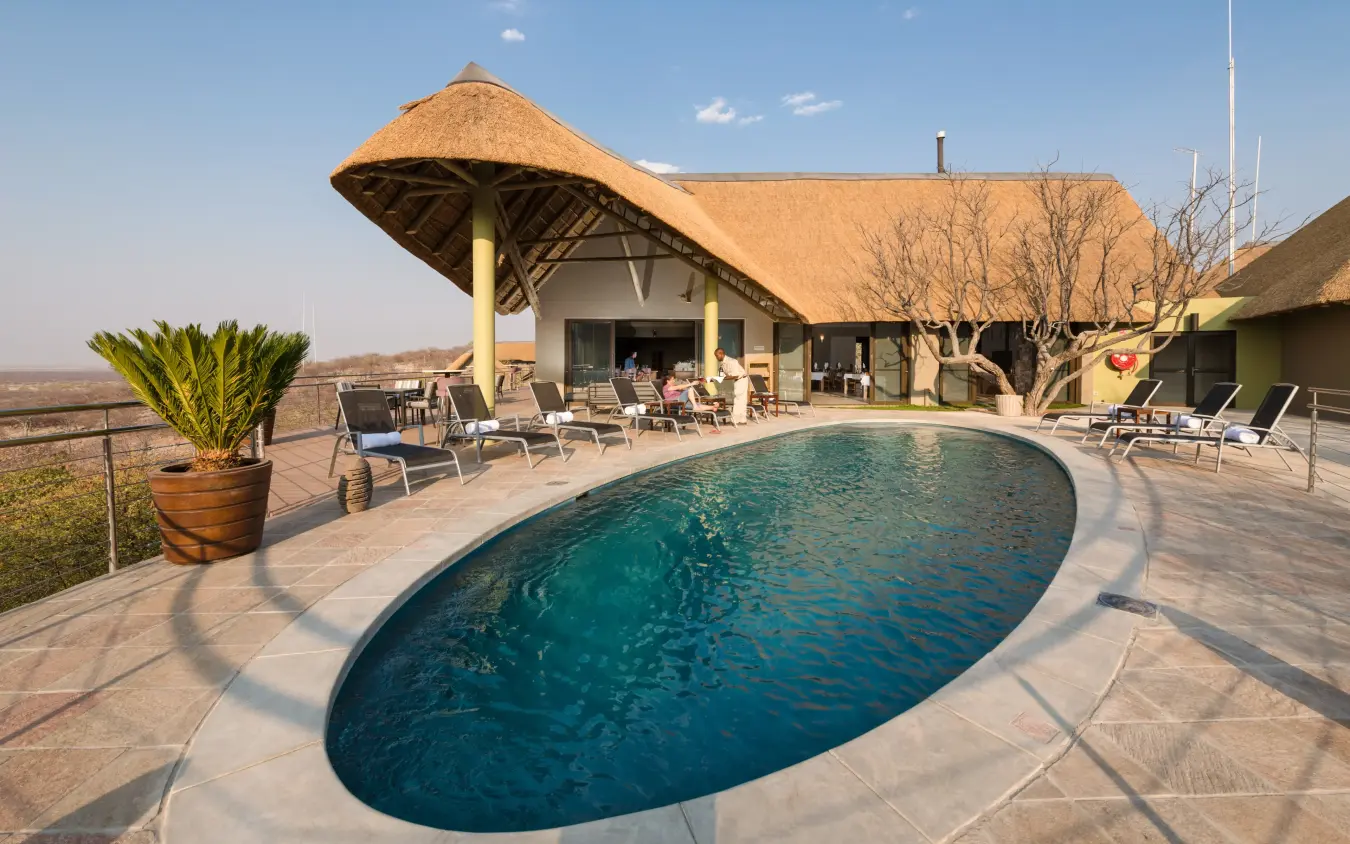
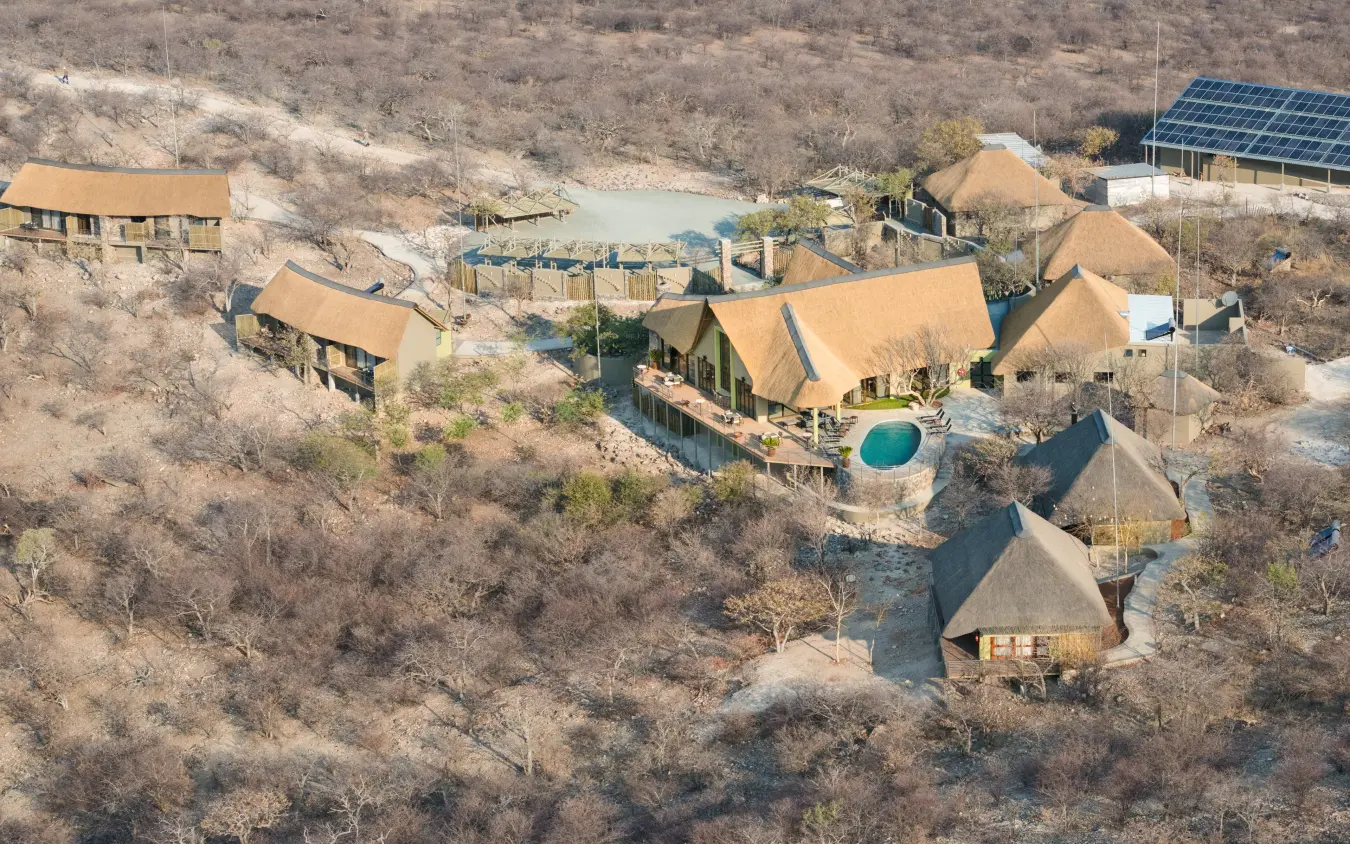
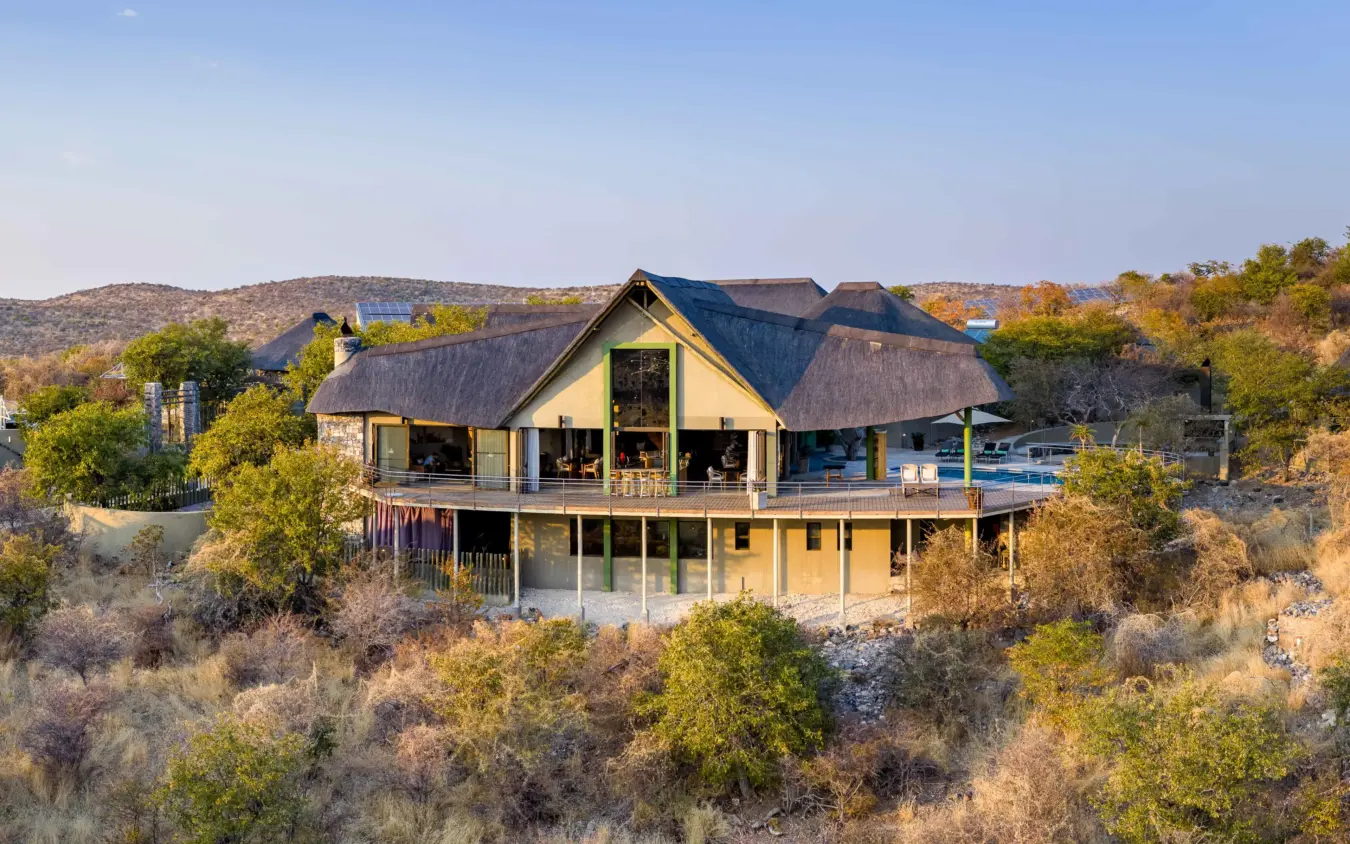
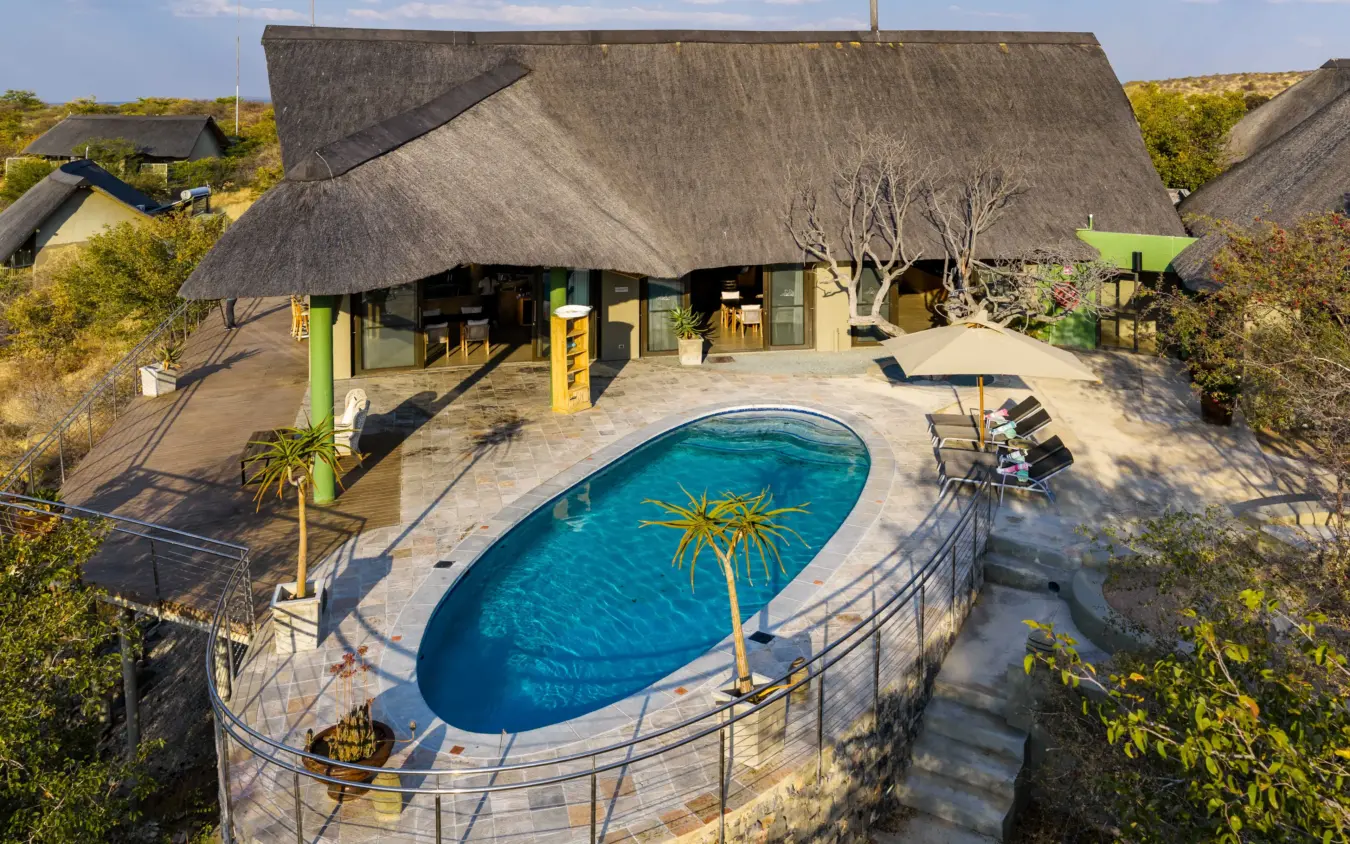
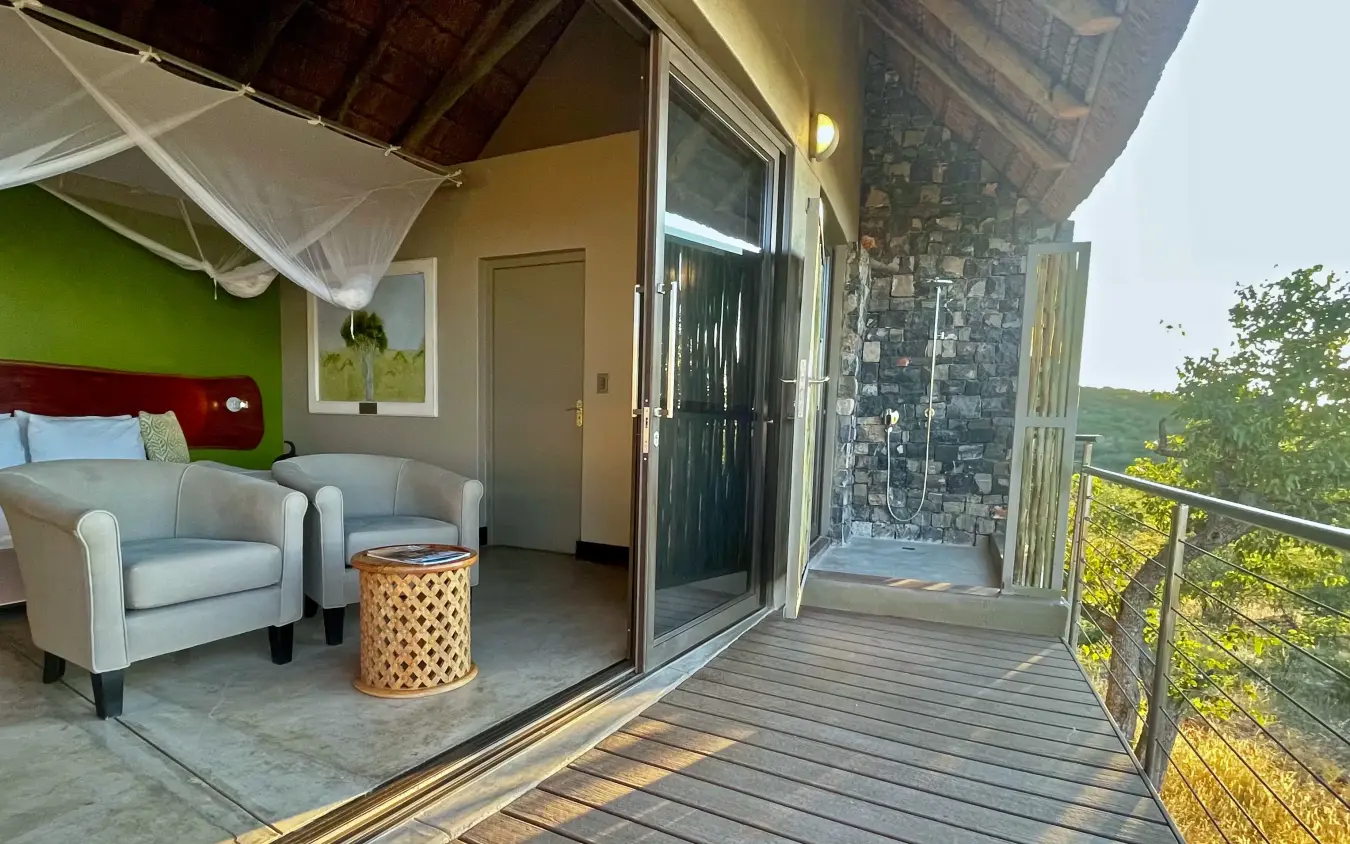
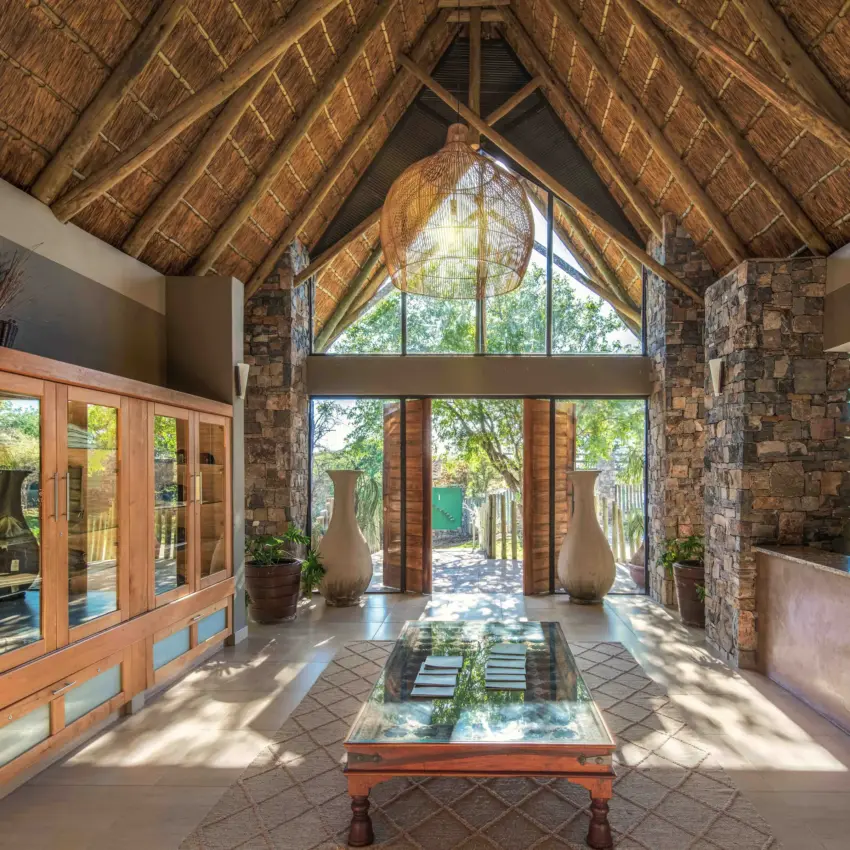
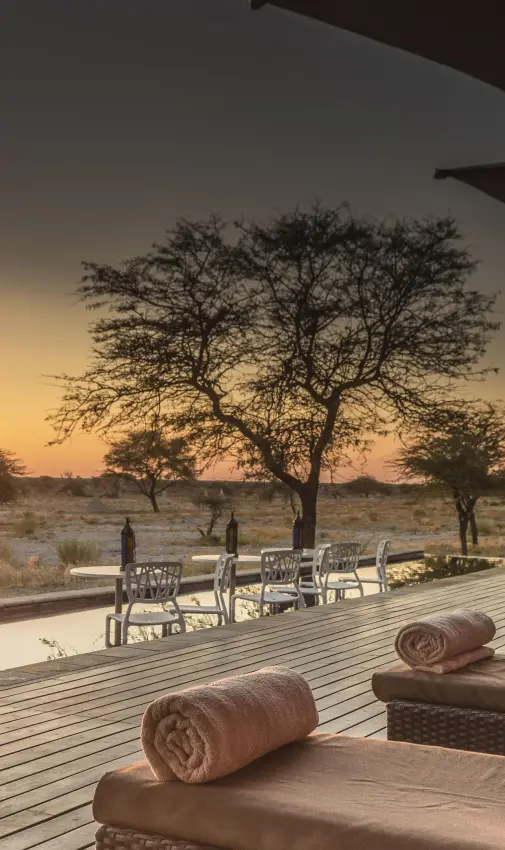
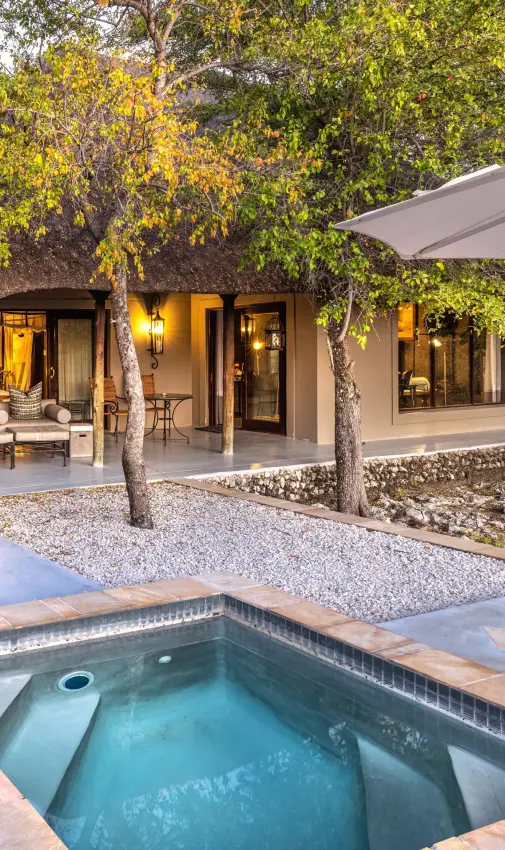
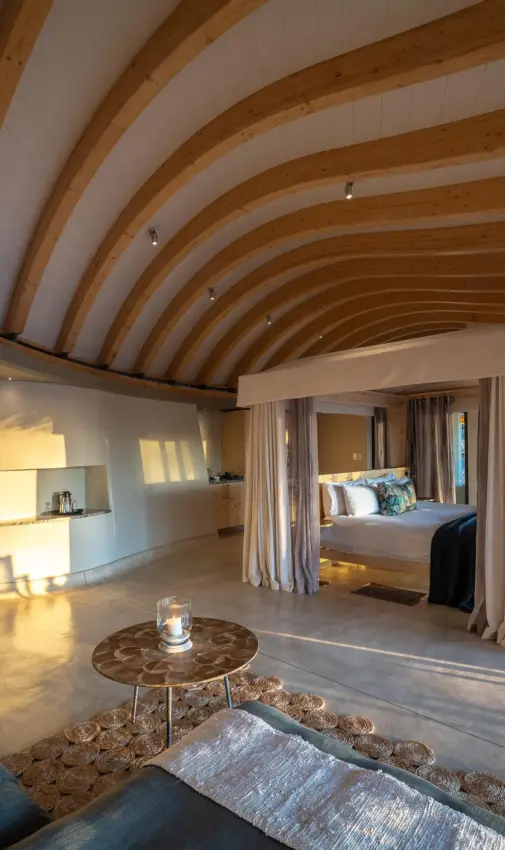
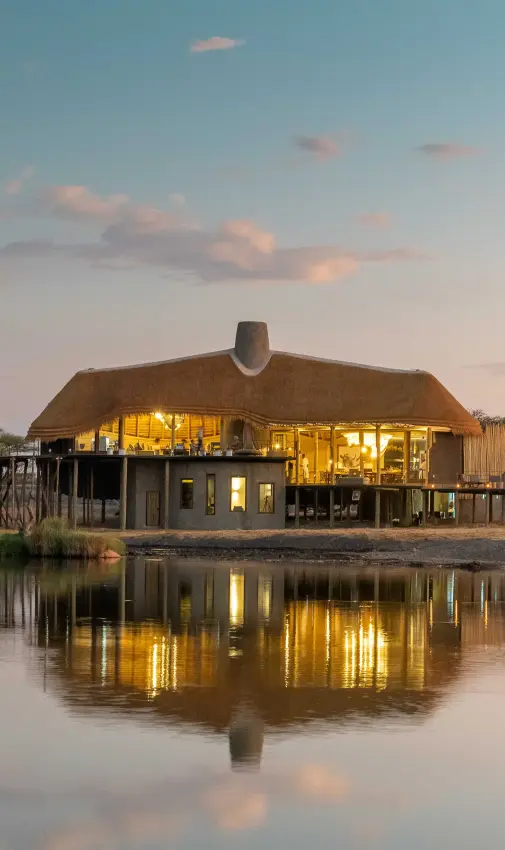
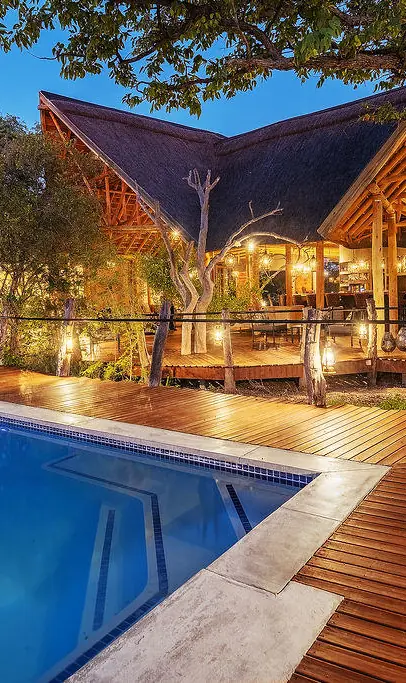
The lodge sits on a raised timber platform, its chalets linked by elevated walkways and its main areas arranged around a 180-degree view of the plains. Under high thatch, rough-hewn stone walls and light earth tones set a pared-back, contemporary tone, furnished with spare wooden pieces rather than heavy safari trappings. A rim-flow pool sits on the hill’s edge. Below it, a sunken, temperature-controlled wine lounge frames the savanna through floor-to-ceiling glass, doubling as a viewing platform when the afternoon heat builds and the animals drift in.
Each of the eleven chalets carries the name of a Namibian tree. The lodge runs on solar power, with generators held in reserve, and its drinking water is drawn from a deep dolomite source beneath the ground and bottled on site. It is a quiet self-sufficiency that suits the place, a house that lives off the hill it stands on.
After dark, the night drives turn up aardvark, bat-eared fox, genet and honey badger
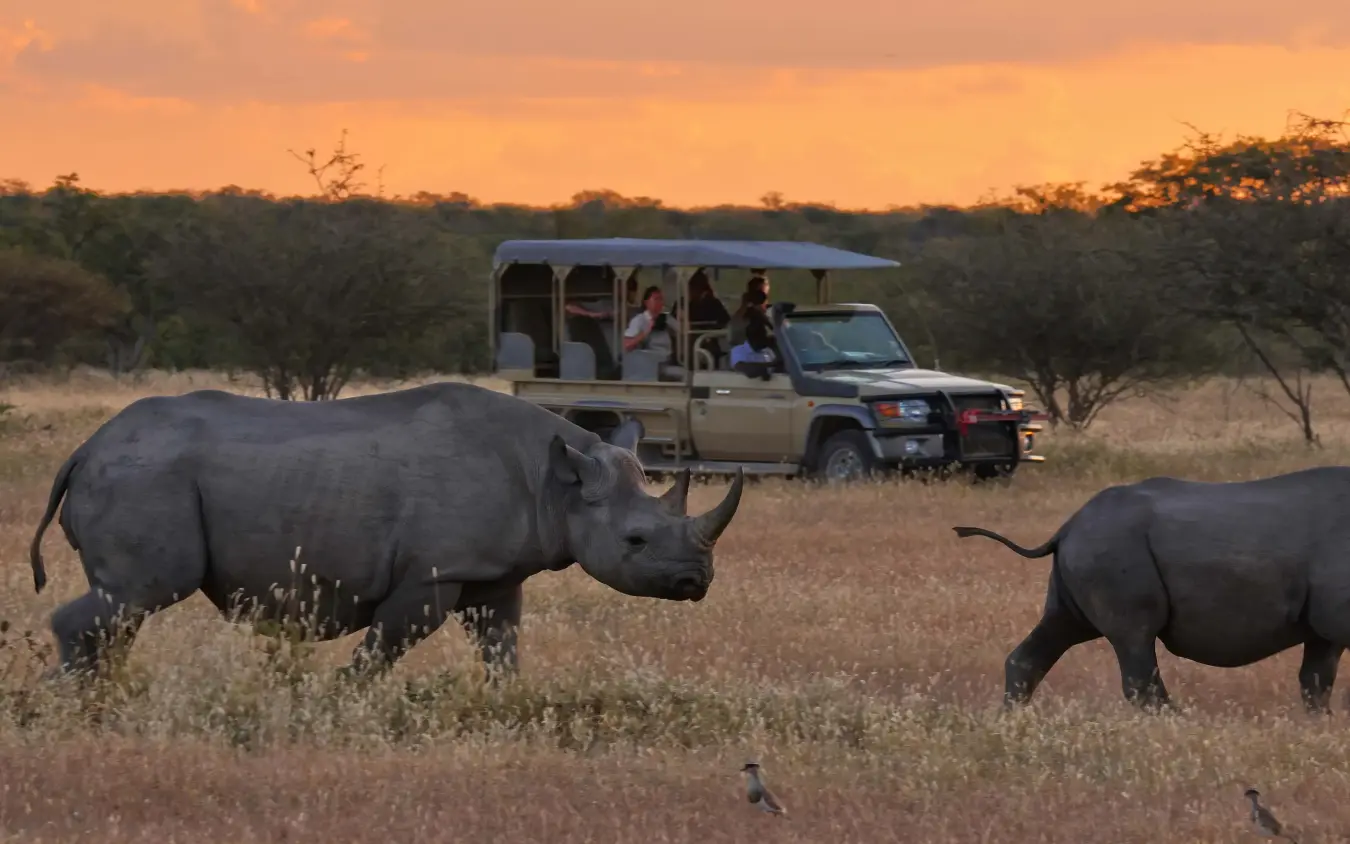
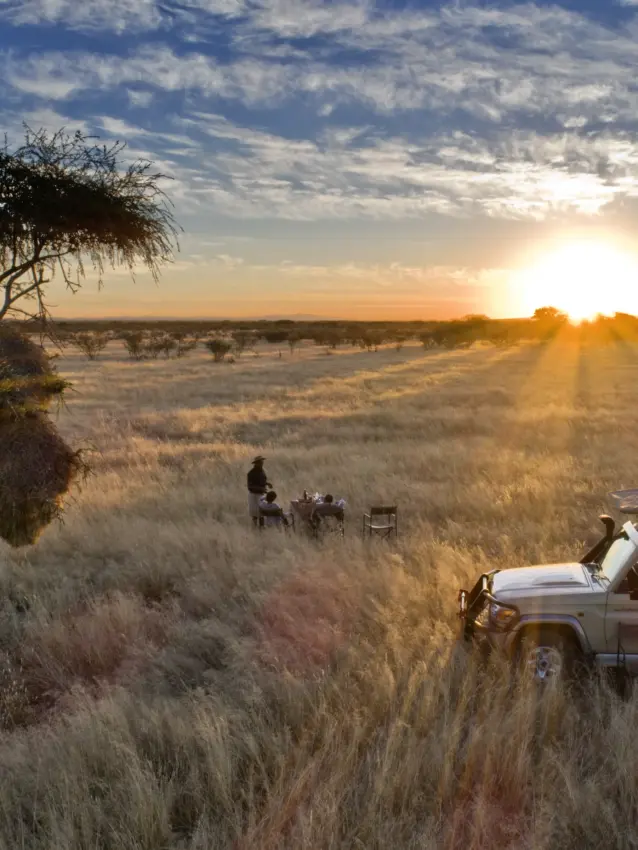
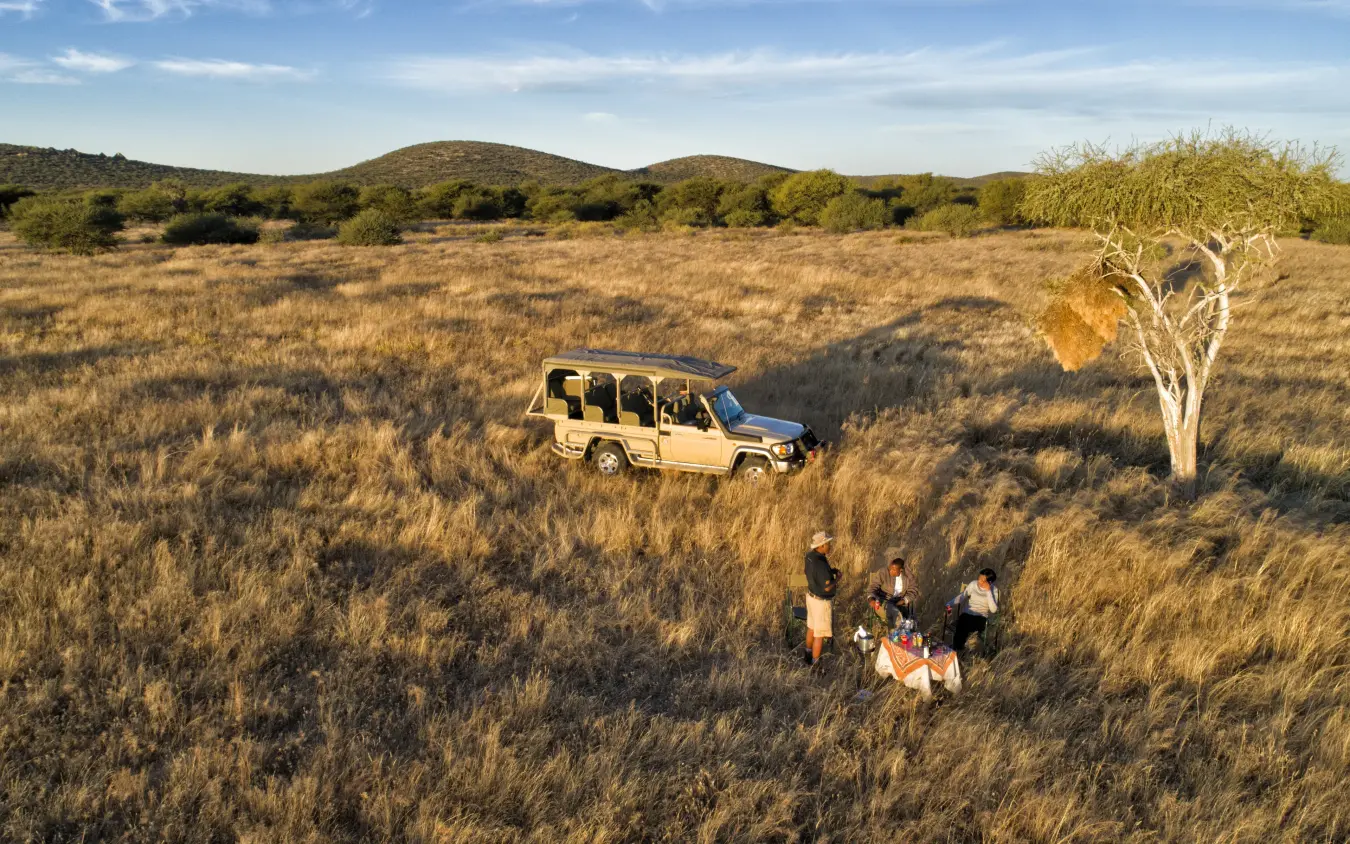
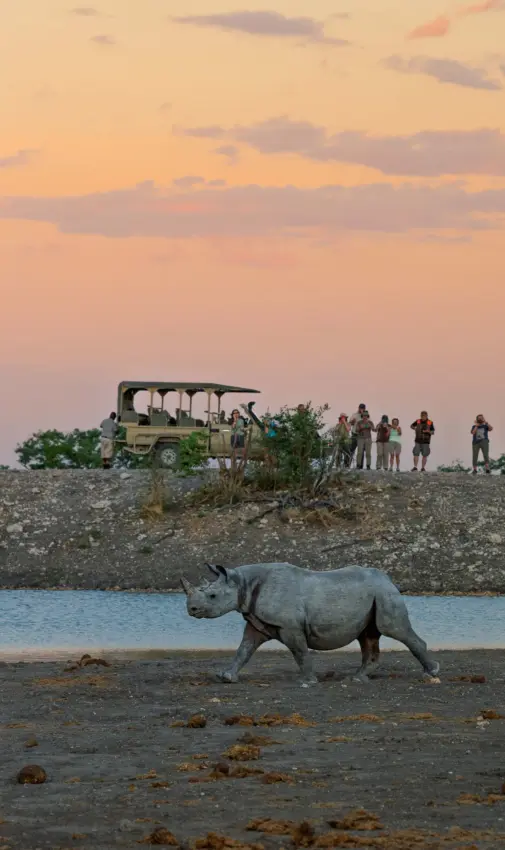
Mornings and afternoons are given over to game drives across ground that changes as you cross it, from dolomite hills to riverine woodland and the edges of the salt pans. After dark, the night drives turn up aardvark, bat-eared fox, genet and honey badger. Guided walks led by armed specialist guides bring the smaller detail of the bush within reach, and full-day trips into Etosha National Park can be arranged for those wanting the pans-and-waterhole scenes of the park proper.
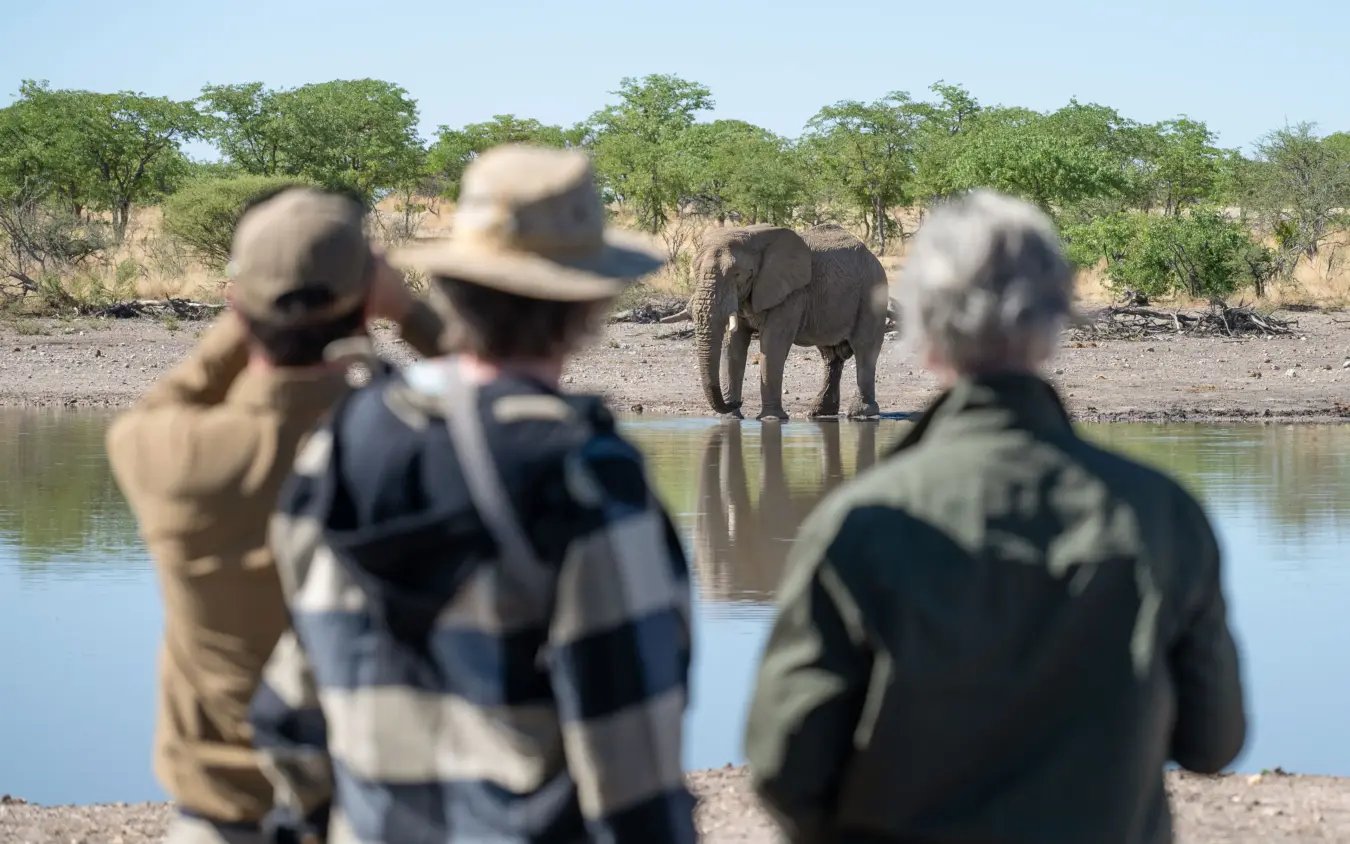
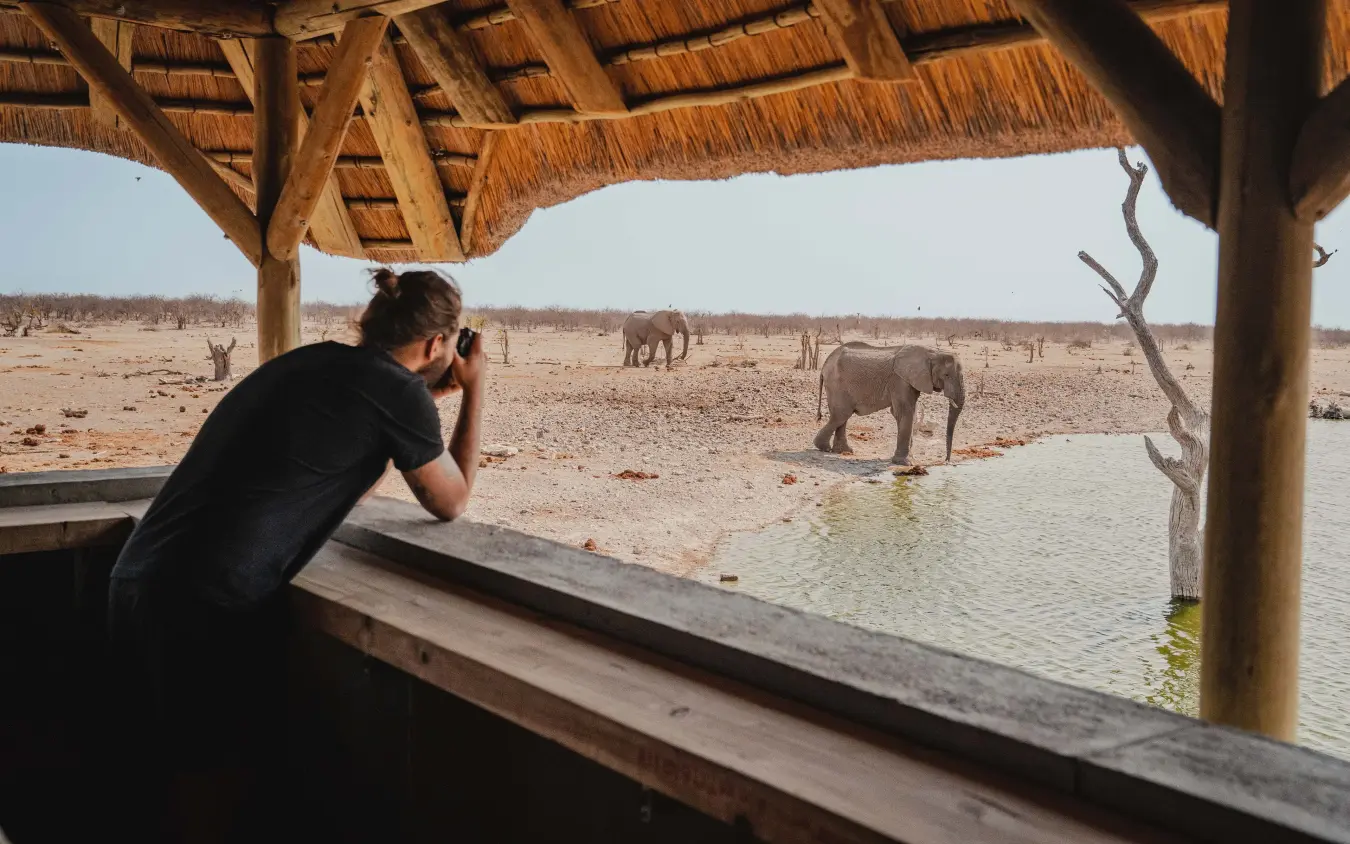
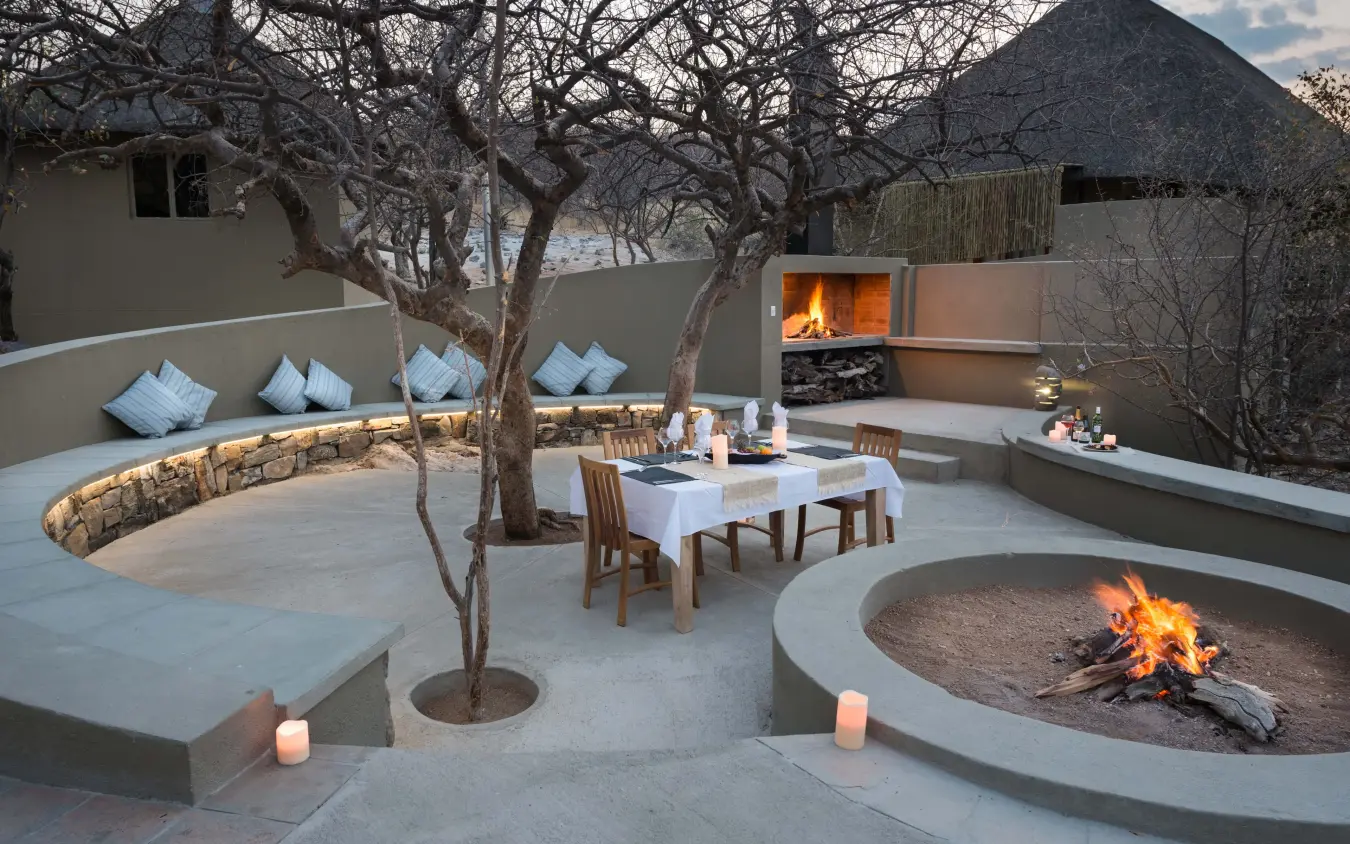
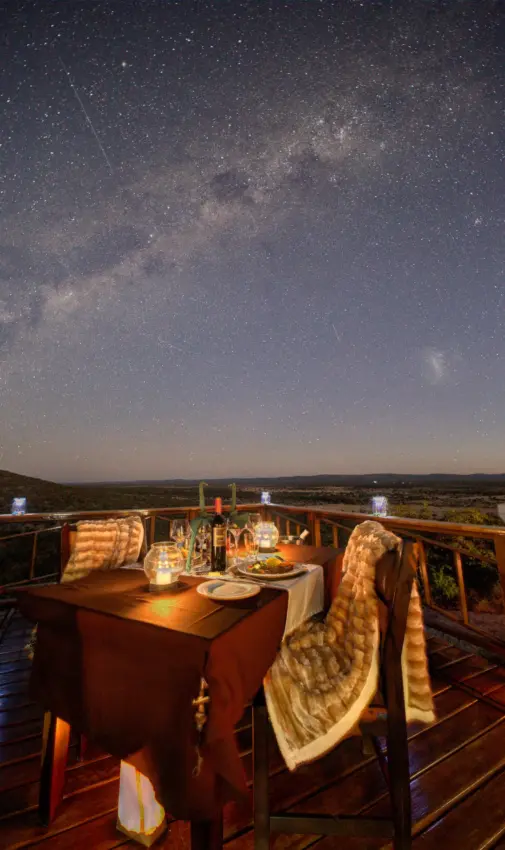
Meals move between the glass-walled dining room, the open viewing deck and the boma around the fire, the cooking hearty and seasonal. Away from the drives, the real pull is the stillness: the rustle of mopane leaves, the distant whoop of a hyena, and the sound of an elephant drawing water up its trunk a few metres from the hide floor. Vegan, vegetarian, halal, gluten-free and dairy-free diets are catered for with notice, and the family suite makes Safarihoek a workable choice for those travelling with children.