Lodge

Encounter by Ongava

Ongava Tented Camp overlooks a floodlit waterhole on a private rhino reserve bordering Etosha National Park, Namibia.

Country: Namibia
Location: Ongava Game Reserve, bordering Etosha
Number of rooms: 8

Rhino at the waterhole, feet away

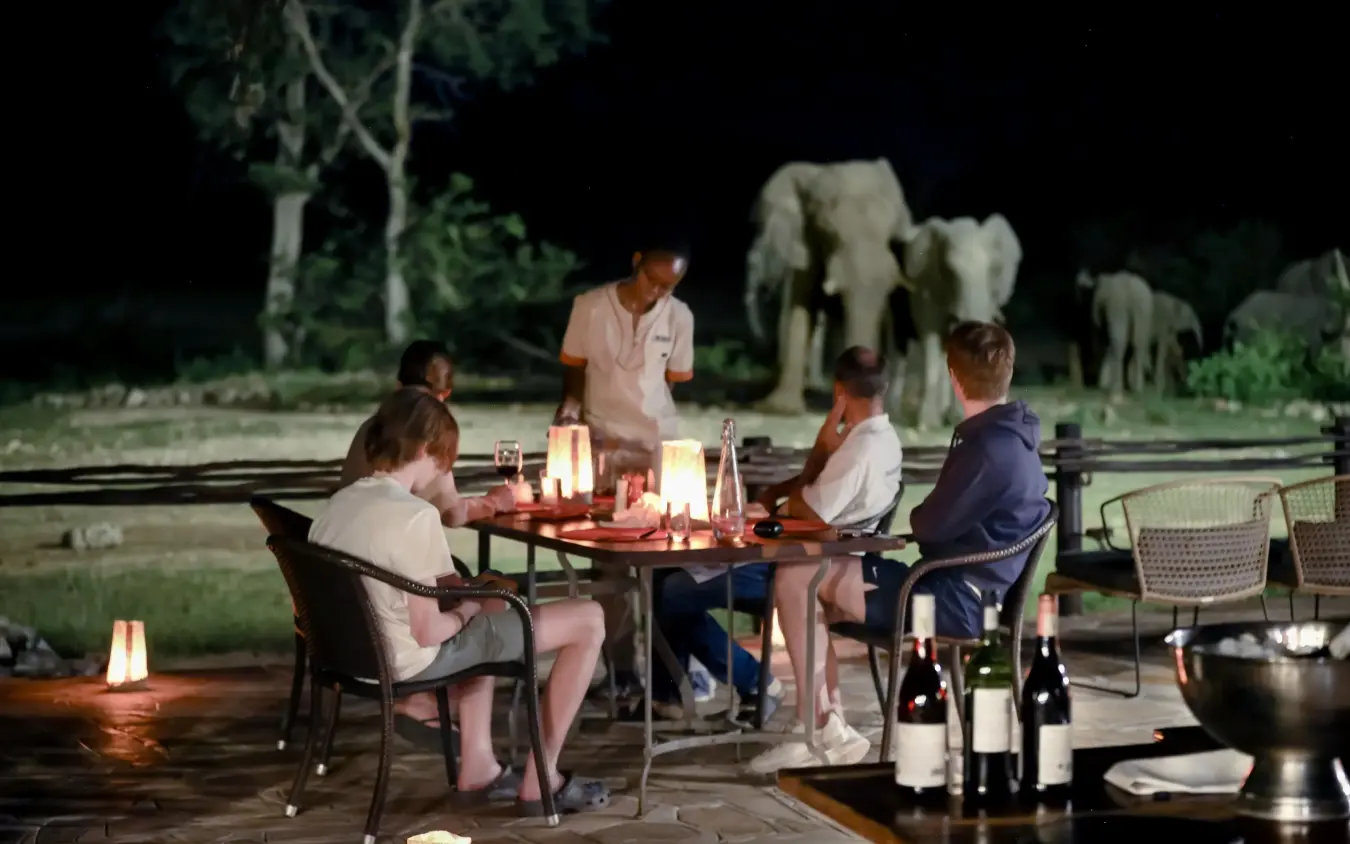
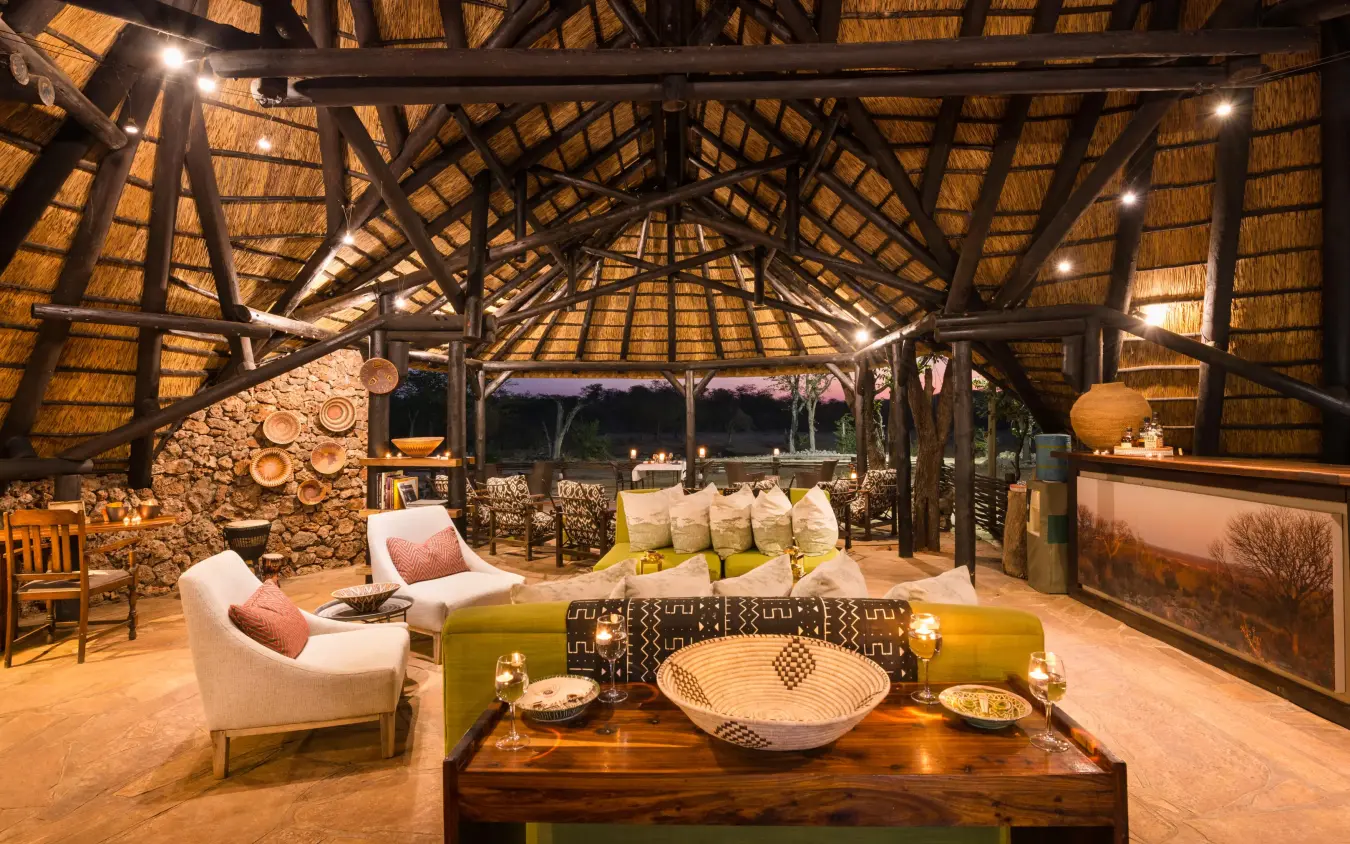
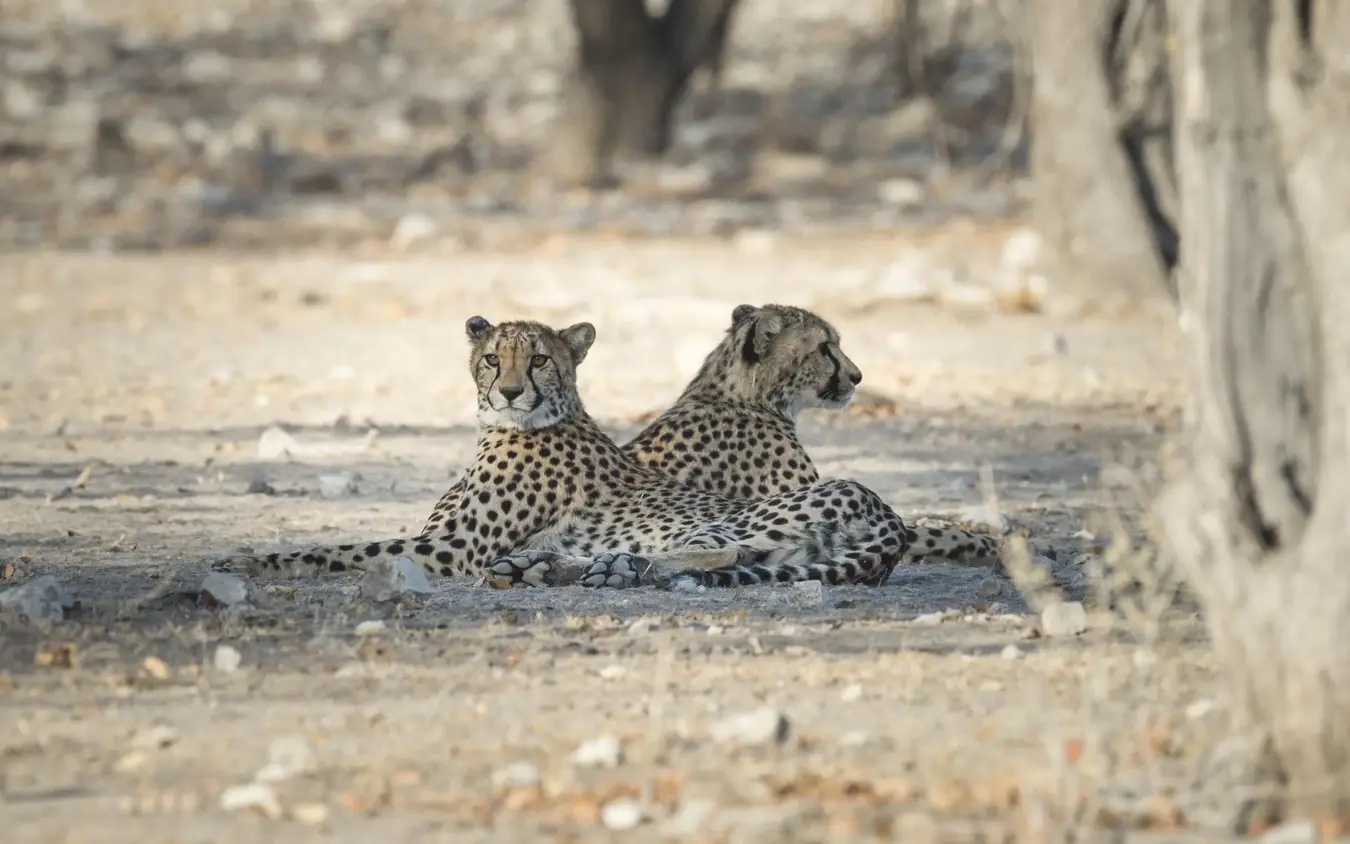
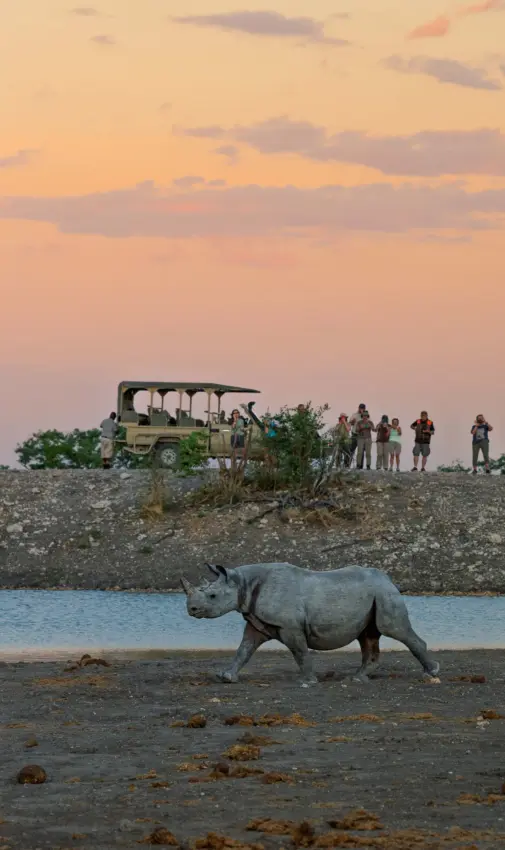
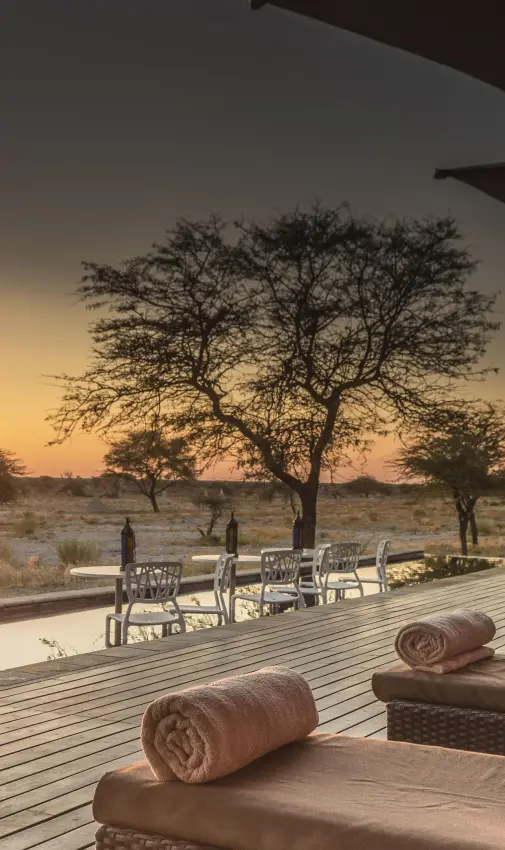
Eight canvas tents draw close to the water in a hidden dolomite valley on the Ongava Game Reserve, a 30,000-hectare private conservancy running along the southern edge of Namibia’s Etosha National Park. Each looks onto a floodlit waterhole set at eye level, where black and white rhino, lion and elephant come and go feet from the deck through the day and long into the night.

Each looks onto a floodlit waterhole set at eye level

The name was earned. White rhino arrived from South Africa in 1993, and black rhino followed from Etosha five years later, under a custodianship agreement with the Namibian government. To see both together is a rarity in Namibia, yet here it is a matter of course. The reserve now breeds its own, raising unrelated founder groups that go on to seed other reserves across the country.
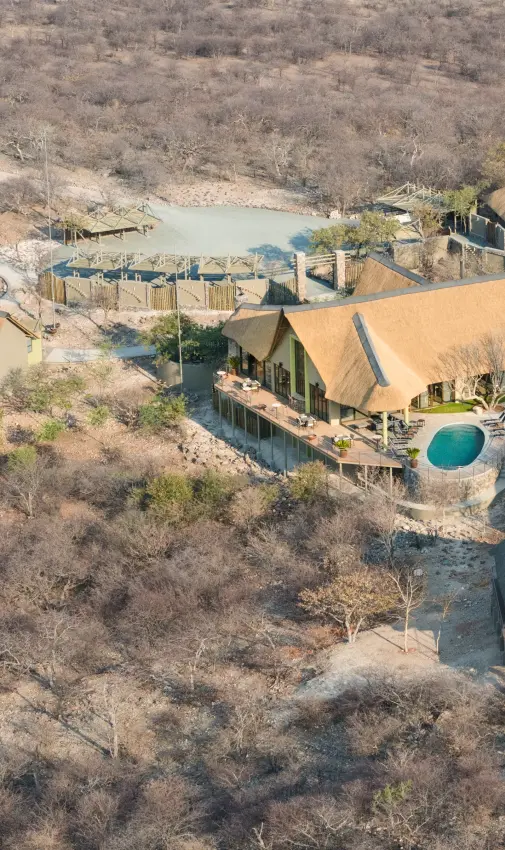
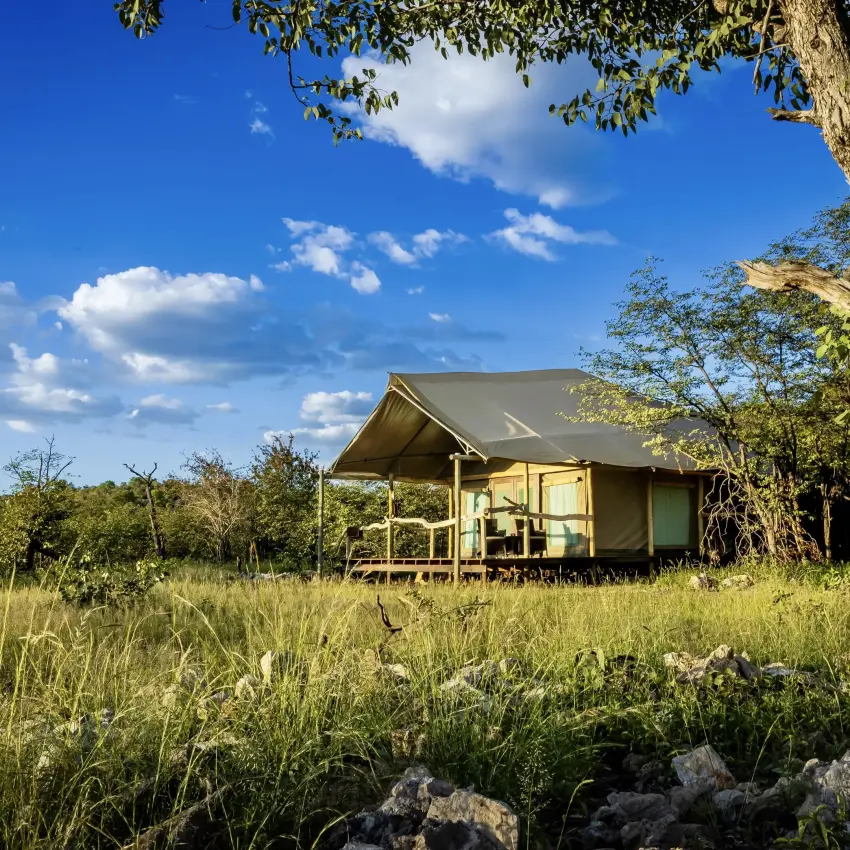
Canvas tent lodge with wooden deck in savanna landscape, Encounter by Ongava, Etosha National Park, Namibia
Elephant viewed from safari lodge deck through trees, Encounter by Ongava, Etosha National Park, Namibia

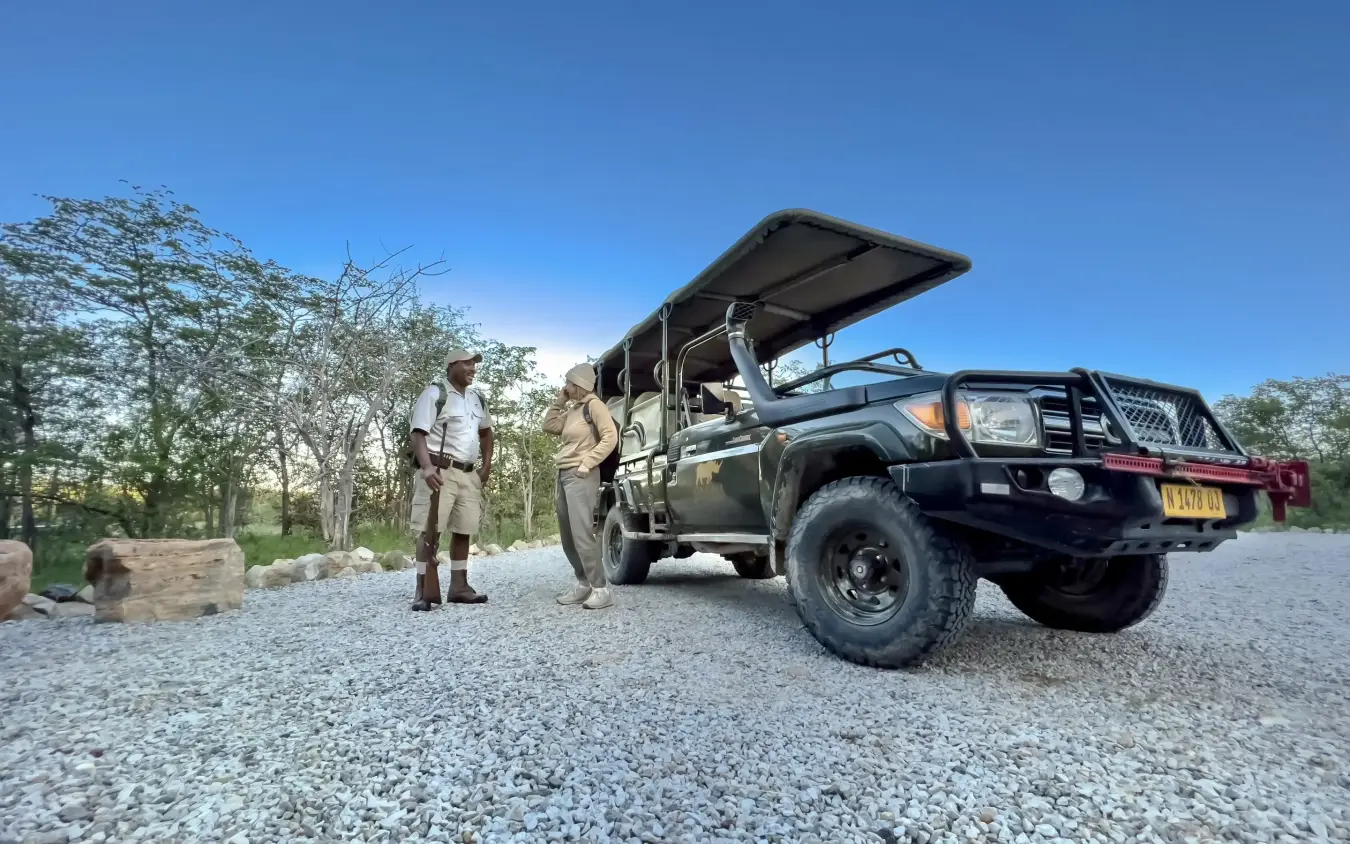
The reserve boundary changes what is possible here. Beyond the reach of national park rules, a guide can take a vehicle out after dark or off the track to reach a sighting, and, more thrillingly, can lead you out on foot. The signature walk tracks white rhino on foot with an armed guide, bringing you to the animal at ground level, on its own terms, rather than from the safety of a vehicle.

The reserve boundary changes what is possible here

Days split between two worlds. Mornings and full days run through Ombika Gate into Etosha, out toward the Okaukuejo waterholes and the pan’s great herds of springbok, zebra and giraffe. Back on Ongava the pace slows to walks through Mopane woodland and long hours in the hide, until dinner is interrupted by rhino arriving silently under the floodlights, meters away.

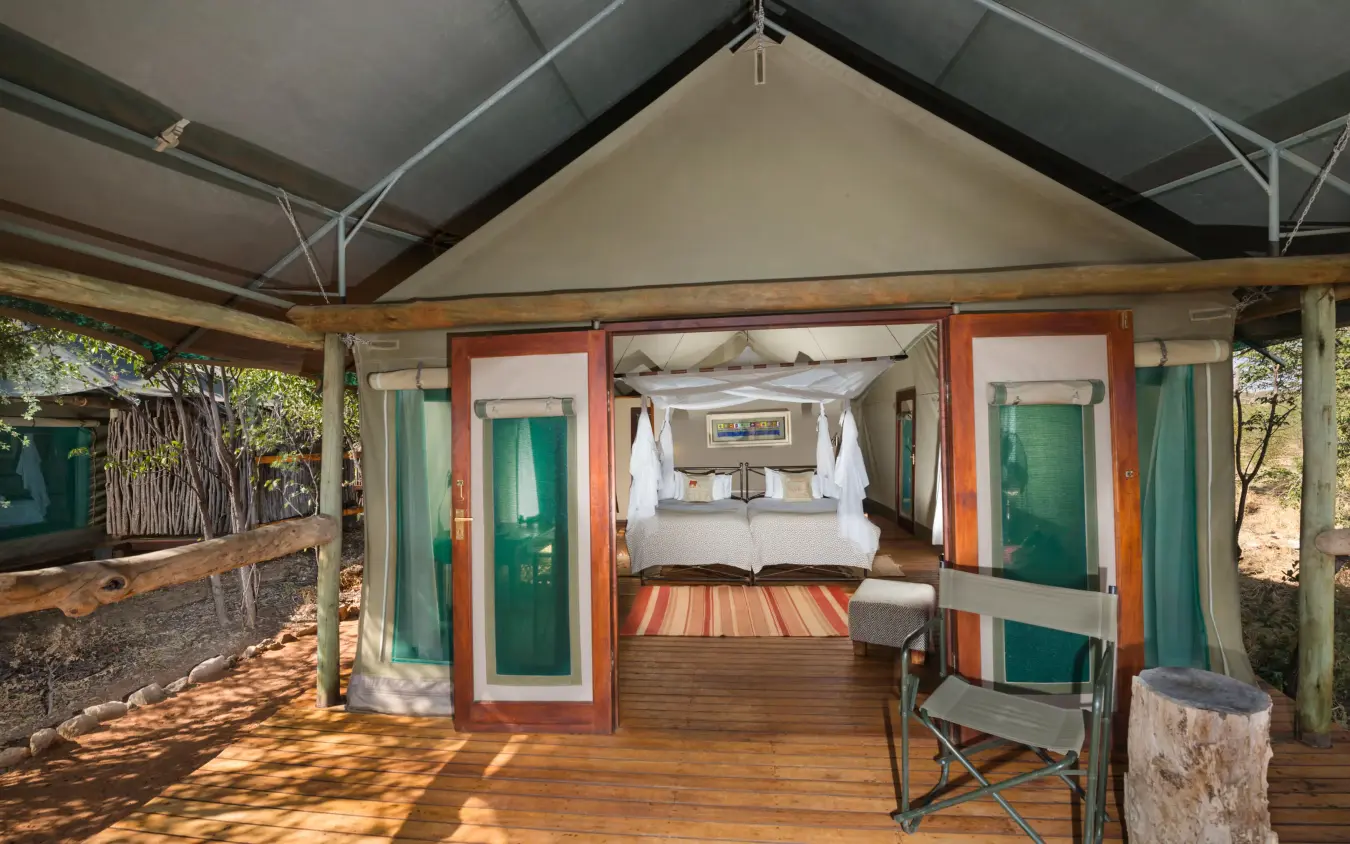
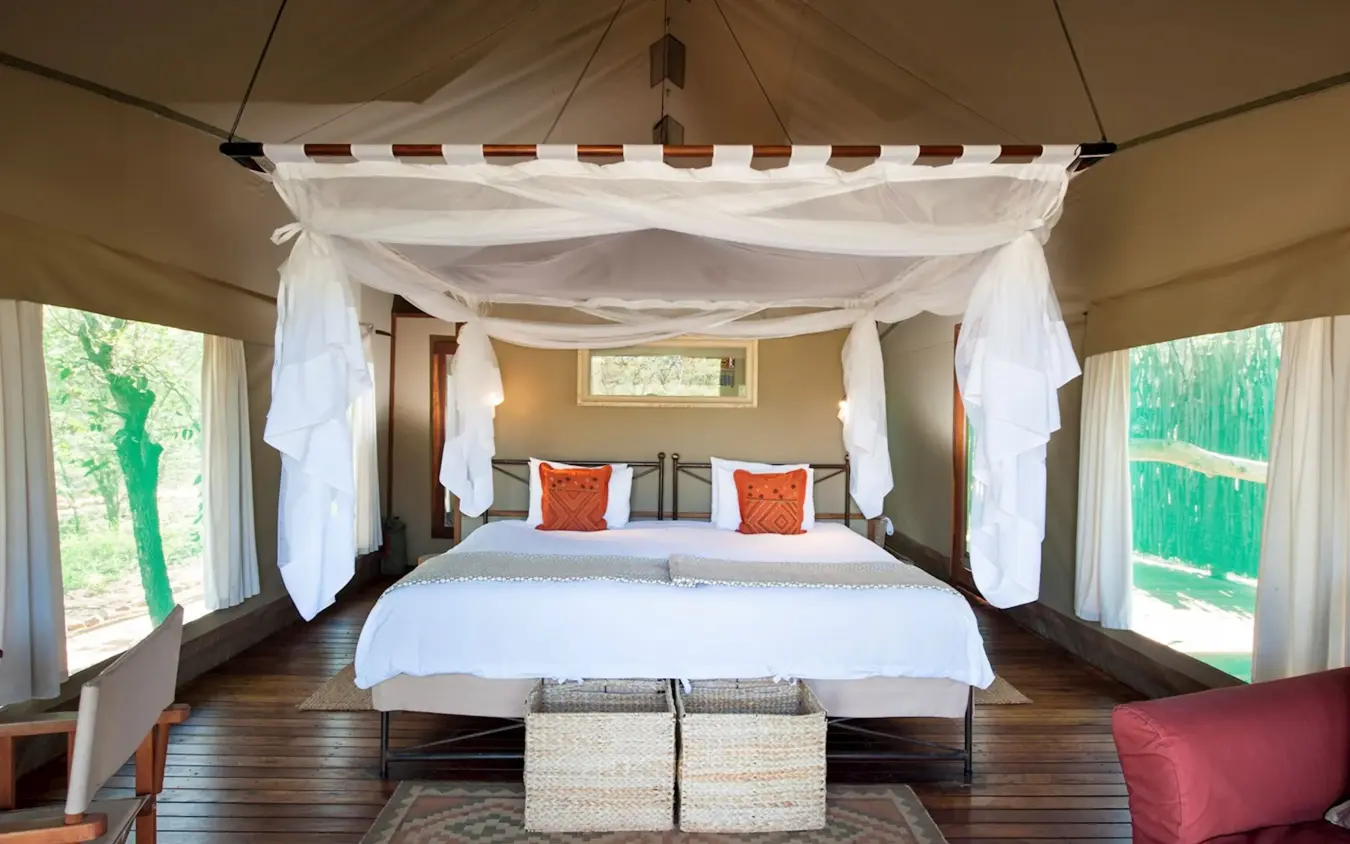
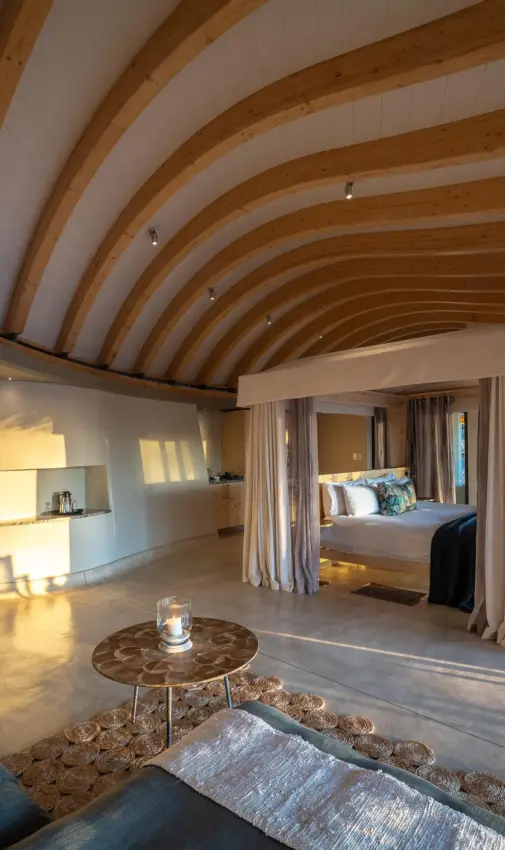
Spacious safari tent bedroom with four-poster bed and seating, Encounter by Ongava, Etosha National Park, Namibia 01

accommodation

Eight Meru-Style Tents on Wooden Decks

Eight Meru-style tents on raised wooden decks under thatch, with canvas walls and en-suite bathrooms. Seven sleep couples or friends; one dedicated family unit links two tented rooms by a raised walkway, each with its own bathroom and entrance, sleeping four. Large double doors open toward the floodlit waterhole and Mopane woodland.

Safari vehicle observing two rhinoceroses in natural habitat, Encounter by Ongava, Etosha National Park, Namibia 02

activities

Rhino Tracking on Foot and Etosha Game Drives

On the private Ongava reserve: day and night game drives, off-road driving to reach sightings, guided walking safaris, and rhino tracking on foot with an armed guide. Game drives into Etosha National Park run through Ombika Gate to the Okaukuejo waterholes, with full-day excursions and picnic lunches available. Waterhole hide time and birding round out the days.

Three guides examining animal tracks in dry savanna landscape, Encounter by Ongava, Etosha National Park, Namibia 03

conservation

Black Rhino Custodianship and Carnivore Research

The privately funded Ongava Research Centre drives the reserve's science, including custodianship of Namibia's black rhino and a white rhino breeding programme supplying unrelated founder groups to other reserves. The Greater Etosha Carnivore Programme studies the reserve's lion and leopard populations. Ongava employs people from surrounding communities.

ready to get started?

Get in touch and let’s start the conversation. An initial consultation helps us understand what you’re looking for, whether that’s specific experiences, luxury touches, or marking a special occasion, and from there we’ll guide you through what’s possible so you can decide if we’re the right fit.

Alternative accommodation in etosha national park

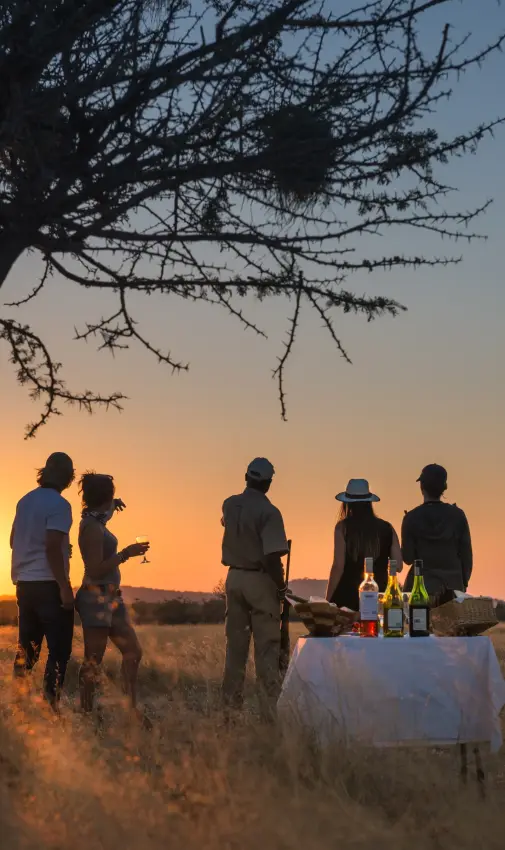
Group gathered at table under acacia tree at sunset in savanna grassland, Horizon by Ongava, Etosha National Park, Namibia 01

Horizon by Ongava

Etosha National Park

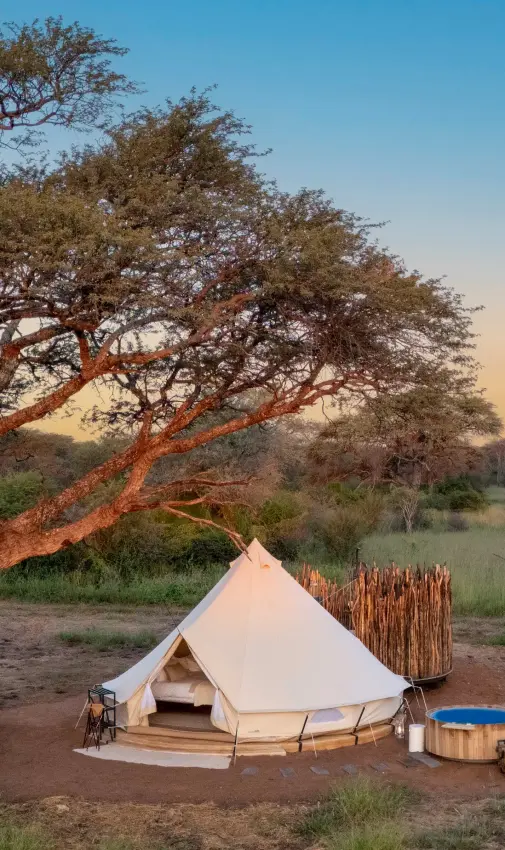
Luxury bell tent camp under acacia tree at sunset, Onguma Trails Camp, Etosha National Park, Namibia 02

Onguma Trails Camp

Etosha National Park

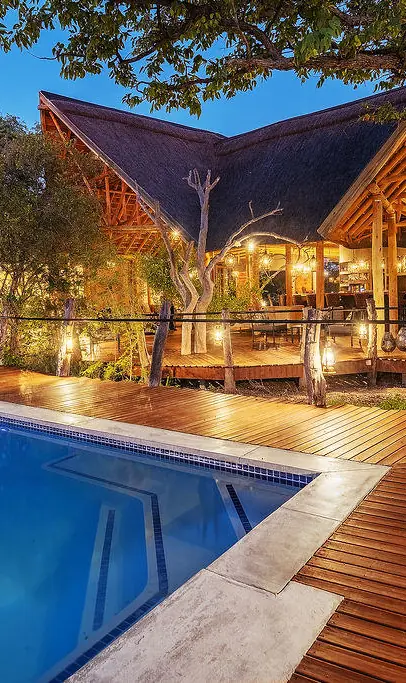
Luxury lodge with thatched roof and pool overlooking vast savanna landscape at sunset, Safarihoek Lodge, Etosha National Park, Namibia 03

Safarihoek Lodge

Etosha National Park

04

Etosha Mountain Lodge

Etosha National Park

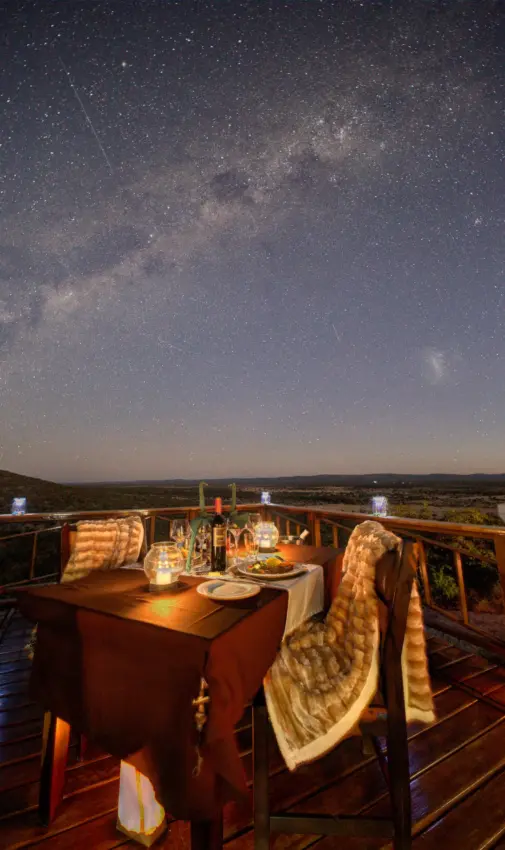
Dining deck with wooden beams overlooking grassland at dusk, Ongava Lodge, Etosha National Park, Namibia 05

Ongava Lodge

Etosha National Park

Luxury lodge with thatched roof reflected in waterhole at dusk, Onguma Camp Kala, Etosha National Park, Namibia 06

Onguma Camp Kala

Etosha National Park

Courtyard with firepit, seating, and acacia tree at dusk, Safari House, Etosha National Park, Namibia 07

Safari House

Etosha National Park

08

Anderssons at Ongava

Etosha National Park

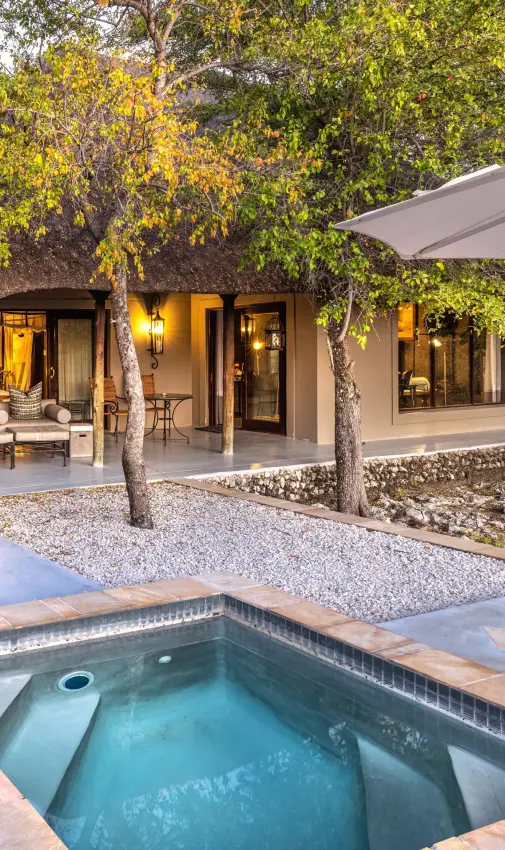
Spa pool and lounge area with trees and illuminated accommodation at dusk, Villa Mushara, Etosha National Park, Namibia 09

Villa Mushara

Etosha National Park

Illuminated swimming pool with wooden deck and thatched lodge building at dusk, Etosha Oberland Lodge, Etosha National Park, Namibia 10

Etosha Oberland Lodge

Etosha National Park

Wooden deck overlooking savanna at sunset with acacia trees, Onguma The Fort, Etosha National Park, Namibia 11

Onguma The Fort

Etosha National Park

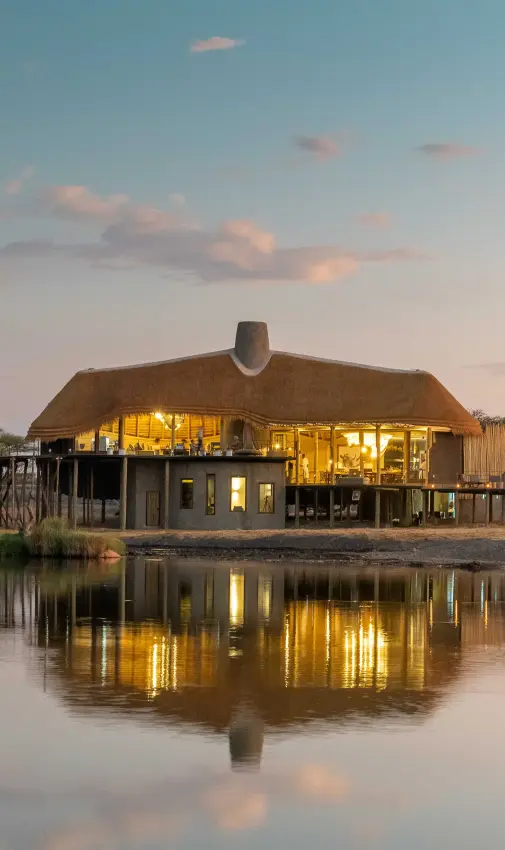
Riverside lodge with illuminated buildings reflected in waterhole at dusk, Onguma Tented Camp, Etosha National Park, Namibia 12

Onguma Tented Camp

Etosha National Park

frequently asked questions

Etosha is one of the easier parts of Namibia to reach. You arrive into Windhoek at Hosea Kutako International, and from there it is either a light aircraft charter from Eros airport of around an hour to an hour and a half onto the reserve's own airstrip, or a self-drive of roughly four and a half to five and a half hours, most of it on tarred road.

The camp sits on the private Ongava reserve along Etosha's southern boundary, reached through Ombika Gate, and the reserve has its own airstrip. If you would like the aircraft to yourselves, we can arrange the charter privately, typically a Cessna Caravan or Pilatus PC-12, timed to your international arrival. We will set up whichever suits your wider route and build the connecting flight in where it helps.

Etosha carries a low to moderate, seasonal malaria risk. It sits in Namibia's north, where the risk rises in the warm, wet summer, roughly November to April, and falls away in the dry winter months of June to September, when most people visit and there is little standing water for mosquitoes.

Because the picture shifts from year to year, we suggest checking the current advice with a travel clinic or your doctor before you come, and taking the usual precautions against bites after dark.

Etosha runs hot by day and cool to cold at dawn and after dark, especially in winter. Daytime in the shoulder months can climb well into the thirties, while early game drives in June to August call for something genuinely warm.

Bring light, breathable clothes for the heat and dust, then layers you can add for cold mornings, a fleece or jacket, a hat and sunglasses. Sun protection matters year round out on the open pans.

The camp has a dedicated family unit that links two tented rooms by a raised walkway and sleeps four. Children are welcome but must share with an adult, and where there are younger children, under about twelve, the reserve asks for a private vehicle on activities.

The signature walk, tracking rhino on foot with an armed guide, carries a minimum age of sixteen. Let us know the ages and we will set up the family tent and any private guiding.

Yes. The camp's signature outing tracks white rhino on foot, led by an armed guide, bringing you to the animal at ground level rather than from a vehicle. Ongava keeps both black and white rhino on its private reserve, so this is a genuine prospect here, and the reserve's freedom from national park rules is what makes the walk, and the night and off-road drives, possible.

Rhino tracking on foot carries a minimum age of sixteen. We will build it into your stay alongside the game drives.

Yes. Mornings and full days run out of the reserve through Ombika Gate into Etosha, toward the Okaukuejo waterholes and the pan's great herds of springbok, zebra and giraffe. These drives are by daylight only, as the national park requires, and we can arrange a full-day excursion with a picnic lunch so you make the most of the pan.

Back on the private reserve the pace changes, with walks and after-dark drives that Etosha does not permit. Between the two you see the park and its quieter, wilder edge.

rated five stars by our clients

other areas in namibia

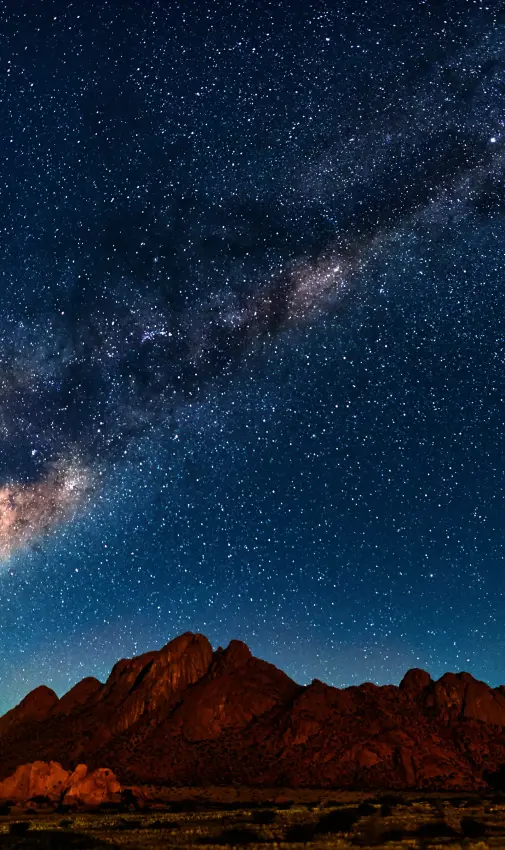
Rocky desert mountains silhouetted under starry night sky 01

Damaraland

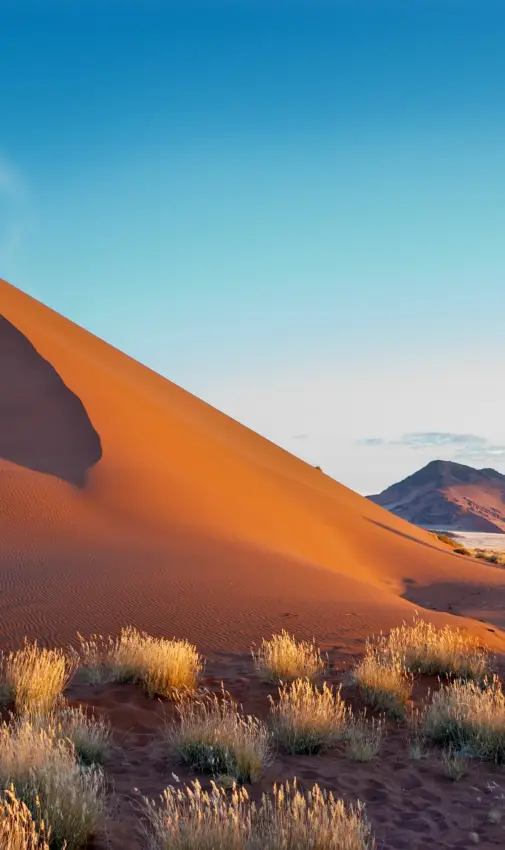
Golden sand dune at sunset with sparse desert vegetation 02

Sossusvlei

Aerial view of desert dunes meeting coastal waves 03

Skeleton Coast

Portrait of a person wearing traditional African beaded jewelry 05

Kunene River

Cyclists riding across red sand dunes at sunset, Swakopmund, Namibia 06

Swakopmund

Elephant herd walking through dusty grassland with scattered trees, Zambezi Region, Namibia 07

Zambezi Region

Aerial view of church and city at sunset 08

Windhoek

Planning a journey together

our approach

remote, exclusive
& personal

Every journey starts with a conversation. We take the time to understand your vision before we start planning.

Whether by phone or in person, we work with you directly to shape something that is considered, personal, and expertly delivered.

get in touch
destinations ideas & inspiration our process about us contact us