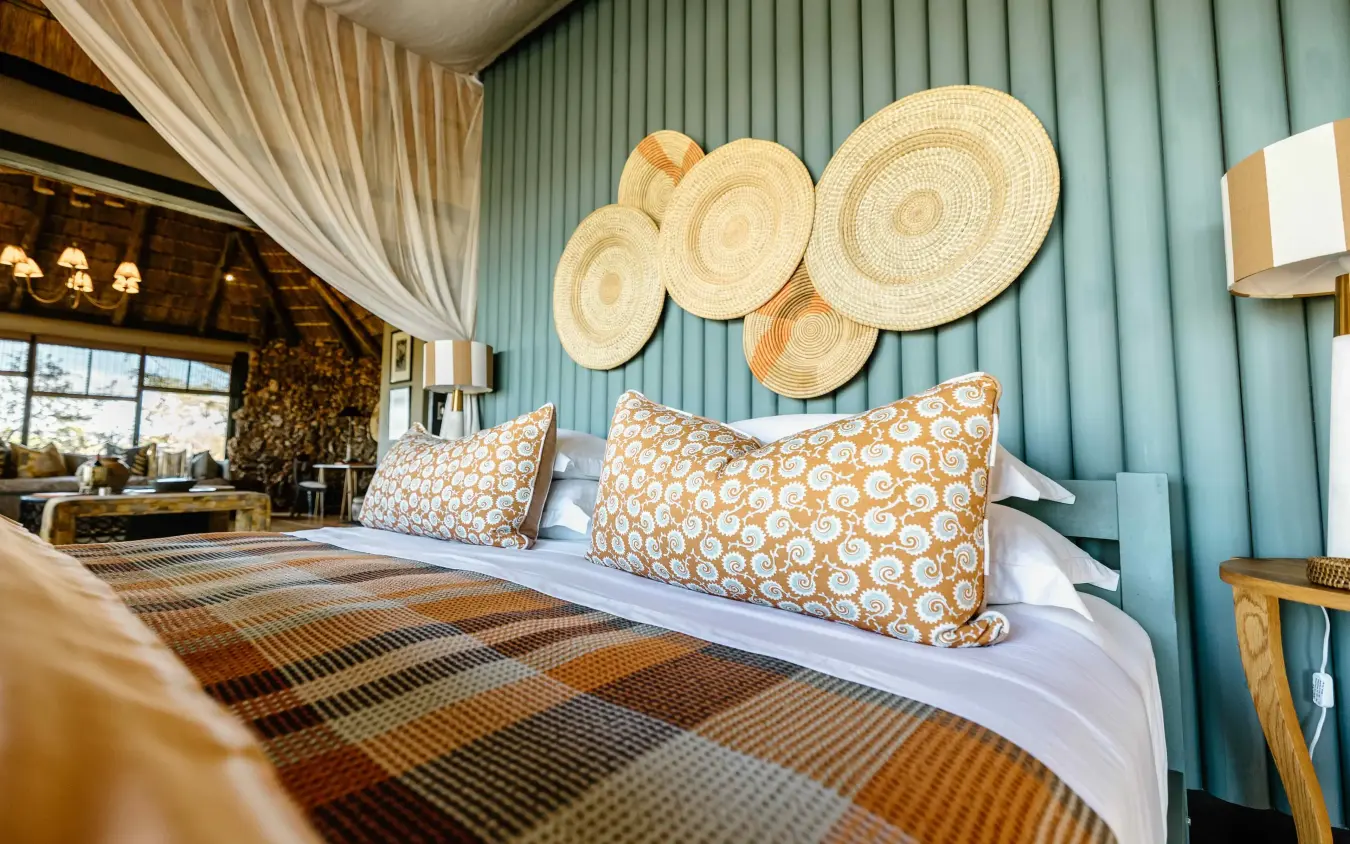
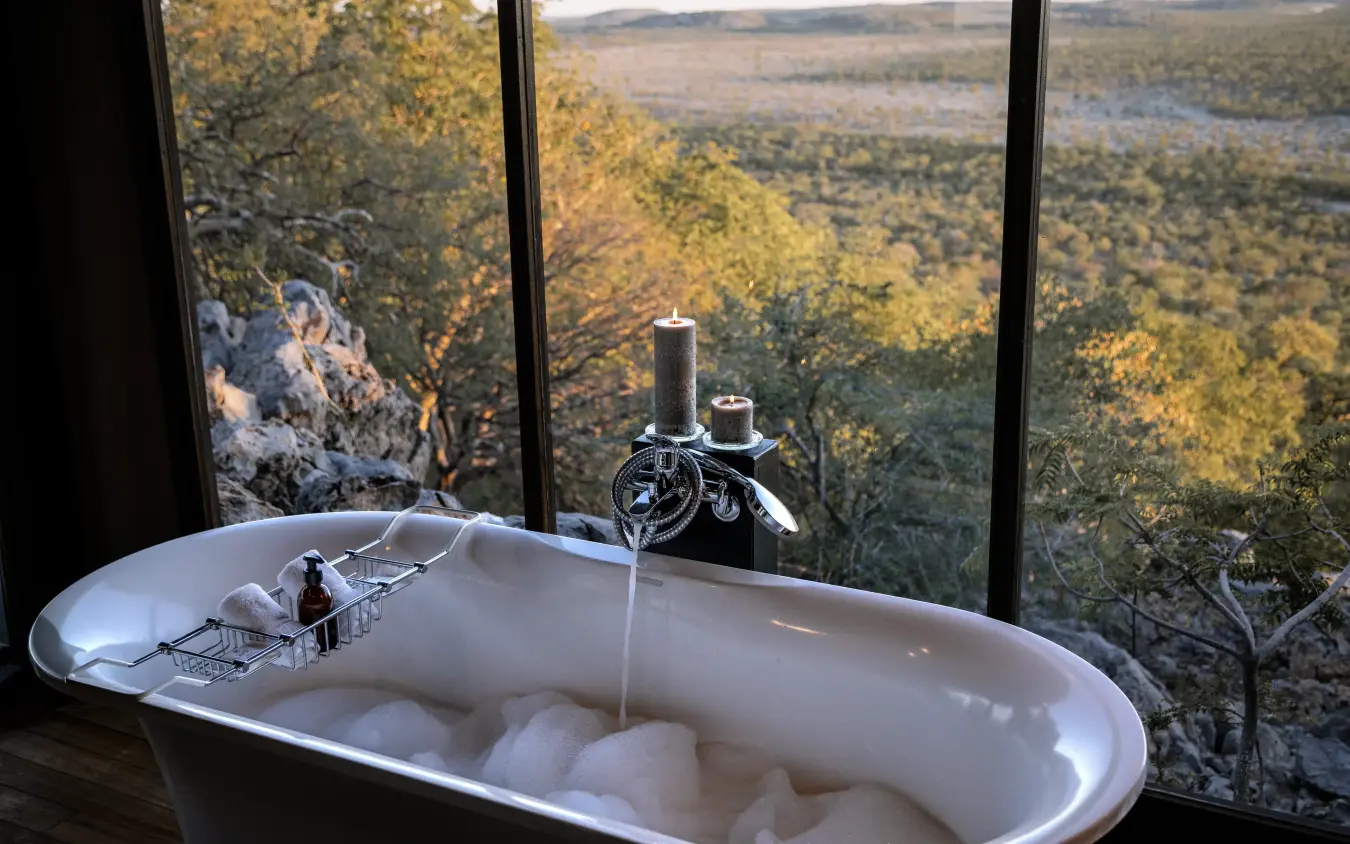
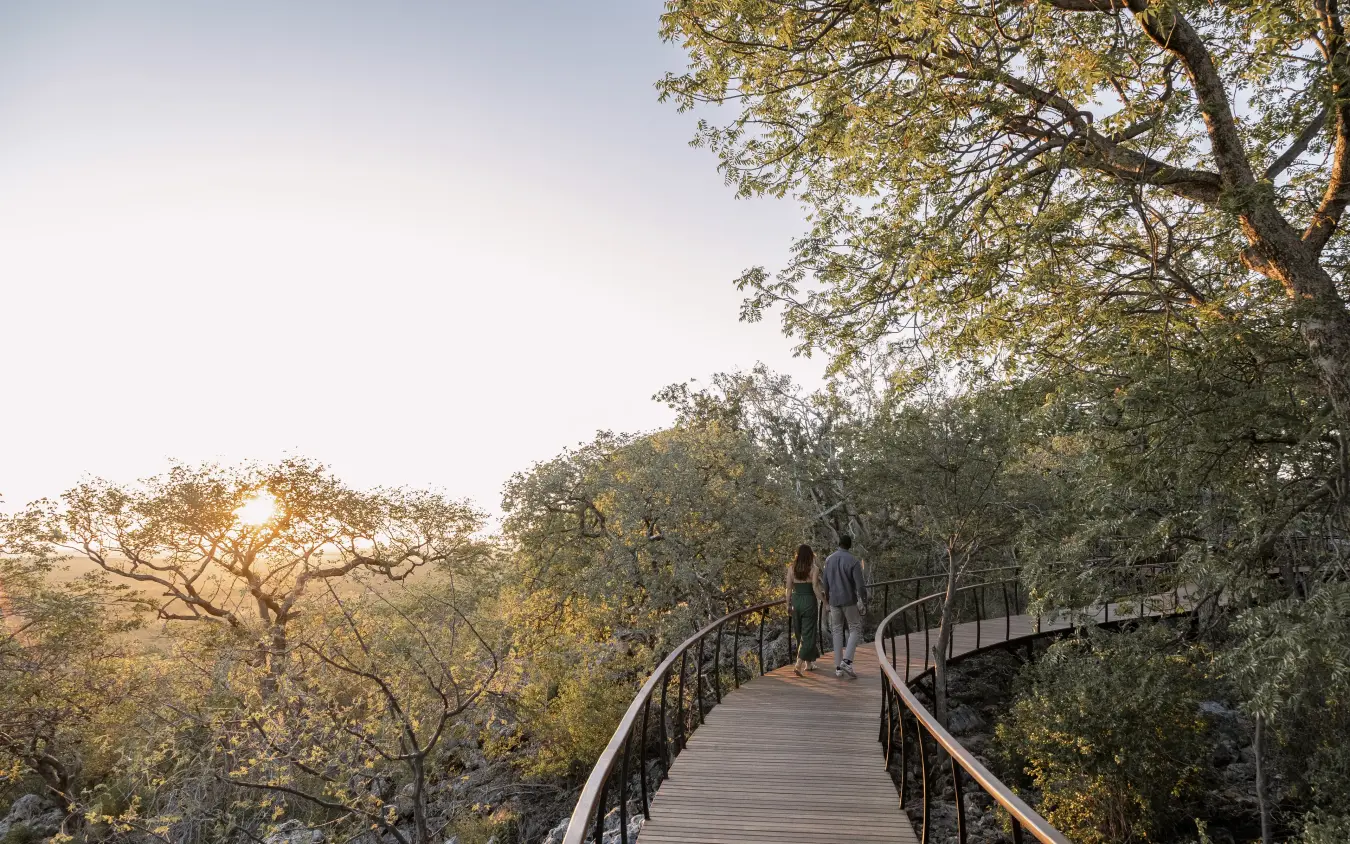
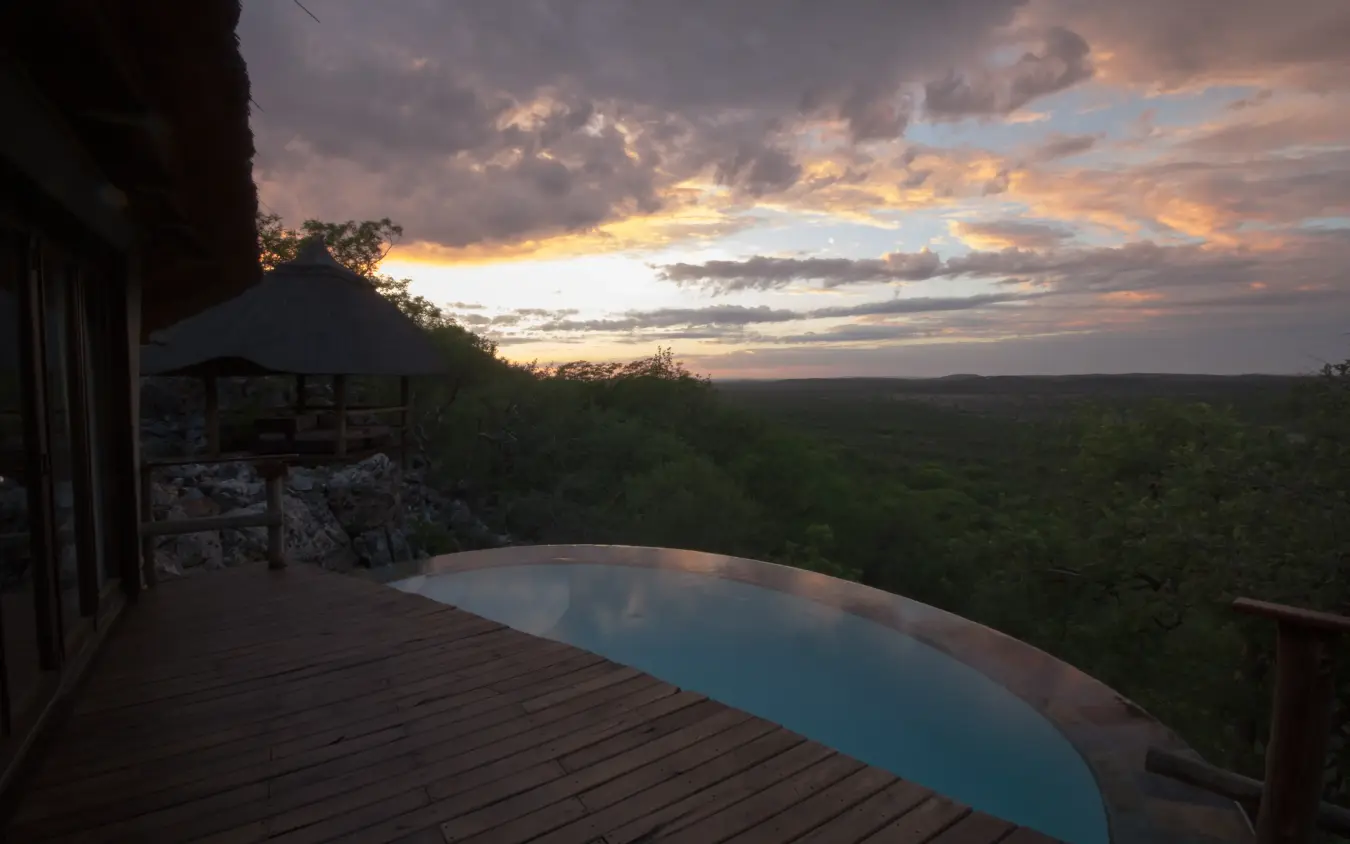
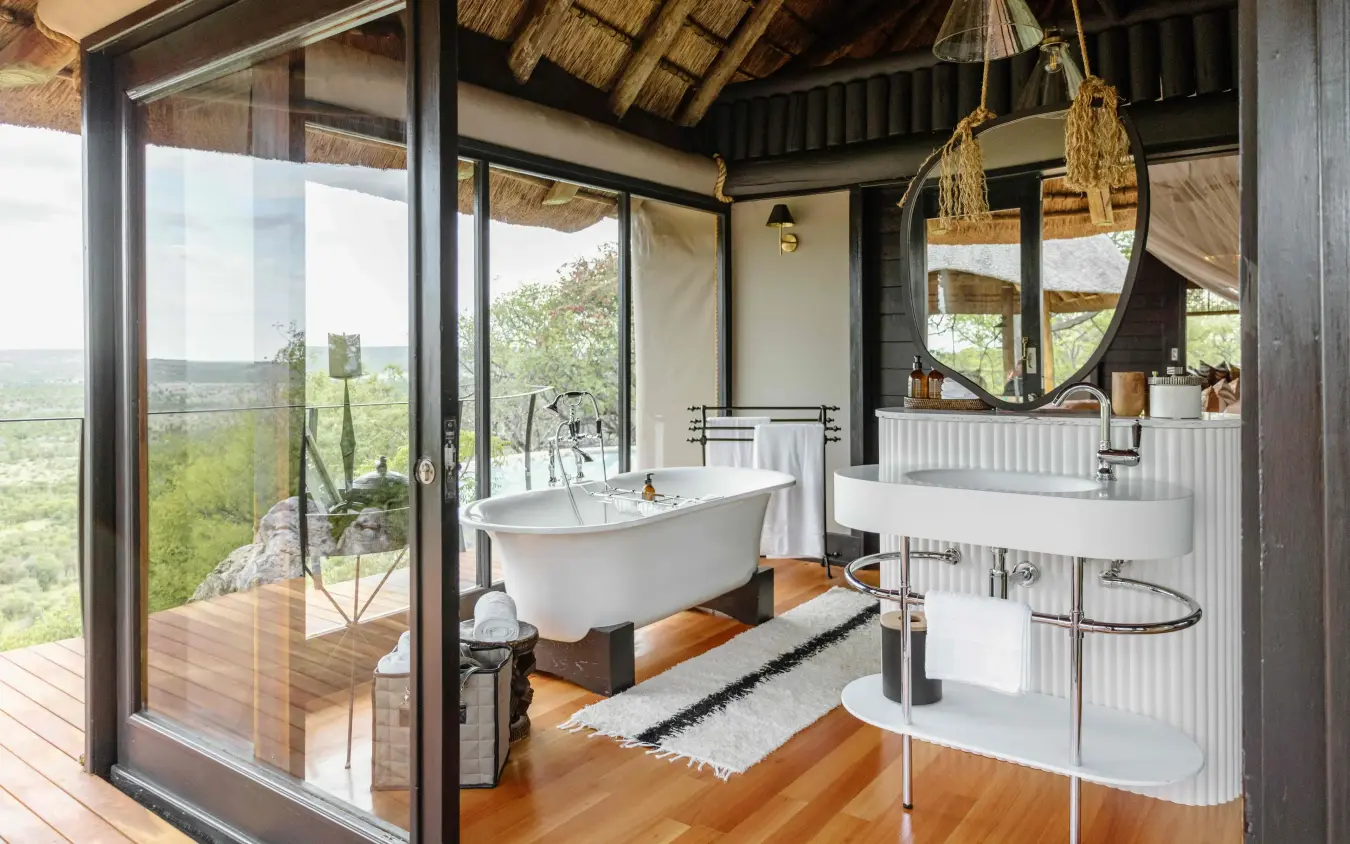
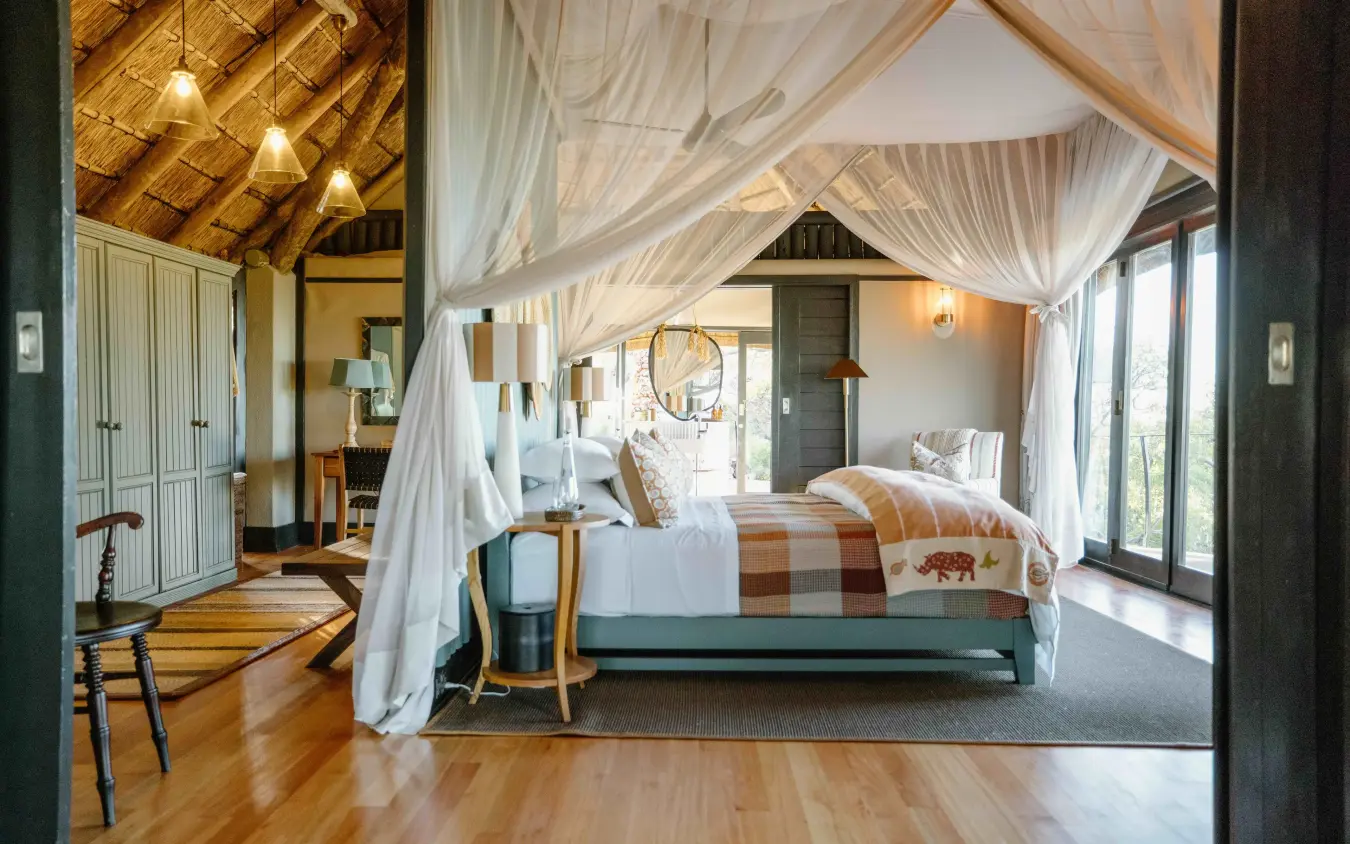
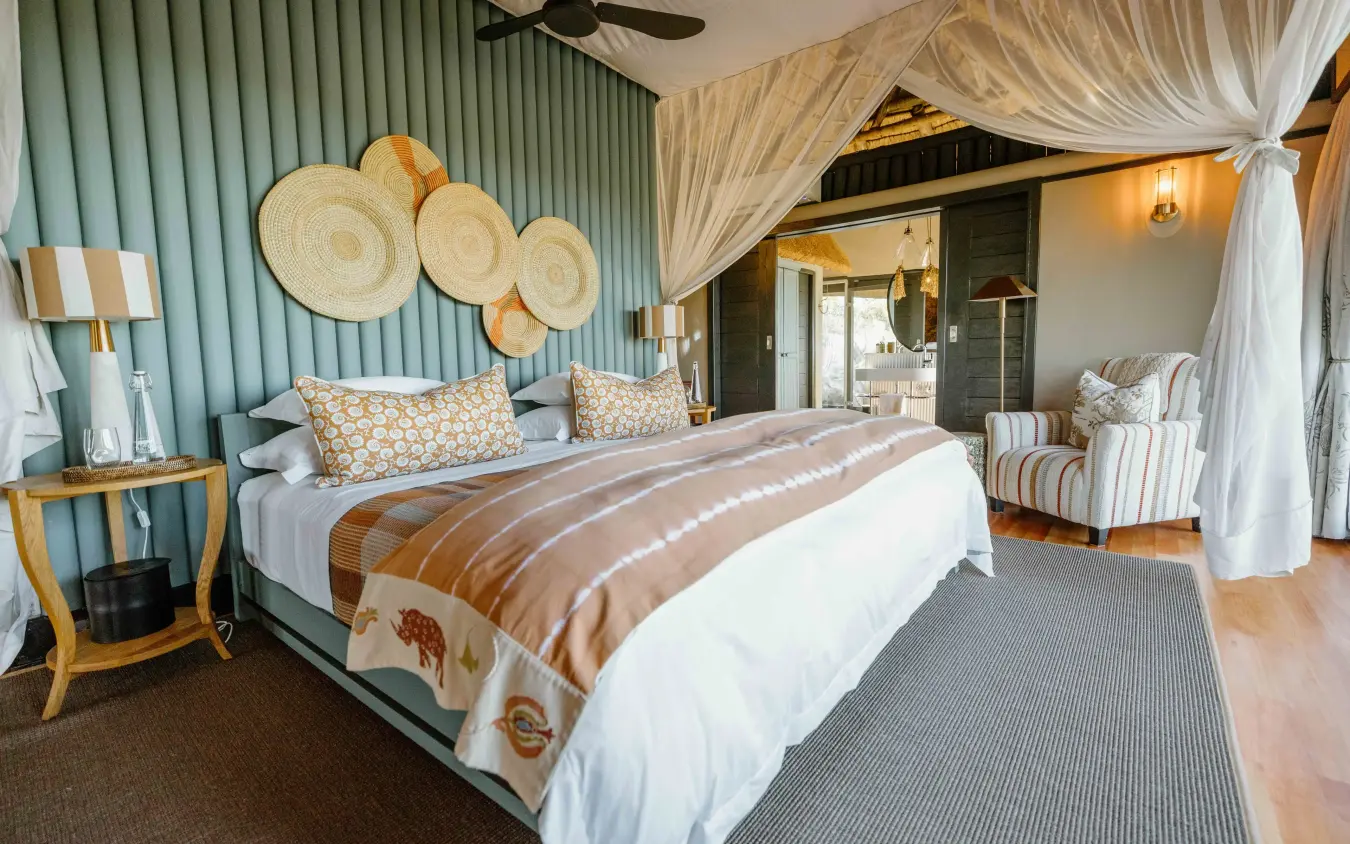
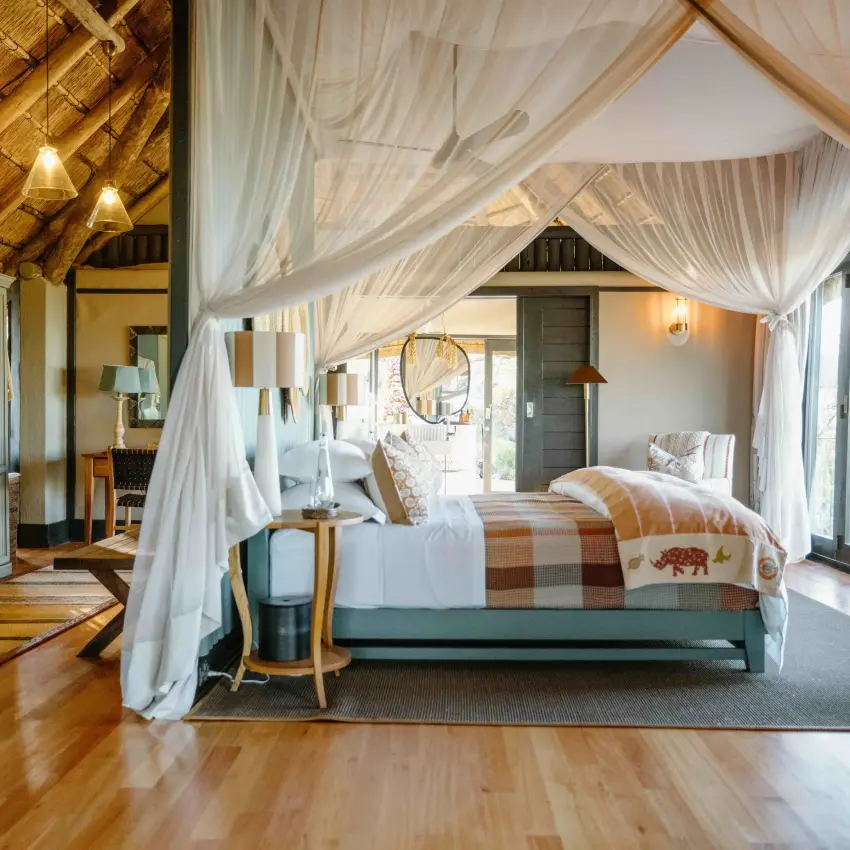
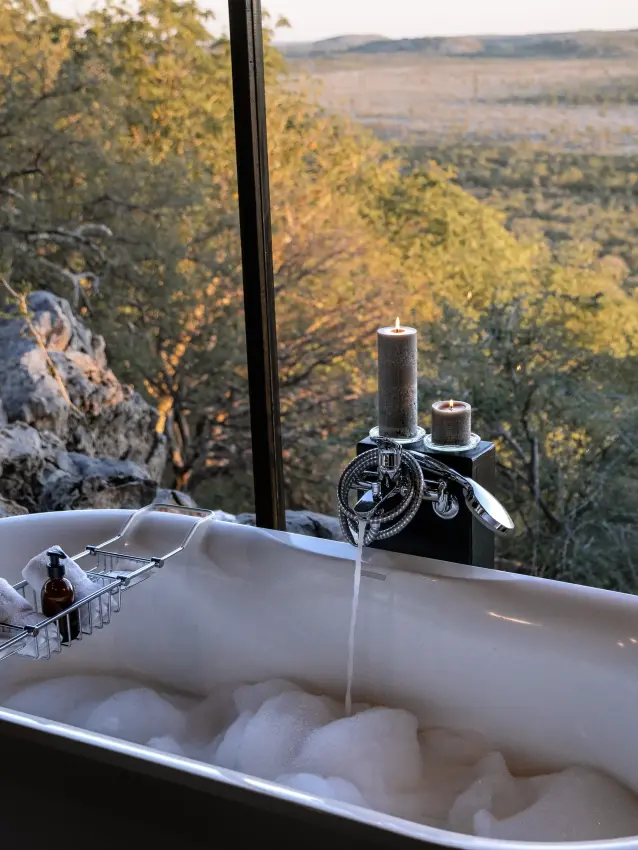
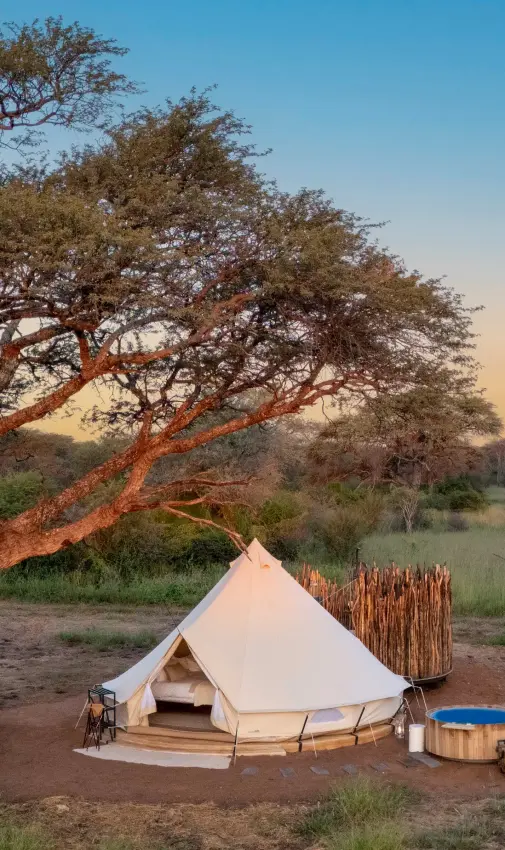
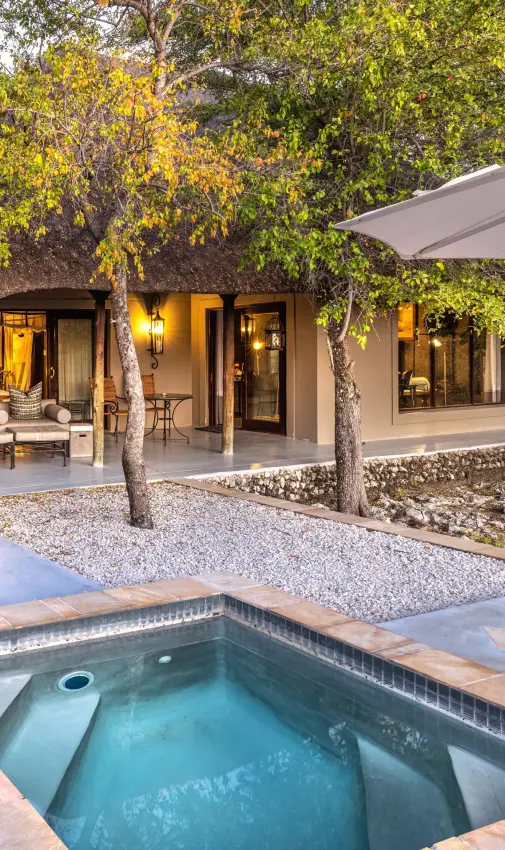
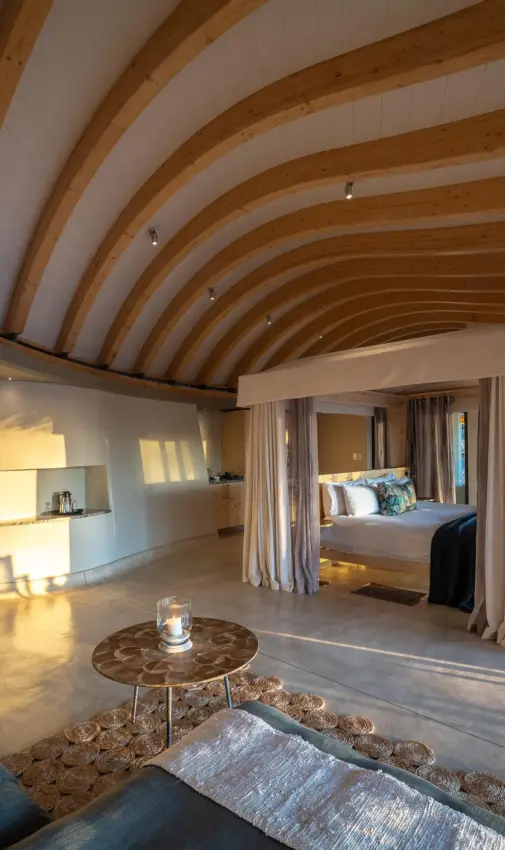
Each villa stands alone, reached by the boardwalks that lead back to the main lounge. Inside is a king-bedded master bedroom and a separate sitting room with a wood-burning fireplace, while the en-suite bathroom holds a freestanding tub facing the plains, with both indoor and outdoor showers. A private deck carries an infinity plunge pool, and a covered sala tucked into the dolomite rock gives you a daybed for an afternoon rest, or a night spent out under the stars.
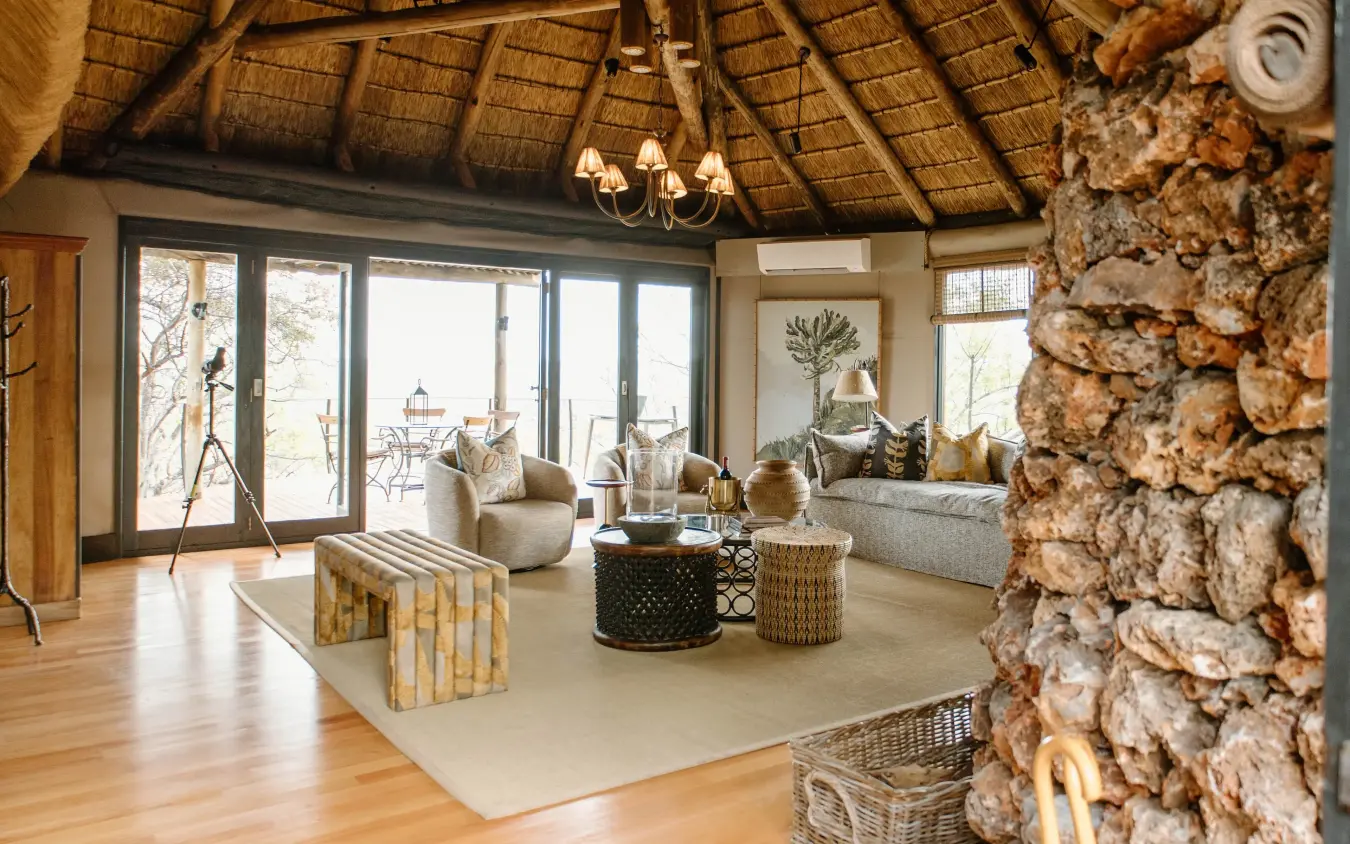
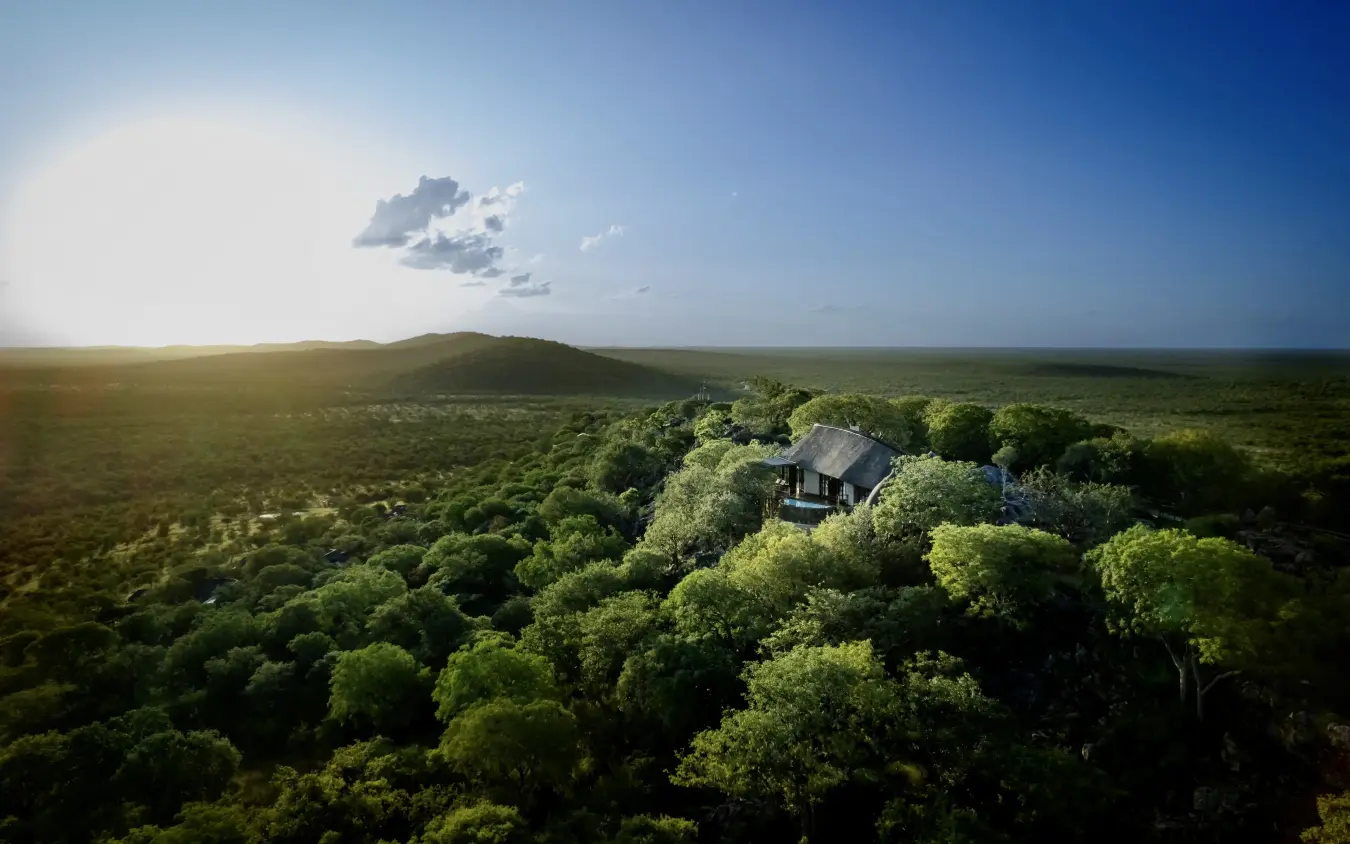
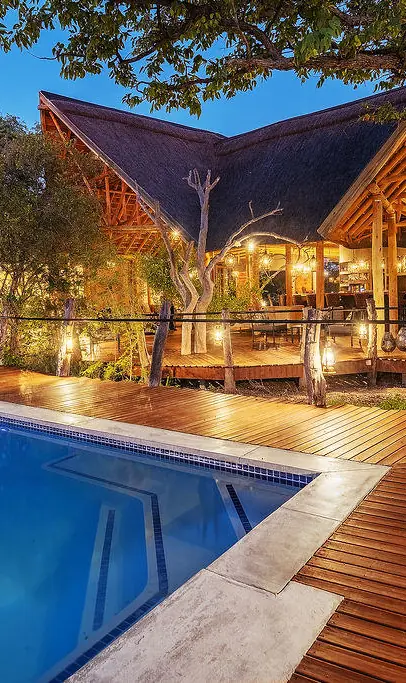
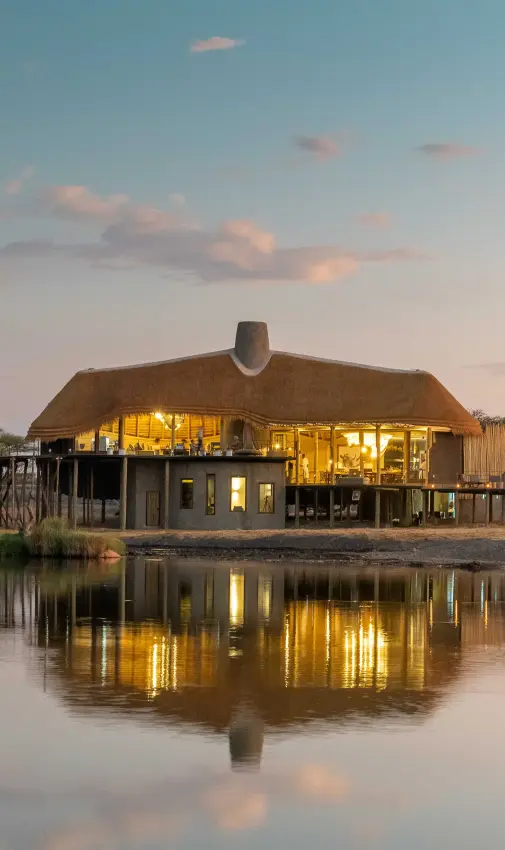
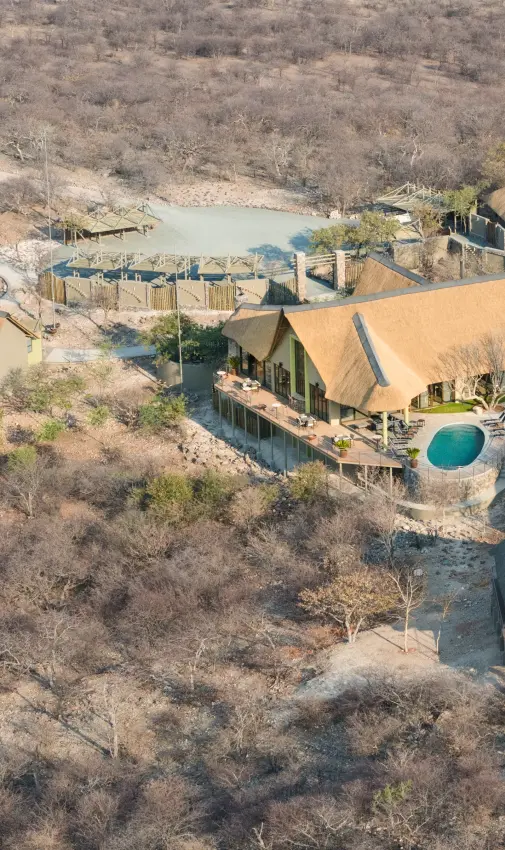
Local calcrete stone, heavy timber, floor-to-ceiling glass and high thatch make up the architecture, built to handle the region’s wide swings between the heat of the day and the cold of the night. Staggered bamboo blinds open the main lounge and villas fully to the landscape. They frame the plains from different angles as the light shifts through the day, so that no two hours look quite the same from a single villa.
a covered sala tucked into the dolomite rock gives you a daybed for an afternoon rest
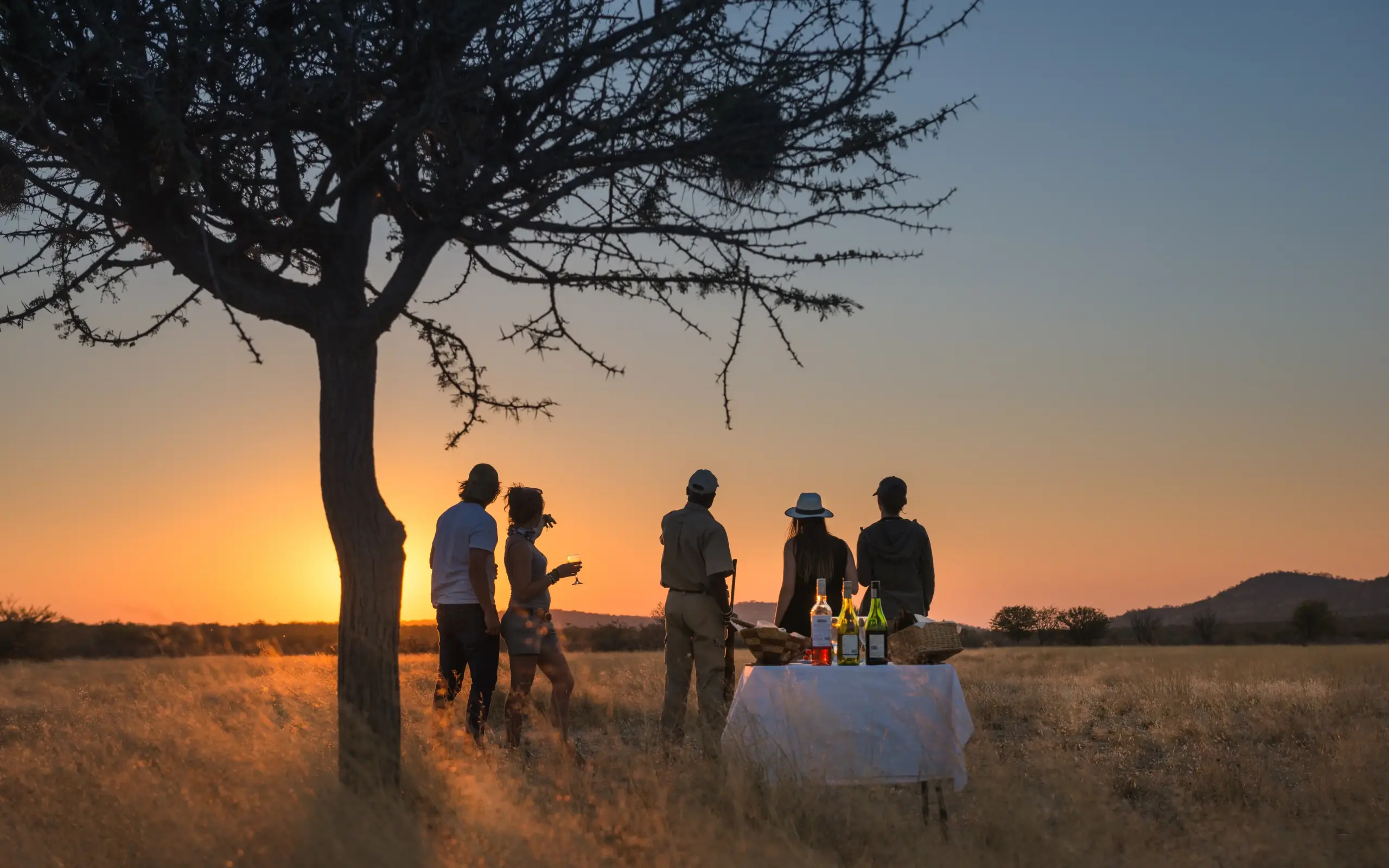
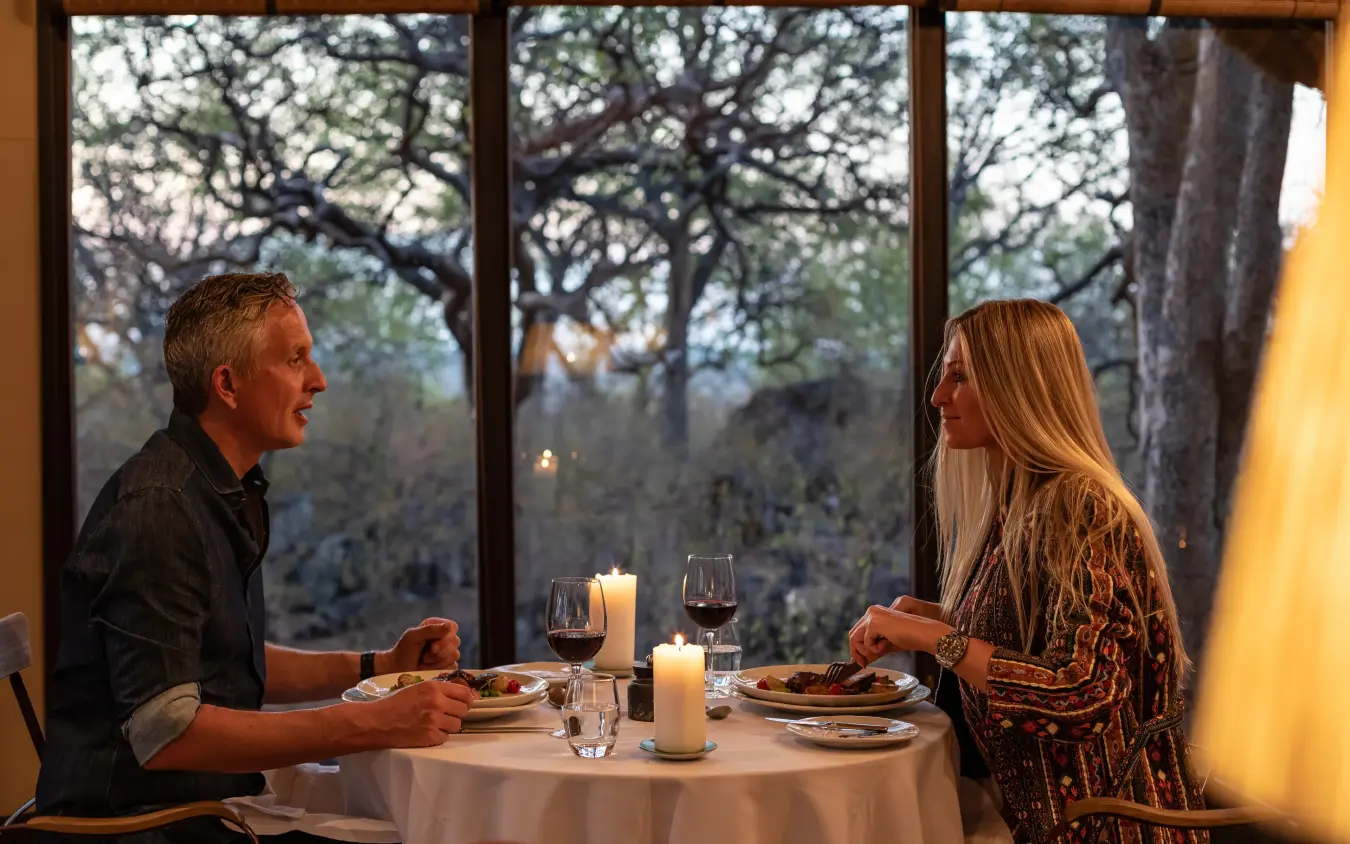
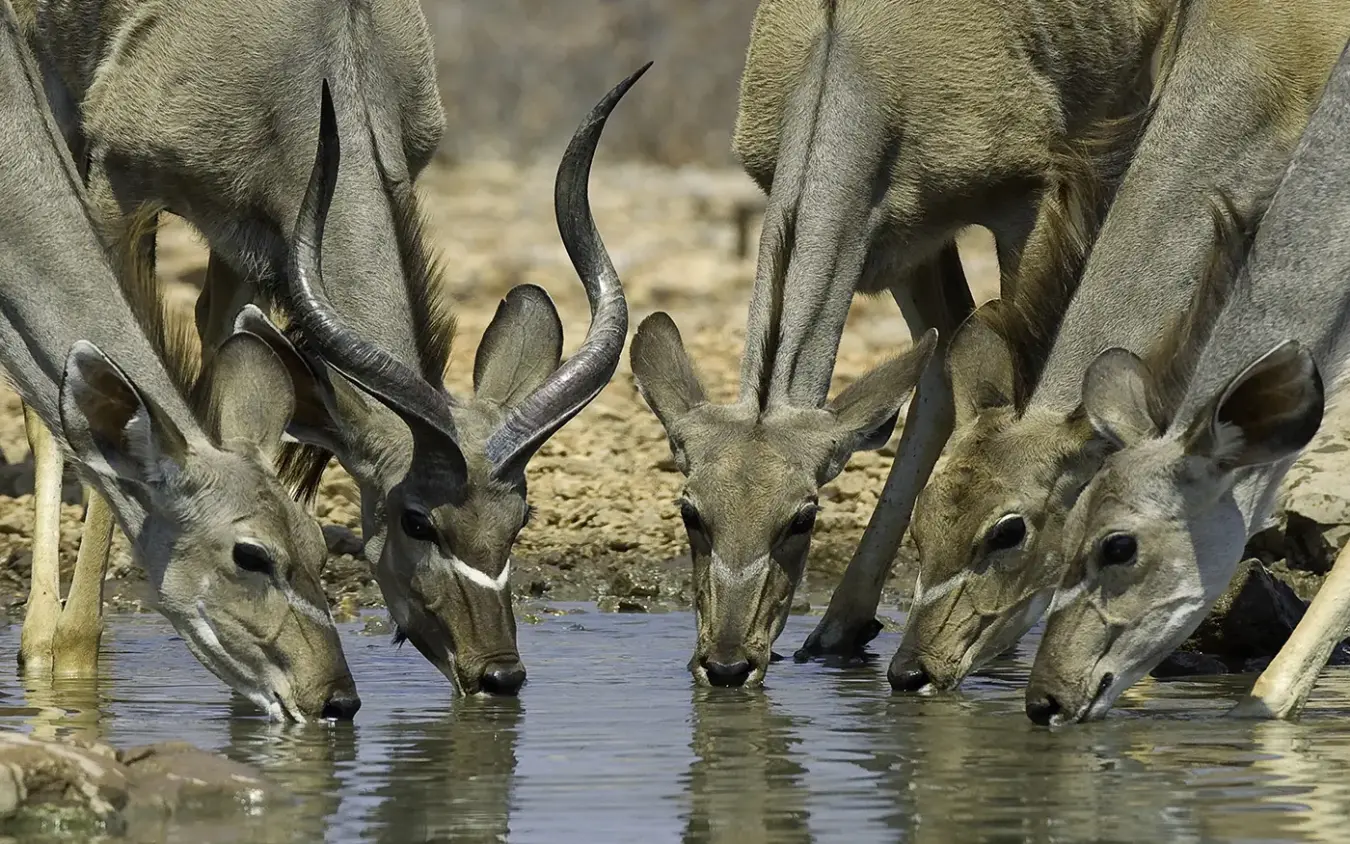
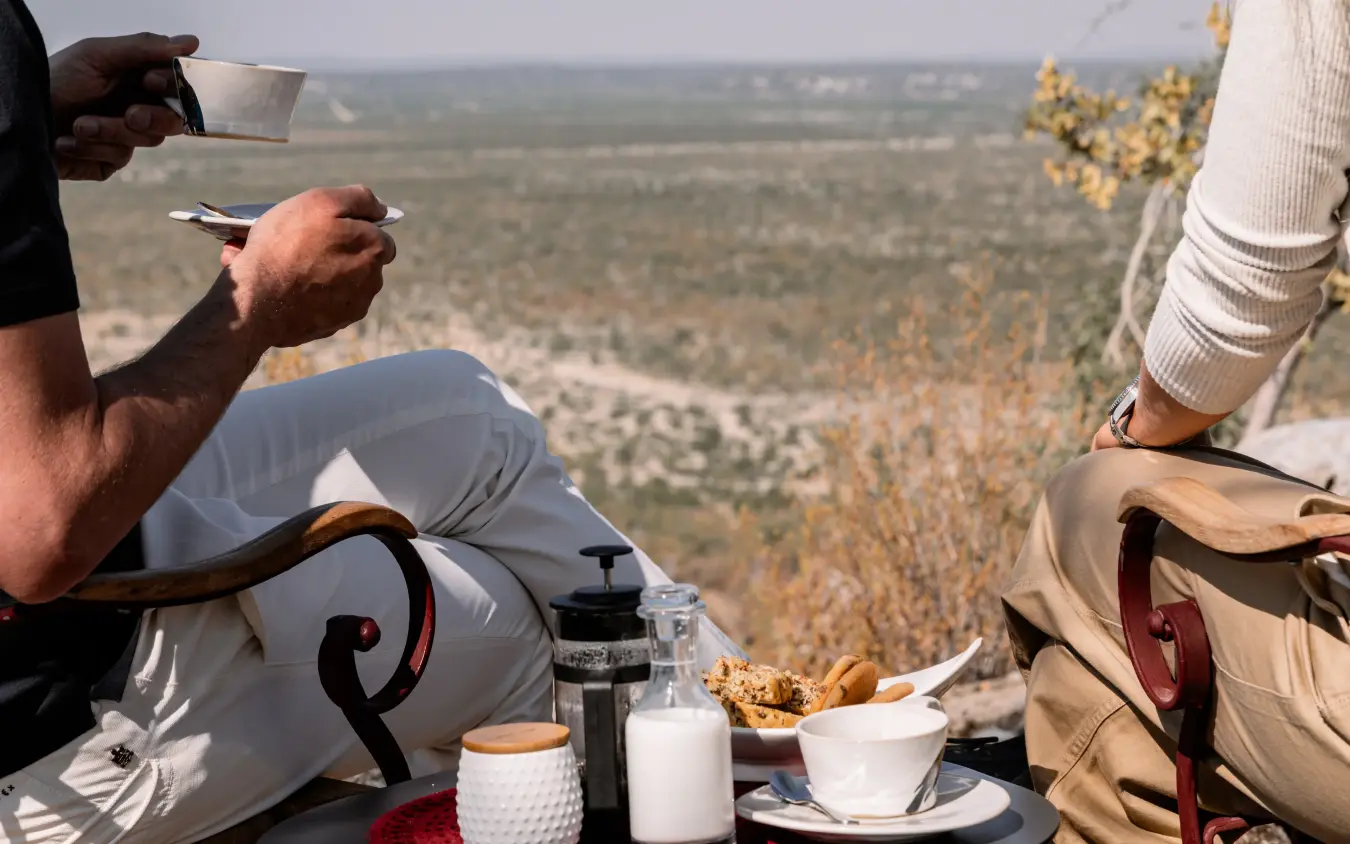
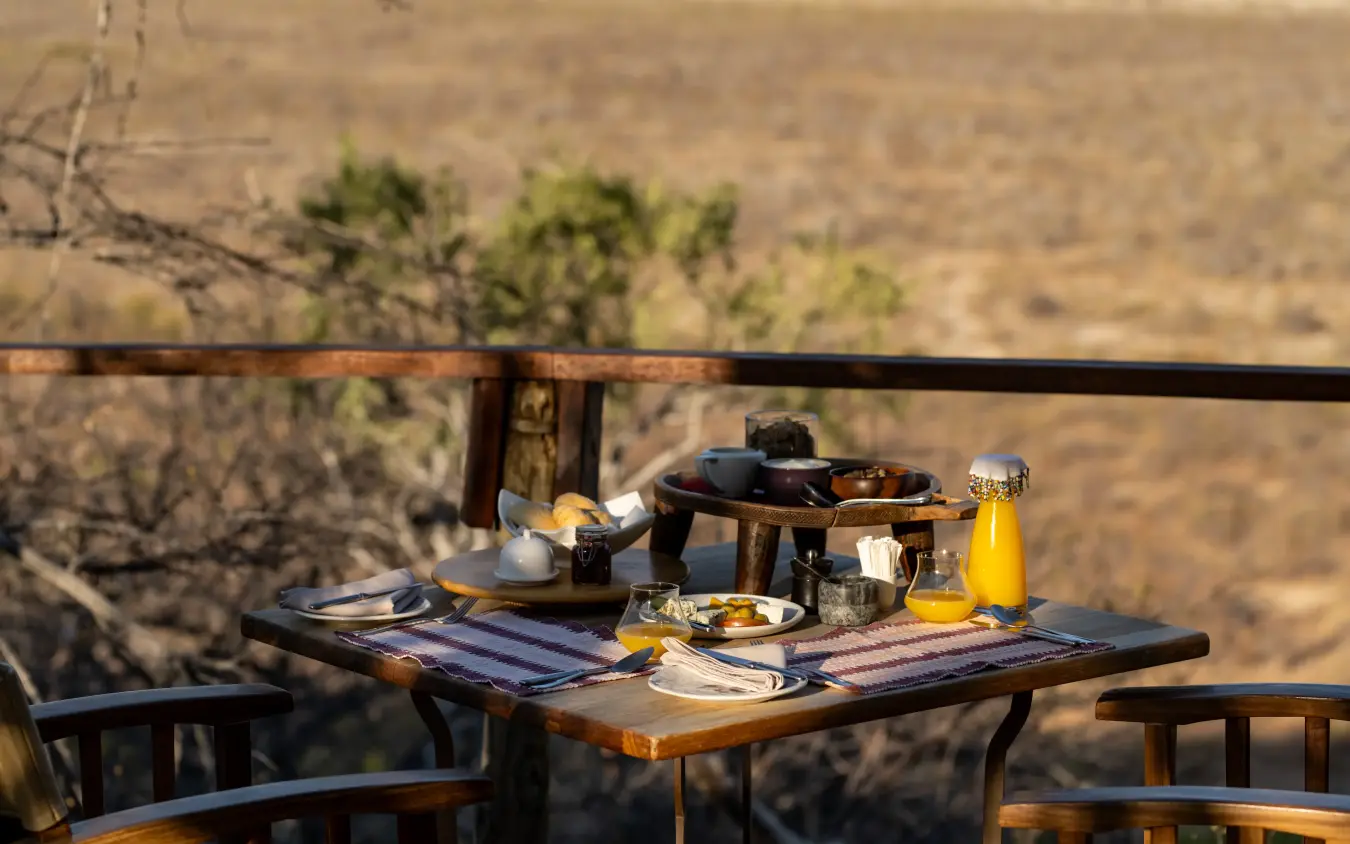
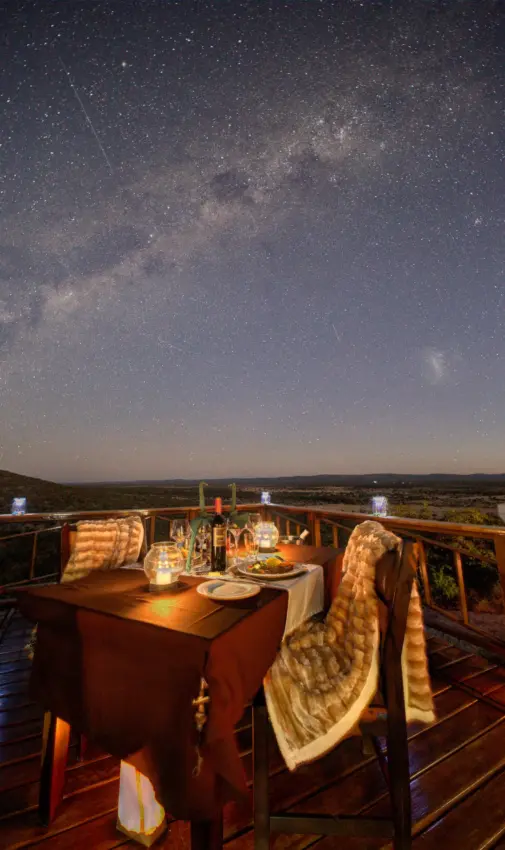
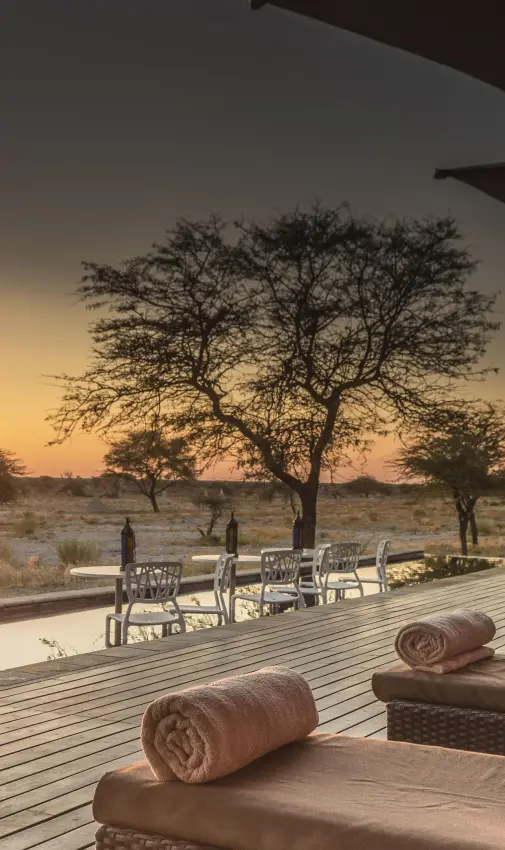
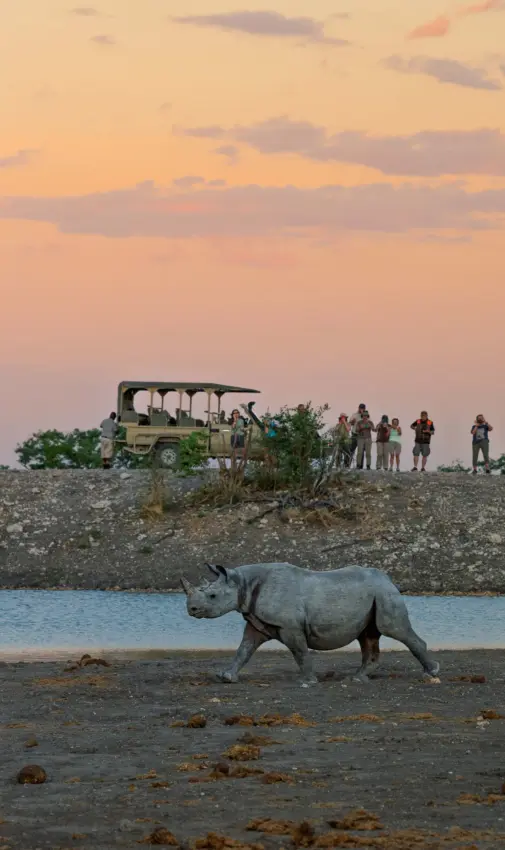
Meals draw on fresh local ingredients, Namibian game meats and South African wines, with vegetarian, vegan, gluten-free and dairy-free menus all on hand. They are served in the thatched dining room, on the open deck overhanging the ridge, or privately on a villa terrace, and high tea is taken on the deck each afternoon. Dinner is regularly interrupted by lions or rhino arriving at the waterhole below, and guests think nothing of leaving a course unfinished to watch.
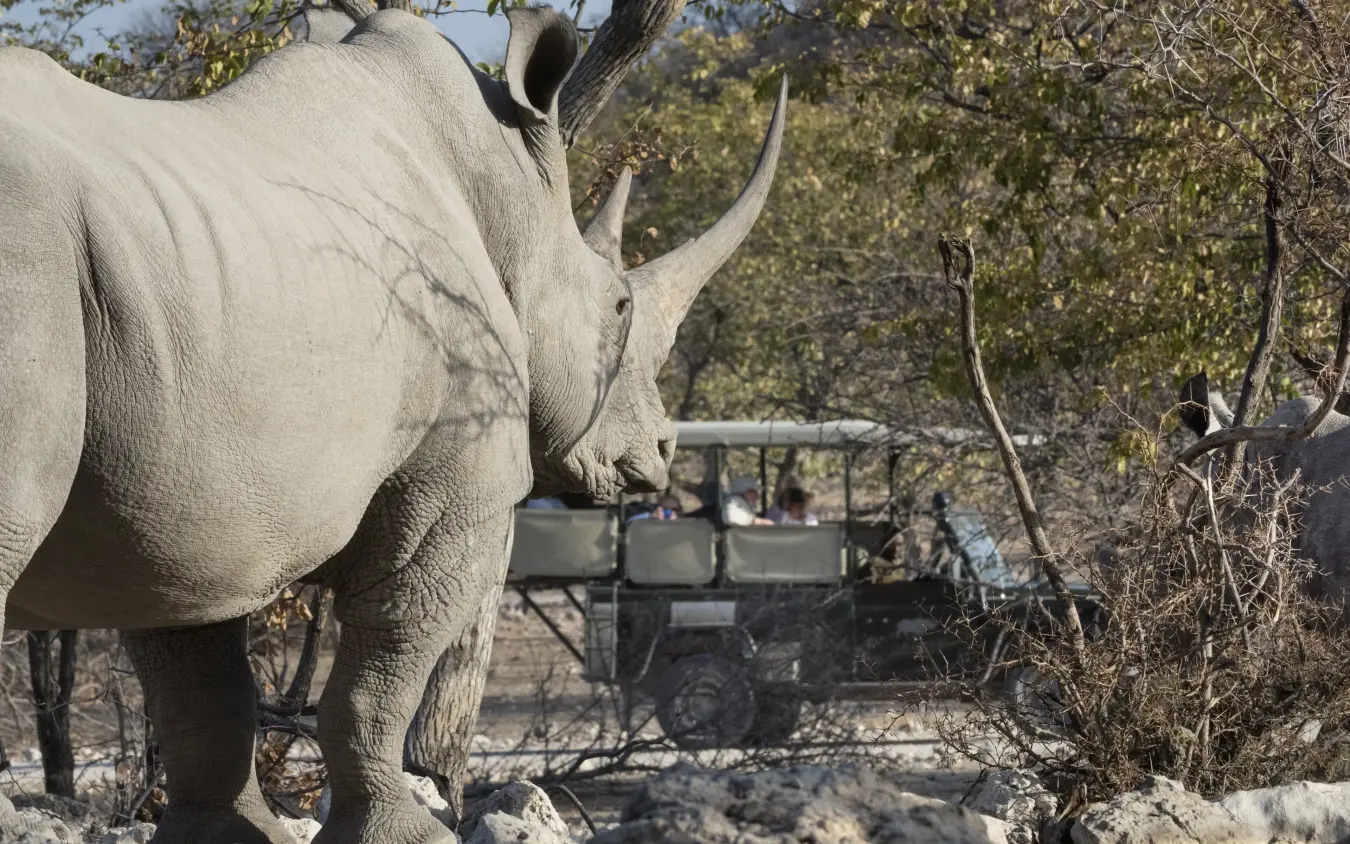
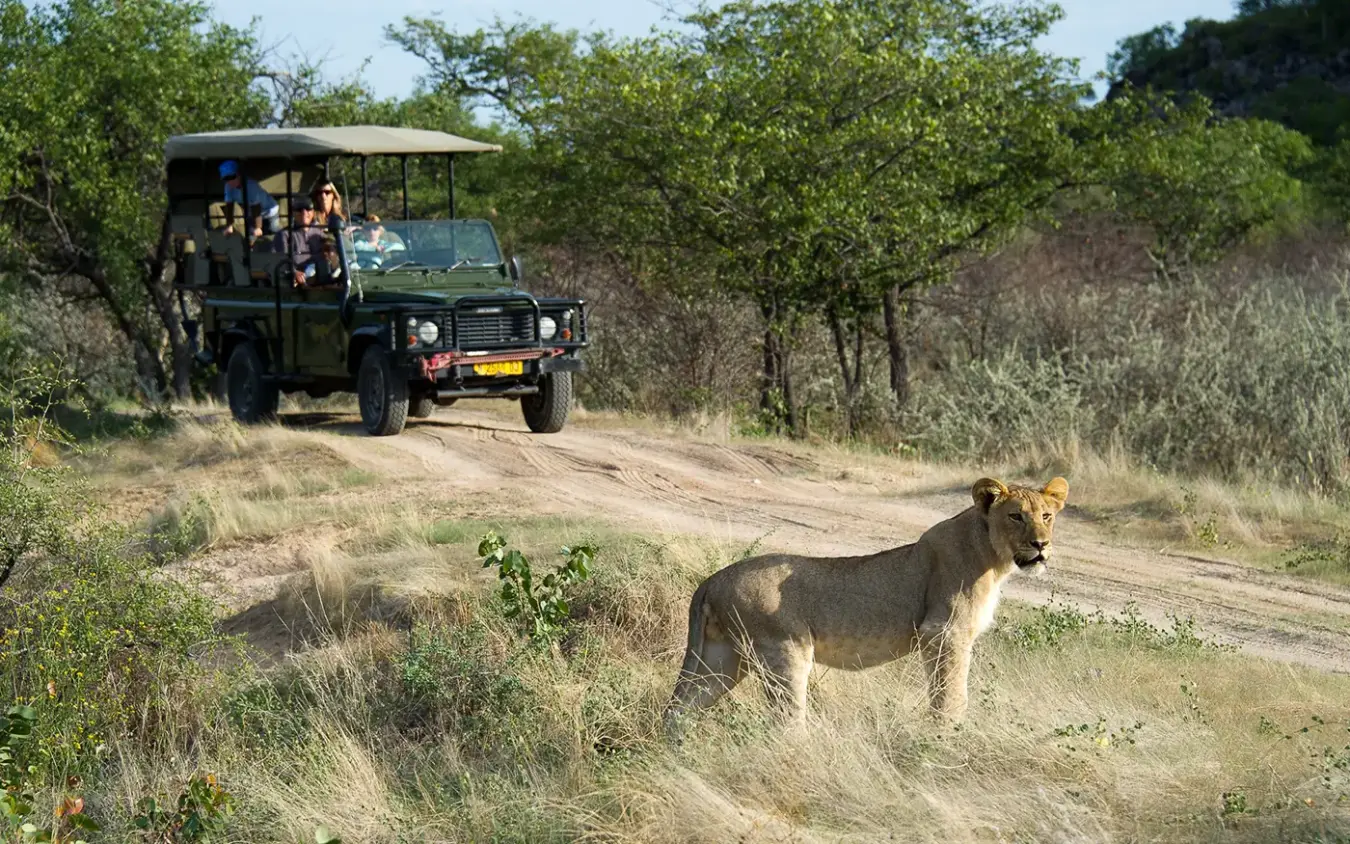
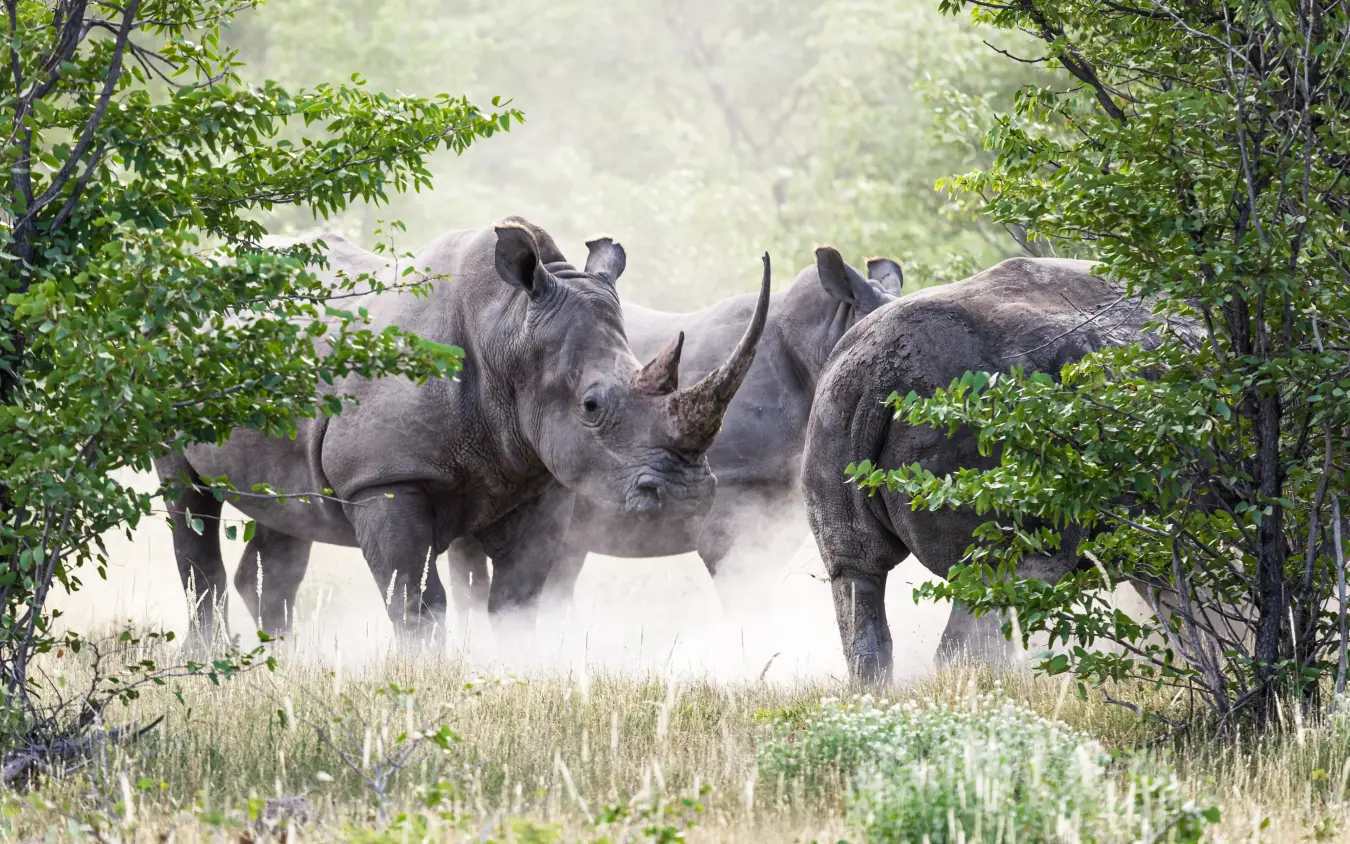
Everything at Ongava is built on rhino. The reserve holds a rhino custodianship agreement on behalf of the state, funds its own anti-poaching unit, and runs the Ongava Research Centre, a science facility built to study the reserve’s genetics and ecology and open to guests who wish to visit. Horizon sits at the heart of that work, a small base for travellers who want Etosha’s open plains by day and the private reserve’s closer, slower encounters after dark.