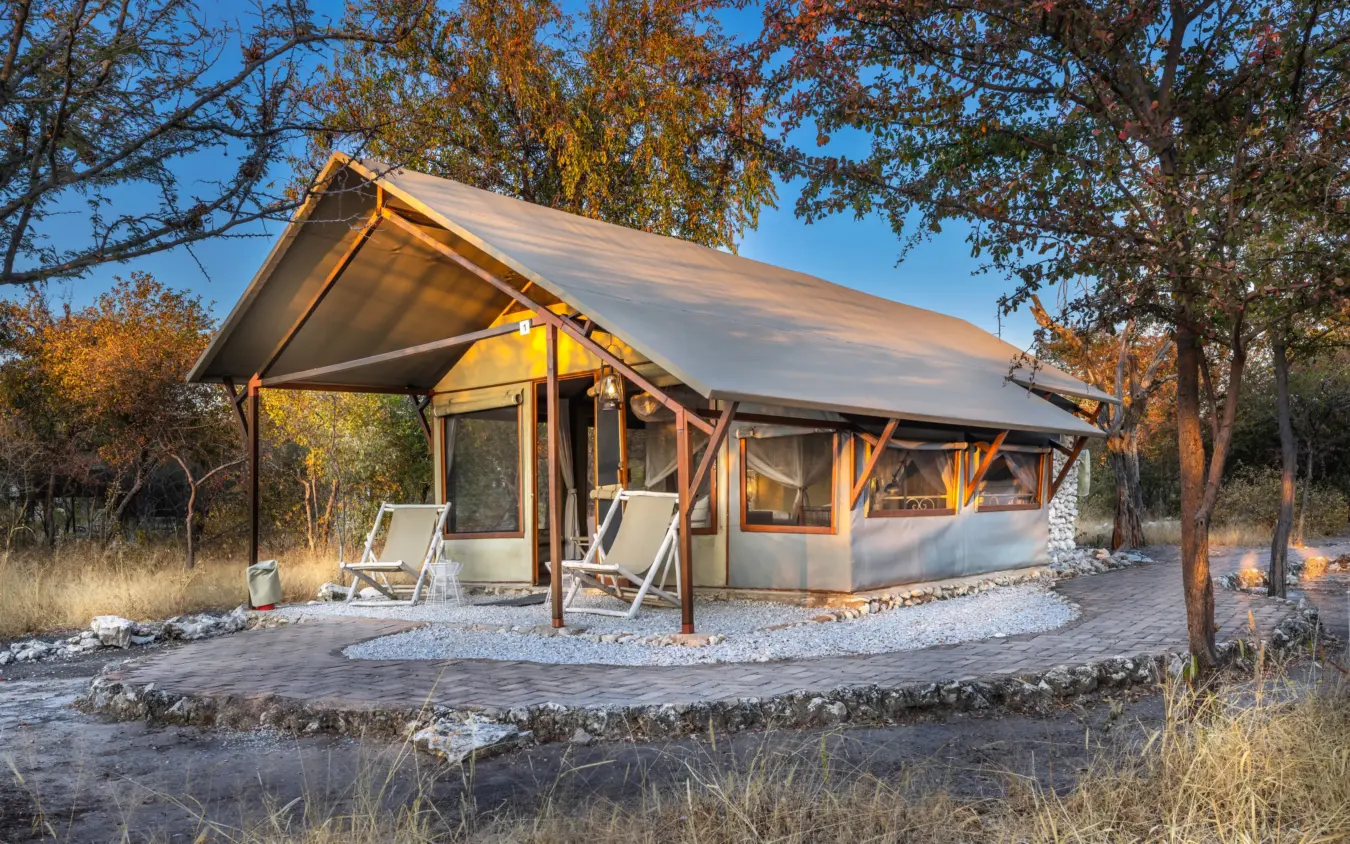
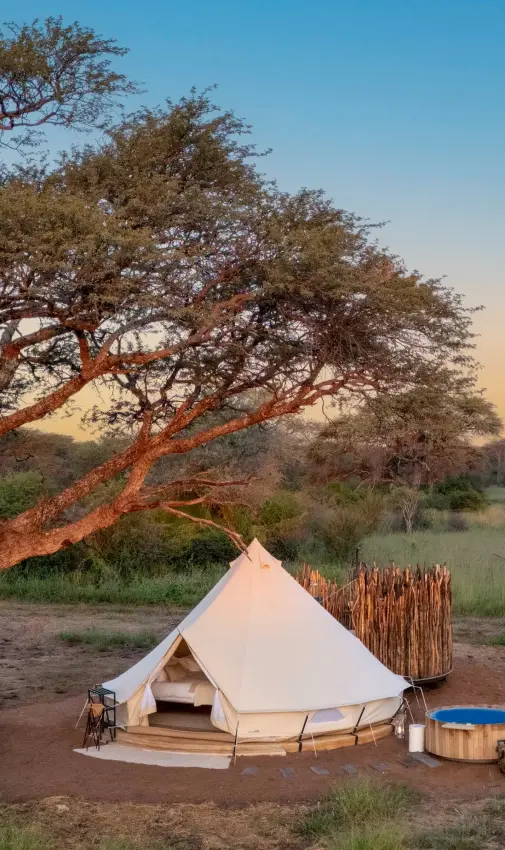
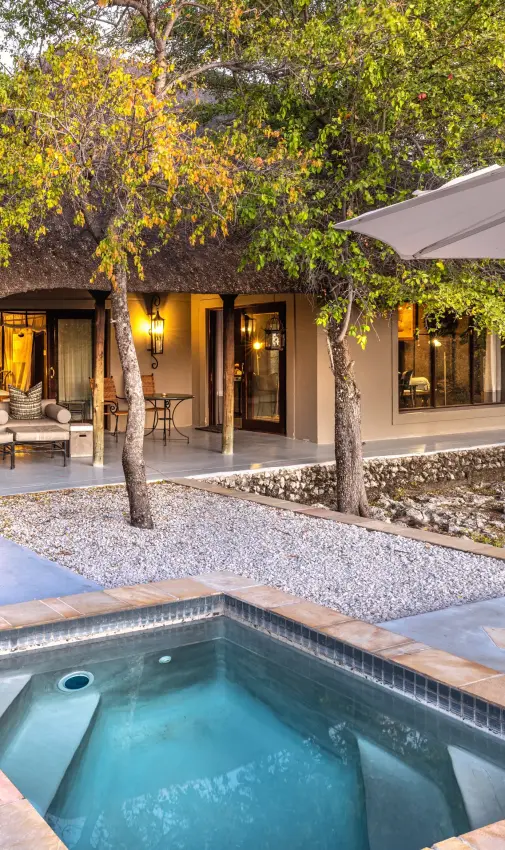
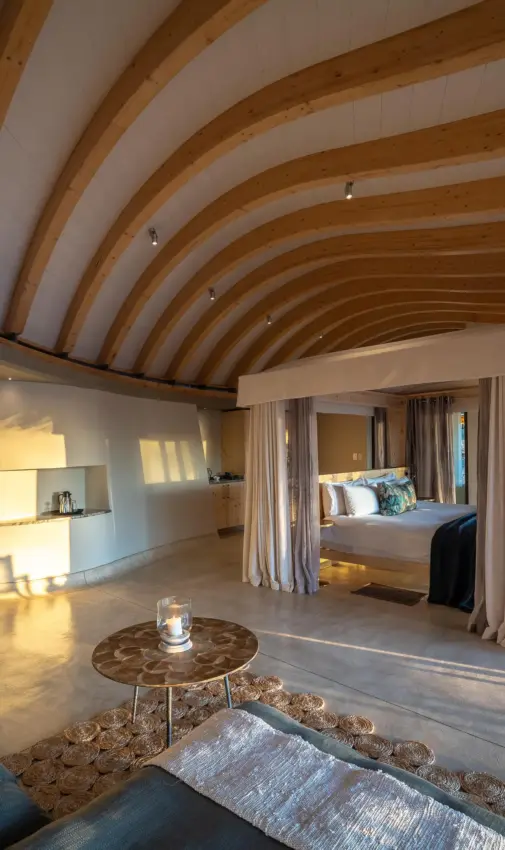
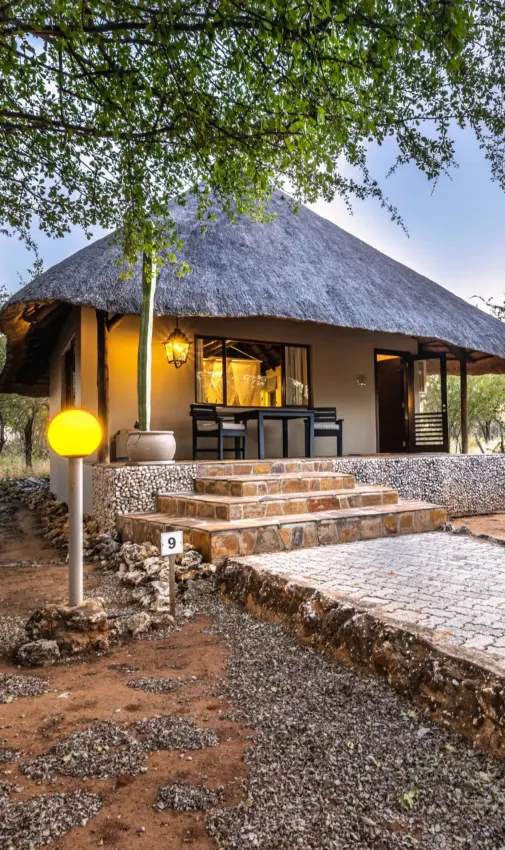
Stone and cement keep the tents cool through the afternoon. The walls are local limestone and canvas, the floors brushed cement, and floor-to-ceiling gauze windows let the air move through. Each tent opens onto a small covered veranda facing into the terminalia. The bathrooms are large, with a big window, and the shower looks straight out into the bush. In the four family tents a sleeper couch with its own mosquito net means children sleep a few steps from their parents, under the same canvas.
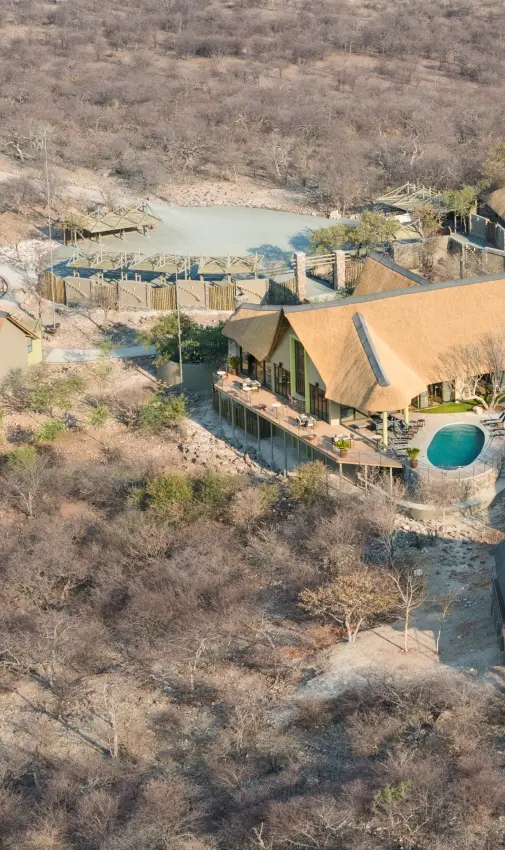
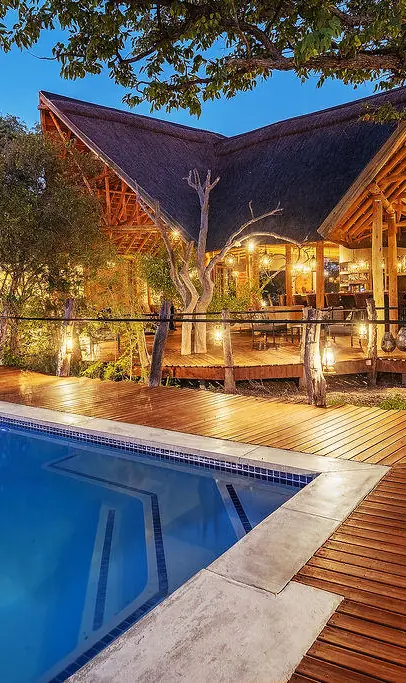
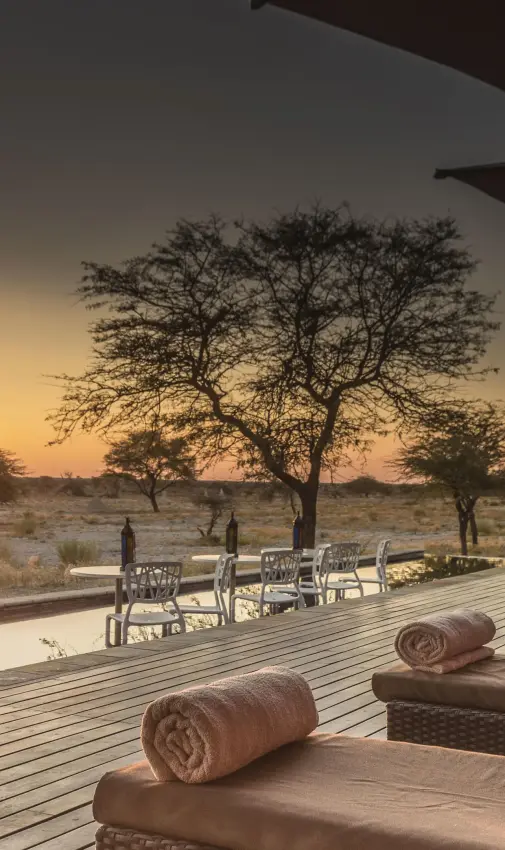
Through the hot middle of the day, children have a play room in the main house, stocked with books and games, toys and drawing materials. Outside, the play park has a jungle gym and a sandpit, and an old tractor to clamber over, while there is a shallow children’s pool as well as the round main pool. Childminders step in when parents want a quiet lunch or a rest between drives. Children’s meals are adapted to suit them, and the evening ends around the fire.
In the rainy months, thunderclouds build up over the pool through the late afternoon.
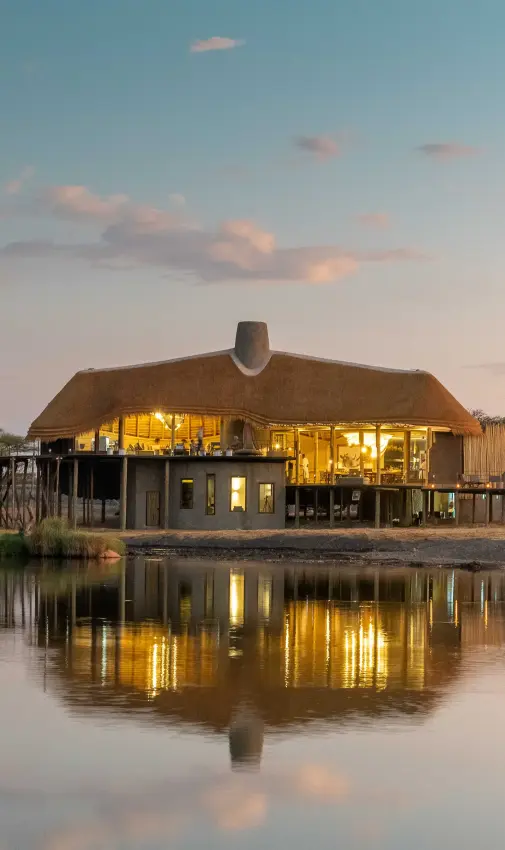
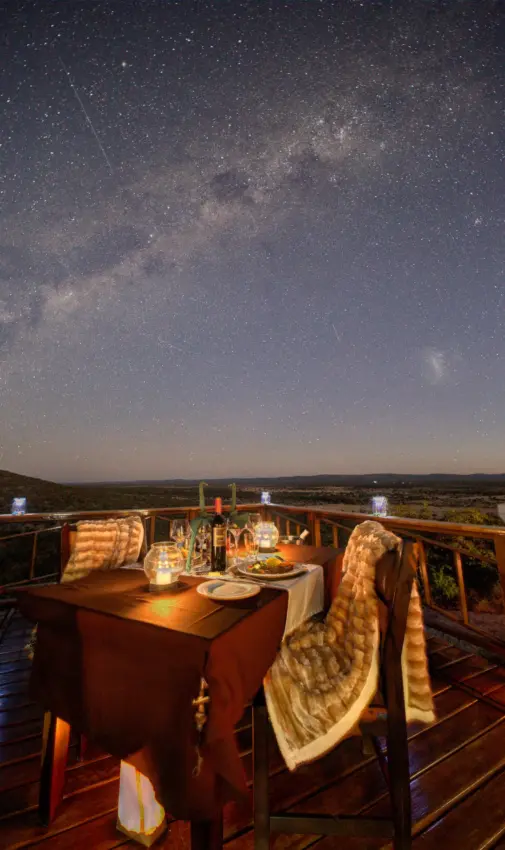
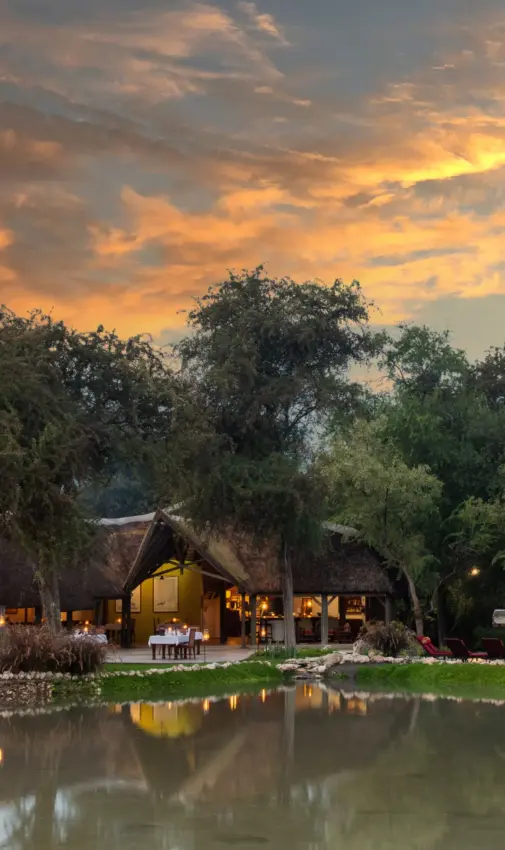
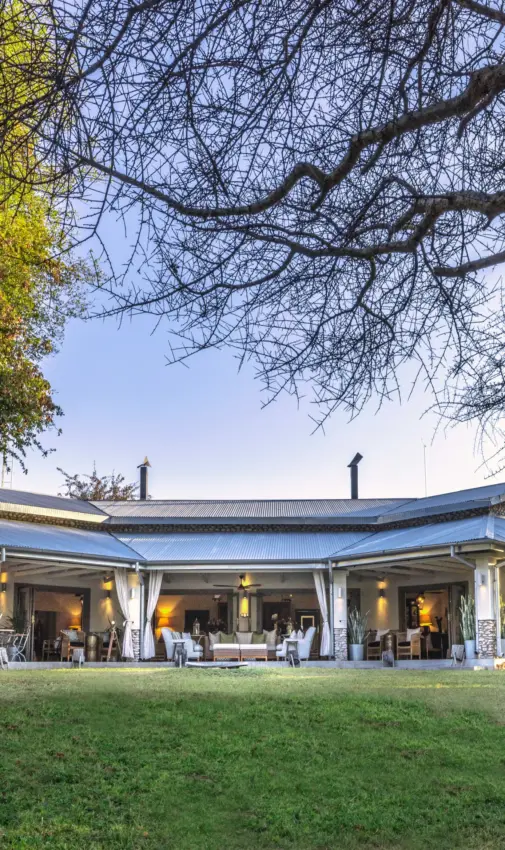
Meals are taken on the thatched verandah of the main house, where an open front and a gravel floor leave nothing between the tables and the bush. Breakfast, lunch and dinner are all served here and all made in the camp kitchen, and much of the vegetables and herbs, with some of the fruit, comes from the Mushara garden. The fire is lit early each evening, and by dinner the talk around it has turned to the day’s sightings.
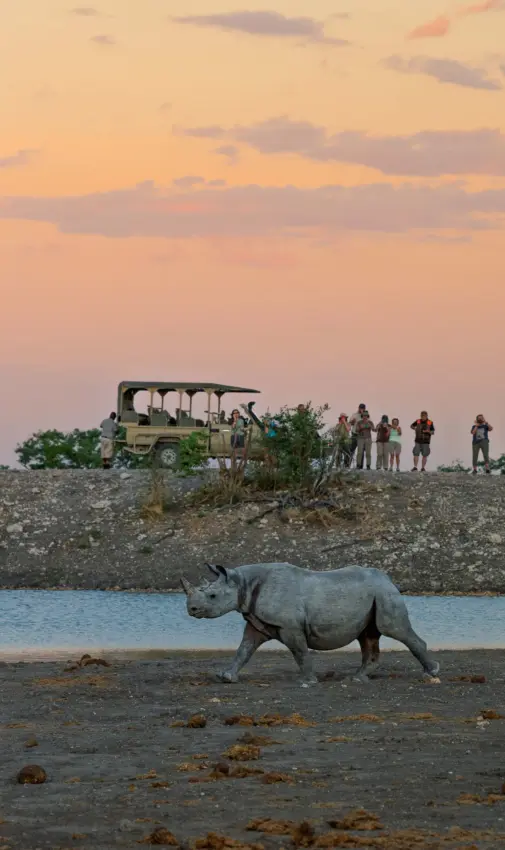
Without anyone leaving camp, warthogs graze the lawns between the tents and mongooses forage across the paths, and birds keep the terminalia busy from first light until dusk. In the rainy months, thunderclouds build up over the pool through the late afternoon. The people who know this ground best are the staff, drawn from the communities around Etosha National Park, and across the Mushara lodges many have stayed for years.