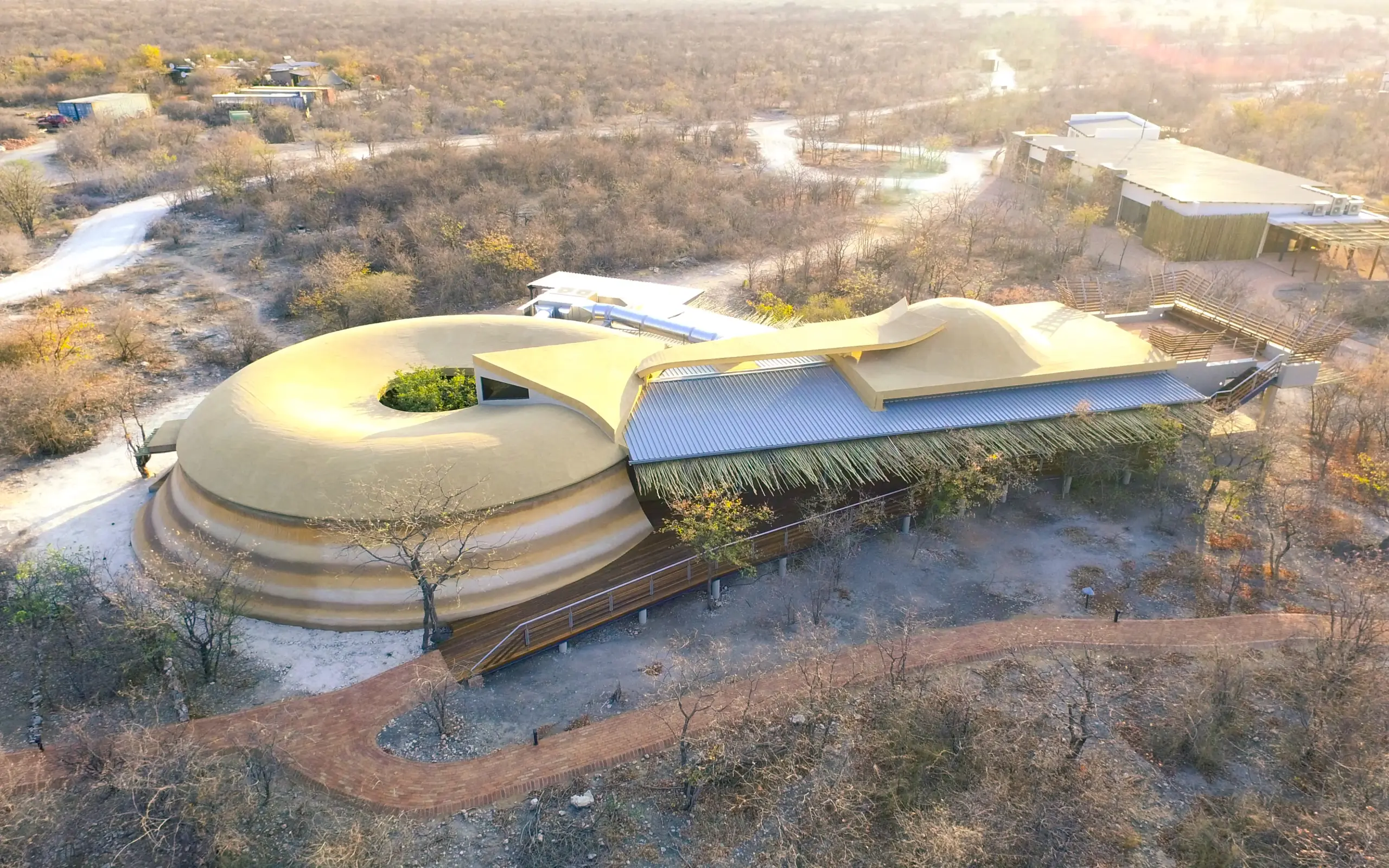
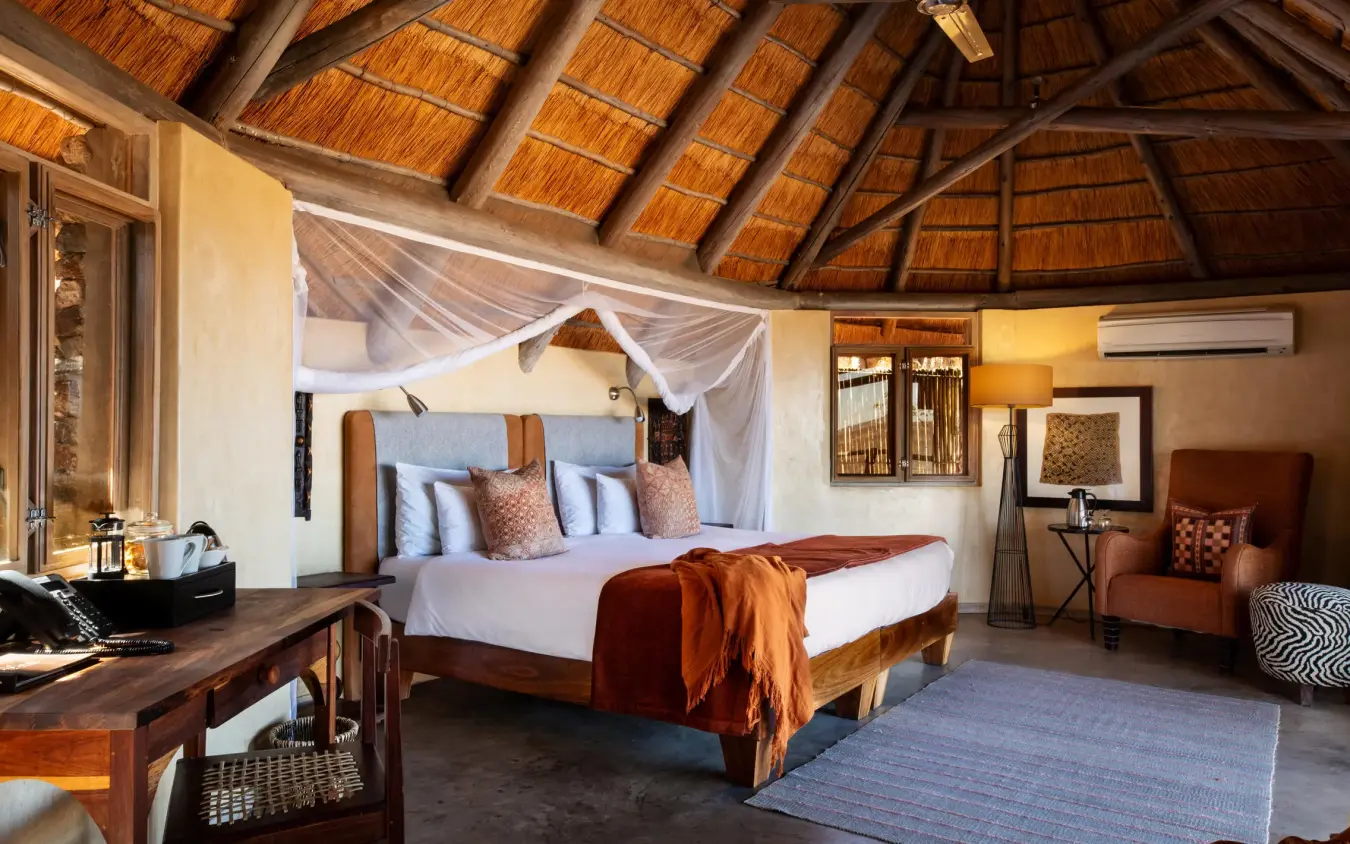
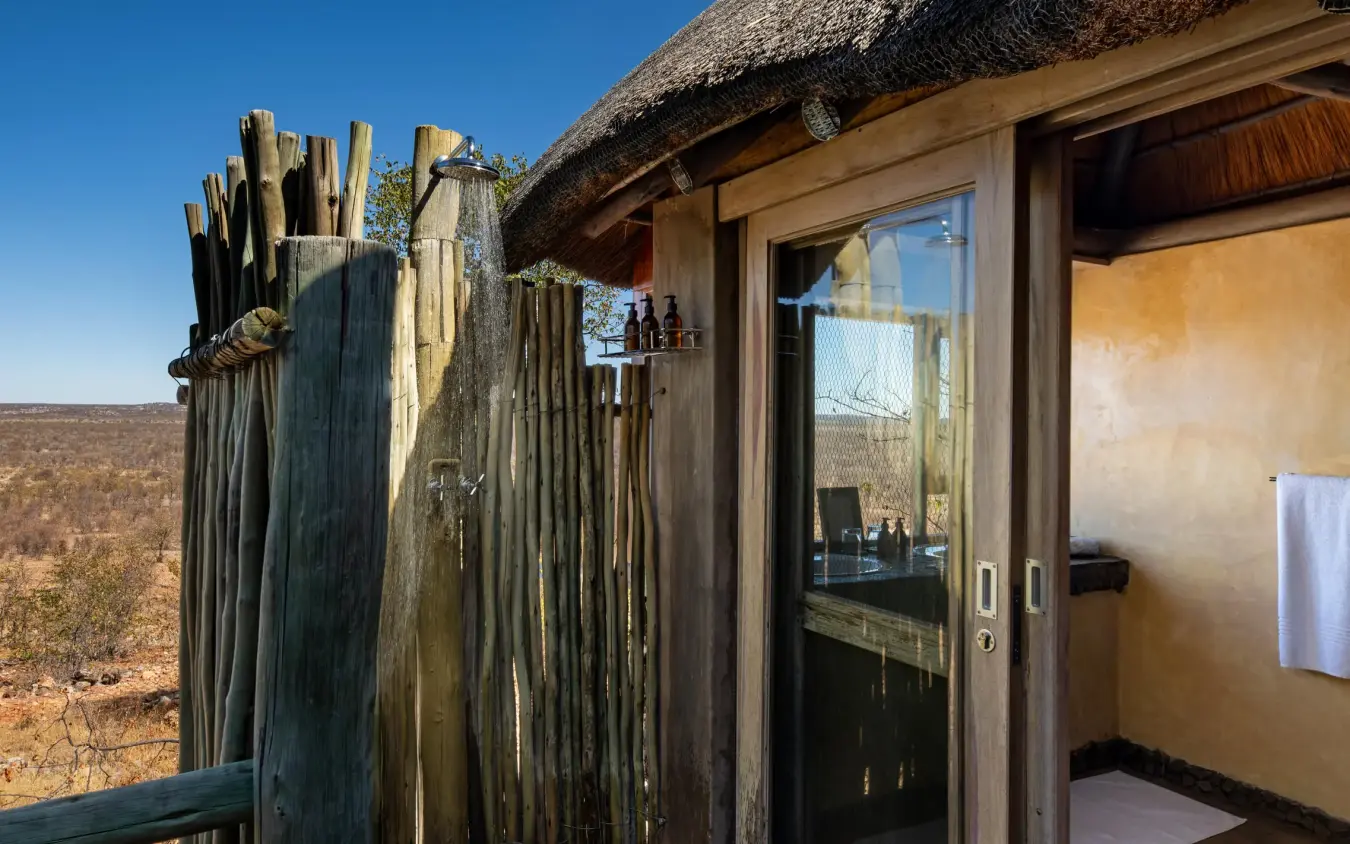
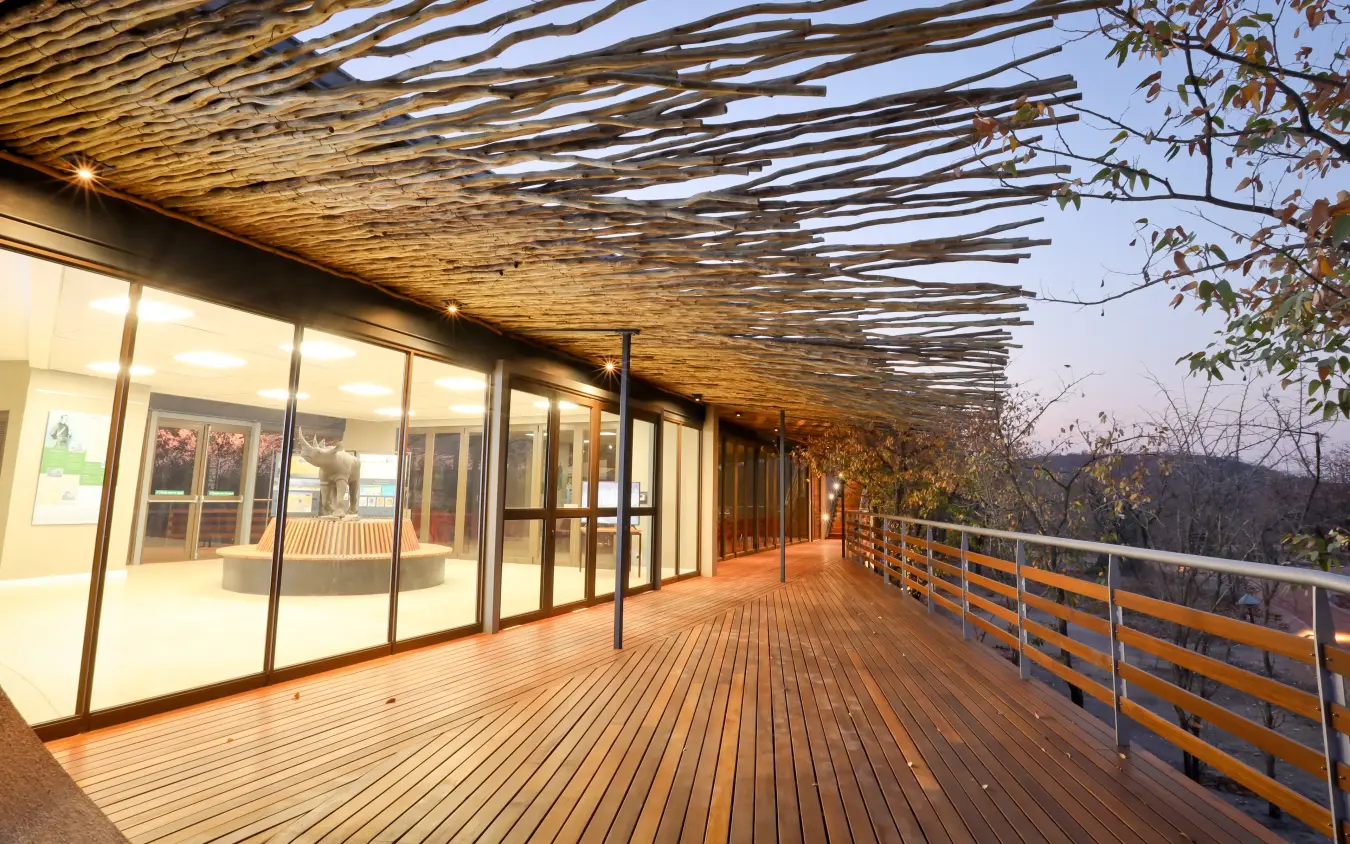
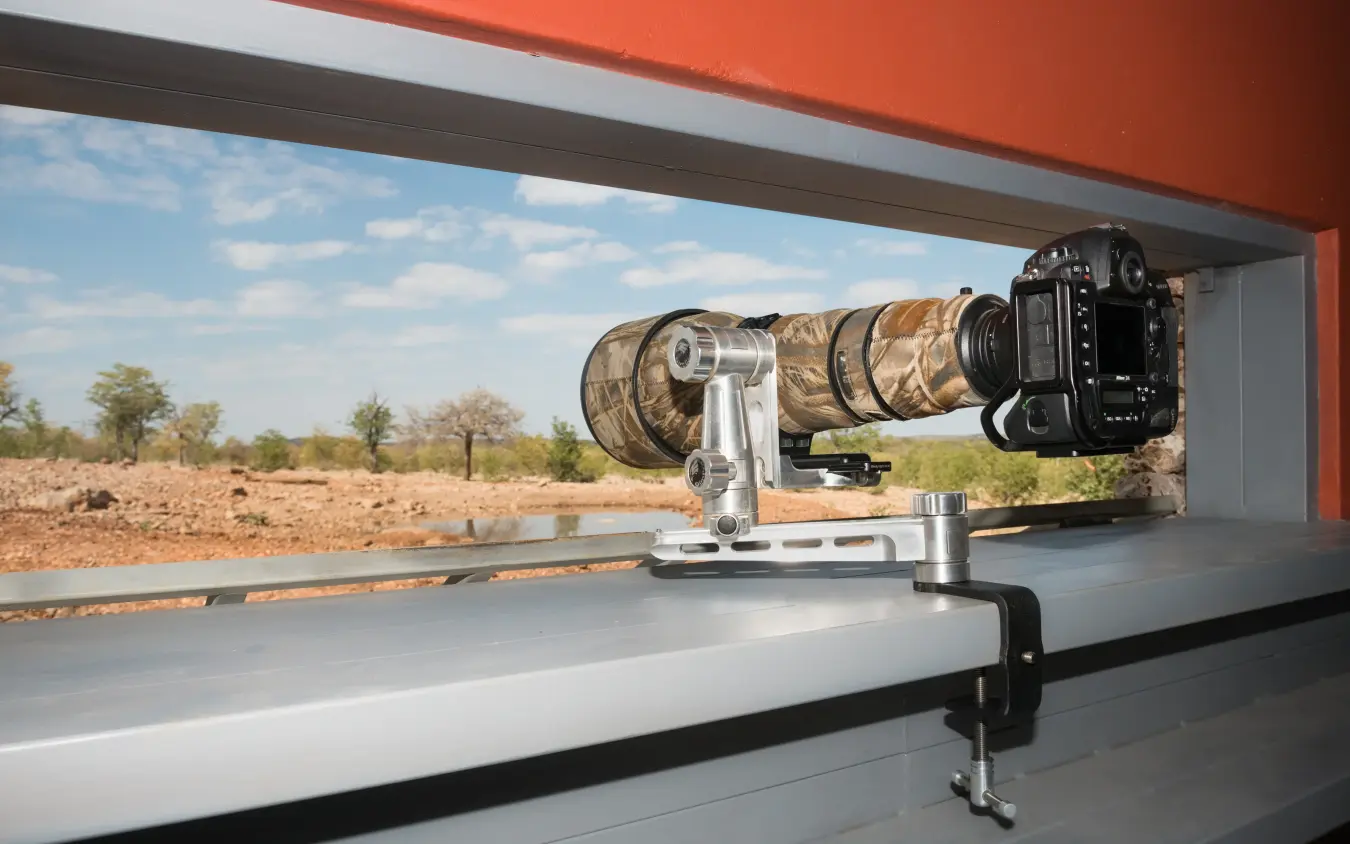
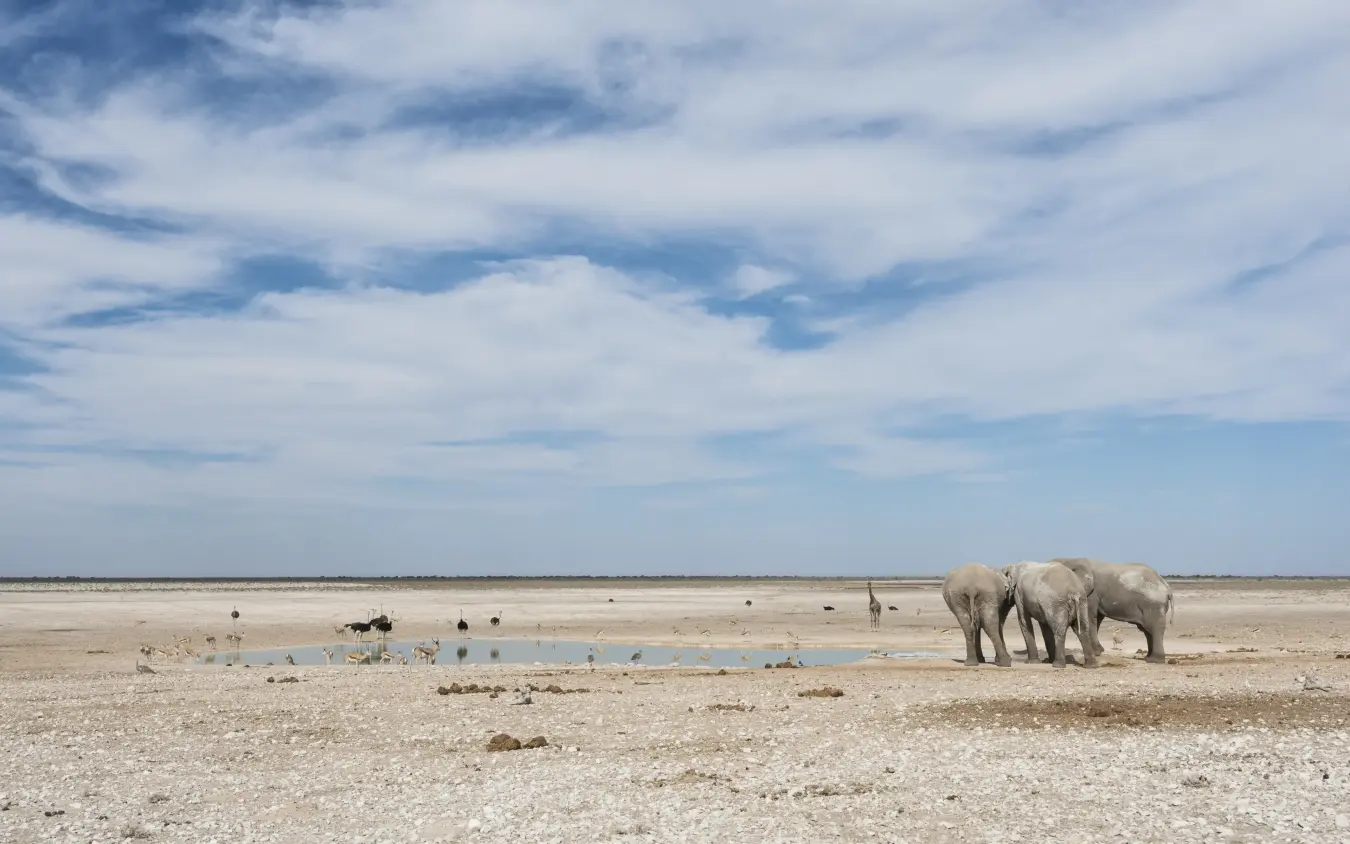
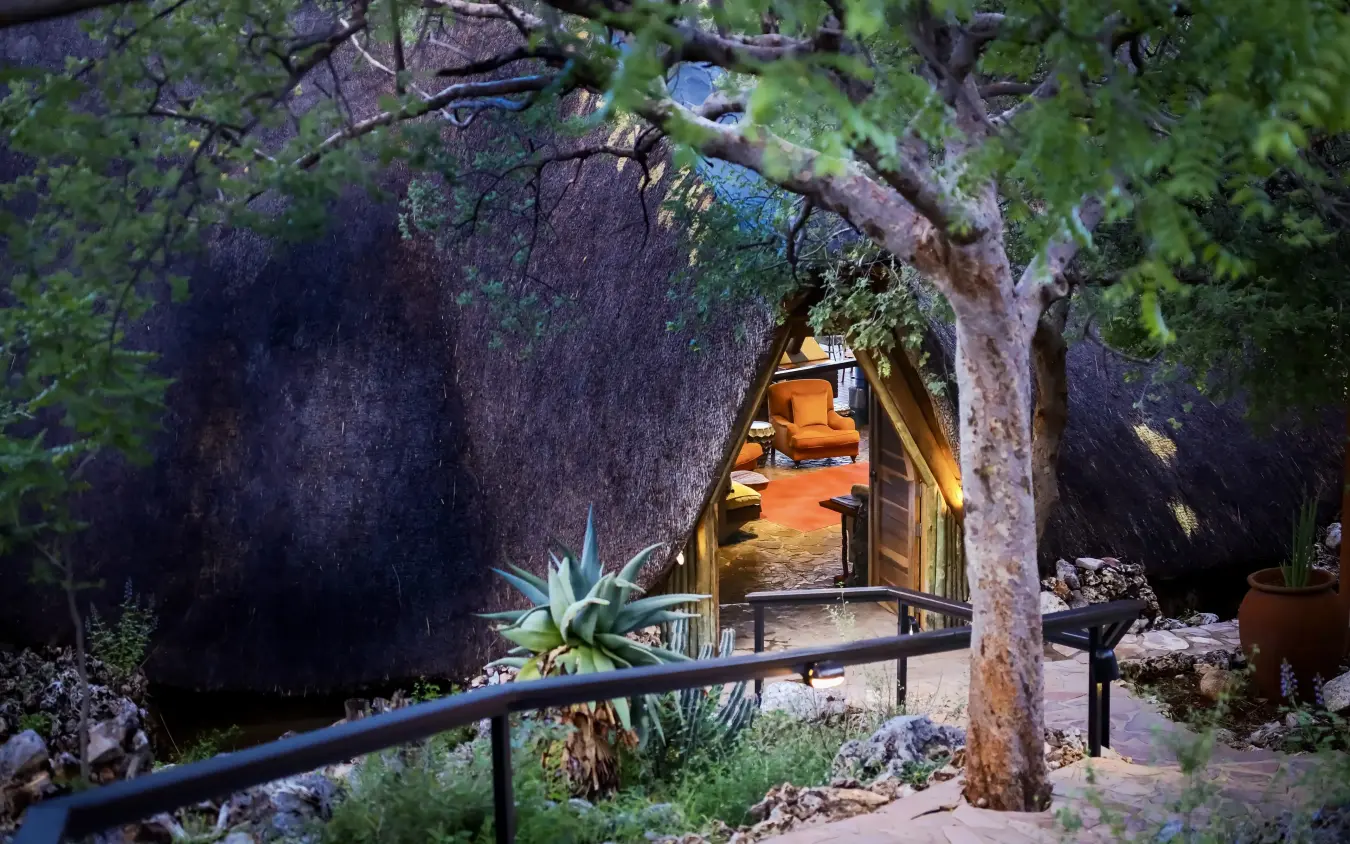
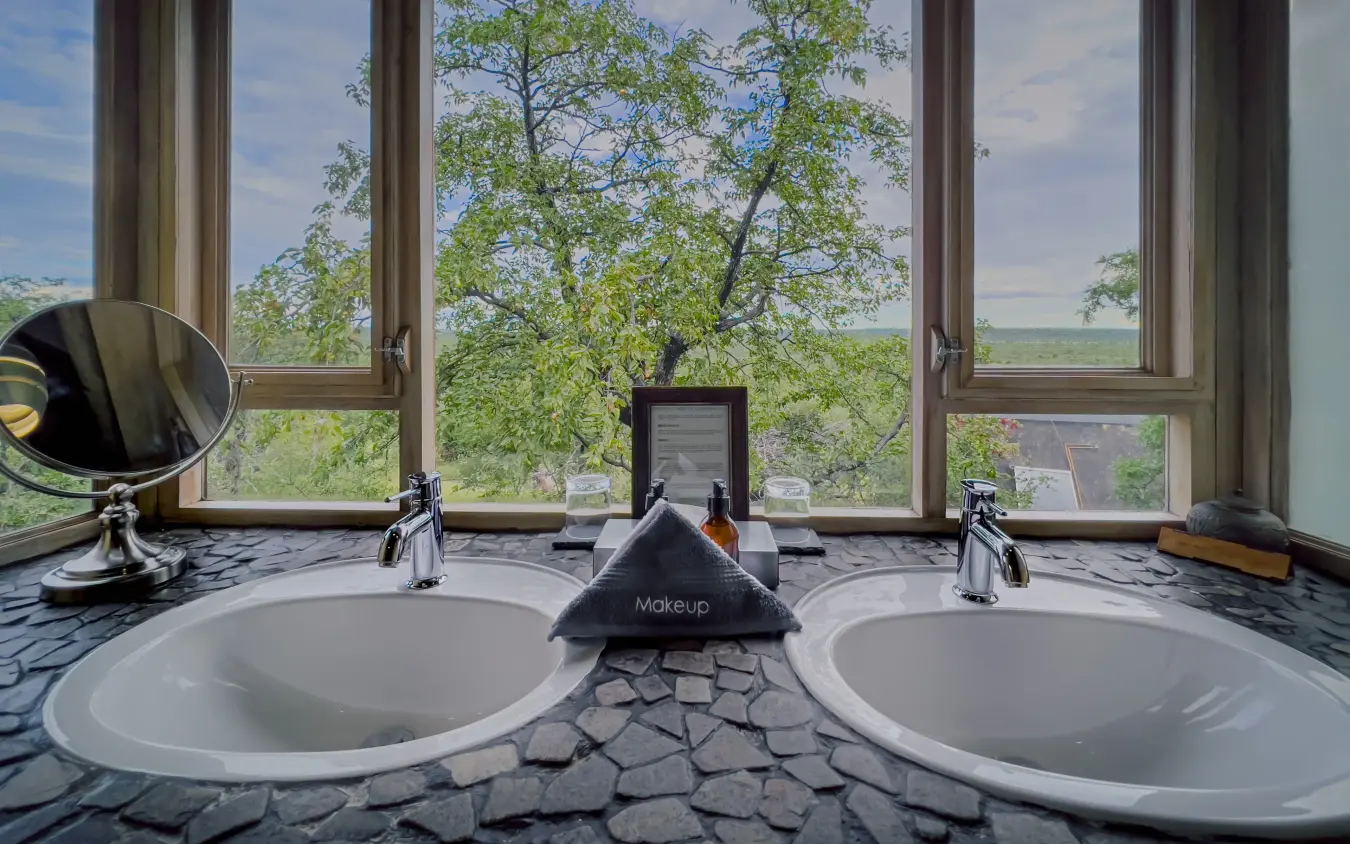
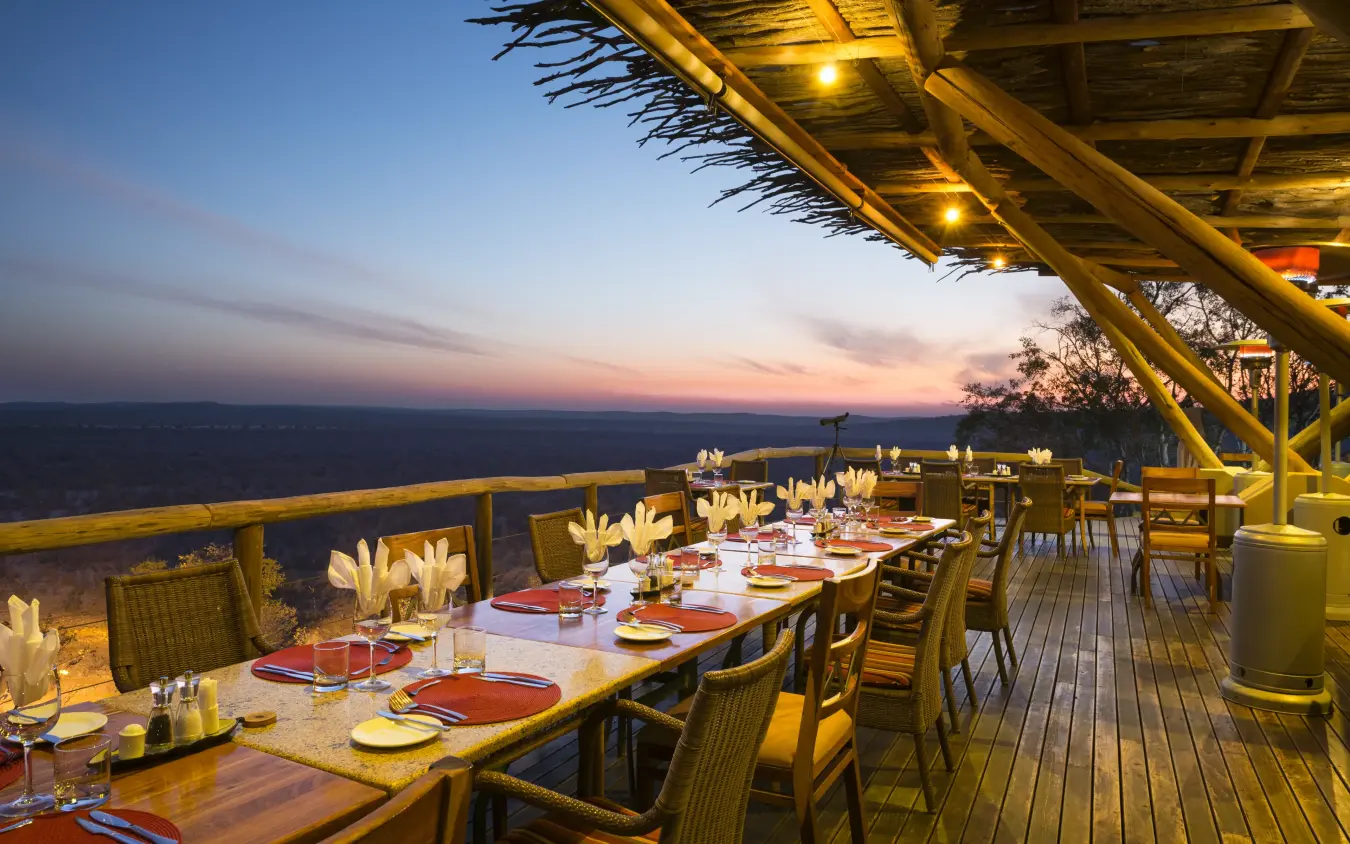
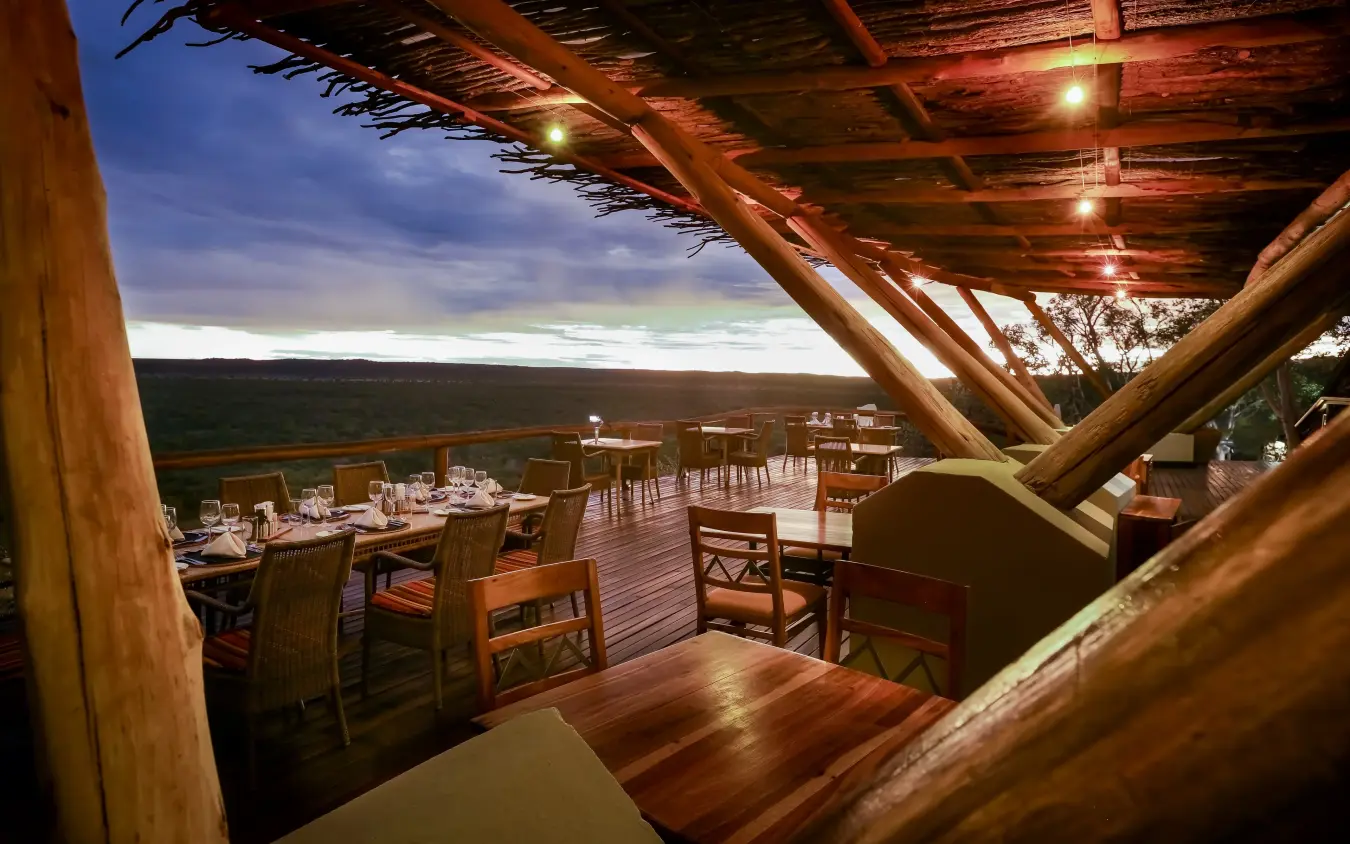
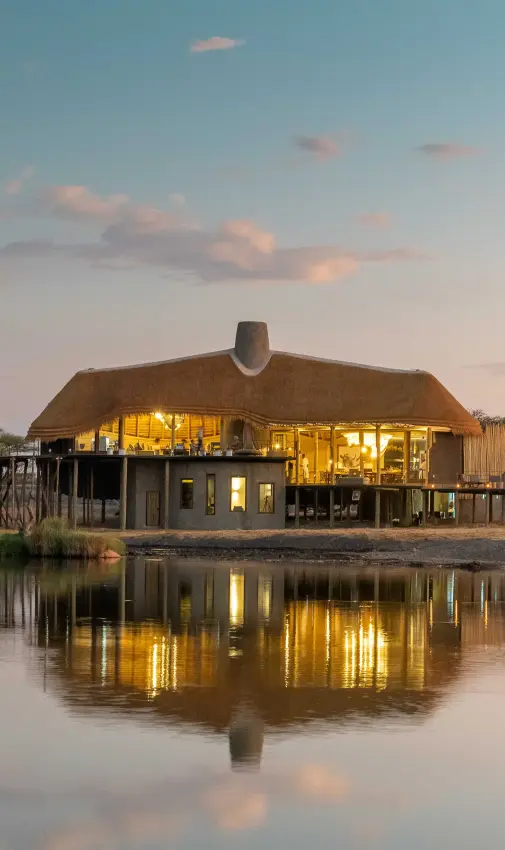
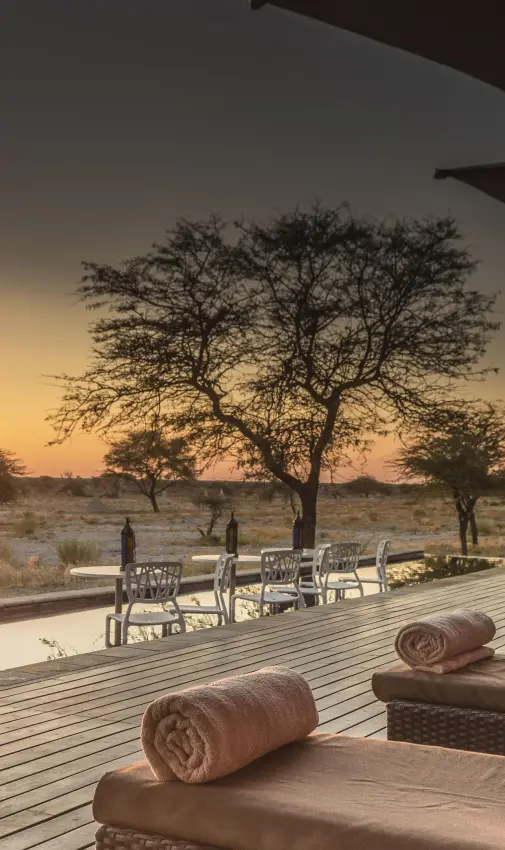
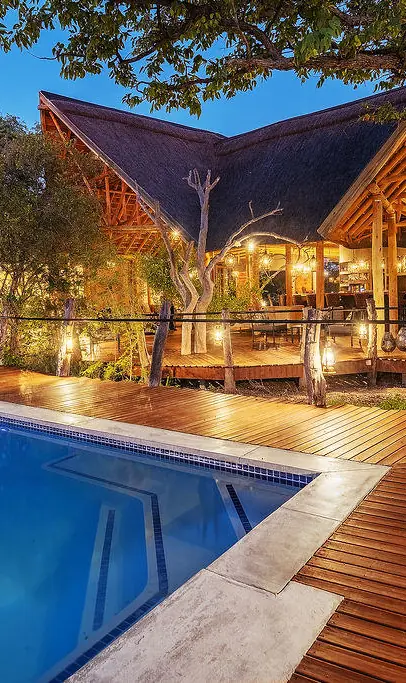
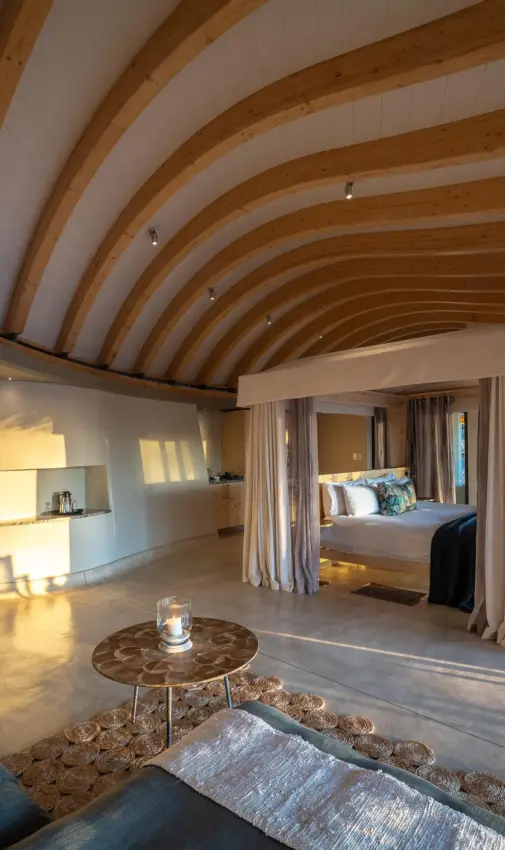
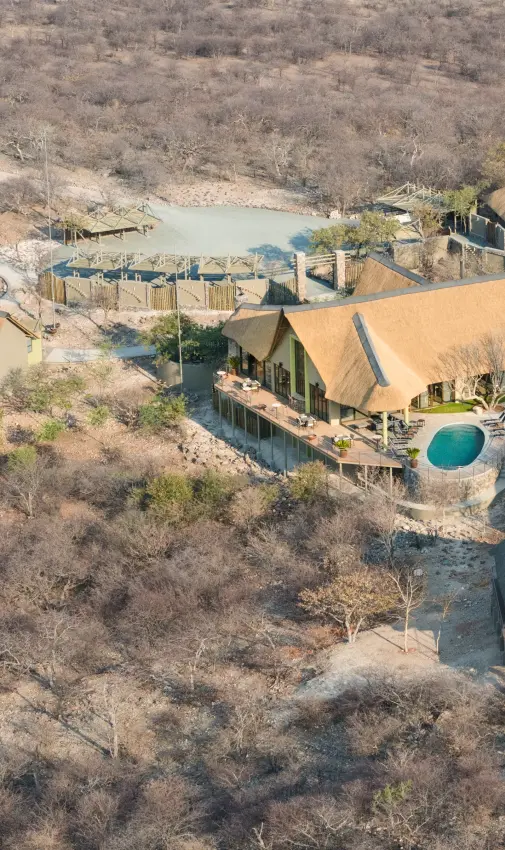
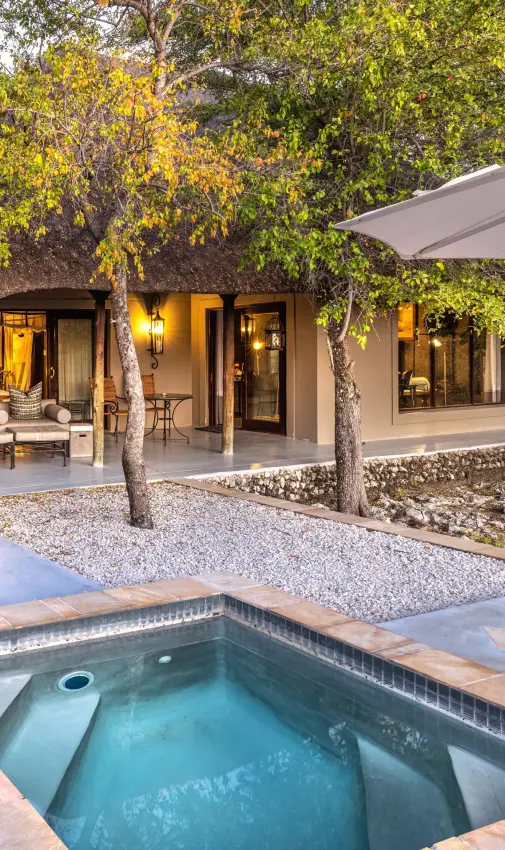
The lodge is built close to the top of a hill in the foothills of the Ondundozonanandana dolomite range, a Herero name. The elevated position gives sweeping views across mopane scrub savannah to the horizon, with the waterhole directly below. Fourteen chalets of local stone, brick and thatch step down the hillside, each reached by paved or elevated timber walkways. Each has its own wooden deck, positioned so the sightlines run out over the plains.
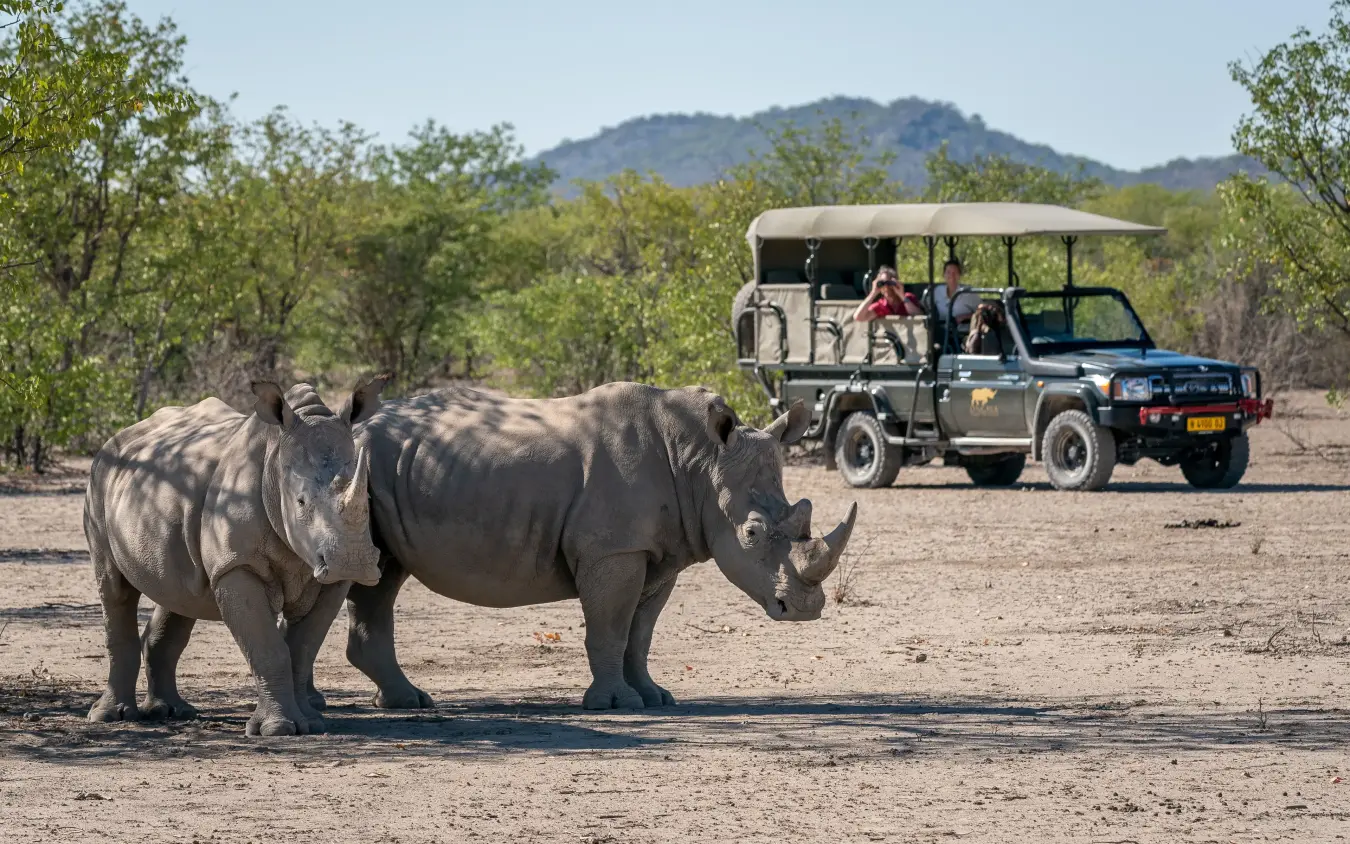
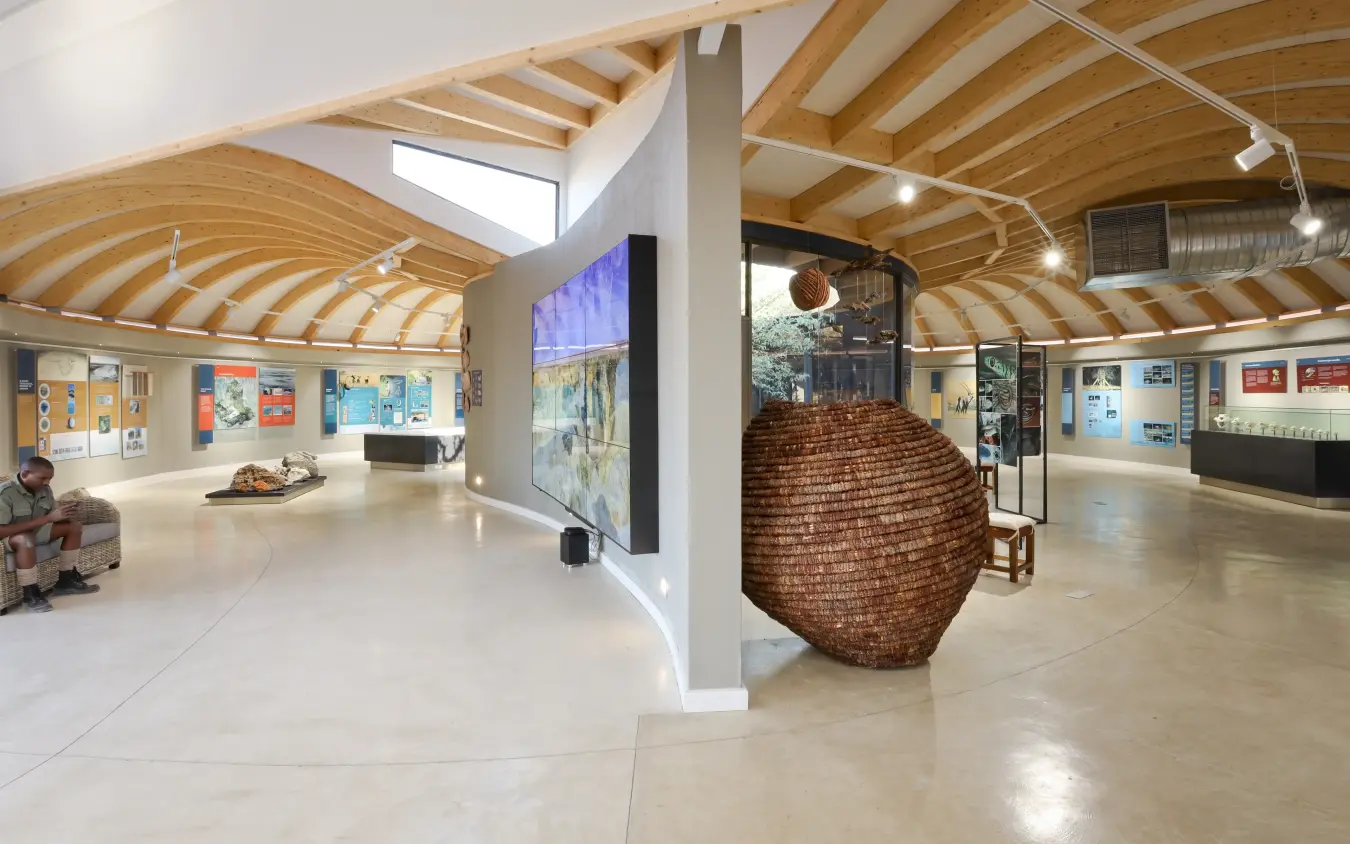
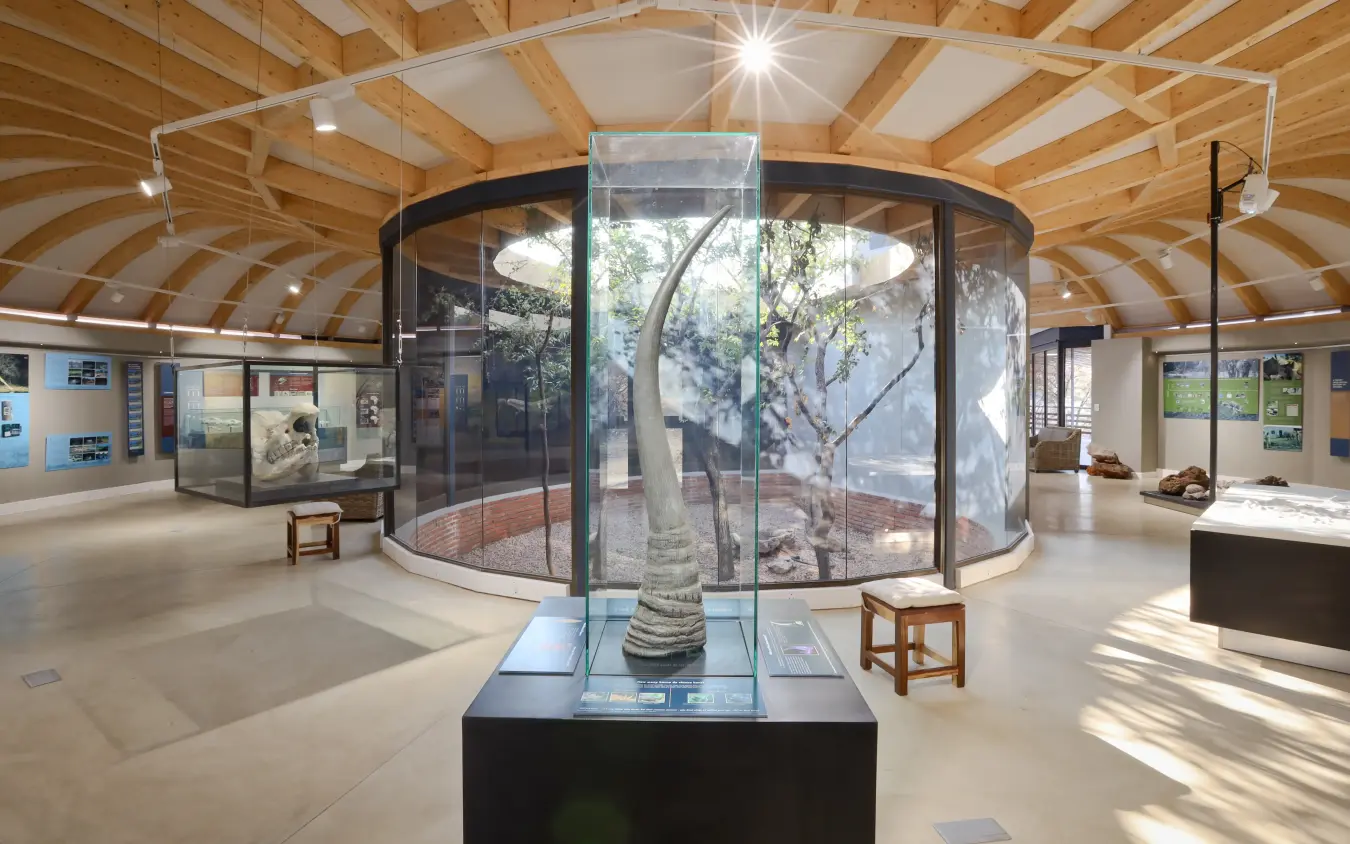
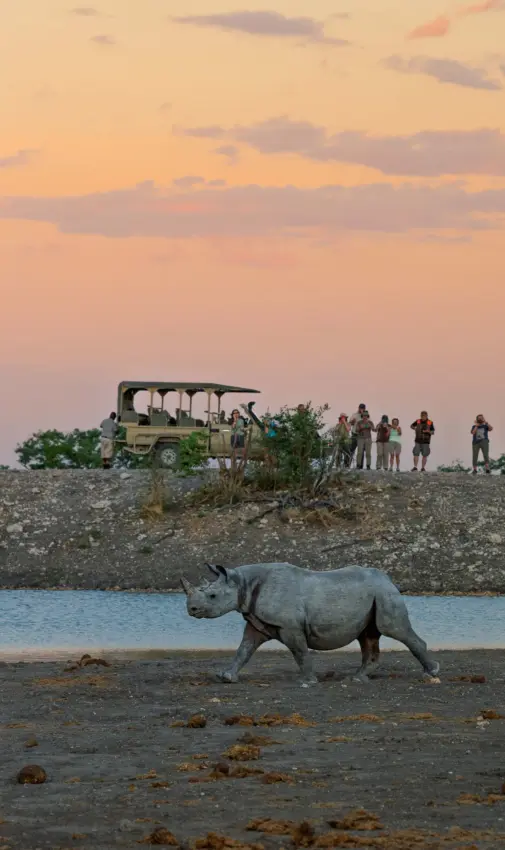
More than 100 mammal species live on the wider reserve, among them lion, leopard, cheetah and the rare, endemic black-faced impala. Rhino remain the reason most people come. Ongava holds a black rhino custodianship for the Namibian government, giving translocated animals a monitored sanctuary. Alongside it, genetic studies on the reserve map the population’s paternity to guide its management. The science is quiet but constant, and it runs beneath everything a guest sees here.
Namibian game features on the menu, and full days spent in Etosha come with packed lunches
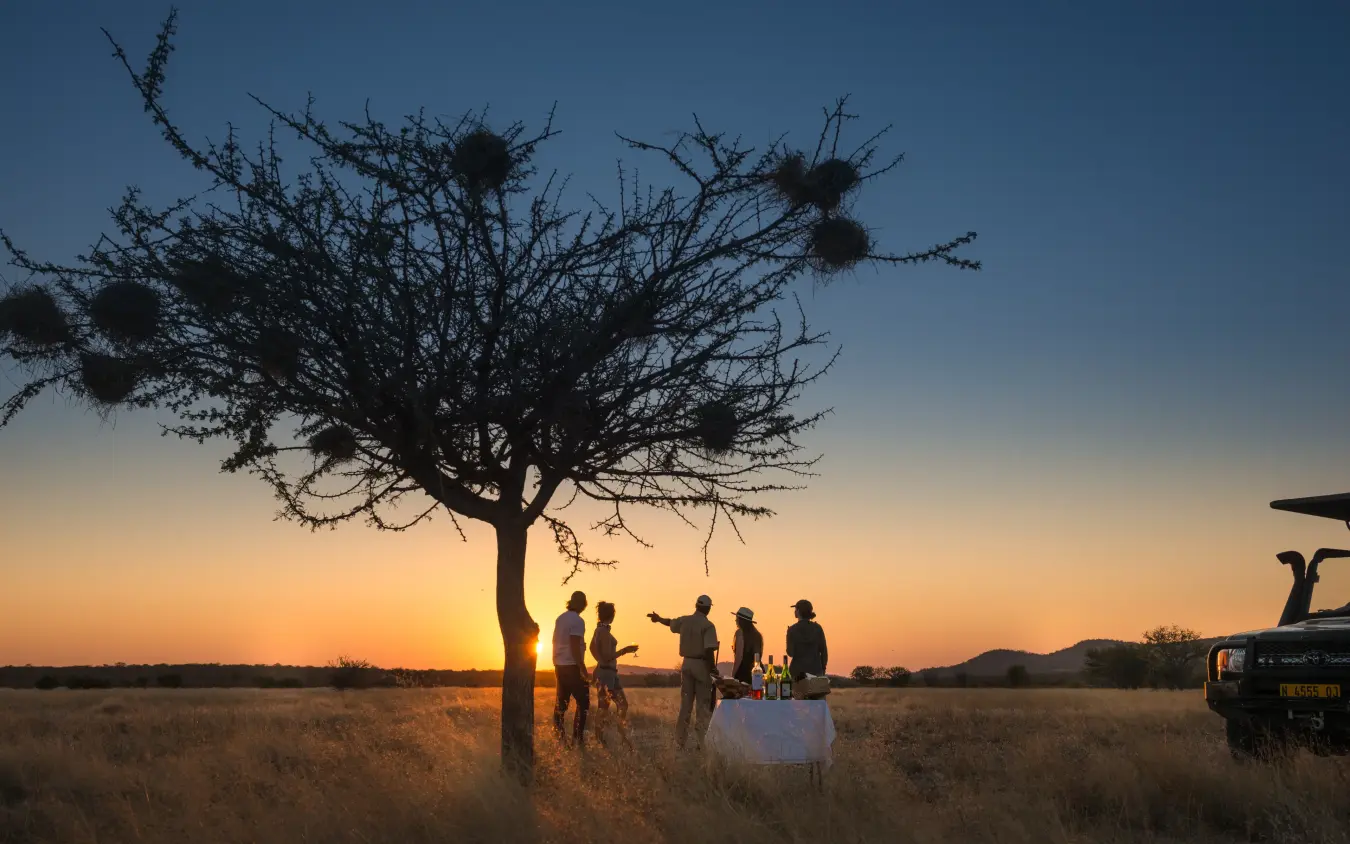
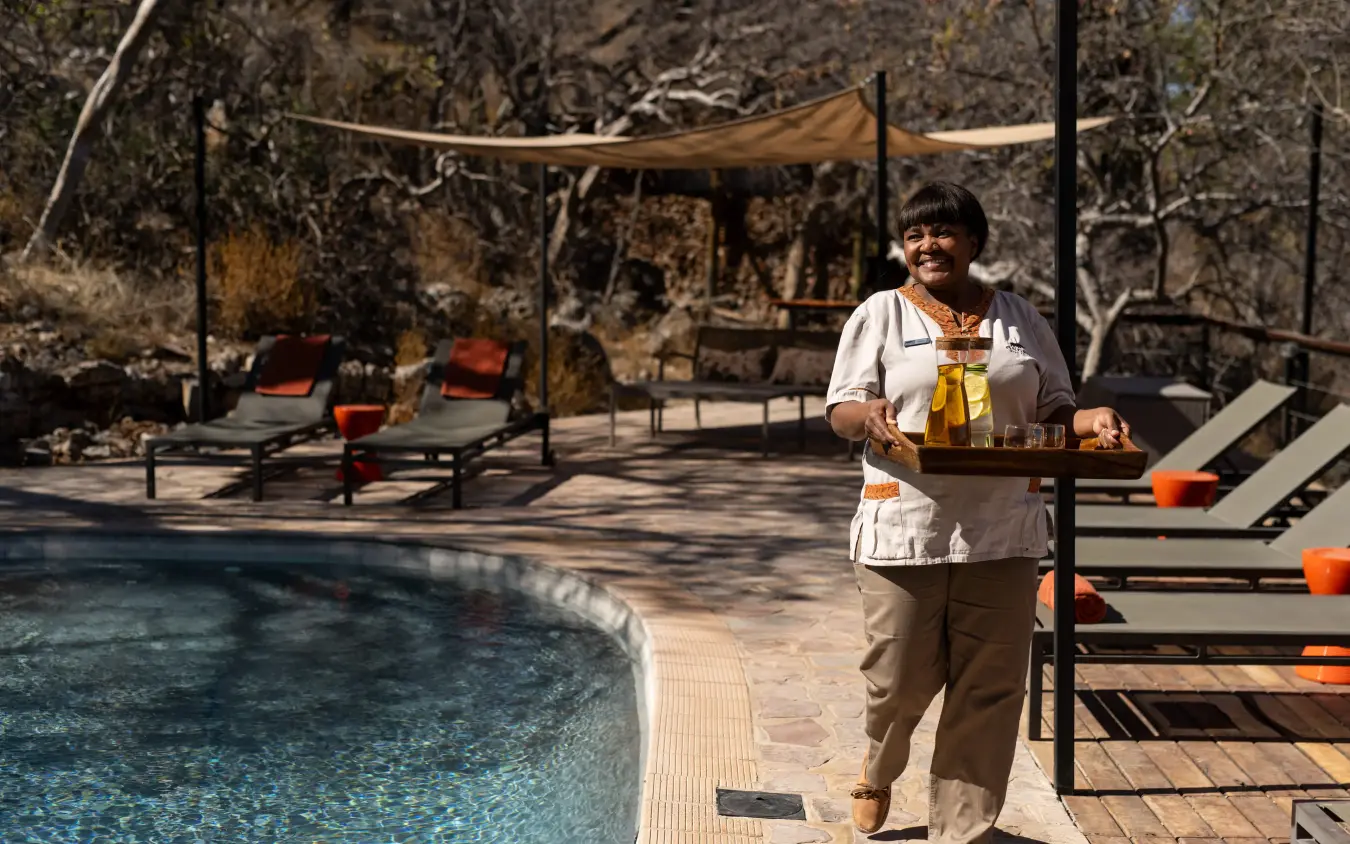
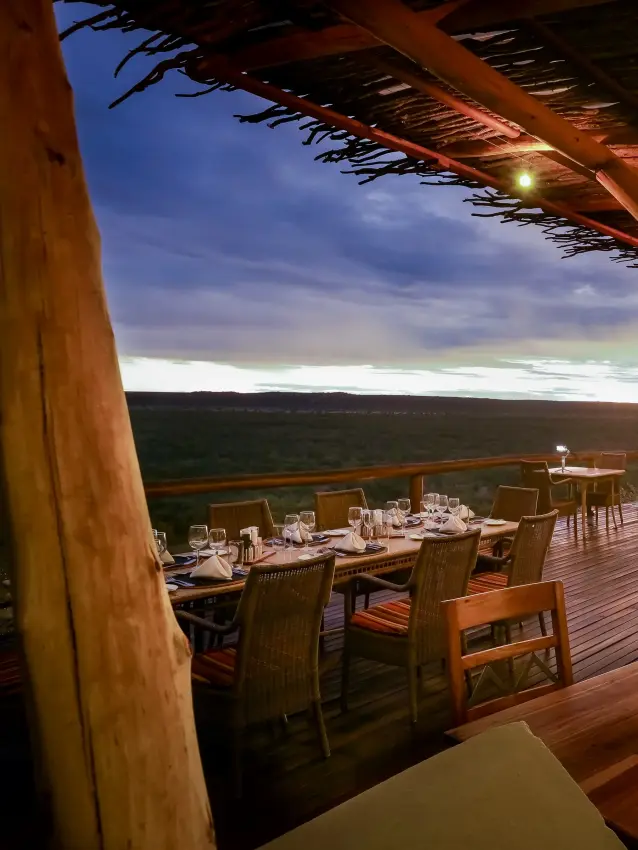
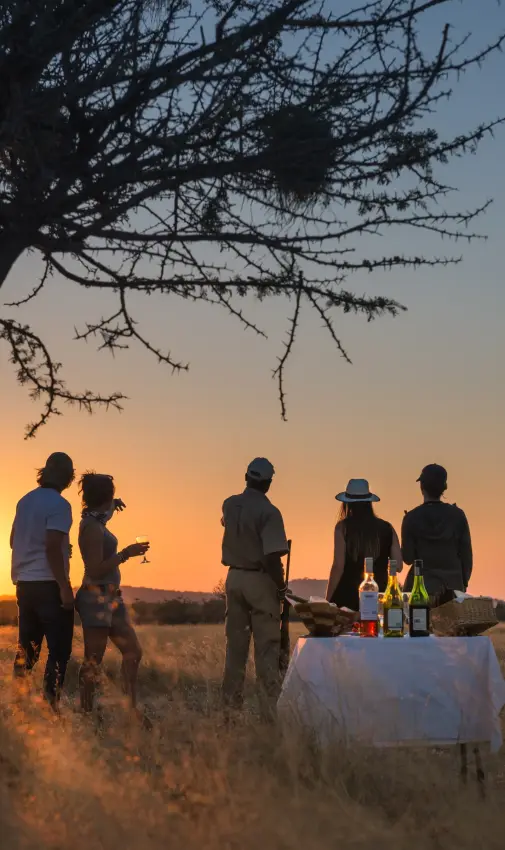
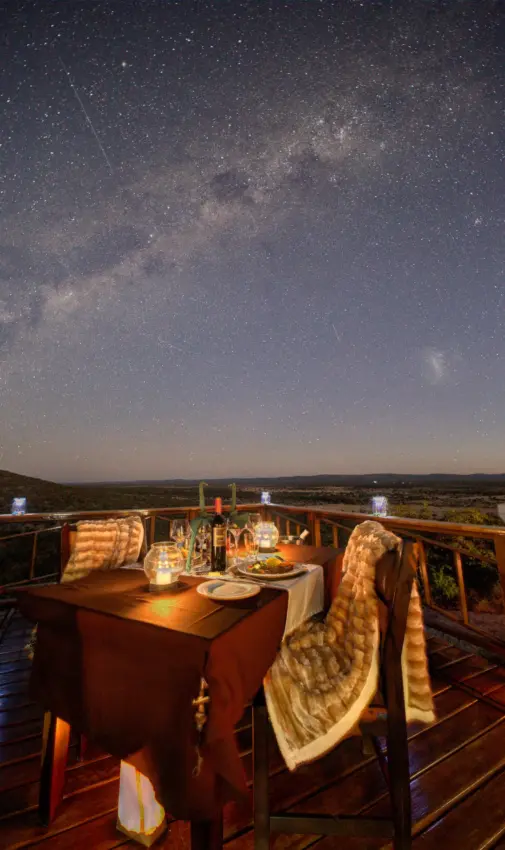
The days find an easy shape. An early start for a morning drive gives way to brunch, then quiet hours by the pool or on the deck watching the waterhole, before an afternoon drive and dinner under the stars. Meals are served in a high-roofed lapa with open fireplaces for winter evenings, or al fresco on a split-level deck, candlelit and facing the illuminated water. Namibian game features on the menu, and full days spent in Etosha come with packed lunches.
At night the bush announces itself. Lions roar in the dark, hyenas call, and the heavy breathing and splashing of rhino and elephant carry up from the waterhole to the decks above. Mornings open with birdsong and the far-off sound of lions again. Ongava Lodge suits travellers who want serious wildlife viewing, rhino above all, without giving up comfort, and who value the freedom a private reserve allows alongside time inside Etosha National Park.