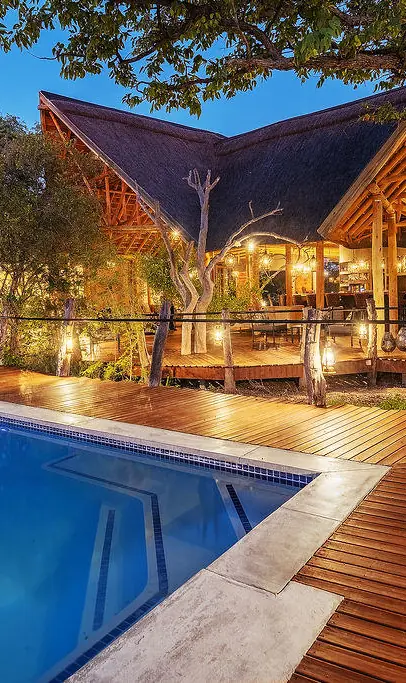
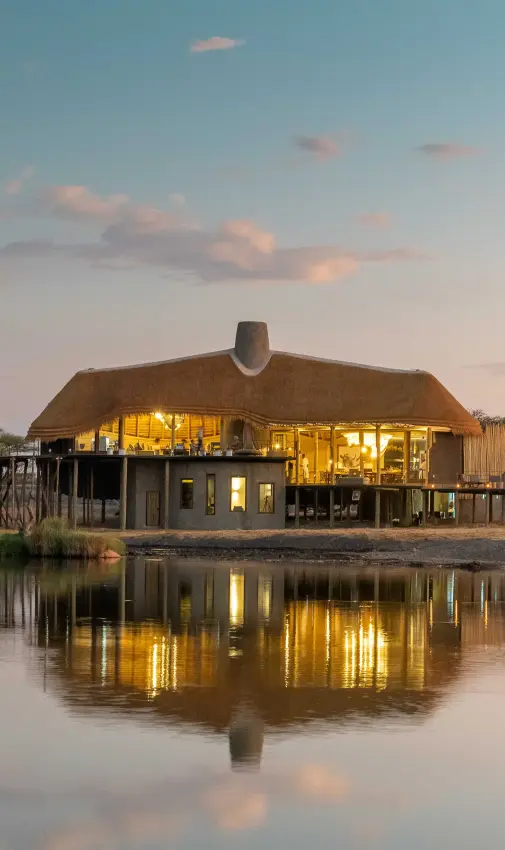
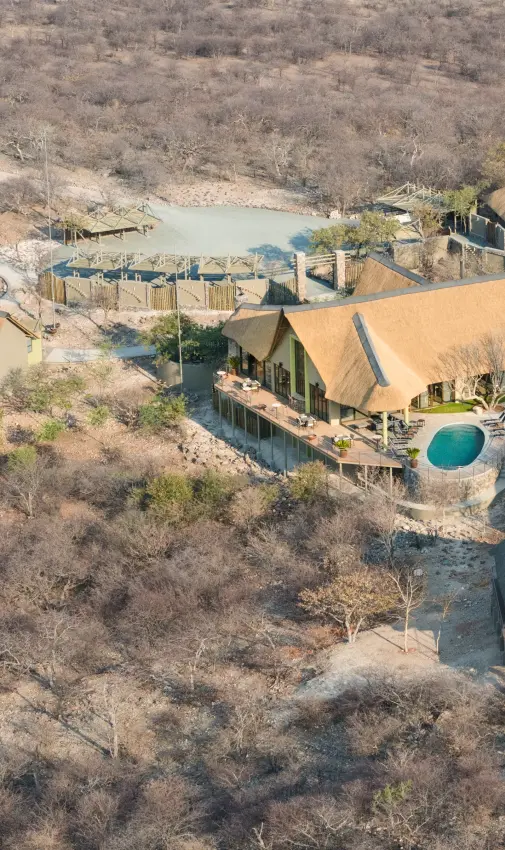
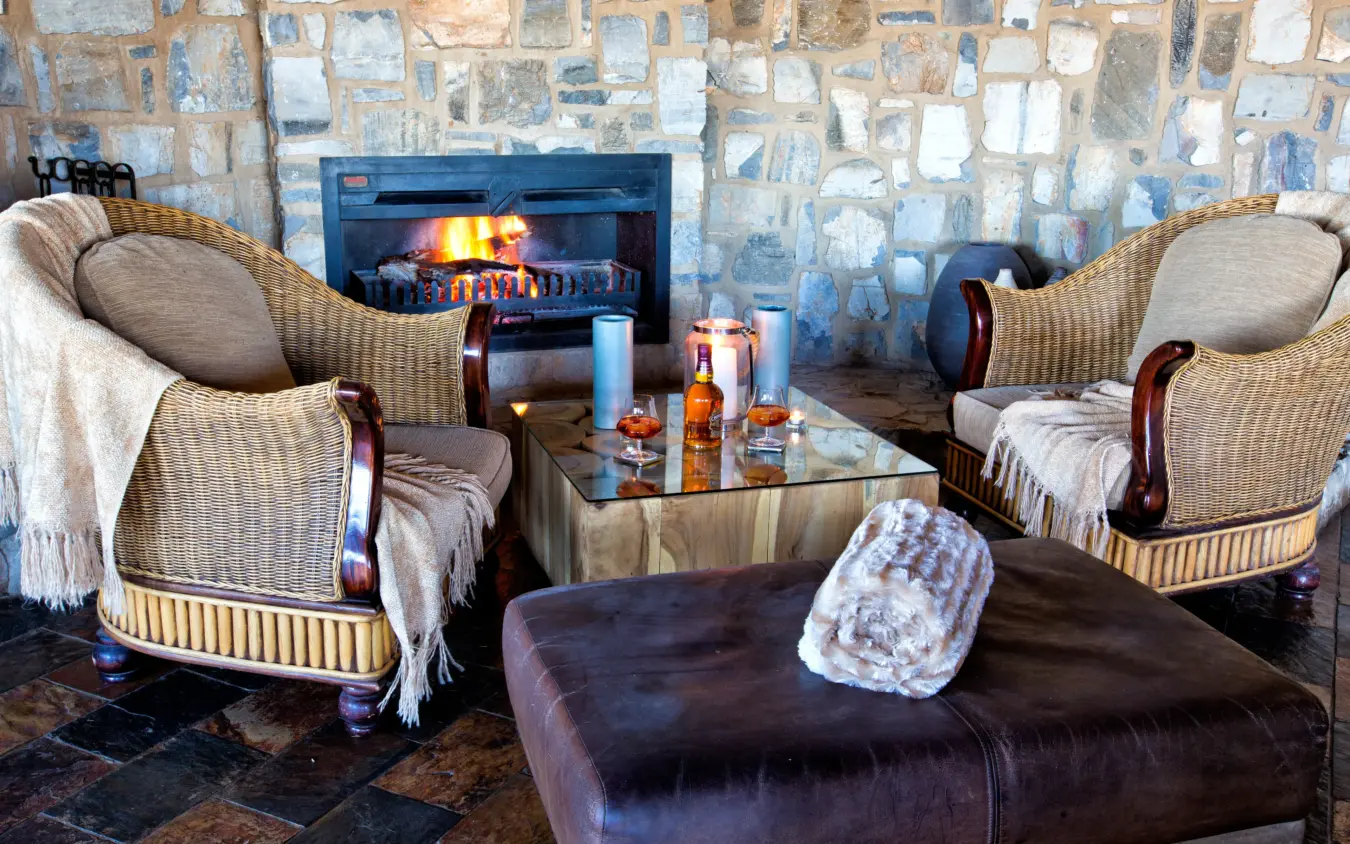
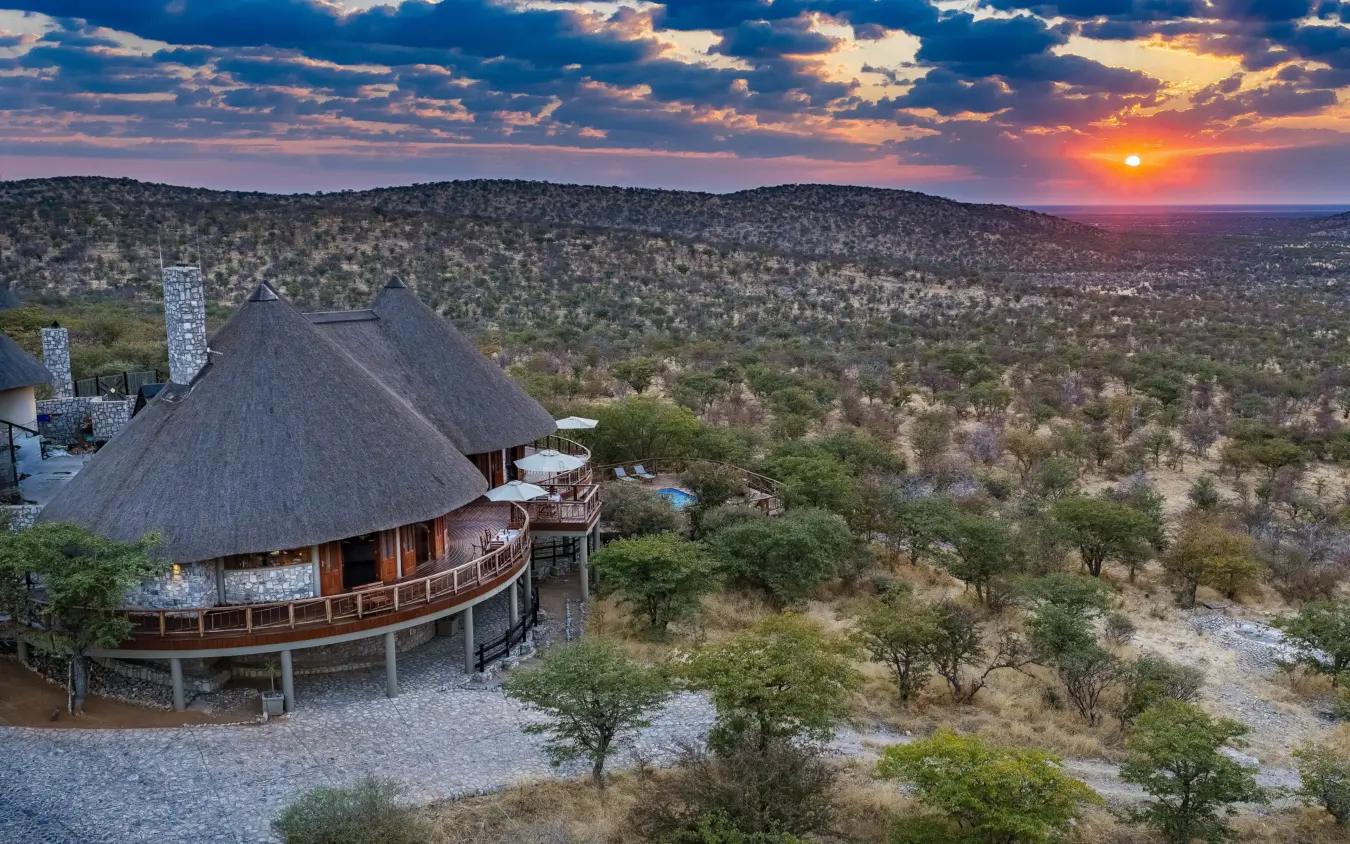
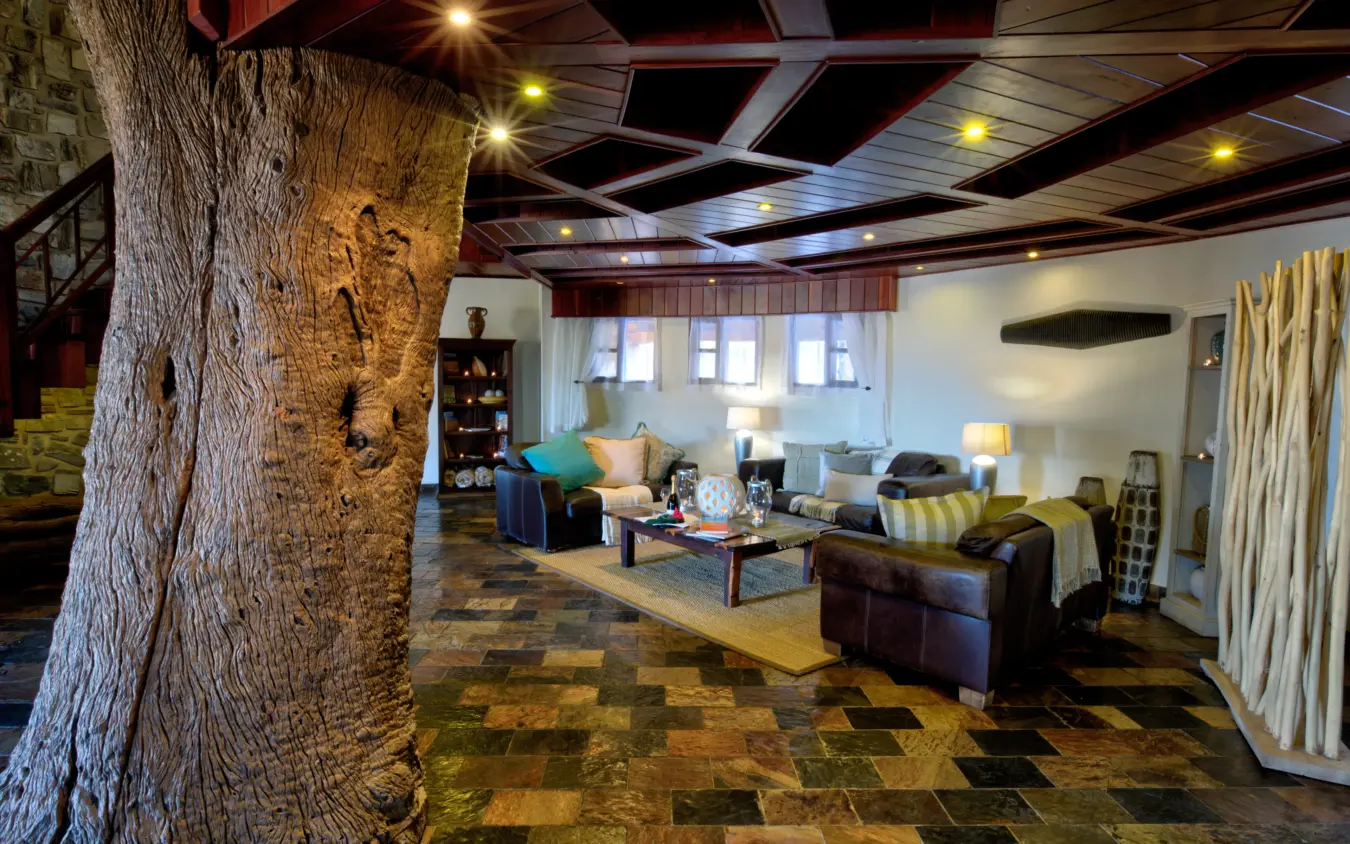
Cattle grazed this land and hunting concessions operated on it until the owners turned the whole reserve over to photographic safaris in 2016. Etosha Mountain Lodge was the first lodge built on it, and it remains one of the three small camps that share the reserve. The building is plainly Namibian, thatch over dolomite masonry, stone floors and high ceilings, with a tree trunk rising through the mezzanine restaurant. Solar power runs everything, so the evenings come without generator noise.
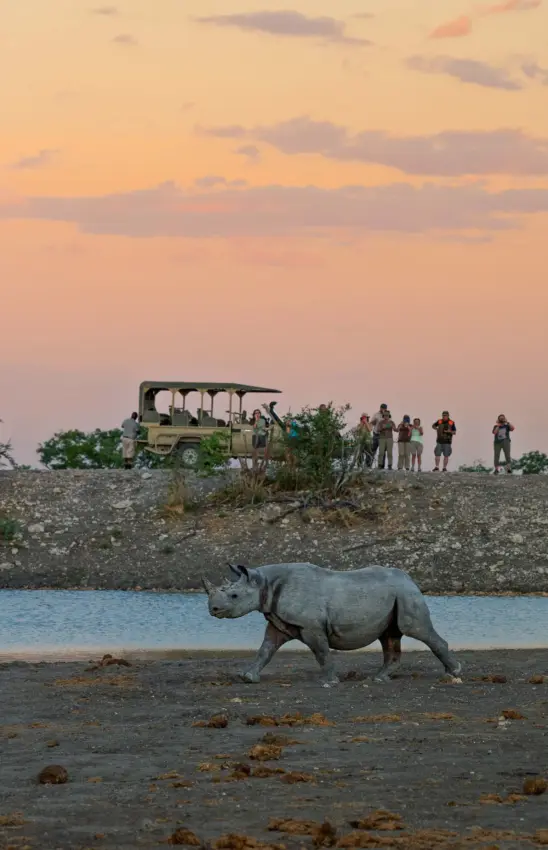
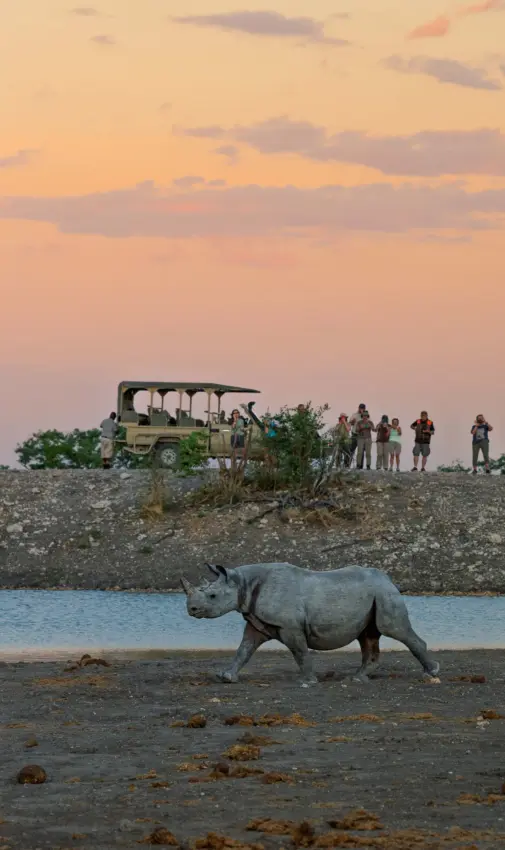
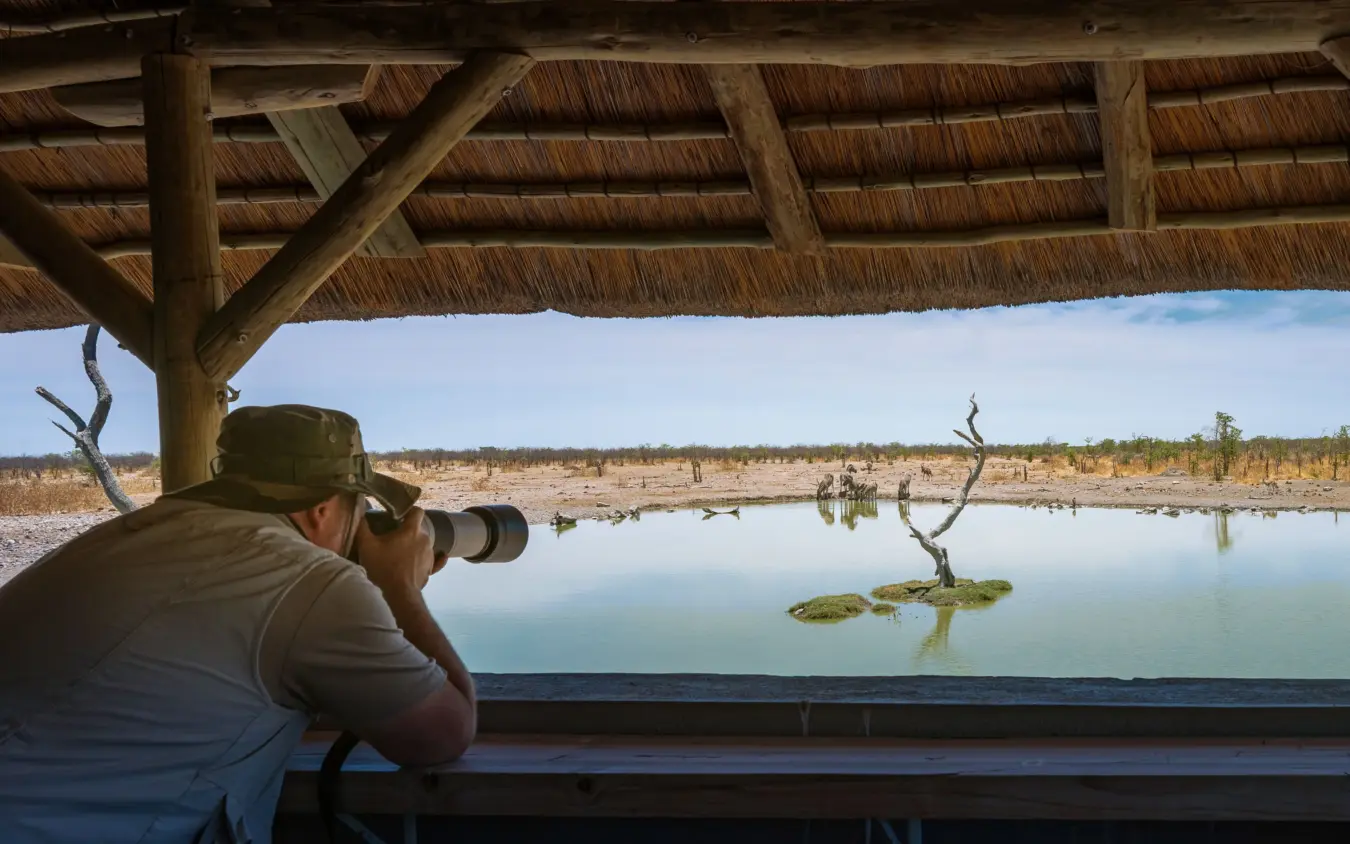
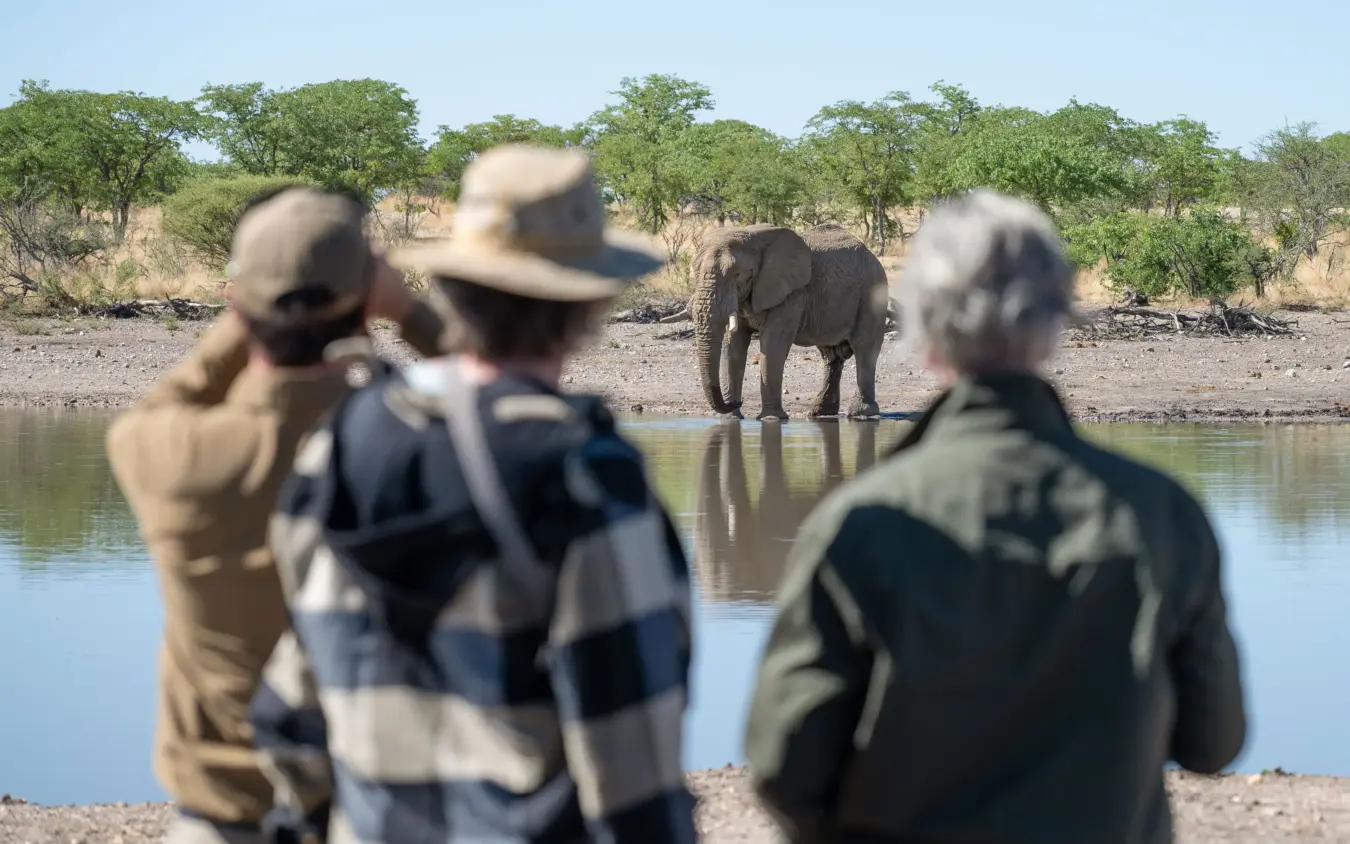
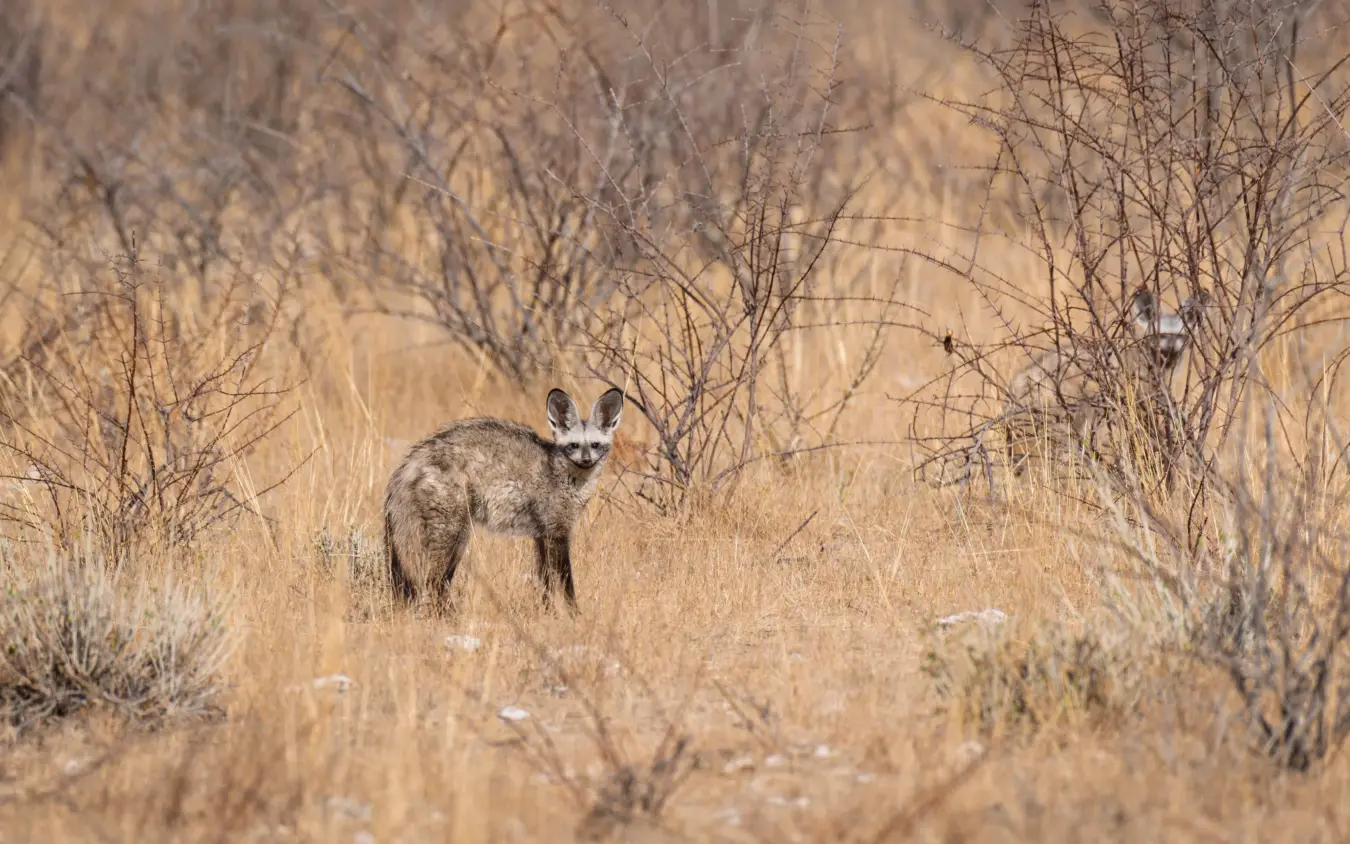
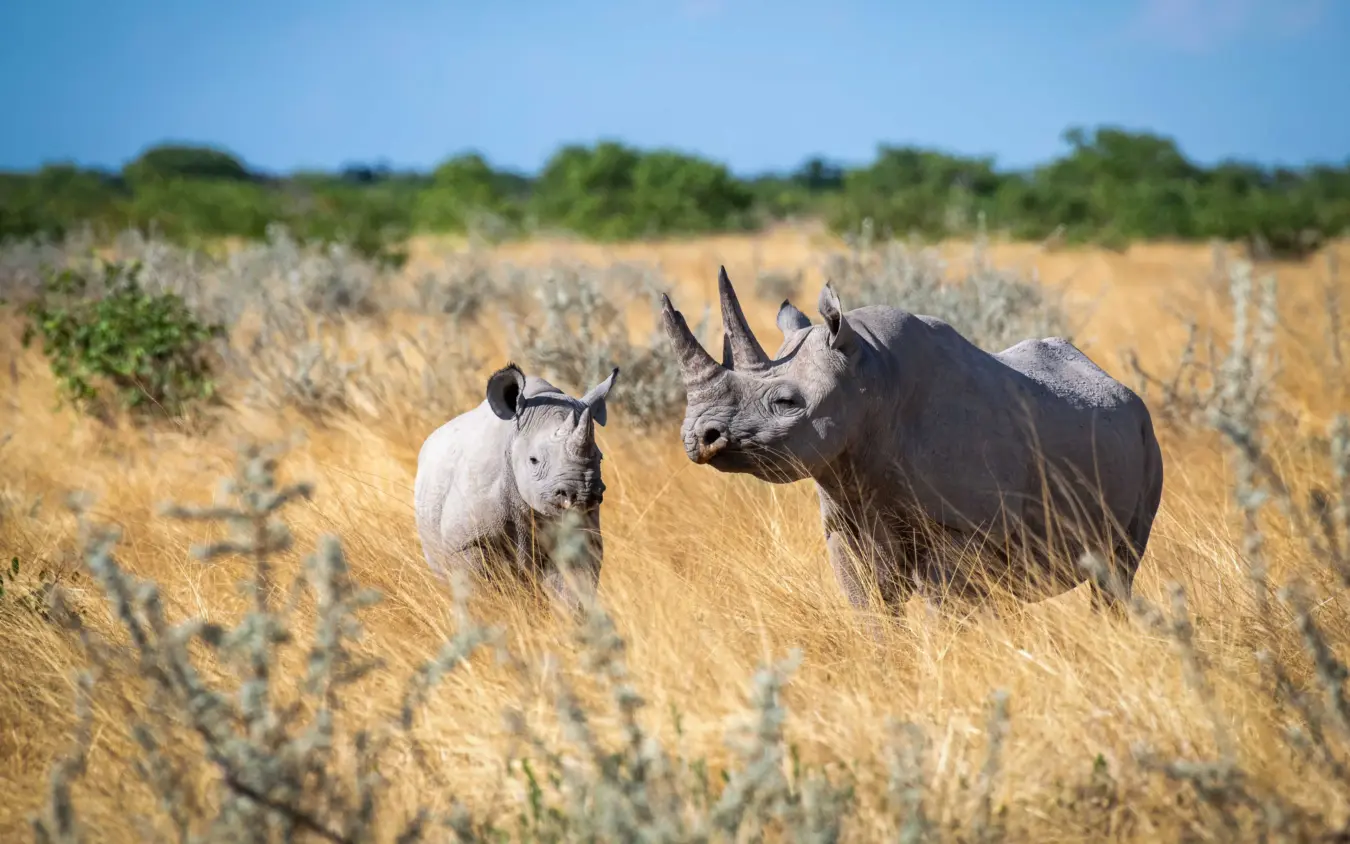
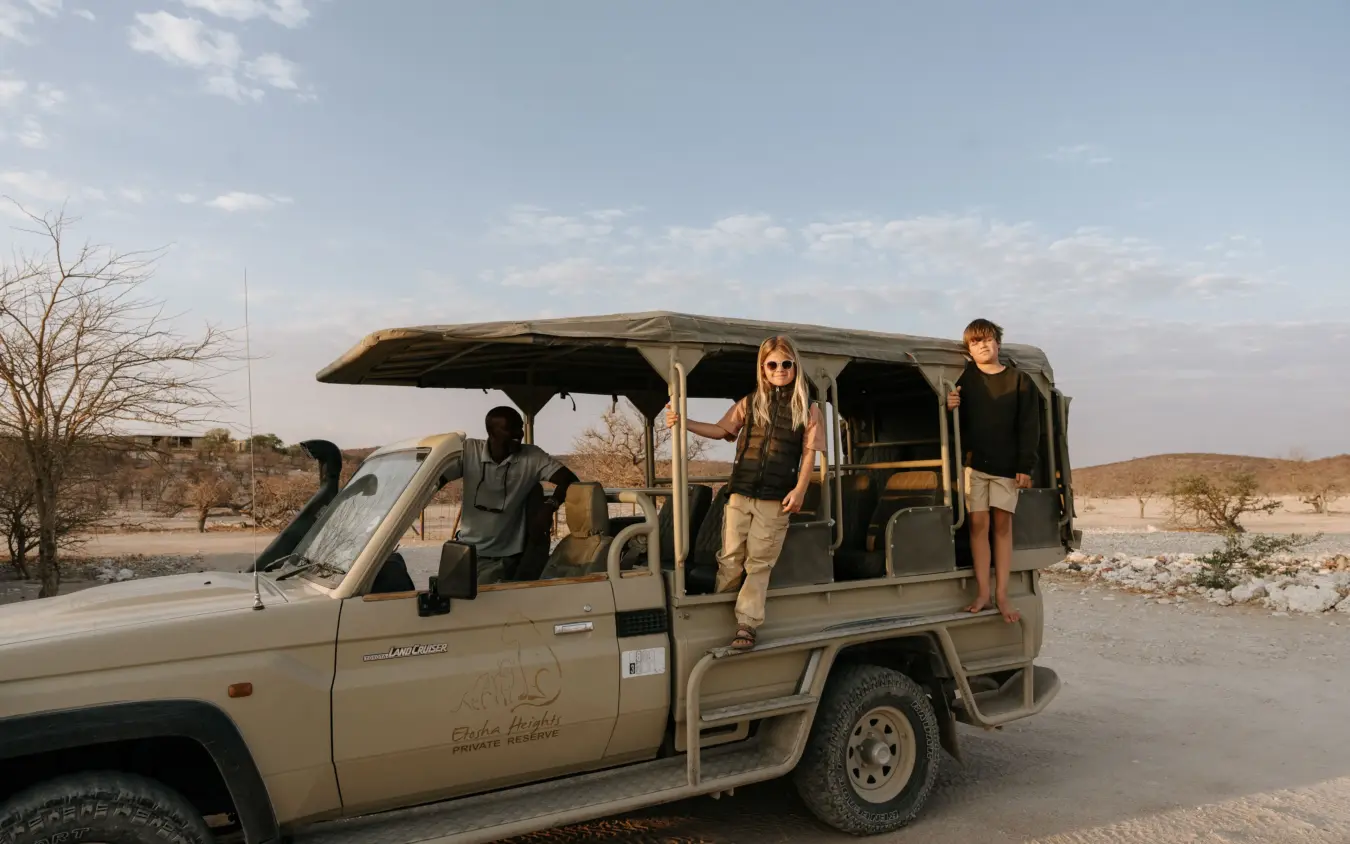
Etosha Heights is a designated custodian area for black rhino, and the protection that comes with it runs around the clock. Ranger teams work in shifts, cameras watch the hills, and patrol flights pass overhead. Trackers read spoor on foot long before a rhino comes into sight, camera traps go out with the research team, and what guests see feeds a wildlife count that has run twice a year since 2017. Lions hold territory across the same ground, and their numbers are followed under a long-running lion project.
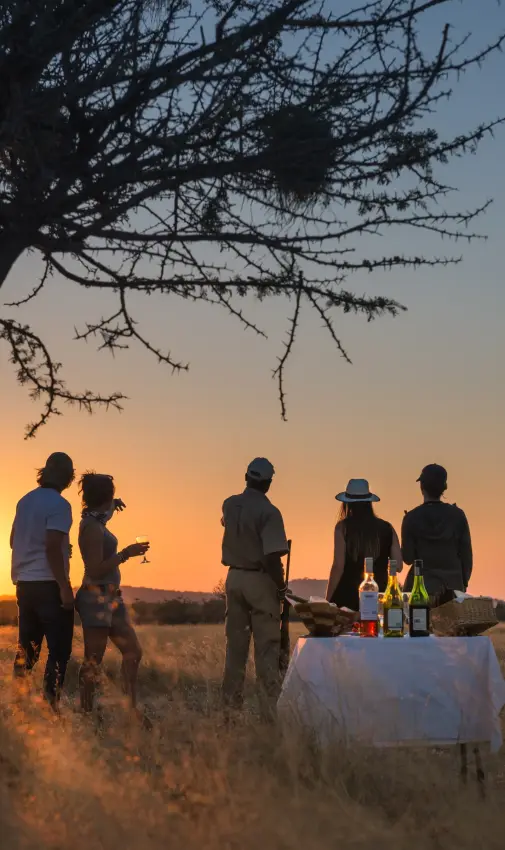
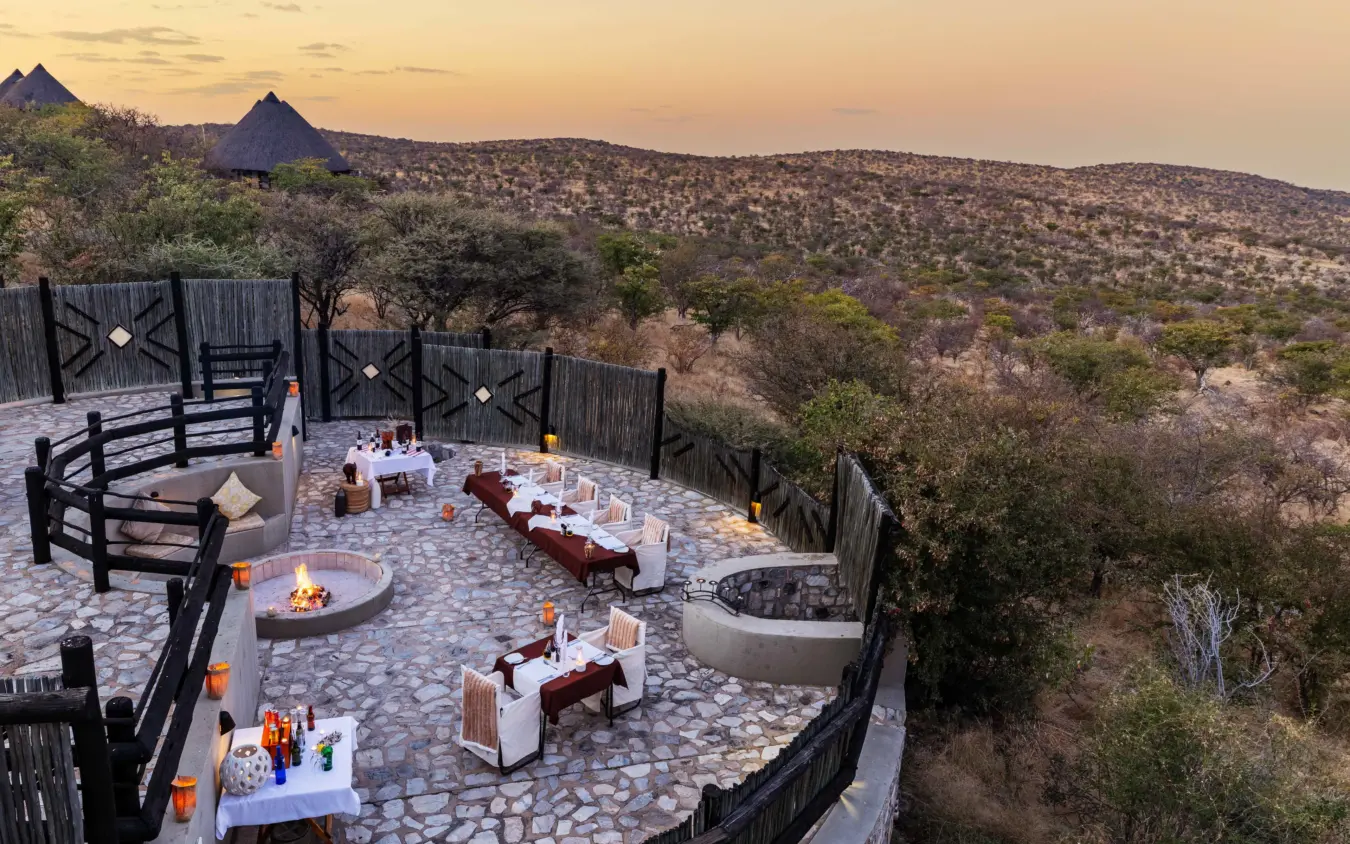
Nights end at the boma fire, with the plains going dark below the ridge.
Getting in means a charter flight from Windhoek to the reserve’s airstrip and a short drive to the lodge, or a road transfer that takes most of the day. Andersson Gate, an entrance to Etosha National Park, lies roughly 70 kilometres away, far enough that a day trip from the lodge loses the best light of the morning. Most itineraries keep the two separate: two or three nights on the reserve, then nights inside the park for the salt pan and its waterholes.
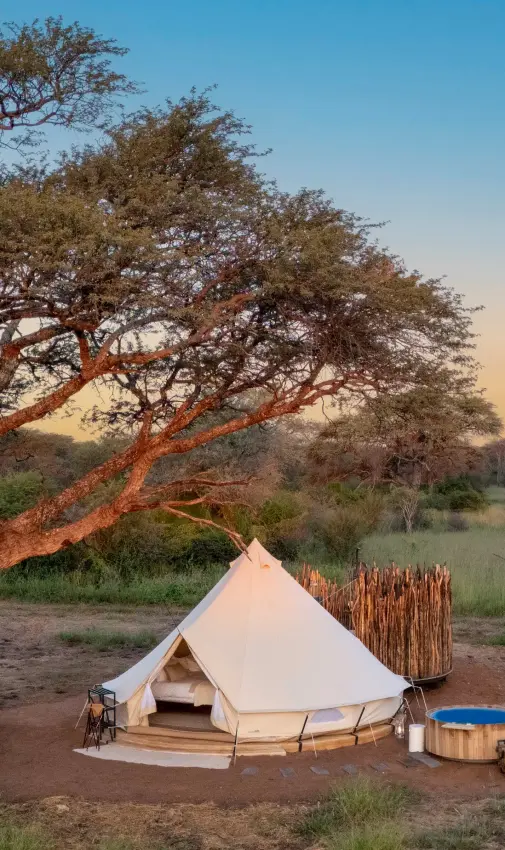
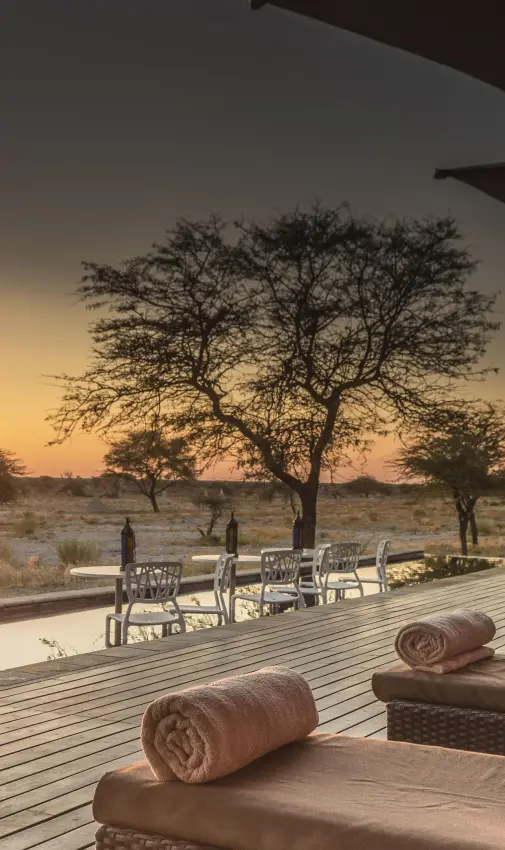
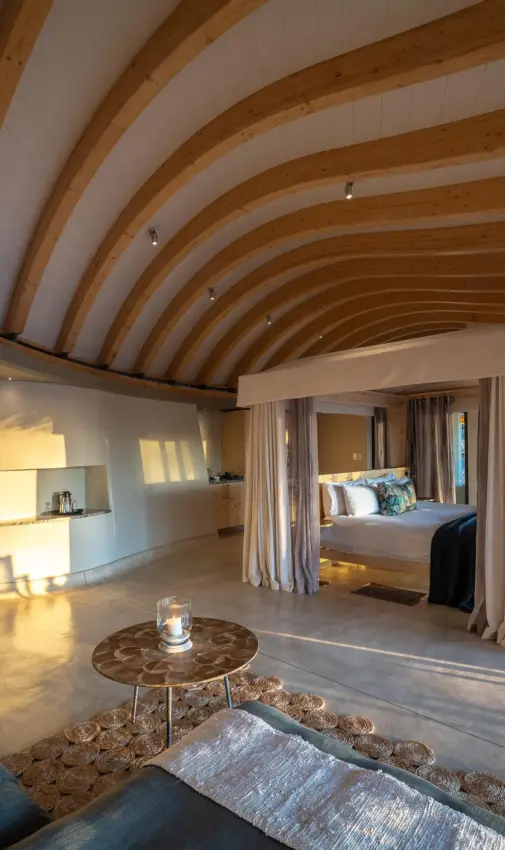
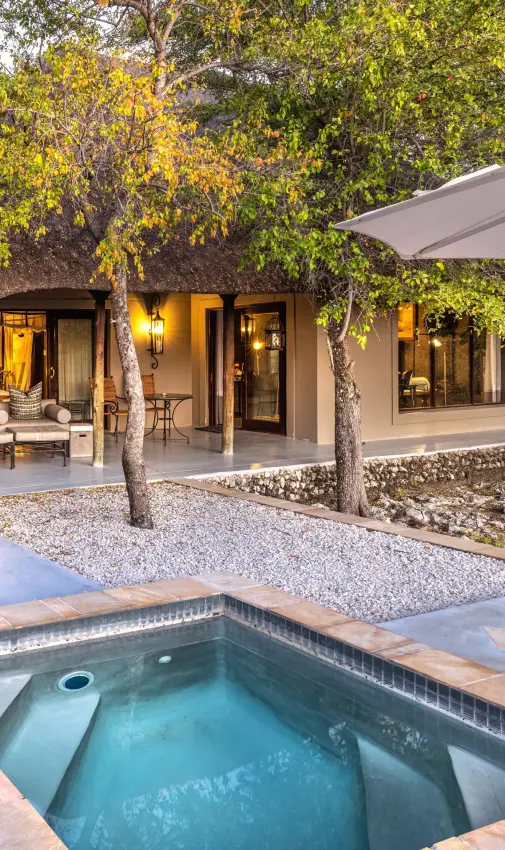
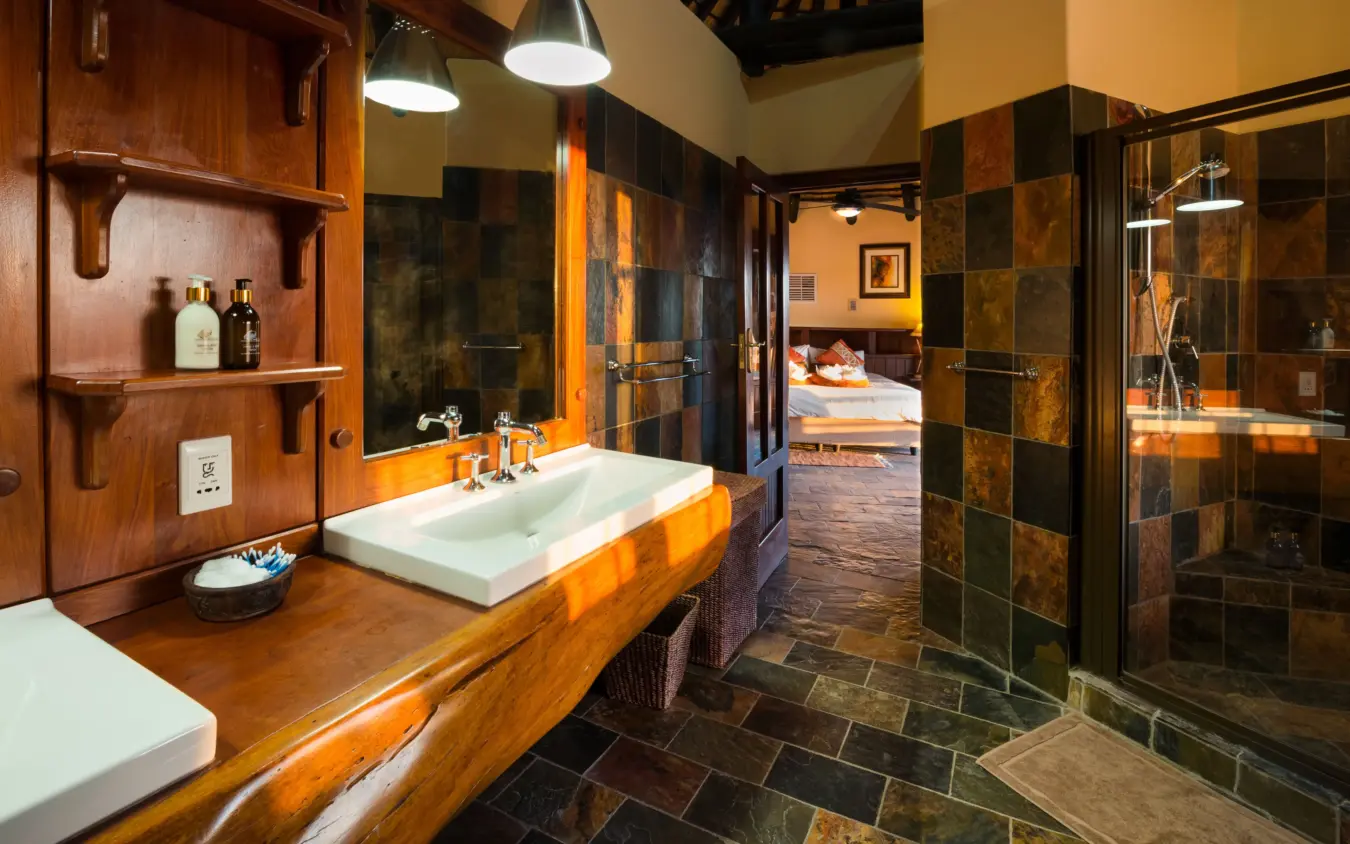
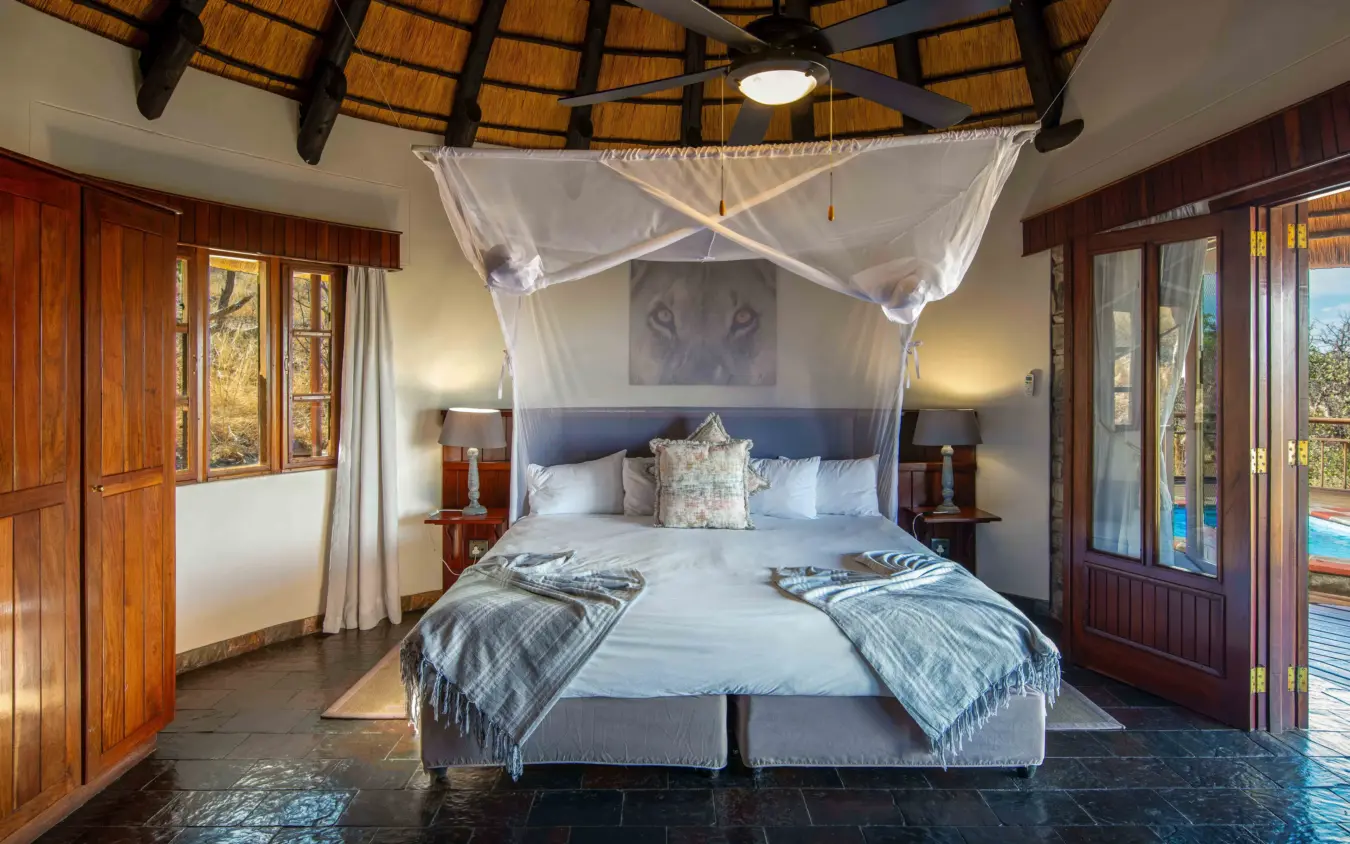
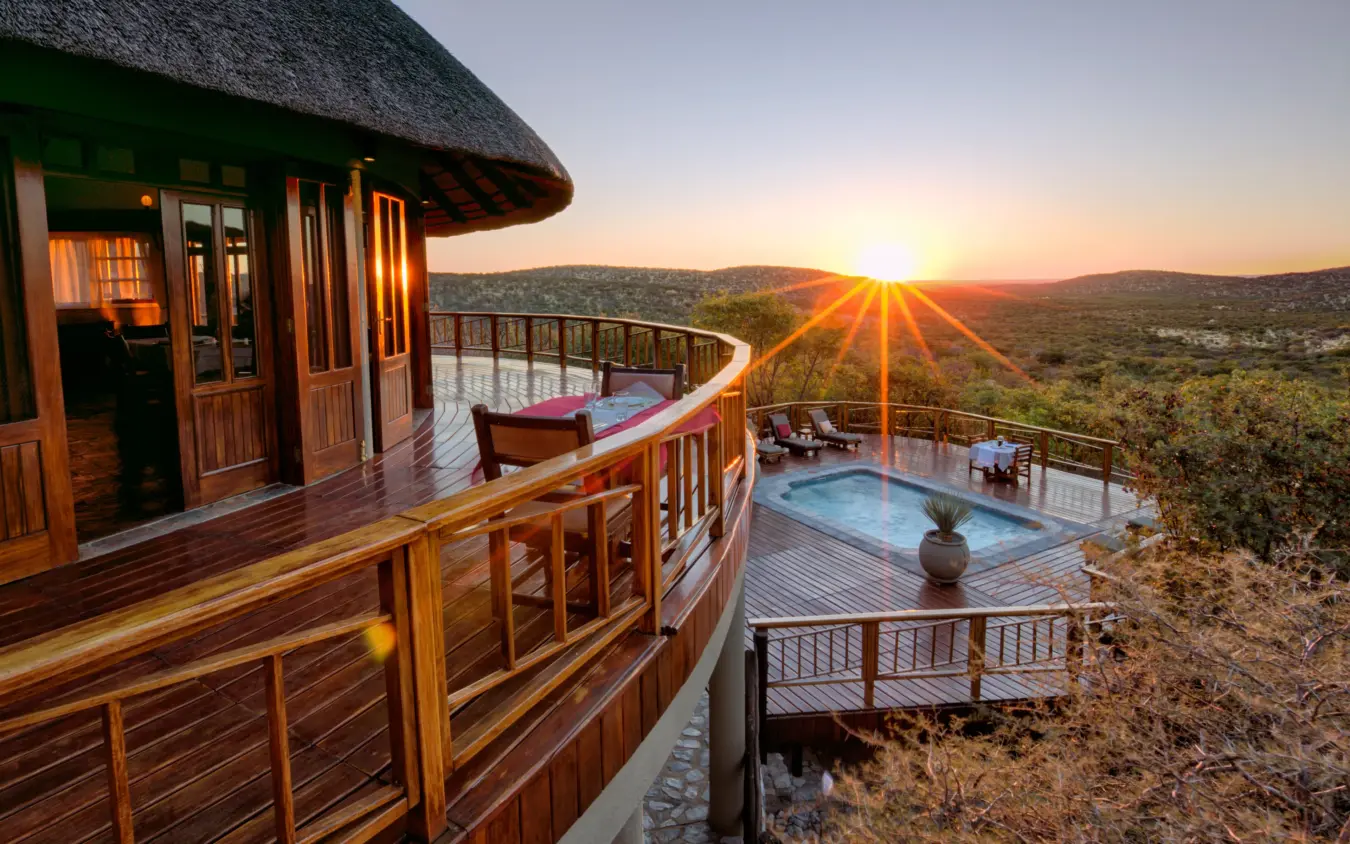
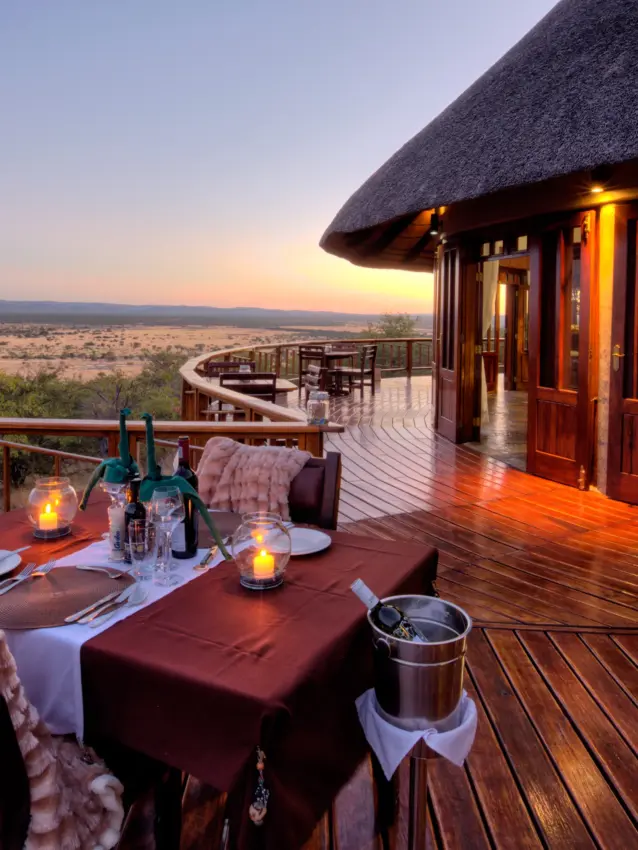
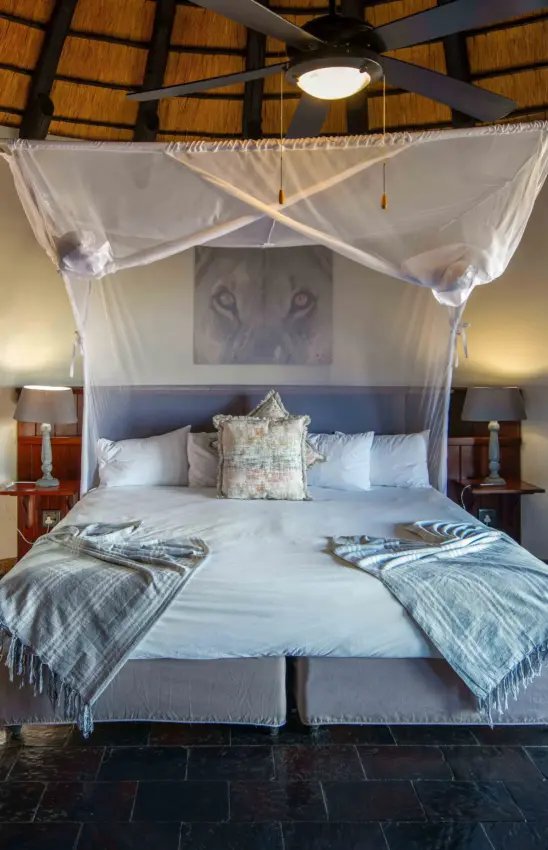
Chalets open through folding doors onto private decks, with high ceilings, stone floors and deep bathtubs beside indoor showers. The family suite adds a private plunge pool on its veranda, and the main pool lies on the raised deck, looking out over the same plains the chalets face. Nights end at the boma fire, with the plains going dark below the ridge. Meals come at individual tables, indoors or on the veranda, and the cellar can be opened for a tasting or a private dinner.













 01
01