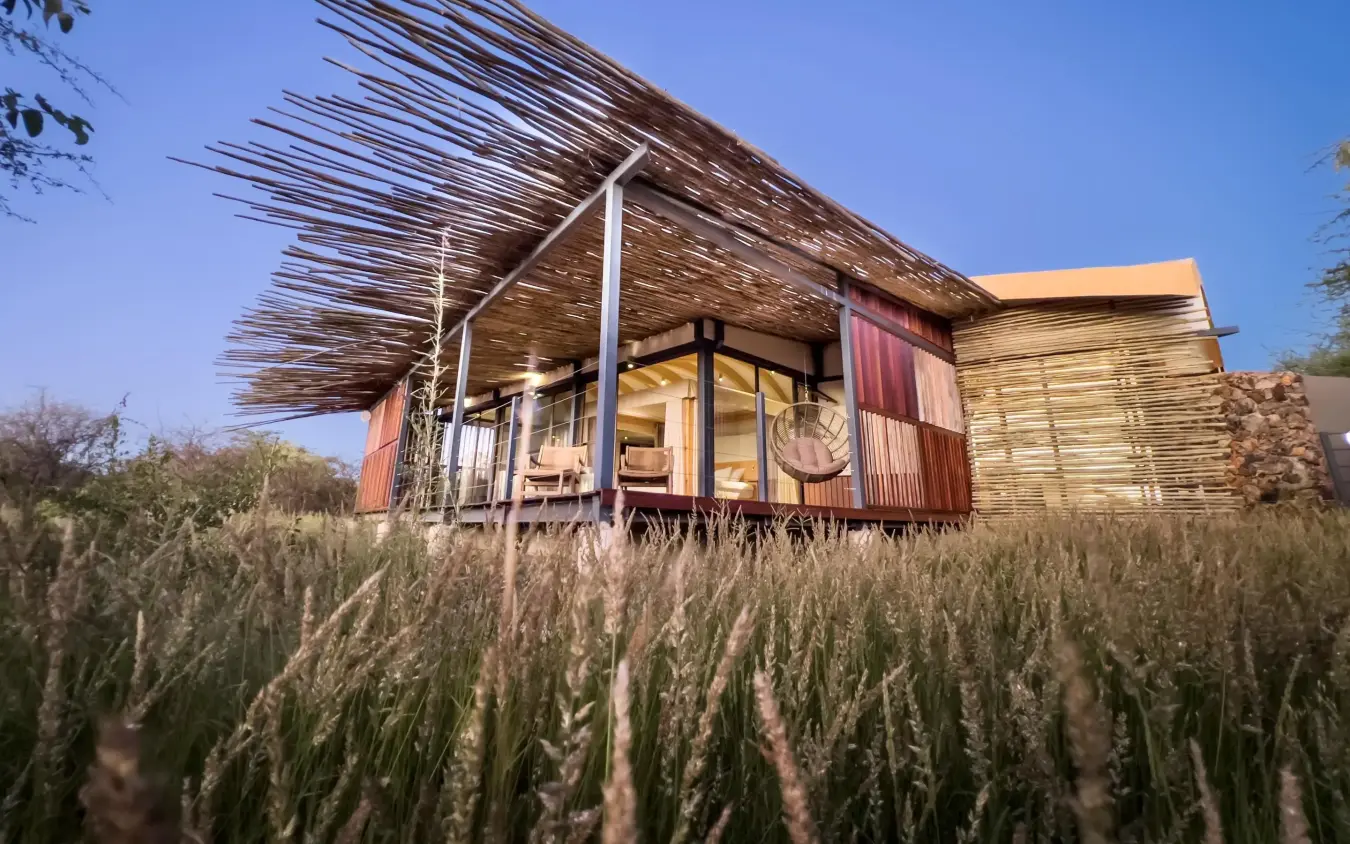
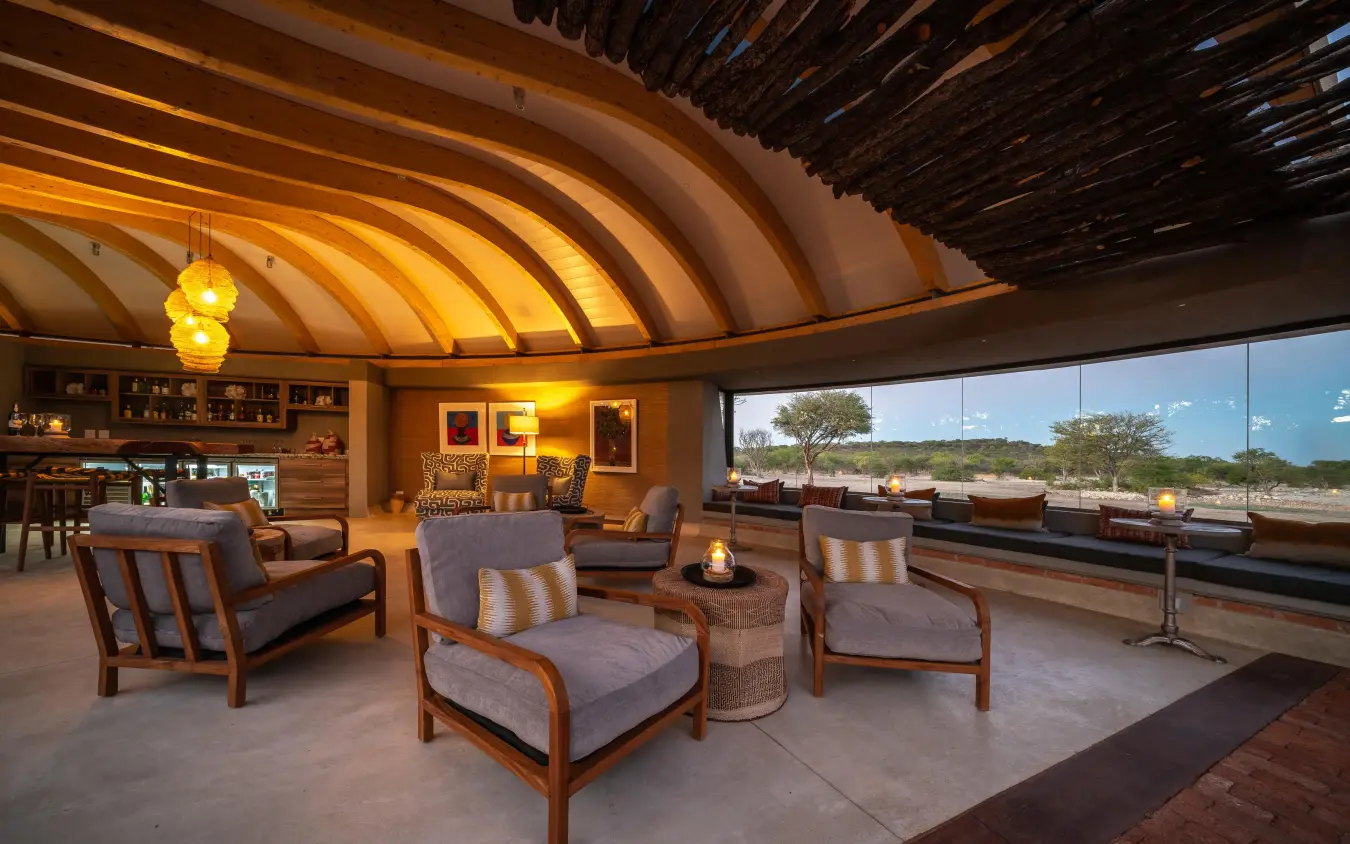
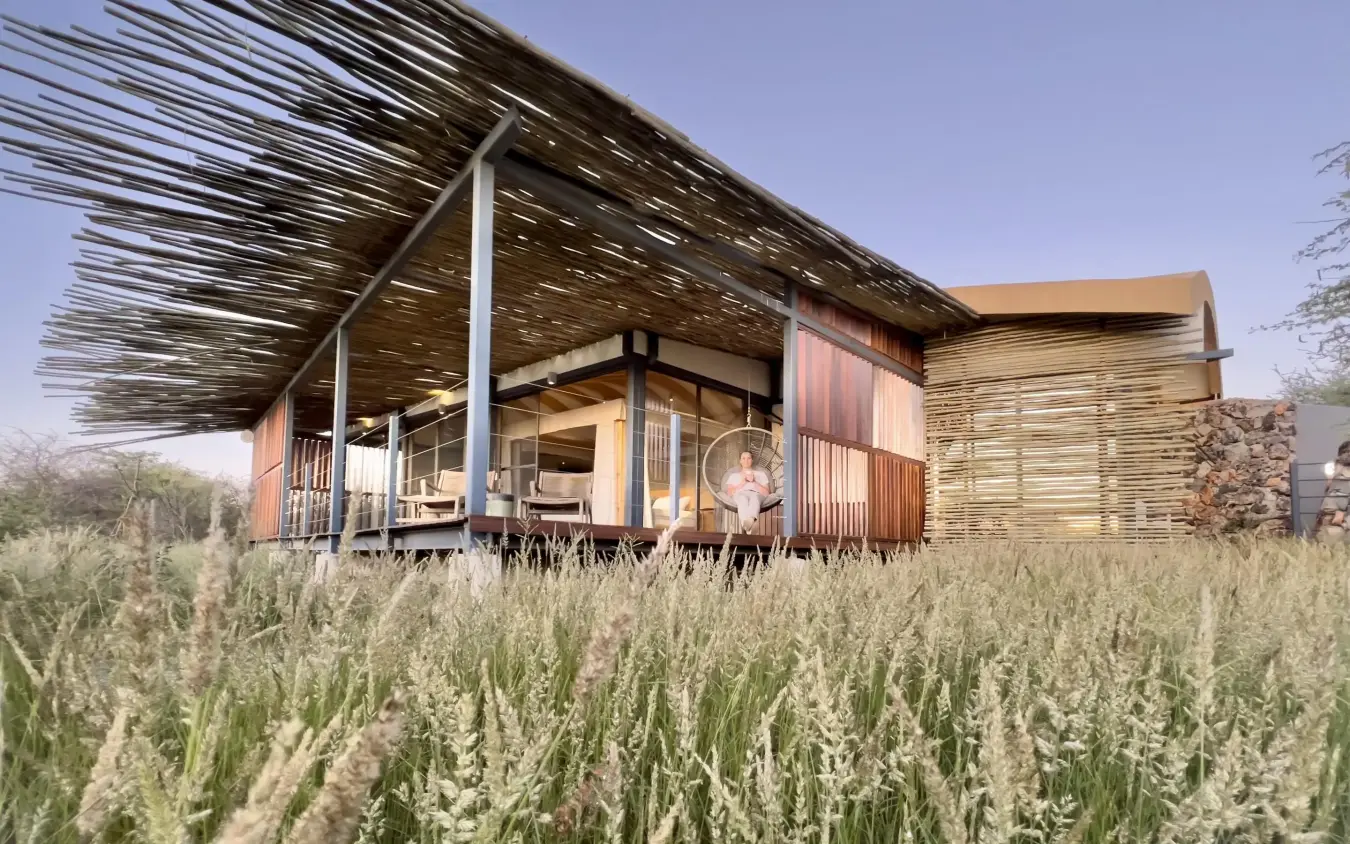
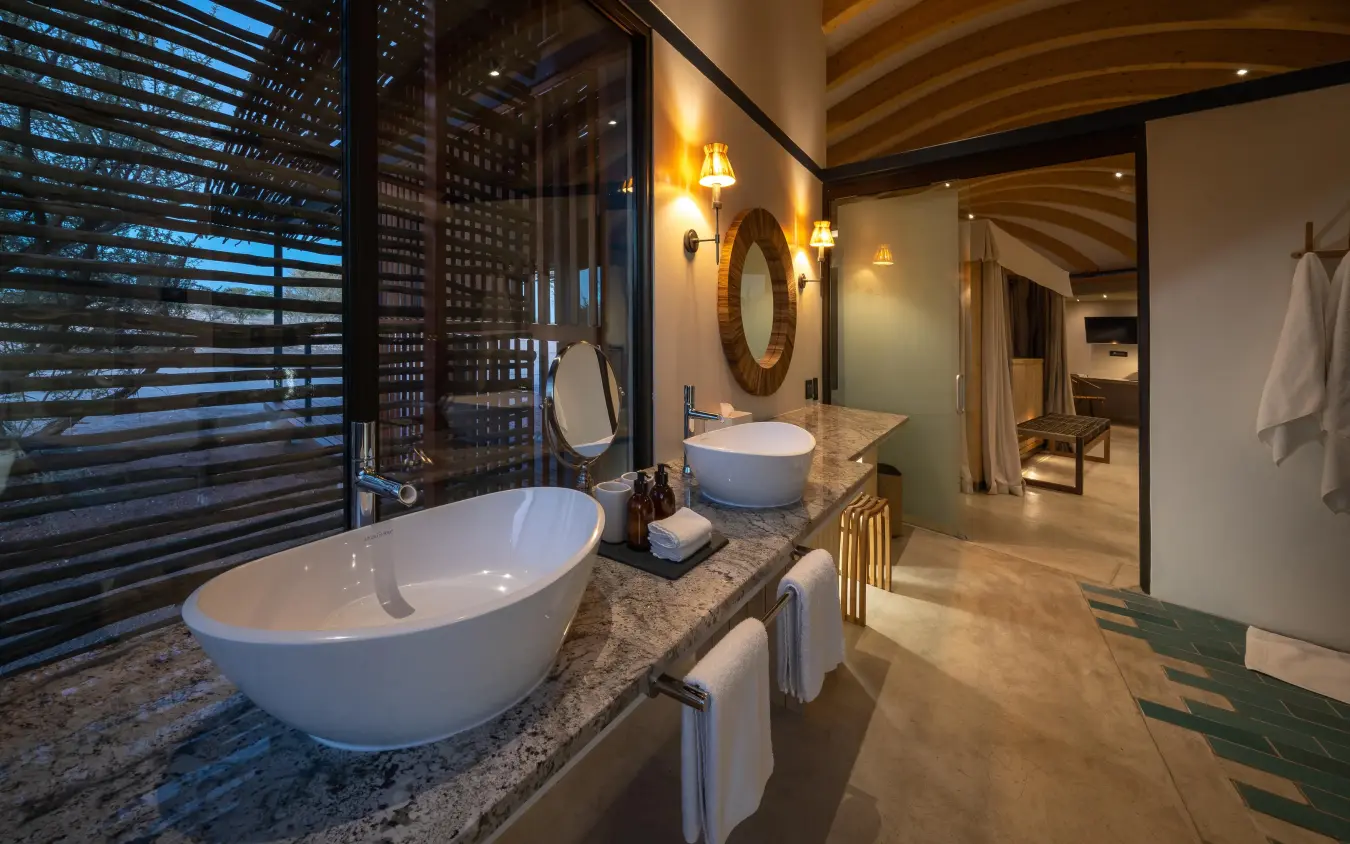
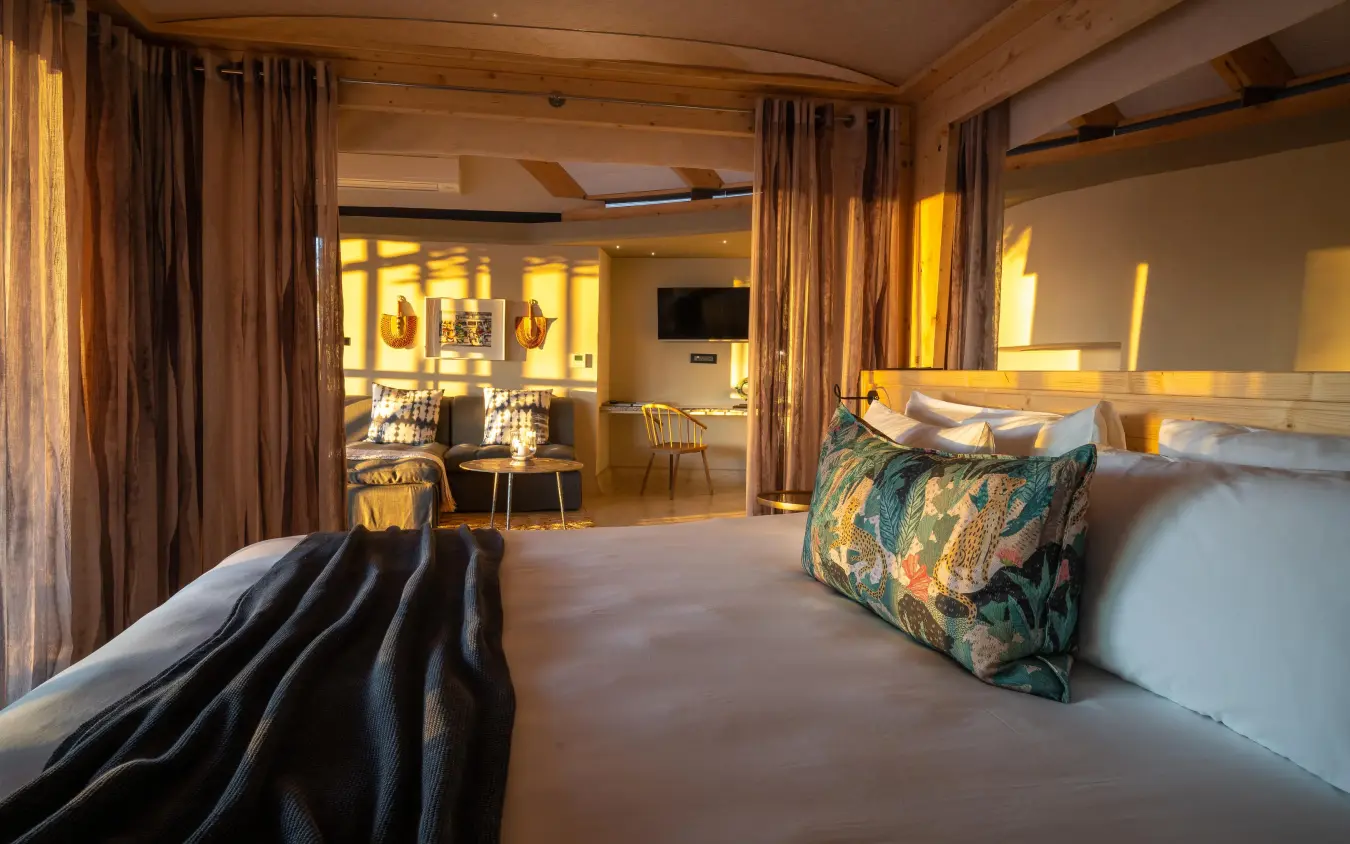
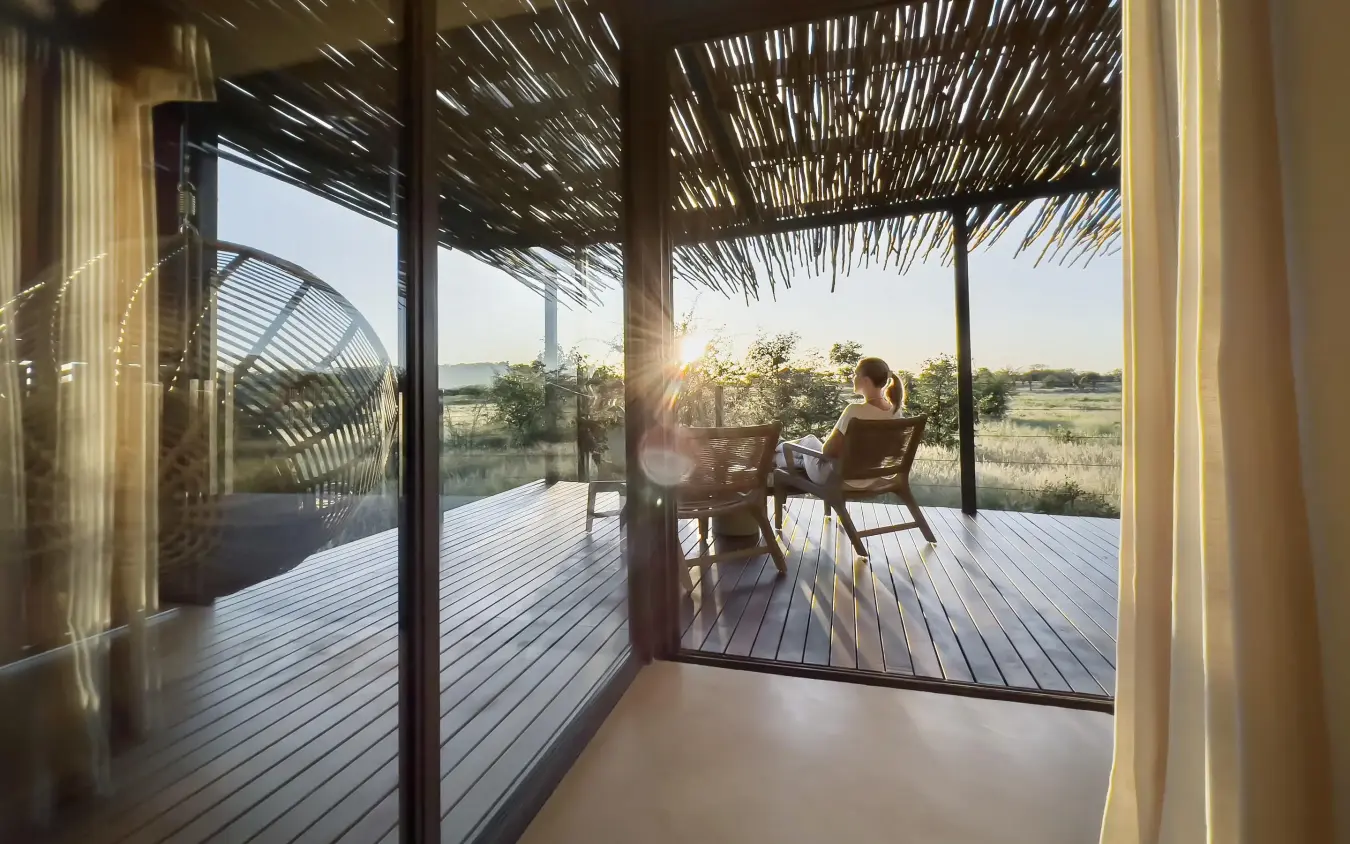
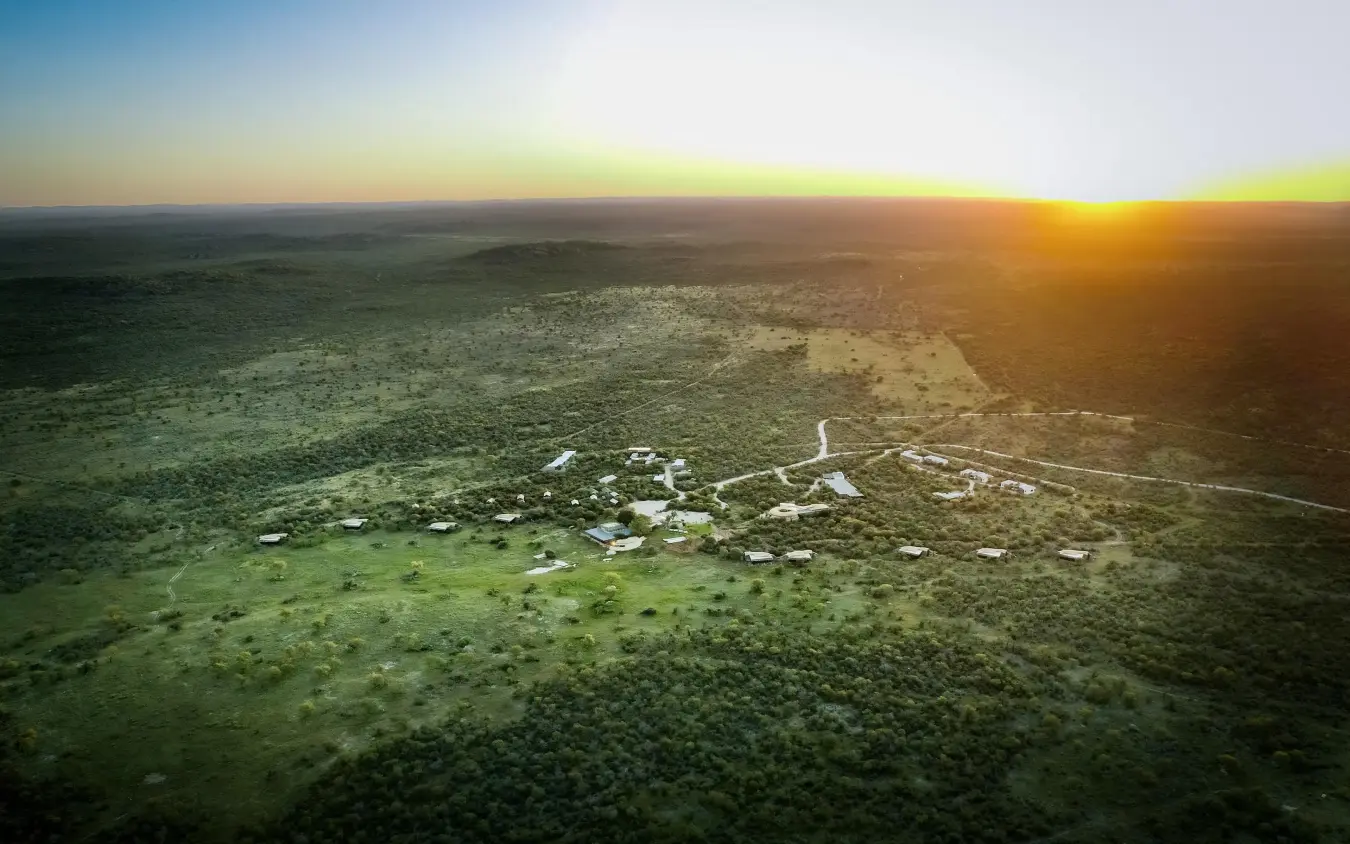
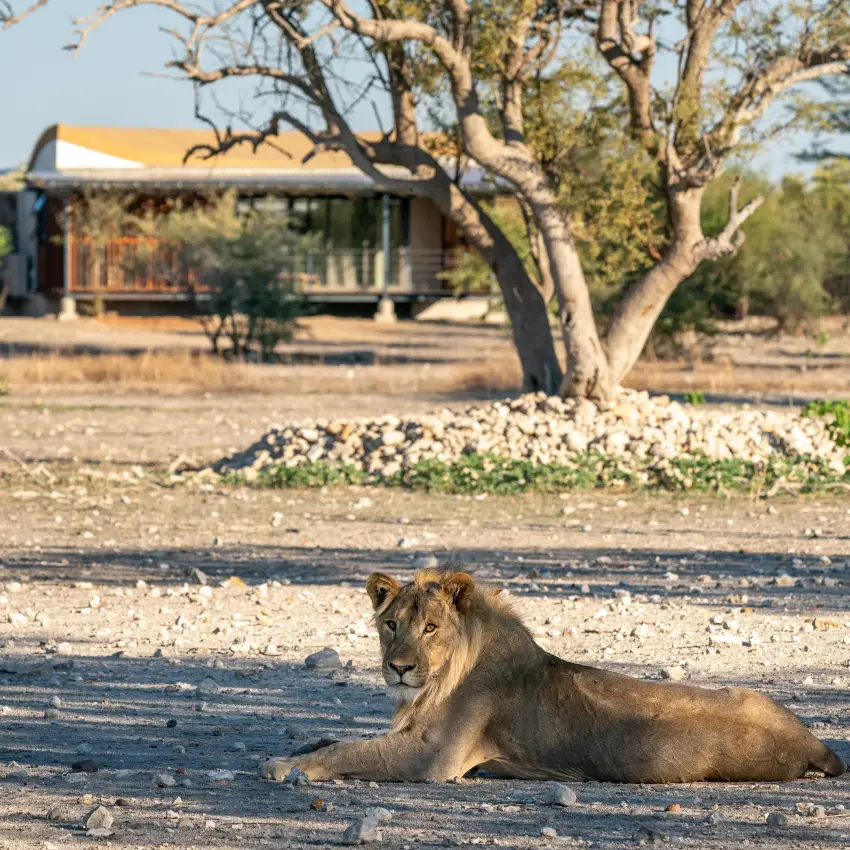
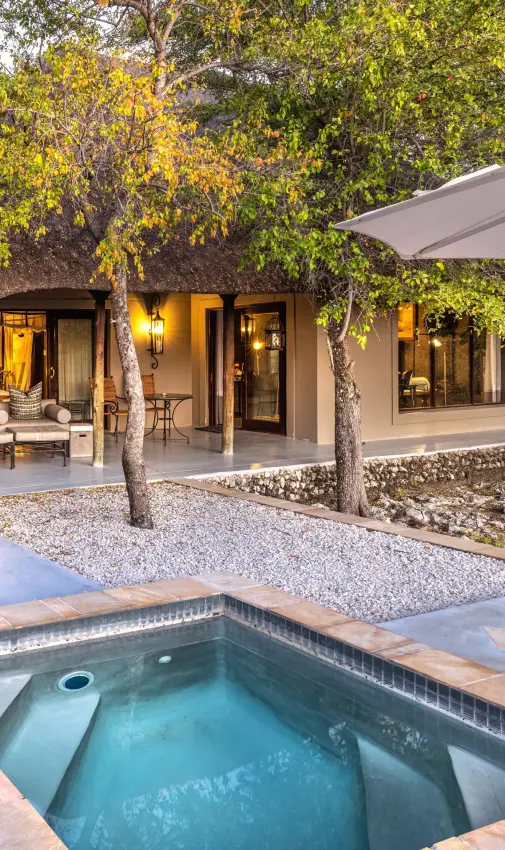
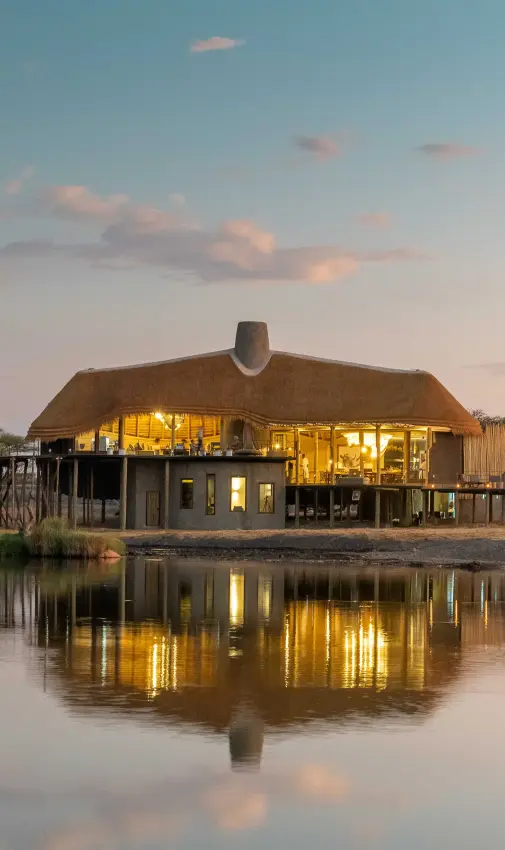
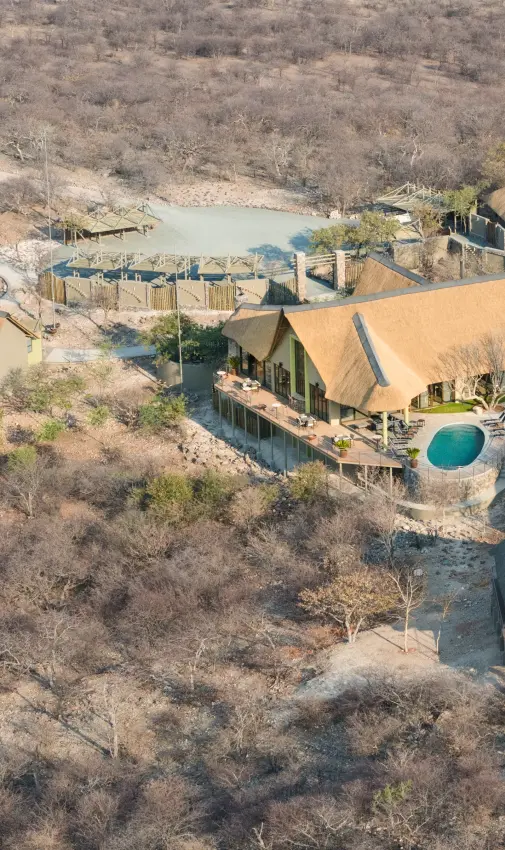
Andersson’s began as a simpler eco-camp, rebuilt and reopened in 2019 with a stronger conservation focus and a higher standard of accommodation. Eight suites sit low against the landscape in natural stone, glass and blond wood, their curved roof beams and a roof engineered for the Namibian heat keeping the interiors cool through the day. One is a family unit, two bedrooms sharing a central lounge, and each opens onto a private deck with roughly 180-degree views over the waterhole and the bush beyond, the bathrooms carrying indoor and outdoor showers, a double vanity and a separate toilet.
Next to the camp stands the Ongava Research Centre, where scientists work on the wider Etosha and Ongava ecosystems, its visitor centre holding self-guided exhibits on geology, flora and fauna and a 36-seat auditorium running talks that guests are welcome to join. You can sit in on presentations and speak with the resident researchers and rhino security teams. It is what puts a stay here closer to fieldwork than to passive game viewing, and it colours the way you read the landscape long after you have left the hide.
Eight suites sit low against the landscape in natural stone, glass and blond wood
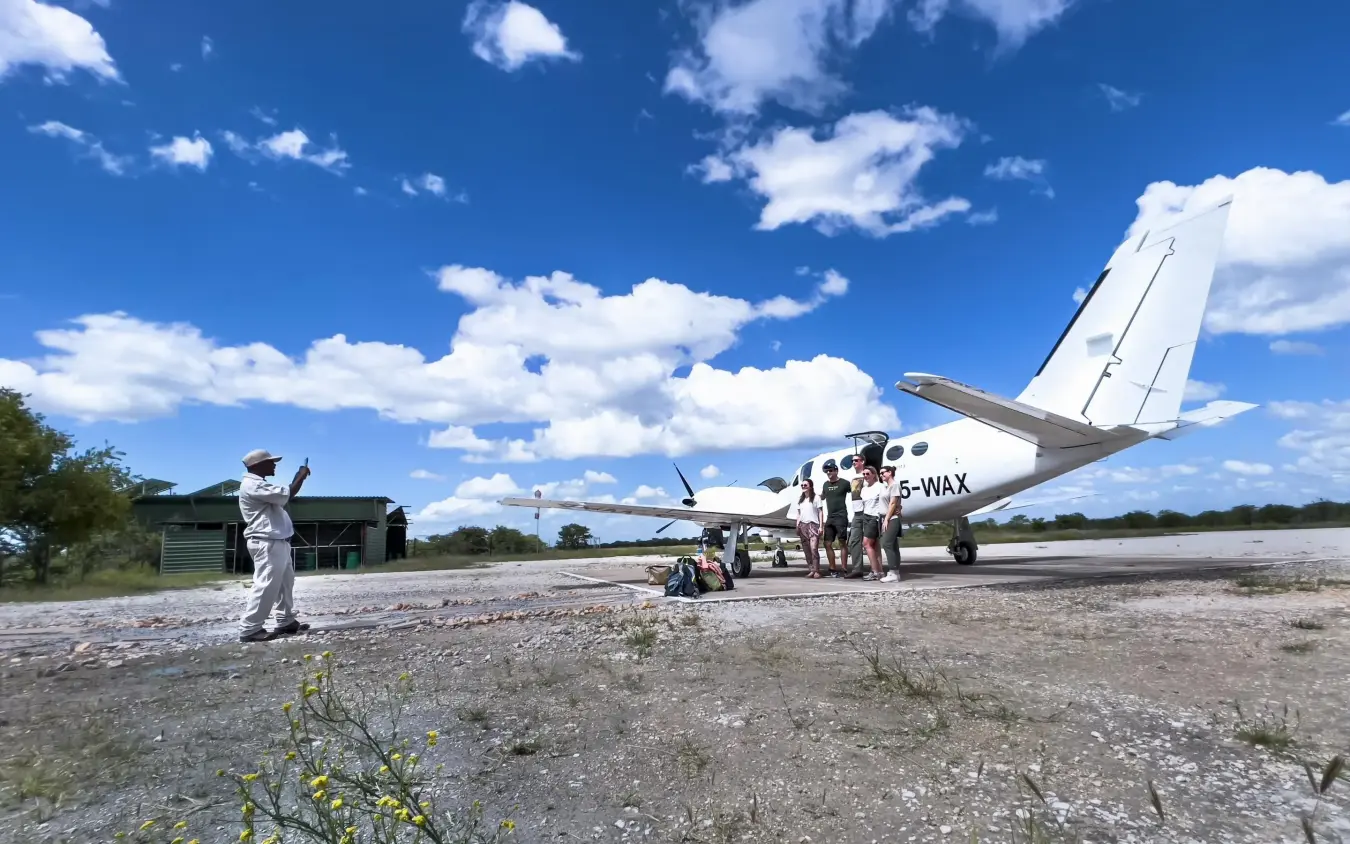
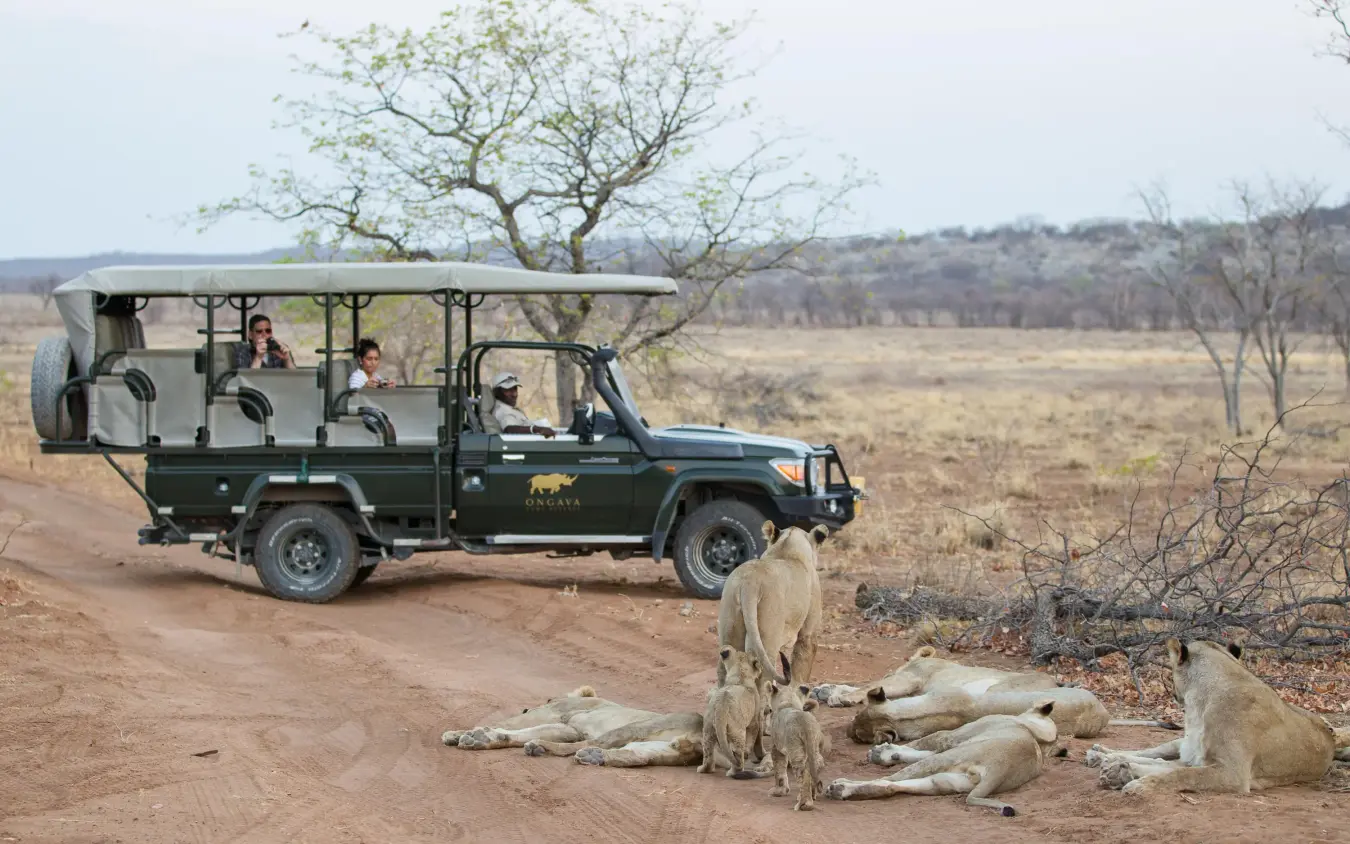
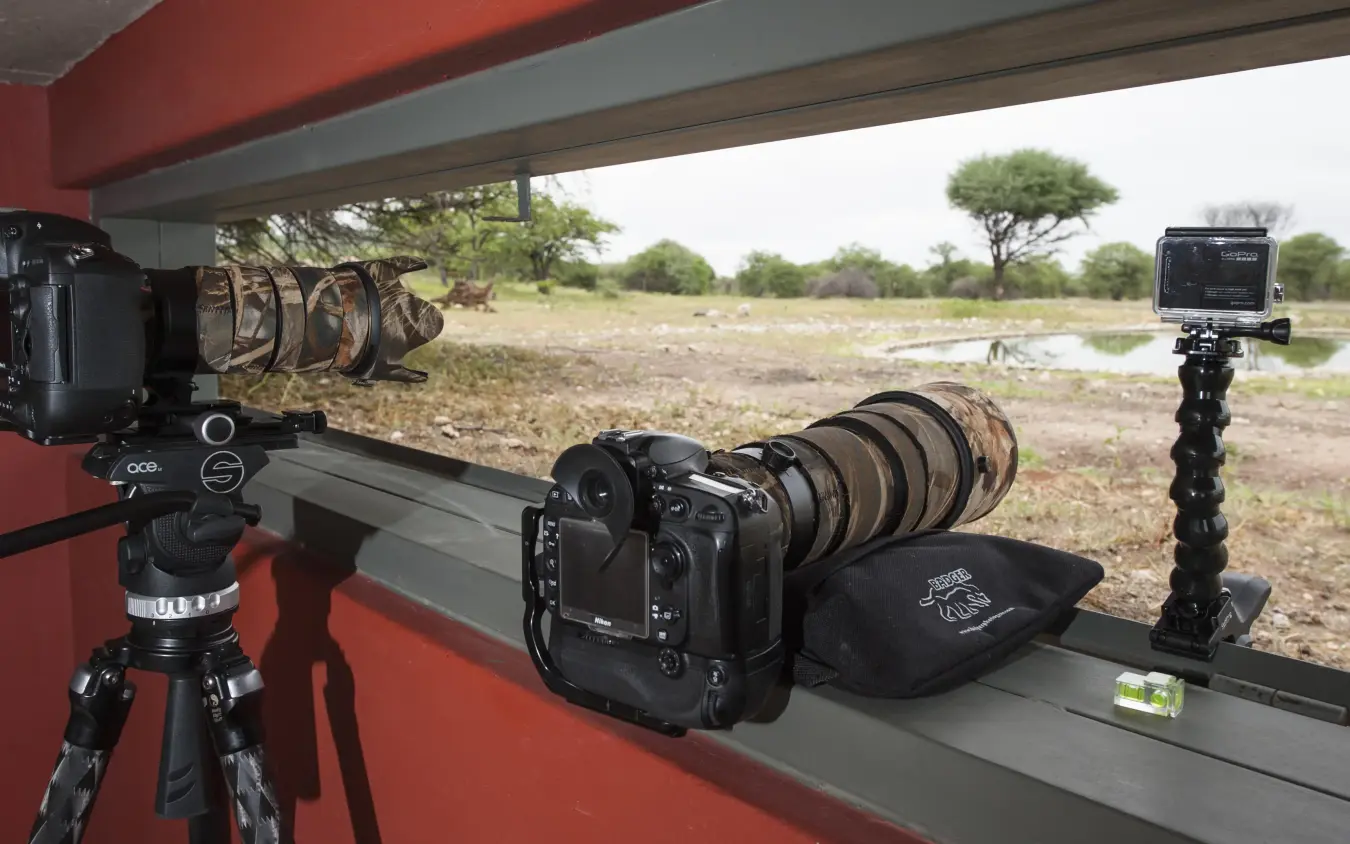
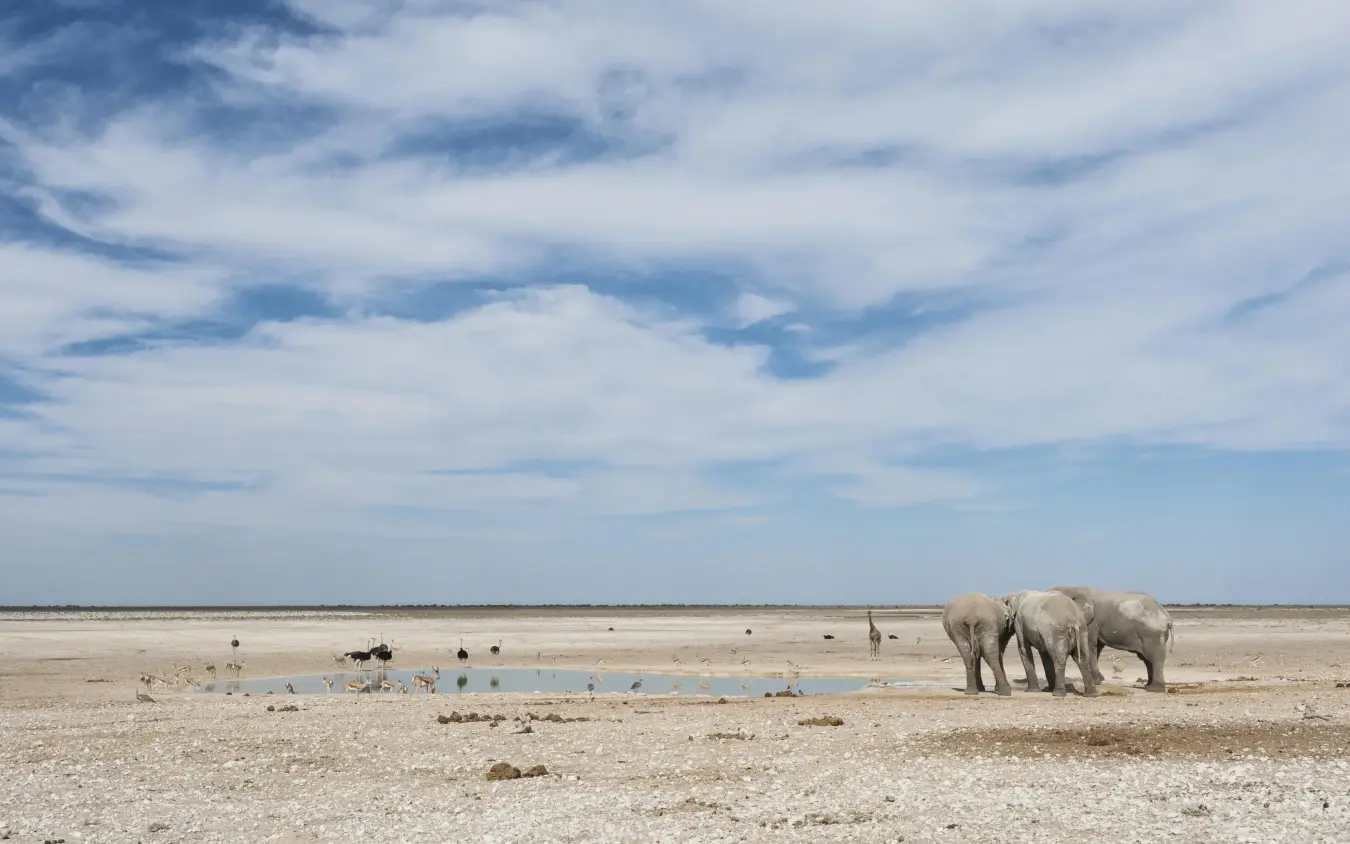
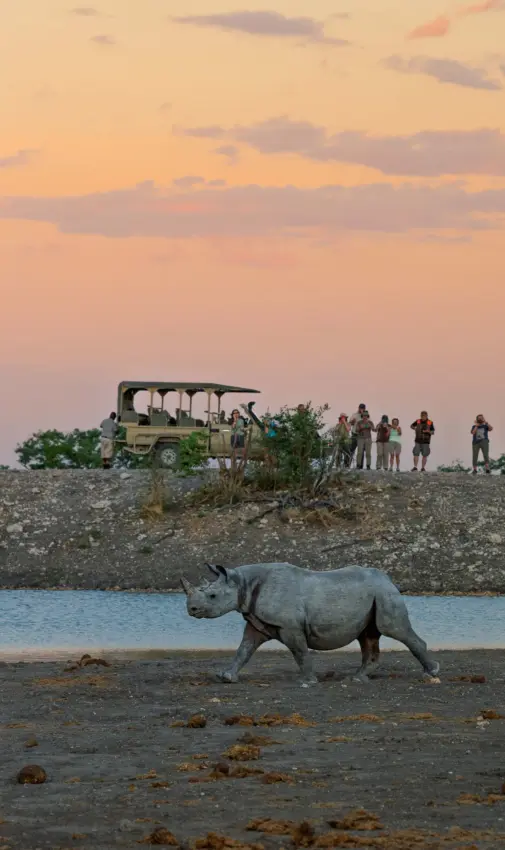
The days split cleanly along the reserve boundary. Etosha permits daytime game drives only, run along its waterhole loops and the rim of the pan, reached easily through nearby Andersson’s Gate, while on Ongava the freedoms return, and guides can drive after dark, move off the road at a sighting, and lead walks that follow rhino on foot from the age of sixteen. Sessions in the underground photographic hide and birdwatching across the reserve fill out the rest, and the reserve keeps its own airstrip, a short transfer from the lodge.
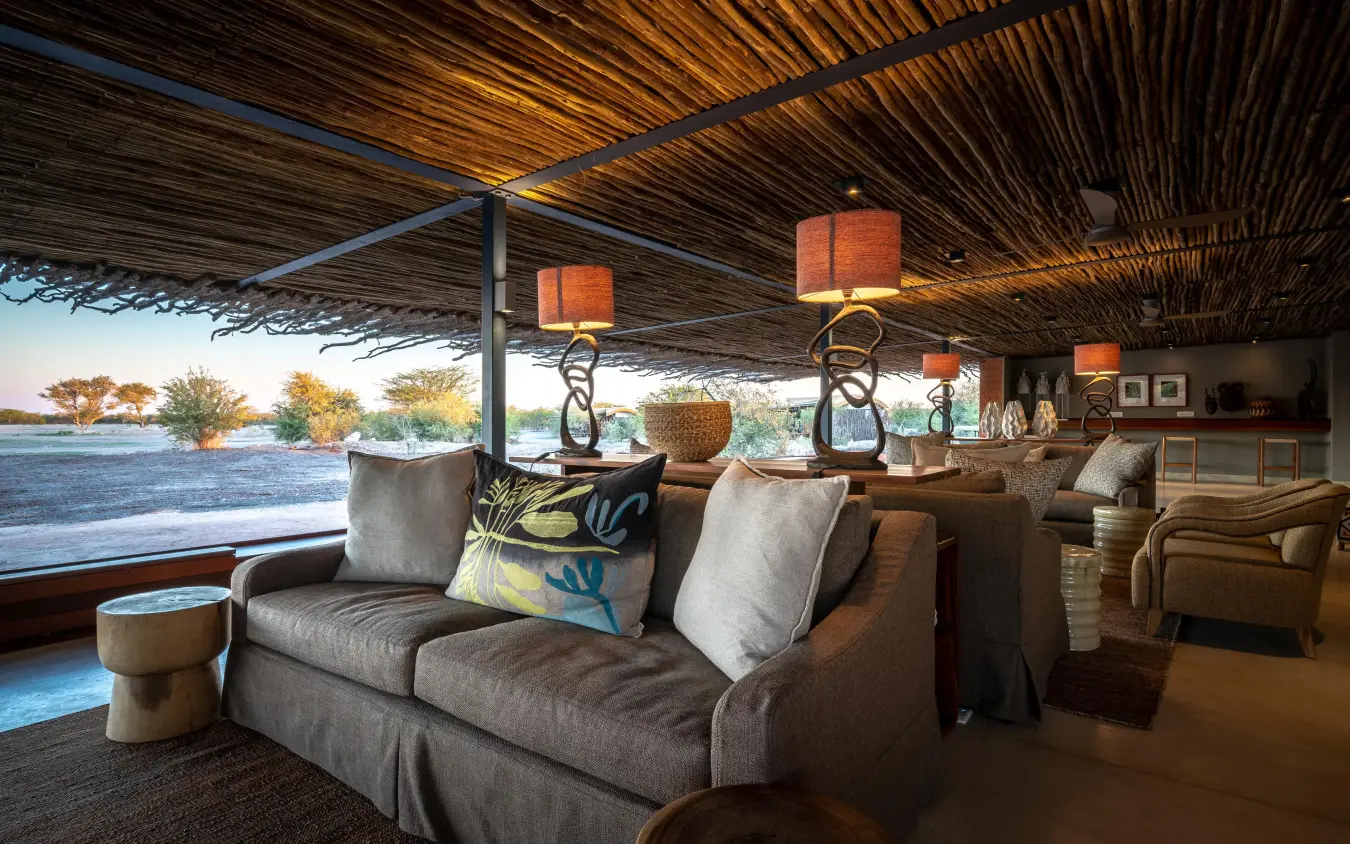
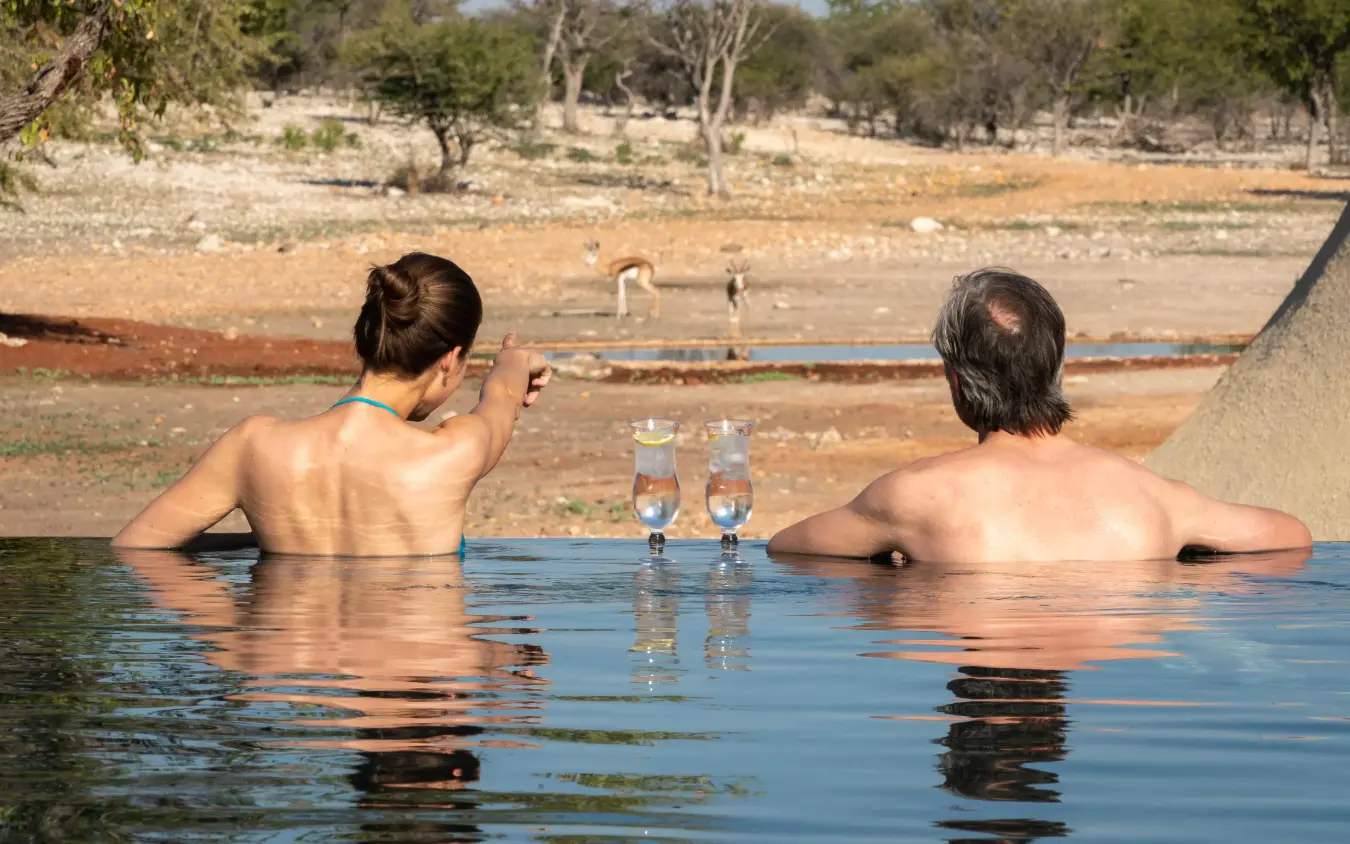
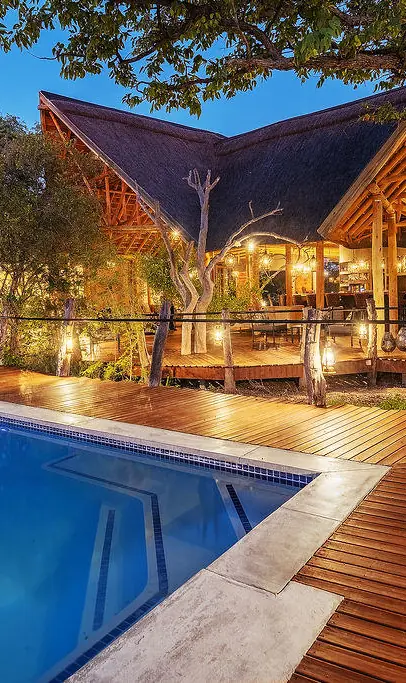
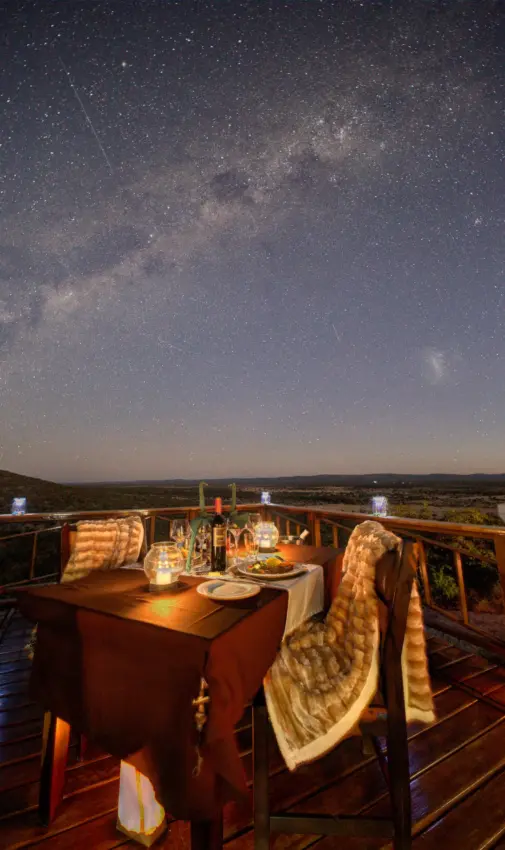
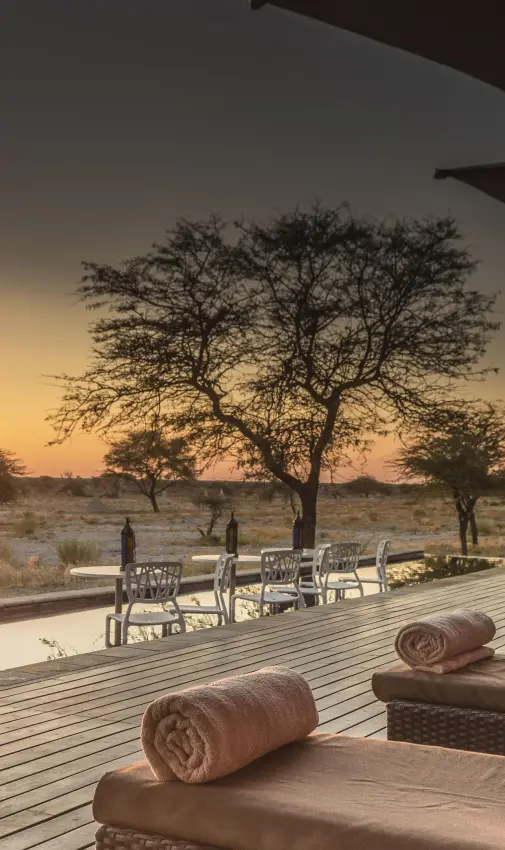
Meals come indoors or in the open air, both looking over the waterhole, with an infinity pool and a sunken observation terrace forming the social centre of the camp. The reserve itself dates to 1991, when former cattle farms were rehabilitated into wildlife habitat, and both black and white rhino are now resident under Namibia’s Black Rhino Custodianship Programme, watched over by dedicated monitoring and security teams working across the plains, the low hills and the mopane scrub, part of the same effort that gives the place its purpose.