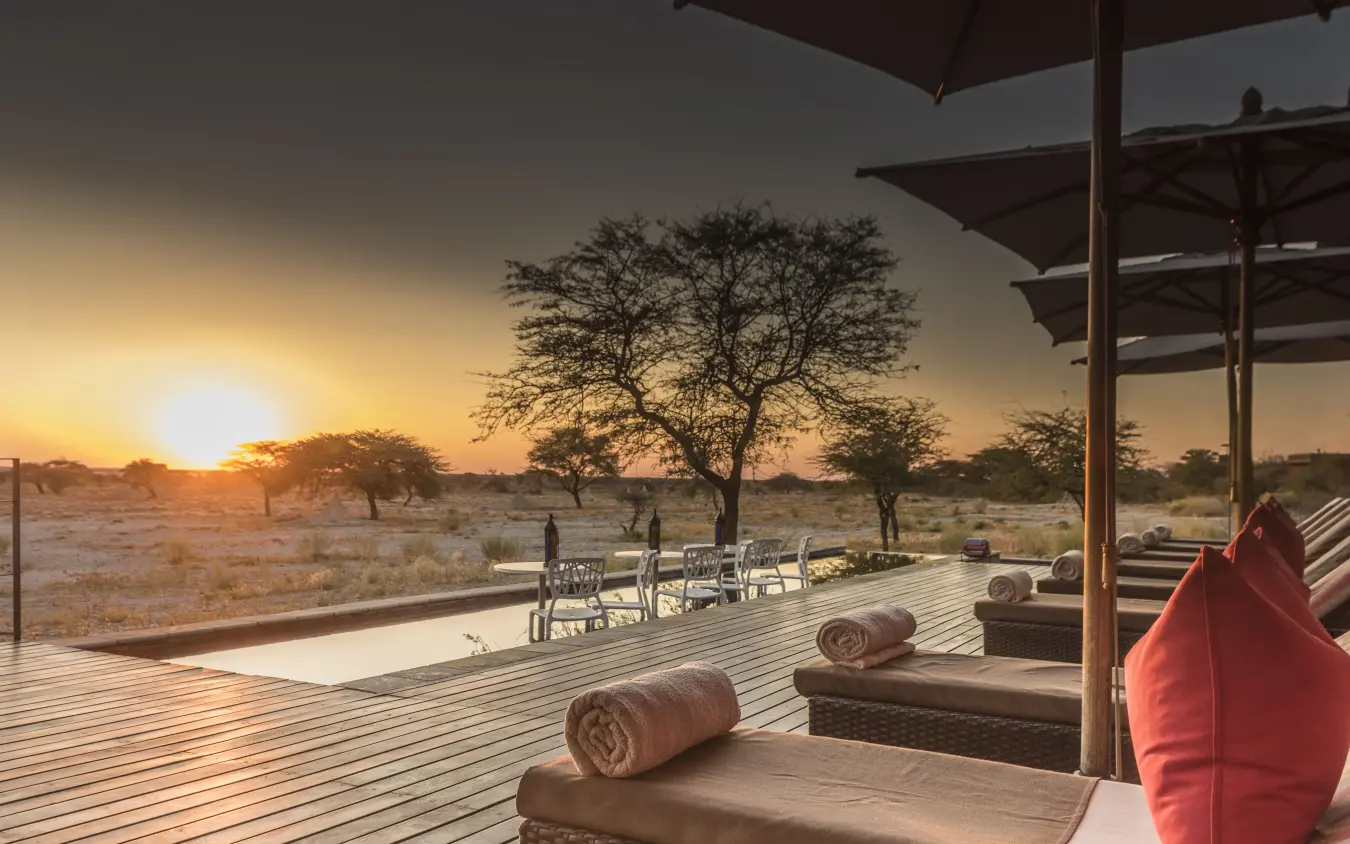
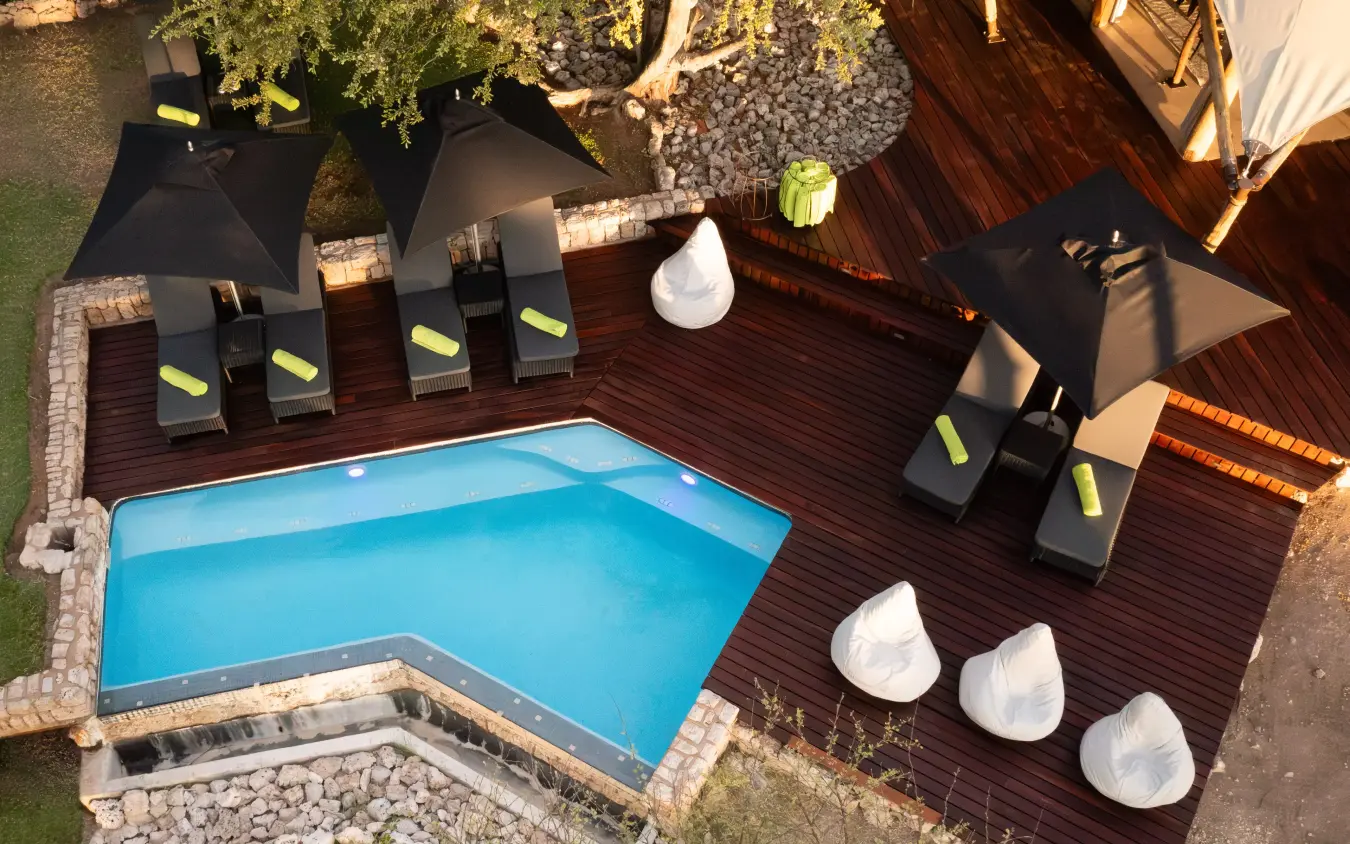
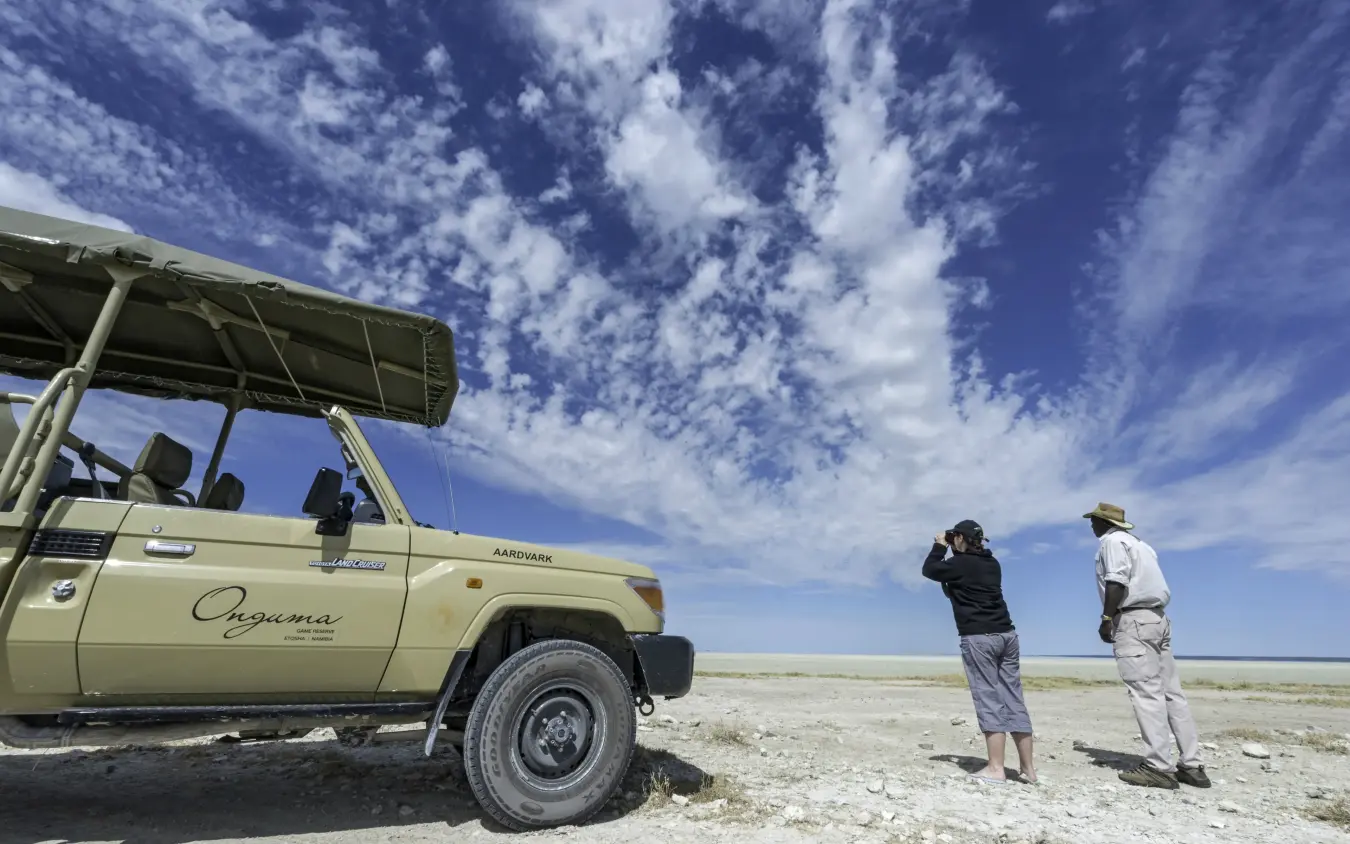
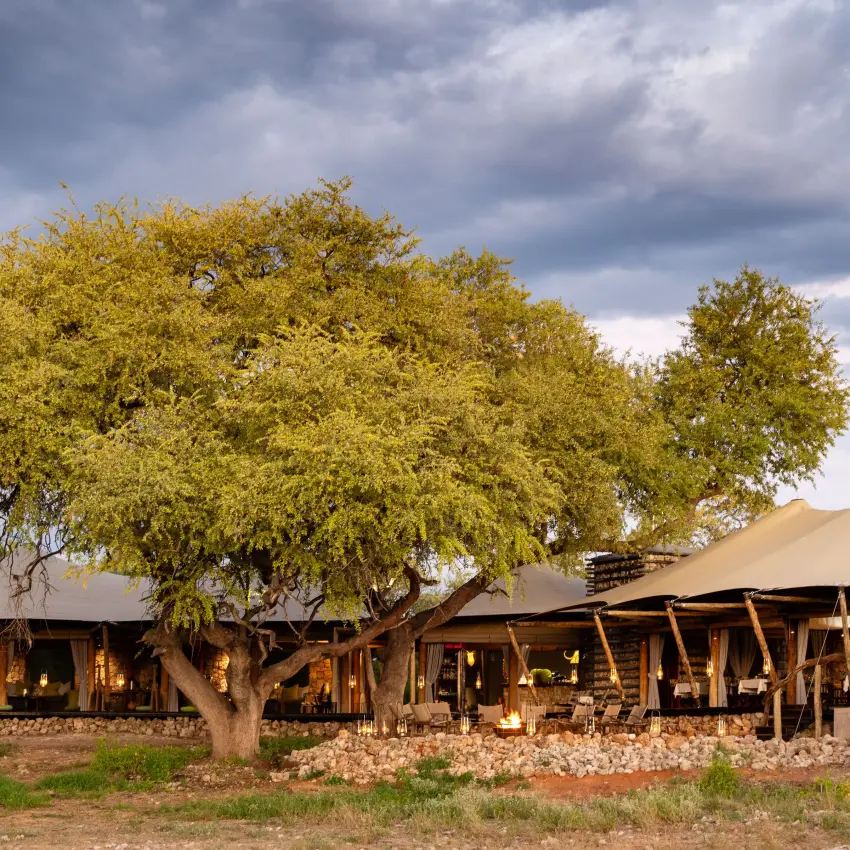
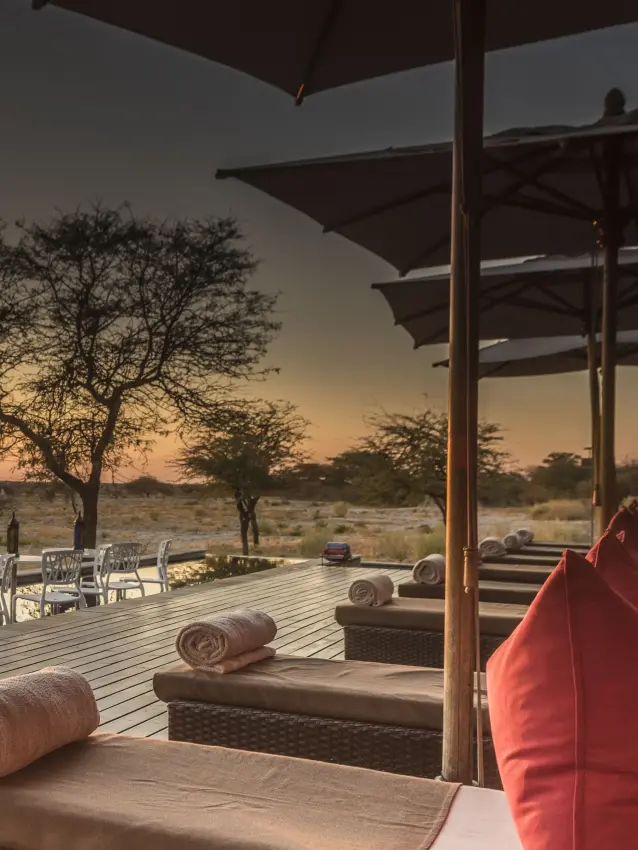
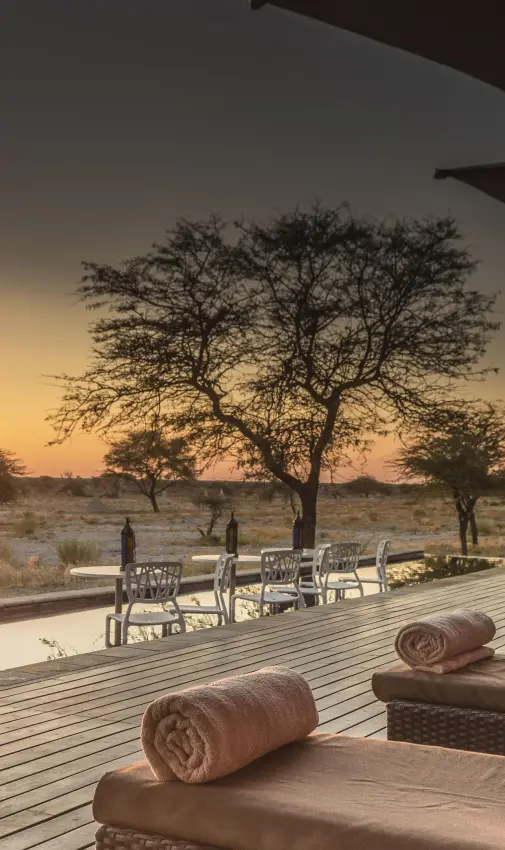
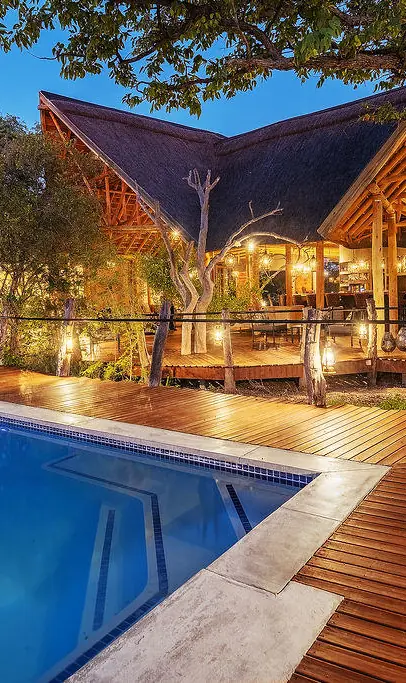
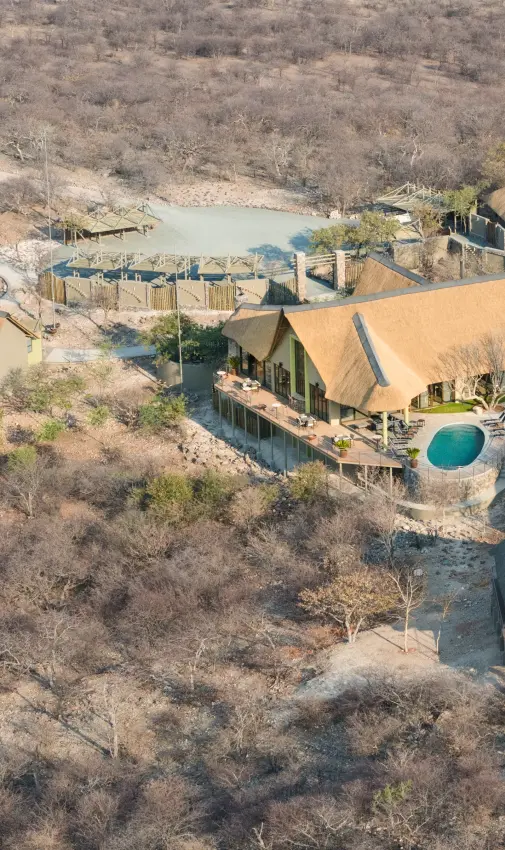
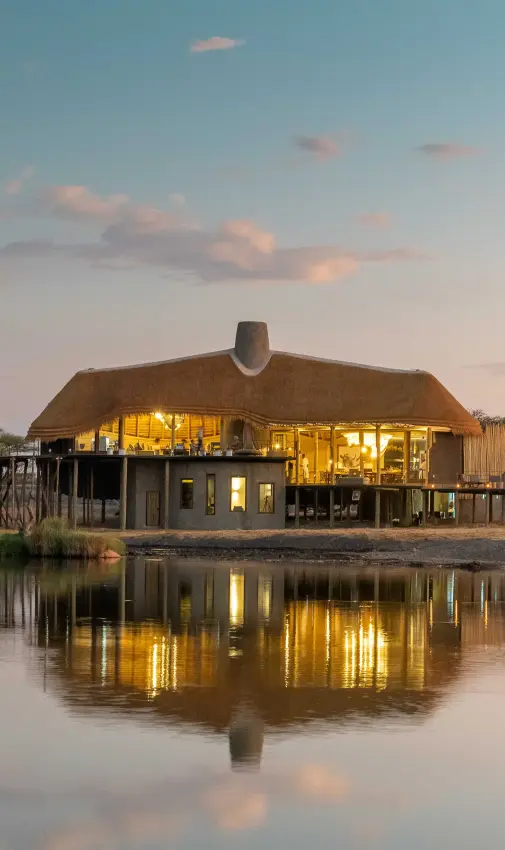
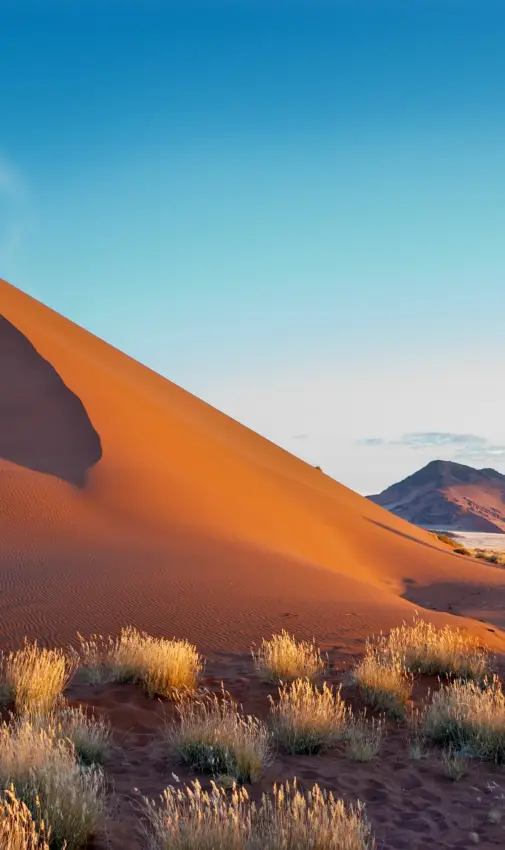
Onguma Reserve borders Fischer’s Pan, part of Etosha’s eastern sector, and the country around camp is flat savannah and bushveld opening onto pans and grassland. The overland approach from Windhoek takes roughly five to seven hours on tar and gravel, though most guests fly. Light-aircraft charters use Onguma’s own airstrip, cutting the drive to a short hop and leaving more time on the reserve and in the park itself, which is where anyone comes here to be.
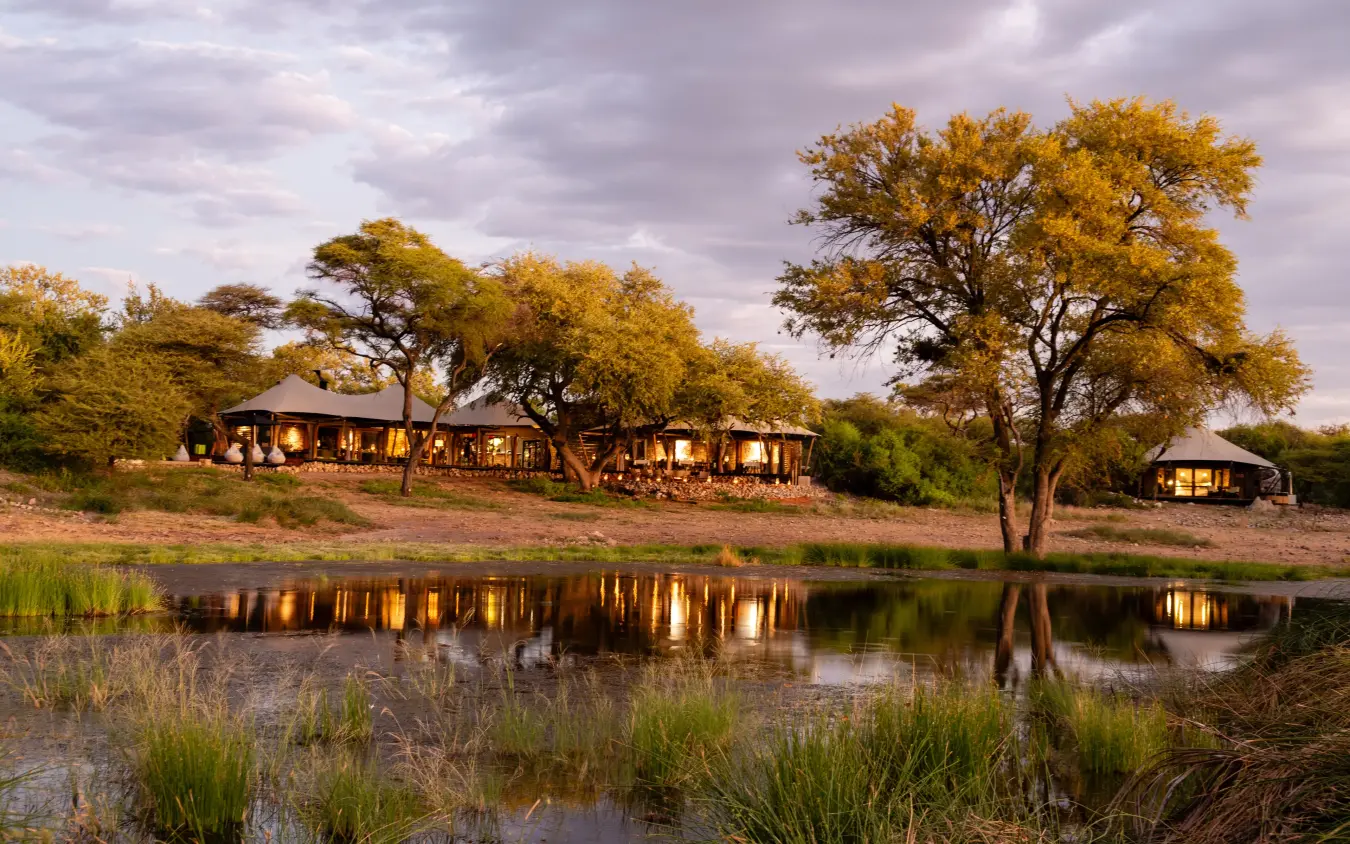
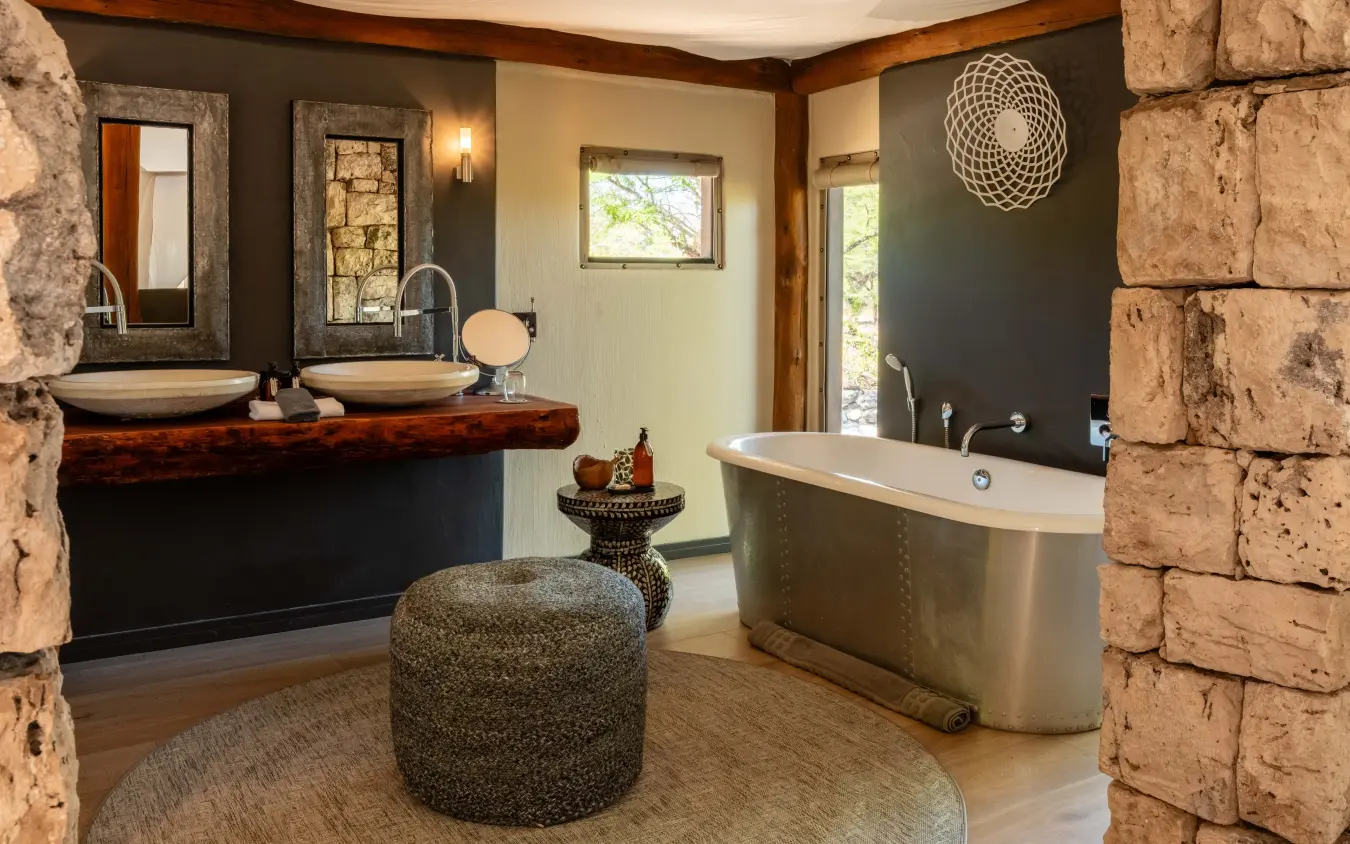
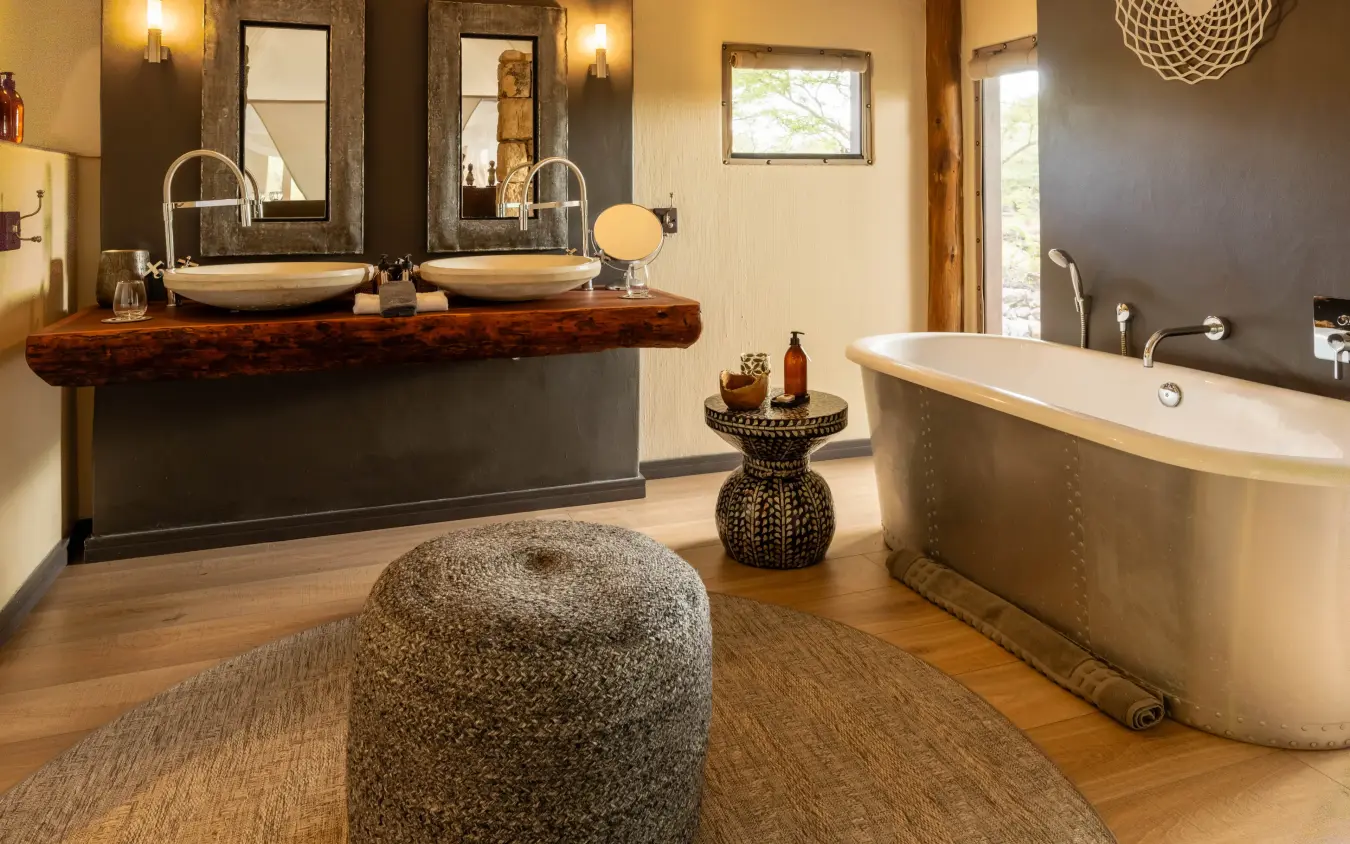
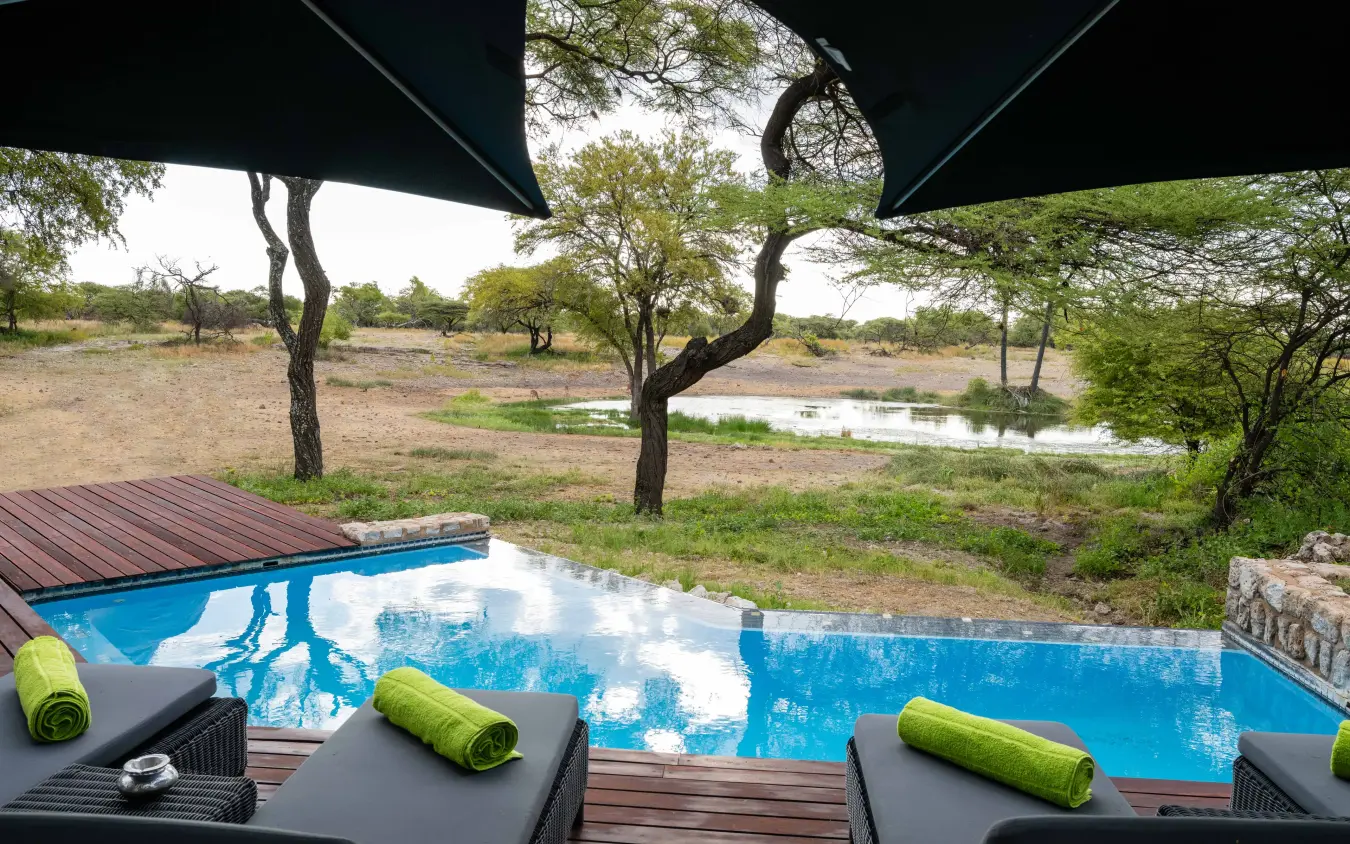
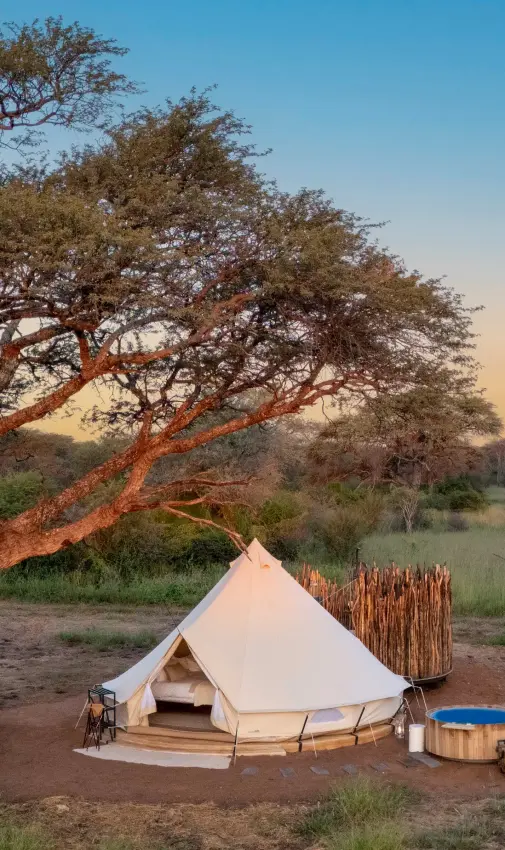
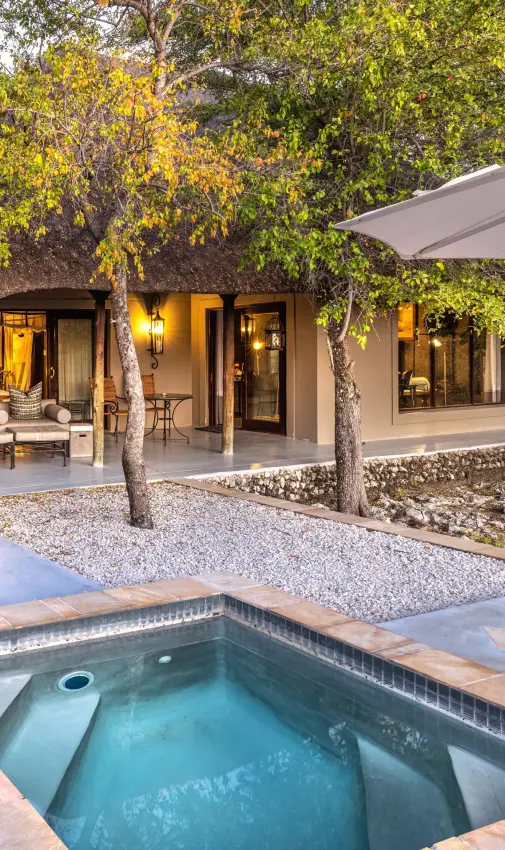
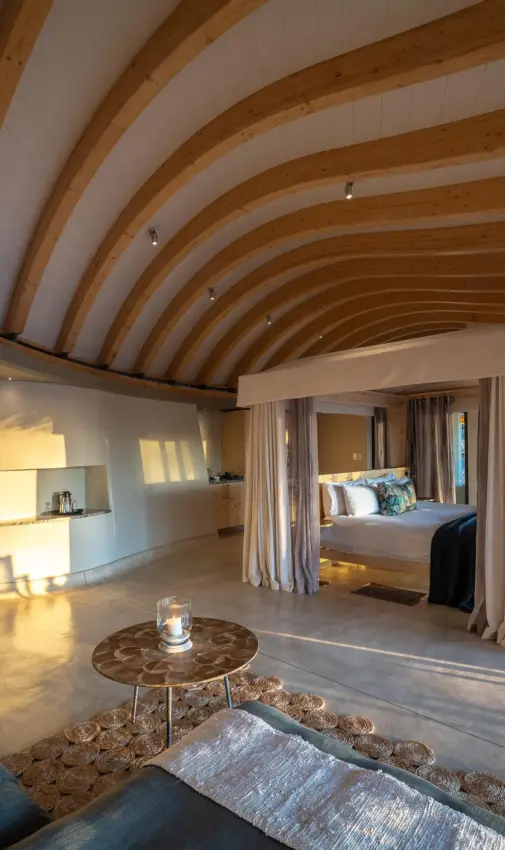
The tents are canvas structures raised on solid platforms, spacious and furnished in muted, earthy tones. Each has an indoor and an outdoor shower, a freestanding bath, a separate toilet and a private deck facing the water. Large beds sit under mosquito netting, and floor-to-ceiling canvas and mesh panels open the rooms to the view, letting in the cool of the evening, the birdsong and the dry scent of the bush.
it puts photographers eye to eye with drinking animals, rewarding patience over pace
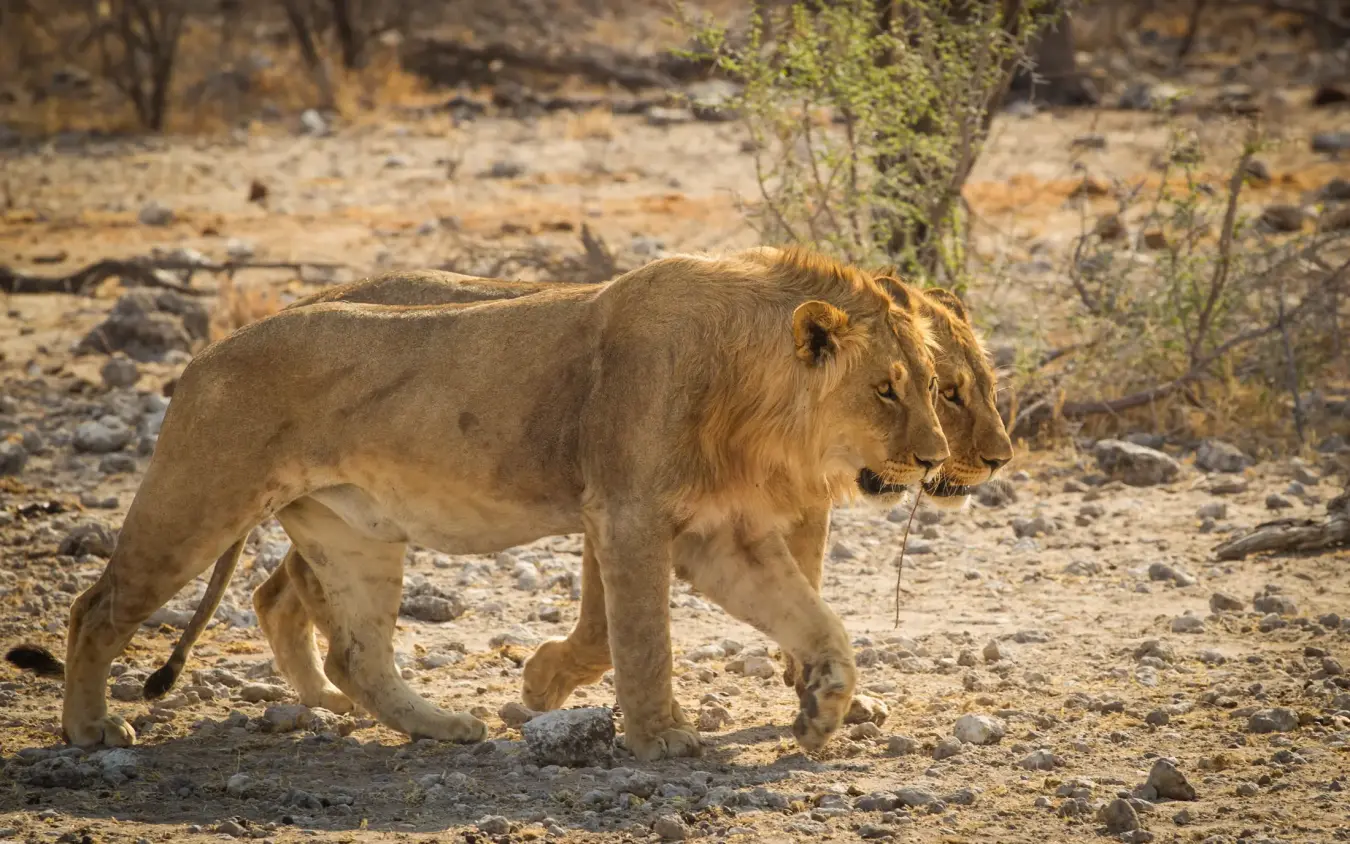
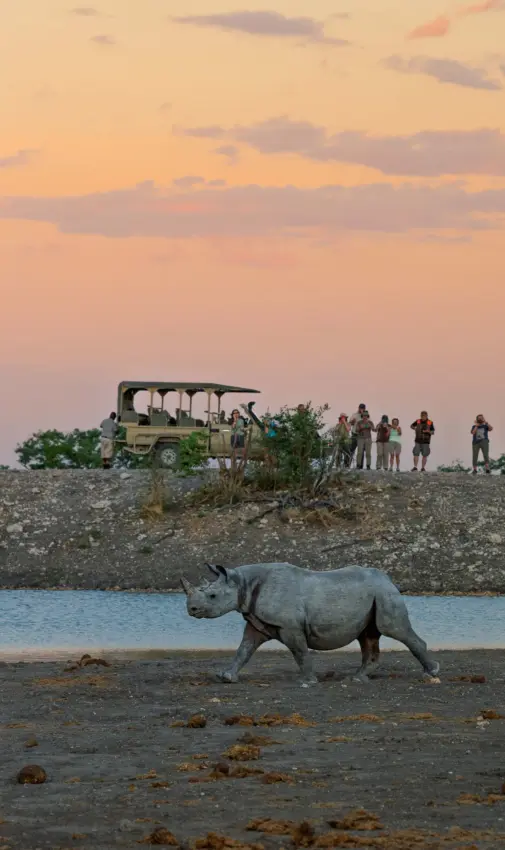
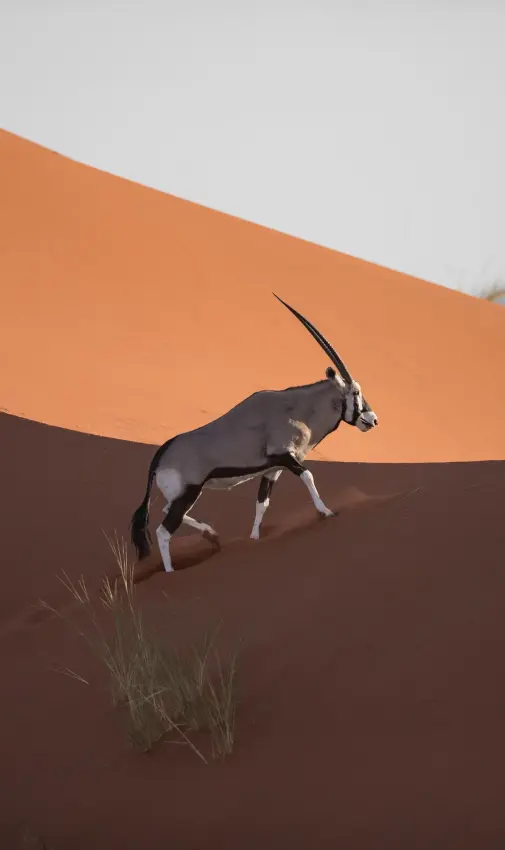
More than thirty mammal species range across the reserve, among them lion, cheetah, leopard and both black and white rhino. The Onkolo photographic hide is built at water level, its viewing windows set low, and it puts photographers eye to eye with drinking animals, rewarding patience over pace. Birding is strongest through the summer months, when the seasonal rains fill Fischer’s Pan and draw waterbirds down onto the flooded ground.
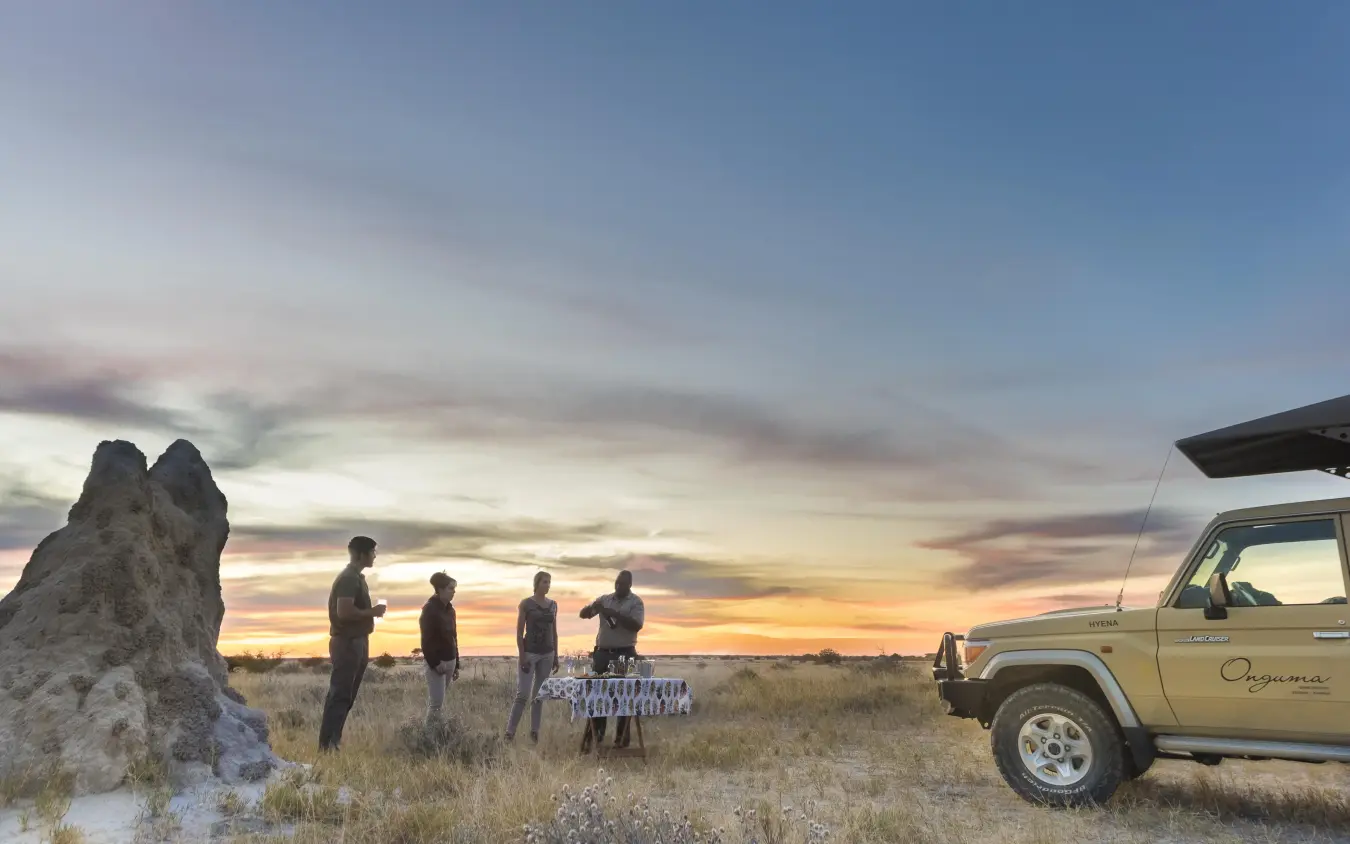
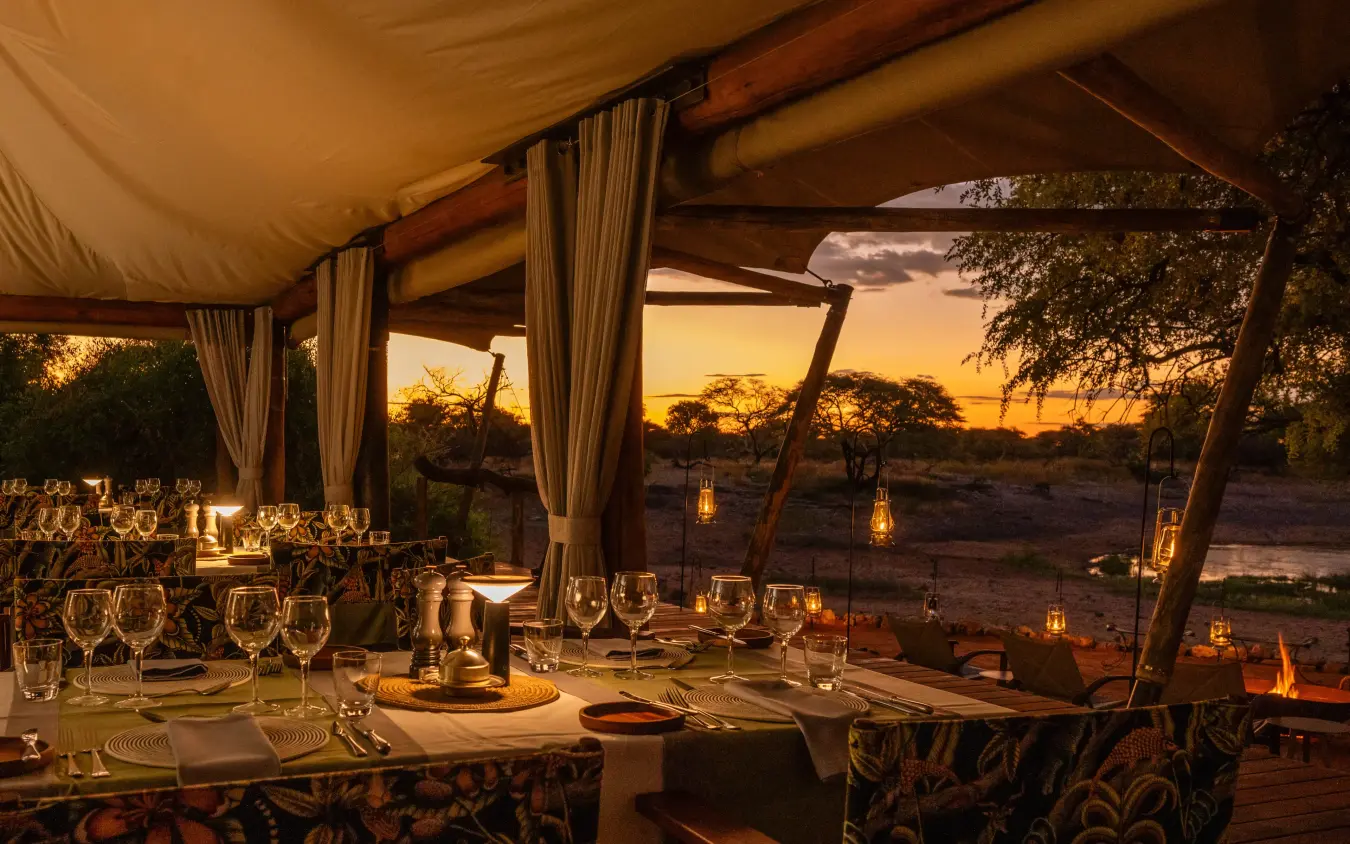
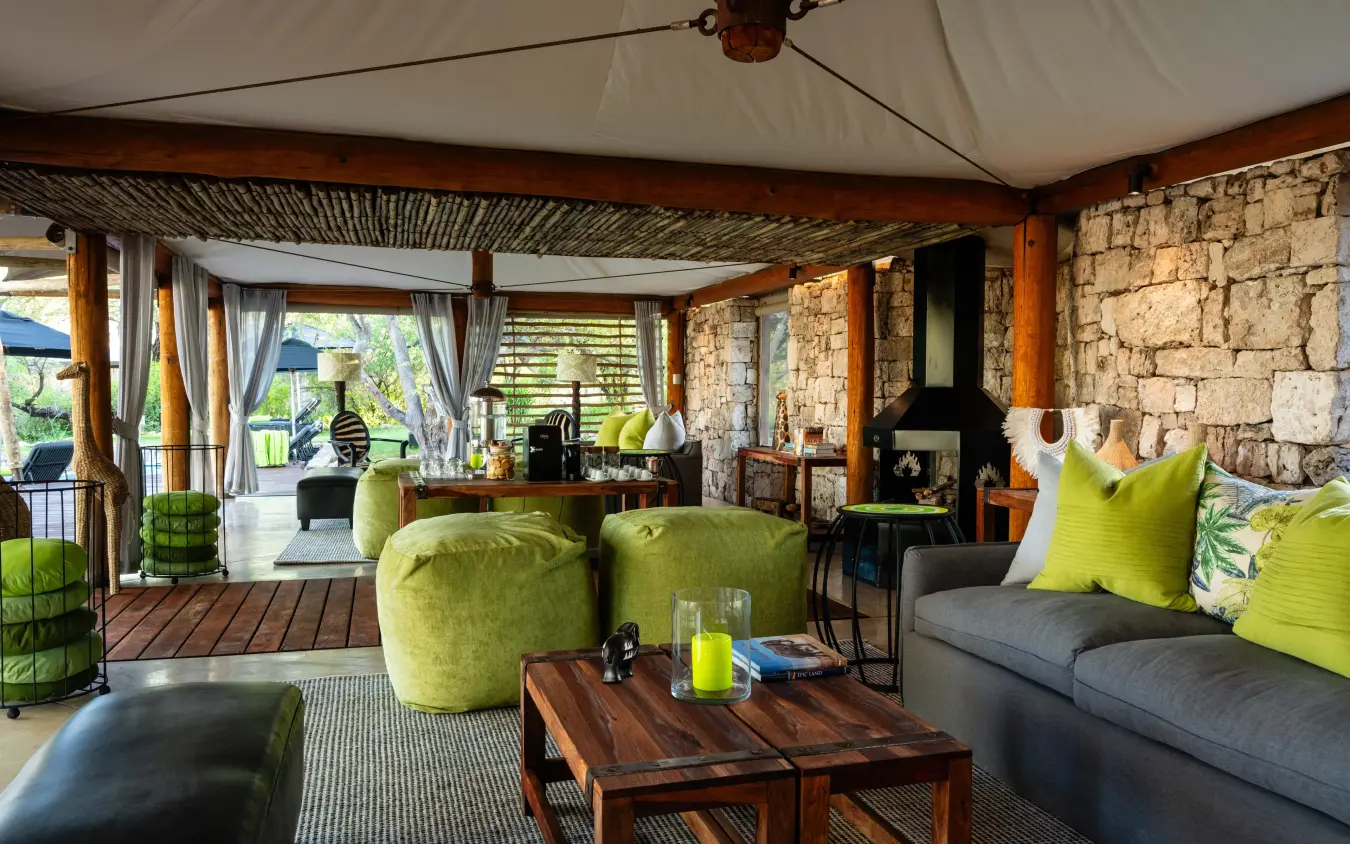
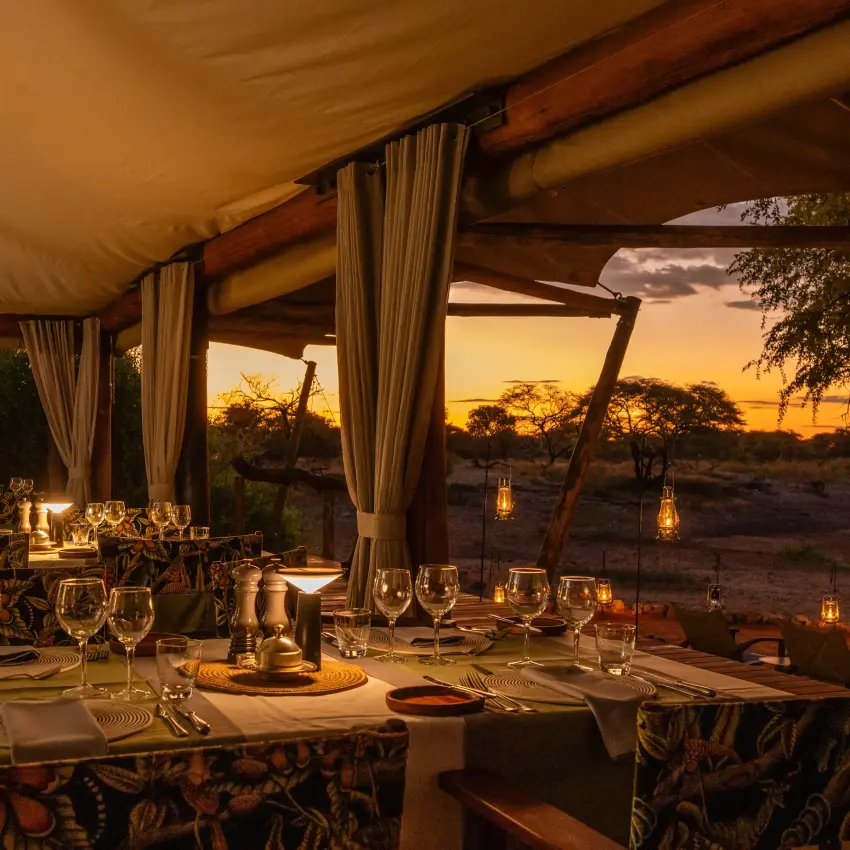
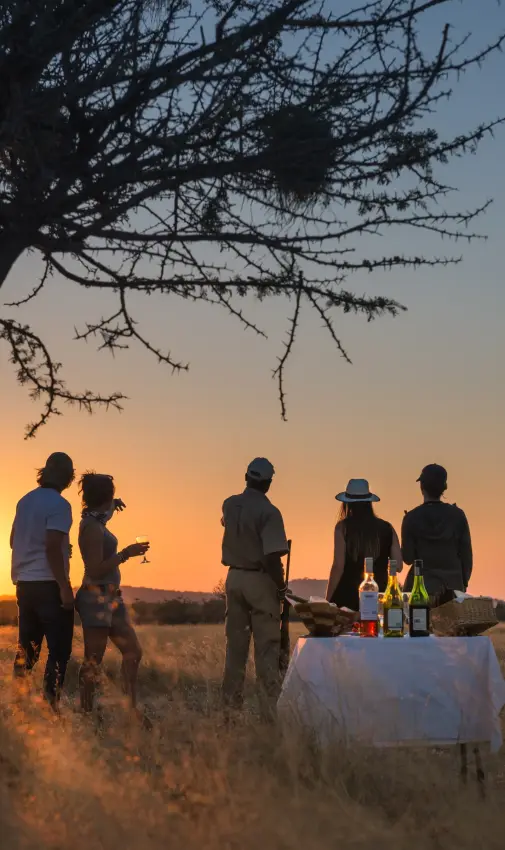
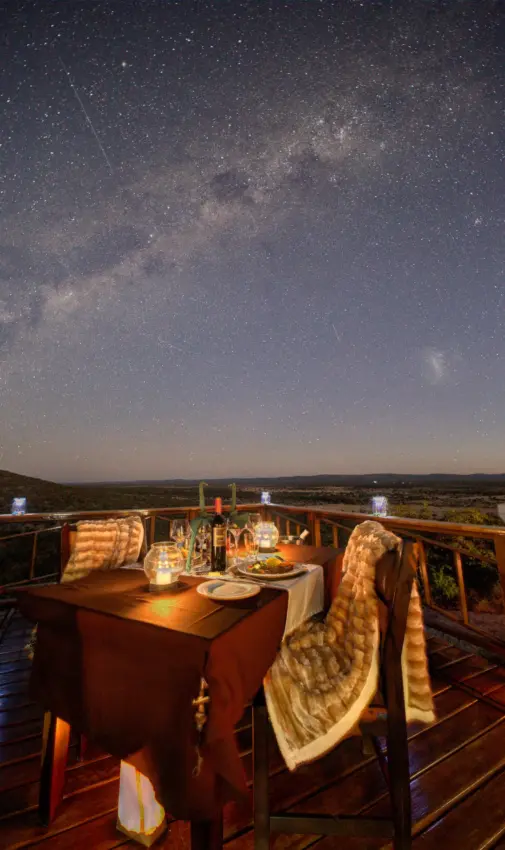
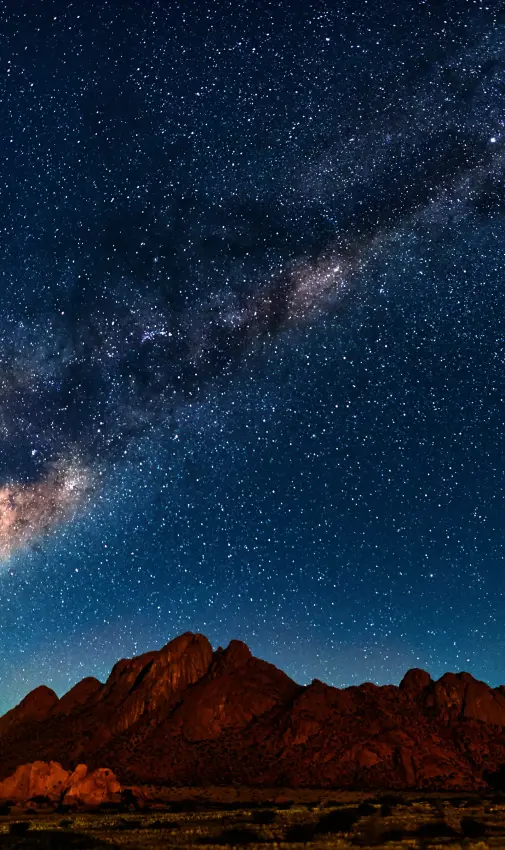
Evenings hold their own quiet theatre. Dinner might be served in the open-air boma around a fire, the floodlit waterhole still active in the dark and jackals calling somewhere out in the bush. The kitchen works a fusion of European and African flavours, plated with care rather than set down as rough camp fare. Private bush dinners can be arranged away from the main area, for guests who want the fire and the sky to themselves.