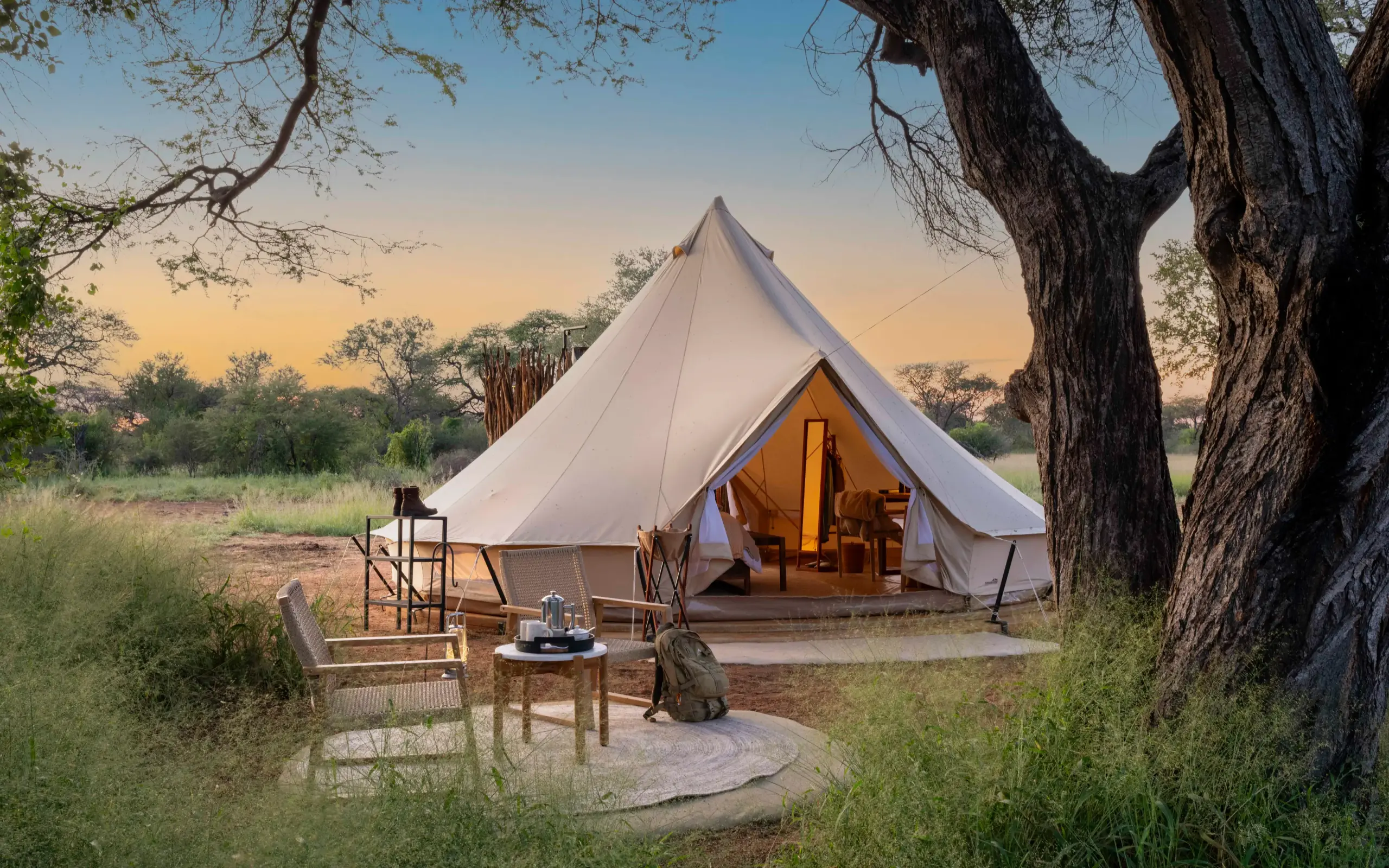
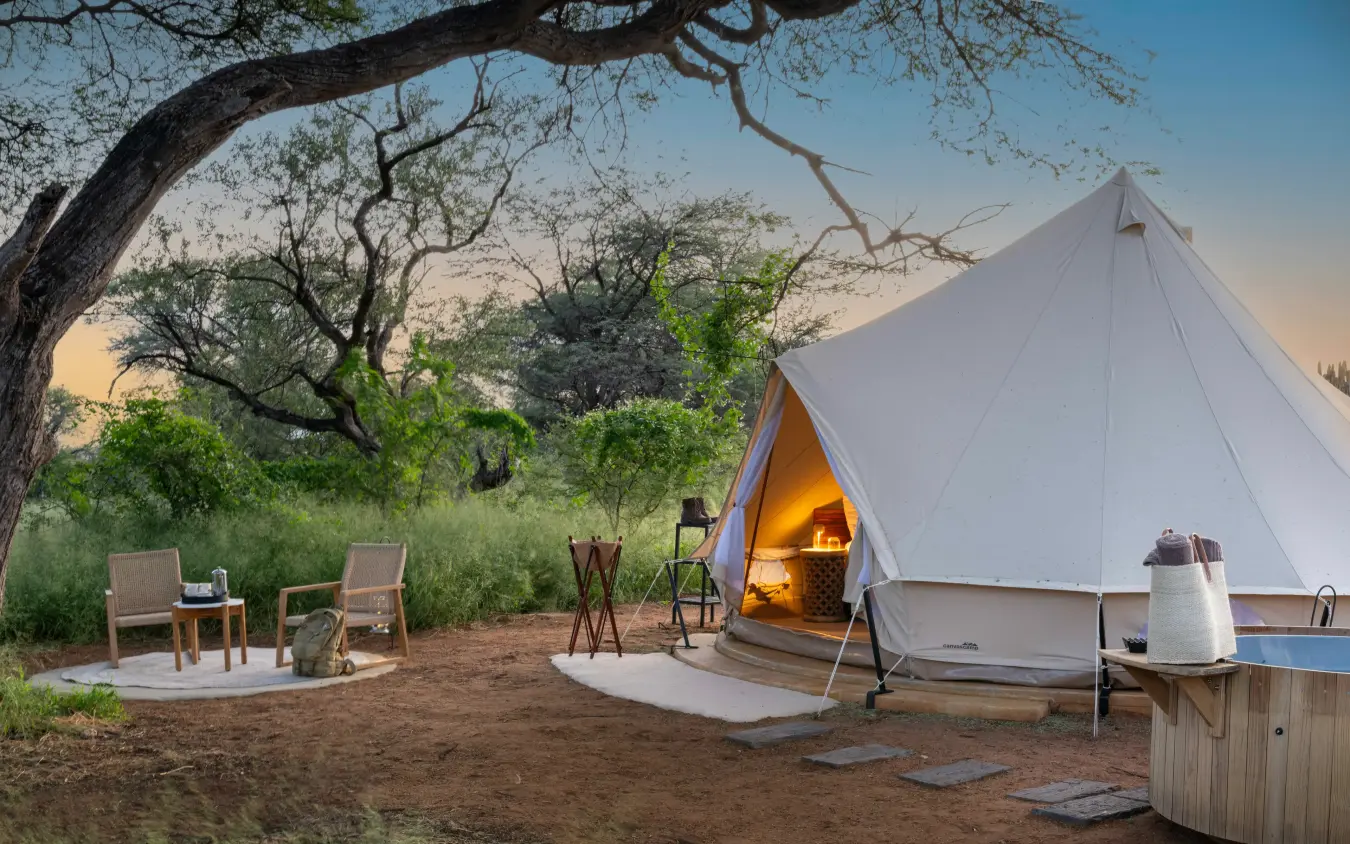
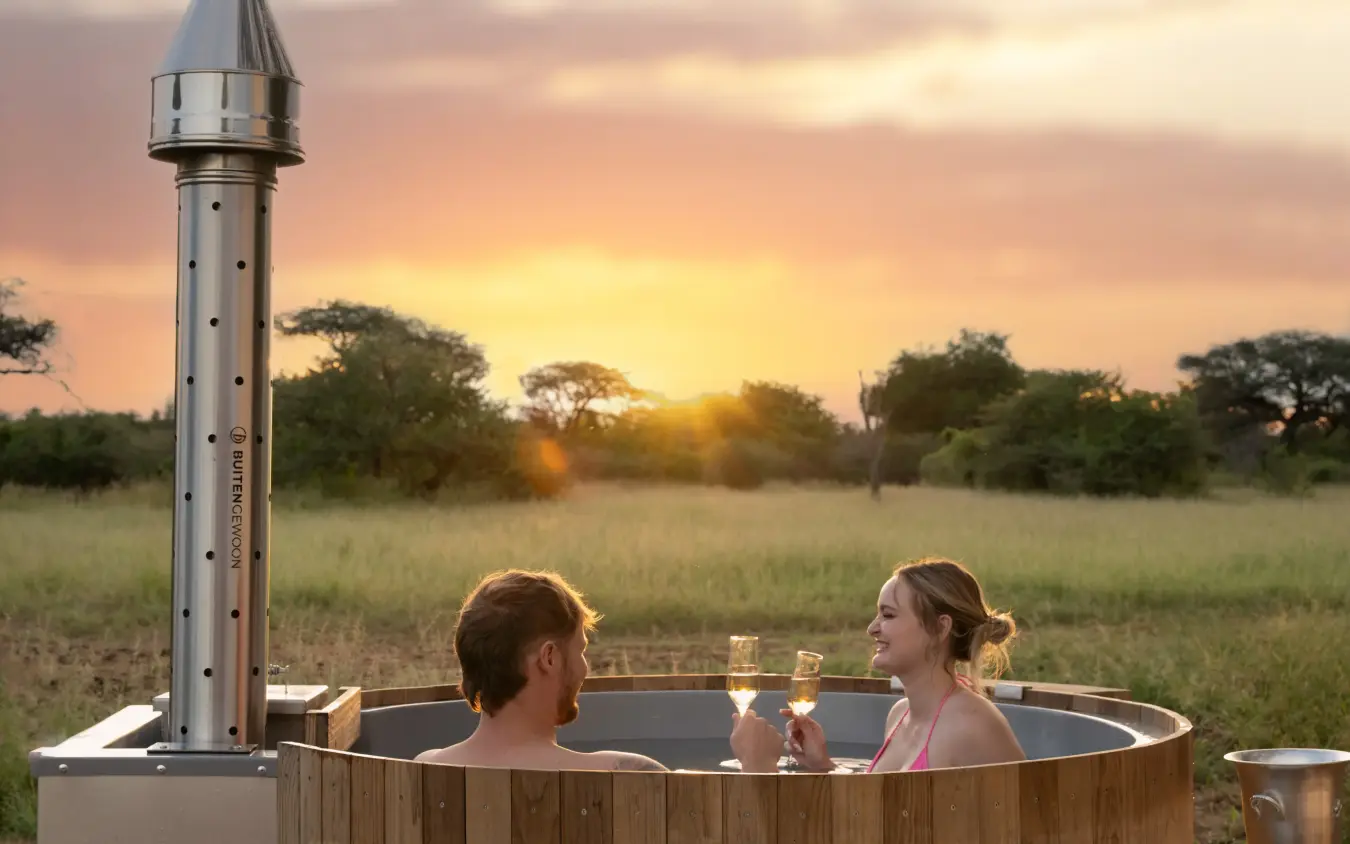
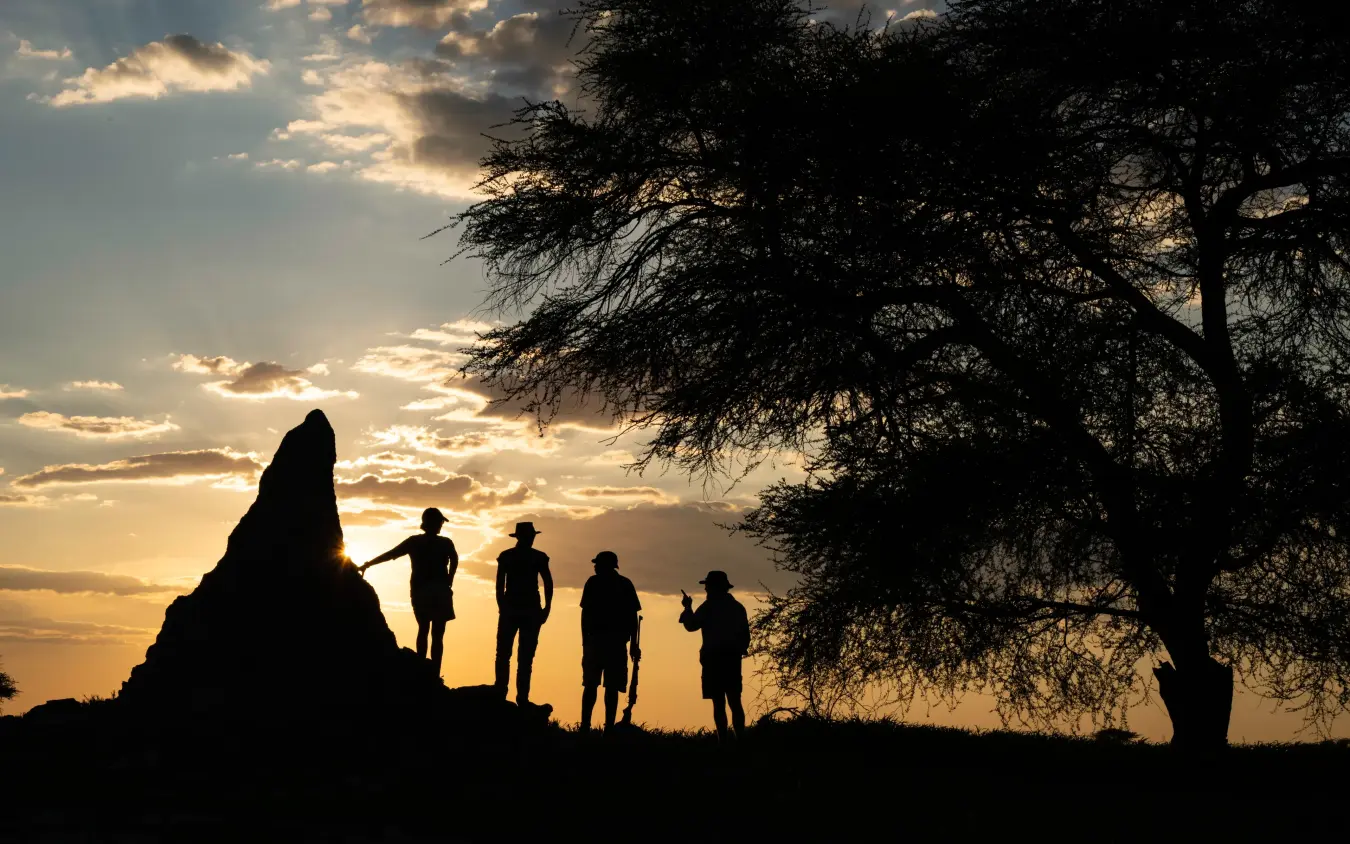
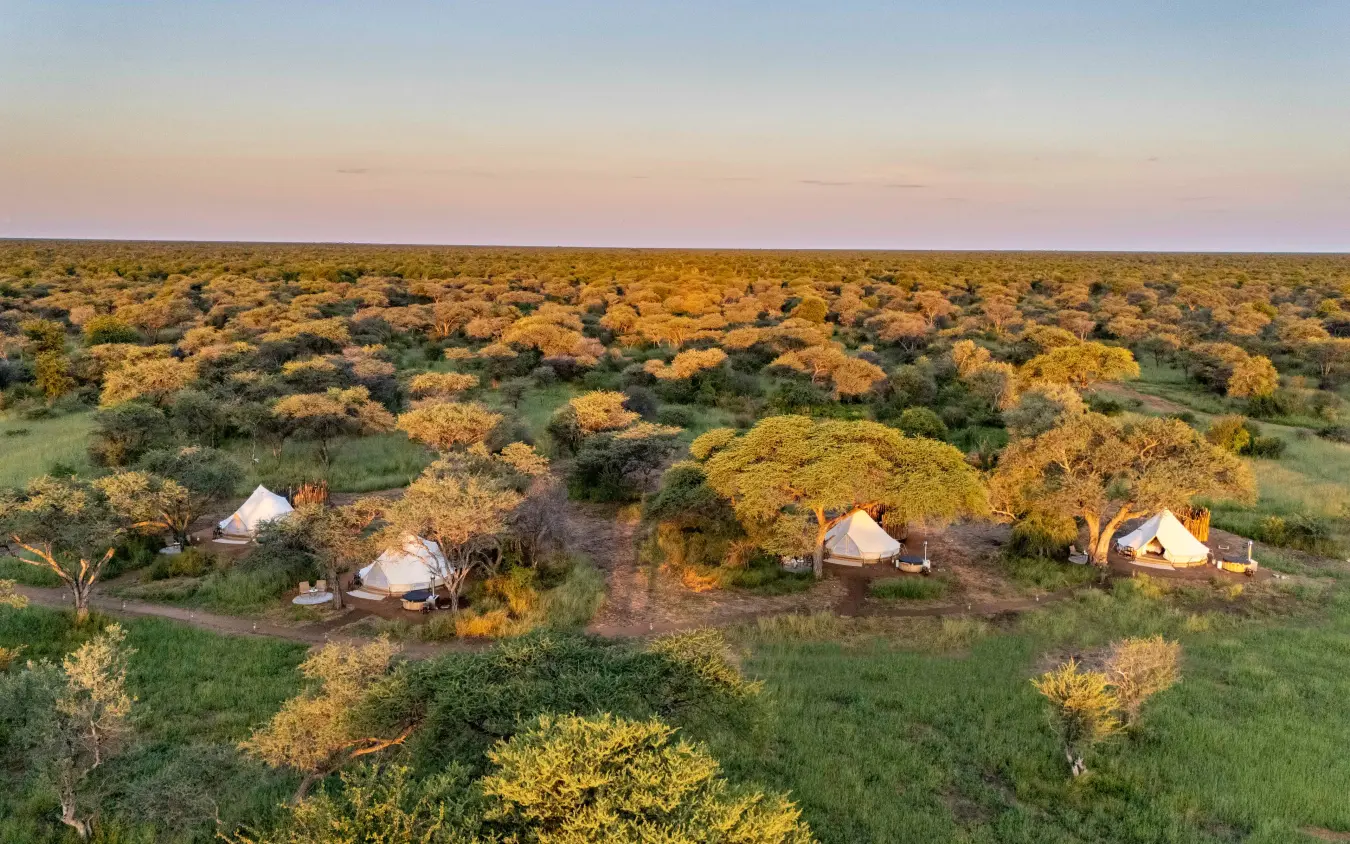
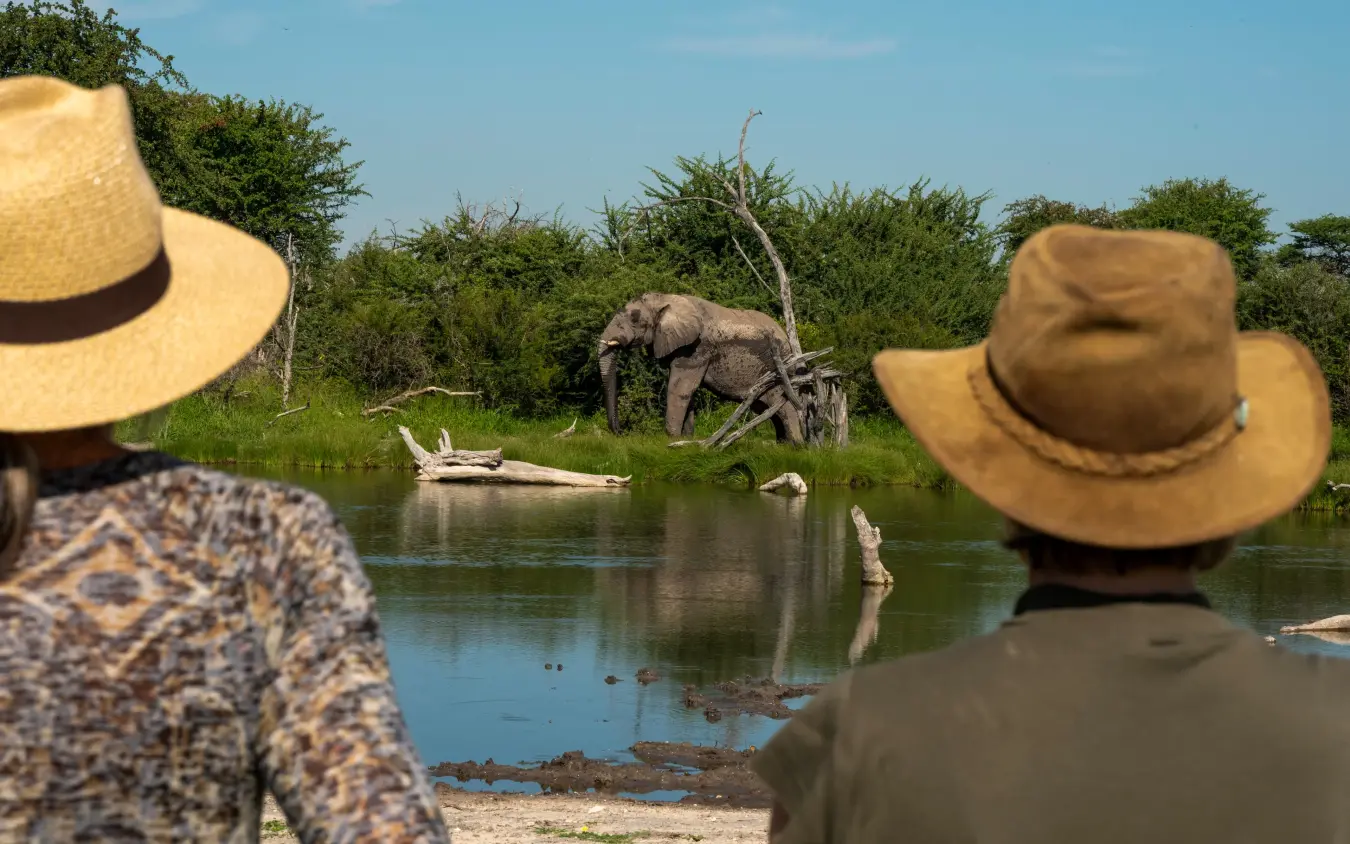
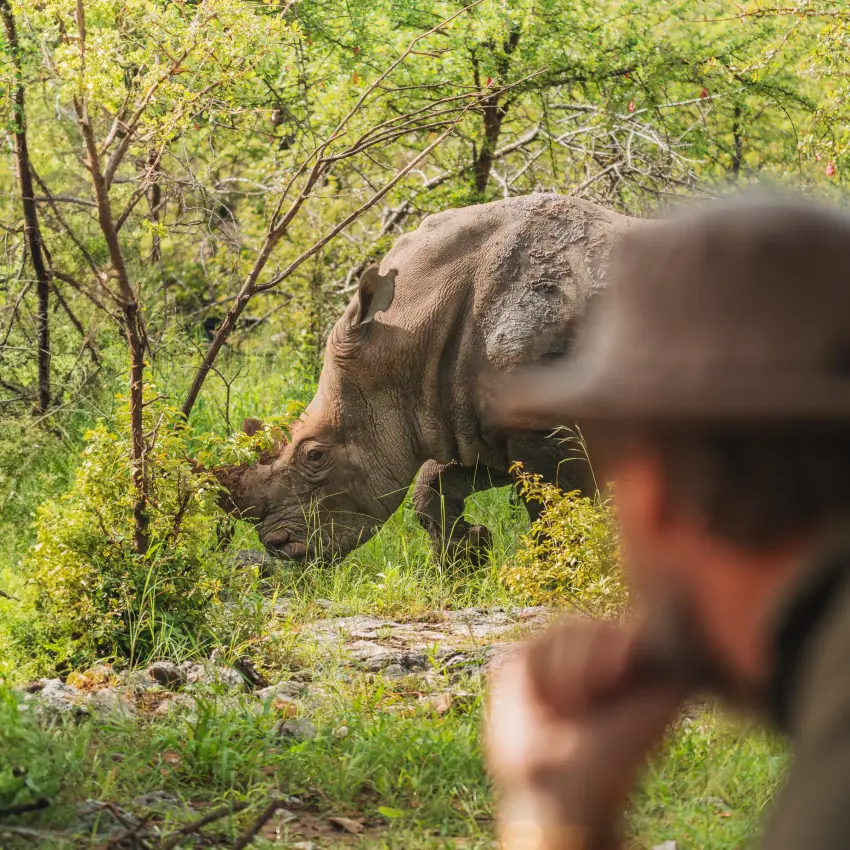
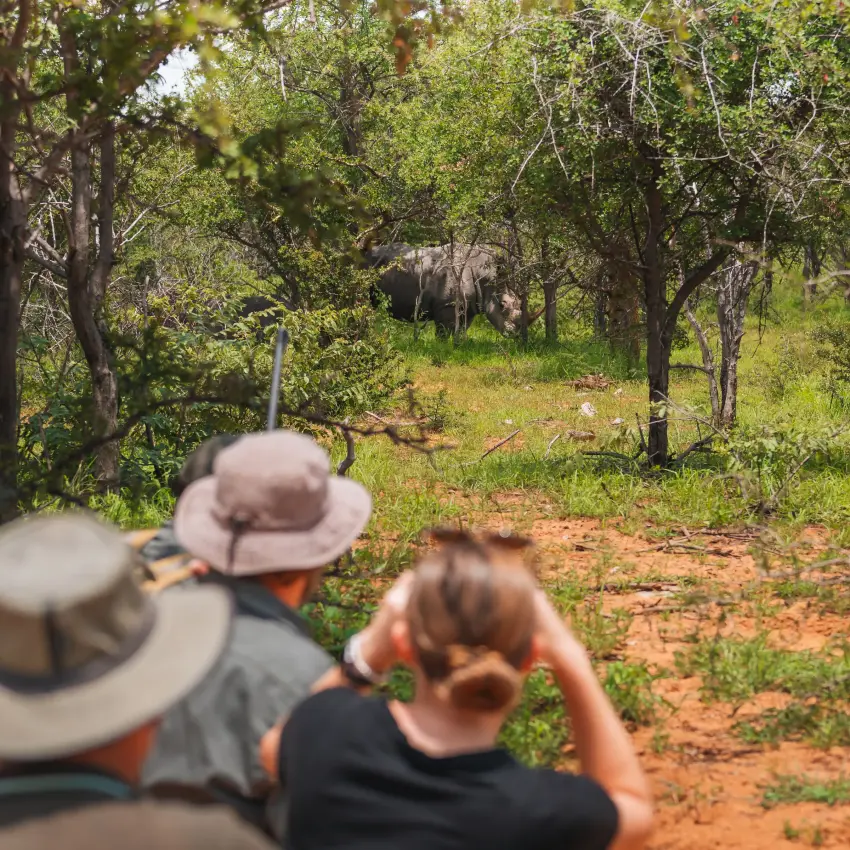
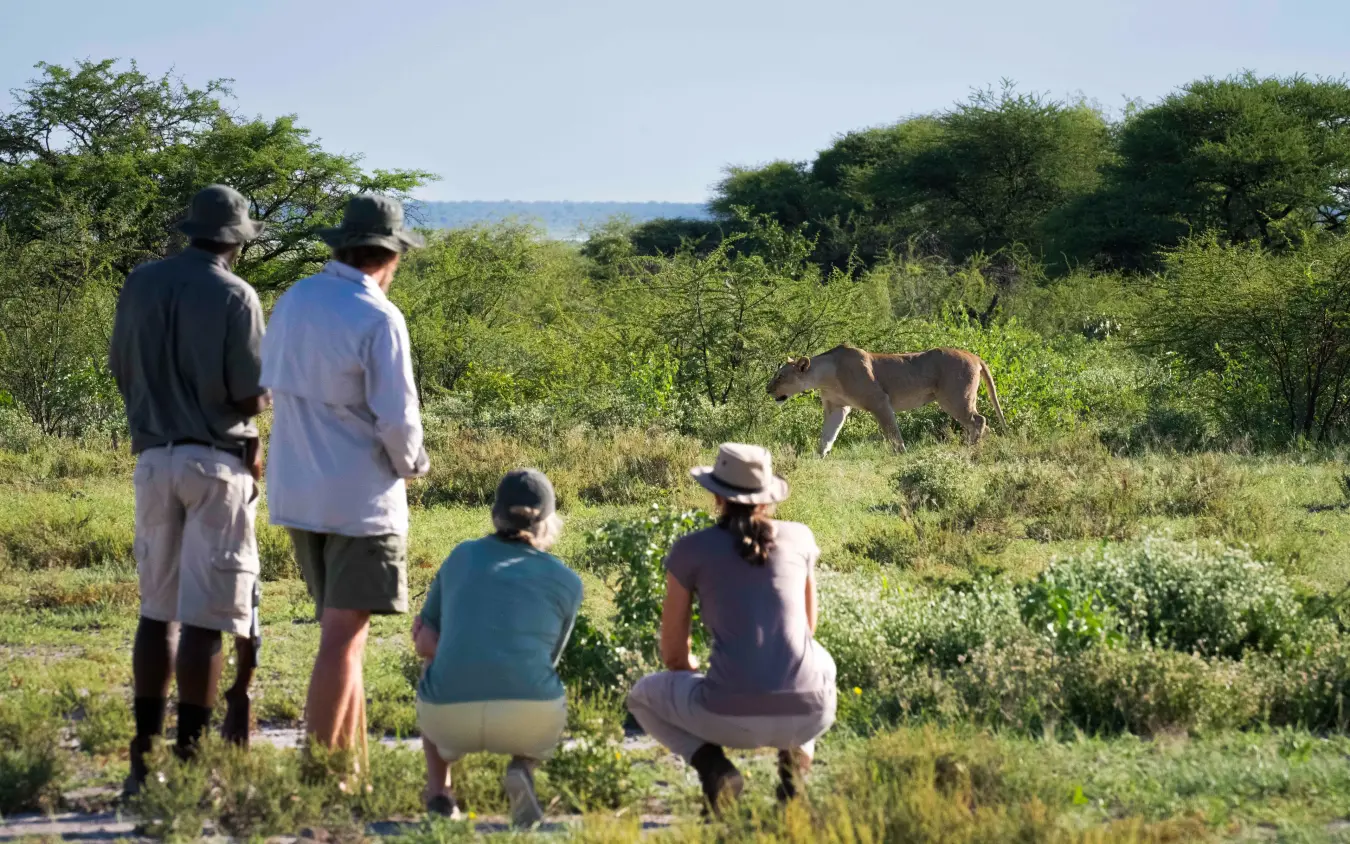
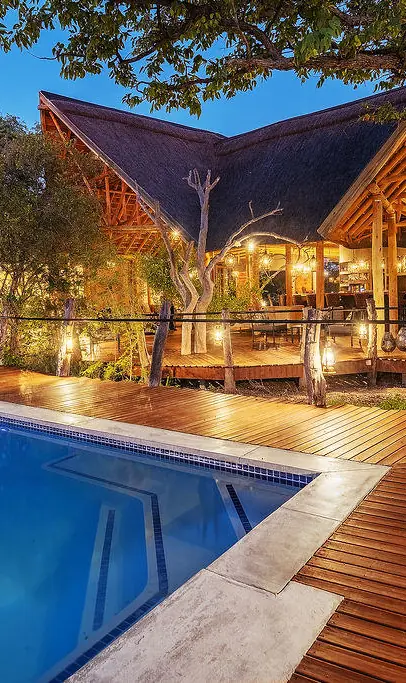
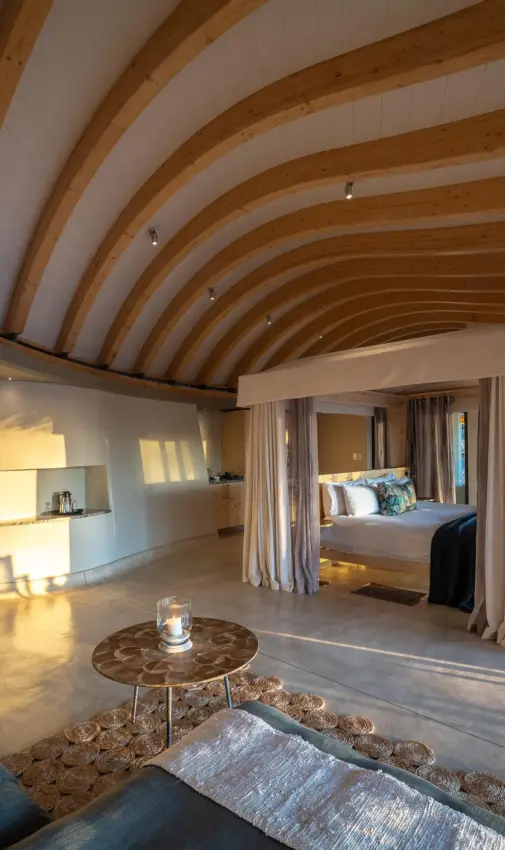
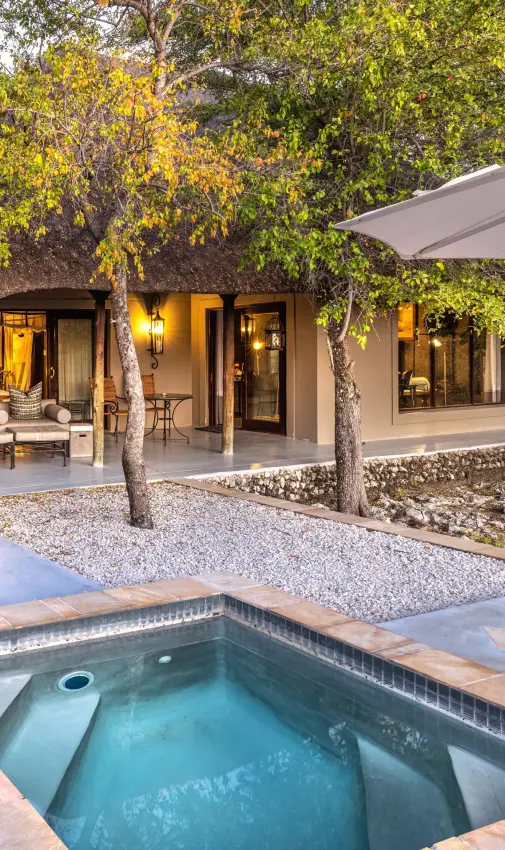
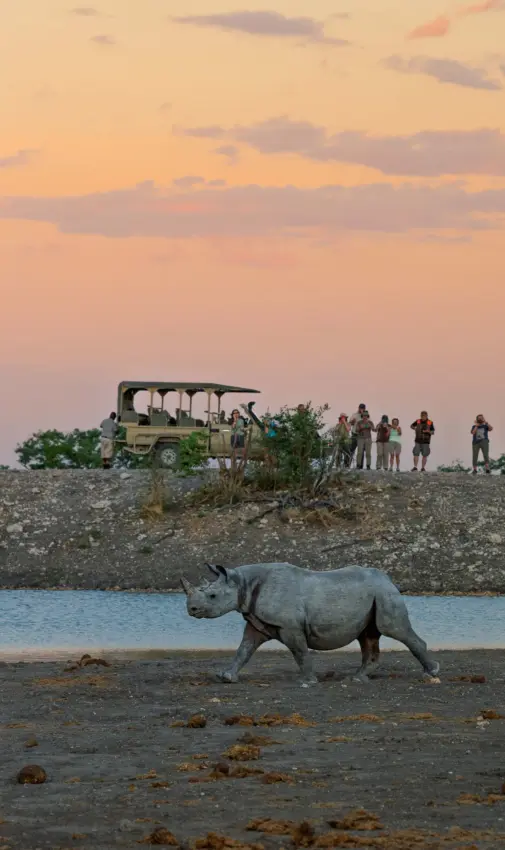
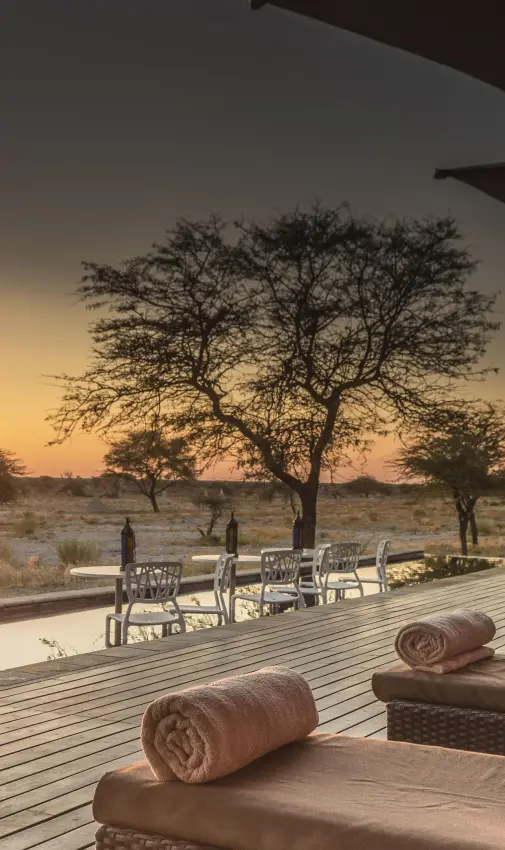
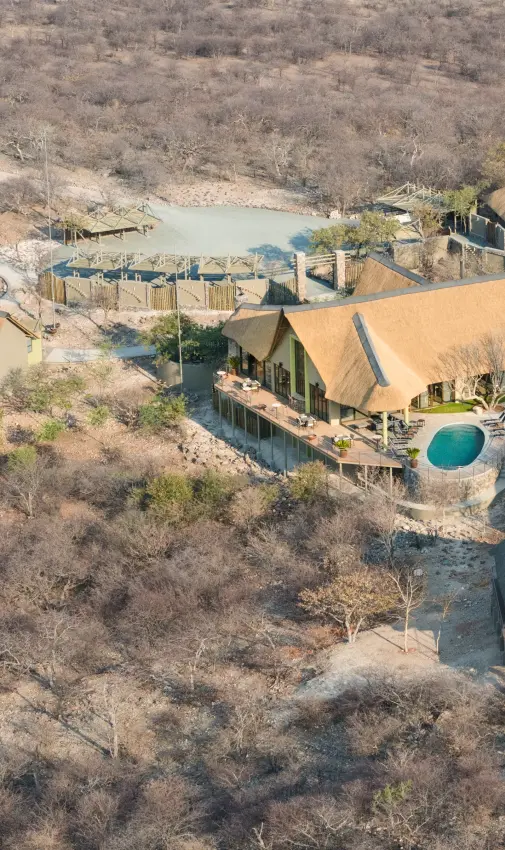
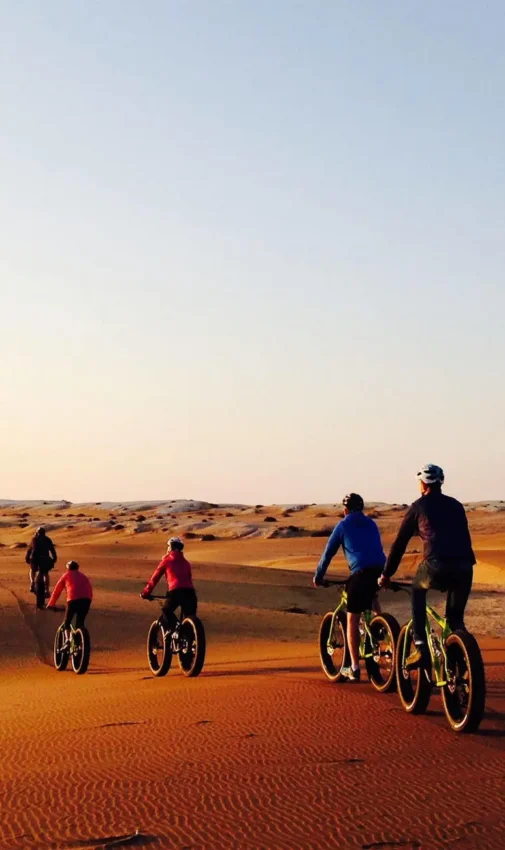
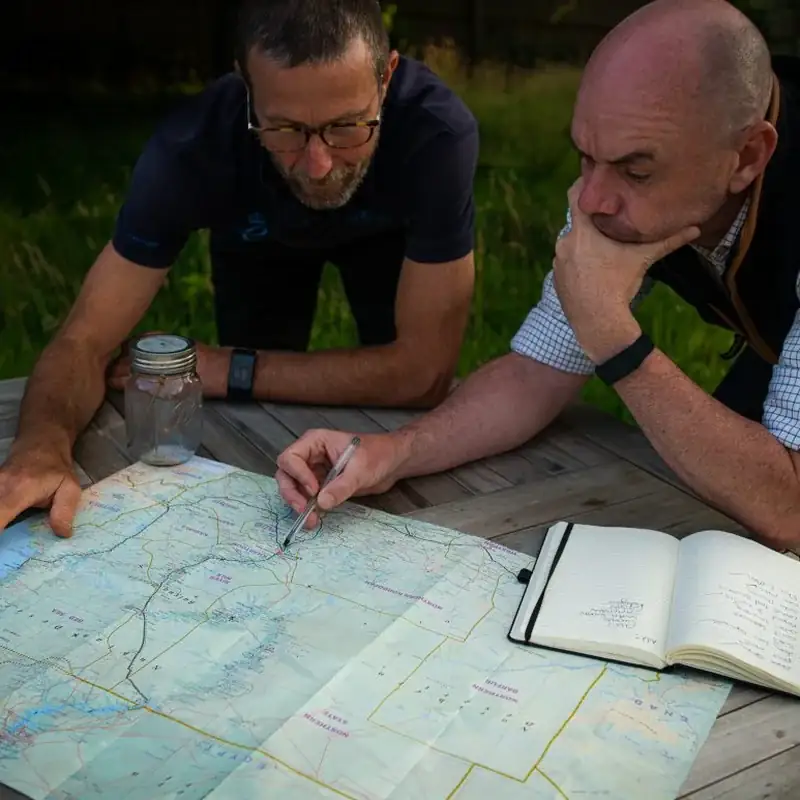
The camp opens only through the dry winter months, from April to September, when the bush thins, the water sources draw the wildlife in, and the walking conditions are at their most reliable. The four tents sit at ground level, each with a private seating area at the front and an en-suite outdoor bathroom at the rear. Beside every tent a wood-fired hot tub holds heated water for the end of a morning’s tracking, a quiet counterpoint to the dust and heat of the walk.
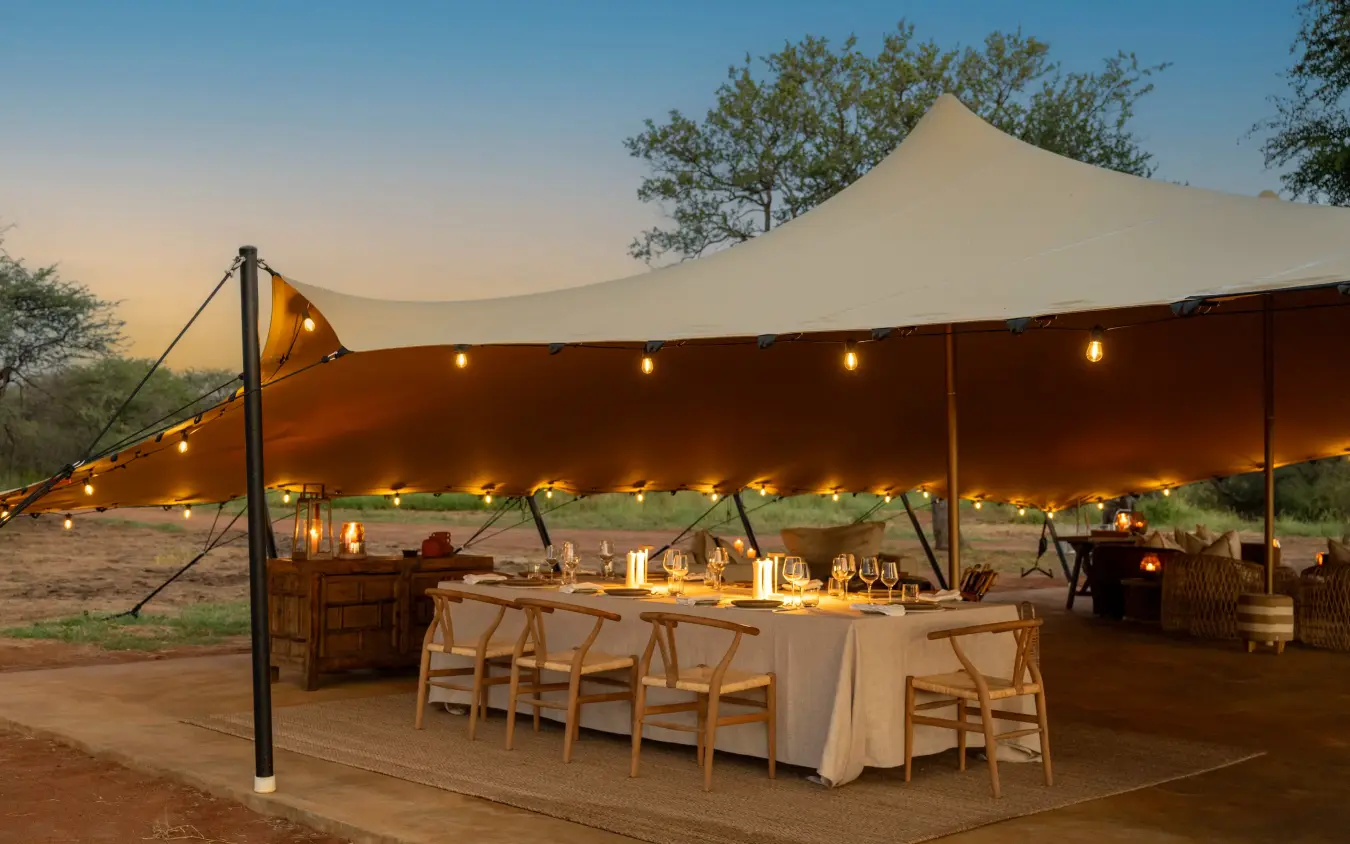
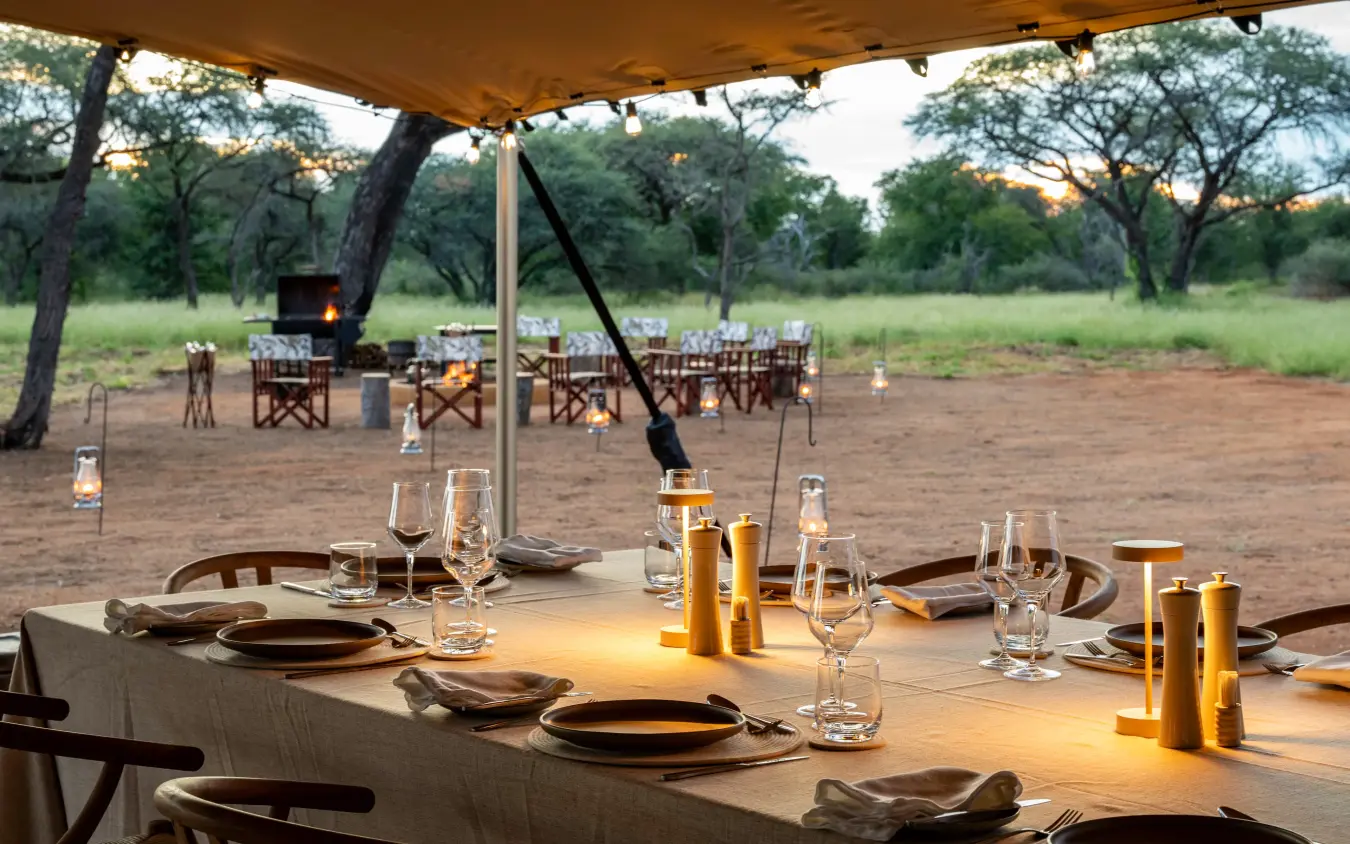
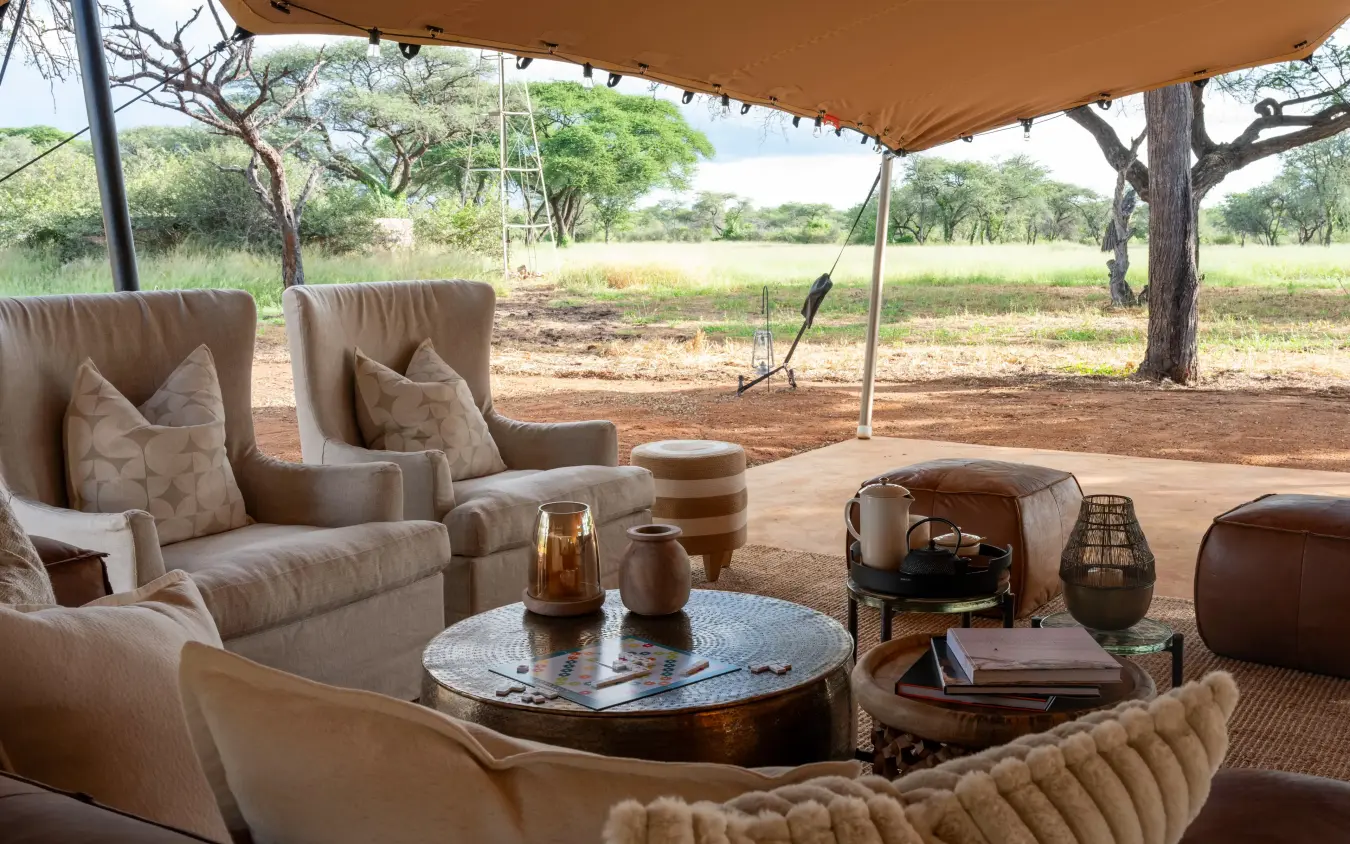
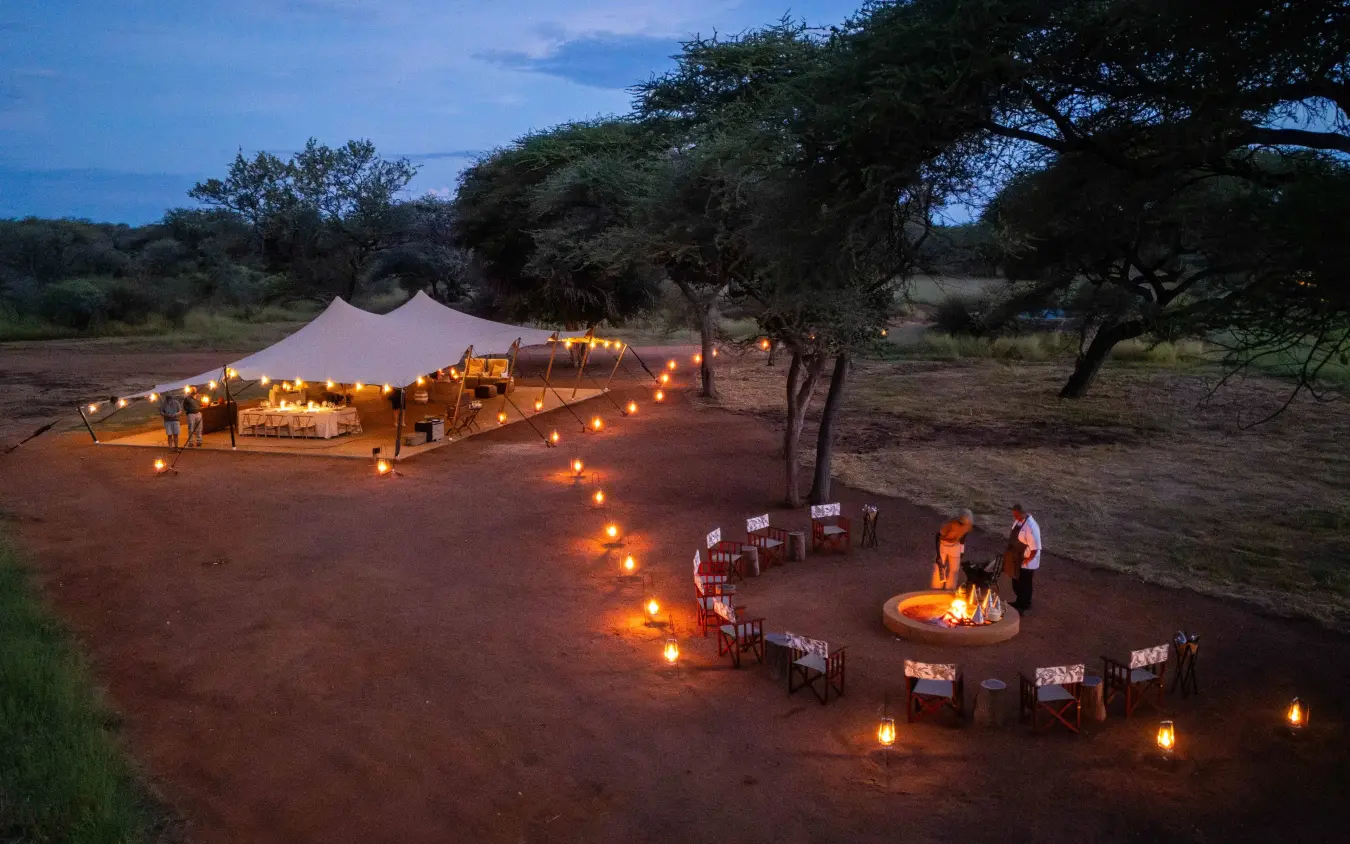
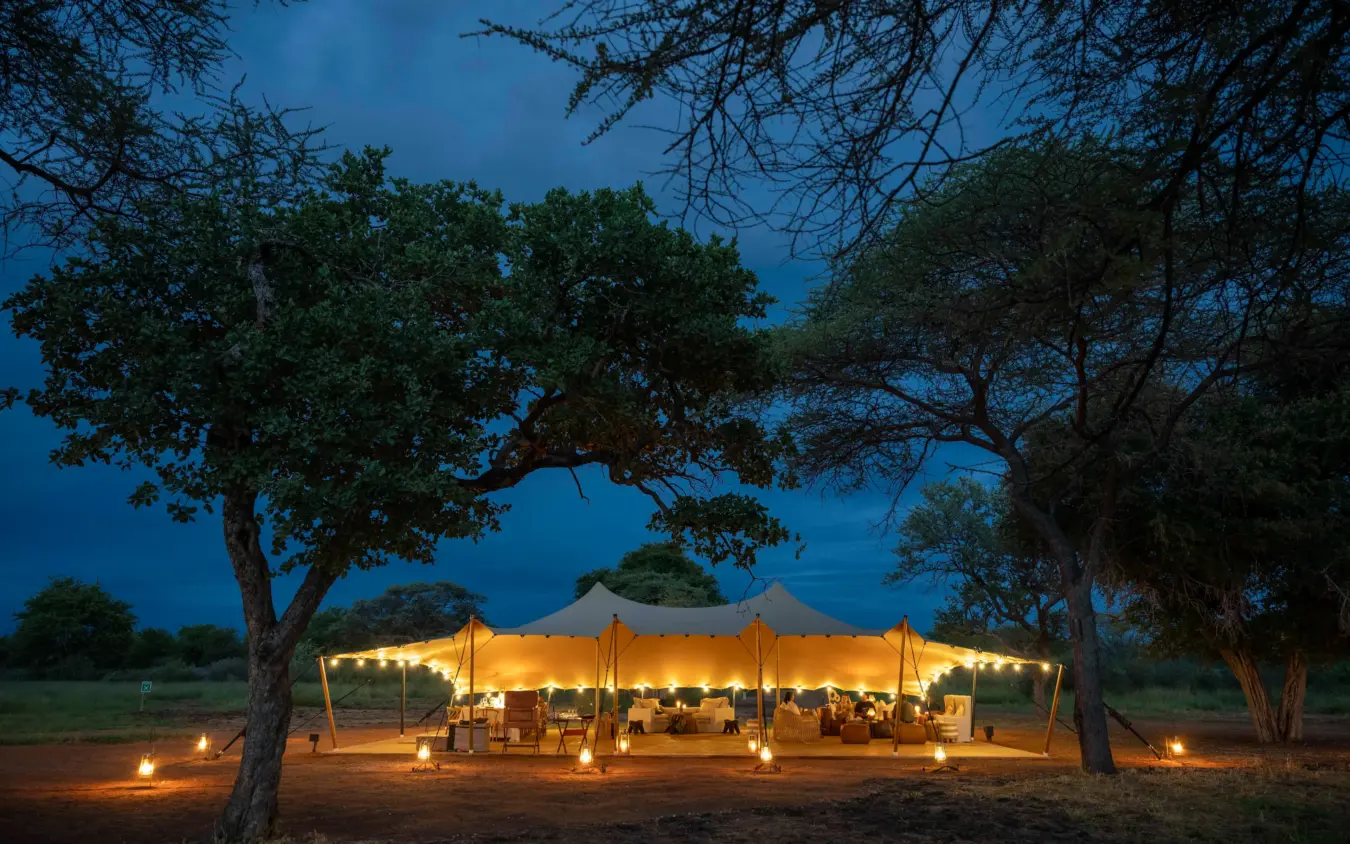
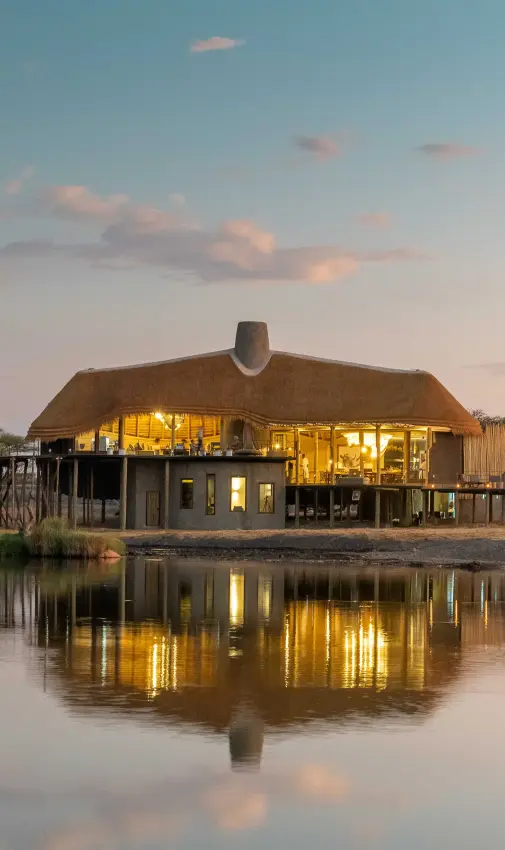
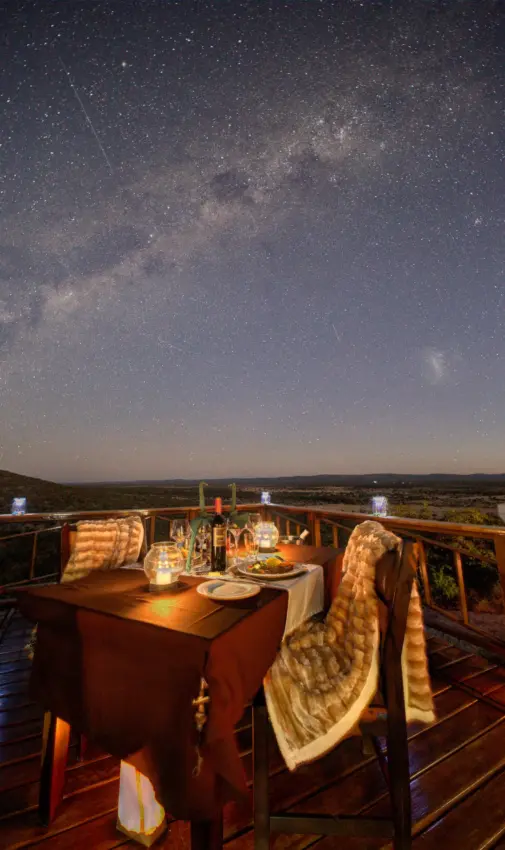
The design keeps its footprint deliberately light. It is canvas, rough-sawn timber and gum poles, with solar power running the lights and the charging points, composting toilets and canvas bucket showers filled by hand. A large open-sided tent holds the lounge and the dining area. Meals are cooked over an open fire, breakfasts and lunches shared under canvas, and dinner taken as a boma meal directly around the flames.
With no engine noise and no hum of grid electricity, the soundscape stays largely intact.
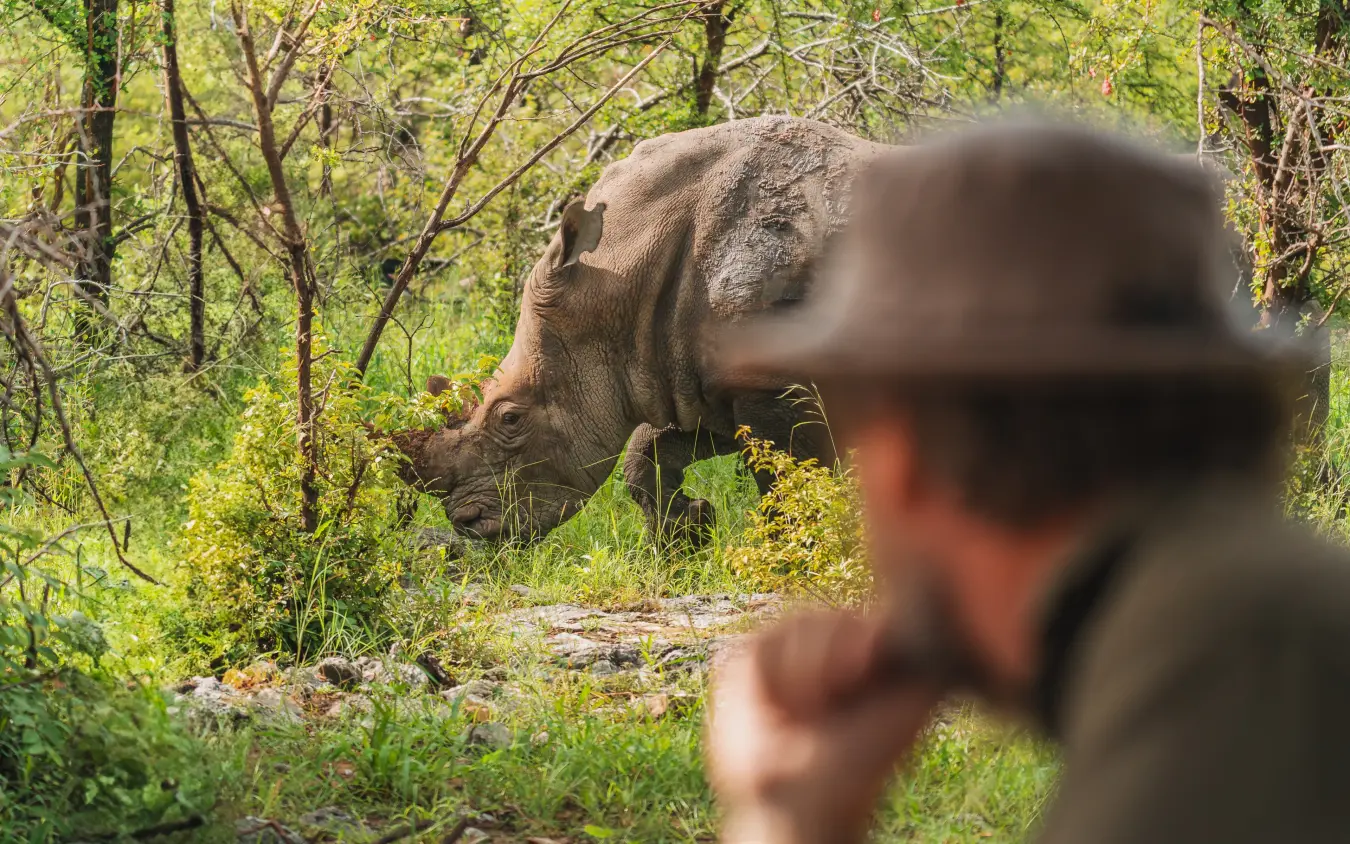
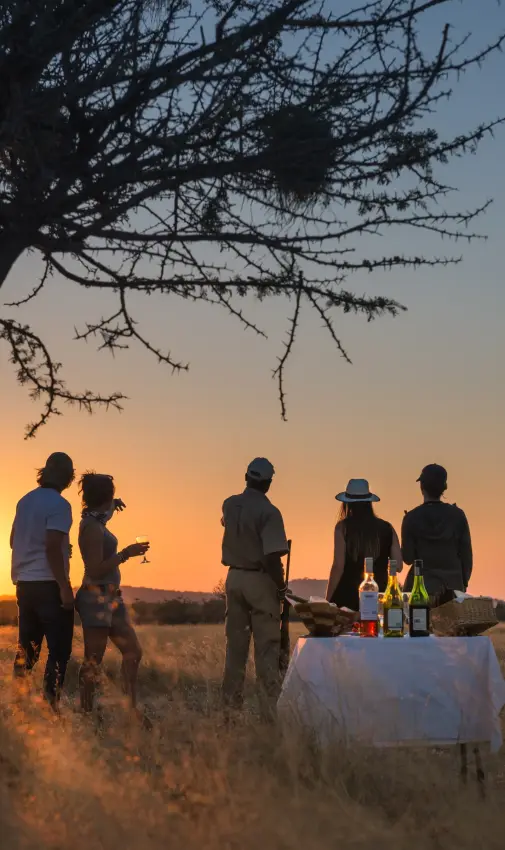
The sound of the place is as much a part of it as the sightings. Cicadas at dusk, hardwood crackling on the fire, and, on some nights, the roar of distant lion. With no engine noise and no hum of grid electricity, the soundscape stays largely intact, broken only by the occasional sundowner or transfer drive. The minimum age is 16, a reflection both of the fitness the daily walks demand over sandy, uneven ground and of the realities of tracking dangerous game on foot.
Conservation runs through everything here. The wider Onguma reserve supports anti-poaching patrols and reaches out into the surrounding community, with an irrigated vegetable farm at Oshivelo that employs local people and a development fund behind schools for San communities nearby. Families with younger children are pointed towards the reserve’s other, more conventional camps, leaving Trails Camp to those who come specifically to walk.