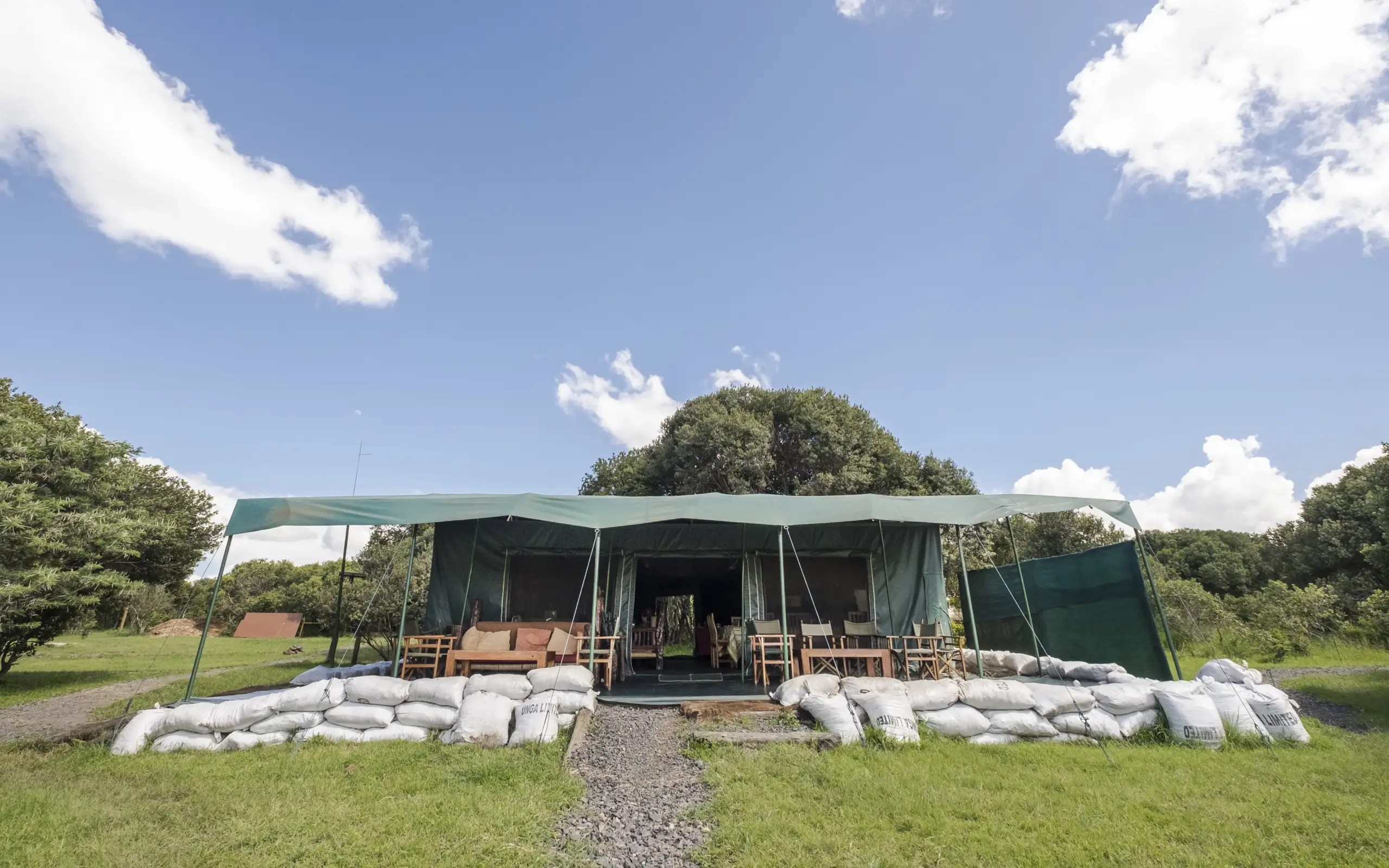
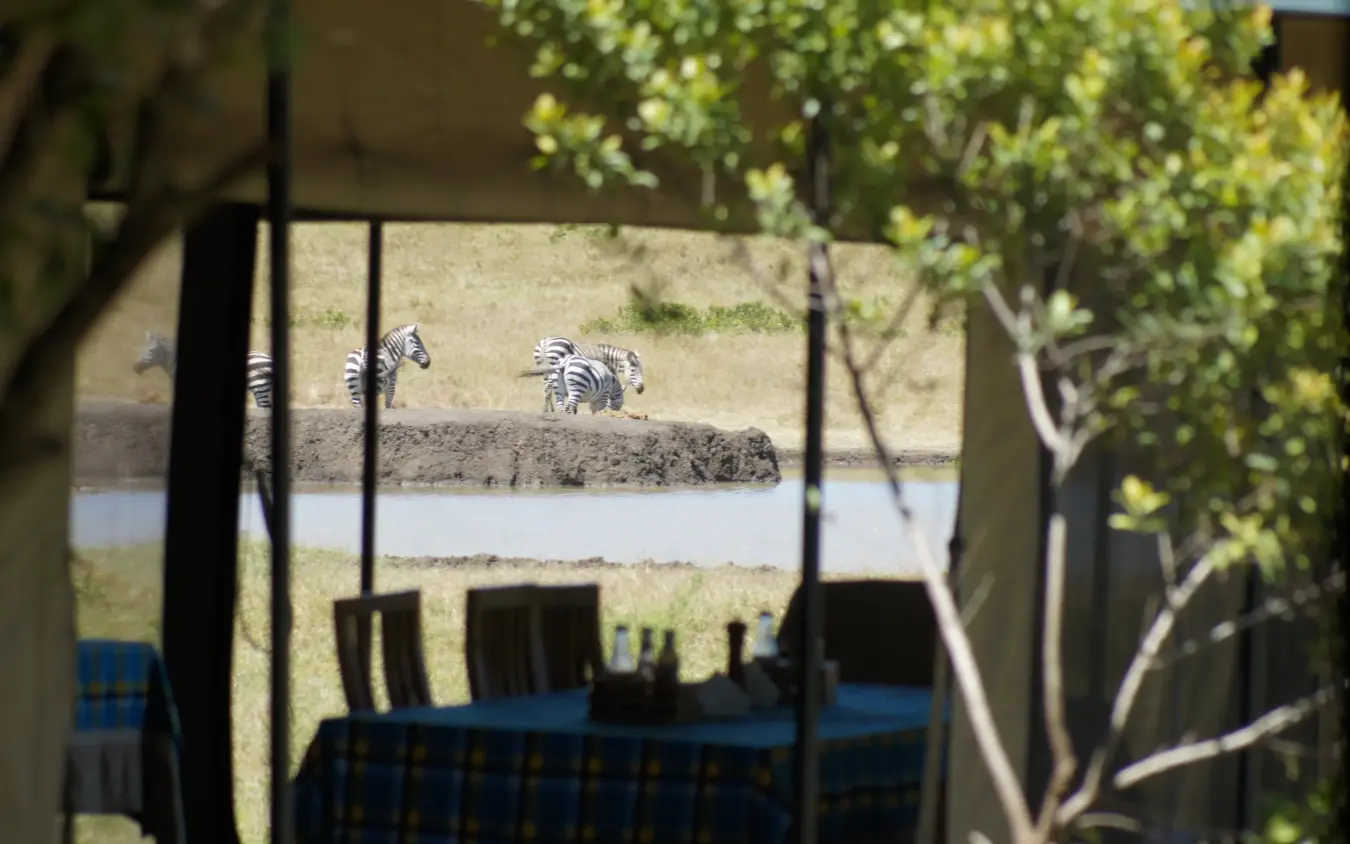
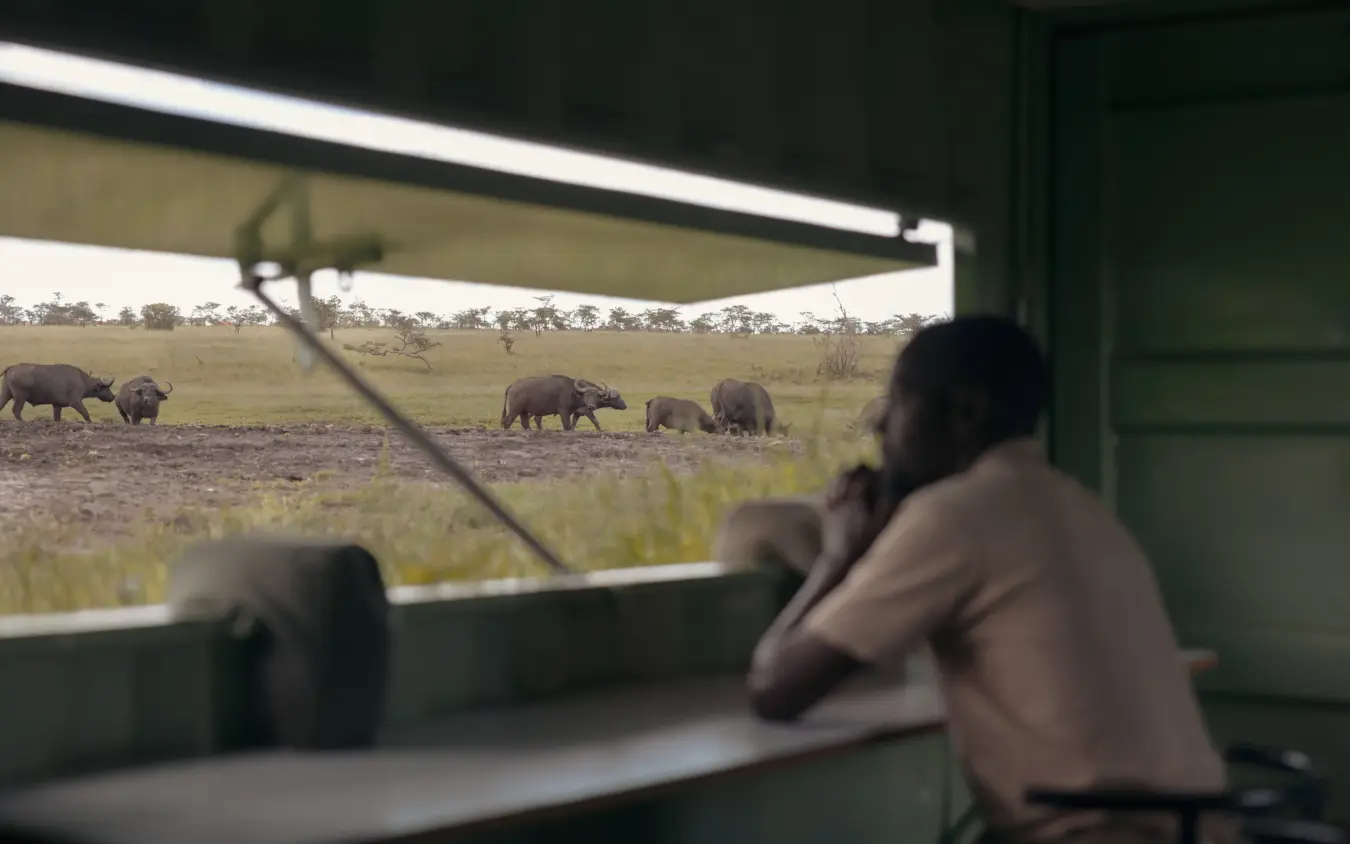
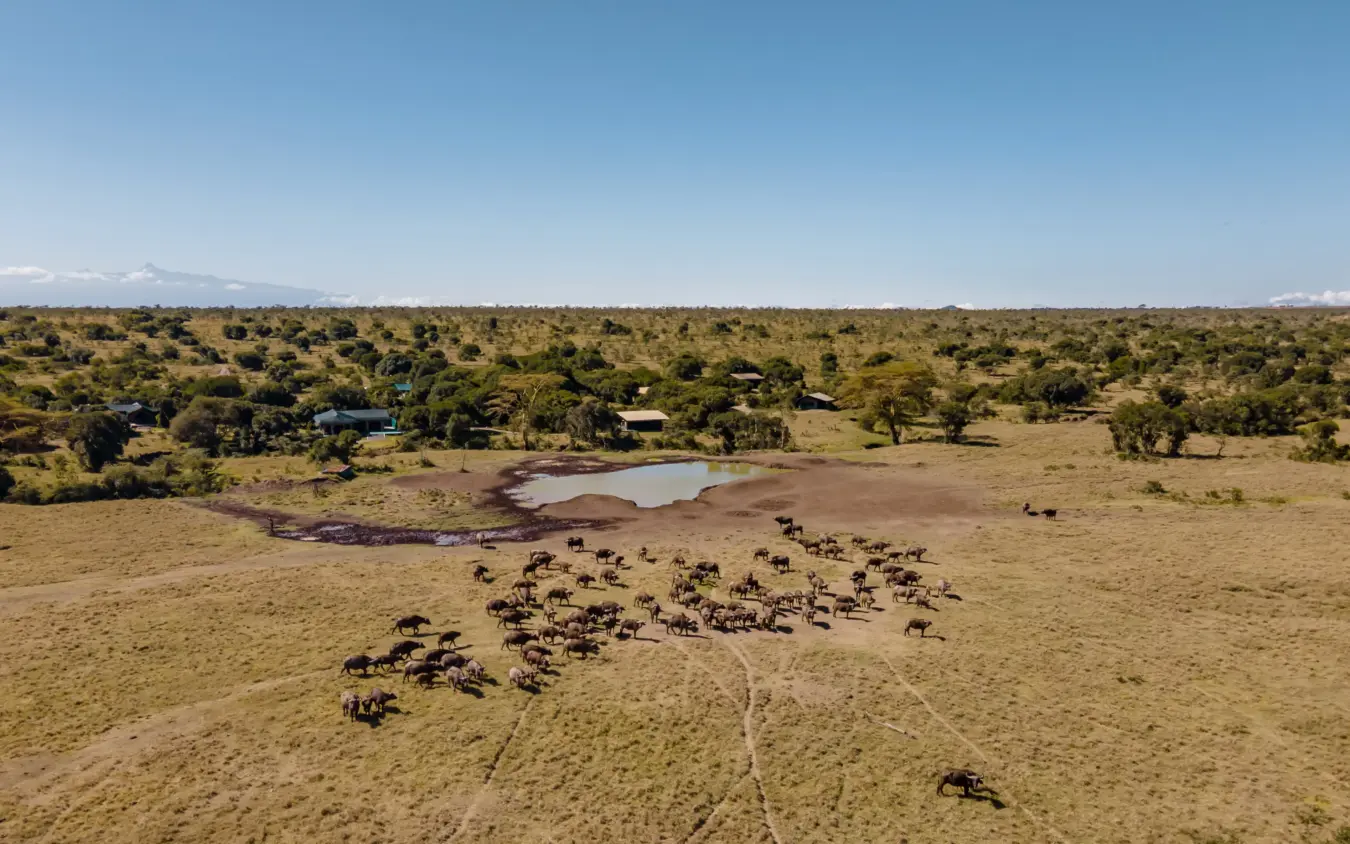
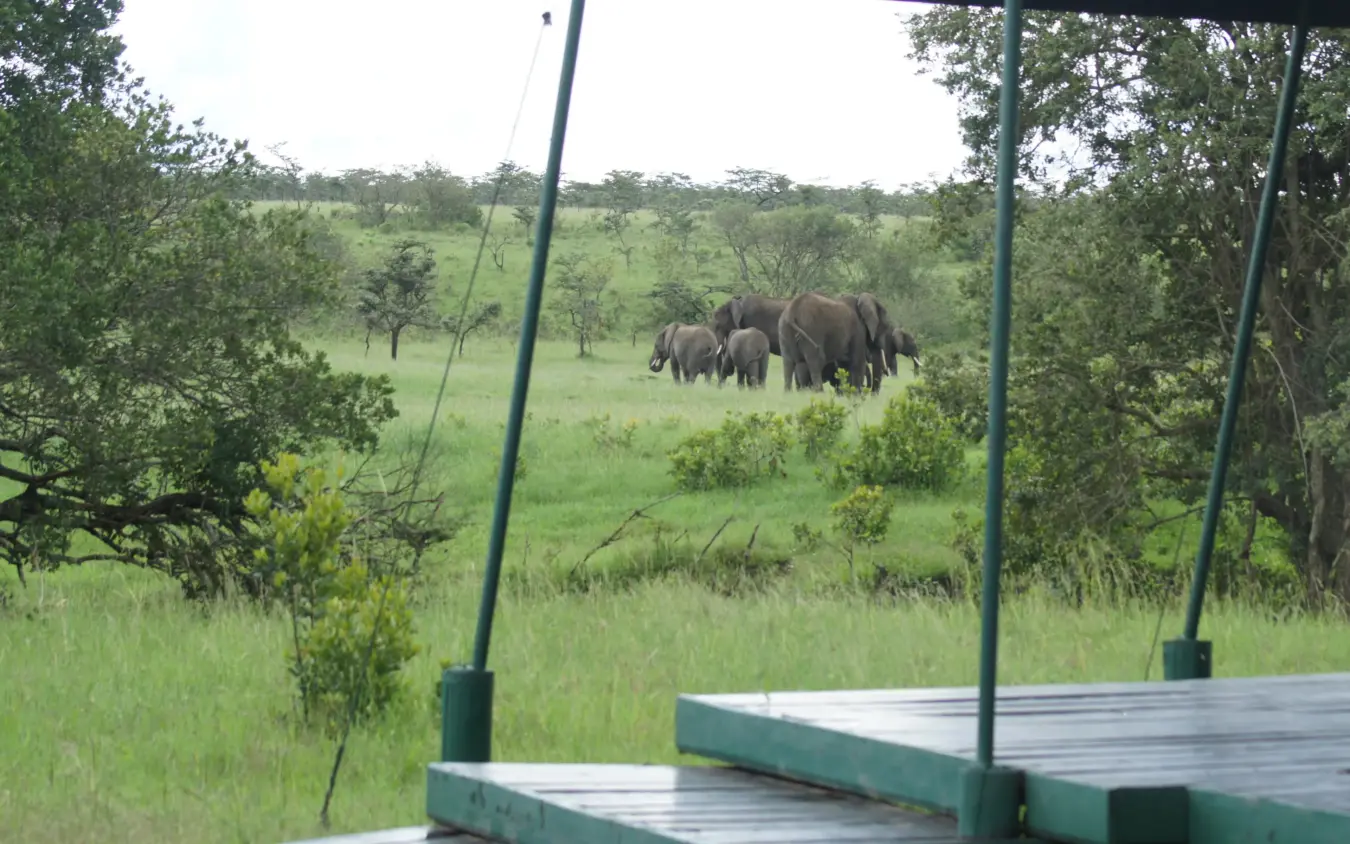
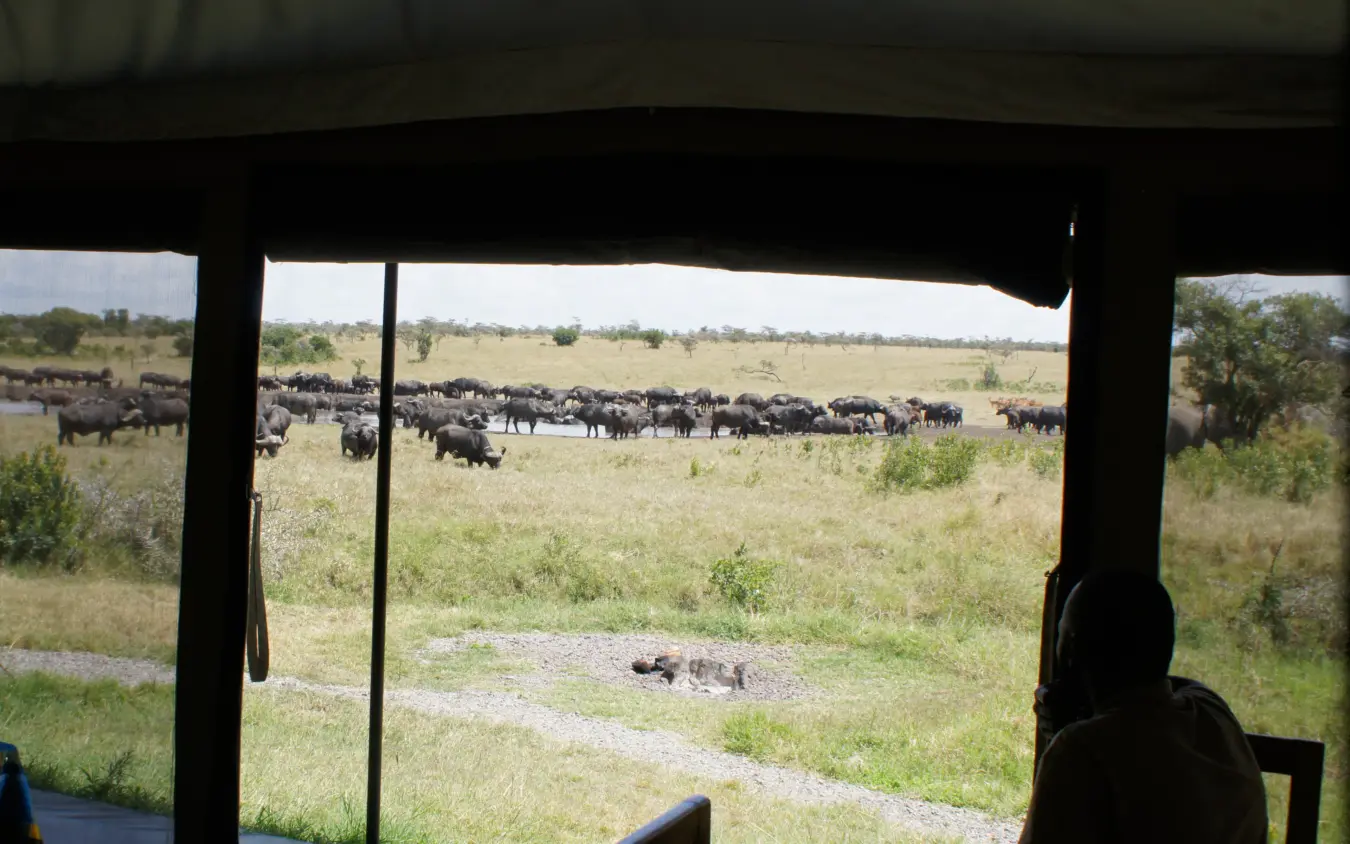
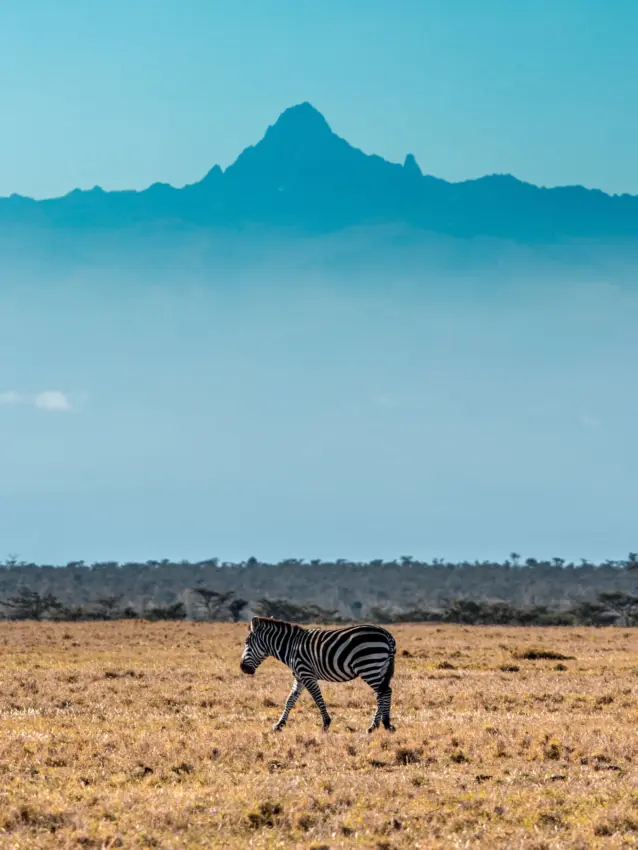
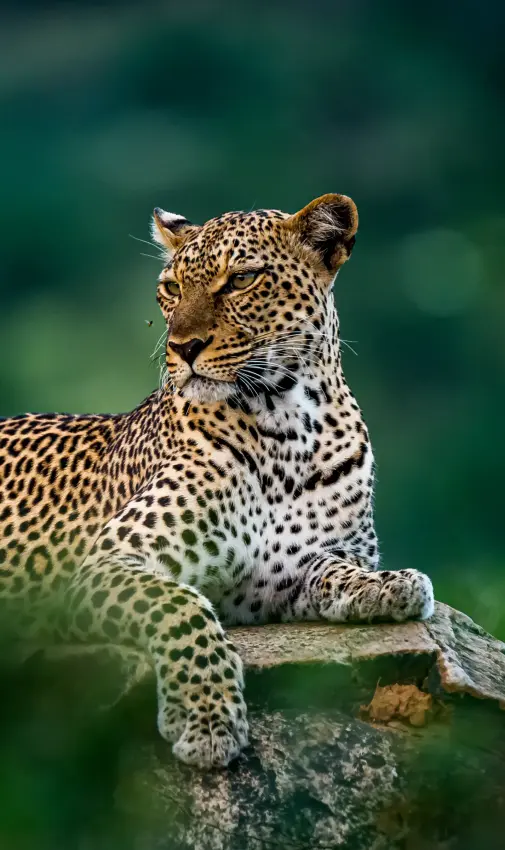
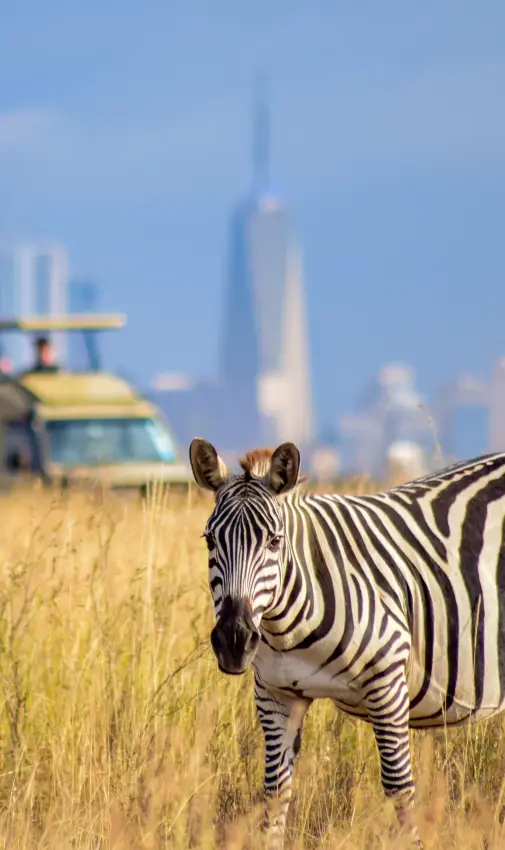
Ol Pejeta is a private conservancy, not a national park, and the difference shows early. A vehicle can leave the track to follow a cheetah through the grass, staying with her long after a road would have given up. Drives carry on after dark with a spotlight, through the hours the cats work. Lion tracking alongside the conservancy’s research team can be arranged. Black rhino and southern white rhino share the plains and bush with lion, leopard, elephant, buffalo and Grevy’s zebra, and with wild dog.
Chimpanzees live in large enclosures at Sweetwaters Chimpanzee Sanctuary, set up in 1993 by Ol Pejeta, the Kenya Wildlife Service and the Jane Goodall Institute for animals rescued from the illegal pet trade. Chimpanzees are not native to Kenya, and Sweetwaters is the only place in the country to see them, which makes the visit an unexpected detour in the middle of a Laikipia Highlands safari. Guests from Porini Rhino Camp go as an excursion within the conservancy.
Drives carry on after dark with a spotlight, through the hours the cats work.
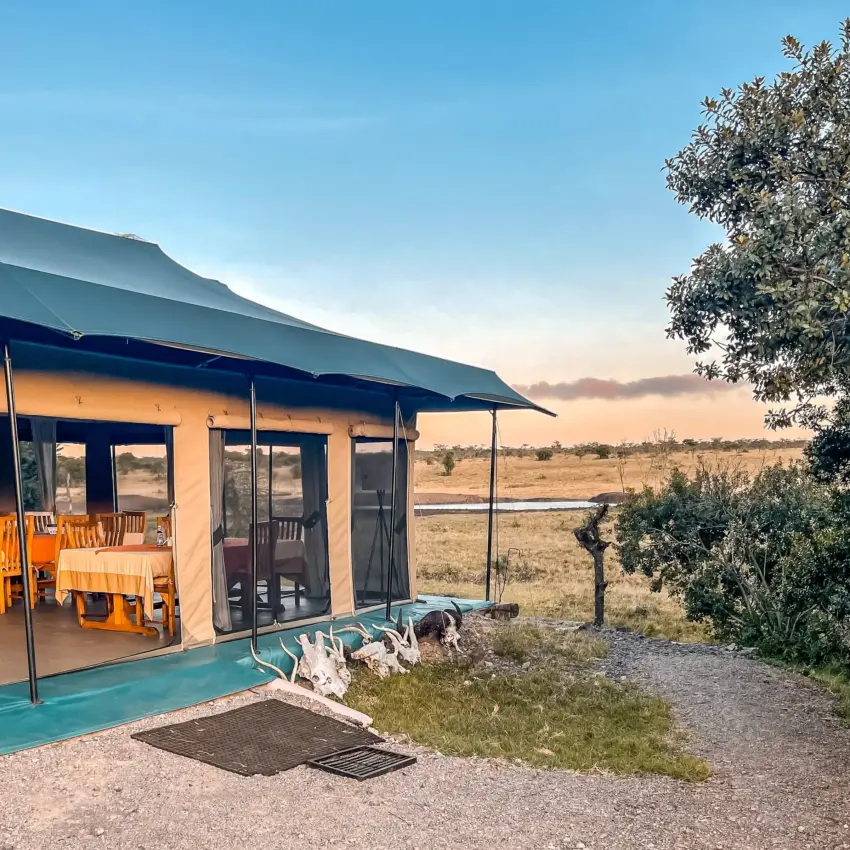
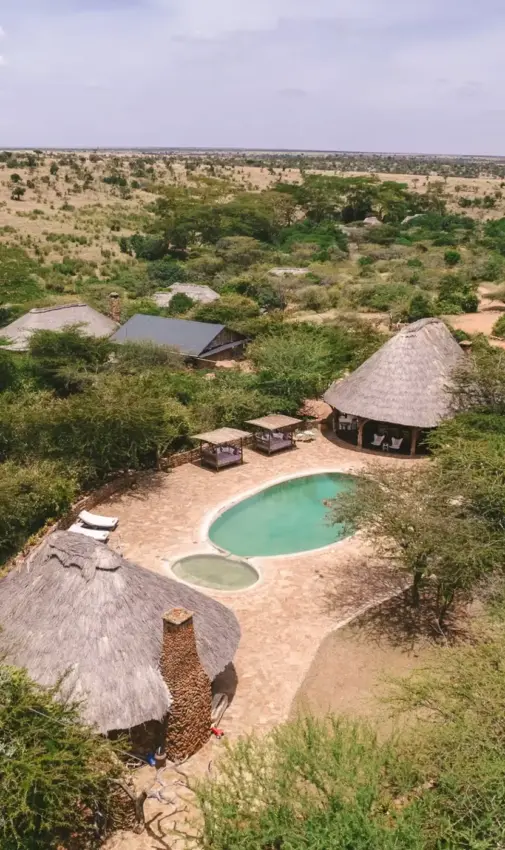
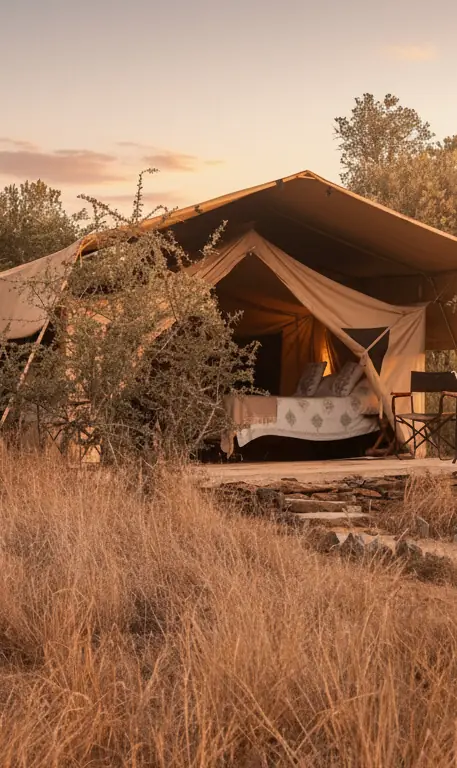
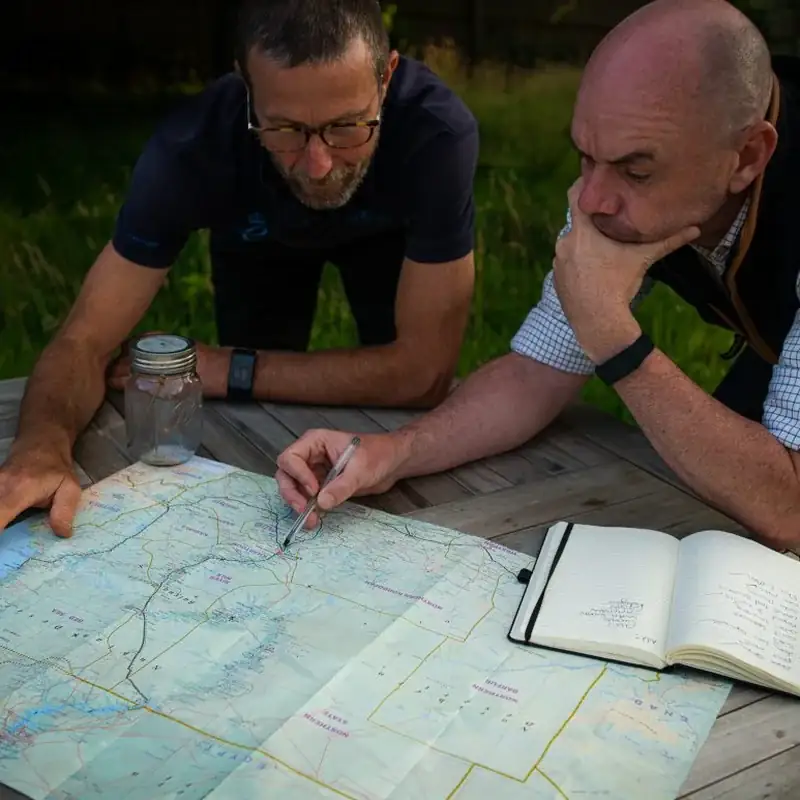
Guides here are KPSGA-certified and work in pairs, one driving and one spotting, so little crosses the road unseen. Drives and walks are shared, though with so few tents in camp the vehicle rarely fills. Walks go out with Maasai guides who read a scuff in the dust or a snapped twig, judging which direction an animal moved and how long ago. Evenings end with sundowners at a viewpoint over the plains. Children are welcome from eight.
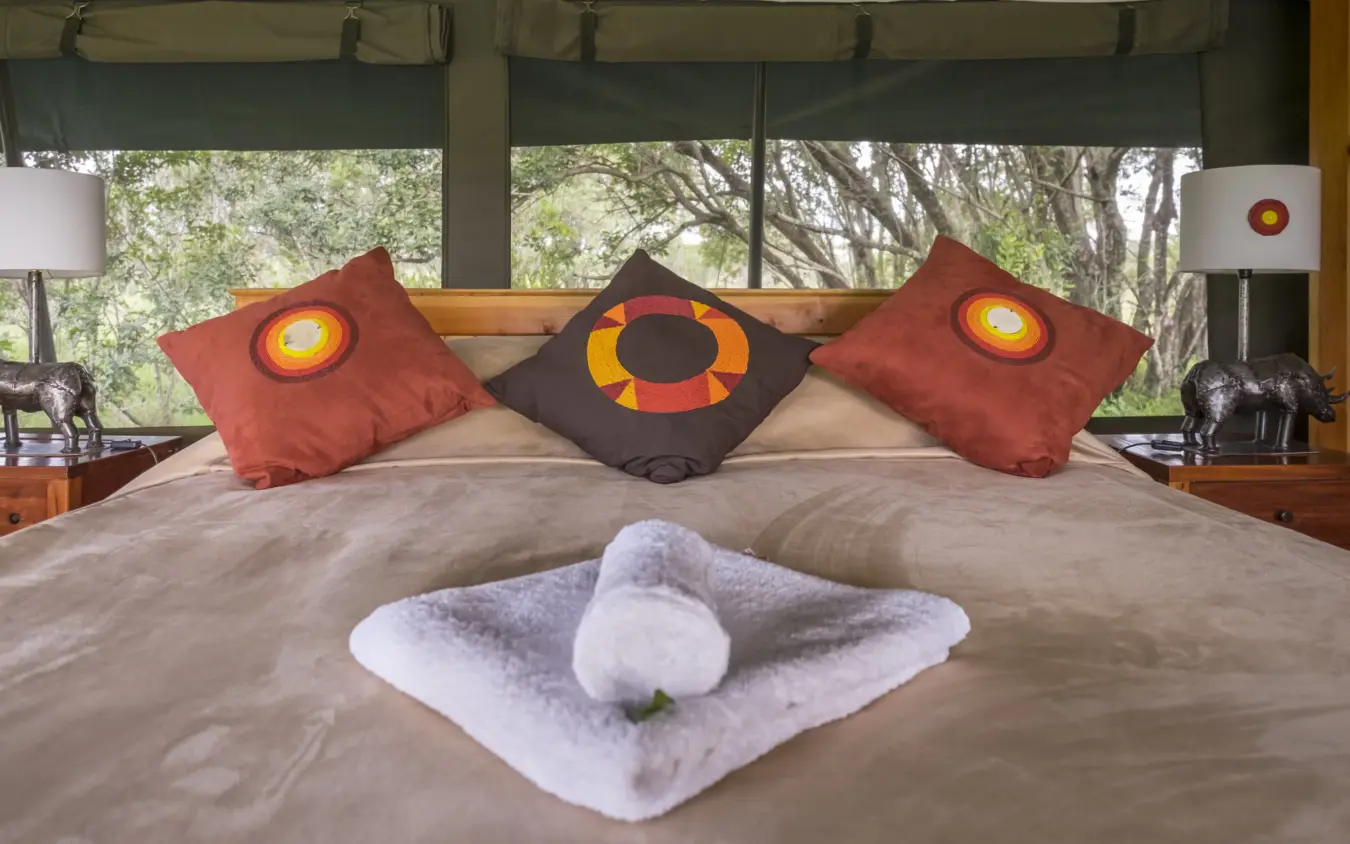
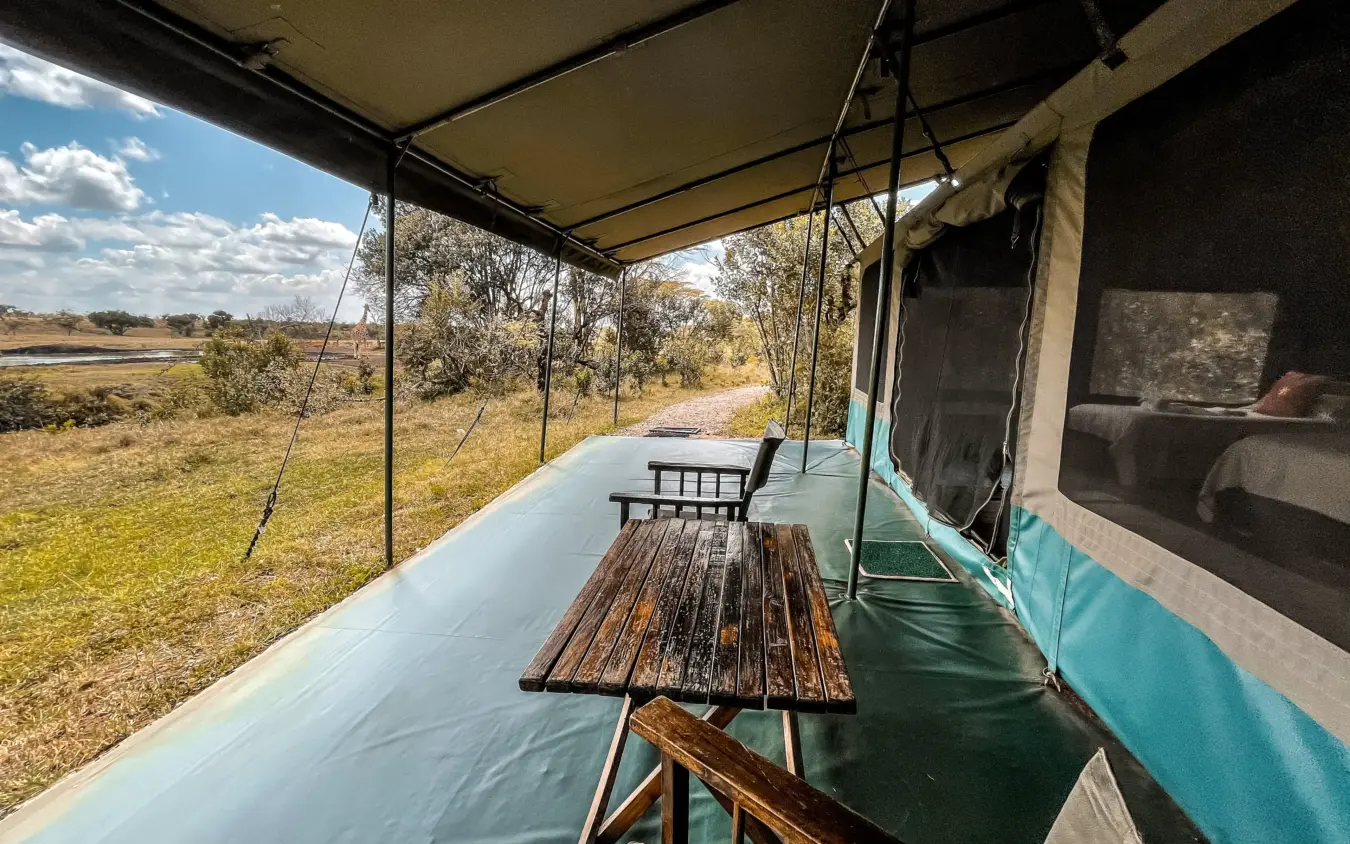
Getting there is quick, and that is part of the appeal. About an hour in the air from Nairobi brings you to Nanyuki, or to the Kamok airstrip inside the conservancy itself, with only a short transfer at the far end. The camp closes for part of the long rains, around May. What is left is a place for people who want rhinos and conservation work at close range, and who would rather have canvas, a hot bucket shower and a fire at the end of the day than marble and a spa.