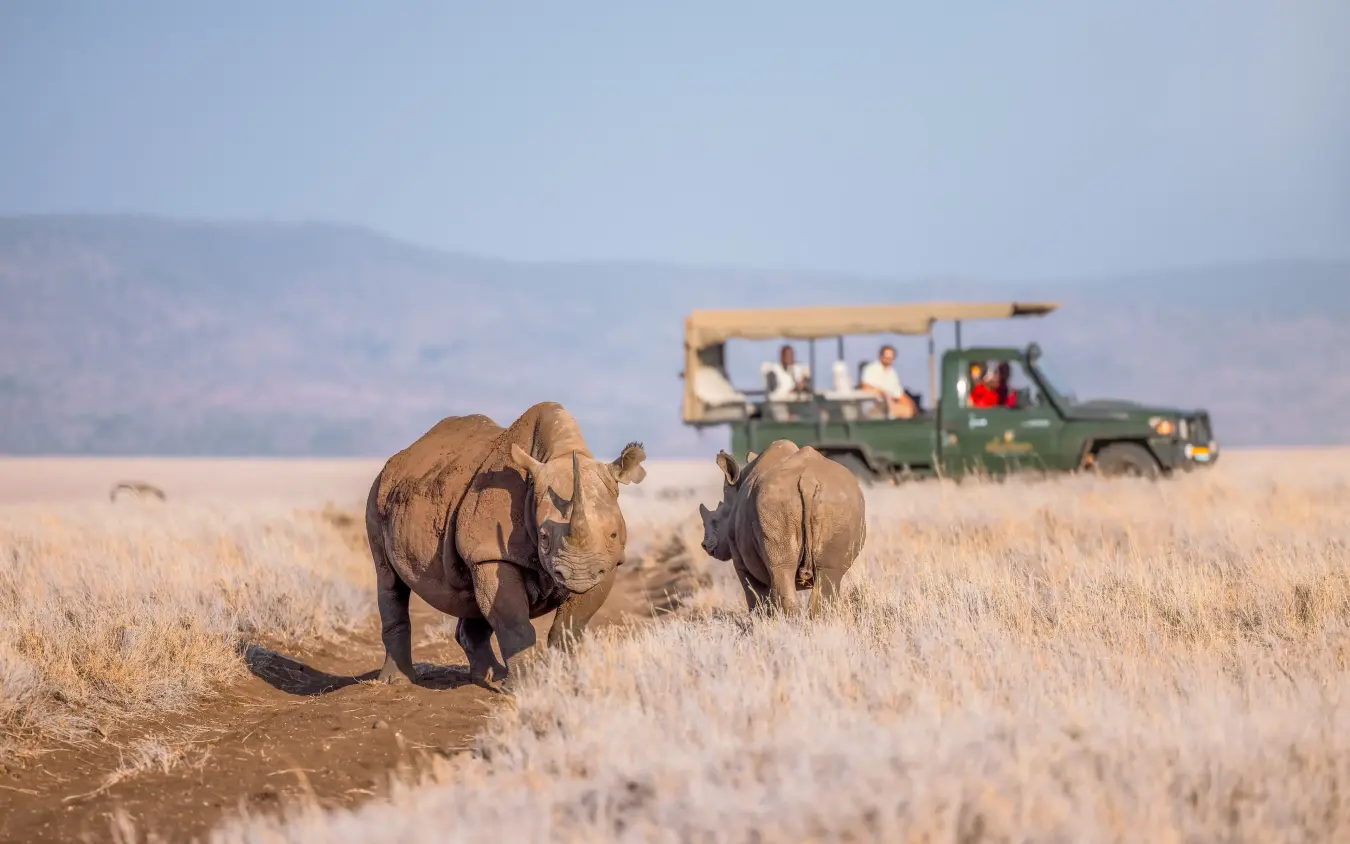
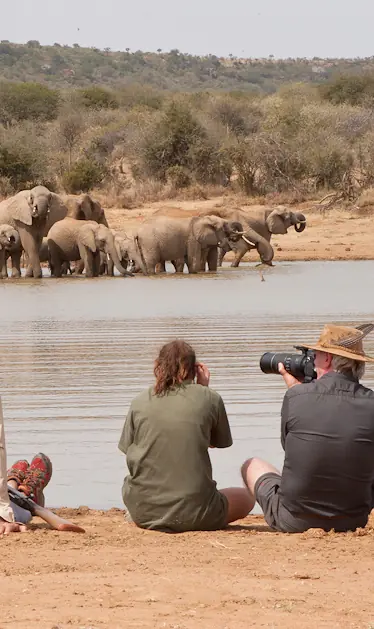
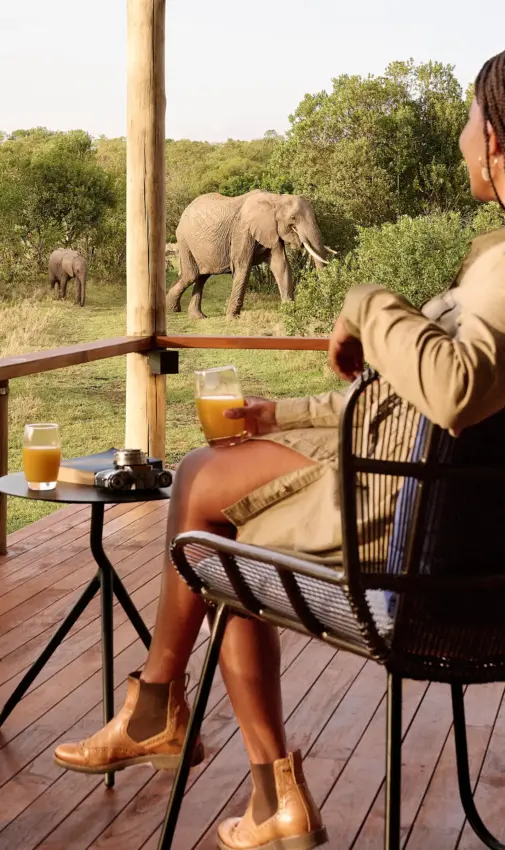
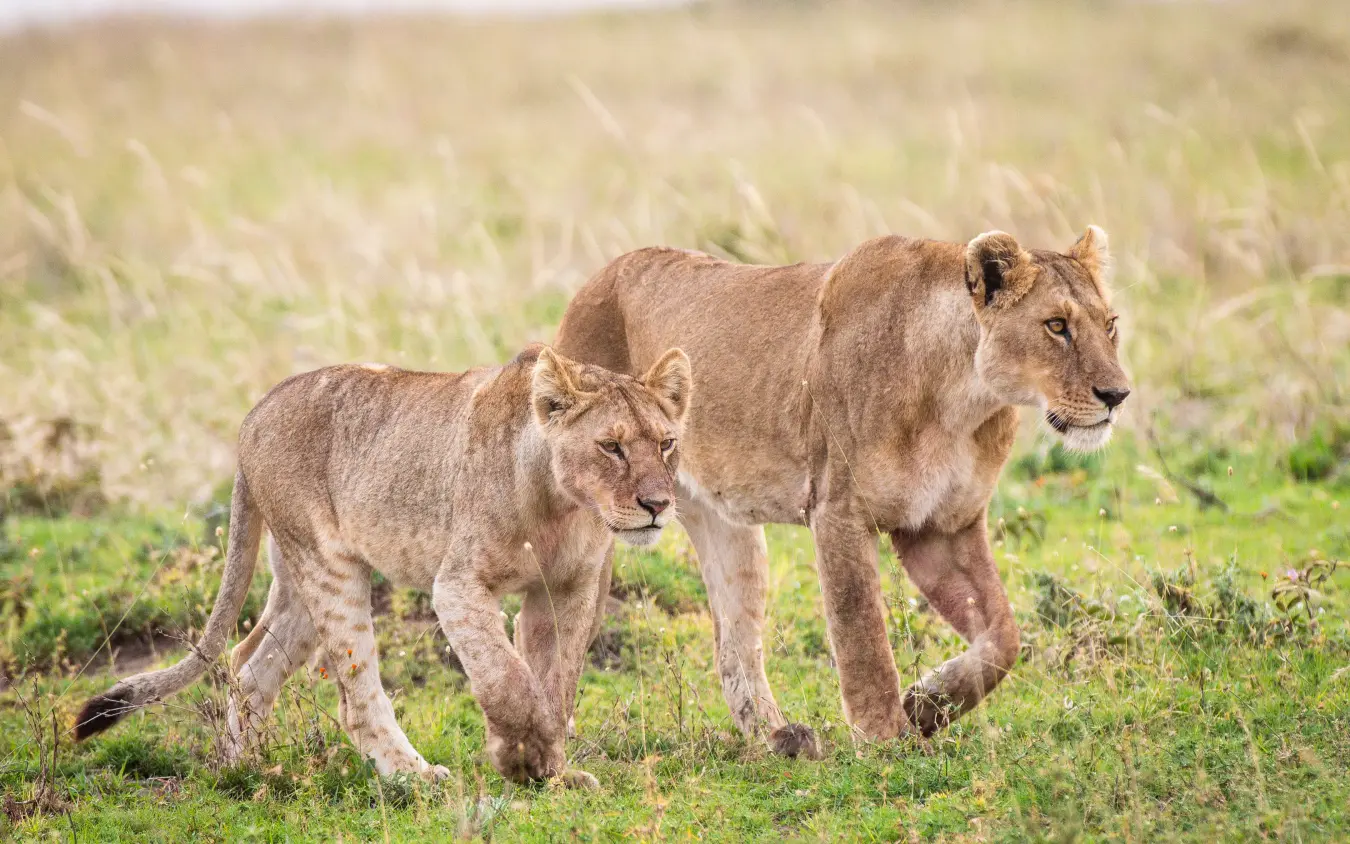
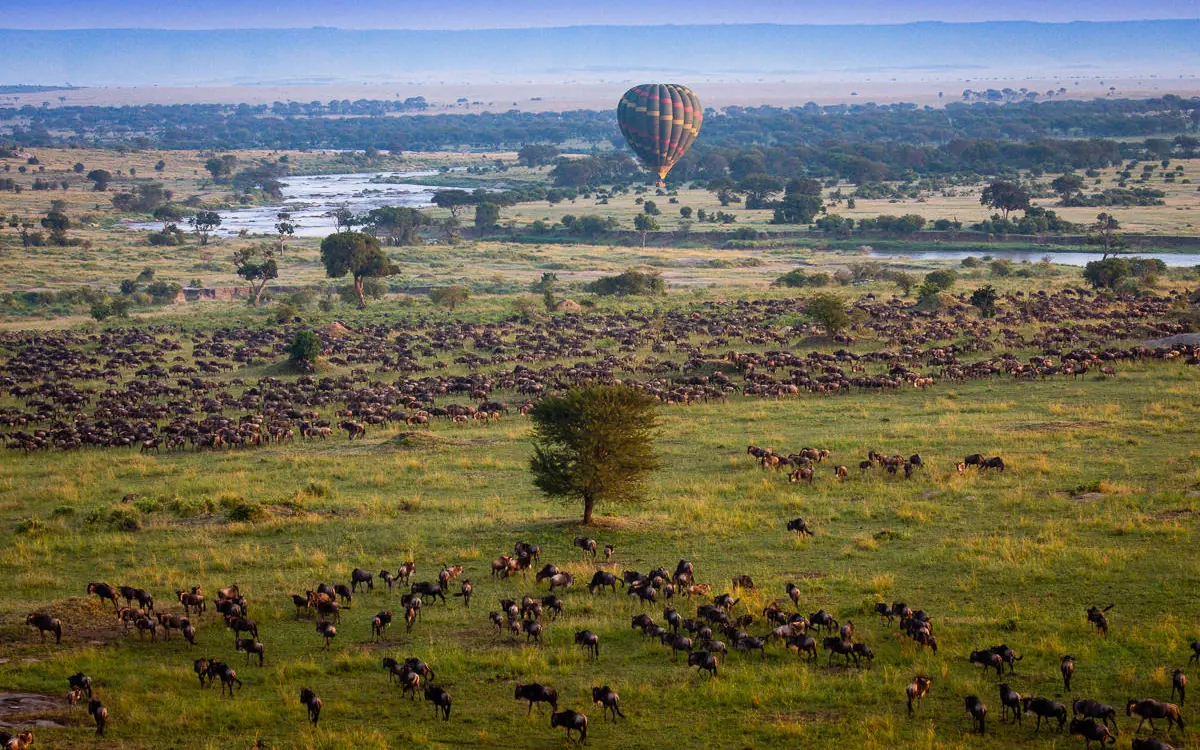
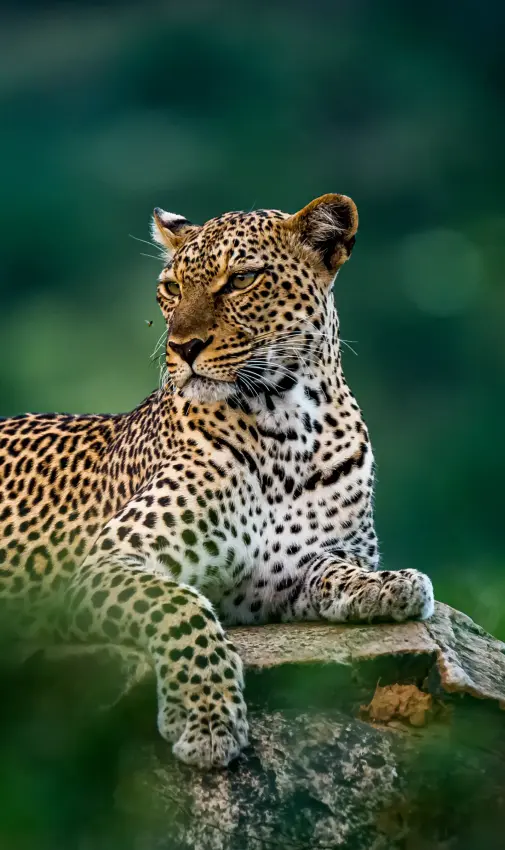
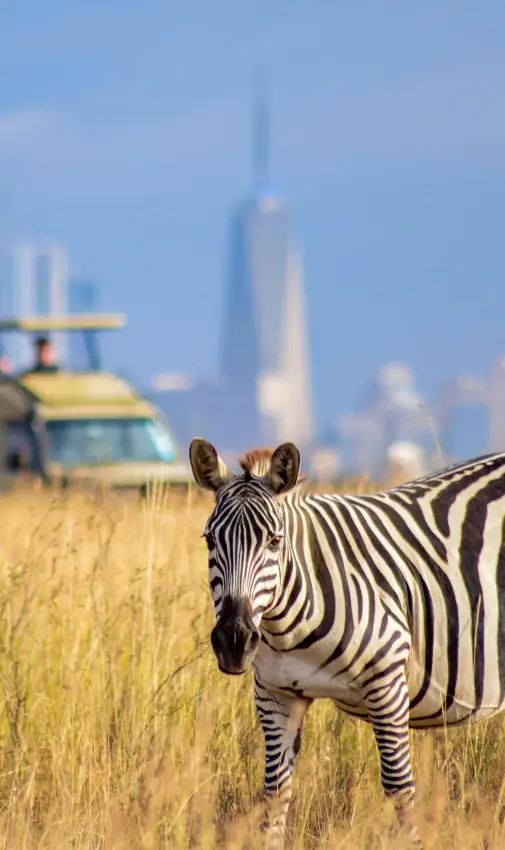
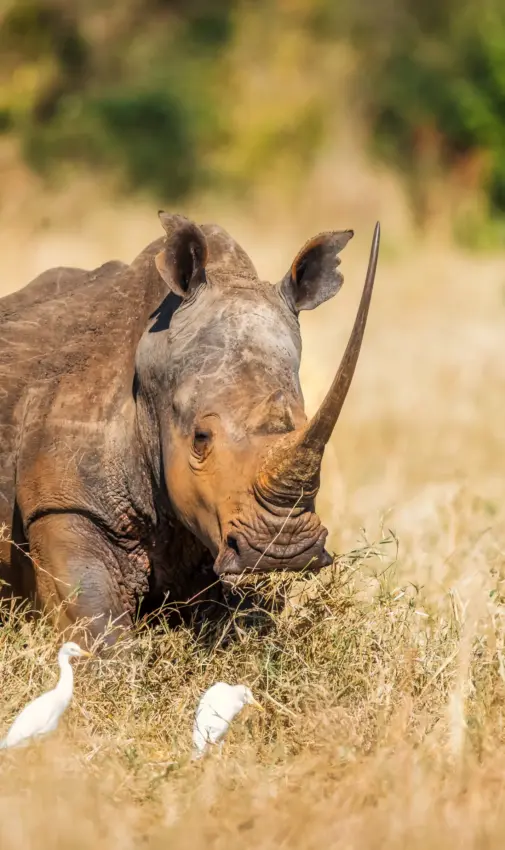
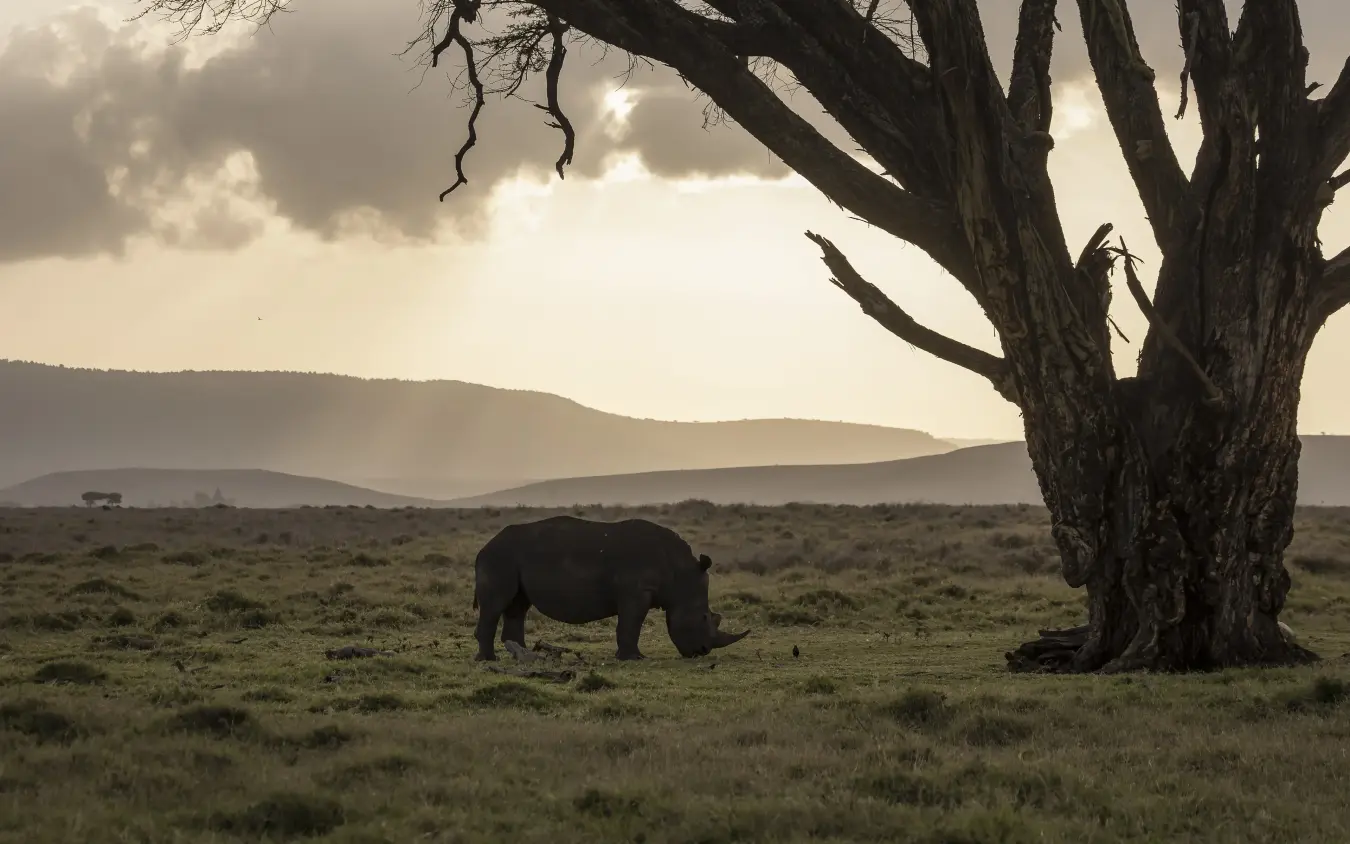
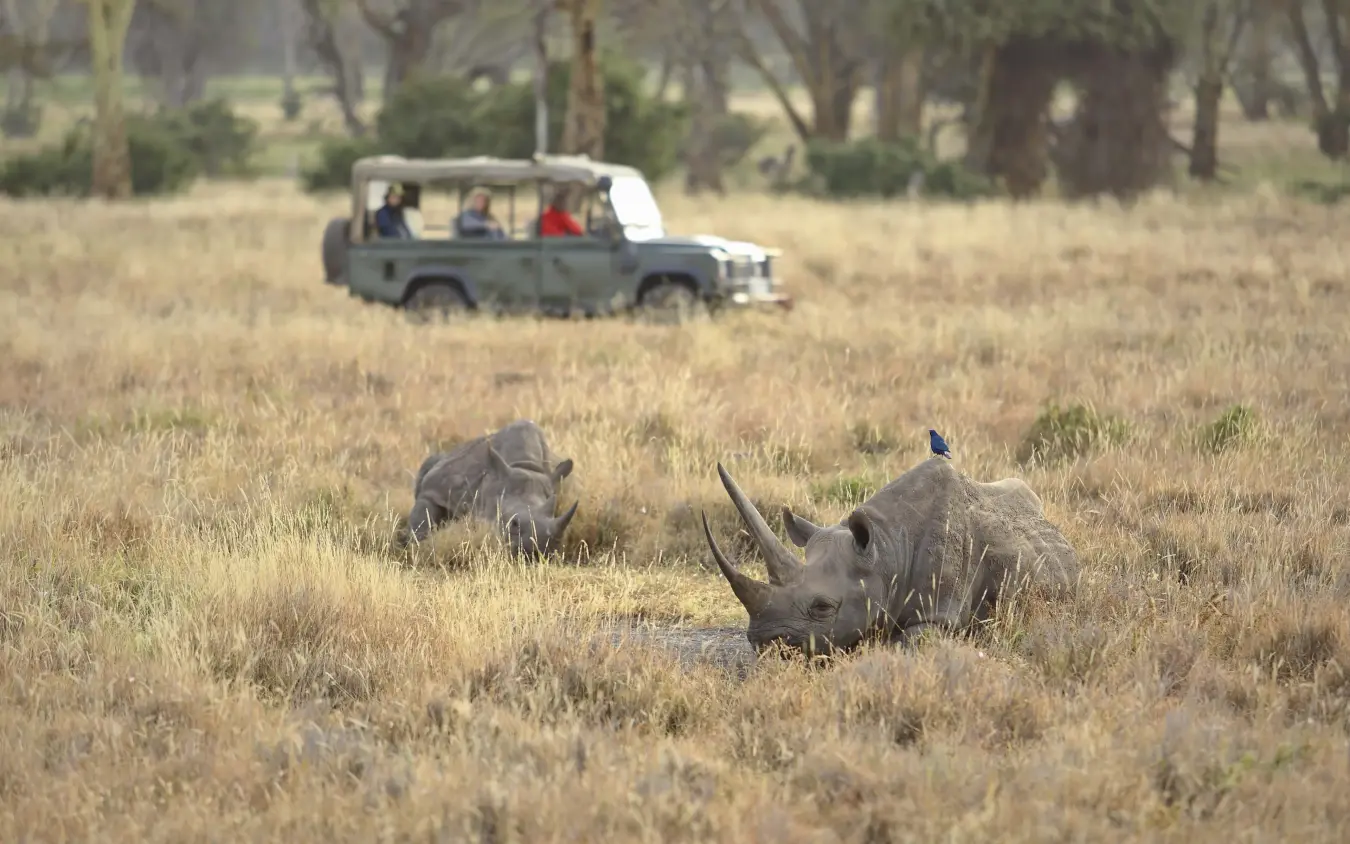
Lion, leopard, elephant, buffalo and rhino are all resident on Lewa, black and white rhino alike. Grevy’s zebra, reticulated giraffe, gerenuk and Beisa oryx graze among the plains game, while cheetah and wild dog move through the same country. The land is private, so guides can leave the track for a sighting and drive after dark. Most of them come from neighbouring communities and hold Bronze or Silver certification from the Kenya Professional Safari Guides Association. Walking safaris go out with armed rangers who read the ground as they go.
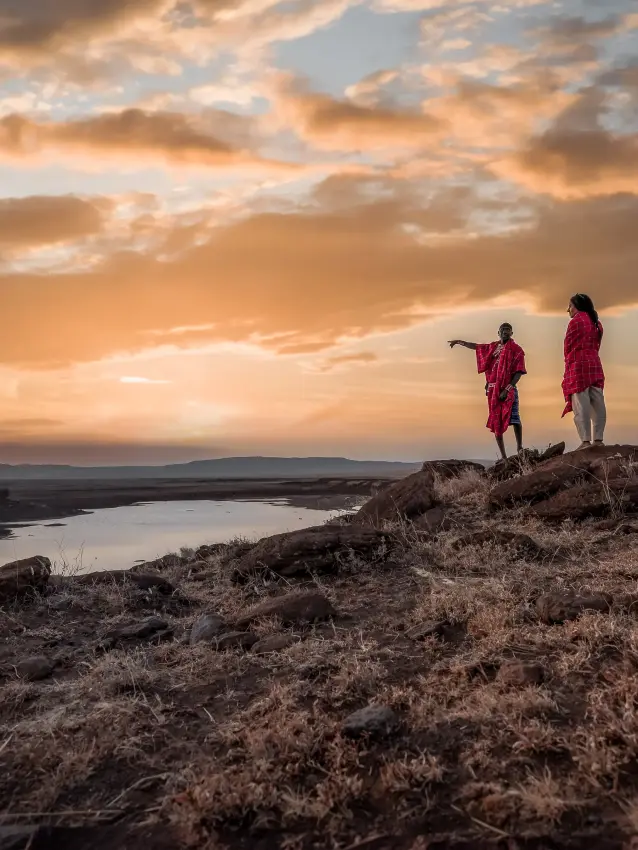
In the evening, camels go out with their Samburu handlers, a trek that suits anyone who has never ridden. Horses go out with competent riders, who fill in a riding questionnaire beforehand, and the electric mountain bikes introduced in 2023 cover ground quietly. Day trips with a Lewa guide head south to the Ngare Ndare Forest. A canopy walkway is strung at tree height above a river where elephants pass. The picnic is laid out beside the same river. Helicopters can be chartered for Mount Kenya and for the dry country further north, toward Samburu land.
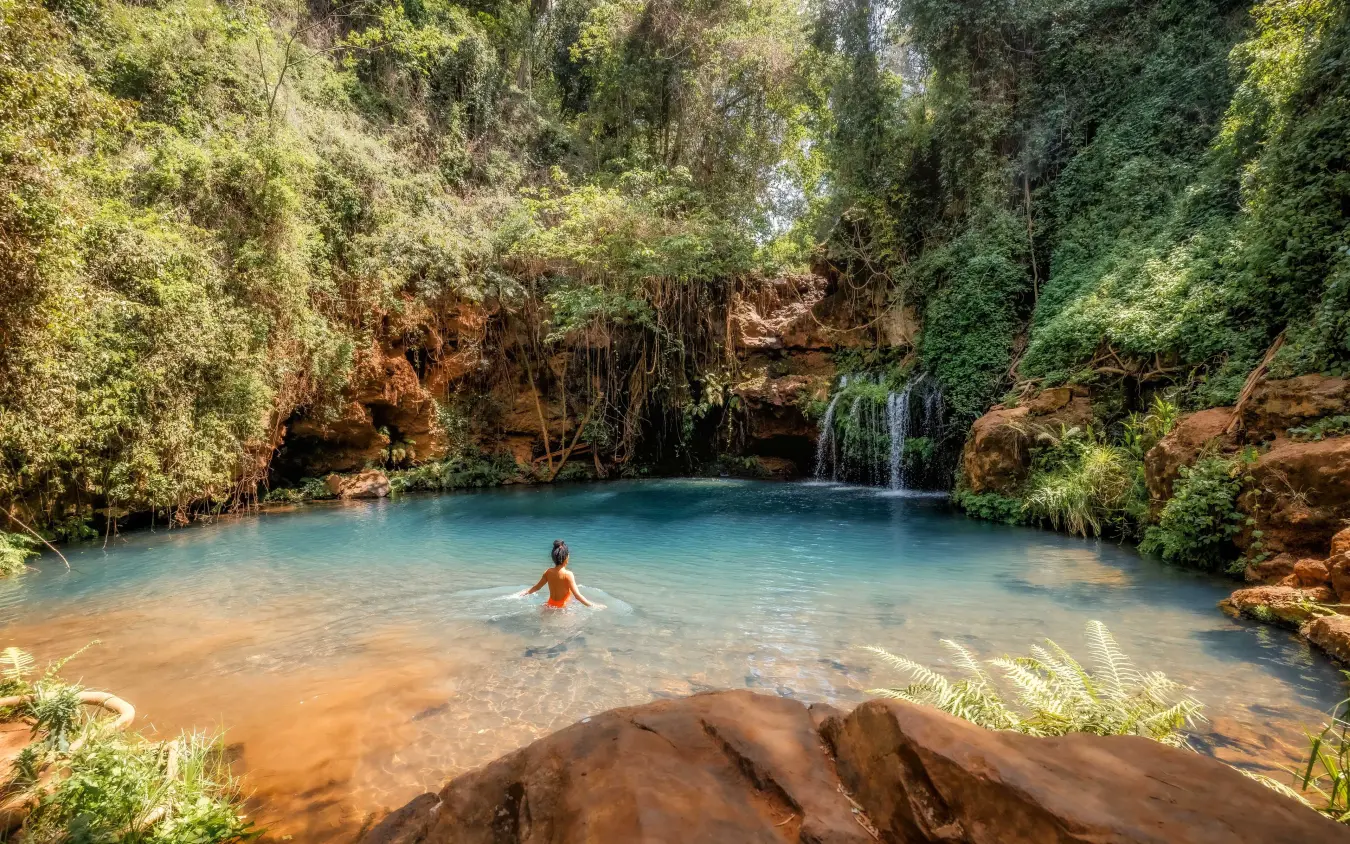
A canopy walkway is strung at tree height above a river where elephants pass.
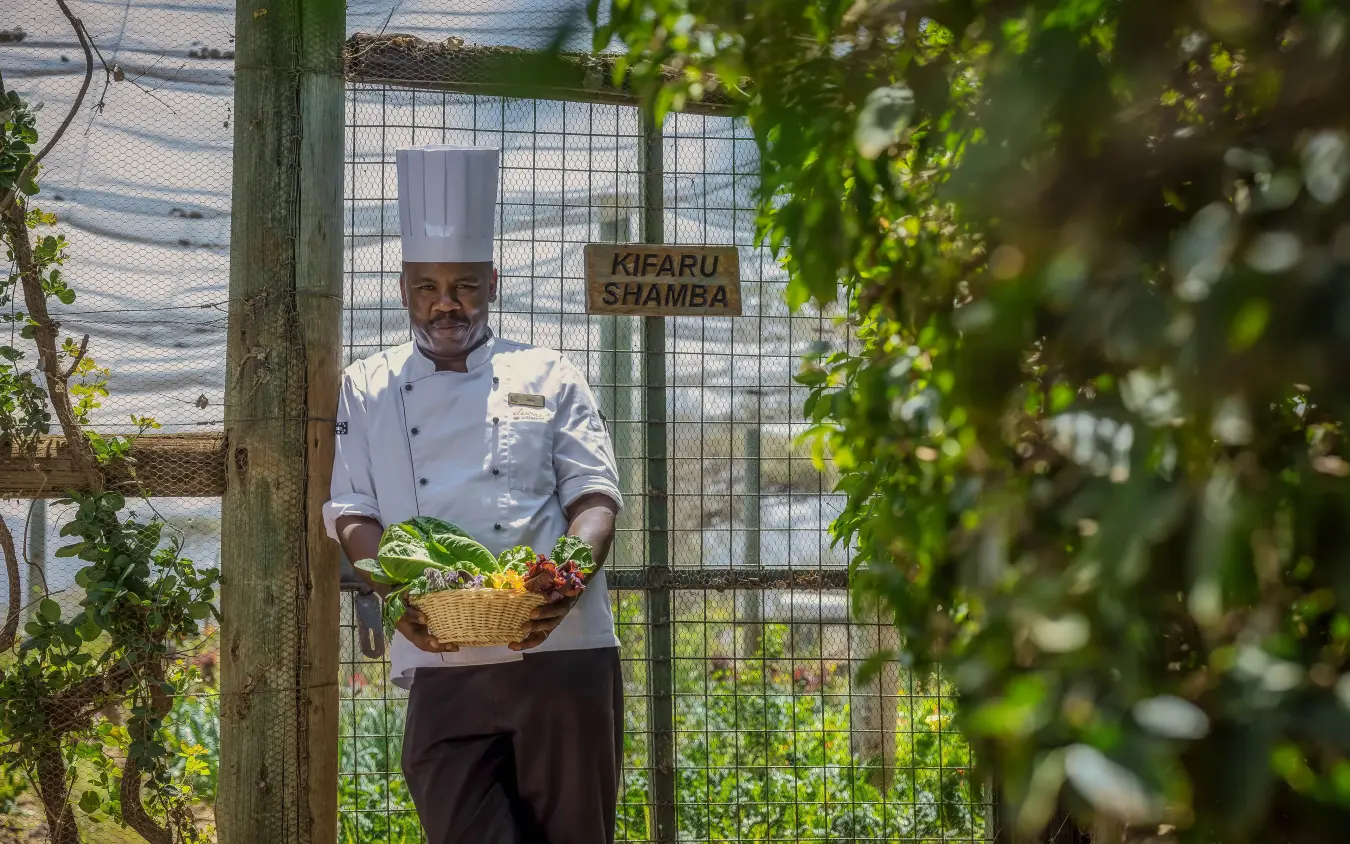
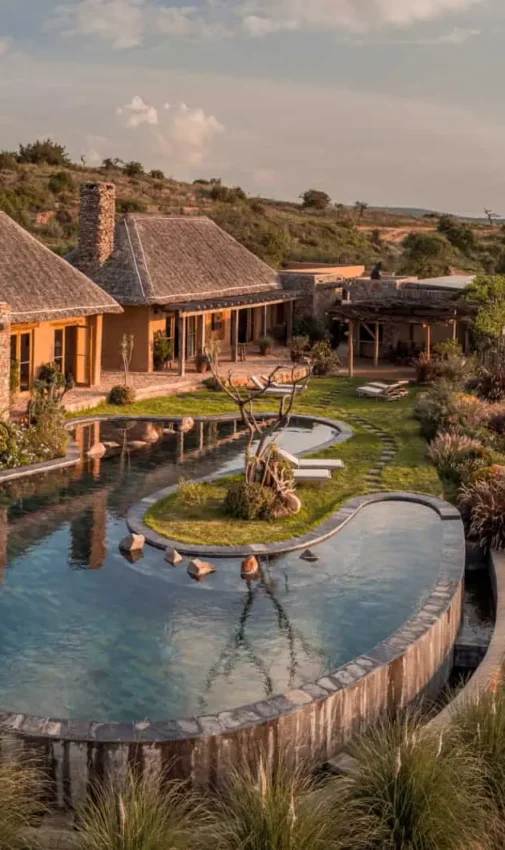
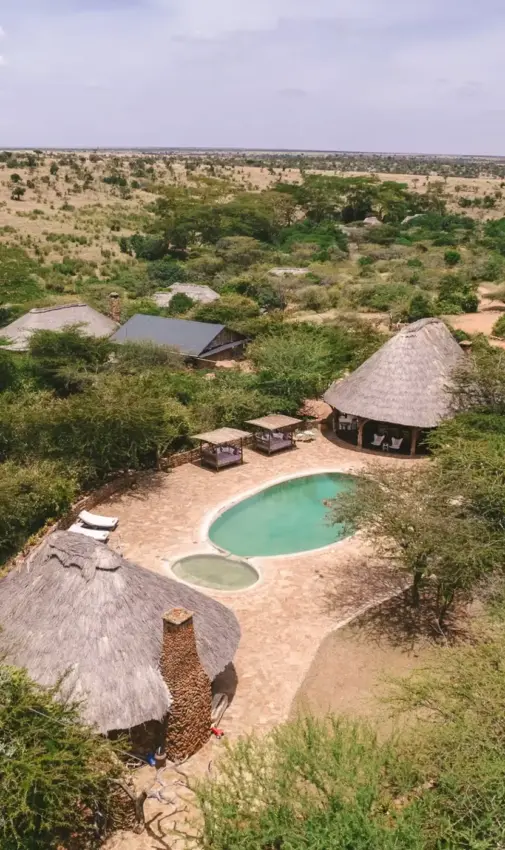
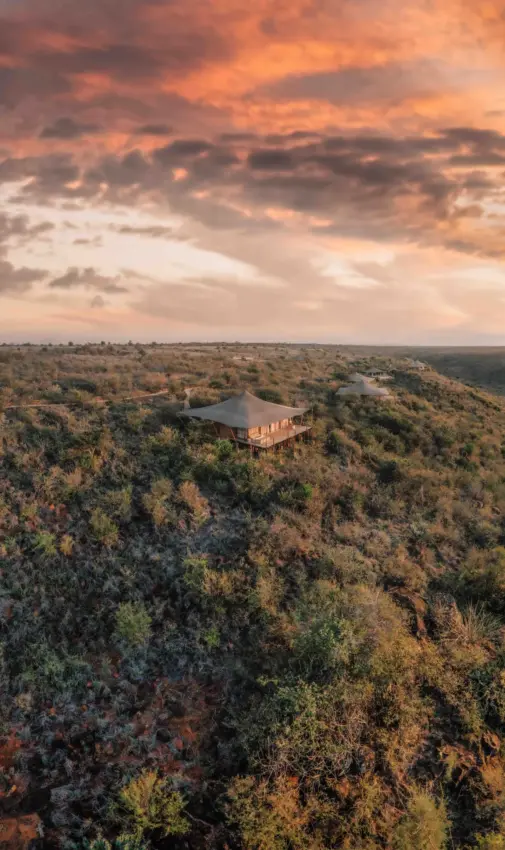
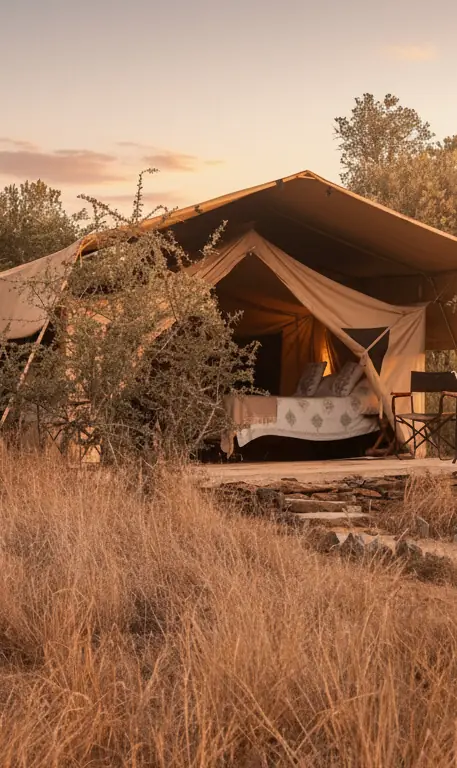
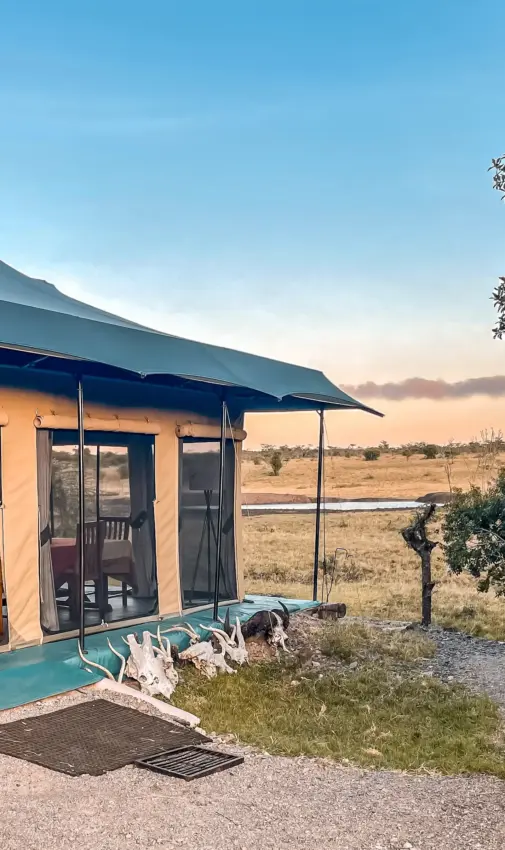
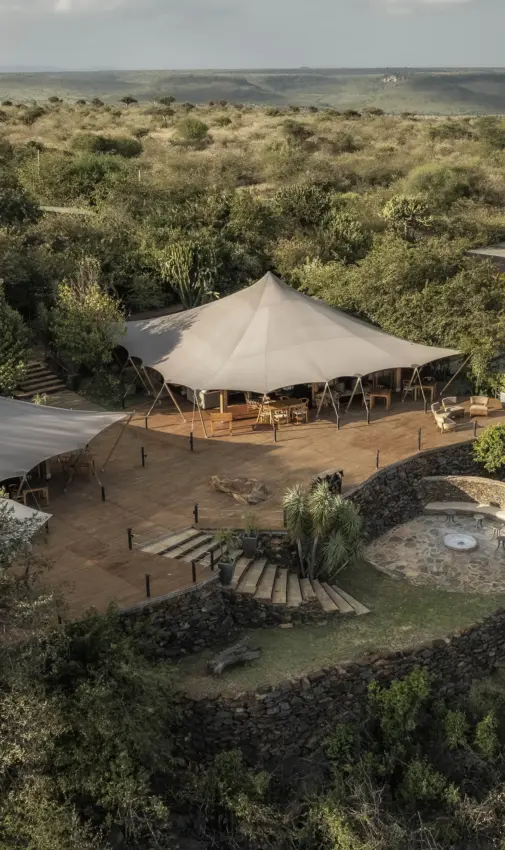
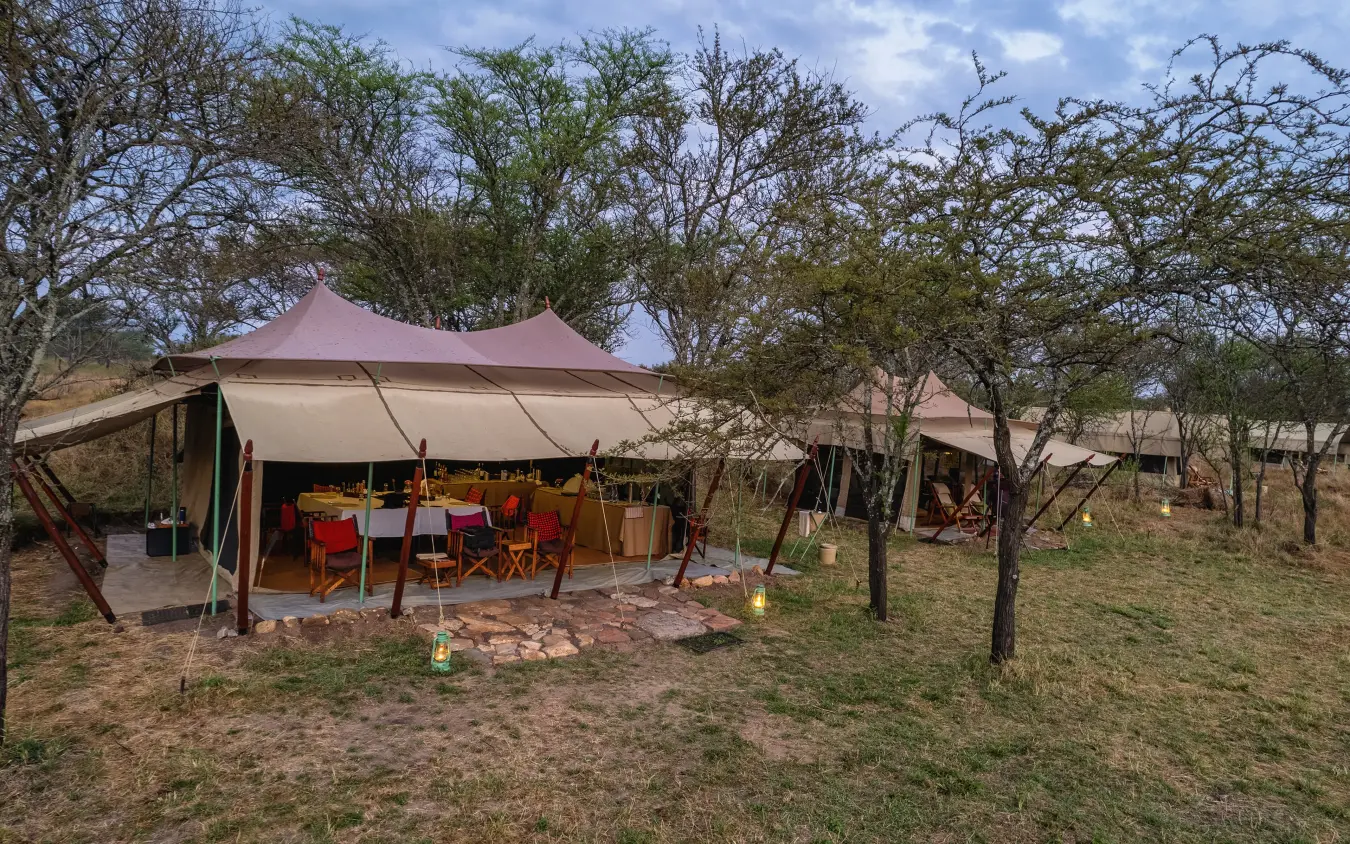
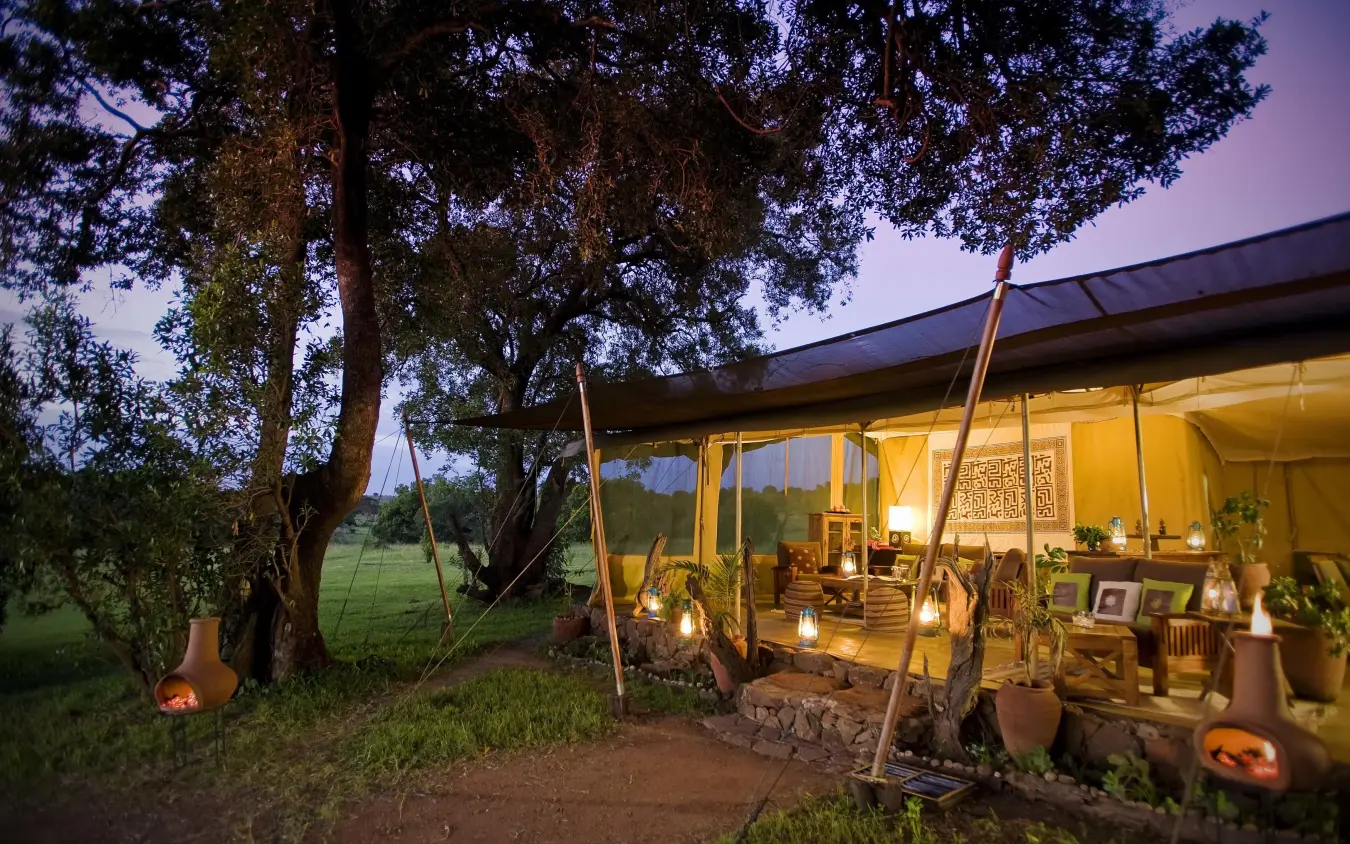
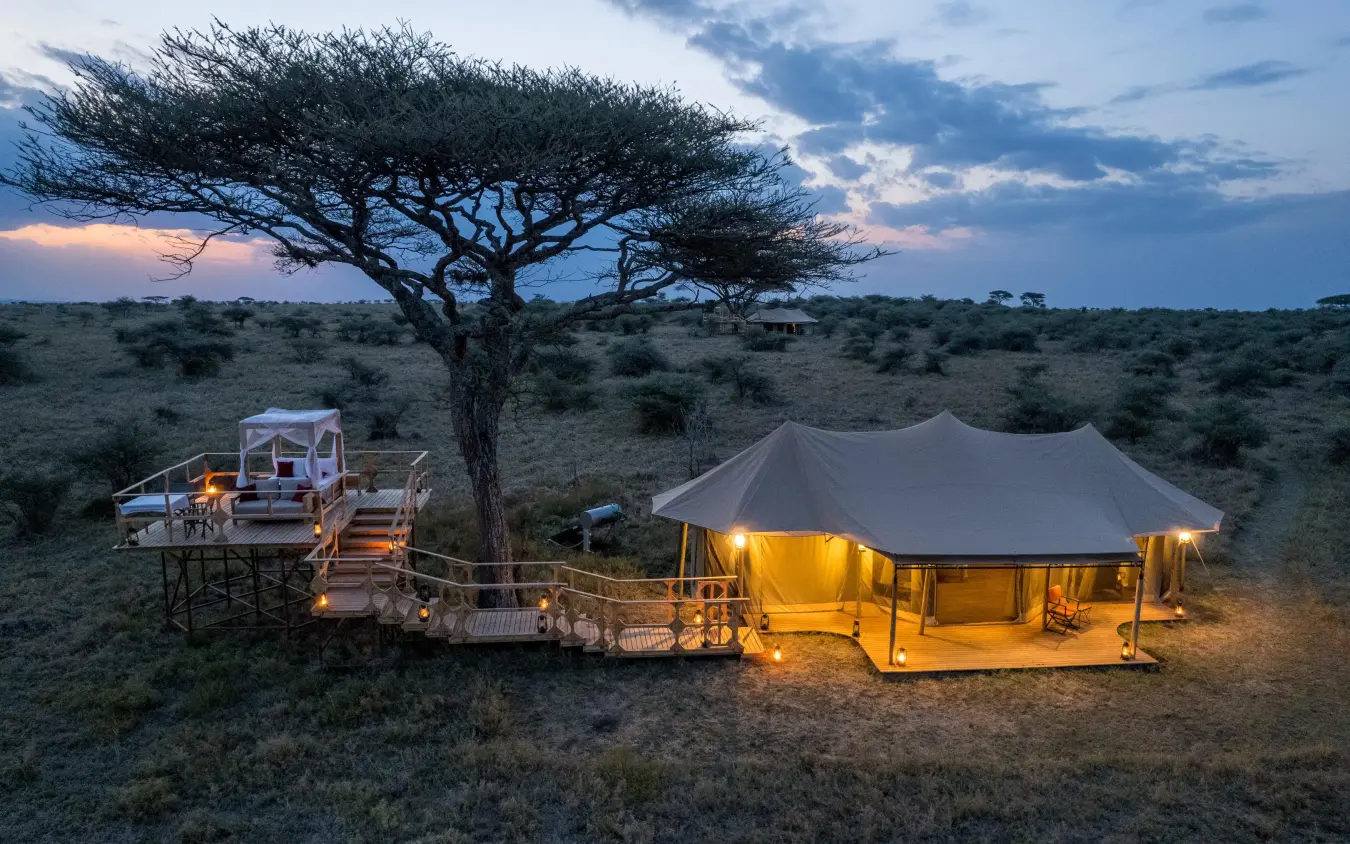
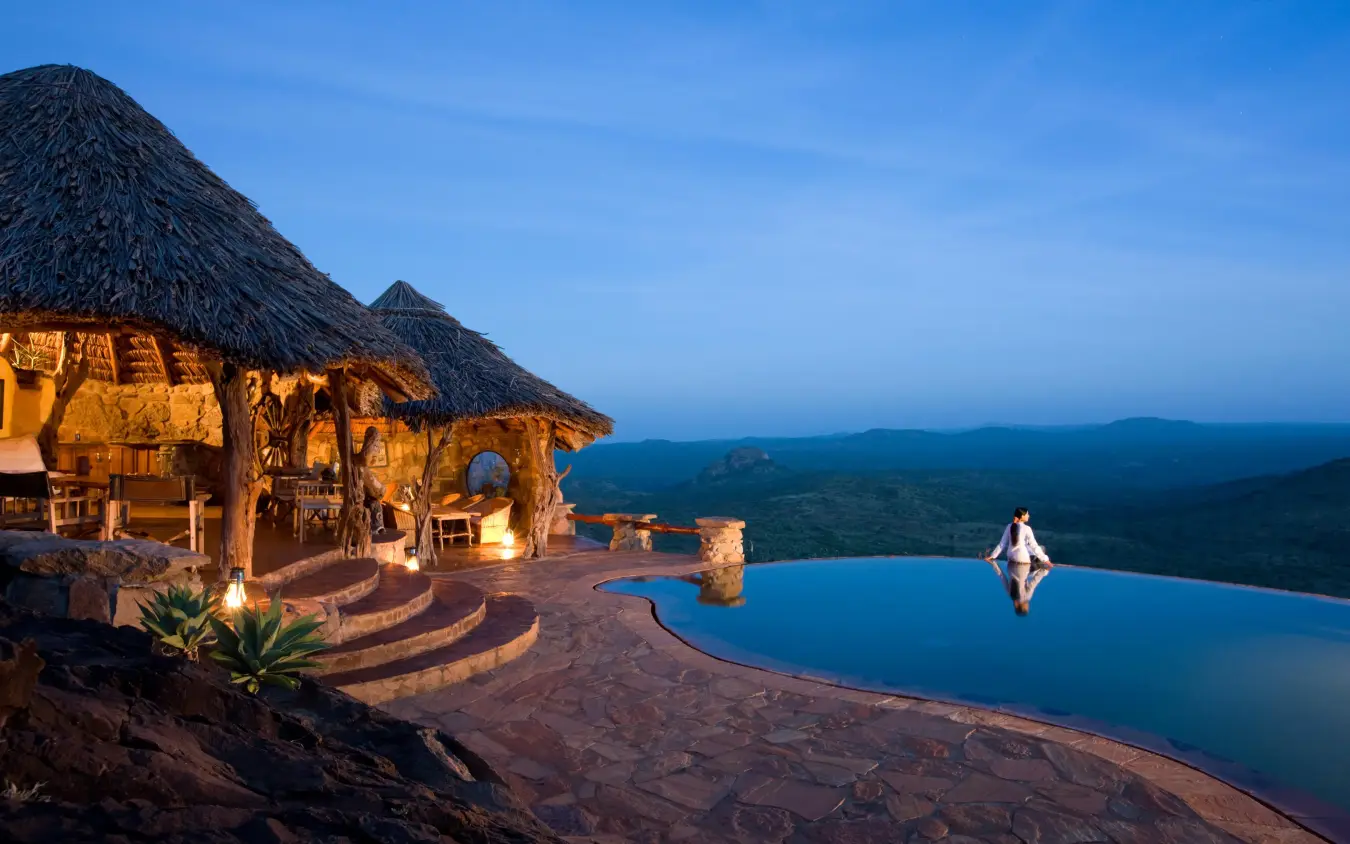
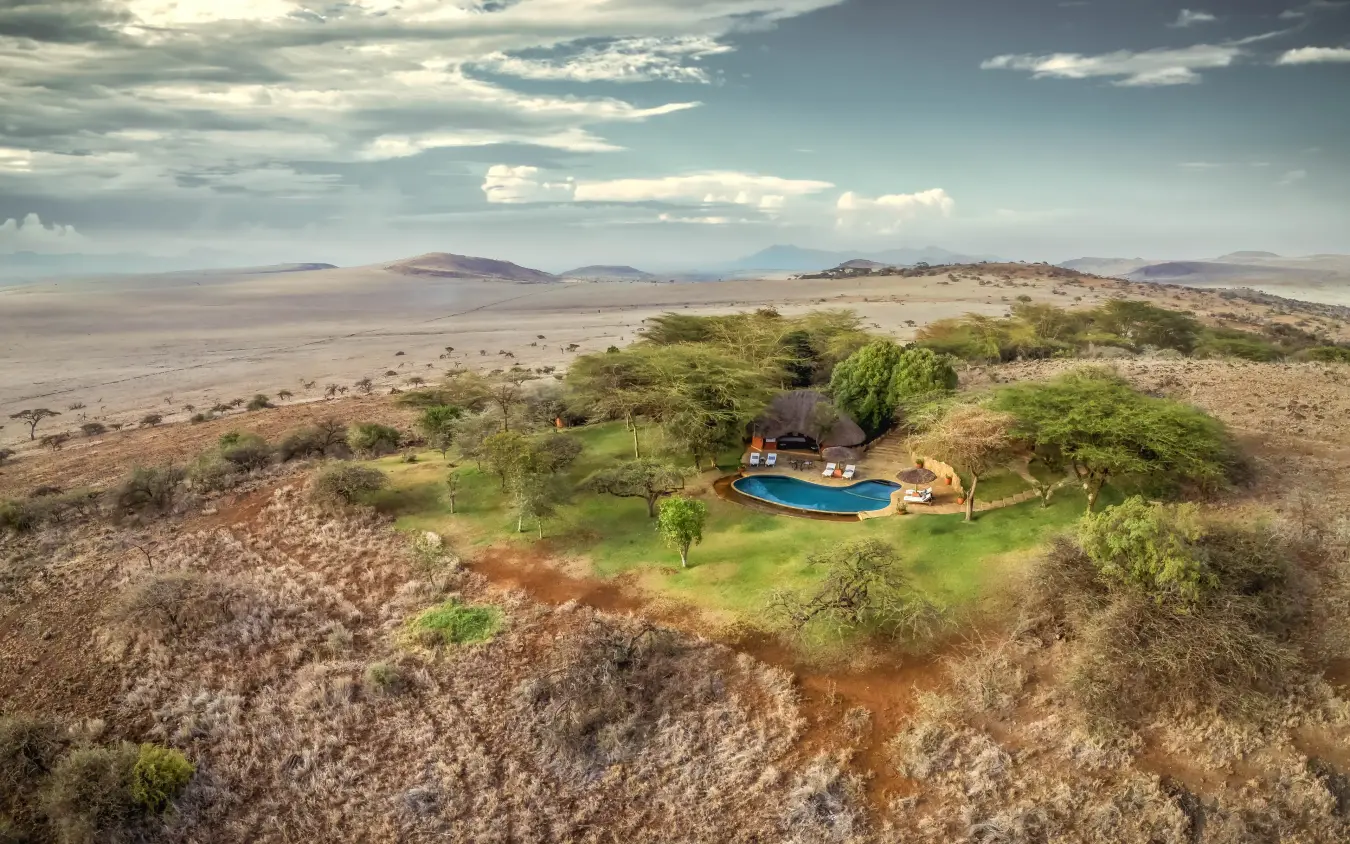
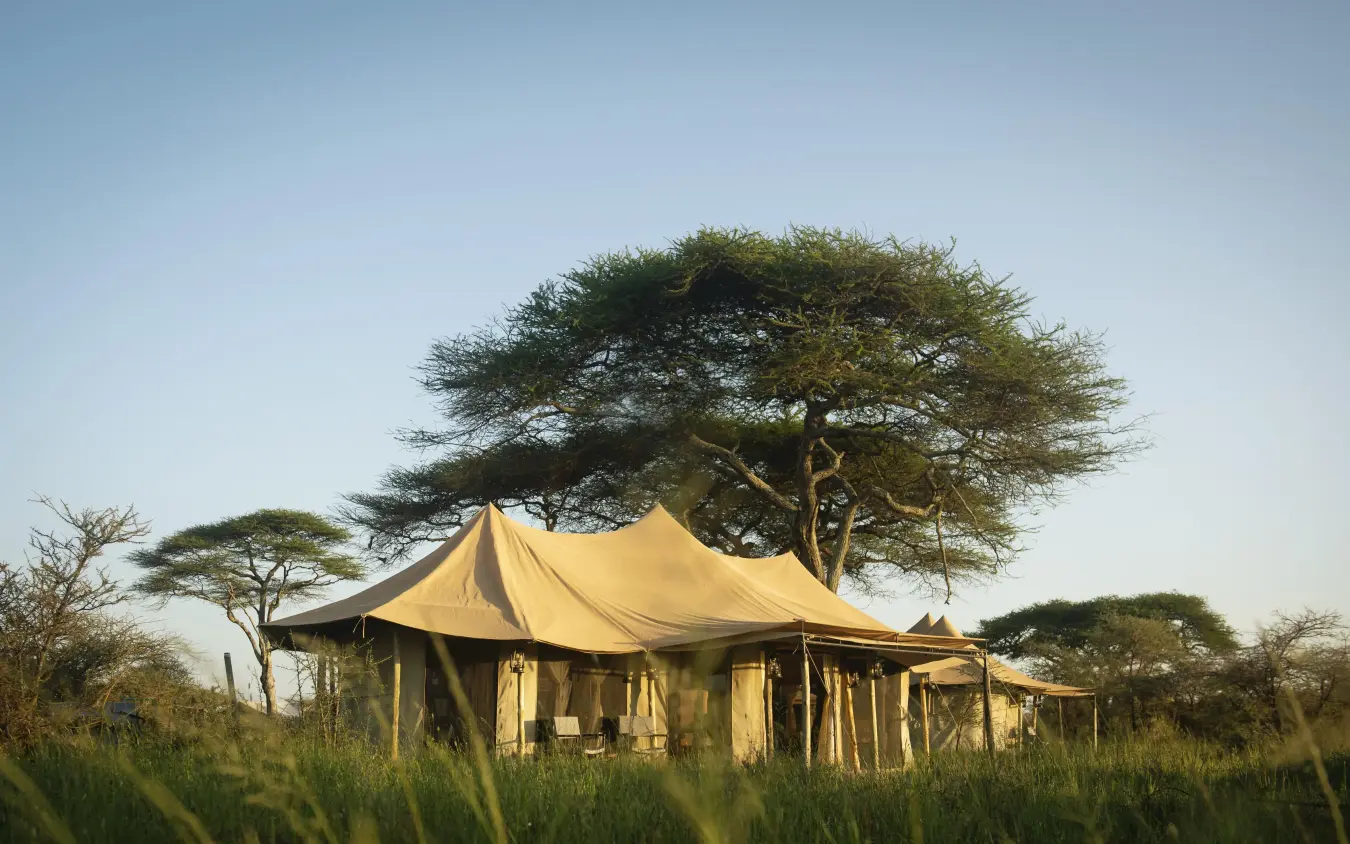
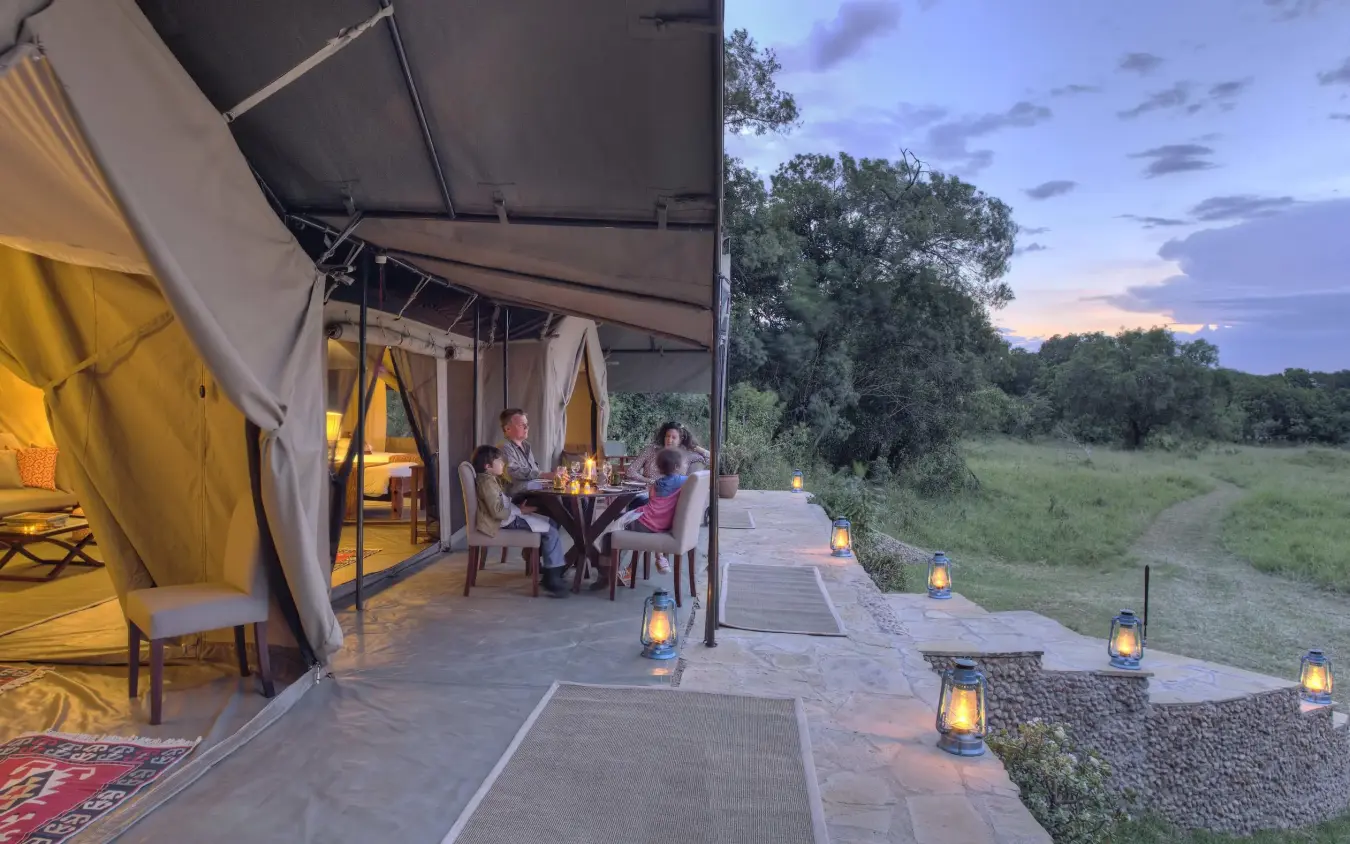
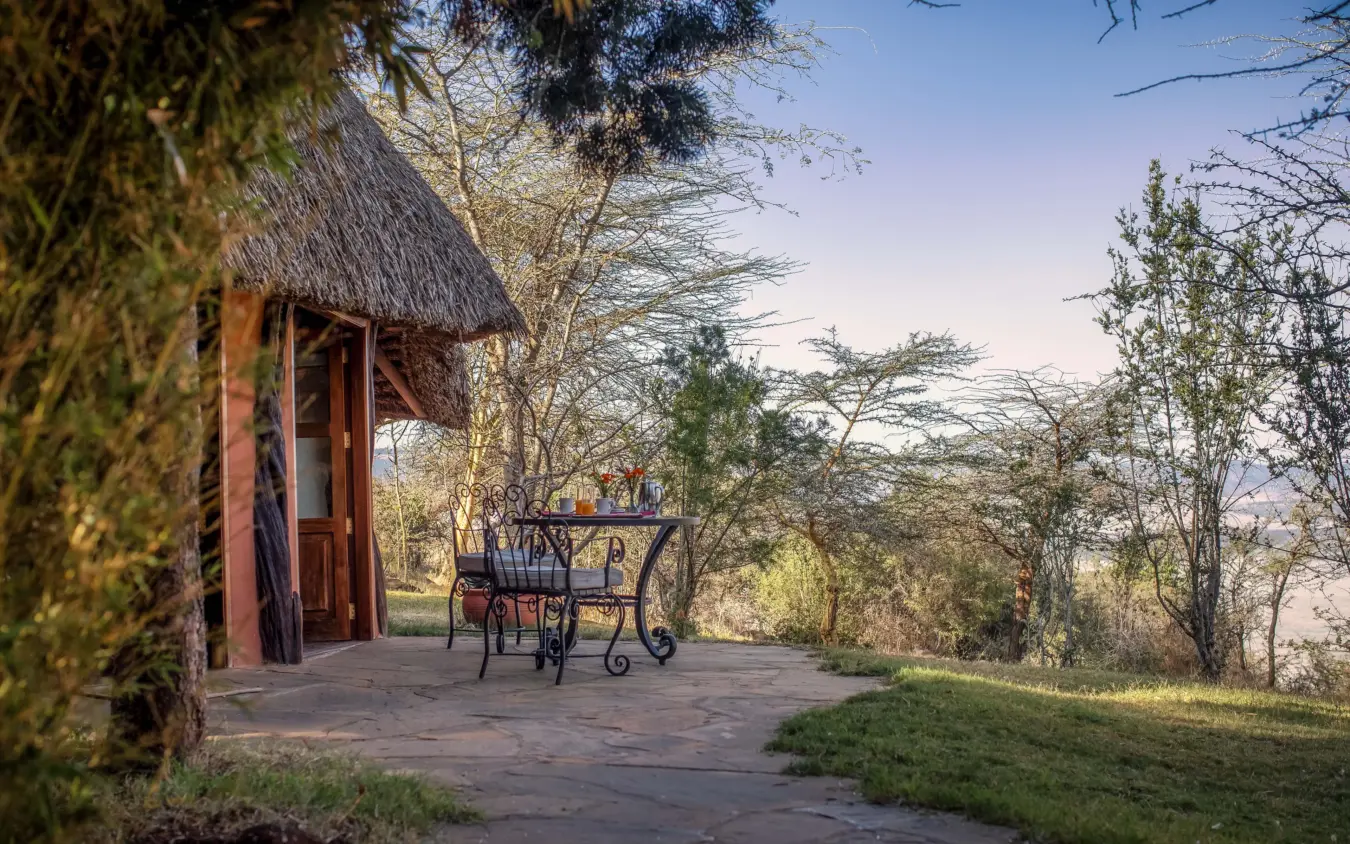
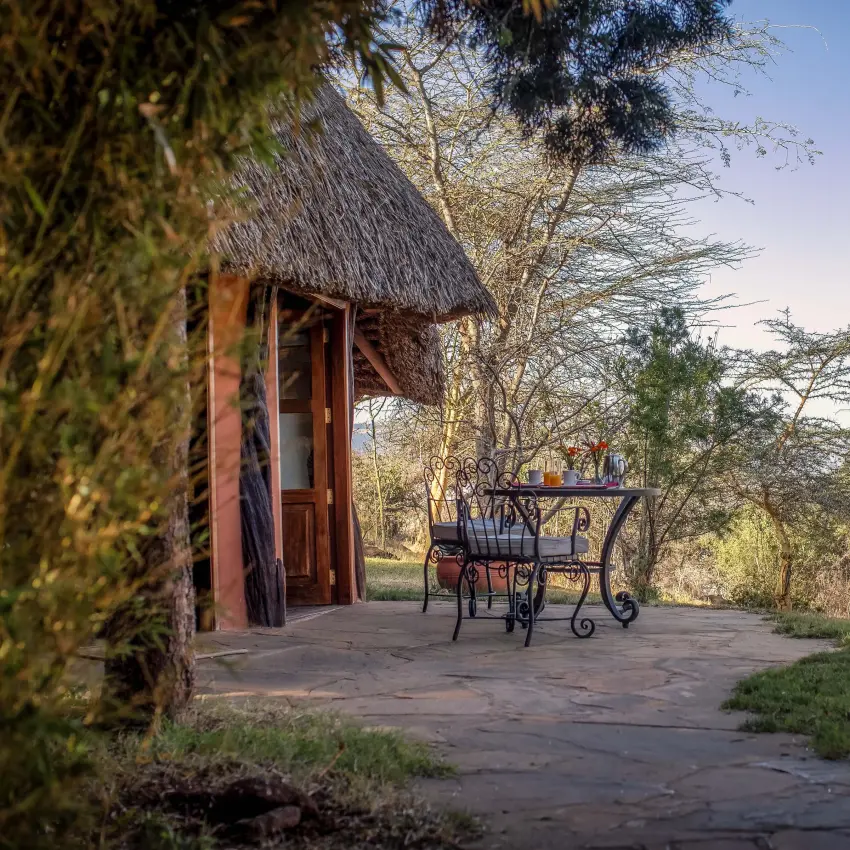
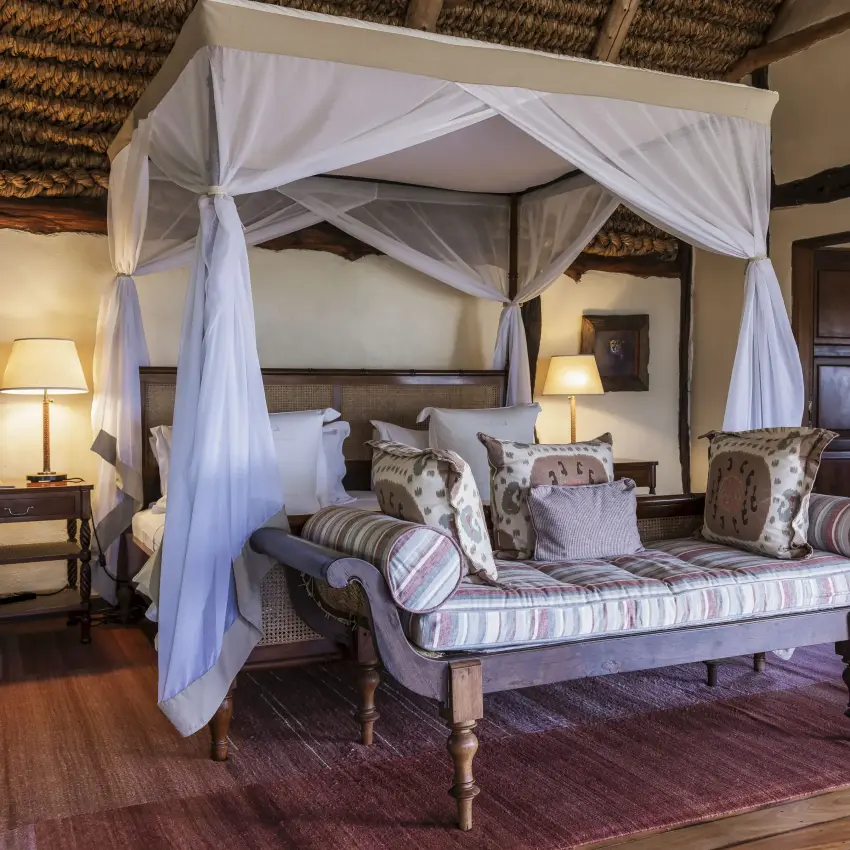
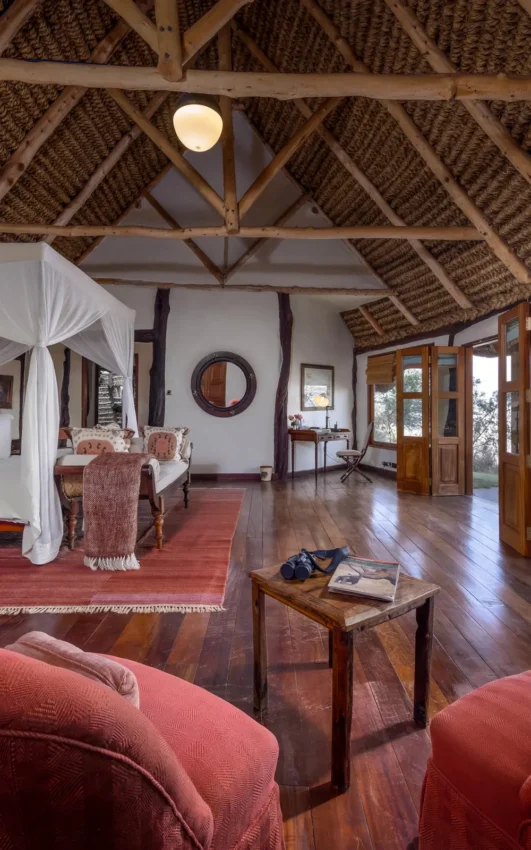
The cottages are built of local timber, stone and thatch, far enough apart on the lawns to feel separate. Each has a tiled veranda to sit out on, and glass doors angled to frame the view while keeping the afternoon sun off the bed. One is a family cottage with a second, twin-bedded room for children, and groups often take all five as a buyout, sleeping up to twelve. Meals move between the terrace and chosen spots around the grounds, with bush breakfasts out in the conservancy and sundowners to close the day. After dark, guests are escorted to their cottages.
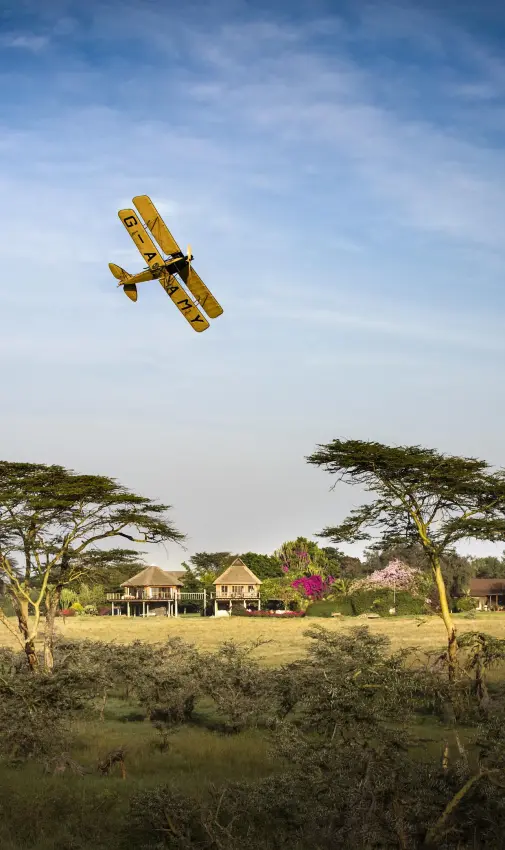
Light aircraft make the short hop from Nairobi’s Wilson Airport to the Lewa Downs airstrip, and Kifaru House is a drive across the conservancy from there. Day-to-day management is contracted out, but the work the house pays for is open to its guests. They can visit the tracker dogs and the operations centre and, in term time, the local schools. Clinics, school bursaries and water projects serve the pastoralist communities beside the conservancy, and a micro-credit scheme lends to local women starting businesses.


 01