Camp

Ol Malo Nomad

A moving camp of four tents crossing the Laikipia Highlands of northern Kenya by horse, by camel and on foot.

Country: Kenya
Location: Laikipia Highlands
Number of rooms: 4

Four tents that move by pack camel

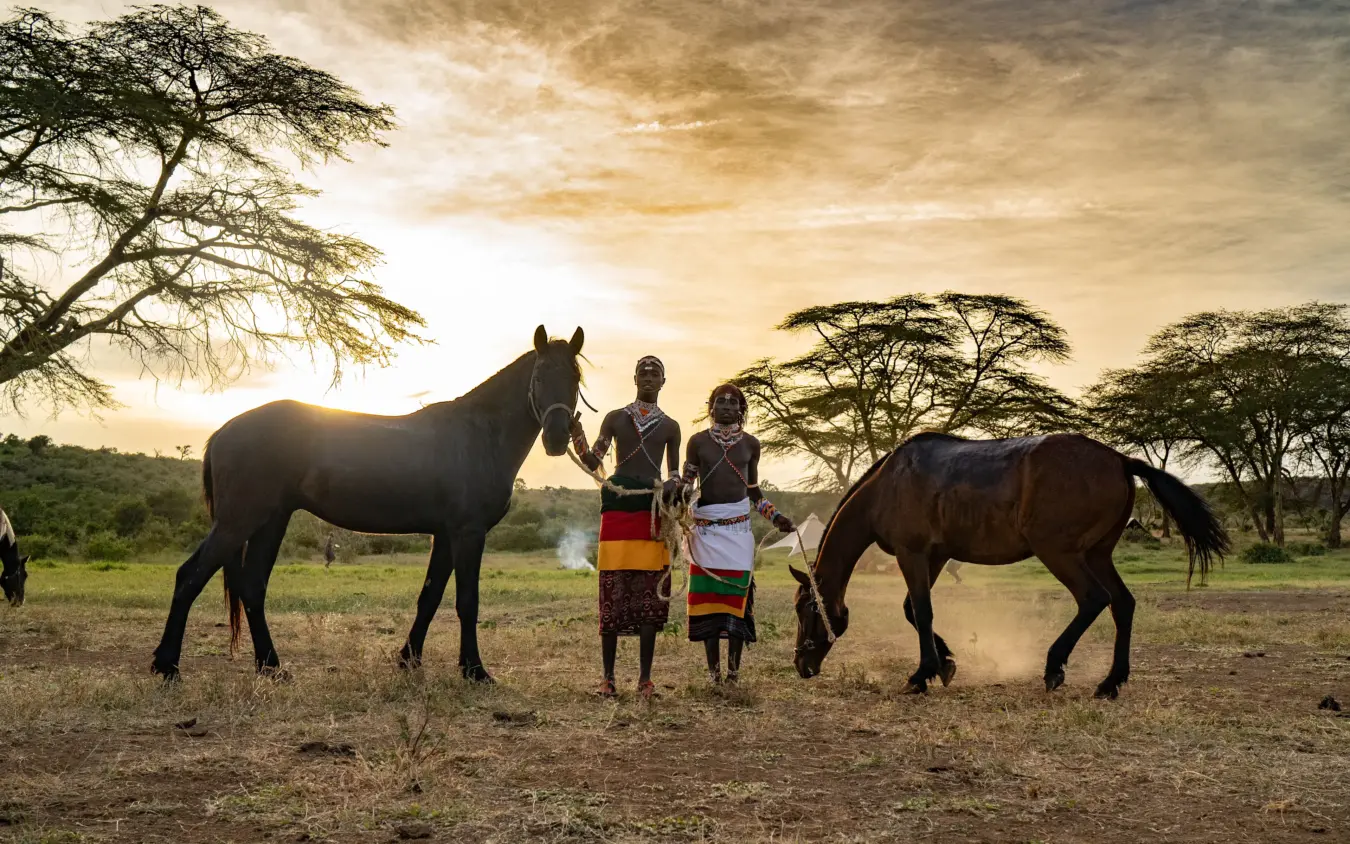
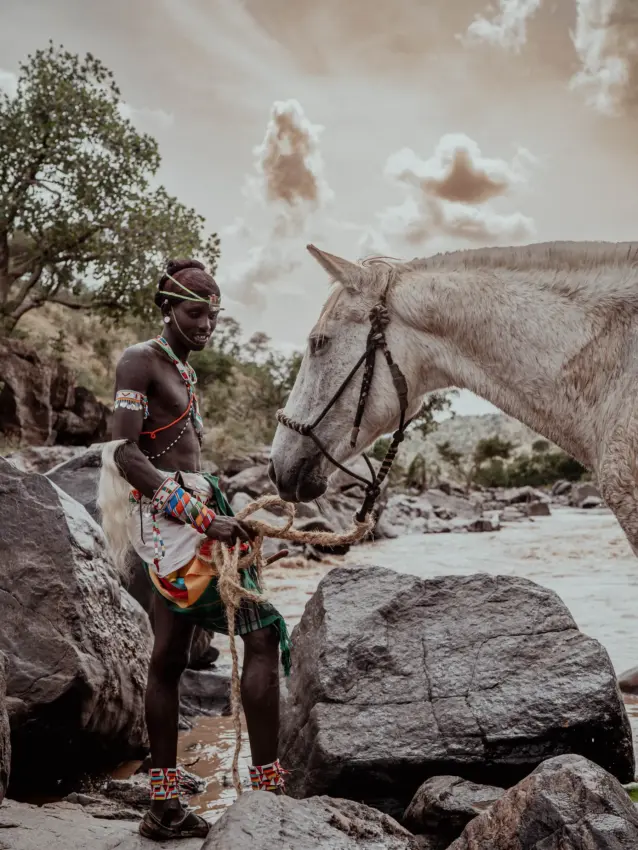
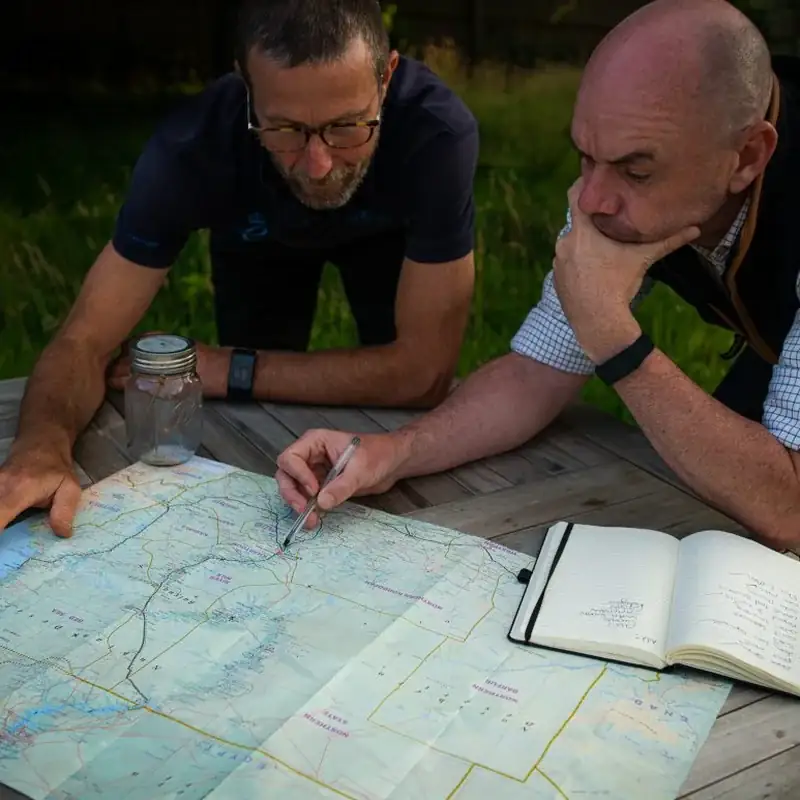
Andrew and Chyulu Francombe run a camp that never sleeps in the same place twice. Andrew flies the helicopter, Chyulu leads the riding, and together they take a string of pack camels across the Laikipia Highlands of northern Kenya, down through the Ewaso Ng’iro valley. Game tolerates a horse where it flees a vehicle, so guests walk or ride to each new site, arriving by lunch to find four tents already pitched.

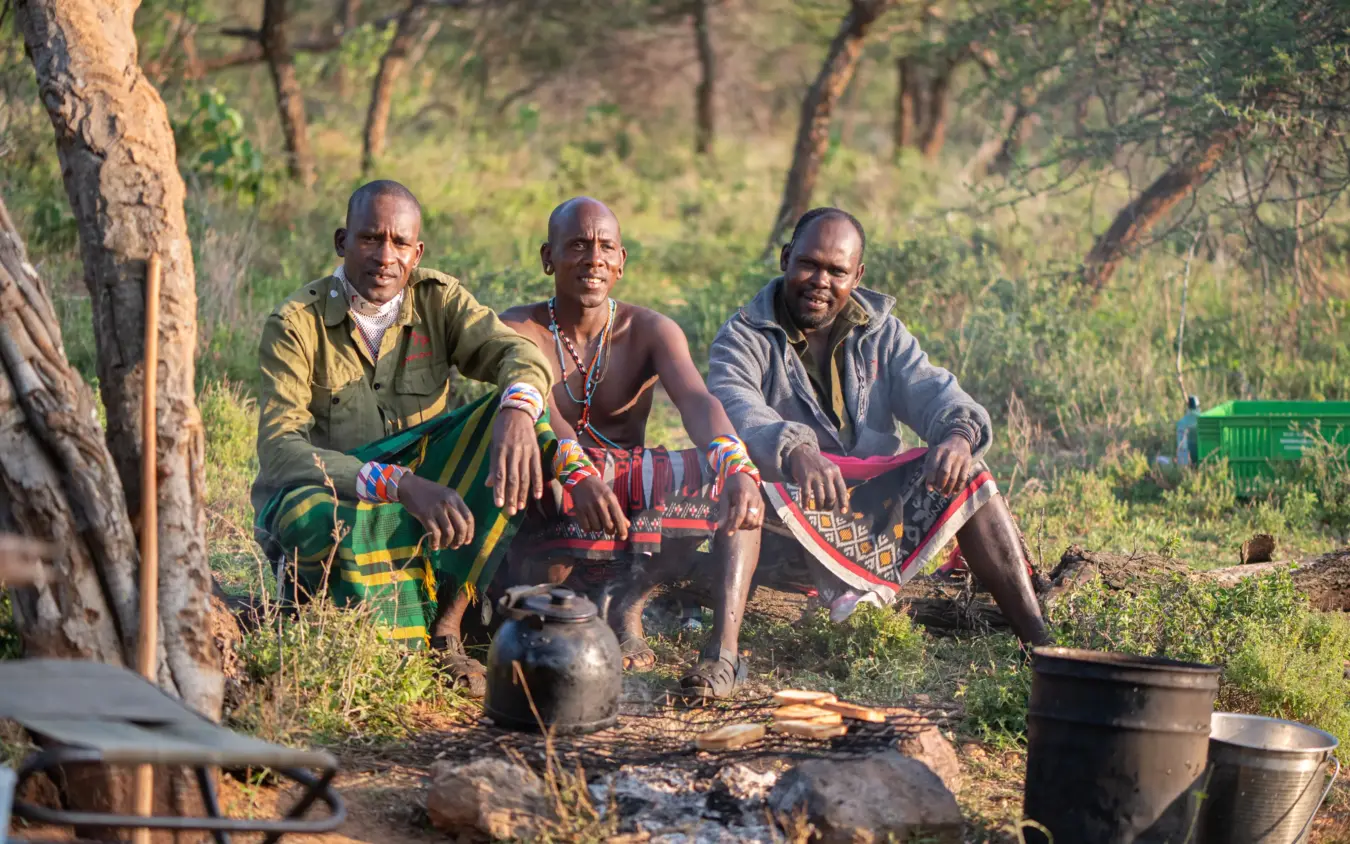
Canvas bucket showers are filled with water heated over the fire

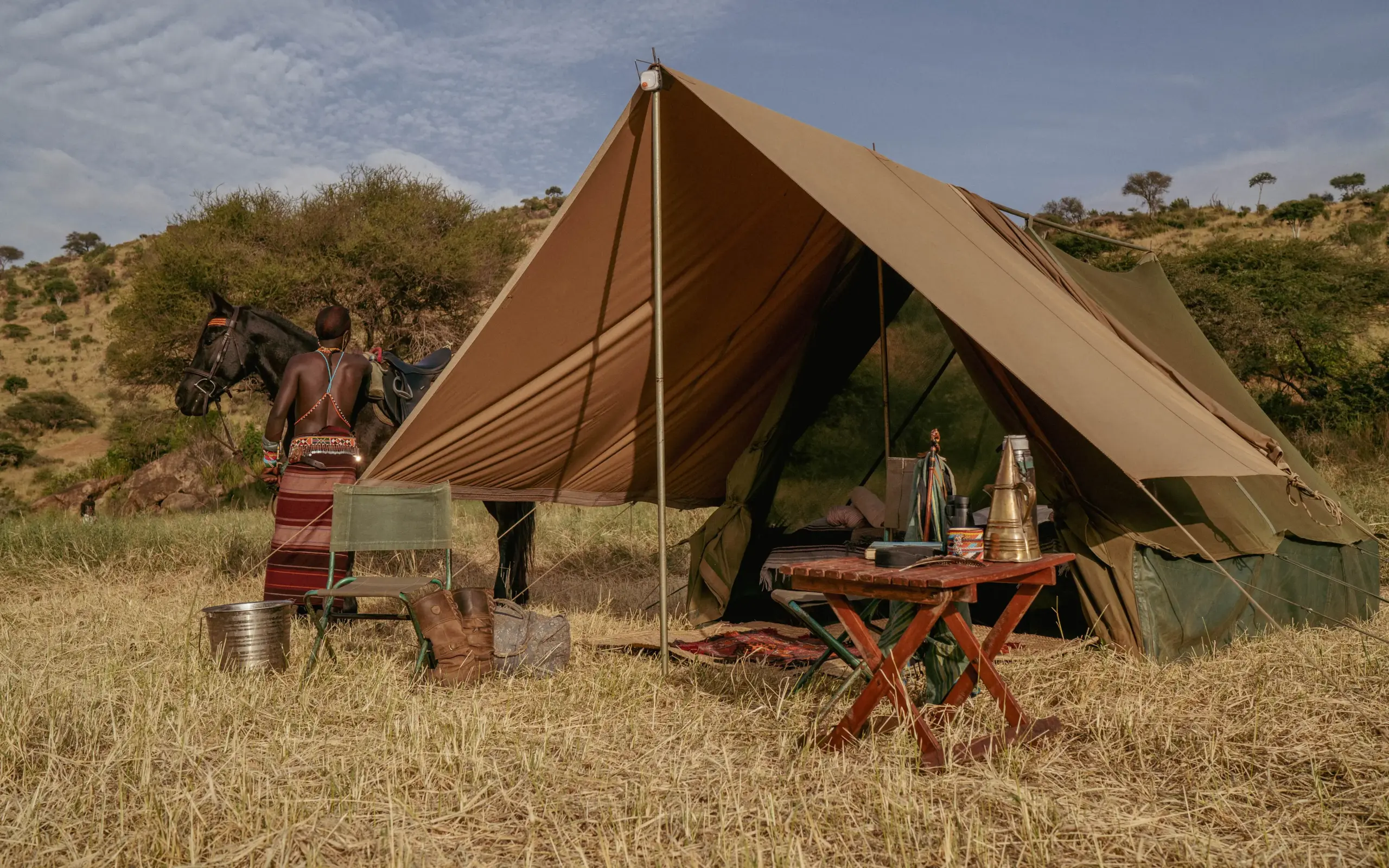
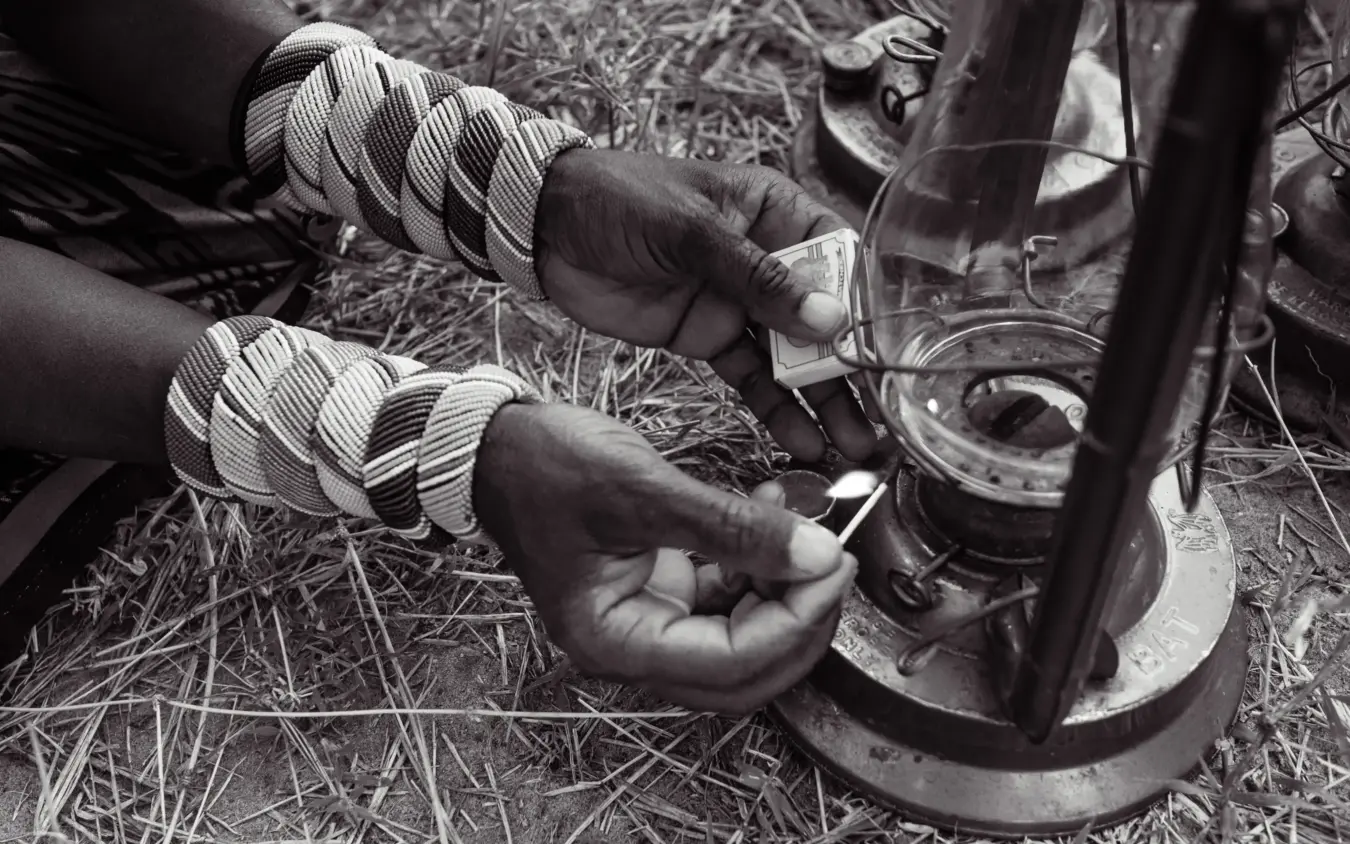
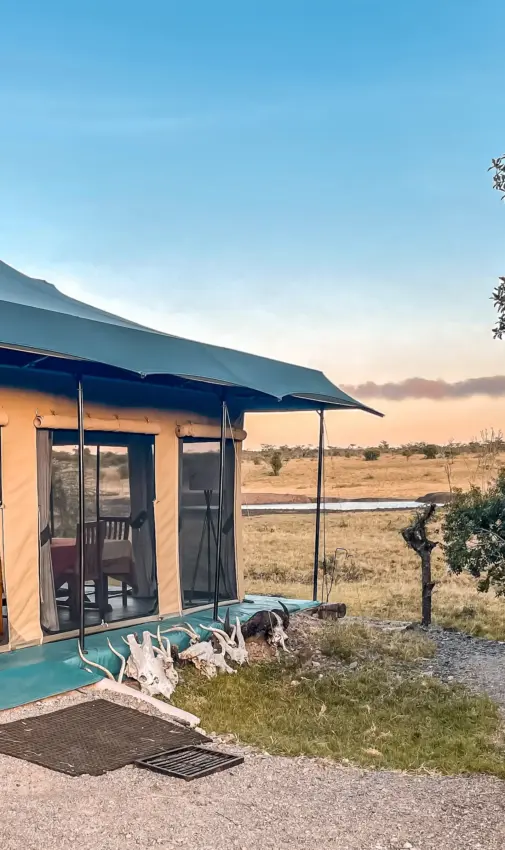
Ride in by midday and the four twin tents are already made up with proper linen, a mess of director’s chairs and storm lanterns ready beside them. Canvas bucket showers are filled with water heated over the fire. By morning the whole kit is loaded onto the camels again and gone. Eight guests is the limit, one party at a time, for a minimum of two nights.

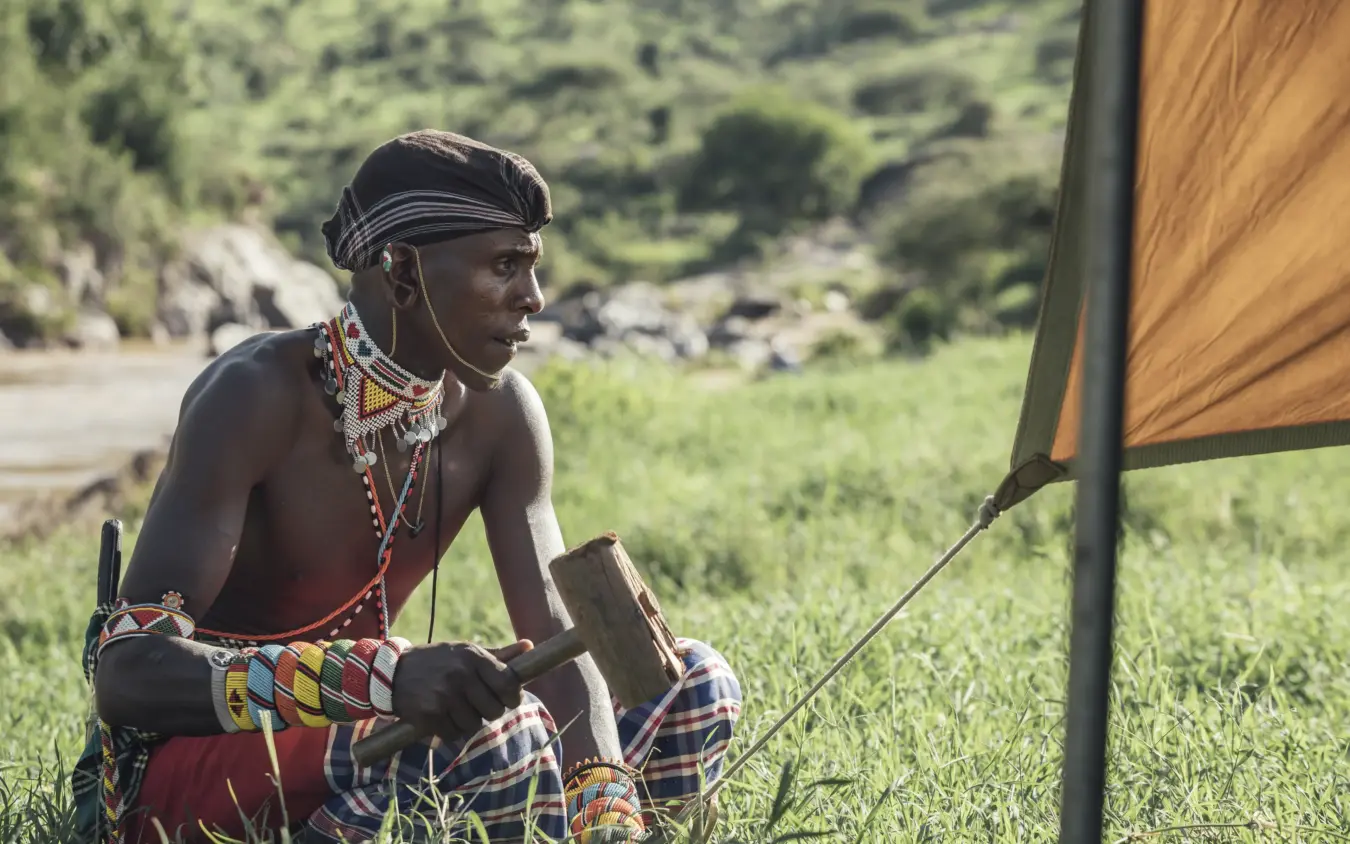
Warriors sing as they haul water from wells sunk in dry riverbeds. Samburu guides ride and walk alongside the family, reading tracks and naming the plants they use as medicine. Camp goes up where the ground is good, not where a road allows.

Warriors sing as they haul water from wells sunk in dry riverbeds.

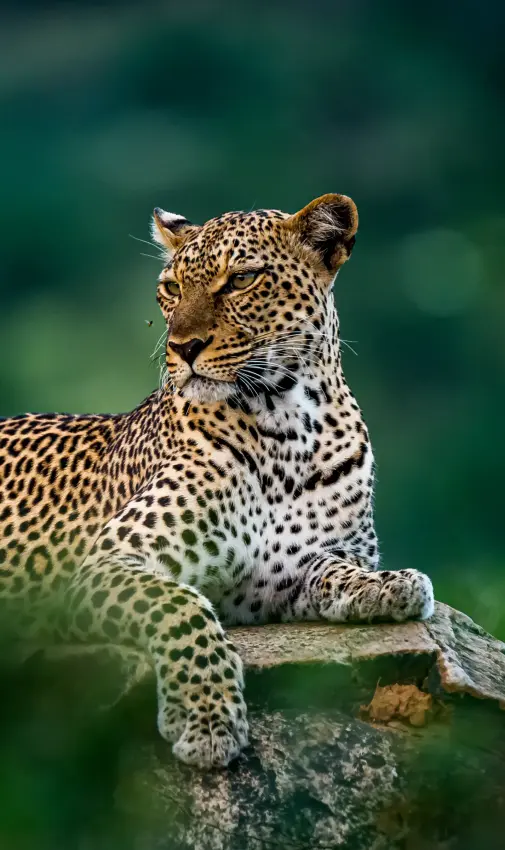
The ranch takes its Samburu name from the greater kudu, and the dry-country game around it runs to Grevy’s zebra, reticulated giraffe, Beisa oryx and gerenuk. Leopards call in the dark beyond the ring of the fire. For parties who want the far north, Andrew flies the helicopter to Lake Turkana, to the Suguta Valley and out across the Rift.

01

accommodation

Three Twin Tents Across Laikipia Highlands

Four lightweight twin-bedded tents travel with the camels across the Laikipia Highlands, made up with proper cotton linen, duvets and pillows on camp beds. Mesh panels roll back for sleeping under the stars. Ablutions are shared and traditional: canvas bucket showers filled with fire-heated water, and bush toilets.

02

activities

Camel Safaris and Lake Turkana Flights

Walking and riding safaris with pack camels, day and night drives in open vehicles, tracking on foot with Samburu guides, and sleep-outs at the treehouse or the hide above the lodge waterhole. The land is private ranch, not national park, so walking, night driving and off-track routes are all permitted. Helicopter flights reach Lake Turkana and the Suguta Valley for parties wanting the far north.
03

conservation

Samburu Trust Secures Grazing Routes

Julia Francombe founded the Samburu Trust in 2000, after a severe regional drought. It works to secure grazing routes and wildlife corridors, and runs schooling built around families who move with their herds; a school opened on the ranch in 2003. More than ninety Samburu women earn independent income through its beadwork programme.

ready to get started?

Get in touch and let’s start the conversation. An initial consultation helps us understand what you’re looking for, whether that’s specific experiences, luxury touches, or marking a special occasion, and from there we’ll guide you through what’s possible so you can decide if we’re the right fit.

Alternative accommodation in laikipia highlands

Elegant interior lounge with symmetrical seating and chandelier, Arijiju, Laikipia Highlands, Kenya 01

Arijiju

Laikipia Highlands

Curved swimming pool with guests surrounded by savanna landscape, Lengishu House, Laikipia Highlands, Kenya 02

Lengishu House

Laikipia Highlands

Maasai guides leading camels through arid savanna landscape, Karisia Walking Safaris, Laikipia Highlands, Kenya 03

Karisia Walking Safaris

Laikipia Highlands

Safari vehicle with guests on hillside overlooking mountains, Borana Lodge, Laikipia Highlands, Kenya 04

Borana Lodge

Laikipia Highlands

Infinity pool overlooking savanna landscape at dusk, Ol Malo Lodge, Laikipia Highlands, Kenya 05

Ol Malo Lodge

Laikipia Highlands

Circular stone lodge structures on rocky outcrop overlooking forested valley at sunset, Suyian Lodge, Laikipia Highlands, Kenya 06

Suyian Lodge

Laikipia Highlands

Yellow biplane flying over safari lodge and acacia trees, Segera, Laikipia Highlands, Kenya 07

Segera

Laikipia Highlands

08

Private Wilderness

Laikipia Highlands

09

Kicheche Laikipia

Laikipia Highlands

Glamping safari tent with deck overlooking dry grassland at sunset, Moon’s Camp, Laikipia Highlands, Kenya 10

Moon’s Camp

Laikipia Highlands

Curved modern lodge buildings perched on rocky hilltop overlooking valley, Ol Lentille, Laikipia Highlands, Kenya 11

Ol Lentille

Laikipia Highlands

12

El Karama Lodge

Laikipia Highlands

13

Sirai House

Laikipia Highlands

14

Lolldaiga House

Laikipia Highlands

15

Tambarare Camp

Laikipia Highlands

Illuminated safari tent in woodland setting at dusk, Sirikoi, Laikipia Highlands, Kenya 16

Sirikoi

Laikipia Highlands

17

Lewa Safari Camp

Laikipia Highlands

Luxury lodge with blue pool nestled among acacia trees in arid savanna landscape, Kifaru House, Laikipia Highlands, Kenya 18

Kifaru House

Laikipia Highlands

19

Enasoit Camp

Laikipia Highlands

Thatched-roof lodge illuminated at dusk with savanna landscape, Lewa House, Laikipia Highlands, Kenya 20

Lewa House

Laikipia Highlands

frequently asked questions

Fit enough to be on your feet or in the saddle for a morning over rough country, day after day. Days start at first light and the travelling is done by late lunch, when you reach the next camp, so the afternoons are for a walk with the Samburu guides, a swim in a river or nothing at all. No distance is fixed: the camels set the pace and the route is built around the party, so a strong walking group and a family of mixed ages do not cover the same ground. It is not a trip for anyone with limited mobility.

Where the far country is wanted, the helicopter does the long legs, which is how Lake Turkana or the Rift Valley fit into a few days rather than a week. Tell us honestly how everyone walks and rides and we will shape the days to the weakest legs, not the strongest.

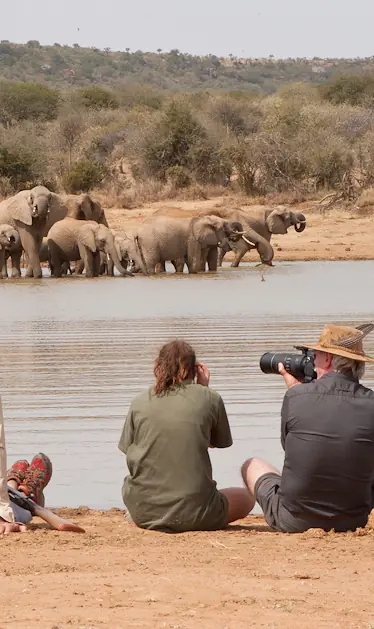
Slow, close and quiet. A camel train carries the whole camp ahead of you, while a smaller team walks with the party carrying water and taking anyone who wants to ride, so a camel day is as much walking beside them as sitting on one. Game that runs from a vehicle tends to hold its ground for a horse or a camel, which is the point: you come up on elephant and Grevy's zebra at a distance a car never manages.

The horse days want experience. The ranch rides its own horses, but you are riding through wild country for hours with no arena to fall back on, so we would only put confident riders on the horse legs, and the rider weight limit is 90 kilograms. Non-riders are not left out: the same route runs on foot or by camel, and a party can mix the three.

Simple, and honest about it. Four twin tents, each with two camp beds or sleeping rolls made up with proper cotton linen and duvets, and the flaps roll right back for the stars. The guides have the camp up before you arrive, and guests who want to are welcome to pitch in with the fire and the chairs. Washing is a hot bucket shower in a shared bush bathroom, or a river where there is one, and the loos are shared too. There is no running water and no wifi, and we have not confirmed phone signal along the route, so assume none.

Meals are cooked over the fire and eaten outside. If that description reads as the whole point, this is your camp; if it reads as a list of things missing, the lodge where the camp begins, with its stone cottages and proper bathrooms, is the answer, and we would rather send you there.

Five and over is the guidance we work to. Younger children are not ruled out in principle, but the camp's own representatives put five as the age where it starts to work, because everyone travels the same way, on foot, on a camel or on a horse, and the mornings are long for small legs. A four-year-old on a camel until lunch is a memory for the parents and an ordeal for the child.

For a family with young children who want the Francombes' ranch, the house or the lodge with a night in the Treehouse gives the sleeping-out thrill with a bath at the end of it, and the older children can still ride out for a day. Tell us the ages and we will say plainly which shape of trip fits.

It cannot be booked on its own. The camp starts and finishes at Ol Malo Lodge, for one party only and for at least two nights, and it is sold with lodge nights around it. We would usually build two or three nights under canvas with three or four at the lodge or the house either side, so the trip has a bath at both ends. The ranch closes in April, May and November, and the camp closes with it.

Getting there is getting to the ranch: a private charter from Nairobi's Wilson Airport to the ranch's own airstrip, typically a Cessna Caravan or a Pilatus PC-12, or a scheduled flight to Loisaba, about an hour, and 45 to 50 minutes by road from there. Soft bags only, 15 kilograms a person on the scheduled services, which suits a camp where a camel is carrying your luggage anyway.

It is, and canvas changes the practical side rather than the official one. TravelHealthPro, the UK's official travel health advice, and the American CDC both class every part of Kenya below 2,500 metres as malaria risk all year, game country included, and recommend antimalarial tablets for it; the only exceptions are the highlands above that height and the centre of Nairobi. The ranch stands at about 1,600 metres and the country the camp moves through sits below the line as well.

We are travel planners, not medical professionals, and we do not advise on medication. What suits you, and what is right for a child on the trip, is a question for your own doctor or a travel clinic before you go. The part that is ours to say is about the tents: the flaps roll back for the stars, which also lets the dusk in, so long sleeves and repellent by the fire are worth more here than at a lodge.

rated five stars by our clients

other areas in kenya

Leopard resting on fallen log in natural setting 01

Maasai Mara

Local guides with poles crossing shallow forest river, Northern Kenya, Kenya 02

Northern Kenya

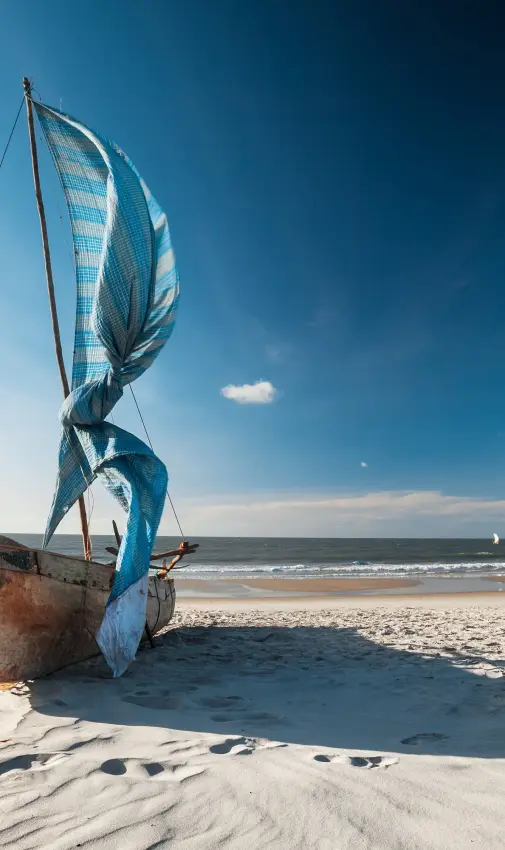
Traditional fishing boat with blue sail on sandy beach 03

Kilifi

Flock of flamingos wading in shallow pink-tinted water, Rift Valley Lakes, Kenya 04

Rift Valley Lakes

Snow-capped Mount Kilimanjaro rising above acacia trees and Tanzania savanna 05

Amboseli and Chyulu Hills

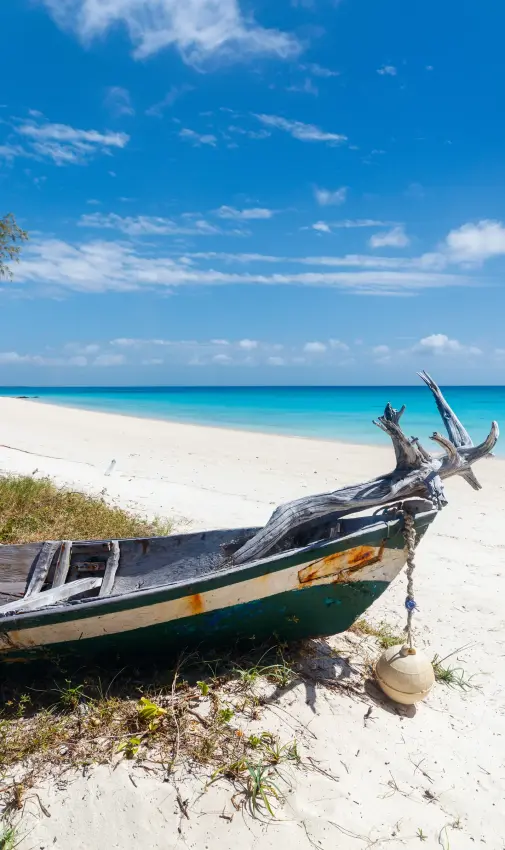
Wooden fishing boat beached on white sand tropical shore 06

Diani Beach

Man in traditional red garment driving open safari vehicle, Samburu Reserve, Kenya 07

Samburu Reserve

08

Lamu Archipelago

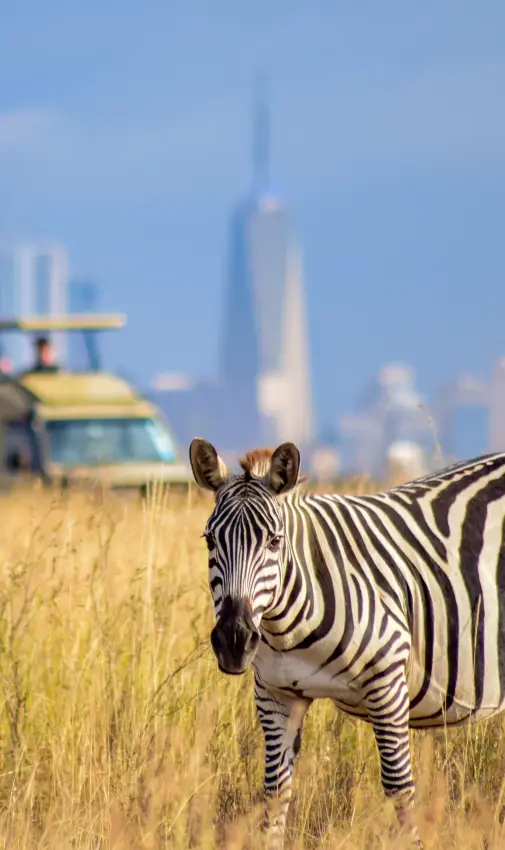
Zebras in savanna grassland with safari vehicle and city skyline 09

Nairobi

African elephants with calf walking through grassland at sunset 10

Tsavo

Planning a journey together

our approach

remote, exclusive
& personal

Every journey starts with a conversation. We take the time to understand your vision before we start planning.

Whether by phone or in person, we work with you directly to shape something that is considered, personal, and expertly delivered.

get in touch
destinations ideas & inspiration our process about us contact us