Lodge

El Karama Lodge

A Grant family home on a private conservancy in Kenya’s Laikipia Highlands, on a bend of the Ewaso Nyiro river.

Country: Kenya
Location: Laikipia Highlands
Number of rooms: 10

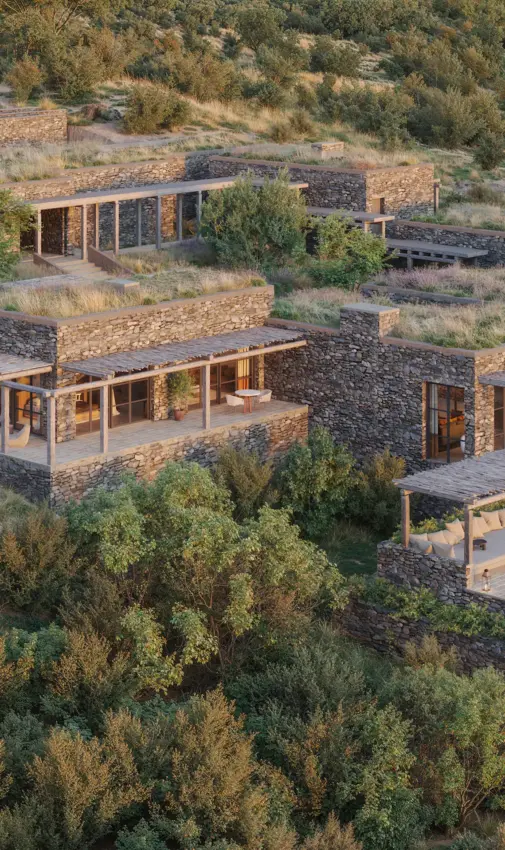
Cottages built from riverbed stone

Murray and Sophie Grant live here with their two children, on a bend of the Ewaso Nyiro in Kenya’s Laikipia Highlands, in ten cottages Murray built by hand. Walking safaris, tracking on foot and night drives all happen on private land. Four of the Big Five are resident, moving across ground the family’s cattle have grazed for generations.

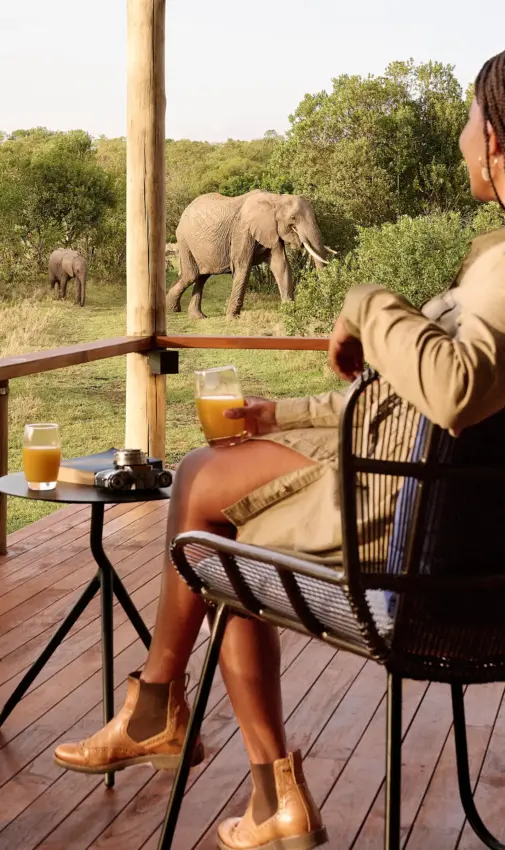
Reticulated giraffes browse the salt licks below the cottages.

Grevy’s zebras and gerenuk are the Laikipia specialities here, and elephants, lions and wild dogs move through the river corridor below. Reticulated giraffes browse the salt licks below the cottages. Over 430 bird species have been recorded on the conservancy, which the Grant family has farmed since Guy Grant took it on in 1963, the year of Kenyan independence.

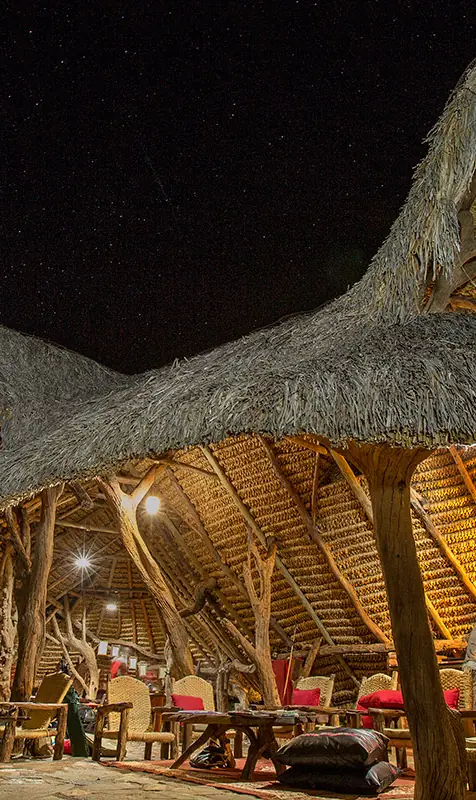
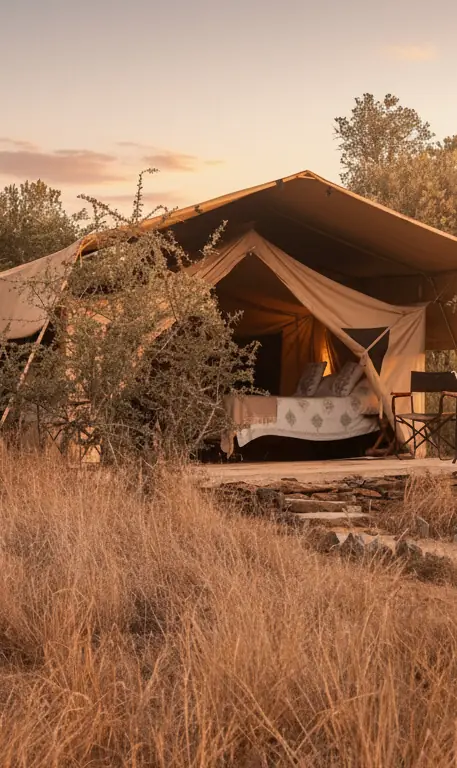
Illuminated canvas tent with beds under starry night sky, El Karama Lodge, Laikipia Highlands, Kenya
Luxury bedroom suite with thatched roof and savanna views through large windows, El Karama Lodge, Laikipia Highlands, Kenya

Mornings at the Bush School run from ten until half past twelve. Children take plaster casts of dik-dik tracks, pull clay from termite mounds, bake bread over coals, collect eggs and work at beadwork. The youngest ride ponies on a lead rein; from age twelve, competent riders join bush rides on horses stabled just over the boundary. Radio monitors mean parents can eat while children sleep.

Hyenas call to one another across the water after dark.

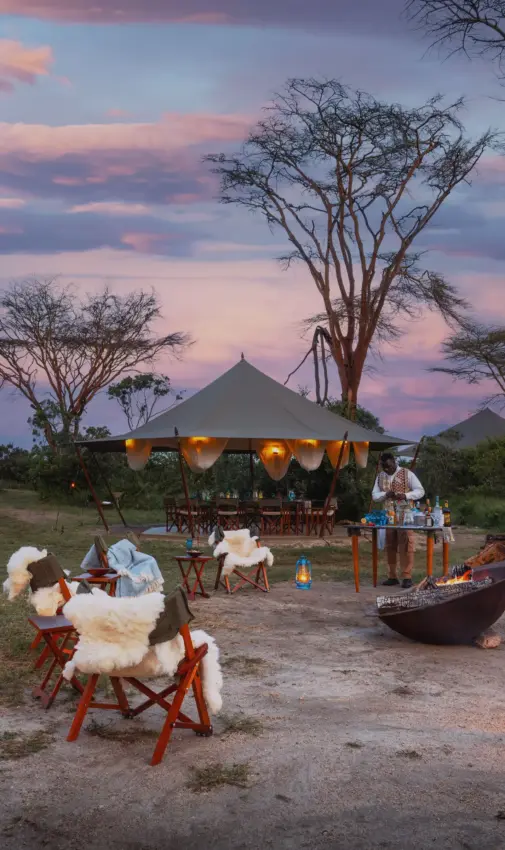
Fly camping puts Tentsile tree tents between the branches, mesh domes open to the stars and canvas bell tents below, with a guide and an armed ranger for the night. Dinner is grilled over the fire, sweet potatoes softening in the embers. Hyenas call to one another across the water after dark. Mornings at the dairy cover milking, calving and the herdsmen’s work.

Spacious safari lodge bedroom with thatched roof and open-air terrace access, El Karama Lodge, Laikipia Highlands, Kenya 01

accommodation

Ten Cottages of Local Stone and Thatch

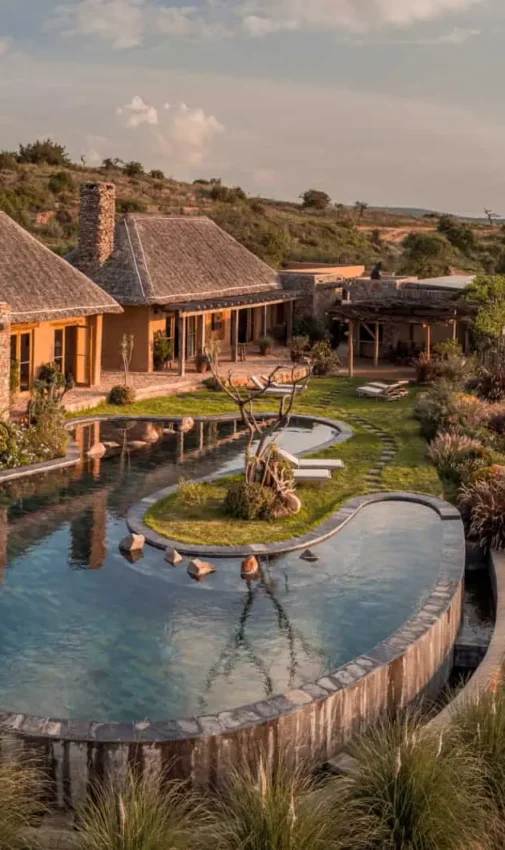
El Karama Lodge sleeps 24 across ten cottages built by hand from local stone, timber and thatch. Nilotica Private House takes five to ten on exclusive use with its own vehicle; the two-storey Hobbit House suits families; two River Cottages face the water, and three river-facing bandas hold couples and singles.

Horseman with saddled horse at outdoor dining table under acacia trees, El Karama Lodge, Laikipia Highlands, Kenya 02

activities

Night Drives and Fly Camping in Laikipia Highlands

Guided walking safaris, tracking on foot, night drives with wildlife-friendly spotlights and fly camping all run on private conservancy land in the Laikipia Highlands, so park rules on timing do not apply. Add horse riding for confident riders, catfish on hand-lines, a copper-treated pool and the Bush School for children.

Safari guides crouching in discussion during bush walk, El Karama Lodge, Laikipia Highlands, Kenya 03

conservation

Kenya Wildlife Service Conservancy Partnership

Rangers patrol the conservancy, registered by Kenya Wildlife Service in January 2023, and wildlife monitoring runs in partnership with Mpala Research Centre, the Sheldrick Wildlife Trust and the Grevy's Zebra Trust. Community work centres on Daraja Academy, school visits and a yearly local internship.

ready to get started?

Get in touch and let’s start the conversation. An initial consultation helps us understand what you’re looking for, whether that’s specific experiences, luxury touches, or marking a special occasion, and from there we’ll guide you through what’s possible so you can decide if we’re the right fit.

Alternative accommodation in laikipia highlands

Laikipia's lodging runs from small stone and timber lodges built into the landscape to classic canvas tented camps, often used as bases for walking and camelback safaris. Several conservancies offer fully staffed private houses with their own guides and vehicles, suited to families and small groups taking a whole place to themselves. Lightweight mobile and fly-camps support multi-day journeys on foot or by camel, pitched in remote corners under conservancy management. Most are intimate, low-density and closely tied to conservation work.

Curved swimming pool with guests surrounded by savanna landscape, Lengishu House, Laikipia Highlands, Kenya 01

Lengishu House

Laikipia Highlands

Maasai guides leading camels through arid savanna landscape, Karisia Walking Safaris, Laikipia Highlands, Kenya 02

Karisia Walking Safaris

Laikipia Highlands

Safari vehicle with guests on hillside overlooking mountains, Borana Lodge, Laikipia Highlands, Kenya 03

Borana Lodge

Laikipia Highlands

Helicopter hovering above horseman herding horses through dusty terrain, Ol Malo Lodge, Laikipia Highlands, Kenya 04

Ol Malo Lodge

Laikipia Highlands

Elegant interior lounge with symmetrical seating and chandelier, Arijiju, Laikipia Highlands, Kenya 05

Arijiju

Laikipia Highlands

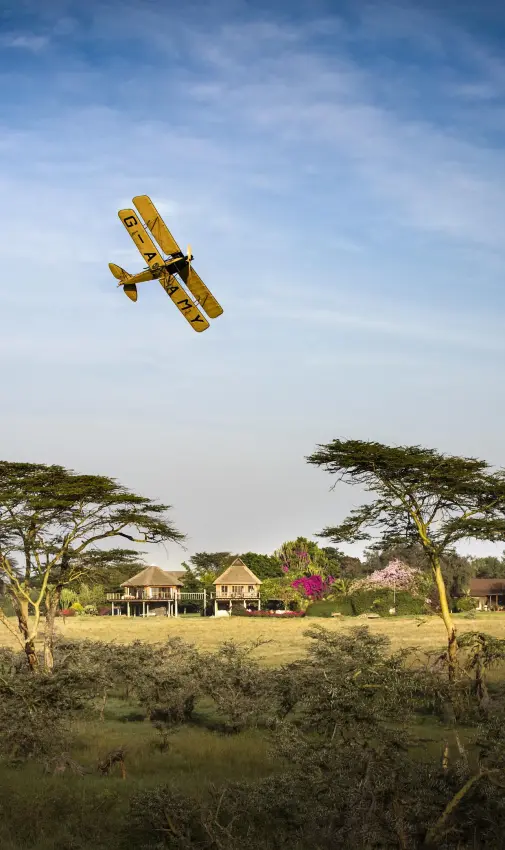
Yellow biplane flying over safari lodge and acacia trees, Segera, Laikipia Highlands, Kenya 06

Segera

Laikipia Highlands

Circular stone lodge structures on rocky outcrop overlooking forested valley at sunset, Suyian Lodge, Laikipia Highlands, Kenya 07

Suyian Lodge

Laikipia Highlands

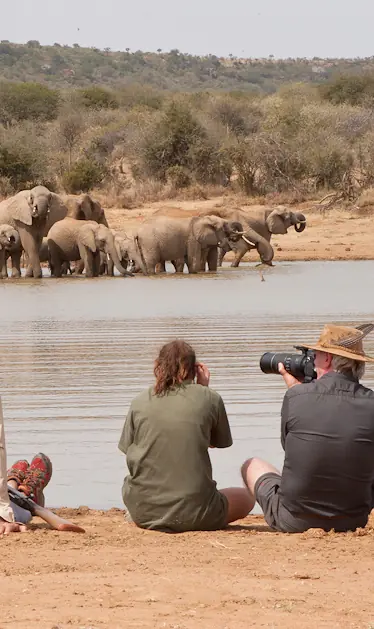
Guests photographing elephant herd at waterhole from shoreline, Laikipia Wilderness, Laikipia Highlands, Kenya 08

Laikipia Wilderness

Laikipia Highlands

Suyian Homestead, Laikipia Highlands, Kenya 09

Suyian Homestead

Laikipia Highlands

Luxury lodge built into natural rock outcrop at dusk with illuminated windows, Lewa House, Laikipia Highlands, Kenya 10

Lewa House

Laikipia Highlands

Contemporary terrace with arched doors and potted trees at golden hour, Governors’ Mugie House, Laikipia Highlands, Kenya 11

Governors’ Mugie House

Laikipia Highlands

Illuminated thatched-roof lodge structure at night with wooden interior, Il Ngwesi, Laikipia Highlands, Kenya 12

Il Ngwesi

Laikipia Highlands

Guest viewing elephants from safari lodge deck at sunset, Tambarare Camp, Laikipia Highlands, Kenya 13

Tambarare Camp

Laikipia Highlands

Curved modern lodge buildings perched on rocky hilltop overlooking valley, Ol Lentille, Laikipia Highlands, Kenya 14

Ol Lentille

Laikipia Highlands

Luxury lodge with blue pool nestled among acacia trees in arid savanna landscape, Kifaru House, Laikipia Highlands, Kenya 15

Kifaru House

Laikipia Highlands

Man in traditional red plaid holding lanterns in manicured garden at dusk, Private Wilderness, Laikipia Highlands, Kenya 16

Private Wilderness

Laikipia Highlands

Silhouetted figures in boat at sunrise with mountain backdrop, Kicheche Laikipia, Laikipia Highlands, Kenya 17

Kicheche Laikipia

Laikipia Highlands

Illuminated safari tent in woodland setting at dusk, Sirikoi, Laikipia Highlands, Kenya 18

Sirikoi

Laikipia Highlands

Galago Private Canvas, Laikipia Highlands, Kenya 19

Galago Private Canvas

Laikipia Highlands

Glamping safari tent with deck overlooking dry grassland at sunset, Moon’s Camp, Laikipia Highlands, Kenya 20

Moon’s Camp

Laikipia Highlands

frequently asked questions

The conservancy has its own airstrip about a kilometre from the lodge, so the quickest way in is a private charter, typically a Cessna Caravan or a Pilatus PC-12, which can leave Nairobi's Wilson airport at a time of your choosing or meet an early international arrival and have you at the lodge a little over an hour after you land.

The lodge's vehicle meets the aircraft and the last kilometre is a game drive.

The scheduled route is Safarilink from Wilson to Nanyuki, twice a day at eight and twenty past ten, with a third departure in the busier months; the flight takes an hour direct or an hour and a half when it calls at another strip on the way.

Nanyuki is about 42 kilometres from the lodge and the transfer takes around an hour, most of it inside the conservancy. Scheduled or chartered, the aircraft take fifteen kilograms a person in soft bags, hand luggage included, so pack a duffel rather than a hard case.

On the official reading, yes. TravelHealthPro, the UK's official travel health service, rates Kenya as high risk for malaria all year round, with no seasonal easing, and lists antimalarial tablets among its recommendations; only Nairobi and the highlands above 2,500 metres are classed as very low risk.

The American CDC draws the same line, naming every part of the country below 2,500 metres, game parks included. The lodge stands at about 2,000 metres, so it sits below that line however cold the nights feel.
The lodge itself describes its altitude as making it a low to no malaria area, and the risk at this height is certainly lower than at the coast, but low risk is not no risk.

We are travel planners, not medical professionals, and we do not advise on medication. Whether tablets are right for you, and for any children in the party, is a decision for you and your own doctor or a travel clinic, taken with your dates in front of you.

The non-medical part is ours to suggest: long sleeves and trousers once the sun drops, and repellent on the veranda and at the campfire.

Yes, for experienced riders, which the lodge defines as being confident at a canter and a gallop in open country. The horses are stabled a twenty-five-minute game drive from the lodge and the rides are led by outside riding specialists rather than the lodge's own guides, so every rider completes a competency questionnaire and an indemnity form first, helmets are compulsory and there is a rider weight limit.

Rides run from a two-hour morning outing to a full day or an overnight bivouac in the bush, and they are arranged and charged separately from the stay.

For younger or less experienced riders the lodge keeps ponies in a fenced area around the lodge, where children meet, groom and tack up a pony and ride on a lead rein with the grooms, again as a separately priced extra. Fly camping is open to children too, provided an adult from their own party sleeps out with them; nobody under eighteen goes without one.

Two main outings a day are part of the stay, and you choose their shape: a walk with one of the lodge's guides, all of whom hold Kenya's professional guiding qualification, a drive in an open-sided vehicle, or a night drive with a wildlife-friendly spotlight, and the lodge sends out no more than four vehicles at a time.

The Bush School runs every morning as part of a family's stay, meals and the rock hide at the dam are included, and stays of three nights or more earn a dinner out in the bush by a fire, weather permitting.

Riding, the pony sessions for younger children, day trips beyond the conservancy such as Ol Pejeta or Solio, and the helicopter add-ons can all be added, and we arrange every one of them before you travel.

Hot days and cold nights, all year. The lodge sits on the equator at about 2,000 metres, so afternoons reach the mid twenties and can climb higher, while dawn on the river is close to twelve degrees, so mornings and nights are chilly.

The rains come twice: the long rains from March to May, with April the wettest month, and the short rains in October and November, with December to February drier again and June to September the driest stretch. The river answers the rain, so fishing on the Ewaso Nyiro stops when it is in flood.

Pack for both halves of the day: a fleece and a warm hat for the early starts and the night drives, light neutral clothing and a wide-brimmed hat for the middle of the day, high-factor sun cream because the altitude sharpens the sun, closed shoes with grip for the walks and the Bush School, and a light waterproof in the rainy months.

Everything goes in soft bags for the flights, and we send the lodge's own packing list with your travel documents.

Yes to both. The lodge runs entirely on solar power, twenty-four hours a day, for lighting and hot water, and the cottages have reading lamps and charging points for cameras and phones.

Wifi runs through the cottages and the private house on a system the lodge can switch off at source, so it is there when you want to check in with home and absent when you would rather it were.

If being reachable by phone matters to you, tell us before you travel and we will make sure you are set up for it.

rated five stars by our clients

other areas in kenya

Laikipia pairs naturally with the Maasai Mara for the wildebeest migration and high big-cat densities, a contrast to its conservancy-based activities. Just north, Samburu, Shaba and Buffalo Springs share its dry-country species in a reserve setting, while the Mathews Range adds mountain forest and Samburu culture. Mount Kenya, immediately to the south, offers montane forest and alpine trekking. The Kenyan coast, reached by air, rounds out a bush itinerary with Indian Ocean beaches and marine parks.

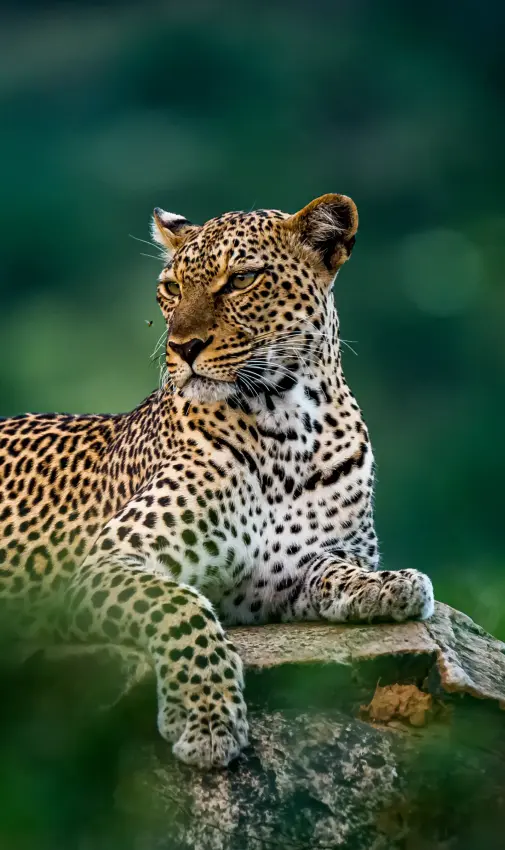
Leopard resting on fallen log in natural setting 01

Maasai Mara

Local guides with poles crossing shallow forest river, Northern Kenya, Kenya 02

Northern Kenya

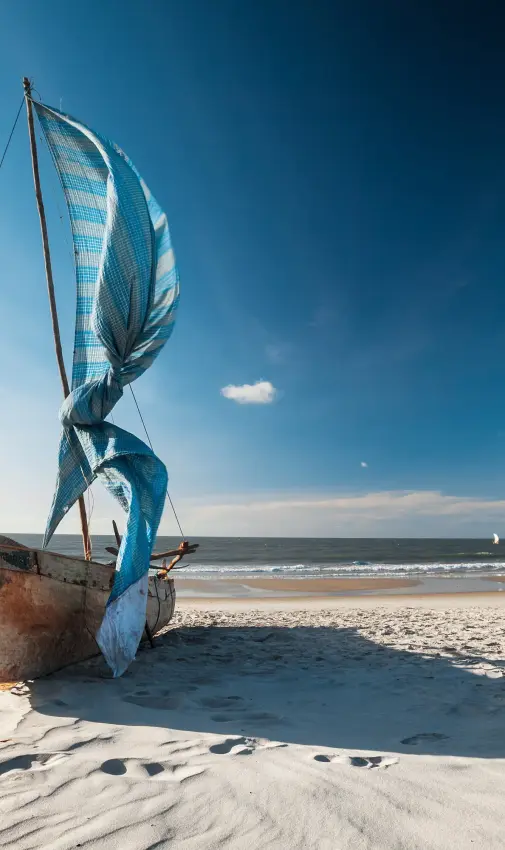
Traditional fishing boat with blue sail on sandy beach 03

Kilifi

Flock of flamingos wading in shallow pink-tinted water, Rift Valley Lakes, Kenya 04

Rift Valley Lakes

Snow-capped Mount Kilimanjaro rising above acacia trees and Tanzania savanna 05

Amboseli and Chyulu Hills

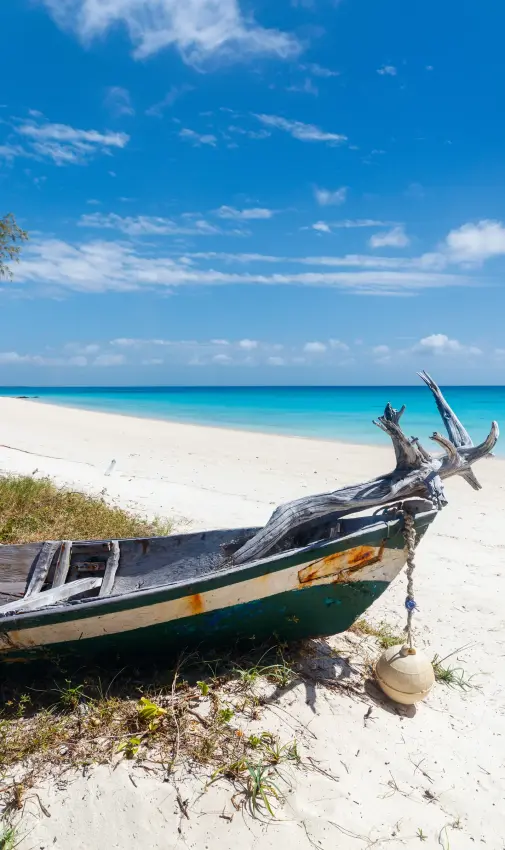
Wooden fishing boat beached on white sand tropical shore 06

Diani Beach

Man in traditional red garment driving open safari vehicle, Samburu Reserve, Kenya 07

Samburu Reserve

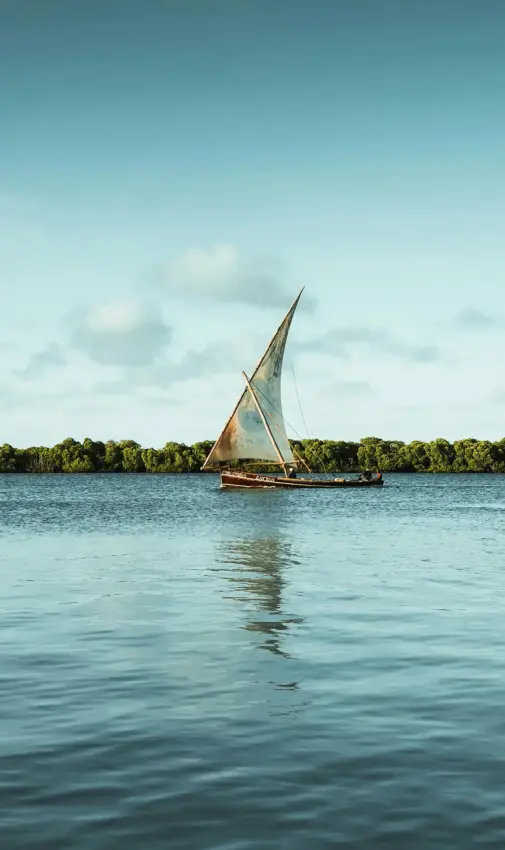
Traditional sailing dhow on calm turquoise water with forested shoreline, Lamu Archipelago, Kenya 08

Lamu Archipelago

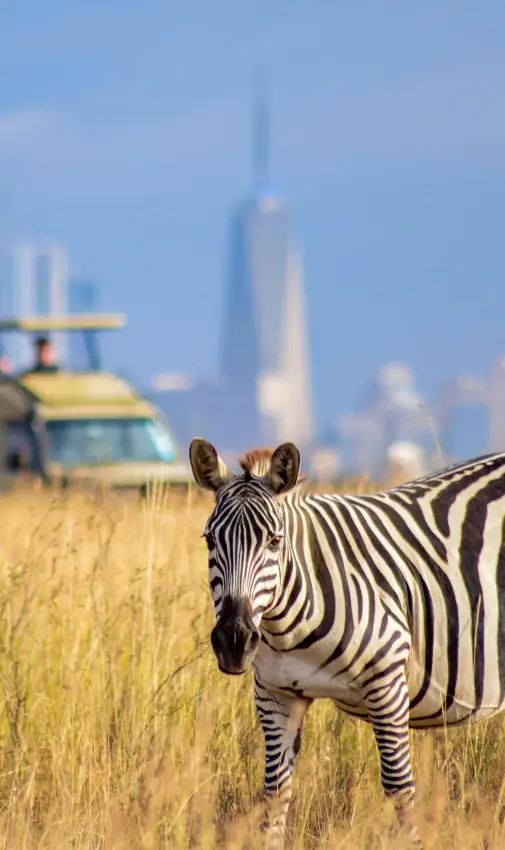
Zebras in savanna grassland with safari vehicle and city skyline 09

Nairobi

African elephants with calf walking through grassland at sunset 10

Tsavo

Meru National Park, Kenya 11

Meru National Park

Planning a journey together

our approach

remote, exclusive
& personal

Every journey starts with a conversation. We take the time to understand your vision before we start planning.

Whether by phone or in person, we work with you directly to shape something that is considered, personal, and expertly delivered.

get in touch
destinations ideas & inspiration our process about us contact us