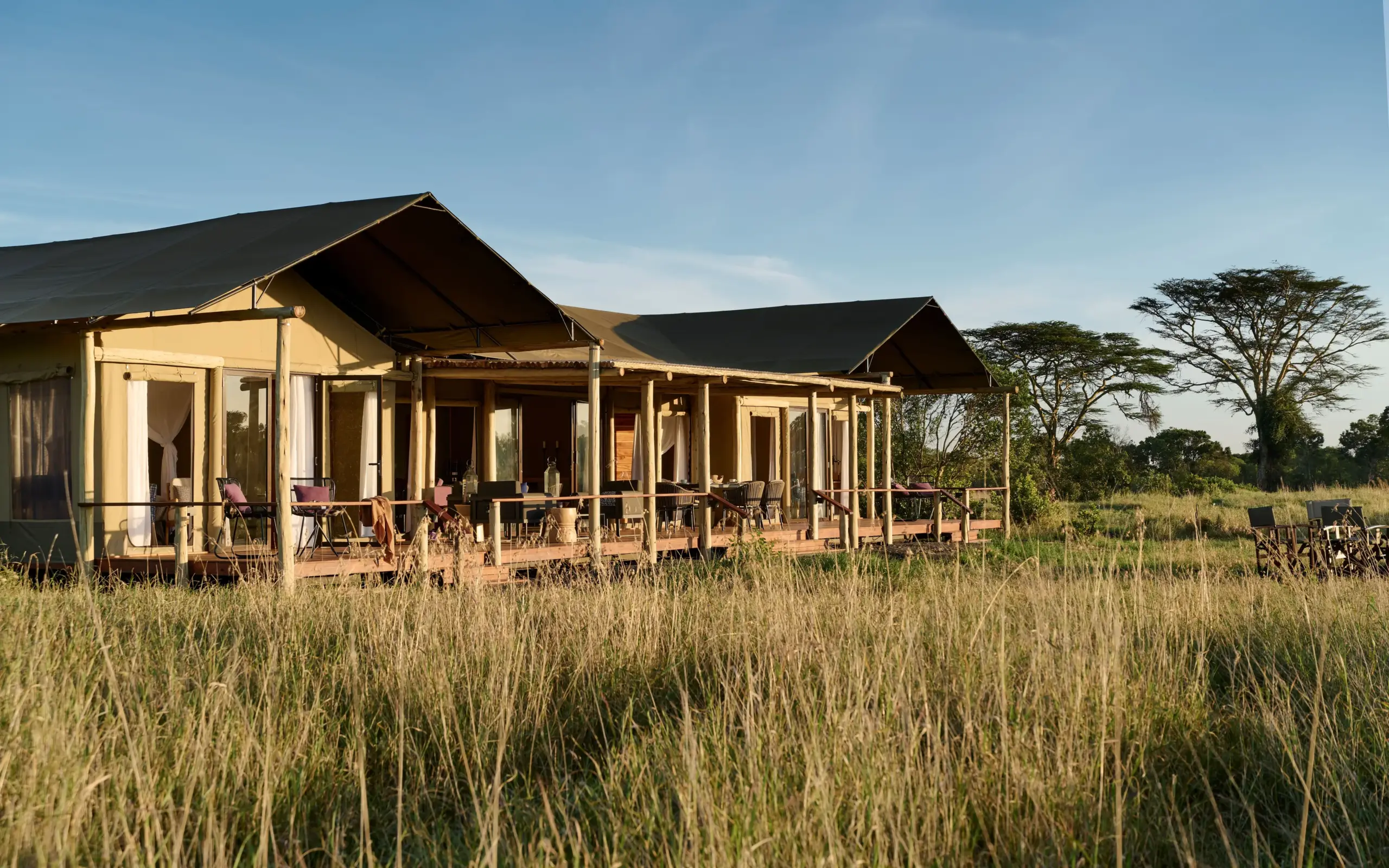
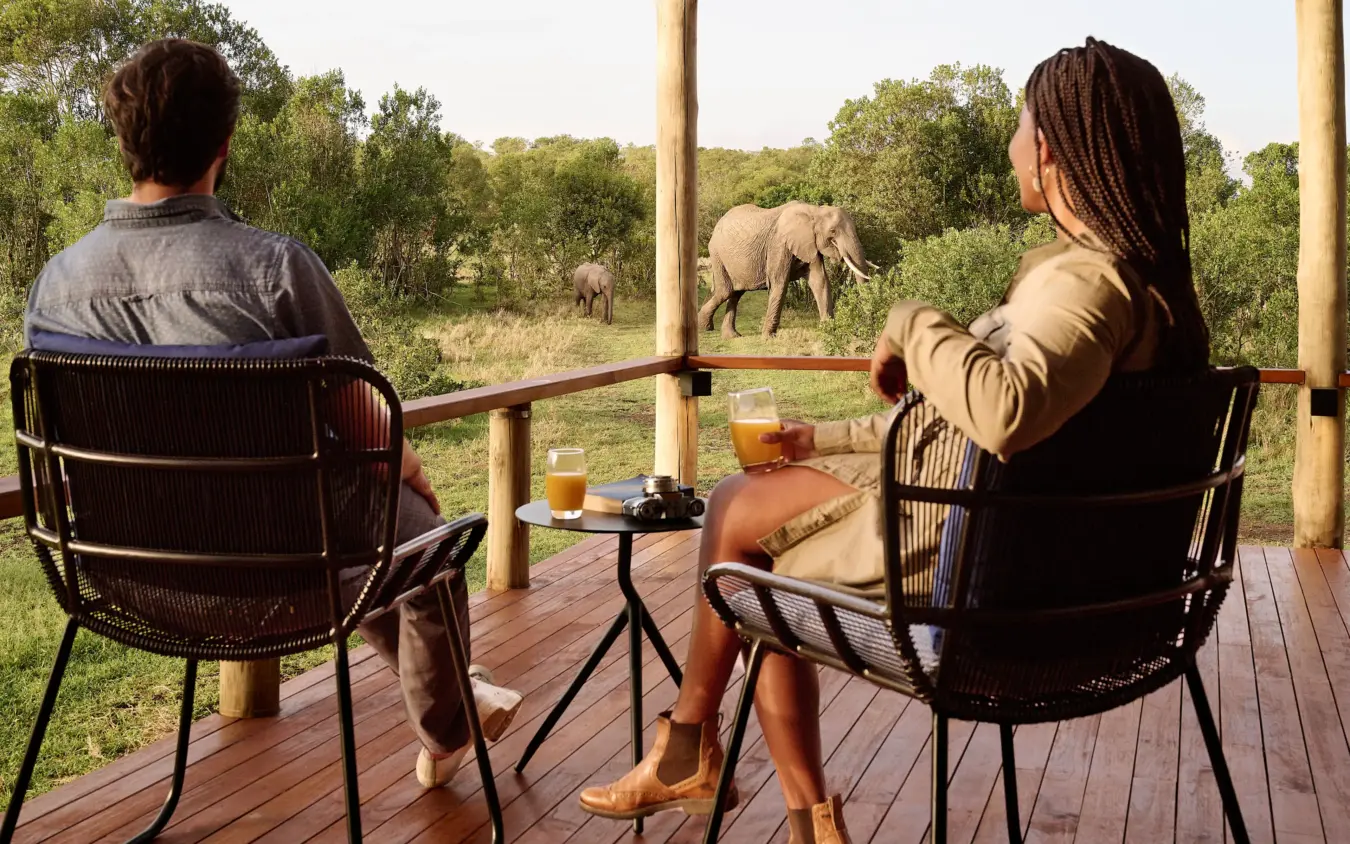
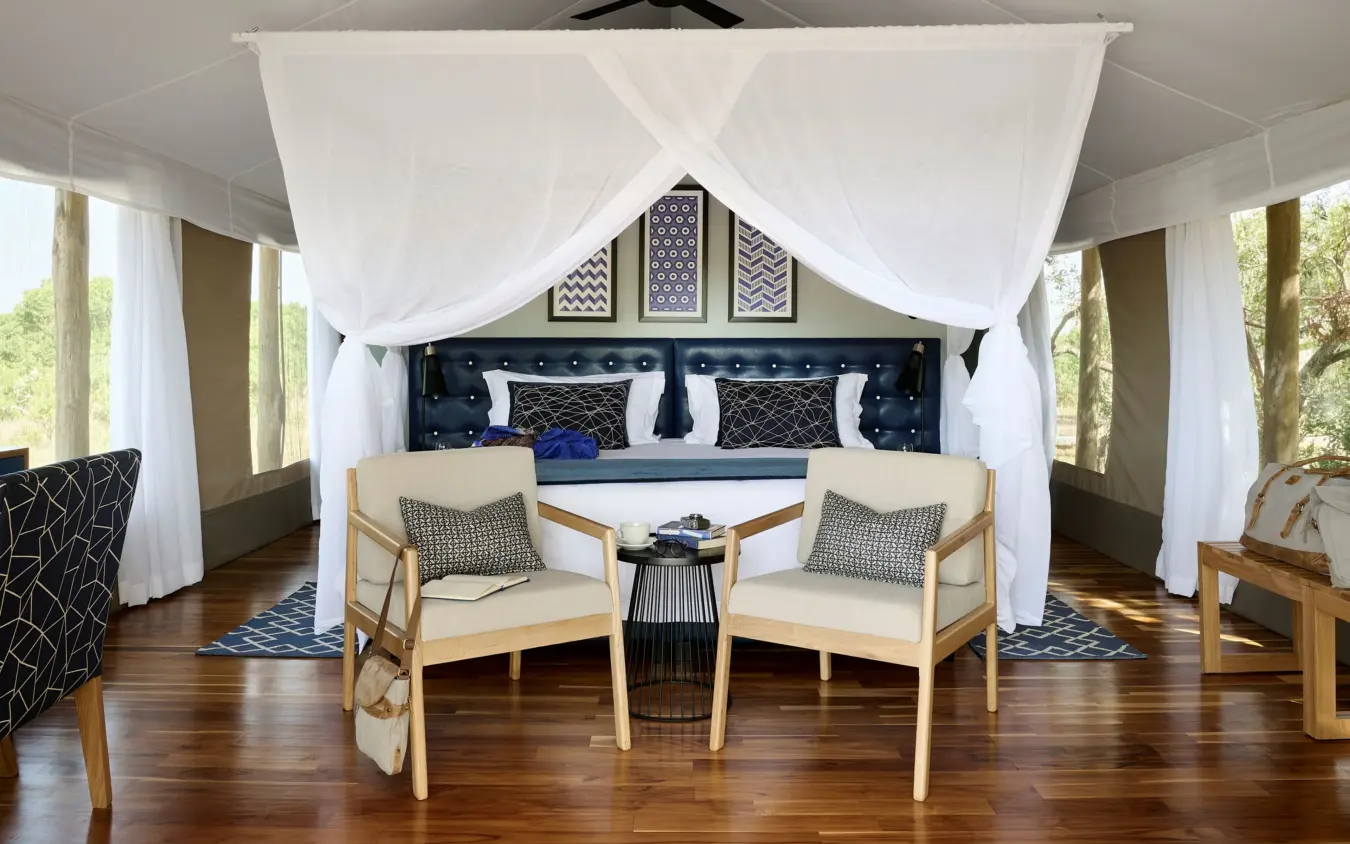
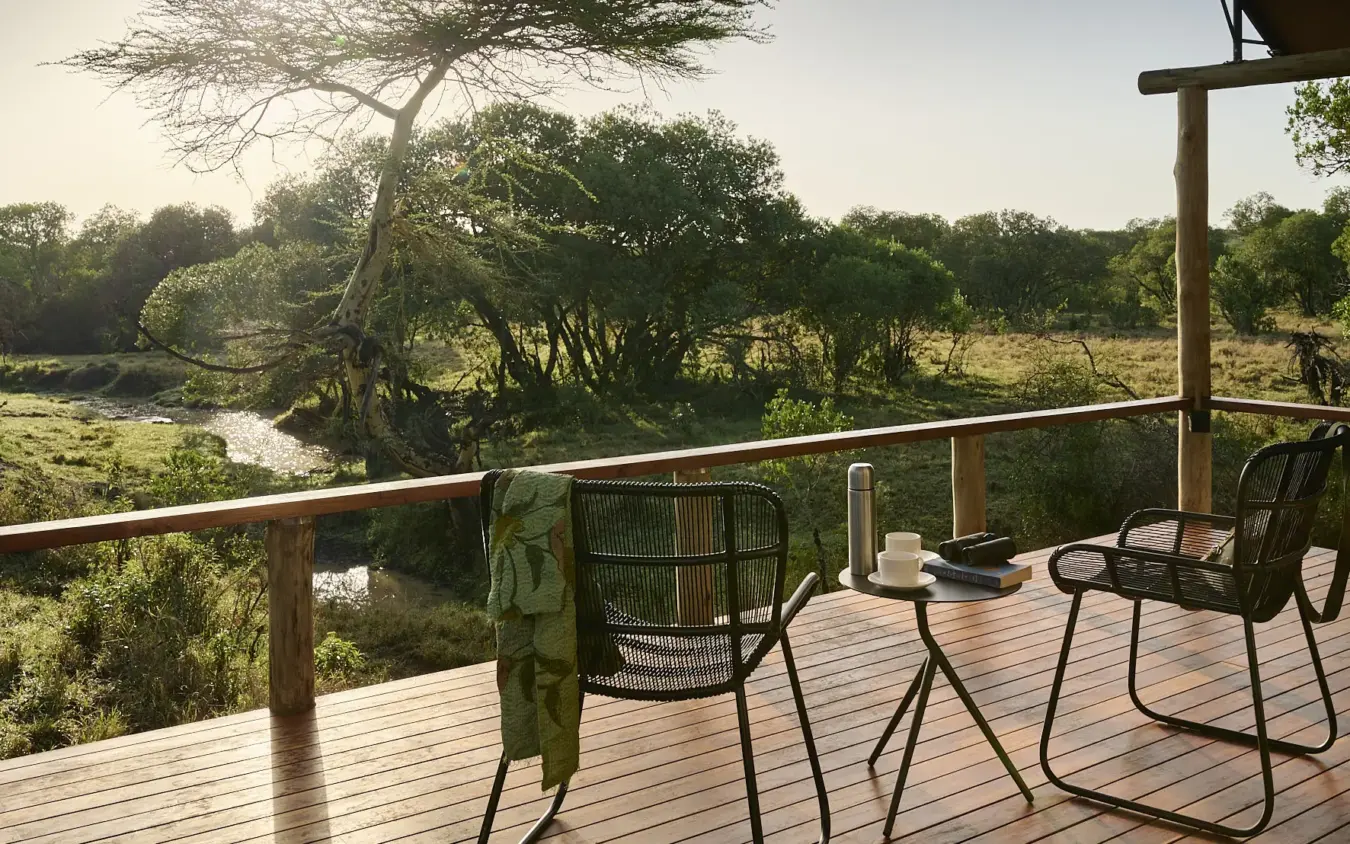
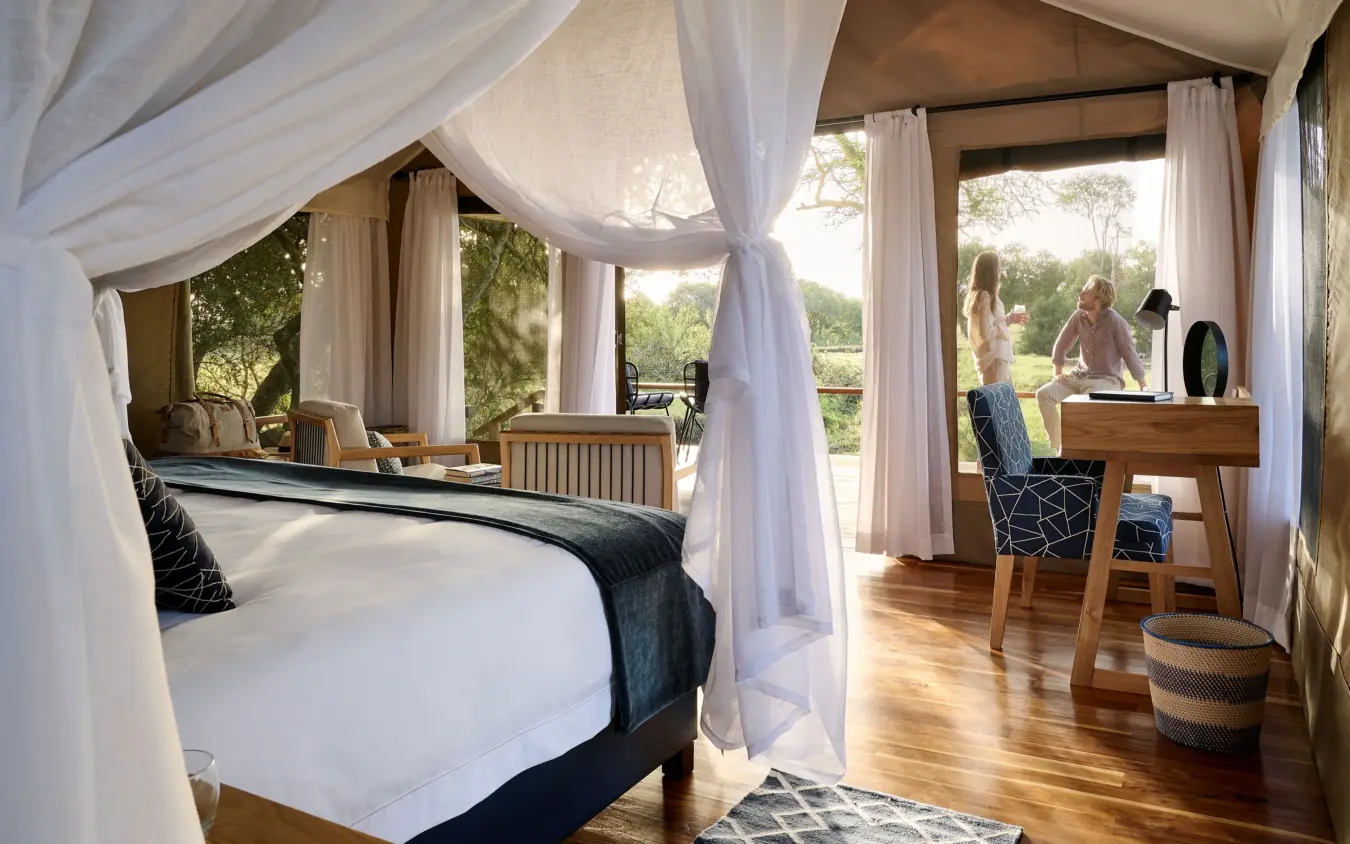
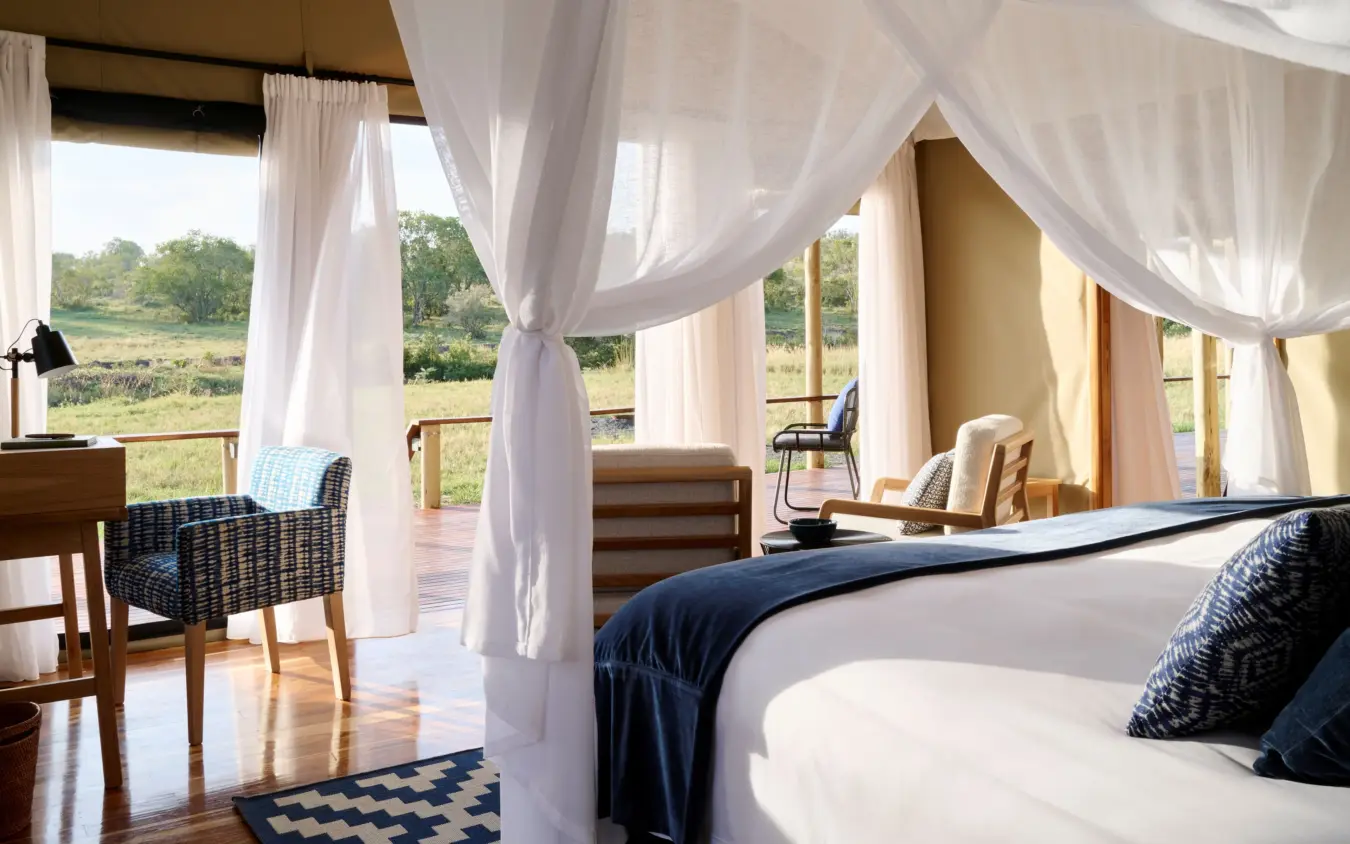
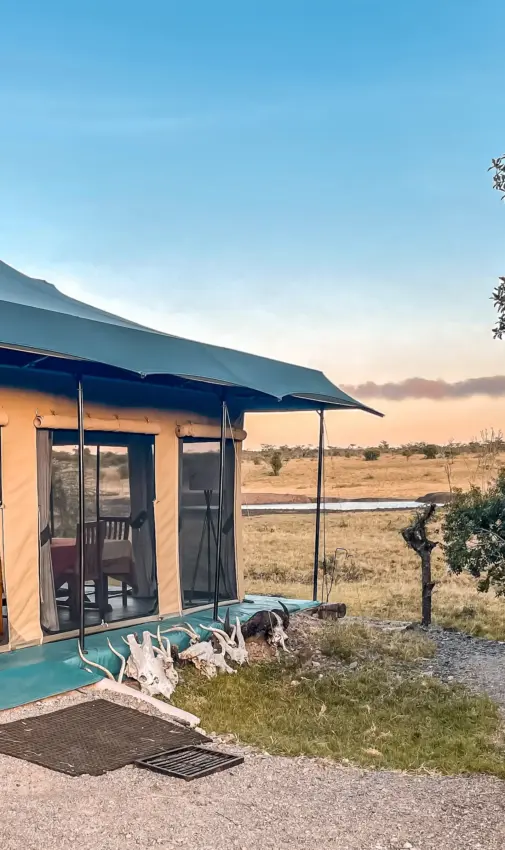
The ten tents are canvas pavilions on teak floors, spaced along the fever-tree line far enough apart that neighbours are neither seen nor heard. Glass doors run floor to ceiling, so the plains are there from the bed, and each tent opens onto a private veranda with loungers turned to the grassland. Beds sit under white netting, and the bathrooms hold a walk-in shower and twin basins. The artwork is Maasai-inspired, in a deep blue chosen for sky and rainwater, set against sun-bleached wood and wicker.
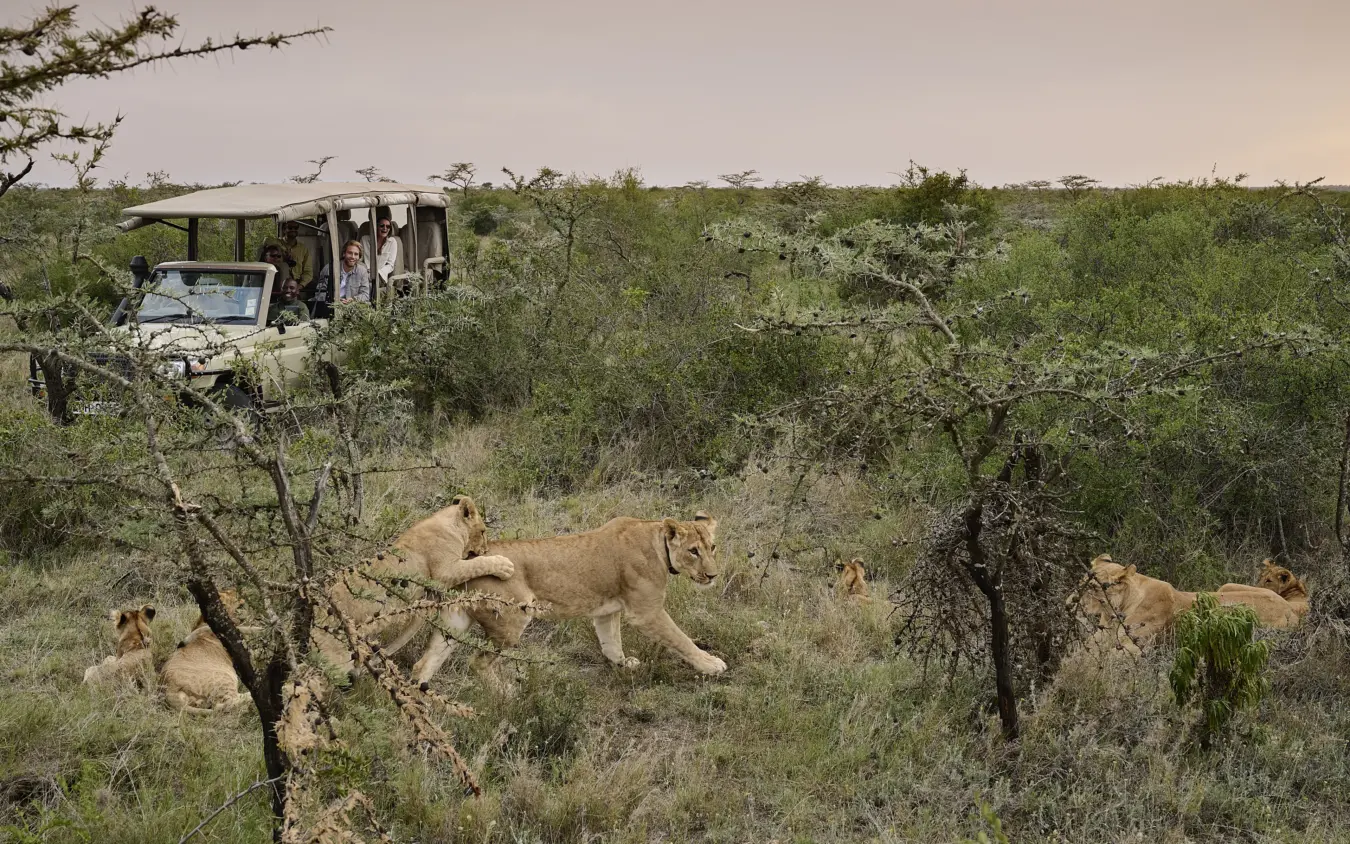
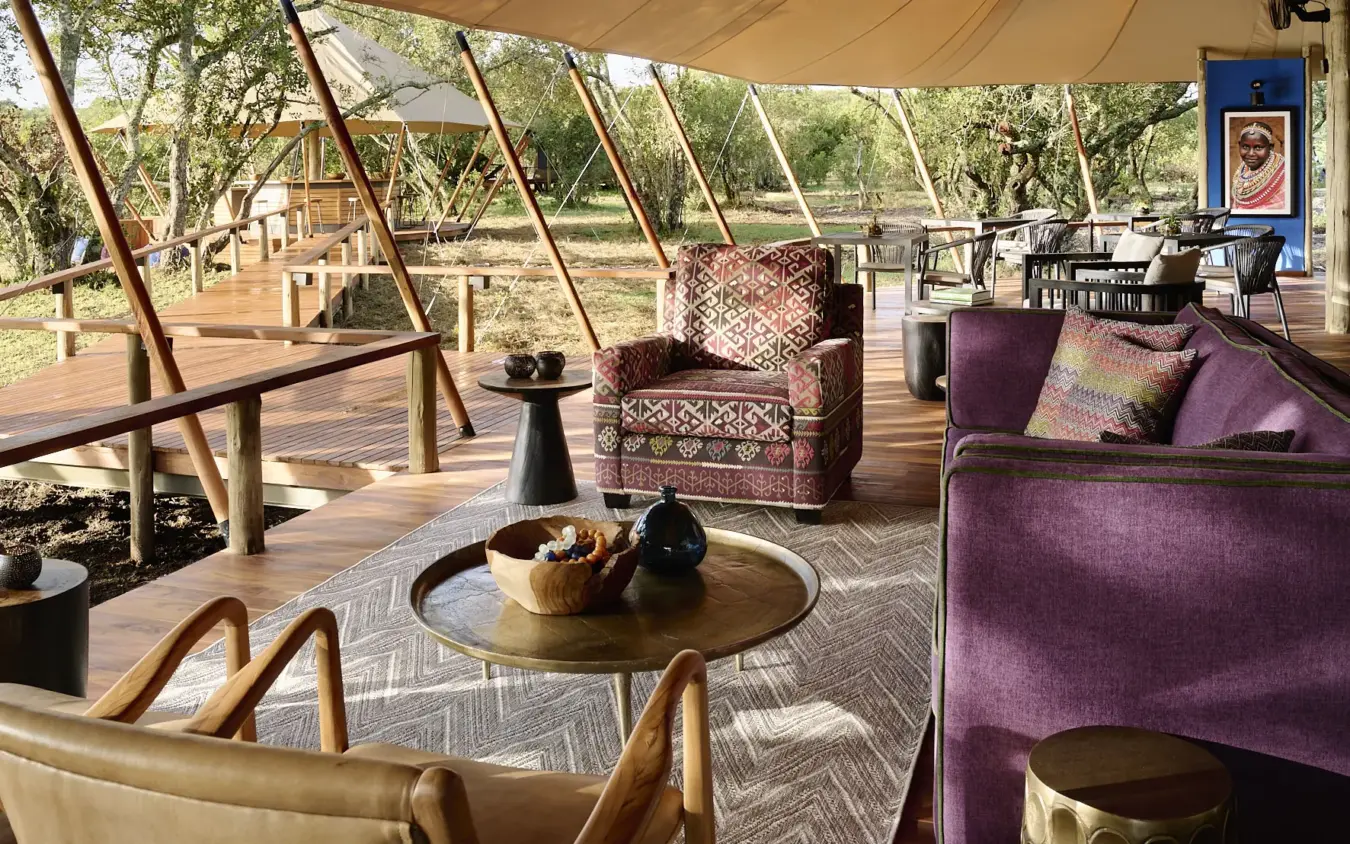
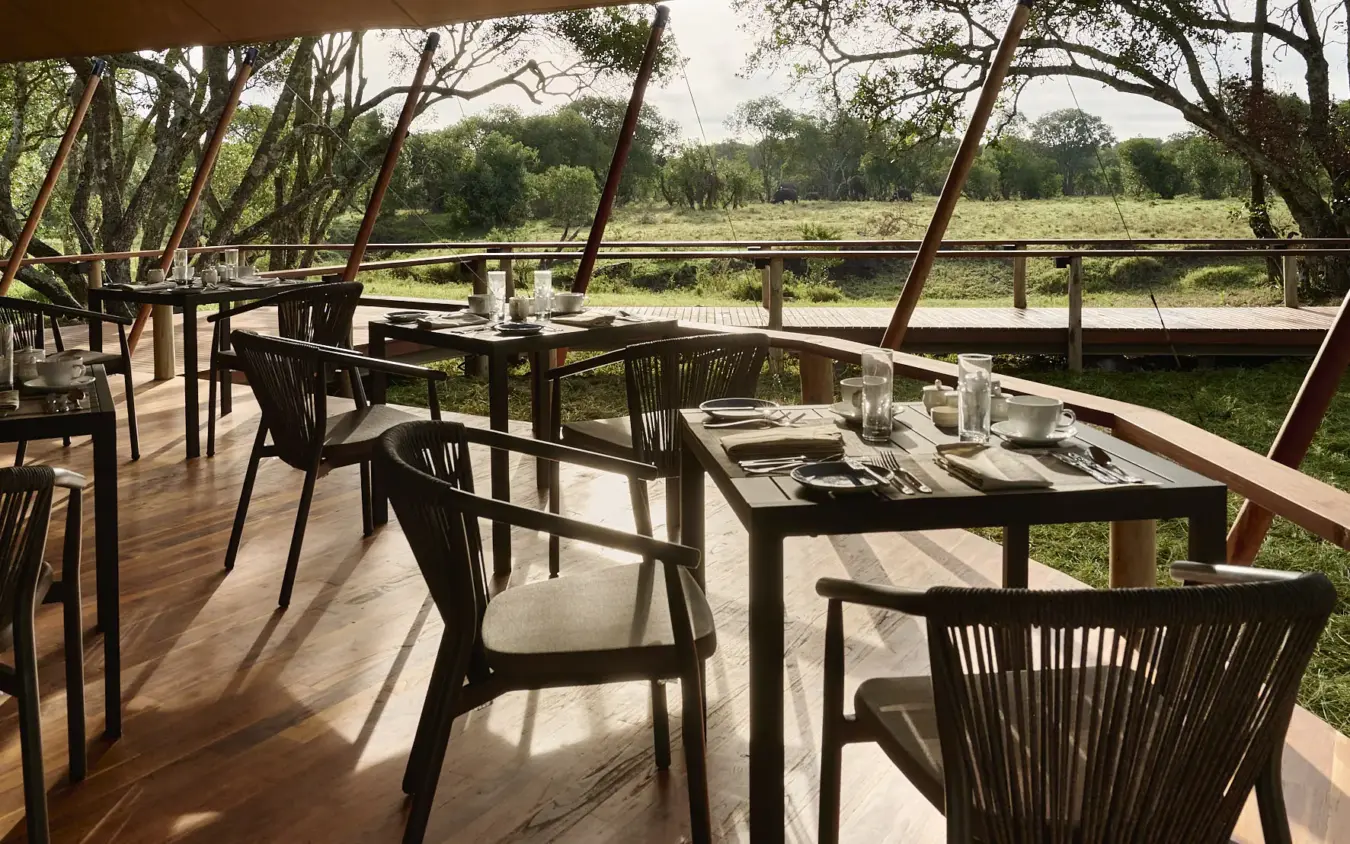
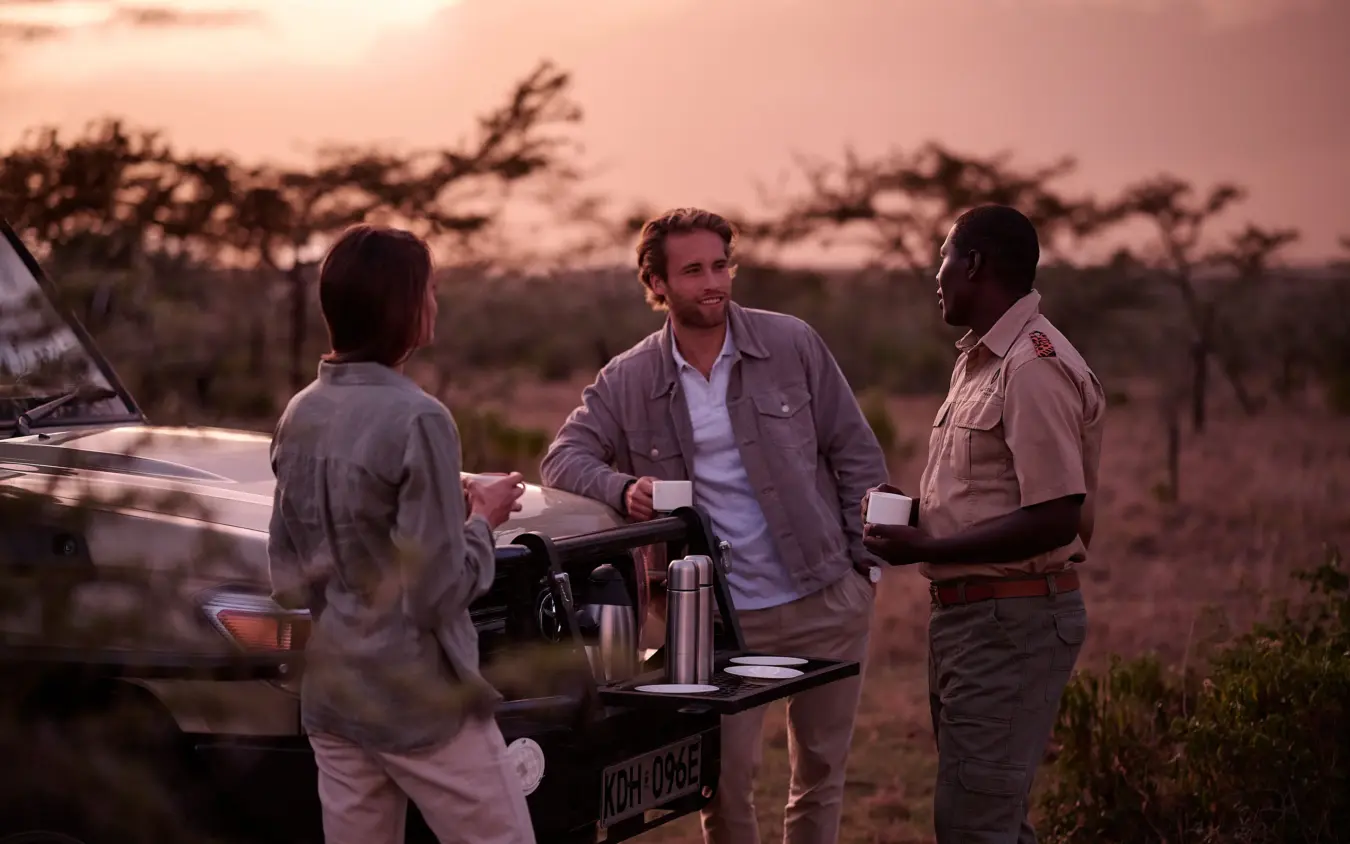
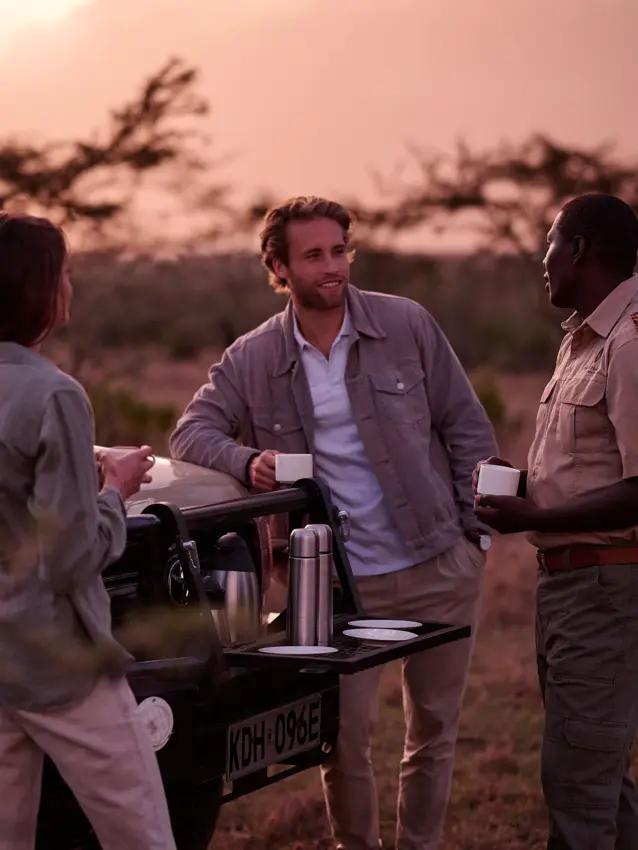
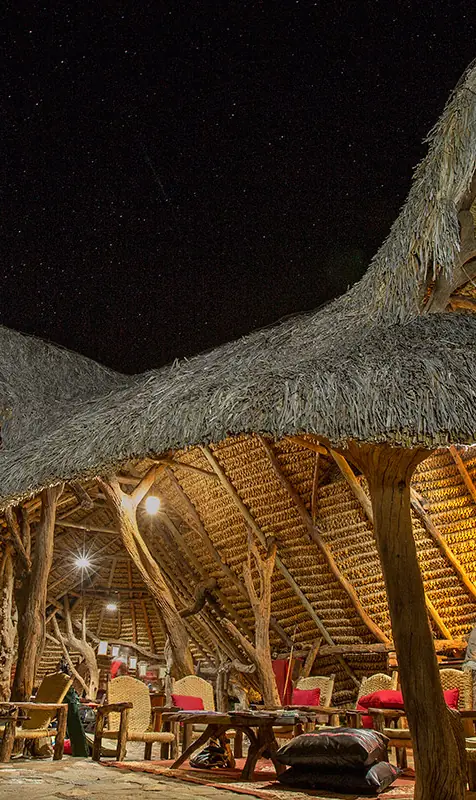
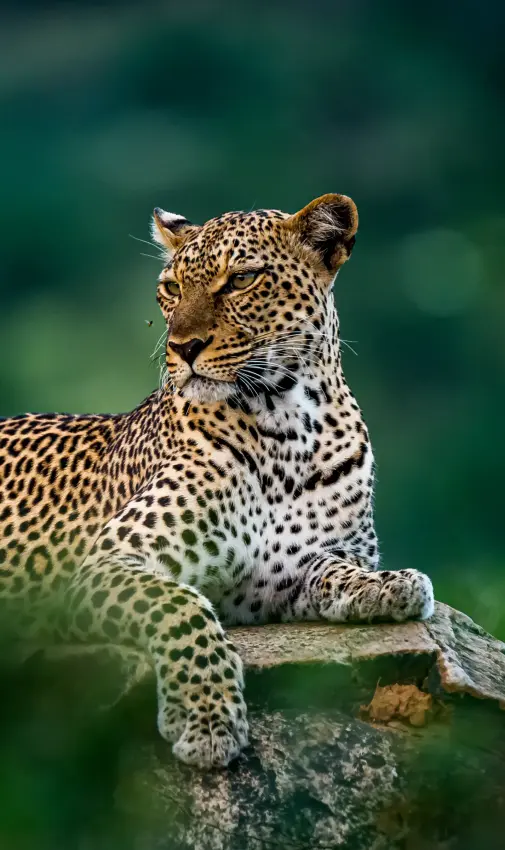
Mornings begin with Kenyan coffee on the veranda as the light comes up on Mount Kenya. Meals move around the camp: the open-sided dining tent under its wicker shades, the deck above the grassland, breakfast set out in the bush, dinner by lamplight, always with freshly baked bread on the table. Evenings end at the fire pit, where the guides tell stories from the bush. Hyenas whoop through the night and lions roar from somewhere out on the plain. By then the camp is dark and the plains feel very close.
Hyenas whoop through the night and lions roar from somewhere out on the plain.
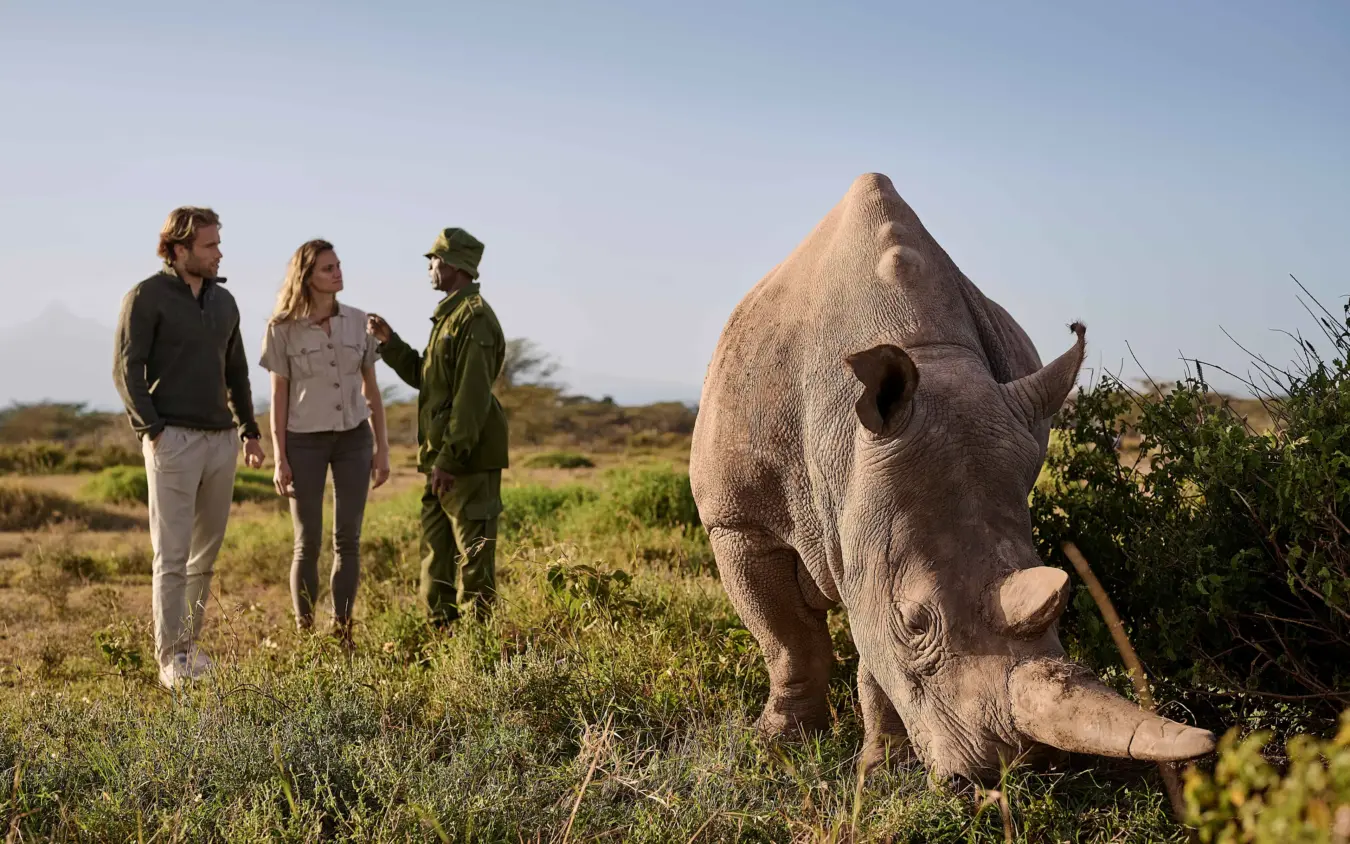
Ol Pejeta’s anti-poaching K9 unit works alongside the ranger teams, tracking scent and detecting ammunition, and the communities living around the conservancy alert rangers to anything suspicious. The Safe Water for Schools Initiative brings clean drinking water to schools in the pastoralist communities nearby, and the same programme supports school kitchens and the daily meals served to pupils. Guests who want to see that side of Laikipia can arrange visits to villages in the surrounding highlands from camp.
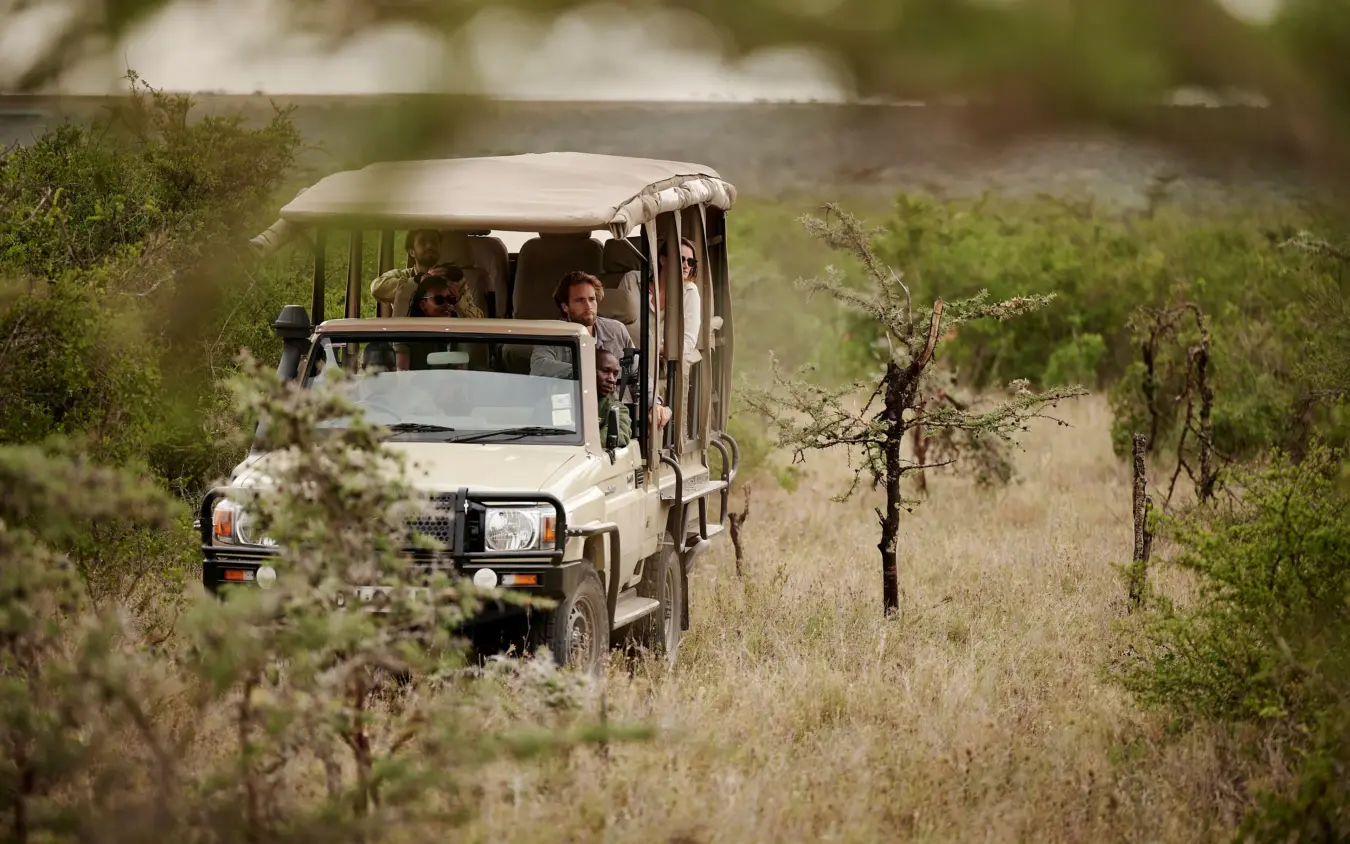
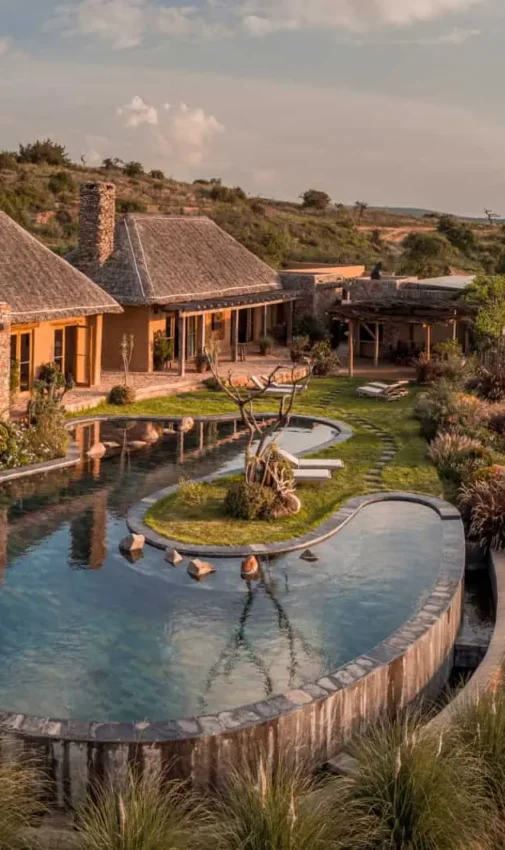
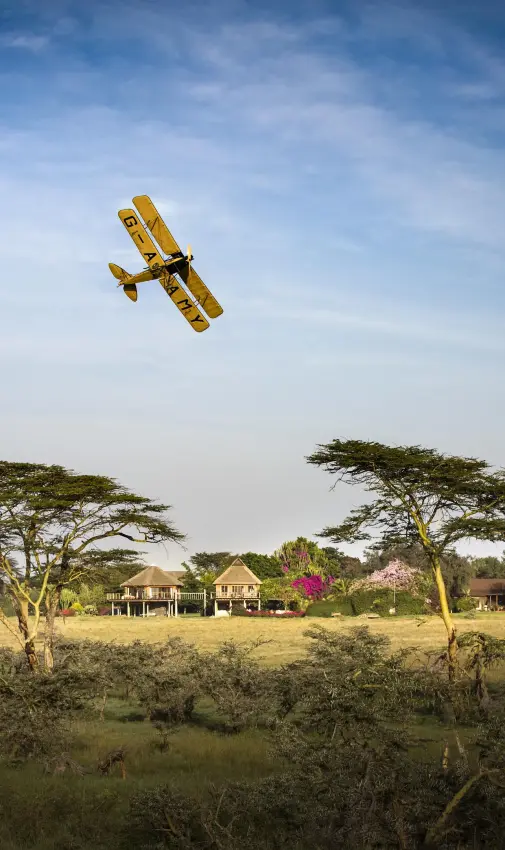
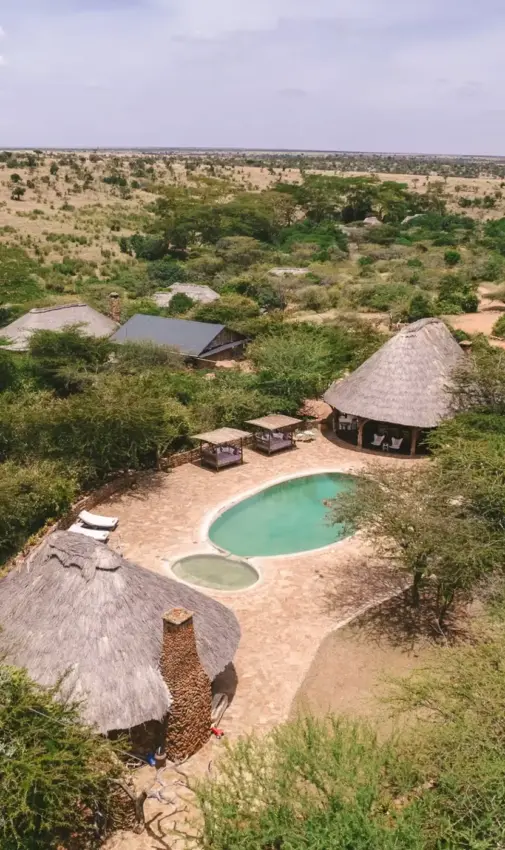
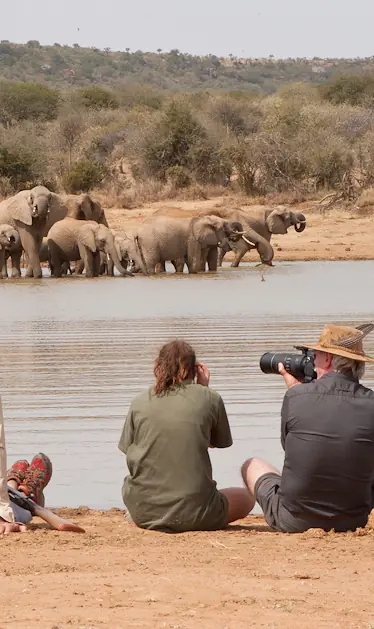
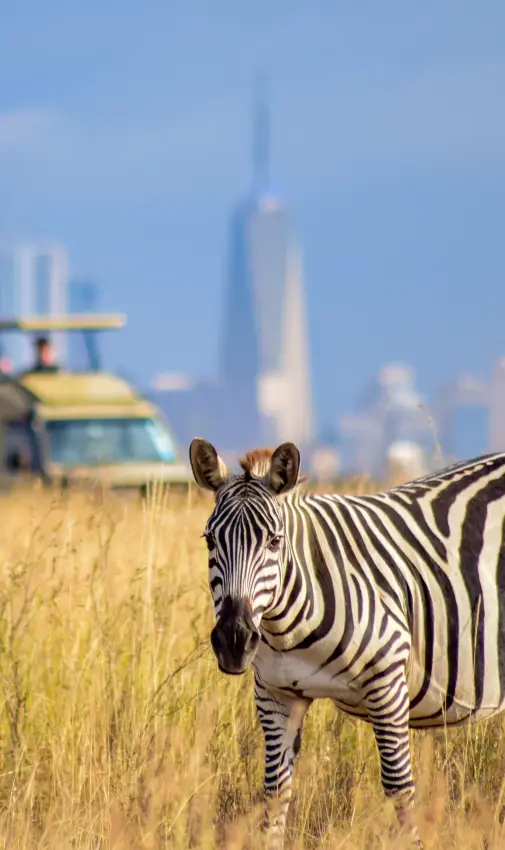
Tambarare was built without a swimming pool, deliberately, to keep its footprint light on the land. The choice shows up as more time outdoors: a longer afternoon drive, a lounger on the veranda while zebra work across the grass, a fire lit before dinner. Ten tents and a two-bedroom private villa make up the whole camp, small enough that the guides know within a day or two what each visitor most wants to see, and small enough that no drive ever feels crowded. Kamok airstrip is a short drive from camp, reached by light aircraft from Nairobi.