Camp

Lewa Safari Camp

A conservancy-owned tented camp on rhino ground in Kenya’s Laikipia Highlands, with Mount Kenya’s snows closing the view south.

Country: Kenya
Location: Laikipia Highlands
Number of rooms: 13

The rhino manager's house, restored

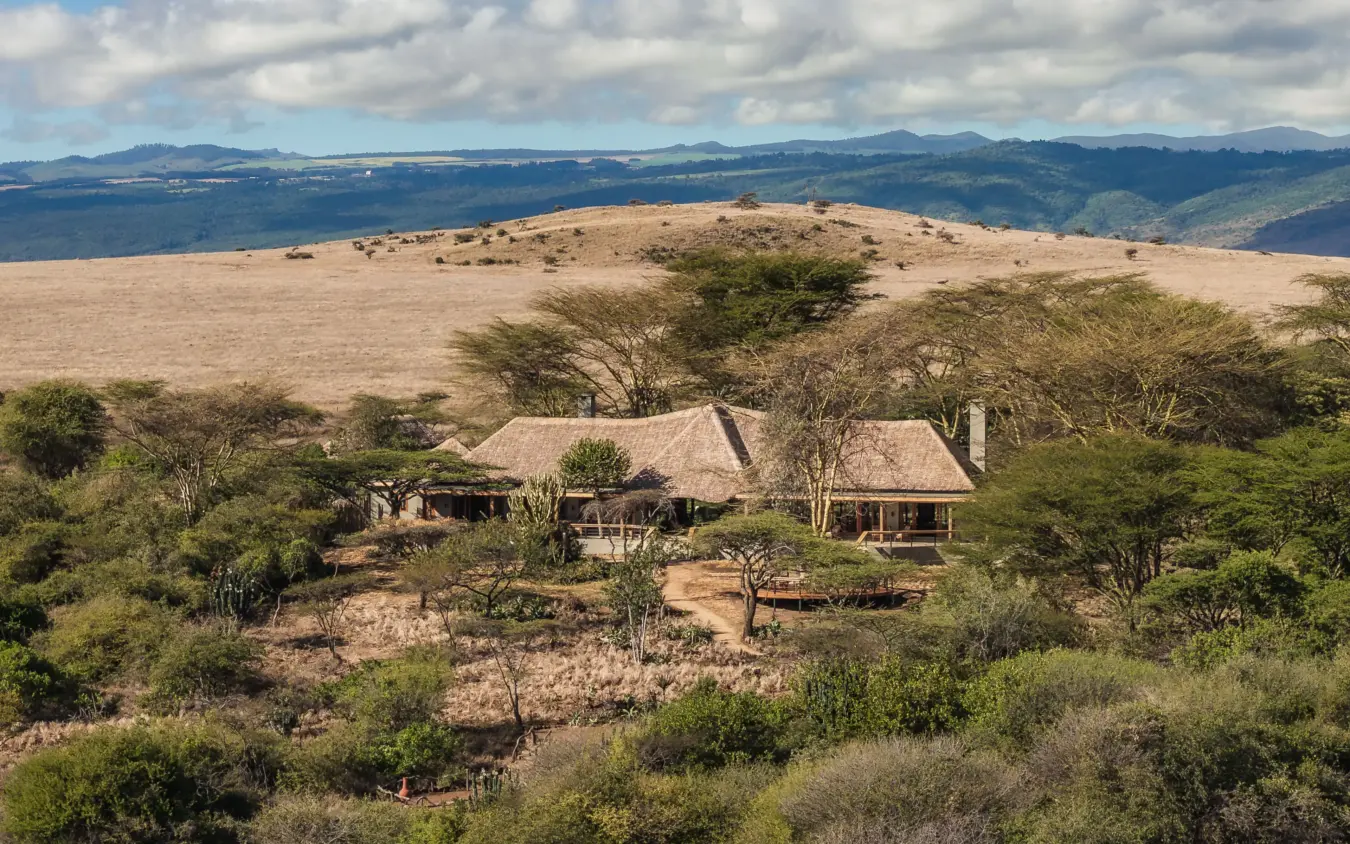
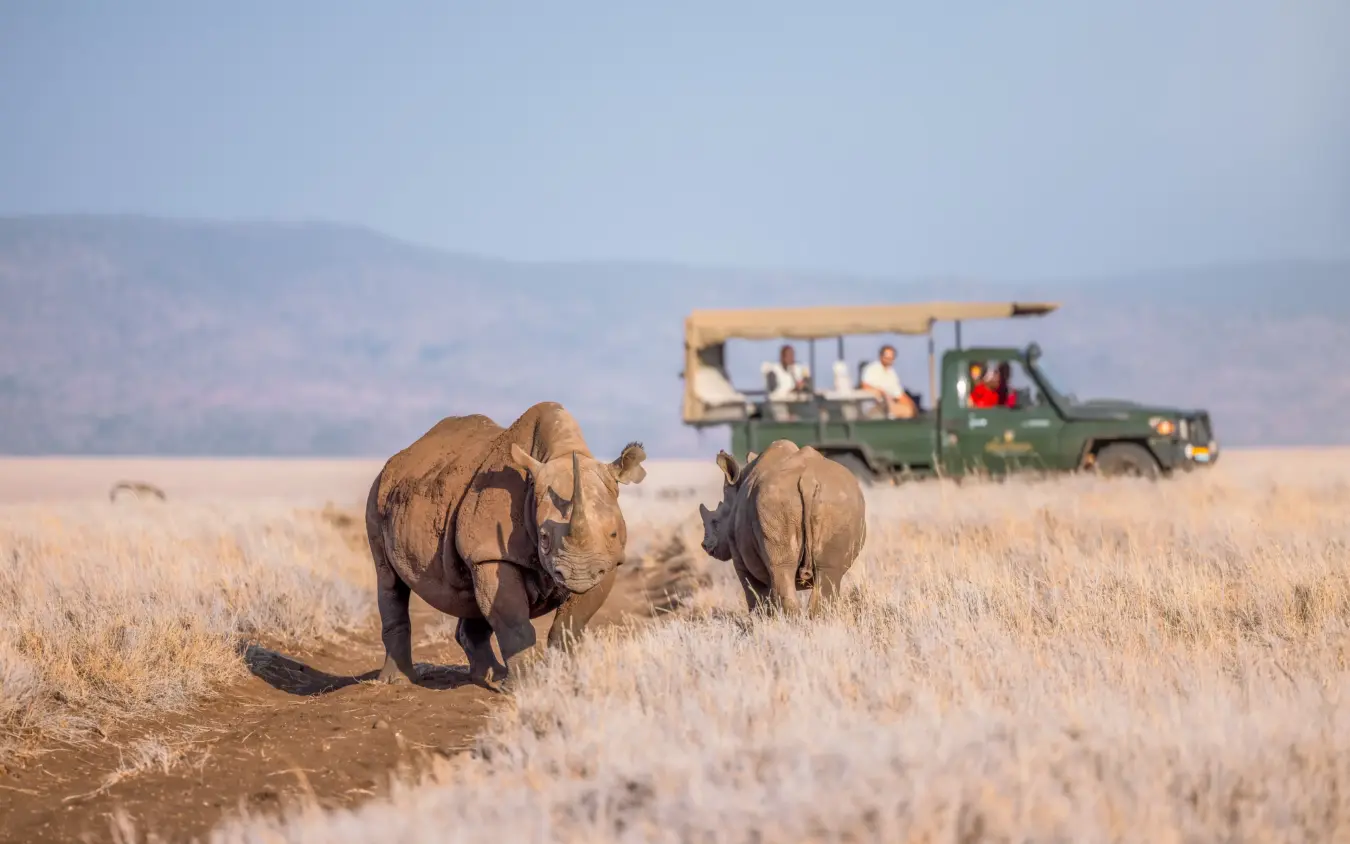
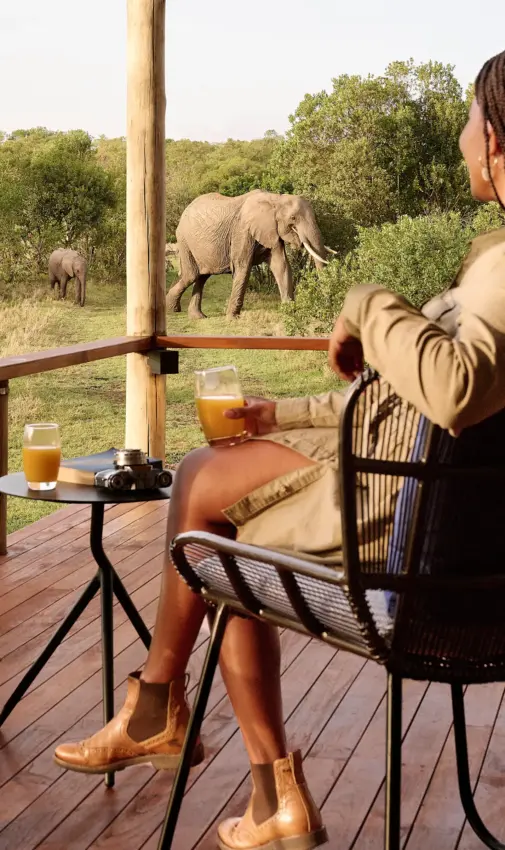
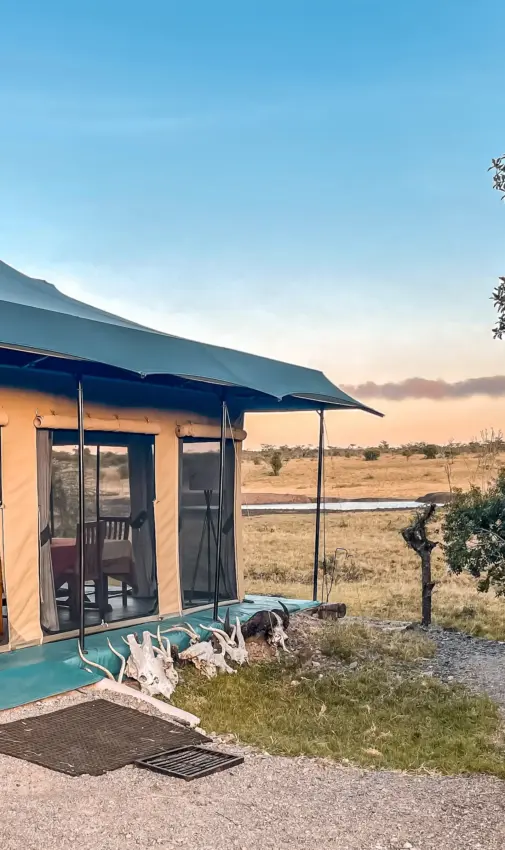
Mount Kenya’s snows close the view south. North, the land drops away into arid rangeland running towards Samburu, and the western side of the Lewa Wildlife Conservancy lies in between, forty minutes by road from the Lewa Downs airstrip. Grevy’s zebra and black rhino share the same grass plains. The tents face the open plains, and a waterhole below the camp draws the traffic.

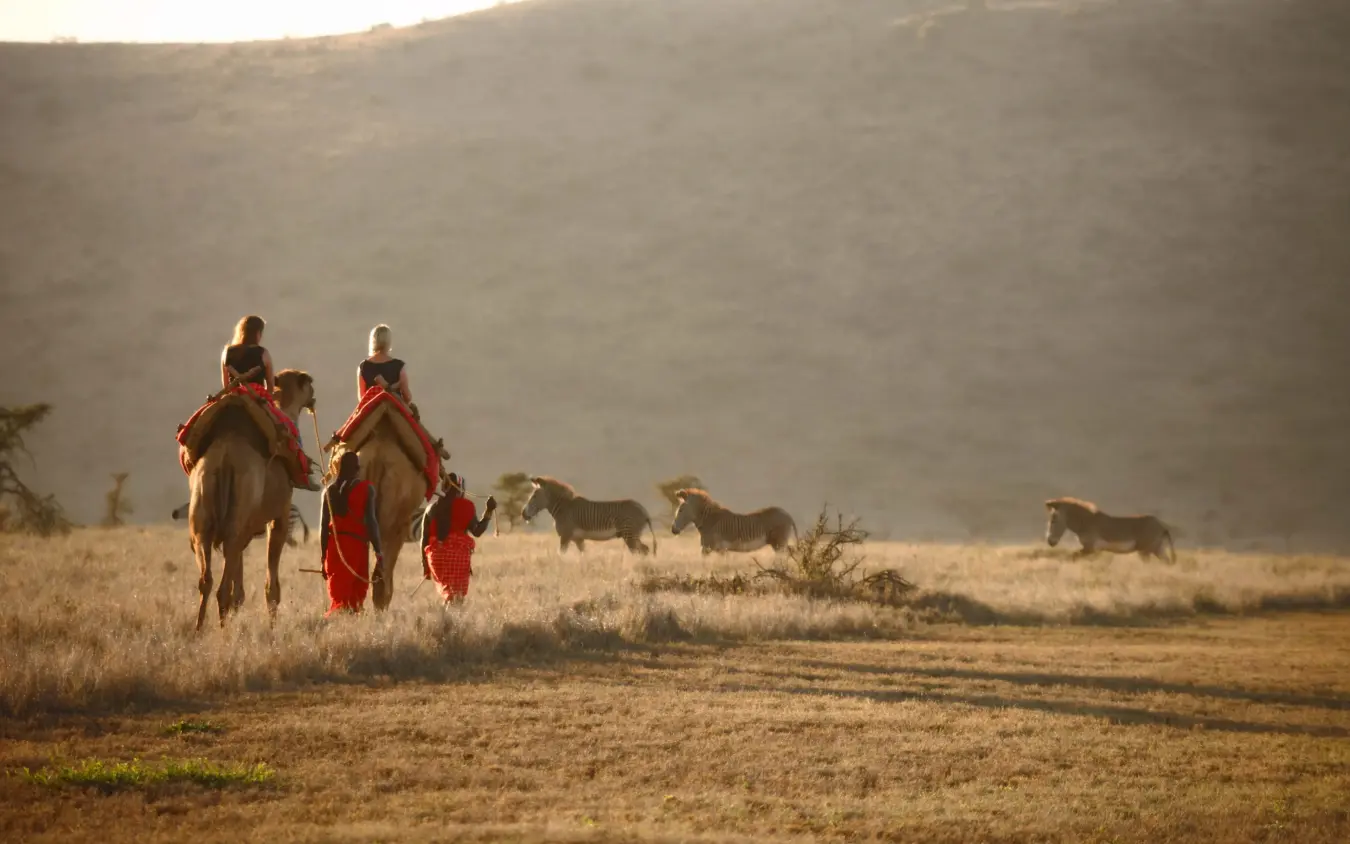
Grevy’s zebra and black rhino share the same grass plains.

The camp belongs to the conservancy. Profit and the conservancy fee paid on every bed night stay inside the boundary, funding the rhino protection and the community work that Lewa runs across northern Kenya. A night here is a night given back to the ground it is spent on.

David and Delia Craig, with Anna Merz, set aside part of the family’s cattle ranch in 1983 to found the Ngare Sergoi Rhino Sanctuary. The camp began that decade as the rhino manager’s house; the old timber homestead is now the lounge and dining room. The conservancy took its present name in 1995. Today it is Kenyan-run and led by a Kenyan board.

Above it, the stars come without competition from any town.

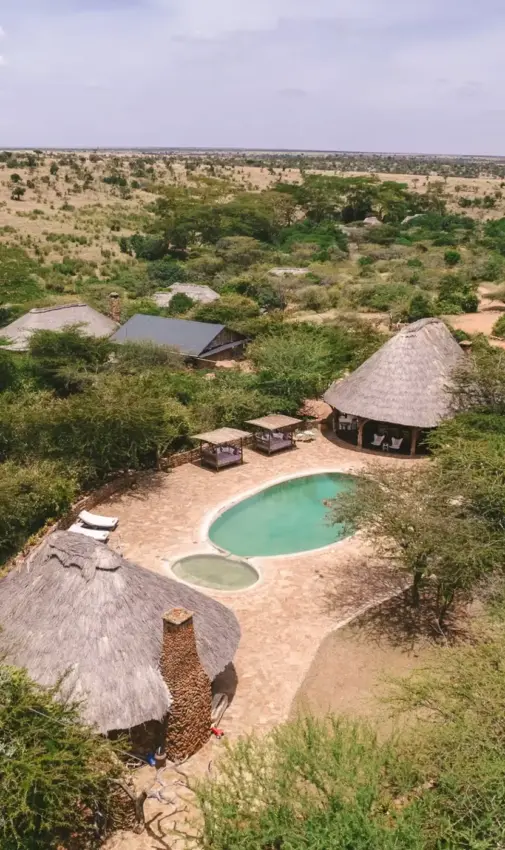
The camp reopened on 1 June 2026 after a top-to-bottom restoration. The tents were enlarged and their verandas widened, the bar and lounge refreshed, the spa upgraded with a dedicated treatment area, a pool set into the gardens, and the Dining Tree deck redesigned for dinner under the branches. Above it, the stars come without competition from any town. The canvas and thatch stayed.

01

accommodation

Eleven Standard Tents, Two Family

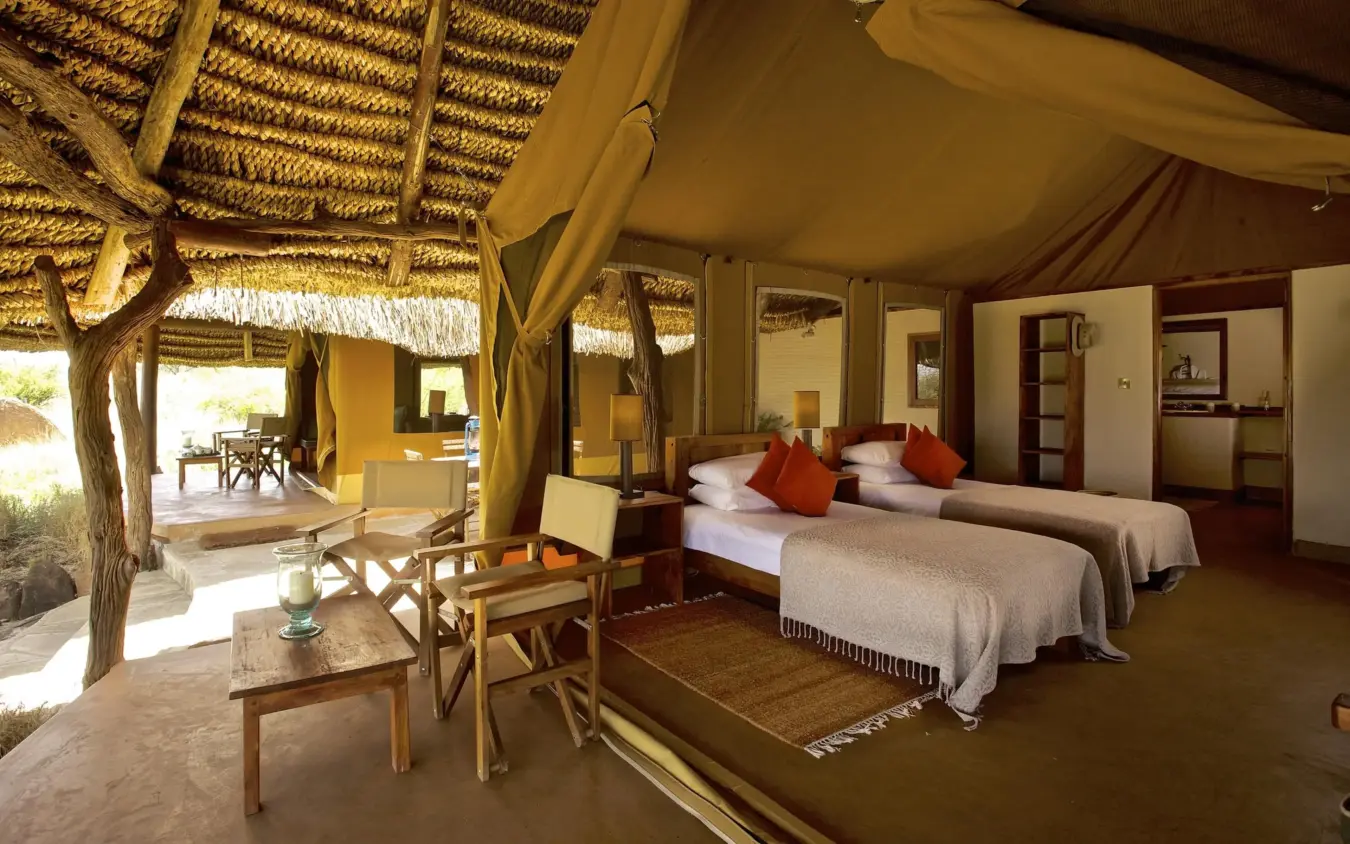
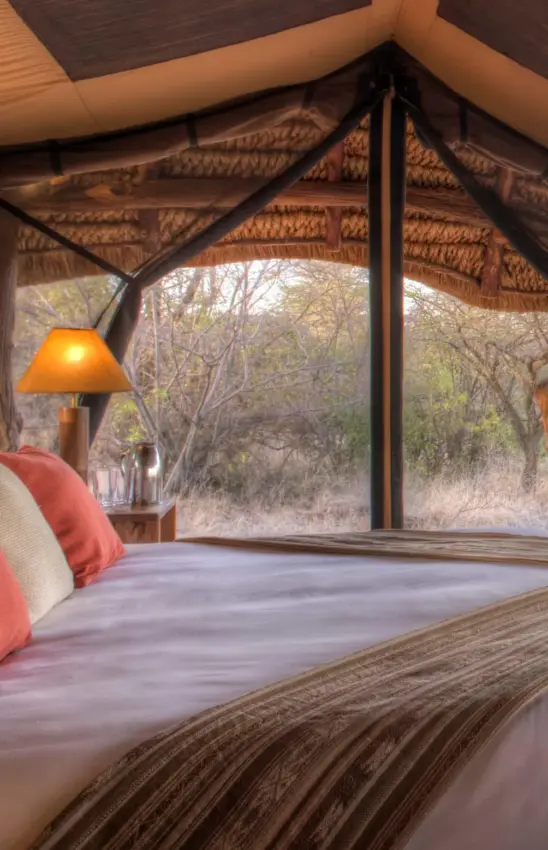
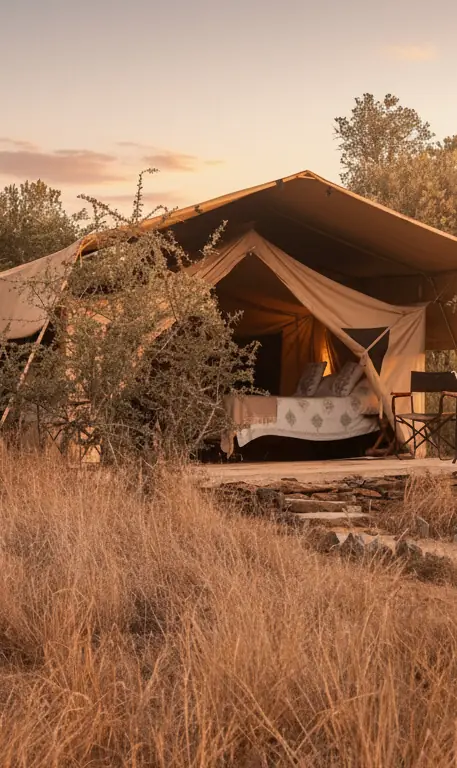
Thirteen tents are spaced along a hillside, eleven standard and two family units, each family suite pairing a double and a twin tent around a shared veranda. All sit on raised wooden platforms under thatch, with en-suite bathrooms, hot showers and verandas shaded from the afternoon.

02

activities

Game Drives, Walking Safaris, Horseback

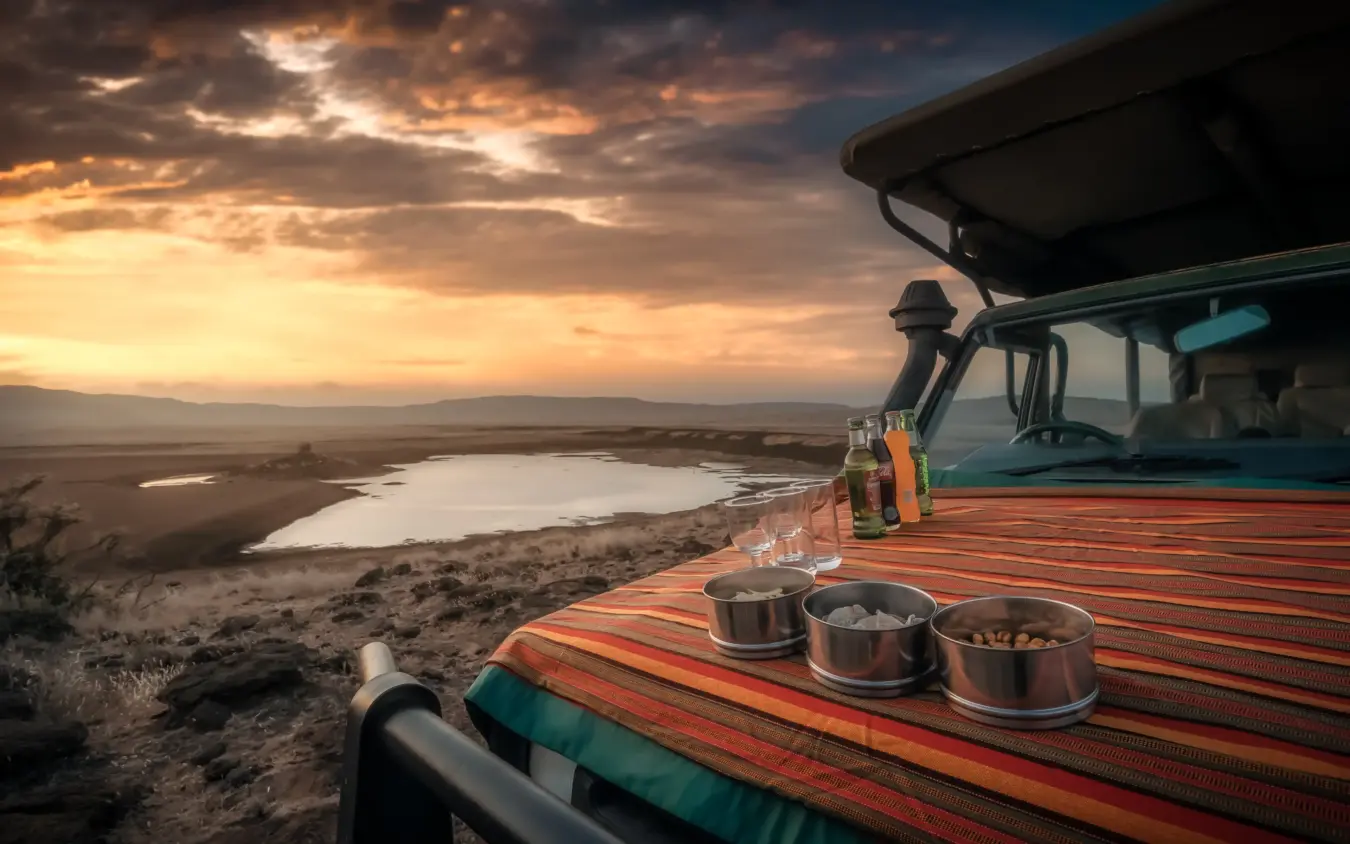
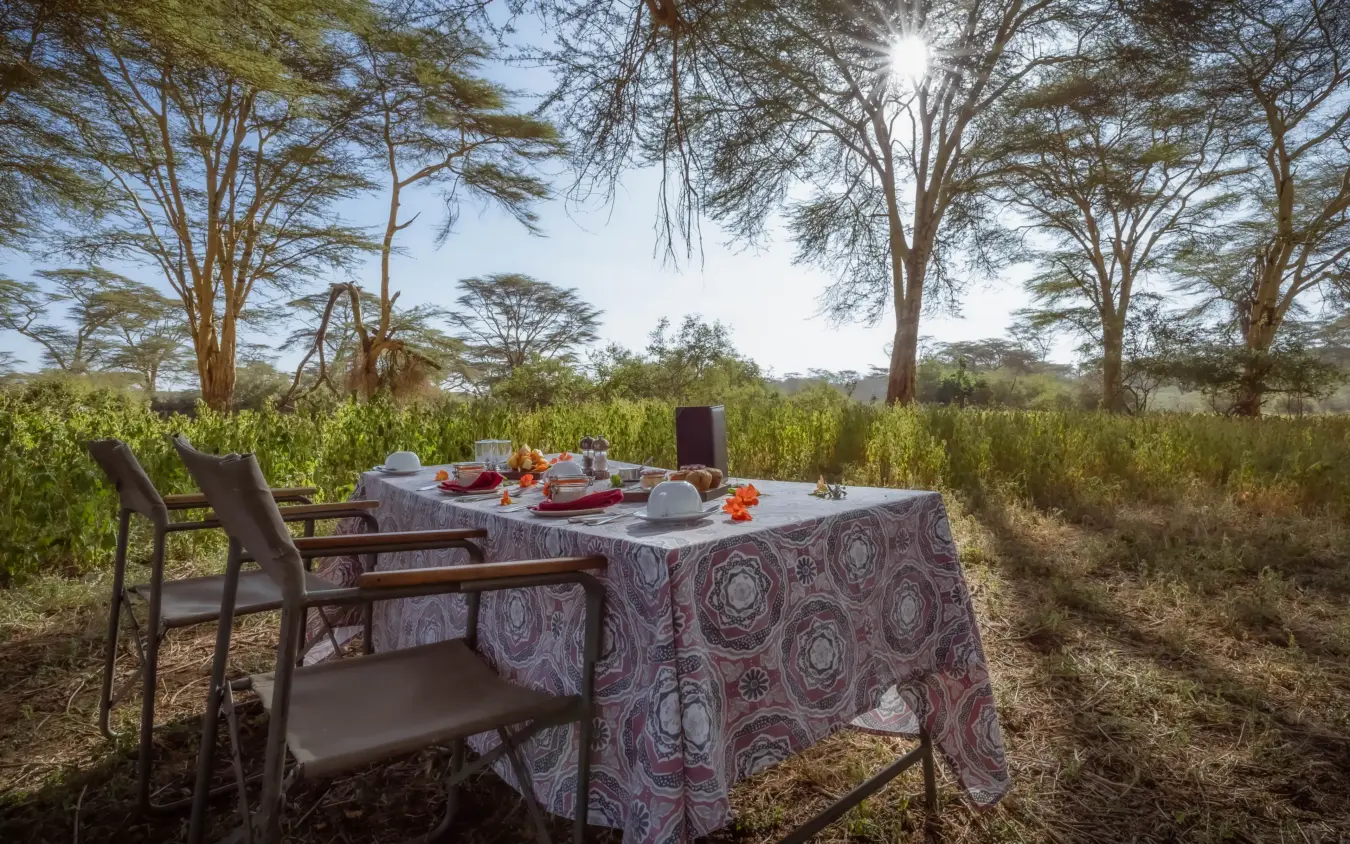
Day and night game drives, walking safaris with Lewa's rangers, evening rides on horseback or camel with Samburu handlers, bush breakfasts, sundowners, Samburu homestead visits, tracker-dog and anti-poaching demonstrations, and full-day trips to Ngare Ndare Forest.

03

conservation

Anti-Poaching Unit Protects Lewa's Rhino

Lewa's anti-poaching unit patrols on foot, by air and with tracker dogs, and the conservancy reports years running without a rhino poached. Fees and profits from Lewa Safari Camp fund that work alongside Lewa's schools, bursaries, clinics, water projects and women's micro-credit loans in the communities around the conservancy.

ready to get started?

Get in touch and let’s start the conversation. An initial consultation helps us understand what you’re looking for, whether that’s specific experiences, luxury touches, or marking a special occasion, and from there we’ll guide you through what’s possible so you can decide if we’re the right fit.

Alternative accommodation in laikipia highlands

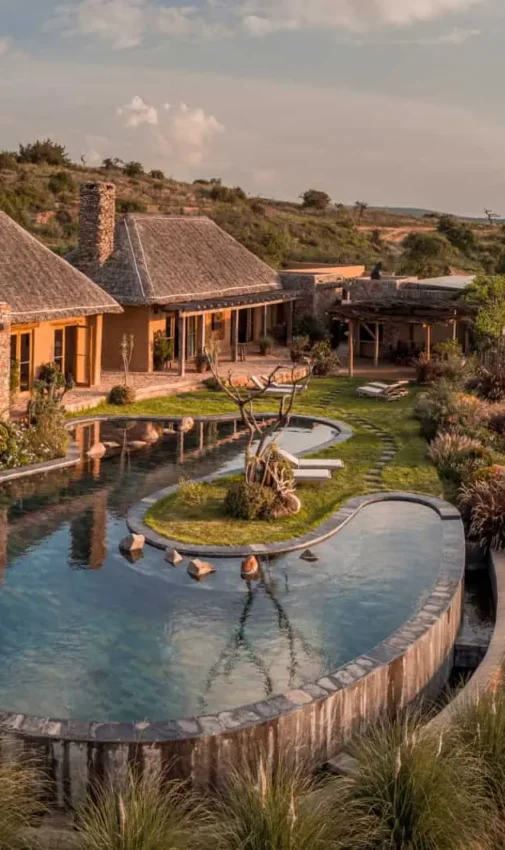
Curved swimming pool with guests surrounded by savanna landscape, Lengishu House, Laikipia Highlands, Kenya 01

Lengishu House

Laikipia Highlands

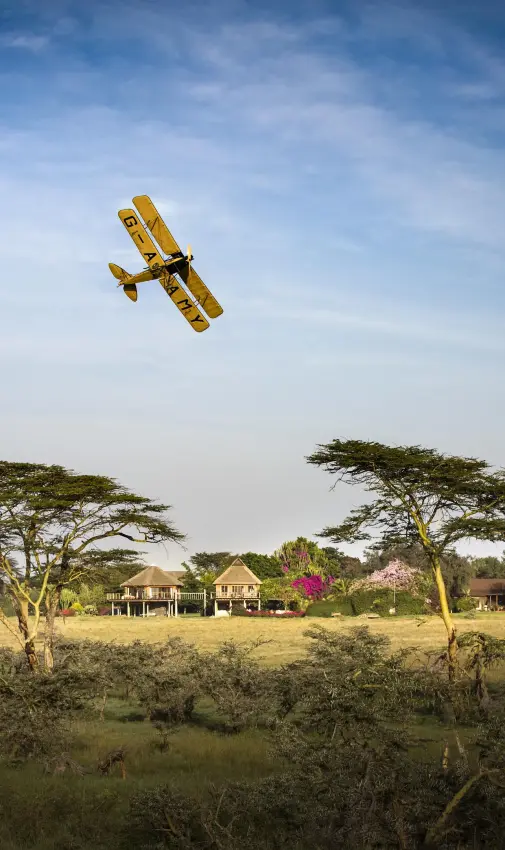
Yellow biplane flying over safari lodge and acacia trees, Segera, Laikipia Highlands, Kenya 02

Segera

Laikipia Highlands

Elegant interior lounge with symmetrical seating and chandelier, Arijiju, Laikipia Highlands, Kenya 03

Arijiju

Laikipia Highlands

Maasai guides leading camels through arid savanna landscape, Karisia Walking Safaris, Laikipia Highlands, Kenya 04

Karisia Walking Safaris

Laikipia Highlands

Safari vehicle with guests on hillside overlooking mountains, Borana Lodge, Laikipia Highlands, Kenya 05

Borana Lodge

Laikipia Highlands

Infinity pool overlooking savanna landscape at dusk, Ol Malo Lodge, Laikipia Highlands, Kenya 06

Ol Malo Lodge

Laikipia Highlands

Circular stone lodge structures on rocky outcrop overlooking forested valley at sunset, Suyian Lodge, Laikipia Highlands, Kenya 07

Suyian Lodge

Laikipia Highlands

Curved modern lodge buildings perched on rocky hilltop overlooking valley, Ol Lentille, Laikipia Highlands, Kenya 08

Ol Lentille

Laikipia Highlands

09

Kicheche Laikipia

Laikipia Highlands

Guests photographing elephant herd at waterhole from shoreline, Laikipia Wilderness, Laikipia Highlands, Kenya 10

Laikipia Wilderness

Laikipia Highlands

11

Private Wilderness

Laikipia Highlands

Luxury lodge with blue pool nestled among acacia trees in arid savanna landscape, Kifaru House, Laikipia Highlands, Kenya 12

Kifaru House

Laikipia Highlands

13

Ol Malo Nomad

Laikipia Highlands

Illuminated thatched-roof lodge structure at night with wooden interior, Il Ngwesi, Laikipia Highlands, Kenya 14

Il Ngwesi

Laikipia Highlands

Wooden deck overlooking valley at dusk with warm lighting, Lewa Wilderness, Laikipia Highlands, Kenya 15

Lewa Wilderness

Laikipia Highlands

Thatched-roof lodge illuminated at dusk with savanna landscape, Lewa House, Laikipia Highlands, Kenya 16

Lewa House

Laikipia Highlands

17

Tambarare Camp

Laikipia Highlands

Illuminated safari tent in woodland setting at dusk, Sirikoi, Laikipia Highlands, Kenya 18

Sirikoi

Laikipia Highlands

19

Enasoit Camp

Laikipia Highlands

20

Lolldaiga House

Laikipia Highlands

frequently asked questions

By scheduled light aircraft from Nairobi's Wilson airport to the Lewa Downs airstrip, the conservancy's main strip, about an hour in the air. AirKenya's daily service leaves Wilson at ten in the morning and lands at eleven, and Safarilink flies the route daily as well; both carriers call at other northern strips on some days, so the published times can move by up to three quarters of an hour. From the airstrip it is about forty minutes' drive across the conservancy to the camp, with wildlife most of the way, and that transfer is part of the stay. The aircraft take soft bags only, fifteen kilograms a person including hand luggage.

If you would rather set your own timings, or fly in without changing at Wilson, we can put in a private charter, typically a Cessna Caravan or a Pilatus PC-12, and land at Lewa Downs at the hour that suits you. Lewa pairs well with the Masai Mara, because the same AirKenya aircraft continues from Lewa Downs to the Mara around midday. Arriving by road is possible from Nanyuki and the other northern conservancies, two to five hours depending on the start point, but only authorised vehicles may drive inside Lewa, so anyone coming by road is met at the conservancy headquarters and taken on from there.

Yes. TravelHealthPro, the UK's official travel health service, rates Kenya as high risk for malaria and recommends antimalarial tablets for it, setting apart only the city of Nairobi and the highlands above 2,500 metres, where it rates the risk as very low. The American CDC draws the same line, listing every part of Kenya below 2,500 metres, the game parks and conservancies included. Lewa lies on the Laikipia plateau at a little over 1,500 metres, well under that line, and neither source makes a seasonal distinction, so the advice is the same in the dry months as in the rains.

We are travel planners, not medical professionals, so we do not make recommendations about tablets. Which ones suit you, how they sit with anything else you take and what is right for a child are questions for your own doctor or a travel clinic, best asked with your travel dates in front of you. The non-medical part we can speak to: the highland nights are cool, which keeps mosquito numbers down but changes nothing in the official guidance, so cover arms and legs from late afternoon and keep repellent to hand.

It is a private conservancy that began as a rhino sanctuary. In 1983 the Craig family fenced off part of their cattle ranch as the Ngare Sergoi sanctuary with fifteen rhino, and in 1995 the whole ranch became the not-for-profit Lewa Wildlife Conservancy, now 62,000 acres. Today more than 280 black and white rhino live on the Lewa and Borana landscape, and none has been poached since 2019. Lewa also holds the largest single population of Grevy's zebra anywhere, 264 at the last count out of about 3,000 left in the wild. In 2013 the conservancy was added to the Mount Kenya World Heritage site, together with the Ngare Ndare forest that joins the two, the corridor elephants have walked between the mountain and the northern plains for centuries.

Lewa Safari Camp is owned by the conservancy itself and run on its behalf, so the camp's profits, and the conservancy fee charged for every night spent on Lewa, go straight back into the place. That pays for more than 150 rangers, and Lewa spends about half of its annual budget on the communities around its boundary: four clinics, a schools programme that reaches more than nine thousand children a year, and a micro-enterprise scheme for local women.

Quite a lot, which is the point of a private conservancy. Guided walks go out from the camp with the conservancy's own rangers, who track on foot and talk about the plants and the rhino work as much as the big animals. Night drives are part of the standard programme. Evening horse rides are for experienced riders of twelve and over, with a short competency form to fill in first, and evening camel rides with Samburu handlers need no riding experience but the same minimum age; the camp keeps only three riding camels, and both cost extra and depend on availability, so tell us at booking rather than on arrival. Bush breakfasts out on the plains and sundowners after the afternoon drive are built in.

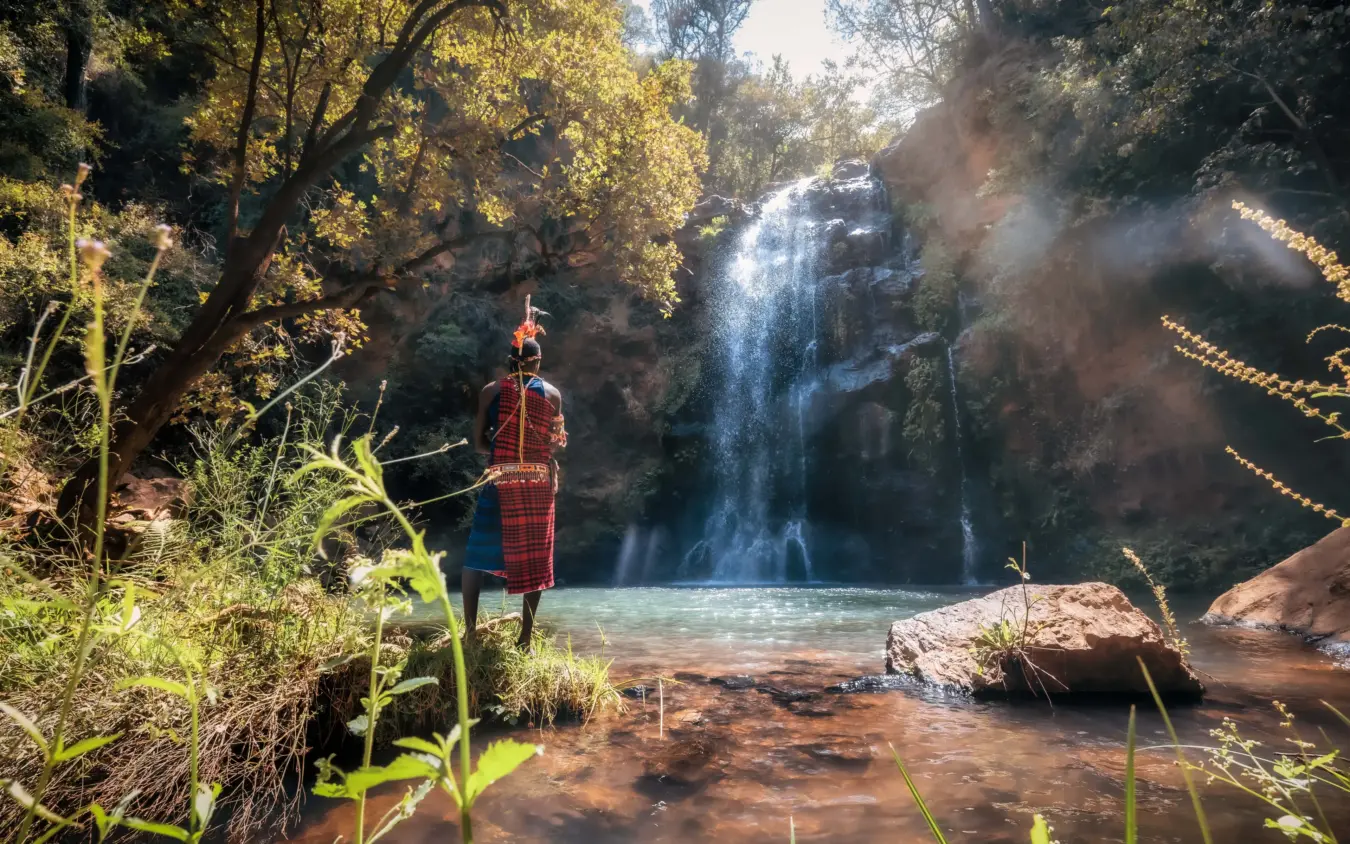
The full-day outing is to the Ngare Ndare forest on the southern edge of Lewa, with a picnic: a 450-metre canopy walkway about ten metres above the forest floor, the longest in East Africa, and blue pools and waterfalls you can swim in. The forest is run by a community trust, and the only extra charge is its separate conservation fee. The camp can also arrange a behind-the-scenes visit to the conservancy headquarters, including the tracker dogs, and a visit to a Samburu homestead nearby.
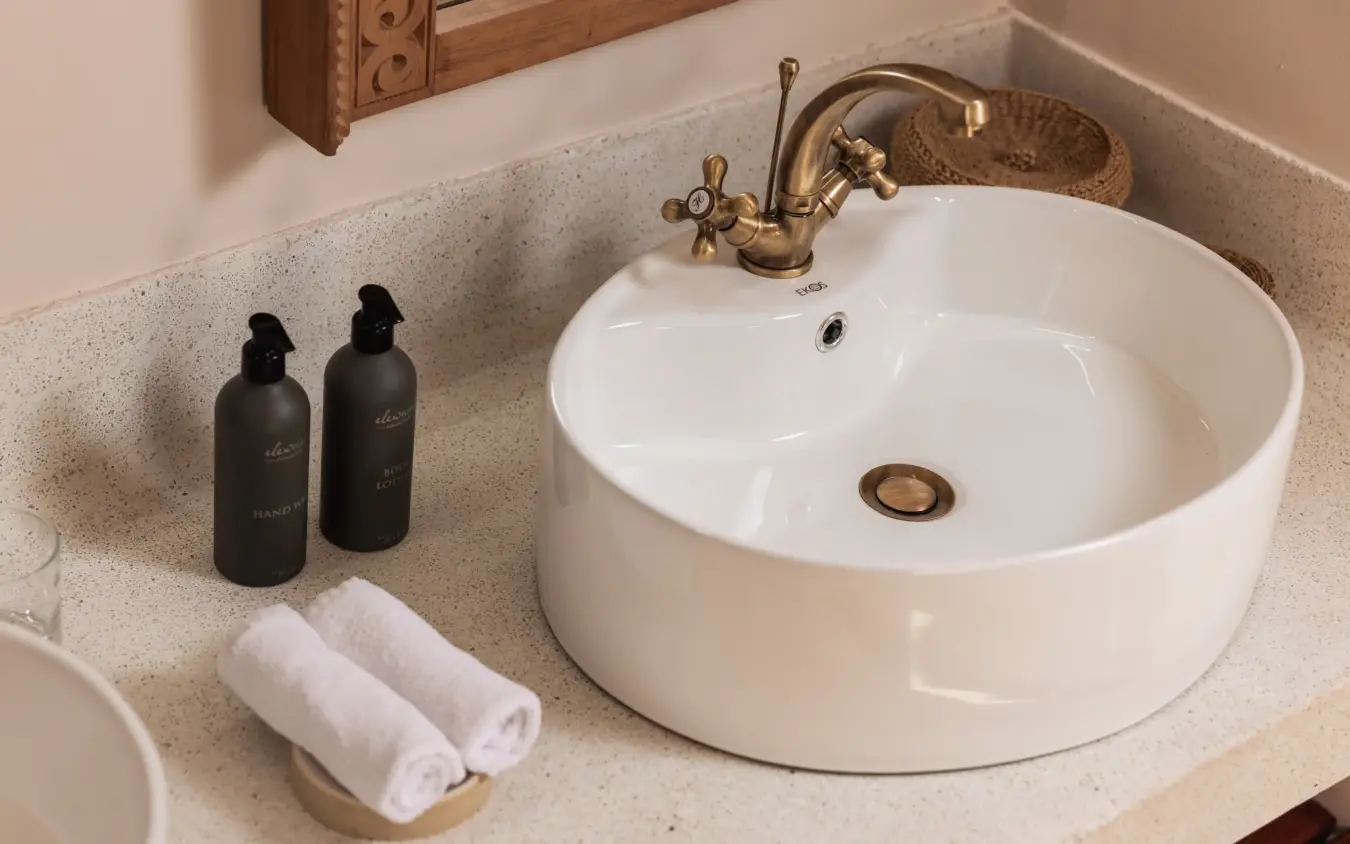
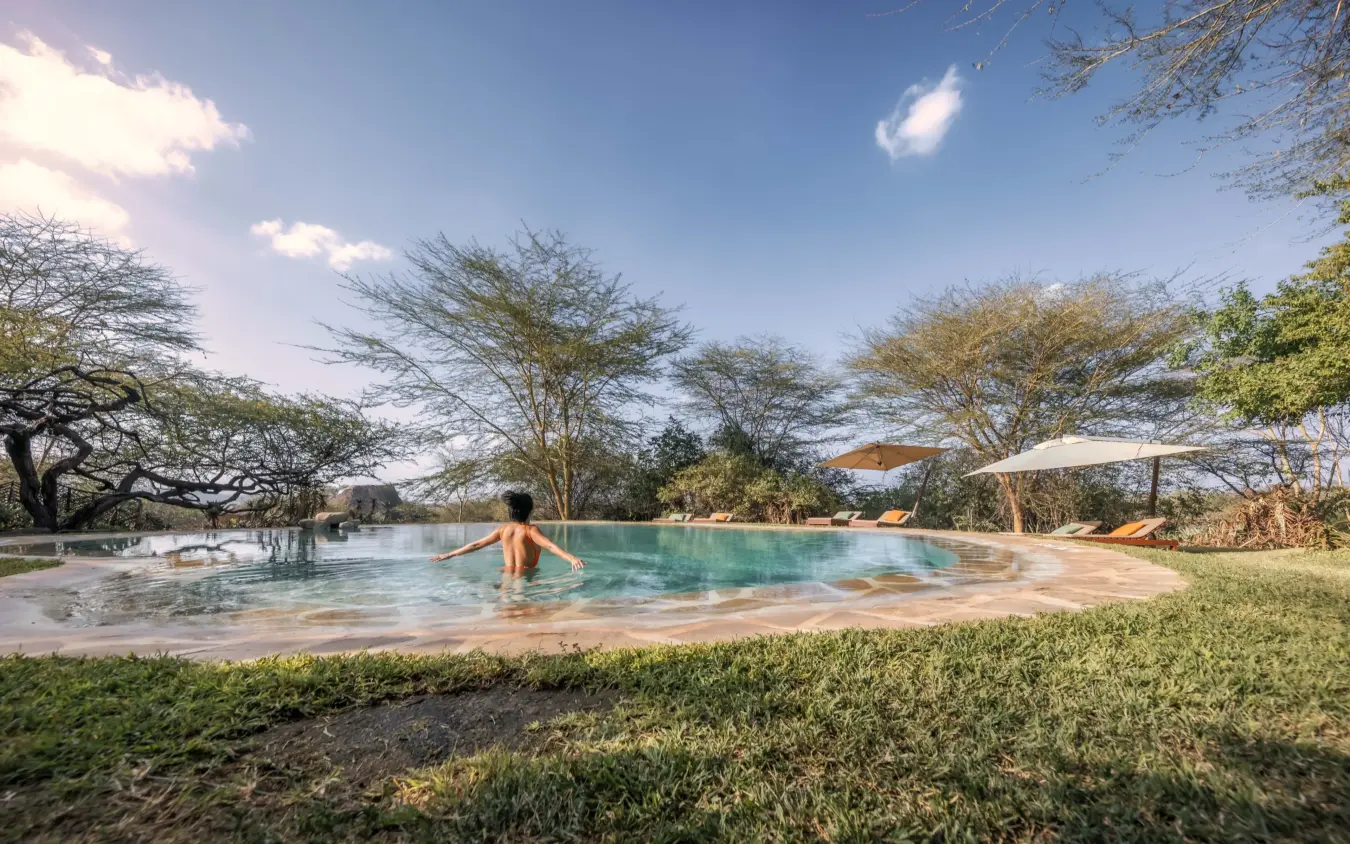
Yes, and it is set up for families rather than merely tolerant of them. Of the eleven tents, two are family suites: two en-suite tents, one a double and one a twin, joined by a shared verandah, and one of them takes an extra bed for a third child under sixteen, so a family of five stays together. Three of the standard tents also take a third bed for a child under sixteen. The camp was fully restored in 2026, with a new pool with tiered stone seating, a fire-pit lounge for the evenings, and board games and table tennis by the pool for the middle of the day.

The age rules that matter are on the activities: horse and camel riding are for twelve and over, and game drives are shared unless you take a private vehicle, which we would build into the stay for a family with young children because it lets the day run at their pace. Tell us their ages at enquiry and we will shape the days around them.

The dry months. The camp's own high season runs from July to the end of October and again over Christmas and New Year, when the grass is short, the ground is firm and the game gathers at water. June, November to mid December and January to March are the shoulder months, and April and May are the green season, when the long rains fall. The conservancy's own records put the long rains from March to May and the short rains from October to December, with the heaviest of it in April, May and November; the short rains are light enough that October still counts as high season with the camp. The green months have their case: fresh grass, few vehicles and the rhino there as in any month.

Lewa lies on the Laikipia plateau at over 1,500 metres, so the days are warm and the early mornings are properly cold, and an open vehicle at first light feels colder still. Pack warm layers for dawn drives and dinner outside, serious sun protection because the altitude sharpens the sun, closed shoes for the walks and a waterproof in the wet months, all of it in a soft bag under fifteen kilograms for the flight.

rated five stars by our clients

other areas in kenya

Leopard resting on fallen log in natural setting 01

Maasai Mara

Local guides with poles crossing shallow forest river, Northern Kenya, Kenya 02

Northern Kenya

Traditional fishing boat with blue sail on sandy beach 03

Kilifi

Flock of flamingos wading in shallow pink-tinted water, Rift Valley Lakes, Kenya 04

Rift Valley Lakes

Snow-capped Mount Kilimanjaro rising above acacia trees and Tanzania savanna 05

Amboseli and Chyulu Hills

Wooden fishing boat beached on white sand tropical shore 06

Diani Beach

Man in traditional red garment driving open safari vehicle, Samburu Reserve, Kenya 07

Samburu Reserve

08

Lamu Archipelago

Zebras in savanna grassland with safari vehicle and city skyline 09

Nairobi

African elephants with calf walking through grassland at sunset 10

Tsavo

Planning a journey together

our approach

remote, exclusive
& personal

Every journey starts with a conversation. We take the time to understand your vision before we start planning.

Whether by phone or in person, we work with you directly to shape something that is considered, personal, and expertly delivered.

get in touch
destinations ideas & inspiration our process about us contact us