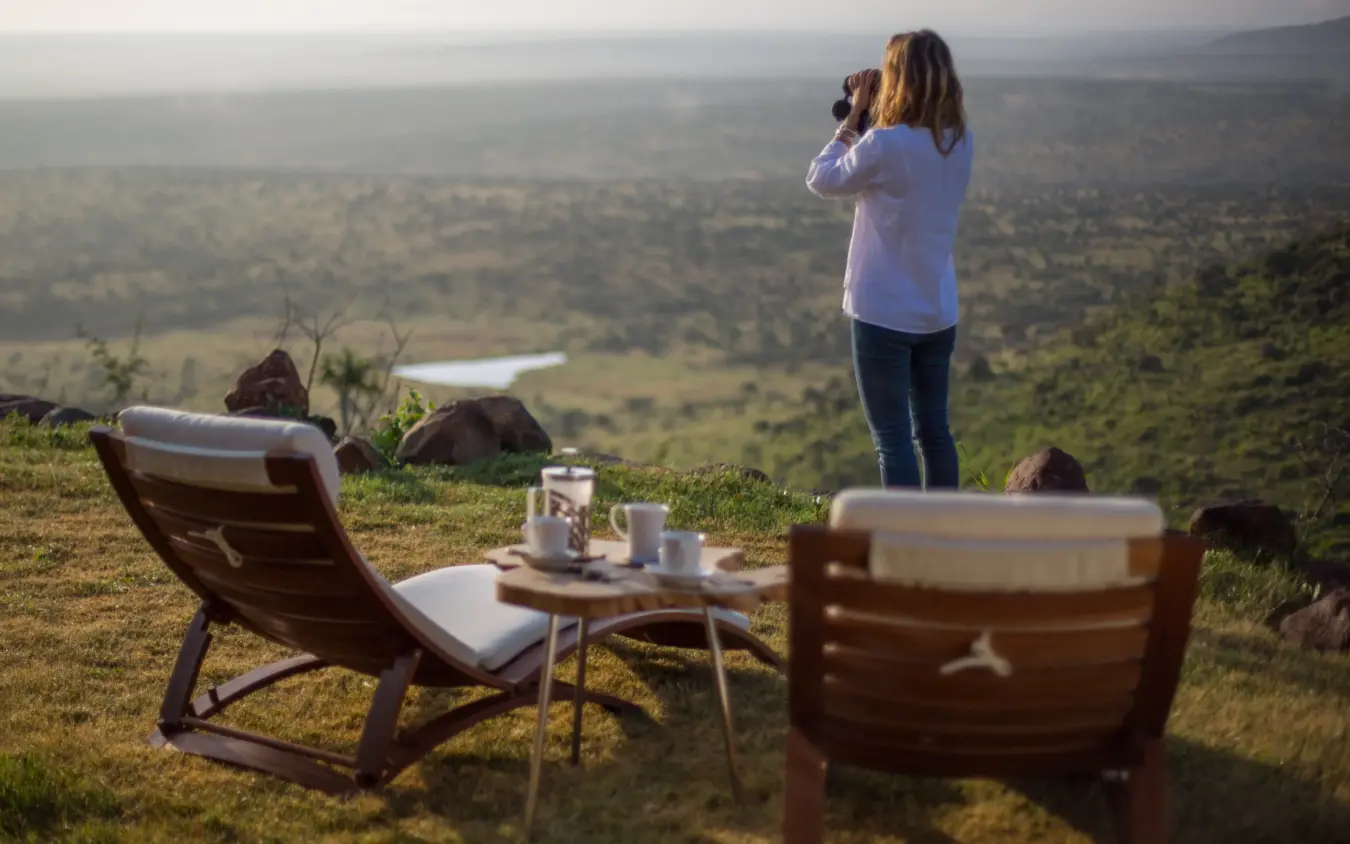
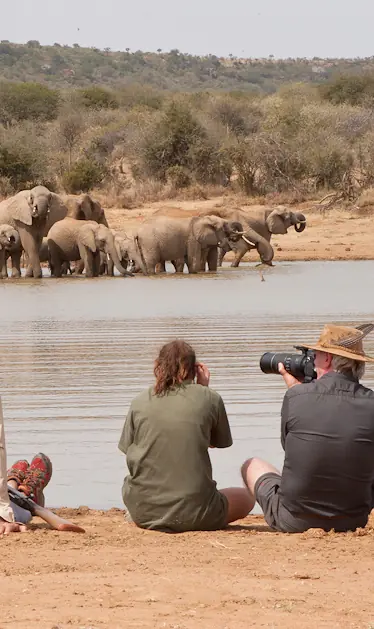
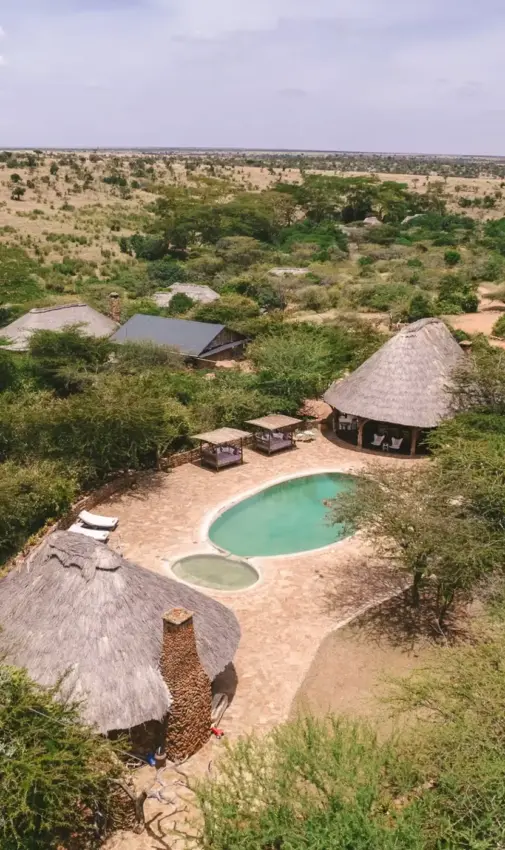
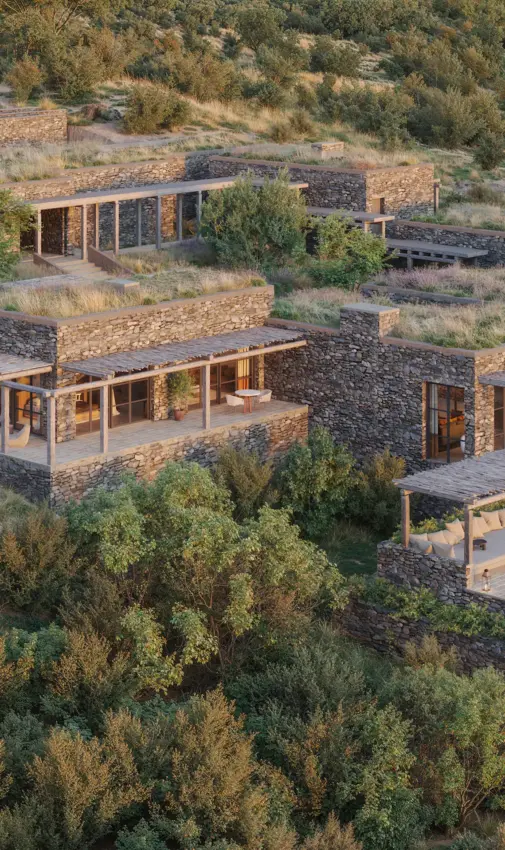
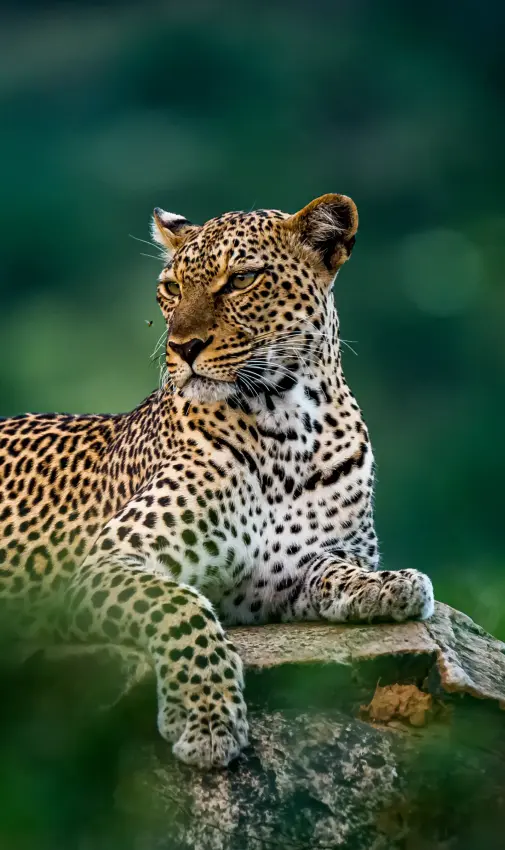
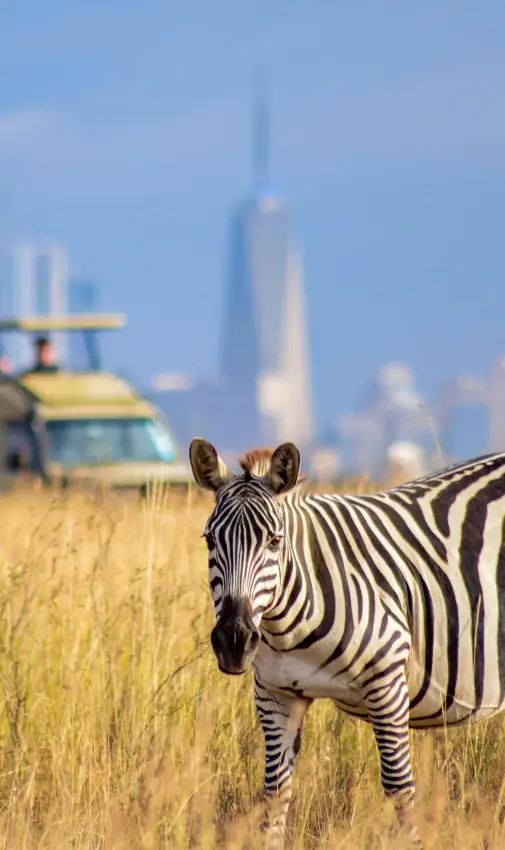
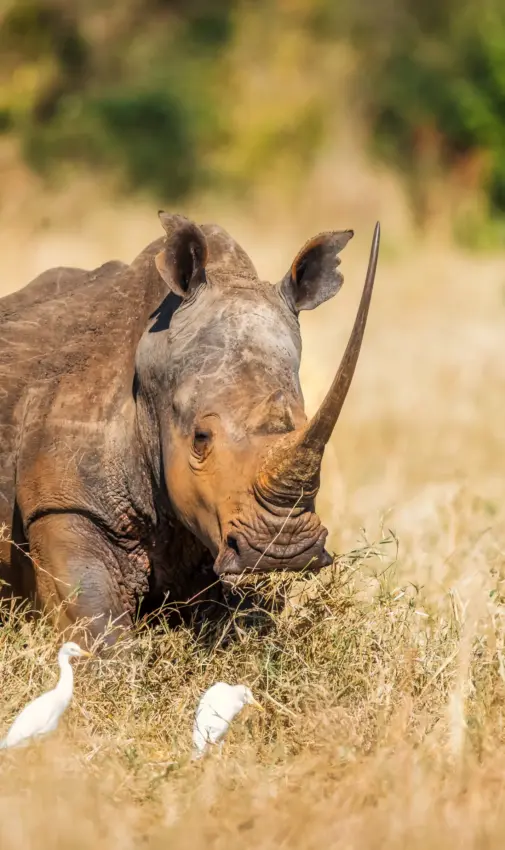
Twenty-one eastern black rhinos arrived in early 2024, the first on this land since the species disappeared from it in the 1970s. They live within a secured sanctuary inside a conservancy of some 58,000 acres, on the western edge of a major elephant corridor. Birds run to hundreds of species, and at dawn their song carries up the slope to the tents. By day, reticulated giraffes and Grevy’s zebras graze the open ground. Lions and leopards hunt it, and so do cheetahs and wild dogs.
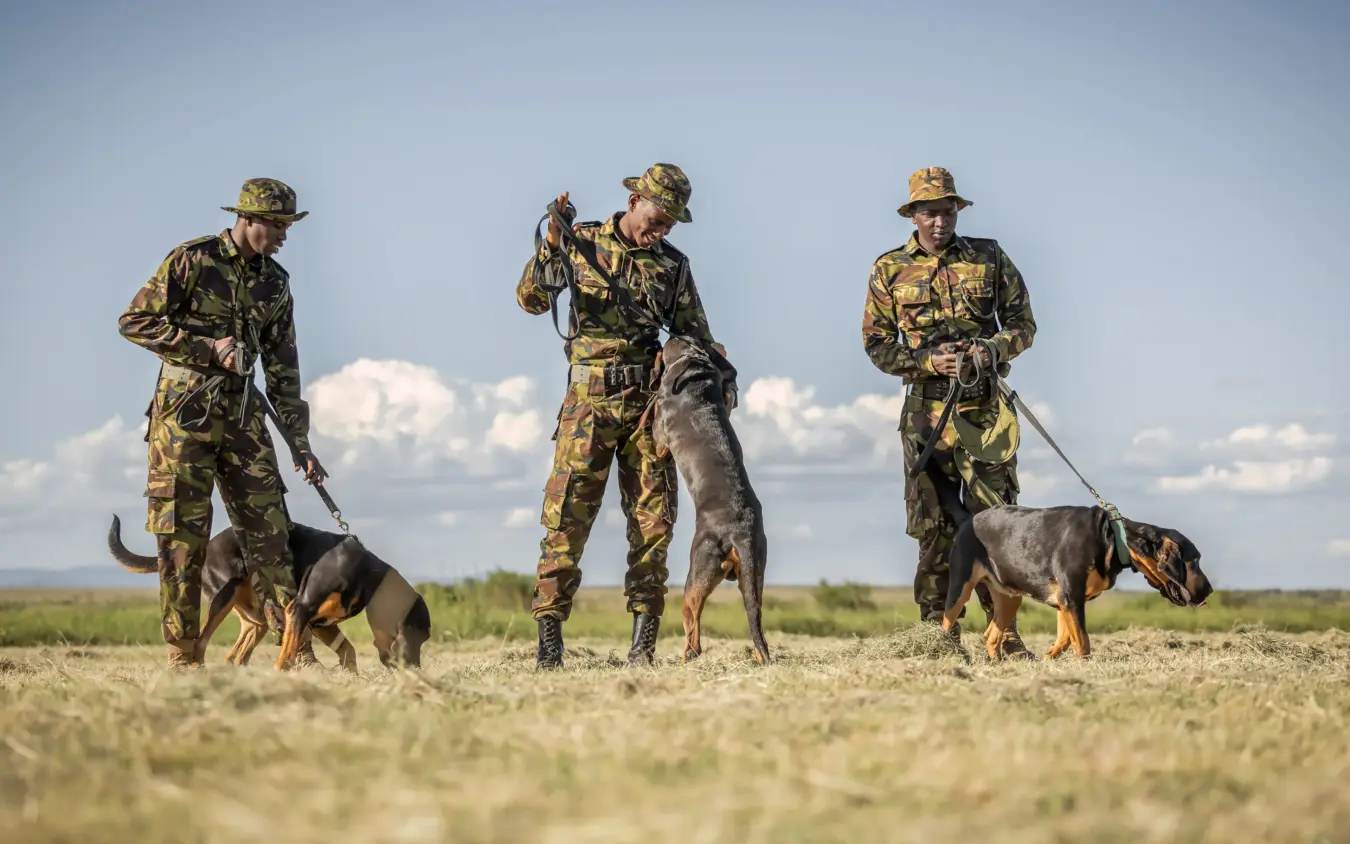
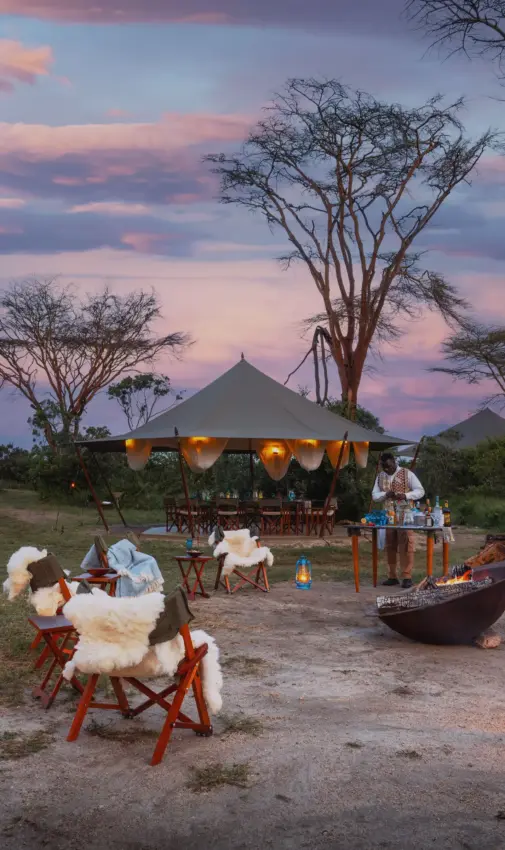
Because Loisaba is a private conservancy, game drives in open Land Rovers carry on after dark. On foot, Samburu guides lead walks across the open ground. Confident riders can ride out among the plains game, while camel treks set a slower, swaying pace. Mountain bikes and e-bikes follow the conservancy tracks, and fishing opens in season. At the anti-poaching unit, guests meet the sniffer dogs and watch a tracking demonstration. The meals follow too, with breakfast in the bush and sundowners out on the plains.
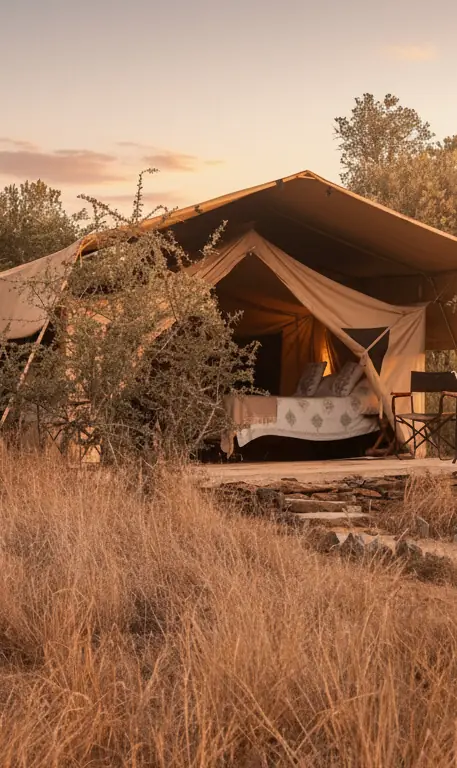
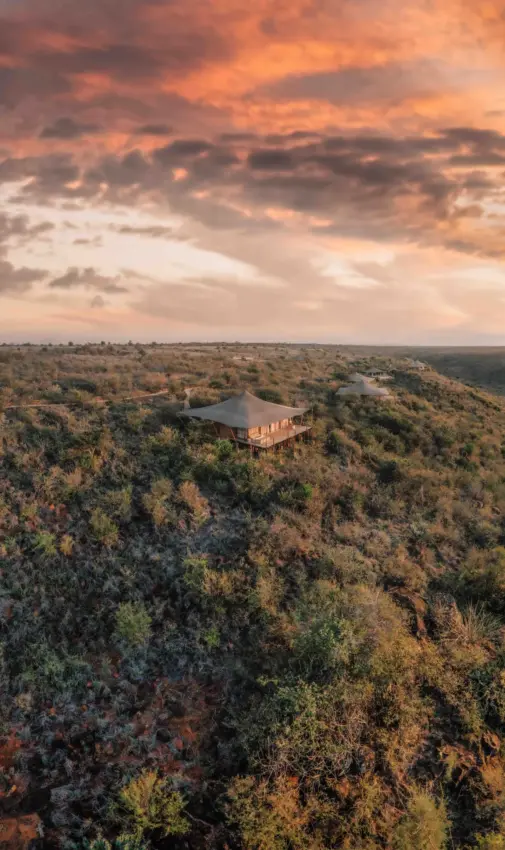
Birds run to hundreds of species, and at dawn their song carries up the slope to the tents.
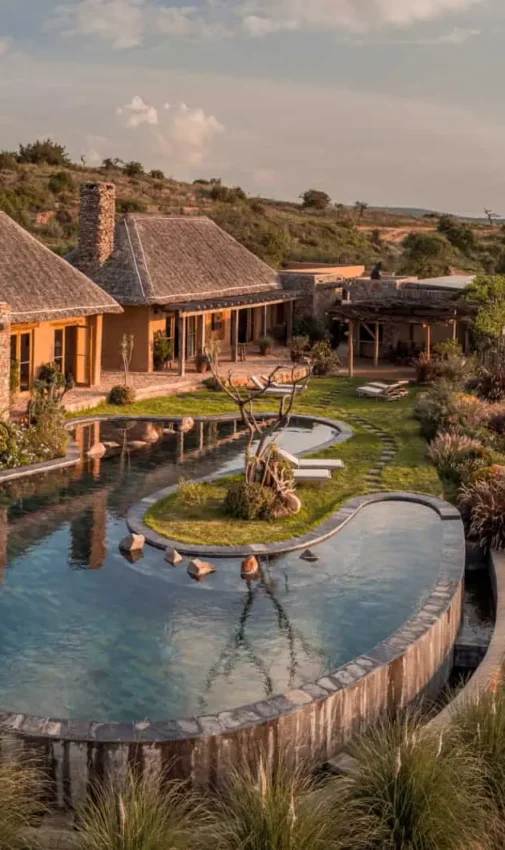
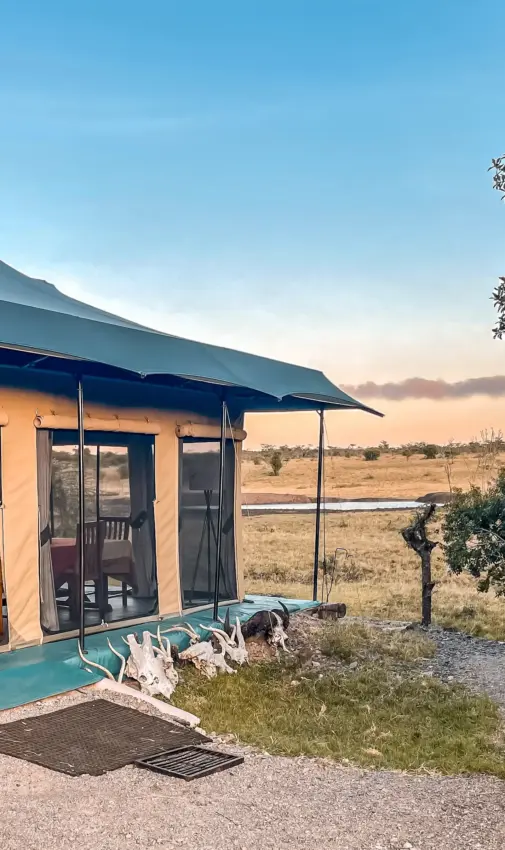
Meals can be taken in the open dining room or out on the wide deck, and further afield a bush breakfast or bush lunch can be set up. Families take the paired tents joined by a walkway, and the camp suits families travelling with children.
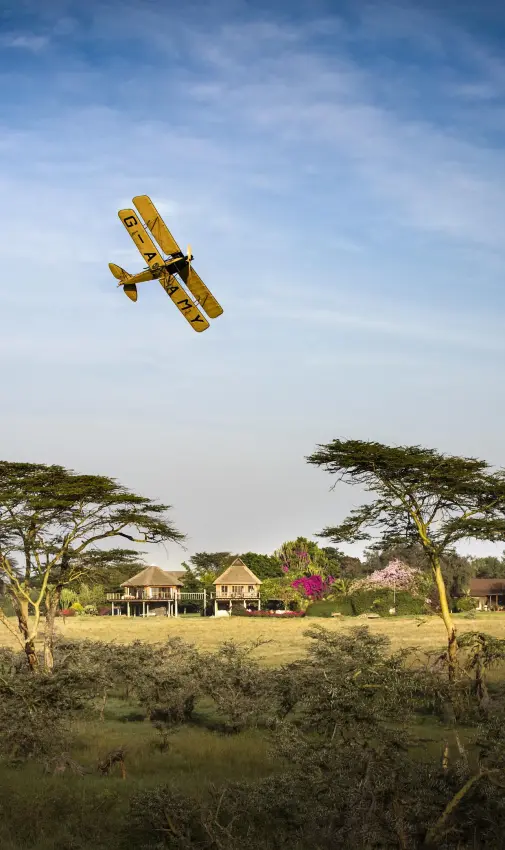
The Laikipia plateau stretches from the Rift Valley to Mount Kenya, and its northwestern reaches are home to Samburu and Laikipiak Maasai communities. They are the camp’s neighbours, and a visit to a nearby Samburu village is arranged with the families who live there. From Nairobi, scheduled light aircraft reach the conservancy airstrip in about an hour, and a drive brings guests up to camp. Sightings on the conservancy vary, and when the plains go quiet for a day or two, it is the spread of activities that keeps the days full.