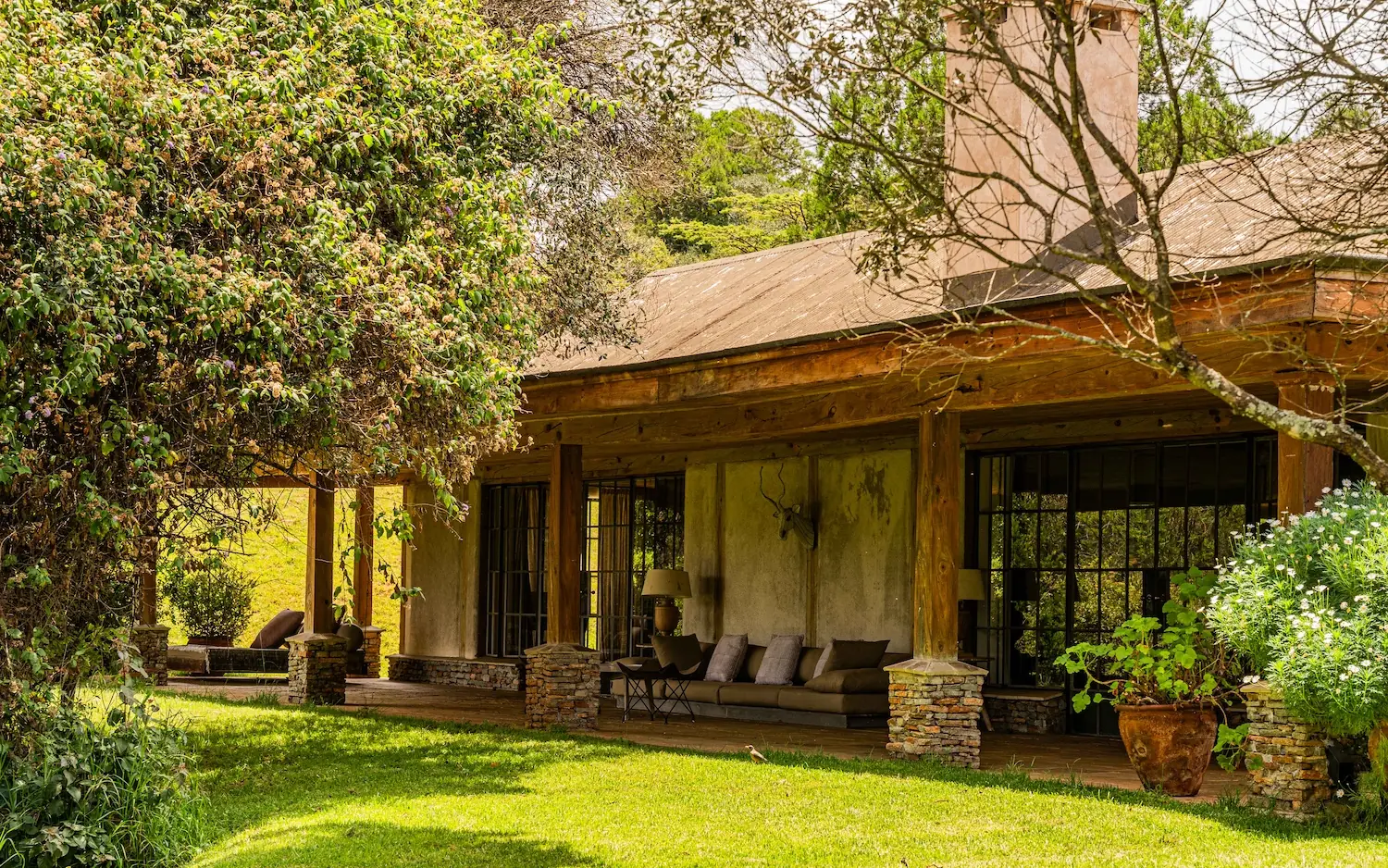
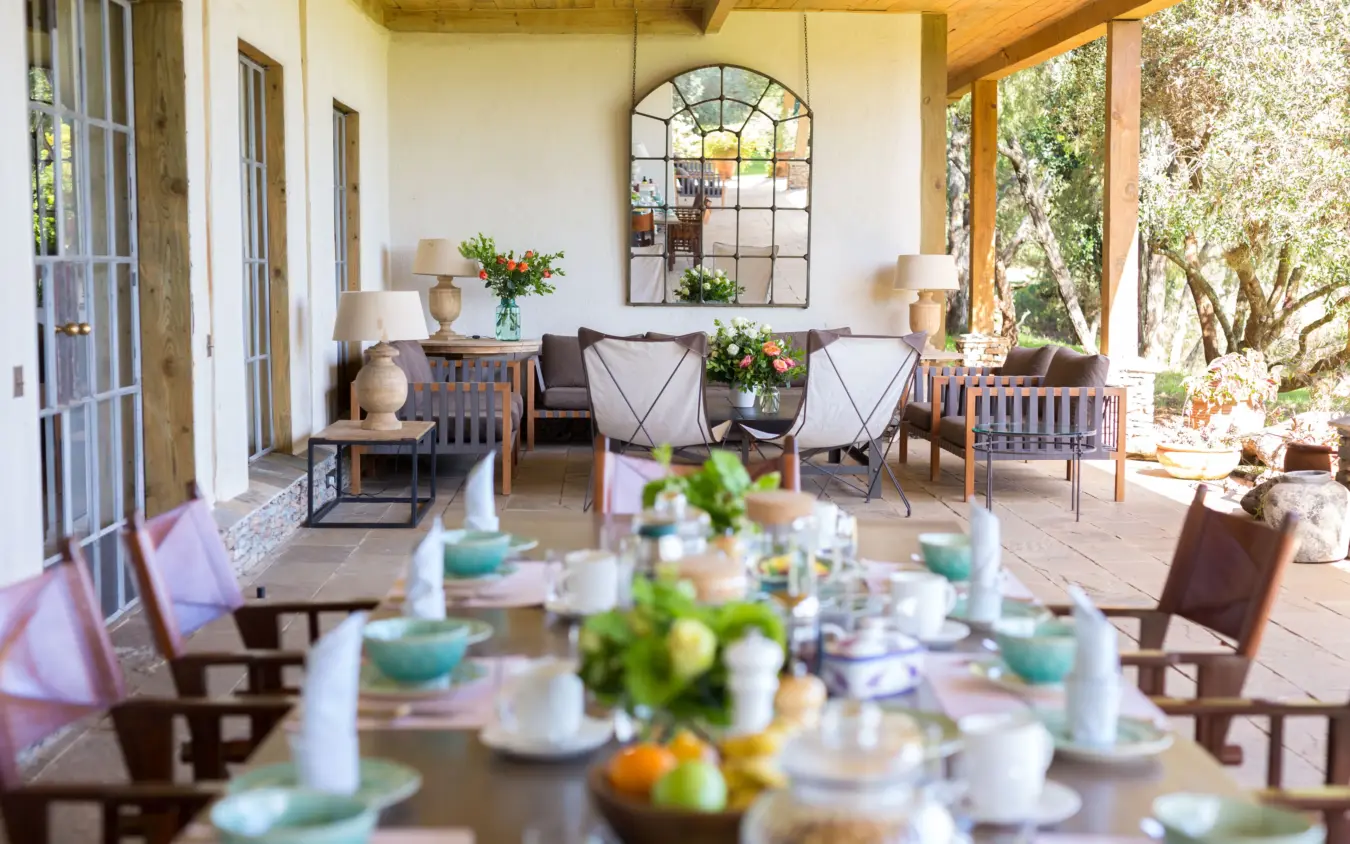
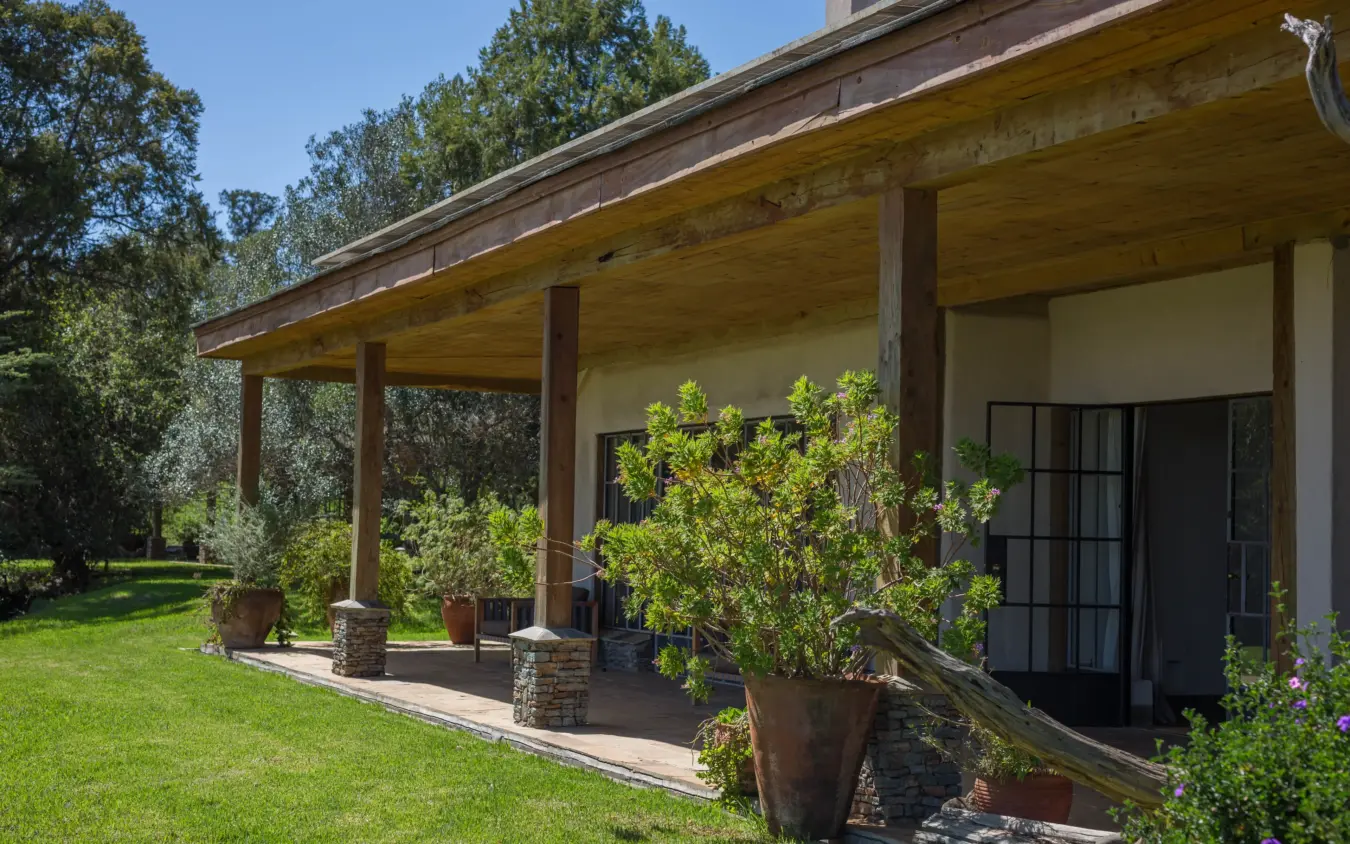
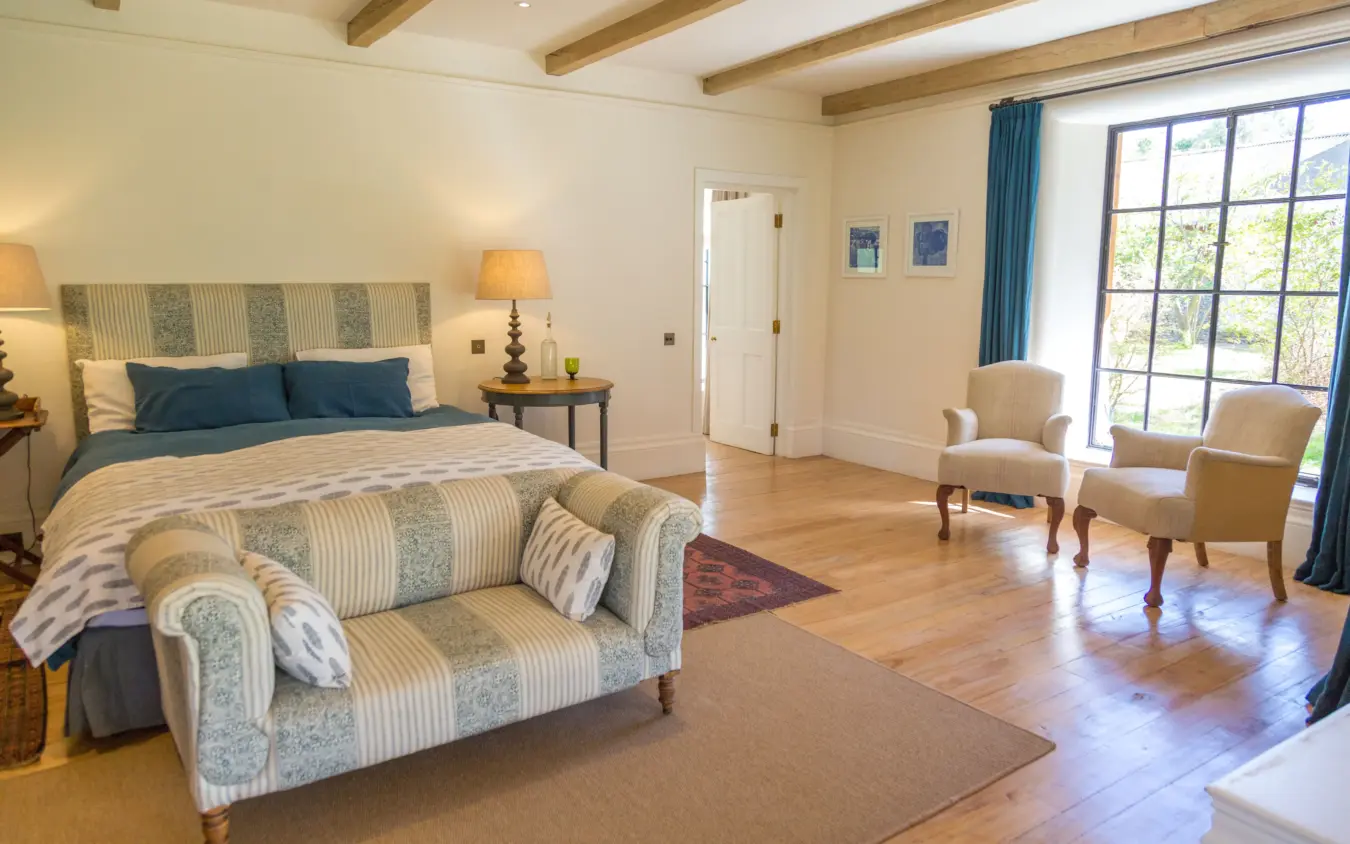
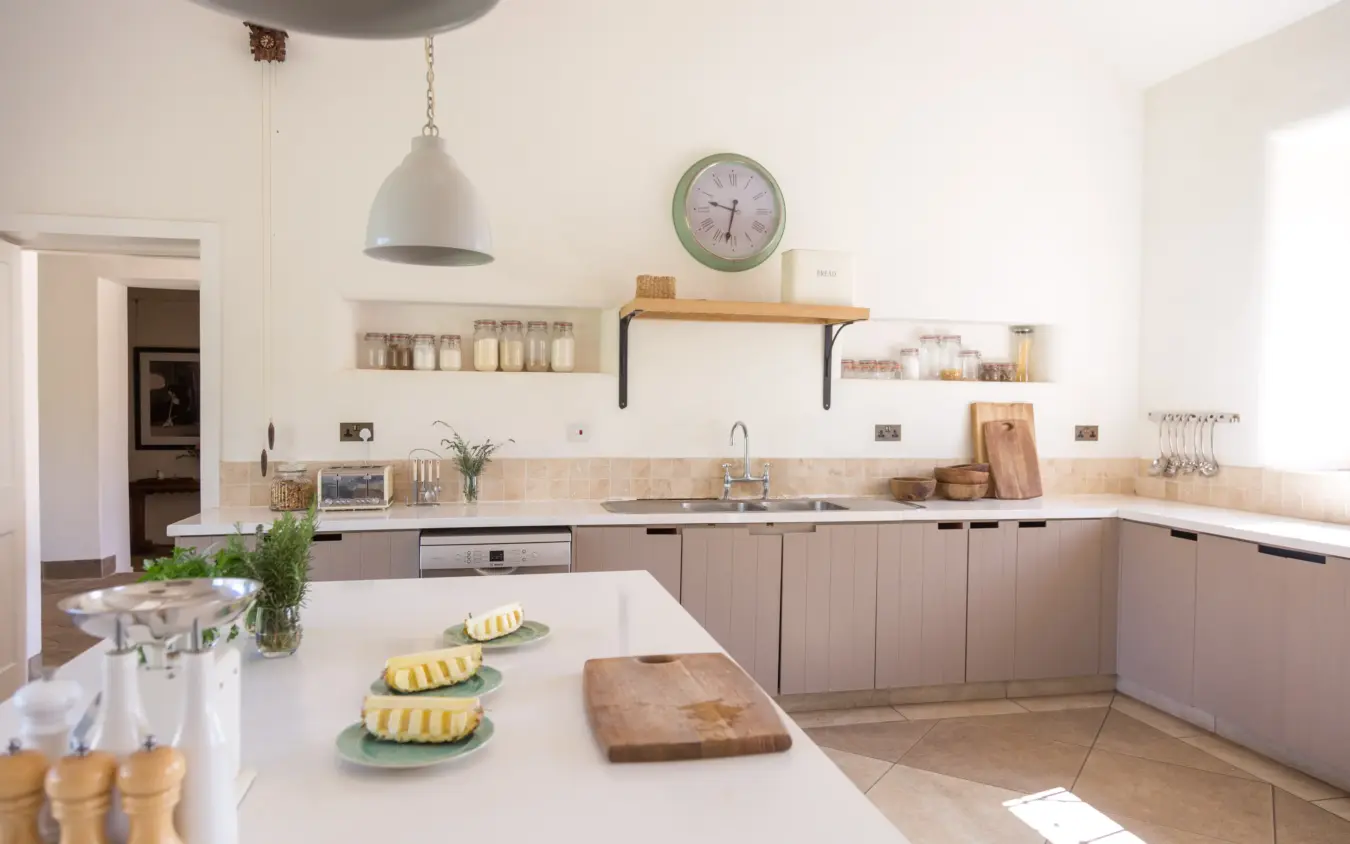
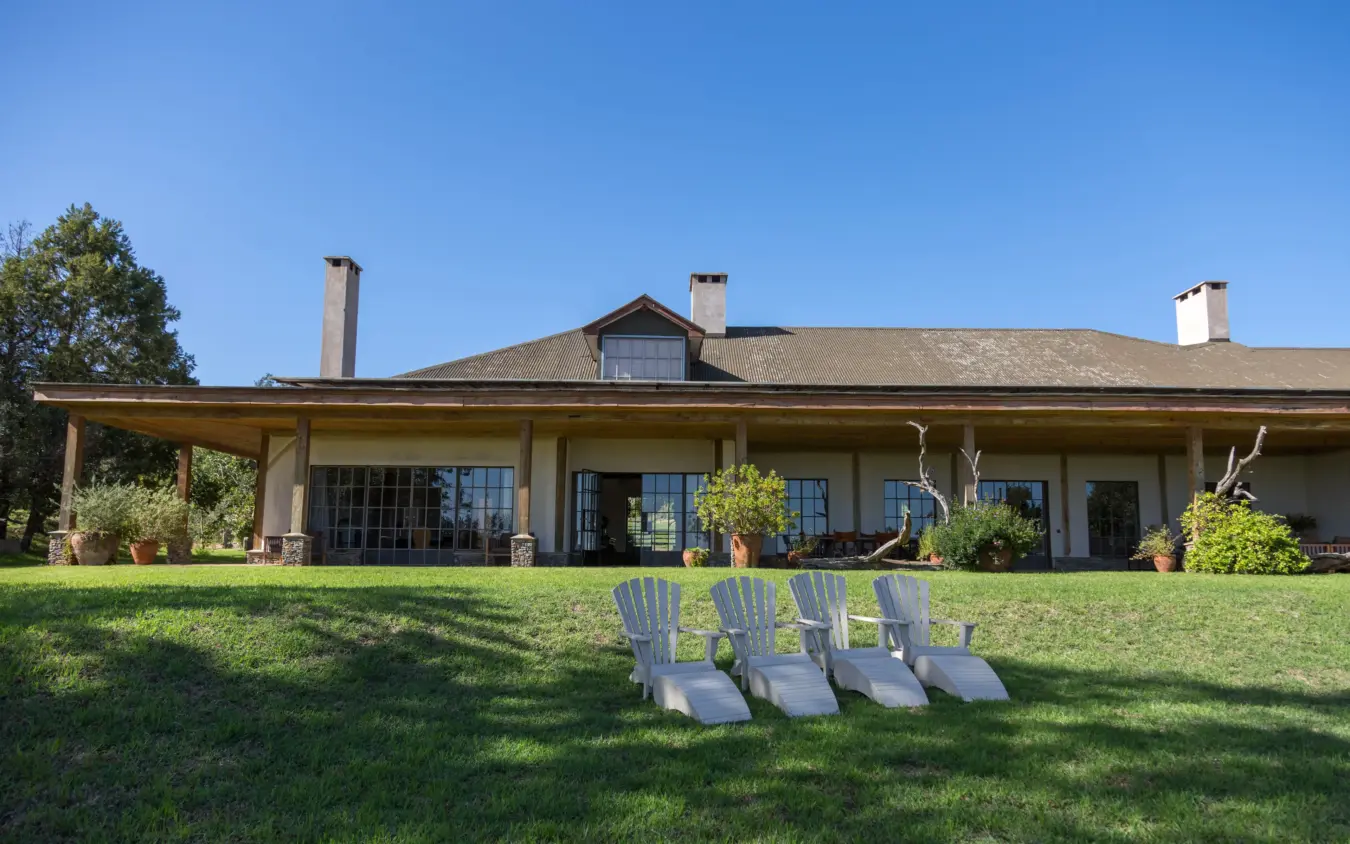
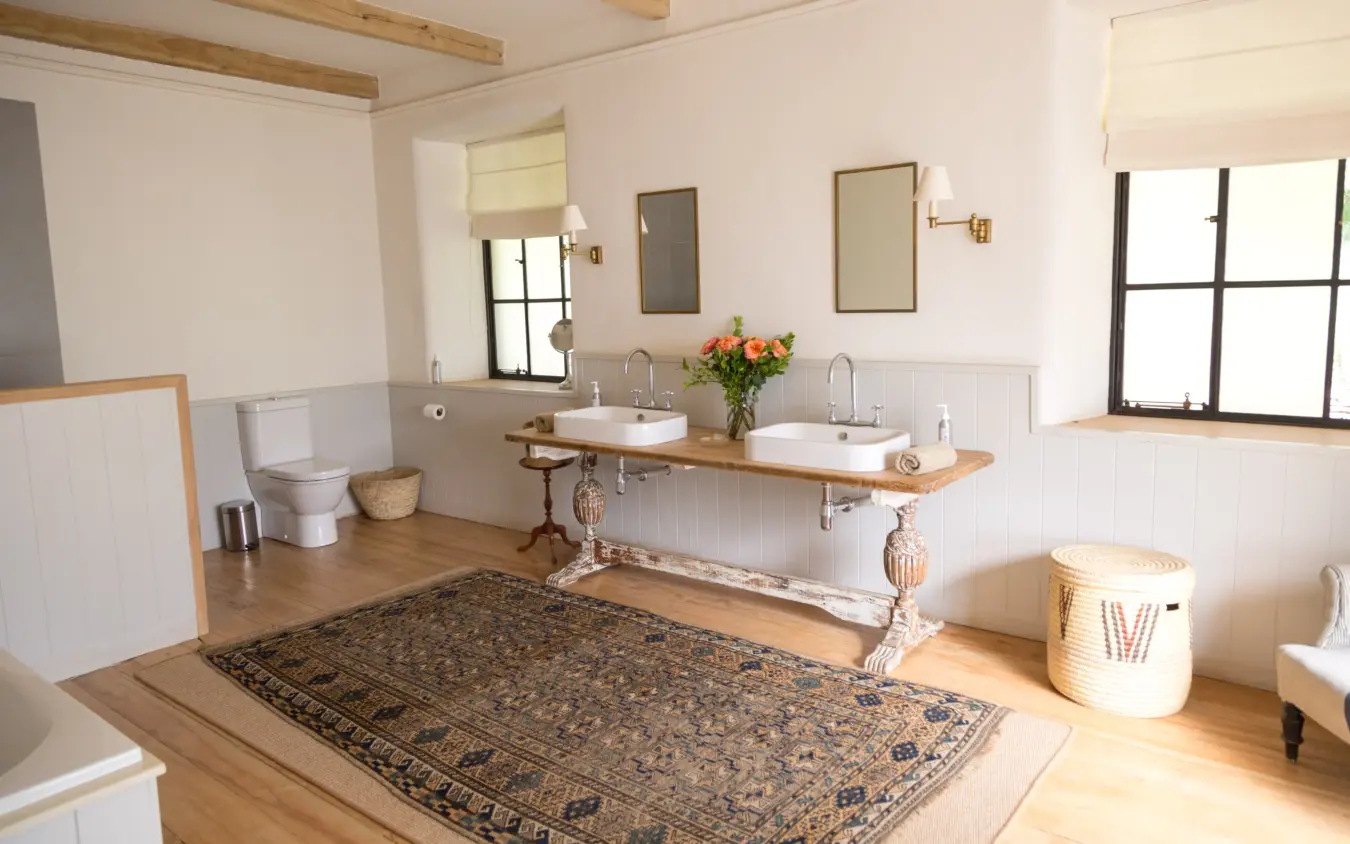
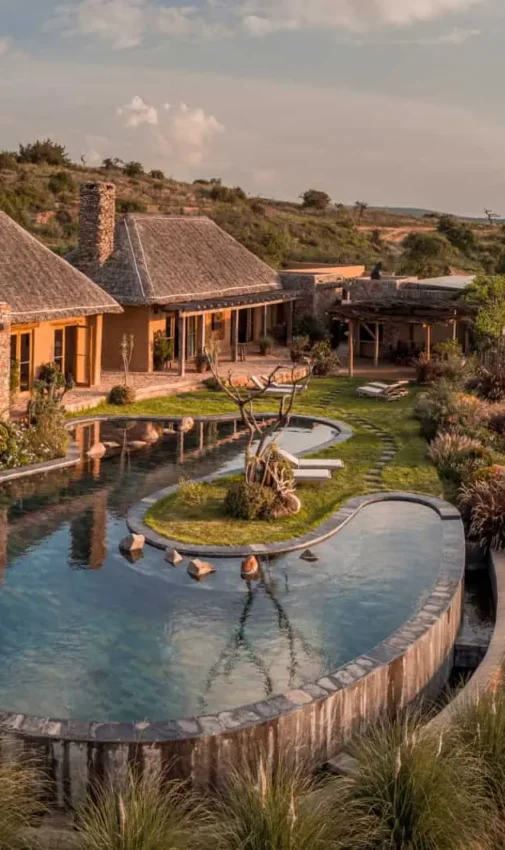
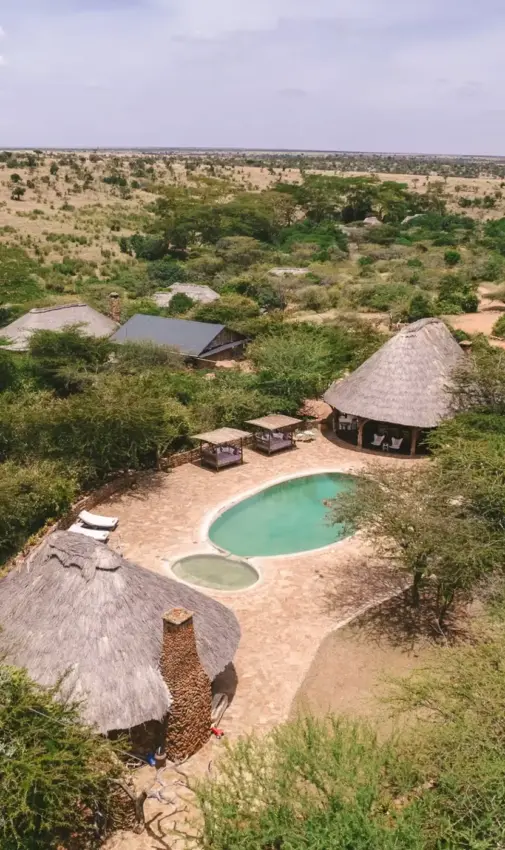
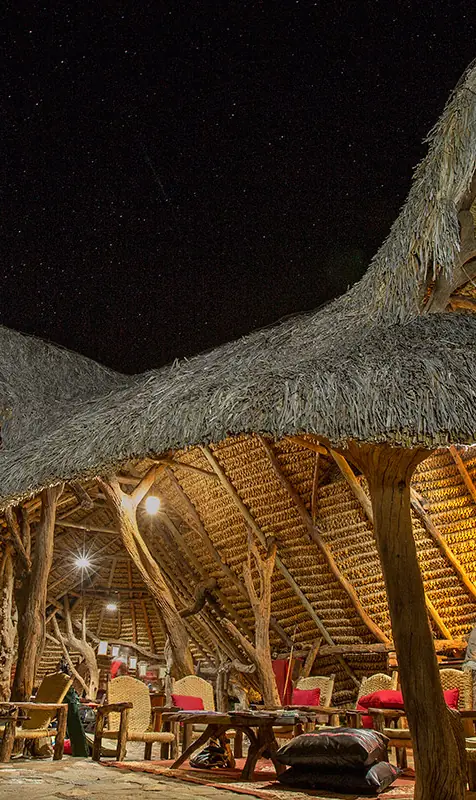
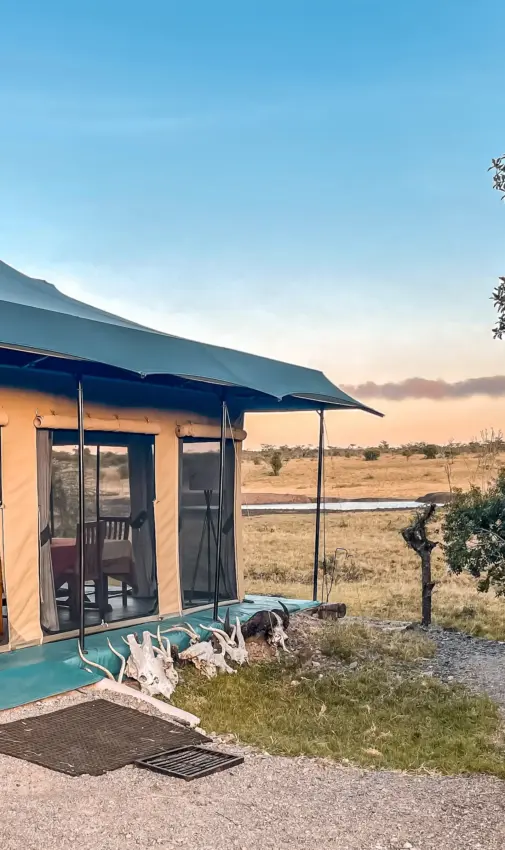
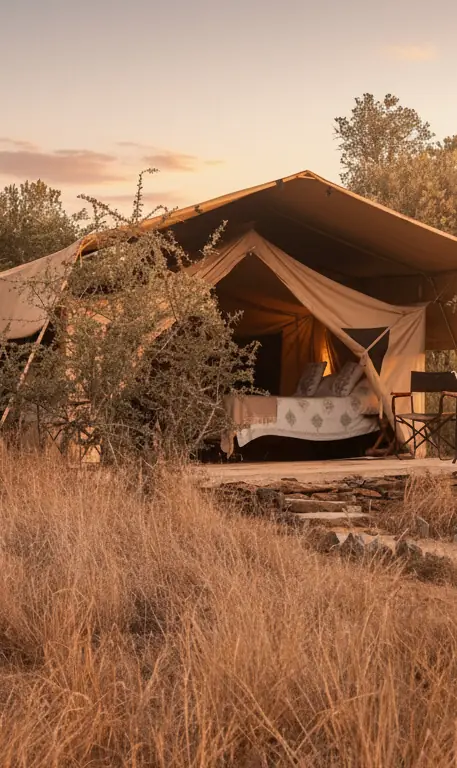
Lolldaiga House divides into three buildings strung along the ridge. The main house holds two of the six en-suite bedrooms, along with the drawing room, the library and TV room, and a verandah running close to 50 metres, furnished for eating, reading and sleeping through the afternoon. Two guest cottages stand to either side, each with two further bedrooms and its own 20-metre verandah. With only one party in residence, the group staying sets the hours: when meals appear, when the vehicles leave, how much of the day is given to doing nothing at all.
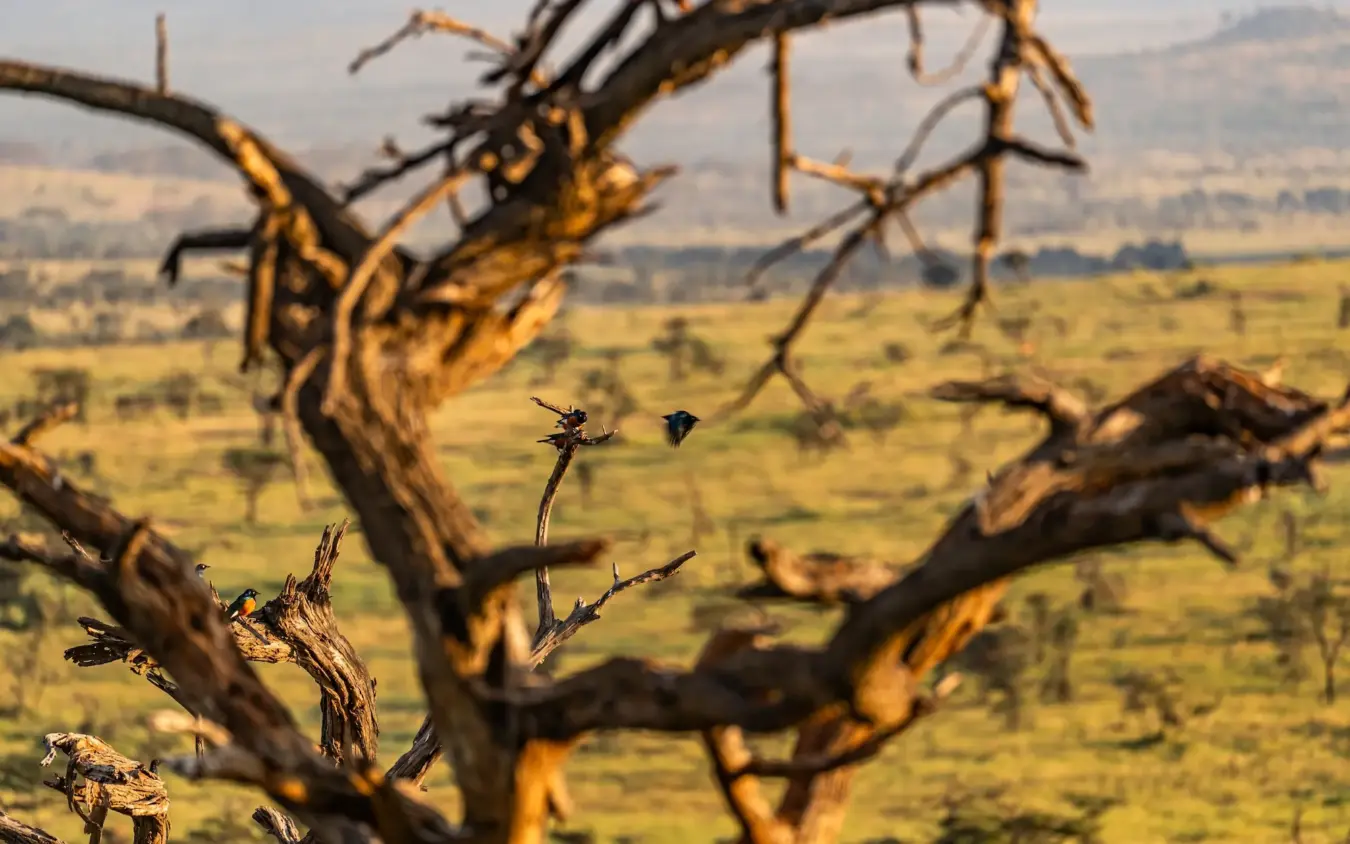
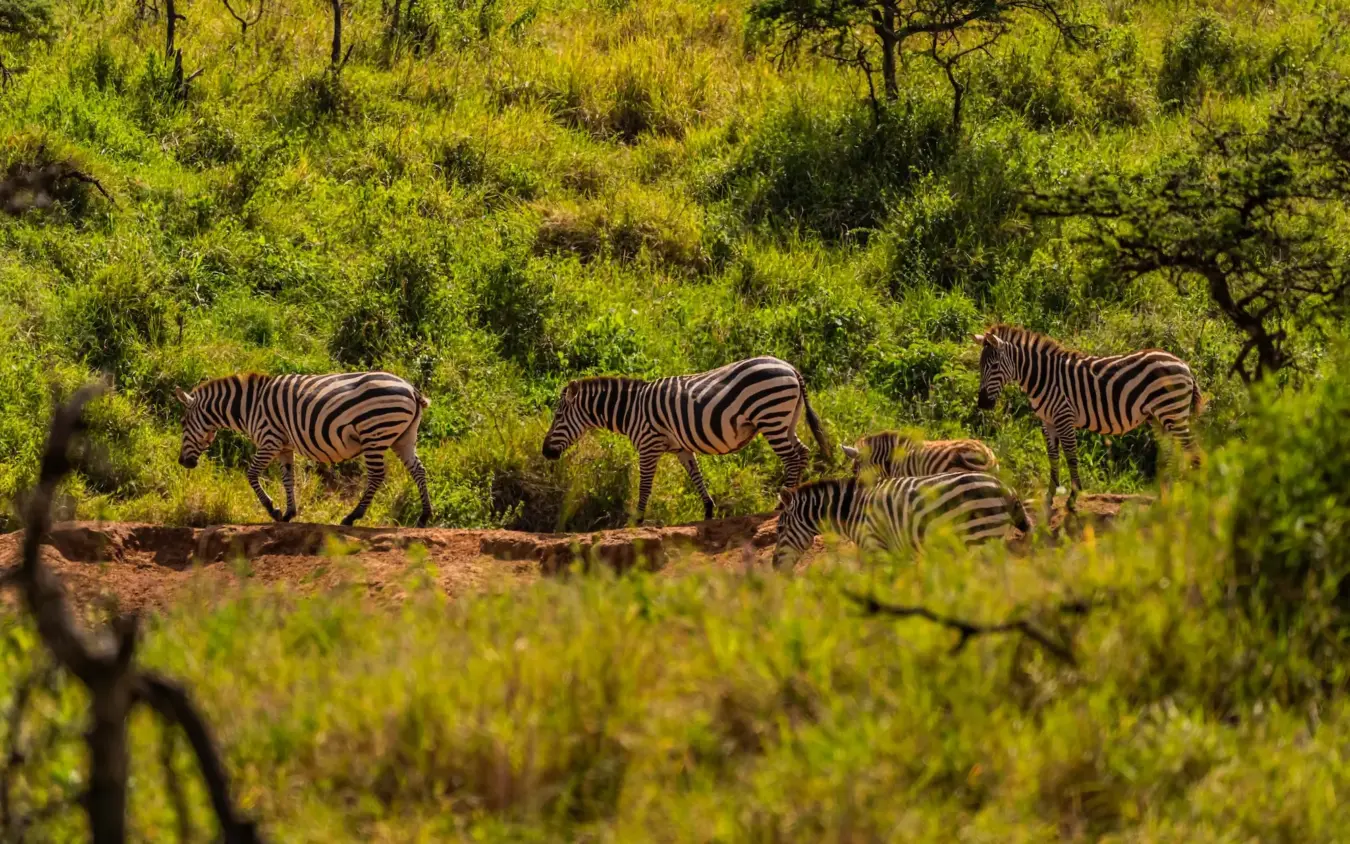
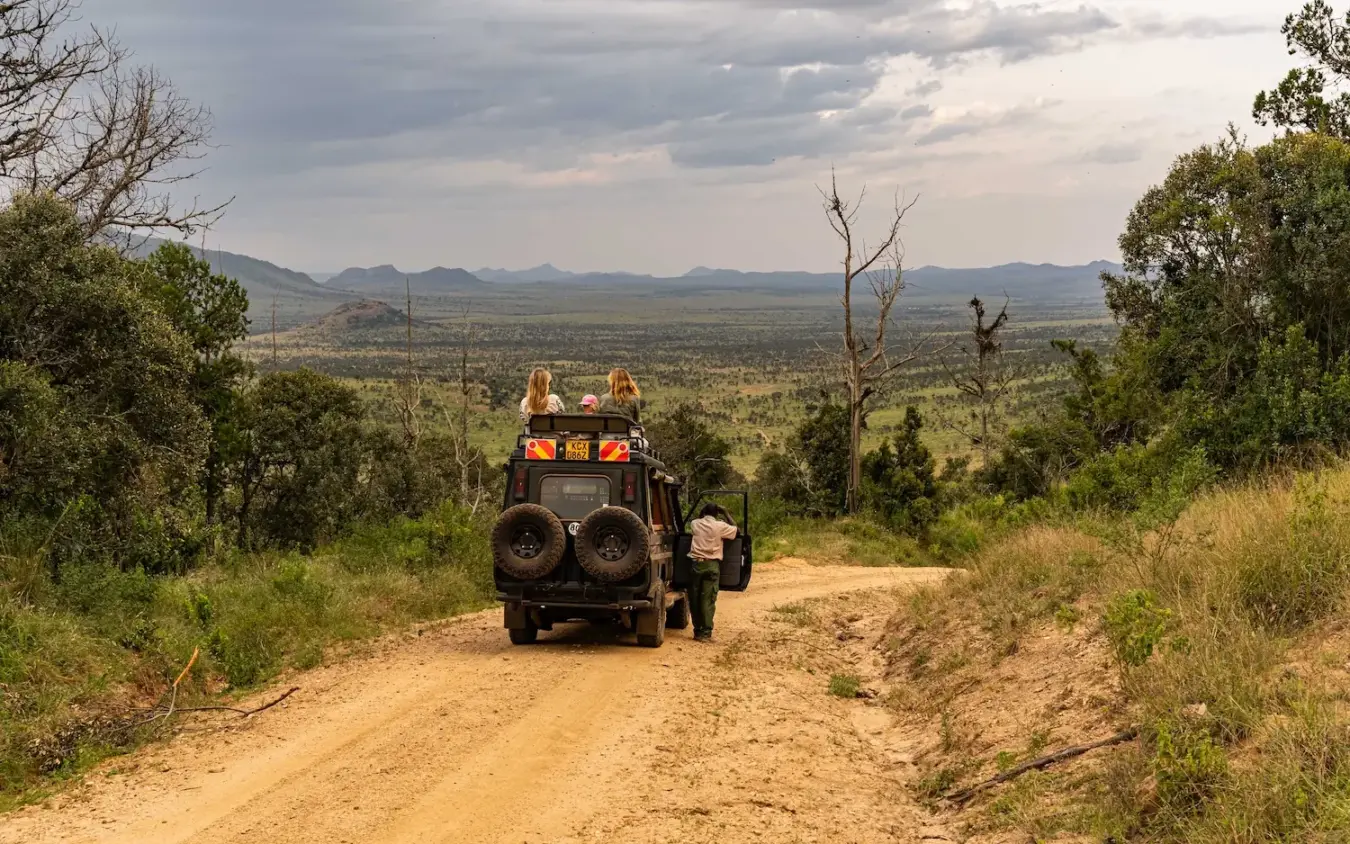
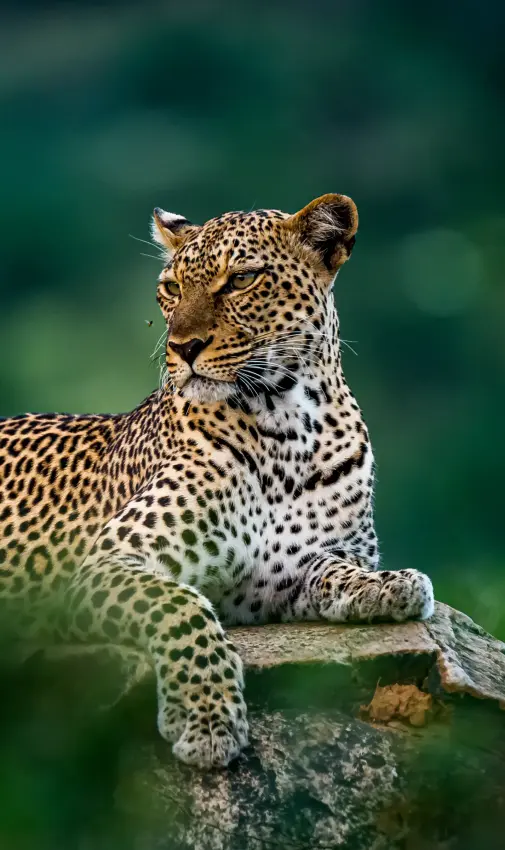
Because Lolldaiga is private conservancy and ranch land rather than a national park, the days are not confined to the daytime game drive. Guides can run night drives, take vehicles off-road, and follow fresh tracks on foot with armed rangers, with no boundary to turn back at. On horseback, the grassland and valley trails open up beyond vehicle range. Other mornings go to the cattle bomas and the Boran herds, or to the granite overhangs holding rock paintings and burial mounds left by people who lived in these hills long before the ranch existed.
On horseback, the grassland and valley trails open up beyond vehicle range.
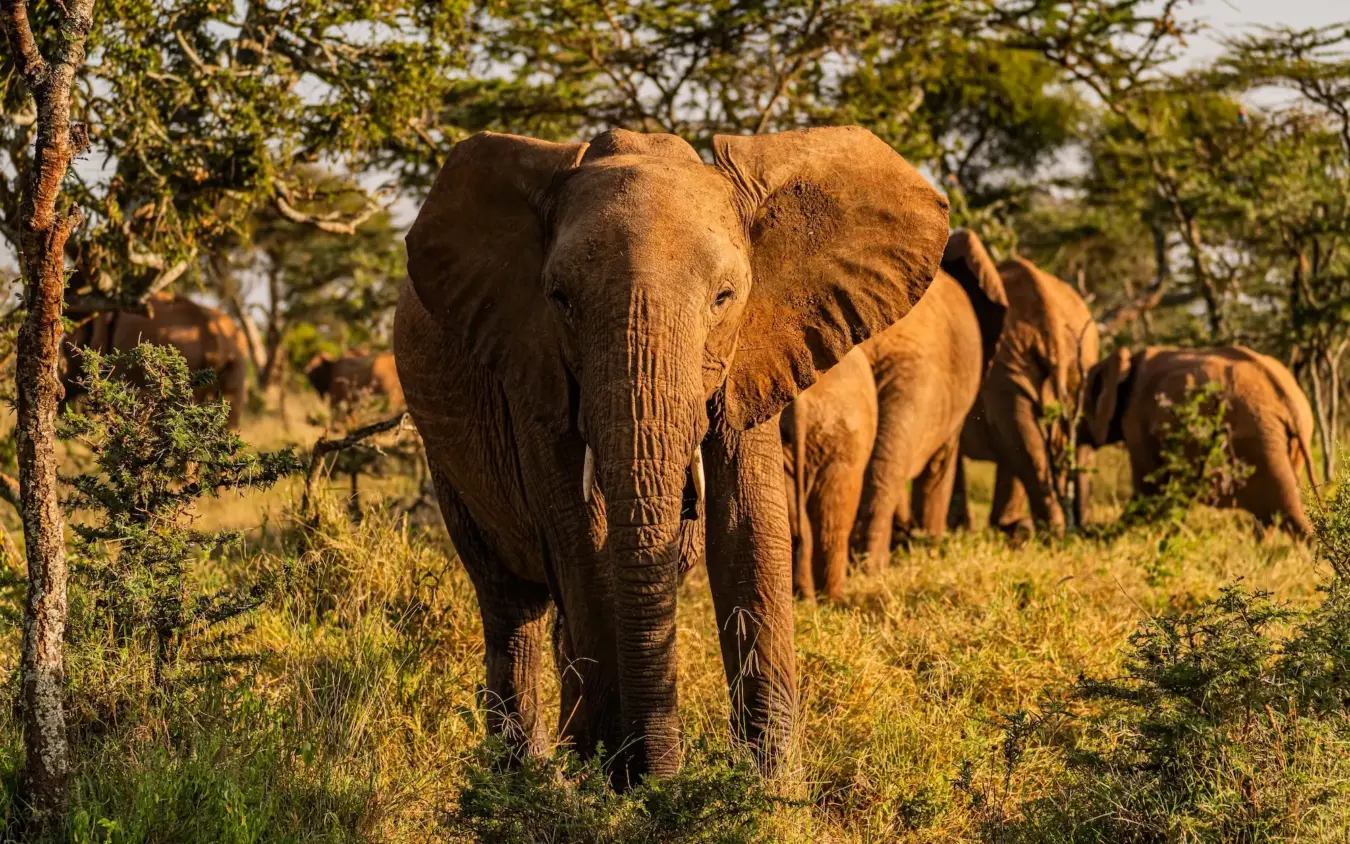
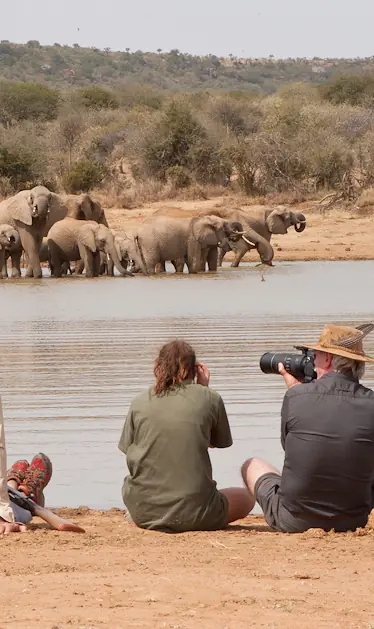
The Lolldaiga Hills Ranch changed hands in 2021, bought by a Kenyan charitable trust with funding raised by The Nature Conservancy, which now holds a seat on the board of trustees. Cattle did not leave. Around 4,500 cattle, sheep and camels still move across the hills under grazing patterns designed to keep the indigenous grasses growing and the bush from closing in, a management plan approved by the Kenya Wildlife Service. Elephants use the same ground as a corridor. The trust also funds youth education and local jobs, and helps pastoralist neighbours plan their grazing.
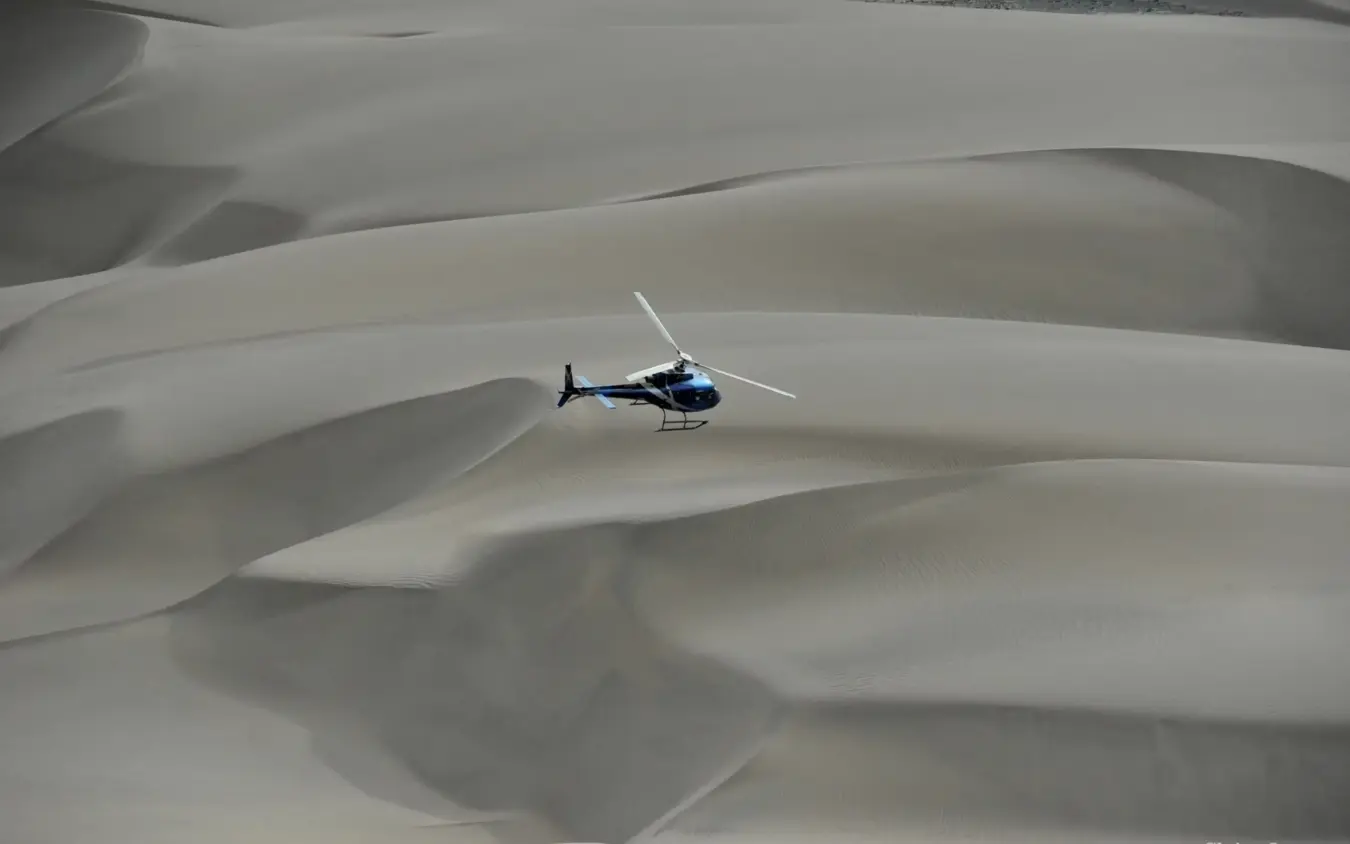
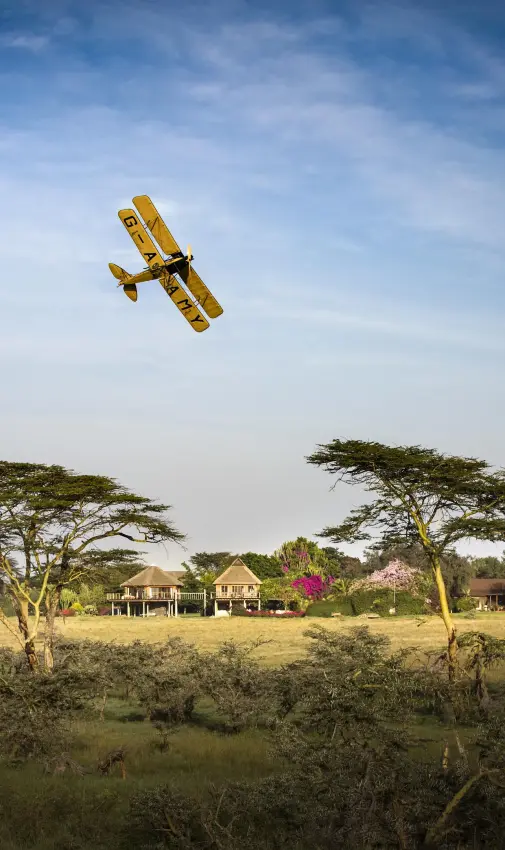
Getting there means a short flight from Nairobi to Nanyuki, then a road transfer to the conservancy gate; helicopter transfers can also be arranged. At between 1,700 and 2,300 metres, the Lolldaiga range keeps its mornings cold and its nights colder, which is why the fires are lit and the straw-bale walls matter. Children stay for free at younger ages, and with the house taken on exclusive use, the gardens, the pool and the shape of each day belong to one family group alone.