House

Ol Malo House

A six-bedroom family home on a Laikipia Highlands ranch in Kenya, taken by one group at a time and hosted by the man who built it.

Country: Kenya
Location: Laikipia Highlands
Number of rooms: 6

The house Andrew Francombe built

Ol Malo House belongs to one group at a time. Up to twelve share a main house and two cottages on a lip of rock high above the Ewaso Ng’iro river. Elephants work the valley floor far beneath the escarpment. Andrew Francombe designed and built the house and hosts it with his wife Chyulu. The day is settled over breakfast: who rides, who stays by the pool, who drives out after a leopard.

Elephants work the valley floor far beneath the escarpment.

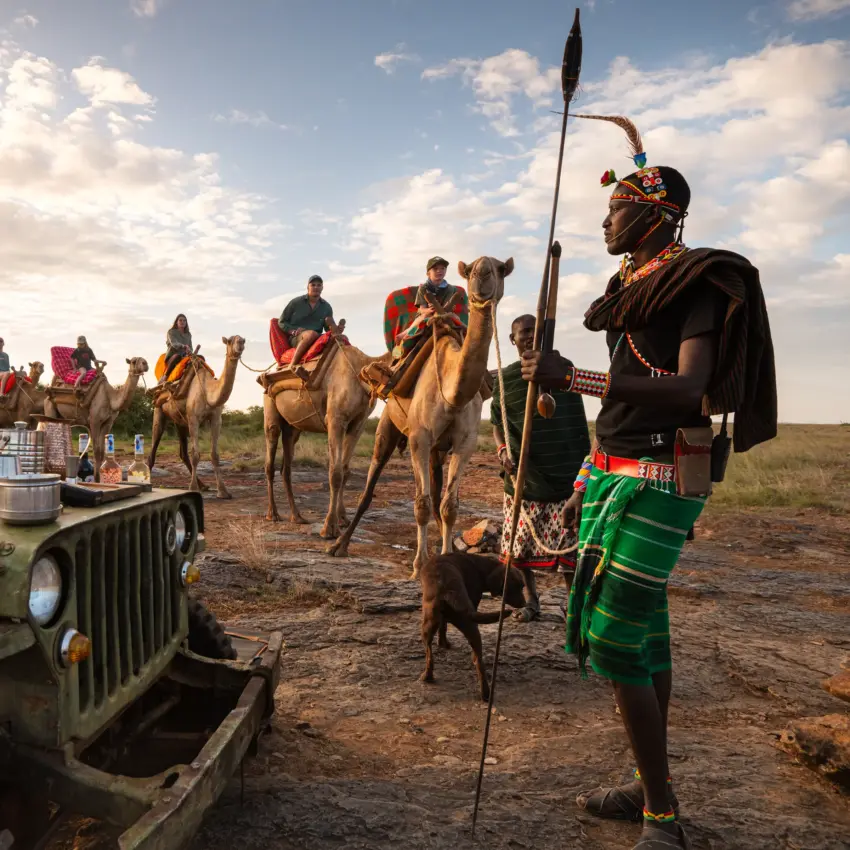
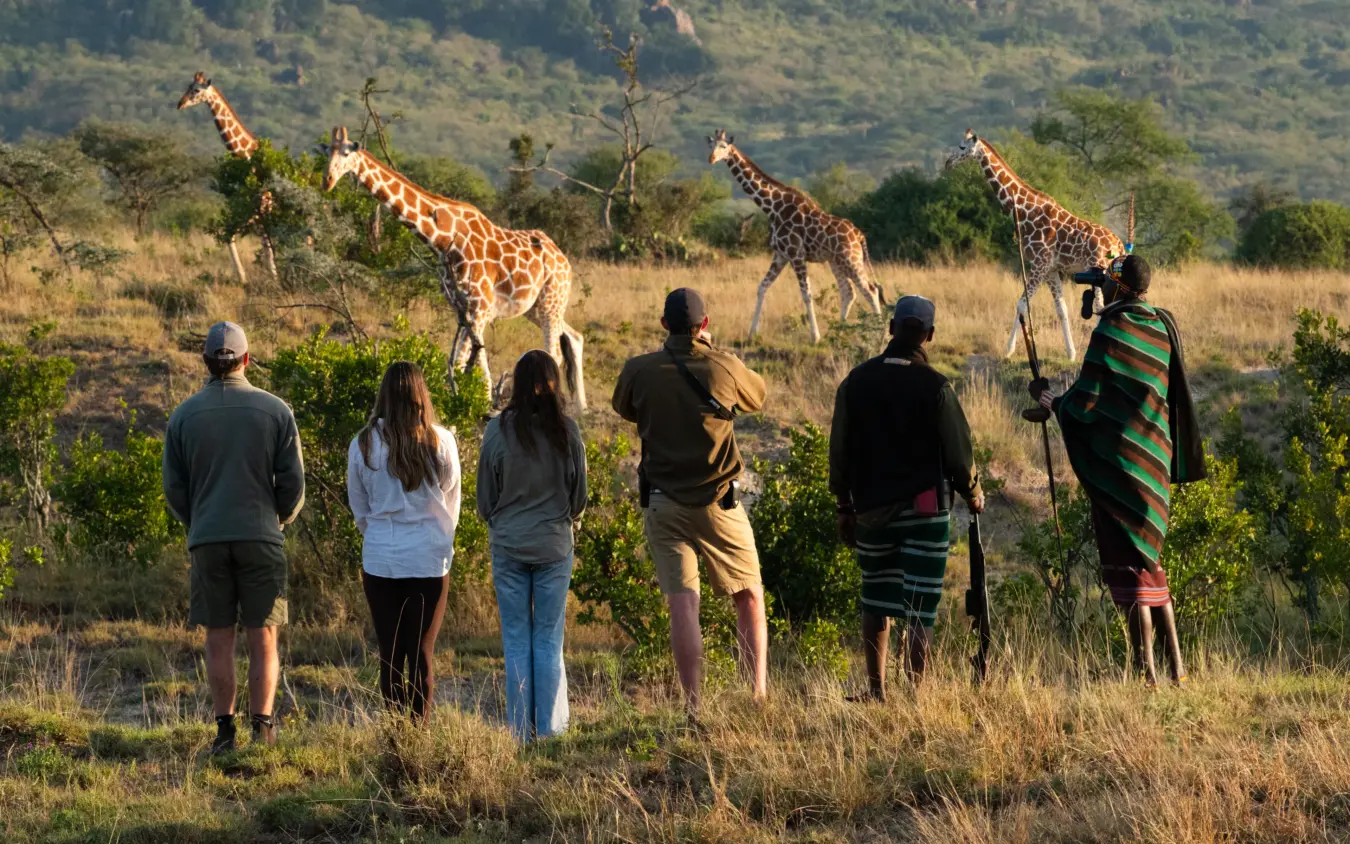
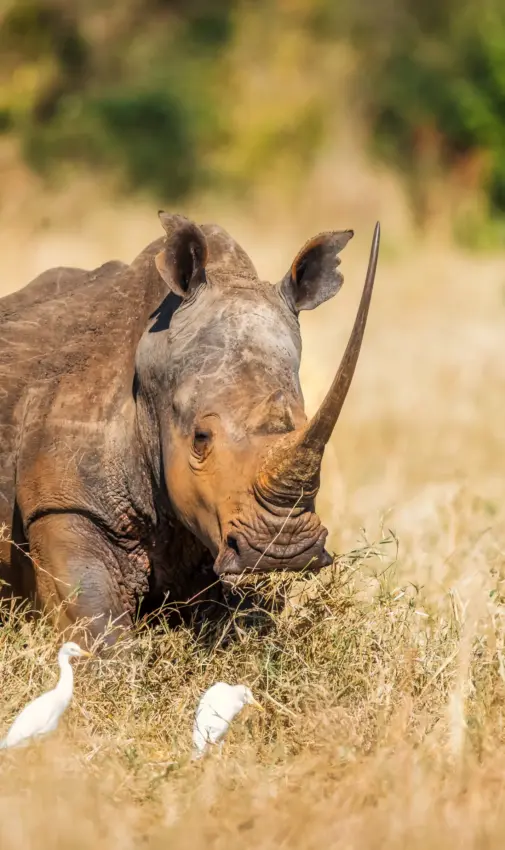
Baboons bark across the rock faces at first light, and the horses go out soon after, carrying novices and experienced hands across the plains and into mountain trails. Chyulu, a keen rider herself, is among those who lead. Camels go down to the riverbed at a slower pace. The ranch is named for the greater kudu, which shares it with reticulated giraffe and Grevy’s zebra.

Maasai warriors with camels meeting safari vehicle on dusty plains, Ol Malo House, Laikipia Highlands, Kenya
Family roasting marshmallows at campfire under twilight sky, Ol Malo House, Laikipia Highlands, Kenya

Colin and Rocky Francombe bought an overgrazed cattle ranch in 1991 and lived under canvas while they cleared and rebuilt the land. Colin is a naturalist who learned the northern wilderness on foot. By the fire he is a storyteller. He and Rocky host Ol Malo Lodge, five minutes away, four cottages sold by the room and better suited to couples.

Colin is a naturalist who learned the northern wilderness on foot.

Their son Andrew’s hand shows in the spiral staircase climbing to the star deck, and in the stone bath in Crocodile Cottage, sculpted with ridges, teeth and a tail. Three generations of the family now live along the same escarpment, but the house runs separately, with its own kitchen and staff, its own guide and pool. Andrew and Chyulu keep it at whatever pace suits the group in residence.

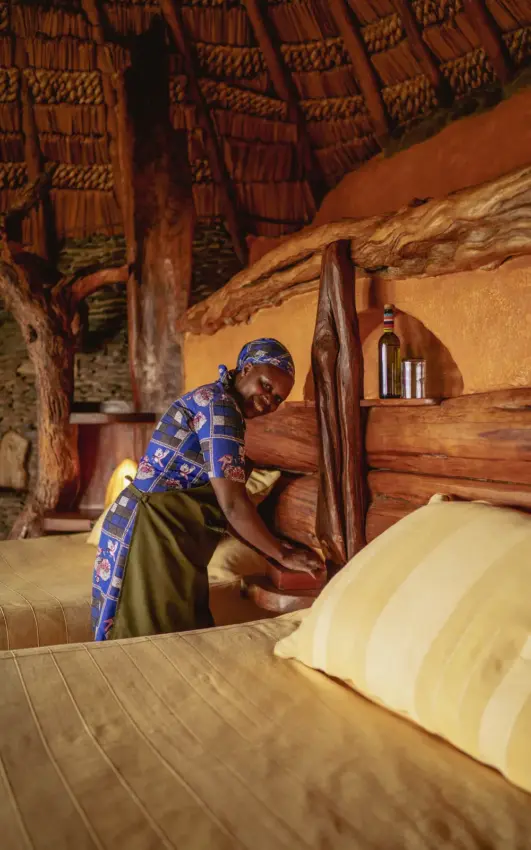
Man arranging bedding in traditional thatched-roof accommodation interior, Ol Malo House, Laikipia Highlands, Kenya 01

accommodation

Six En-Suite Bedrooms Sleep Twelve

Six en-suite bedrooms sleep up to twelve guests. Three ring the main house, with stone fireplaces, a sitting room and a spiral stair climbing to the star deck. Hippo Cottage has two bedrooms and a shared sitting room. Crocodile Cottage stands on the escarpment edge, with a sculpted stone bath and olive-wood fittings.

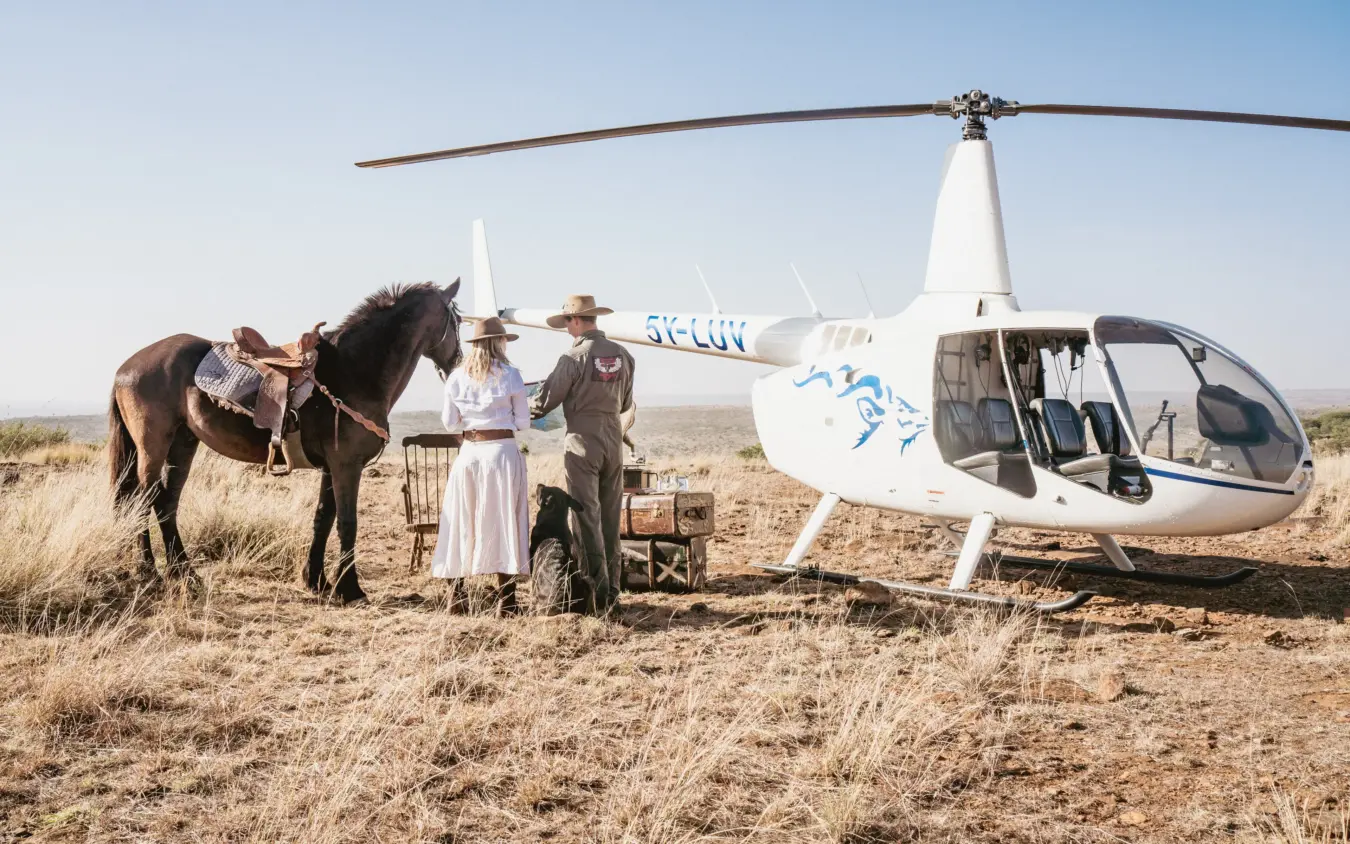
Cowboy on horseback with helicopter on dusty plain at sunset, Ol Malo House, Laikipia Highlands, Kenya 02

activities

Off-Road Drives and Lake Turkana Helicopter

Private vehicles run game drives by day and by night, off-road where a sighting leads, because the family's conservancy allows what a national park would not. Horses and camels suit novices and experienced riders. Samburu trackers lead walks, the Ewaso Ng'iro offers tubing and fishing, and the helicopter flies to Lake Turkana.

Maasai warrior holding spear in misty savanna landscape at dawn, Ol Malo House, Laikipia Highlands, Kenya 03

conservation

Samburu Trust Trains Wildlife Guardian Scouts

Julia Francombe founded the Samburu Trust in 2000. It trains Samburu Warrior Scouts as wildlife guardians and anti-poaching support, runs a school and health clinic on the ranch, digs water catchments and treats trachoma. Through Beads for Food, Samburu women, the Mamas, teach guests bead-making for sustainable income.

ready to get started?

Get in touch and let’s start the conversation. An initial consultation helps us understand what you’re looking for, whether that’s specific experiences, luxury touches, or marking a special occasion, and from there we’ll guide you through what’s possible so you can decide if we’re the right fit.

Alternative accommodation in laikipia highlands

Laikipia's lodging runs from small stone and timber lodges built into the landscape to classic canvas tented camps, often used as bases for walking and camelback safaris. Several conservancies offer fully staffed private houses with their own guides and vehicles, suited to families and small groups taking a whole place to themselves. Lightweight mobile and fly-camps support multi-day journeys on foot or by camel, pitched in remote corners under conservancy management. Most are intimate, low-density and closely tied to conservation work.

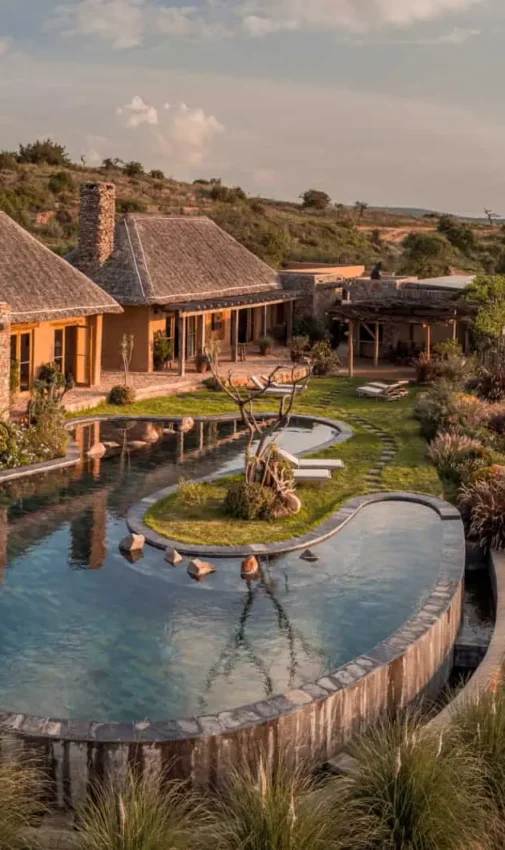
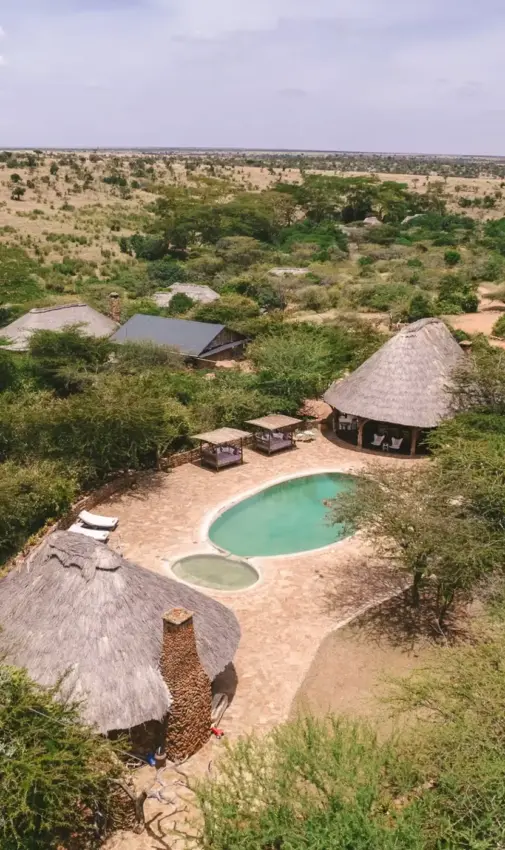
Curved swimming pool with guests surrounded by savanna landscape, Lengishu House, Laikipia Highlands, Kenya 01

Lengishu House

Laikipia Highlands

Maasai guides leading camels through arid savanna landscape, Karisia Walking Safaris, Laikipia Highlands, Kenya 02

Karisia Walking Safaris

Laikipia Highlands

Elegant interior lounge with symmetrical seating and chandelier, Arijiju, Laikipia Highlands, Kenya 03

Arijiju

Laikipia Highlands

Safari vehicle with guests on hillside overlooking mountains, Borana Lodge, Laikipia Highlands, Kenya 04

Borana Lodge

Laikipia Highlands

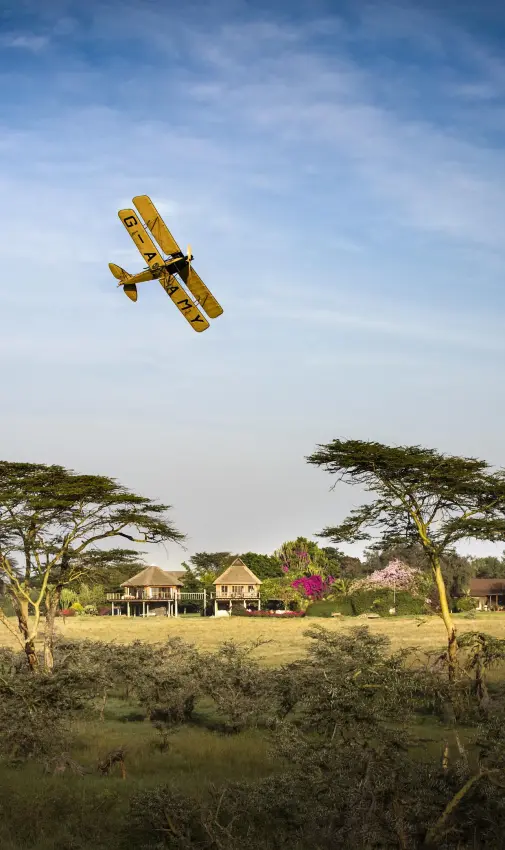
Yellow biplane flying over safari lodge and acacia trees, Segera, Laikipia Highlands, Kenya 05

Segera

Laikipia Highlands

Circular stone lodge structures on rocky outcrop overlooking forested valley at sunset, Suyian Lodge, Laikipia Highlands, Kenya 06

Suyian Lodge

Laikipia Highlands

Helicopter hovering above horseman herding horses through dusty terrain, Ol Malo Lodge, Laikipia Highlands, Kenya 07

Ol Malo Lodge

Laikipia Highlands

Silhouetted figures in boat at sunrise with mountain backdrop, Kicheche Laikipia, Laikipia Highlands, Kenya 08

Kicheche Laikipia

Laikipia Highlands

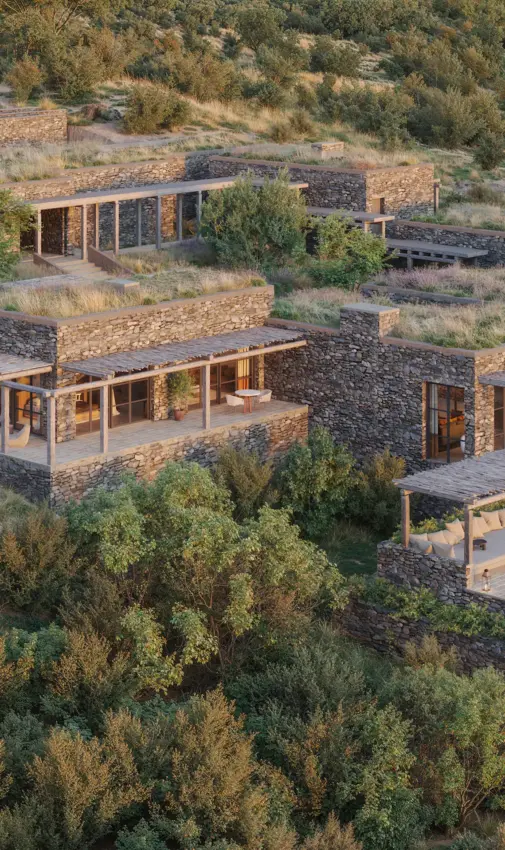
Curved modern lodge buildings perched on rocky hilltop overlooking valley, Ol Lentille, Laikipia Highlands, Kenya 09

Ol Lentille

Laikipia Highlands

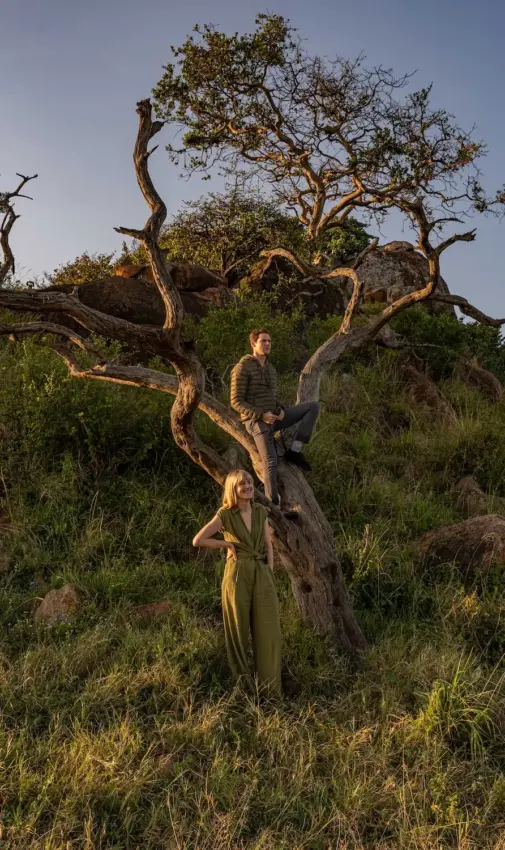
Two guests posing on gnarled tree branches at golden hour in savanna grassland, Lolldaiga House, Laikipia Highlands, Kenya 10

Lolldaiga House

Laikipia Highlands

Galago Private Canvas, Laikipia Highlands, Kenya 11

Galago Private Canvas

Laikipia Highlands

Luxury lodge with turquoise pool overlooking vast savanna landscape, El Karama Lodge, Laikipia Highlands, Kenya 12

El Karama Lodge

Laikipia Highlands

Luxury lodge with blue pool nestled among acacia trees in arid savanna landscape, Kifaru House, Laikipia Highlands, Kenya 13

Kifaru House

Laikipia Highlands

Elevated observation tower surrounded by massive bird nest structure in savanna, Nay Palad Bird Nest, Laikipia Highlands, Kenya 14

Nay Palad Bird Nest

Laikipia Highlands

Person holding lanterns at dusk outside illuminated lodge building, Enasoit Camp, Laikipia Highlands, Kenya 15

Enasoit Camp

Laikipia Highlands

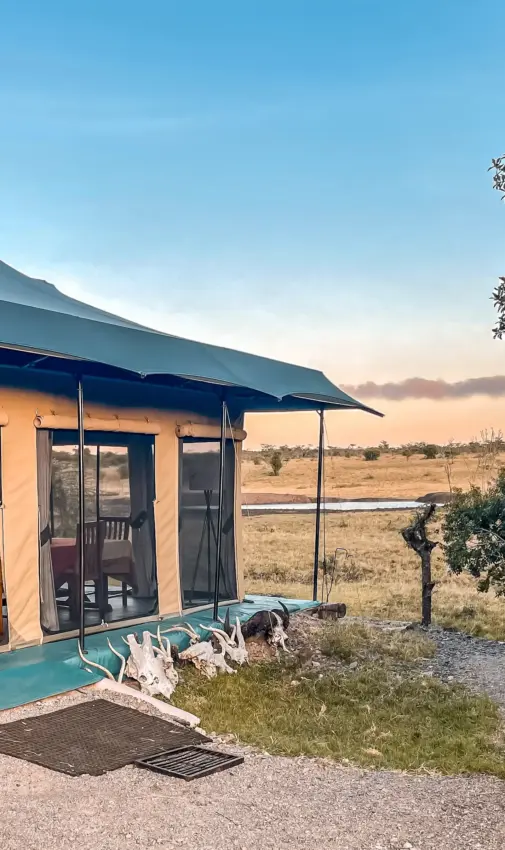
Luxury safari tent with awning overlooking waterhole and grassland at dusk, Porini Rhino Camp, Laikipia Highlands, Kenya 16

Porini Rhino Camp

Laikipia Highlands

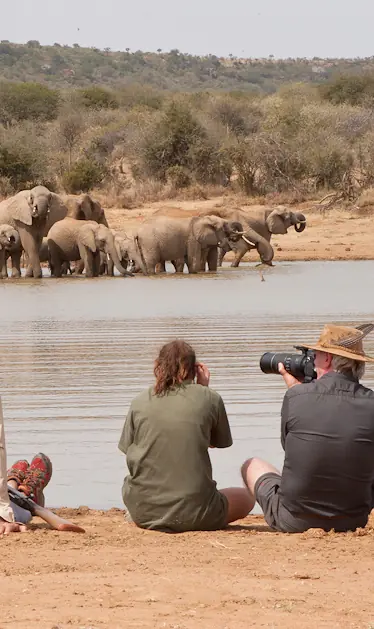
Guests photographing elephant herd at waterhole from shoreline, Laikipia Wilderness, Laikipia Highlands, Kenya 17

Laikipia Wilderness

Laikipia Highlands

Suyian Homestead, Laikipia Highlands, Kenya 18

Suyian Homestead

Laikipia Highlands

Maasai herder with horse viewed from inside safari tent, Ol Malo Nomad, Laikipia Highlands, Kenya 19

Ol Malo Nomad

Laikipia Highlands

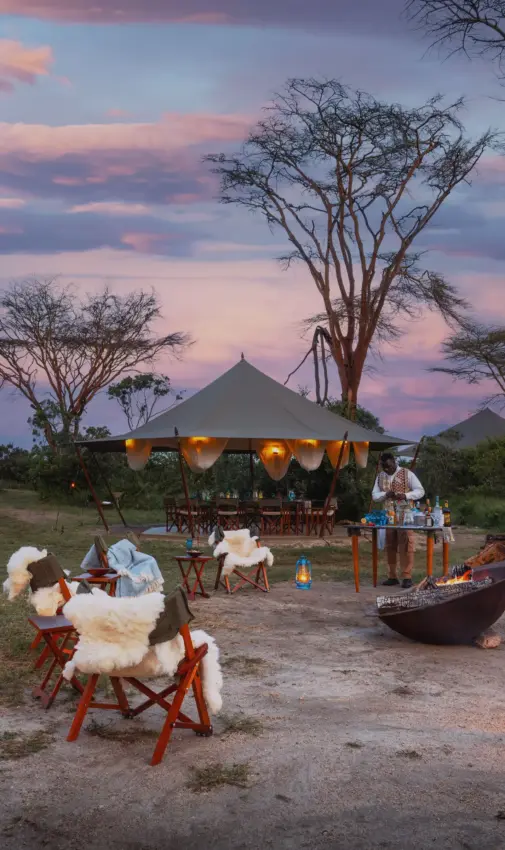
Illuminated safari tent in woodland setting at dusk, Sirikoi, Laikipia Highlands, Kenya 20

Sirikoi

Laikipia Highlands

frequently asked questions

The ranch has its own airstrip, so the cleanest arrival is a private charter from Nairobi's Wilson Airport straight to it, typically a Cessna Caravan or a Pilatus PC-12, and with a house that sleeps twelve the cost of the aircraft spreads across the party.

The alternative is a scheduled flight to Loisaba, about an hour in the air from Wilson, followed by 45 to 50 minutes on ranch roads to the house. Both are soft-bag routes: the scheduled services hold you to 15 kilograms a person including hand luggage, and hard suitcases are refused at check-in.

Andrew Francombe is a qualified helicopter pilot, which matters less for arriving than for what you can do once there: a day to Lake Turkana or the Rift Valley is possible from the house without a long road journey either side. Tell us the shape of the party and we will cost the charter against the scheduled flight for you.

Either. Six bedrooms are spread across three buildings, the main house and two cottages a short walk from it, and the house is let both as one exclusive unit for up to twelve and to two separate parties at the same time.

Taken whole, everything in it is yours: the kitchen and its chef, the guide and vehicle, the pool, the timetable. With two parties in, the main house and the cottages divide naturally between them, and the pool and the living rooms are shared.

Our honest view is that it works best whole. A family of eight or three couples travelling together get the house at its real value, which is a ranch home run around one group. If you are two people, the four-cottage lodge five minutes away, hosted by Andrew's parents, is the better fit and we would say so.

Yes, and it is arguably the best use of it. Children of all ages are welcome, one of the rooms in the main house is made with children in mind, and because the house has its own kitchen and staff there is no dining room clock to keep: supper can be at six for the children and nine for the adults.

The ranch is a working family home where the family's own children are growing up, and the days that suit small people are all here: camels to ride, the river to tube when the water allows, gentle rides on the ranch's horses, and a visit to the Samburu Trust's school on the ranch.

Tell us the ages when you enquire. A five-year-old and a fifteen-year-old want different days, and the difference between a good family week and a great one is usually in the planning rather than the place.

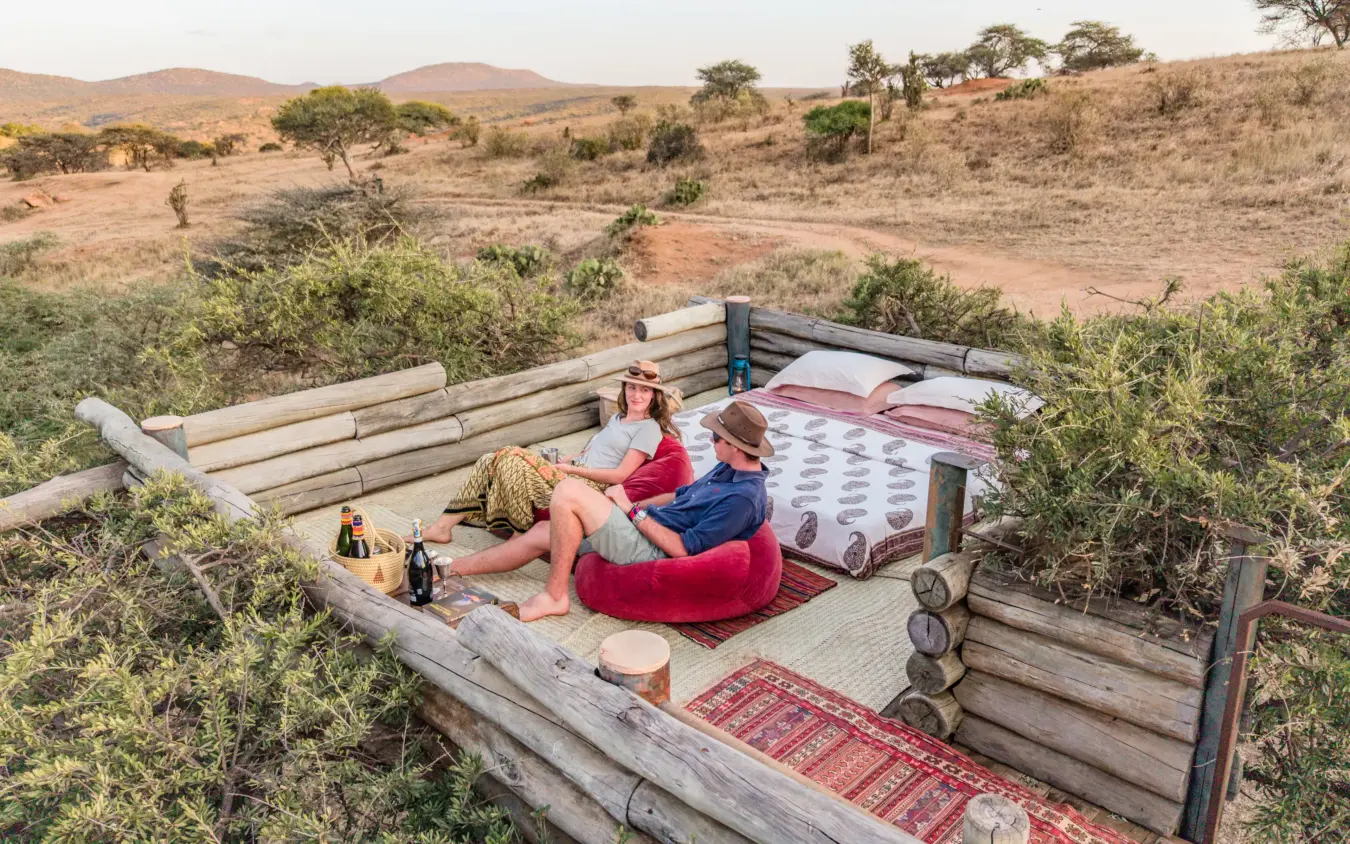
Two ways of sleeping out on the ranch without leaving it. The Treehouse is a platform for a night under the stars, bedded down above the ground; the Leopard Hide is a built hide in which you can spend the night instead. Both are arranged from the house, so a party can send the teenagers out for a night while the rest stay by the fire.

Nights here are cold whatever the daytime says, so it is a warm-layers outing at any time of year. If small children are going out, tell us and we will have it all arranged before you travel rather than leave it to the evening.

You can, and you do not. Riding from the house takes all levels and non-riders, on the ranch's own horses, with Andrew and Chyulu both experienced riders and guides.

There is a rider weight limit of 90 kilograms, and anyone over it or not keen on horses rides a camel or walks beside one instead. The plains below the escarpment are the sort of country where a ride replaces a game drive rather than adding to it.

Multi-day riding, moving camp by horse and camel through the valley and across the plateau, is a different product, the family's mobile camp, and wants confident riders. If that is the trip you are picturing, tell us and we will build it around nights at the house.

By the official measure, yes. TravelHealthPro, which carries the UK's official travel health advice, and the American CDC both treat all of Kenya below 2,500 metres as malaria risk throughout the year, game areas included, and both recommend antimalarial tablets for it; only the highlands above that line and the centre of Nairobi are rated very low.

The house stands at about 1,600 metres on the escarpment, so it sits under the line rather than above it, and the Ewaso Ng'iro runs in the valley below.

We are travel planners, not medical professionals, and we do not make recommendations about medication. Which tablets, if any, suit you and everyone in your party, children included, is a conversation for your own doctor or a travel clinic, ideally with your dates in front of you.

The non-medical part we can speak to: the pool and the star deck come into their own at dusk, which is exactly the hour for long sleeves and repellent.

rated five stars by our clients

other areas in kenya

Laikipia pairs naturally with the Maasai Mara for the wildebeest migration and high big-cat densities, a contrast to its conservancy-based activities. Just north, Samburu, Shaba and Buffalo Springs share its dry-country species in a reserve setting, while the Mathews Range adds mountain forest and Samburu culture. Mount Kenya, immediately to the south, offers montane forest and alpine trekking. The Kenyan coast, reached by air, rounds out a bush itinerary with Indian Ocean beaches and marine parks.

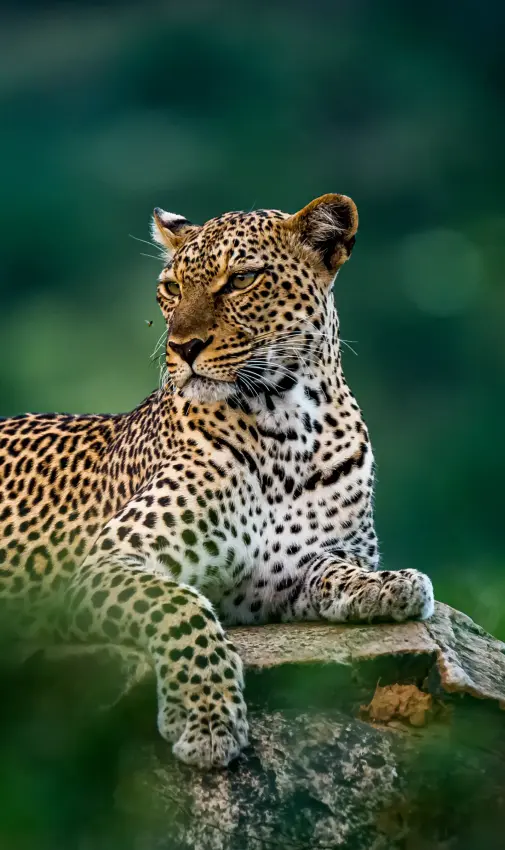
Leopard resting on fallen log in natural setting 01

Maasai Mara

Local guides with poles crossing shallow forest river, Northern Kenya, Kenya 02

Northern Kenya

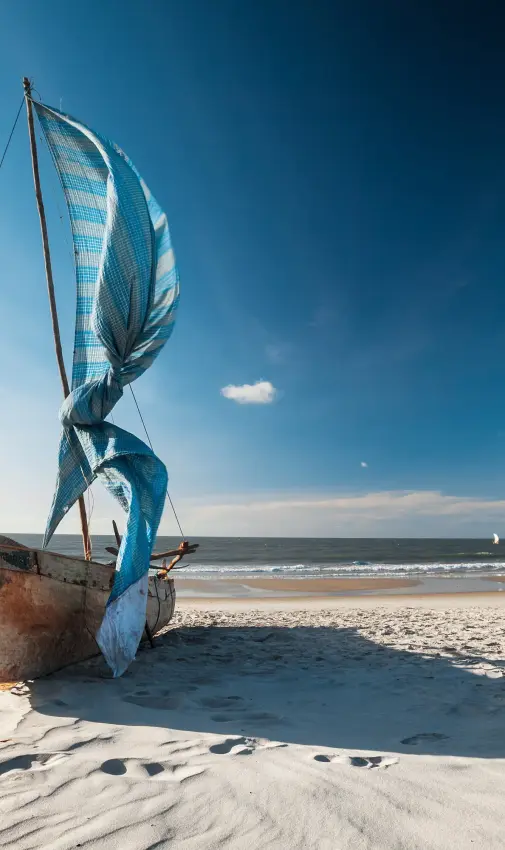
Traditional fishing boat with blue sail on sandy beach 03

Kilifi

Flock of flamingos wading in shallow pink-tinted water, Rift Valley Lakes, Kenya 04

Rift Valley Lakes

Snow-capped Mount Kilimanjaro rising above acacia trees and Tanzania savanna 05

Amboseli and Chyulu Hills

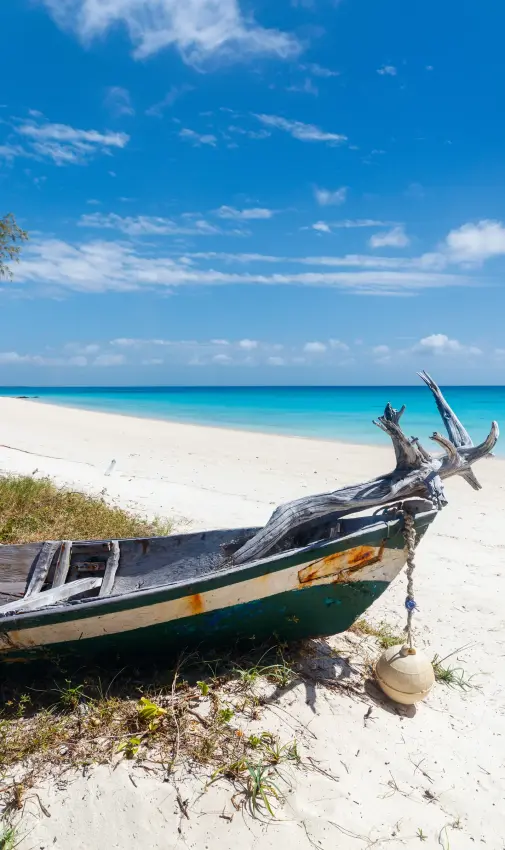
Wooden fishing boat beached on white sand tropical shore 06

Diani Beach

Man in traditional red garment driving open safari vehicle, Samburu Reserve, Kenya 07

Samburu Reserve

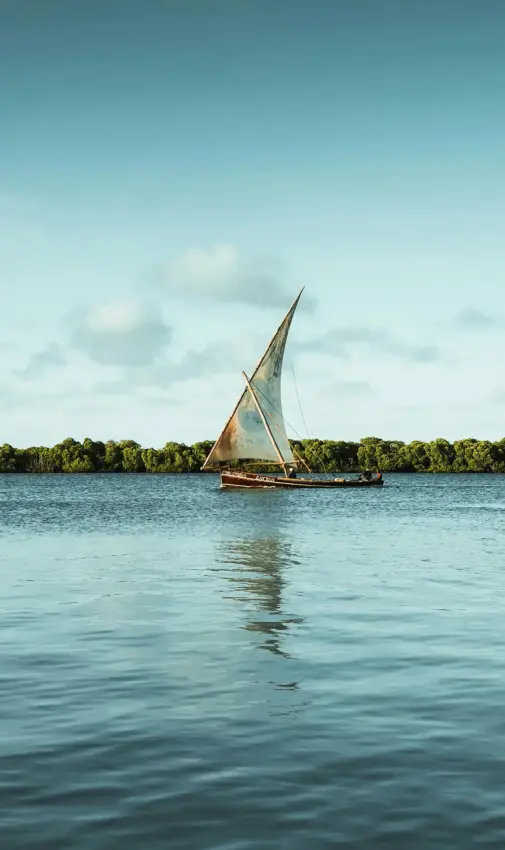
Traditional sailing dhow on calm turquoise water with forested shoreline, Lamu Archipelago, Kenya 08

Lamu Archipelago

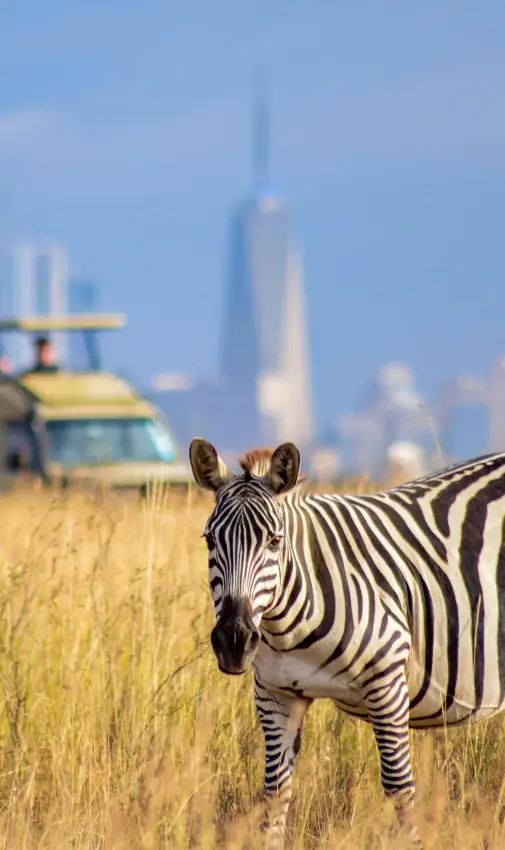
Zebras in savanna grassland with safari vehicle and city skyline 09

Nairobi

African elephants with calf walking through grassland at sunset 10

Tsavo

Meru National Park, Kenya 11
Meru National Park

Planning a journey together

our approach

remote, exclusive
& personal

Every journey starts with a conversation. We take the time to understand your vision before we start planning.

Whether by phone or in person, we work with you directly to shape something that is considered, personal, and expertly delivered.

get in touch
destinations ideas & inspiration our process about us contact us