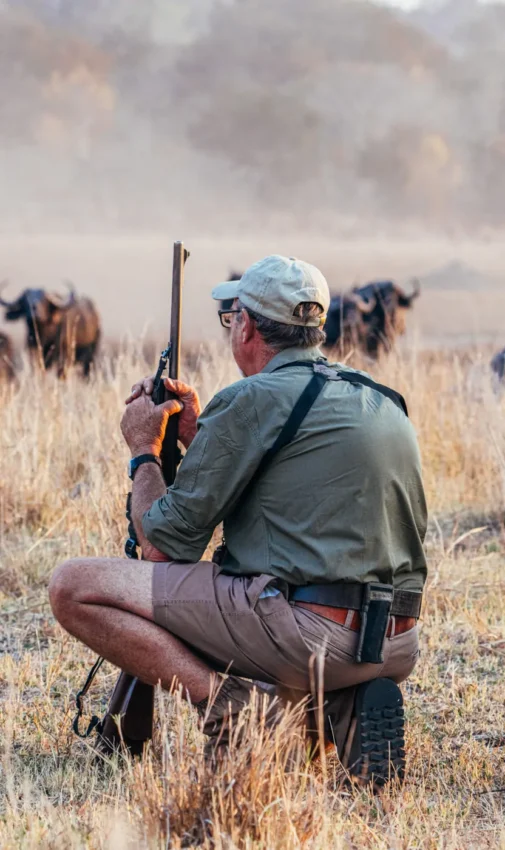
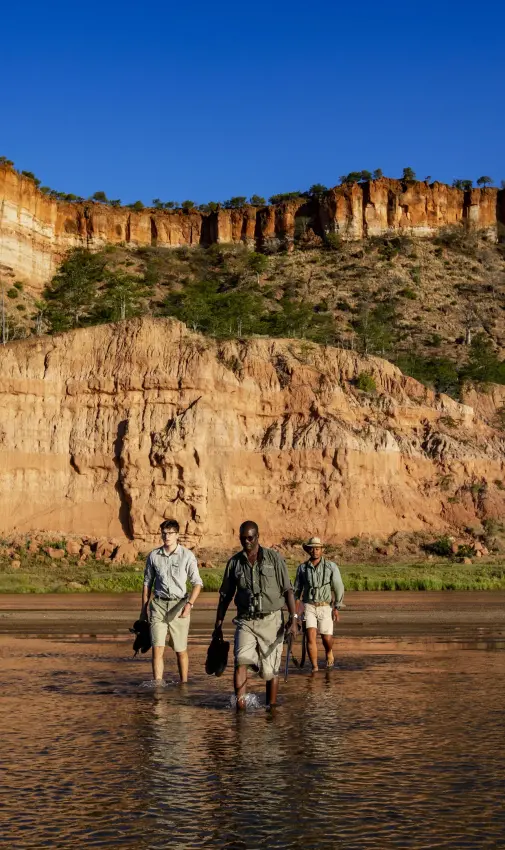
Zimbabwe’s professional guiding qualification is one of the hardest in Africa, demanding years of study and field examination before a guide may lead clients on foot among dangerous game. Carson holds that licence, and examines other guides for it. He runs Camp Hwange as a working academy, taking on three or four Zimbabwean learner guides each year and mentoring them toward the same standard. The result reaches guests directly, in interpretation that connects tracks, botany, insects and birdsong, delivered by men who have earned the right to walk a visitor into the path of an elephant.
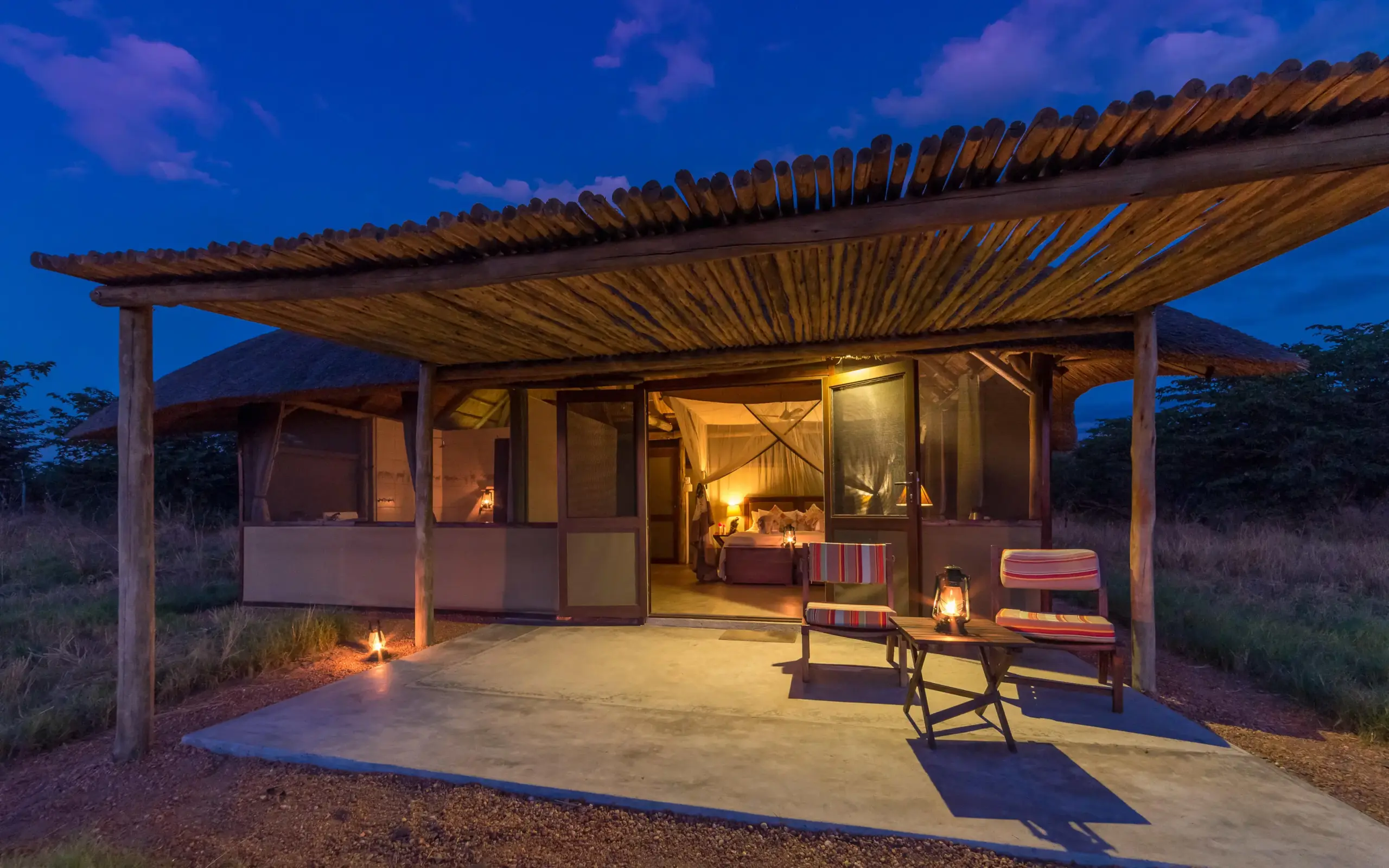
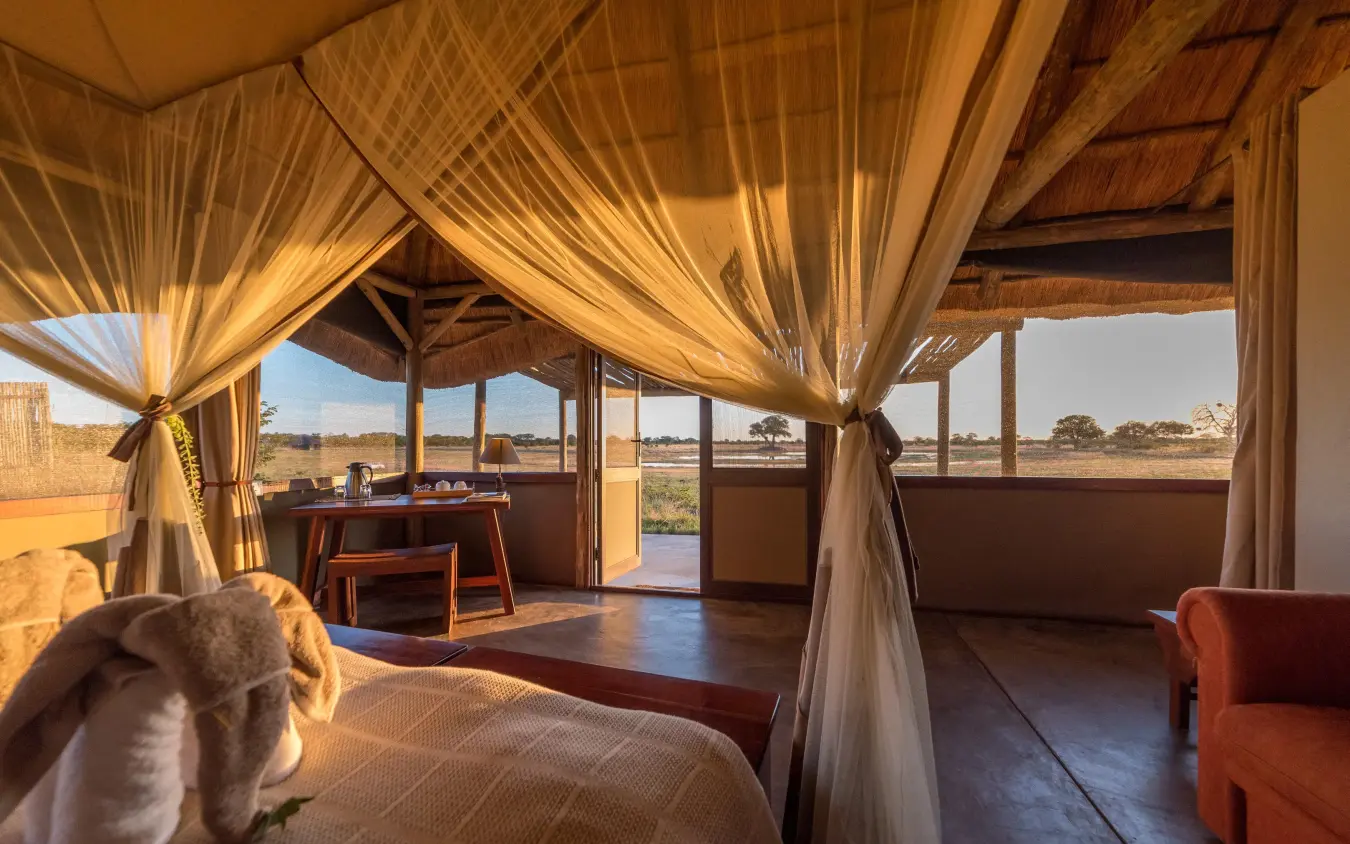
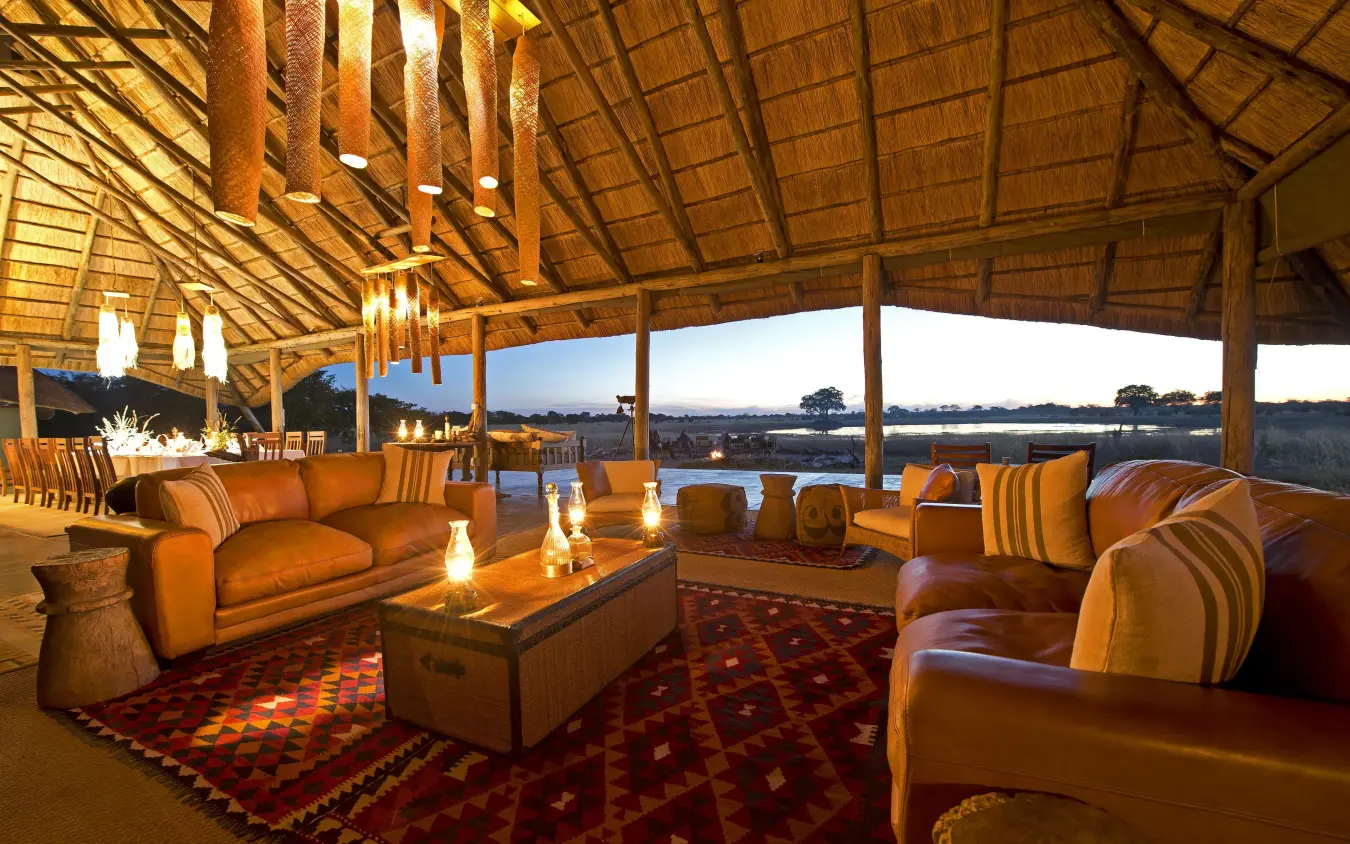
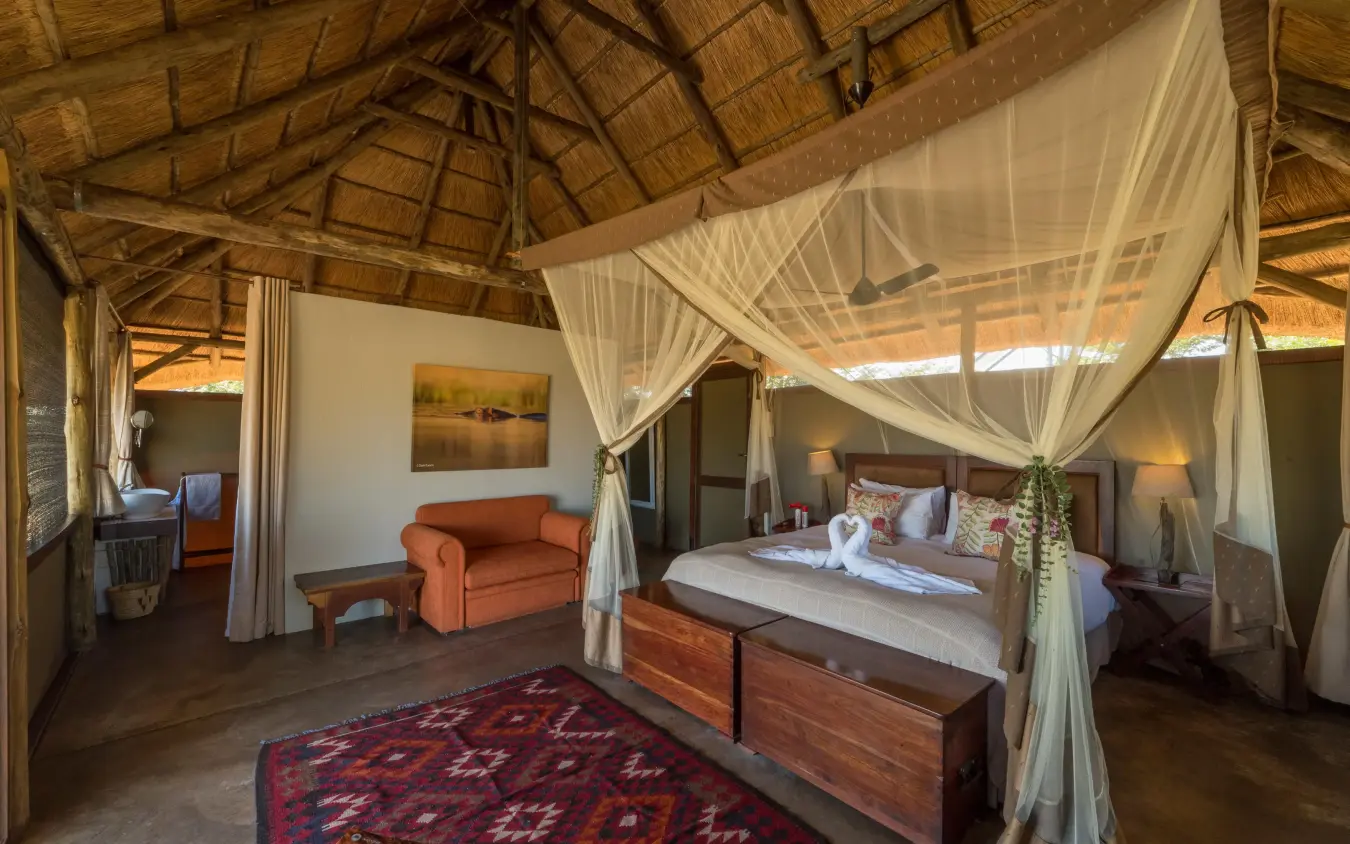
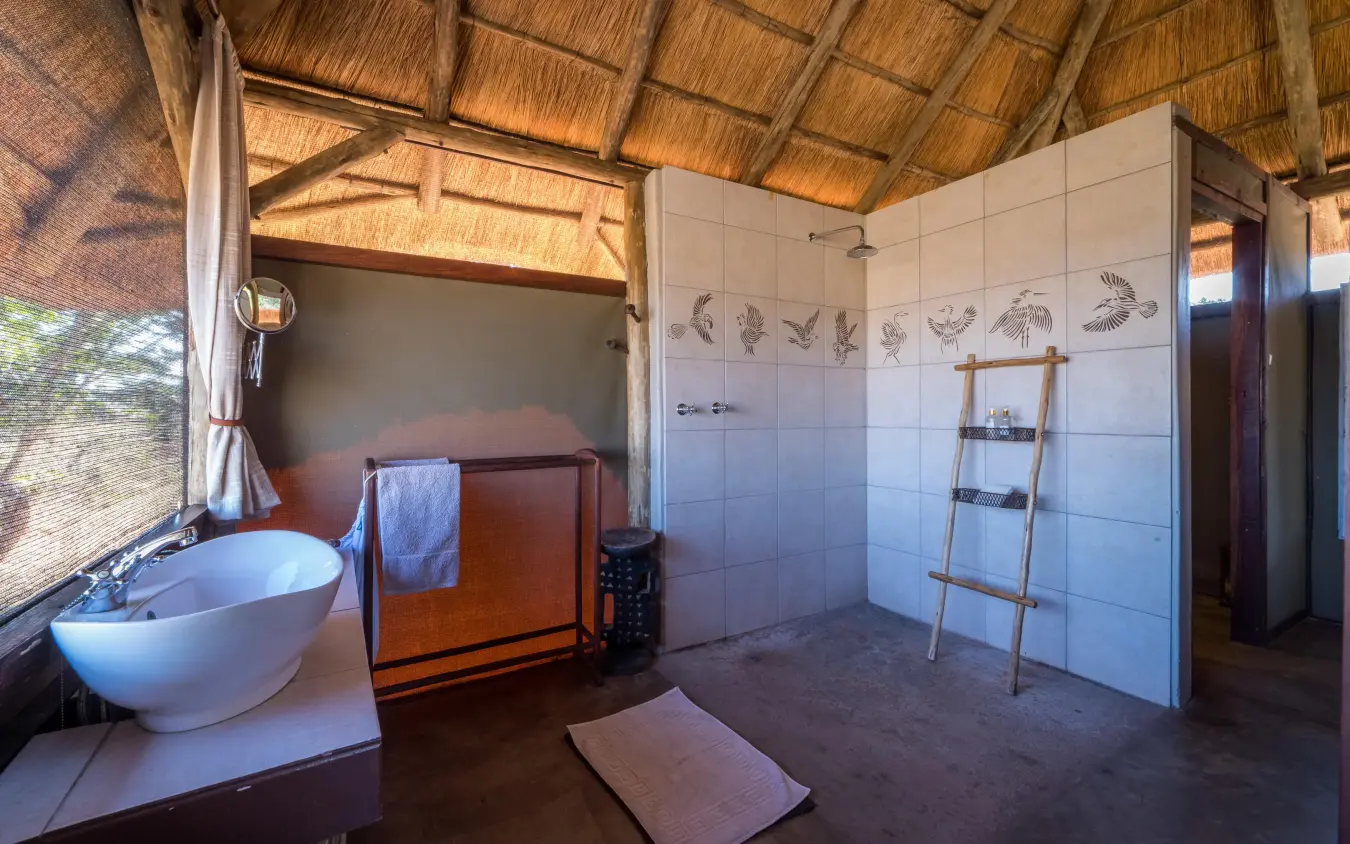
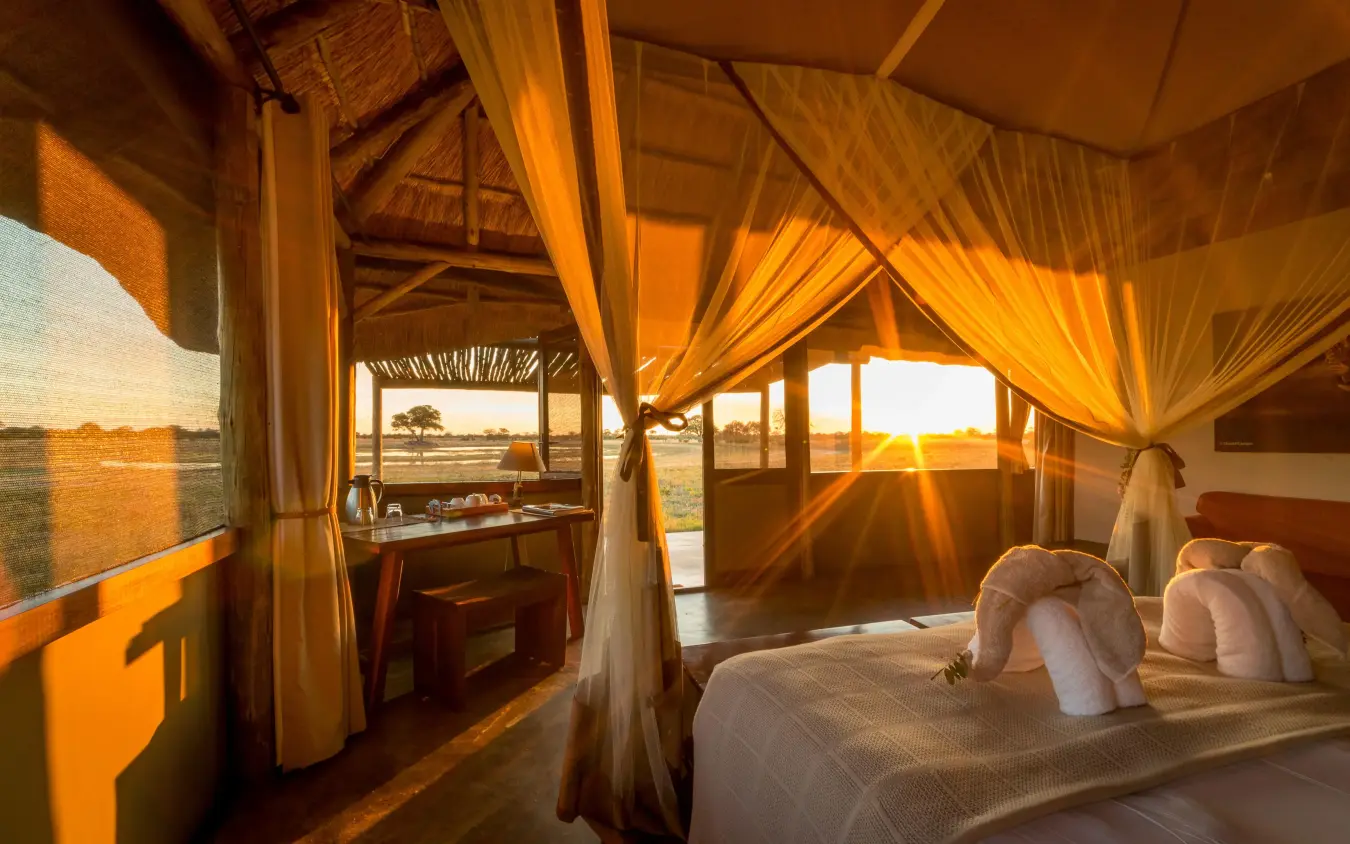
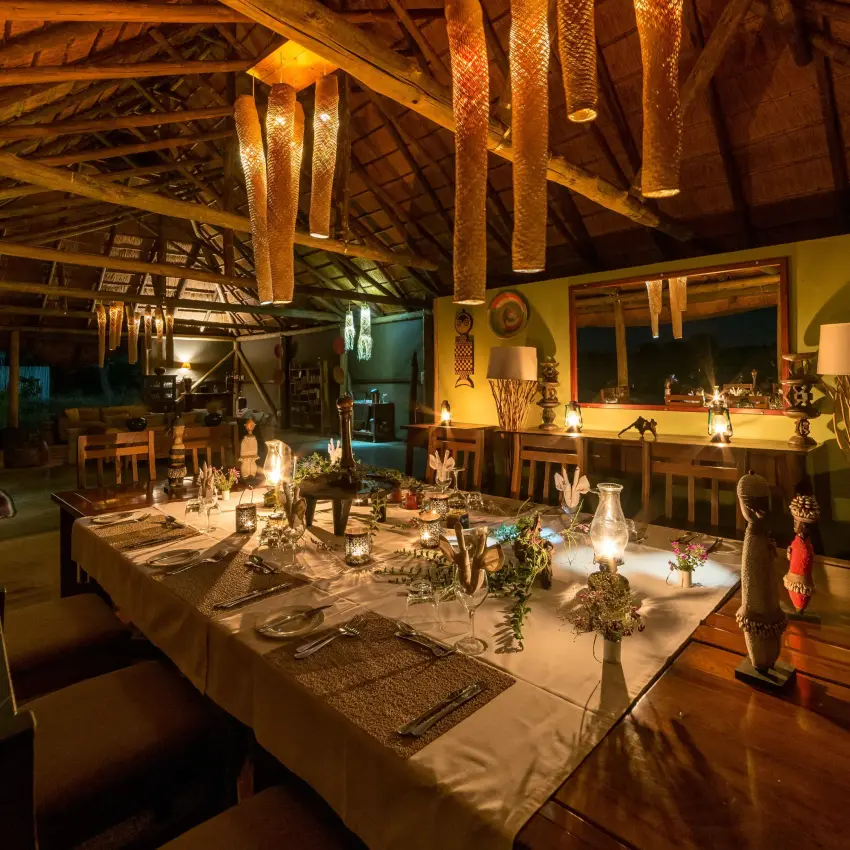
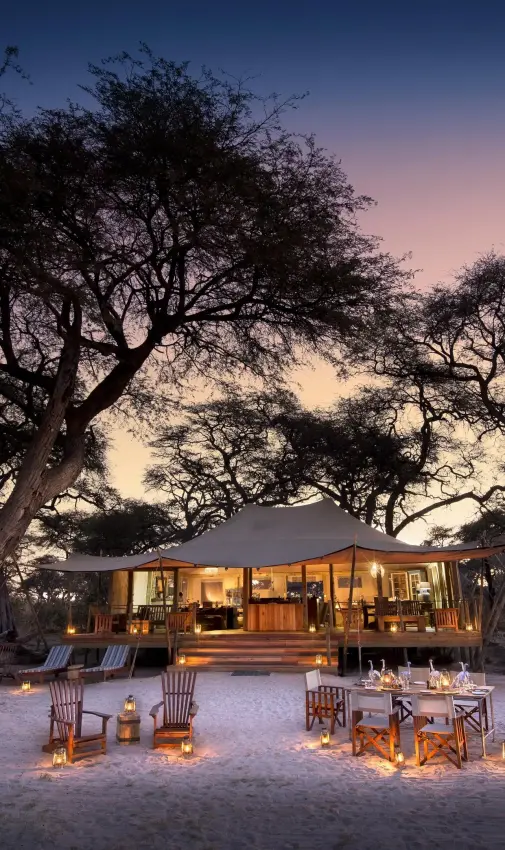
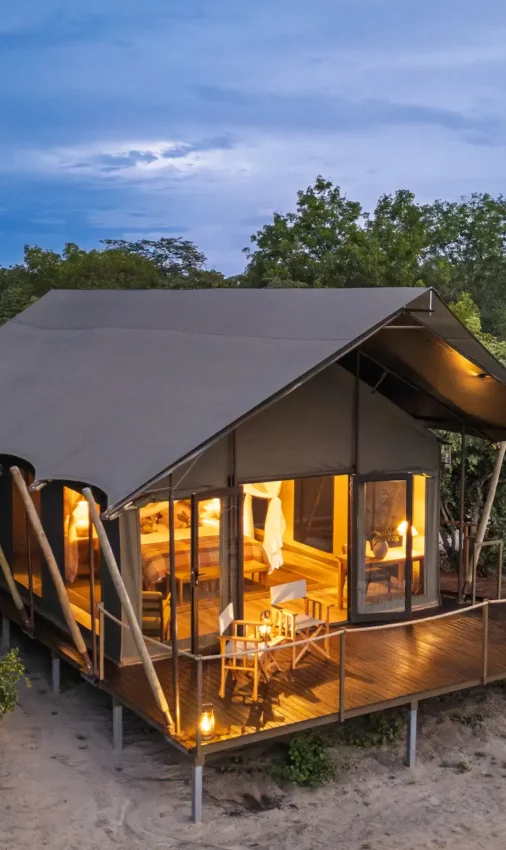
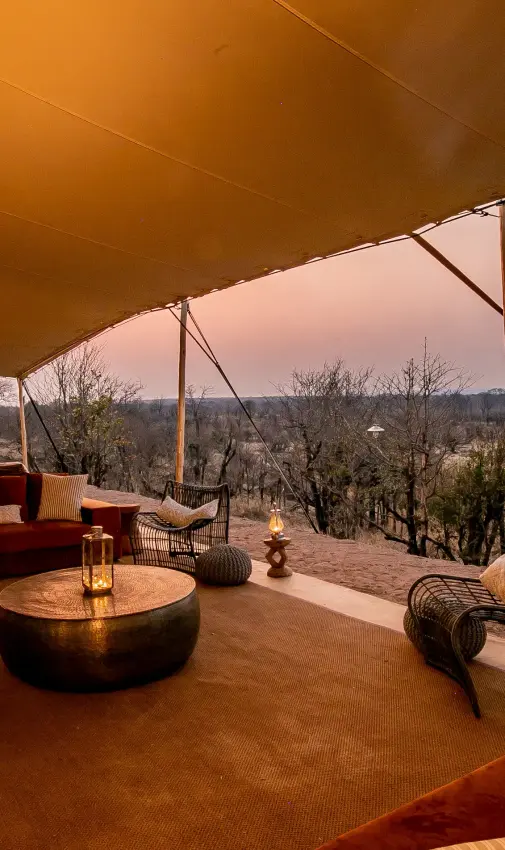
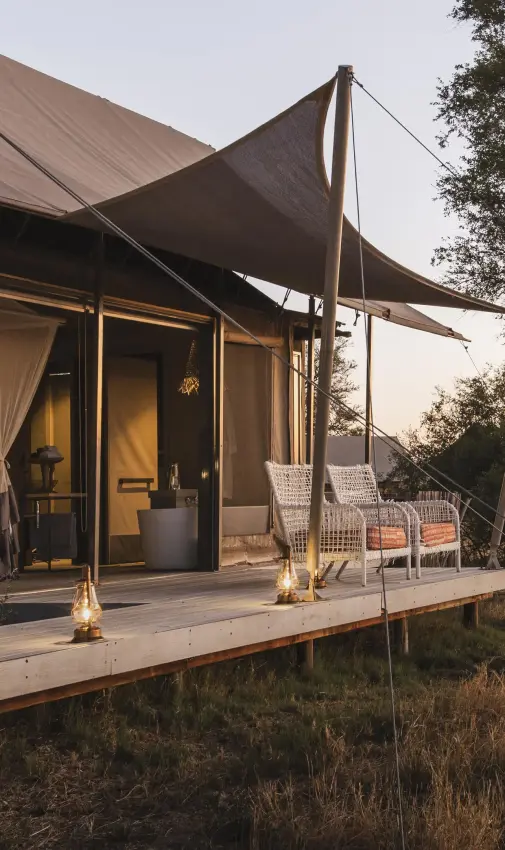
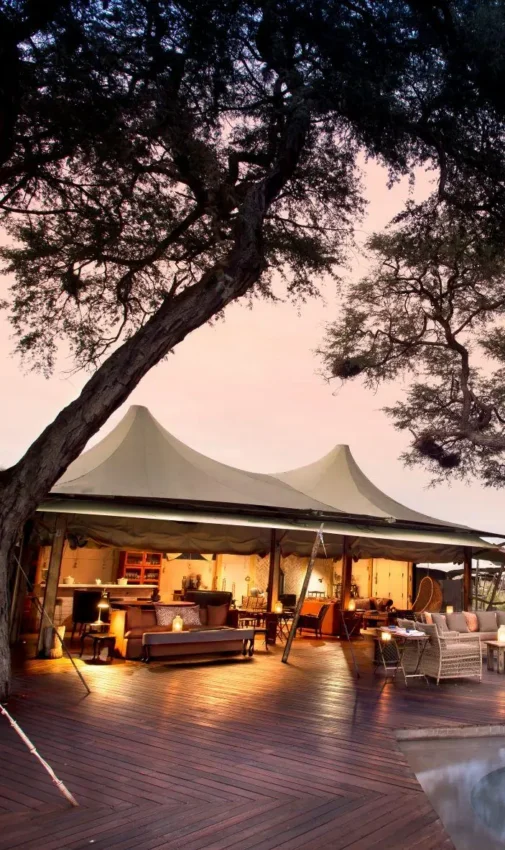
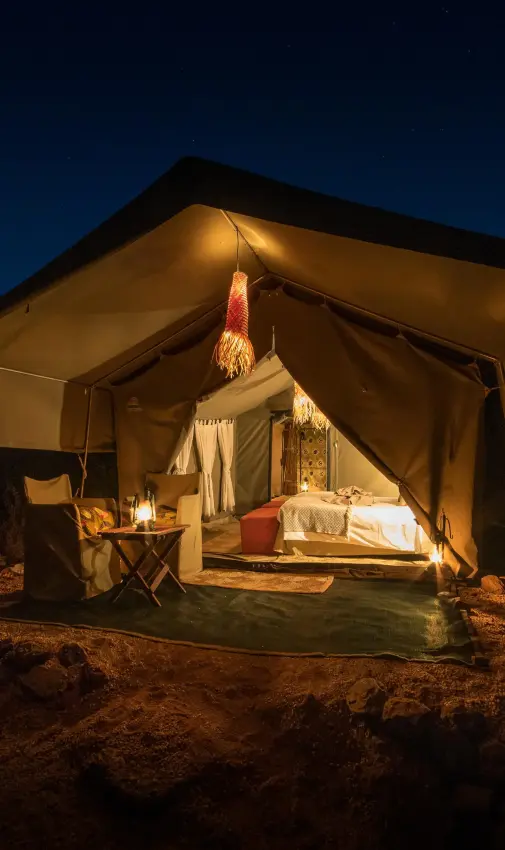
The camp itself stays deliberately plain. Eight thatched chalets fan out on either side of the central lounge and dining structure, spaced for privacy and built at ground level from local stone, timber and canvas. The mesh windows let the sounds of the night come in, and the whole operation runs off-grid on solar power. There are no gold taps or butler service here, and none are missed. What matters is what lies a few paces beyond the canvas.
Evenings gather around the fire, mopane logs cracking, lions audible somewhere out in the dark
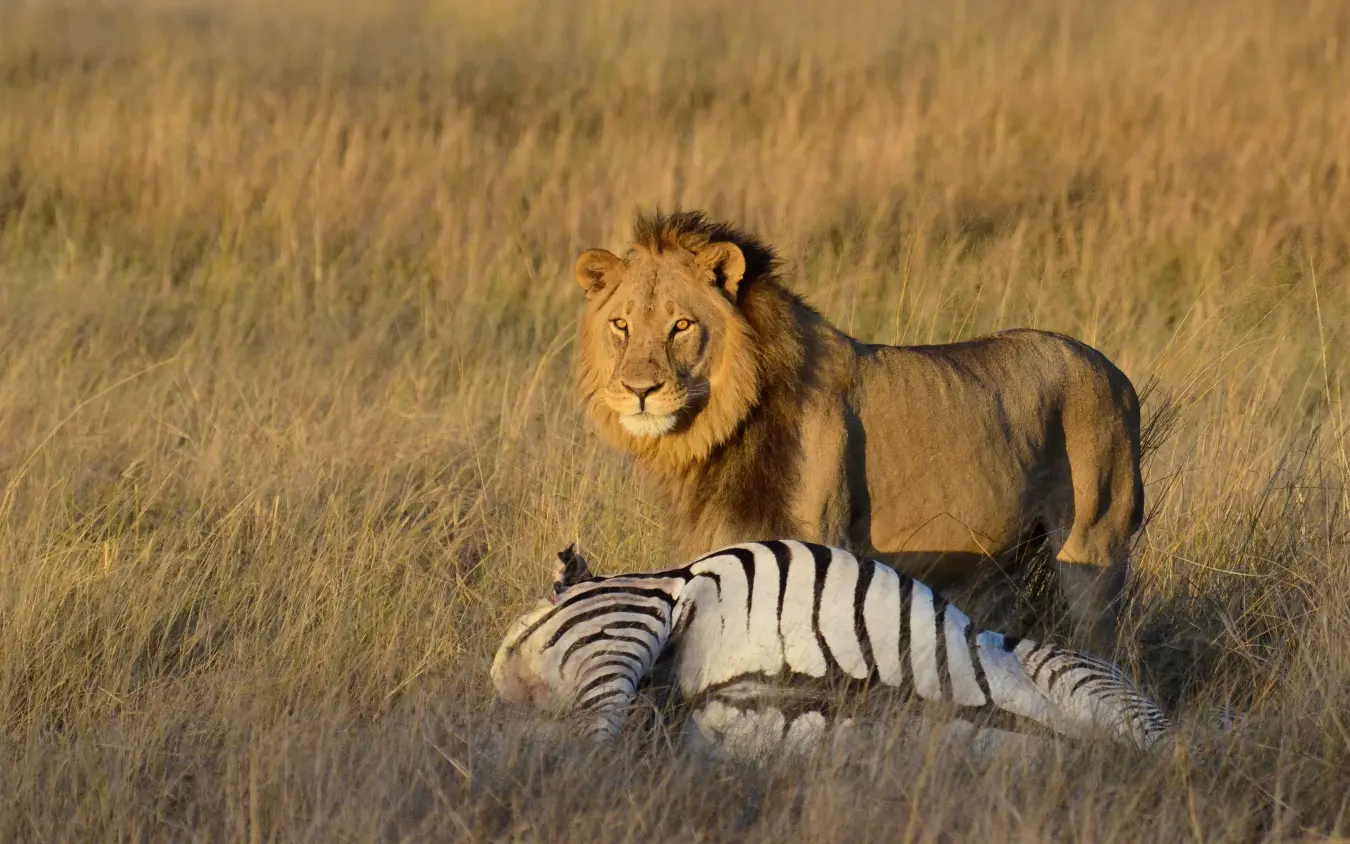
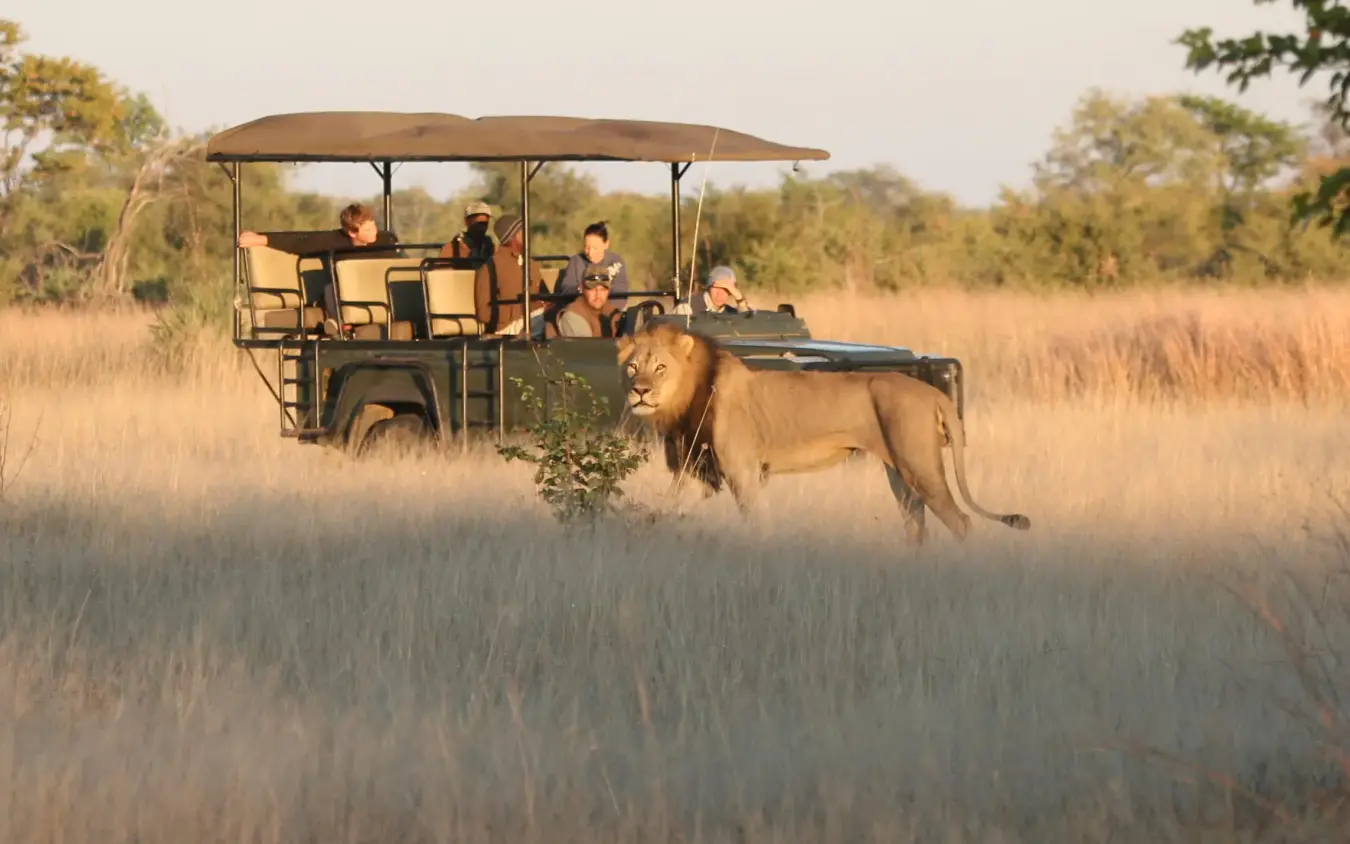
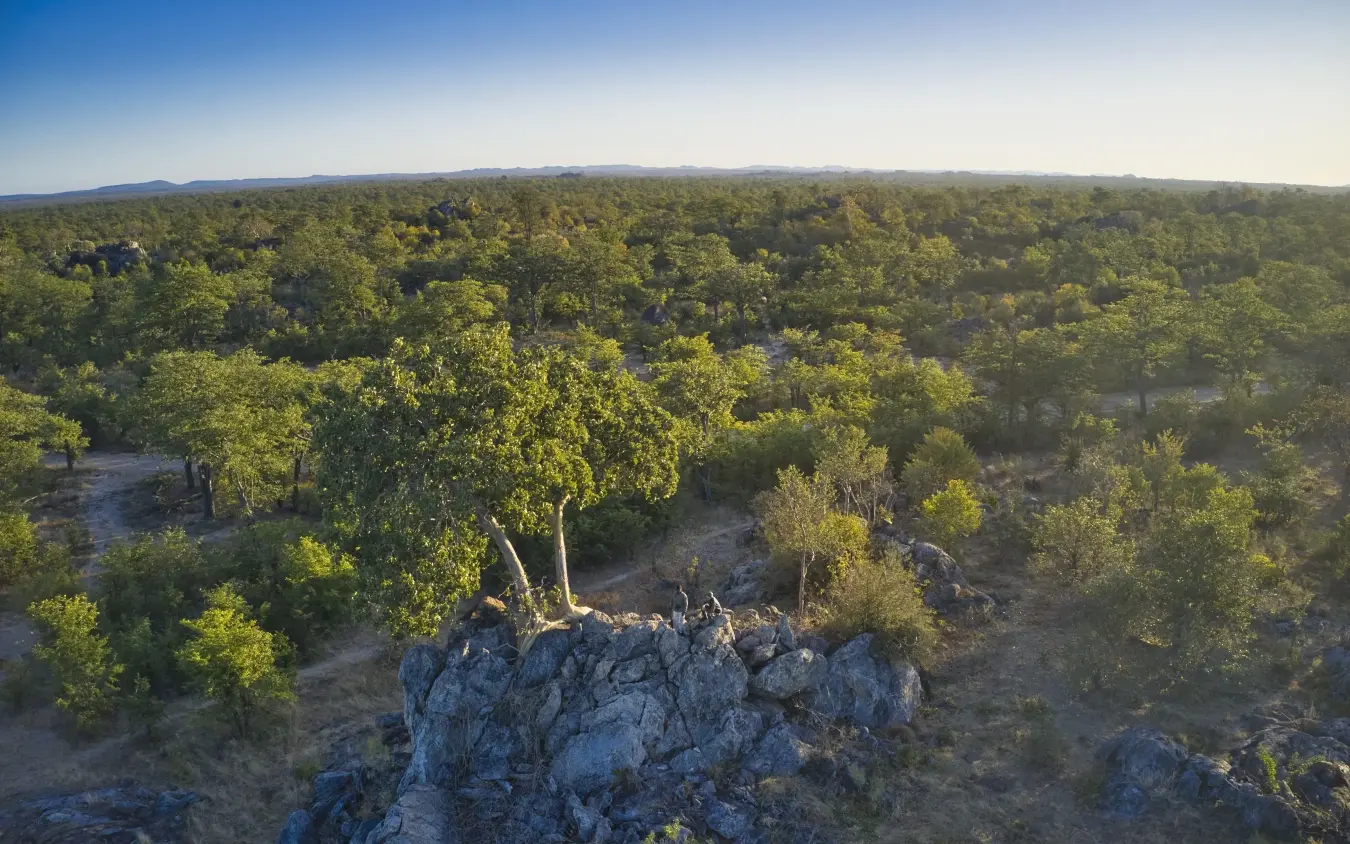
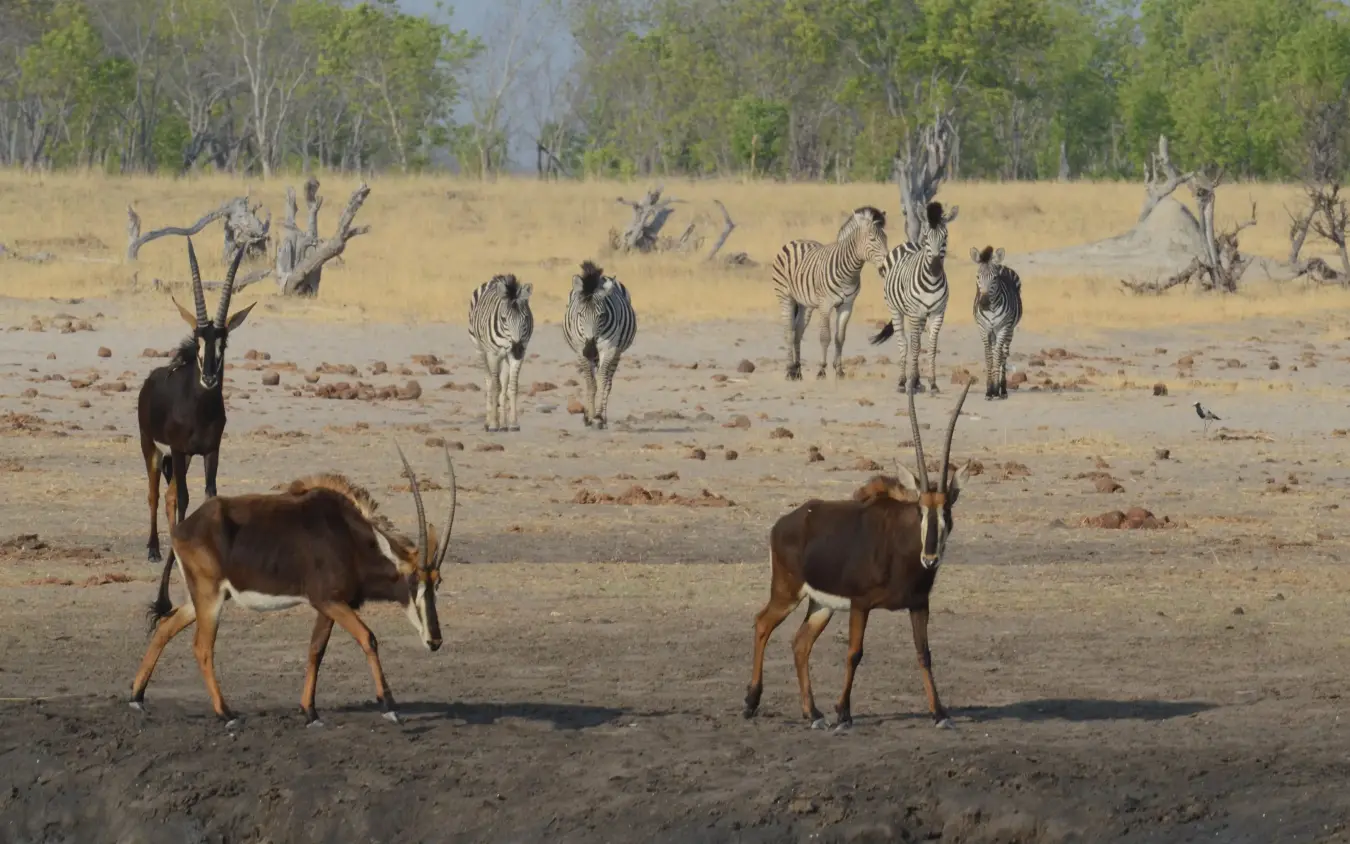
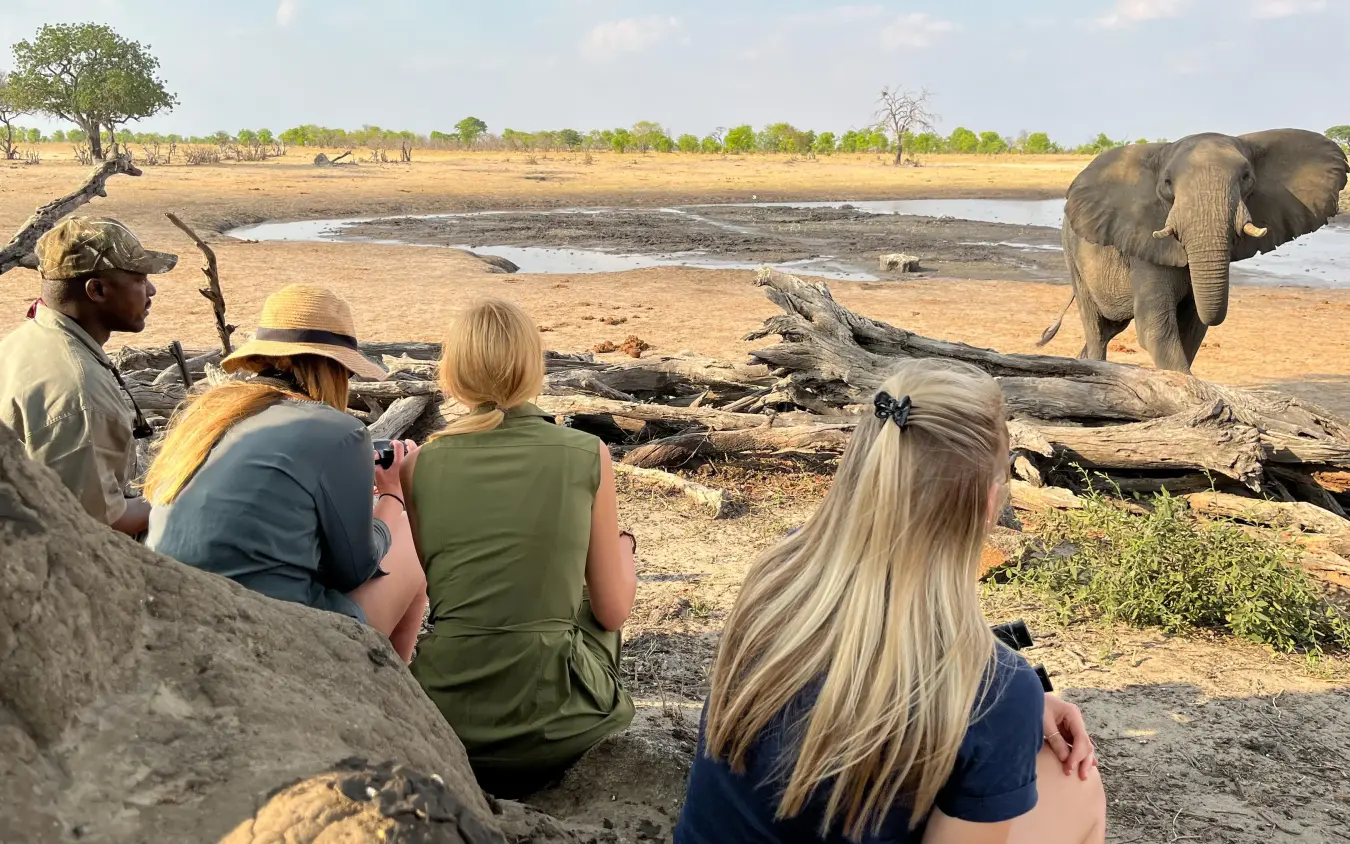
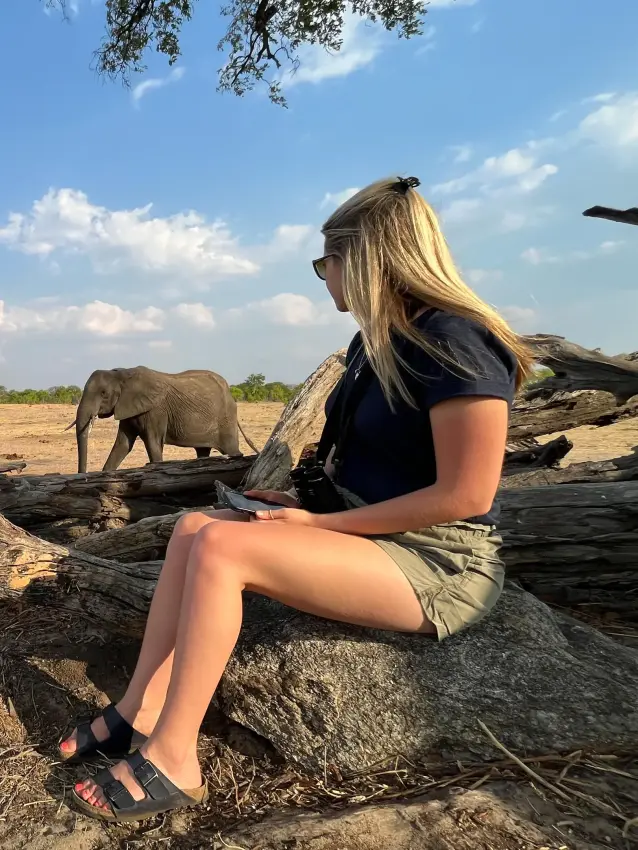
The rhythm of a stay bends around the animals, never a schedule. A morning walk tracking lions through the teak might run long because the spoor is fresh; an afternoon might dissolve into quiet hours in the log-pile hide as buffalo file down to drink. Evenings gather around the fire, mopane logs cracking, lions audible somewhere out in the dark, the guides trading stories built over decades in this one stretch of park.
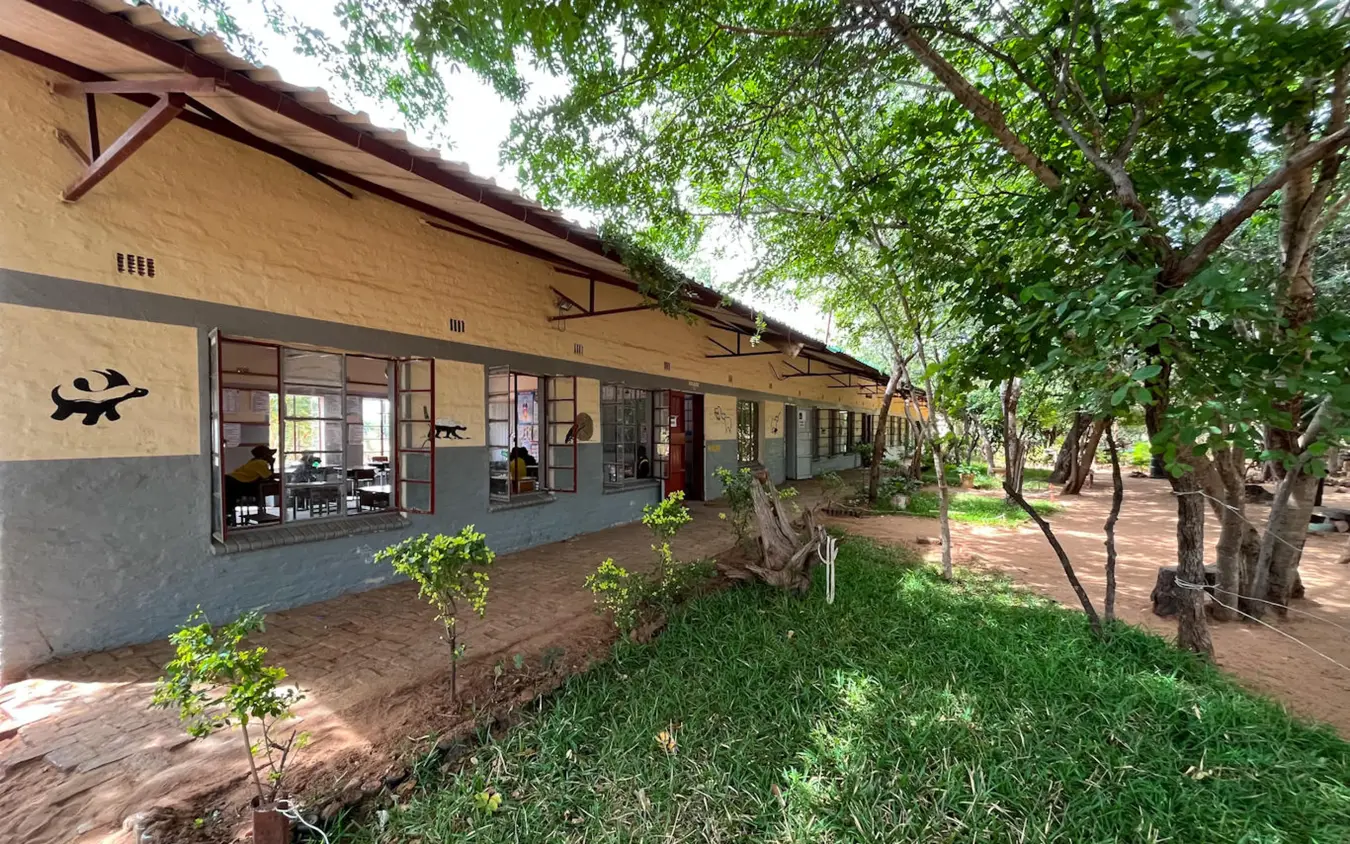
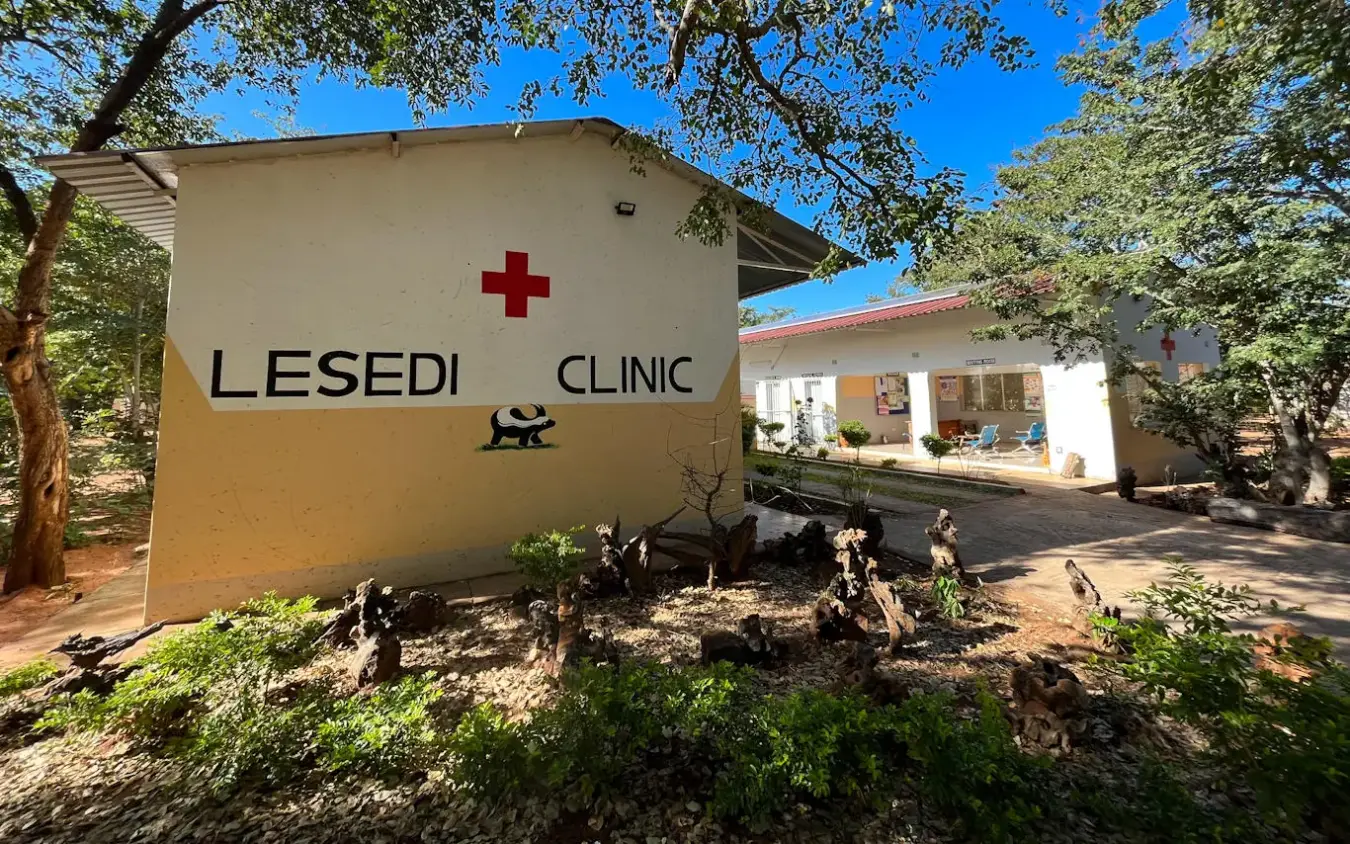
The camp is now part of Wild Expeditions Africa, the safari company that owns and runs it today, carrying forward the walking-first approach Dave Carson built. That same commitment extends to the ground around it. Camp Hwange partners with Children in the Wilderness on annual eco-clubs for pupils from surrounding schools, among them Jabulani, Lesedi and Sinamatella Primary.