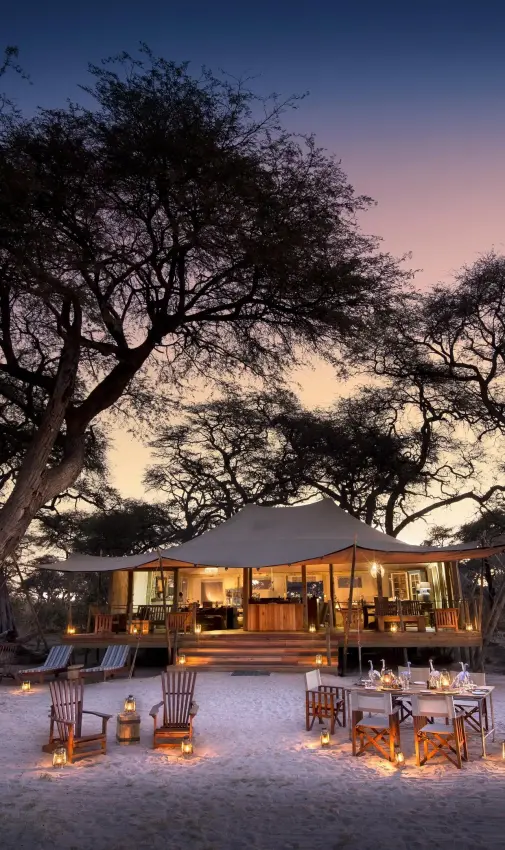
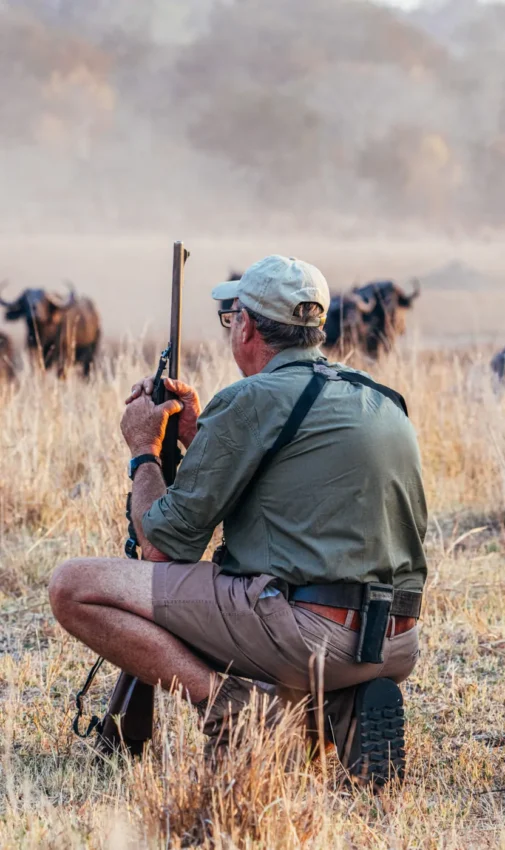
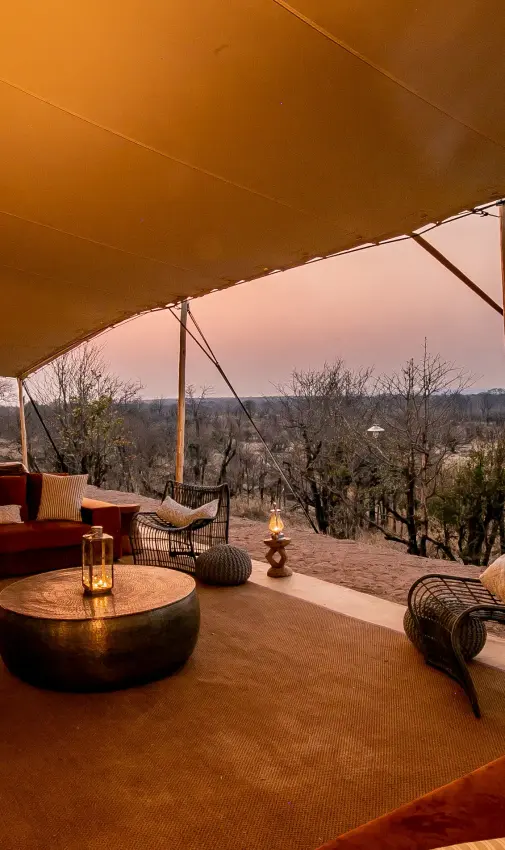
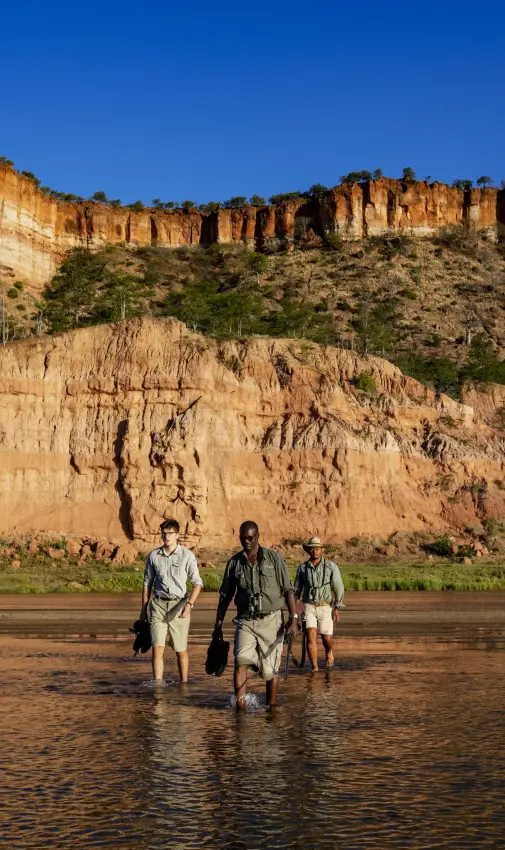
The waterhole below the main deck keeps the elephants close from first light to last. Large herds walk through camp and past the tents throughout the dry months, though they do not have the water to themselves. Kudu take their turn at its edge, and lions use it as well. Log-pile hides at nearby waterholes put a camera at eye level as the animals move in close. Afternoons are often spent by the pool with elephants bathing nearby. Birders, meanwhile, have more than 400 recorded species to work through across Hwange.
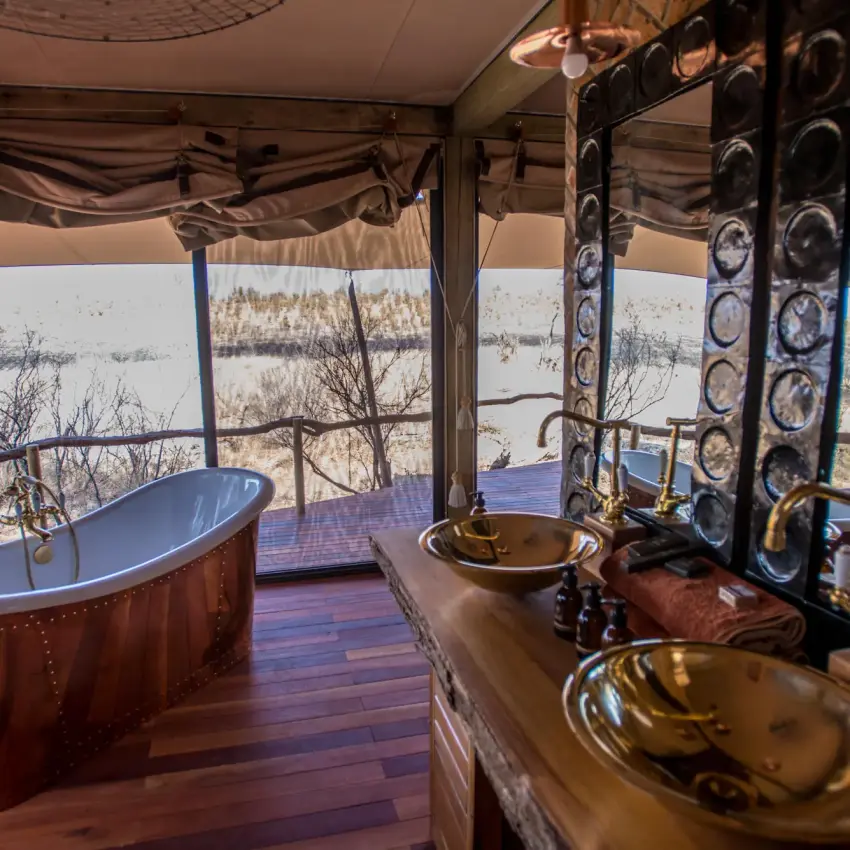
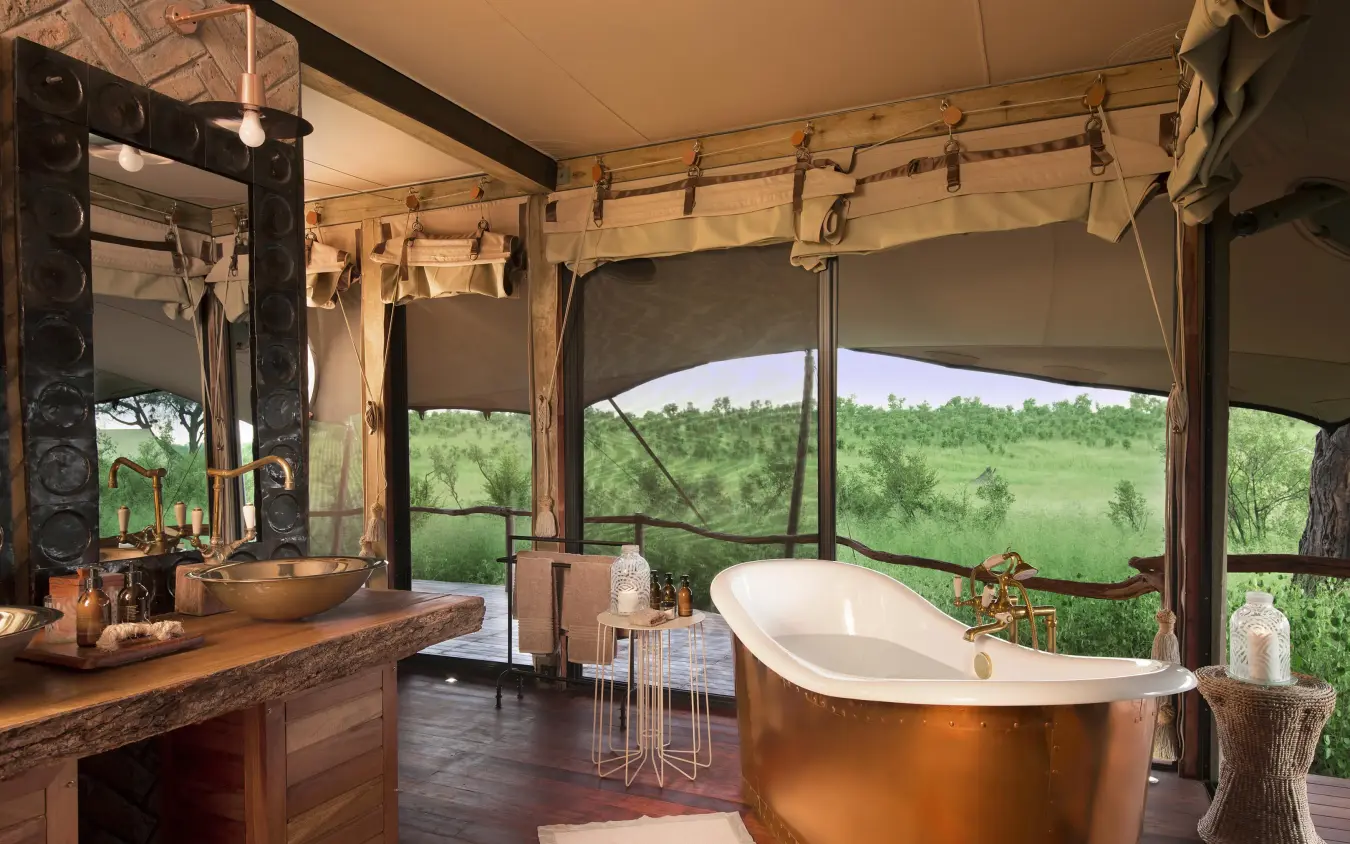
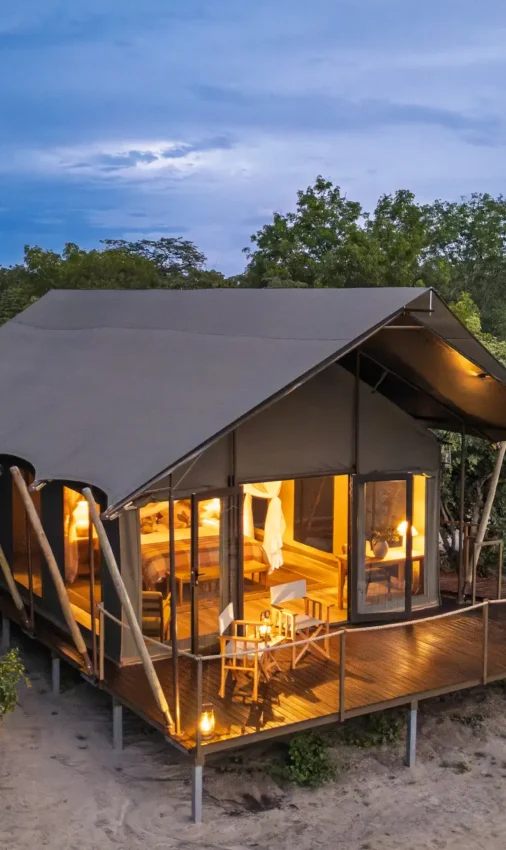
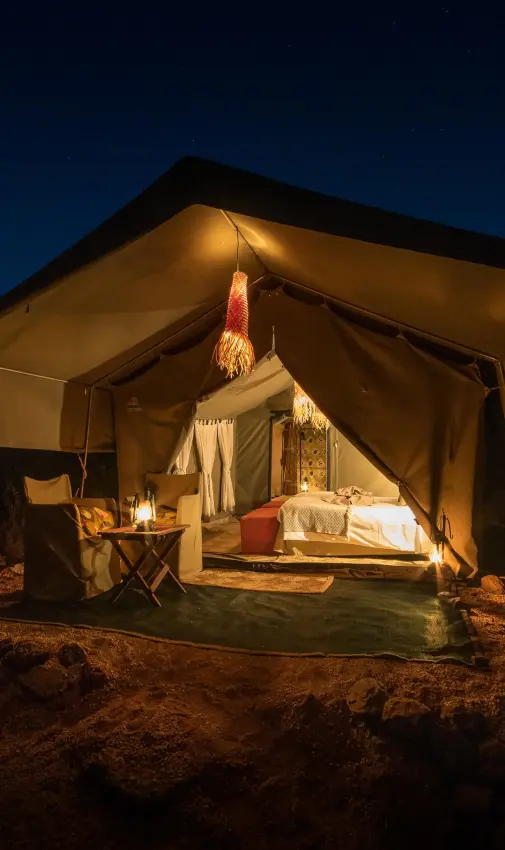
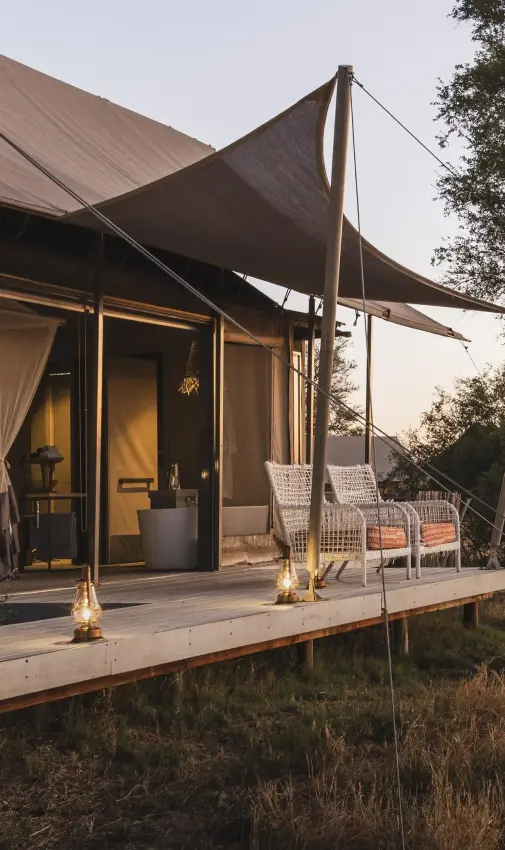
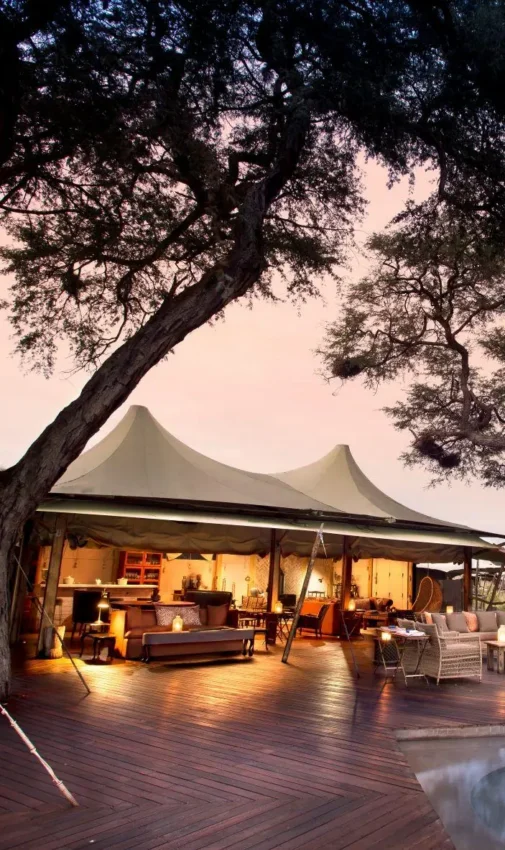
Canvas sailcloth stretches over teak decks, a classic safari look worn lightly. Inside there are copper slipper baths and hand-forged metal, and Zimbabwean Kudhinda fabric runs through the interiors. Glass wood-burners take the edge off cold winter mornings and overhead fans handle the summer heat, while gauze doors keep the plains in view. Coffee comes through a butler’s hatch in the tent before the early start. From there the days fall into a pattern of drives and walks, with long stretches on the deck.
Log-pile hides at nearby waterholes put a camera at eye level as the animals move in close.
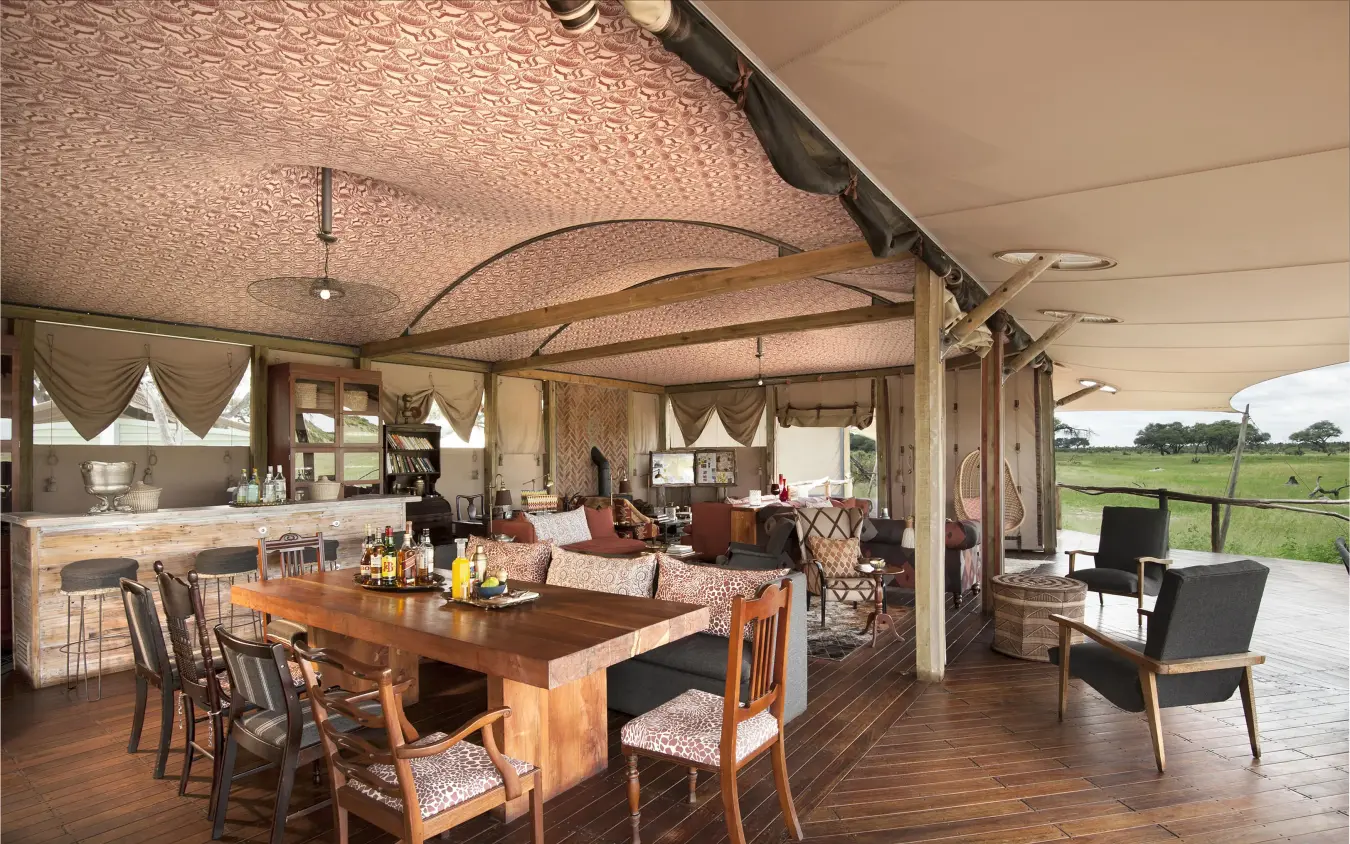
Somalisa holds a Gold Green Tourism Certification, awarded early in Zimbabwe’s adoption of the standard. The camp runs entirely on solar power, and a water purification system recycles around 80 percent of the water it uses. The kitchen buys its produce from local farmers, which shortens the distance food travels and puts income into the surrounding communities. Meals draw on European, Far Eastern and African cooking and are eaten communally with the guides, at a long table in the open-sided mess or around the boma fire, and sometimes outside under the stars.
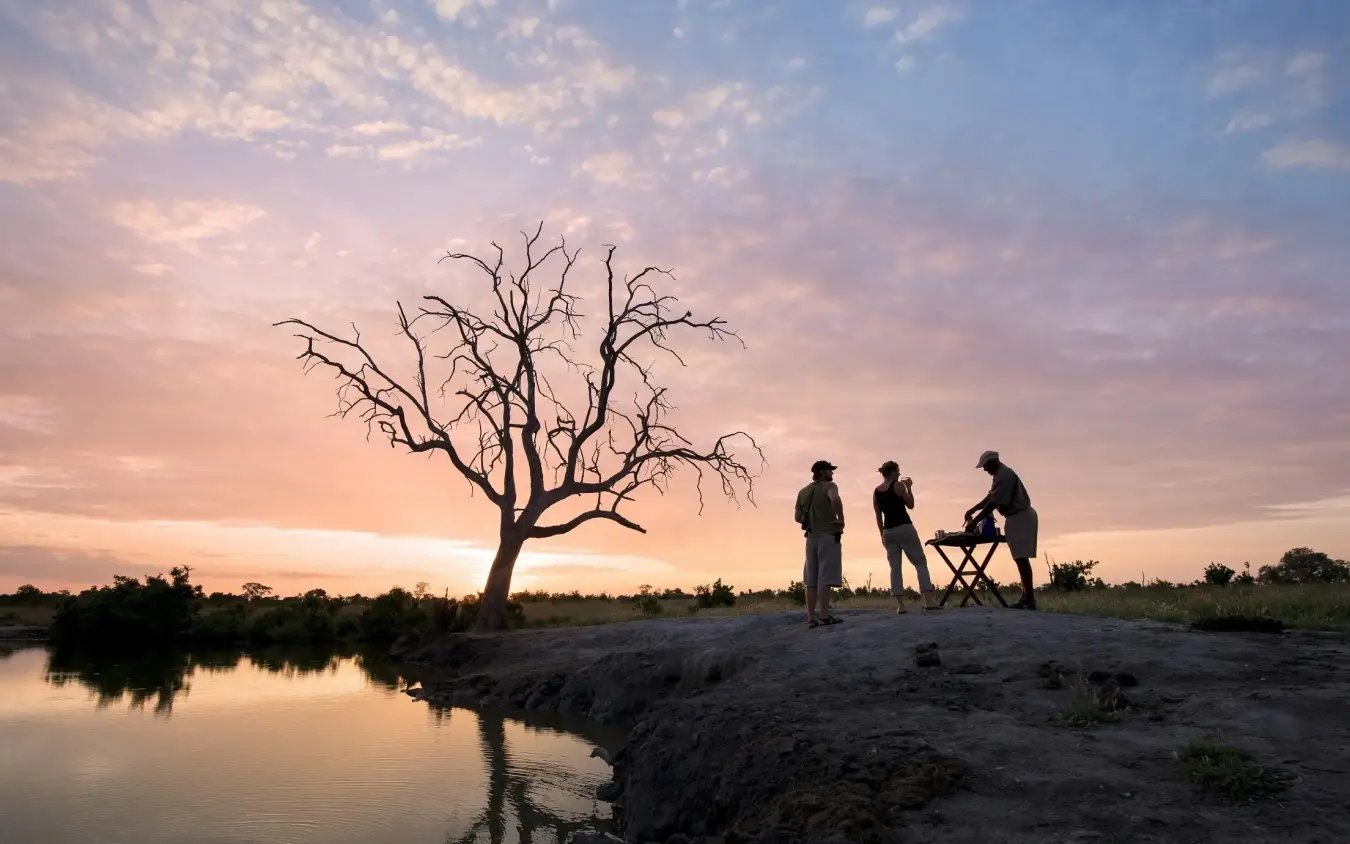
A sleep-out can be booked for a night under open sky, in a treehouse above a separate waterhole a short drive from camp. Cultural visits go out to nearby communities, and crafts made by the Thandanani Sewing Group in Dete are sold in camp. Research into lion, wild dog and elephant populations is funded through the African Bush Camps Foundation, which also supports Mambanje Primary School and the Mambanje Community Garden. Charter flights from Victoria Falls reach Manga Airstrip in around 45 minutes, followed by a 30-minute game drive to camp.