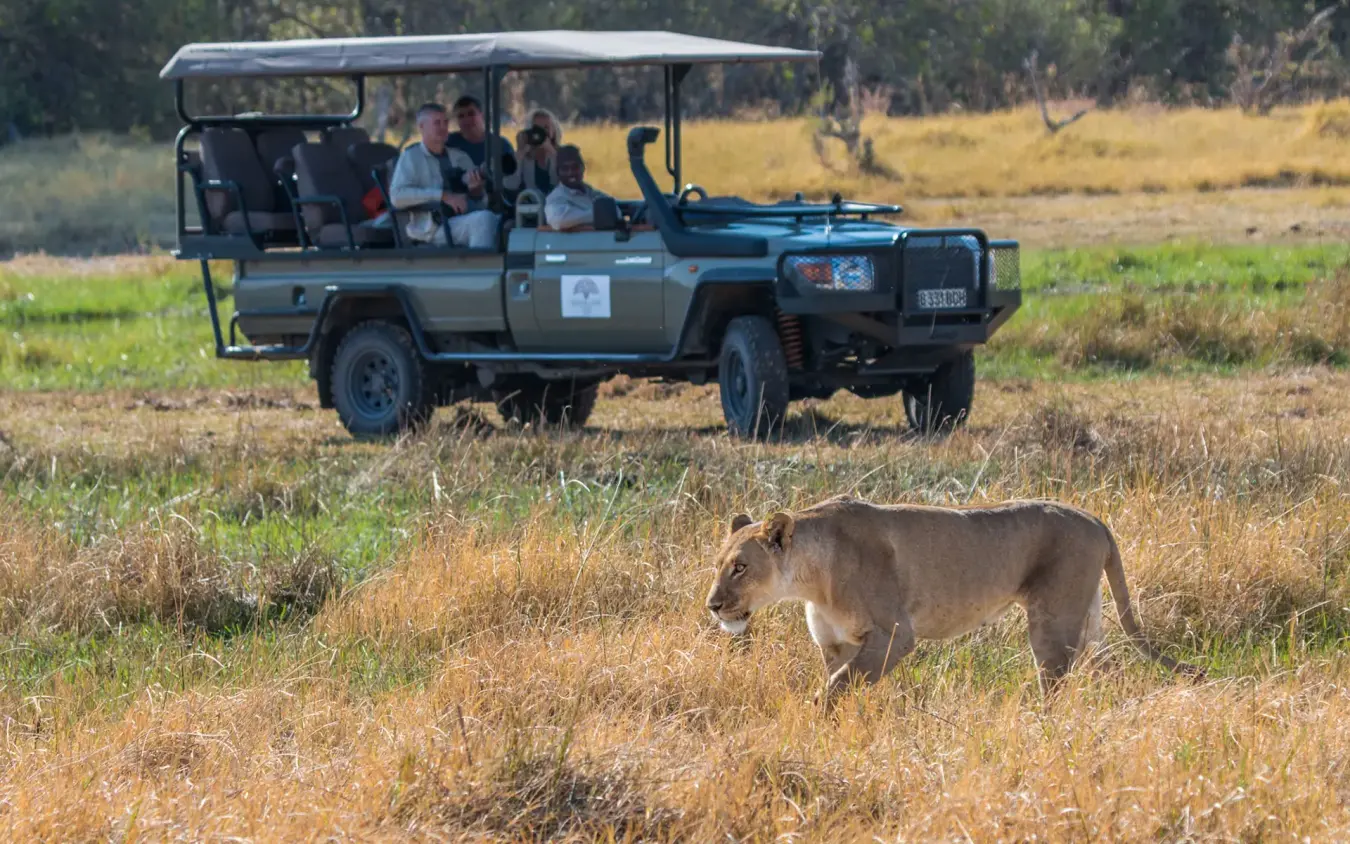
Hwange holds one of Africa’s substantial elephant populations, and in the dry season, from roughly May through October, the herds converge on permanent water as the seasonal pans fail elsewhere in the park. Verney’s Pan is one of the reliable sources, which is why the animals gather in front of camp in such numbers. Alongside them come lion, leopard, cheetah, spotted hyena, buffalo, giraffe, zebra and wildebeest across the plains. Night drives add the species daylight rarely shows: porcupine, aardvark, and, occasionally, pangolin.
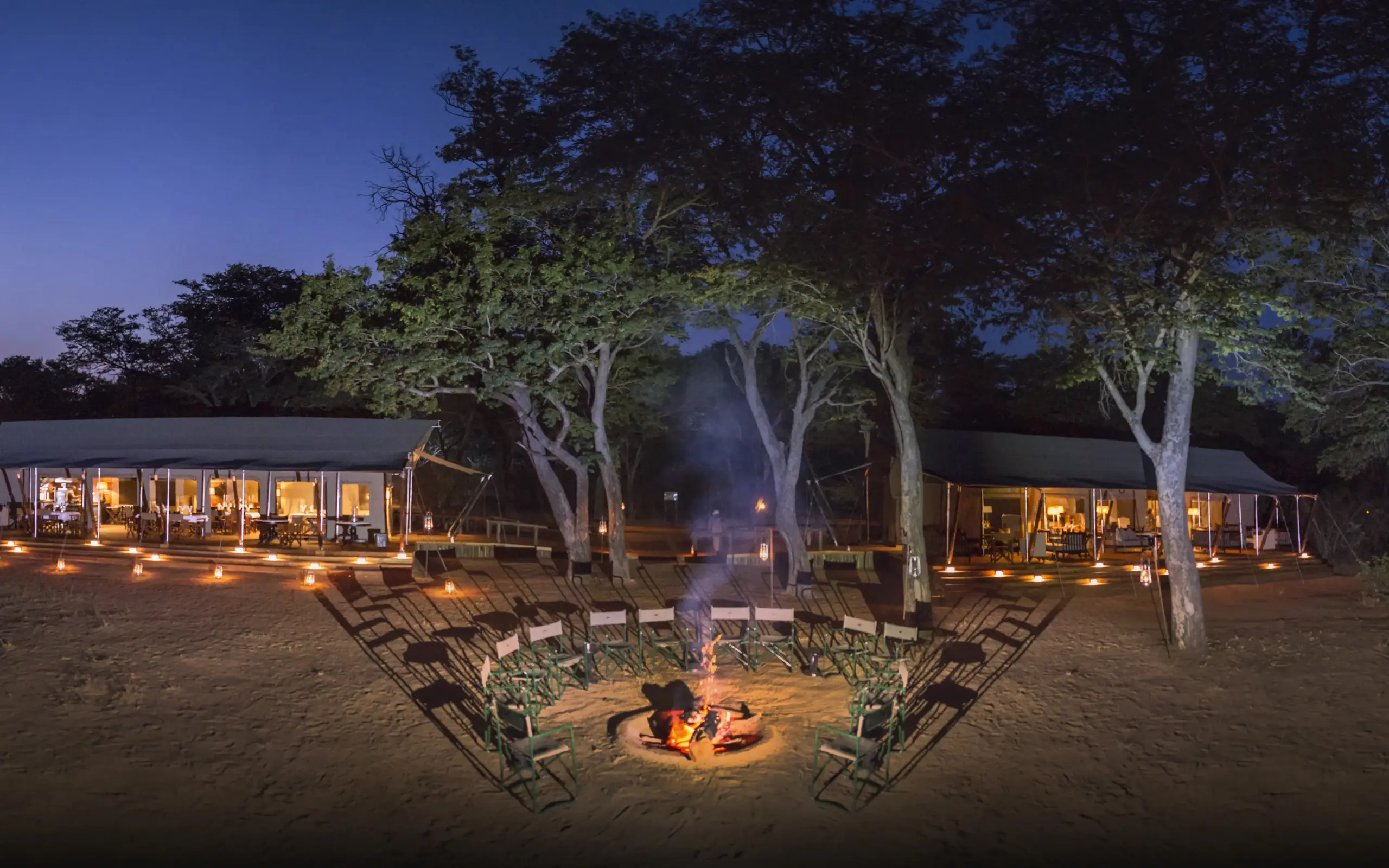
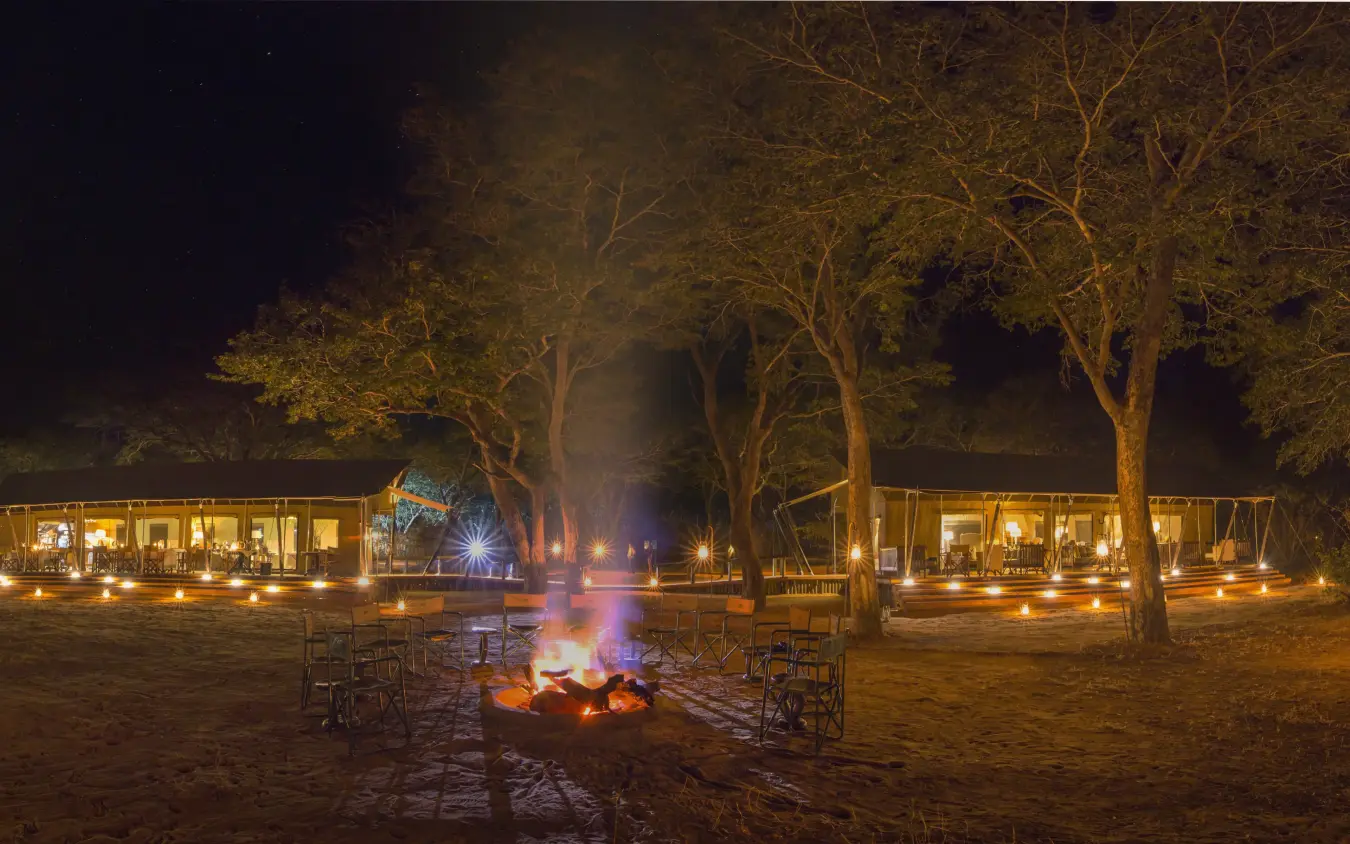
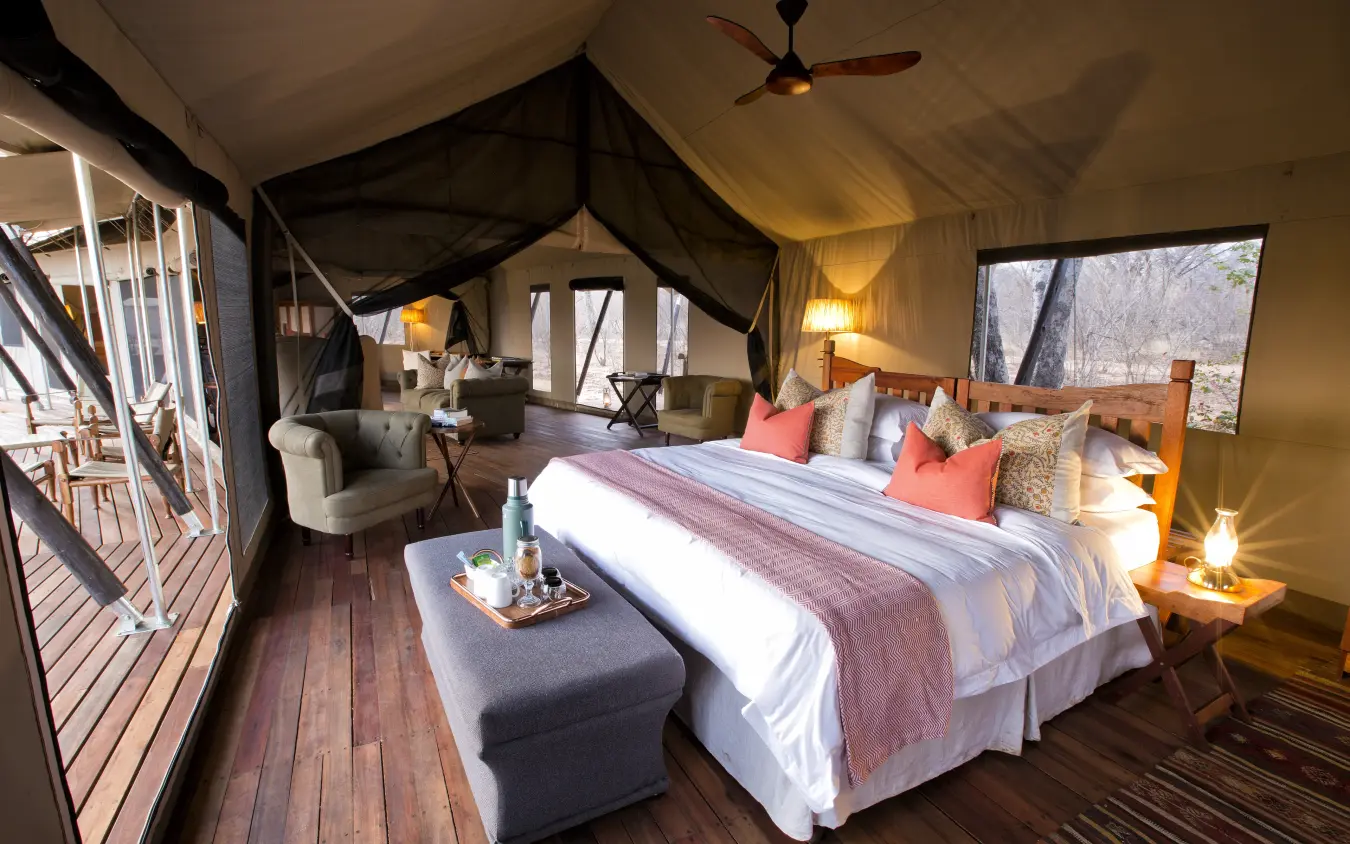
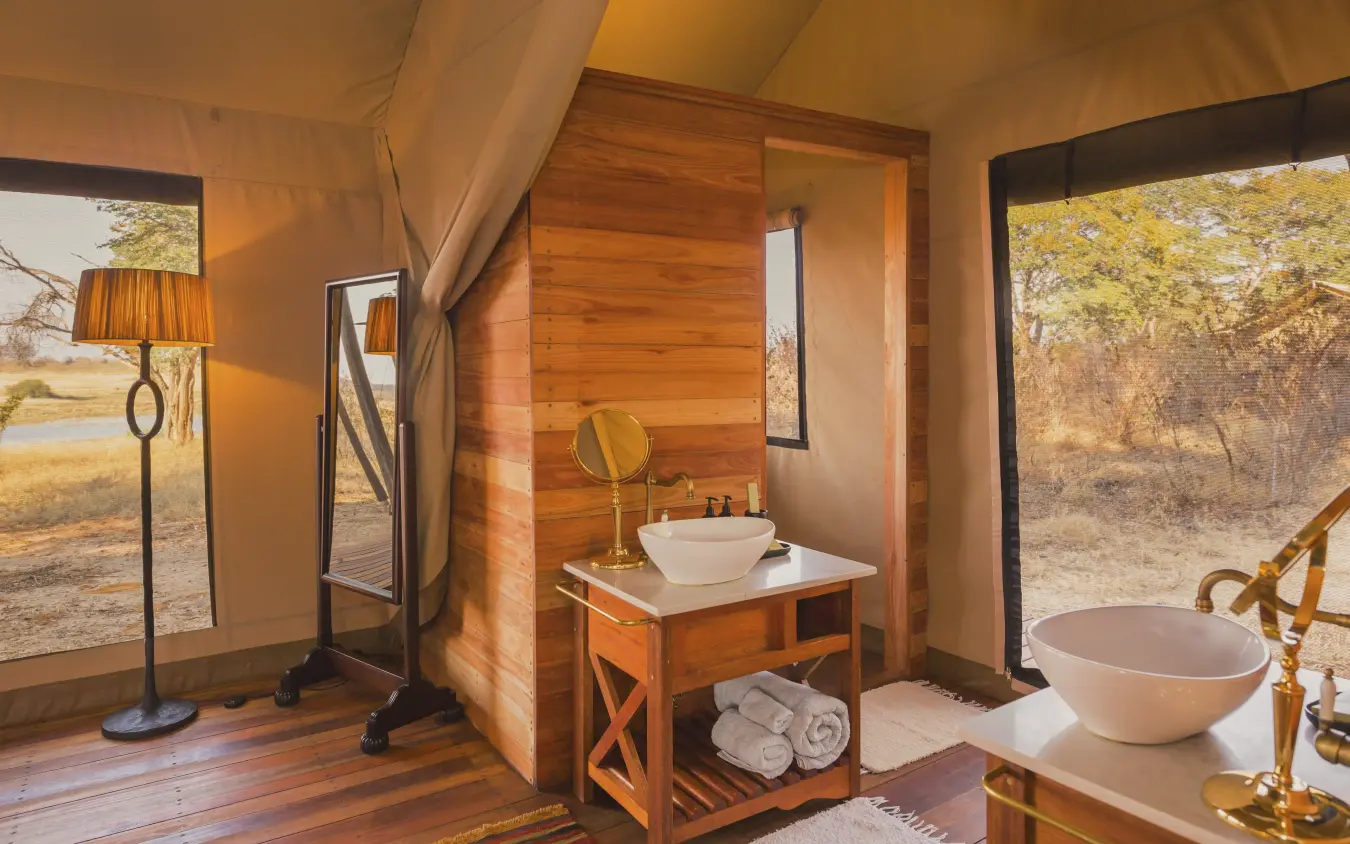
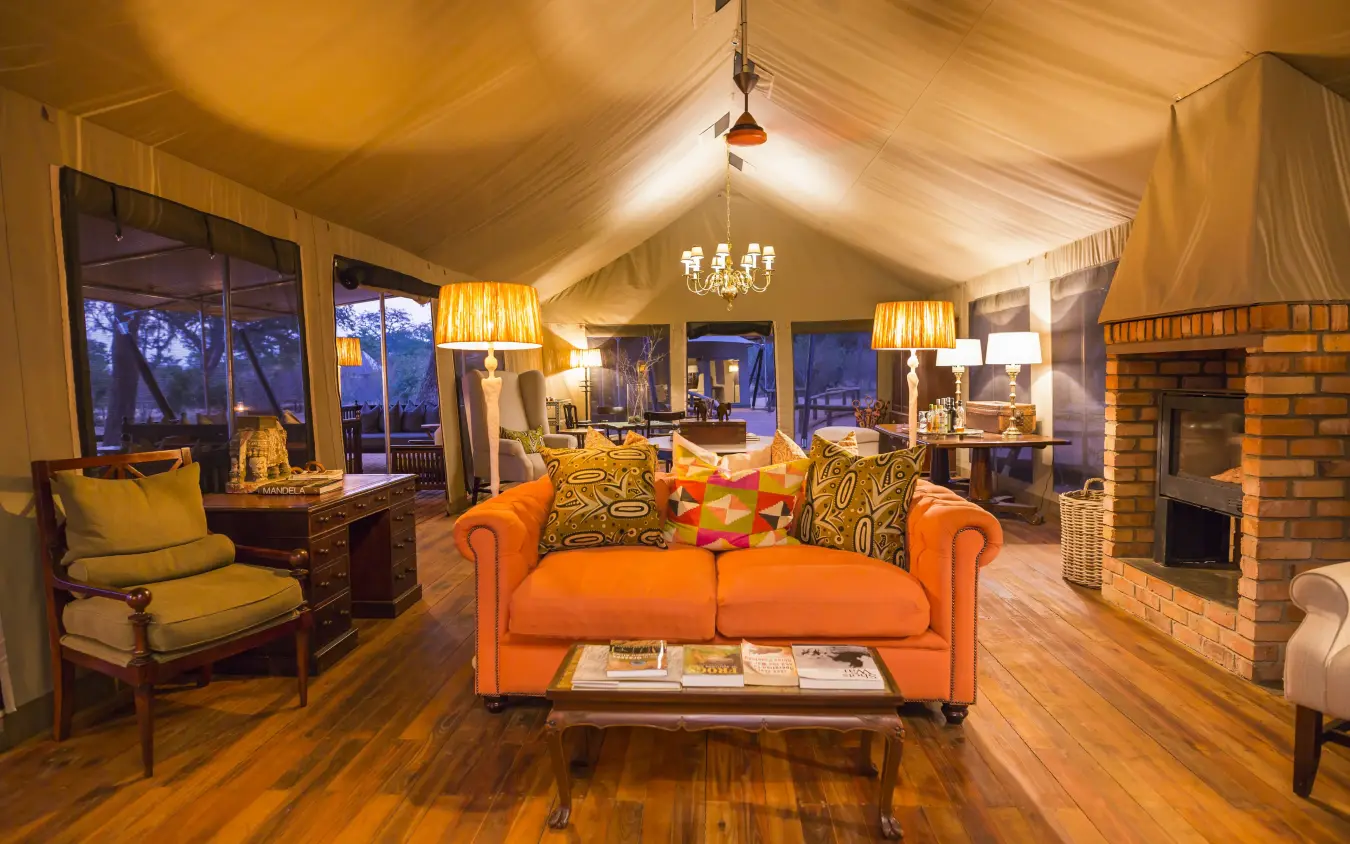
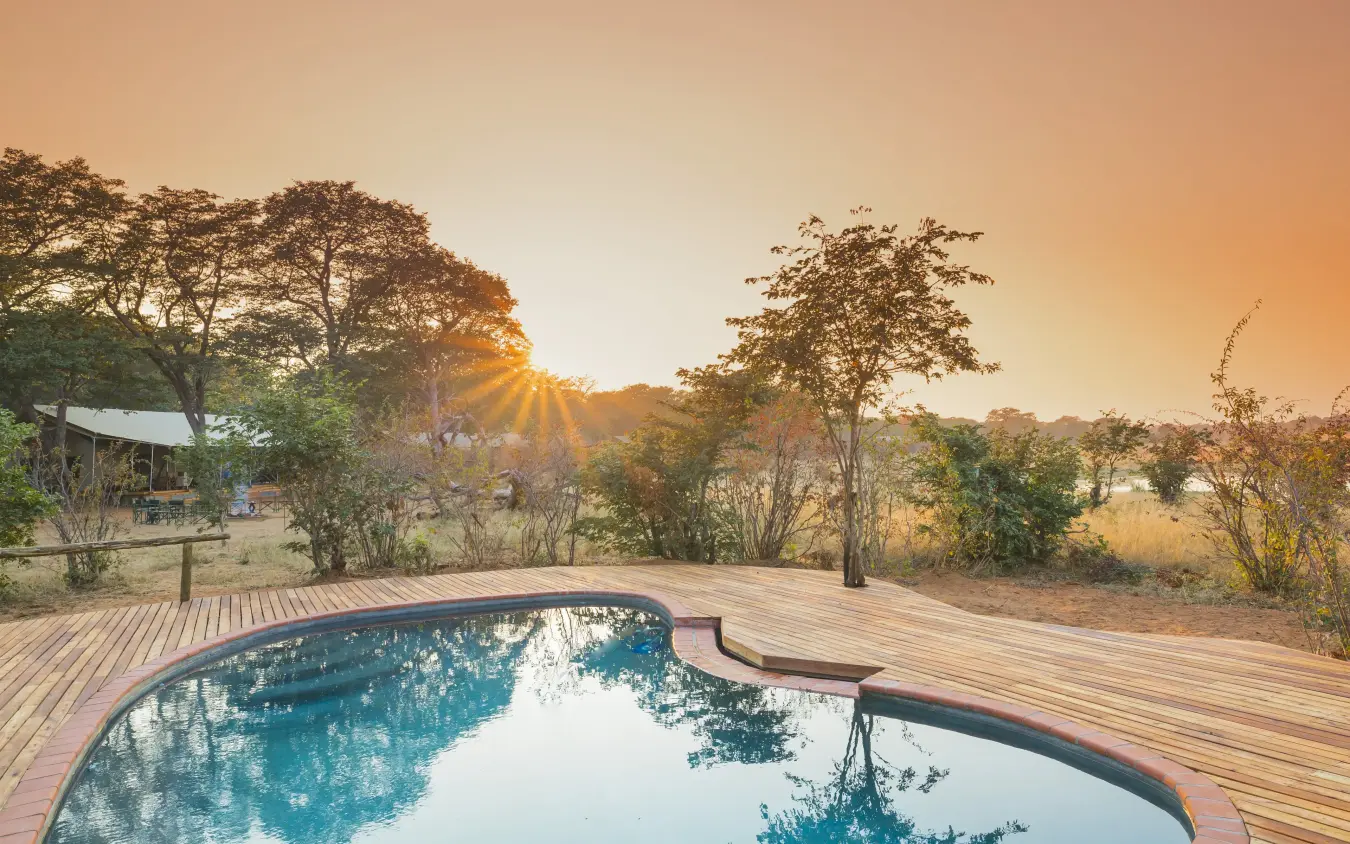
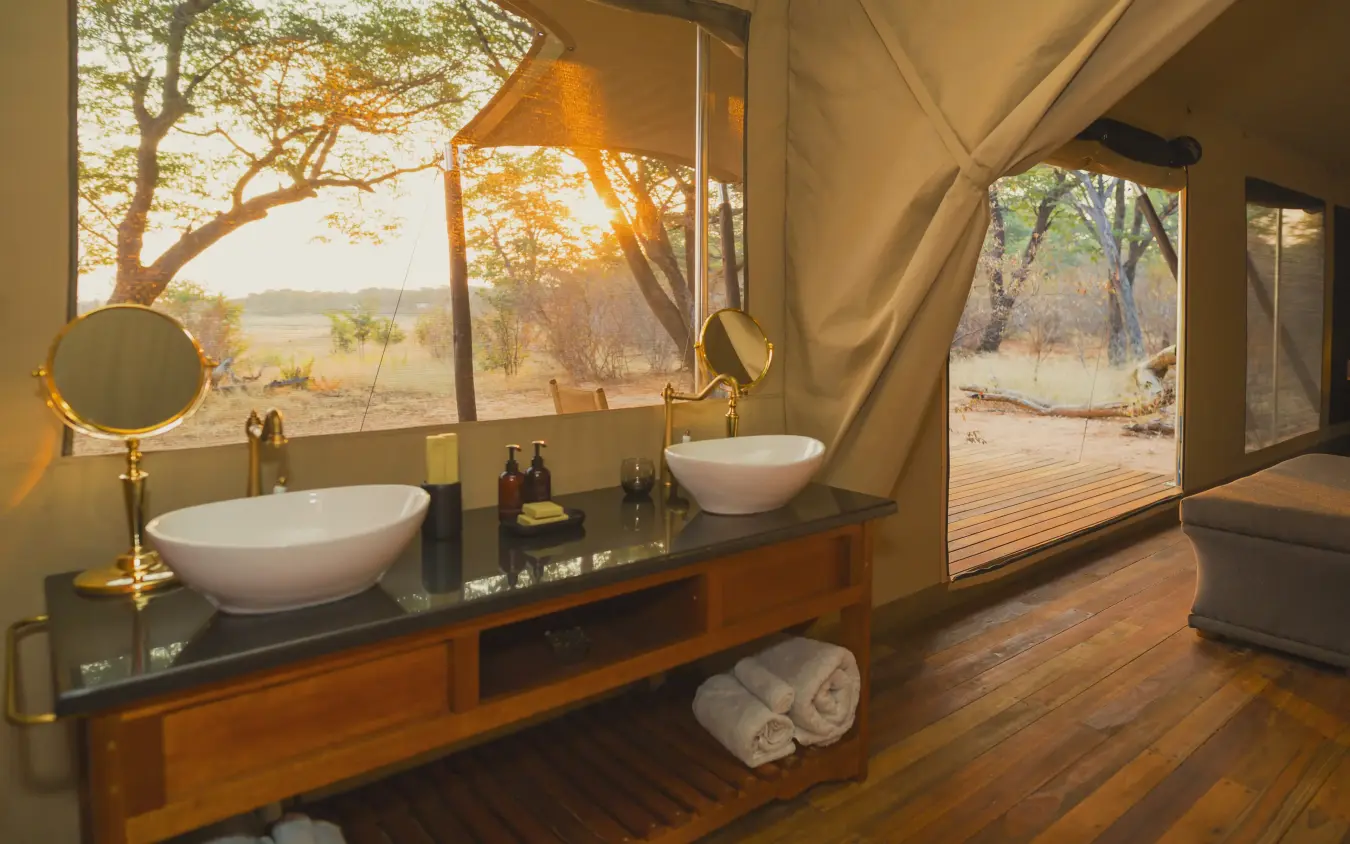
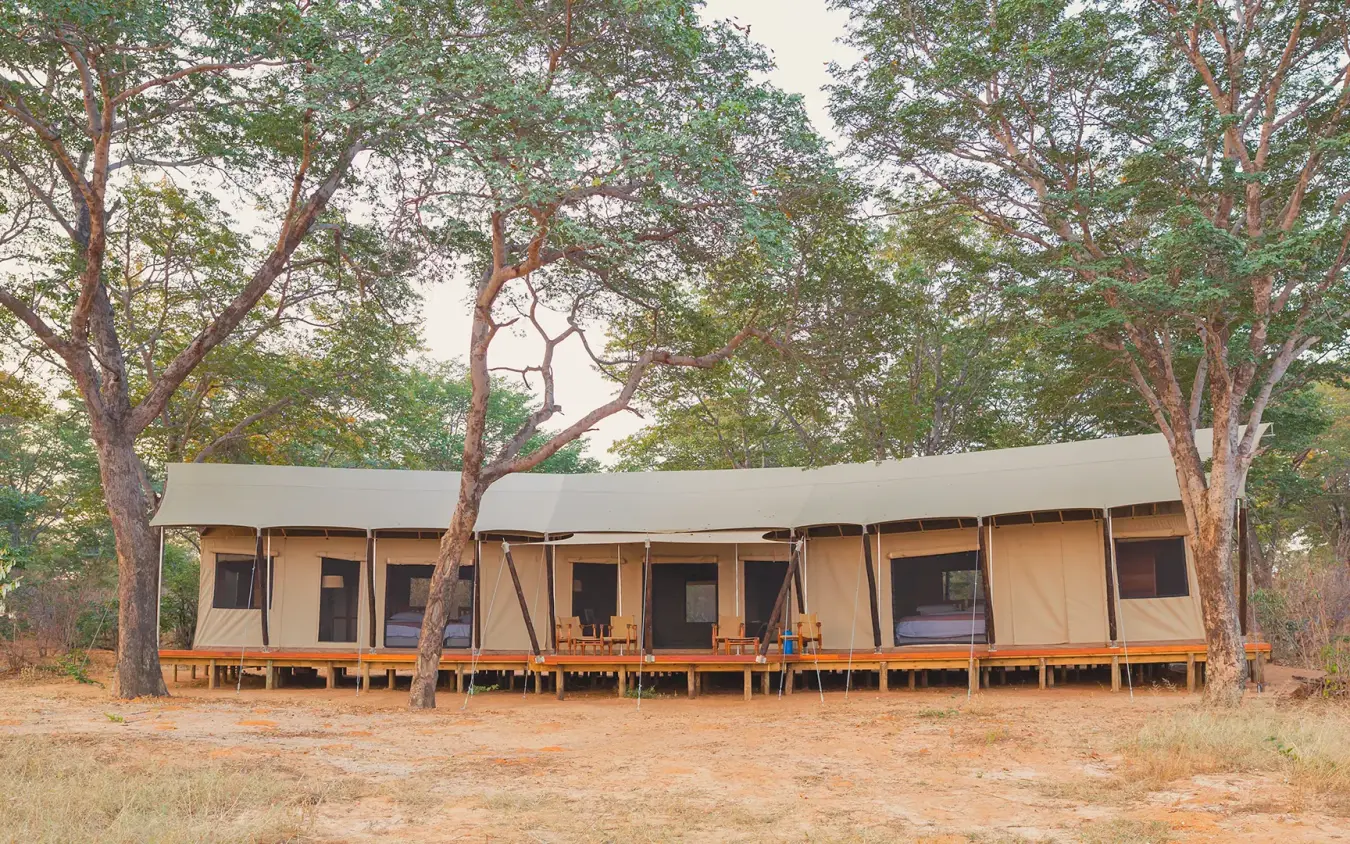
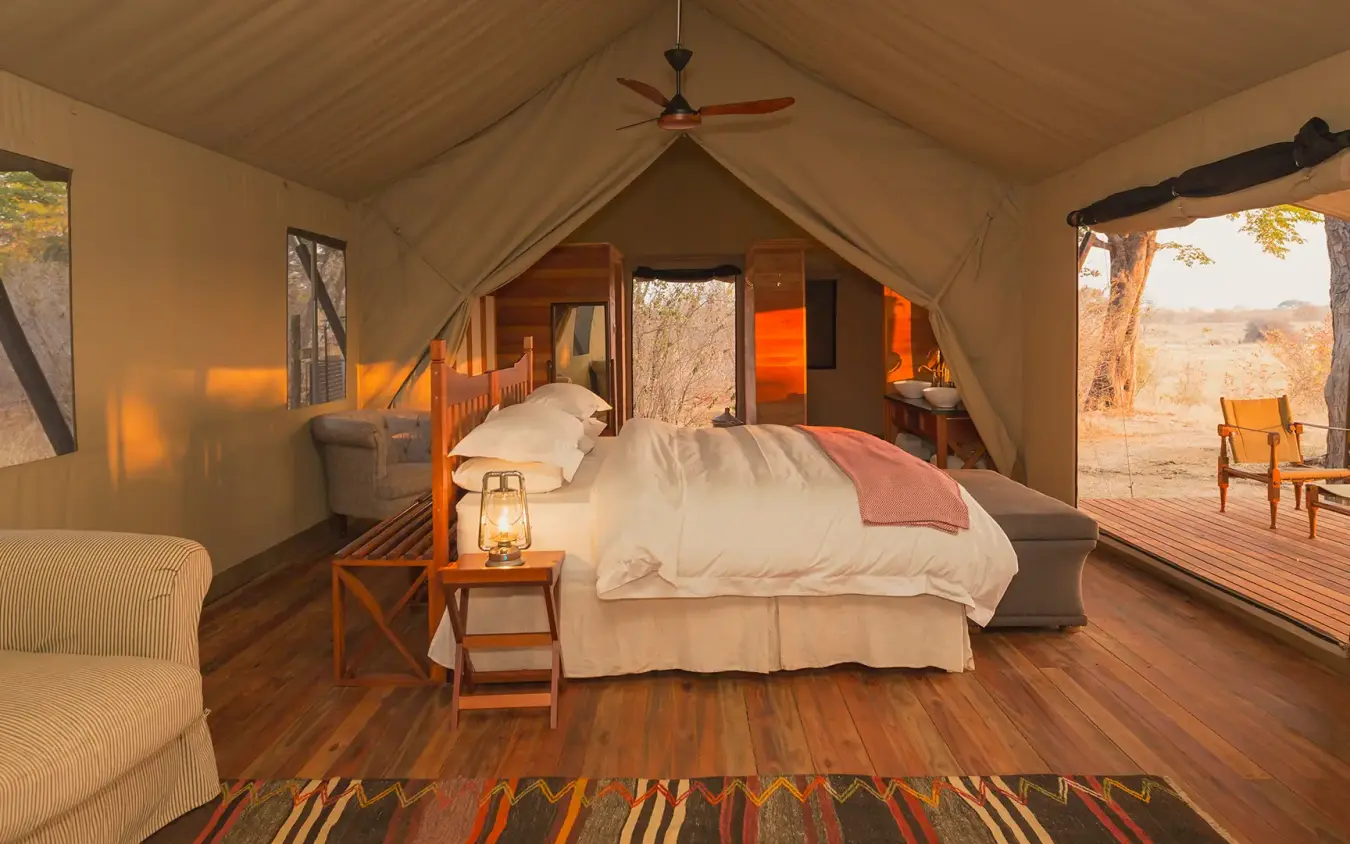
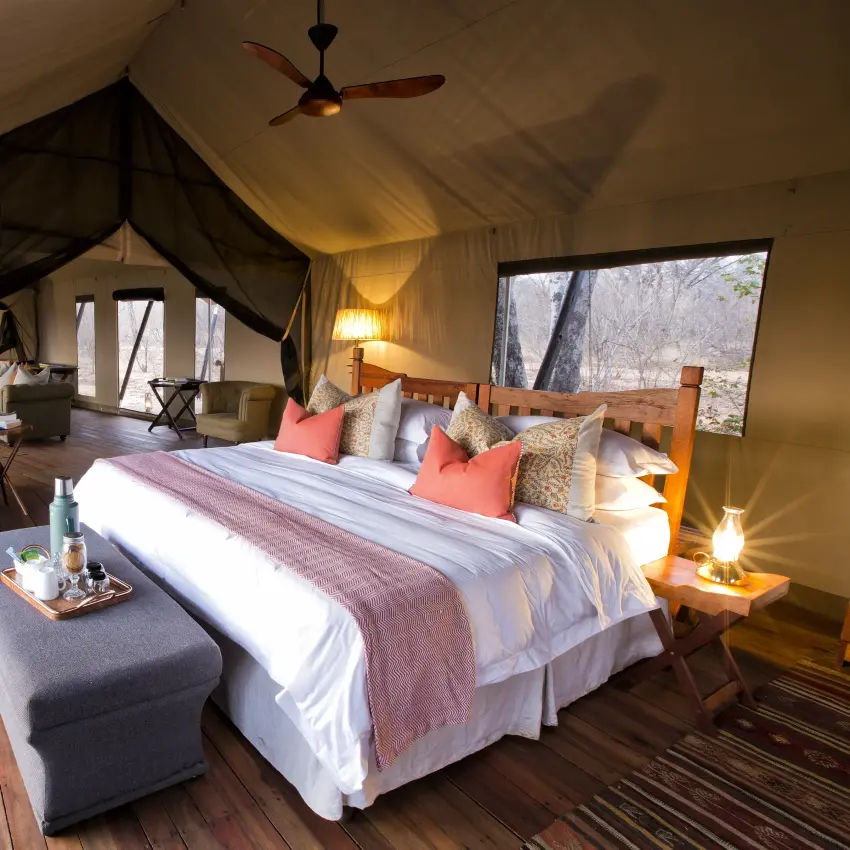
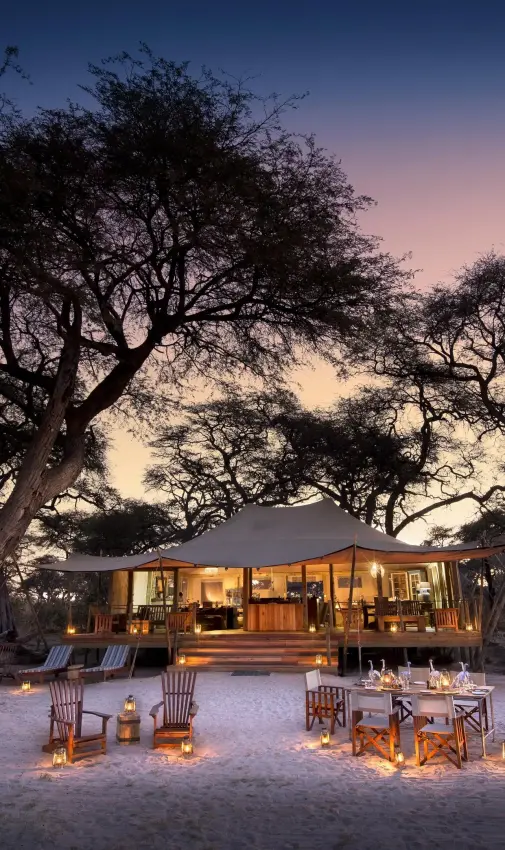
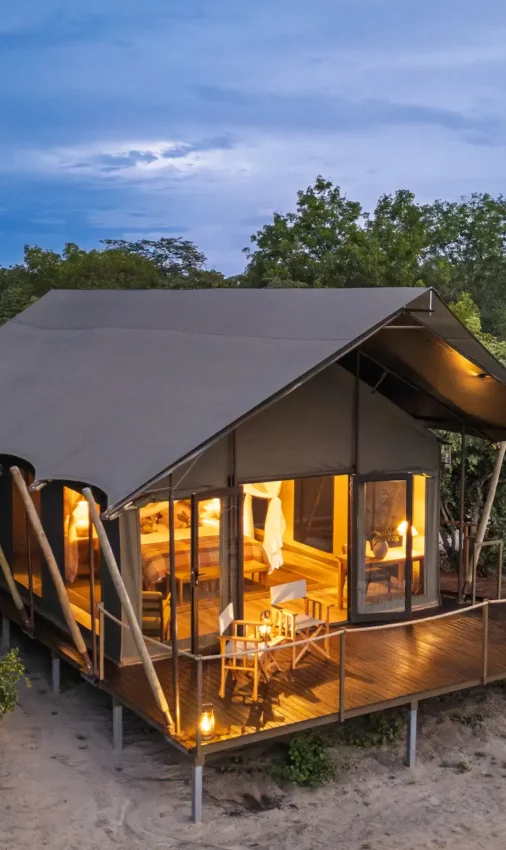
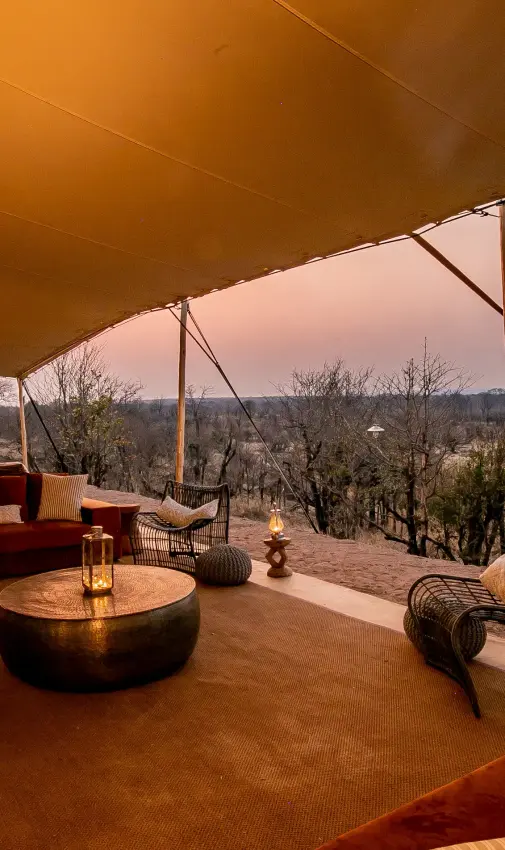
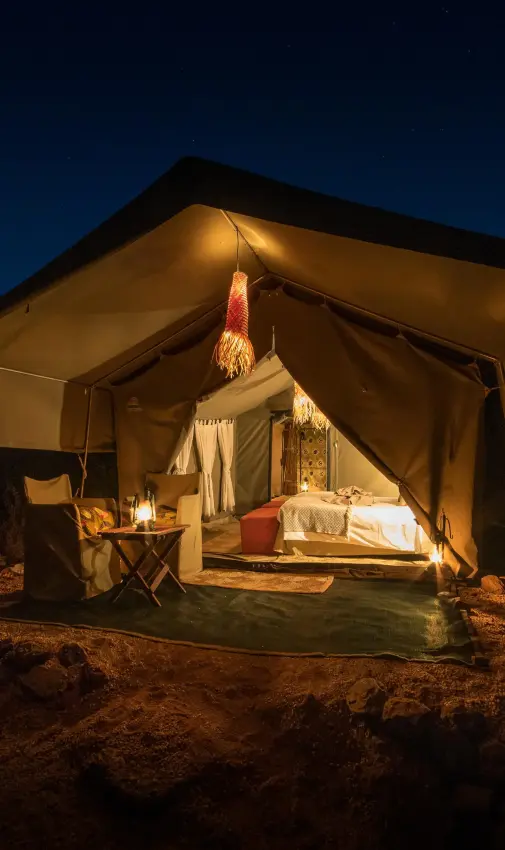
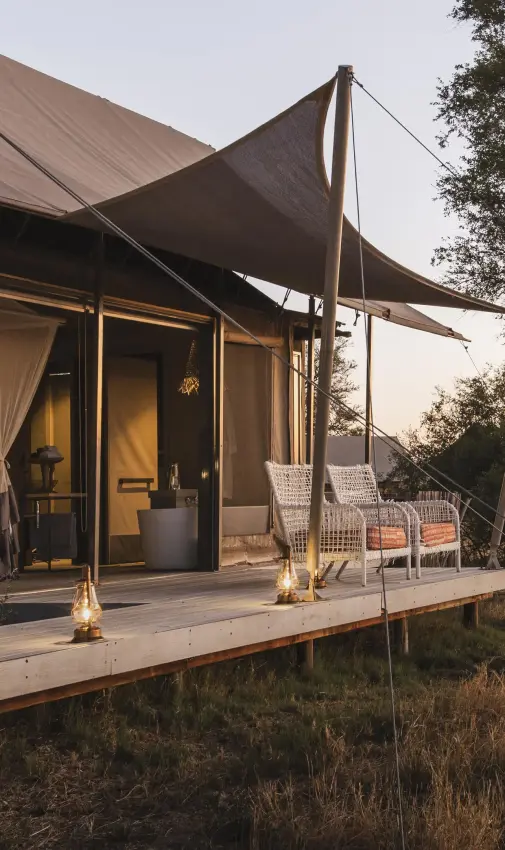
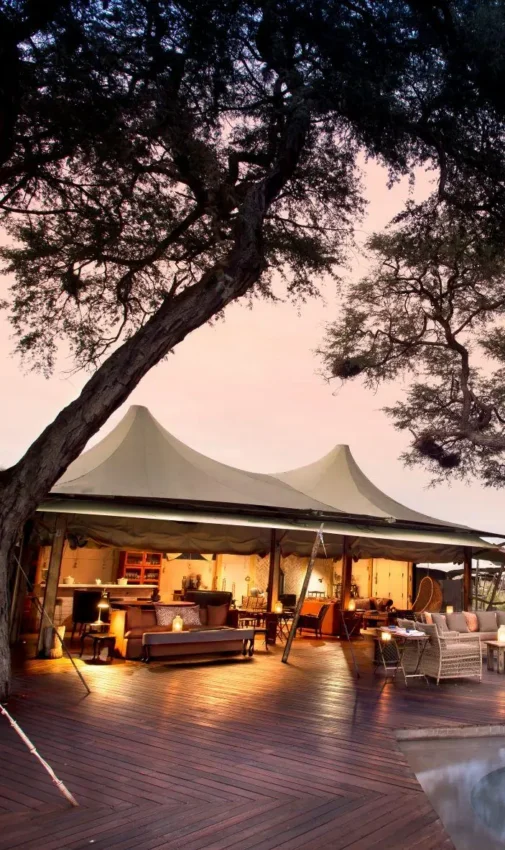
This is dry, sandy country, and the camp is built to sit lightly on it. Ten tents rest on low wooden decks at ground level, tucked under the teak canopy and linked to the main areas by sandy paths rather than raised walkways. The style is traditional safari, all canvas and timber, with mosquito nets over the beds and en-suite bathrooms of double basins and hot showers. Two open-sided mess tents hold the lounge and dining areas, a swimming pool is set into the deck, and a fire pit waits for the evenings. The camp runs on solar power, with an on-site system treating waste water before it returns to the ground.
What lingers is the sound: the deep rumble of elephants at the water, hyena at night
The African wild dog gives the concession a second story. The region is a stronghold for the endangered animals, and a half-day excursion visits the nearby Painted Dog Conservation Centre, where guest visits support the ongoing study of the species. The same outing usually takes in Mabale village and a local primary school. Birdlife across the park runs to over 400 species, strongest through the wet summer months, when the migrants arrive and the bush turns green.
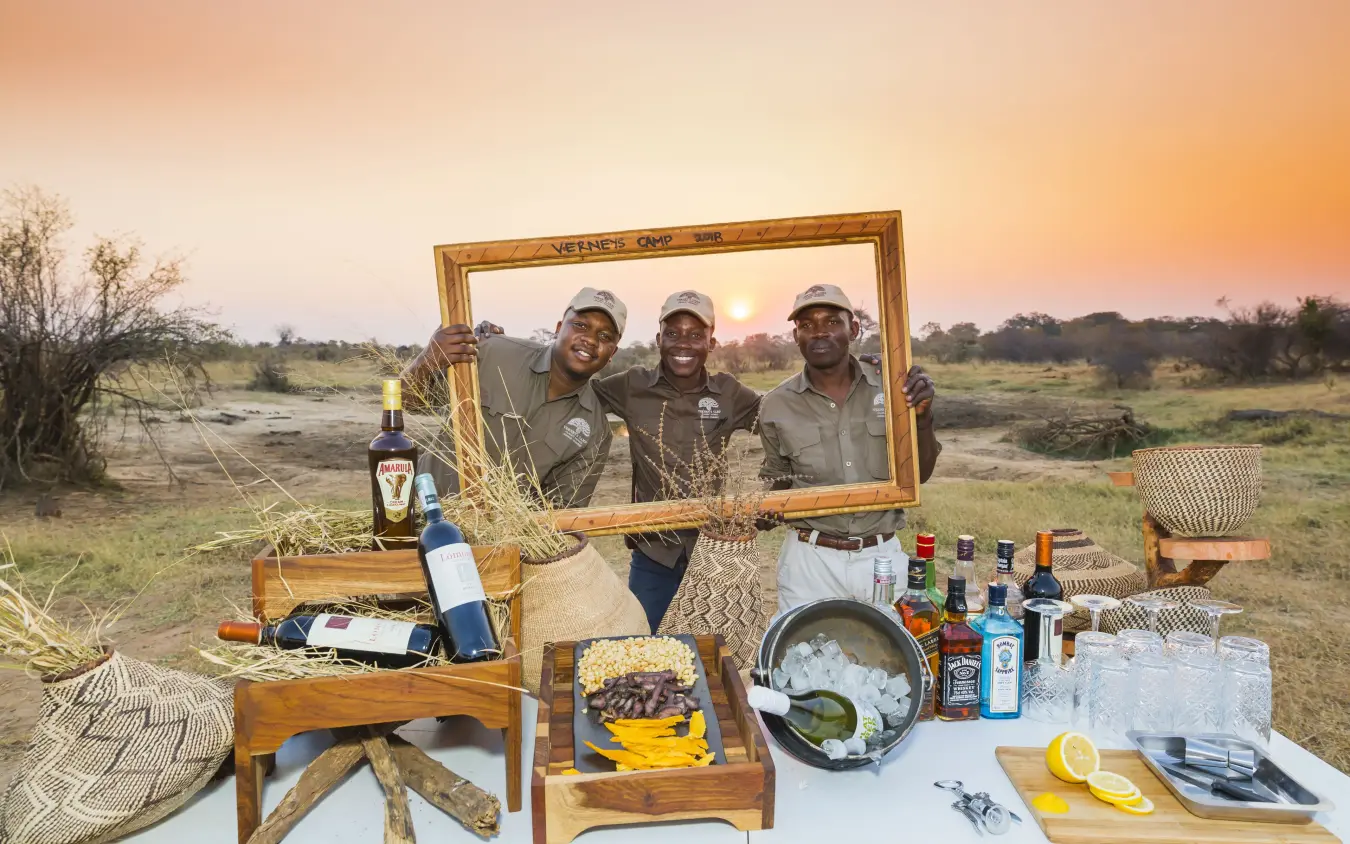
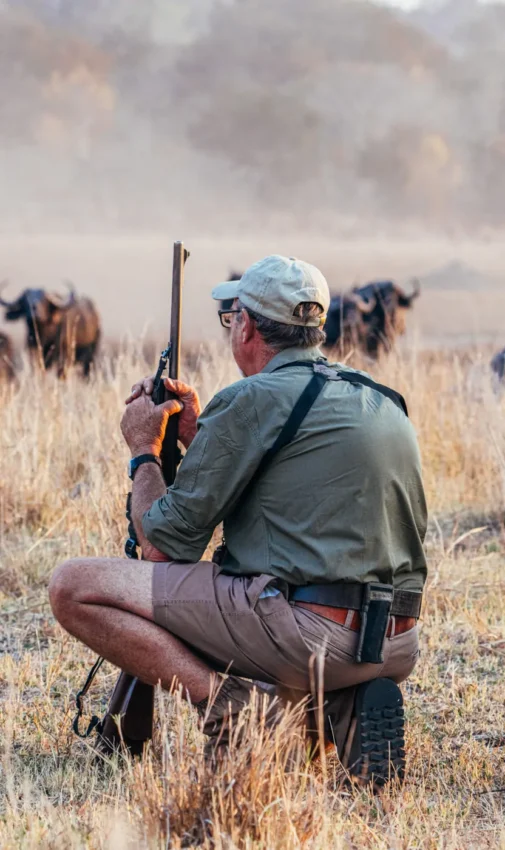
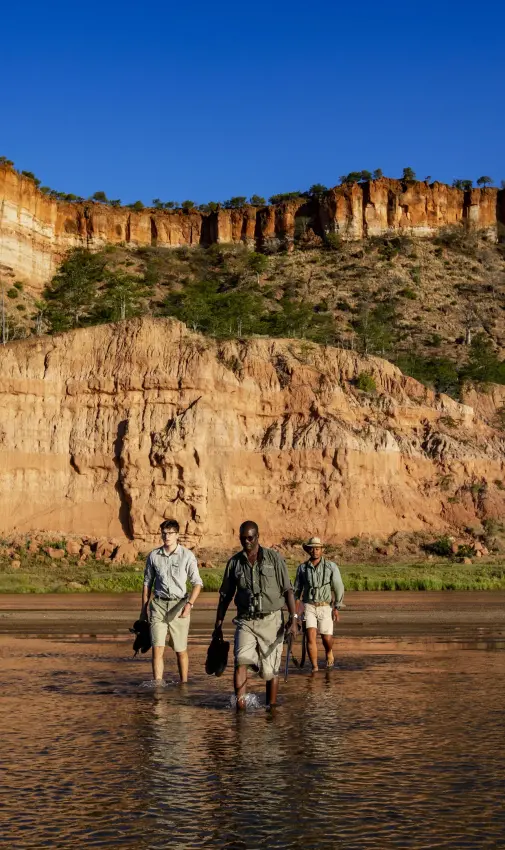
Dining tracks the day’s rhythm. Coffee and biscuits come to the tent before the morning drive, then a cooked brunch on return, tea before the evening game drive, and dinner around the fire under the stars. The food is fresh and unfussy, cooked in camp with Zimbabwean ingredients. Two family tents, each with two bedrooms and two bathrooms around a shared lounge, make the camp workable for families, while walking safaris carry a minimum age of sixteen. What lingers is the sound: the deep rumble of elephants at the water, hyena at night, teak crackling in the fire.