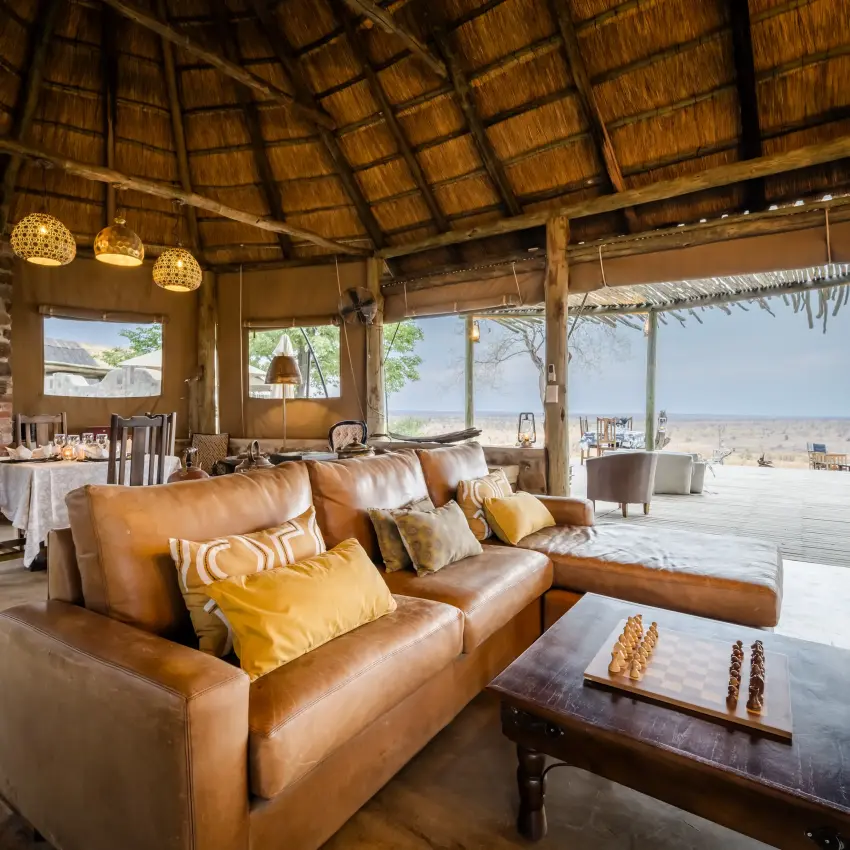
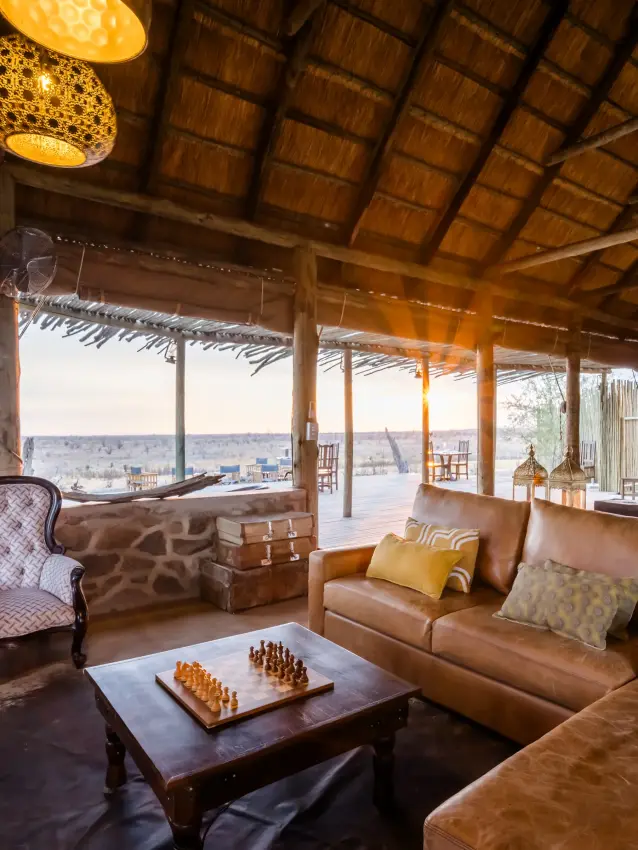
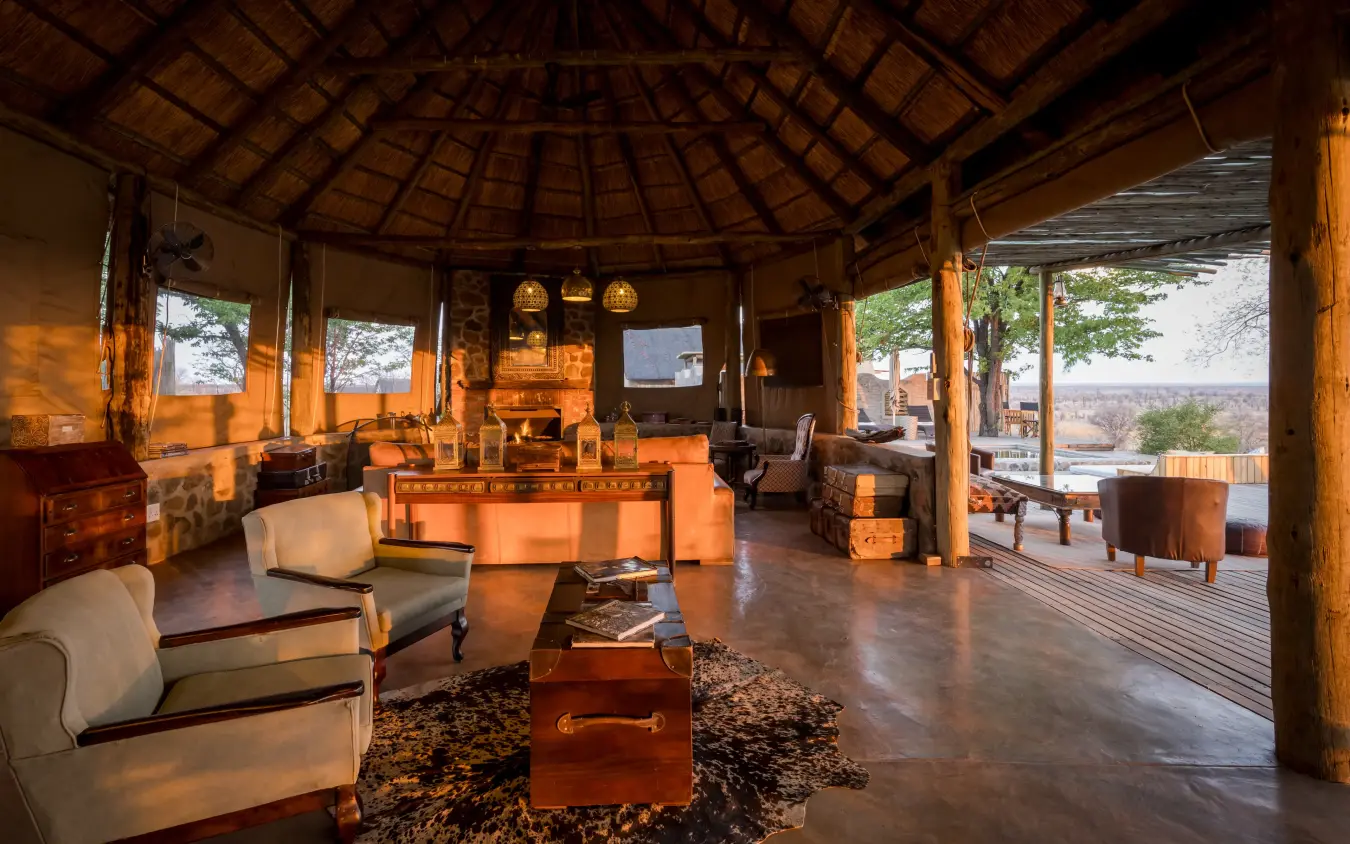
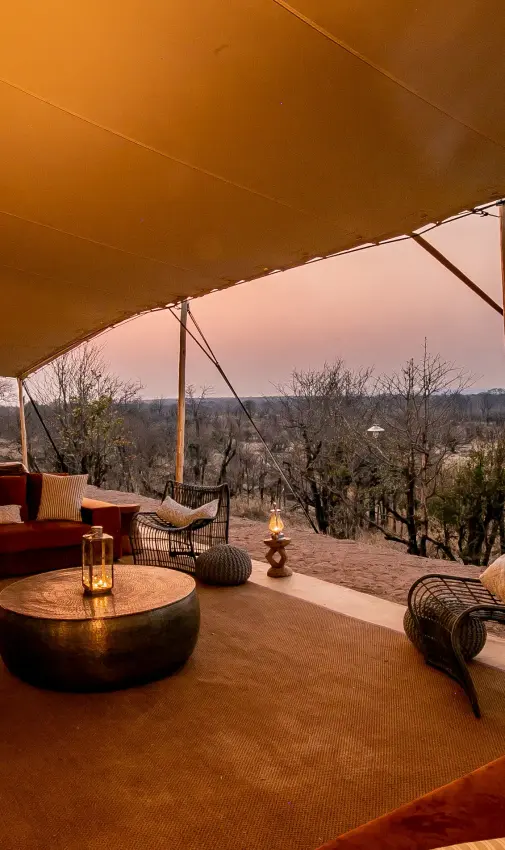
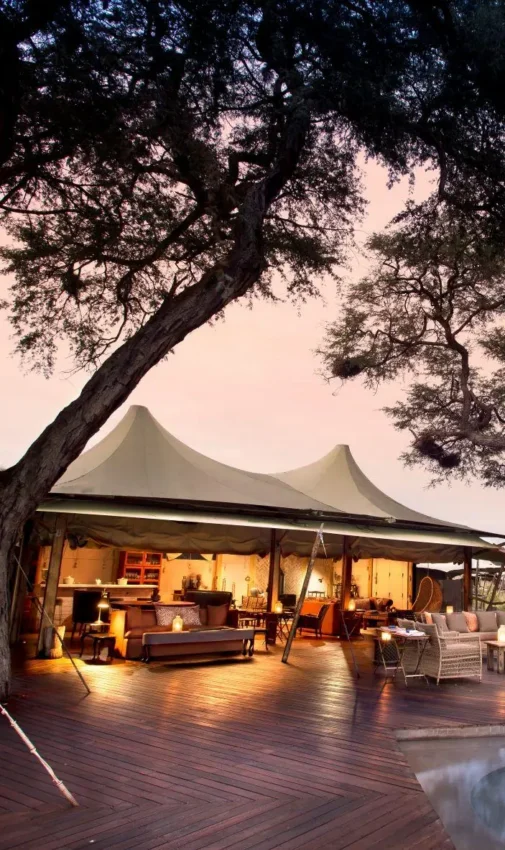
Granite for the walls was collected on site and combined with timber, canvas and thatch, all of it built on light-footprint principles. A solar-hybrid system carries much of the power load in place of diesel. A high vaulted thatch roof covers the main lounge, with a stone hearth at its centre where dinner moves on cold winter evenings. There is a library for the quiet hours, and outside a raised wooden deck runs the length of the camp above the vlei. A circular plunge pool is set into it, looking out on the same view.
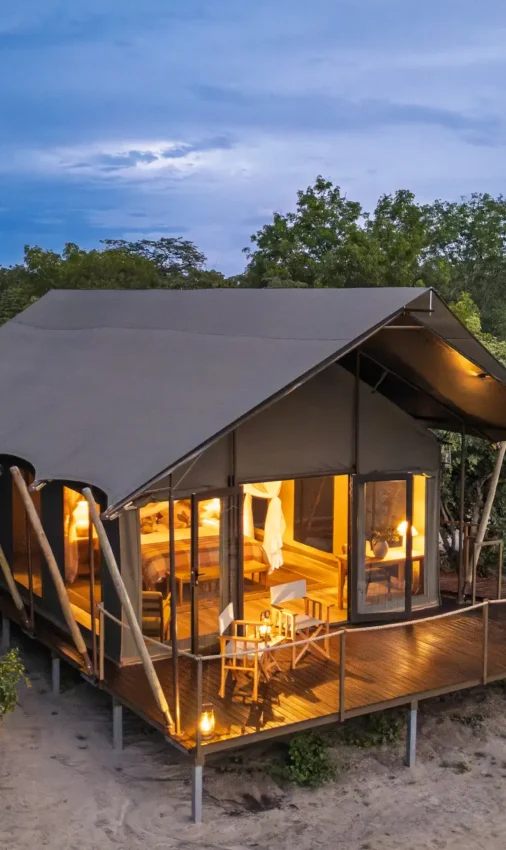
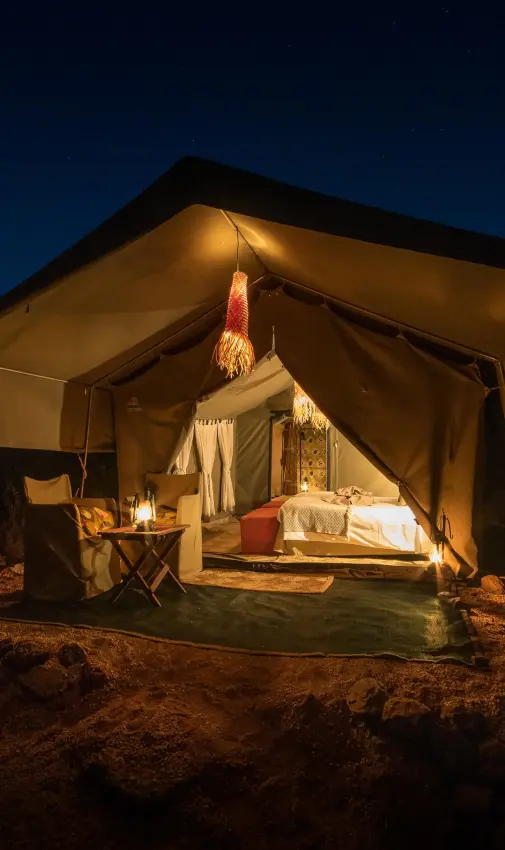
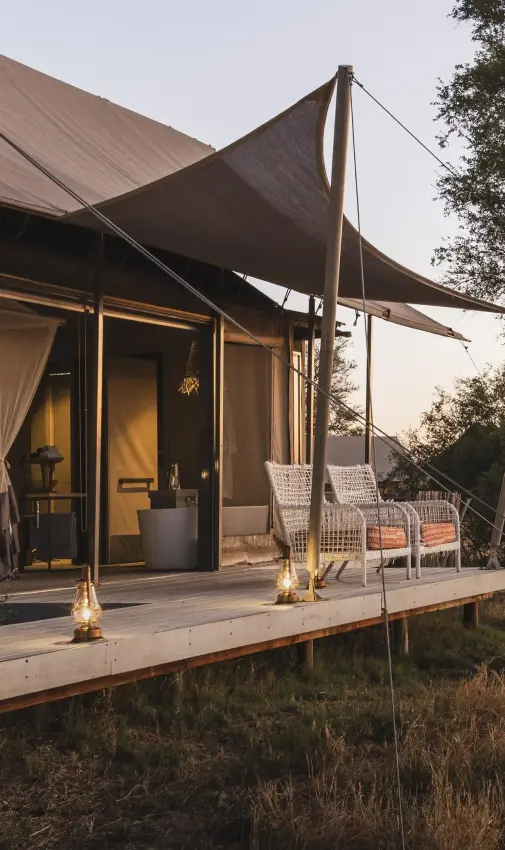
The six tents are canvas chalets under permanent thatch, raised on solid floors and cooled by ceiling fans, and each has a private veranda facing the plains. Beds are made up as twins or a king beneath draped mosquito nets, and one larger unit serves as a family room. Small period touches run through the rooms, among them antique luggage racks sourced from the Victoria Falls Hotel. Bathrooms are en suite with hot and cold running water and indoor showers, and select tents add an outdoor bath and shower facing the vlei.
With almost no other lights on the horizon, the nights stay dark and clear for stargazing.
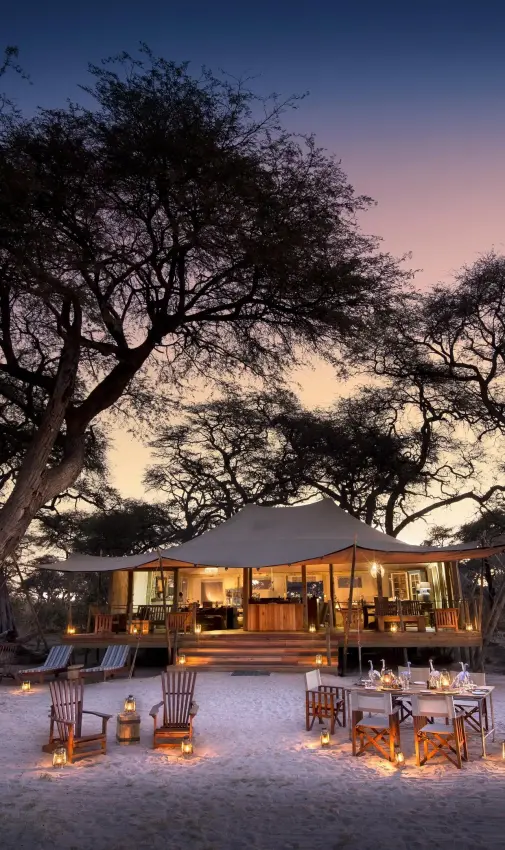
Evenings begin with drinks around an open fire. Senior Executive Chef Nathascha Xisto Das Neves and her kitchen team serve dinner farmhouse-style at one long wooden table. On clear nights it is laid on the deck facing the Deka floodplain, and a small gazebo is kept for private dinners. With almost no other lights on the horizon, the nights stay dark and clear for stargazing. The day ends with a nightcap from the cigar corner. The tents have charging points for phones and cameras, though the wifi is kept to the main area, so the evenings there stay quiet.
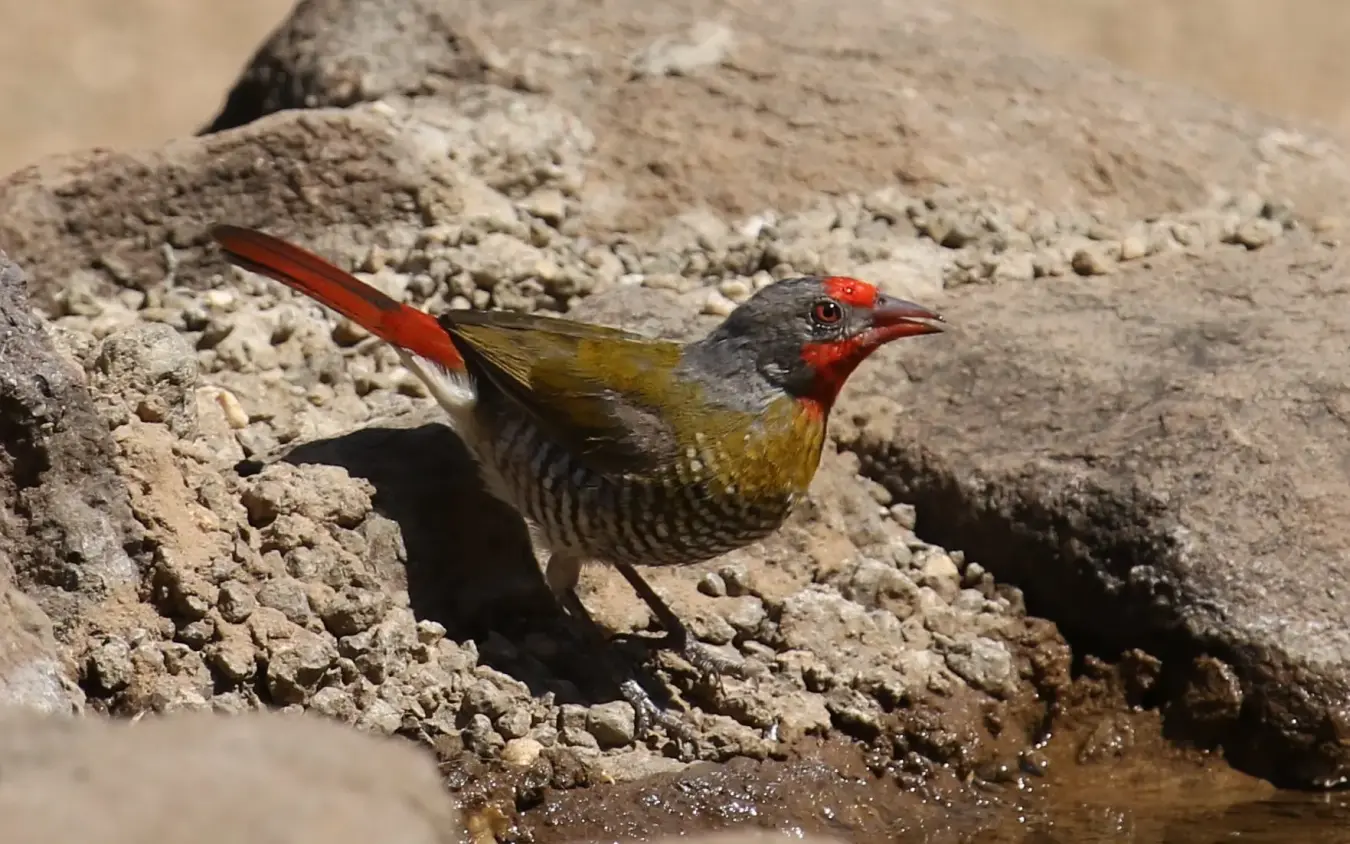
Guests flying in from Victoria Falls are met at Robins Airstrip by a camp vehicle, around 40 minutes away by road. Breakfast is light and early, with coffee and fresh baking carried out on the drive. Brunch is the full meal of the morning, and tea comes in the afternoon. In winter the seeps hold while the country around them dries, and animals arrive from the surrounding land. Birders favour the green season: more than 450 species are recorded across the wider Hwange region, among them Pel’s fishing owl, martial eagle, ground hornbill and lappet-faced vulture.