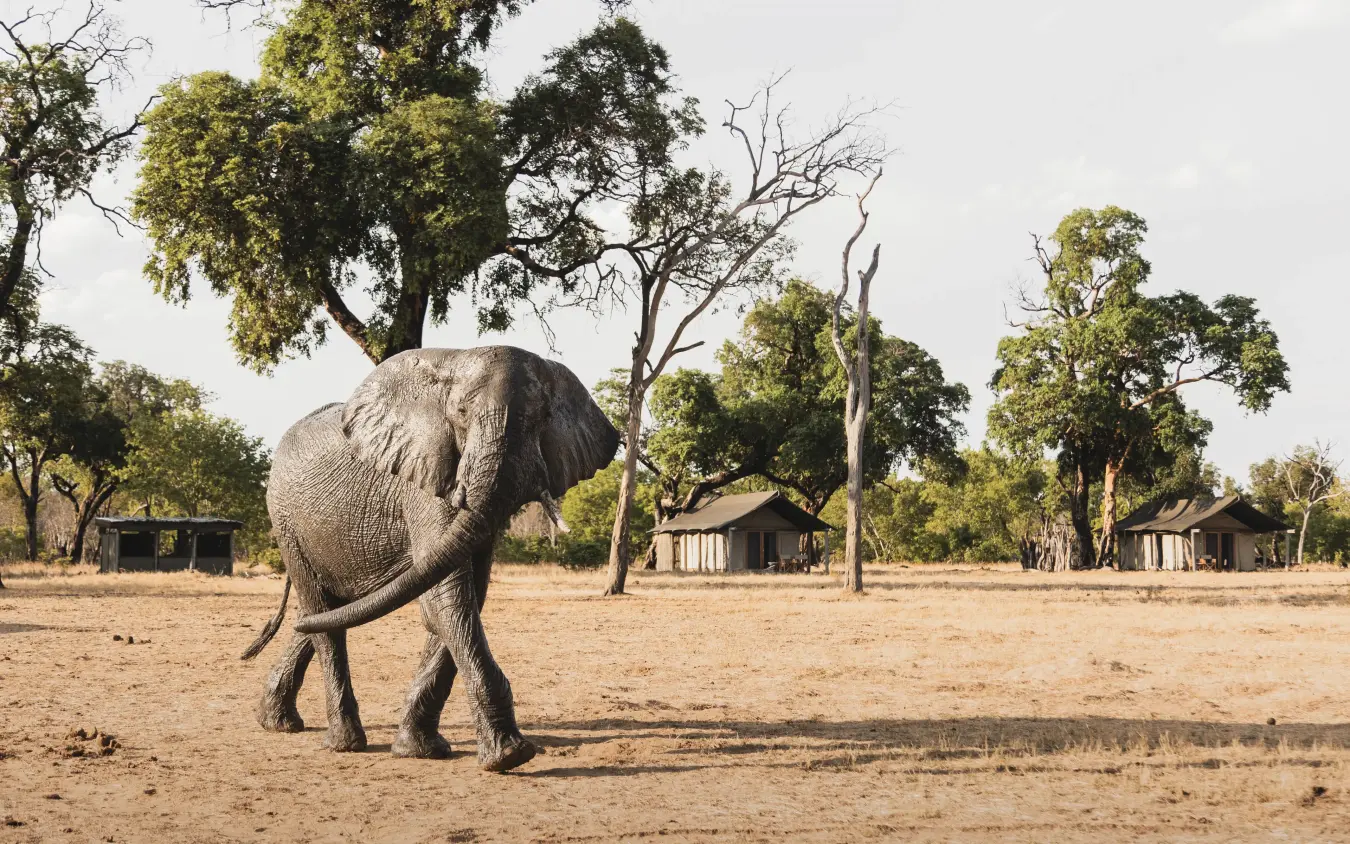
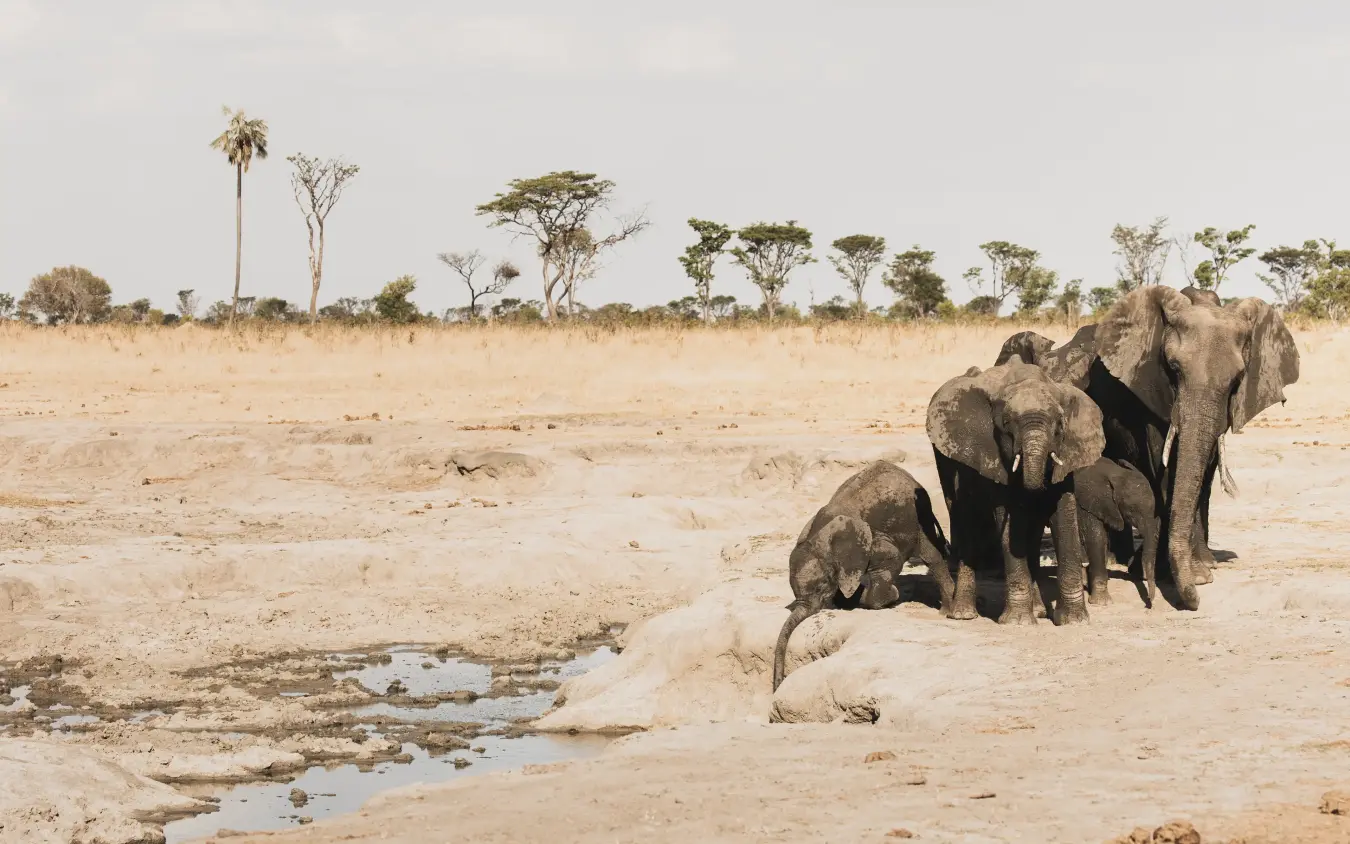
Off-road driving and night drives, both prohibited in the wider national park, are permitted inside the concession. That freedom opens the whole plain to a vehicle and lets guides follow predators across country instead of tracing the roads. A sighting can be followed for as long as it lasts. Morning and afternoon drives leave in open 4x4s, out over the concession’s plains, around its pans and into the teak woodland, tracking the elephant herds and the buffalo, and the antelope whose movements in turn draw the lions.
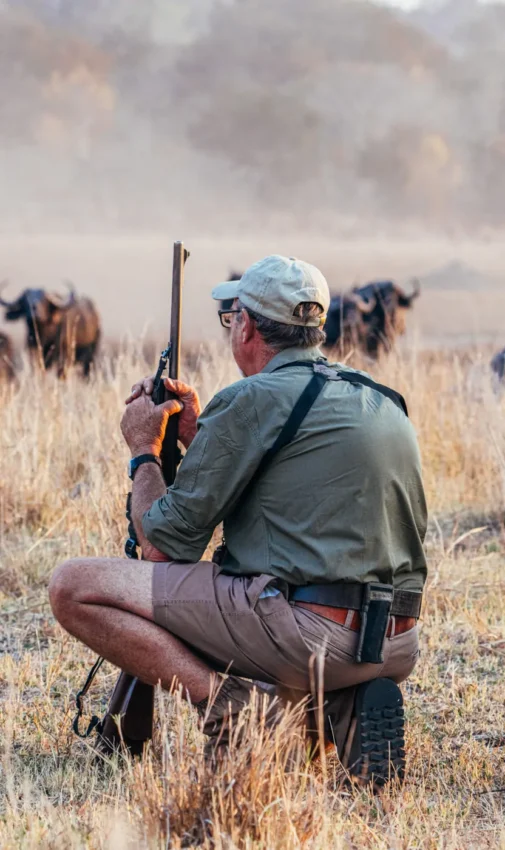
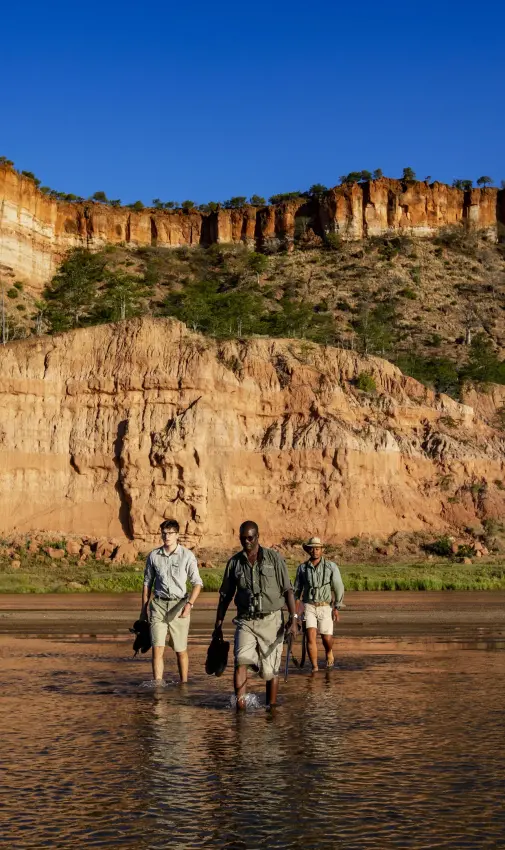
After dark, spotlit drives turn up the animals daytime visitors miss. Lesser bushbaby and springhare show in the beam, along with caracal, porcupine and honey badger, and there is always the chance of a leopard on the move. By day the detail comes smaller: guided walks, led by armed and licensed Zimbabwean guides, work the tracks in the sand and follow the birdlife through the scrub. Near camp, a log-pile hide is set low at a mud wallow, putting guests at eye level with drinking wildlife through the quiet hours of the afternoon.
Elephants rumble and slosh at the pan, and buffalo call low across the grass.
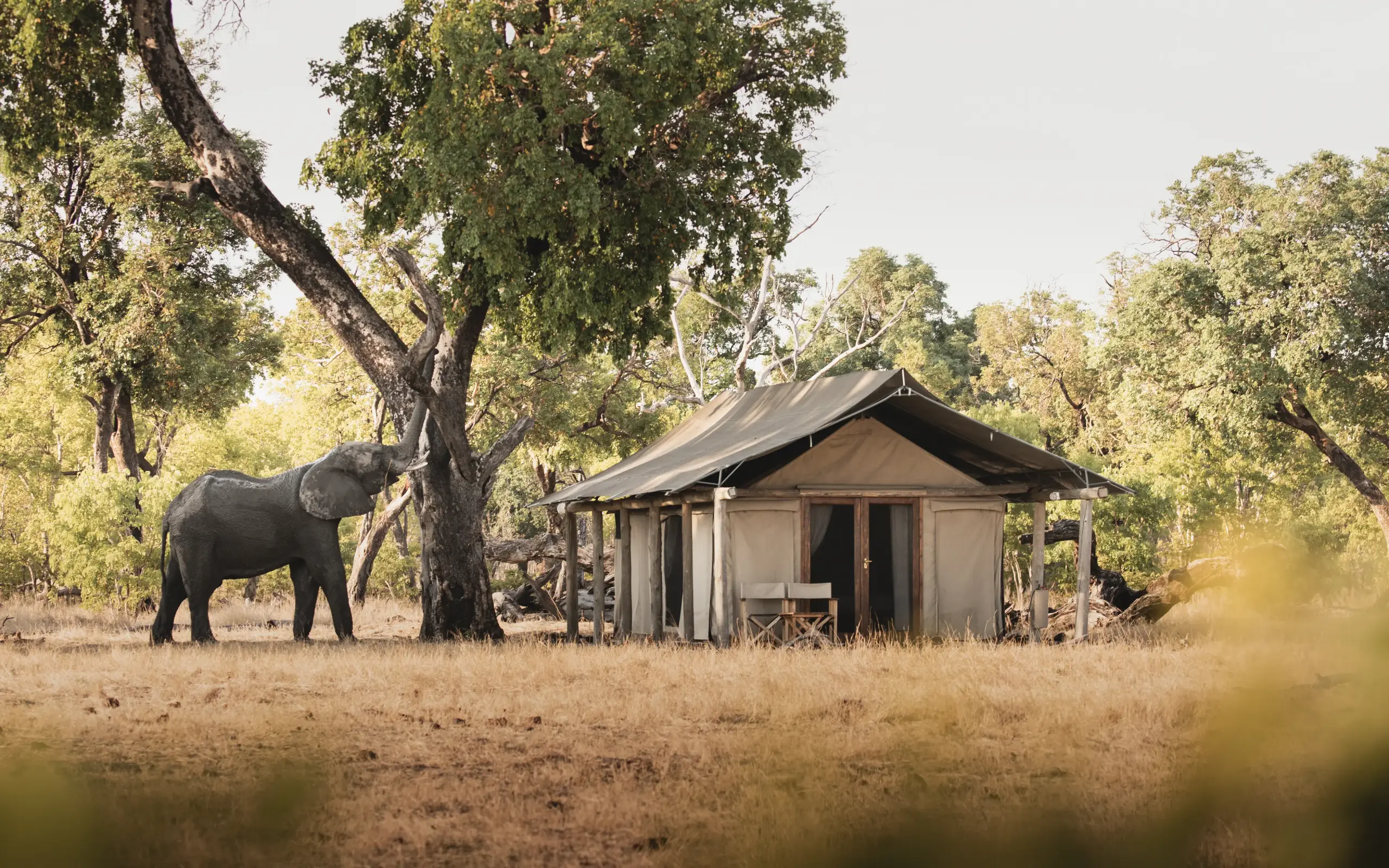
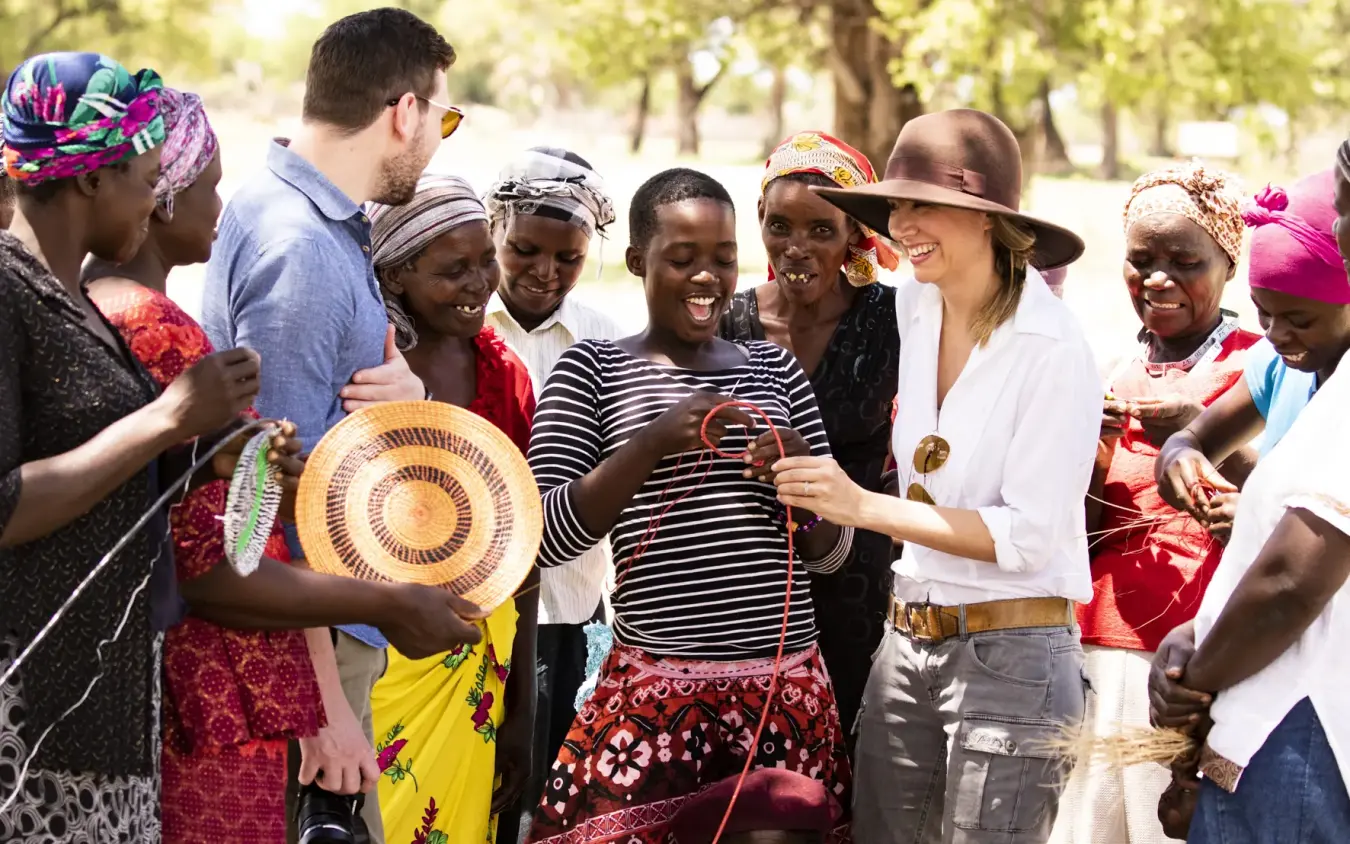
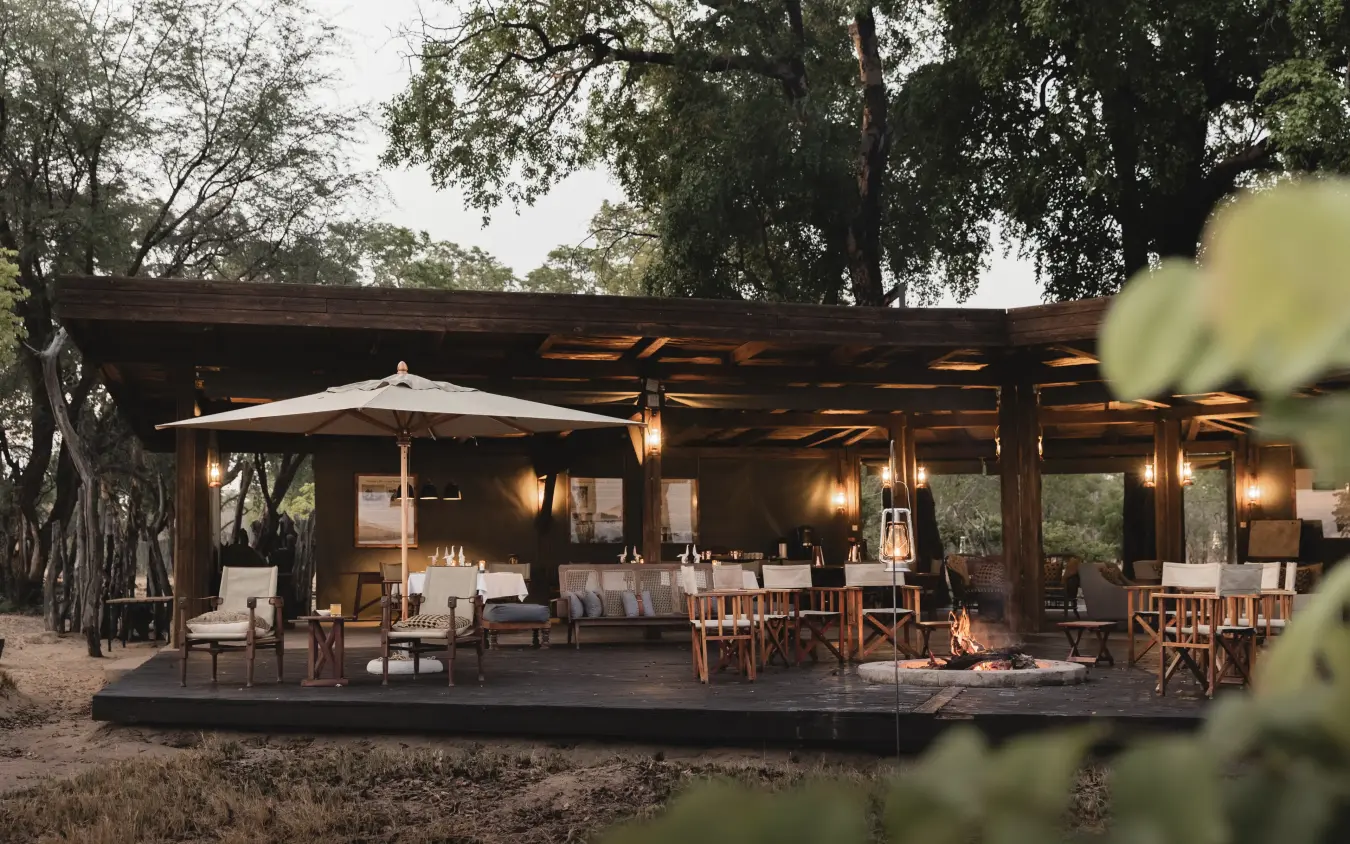
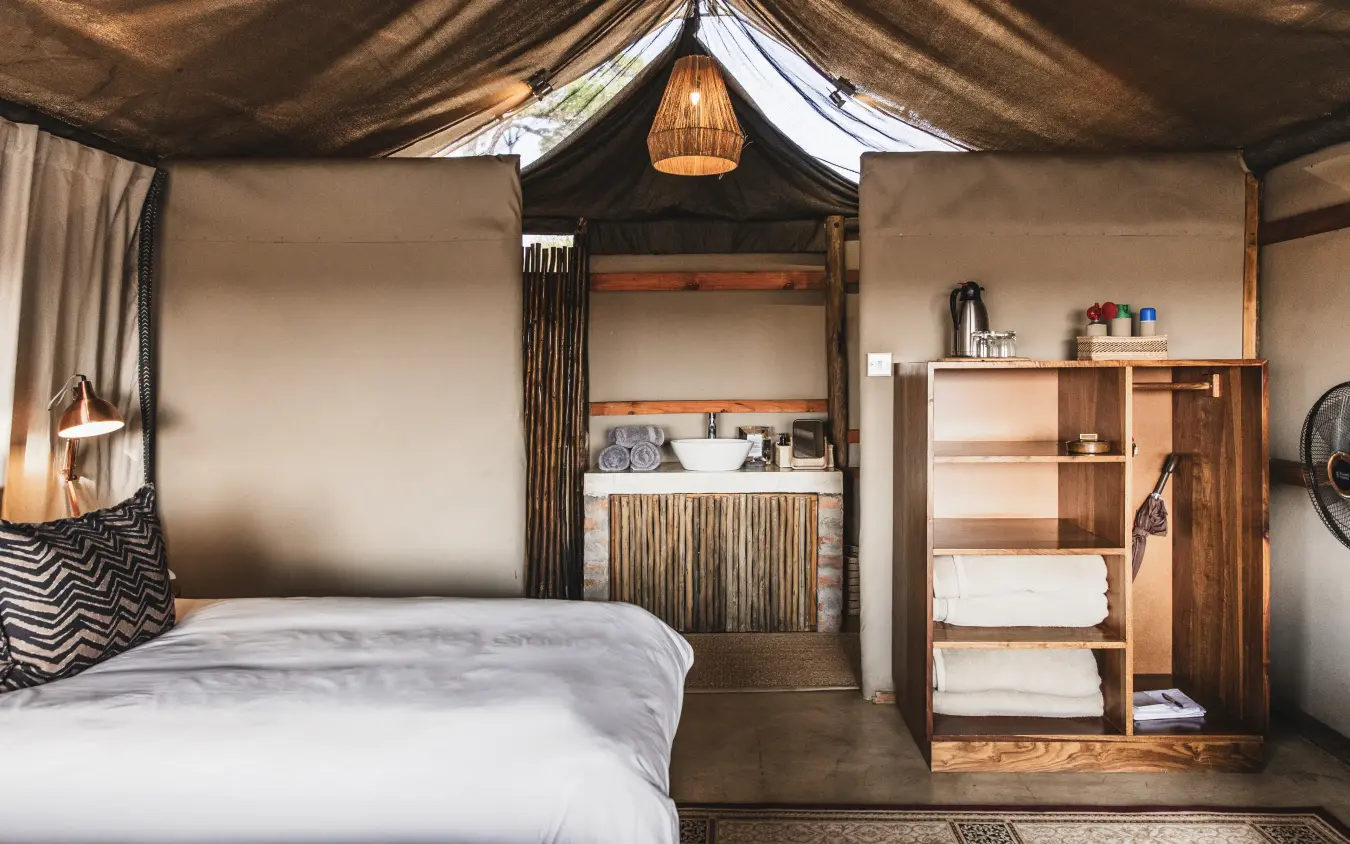
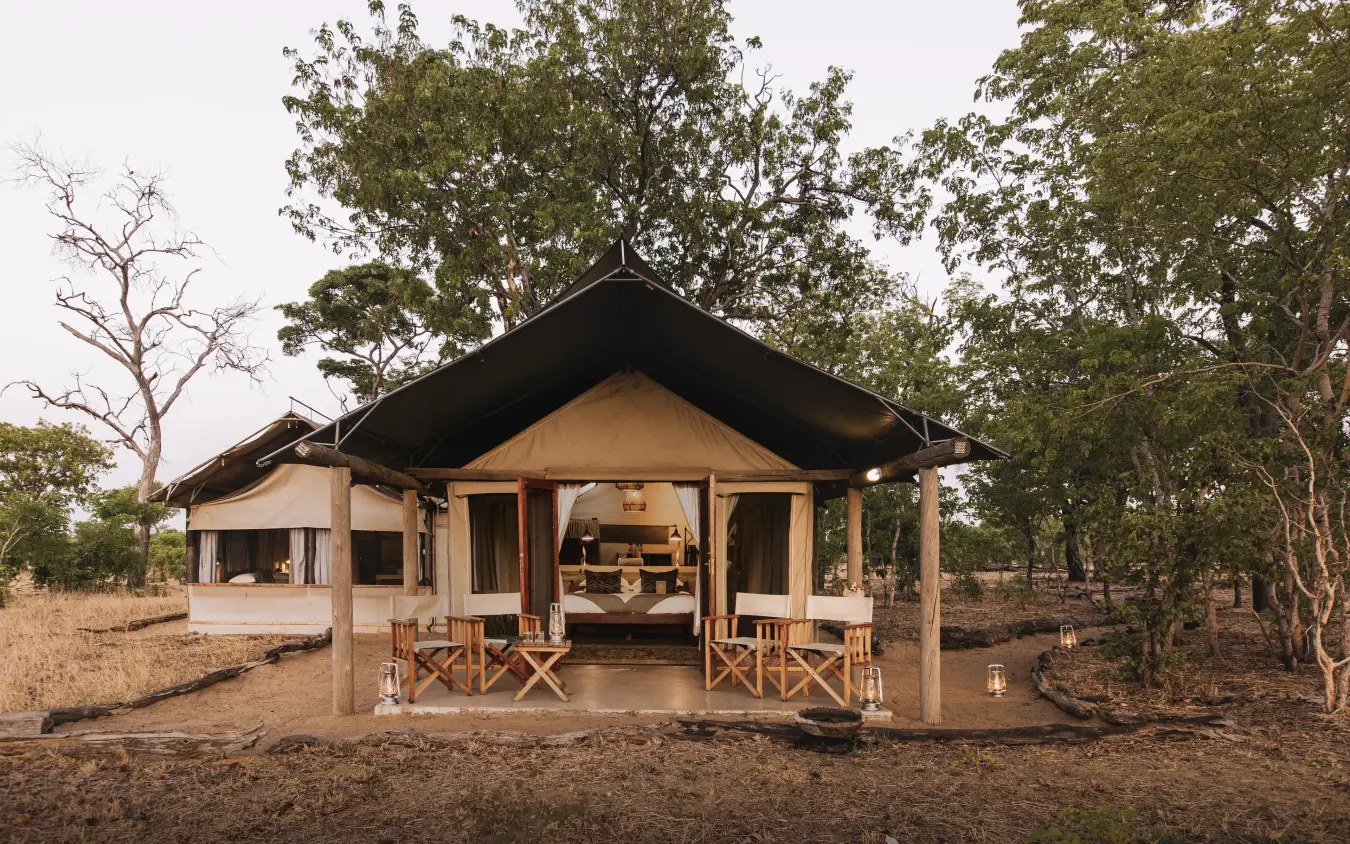
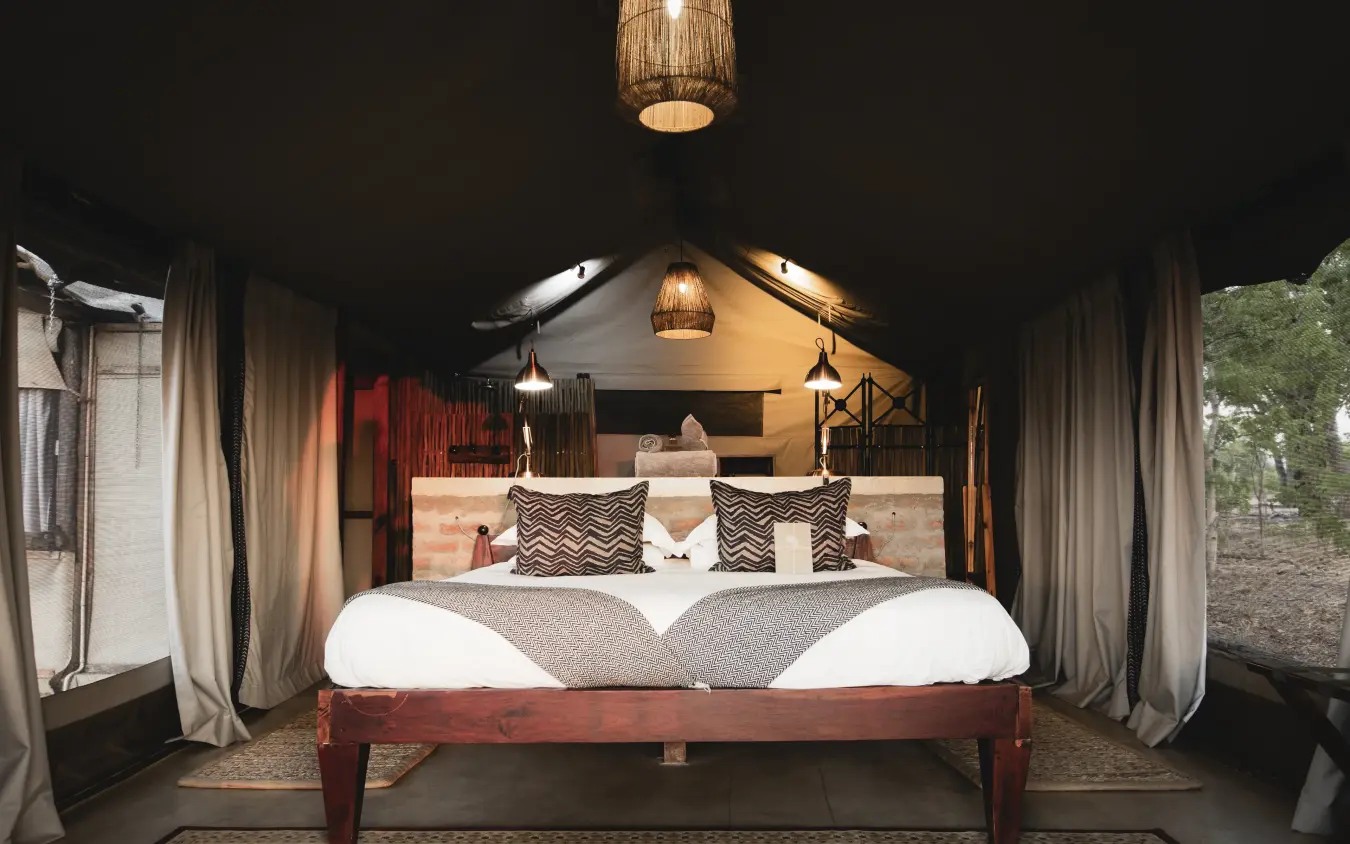
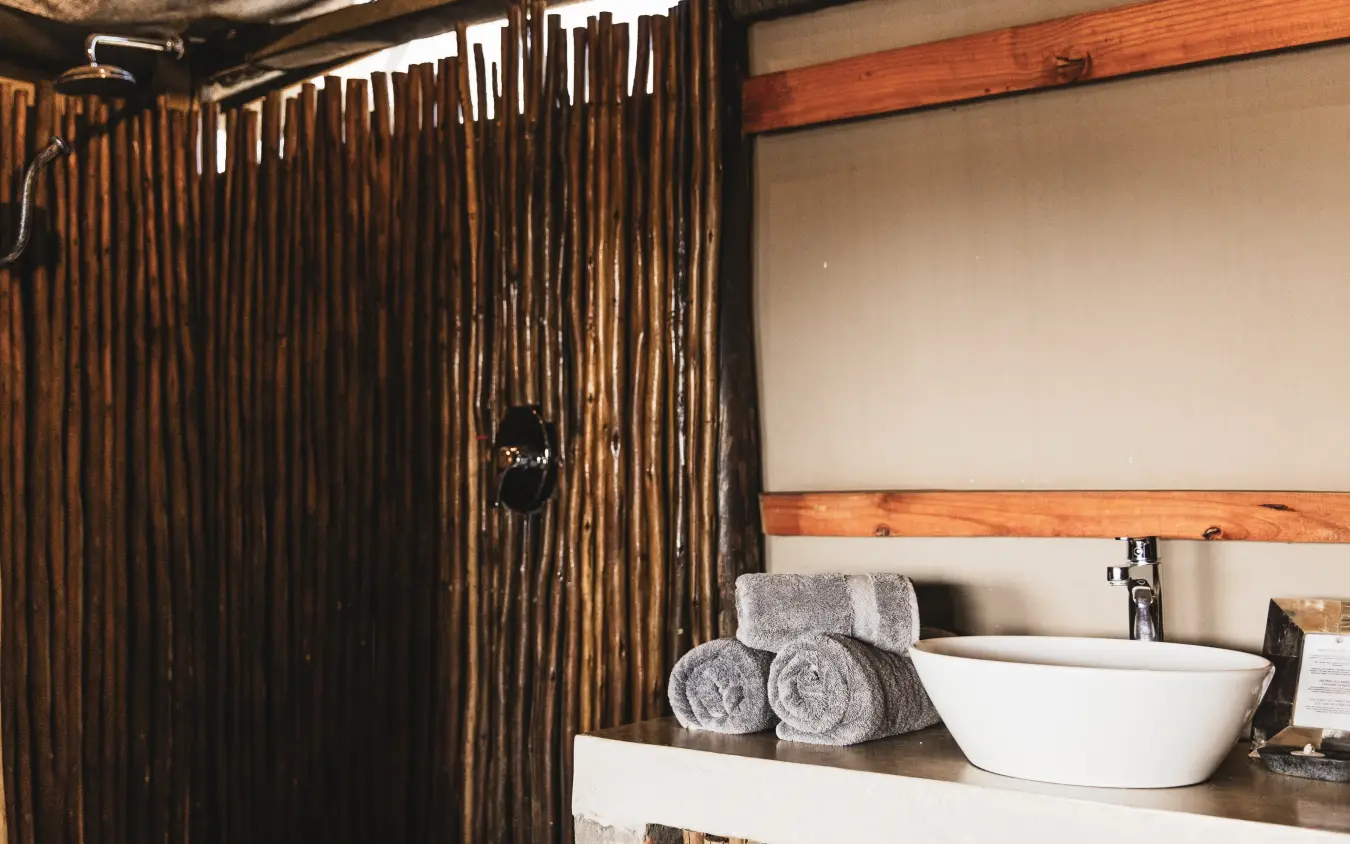
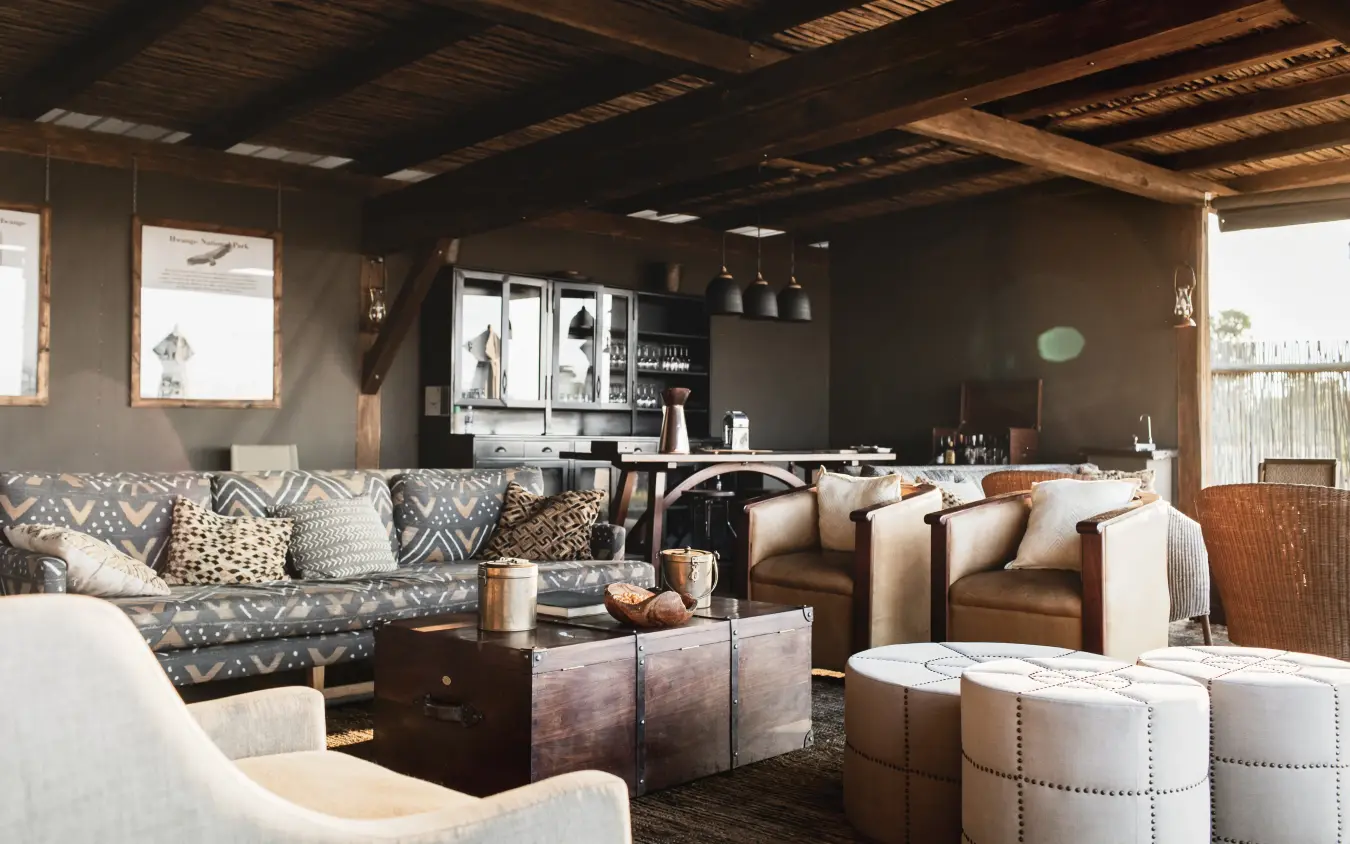
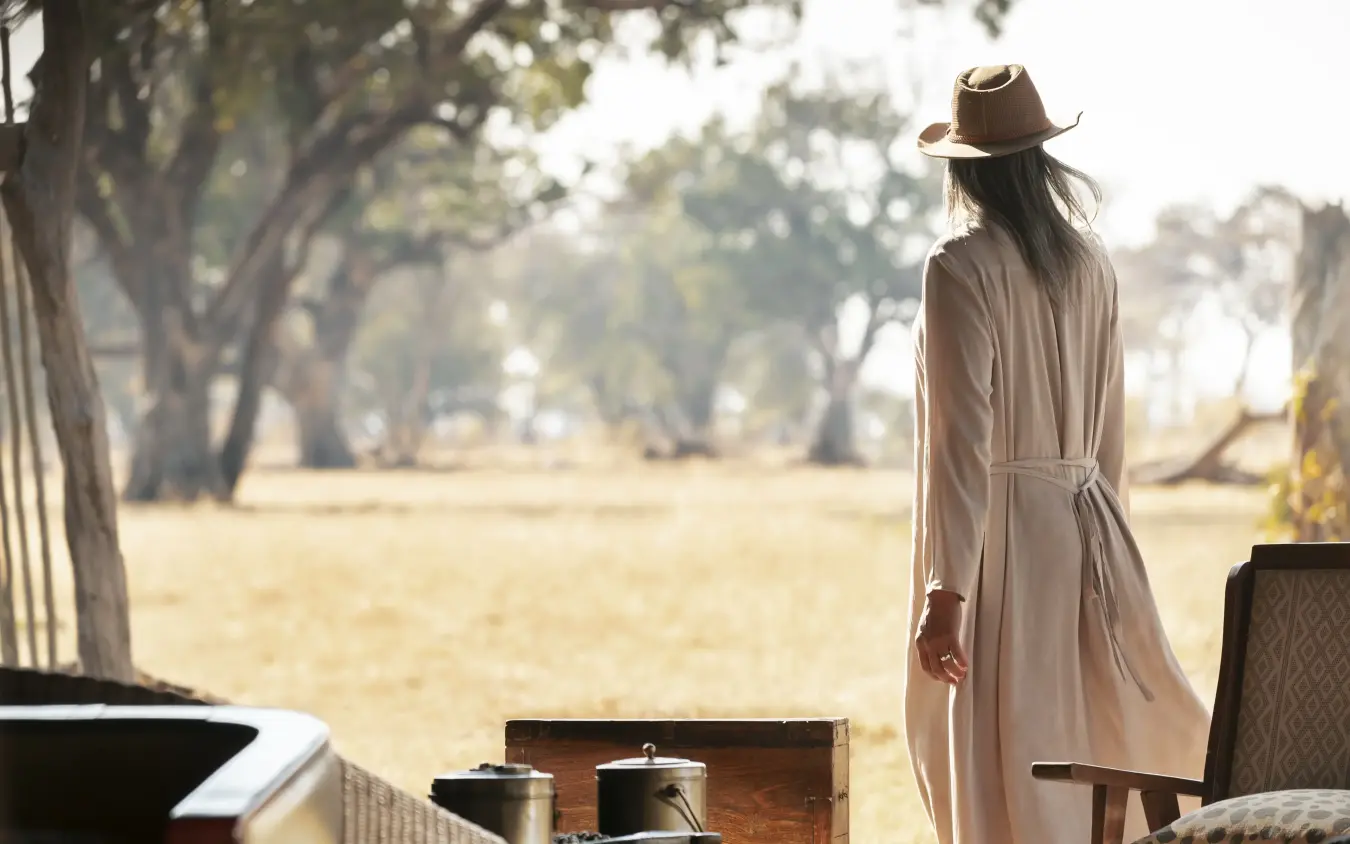
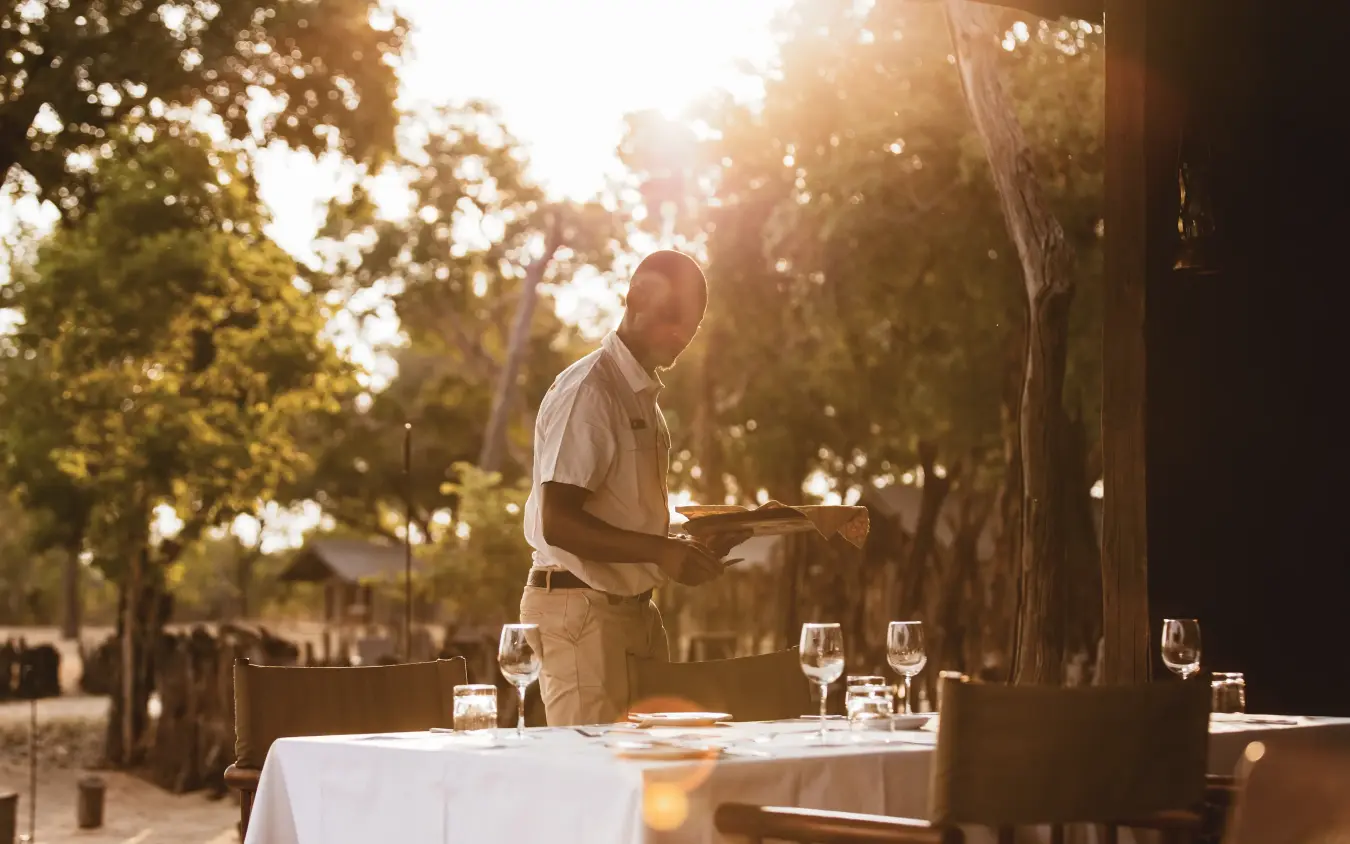
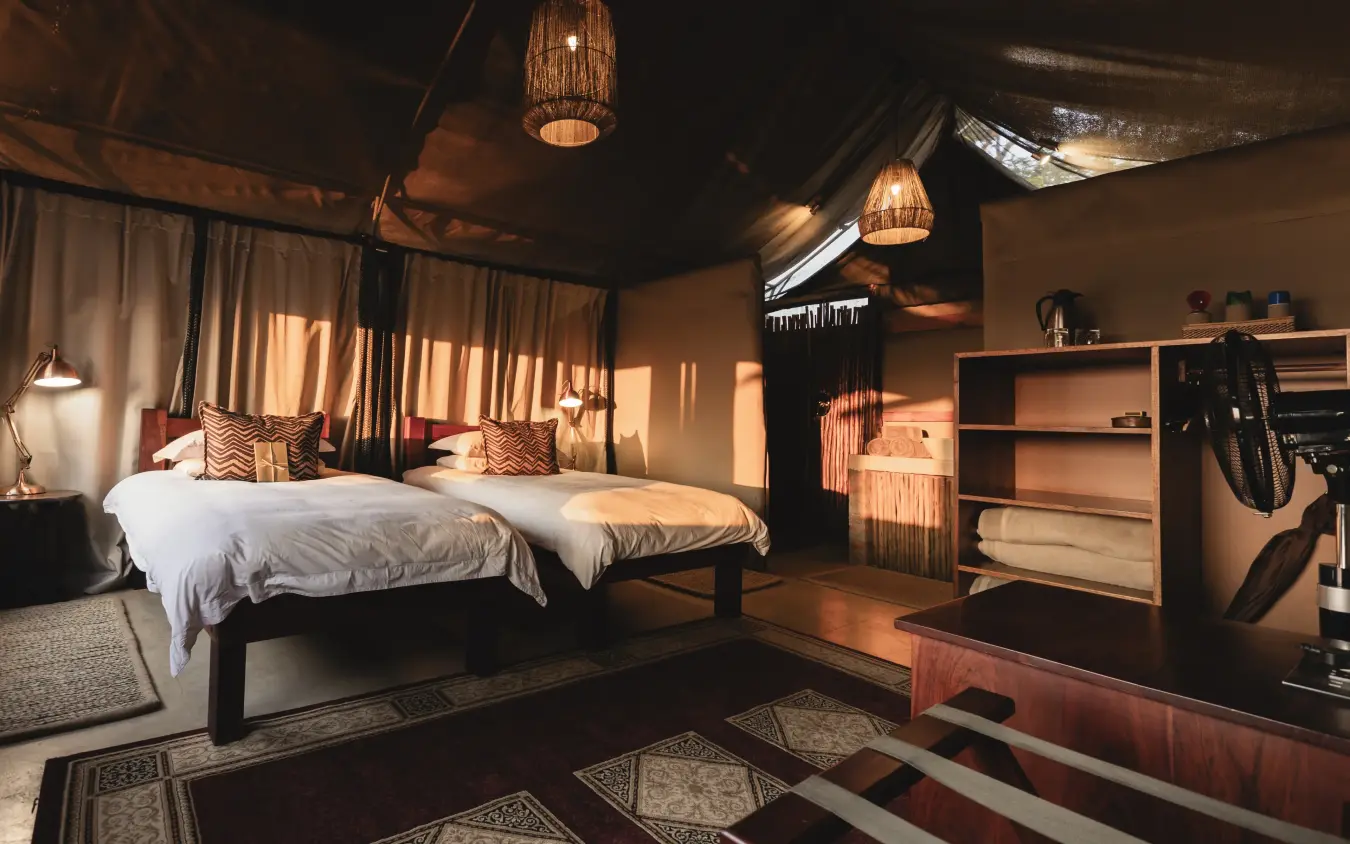
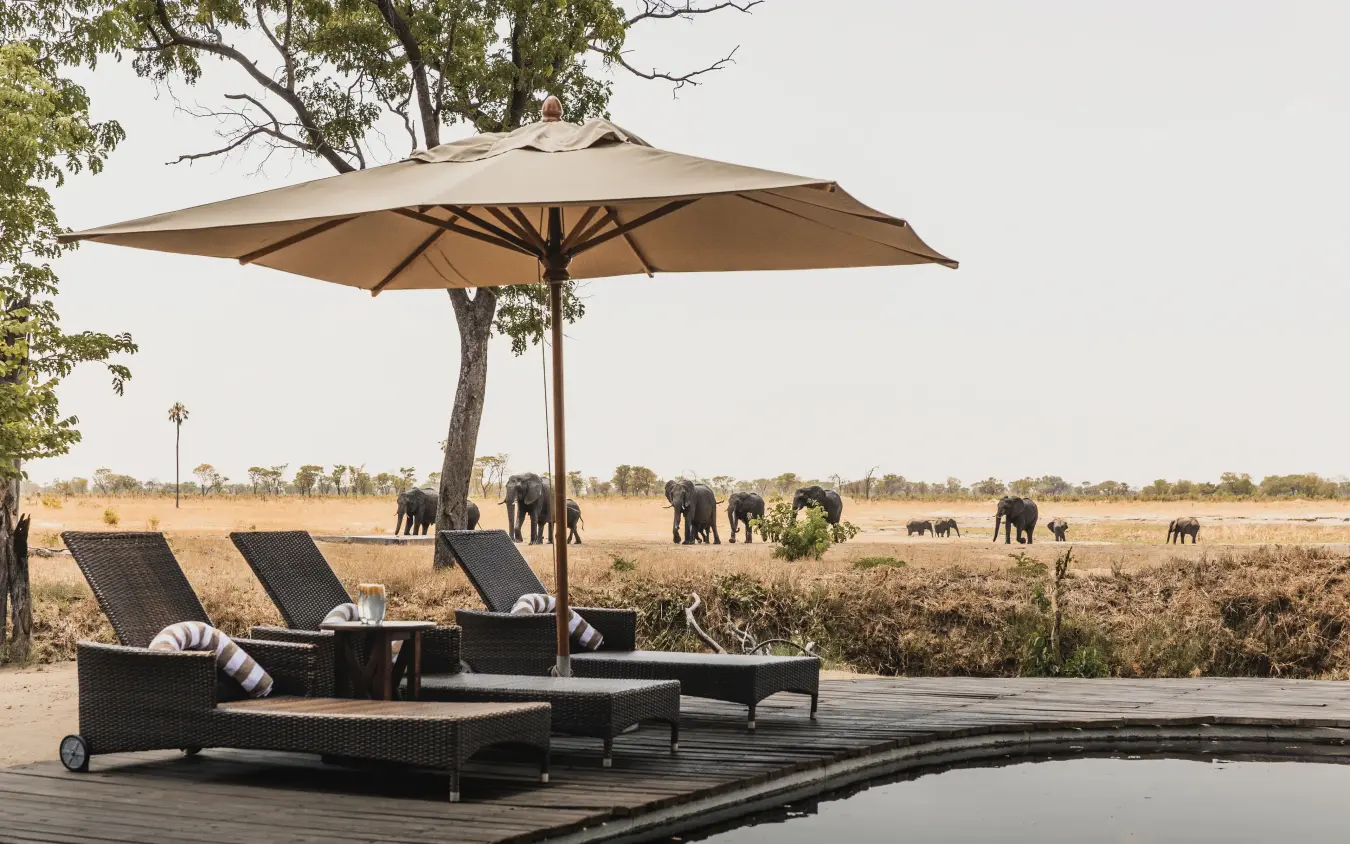
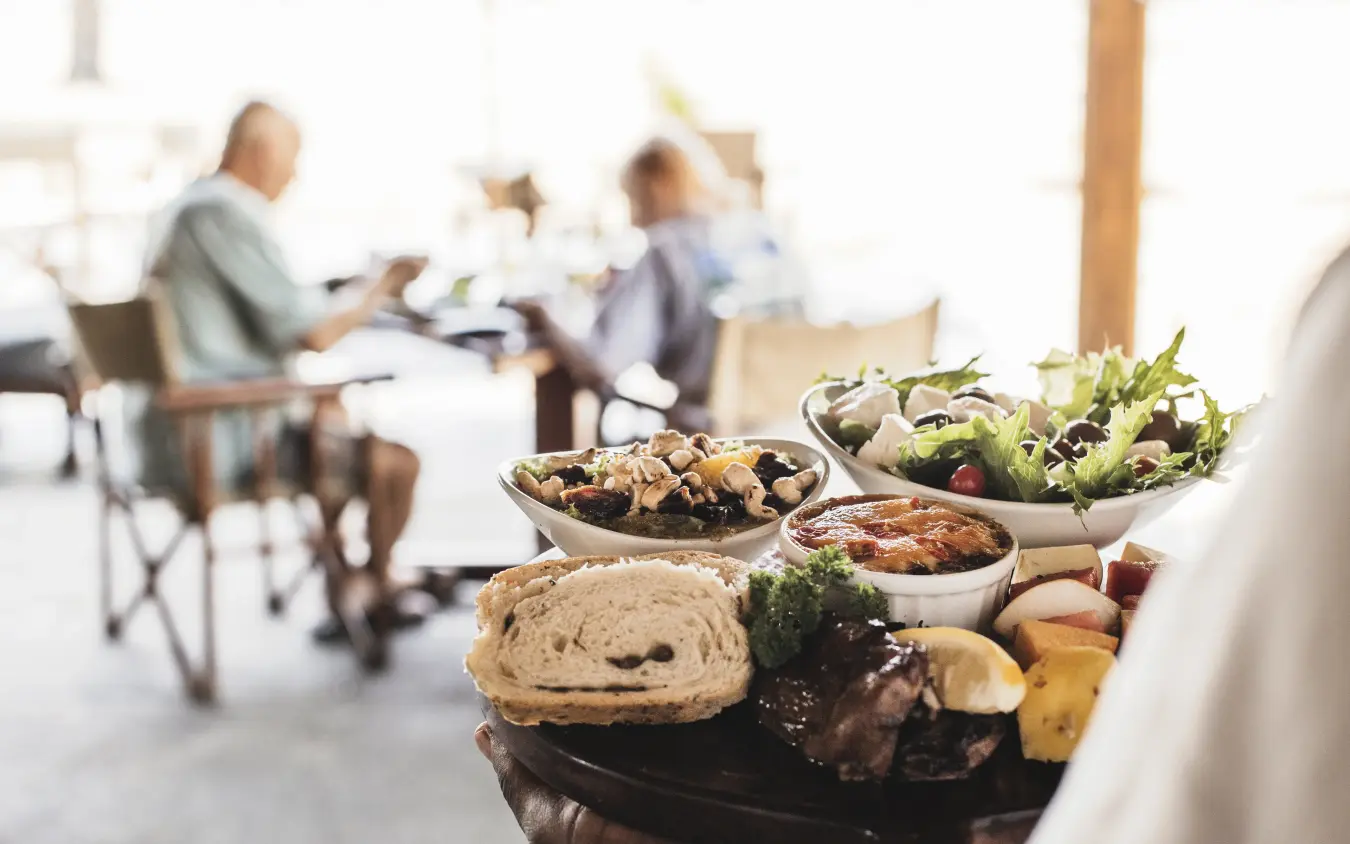
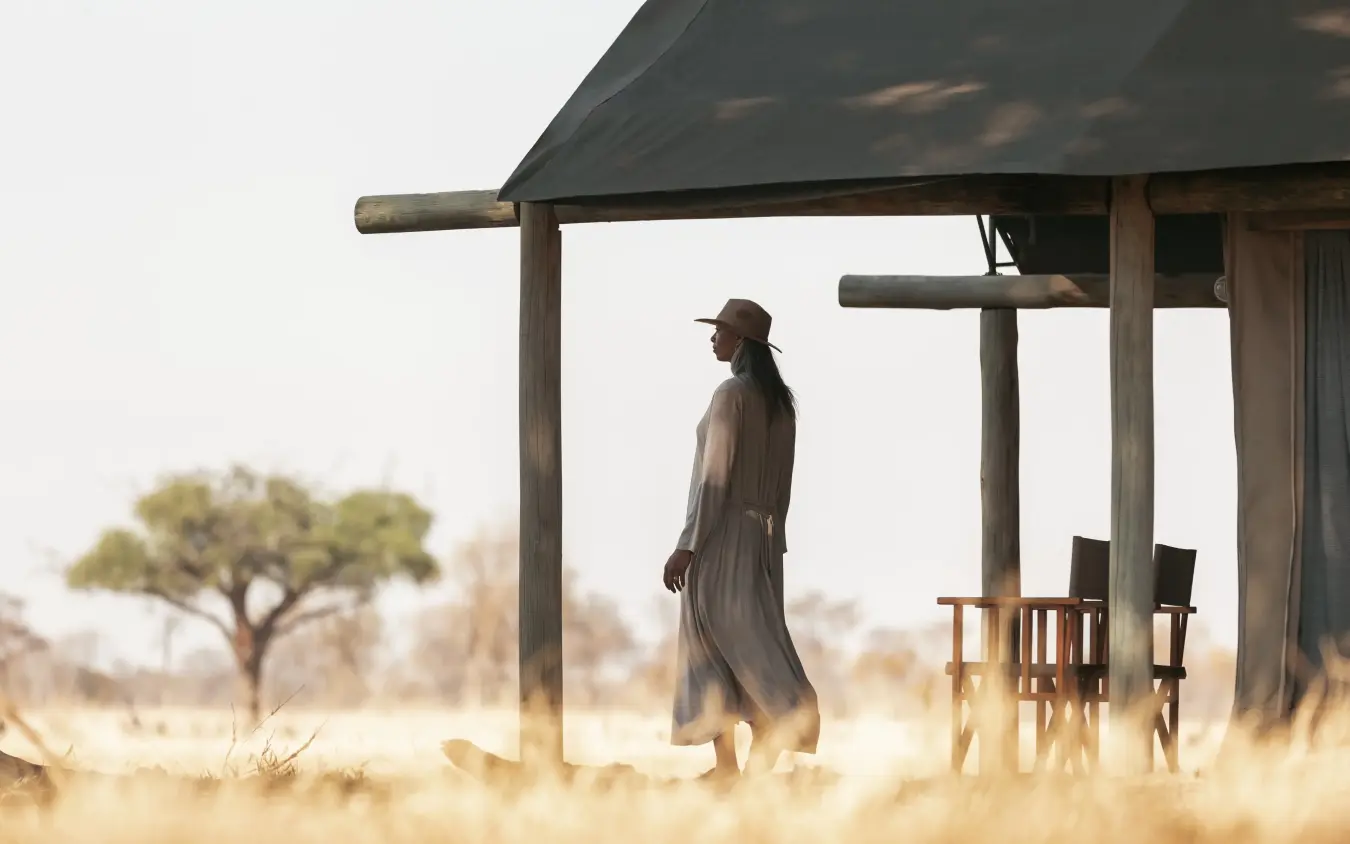
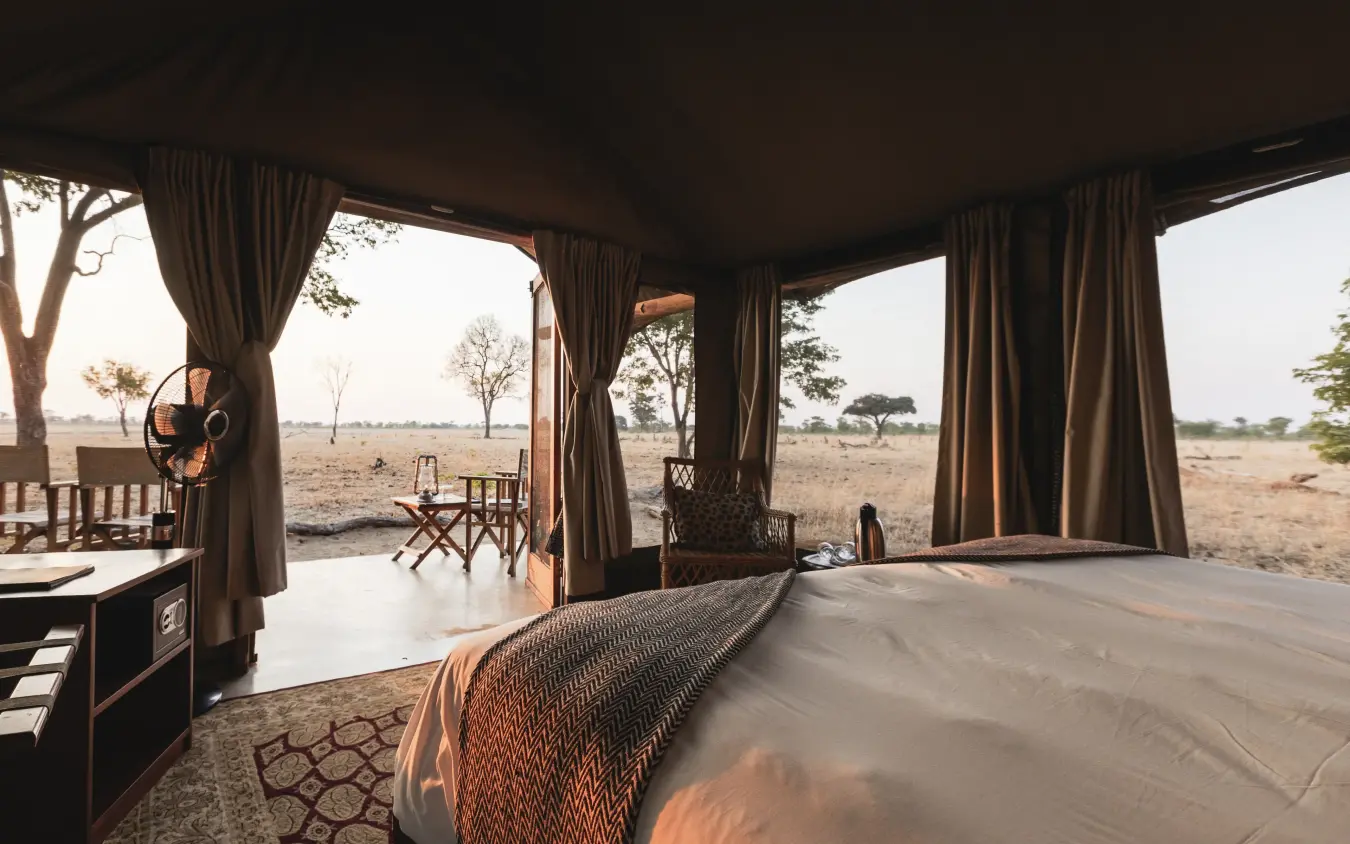
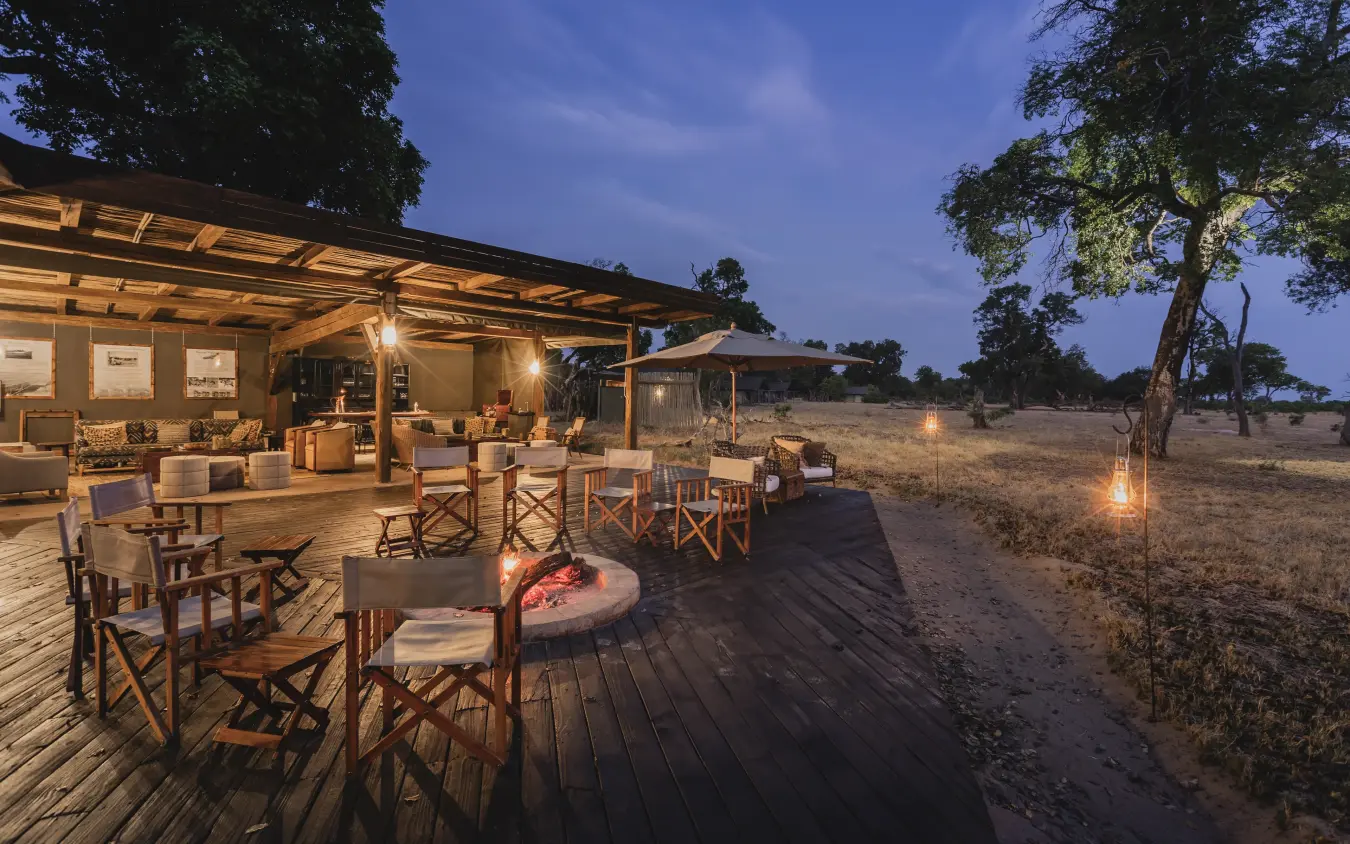
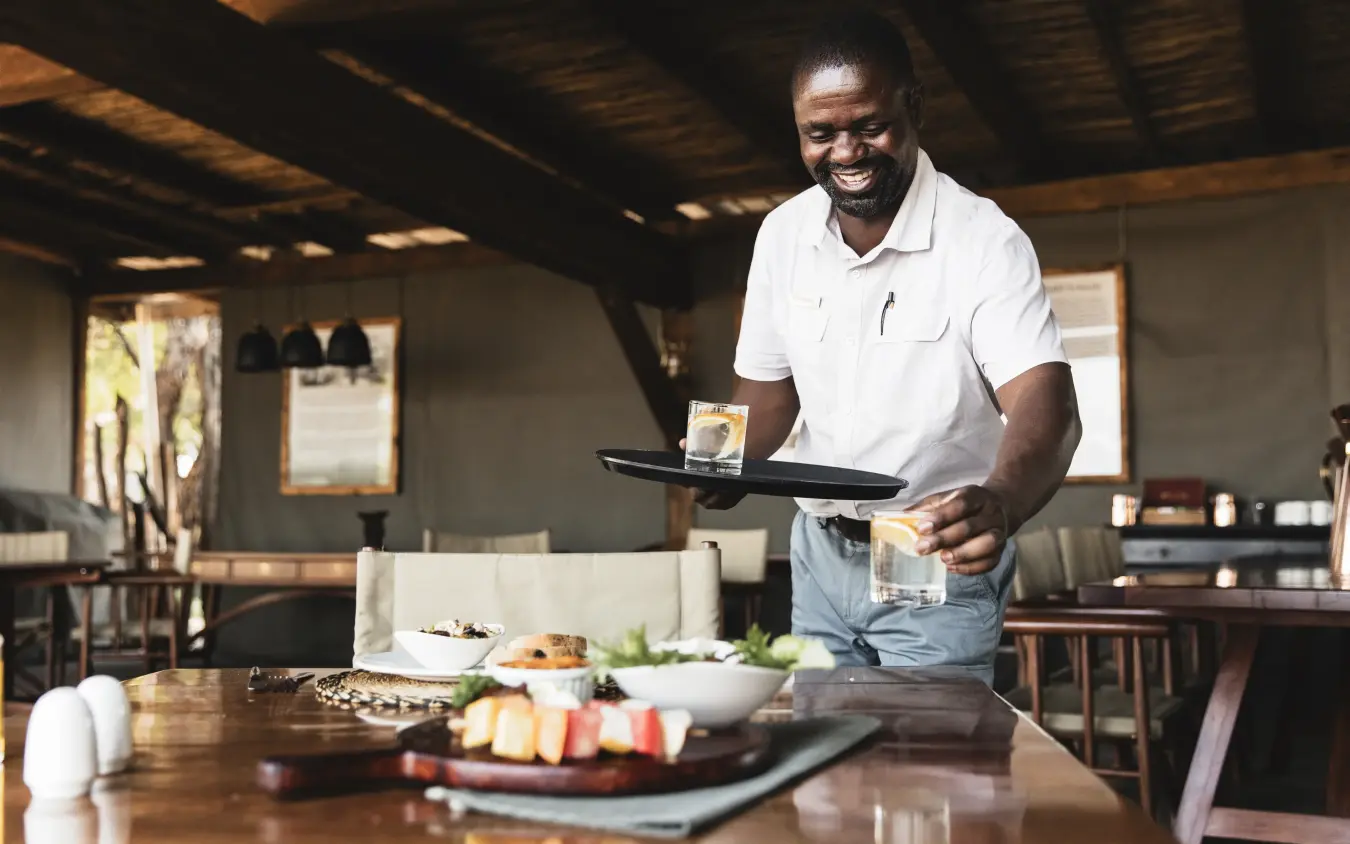
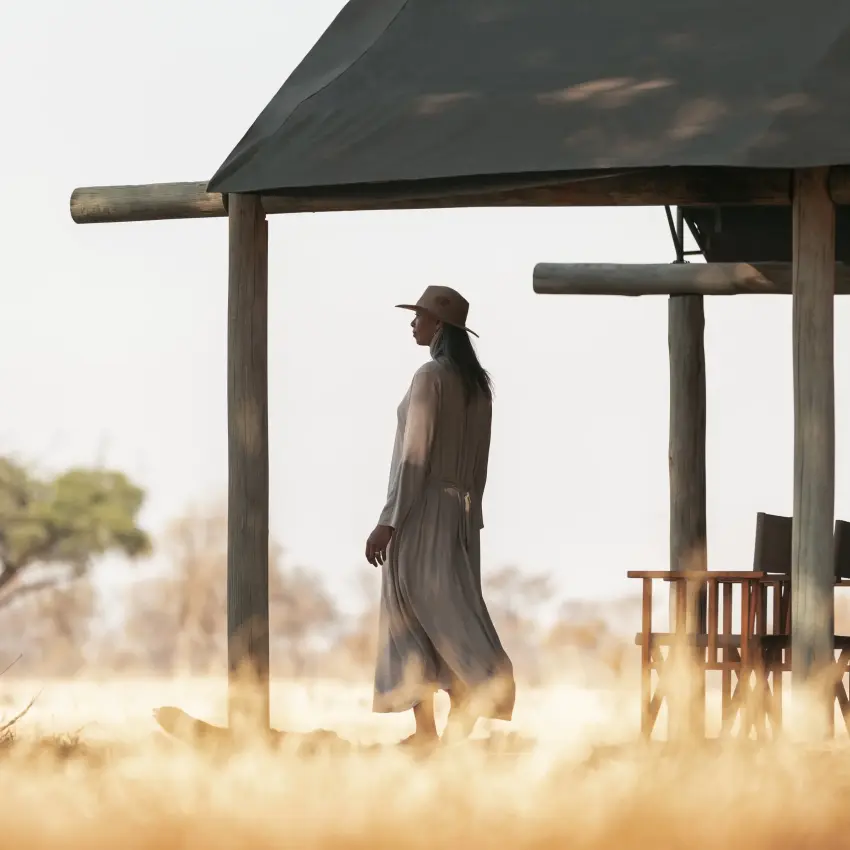
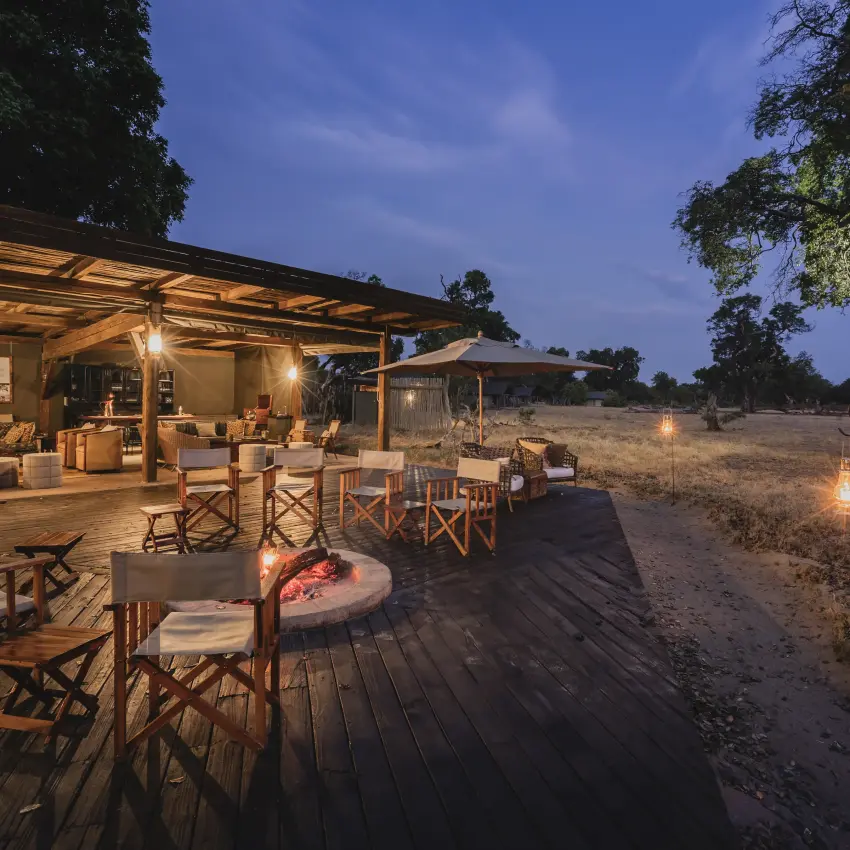
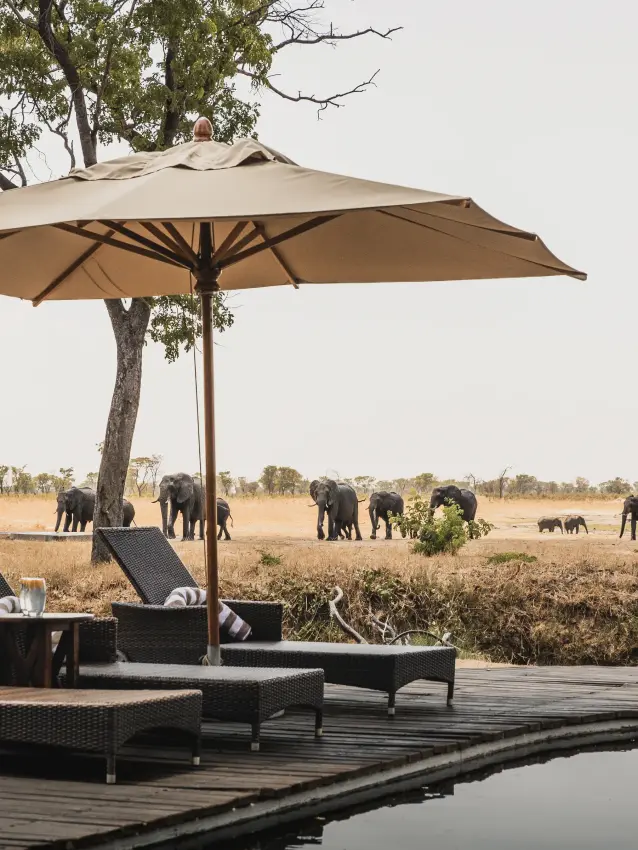
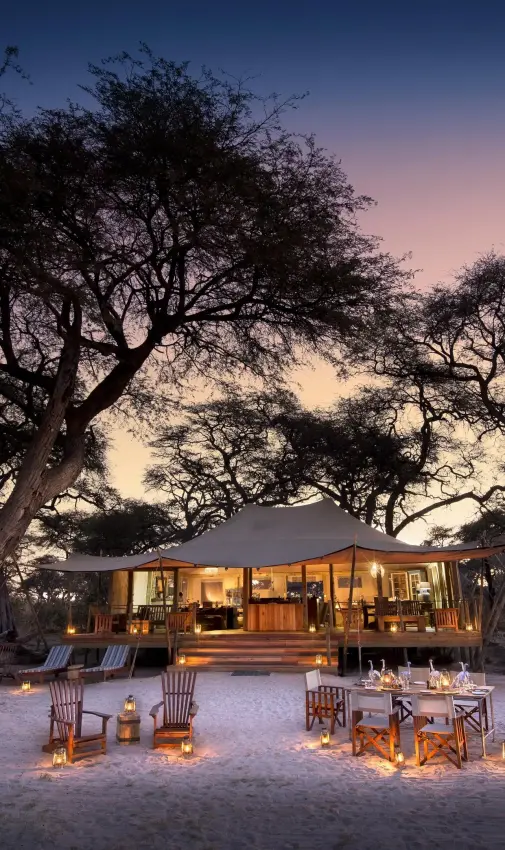
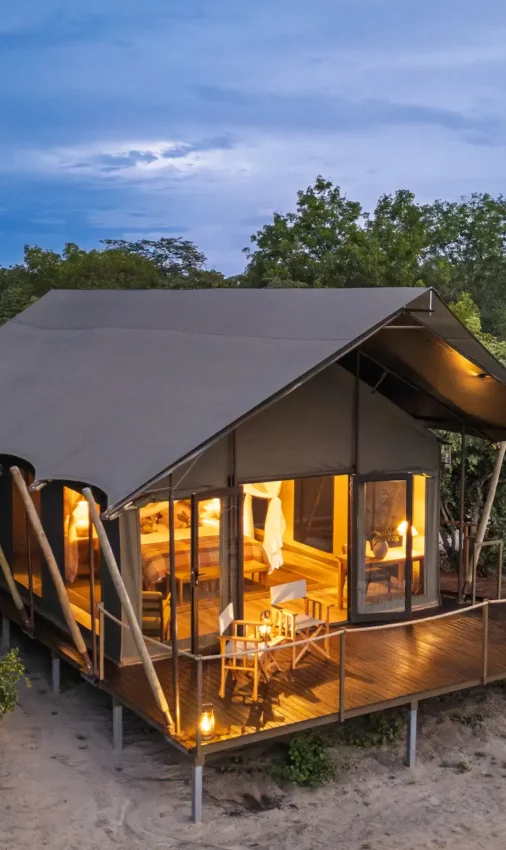
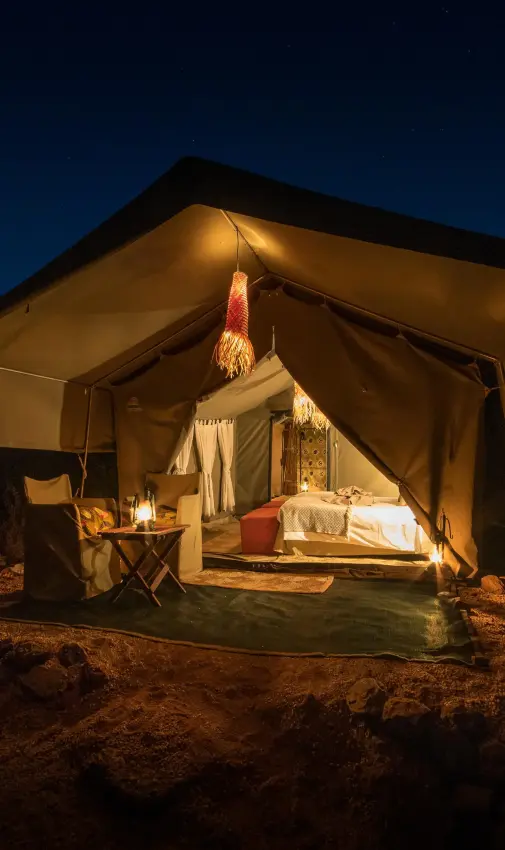
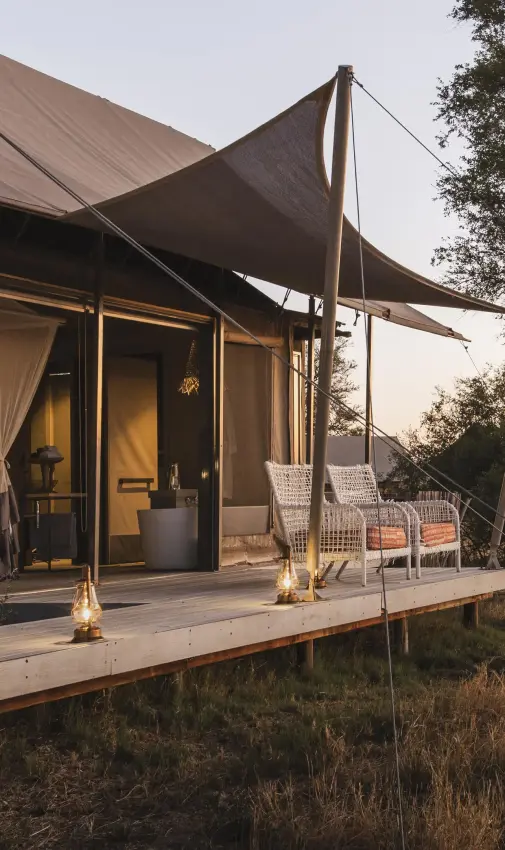
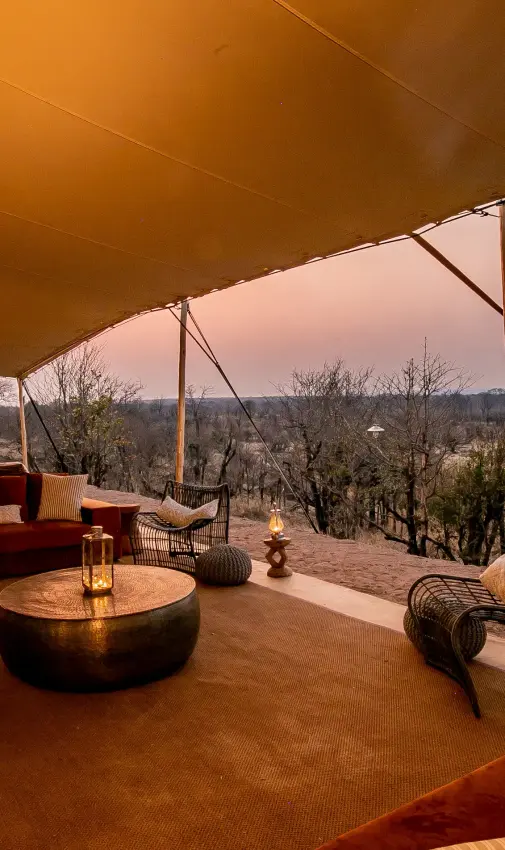
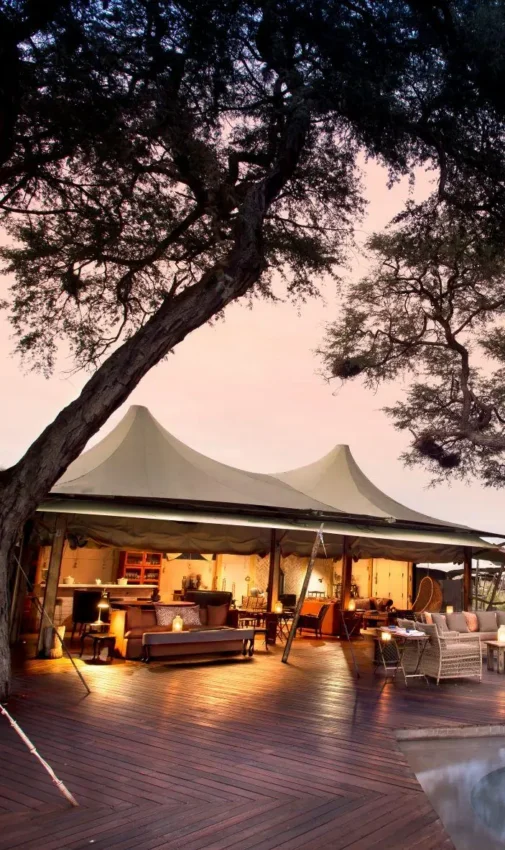
The canvas tents stand on timber platforms, and the main areas are open-sided beneath timber and thatch, with a swimming pool and an upper viewing deck looking out over the plain. The styling stays soft and earth-toned, a matter of cane, rattan and hand-woven baskets more than overt luxury. Meals bring together Zimbabwean flavours and familiar classics, taken in the main tent, out at the boma fire, or on the deck above the waterhole, where the herds tend to decide how long dinner lasts.
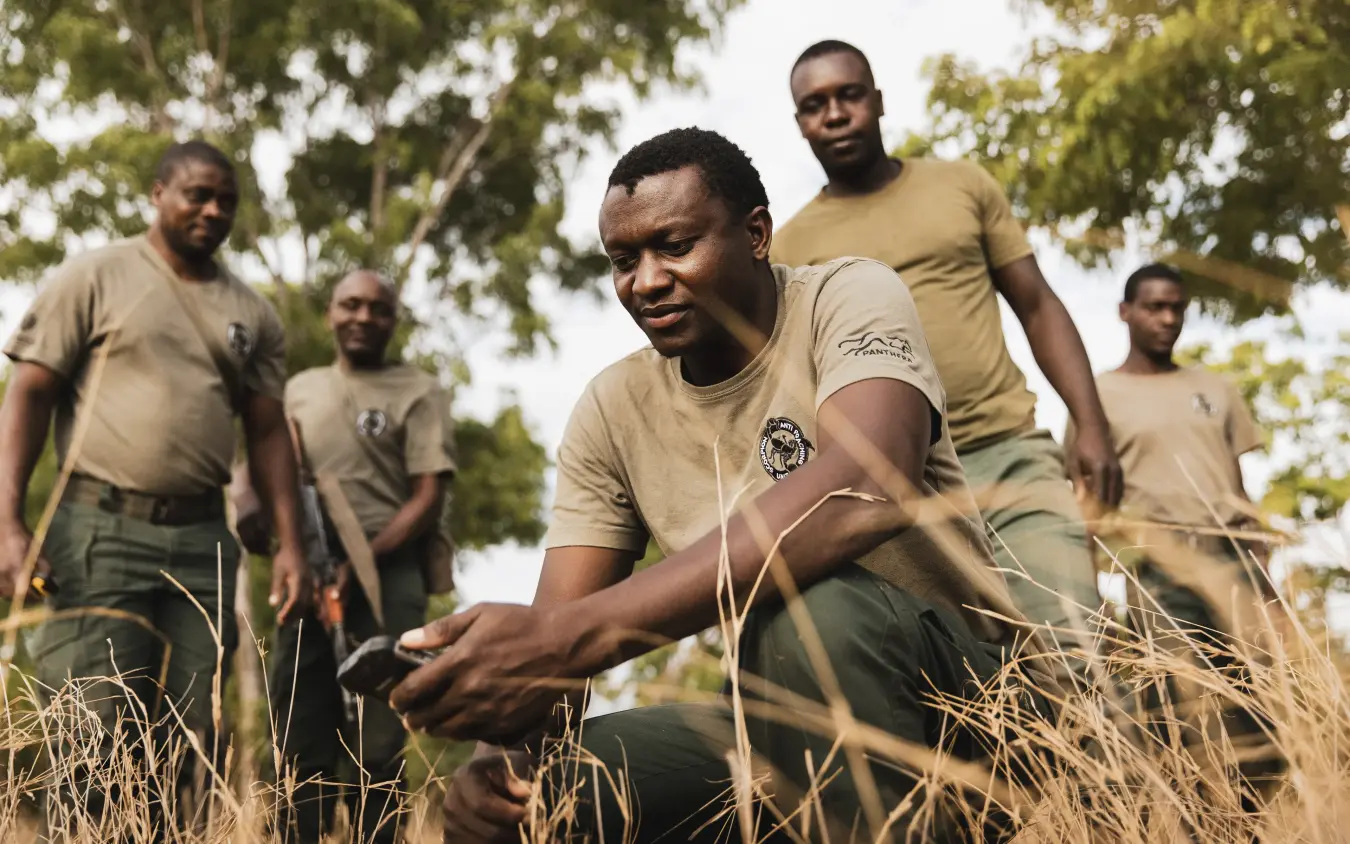
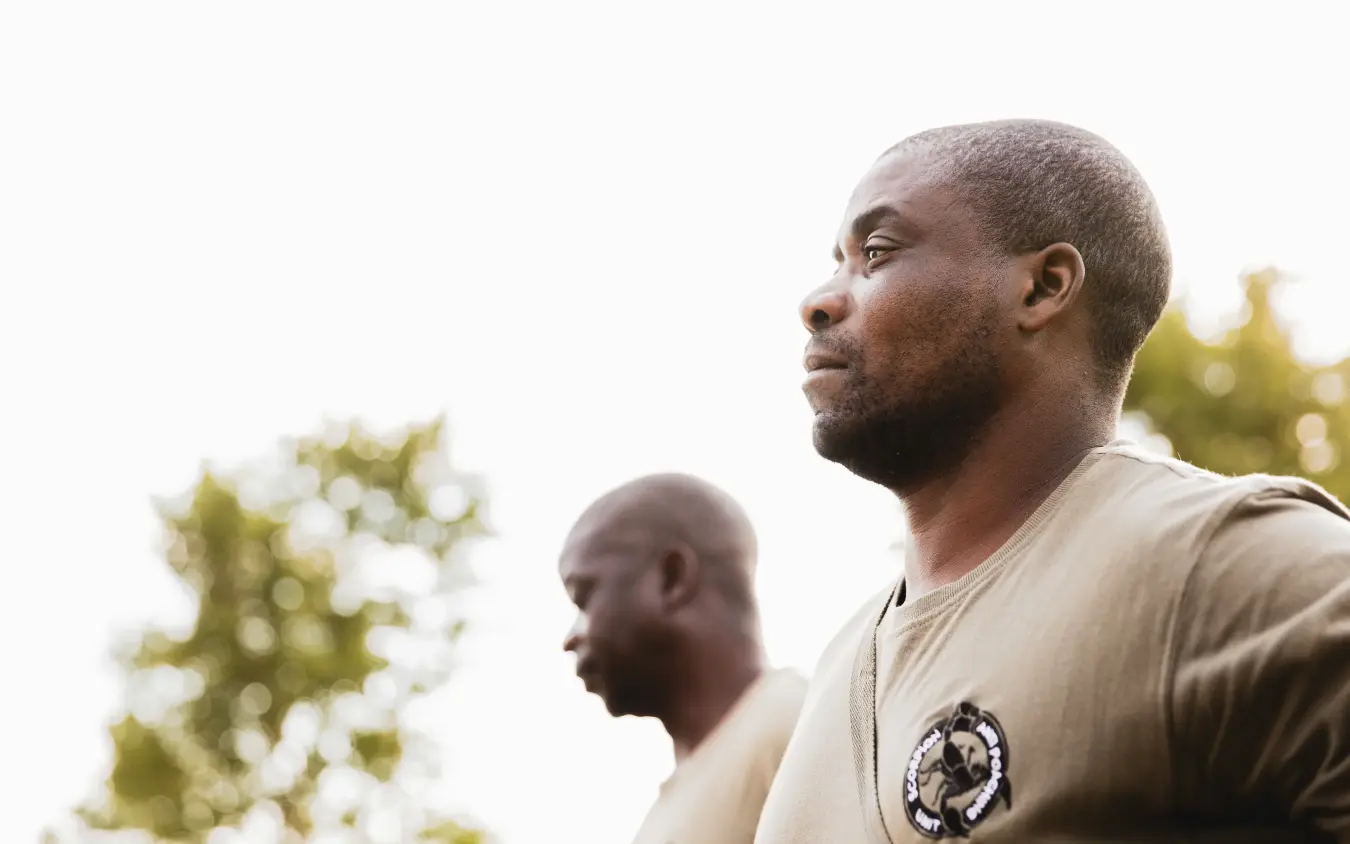
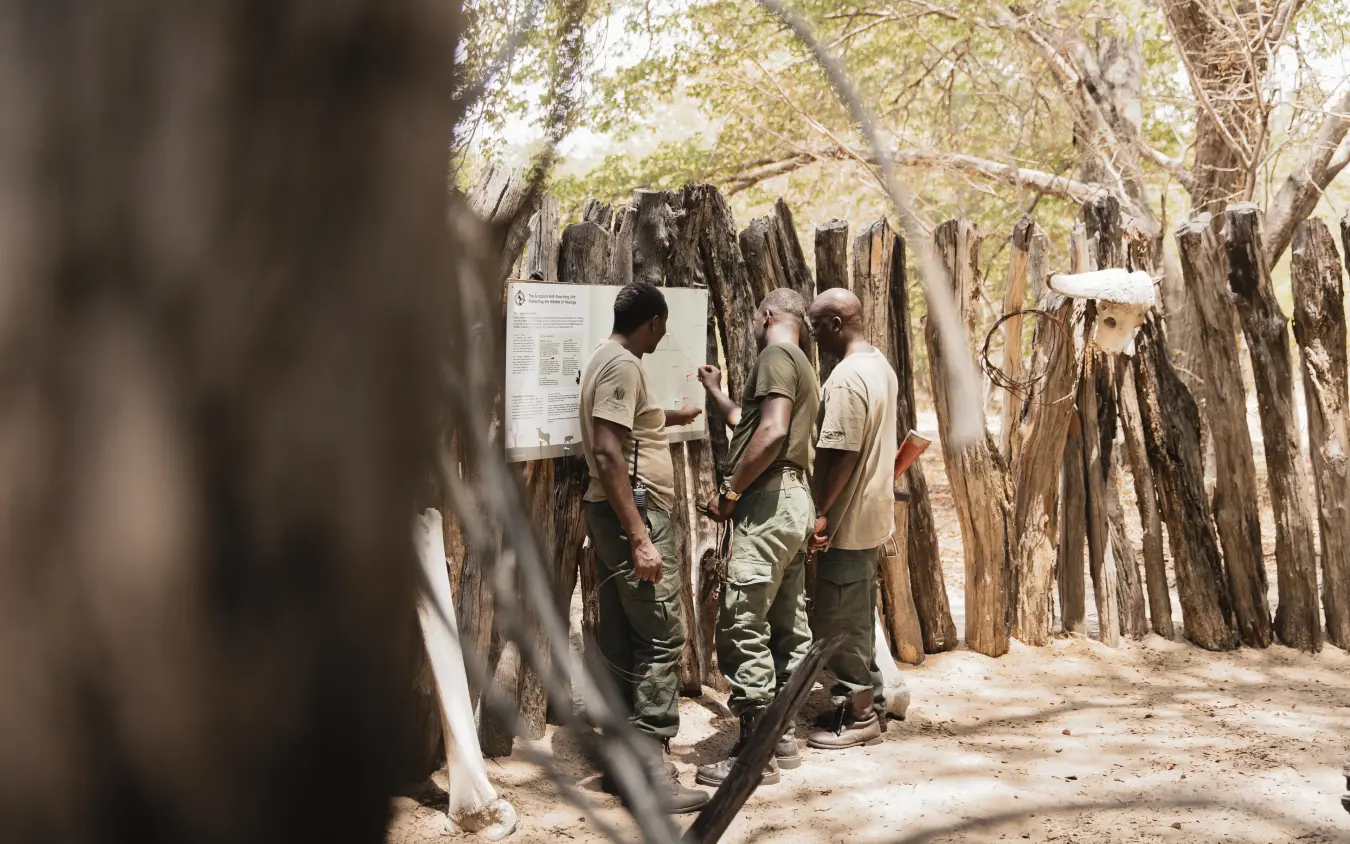
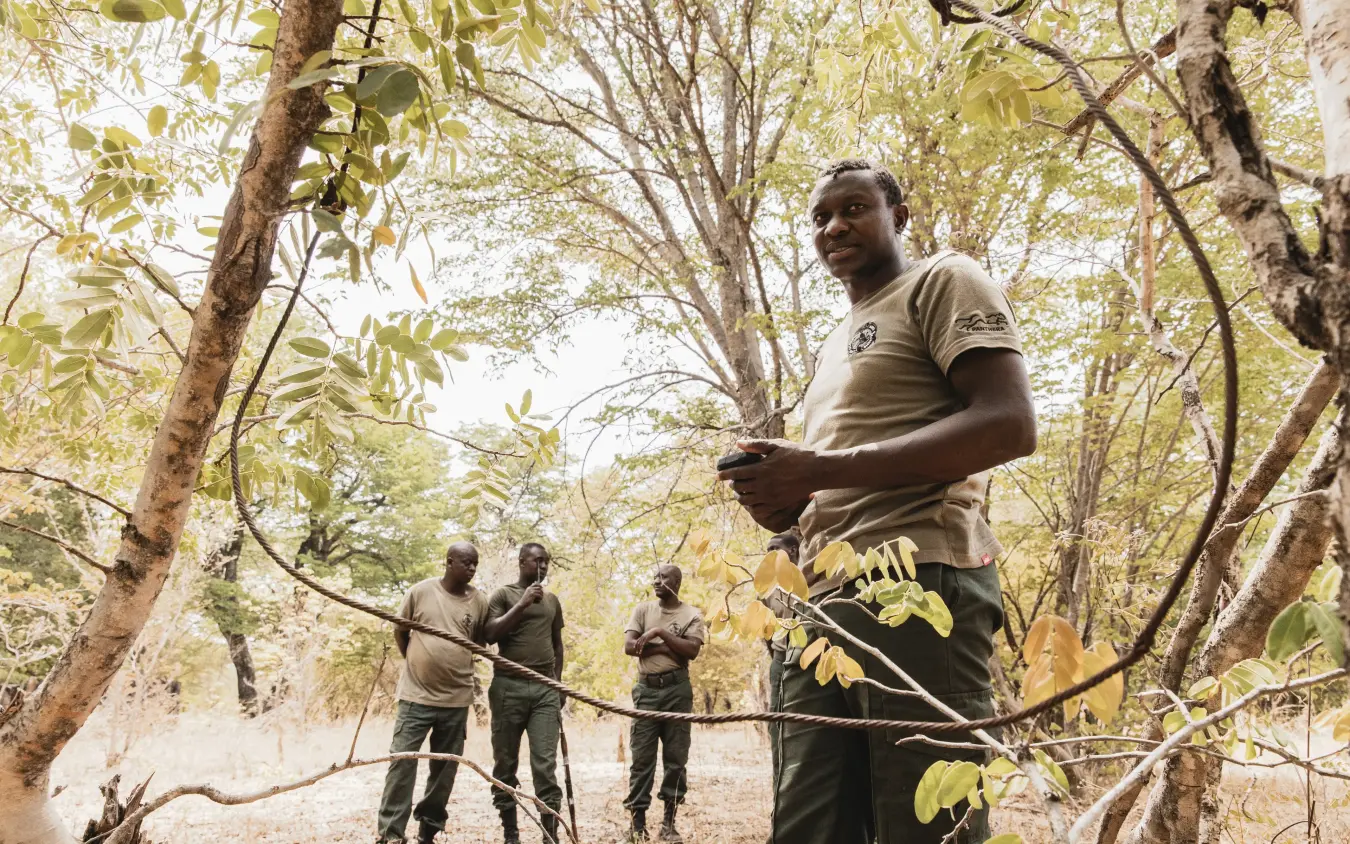
At night the plain does not go quiet. Elephants rumble and slosh at the pan, and buffalo call low across the grass. The fire pit becomes the place where the day’s stories are told under the stars. The water that draws them is kept flowing by solar and hybrid boreholes, and the concession boundaries are patrolled by the Scorpion Anti-Poaching Unit, lifting snares alongside Zimbabwe’s parks authority. The pull of the camp is that constant, close presence of animals, and the sense of sitting inside a working piece of Hwange, watched over by guides who know its plains and pans by name.