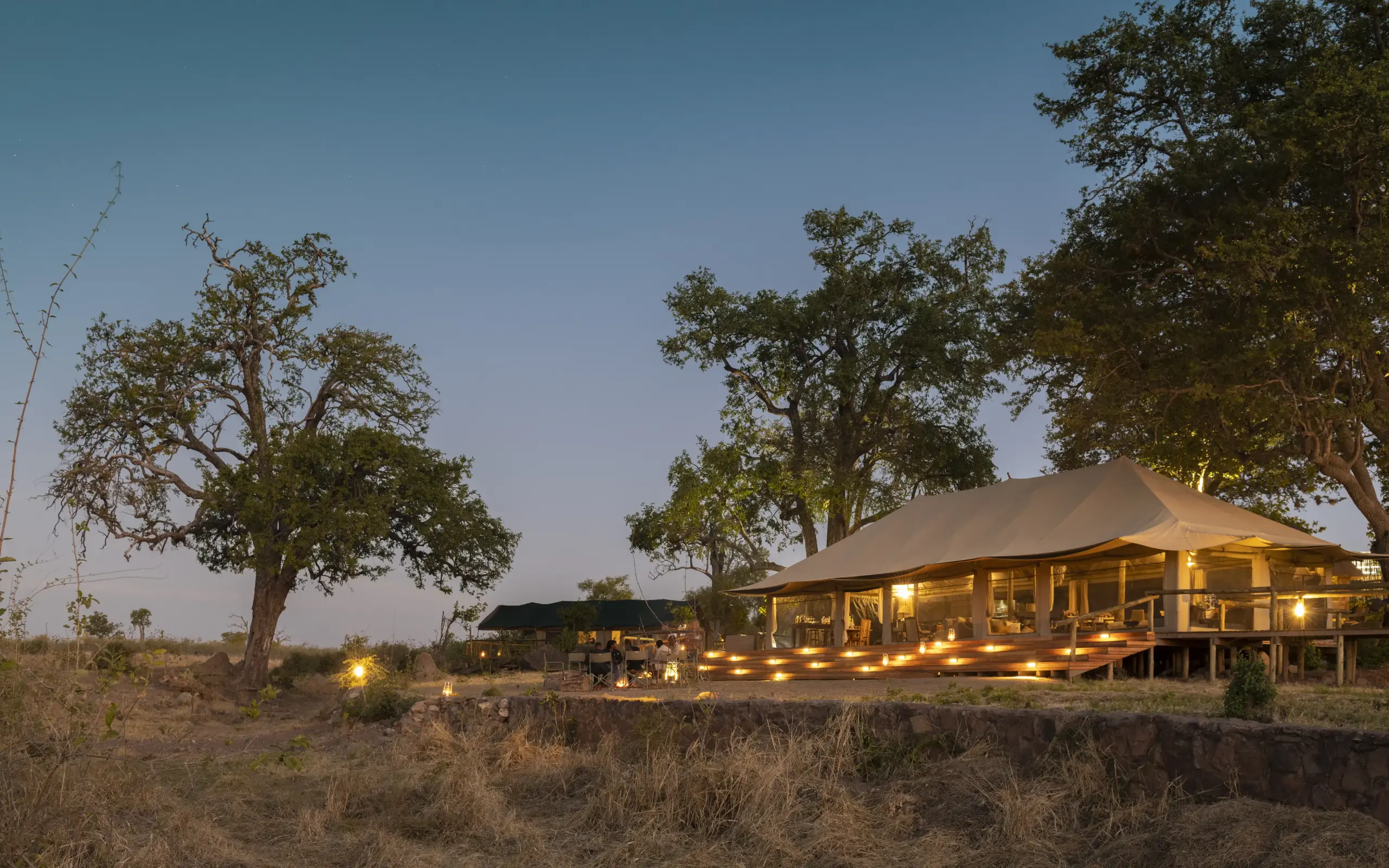
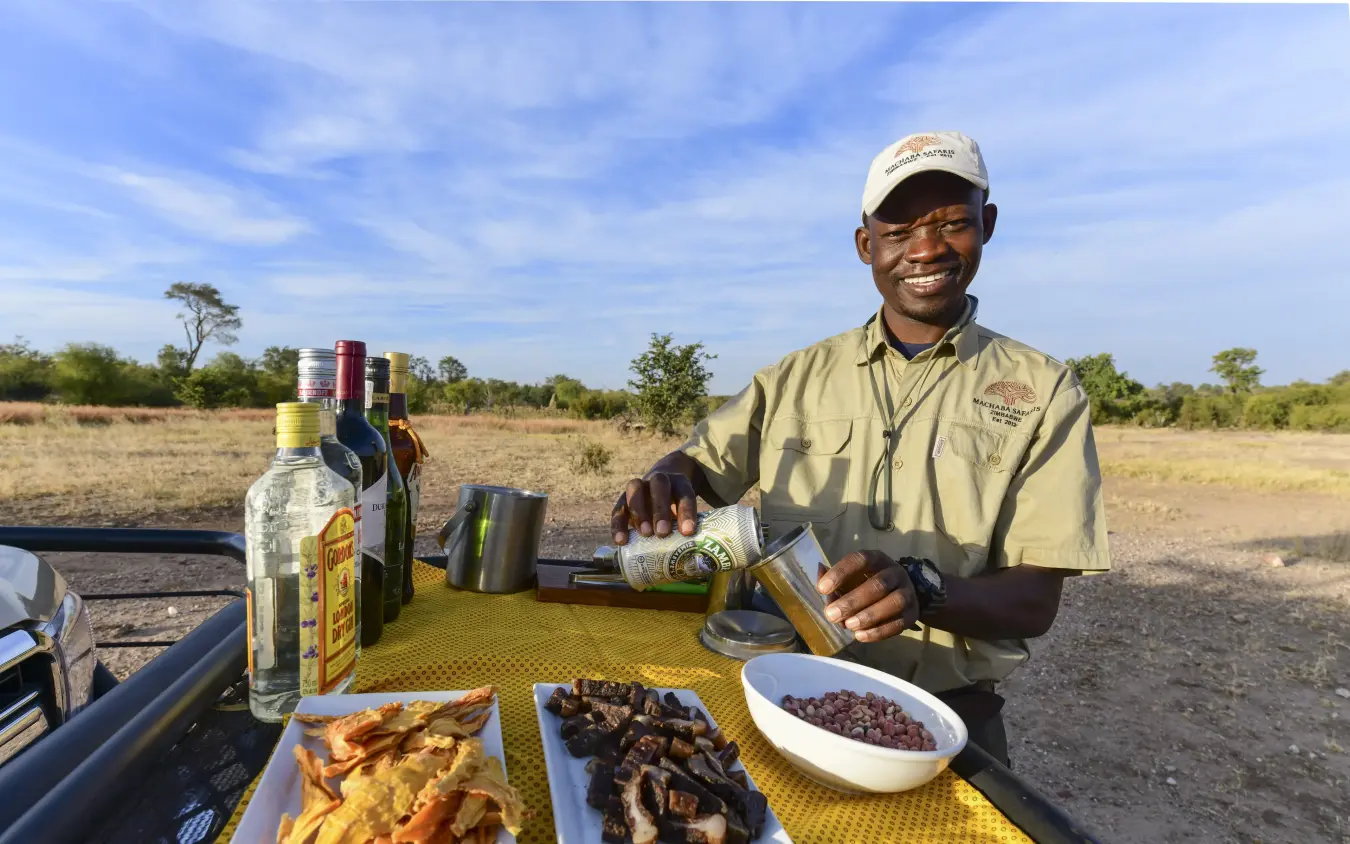
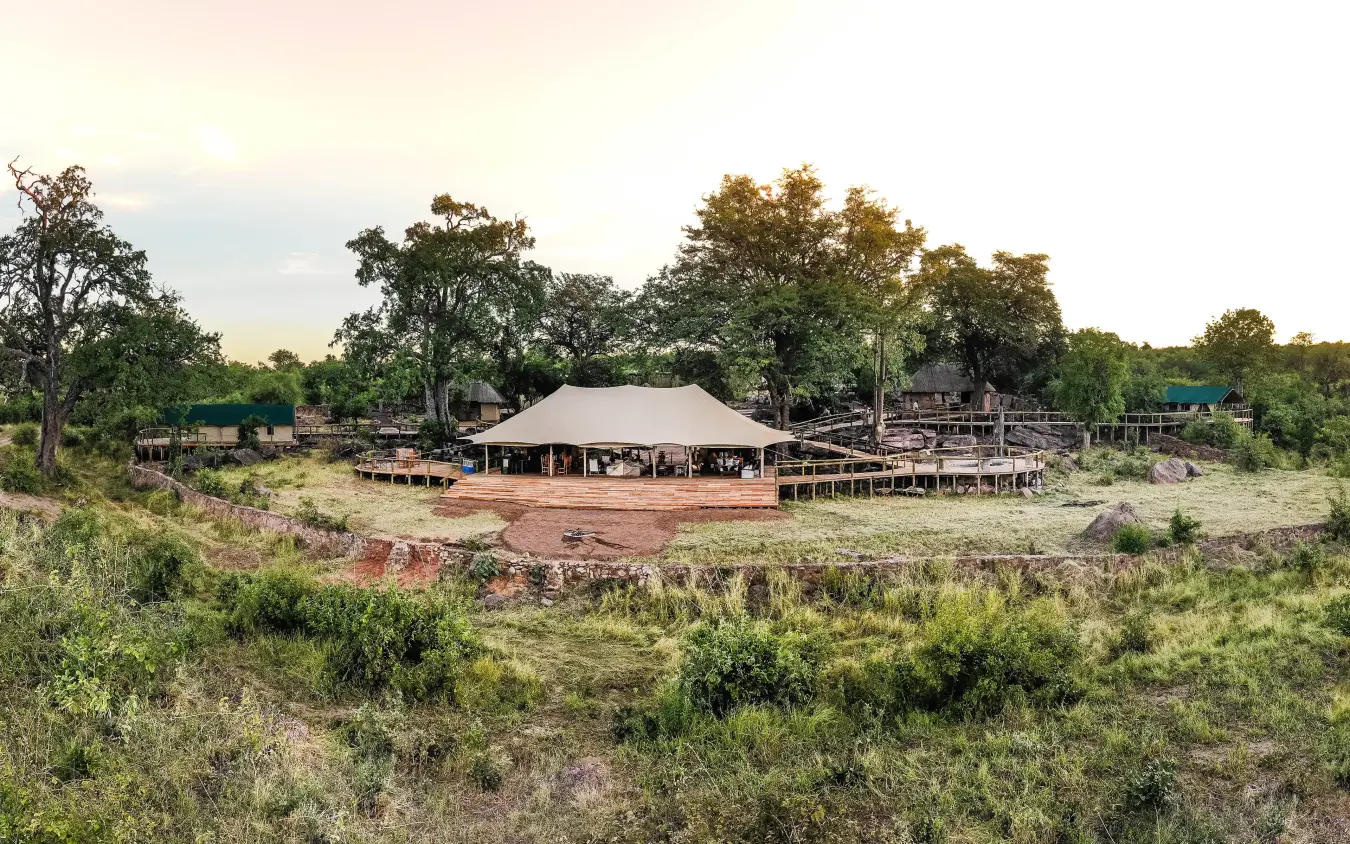
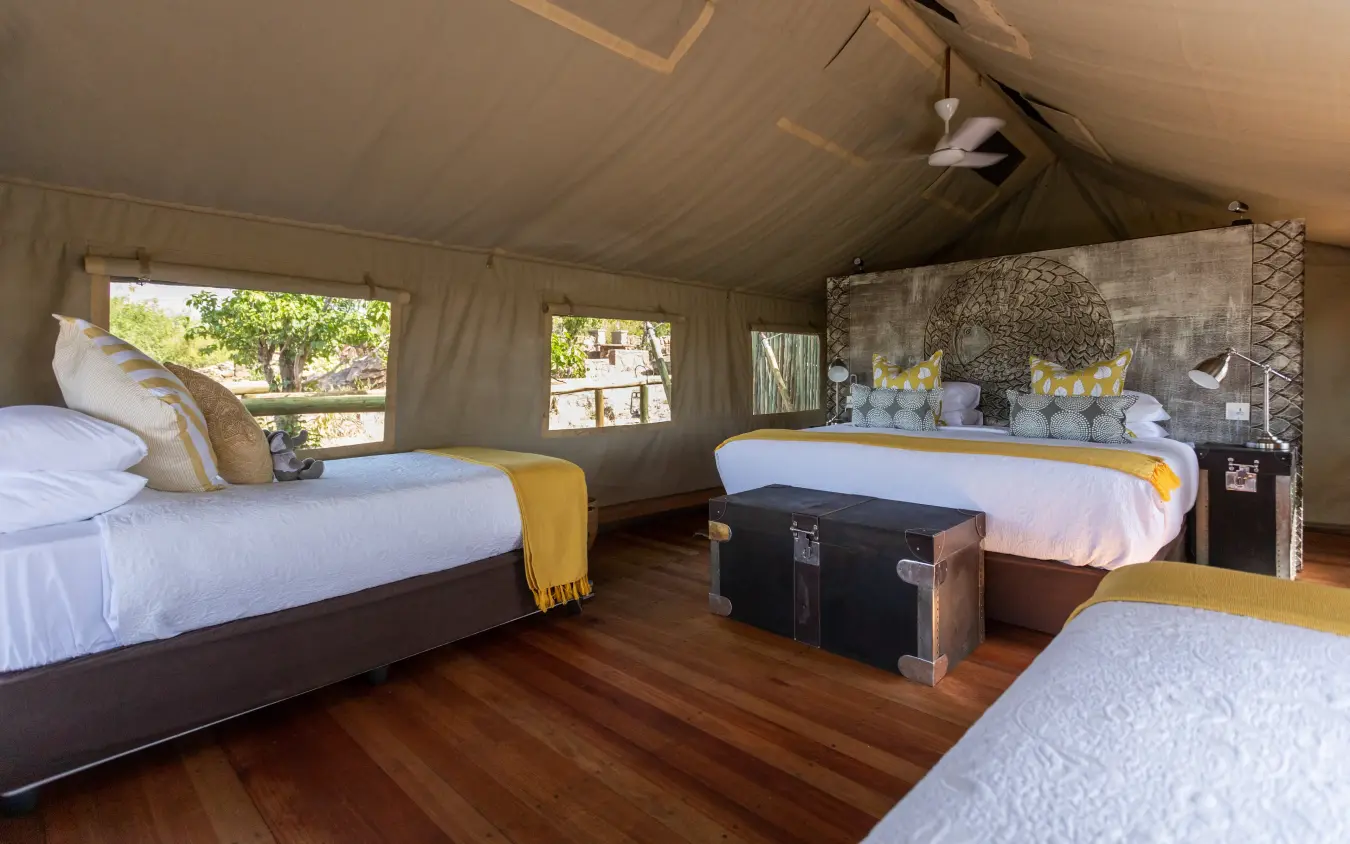
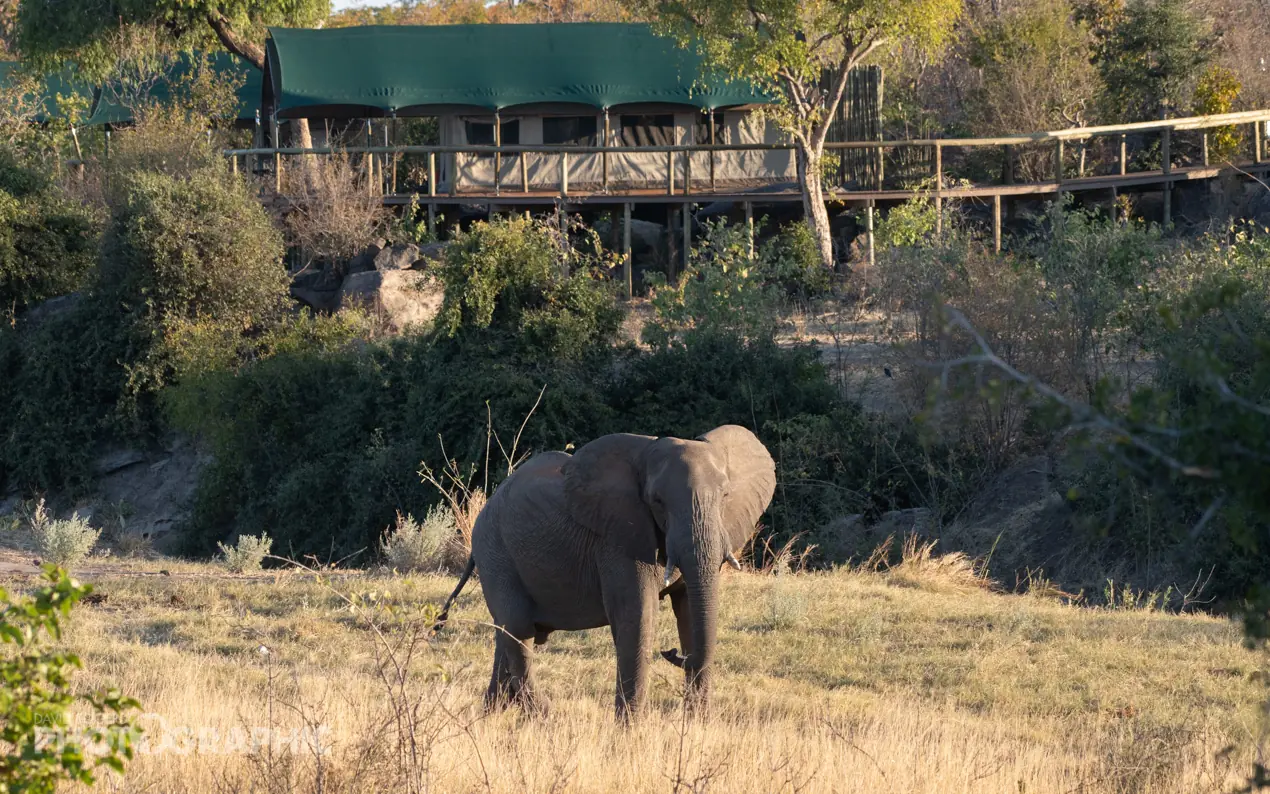
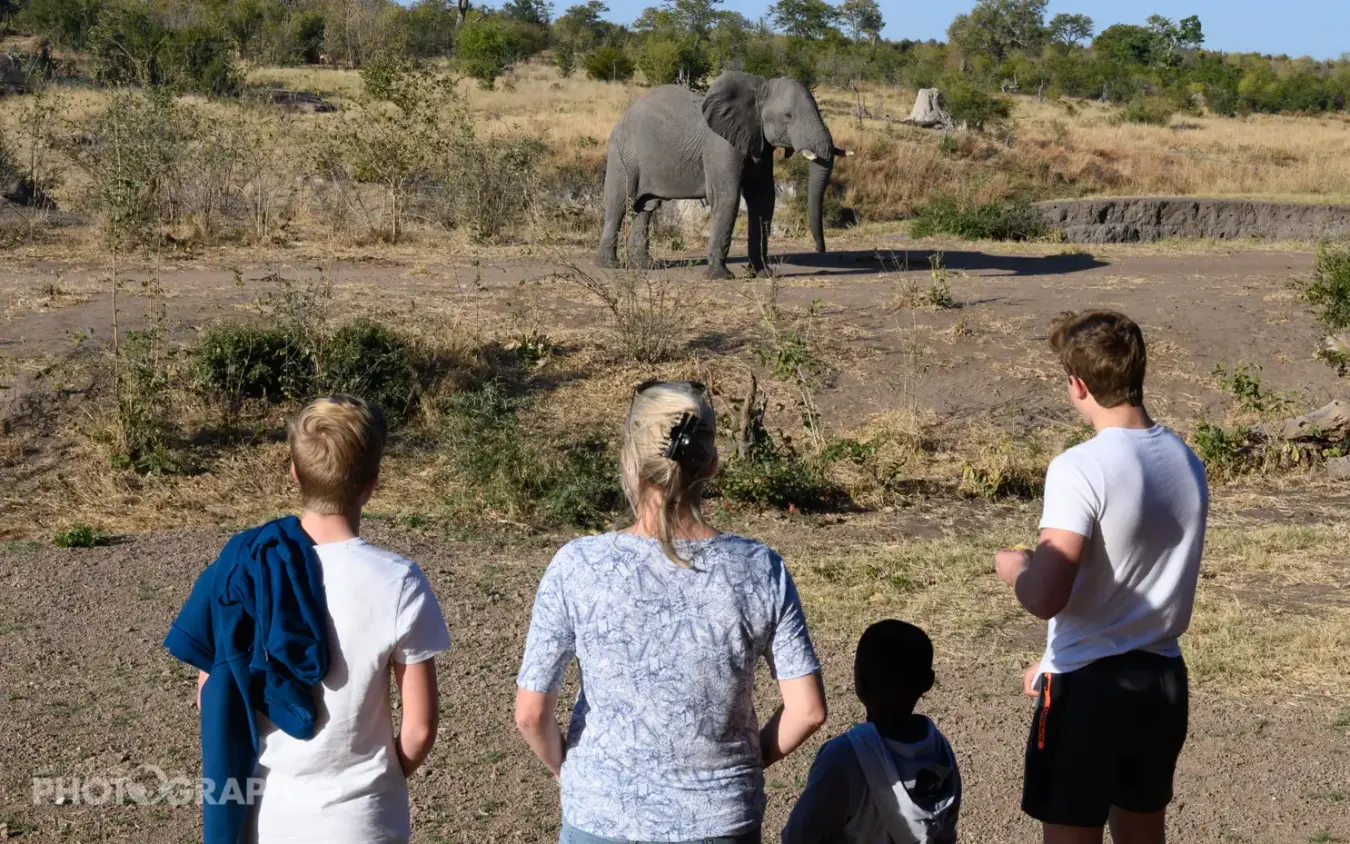
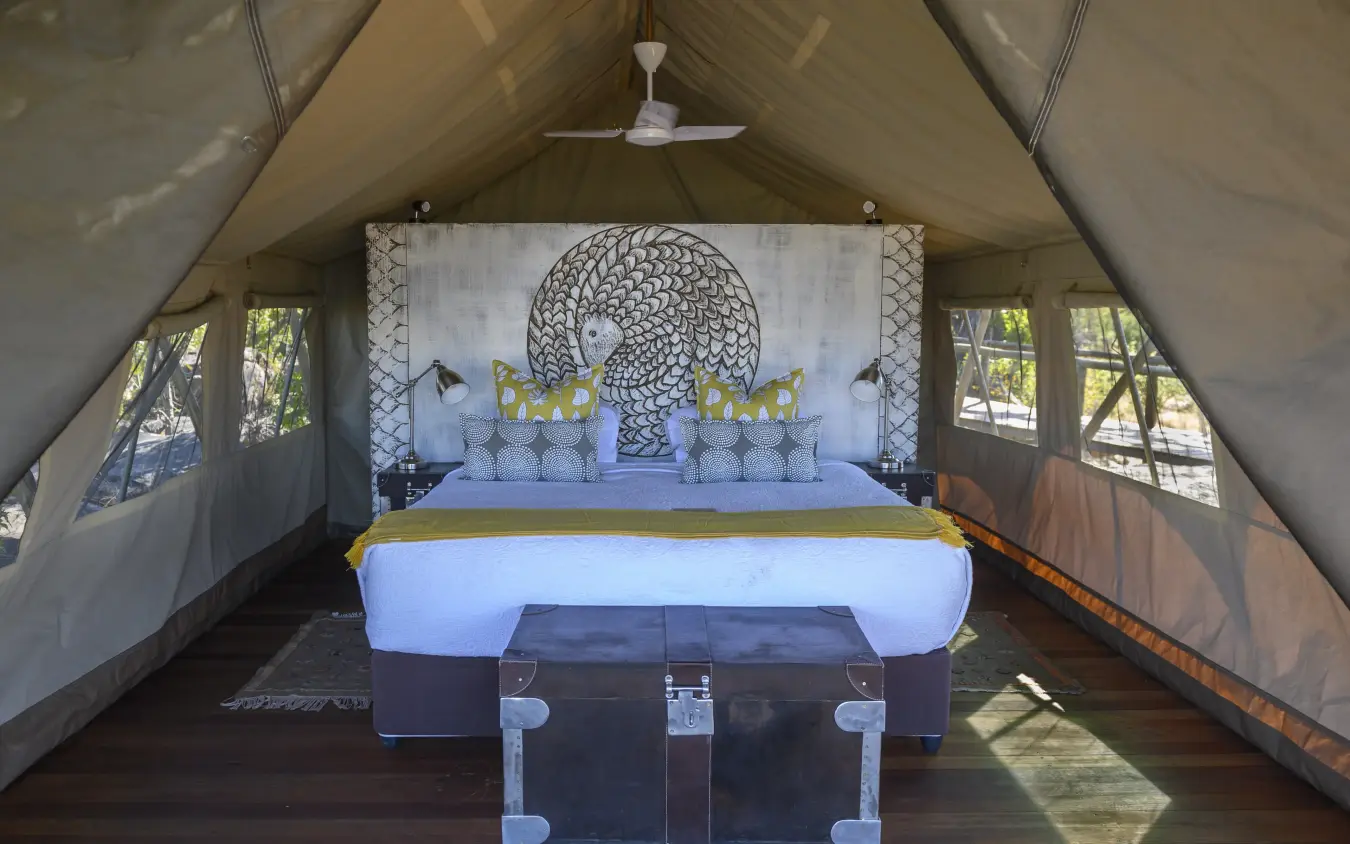
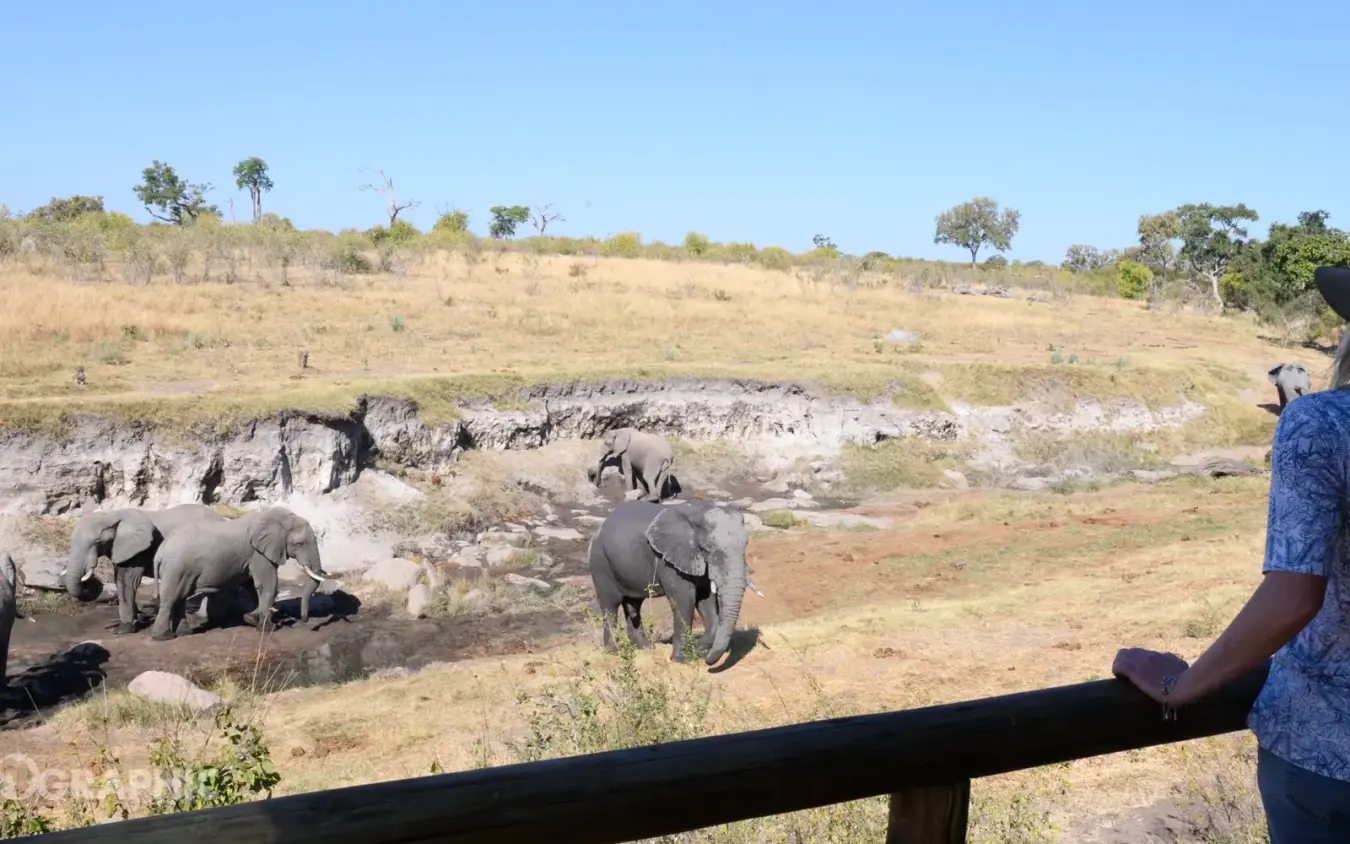
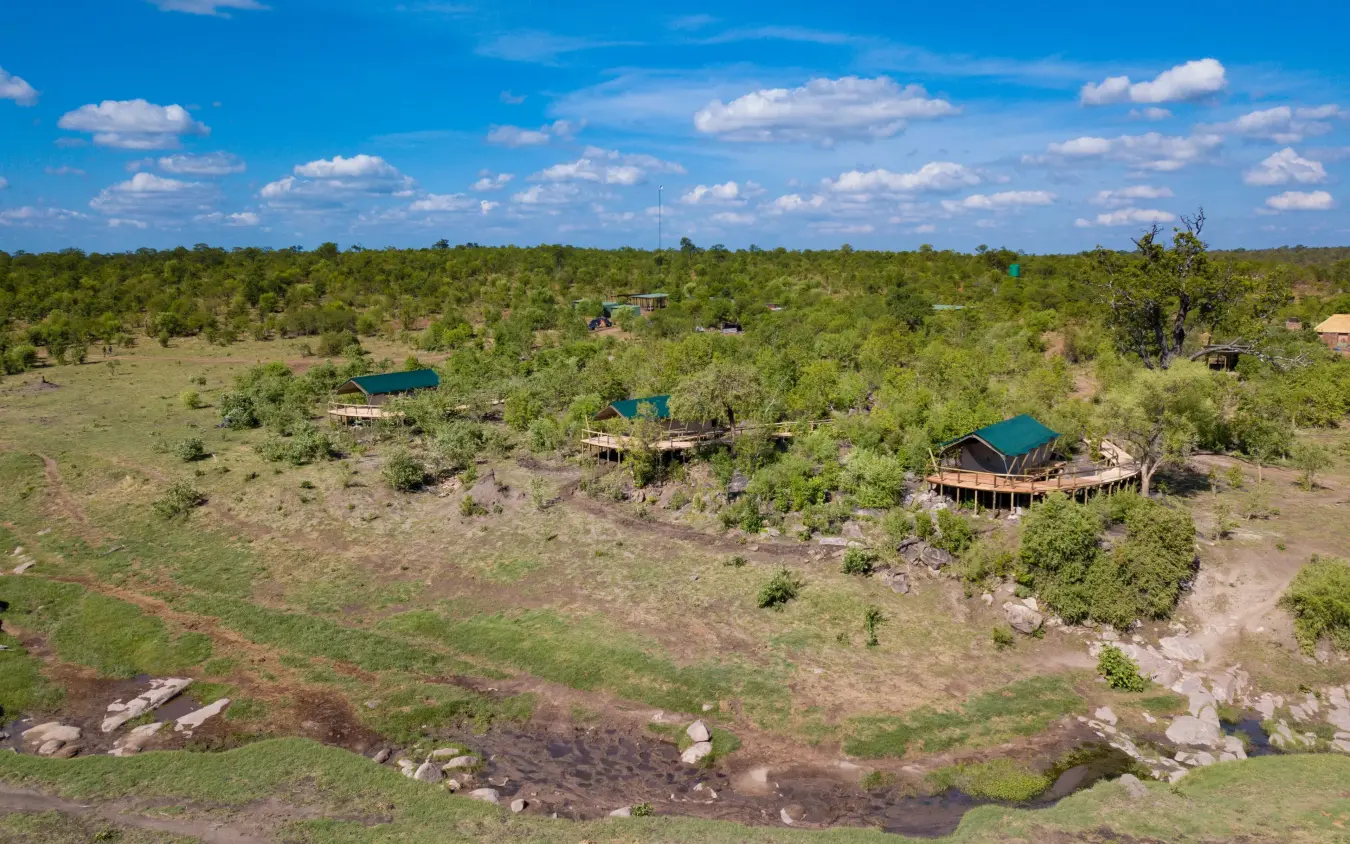
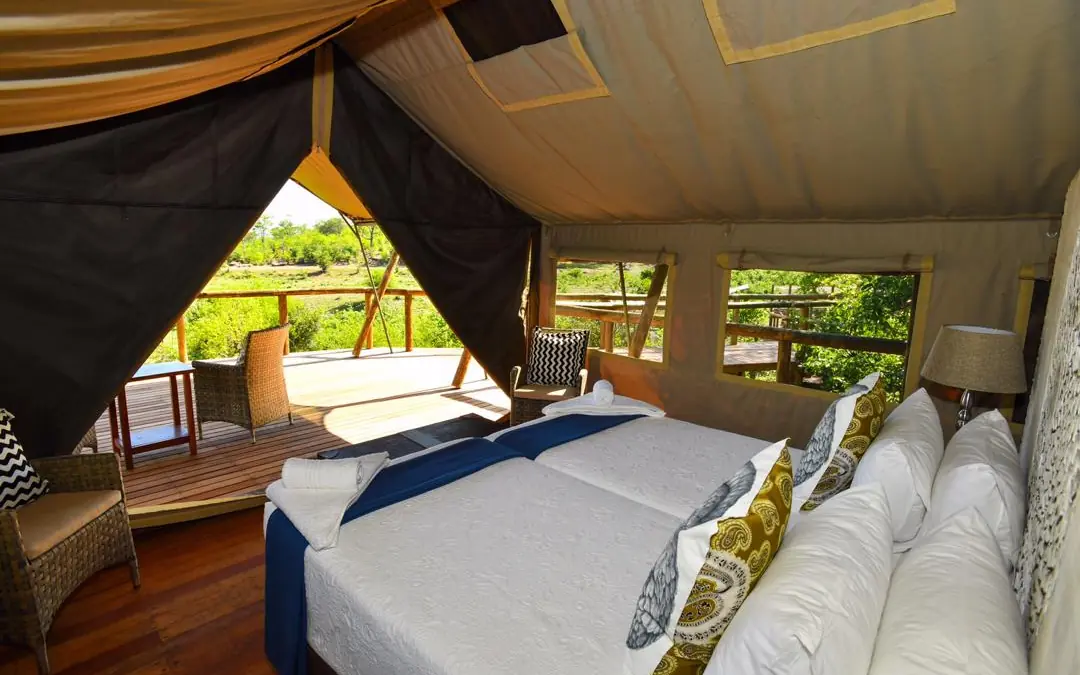
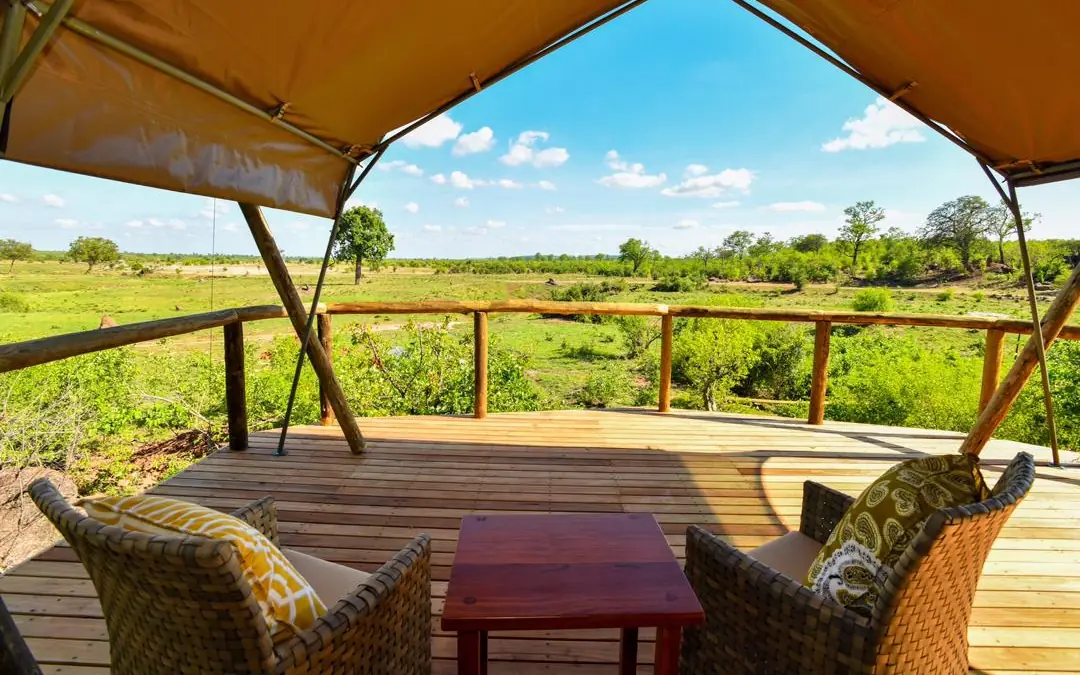
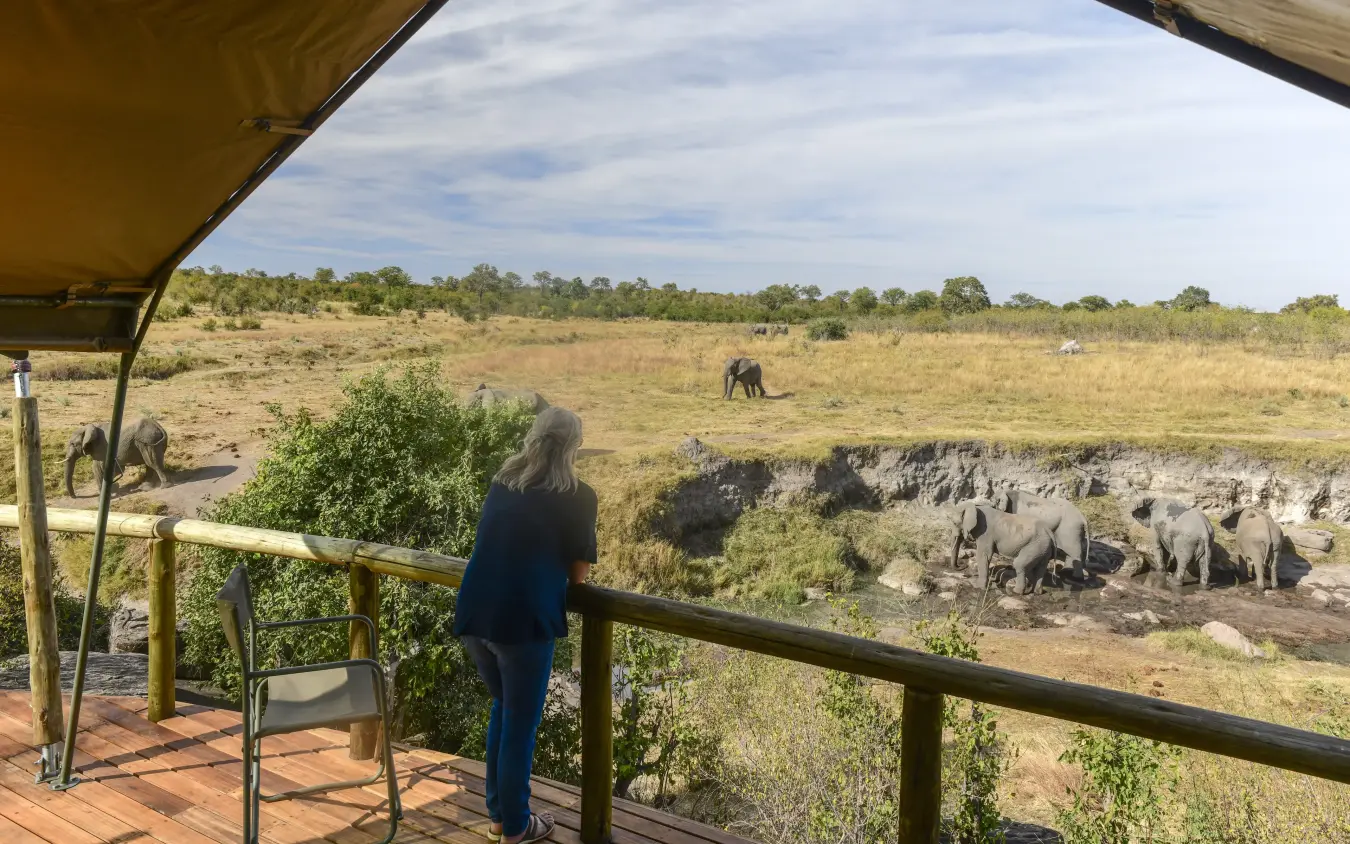
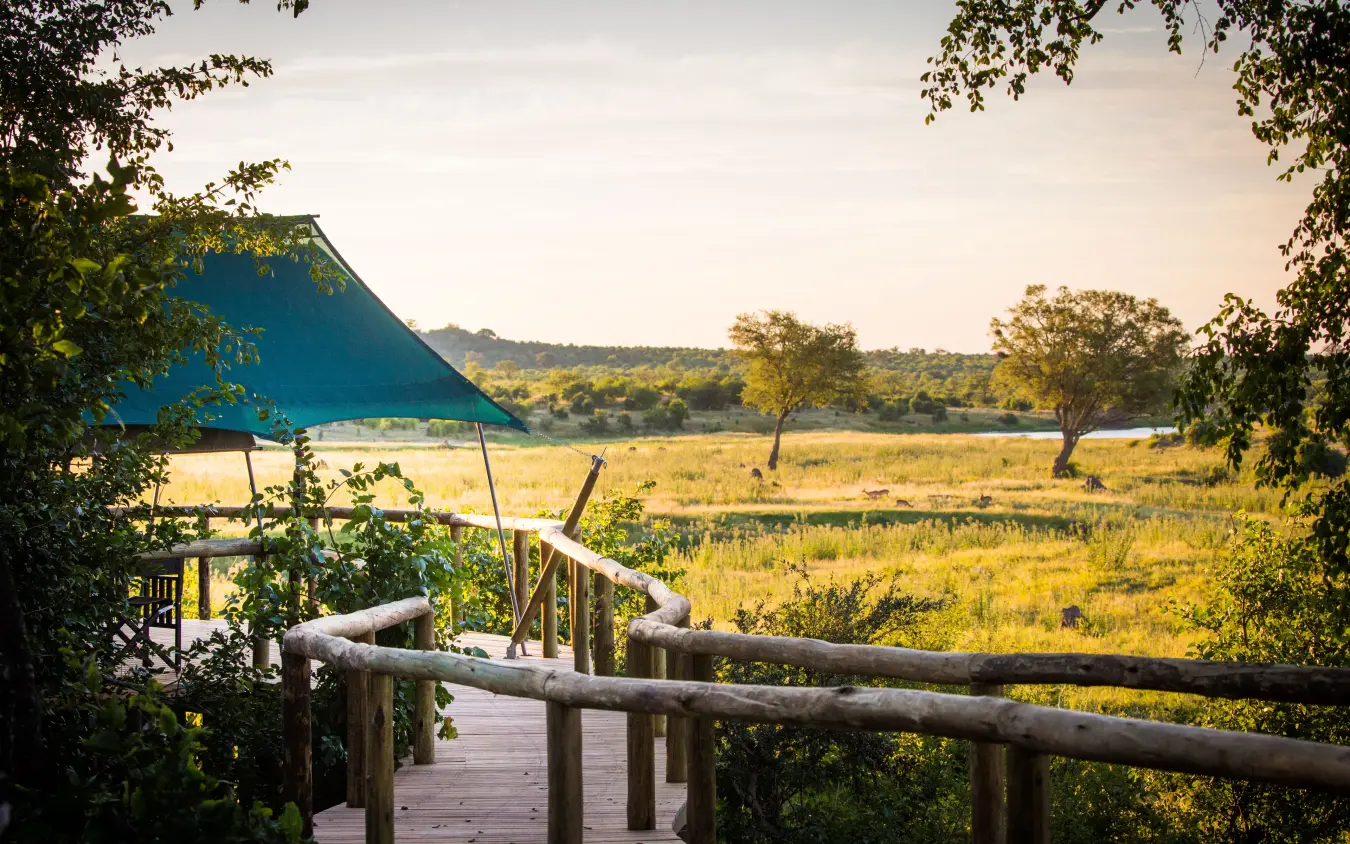
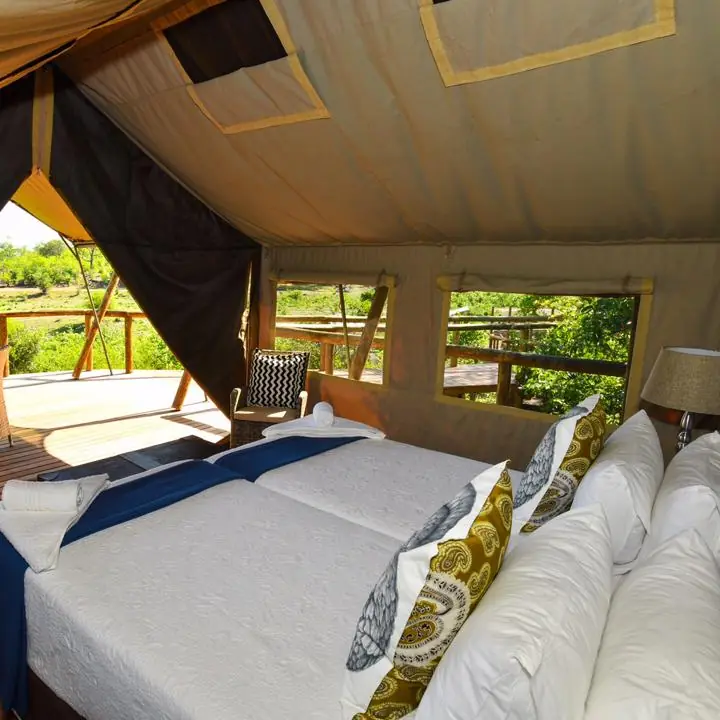
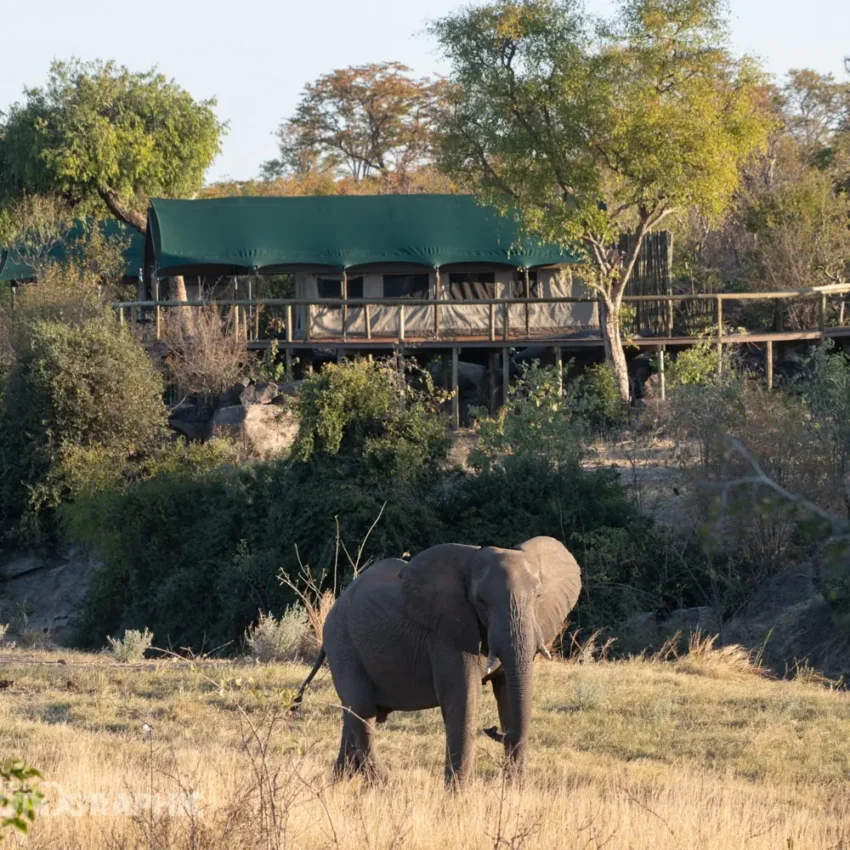
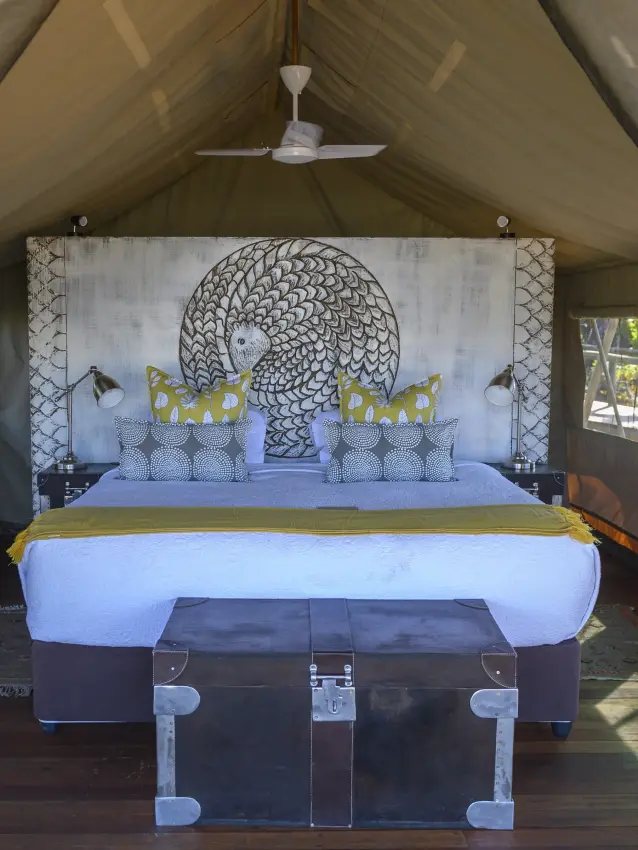
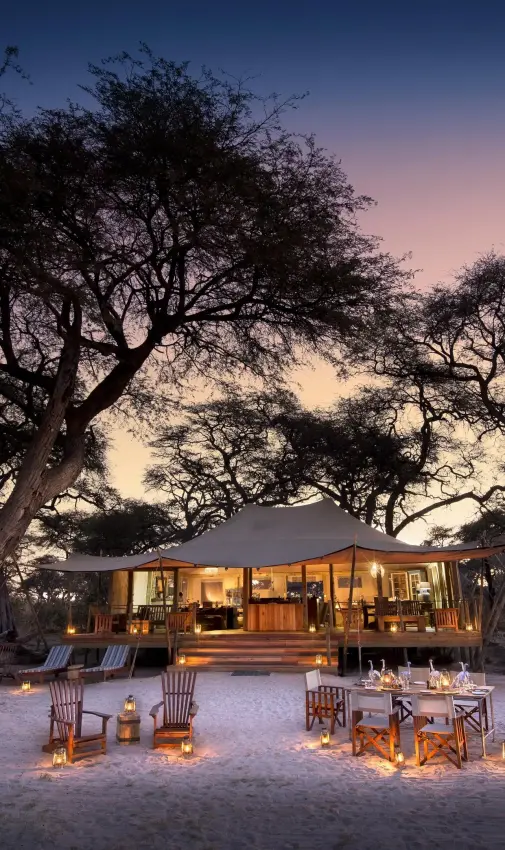
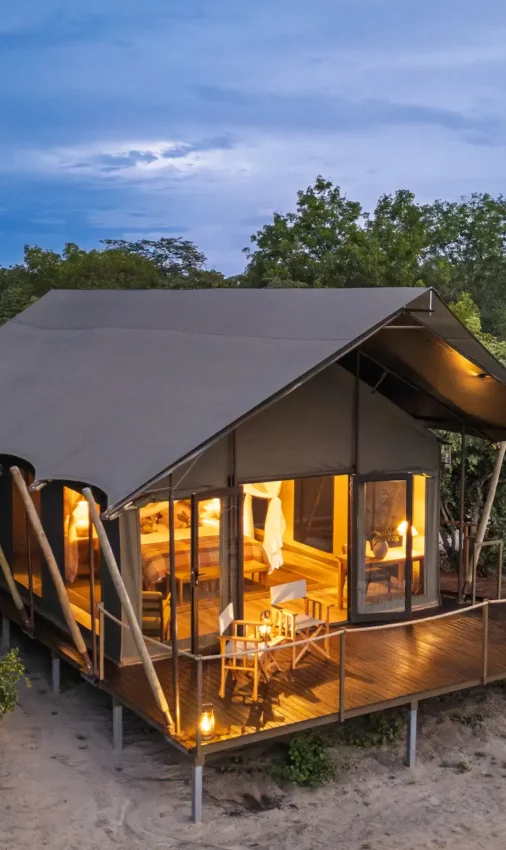
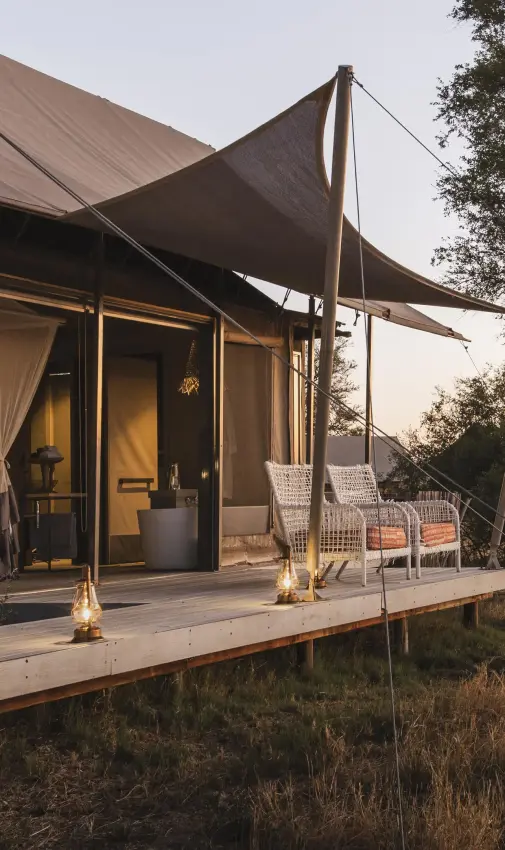
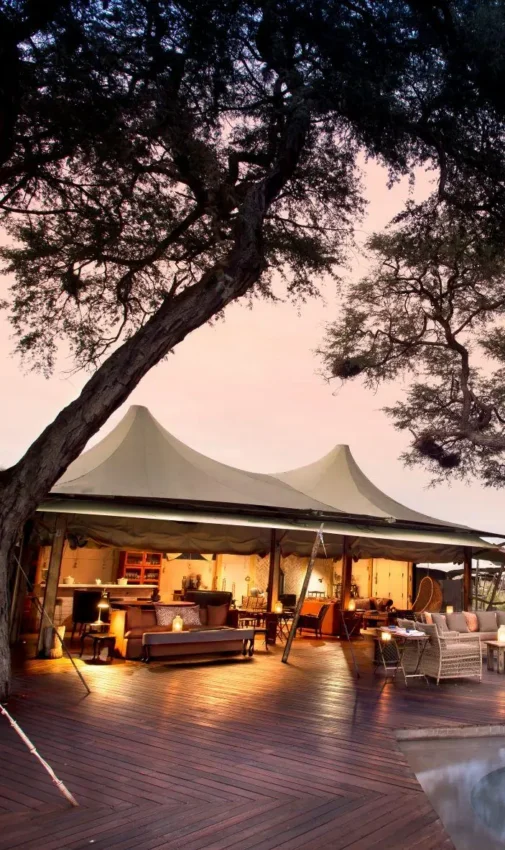
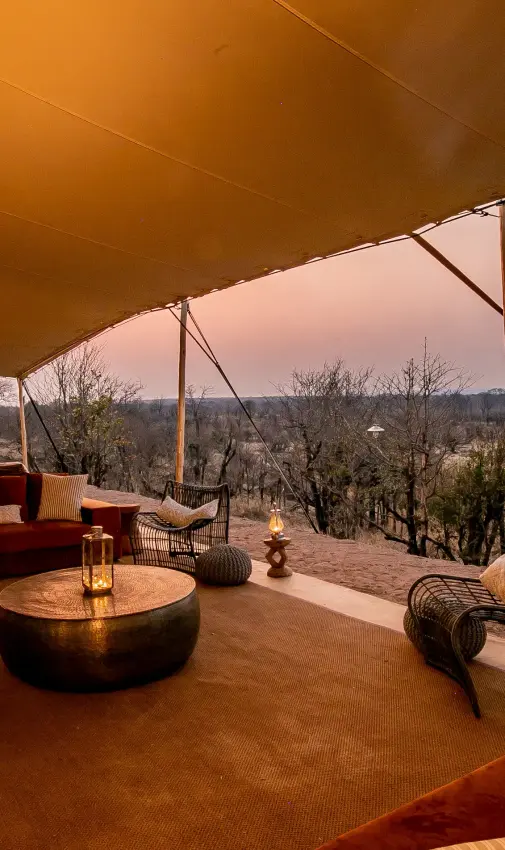
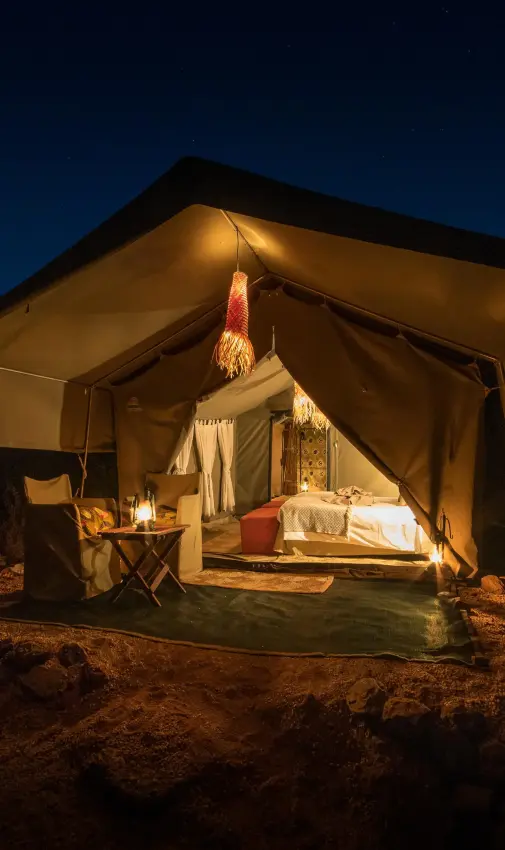
At night and before dawn, the bubbling of the springs carries up to the tents. It comes layered with the deep rumbling of elephants at the water, the low roars of distant lions, the whoop of spotted hyenas, and at first light the call of the Senegal coucal. Arrival is marked with a chilled Deteema cocktail on the main deck, where buffalo and elephants are often drinking within metres. Mornings begin slowly, tea in hand on a private veranda as the sun lifts over the rugged hills and the day gathers pace below.
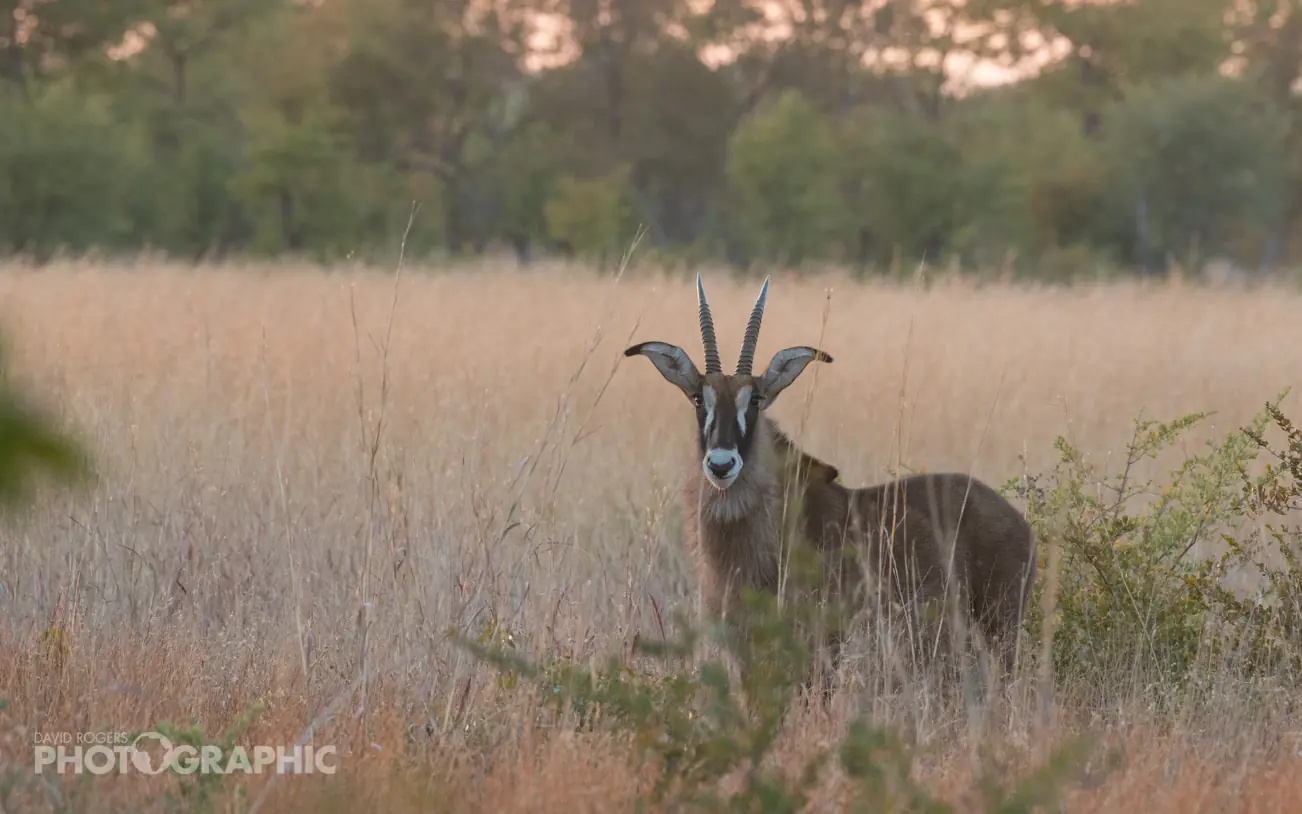
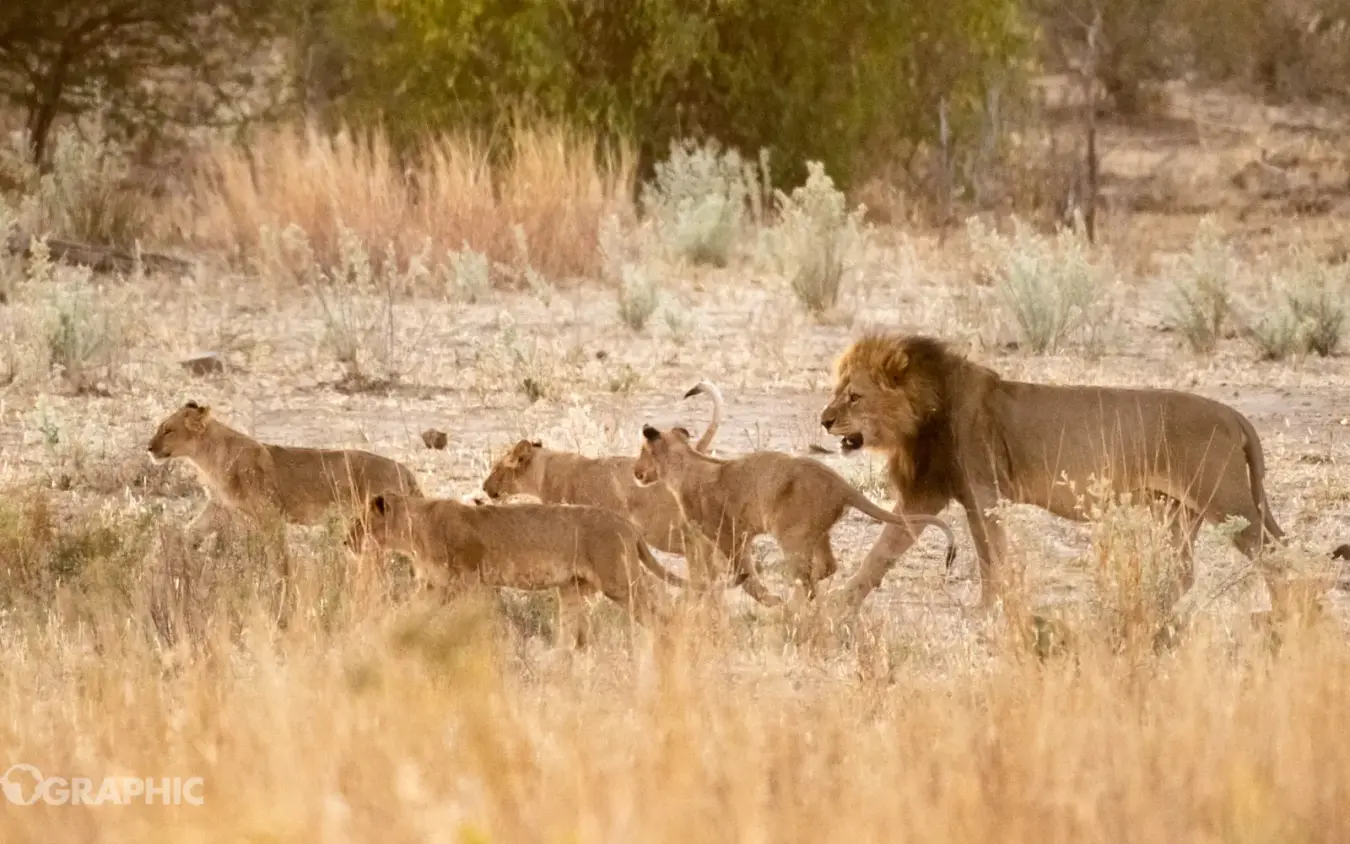
The north-west of Hwange holds a strong concentration of game, and it sharpens through the dry season from June to October. Elephant herds and large buffalo herds move to the springs in numbers, while lion prides, leopards and cheetahs are seen through the immediate area. Packs of African wild dog hunt across the open floodplains around the water. The birdlife is rich too, and as the season tightens its grip the seeps draw raptors, waterfowl and dry-country specialists to the retreating water.
Packs of African wild dog hunt across the open floodplains around the water.
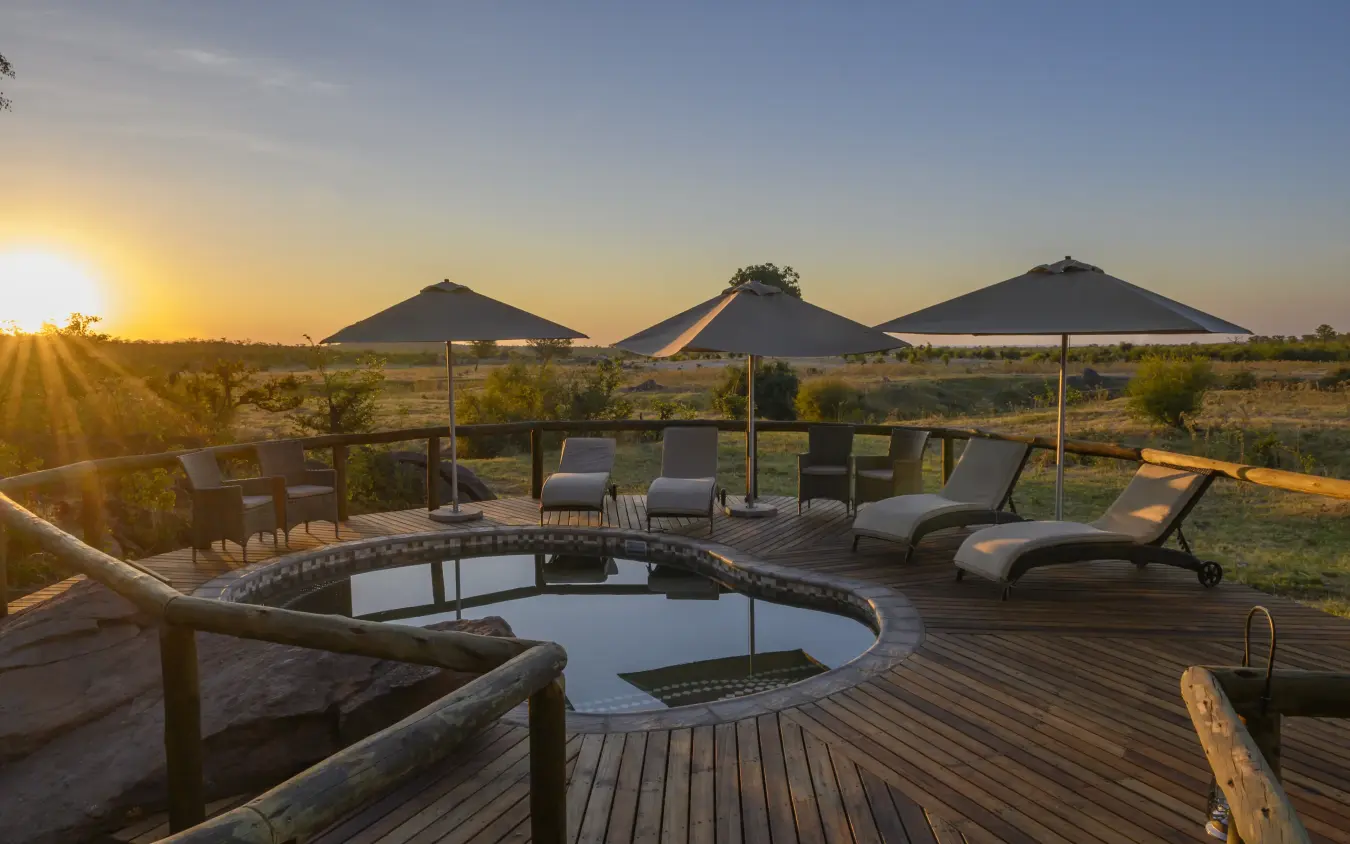
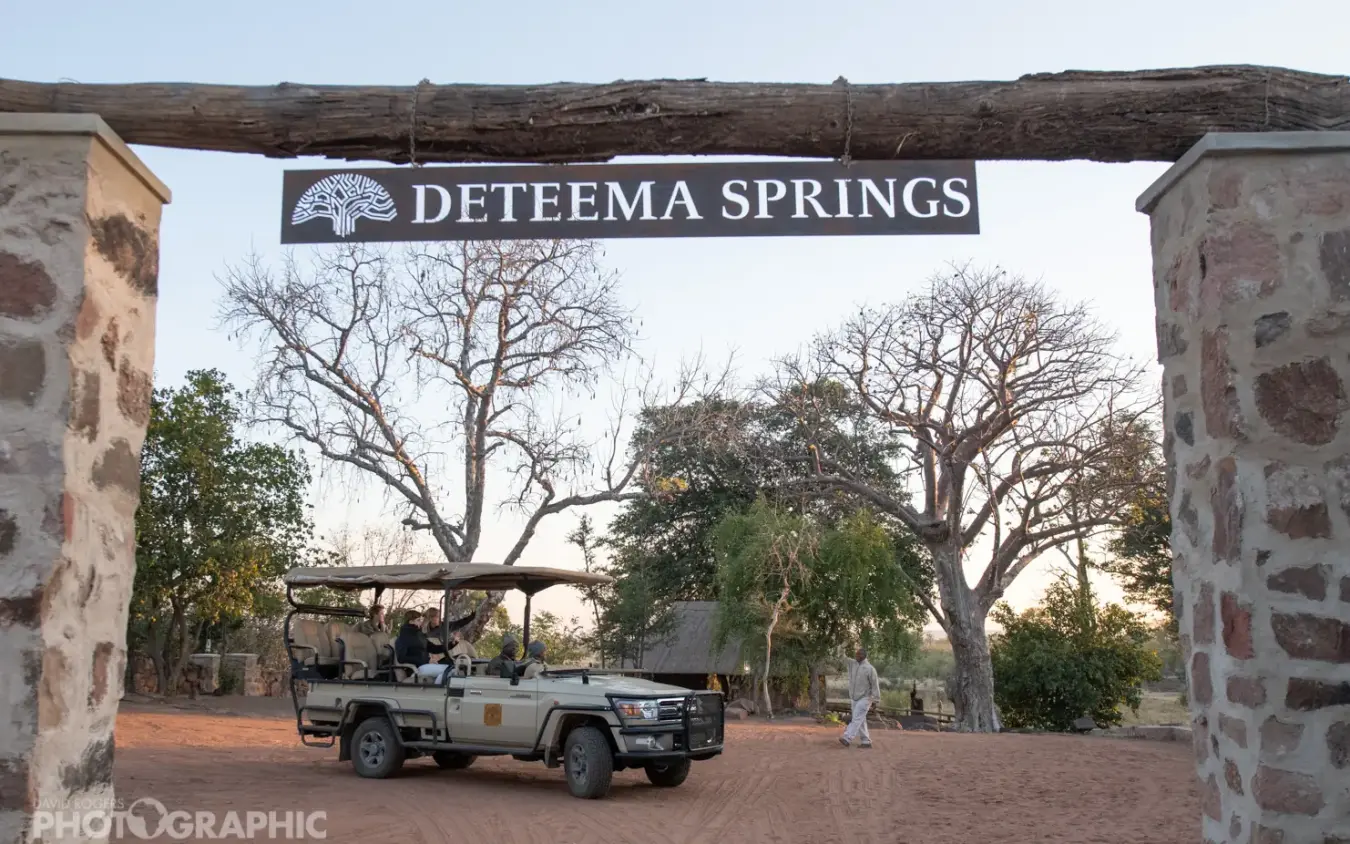
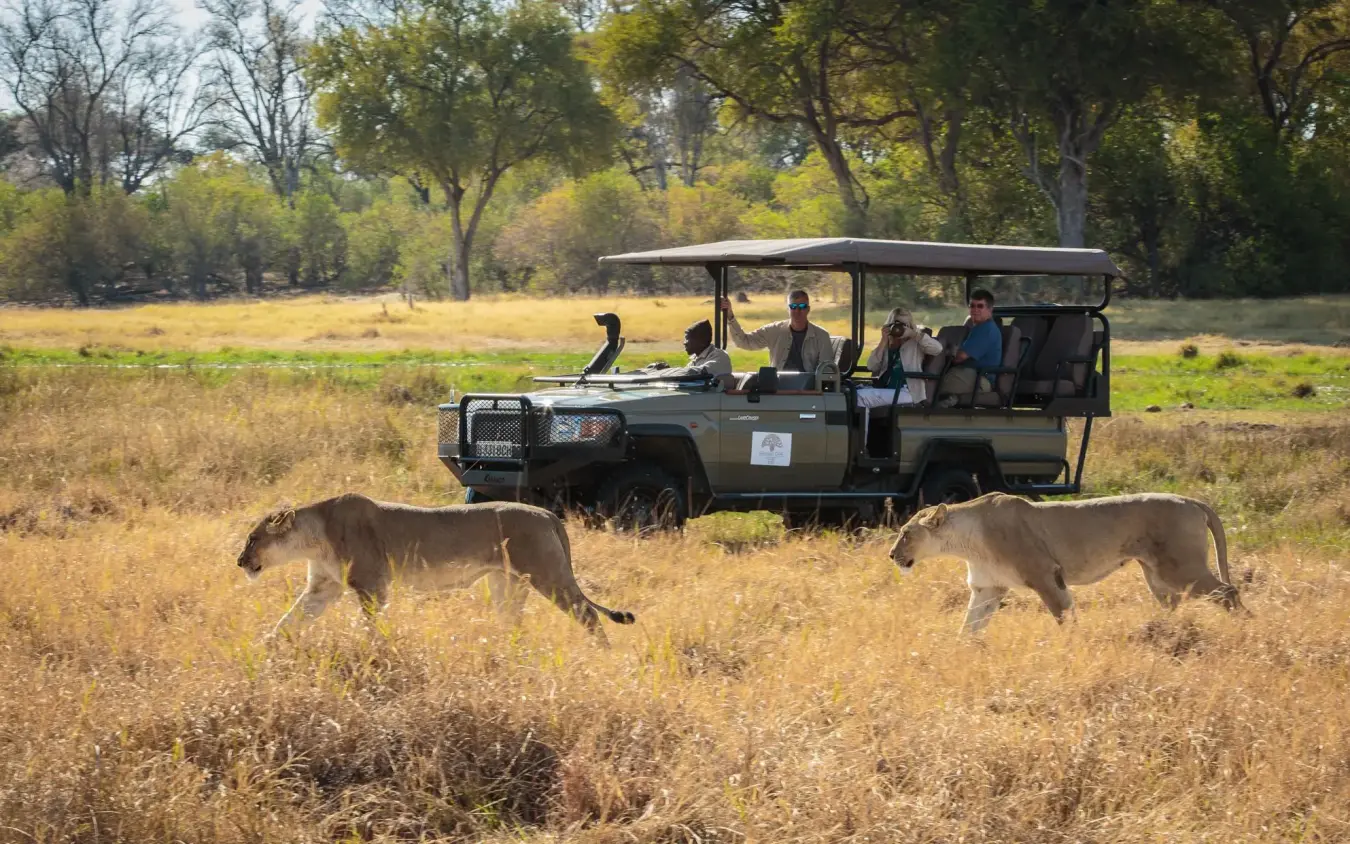
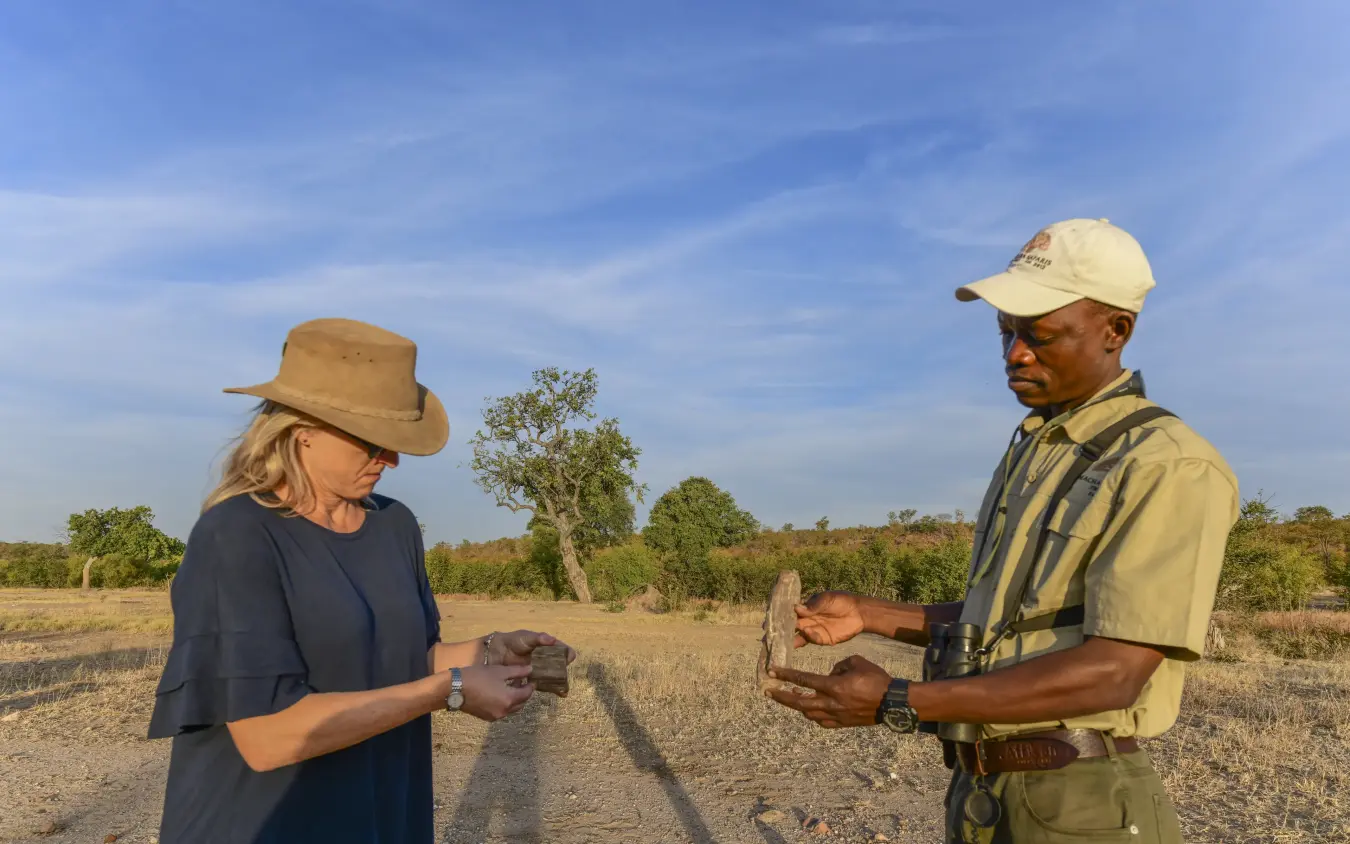
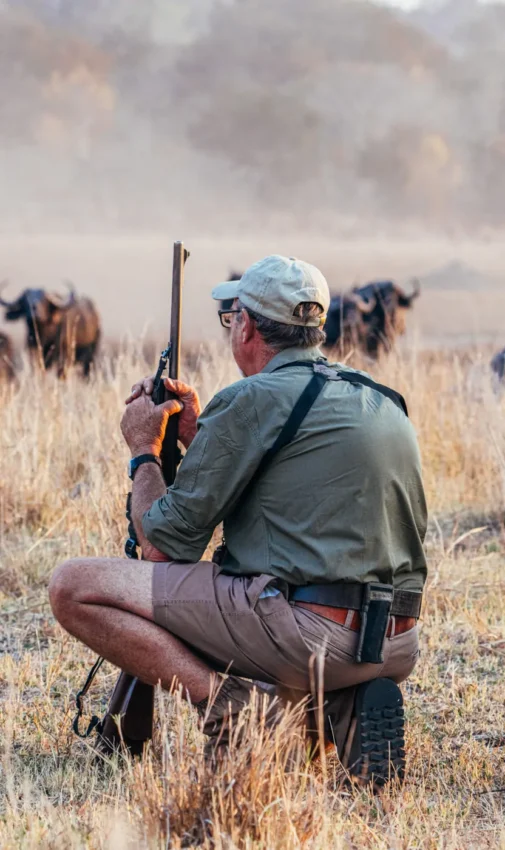
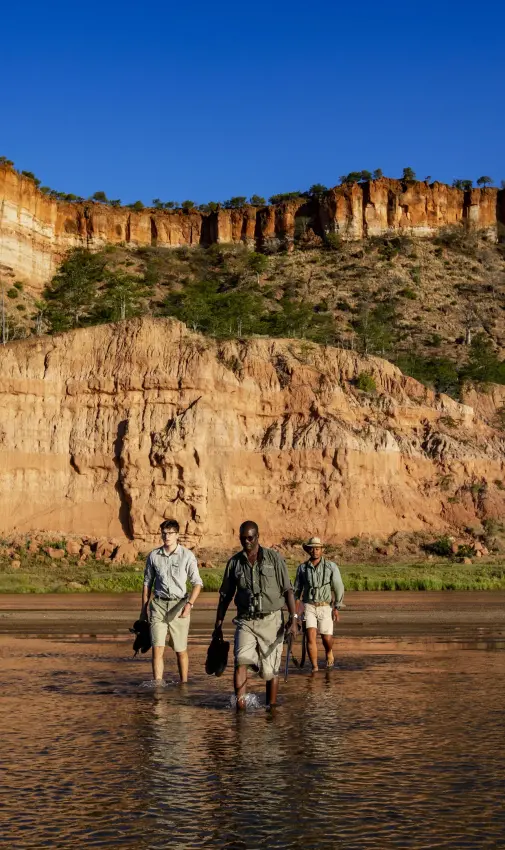
Morning and afternoon game drives in open 4×4 vehicles cover the surrounding wildlife area, while guided walks led by armed Zimbabwe professional guides turn to tracking, spoor and the small ecosystems around the springs. Night drives with spotlights are not permitted inside Hwange, a rule that holds here as across the park. Much of the game viewing, though, happens without leaving camp at all, from the raised decks and the pool that look straight onto the water below.
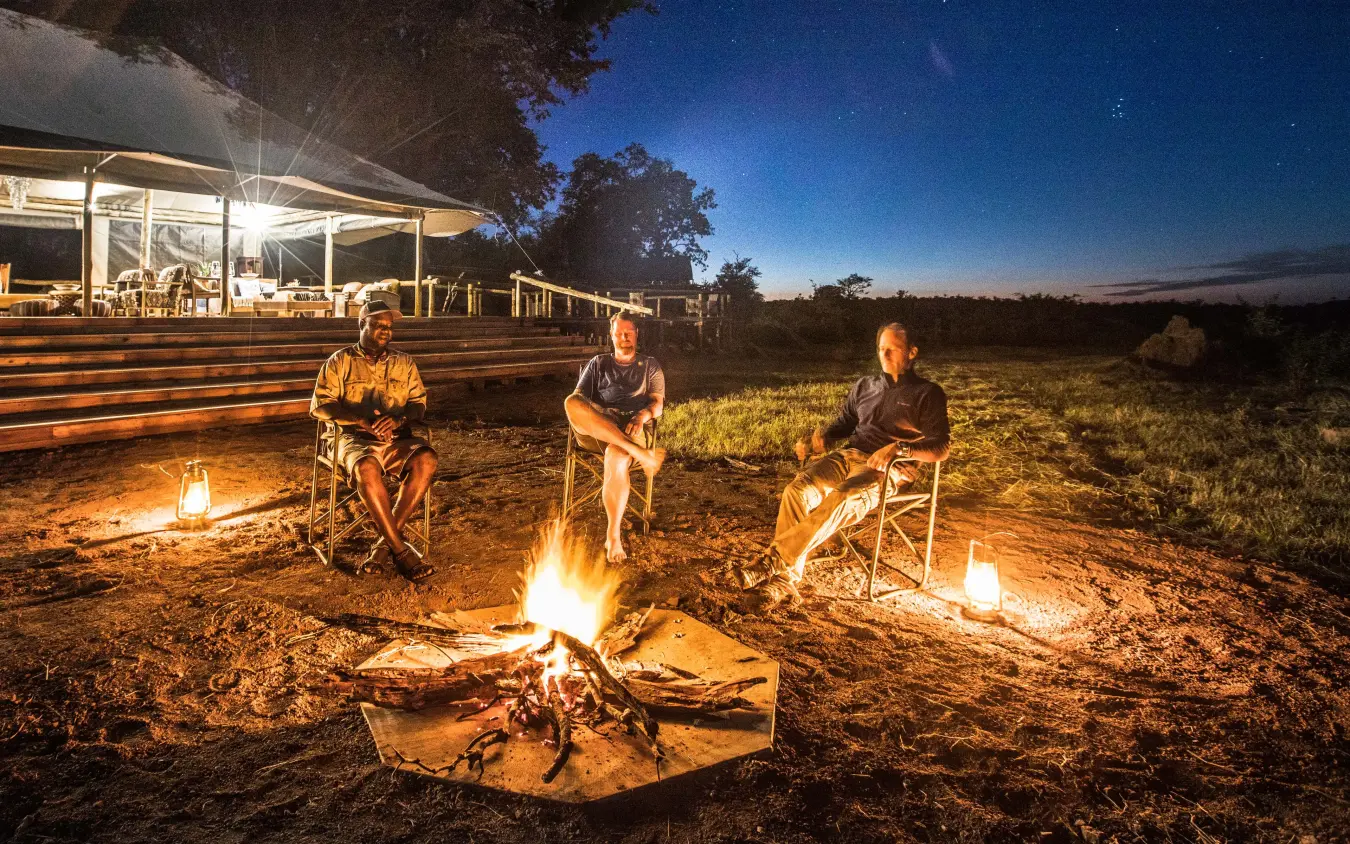
Dining is simple and generous, wholesome home-style cooking built on fresh local ingredients rather than elaborate international menus. Meals are served alfresco on the main deck under open sky, moving into the lounge only in poor weather. Pre-dinner drinks are taken around the central campfire, where the head chef presents the evening’s menu to guests in person. The camp is all-inclusive, and the mood throughout stays quiet and close to the wild ground it stands on.