







zimbabwe
hwange and mana under canvas
Nine nights in northern Zimbabwe, walking Hwange and Mana Pools by foot and canoe, finishing at Victoria Falls.
- Private Safari
- From $8,905 pp
- 2 guests
- 9 nights
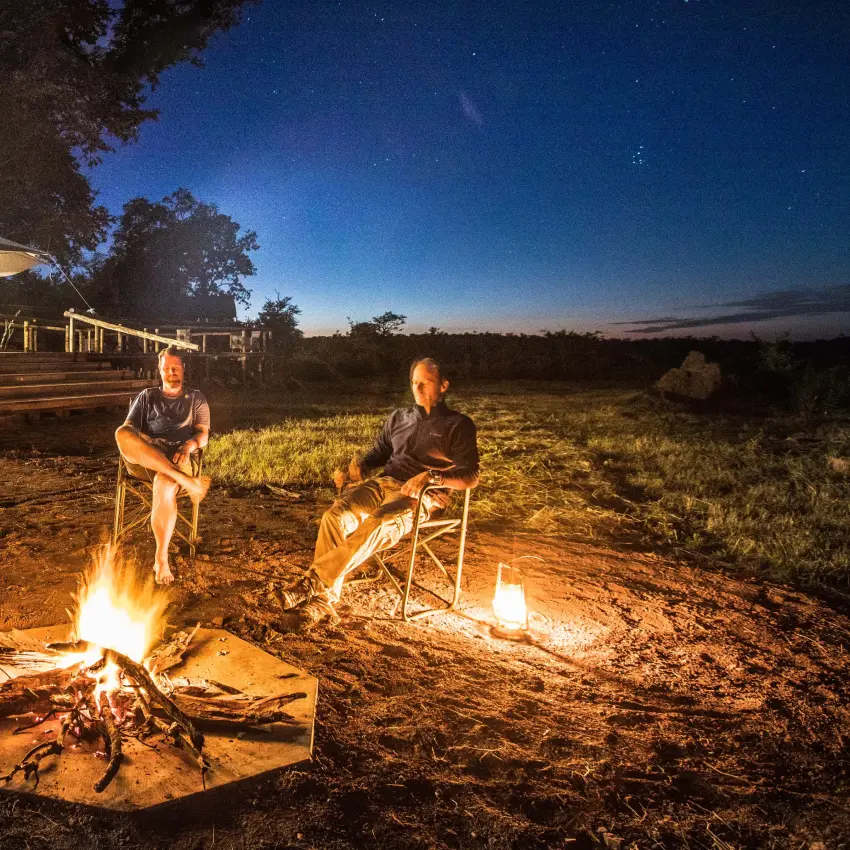
This twelve-night route runs across northwest Zimbabwe, from Victoria Falls to the plains and springs of Hwange and back to the upper Zambezi. It opens at the Falls, moves to the Imvelo Ngamo Rhino Sanctuary on Hwange’s south-eastern edge, then the remote north-western corner of the park, and closes on a quiet bend of the river.
You start on foot and by boat at the Falls, then walk with rhino and drive the Ngamo Plains, watch game gather at year-round springs, and end on the Zambezi with inland drives and slow boat birding. The four stays range from a family-built hotel near the Falls to stone villas, a small tented camp above springs and a ten-tent camp on the river.
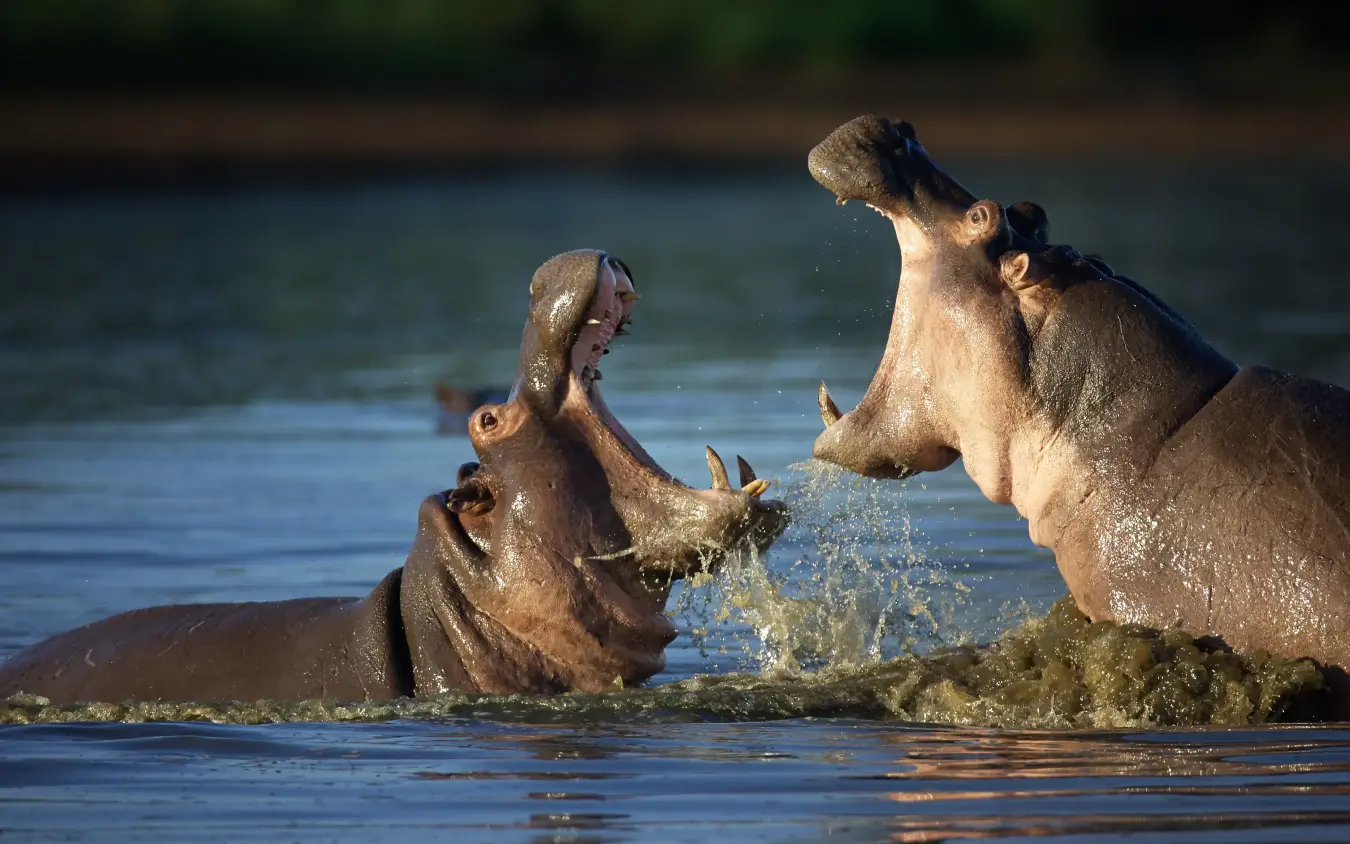
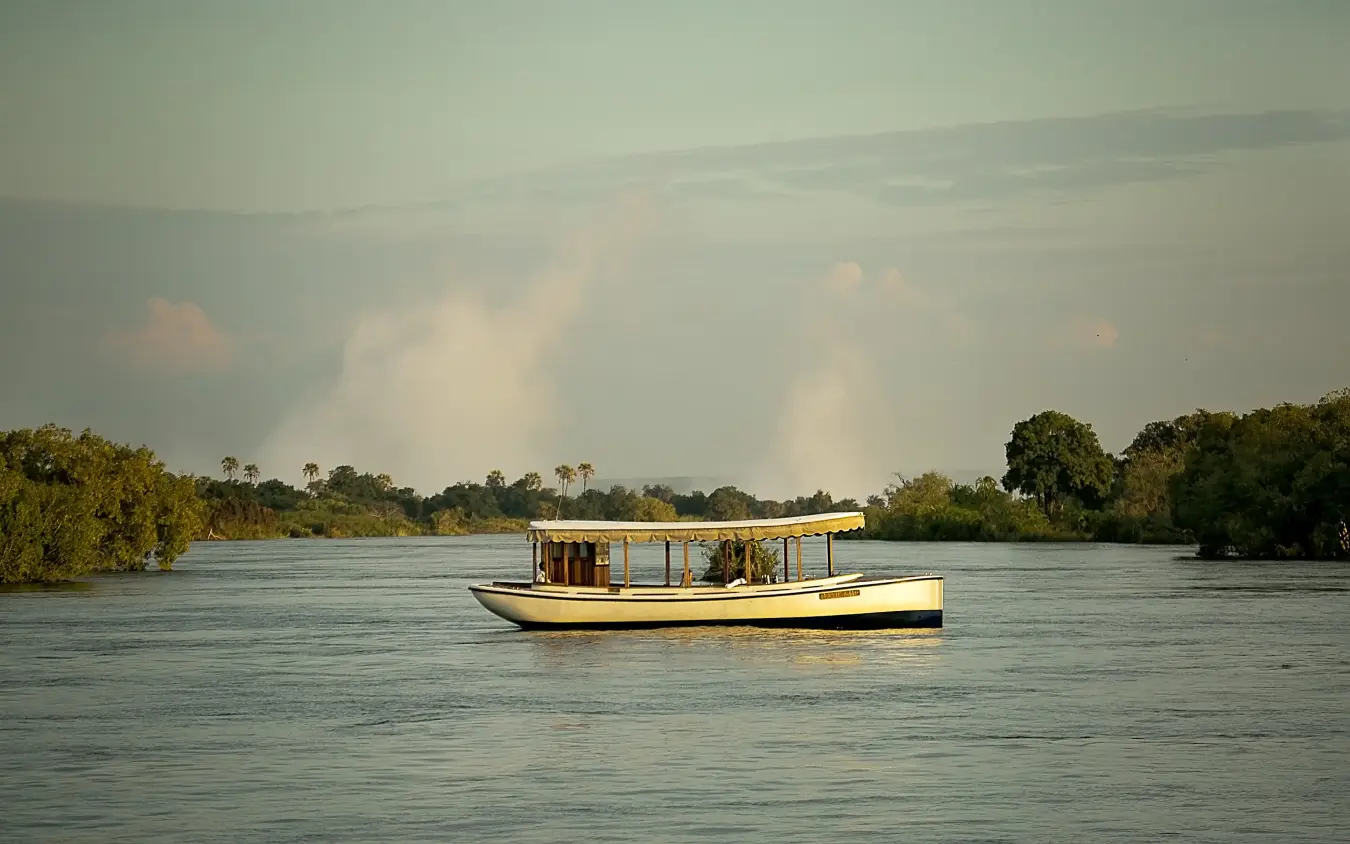
You are eight minutes' walk from the rainforest gate, so the Falls set the pace of these two days. Footpaths thread through the rim rainforest to a run of viewpoints, and the town's activity centre coordinates cruises and flights over the Batoka Gorge. River cruises drift past hippos, crocodiles and elephants at the water's edge above the falls. Ilala Lodge Hotel borders Victoria Falls National Park directly, family-built and run since 1991, and warthogs graze the lawns while the spray rises above the trees.
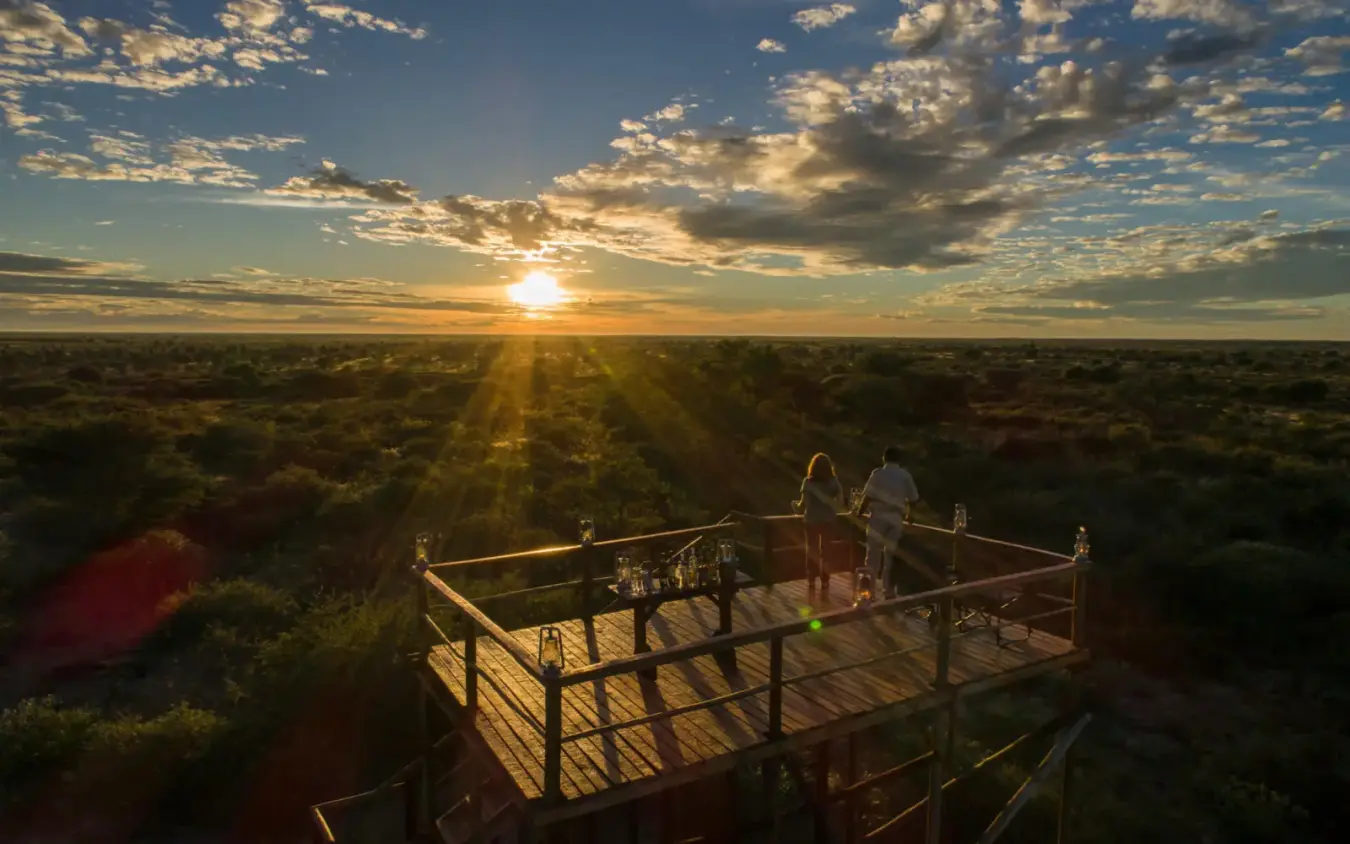
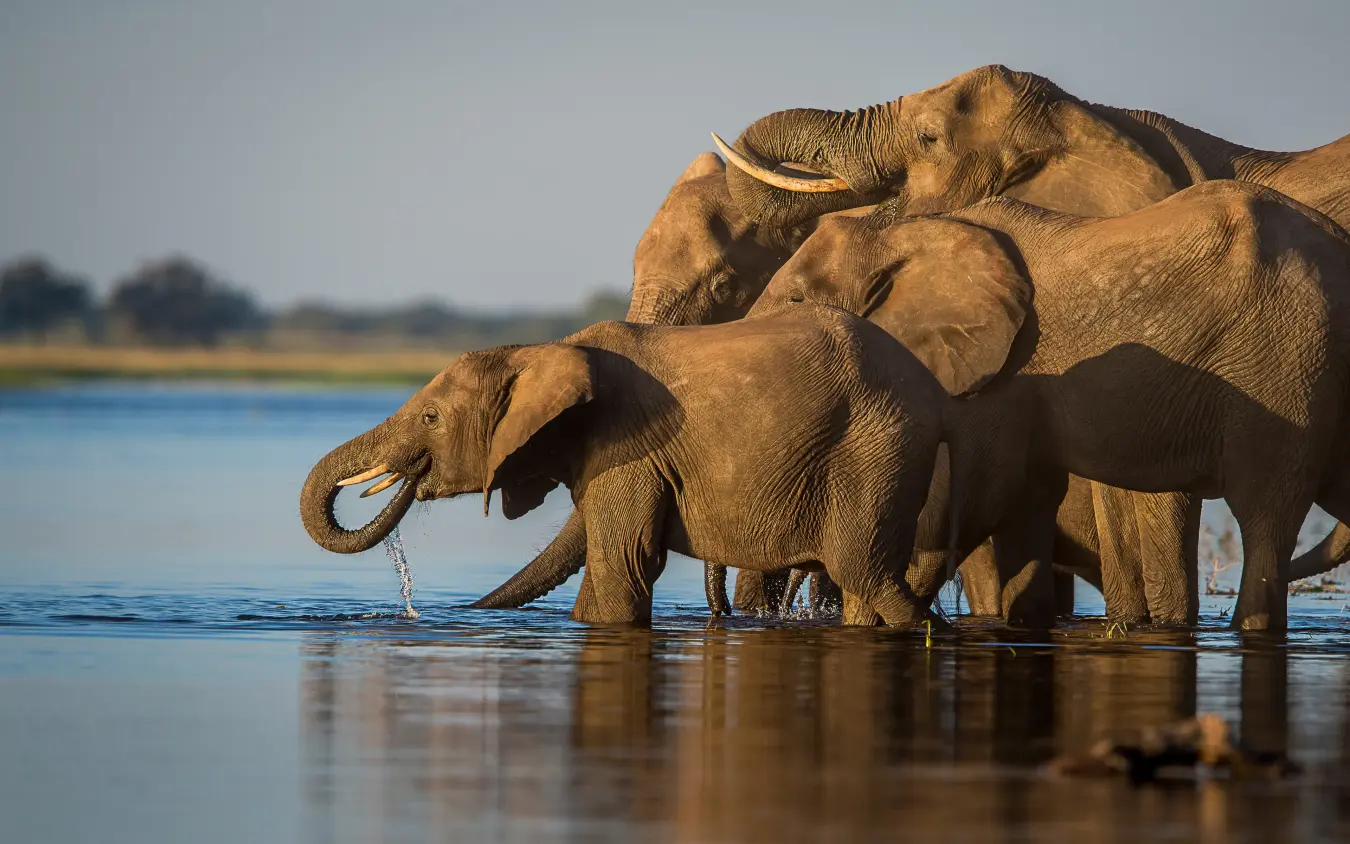
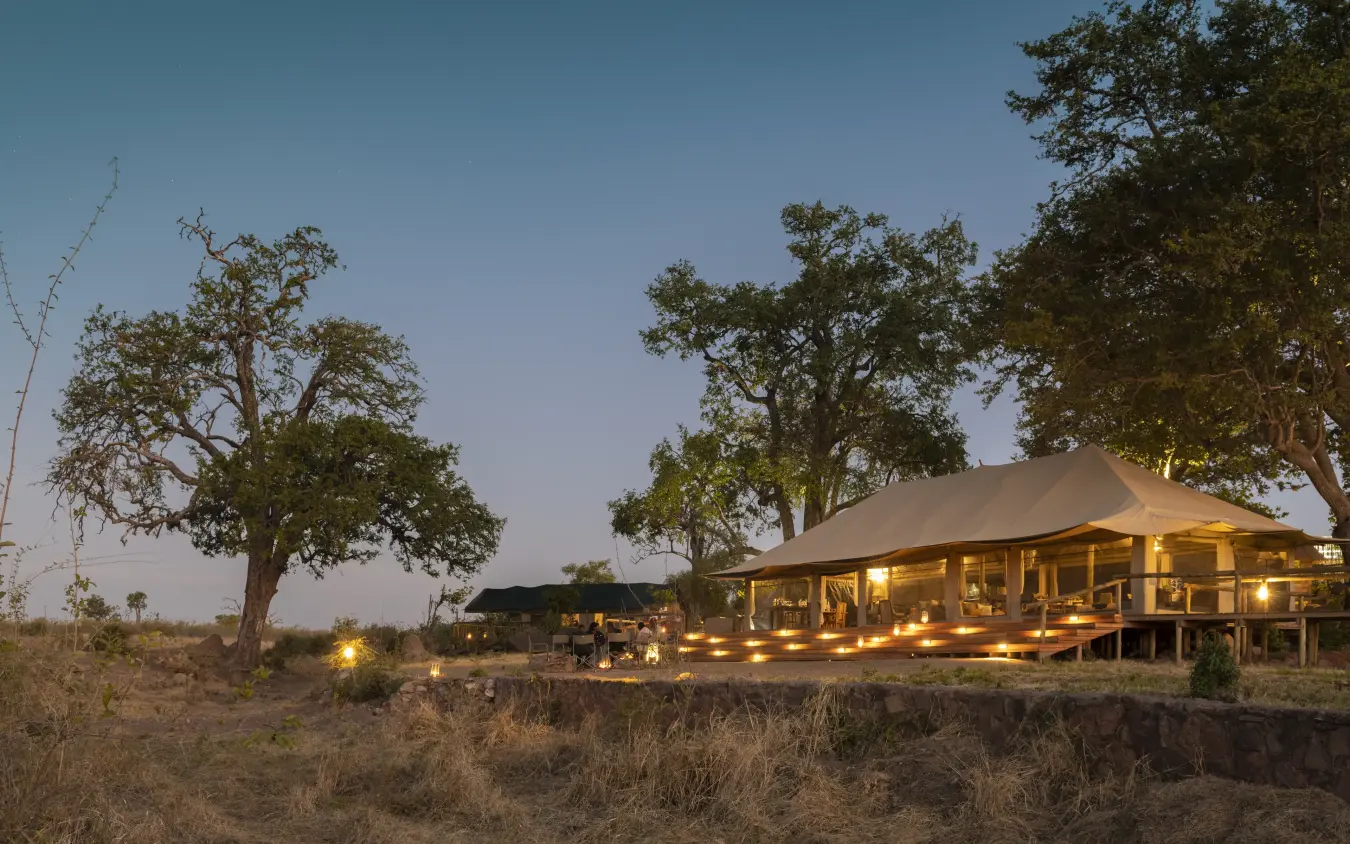
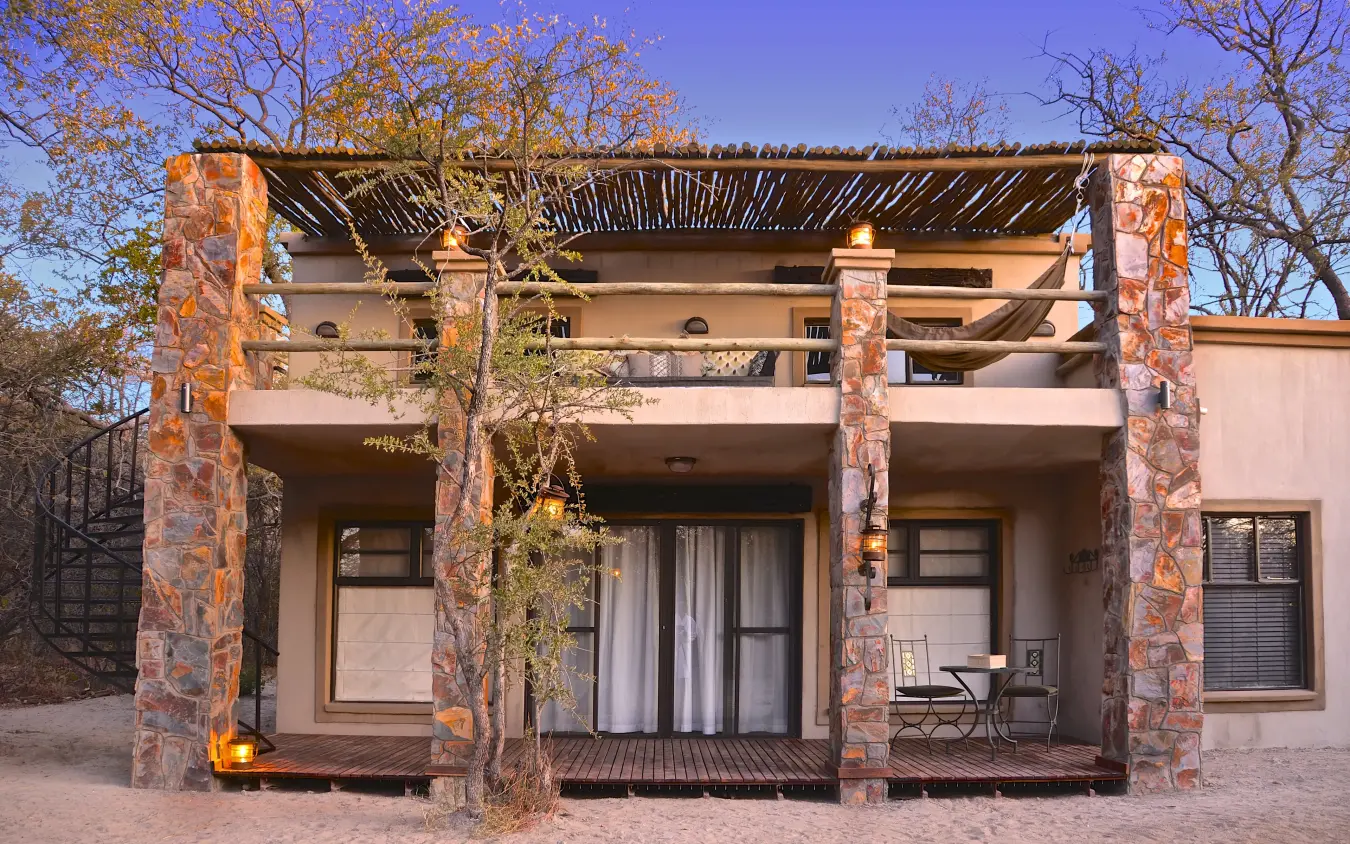
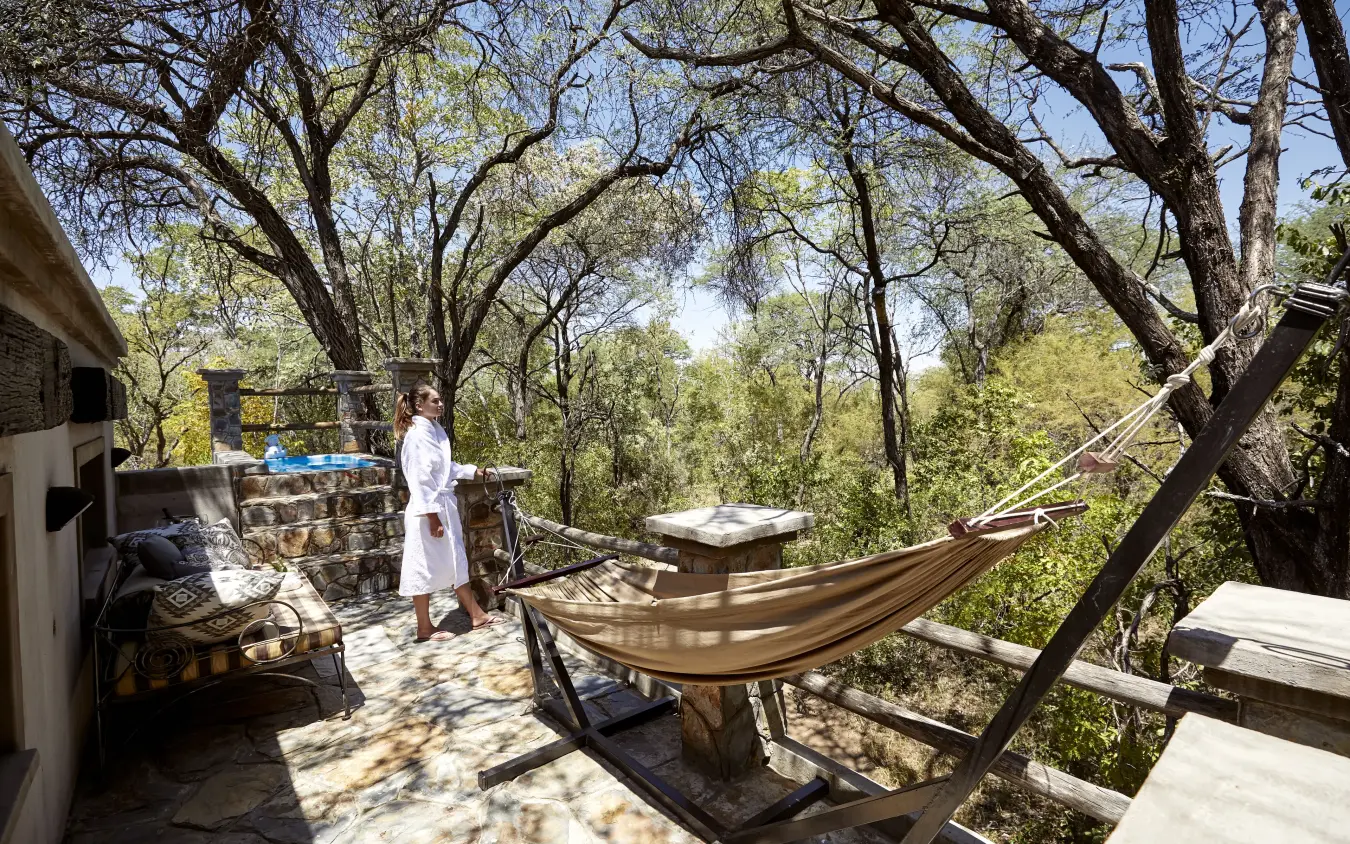
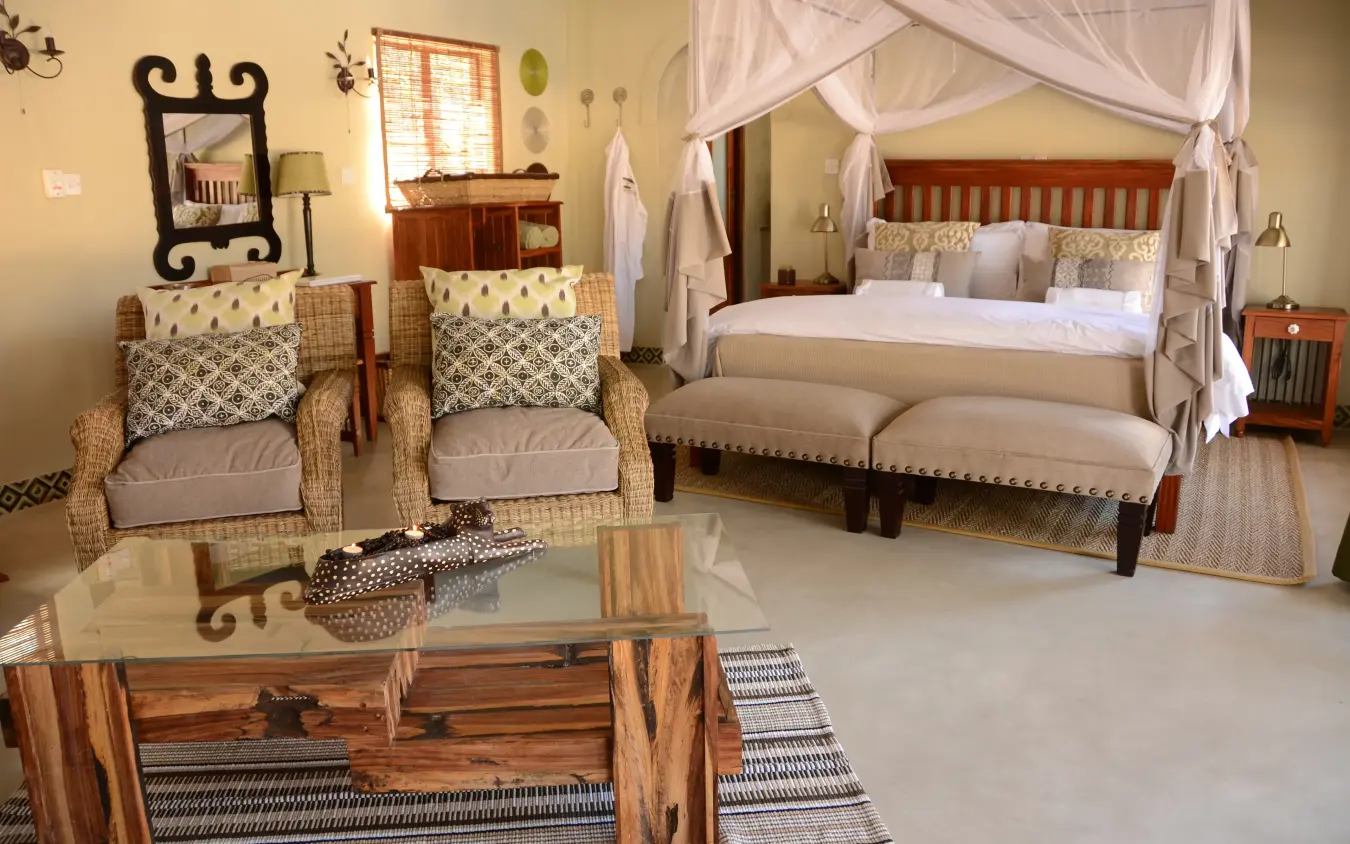
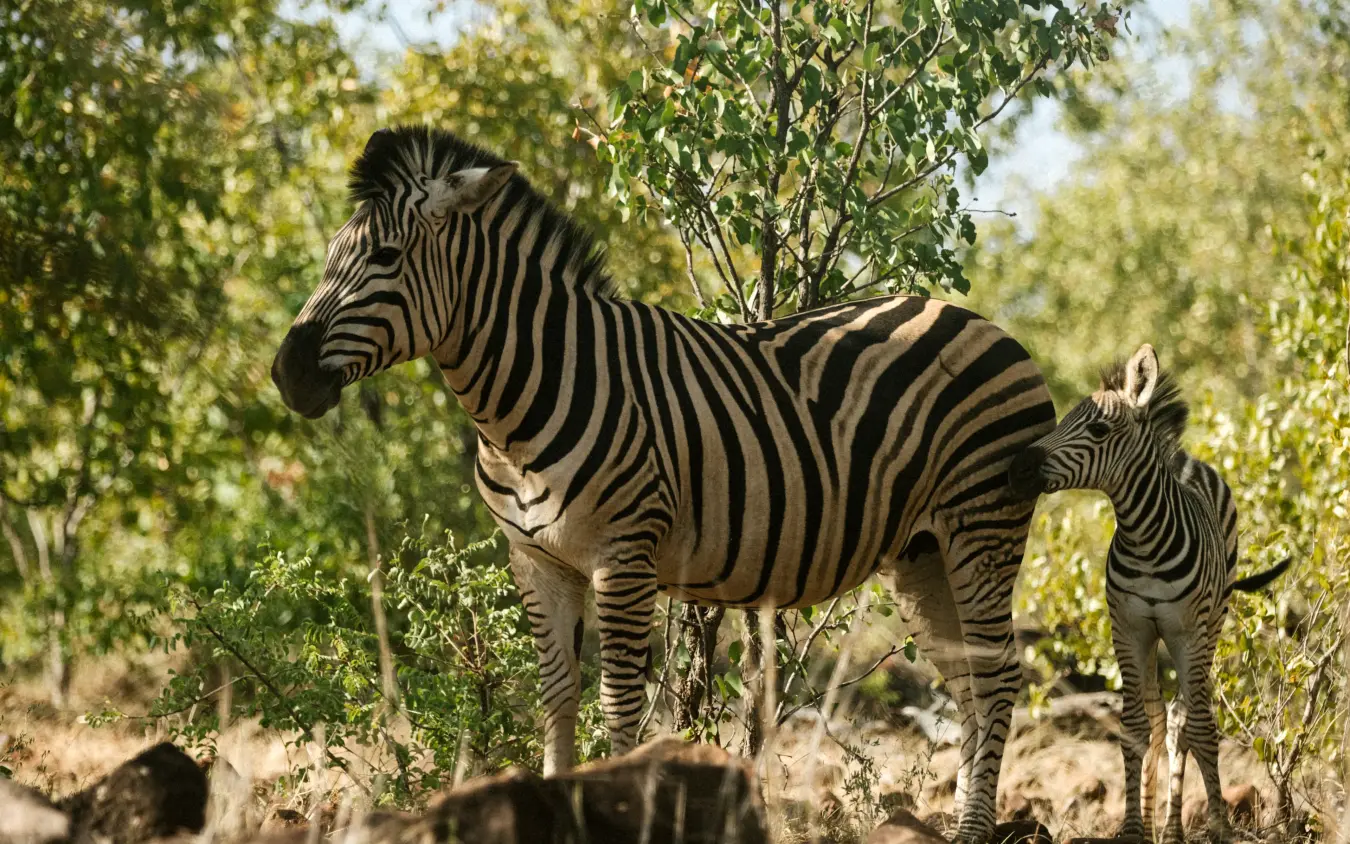
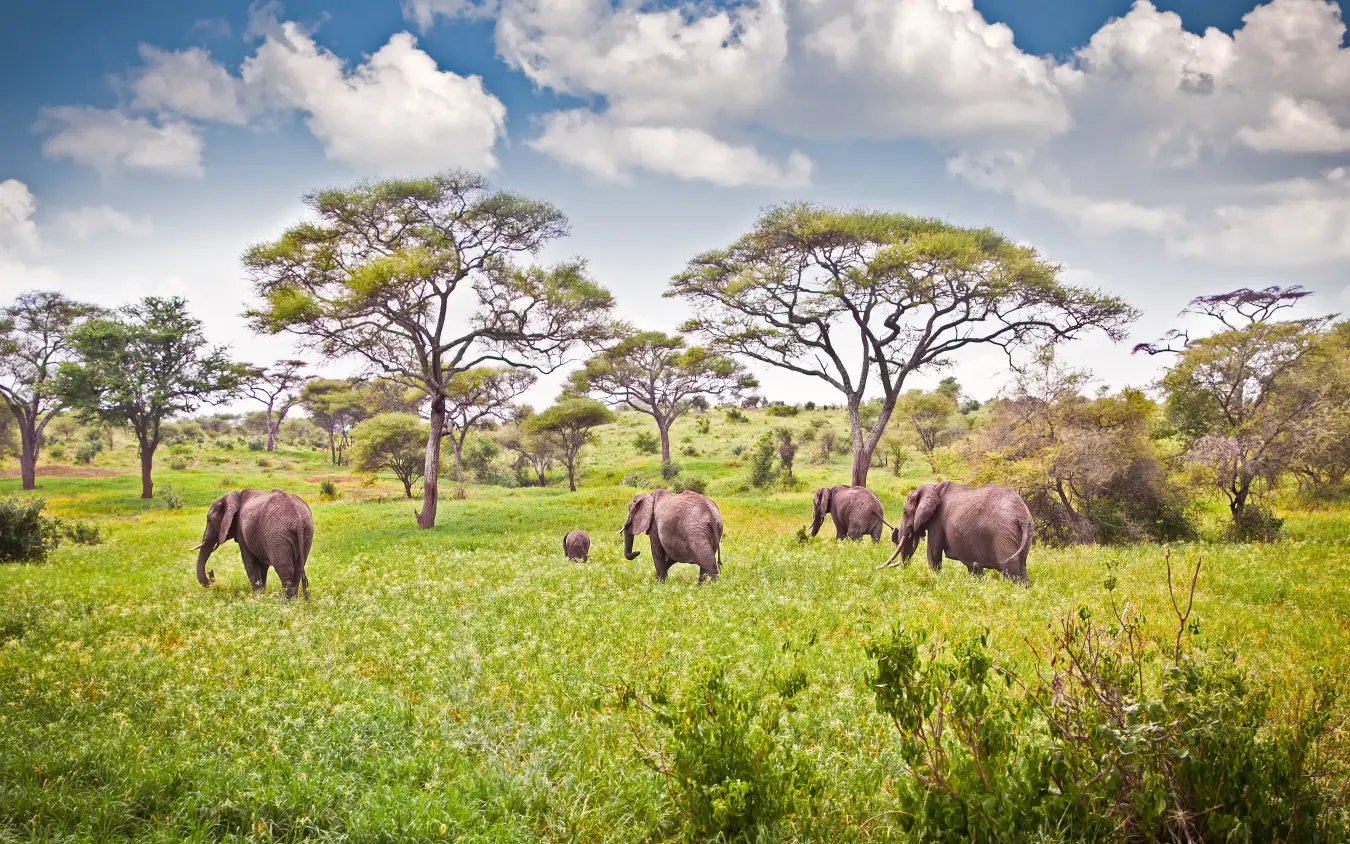
This is communal land inside the Imvelo Ngamo Rhino Sanctuary, where you walk with reintroduced white rhinos tracked by Cobra rangers recruited from the villages around them. A private gate opens onto Hwange, and game drives on the Ngamo Plains turn up buffalo, zebra, giraffe, sable antelope and predators. In the dry months from July to November, elephants file across the plains toward a waterhole holding Stoffie's Hide, where the water sits at eye level. Camelthorn Lodge has eight stone villas set well apart in acacia and camelthorn woodland, each with a spiral staircase to an open upper deck.
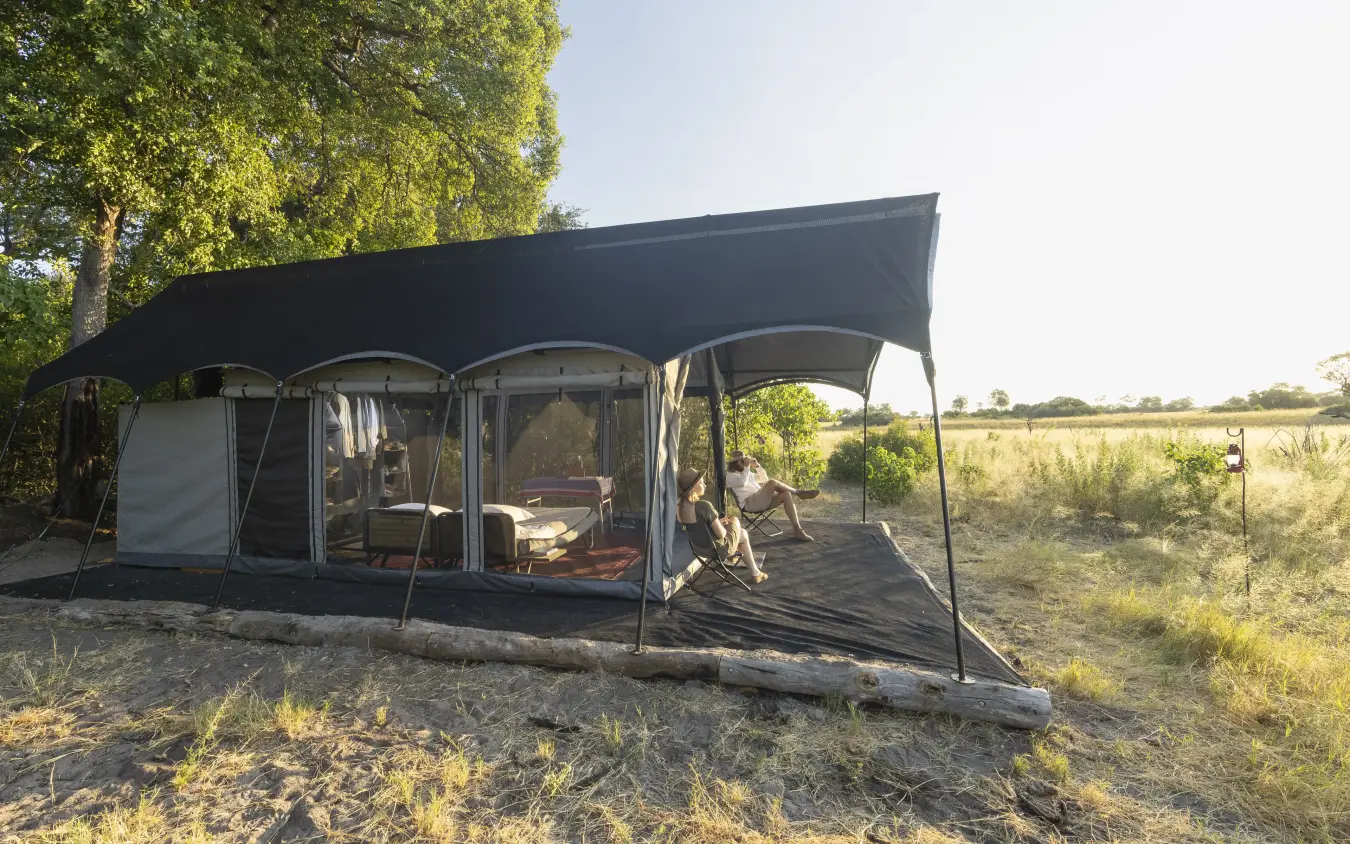
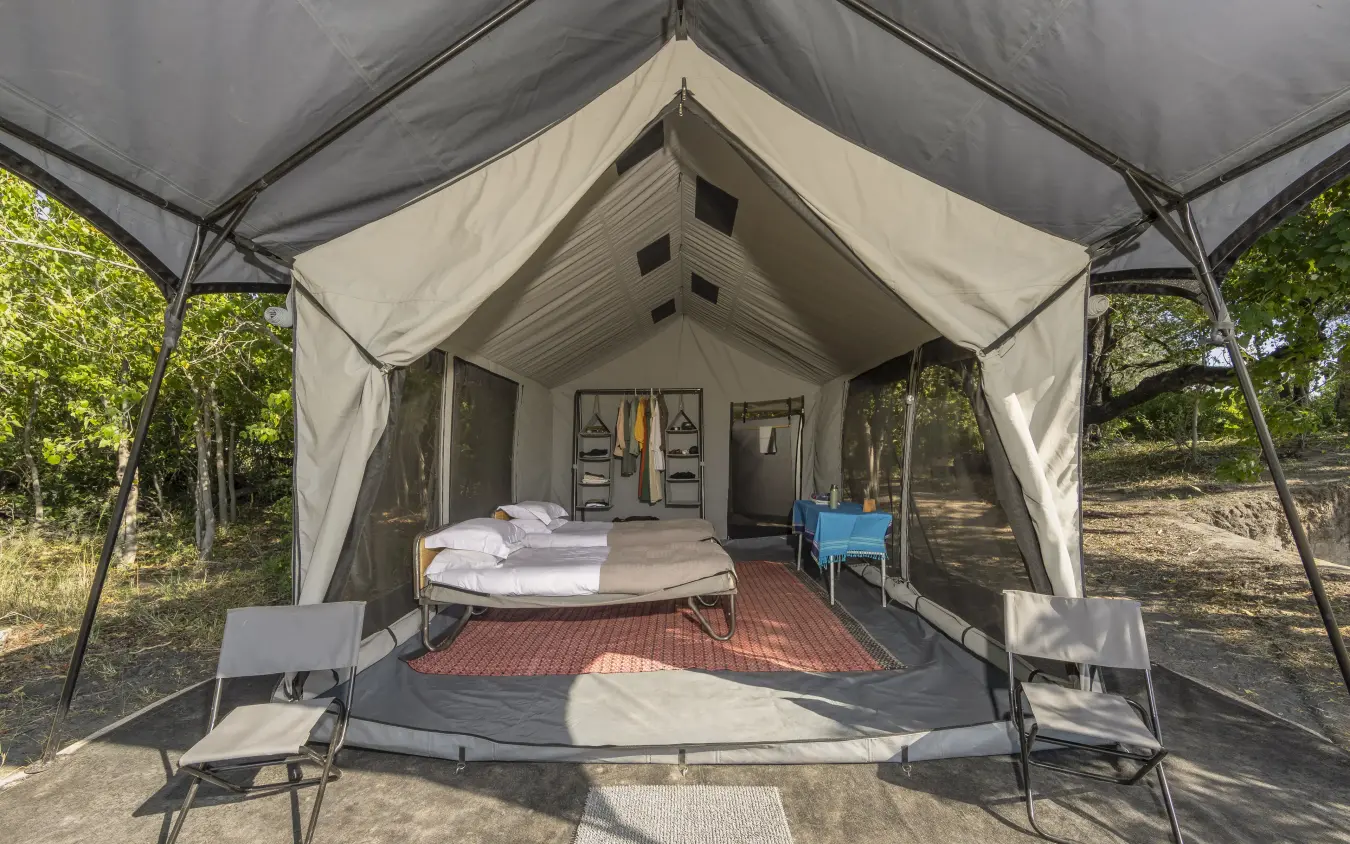
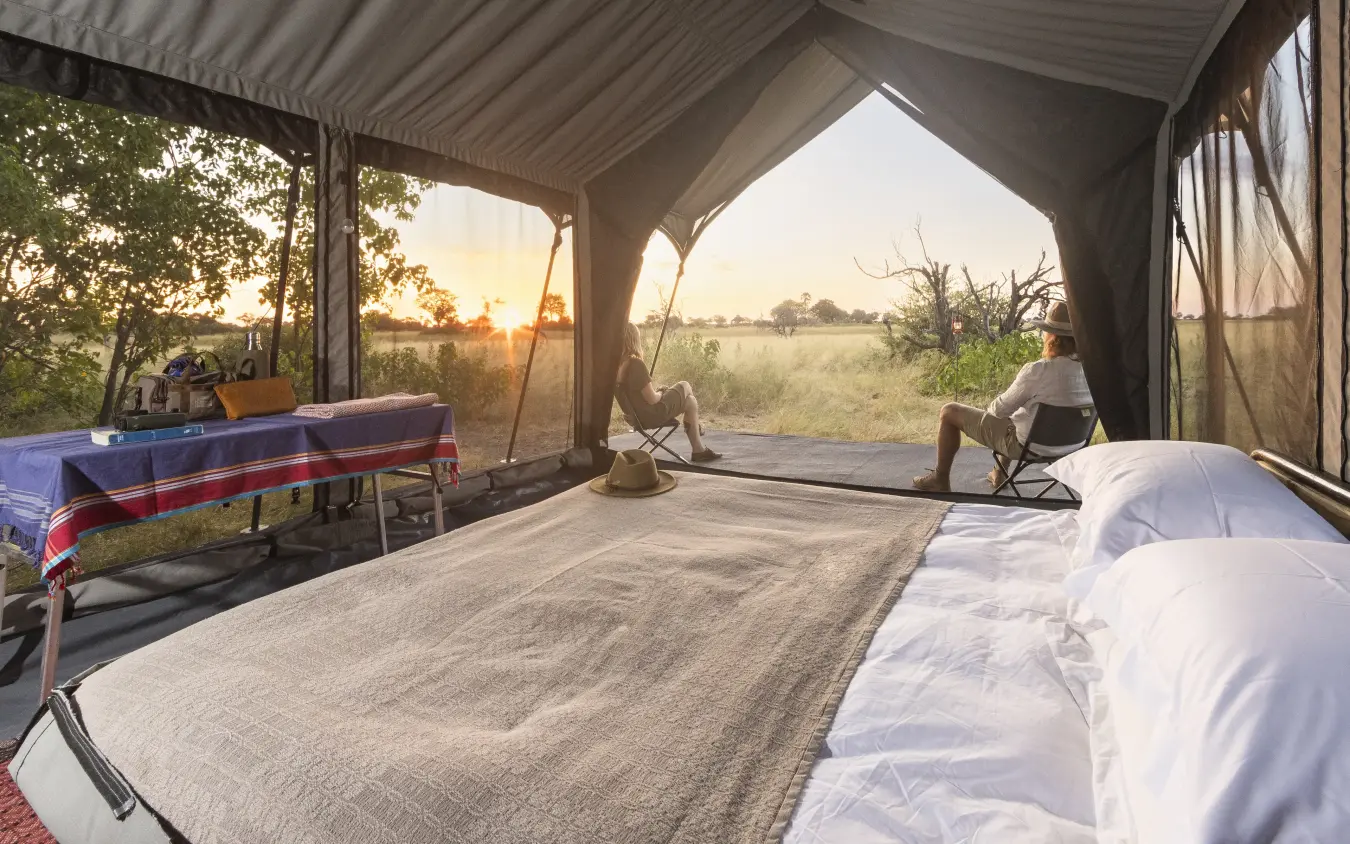
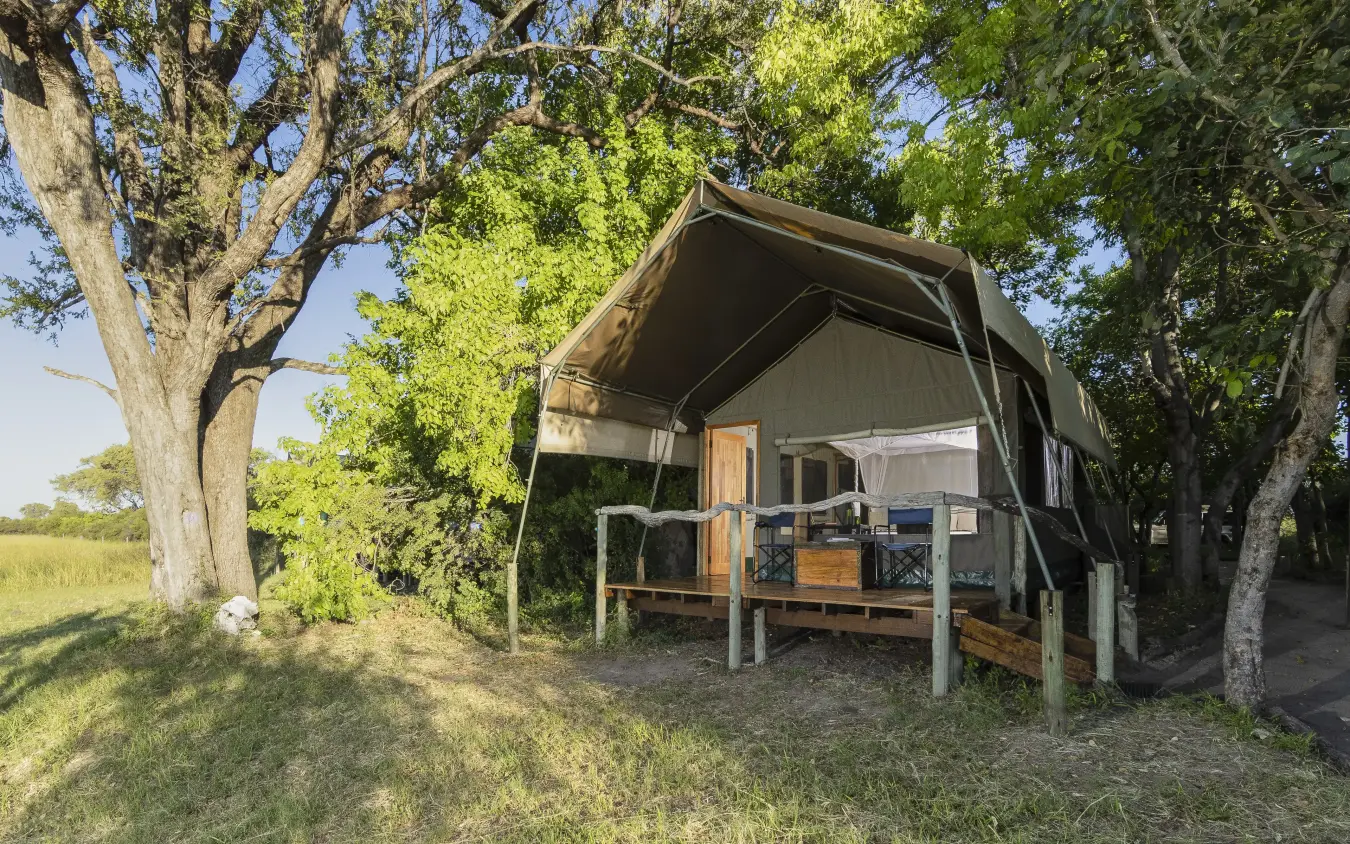
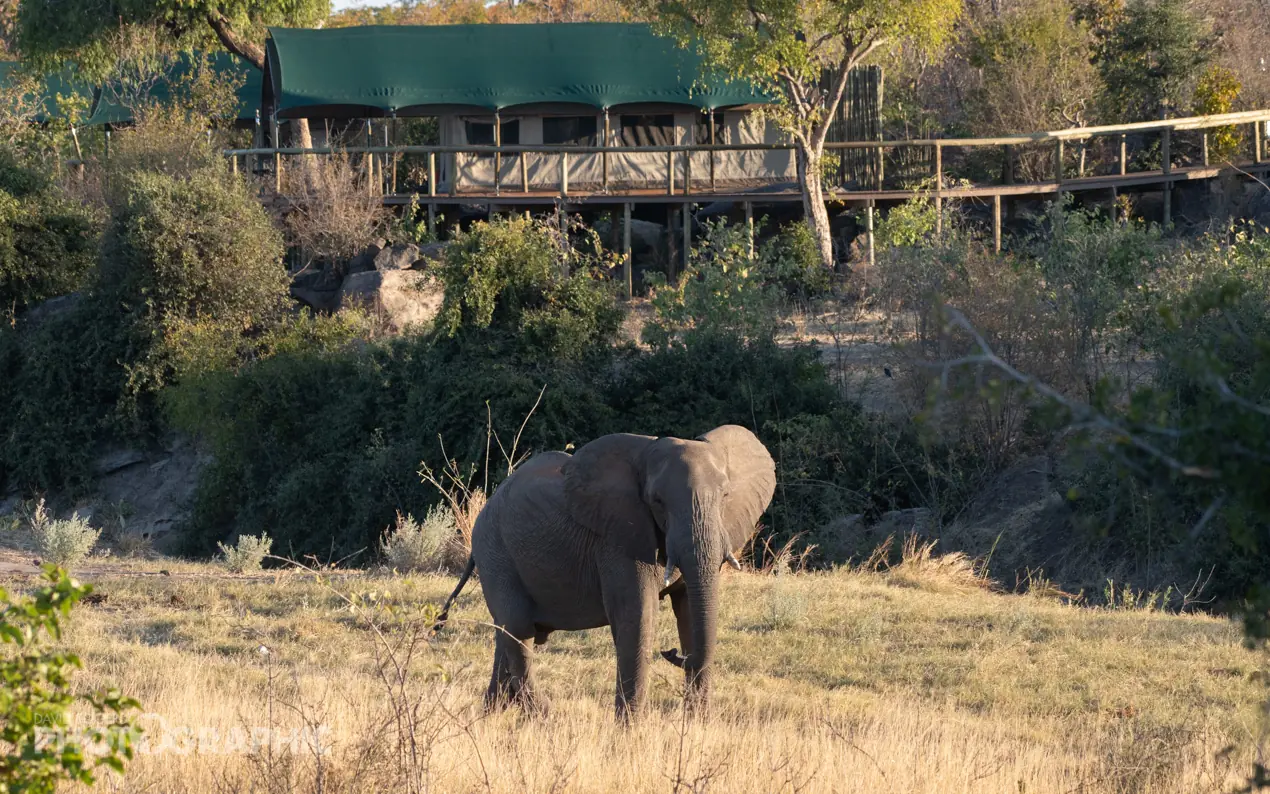
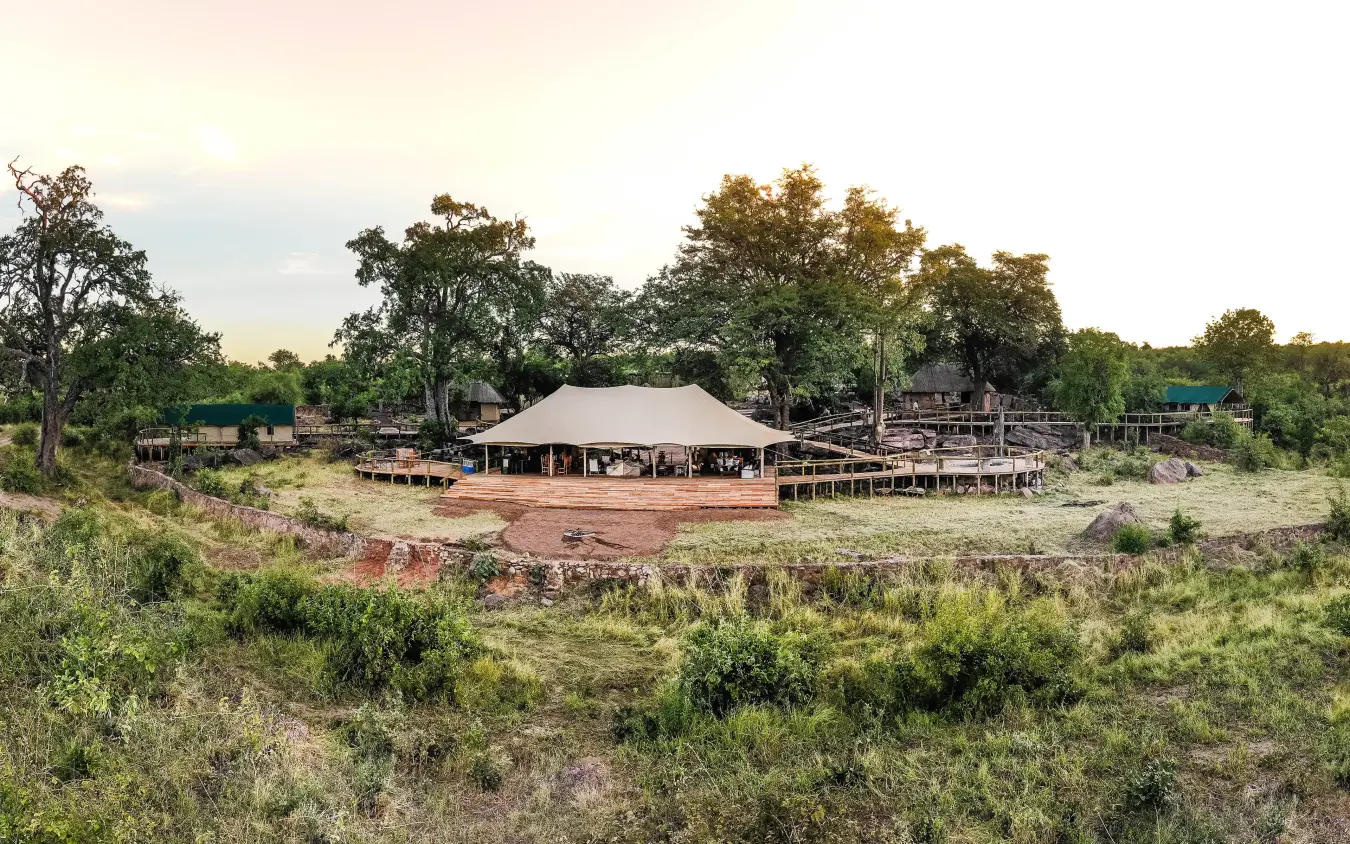
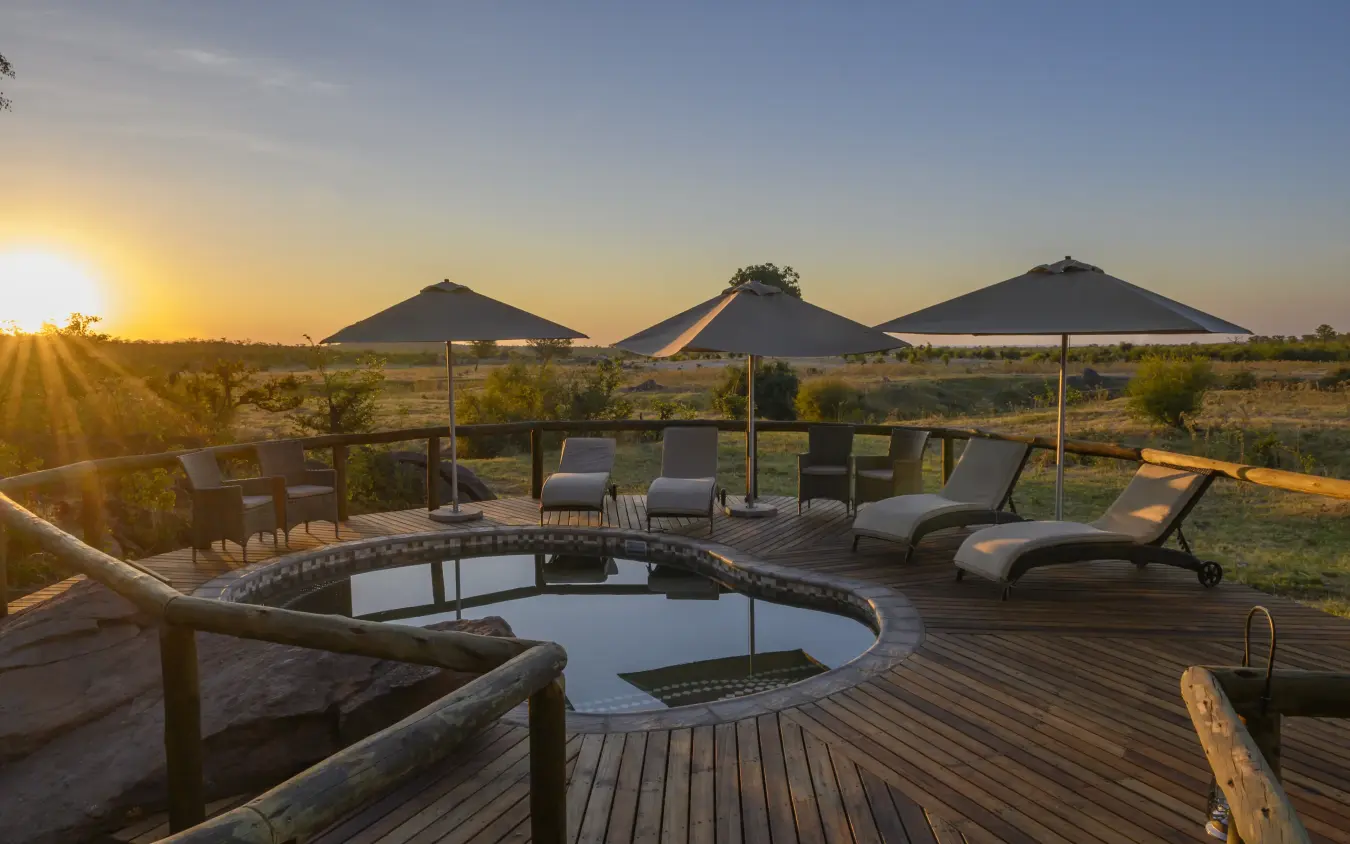
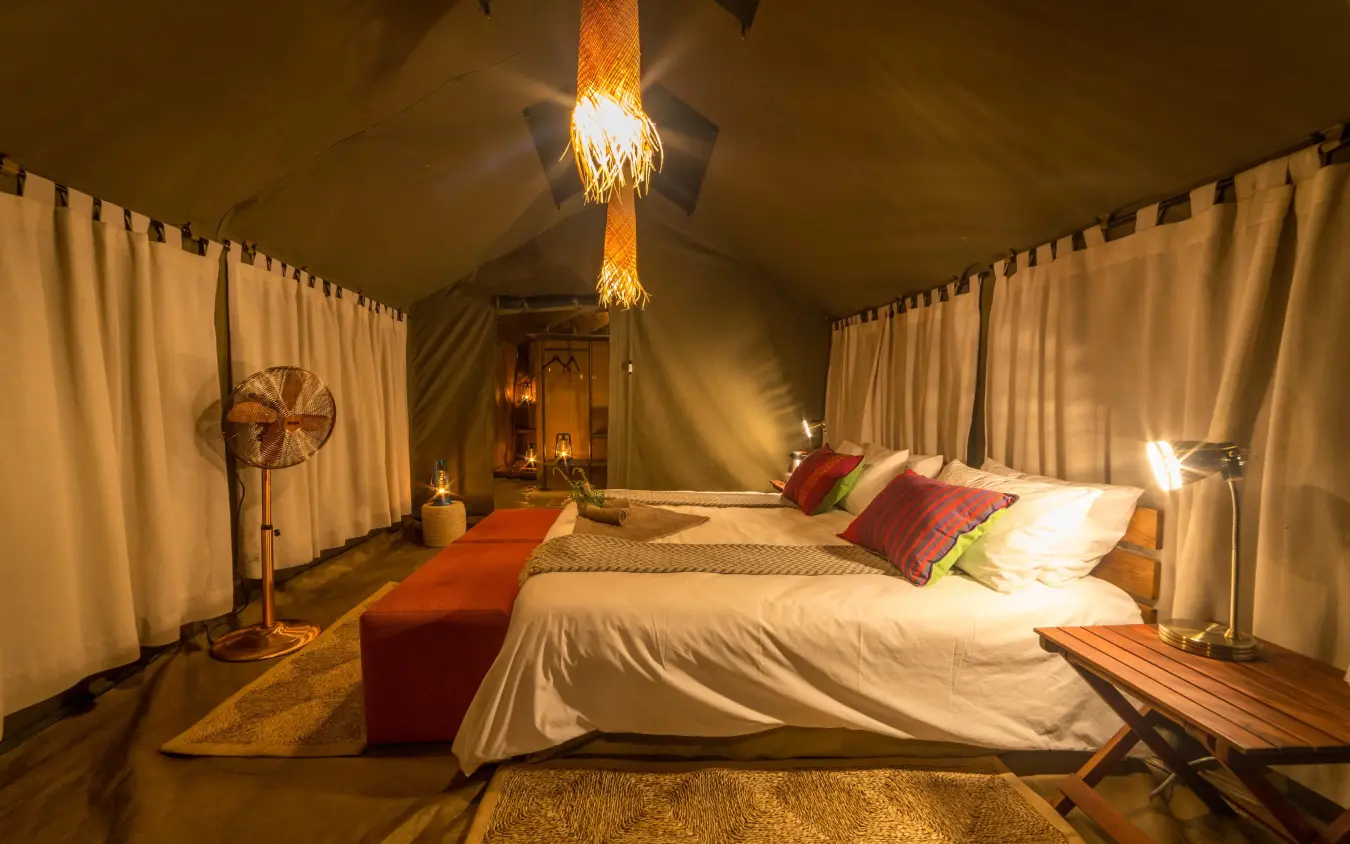
In the remote north-western corner of Hwange, the pleasure is watching wildlife without moving far. Elephants, buffalo and plains game gather at permanent springs on the slope below the camp, in full view of the main deck and every private veranda. Through the dry season from June to October the surface water elsewhere vanishes, drawing game in from the surrounding teak and mopane woodland. Deteema Springs Camp has eight canvas tents on timber decks, running on hybrid solar, on a low rocky rise between the springs and Deteema Dam.
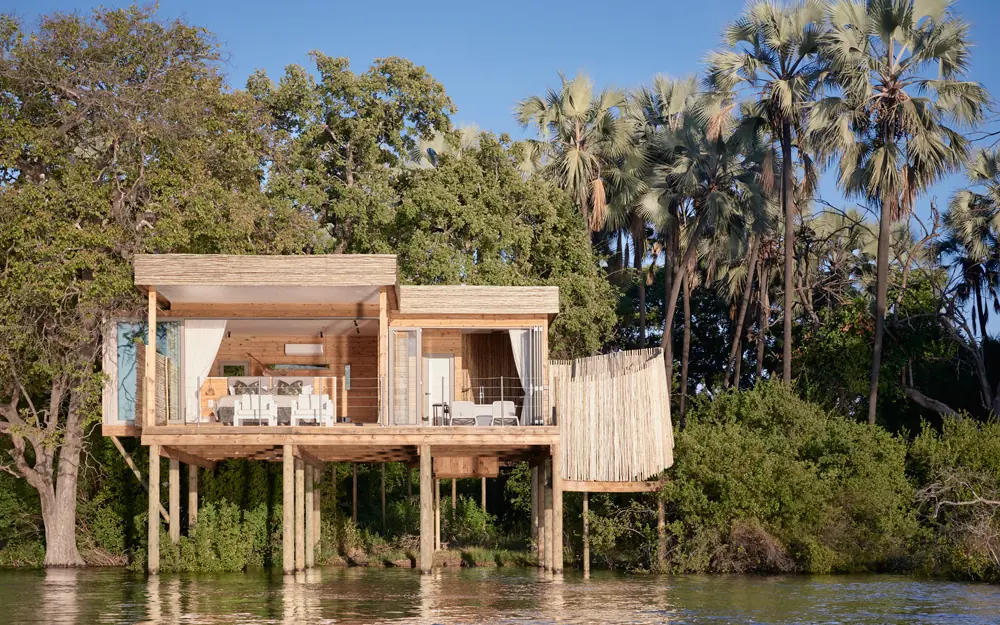
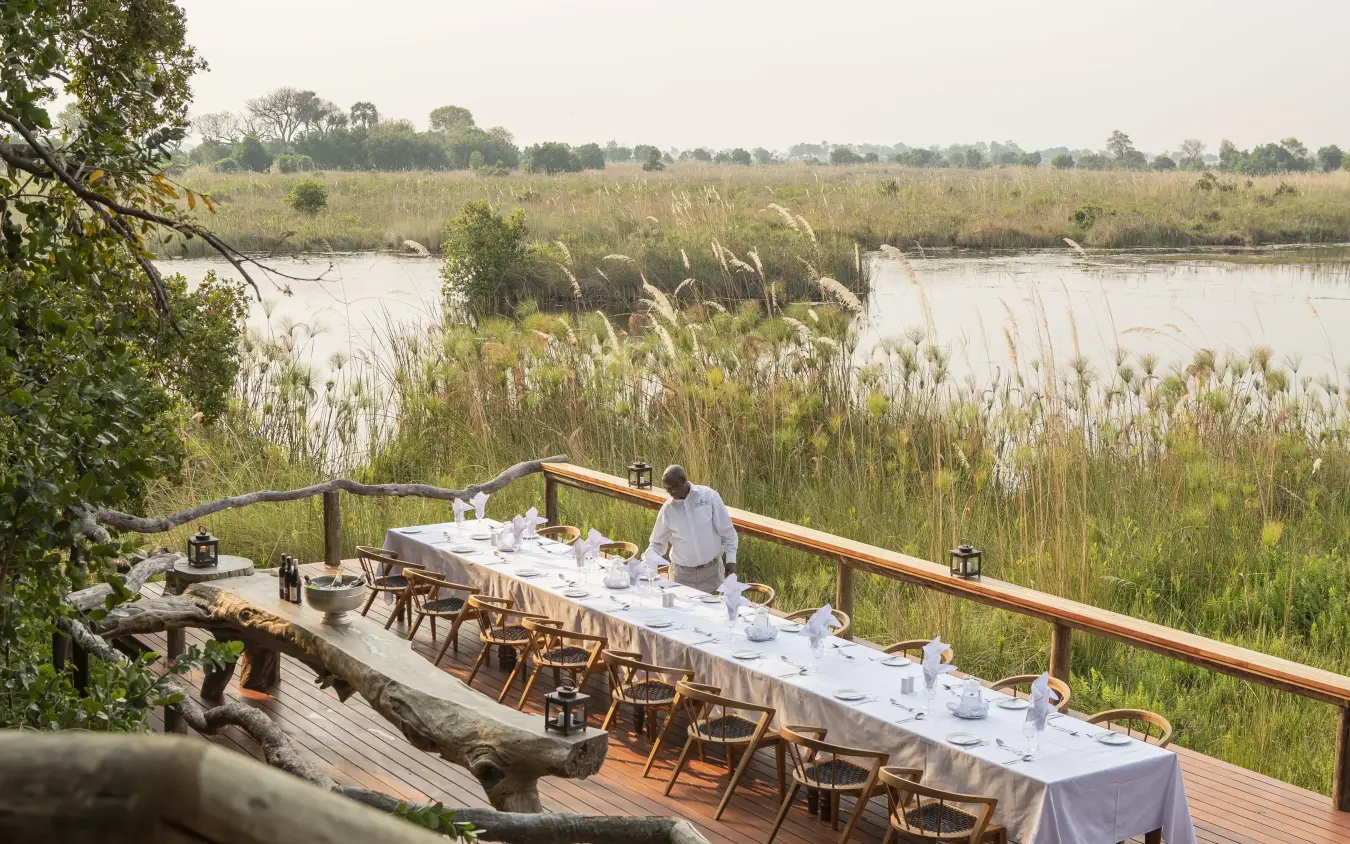
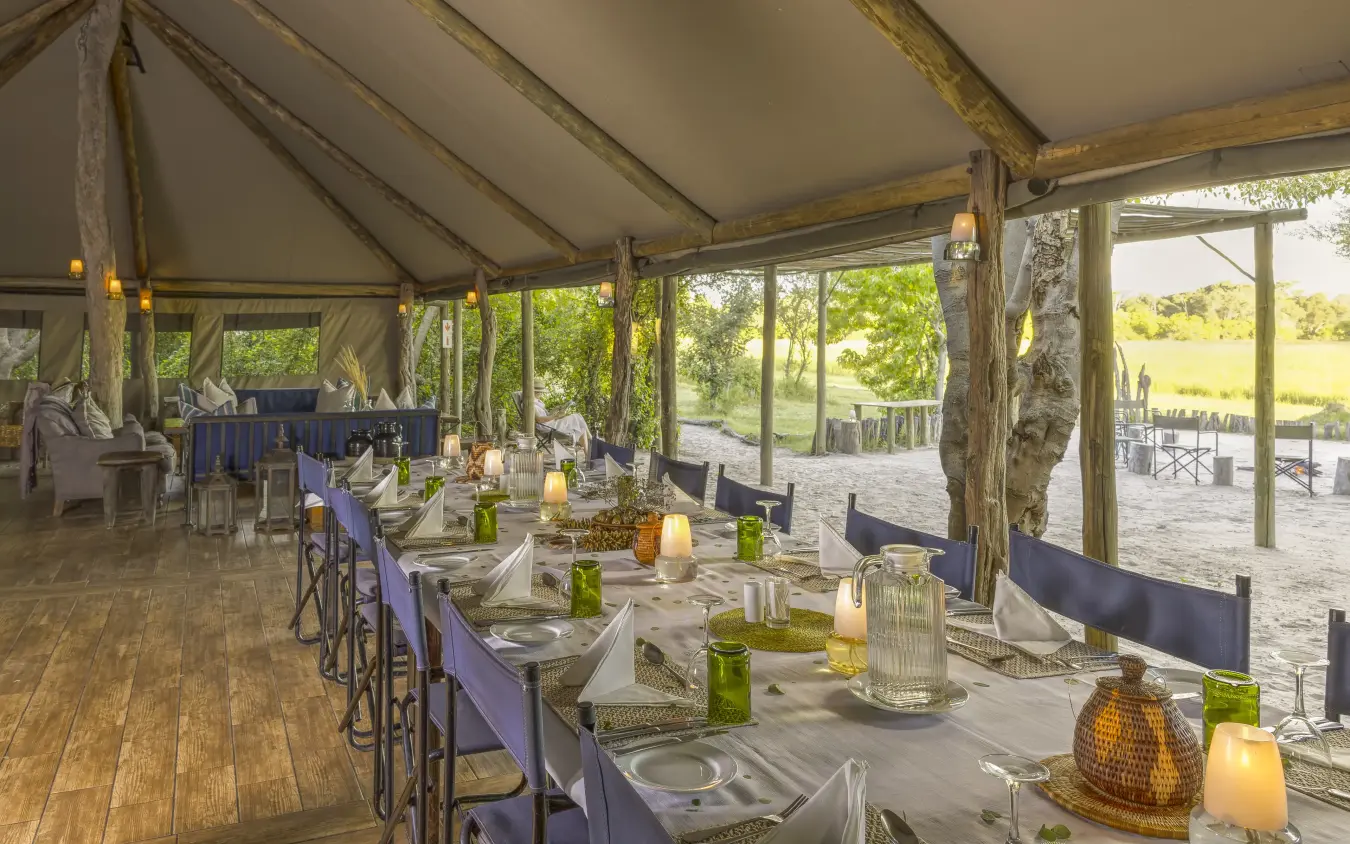
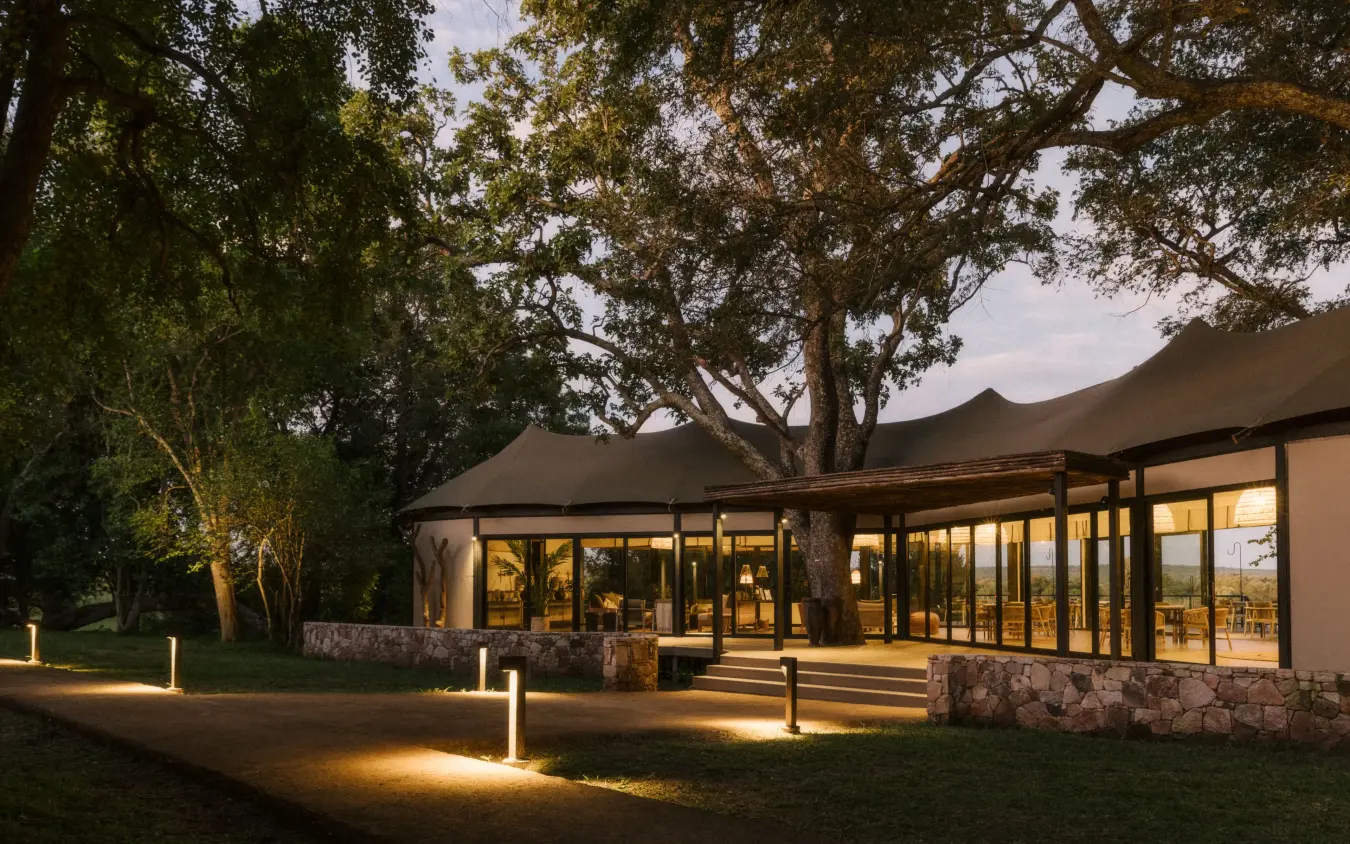
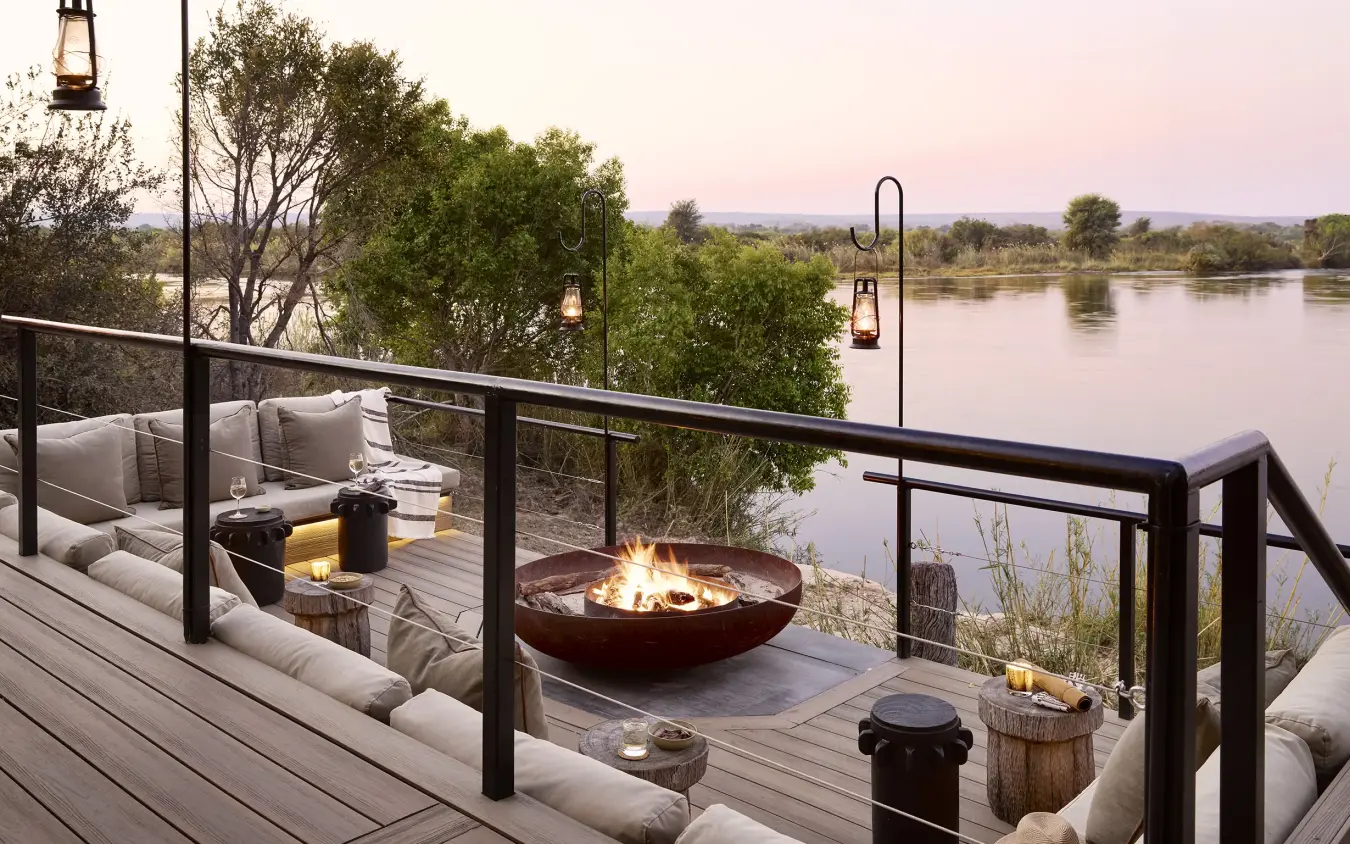
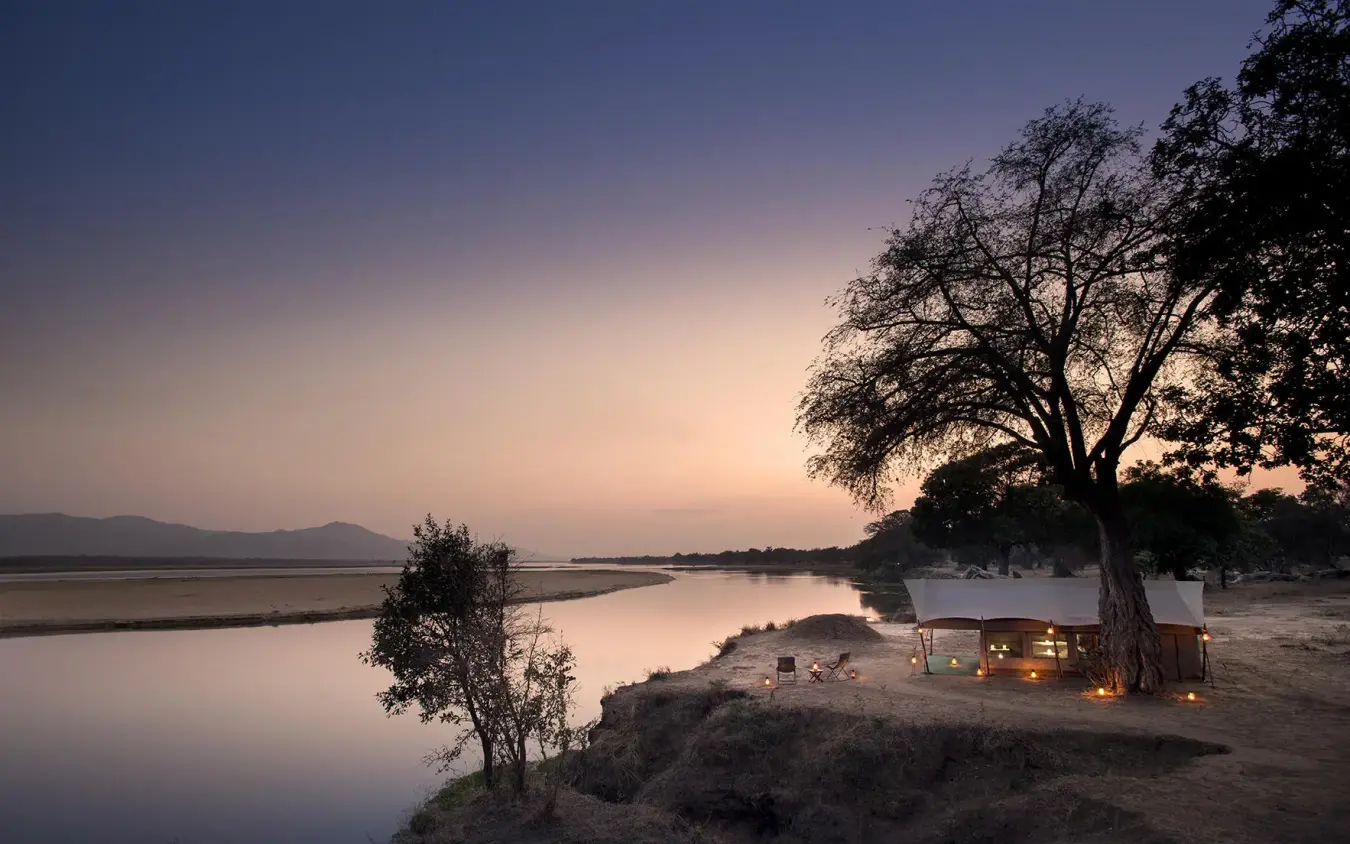
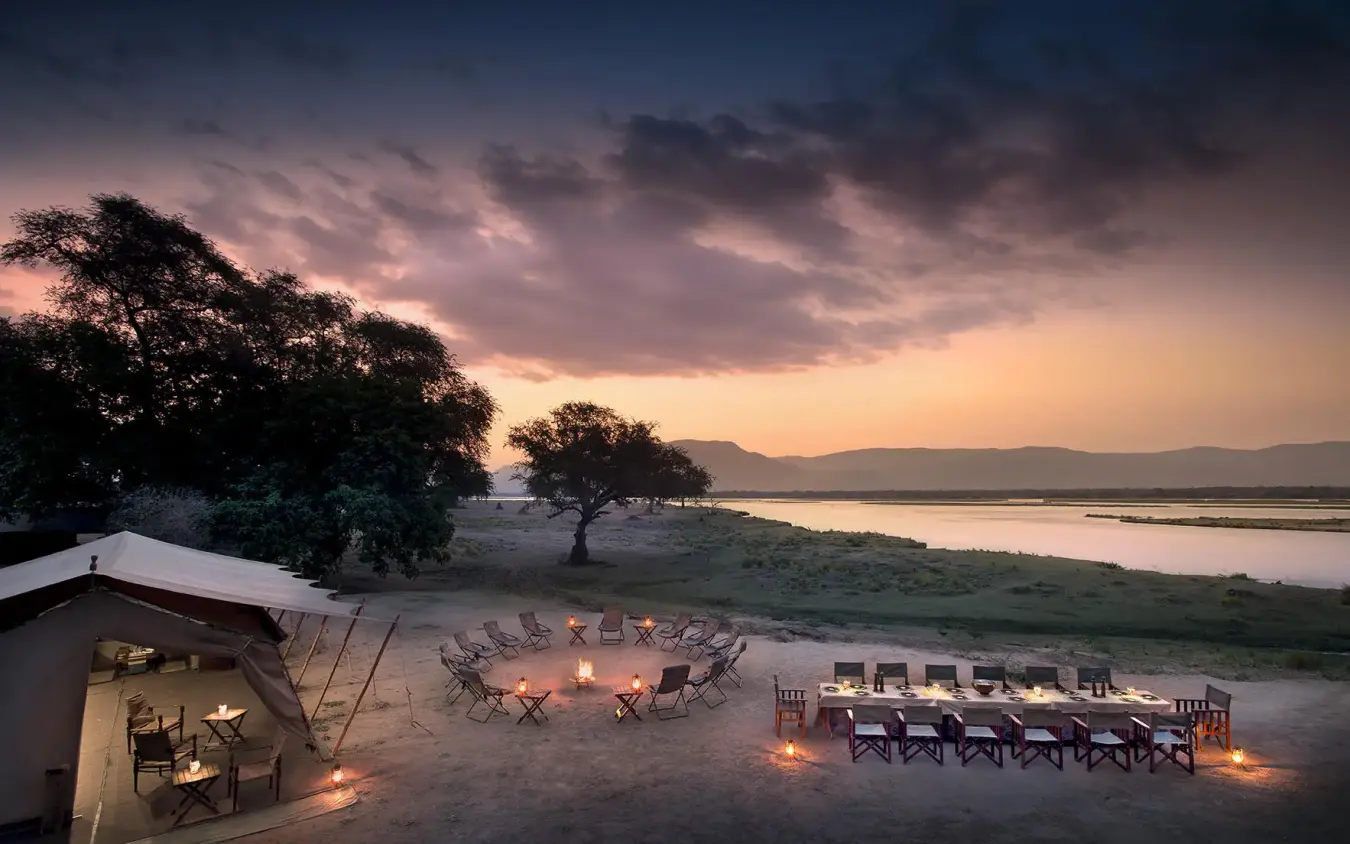
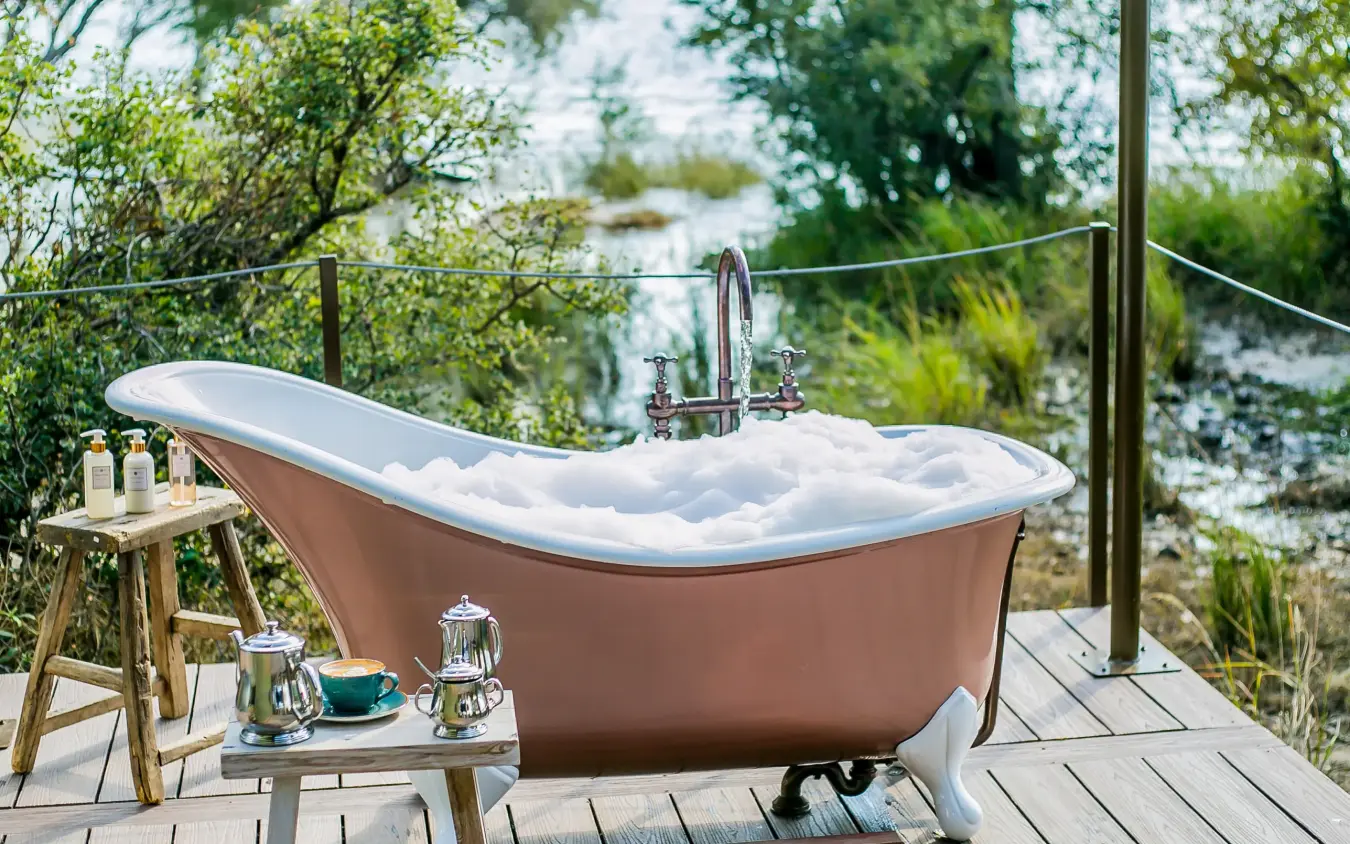
On a quiet bend at the western end of Zambezi National Park, the days follow the river. Elephants swim the channels in front of the decks, hippos work the shallows and crocodiles haul out on the sandbanks opposite. Game drives run inland through mopane and miombo woodland for Cape buffalo, southern giraffe, eland, greater kudu, sable and zebra, and slow boat work rewards birders with African skimmers and Goliath herons. This is a national park, so sightings come by patience. Zambezi Sands has ten glass-fronted canvas tents, bought and rebuilt by Vimbai Masiyiwa and her mother Tsitsi under Batoka Africa.
About as likely as wildlife gets, because these rhino are guarded, not tracked.
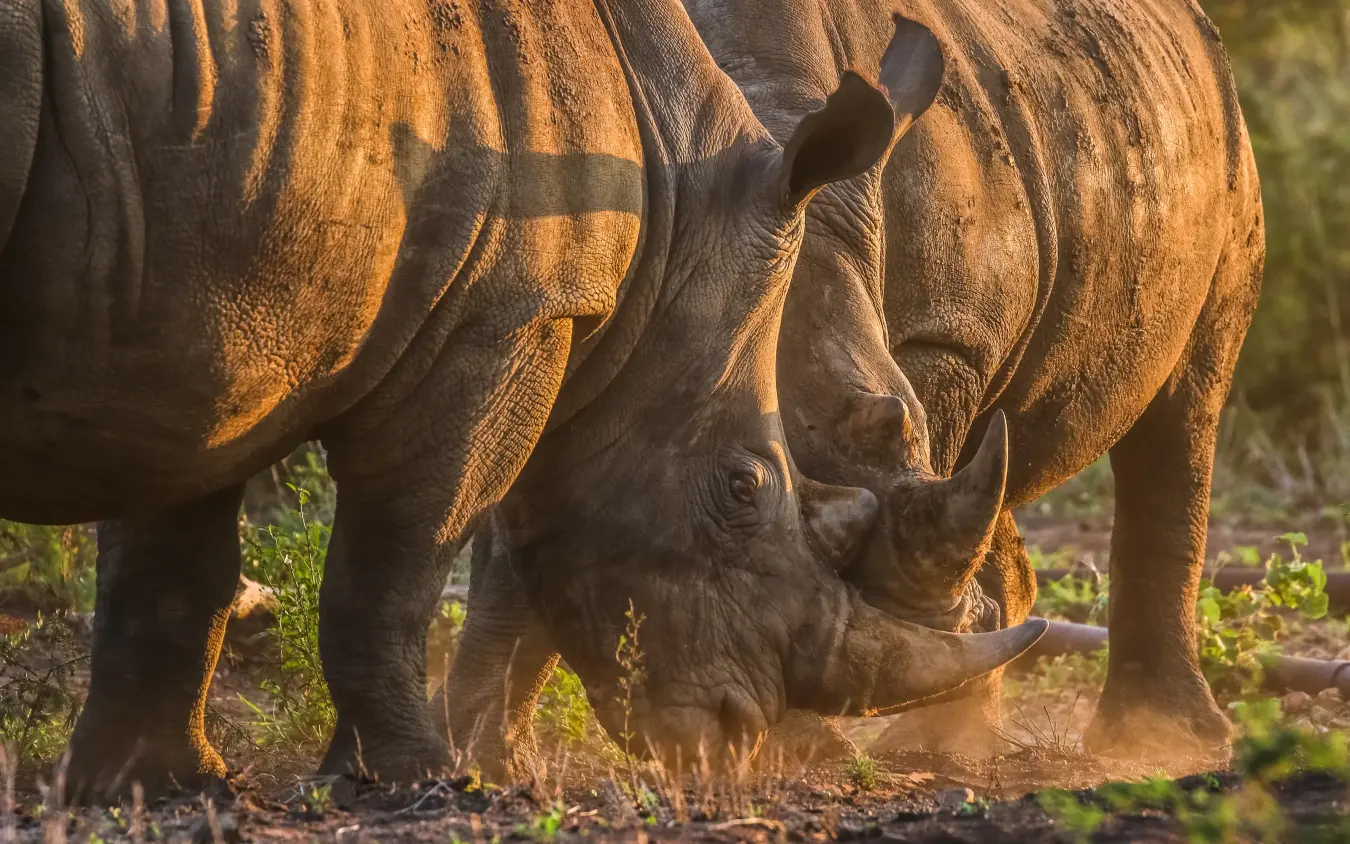
The sanctuary began in May 2022 with two white rhino bulls, Thuza and Kusasa, the first white rhino in the Hwange area for nearly twenty years, and scouts from the Cobras unit, all recruited from the neighbouring villages, stay with them day and night.
Your visit starts at the scouts' headquarters with a talk about the project, and a short walk then brings you to wherever the pair are grazing or resting. Allow about two hours.
How near you stand is decided on the day, and the activity depends on conditions on the ground. This is not tracking wild rhino through the bush, and there are no black rhino at Ngamo or anywhere else on this route, so it is a white rhino walk and nothing else.
What it offers instead is unhurried time on foot beside two relaxed animals, and a project whose income helps pay the scouts and support the local clinic. The rhino sometimes wander past Camelthorn itself.
Yes, from about seven.
Camelthorn takes children of seven and over as a matter of course, with younger ones only by special arrangement. Deteema Springs accepts children from six, and so does the camp on the Zambezi, where under sixes need prior agreement.
The rhino visit is open to children, and because the two bulls are guarded and approached with their scouts, it is a gentle first experience of a big animal on foot.
There are limits to know about:
These rules change, so before anything is booked we go back to each camp with your children's exact ages, the hotel at the Falls included.
The sample route leaves this open: every move can be made by road or light aircraft, and the first partly by rail.
Camelthorn is five hours by road from Victoria Falls, or about an hour by light aircraft to the nearest airstrip. The third way is the memorable one: three hours by road to Dete, then three hours along the railway line to Ngamo on the lodge's own railcar, the Elephant Express. Ask us about building it in.
Deteema Springs, in the opposite corner of Hwange, is a 20 minute flight from Victoria Falls to the Robins airstrip and then 45 minutes by vehicle, or two and a half to three hours by road from the Falls.
The camp on the upper Zambezi is an hour and ten minutes from Victoria Falls town and an hour and a half from the airport. The move between the two Hwange camps is the long one, which we plan by air or road.
A private charter flies the same sector on your own timing, usually a Cessna Caravan, and we price it beside the scheduled seats so you can see the difference.
July to October is when we rate Hwange highest, and it is what this route is built around.
Surface water dries up, elephants file to the pan at Stoffie's Hide and to the springs below Deteema, and July, August and September are also our top rated months at the Falls, with a full curtain and clear views.
October is the busiest month at the water and much the hottest.
The rains run from about November to April, and we would be plain about them: January to March are months we rate as challenging, hot and wet, with the animals far from the pans, some roads heavy going and some camps shut.
The in-between months have real advantages, though. November brings the first storms, migrant birds and newborn antelope, the camps tend to charge less, you share the park with very few people, and during April and May the Zambezi pours over the Falls at full flood.
Because Hwange covers about 14,600 square kilometres, and its two ends are different safaris.
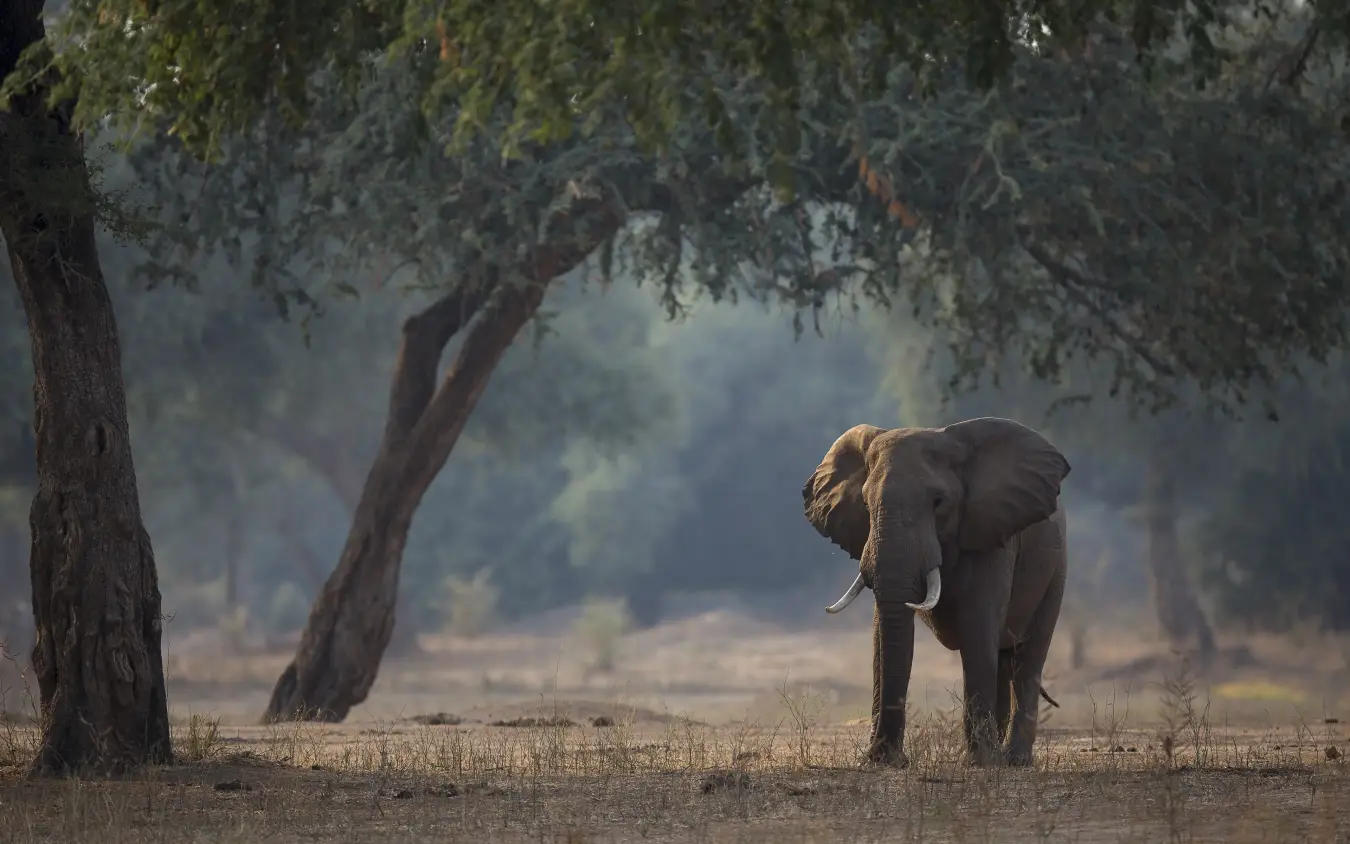
Most of the park lies on deep Kalahari sand with no rivers at all, so in the dry months almost the only water is what is pumped into the pans. That is why elephants arrive on the Ngamo Plains in such numbers: the park holds around 45,000 of them.
This south-eastern corner is open grassland edged with woodland, good for big herds, long views and the rhino sanctuary.
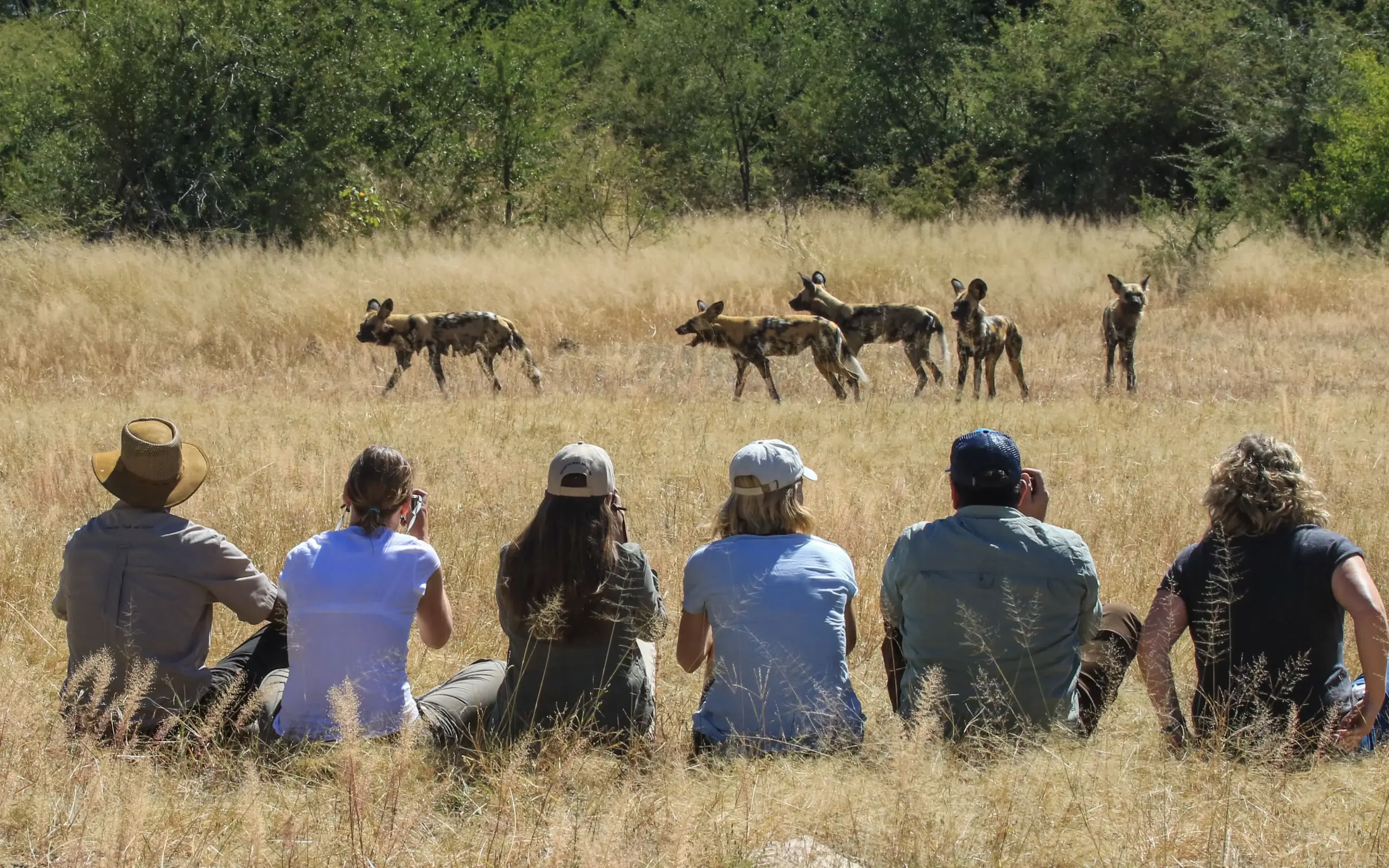
The north-west around Deteema is another country, stony hills of mopane on old lava, with seasonal rivers, dams and natural seeps that hold water all year. There the animals come to a spring below the camp and not to a pump, and the area is ideal for walking.
Four nights in one and three in the other lets you see both.
When the river is high, which is roughly February to May, yes.
The rainforest along the rim exists only because spray from the Falls waters it. When the Zambezi is in flood, peaking around April, the spray rises more than 400 metres and comes down on the paths like a heavy shower, so bring a raincoat and expect some viewpoints to show nothing but white.
That is when a scenic flight earns its place, because the whole 1.7 kilometre curtain can then be seen only from the air. You can choose a short helicopter flight of 12 to 15 minutes or a long one of 22 to 30. The aircraft varies with the company, so we name no type.
From about August the paths are dry and the viewpoints clear, and a flight becomes a pleasure, not a necessity. Even at the year's lowest water, the Zimbabwean end of the Falls is the part that keeps flowing.
Ed Charles, BBC Producer
Fitzroy are true specialists in accessing the wilderness. They know where to go and importantly, when to go there. Highly recommended.
zimbabwe
Nine nights in northern Zimbabwe, walking Hwange and Mana Pools by foot and canoe, finishing at Victoria Falls.
zimbabwe & botswana
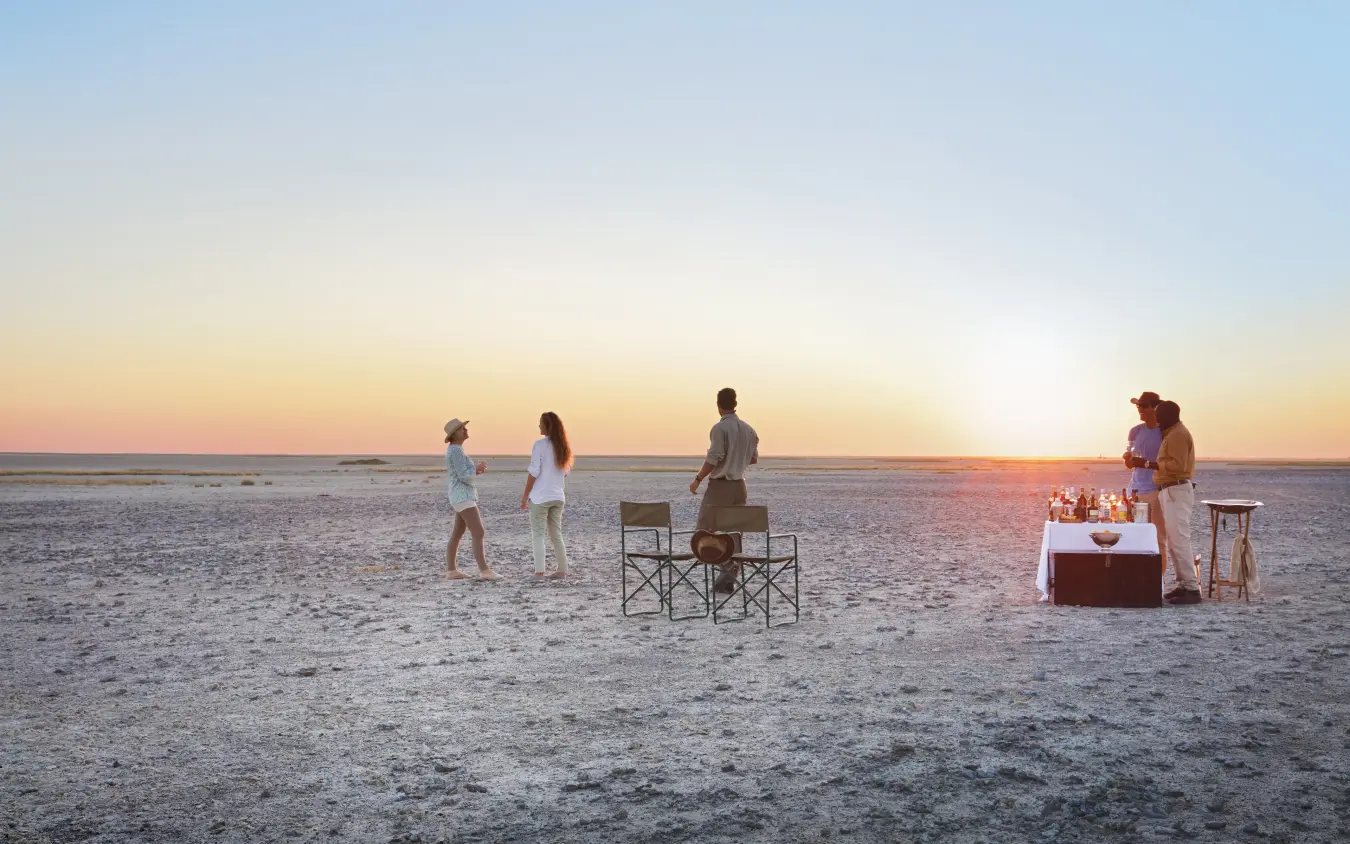
Twelve nights from Victoria Falls into Botswana, linking a walking concession, a permanent Delta lagoon and the salt pans.
zimbabwe
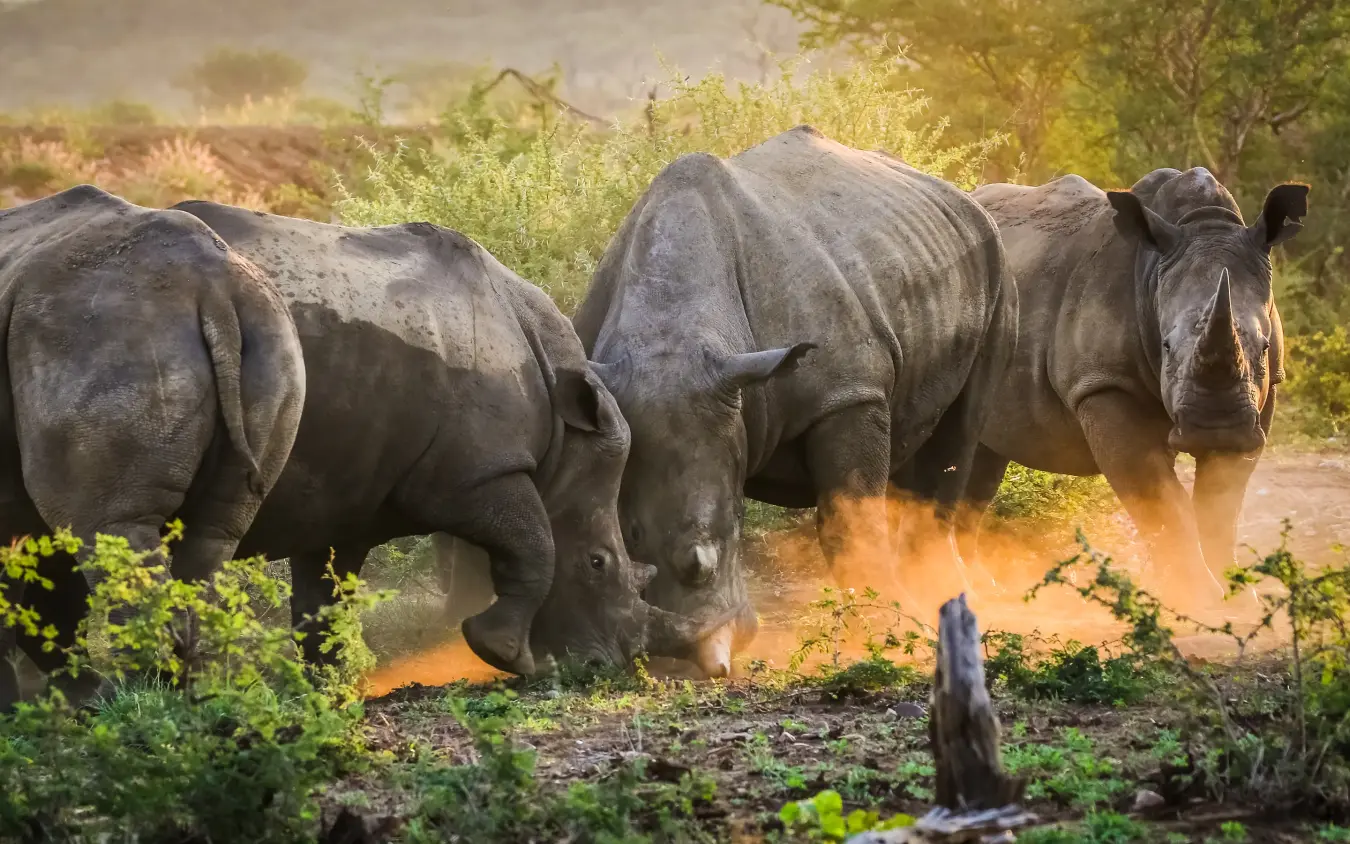
Nine nights in south-eastern Zimbabwe, from the Save River and Gonarezhou to rhino tracking in the Sango Conservancy.
rated five stars by our clients

our approach
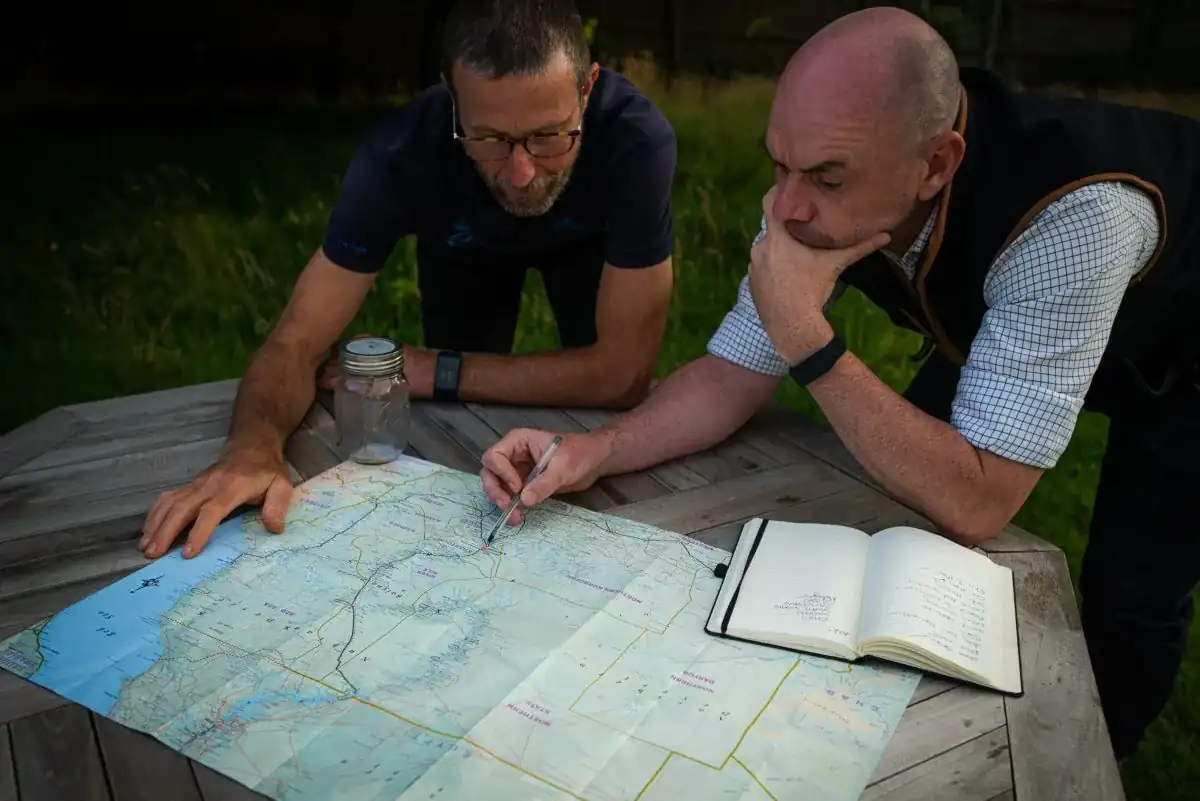
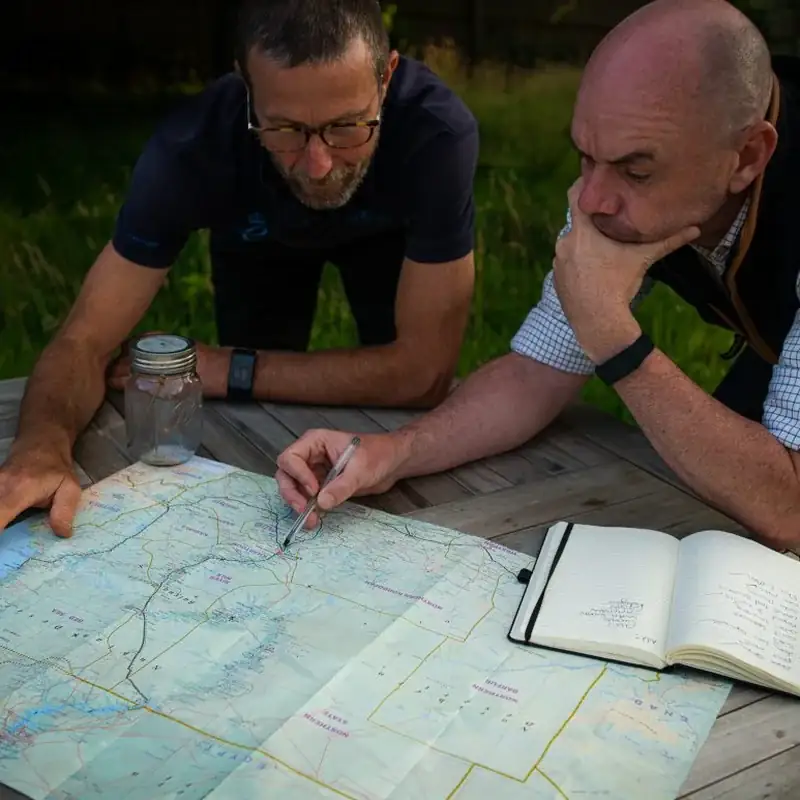
Every journey starts with a conversation. We take the time to understand your vision before we start planning.
Whether by phone or in person, we work with you directly to shape something that is considered, personal, and expertly delivered.
Every journey starts with a conversation. We favour a direct, personal approach: understanding your vision before anything else.
Whether by phone or in person, we work with you directly to shape a journey that is both thoughtfully considered and expertly delivered.
Get in touch to start planning yours.