










zimbabwe & botswana
zambezi to the okavango
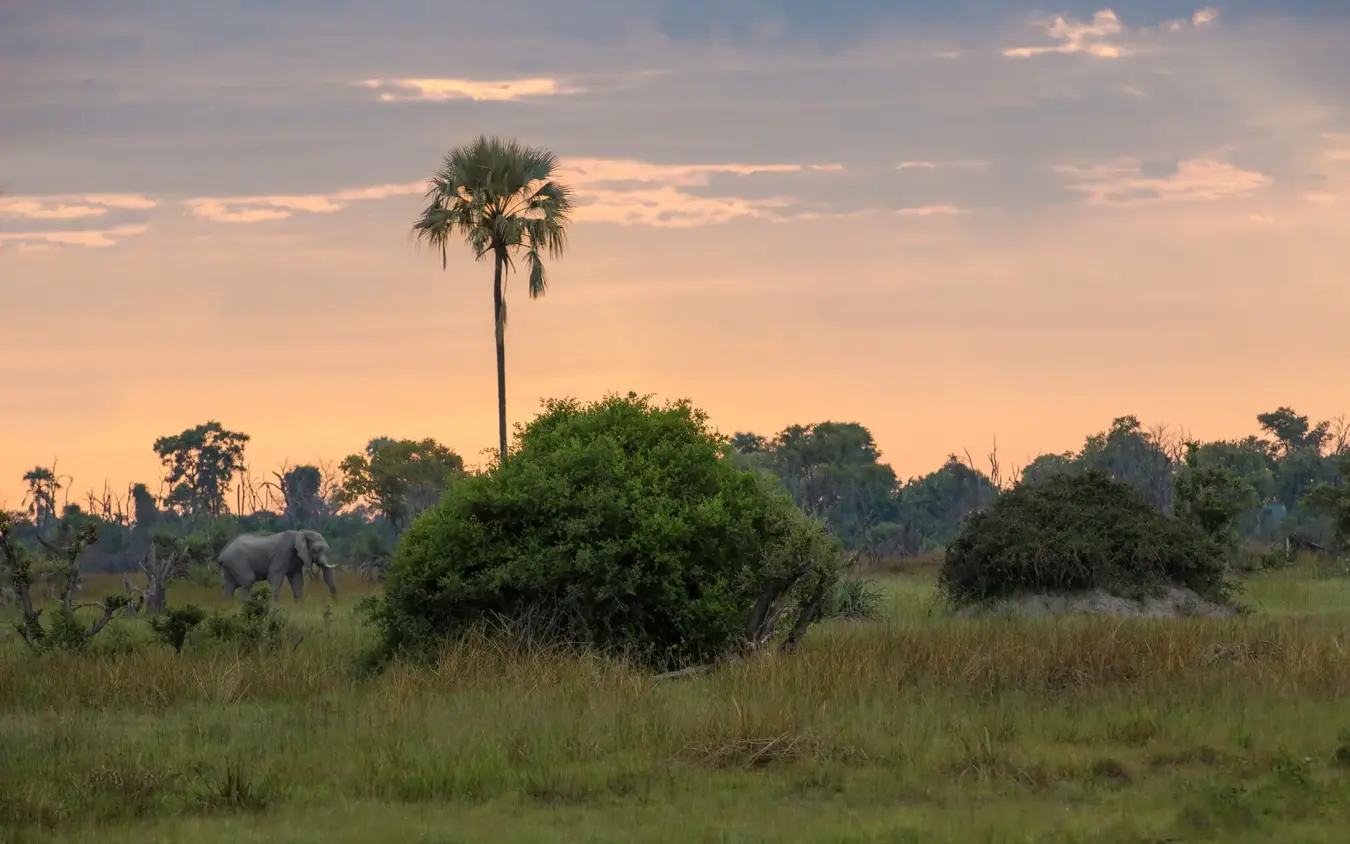
Twelve nights from the Zambezi floodplain and Victoria Falls to Selinda's spillway and the Okavango's Gomoti channels.
- Private Safari
- From $22,955 pp
- 2 guests
- 12 nights
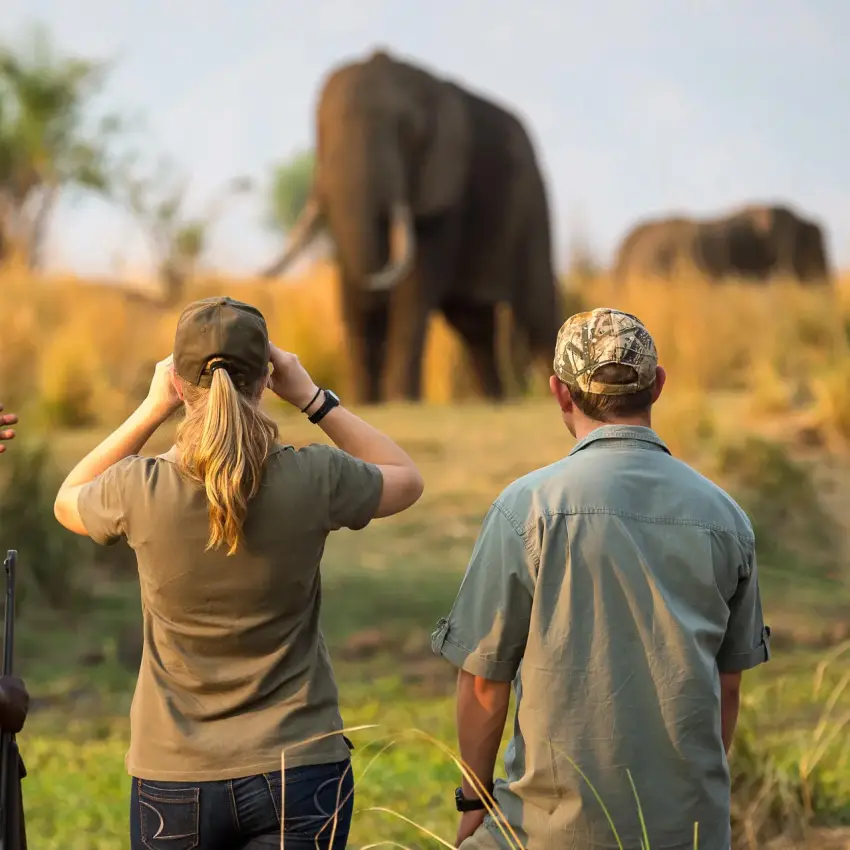
This route strings together five corners of Zimbabwe over thirteen nights. It opens on the Zambezi at Victoria Falls, where the river drops into the Batoka Gorge along a curtain nearly 1.7 kilometres across. From there it runs to Mana Pools, a floodplain walked and paddled rather than driven, then to Matusadona on the southern shore of Lake Kariba, where the safari often begins on the water. Hwange follows, its pumped waterholes gathering elephants across Kalahari sand, before Malilangwe, a private rhino reserve in the south-eastern lowveld, closes the trip.
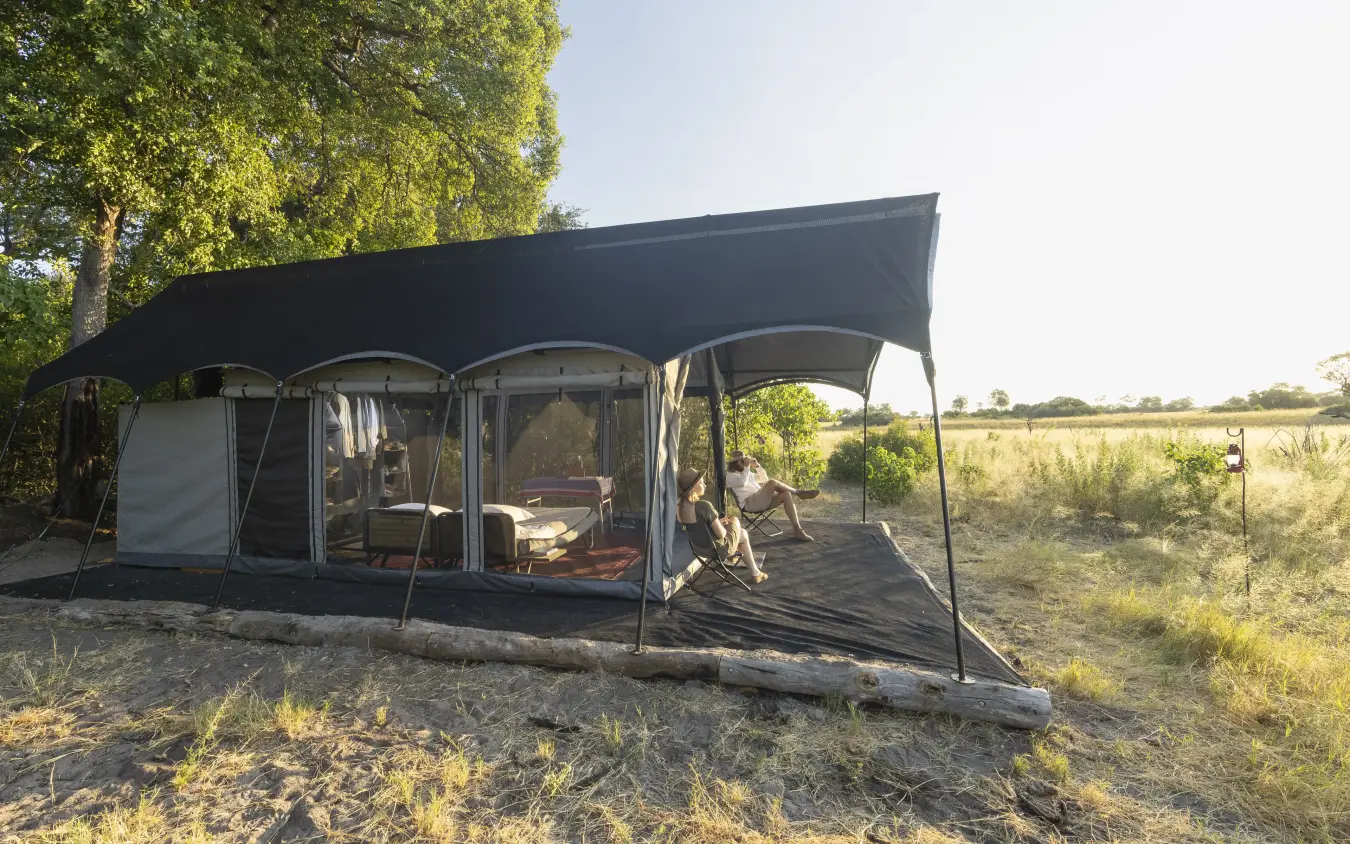
You move between stays by light aircraft and vehicle, the days shaped by game drives, guided walks, river cruises and canoeing as each place allows. The camps and lodges are small, comfortable and well positioned on their ground, several of them on private concessions that permit night drives and river activities the parks restrict.
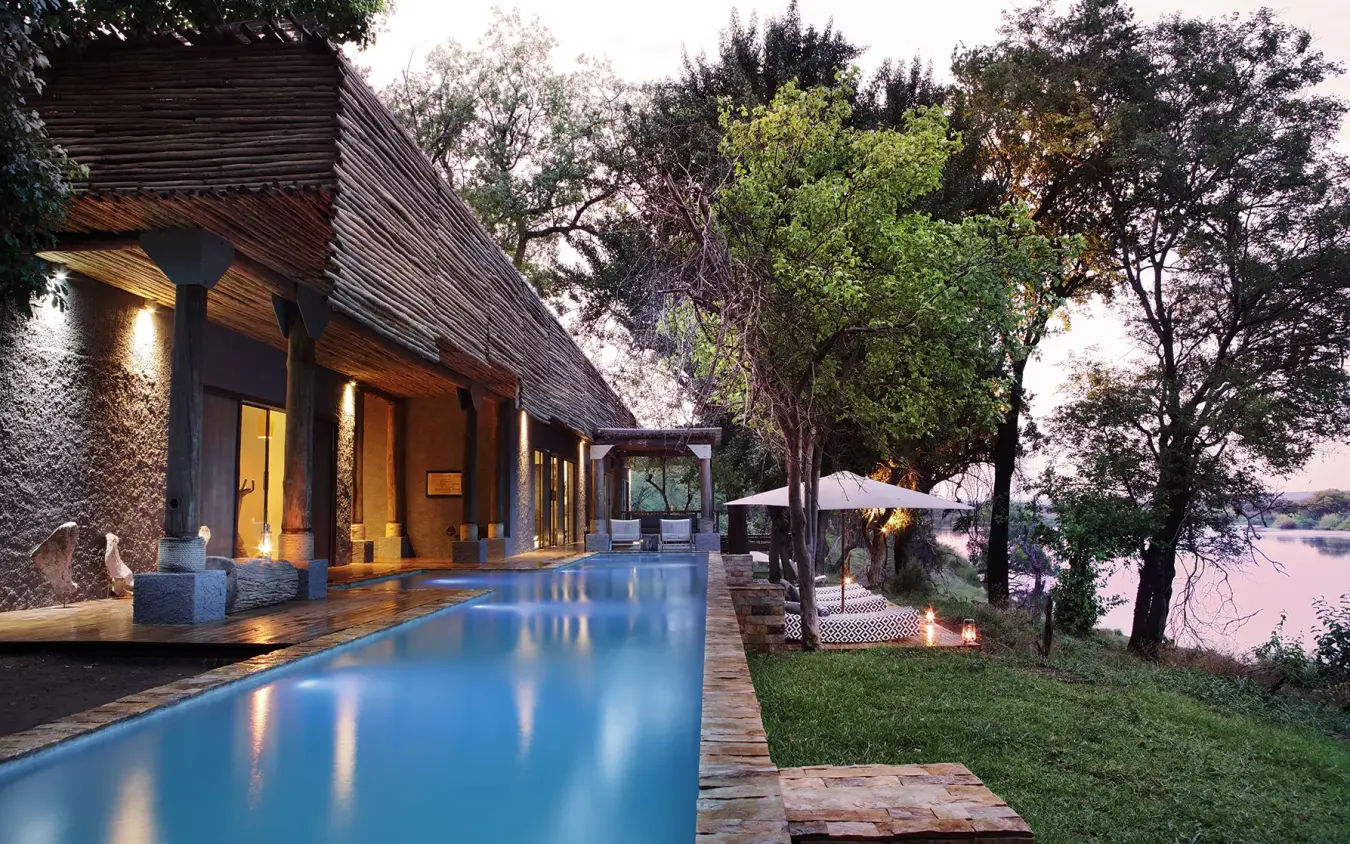
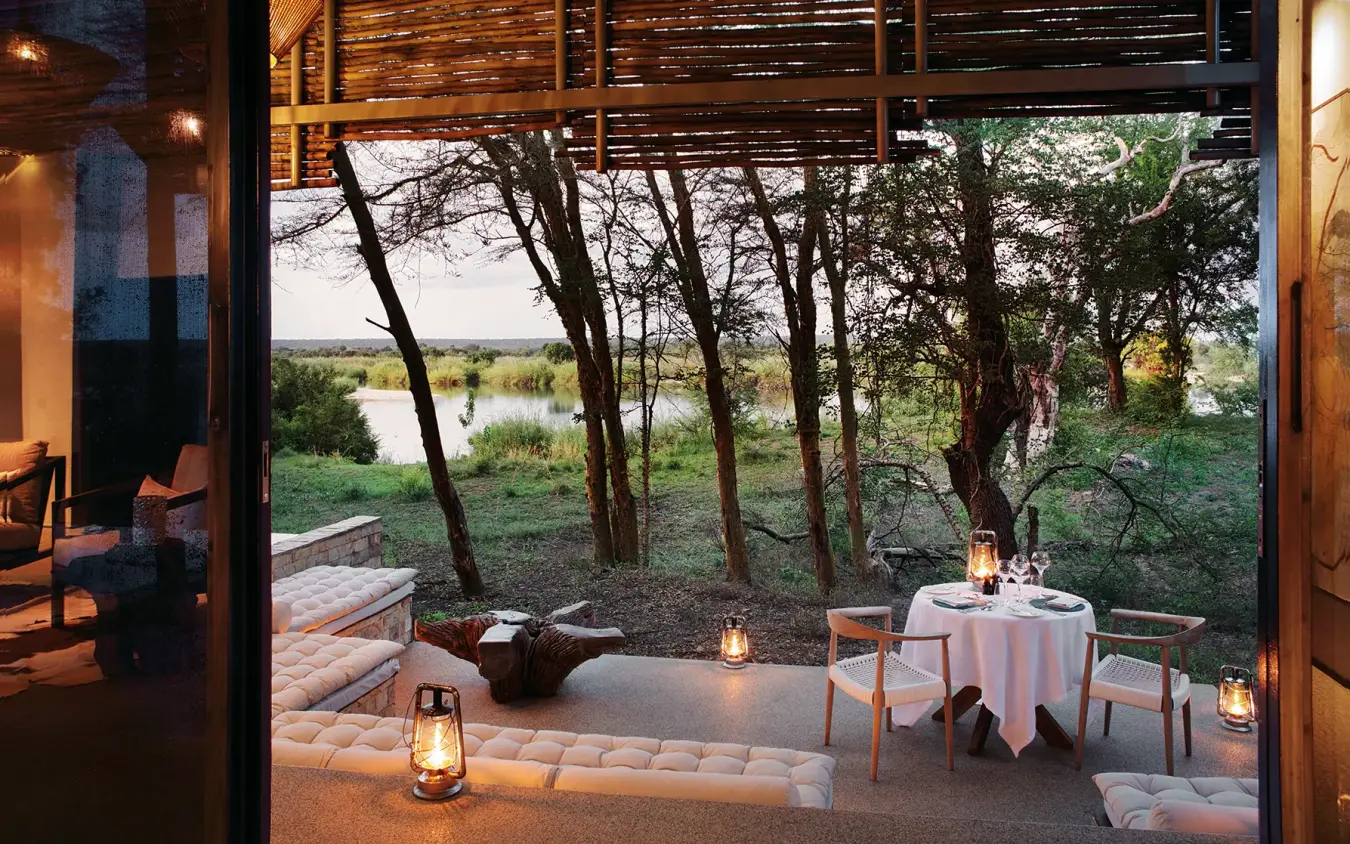
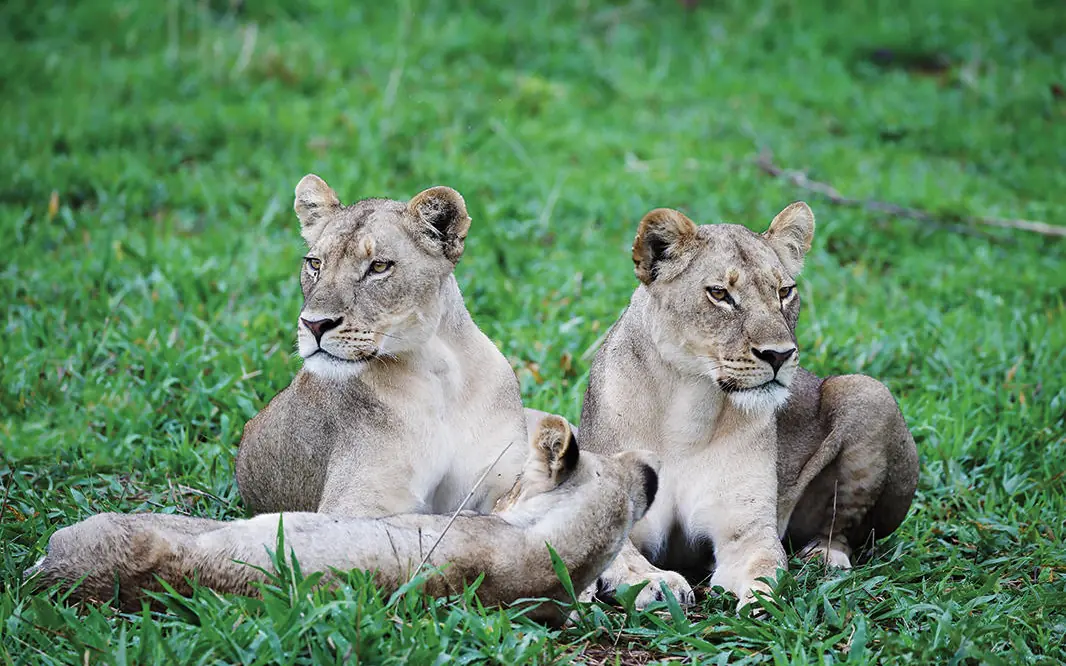
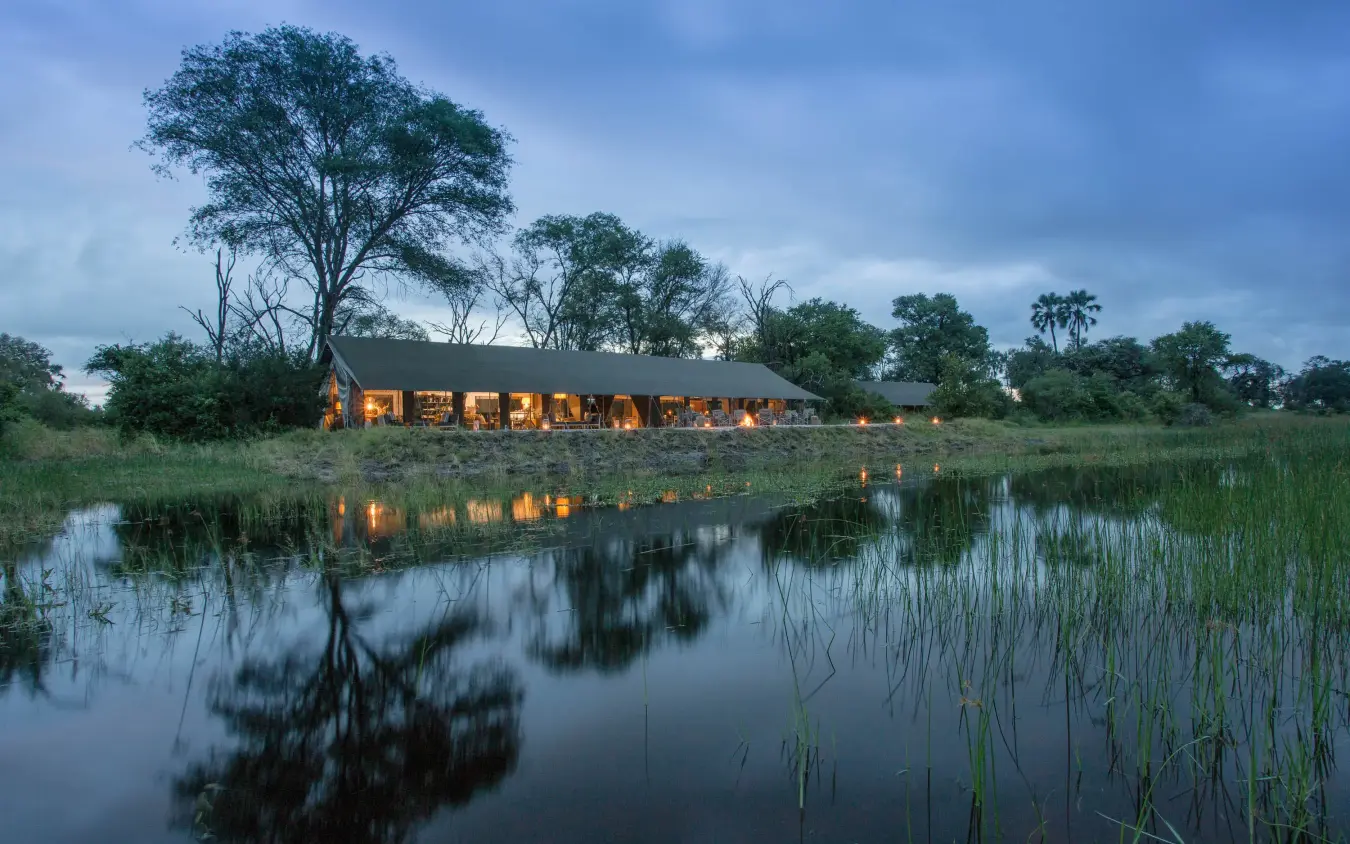
Begin on a private stretch of the Zambezi some 45 minutes upstream from Victoria Falls, with two full days to divide between the river and the reserve. Game drives on the lodge's own ground cross paths with elephant, buffalo, sable, roan, lion, leopard and wild dog, while sunrise and sunset cruises drift past hippos and crocodiles. A guided tour of the Falls is laid on with high tea, and the Flight of the Angels helicopter route lifts off from a helipad two minutes away. Matetsi River Lodge runs its eighteen suites across two camps, East and West, each with a river-facing terrace, and a 25-metre rim-flow pool runs the length of the bank.
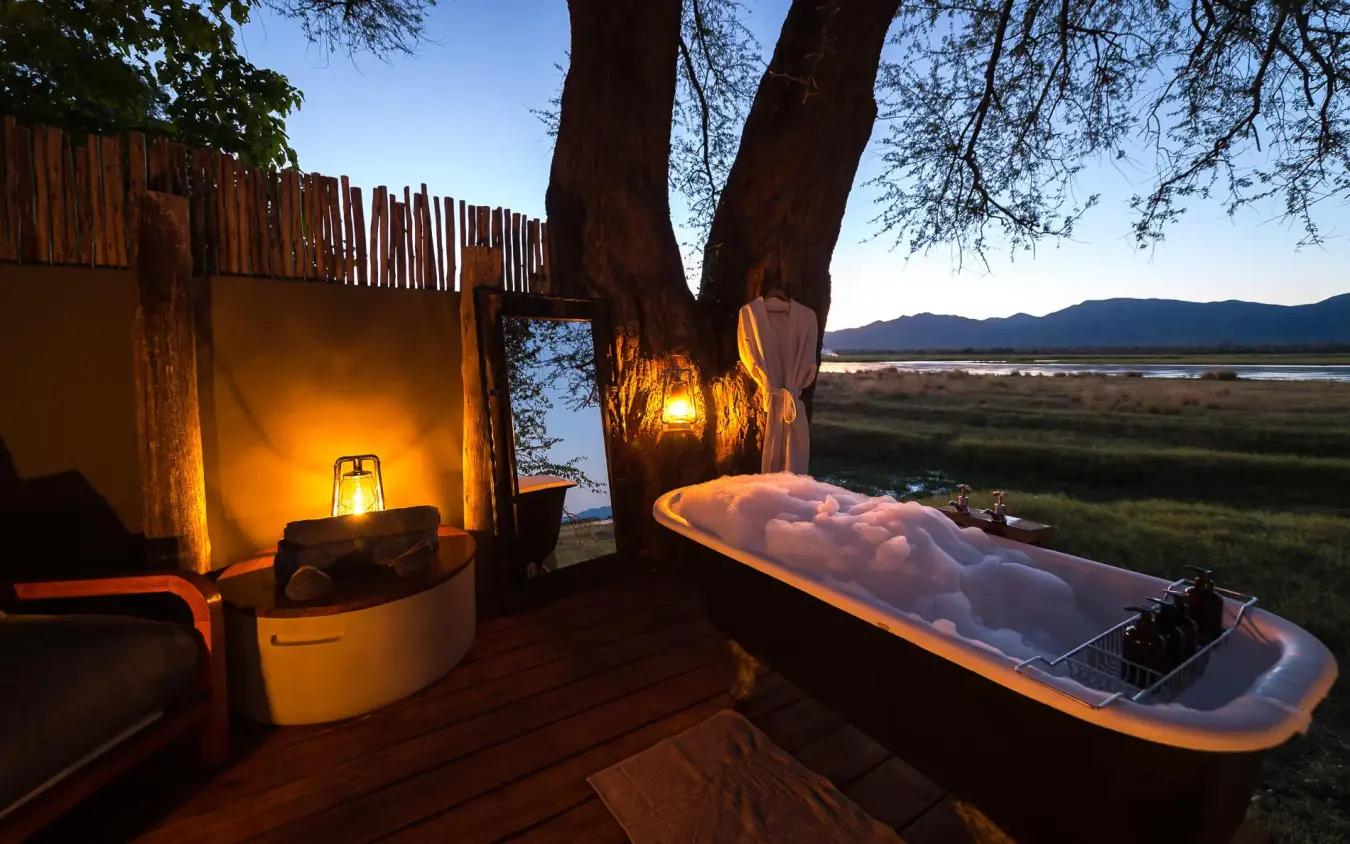
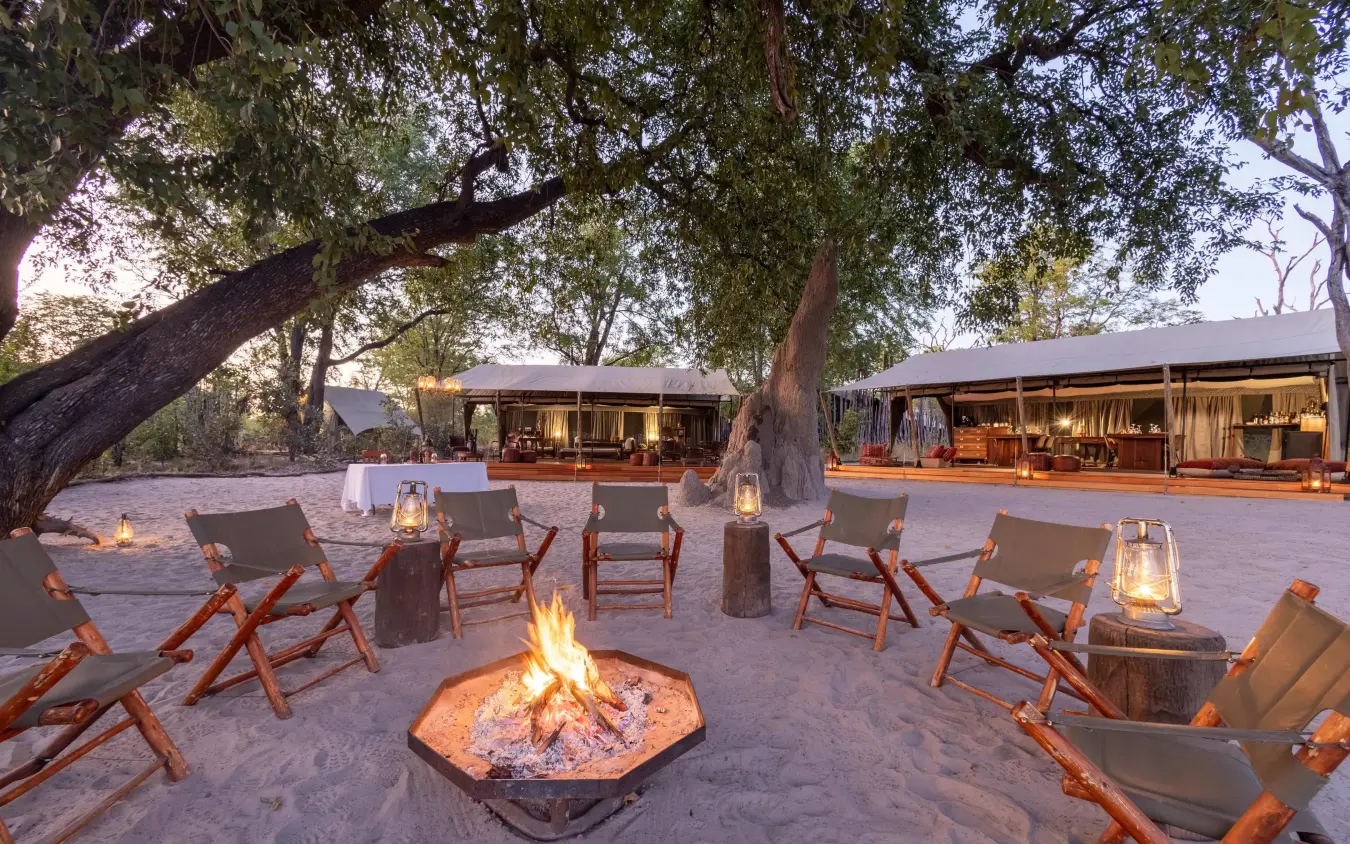
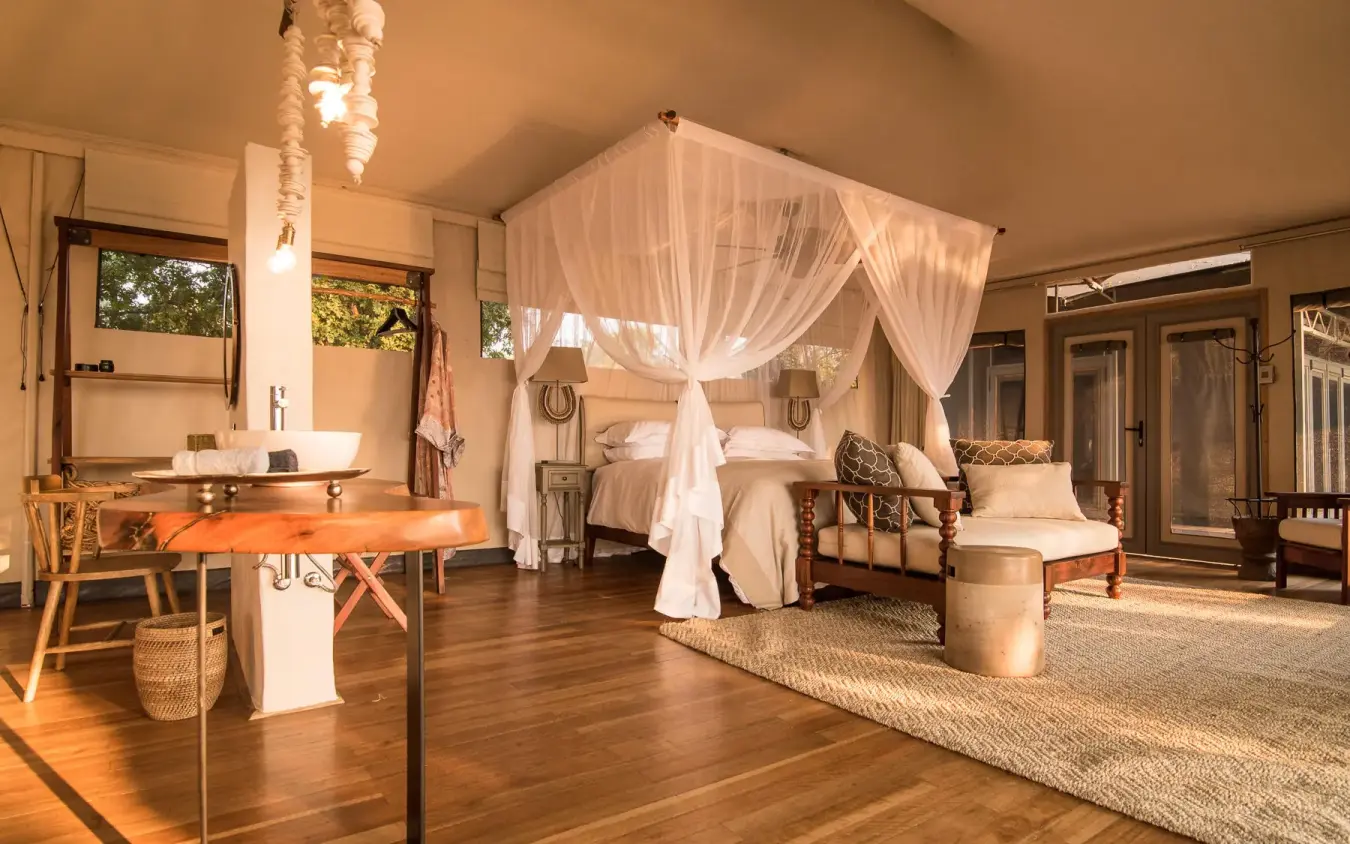
Fly in to the Mana West airstrip for three nights at the western tip of Mana Pools, a floodplain explored by walking and canoe rather than by vehicle alone. Mornings might open with a game drive or a walk beside a guide, among elephant, buffalo and the painted dogs the valley is known for; afternoons turn to the Zambezi for canoeing past hippo or catch-and-release fishing for tigerfish. Ruckomechi Camp sits on a private concession, so night drives and river activities the park restricts are open to you here. Its ten tented suites face the water, elephants drawn in close by the albida forest.
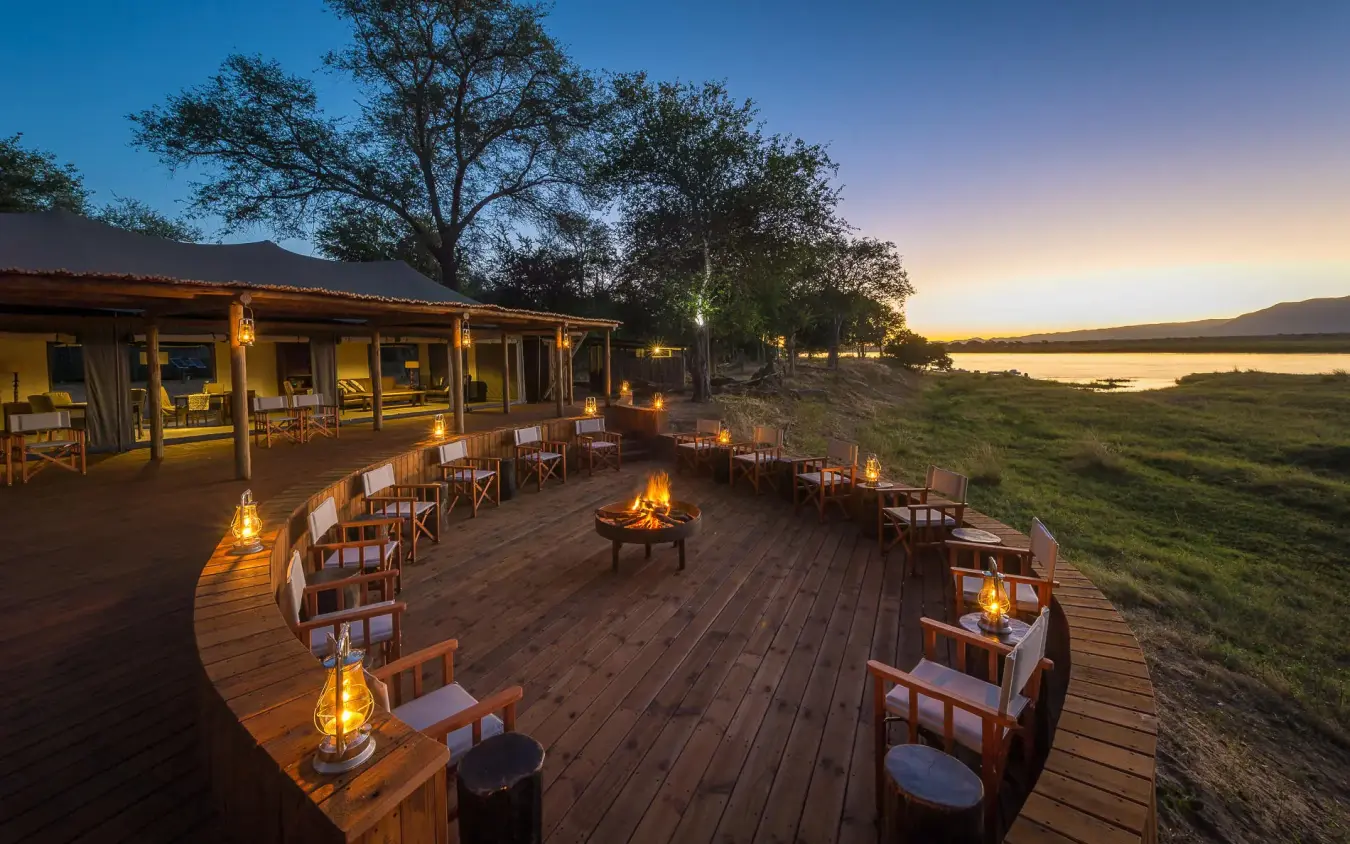
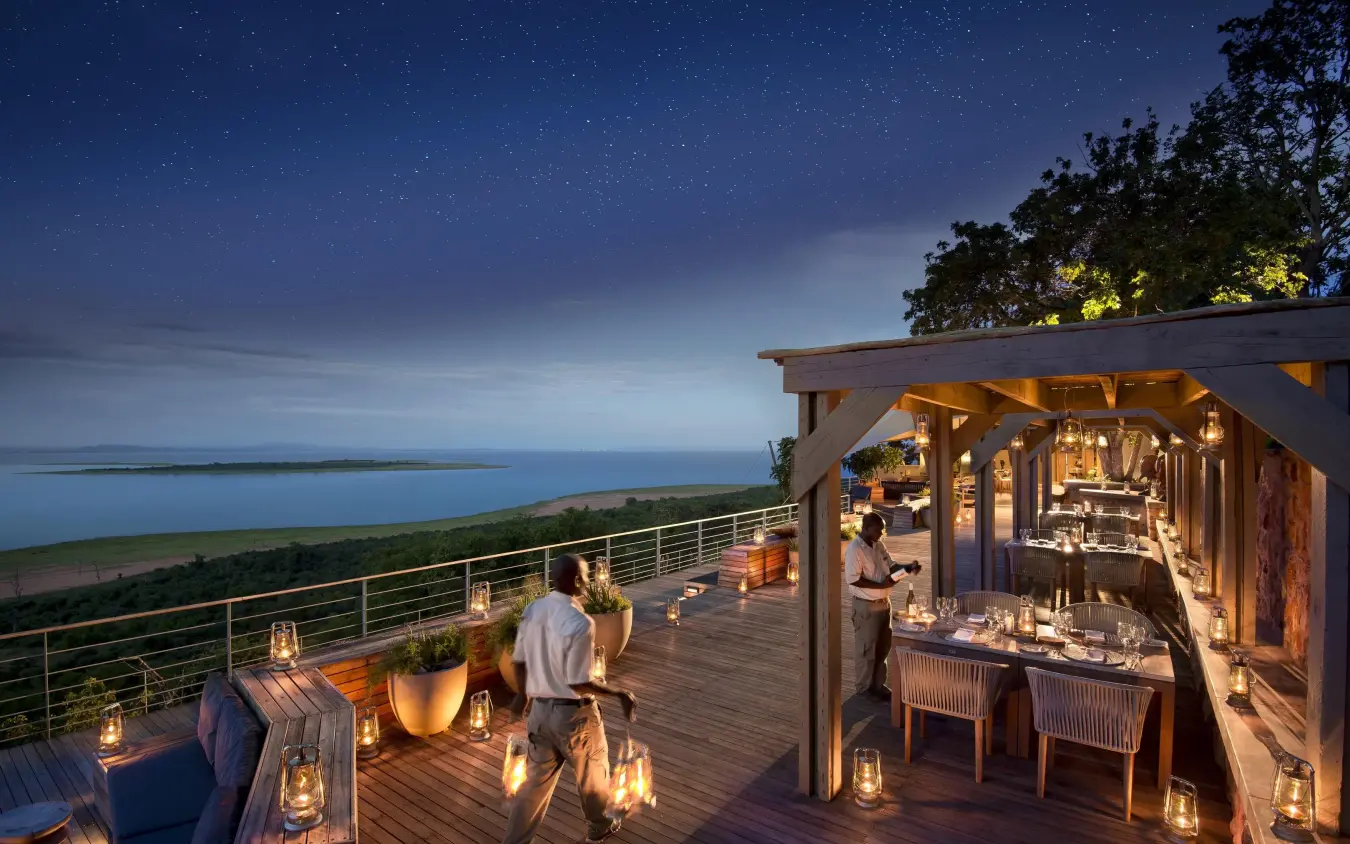
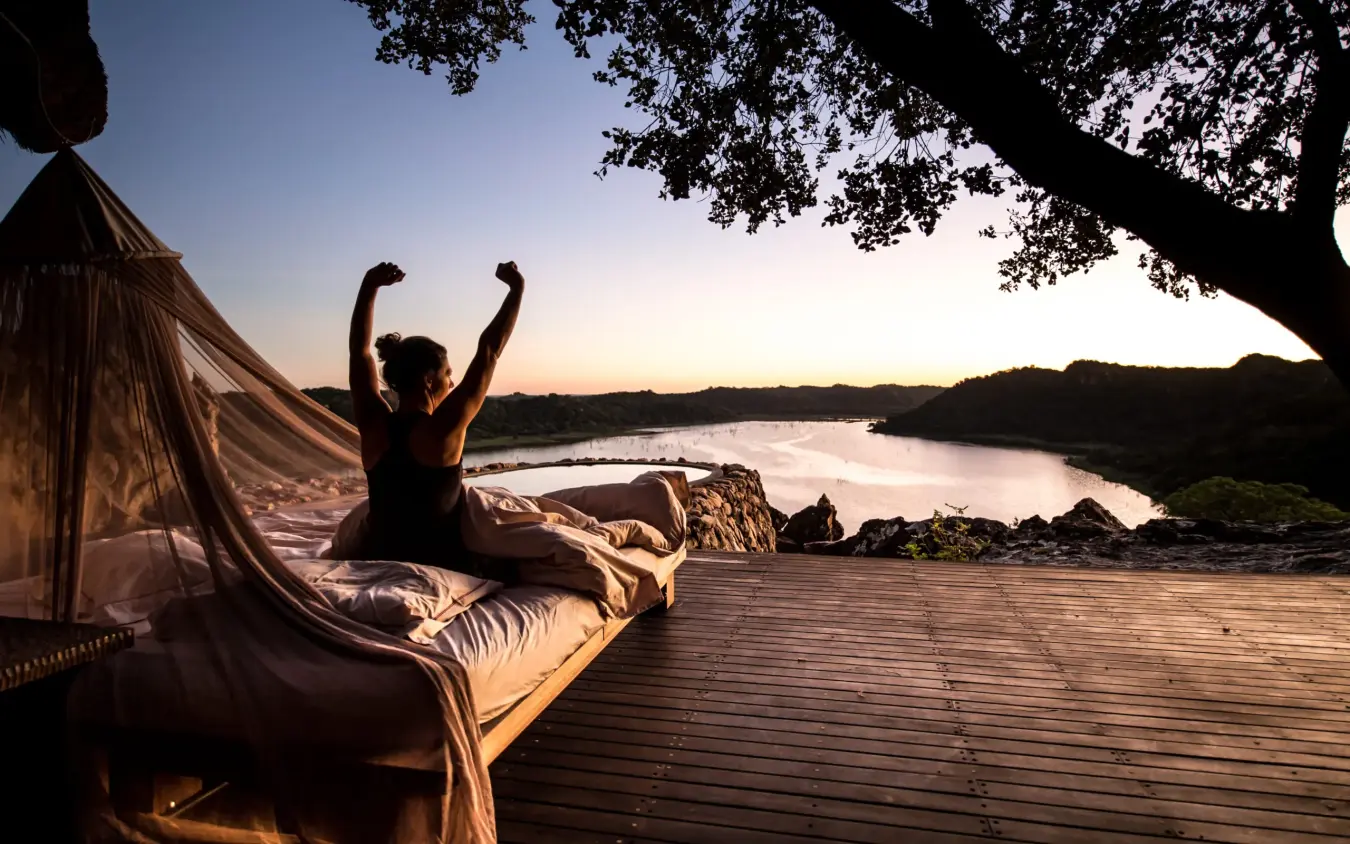
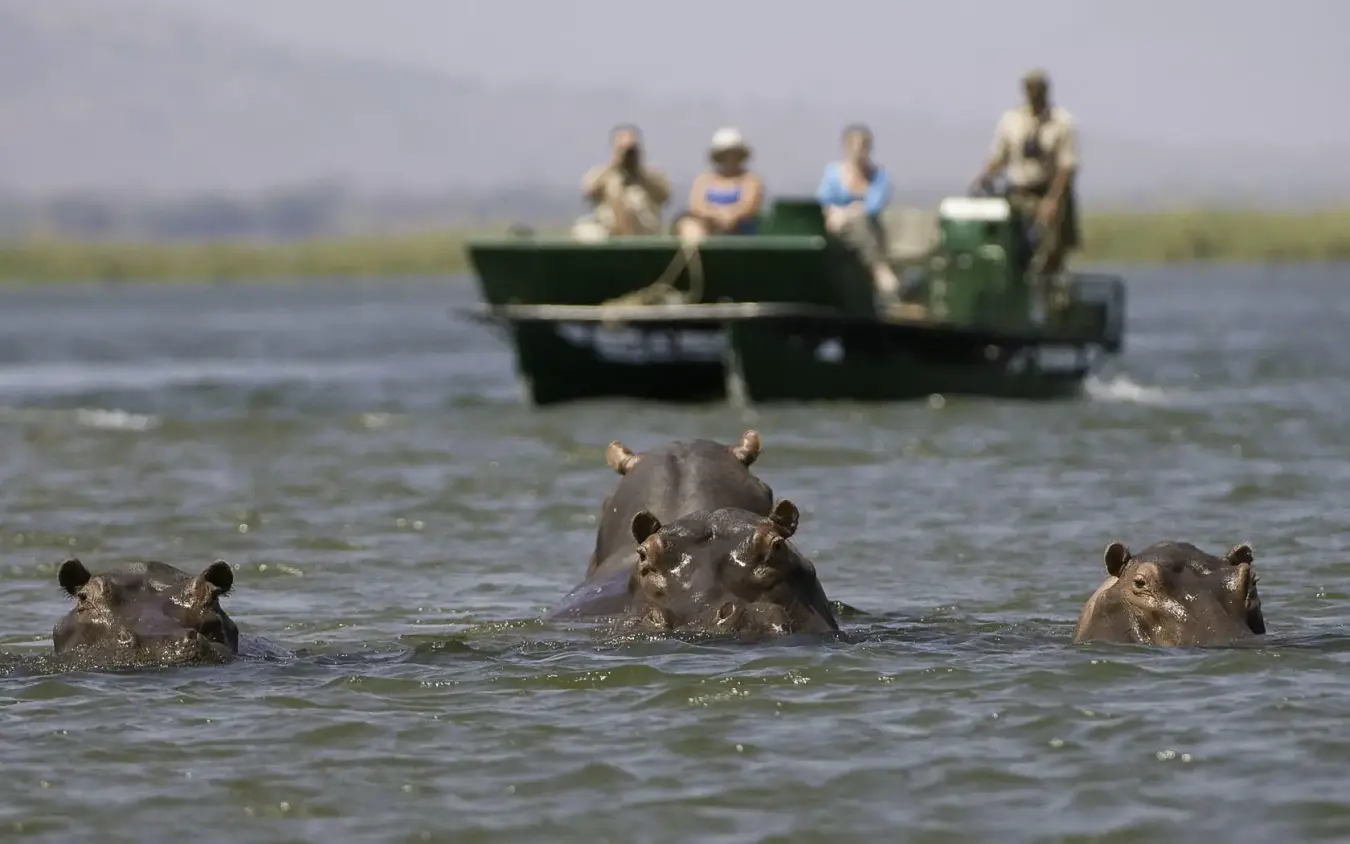
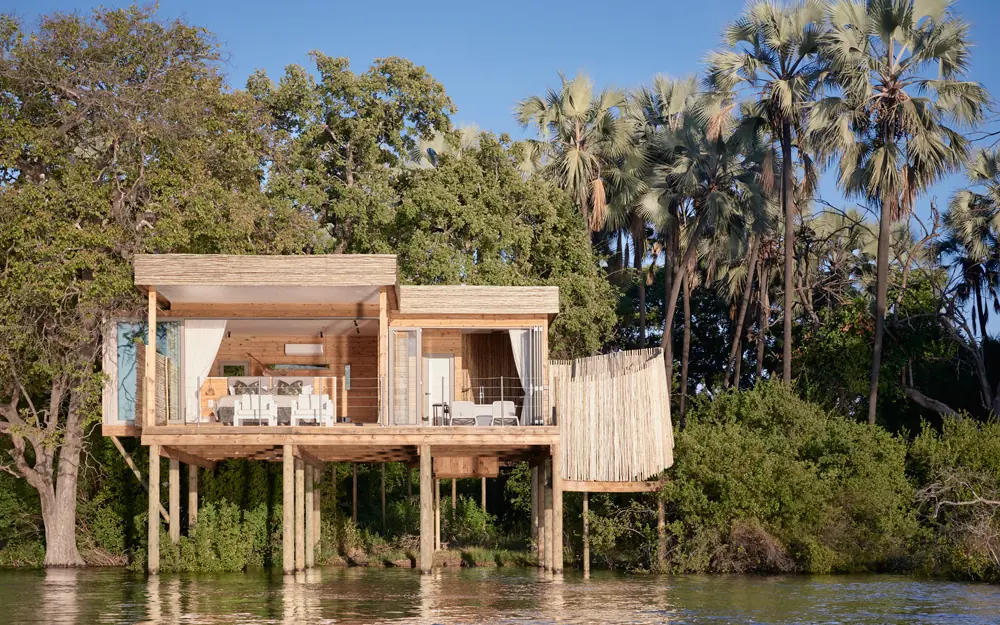
Two nights on Lake Kariba, where the safari runs from the water as readily as the land. Boating and sundowner cruises follow the shoreline past elephants in the shallows and hippos in the inlets, the fishing for tigerfish is superb and all catch and release, and game drives and guided walks stay on the private concession. The Lady Jacqueline houseboat carries up to eight guests for a one-night sleepout along the Matusadona shoreline. Bumi Hills Safari Lodge crowns a hill above the water, looking across to the Zambezi Escarpment, its infinity pool appearing to blend into the lake horizon.
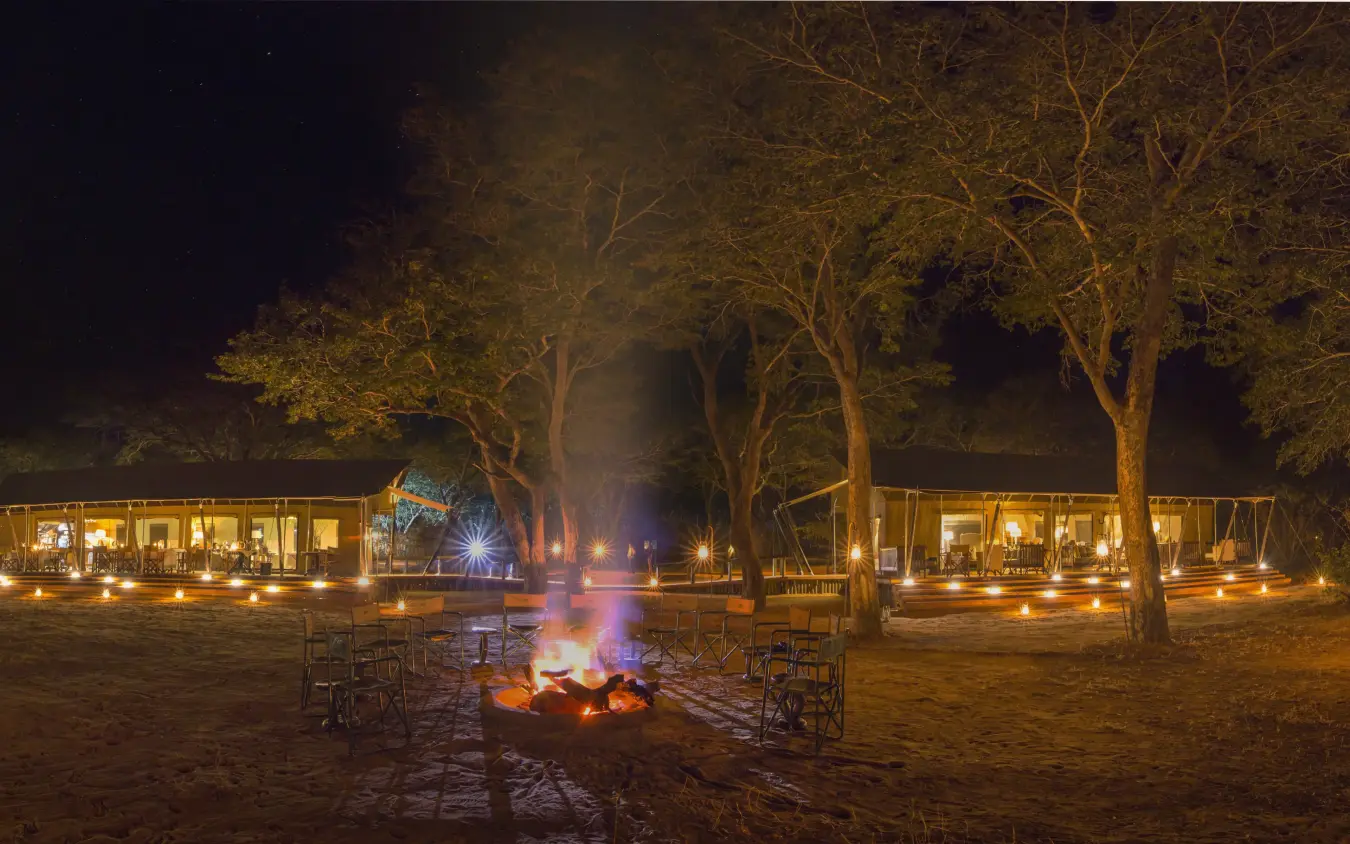
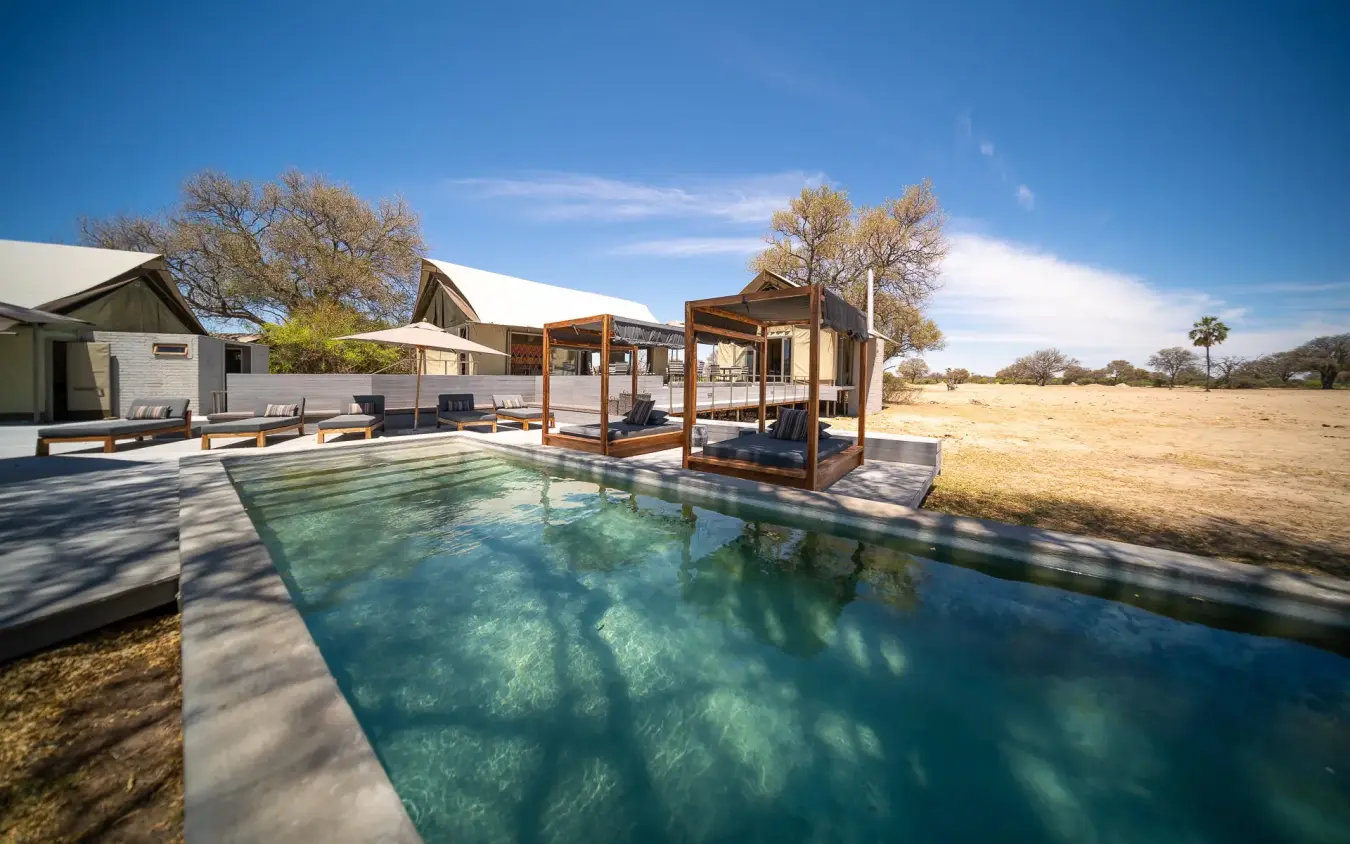
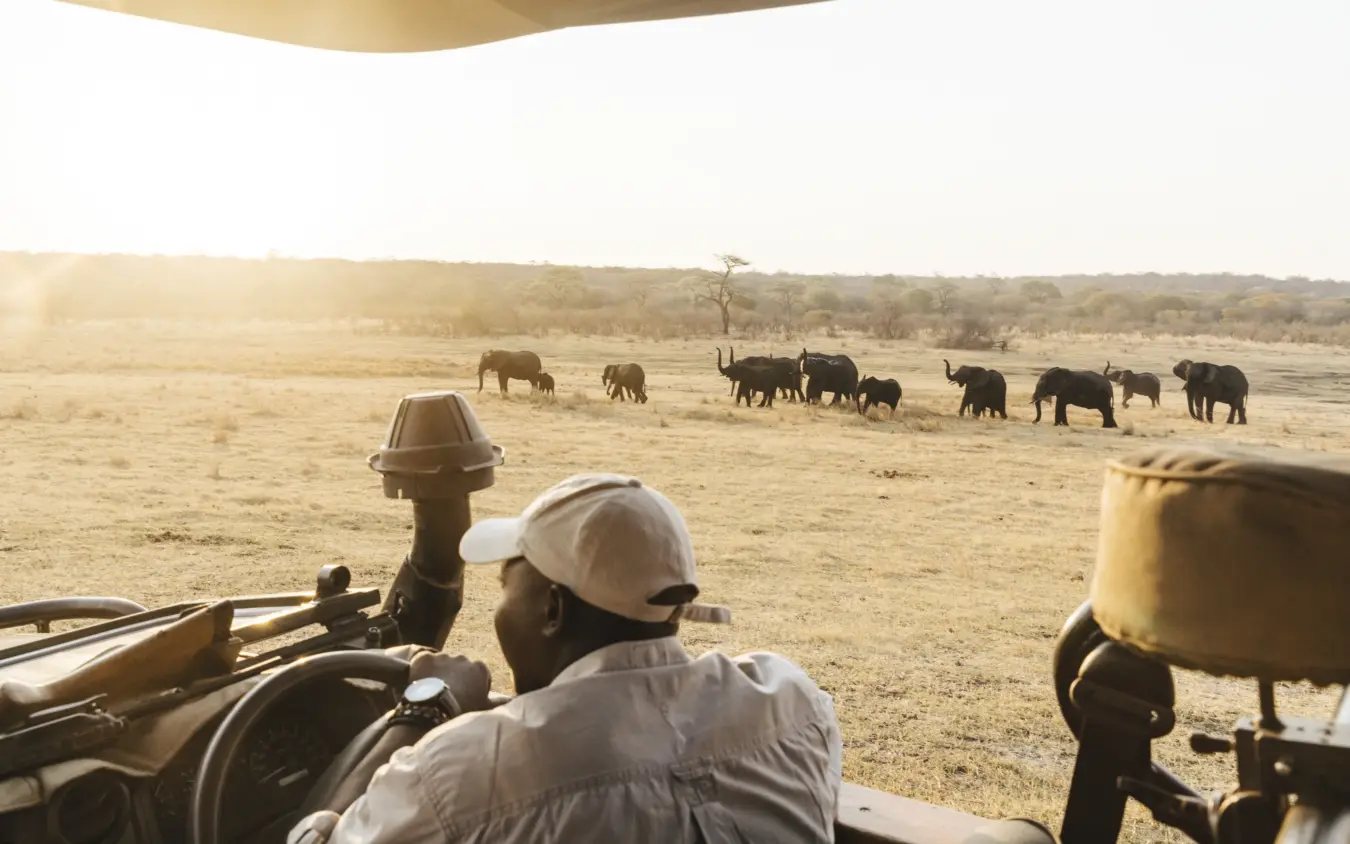
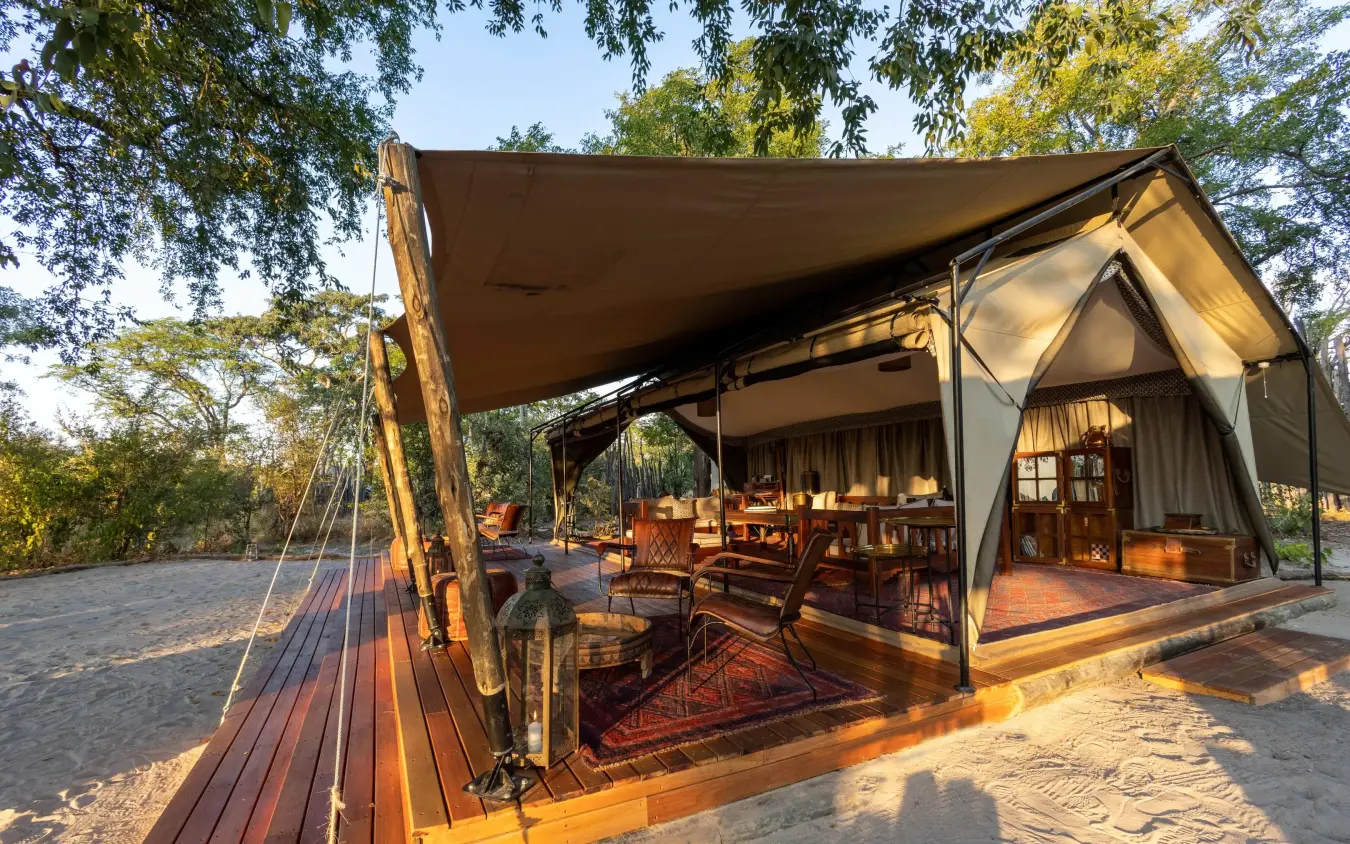
Three nights on the edge of the Ngamo Plains, in the south-eastern corner of Hwange. Through the dry months, from roughly May to October, wildlife concentrates on the pumped waterholes as surface water disappears, and elephant numbers around the camp pan build through the afternoon and into the evening, with buffalo, zebra, wildebeest and antelope at the same water and lions working the edges after dark. Hwange holds a high density of painted dog. Linkwasha Camp has nine tents looking over the pan, a swimming pool on the deck and a hide sunk to the water's edge, level with elephant feet and trunks, where photographers work for hours unnoticed.
Close the trip with three nights on a private reserve in Zimbabwe's south-east, run as a rhino sanctuary, where black and white rhino range the mopane woodland and breeding herds of elephant swim in the dam through the afternoon heat. Guides take open vehicles through woodland and sandstone hills by day and by spotlight after dark, then swap the Land Cruiser for a boat at sundown. More than 120 San and Iron Age painting sites lie in the sandstone galleries, reached on foot. Singita Pamushana sets eight suites and a villa on a sandstone ridge, built with dry-stone masonry drawn from Great Zimbabwe.
It is the short scenic helicopter flight over Victoria Falls.
The standard circuit runs 12 to 15 minutes and a longer version 22 to 30. More than one company flies it, each with its own machines, so the type you are given is settled on the day and we name none in advance.
What decides how much the flight adds is the river.
Around April the Zambezi is in full flood and spray hides much of the Falls from the footpaths, so the air is the one place where the whole curtain can be seen.
By October and November the flow has dropped, and the flight shows the bare rock face and the gorges below it instead. Tell us if you would like it booked.
White rhino, very likely; black rhino, a fair chance that nobody should promise.
The reserve began with a few dozen rhino brought from South Africa in the late 1990s and by 2022 held more than 400, enough that it has sent animals to start new populations elsewhere in Zimbabwe.
White rhino graze in the open and gather at the pans, so they are usually the ones met first. Black rhino are browsers, feeding on bushes and shrubs, so they keep to thicker cover and turn up far less predictably.
Nobody publishes an independent count of how often either species is found here, so we put no figure on it. Three nights gives you around half a dozen drives, and that spread is what tilts the odds.
If black rhino are your reason for coming, tell us, and we will ask the lodge to plan drives around them.
You have three chances, but no sighting of wild dogs is ever certain.
Packs use the private reserve at Matetsi, the Mana Pools floodplain and Hwange, where a long-running research project counts upwards of 160 dogs in and around the park, out of fewer than 700 left in Zimbabwe. The difficulty is their range: a pack can use as much as 750 square kilometres, so finding it on any given day takes luck.
The one time that changes is when they den. In Zimbabwe the pups are typically born in May or June, and the adults then hunt out from the den and return to it for 10 to 14 weeks, which makes June to August the most dependable months.
Outside that window, count the dogs as a bonus on a trip you are taking for elephants, rhino and the river.
Mostly by light aircraft, with a drive at each end, because the five areas are spread across the whole country, from Victoria Falls in the north-west to Malilangwe in the far south-east.
The flights are short hops in small propeller aircraft, typically the single-engine Cessna Grand Caravan with up to twelve seats. Seats are generally shared with other travellers, so timings are confirmed close to the day and the aircraft sometimes lands elsewhere first. At Mana Pools you land at the Mana West airstrip and drive to camp.
The luggage limit is what catches people out: 20 kilograms each, hand luggage and camera equipment included, packed in soft bags, not hard cases. A private charter for any leg is also possible.
Tell us early if you plan to bring heavy camera gear, since the allowance is set by the aircraft and not by us.
Our own month ratings put July, August and September top at all five stops.
They bring dry days, thin bush, animals tied to water, Hwange's elephant herds building at the pumped pans, and a Victoria Falls with plenty of water that you can still see clearly.
June is as good everywhere except Hwange, where the herds are still gathering.
October has the heaviest concentrations of game of the year but real heat, easily above 40 degrees in the Zambezi Valley. The camp at Mana Pools closes from December to March for the rains, so the route is not normally run in those months.
April, May and November are the in-between months, and their advantages are real: camp rates are usually lower, other visitors are few, the country is green, the first rains of November bring migrant birds and newborn antelope, and in April and May the Falls are at full flood. The cost is game that is harder to find.
Yes. It is a sample route, and thirteen nights is the long version of it.
Each stop does a different job, which helps when deciding what to keep:
The two nights on Kariba are the easiest to drop if time is short, and Malilangwe, alone in the far south-east, is the stop that lies furthest from the others.
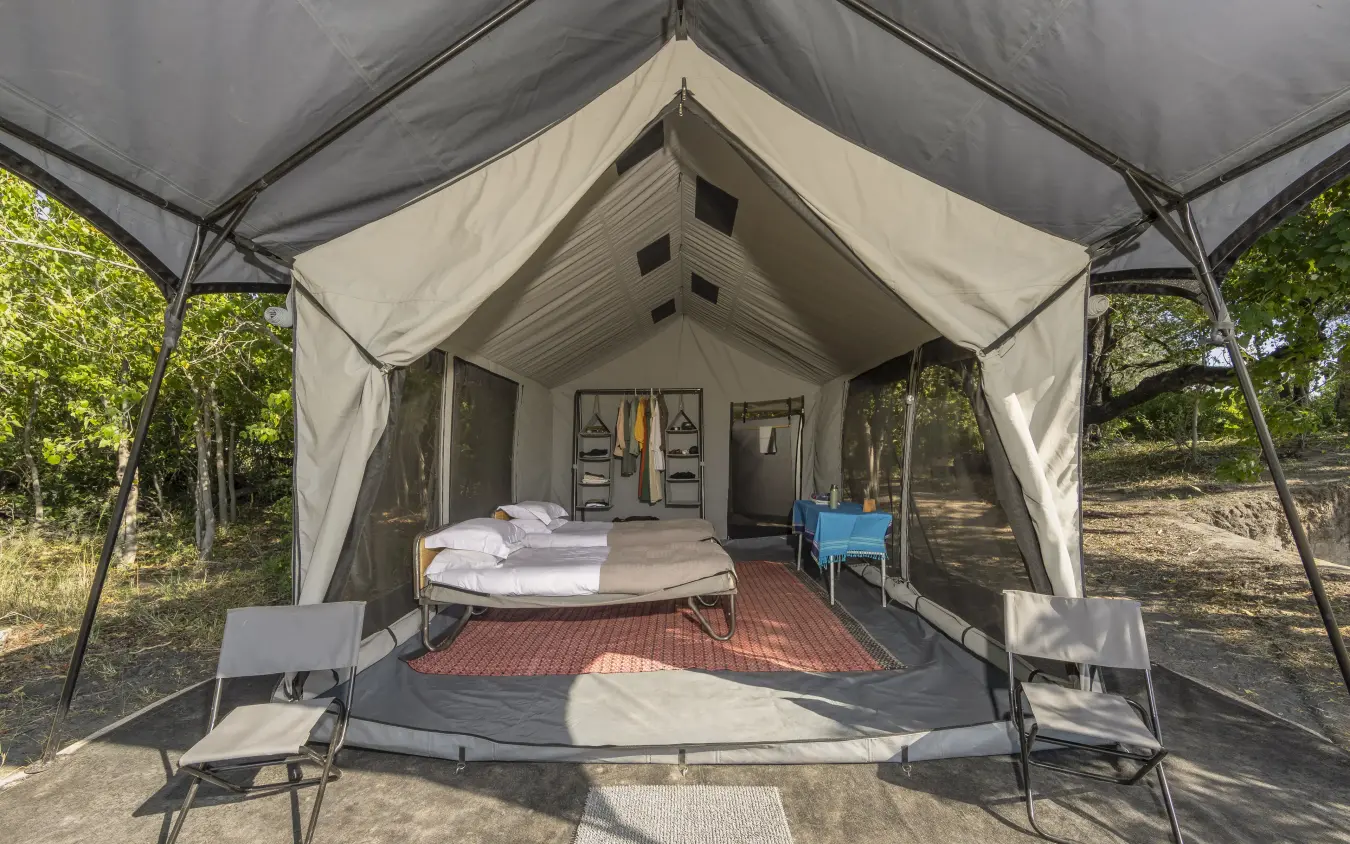
What is fixed is mostly the calendar and the size of the camps. The Mana Pools camp shuts from December to March, and with ten tents there, nine at Linkwasha and eight suites at Pamushana, the dry months tend to fill early, so the dates often follow the space.
If the houseboat night on Kariba appeals, ask us about adding it.
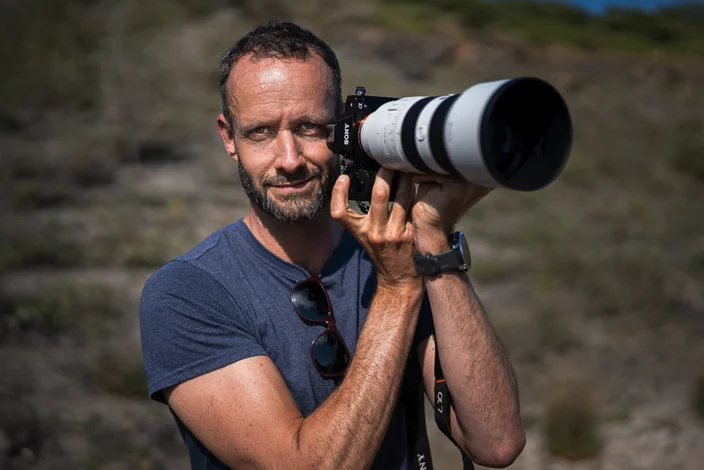
Ed Charles, BBC Producer
Fitzroy are true specialists in accessing the wilderness. They know where to go and importantly, when to go there. Highly recommended.
zimbabwe & botswana
Twelve nights from the Zambezi floodplain and Victoria Falls to Selinda's spillway and the Okavango's Gomoti channels.
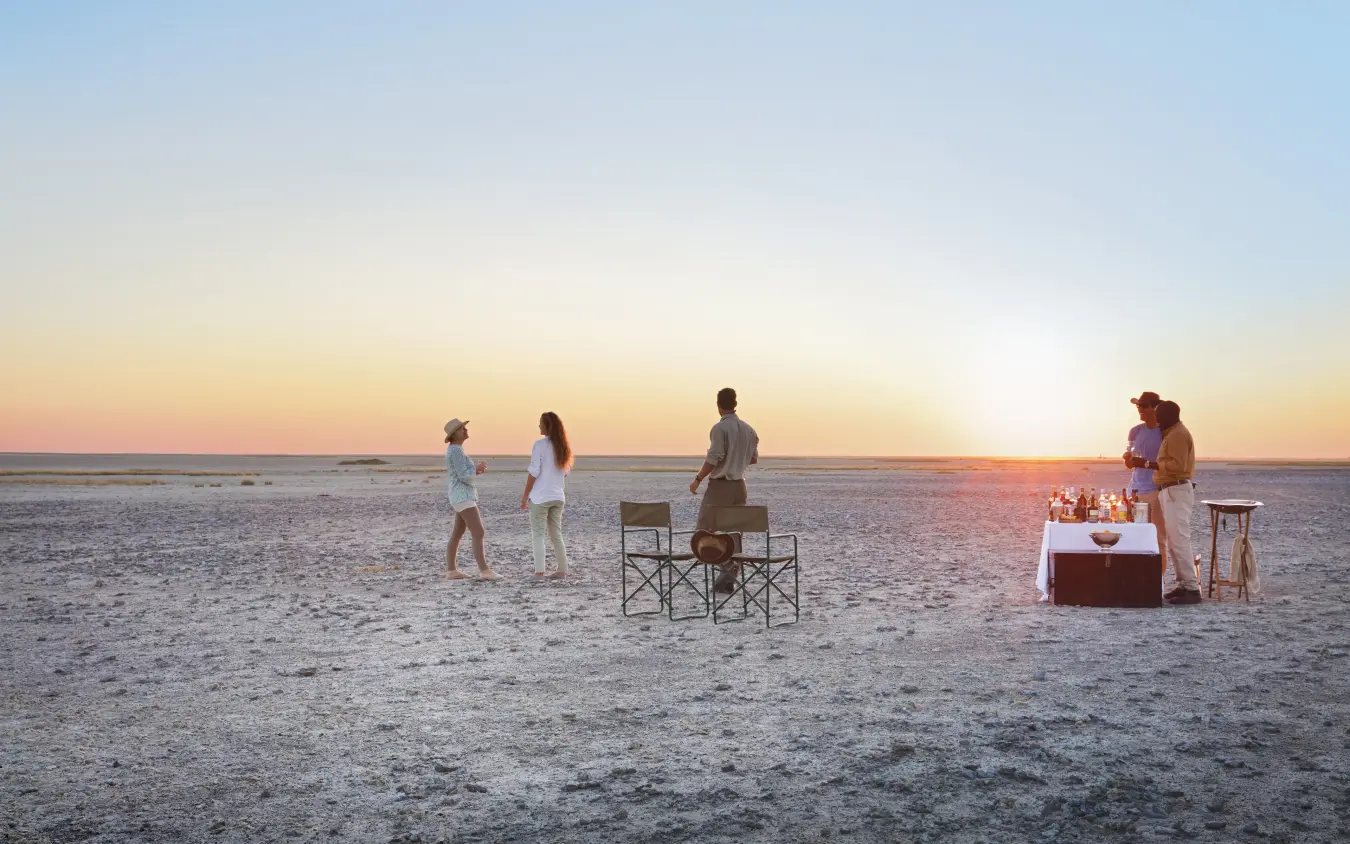
zimbabwe & botswana
Twelve nights from Victoria Falls into Botswana, linking a walking concession, a permanent Delta lagoon and the salt pans.
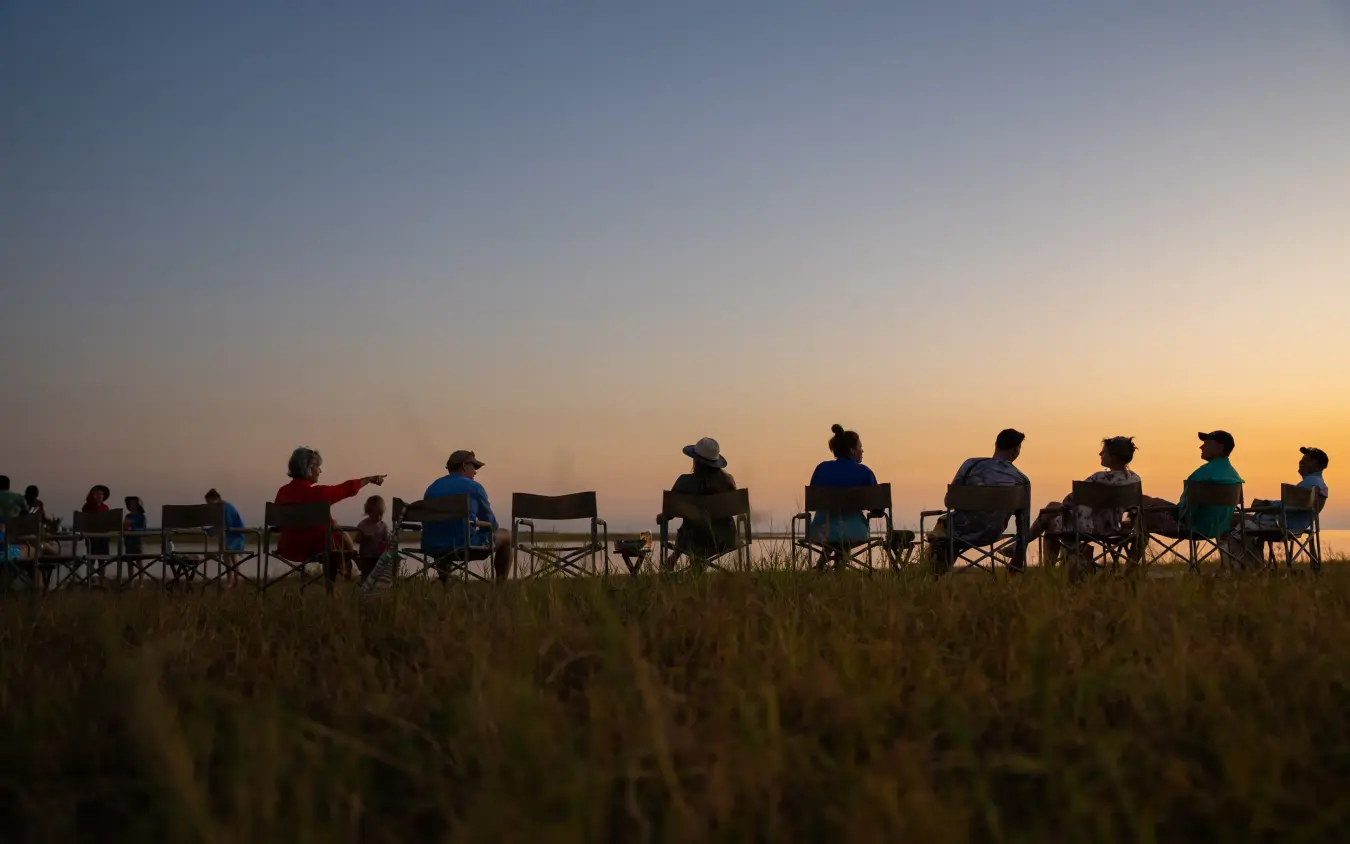
botswana & zimbabwe
Twelve nights across Botswana and Zimbabwe, linking the Okavango Delta, Victoria Falls, a Hwange concession and Lake Kariba.
rated five stars by our clients

our approach
Every journey starts with a conversation. We take the time to understand your vision before we start planning.
Whether by phone or in person, we work with you directly to shape something that is considered, personal, and expertly delivered.
Every journey starts with a conversation. We favour a direct, personal approach: understanding your vision before anything else.
Whether by phone or in person, we work with you directly to shape a journey that is both thoughtfully considered and expertly delivered.
Get in touch to start planning yours.