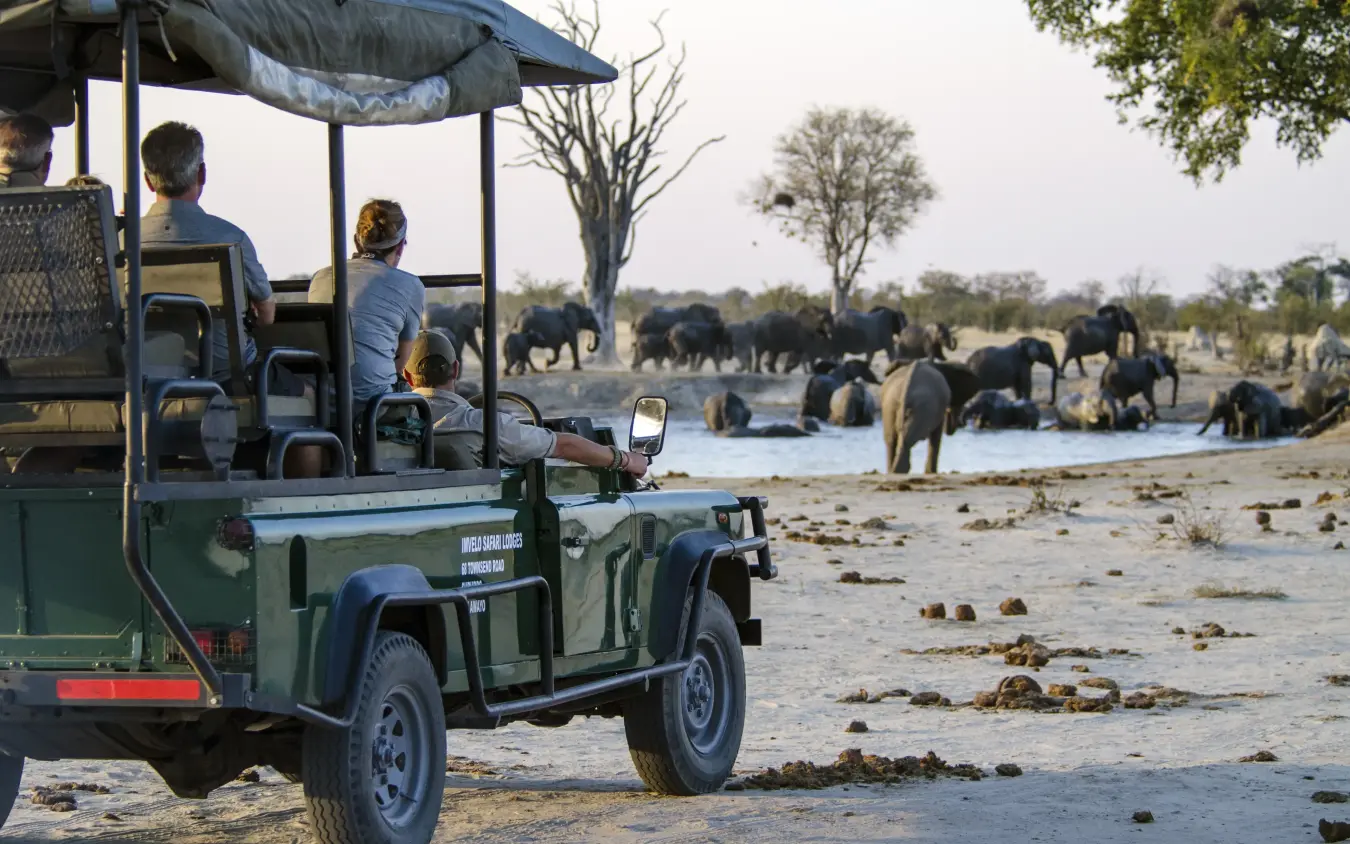
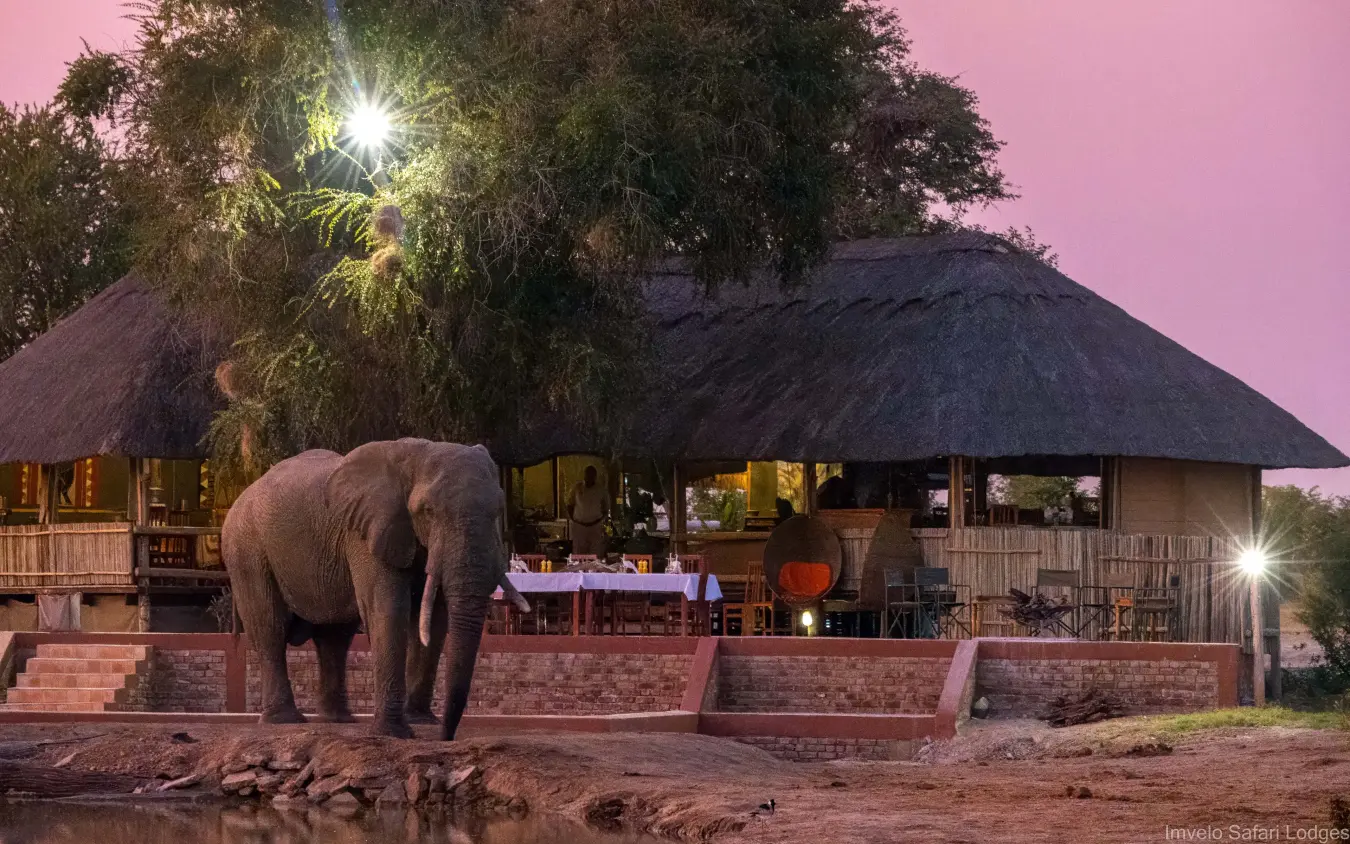
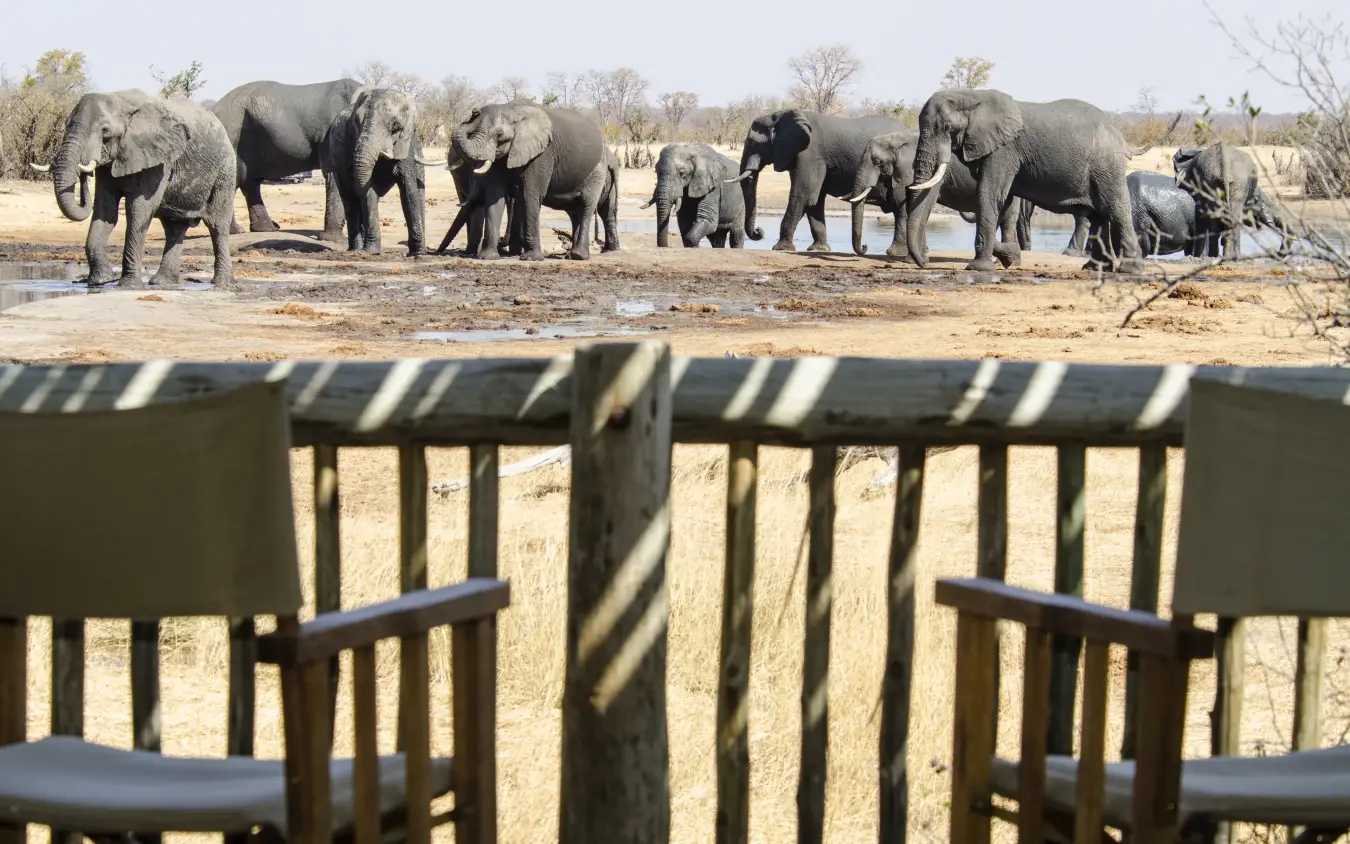
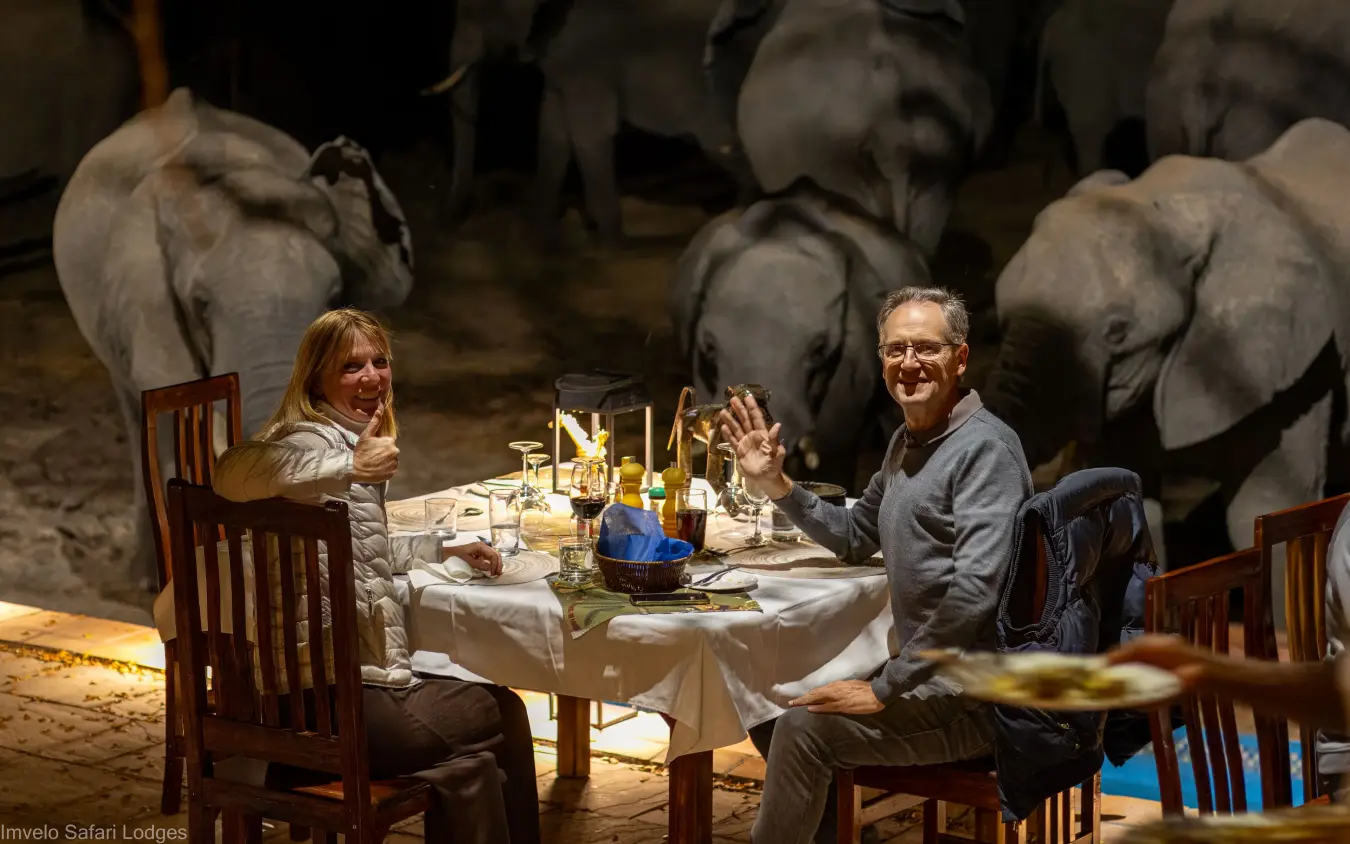
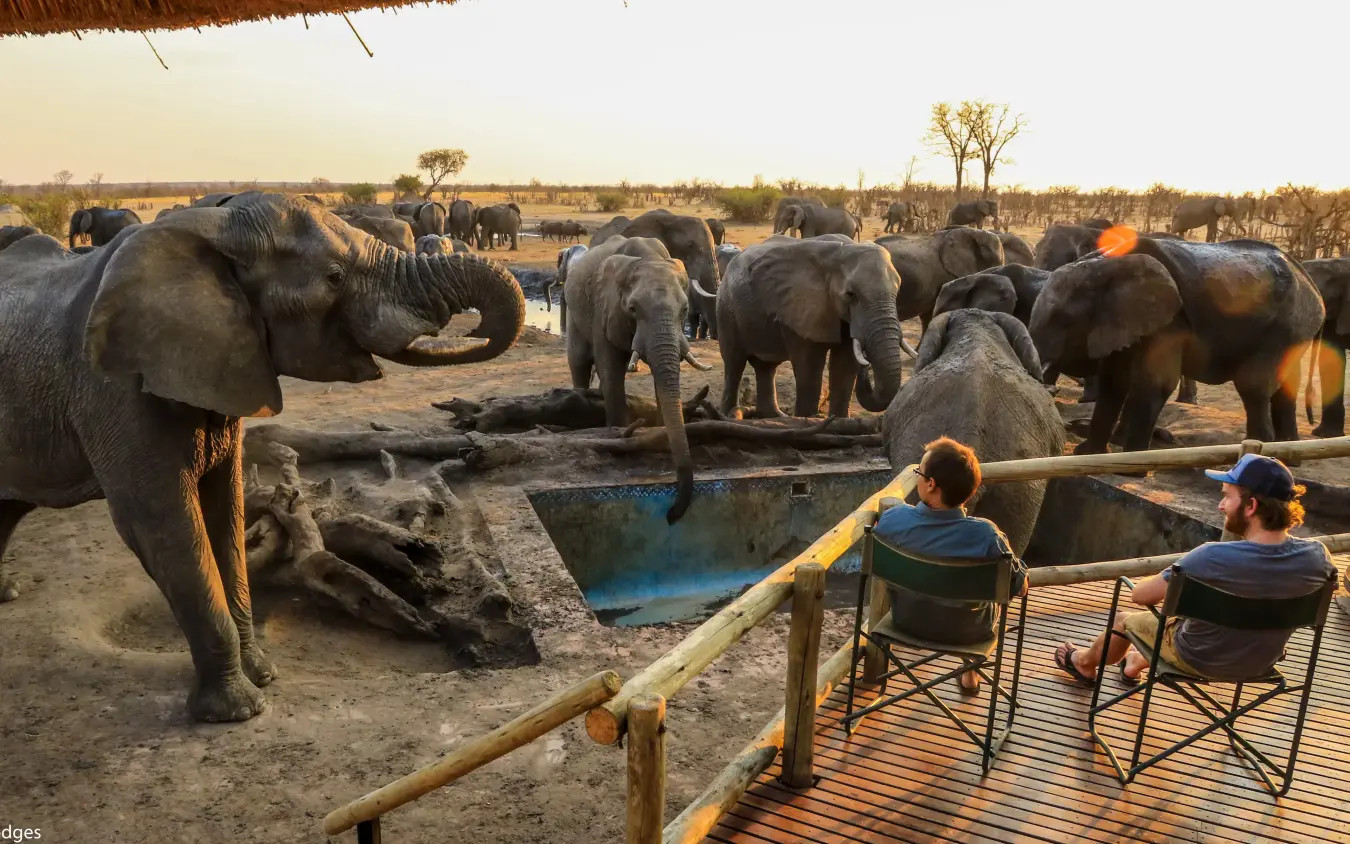
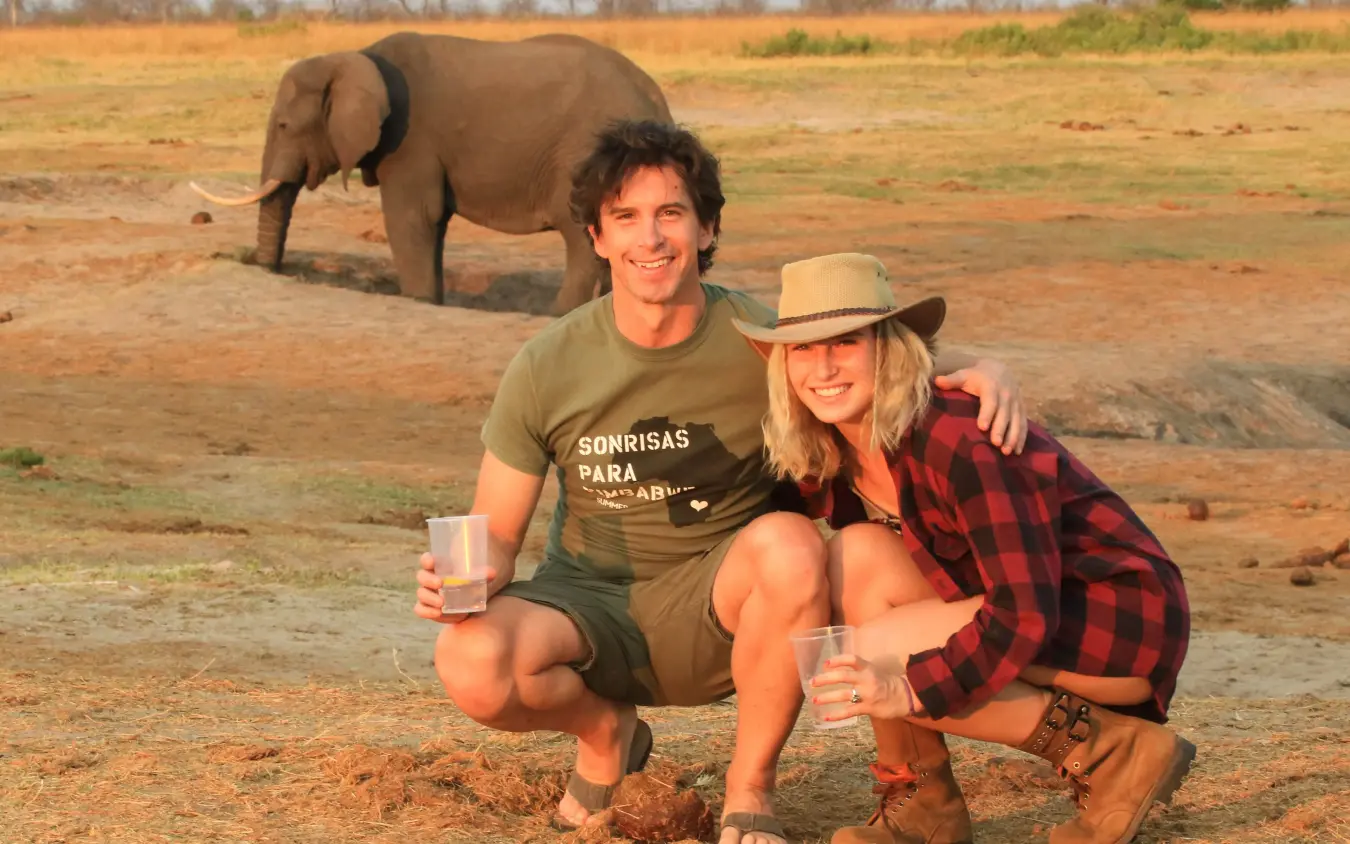
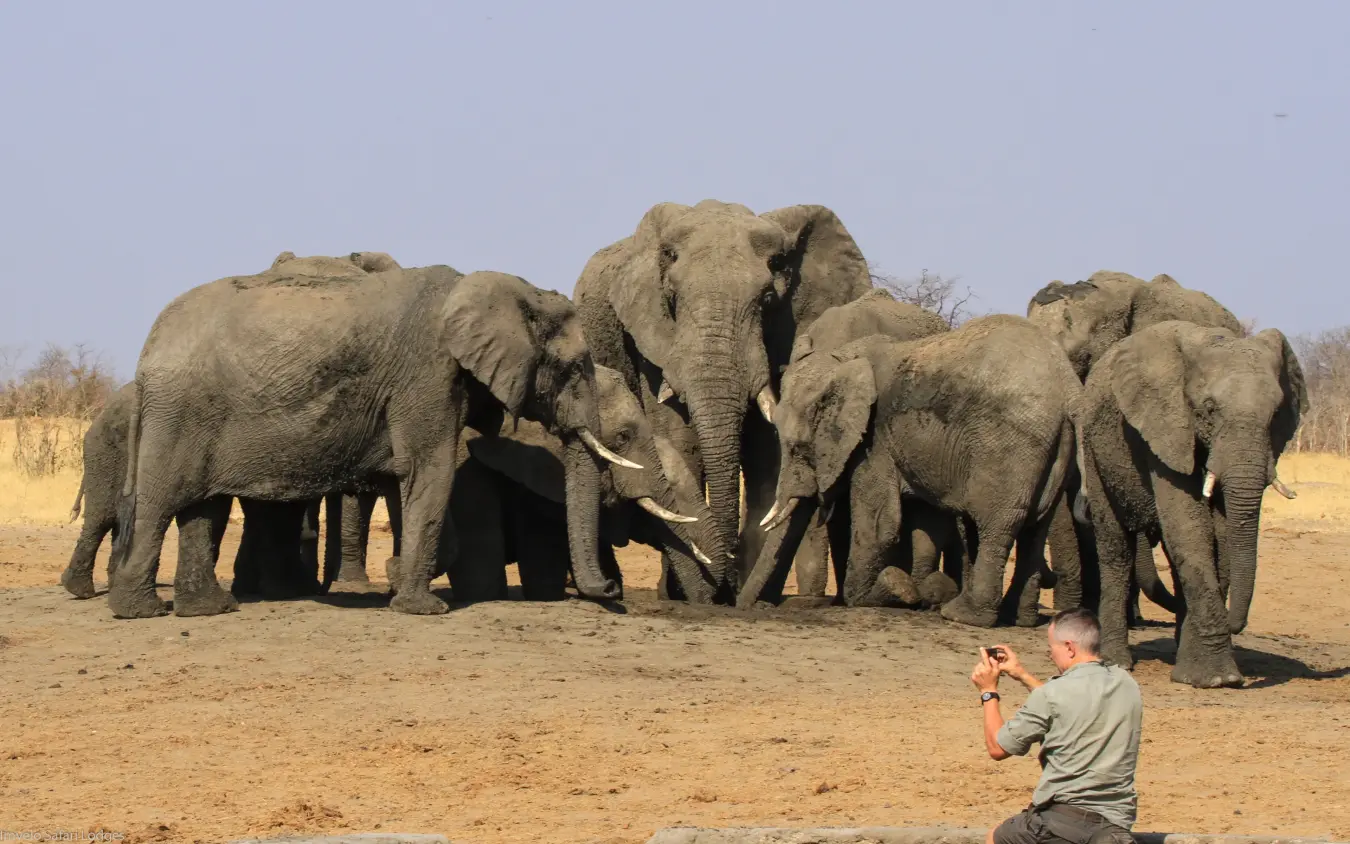
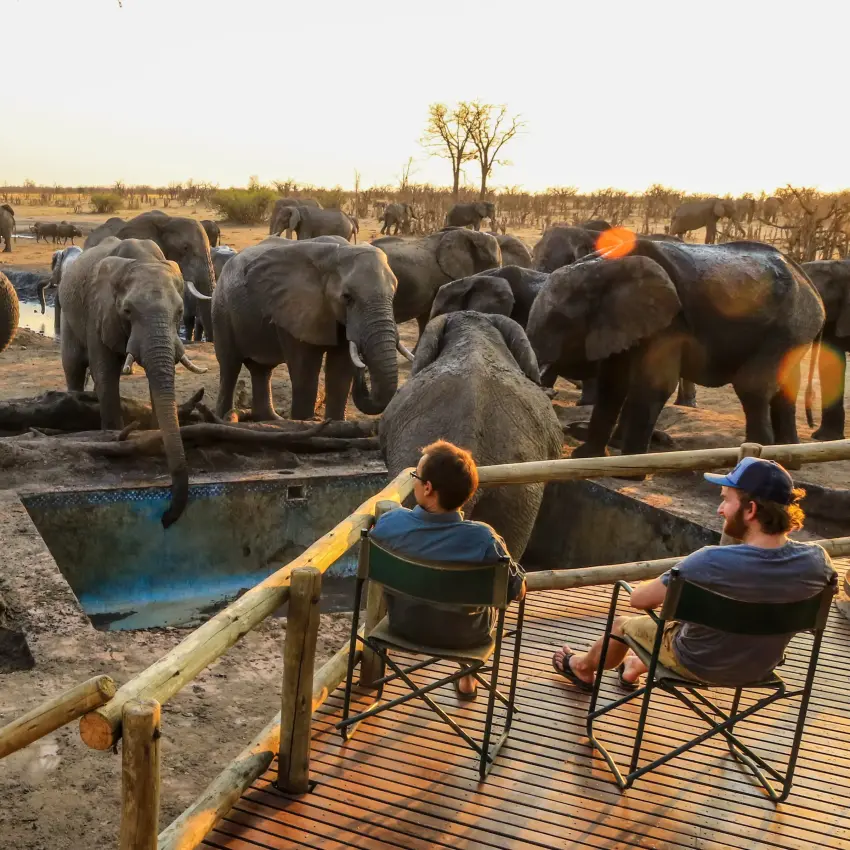
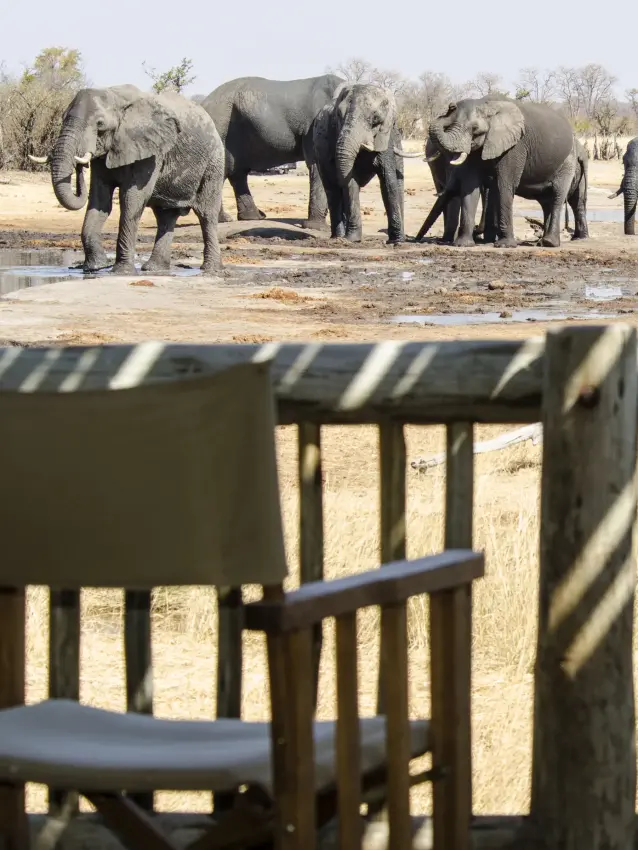
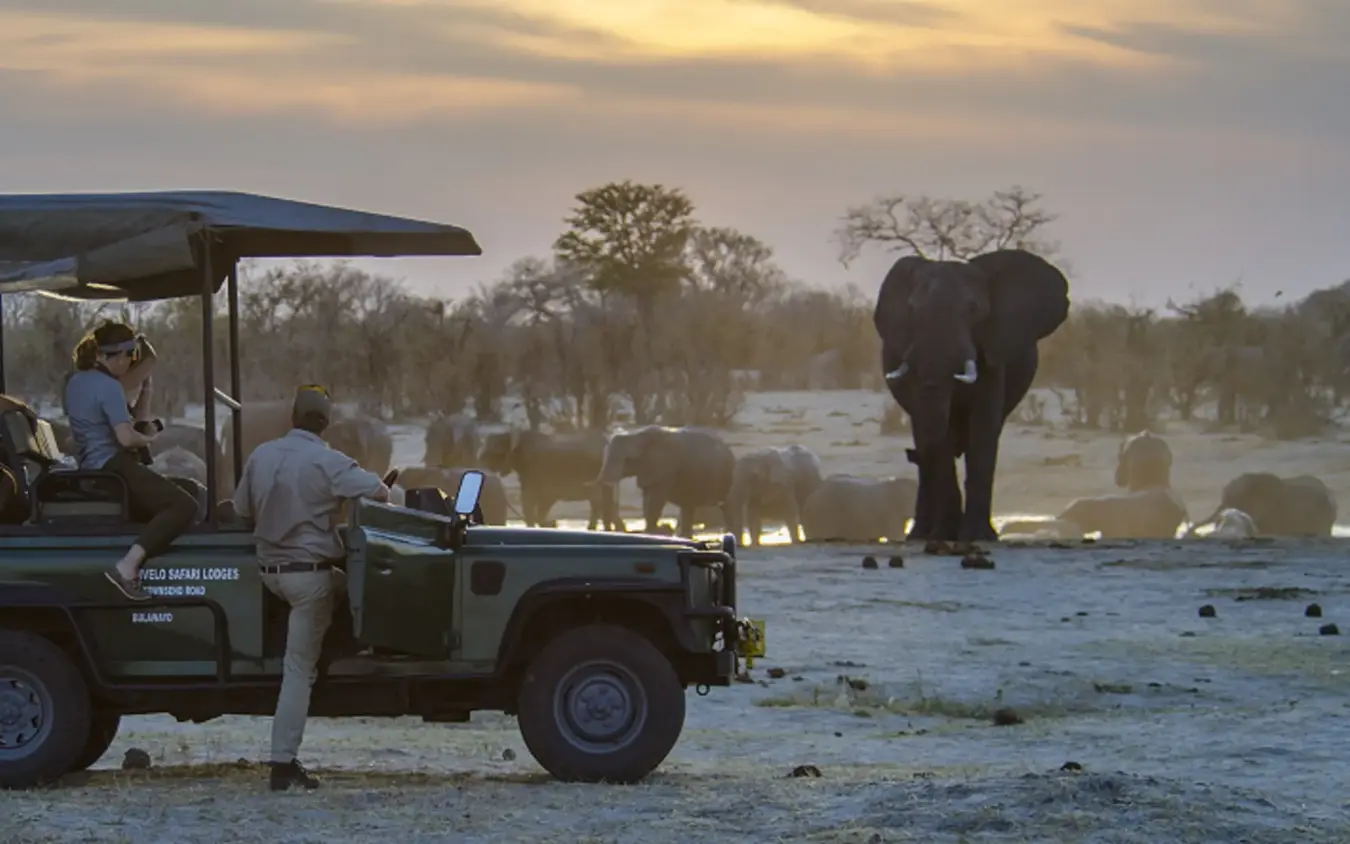
Hwange has no large permanent rivers, so year-round water is scarce across its northern sector, and this is the reason the camp exists at all. The pumped pan becomes a magnet as the natural pans dry out between June and October. Breeding herds gather in dense groups at the water’s edge, calves tucked between the legs of their mothers, bulls testing the air before lowering their trunks. Dinner is often served on the deck while elephants drink only metres away, the floodlights kept low so the scene plays out mostly in silhouette and shadow.
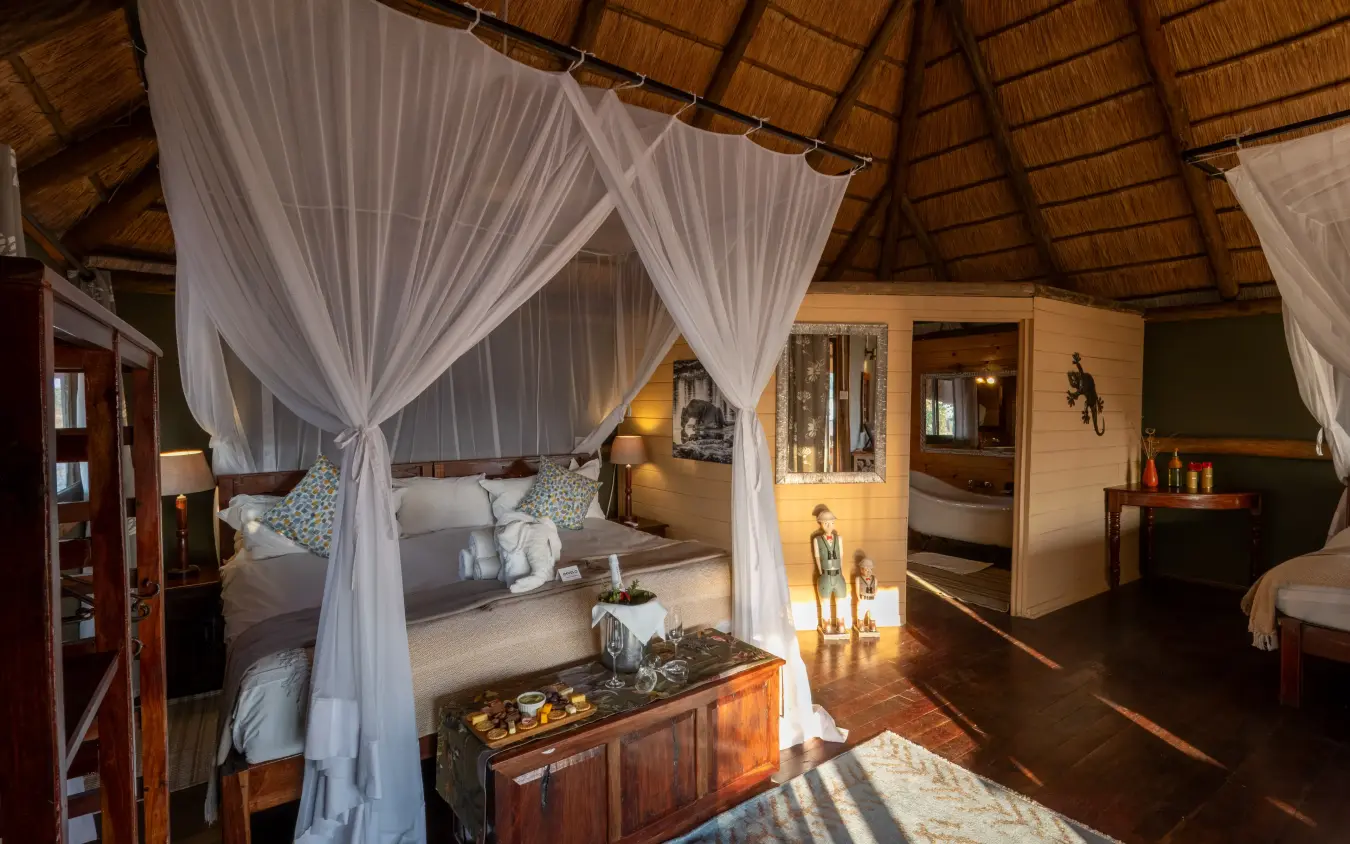
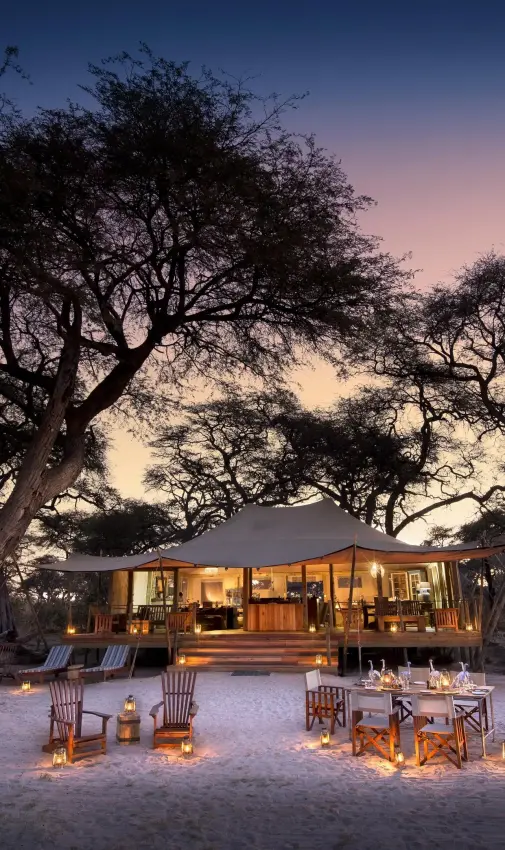
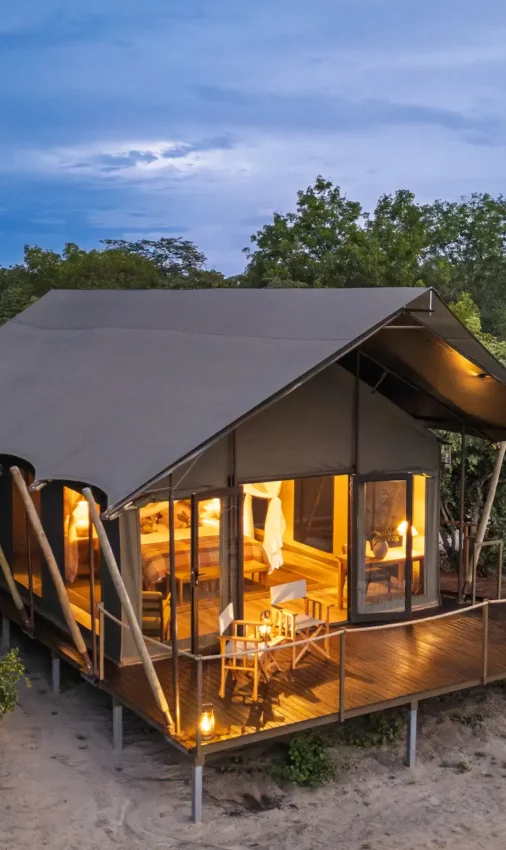
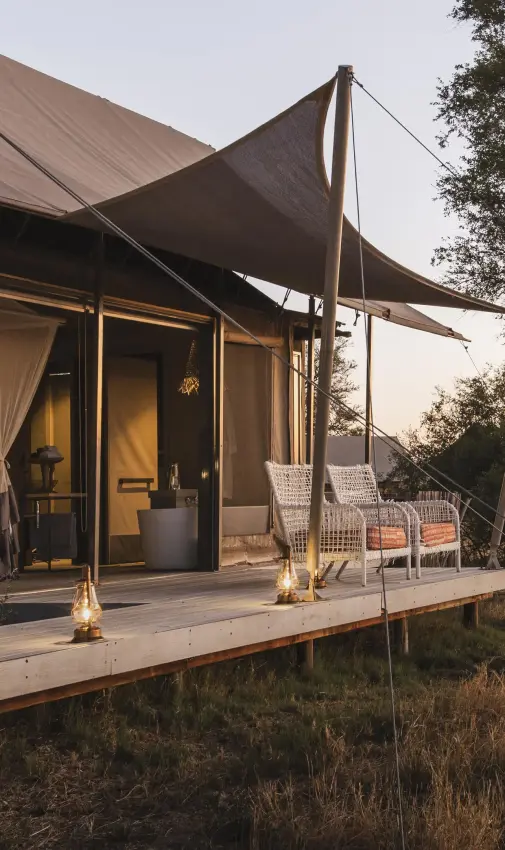
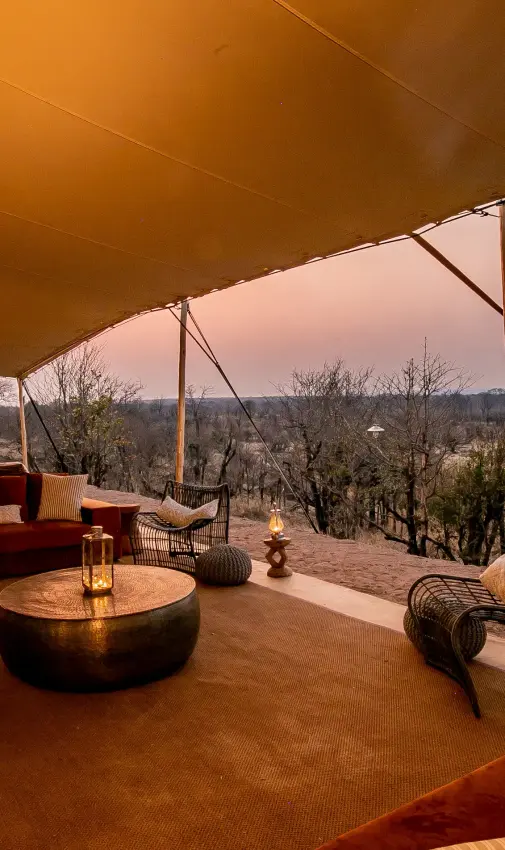
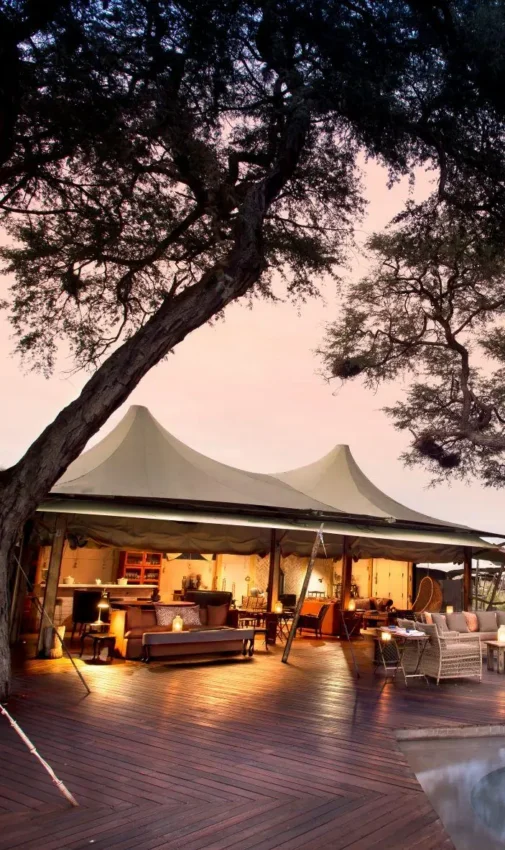
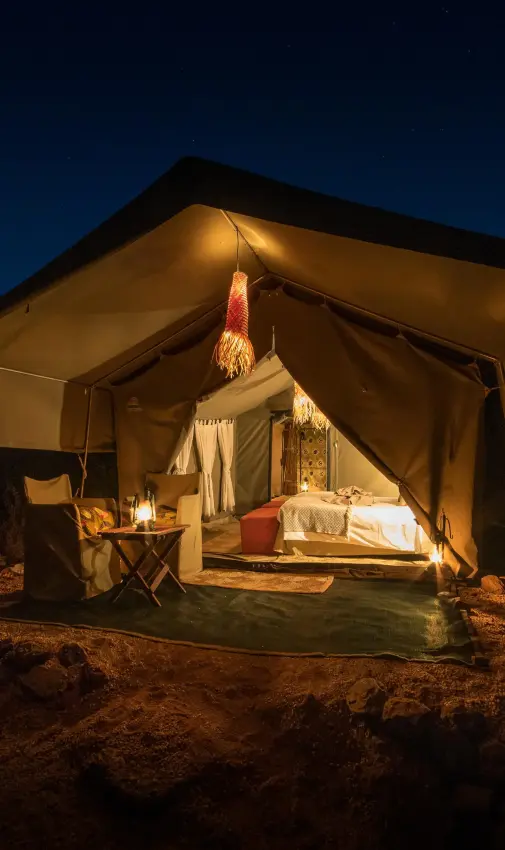
The chalets are raised on wooden platforms under thatch, built from a mix of canvas and timber, each with a private deck facing the pan. Two are configured for families. The heart of the camp is an open-fronted, L-shaped timber building that holds the bar, the lounge and the dining deck, all of it arranged to keep the waterhole in view. A pool is set into stone and timber at the edge of the clearing, close enough that the elephants occasionally drink from it directly.
Hwange has no large permanent rivers, so year-round water is scarce across its northern sector
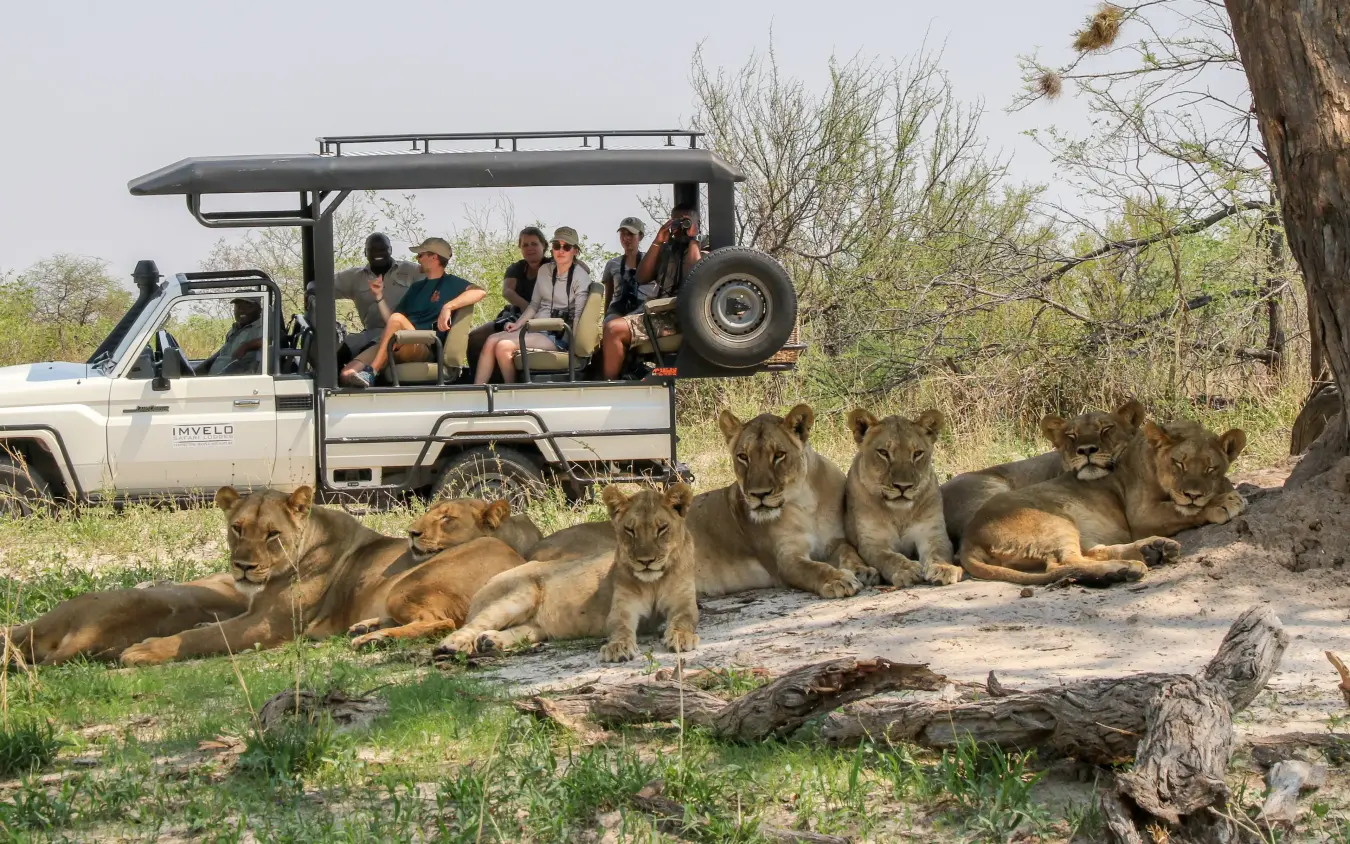
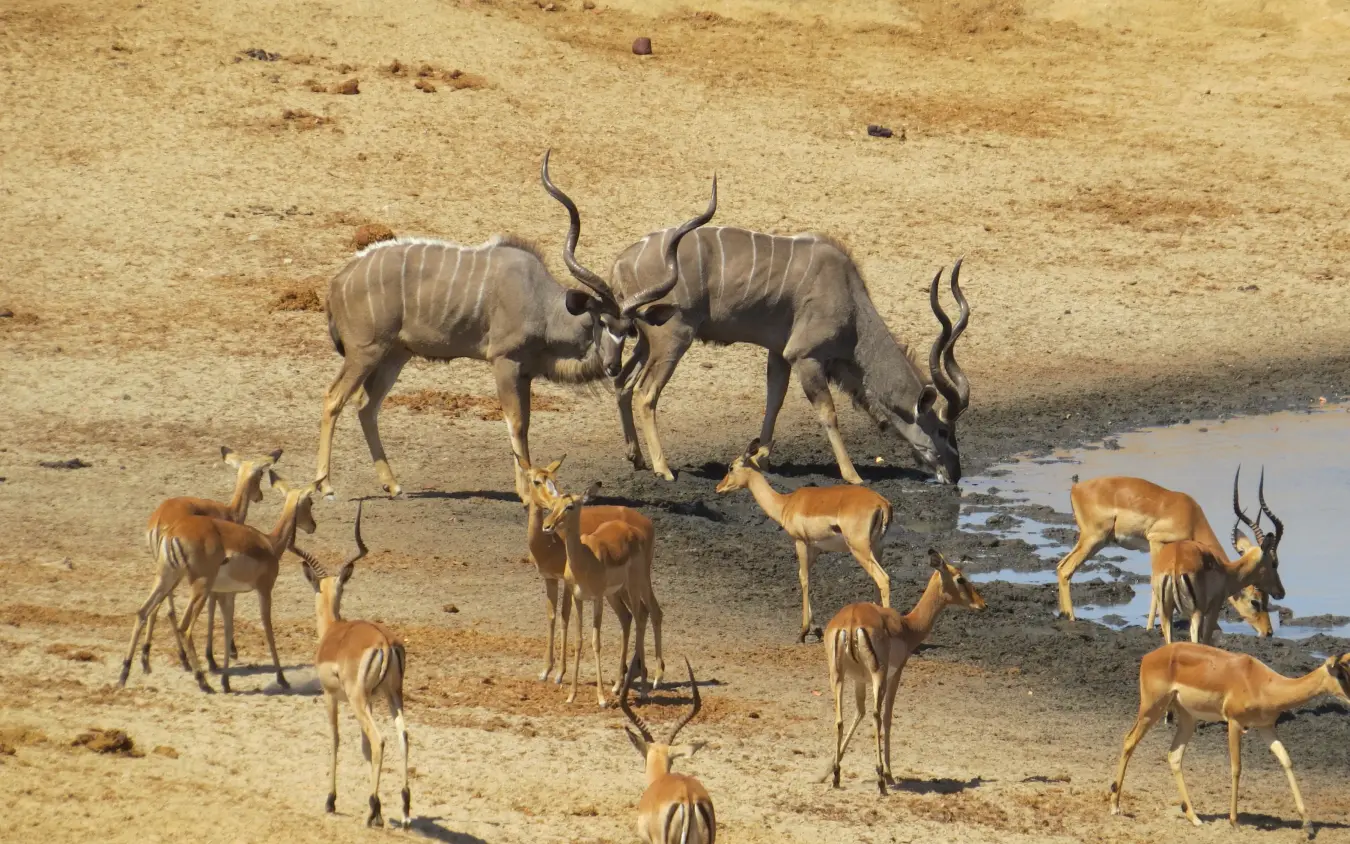
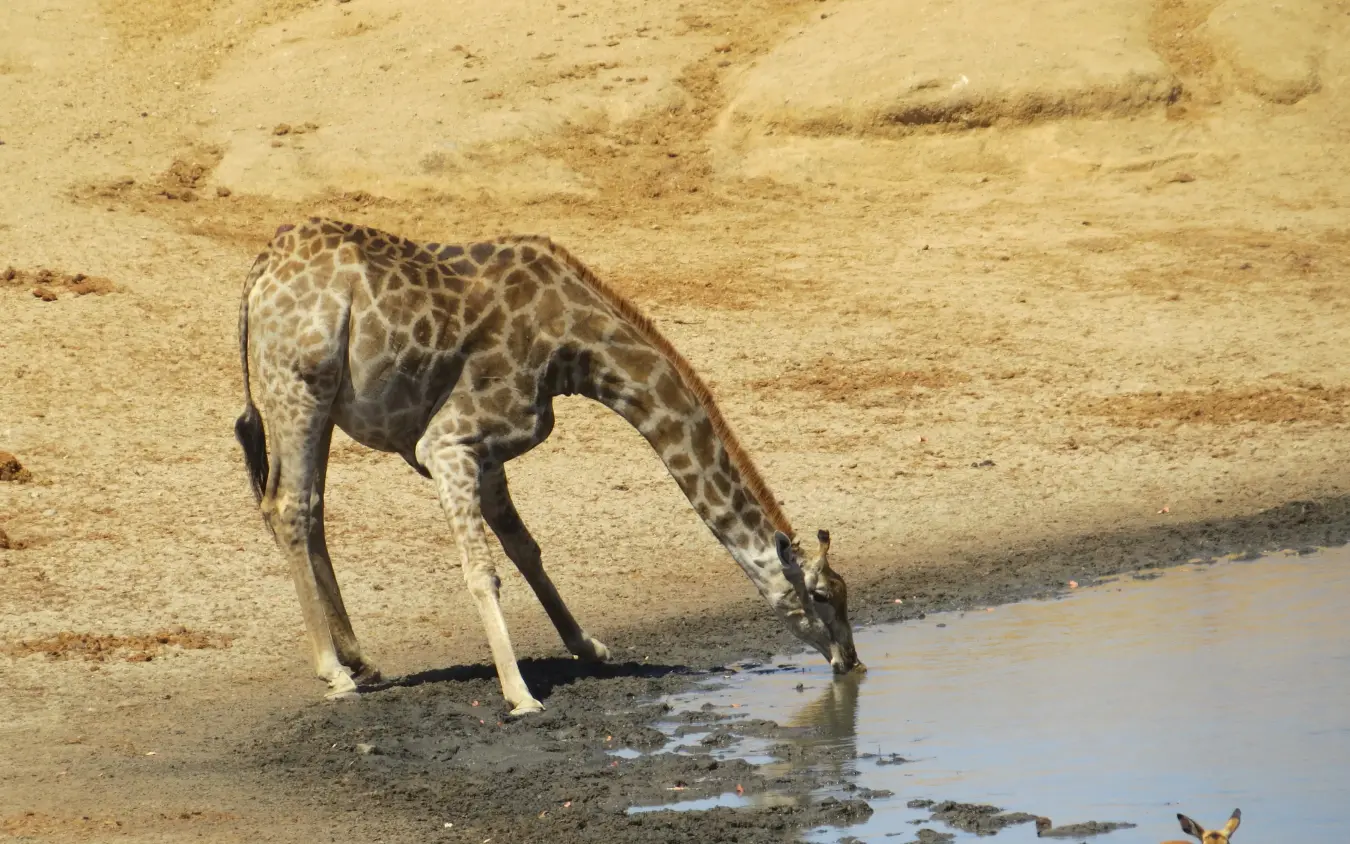
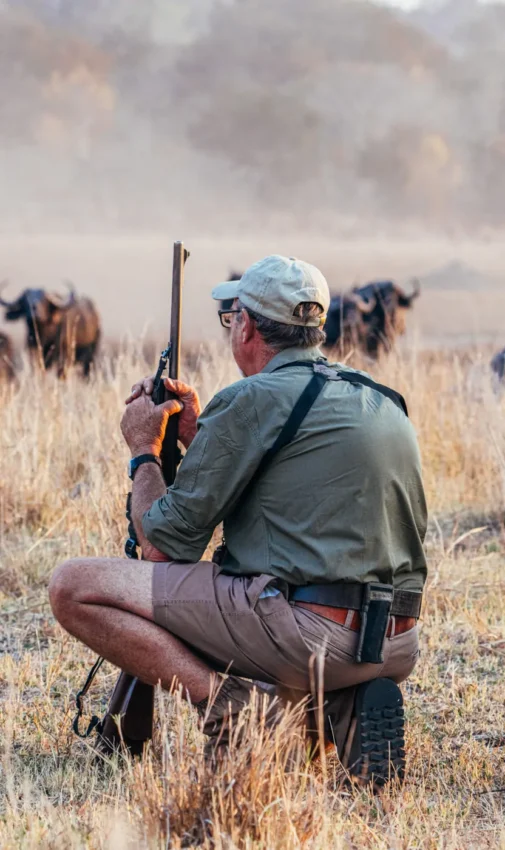
The game here runs strong beyond the elephants. The lions of northern Hwange are known locally for hunting them, and giraffe, zebra, kudu, sable and buffalo move through the concession alongside cheetah and spotted hyena. The birding gathers around the Nehimba Seep and Mandavu Dam, which draw waterbirds and raptors as well as the woodland species pulled in by the same water that brings the elephant herds.
Full-day excursions run out to the Nehimba Seep, a natural spring where elephants dig into ancient sand for mineral-rich water, and to Mandavu Dam, where fish eagles call over open water and crocodiles bask on the sandbanks. The Mtoa Ruins offer a cultural stop tied to the area’s earlier inhabitants. A photographic hide near the pan puts guests at ground level with the drinking herds. Evenings settle around the firepit, and afterwards staff walk everyone back along lantern-lit paths, watchful for the shapes that sometimes cross the clearing after dark.