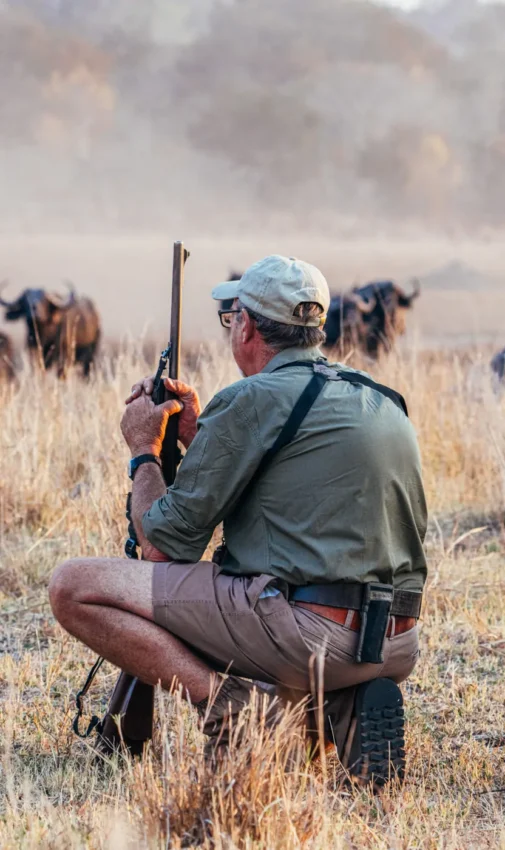
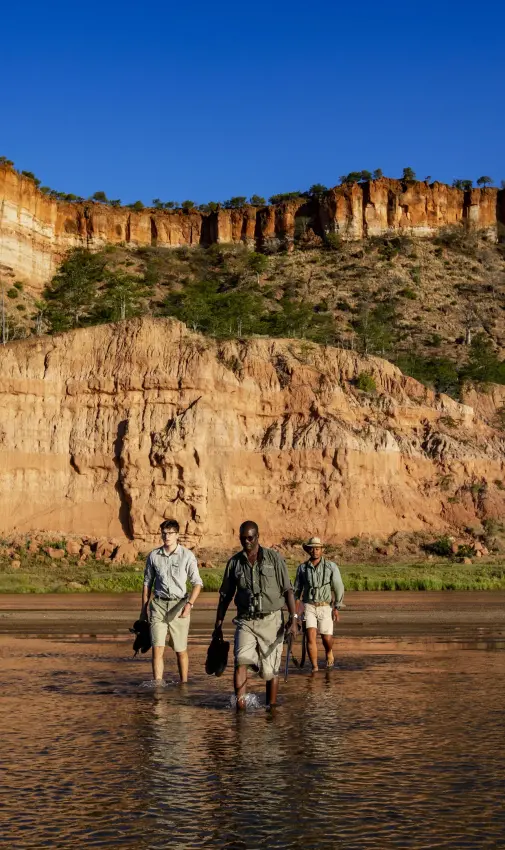
Camp Chitubu lies inside Hwange National Park rather than a private concession, and much of its character follows from that. Off-road driving is not permitted, and drives after dark are restricted once the park gates close, so evenings turn instead to the fire pit and the wide sky above the ridge. The walking suits this rhythm exactly. Guests cover ground slowly with a guide reading tracks, scent and wind, moving at the pace of the country rather than the pace of a vehicle, and seeing it the closer for it.
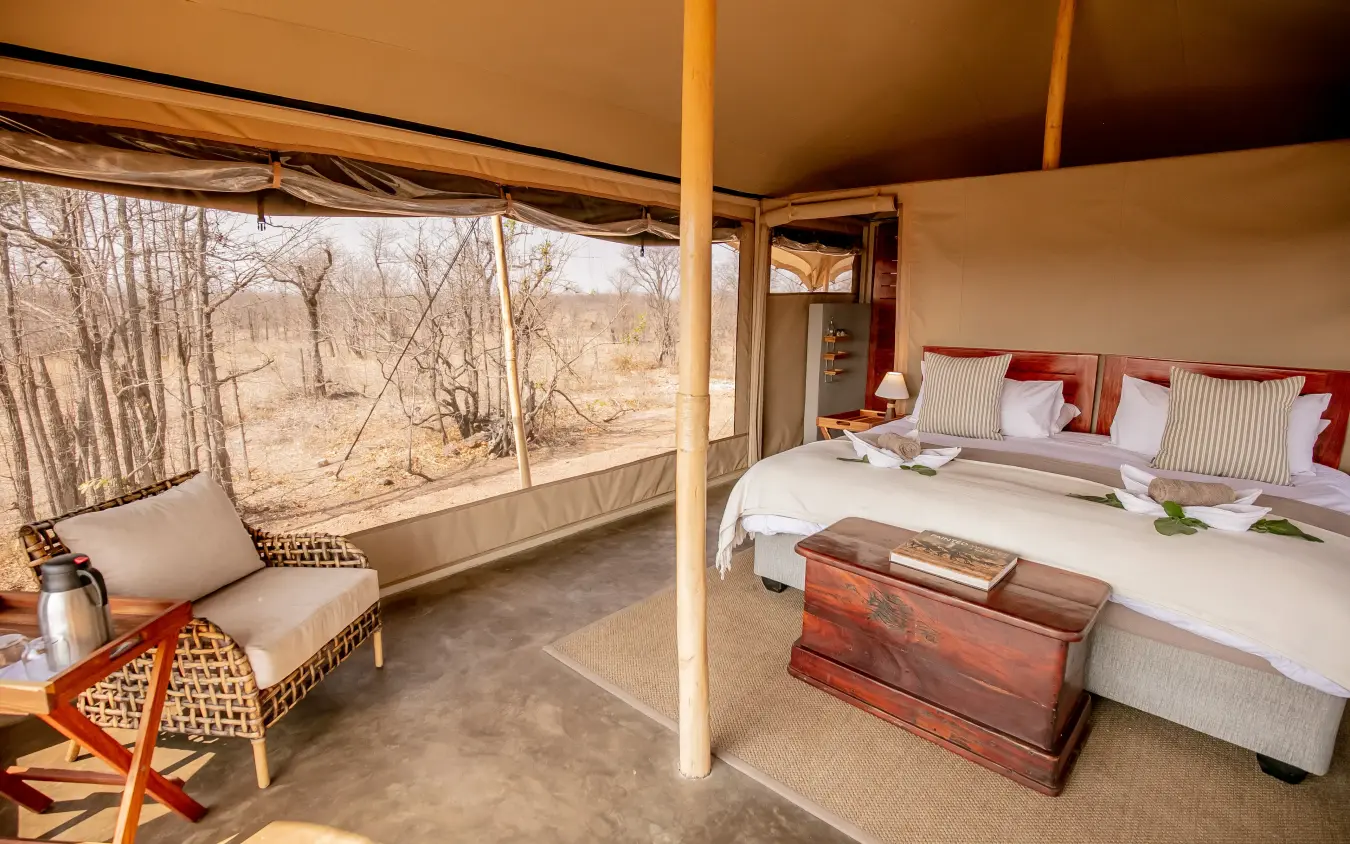
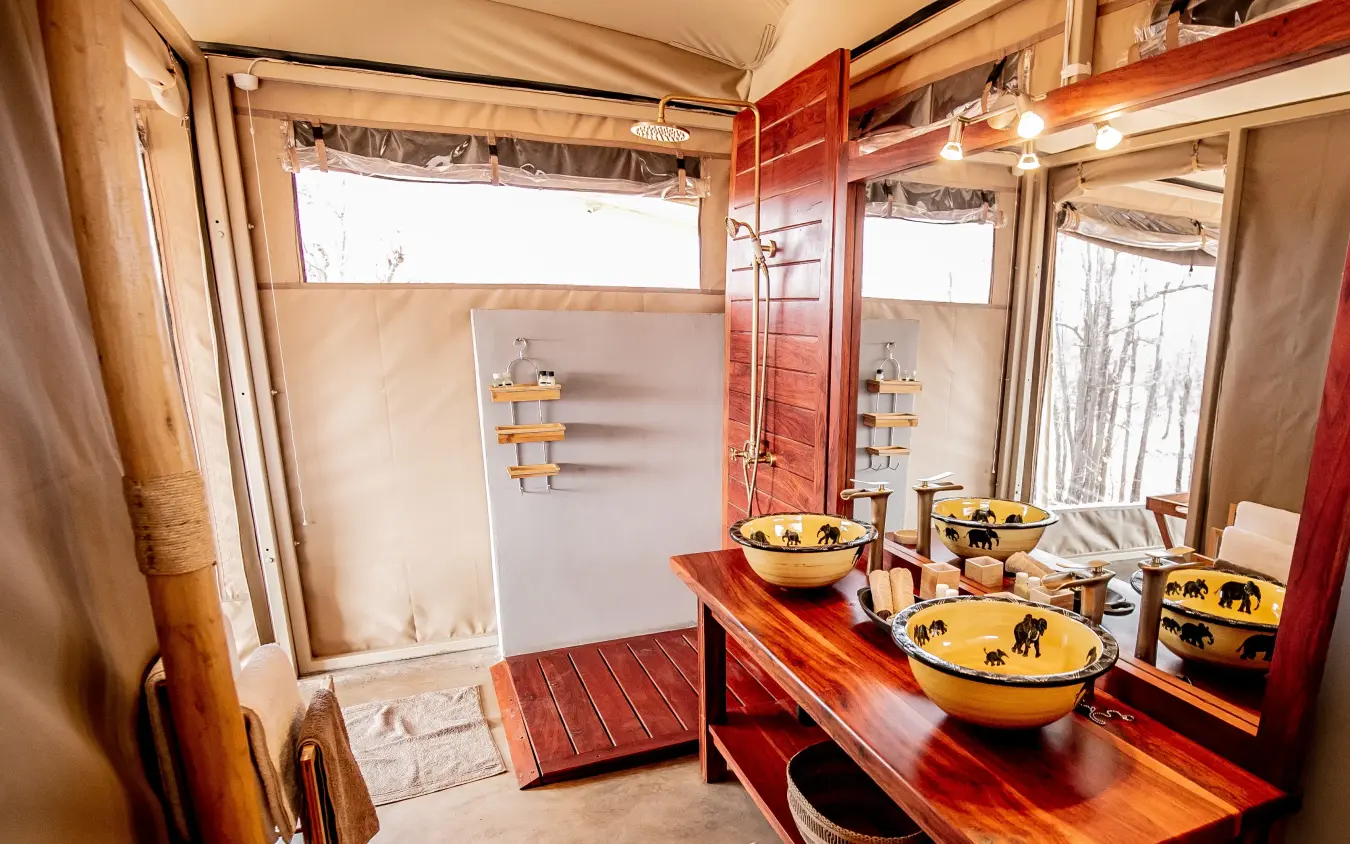
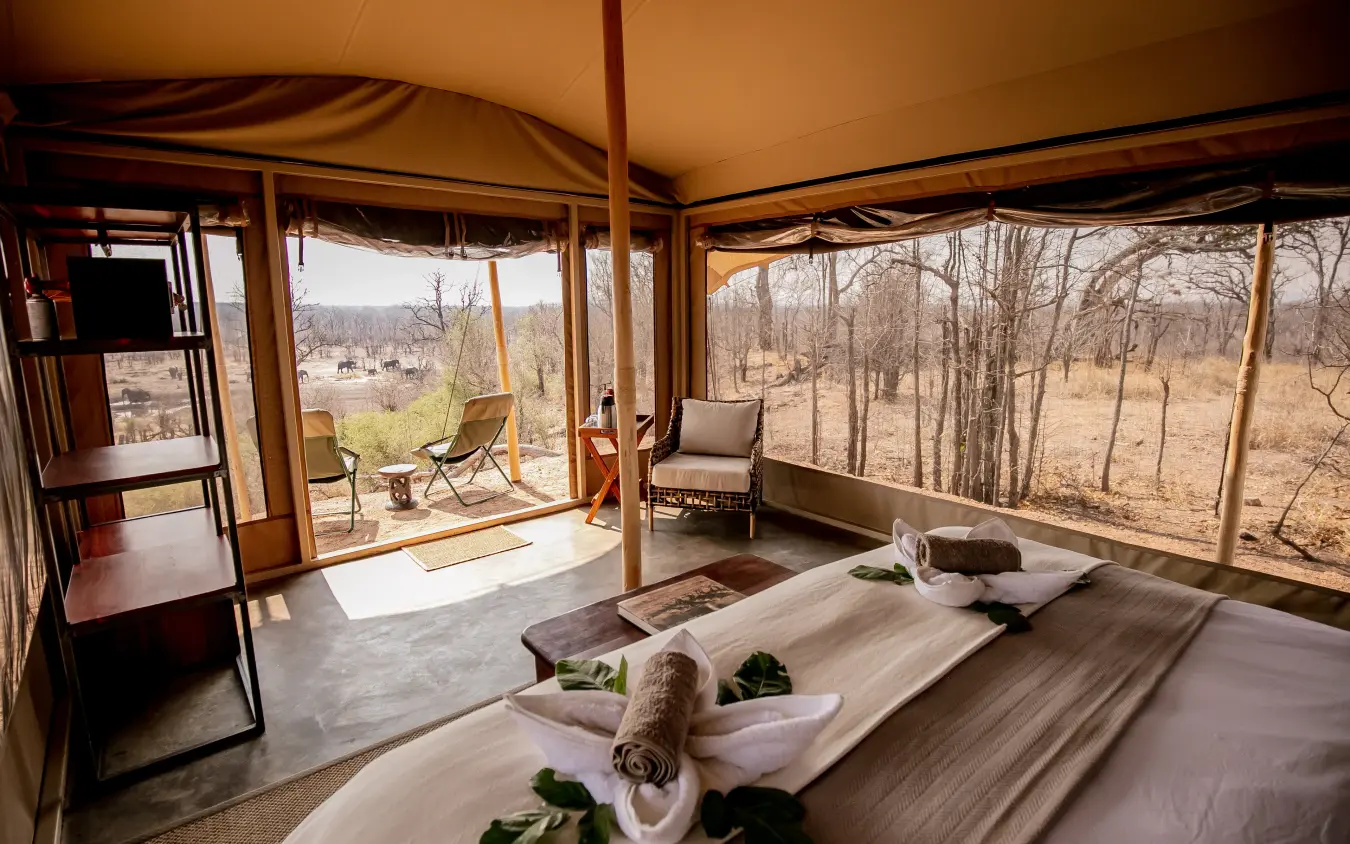
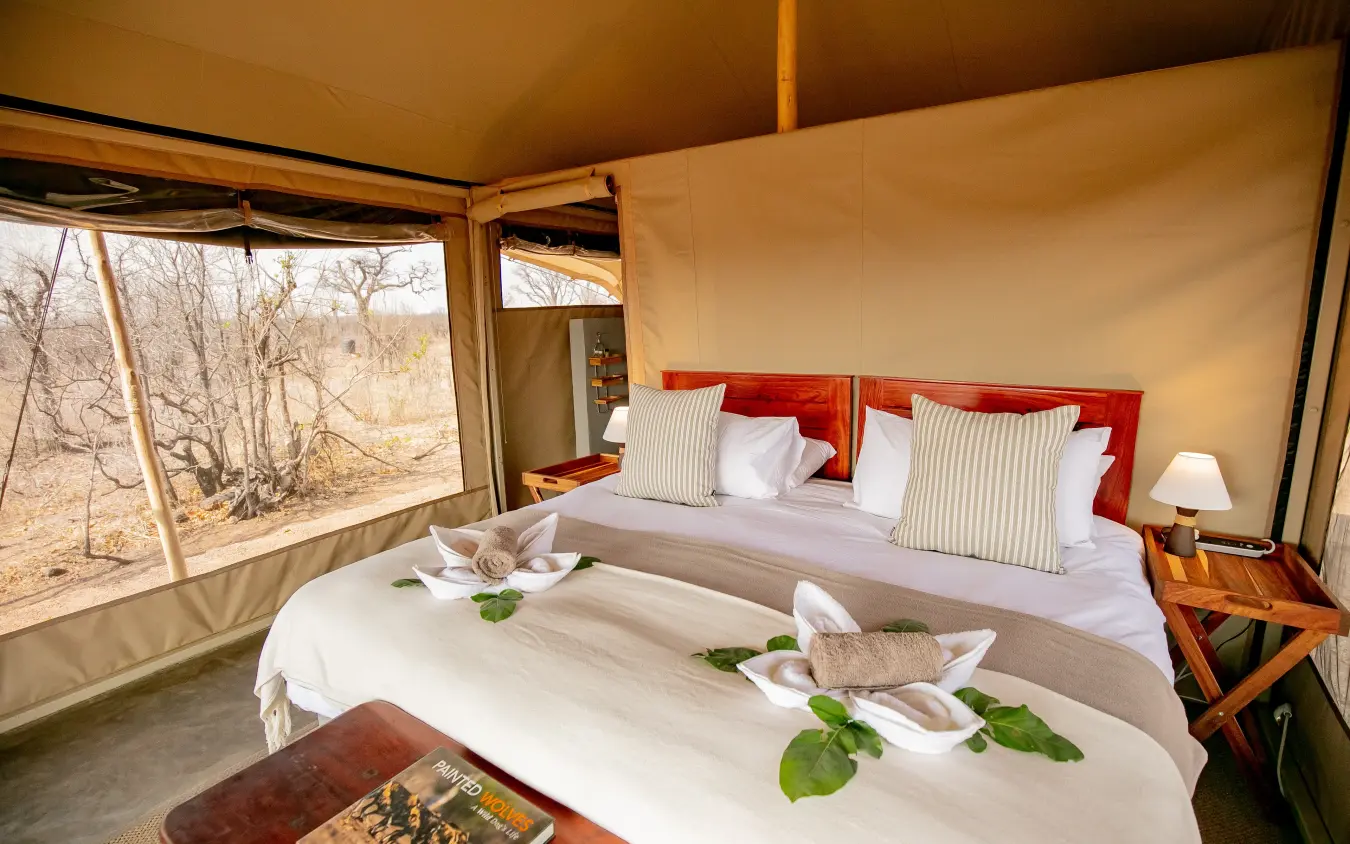
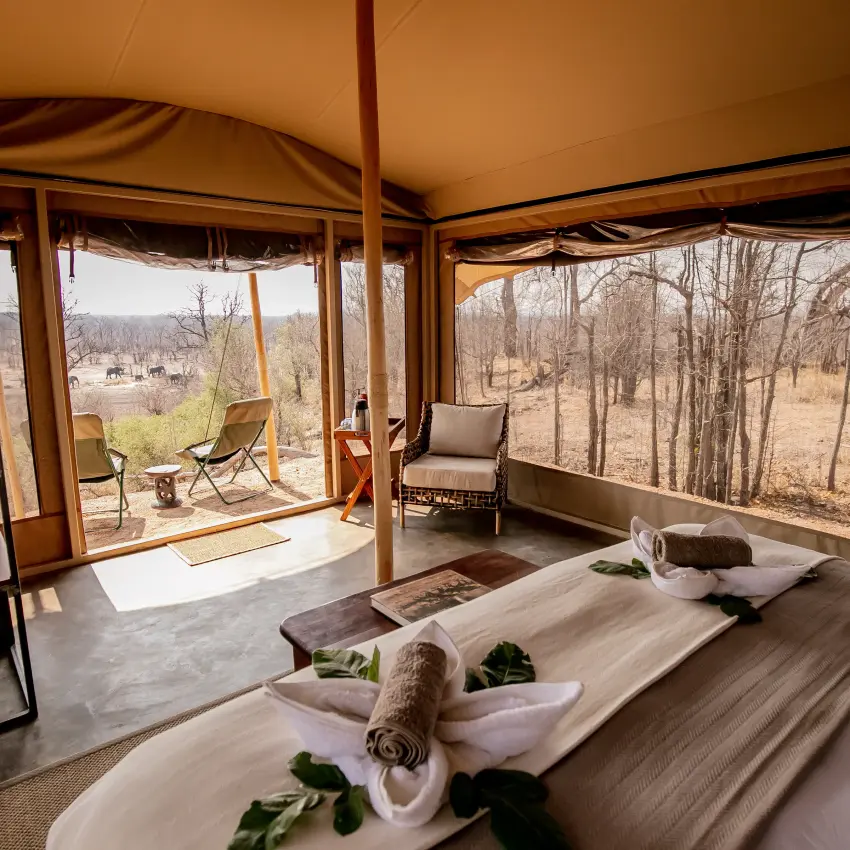
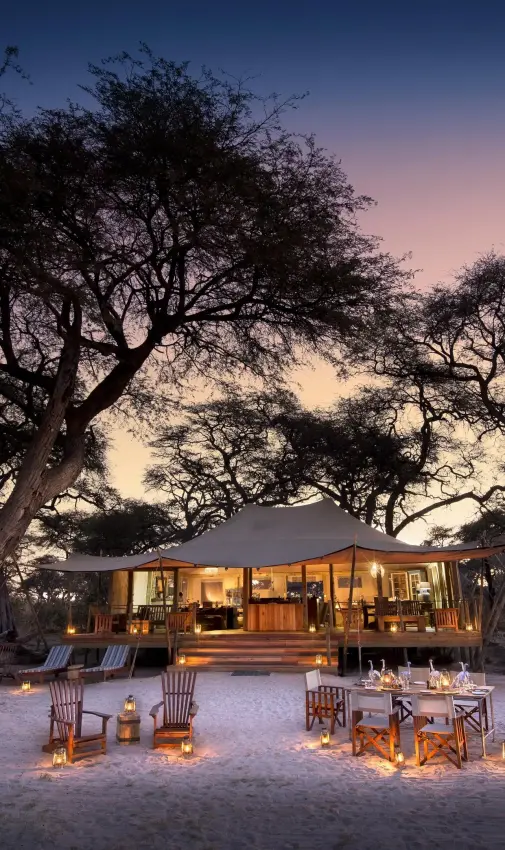
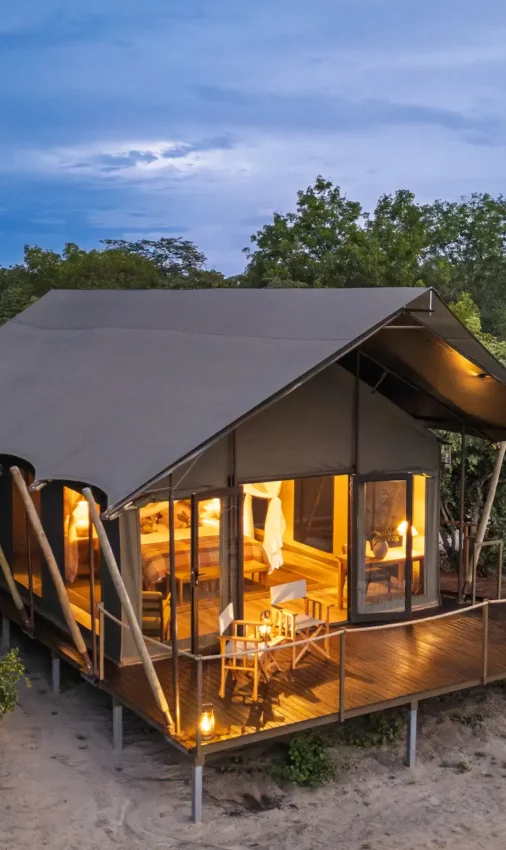
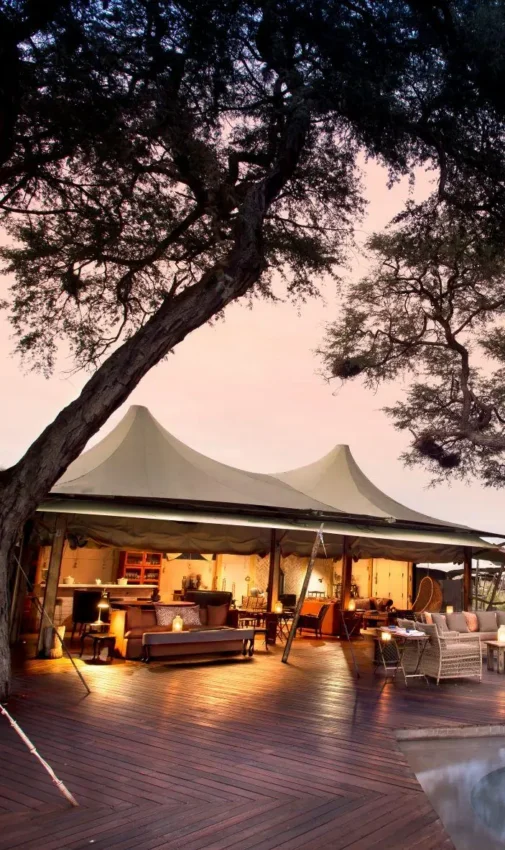
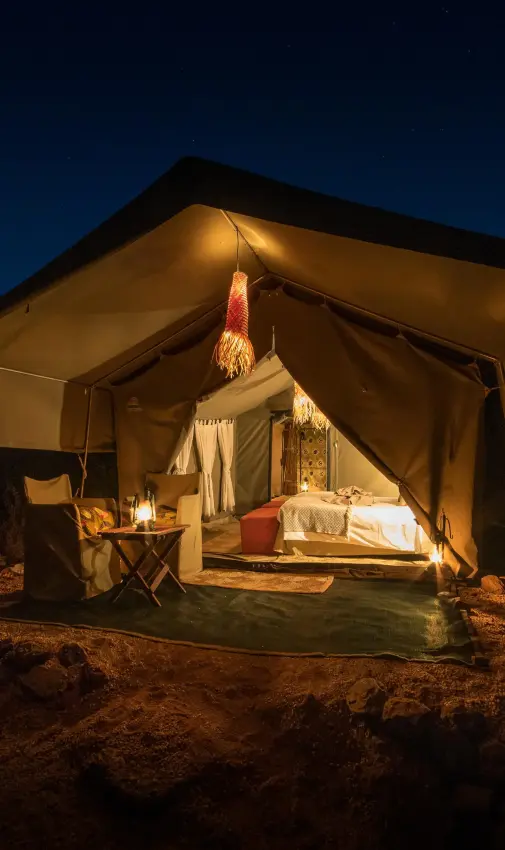
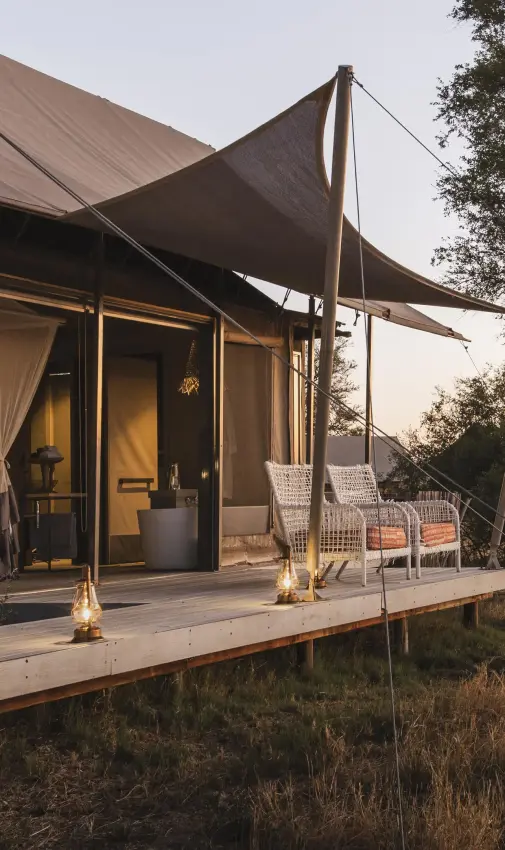
The tents sit on raised wooden platforms, built with heavy canvas and large gauze windows that open the rooms to the valley below. Teak runs through the floors, the shower decks and the vanities, with brass fittings in the bathrooms. The main lounge and dining area keep a sandy earth floor and an open plan, arranged so the spring and the salt pan stay in view throughout the day. It reads as an old-school bush camp given serious comfort, rather than a lodge dressed up as one.
Chitubu means spring in the local language, and the whole camp orients toward its water
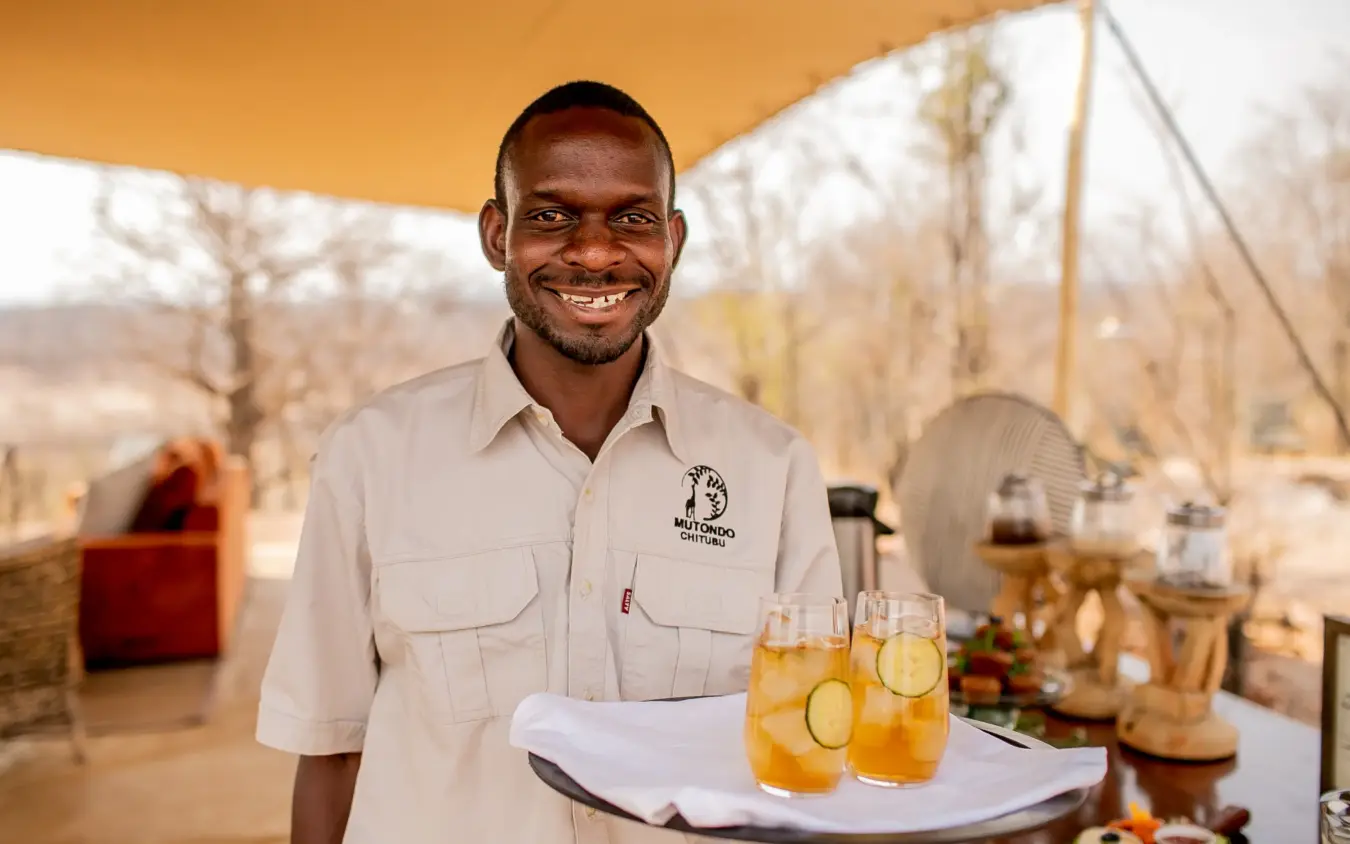
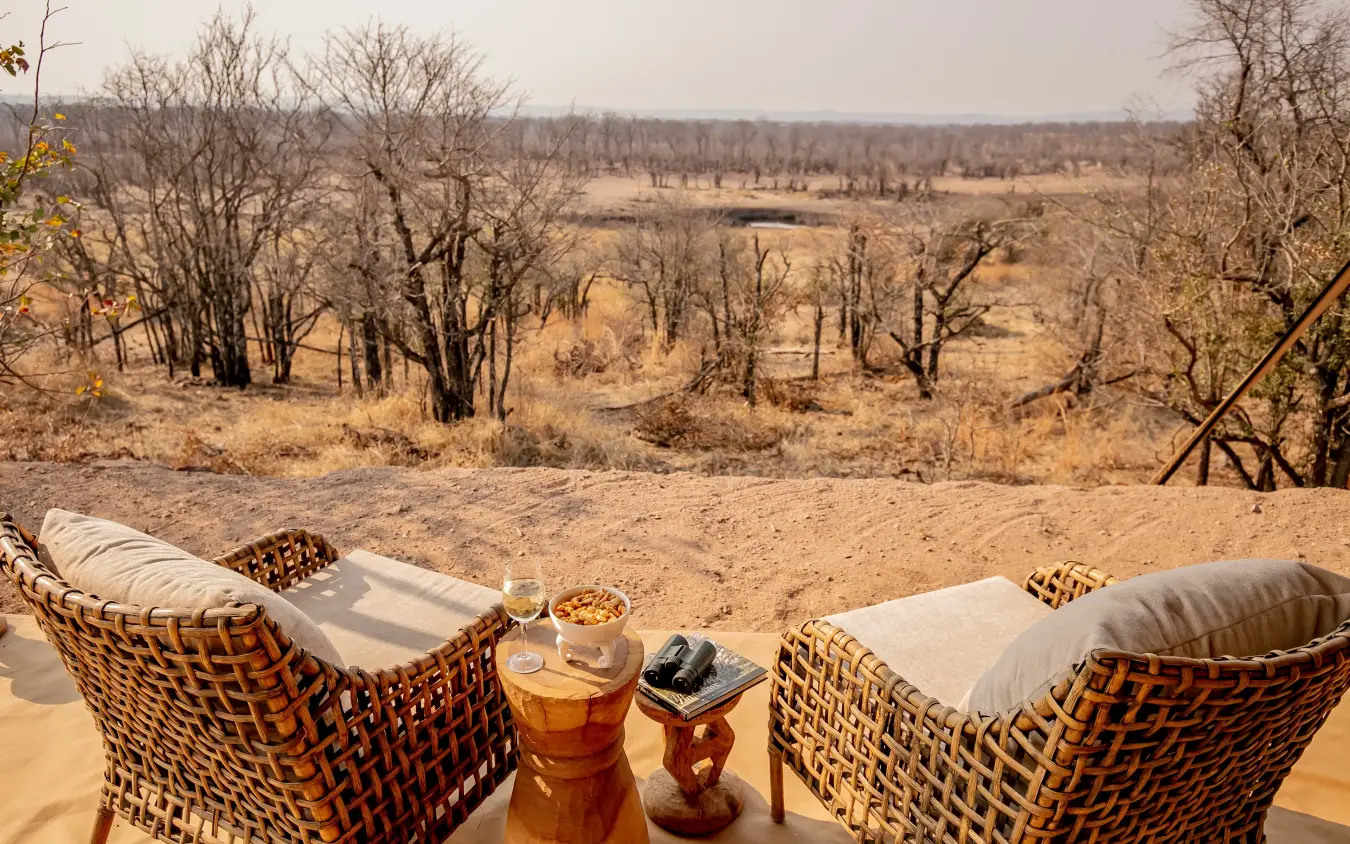
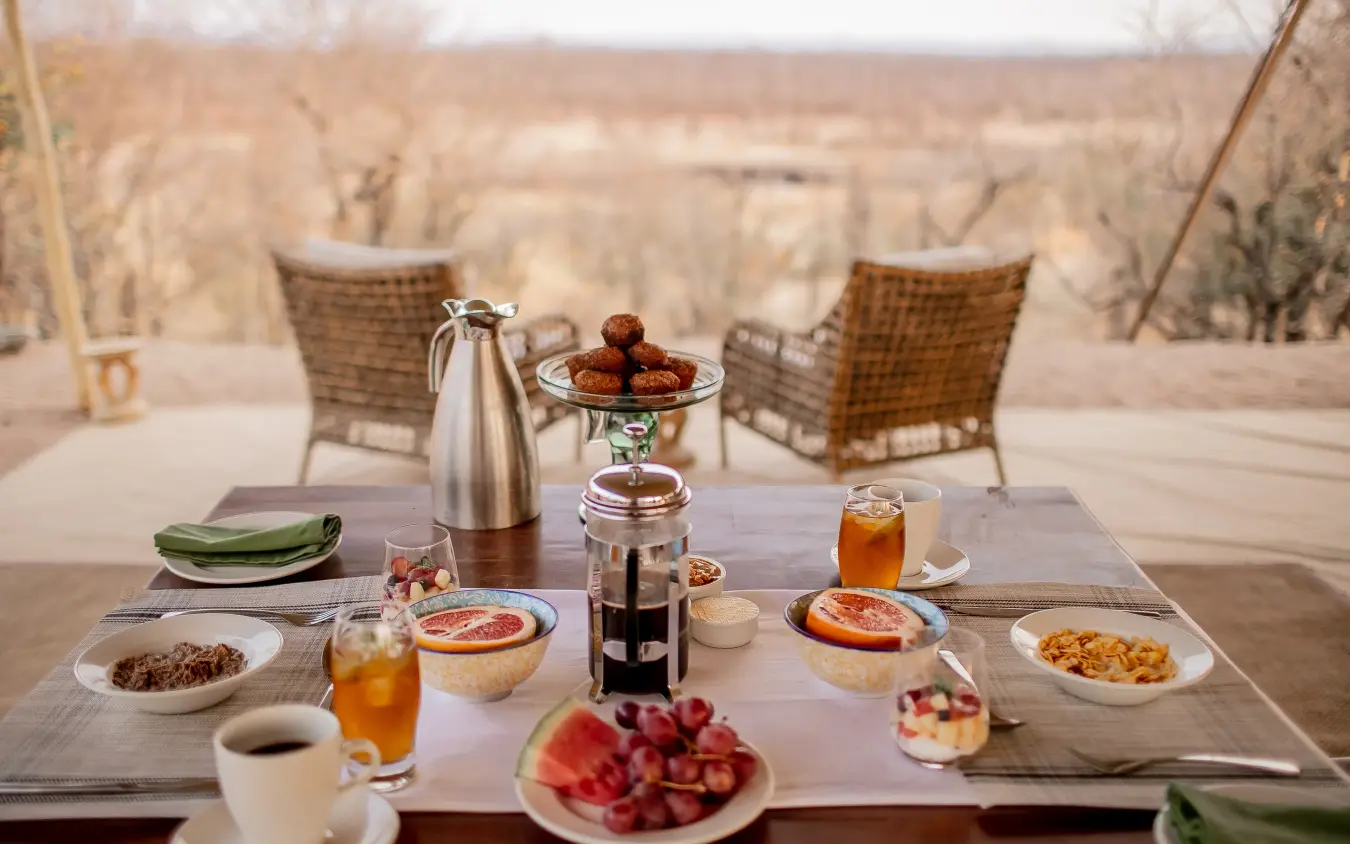
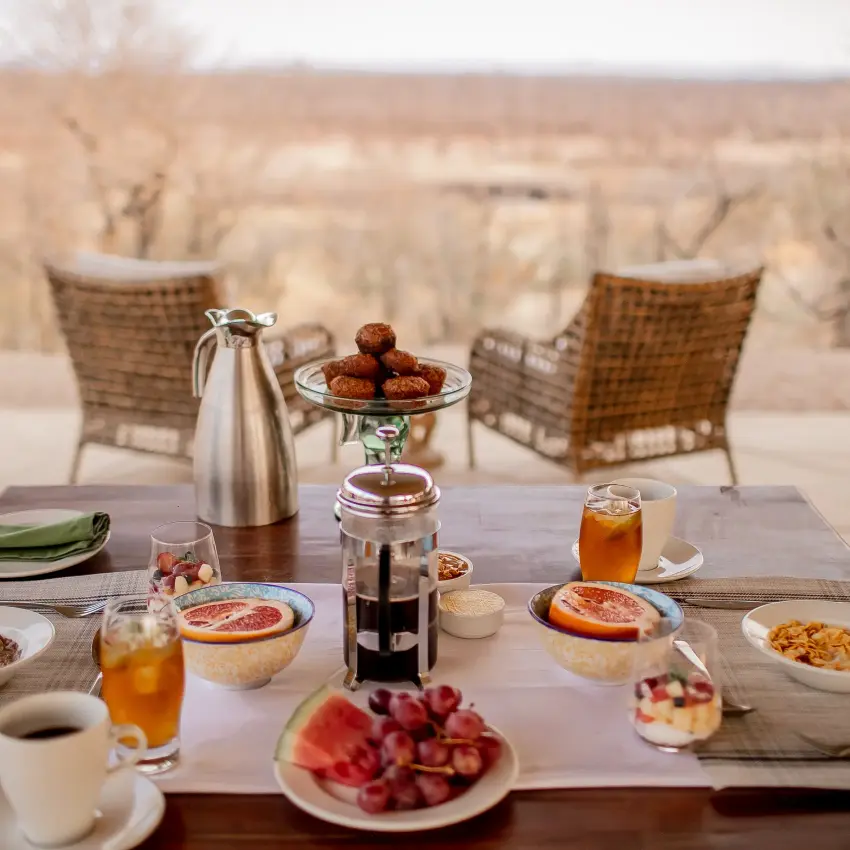
The Sinamatella region is rugged, hilly country of mopane woodland and basalt seeps. Chitubu means spring in the local language, and the whole camp orients toward its water, from the tents on the ridge to the lounge below. Evenings settle around the open-air fire pit, with music and storytelling carrying into the dark alongside the lions and the elephants at the water. Dinners run to three courses under canvas or out in the bush, with lighter buffet lunches and afternoon tea in the hours between activities.
The camp draws on solar power and cuts its reliance on trucked-in supplies, so the ridge stays quiet and the sky above it dark. Children are welcome in camp under supervision, and the walking safaris are open to those aged fourteen and over, at the guide’s discretion. The Brooksteins run Camp Chitubu with Mutondo Safaris, a partnership with the investment group Southsea Africa, though little of that machinery shows from the fireside.